


Chronicle of a Bourgeois of Valenciennes
Récits d’un bourgeois de Valenciennes aka The Chronicle of a Bourgeois of Valenciennes is a vivid 14th-century vernacular chronicle written by an anonymous urban chronicler from Valenciennes in the County of Hainaut. It survives in a manuscript that describes local and regional history from about 1253 to 1366, blending chronology, narrative episodes, and eyewitness-style accounts of political, military, and social events in medieval France, Flanders, and the Low Countries. The work begins with a chronological framework of events affecting Valenciennes and its region under rulers such as King Philip VI of France and the shifting allegiances of local nobility. It includes accounts of conflicts, sieges, diplomatic manoeuvres, and the impact of broader struggles like the Hundred Years’ War on urban life in Hainaut. Written from the perspective of a burgher (bourgeois) rather than a monastery or royal court, the chronicle offers a rare lay viewpoint on high politics and warfare, reflecting how merchants, townspeople, and civic institutions experienced the turbulence of the 13th and 14th centuries. Its narrative style combines straightforward reporting of events with moral and civic observations, making it a valuable source for readers interested in medieval urban society, regional politics, and the lived experience of war and governance in pre-modern Europe.
Available at Amazon in eBook and Paperback format.
14 May is in May.
On 14th May 1027 Henry I King of the Franks (age 19) was crowned I King France: Capet at Reims Cathedral whilst his father was still living.
Chronicum Anglicanum by Ralph Coggeshall. William Marshal the Elder1, earl of Pembroke, who held the greatest lordship both in England and in Ireland, died; and on the morrow of the Ascension he was buried at the New Temple in London.
Obiit Willelmus Marescallus senior, comes de Penbrock, qui maximum habuit dominium tam in Anglia quam in Hibernia; et in crastino Ascensionis sepultus est apud Novum Templum de Londoniis.
Note 1. William Marshall, the 'Greatest Knight' died on 14th May 1219 aged around seventy-two.
On 14th May 1264 the army of Simon de Montfort 6th Earl of Leicester 1st Earl Chester (age 56) including Gilbert "Red Earl" Clare 7th Earl Gloucester 6th Earl Hertford (age 20), Henry Hastings (age 29) and Nicholas Segrave 1st Baron Segrave (age 26) defeated the army of King Henry III of England (age 56) during the Battle of Lewes at Lewes [Map].
King Henry III of England, his son, the future, King Edward I of England (age 24), Humphrey Bohun 2nd Earl Hereford 1st Earl Essex (age 60), Richard of Cornwall 1st Earl Cornwall (age 55), John "Red" Comyn 1st Lord Baddenoch (age 44), Philip Marmion 5th Baron Marmion (age 30) and John Giffard 1st Baron Giffard Brimpsfield (age 32) were captured. John Warenne 6th Earl of Surrey (age 33), John Balliol (age 56), Robert Bruce 5th Lord Annandale (age 49), Roger Leybourne (age 49) and William de Valence 1st Earl Pembroke fought for the King. Guy Lusignan was killed. Fulk IV Fitzwarin (age 44) drowned. Bishop Walter de Cantelupe (age 73) was present and blessed the Montfort army before the battle.
On 14th May 1316 Charles IV King Bohemia Holy Roman Emperor Luxemburg was born to King John I of Bohemia (age 19) and Queen Elizabeth of Bohemia (age 24). He married (1) 1335 his fourth cousin once removed Blanche Valois Holy Roman Empress Luxemburg, daughter of Charles Valois I Count Valois and Mahaut Chatillon Countess Valois, and had issue (2) before 1350 Anna Bavaria Holy Roman Empress Luxemburg (3) before 19th April 1358 Anna Schweidnitz Holy Roman Empress Luxemburg and had issue (4) in or before 1366 Elizabeth Pomerania Holy Roman Empress Luxemburg and had issue.
On 14th May 1332 King Edward III of England (age 19) spent Easter at the House of the Friars Preachers, Stamford [Map], and paid fifty marks to the friars for damages done by the royal household.
Letters. 14th May 1354. Letter XXIV. Philippa of Hainault Queen of Edward III (age 39) to Sir John de Edington her Attorney.
Philippa, by the grace of God queen of England, lady of Ireland, and duchess of Aquitaine, to our dear clerk Sir John de Edington, our attorney in the exchequer of our very dear lord the king, sends greeting.
We command you, that you cause all the writs which have been filed from the search lately made by Sir Richard de Cressevill to be postponed until the octaves of Easter next ensuing; to the end that, in the meantime, we and our council may be able to be advised which of the said writs are to be put in execution for our profit, and which of them are to cease to the relief of our people, to save our conscience. And we will that this letter be your warrant therefore.
Given under our privy seal, at Westminster [Map], the 14th day of May, in the year of the reign of our very dear lord the king of England the twenty-eighth.
Archaeologia Volume 35 1853 XXXIII. On the 14th of May [1358], Isabella (age 63) left London and rested at Tottenham, on her way to Hertford. She was accompanied as far as Tottenham by the Countess of Warren (age 62), who dined with her there. She arrived at Hertford the following day; and a payment is recorded of a gift of six shillings and eight pence to the nuns of Cheshunt, who met the Queen at the Cross in the high road, in front of their house.
Chronicle of William Nangis, -1300. Now, as the time drew near when our Lord Jesus Christ, having marvellously restored peace between God the Father and the human race, was to ascend into heaven with rejoicing, according to the reckoning of the Church (that is, the time of His Ascension [14th May 1360] approaching), the Lord Himself, seeing the affliction of the wretched and hearing the groaning of poor captives, did not wish to allow the suffering of the French people to continue any longer. For they had already endured, for twenty-four years and more, the oppression and losses of war at the hands of the English and their other enemies. Instead, He willed to have mercy on a people so afflicted. And so it happened, by the Lord and Savior's own ordering, that on the Sunday when the Church sings Cantate1, solemn ambassadors and councillors of the aforementioned regent approached the city of Chartres, then under invasion by the King of England and his forces, to negotiate peace between the lords of both parties.
Appropinquante autem tempore quo Dominus noster Jesus-Christus, pace interDeum Patrem et humanum genus mirabiliter reformata, ad coelos ascendere cum jubilatione, secundum reputationem Ecclesiae , debuerat, hoc est tempore adveniente Ascensionis ejusdem Domini salvatoris, ipse Dominus, videns afflictionem miserorum et gemitum pauperum captivorum audiens, noluit ulterius contritionem populi Gallicani suflferre, qui jam, per viginti quatuor annorum cnrsuset amplius, oppressiones guerrarum per Anglicos et alios adversarios suos sustinuerat et jacturas; sed potius voluit misereri populo tam afflicto. Unde factum est, ipso Salvatore disponente, quod dominica qua cantatur in Ecclesia Cantate, accesserunt solemnes ambasslatores et consiliatores domini regentis supra seepius nominati apud urbem Carnotensem, in quibus partibus rex Angliæ cum suis patriam invadebat, pro pace tractanda inter dominos partis utriusque.
Note 1. The Sunday whose introit begins with the word Cantate is the fourth after Easter, which, in 1560, fell on May 3rd. According to the Grandes Chroniques, the plenipotentiaries met at Brétigny, near Chartres, on Friday, May 1st, and after a week of negotiations, they finally concluded the treaty on the following Friday, May 8th, and indeed, the treaty bears that latter date. (Grandes Chroniques, vol. 172, p. 173 ff.; and Rymer, vol. III, part I, p. 487 ff.) The names of the plenipotentiaries appear in the treaty itself, and also in the act of acceptance of the treaty's terms by the regent. (Grandes Chroniques, vol. VI, pp. 173–174). The full text of the treaty follows, pp. 175–200.
Le dimanche dont l'introit commence par le mot Cantate, est le quatrieme apres Pâques, qui tombait, en 1560, le 3 mai. D'apres les Grandes Chron., les plenipotentiaires se reunirent à Bretigni, pres de Chartres, le vendredi Ier mai; et apres une semaine de négociations, conclurent enfin le traité le vendredi suivant 8 mai, et le traité porte en effet cette dernière date. Grandes Chron., t. 172, p. 173, et suiv.; et Rymer, t. III, part. i , p. 487 et suiv. Les noms des plénipotentiaives sont dans le traité, et encore dans l'acte d'acceptation des bases du traite par le régent. Grandes Chron., t. VI, p. 173 et 174. Le texte du traité est a la suite, p. 175-200.
 Become a Member via our Buy Me a Coffee page to read more.
The Deeds of the Dukes of Normandy
The Gesta Normannorum Ducum [The Deeds of the Dukes of Normandy] is a landmark medieval chronicle tracing the rise and fall of the Norman dynasty from its early roots through the pivotal events surrounding the Norman Conquest of England. Originally penned in Latin by the monk William of Jumièges shortly before 1060 and later expanded at the behest of William the Conqueror, the work chronicles the deeds, politics, battles, and leadership of the Norman dukes, especially William’s own claim to the English throne. The narrative combines earlier historical sources with firsthand information and oral testimony to present an authoritative account of Normandy’s transformation from a Viking settlement into one of medieval Europe’s most powerful realms. William’s history emphasizes the legitimacy, military prowess, and governance of the Norman line, framing their expansion, including the conquest of England, as both divinely sanctioned and noble in purpose. Later chroniclers such as Orderic Vitalis and Robert of Torigni continued the history, extending the coverage into the 12th century, providing broader context on ducal rule and its impact. Today this classic work remains a foundational source for understanding Norman identity, medieval statesmanship, and the historical forces that reshaped England and Western Europe between 800AD and 1100AD.
Available at Amazon in eBook and Paperback format.
On 14th May 1414 Francis Montfort I Duke Brittany was born to John Montfort V Duke Brittany (age 24) and Joan Valois Duchess Brittany (age 23). Coefficient of inbreeding 2.84%. He married (1) August 1431 his second cousin once removed Yolande Valois Anjou Duchess Brabant Duchess Brittany, daughter of King Louis of Naples and Yolande Barcelona Queen Consort Naples (2) 30th August 1442 his half fourth cousin once removed Isabella Stewart Duchess Brittany, daughter of King James I of Scotland and Joan Beaufort Queen Consort Scotland, and had issue.
On 14th May 1426 Ralph Neville 2nd Earl of Westmoreland (age 20) was knighted.
Chronicle of Gregory [1400-1467]. 14th May 1464. Ande the xiiij daye of May nexte aftyr, my Lord of Mountegeue (age 33) toke his jornaye toward Hexham from the Newecastelle [Map]. And there he toke that fals Duke Harry Beuford of Somersett (age 28), the Lord Roos (deceased), the Lord Hungerforde (age 33), Syr Pylyppe Wenteworthe (age 40), Syr Thomas Fyndorne, whythe many o[t]yr; loo, soo manly a man is this good Erle Mountegewe, for he sparyd not her malysse, nor her falssenysse, nor gyle, nor treson, and toke meny of men and slowe many one in that jornaye.
On 14th May 1471 Thomas "Bastard of Fauconberg" Neville (age 42) reached Southwark, Surrey [Map] with his army. The City of London refused him entry so Thomas "Bastard of Fauconberg" Neville burned Southwark, Surrey [Map].
A Brief Latin Chronicle. 14th May 1471. The men of Kent along with the bastard Fauconberg (age 42) and his sailors, rising up, made again more severe attacks than usual on the Londoners and burned down the new gate on London Bridge along with some adjacent houses, and similarly set fires near Aldgate. But Lord Anthony de Scales (age 31) and Lord Duraste, together with the citizens of London, bravely attacked them; many of them were killed, some were captured, and the rest were put to flight; and the aforementioned bastard withdrew with his marauders, pirates, and ships. King Edward, arriving in London on the third Rogation Day with a powerful army, created many aldermen outside the city into knights; and on the evening of Ascension Day, King Edward with his army set out to correct the men of Kent; and seeing themselves unable to resist, they submitted to him. The King received them and the aforementioned bastard along with many others into his grace; however, other convicted felons were condemned to capital punishment. And having returned to Westminster, there he celebrated the feast of Pentecost.
Cancigne cum bastardo Fawcunbrigge et nautis ejus insurgentes, insultus iterum fecerunt in Londonienses graviores quam solito et walves porte nove super pontem London. cum domibus quibusdam adjacentibus combusserunt, et similiter alias juxta Algate succenderunt. Sed per dominum Antonium de Scales et dominum Duraste cum civibus London. viriliter eos aggredientibus plurimi eorum interfecti sunt, et quidam capti et reliqui in fugam versi sunt; et bastardus predictus cum suis predonibus et piratis et navibus recessit. Et Rex Edwardus feria tercia Rogacionum London. adveniens cum potenti exercitu, extra civitatem aldermannos multos in milites creavit; et in die Assensionis Domini ad vesperam Rex Edwardus cum suo exercitu ad Cancigenas corrigendos iter arripuit; et videntes se insufficientes ad resistendum ei, subdiderunt se ei. Et eos Rex et bastardum predictum cum multis aliis recepit in graciam; alios autem maleficos convictos capitali damnavit sentencia. Et ad Westmonasterium reversus ibi festum Pentecostes celebravit.
Become a Member via our Buy Me a Coffee page to read more.
English Historical Literature in the Fifteenth Century Appendix 13. In the same year and month, the people of Kent, disbelieving the previous victory, rose up in rebellion in the name of the said Henry [VI], under their captain and leader, Thomas Fauconberg (age 42), the bastard. Intending to force their way into the City of London, they violently set fire to Newgate, the gate over the great bridge [drawbriodge] of the city, along with several houses and buildings between that gate and the drawbridge, attacking like enemies. They also attempted, with their forces from Essex, to enter at Aldgate, but were bravely repelled by the Londoners, especially after the arrival of Anthony, Earl Rivers (age 31), who, coming suddenly from the Tower of London, fell upon them from the rear and scattered them bravely, many of them being horribly killed, and the rest captured or put to flight. This event took place on the 14th day of the month of May [1471], as stated above.
Eisdem anno et mense Kentenses increduli prioris victorie insurrexerunt nomine dicti Henrici, ipsorum capitaneo et duce Thoma facomberge bastardo. Qui volentes intrare ciuitatem London, per vim, nouam portam super pontem magnum ciuitatis, cum nonnullis domibus et tenementis inter ipsam portam et pontem leuabilem, ibidem hostiliter cremauerunt. Temptarunt insuper vna cum presidio eorum de Essexia apud portam de Algate invenire introitum, qui tamen viriliter per Londonienses post aduentum Antonii, comitis de Ryuers, qui in eos ad dorsum subito irruit, adueniens ex turri London., viriliter fuerunt dispersi, multis ex eis horribiliter interfectis, ceteris captis et fugatis ; quod factum fuit xiiij die mensis Maii supradicto.
On 14th May 1482 Bishop Thomas Langton was presented to All Hallows Church, Lombard Street.
On 14th May 1488 Rene Valois Duke Alençon (age 34) and Margaret Lorraine Duchess Alençon (age 25) were married. She by marriage Duchess Alençon. She the daughter of Frederick Lorraine Count Vaudémont and Yolande Valois Anjou. He the son of John Valois II Duke Alençon and Marie Armagnac Duchess Alençon. They were fourth cousins. He a great x 5 grandson of King Henry III of England.
Chronicle of Greyfriars. 14th May 1537. Also the 14th day of May was brought from the Tower [Map] to Westminster the Lord Darcy (age 70) and Lord Hussey (age 72), and there were condemned to death, but they were had in to the North and there sufferd with Aske (age 37).
Diary of Edward VI. 14th May 1550. The duke of Somerset (age 50) was taken into the prive chambre, and likewise was the lord admirall (Clinton (age 38)).1
Note 1. "Maye xj. 1550. And where it had pleased the King's majestie to call the lorde Clynton to be High Admirall, which office his lyving did not throughly extende to mainteigne, forasmuch as his service at Bulloigne deserved notable consideracion, therefore the counsaill determined to be meanes unto the King's majestie to give him cc li. lande, and to accept him of his privie chamber.
"And likewise syns it had also pleased his highness to call the duke of Somersett again into his privie counsaill, they likewise determined to be sutors for him, that he might be again admitted of the privie chamber." (Council Book.)


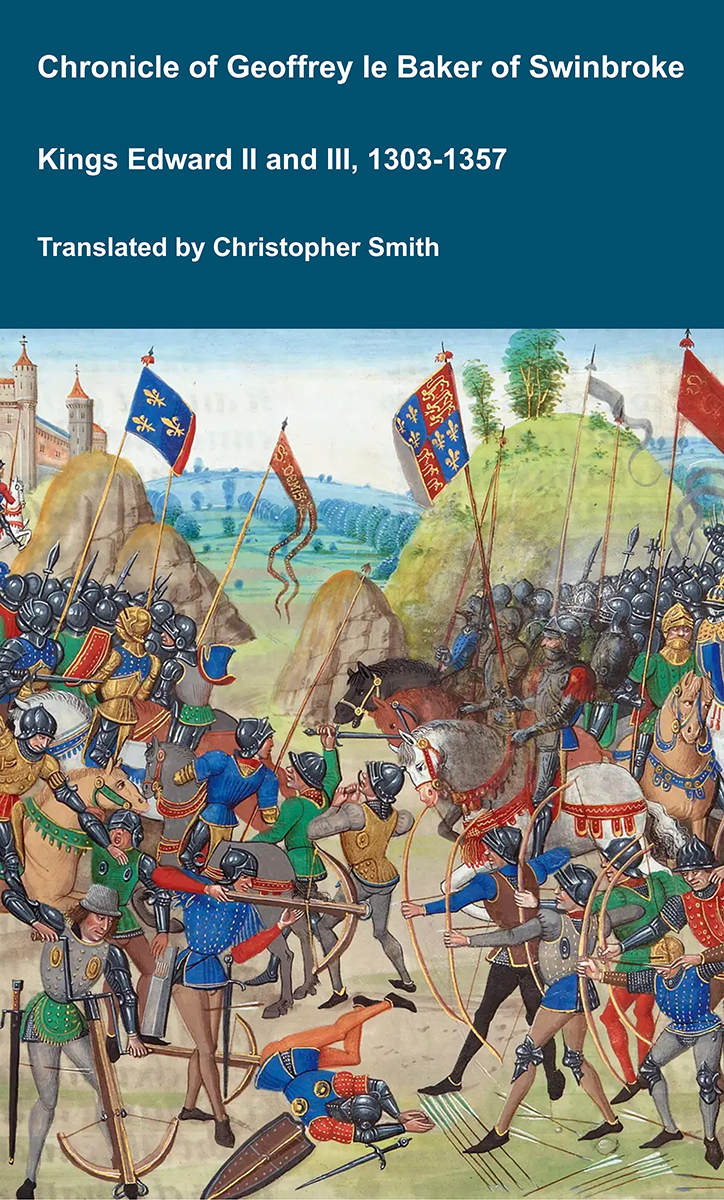
Chronicle of Geoffrey le Baker of Swinbroke
Baker was a secular clerk from Swinbroke, now Swinbrook, an Oxfordshire village two miles east of Burford. His Chronicle describes the events of the period 1303-1356: Gaveston, Bannockburn, Boroughbridge, the murder of King Edward II, the Scottish Wars, Sluys, Crécy, the Black Death, Winchelsea and Poitiers. To quote Herbert Bruce 'it possesses a vigorous and characteristic style, and its value for particular events between 1303 and 1356 has been recognised by its editor and by subsequent writers'. The book provides remarkable detail about the events it describes. Baker's text has been augmented with hundreds of notes, including extracts from other contemporary chronicles, such as the Annales Londonienses, Annales Paulini, Murimuth, Lanercost, Avesbury, Guisborough and Froissart to enrich the reader's understanding. The translation takes as its source the 'Chronicon Galfridi le Baker de Swynebroke' published in 1889, edited by Edward Maunde Thompson.
Available at Amazon in eBook and Paperback format.

Henry Machyn's Diary. 14th May 1552. The xiiij day of May my lord marqwes [of Northampton's] (age 40) men of armes did muster in More felds [Map] ... compeny and grett horssys, and a trompett blow ... nombur of a C. men of armes and welle h[arnessed.]
On 14th May 1553 Margaret Valois Queen Consort France was born to King Henry II of France (age 34) and Catherine Medici Queen Consort France (age 34). She married 18th August 1572 her second cousin Henry IV King France, son of Antoine King Navarre and Jeanne Albret III Queen Navarre.


Henry Machyn's Diary. 14th May 1554. The xiiij day of May was creatyd my lord Garrett (age 29) the yerle of Kyldare. [Note. This was a restoration rather than creation.]
Note. P. 63. Lord Garrett created earl of Kildare. Gerald Fitzgerald, reckoned as the eleventh earl in succession of his family. His father [Note. brother?] Thomas was executed at Tyburn, together with his five uncles, on the 2d Feb. 1535; his grandfather [Note. father?] Gerald the ninth earl having died a prisoner in the Tower of London on the 12th Dec. preceding; and was subsequently pronounced attainted by an act of Parliament in Ireland passed in May 1536. The young lord Garrett, or FitzGerald, having been educated abroad, is said to have been introduced to the court of king Edward the Sixth, and knighted by him in 1552 (Lodge's Peerage of Ireland, by Archdall, vol. i. p. 94); but we have seen (p. 334) that the latter statement is erroneous, and it is more probable that he did not return before his kinsman and patron cardinal Pole and other eminent members of the old communion. His patent of restoration was dated May 13, 1554, (Lodge,) and in the following November he returned to Ireland. He was now thirty years of age, and he died in London, Nov. 16, 1585.
Henry Machyn's Diary. 14th May 1560. The xiiij day of May the Quen('s) (age 26) grace removyd from Westmynster by water unto Grenwyche [Map], and as her grace was gohyng by water not so farre as ..., cam by water to her grace master Henry Perse (age 28) owt of F[rance,] with serten tydynges.
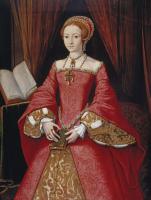


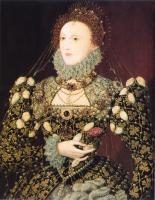
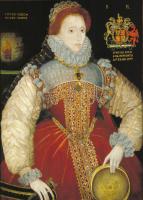


Henry Machyn's Diary. 14th May 1561. The xiiij day of May, was Assensyon evyn, was bered in sant Pulkers parryche my lade Esley (age 51) the wyfg of ser Henre Hesley knyght, of Kentt, the wyche he cam in with sir Thomas Wyett knyght by quen Mare('s) days, and he was hangyd and drane and quartered, and ys hed sent unto Maydston [Map], and set a-pone (blank) and she had nothyng done for here, butt master Skammeler (age 41) mad a sermon for here - the byshope of Peterborow,

On 14th May 1564 Charles IX King France (age 13) was appointed 348th Knight of the Garter by Queen Elizabeth I of England and Ireland (age 30).
On 14th May 1608 Charles "The Great" Lorraine III Duke Lorraine (age 65) died. His son Henry (age 45) succeeded II Duke Lorraine. Margherita Gonzaga Duchess Lorraine (age 16) by marriage Duchess Lorraine.


On 30th March 1610 Thomas Gorges of Longford Castle (age 74) died. On 14th May 1635 Helena Snakenbourg Marchioness Northampton (age 61) was buried in Salisbury Cathedral [Map].
Thomas Gorges of Longford Castle: In 1536 he was born to Edward Gorges and Mary Poyntz in Wraxall, Somerset [Map]. In 1573 Thomas Gorges of Longford Castle acquired the manor of Longford, Wiltshire [Map] which had been owned by the Servington aka Cervington family. In 1576 after his marriage to Helena Snakenbourg Marchioness Northampton they commissioned the building of a house on the triangular Swedish style on the banks of the Wiltshire River Avon with money from a shipwreck of the Spanish Armada. In 1576 Thomas Gorges of Longford Castle and Helena Snakenbourg Marchioness Northampton were married secretly. In 1586 Thomas Gorges of Longford Castle was knighted at Beddington, Surrey.


On 14th May 1610 Henry IV King France (age 56) was murdered by François Ravaillac, a Catholic zealot who stabbed him while his coach was stopped on Rue de la Ferronnerie. His son Louis (age 8) succeeded XIII King France: Capet Valois Bourbon.


Diary of Anne Clifford. 14th May 1616. The 14th Richard Jones came from London to me and brought a letter with him from Matthew the effect whereof was to persuade me to yield to my Lord's (age 27) desire in this business at this time, or else I was undone for ever.
Chronicle of Walter of Guisborough
A canon regular of the Augustinian Guisborough Priory, Yorkshire, formerly known as The Chronicle of Walter of Hemingburgh, describes the period from 1066 to 1346. Before 1274 the Chronicle is based on other works. Thereafter, the Chronicle is original, and a remarkable source for the events of the time. This book provides a translation of the Chronicle from that date. The Latin source for our translation is the 1849 work edited by Hans Claude Hamilton. Hamilton, in his preface, says: 'In the present work we behold perhaps one of the finest samples of our early chronicles, both as regards the value of the events recorded, and the correctness with which they are detailed; Nor will the pleasing style of composition be lightly passed over by those capable of seeing reflected from it the tokens of a vigorous and cultivated mind, and a favourable specimen of the learning and taste of the age in which it was framed.'
Available at Amazon in eBook and Paperback format.
Between 10th April 1619 and 14th May 1619 William Larkin (age 37) died. The earlier date being when his will was witnessed, the latter date when it was proved.
On 14th May 1631 Mervyn Tuchet 2nd Earl Castlehaven (age 38) was beheaded at Tower Hill [Map]. His English titles Baron Audley of Heighley in Staffordshire and Baron Tuchet were forfeited as a result of his attainder. His son James (age 14) succeeded to his Irish titles 3rd Earl Castlehaven, 3rd Baron Audley of Orier in England.
He was executed for the unnatural crime of sodomy in accordance with the 1533 Buggery Act, committed with his page Laurence (or Florence) FitzPatrick, who confessed to the crime and was executed; and assisting Giles Browning (alias Broadway), who was also executed, in the rape of his wife Anne, Countess of Castlehaven (age 51), in which Lord Castlehaven was found to have participated by restraining her.
Complete Collection of State Trials and Proceedings for High Treason Volume 3. 14th May 1631. In pursuance of the Sentence, a warrant was issued for his [Mervyn Tuchet 2nd Earl Castlehaven (age 38)] Execution upon Saturday the 14th of May following; notice whereof notice was given him, and his coffin carried into the Tower about a week before, that he might the better prepare himself for death: The dean of Paul's, doctor Winerfe, failed not daily to visit him, aind to see how he stood, and to settle him in his Religion.
Being brought to the scaffold, attended by the dean of Paul's and Dr. Wickham, together with his servants, he saluted the noble personages, and whole assembly, shewing to them all a very noble, manly and chearful countenance, such as seemed no ways daunted with the fear of death. After a short while shewing himself to the people, he addressed himself to prayer, the deans accompanying; him in that exercise, but somewhat apart; which being not long, he stood upon his legs, and leaned Opon the two deans, conferring witH them. Then he turned to the Lords, aud spake to this effect:
"I acknowledge with thankfulness the great goodness uf Almighty God, that it hath pleased las divine majesty to bestow on me many endowments, as honour, riches, and the like, which I have mis-spent; having been a vicious liver, and justly deserved death, for as much, and in that the least sin at God's liands justly deserveth death, and no less; but for the two heinous crimes with which I am branded, condemned, and here to suffer for, I do. here deny them upon my death, freely forgiving those that have accused me, and have been the occasion of my death, even as freely as I myself do desire forgiveness at God's hands, which I hope to obtain through his infinite goodoess and mercy; and somewhat the rather, by your Christian prayers, which I expect, and humbly beg of your lordships and this whole assembly. Now for as aiuch as there hath been speech and rumour of my unsettledness in my Religion, I have, for explanation thereof, not only made Confession ol my Faith to these two worthy doctors, but for better satisfaction to the world in that point, express the same in writing under my hand signed; whicli as it is here set down, I desire may be publicly read."
The Confession of hs Faith then was rend by a young gentleman, with a loud voice, wherein he professes he dies in the faith of the church of England.
After which he proceeded: "I acknowledge the great justice and mercy of the king's majesty; his justice in bringing me to the bar; and his mercy in offording me such a noble and gracious Trial there: and I give his majesty humble and hearty thanks in assigning my death to be in this manner, contrary to the Sentence pronounced against me at my arraignment. But there is a greater favour than this, for which I am to render thanks unto his sacred majesty, and that is, the long time I have had to repent in; whereof (praised be Almighty God) I can speak with comfort, I have made good use, and am now fully prepared for death, and much the better, by the good help and instruction of these two worthy men, to whom I acknowledge myself bounden, and do here, before you all, give them hearty thanks for their great pains taken in coming to me, praying for me, and preaching and reading to me. — And I desire your lordships to present my humble acknowledgment to his majesty, for his goodness in sending them to me, and my thanks for the same. — I do also from my heart desire and beseech Almighty God to bless the king's majesty, the queen, and the young prince, together with all such other issue as he shall hereafter in mercy bestow on them, and the whole state; and my trust and desire is, there may be ever one of their line to sway the sceptre of these kingdoms to the world's end. — And I beseech, and do heartily pray for the welfare and happy prosperity of the king and queen of Bohernia, with all their princely issue. I do again desire your lordships to make tender of my humble acknowledgement of his mercy and goodness. — And now lastly, That you will not bend your eyes, so much upon me, as your hands and hearts to heaven in prayers for me; and so I take my last farewell of your lordshipl and the world."
Then he went again to his private prayers; which being done, he prepared himself for death, striving to shew the like courage and magnanimity which he had formerly done, unto the last: but sight of the headsmsm (whom yet he freely forgave, and took him by the hand, bidding him do his otfice manfully) together with the apprehension of his near approaching end, made him somewhat to change colour, and shew some signs of trembling passion; for his hands shook a little in undoing his bandstrings; which his man perceiving, stept to him and hclpi him, as also off with his doublet. Then taking leave again of the lords, the doctors, and his man, saying a very short prayer by himself, he pulled down his handkerchief over his face, and laid his head upon the block; which was taken off at one blow.
Become a Member via our Buy Me a Coffee page to read more.
On 14th May 1643 Louis XIII King France (age 41) died. His son Louis (age 4) succeeded XIV King France: Capet Valois Bourbon.
Samuel Pepys' Diary. 14th May 1660. So I got the Captain to ask leave for me to go, which my Lord did give, and I taking my boy and judge Advocate with me, went in company with them. The weather bad; we were sadly washed when we came near the shore, it being very hard to land there. The shore is, as all the country between that and the Hague, all sand. The rest of the company got a coach by themselves; Mr. Creed and I went in the fore part of a coach wherein were two very pretty ladies, very fashionable and with black patches, who very merrily sang all the way and that very well, and were very free to kiss the two blades that were with them. I took out my flageolette and piped, but in piping I dropped my rapier-stick, but when I came to the Hague, I sent my boy back again for it and he found it, for which I did give him 6d., but some horses had gone over it and broke the scabbard. The Hague is a most neat place in all respects. The houses so neat in all places and things as is possible. Here we walked up and down a great while, the town being now very full of Englishmen, for that the Londoners were come on shore today. But going to see the Prince (age 9), he was gone forth with his governor, and so we walked up and down the town and court to see the place; and by the help of a stranger, an Englishman, we saw a great many places, and were made to understand many things, as the intention of may-poles, which we saw there standing at every great man's door, of different greatness according to the quality of the person. About 10 at night the Prince comes home, and we found an easy admission. His attendance very inconsiderable as for a prince; but yet handsome, and his tutor a fine man, and himself a very pretty boy. It was bright moonshine to-night. This done we went to a place we had taken to sup in, where a sallet and two or three bones of Mutton were provided for a matter of ten of us which was very strange. After supper the Judge and I to another house, leaving them there, and he and I lay in one press bed, there being two more in the same room, but all very neat and handsome, my boy sleeping upon a bench by me.

Become a Member via our Buy Me a Coffee page to read more.
Samuel Pepys' Diary. 14th May 1660. In the morning when I woke and rose, I saw myself out of the scuttle close by the shore, which afterwards I was told to be the Dutch shore; the Hague was clearly to be seen by us. My Lord went up in his nightgown into the cuddy1, to see how to dispose thereof for himself and us that belong to him, to give order for our removal to-day. Some nasty Dutchmen came on board to proffer their boats to carry things from us on shore, &c., to get money by us. Before noon some gentlemen came on board from the shore to kiss my Lord's hands. And by and by Mr. North (age 24) and Dr. Clerke went to kiss the Queen of Bohemia's' hands, from my Lord, with twelve attendants from on board to wait on them, among which I sent my boy, who, like myself, is with child to see any strange thing. After noon they came back again after having kissed the Queen of Bohemia's (age 63) hand, and were sent again by my Lord to do the same to the Prince of Orange (age 9)2.
Note 1. "A sort of cabin or cook-room, generally in the fore-part, but sometimes near the stern of lighters and barges of burden".-Smyth's Sailor's Word-Book.
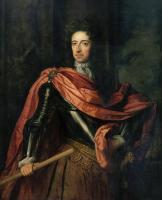
Note 2. Son of the Prince of Orange and Mary (age 28), eldest daughter of Charles I afterwards William III He was then in his tenth year, having been born in 1650.


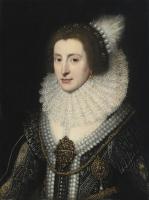


Samuel Pepys' Diary. 14th May 1662. All the morning at Westminster and elsewhere about business, and dined at the Wardrobe; and after dinner, sat talking an hour or two alone with my Lady. She is afeard that my Baroness Castlemaine's (age 21) will keep still with the King (age 31), and I am afeard she will not, for I love her well.


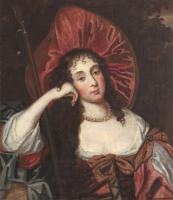


John Evelyn's Diary. 14th May 1662. To London, being chosen one of the Commissioners for reforming the buildings, ways, streets, and incumbrances, and regulating the hackney coaches in the city of London, taking my oath before my Lord Chancellor (age 53), and then went to his Majesty's (age 31) Surveyor's office, in Scotland Yard, about naming and establishing officers, adjourning till the 16th, when I went to view how St Martin's Lane might be made more passable into the Strand [Map]. There were divers gentlemen of quality in this commission.


On 14th May 1662 Catherine of Braganza Queen Consort England (age 23) landed at Portsmouth, Hampshire [Map].


Jean de Waurin's Chronicle of England Volume 6 Books 3-6: The Wars of the Roses
Jean de Waurin was a French Chronicler, from the Artois region, who was born around 1400, and died around 1474. Waurin’s Chronicle of England, Volume 6, covering the period 1450 to 1471, from which we have selected and translated Chapters relating to the Wars of the Roses, provides a vivid, original, contemporary description of key events some of which he witnessed first-hand, some of which he was told by the key people involved with whom Waurin had a personal relationship.
Available at Amazon in eBook and Paperback format.
Samuel Pepys' Diary. 14th May 1663. Then abroad to the Temple [Map], and up and down about business, and met Mr. Moore; and with him to an alehouse in Holborn; where in discourse he told me that he fears the King (age 32) will be tempted to endeavour the setting the Crown upon the little Duke (age 14), which may cause troubles; which God forbid, unless it be his due! He told me my Lord do begin to settle to business again, which I am glad of, for he must not sit out, now he has done his own business by getting his estate settled, and that the King did send for him the other day to my Baroness Castlemaine's (age 22), to play at cards, where he lost £50; for which I am sorry, though he says my Lord was pleased at it, and said he would be glad at any time to lose £50 for the King to send for him to play, which I do not so well like.


Samuel Pepys' Diary. 14th May 1665. Thence to Walthamstow, Essex [Map], where (failing at the old place) Sir W. Batten (age 64) by and by come home, I walking up and down the house and garden with my Lady very pleasantly, then to supper very merry, and then back by coach by dark night. I all the afternoon in the coach reading the treasonous book of the Court of King James, printed a great while ago, and worth reading, though ill intended. As soon as I come home, upon a letter from the Duke of Albemarle (age 56), I took boat at about 12 at night, and down the River in a gally, my boy and I, down to the Hope and so up again, sleeping and waking, with great pleasure, my business to call upon every one of [continued tomorrow]
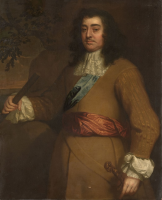


On 14th May 1666 Victor Amadeus King Sardinia was born to Charles Emmanuel II Duke of Savoy (age 31) and Marie Jeanne Baptiste of Savoy (age 22). Coefficient of inbreeding 2.29%. He married 10th April 1684 his second cousin Anne Marie Bourbon Queen Consort Sardinia, daughter of Philip Bourbon I Duke Orléans and Princess Henrietta Stewart Duchess Orléans, and had issue.

Samuel Pepys' Diary. 14th May 1666. I left her at it, and toward Westminster myself with my wife by coach and meeting took up Mr. Lovett the varnisher with us, who is a pleasant speaking and humoured man, so my wife much taken with him, and a good deale of worke I believe I shall procure him. I left my wife at the New Exchange and myself to the Exchequer, to looke after my Tangier tallys, and there met Sir G. Downing (age 41), who shewed me his present practise now begun this day to paste up upon the Exchequer door a note of what orders upon the new Act are paid and now in paying, and my Lord of Oxford (age 39) coming by, also took him, and shewed him his whole method of keeping his books, and everything of it, which indeed is very pretty, and at this day there is assigned upon the Act £804,000.
Samuel Pepys' Diary. 14th May 1667. And it was pretty to observe how, when my Lord sent down to St. James's to see why the Duke of York (age 33) come not, and Mr. Povy (age 53), who went, returned, my Lord (Chancellor (age 58)) did ask, not how the Princes or the Dukes do, as other people do, but "How do the children?" which methought was mighty great, and like a great man and grandfather. I find every body mightily concerned for these children, as a matter wherein the State is much concerned that they should live.

Samuel Pepys' Diary. 14th May 1667. At last it was found that the meeting did fail from no known occasion, at which my Chancellor (age 58) was angry, and did cry out against Creed that he should give him no notice. So Povy (age 53) and I went forth, and staid at the gate of the house by the streete, and there stopped to talk about the business of the Treasury of Tangier, which by the badness of our credit, and the resolution that the Governor shall not be paymaster, will force me to provide one there to be my paymaster, which I will never do, but rather lose my place, for I will not venture my fortune to a fellow to be employed so far off, and in that wicked place.
Samuel Pepys' Diary. 14th May 1667. After dinner comes Fist, and he and I to our report again till 9 o'clock, and then by coach to my Chancellor's (age 58), where I met Mr. Povy (age 53), expecting the coming of the rest of the Commissioners for Tangier. Here I understand how the two Dukes, both the only sons of the Duke of York (age 33), are sick even to danger, and that on Sunday last they were both so ill, as that the poor Duchess (age 30) was in doubt which would die first: the Duke of Cambridge (age 3) of some general disease; the other little Duke (age 18), whose title I know not, of the convulsion fits, of which he had four this morning. Fear that either of them might be dead, did make us think that it was the occasion that the Duke of York and others were not come to the meeting of the Commission which was designed, and my Chancellor did expect.


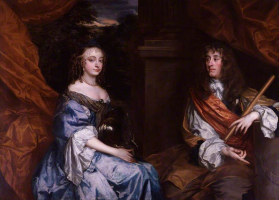
Samuel Pepys' Diary. 14th May 1667. Up by 5 o'clock, and when ready down to my chamber, and there with Mr. Fist, Sir W. Batten's (age 66) clerk, who writes mighty well, writing over our report in Mr. Carcasses business, in which we continued till 9 o'clock, that the office met, and then to the office, where all the morning, and so at noon home to dinner, where Mr. Holliard (age 58) come and eat with us, who among other things do give me good hopes that we shall give my father some ease as to his rupture when he comes to town, which I expect to-morrow.
William of Worcester's Chronicle of England
William of Worcester, born around 1415, and died around 1482 was secretary to John Fastolf, the renowned soldier of the Hundred Years War, during which time he collected documents, letters, and wrote a record of events. Following their return to England in 1440 William was witness to major events. Twice in his chronicle he uses the first person: 1. when writing about the murder of Thomas, 7th Baron Scales, in 1460, he writes '… and I saw him lying naked in the cemetery near the porch of the church of St. Mary Overie in Southwark …' and 2. describing King Edward IV's entry into London in 1461 he writes '… proclaimed that all the people themselves were to recognize and acknowledge Edward as king. I was present and heard this, and immediately went down with them into the city'. William’s Chronicle is rich in detail. It is the source of much information about the Wars of the Roses, including the term 'Diabolical Marriage' to describe the marriage of Queen Elizabeth Woodville’s brother John’s marriage to Katherine, Dowager Duchess of Norfolk, he aged twenty, she sixty-five or more, and the story about a paper crown being placed in mockery on the severed head of Richard, 3rd Duke of York.
Available at Amazon in eBook and Paperback format.

Samuel Pepys' Diary. 14th May 1669. Up, and to St. James's to the Duke of York (age 35), and thence to White Hall, where we met about office business, and then at noon with Mr. Wren (age 40) to Lambeth, to dinner with the Archbishop of Canterbury (age 70); the first time I was ever there and I have long longed for it; where a noble house, and well furnished with good pictures and furniture, and noble attendance in good order, and great deal of company, though an ordinary day; and exceeding great cheer, no where better, or so much, that ever I think I saw, for an ordinary table: and the Bishop mighty kind to me, particularly desiring my company another time, when less company there. Most of the company gone, and I going, I heard by a gentleman of a sermon that was to be there; and so I staid to hear it, thinking it serious, till by and by the gentleman told me it was a mockery, by one Cornet Bolton, a very gentleman-like man, that behind a chair did pray and preach like a Presbyter Scot that ever I heard in my life, with all the possible imitation in grimaces and voice. And his text about the hanging up their harps upon the willows: and a serious good sermon too, exclaiming against Bishops, and crying up of my good Lord Eglinton, a till it made us all burst; but I did wonder to have the Bishop at this time to make himself sport with things of this kind, but I perceive it was shewn him as a rarity; and he took care to have the room-door shut, but there were about twenty gentlemen there, and myself, infinitely pleased with the novelty. So over to White Hall, to a little Committee of Tangier; and thence walking in the Gallery, I met Sir Thomas Osborne (age 37), who, to my great content, did of his own accord fall into discourse with me, with so much professions of value and respect, placing the whole virtue of the Office of the Navy upon me, and that for the Comptroller's place, no man in England was fit for it but me, when Sir J. Minnes (age 70), as he says it is necessary, is removed: but then he knows not what to do for a man in my place; and in discourse, though I have no mind to the other, I did bring in Tom Hater to be the fittest man in the world for it, which he took good notice of. But in the whole I was mightily pleased, reckoning myself now fifty per cent. securer in my place than I did before think myself to be.
Become a Member via our Buy Me a Coffee page to read more.
John Evelyn's Diary. 14th May 1672. To Dover, Kent [Map]; but the fleet did not appear till the 16th, when the Duke of York (age 38) with his and the French squadron, in all 170 ships (of which above 100 were men-of-war), sailed by, after the Dutch, who were newly withdrawn. Such a gallant and formidable navy never, I think, spread sail upon the seas. It was a goodly yet terrible sight, to behold them as I did, passing eastward by the straits between Dover and Calais in a glorious day. The wind was yet so high, that I could not well go aboard, and they were soon got out of sight. The next day, having visited our prisoners and the Castle, and saluted the Governor, I took horse for Margate, Kent [Map]. Here, from the North Foreland Lighthouse top (which is a pharos, built of brick, and having on the top a cradle of iron, in which a man attends a great sea-coal fire all the year long, when the nights are dark, for the safeguard of sailors), we could see our fleet as they lay at anchor. The next morning, they weighed, and sailed out of sight to the N. E.


On 14th May 1685 John Churchill 1st Duke of Marlborough (age 34) was created 1st Baron Churchill of Sandridge in Hertfordshire.


John Evelyn's Diary. 14th May 1693. Nothing yet of action from abroad. Muttering of a design to bring forces under color of an expected descent, to be a standing army for other purposes. Talk of a declaration of the French King (age 54), offering mighty advantages to the confederates, exclusive of King William (age 42); and another of King James (age 59), with an universal pardon, and referring the composing of all differences to a Parliament. These were yet but discourses; but something is certainly under it. A declaration or manifesto from King James, so written, that many thought it reasonable, and much more to the purpose than any of his former.
On 14th May 1710 Adolph Frederick King Sweden was born to Christian August of Holstein Gottorp Prince Eutin (age 37). He married 29th August 1744 his fourth cousin once removed Louisa Ulrika of Prussia Queen Consort of Sweden, daughter of Frederick William "Soldier King" I King Prussia and Sophia Dorothea Hanover Queen Consort Prussia, and had issue.
The 1715 Battle of Preston was the final action of the 1715 Jacobite Rebellion. It commenced on 9th November 1715 when Jacobite cavalry entered Preston, Lancashire [Map]. Royalist troops arrived in number over the next few days surrounding Preston forcing the Jacocobite surrender. 1463 were taken prisoner of which 463 were English. The Scottish prisoners included:
George Seton 5th Earl of Winton (age 38). The only prisoner to plead not guilty, sentenced to death, escaped from the Tower of London [Map] on 4th August 1716 around nine in the evening. Travelled to France then to Rome.
On 24th February 1716 William Gordon 6th Viscount Kenmure (age 44) was beheaded on Tower Hill [Map].
On 9th February 1716 William Maxwell 5th Earl Nithsale was sentenced to be executed on 24th February 1716. The night before his wife (age 36) effected his escape from the Tower of London [Map] by exchanging his clothes with those of her maid. They travelled to Paris then to Rome where the court of James "Old Pretender" Stewart (age 27) was.
James Radclyffe 3rd Earl Derwentwater (age 26) was imprisoned in the Tower of London [Map]. He was examined by the Privy Council on 10th January 1716 and impeached on 19th January 1716. He pleaded guilty in the expectation of clemency. He was attainted and condemned to death. Attempts were made to procure his pardon. His wife Anna Maria Webb Countess Derwentwater (age 24), her sister Mary Webb (age 21) [Note. Assumed to be her sister Mary], their aunt Anne Brudenell Duchess Richmond (age 45), Barbara Villiers 1st Duchess of Cleveland appealed to King George I (age 55) in person without success.
On 24th February 1716 James Radclyffe 3rd Earl Derwentwater was beheaded on Tower Hill [Map]. Earl Derwentwater, Baronet Radclyffe of Derwentwater in Cumberland forfeit.
William Murray 2nd Lord Nairne was tried on 9th February 1716 for treason, found guilty, attainted, and condemned to death. He survived long enough to benefit from the Indemnity Act of 1717.
General Thomas Forster of Adderstone (age 31) was attainted. He was imprisoned at Newgate Prison, London [Map] but escaped to France.
On 14th May 1716 Henry Oxburgh was hanged, drawn and quartered at Tyburn [Map]. He was buried at Church of St Gile's in the Fields. His head was spiked on Temple Bar.
The trials and sentences were overseen by the Lord High Steward William Cowper 1st Earl Cowper (age 50) for which he subsequently received his Earldom.
Become a Member via our Buy Me a Coffee page to read more.

Minutes of the Society of Antiquaries. 14th May 1718. Mr Borkol [?] informed us his trees in Dean's Yard, Westminster were planted by Dr Feckenham last Abbot of Westminster.
Mr Gosling presented each Member with a print from his two Plates of Lord Bacon, for which thanks of the Society are returned to him, and Mr Director (age 40) is ordered to present him with a couple of prints of St James' Font in their names.
Mr President (age 57) exhibited a curious ancient deed, dated MCLXXVI [1426] 22:H:II being a Pacification between the Abbot of Canterbury and the men of the Isle of Thanet whereto are 124 witnesses cum pluribus alus[?] [with more]. Tis printed in the Dorom Scriptures into Chronica [?] p 1827. Edit 1652 but without the Witnesses.
The Secretary (age 30) read a letter which gives an Account of a fine font in Ely Cathedral [Map], vast numbers of beautiful and with other monuments there, some pretty ancient. Opposite the door of the North Cross Isle, the pictures of the Archbishop of York, the Earl of Northumberland, and [?] other Bps [Bishops] who held out the Town against William the Conq. They are very ancient and pretty entire.

Avebury by William Stukeley. Table XVIII. The Entrance of Kennet avenue into Abury [Map] 14 May 1724.
On or before 14th May 1727, the date he was baptised, Thomas Gainsborough was born to John Gainsborough and Mary Burroughs in Sudbury, Suffolk [Map]. He married 1748 Margaret Somerset aka Burr, daughter of Henry Somerset 3rd Duke Beaufort.
On 14th May 1735 Francis Godolphin 2nd Earl Godolphin (age 56) was appointed Lord Privy Seal.


William of Worcester's Chronicle of England
William of Worcester, born around 1415, and died around 1482 was secretary to John Fastolf, the renowned soldier of the Hundred Years War, during which time he collected documents, letters, and wrote a record of events. Following their return to England in 1440 William was witness to major events. Twice in his chronicle he uses the first person: 1. when writing about the murder of Thomas, 7th Baron Scales, in 1460, he writes '… and I saw him lying naked in the cemetery near the porch of the church of St. Mary Overie in Southwark …' and 2. describing King Edward IV's entry into London in 1461 he writes '… proclaimed that all the people themselves were to recognize and acknowledge Edward as king. I was present and heard this, and immediately went down with them into the city'. William’s Chronicle is rich in detail. It is the source of much information about the Wars of the Roses, including the term 'Diabolical Marriage' to describe the marriage of Queen Elizabeth Woodville’s brother John’s marriage to Katherine, Dowager Duchess of Norfolk, he aged twenty, she sixty-five or more, and the story about a paper crown being placed in mockery on the severed head of Richard, 3rd Duke of York.
Available at Amazon in eBook and Paperback format.
On 14th May 1736 Louis Auguste Bourbon Duke Maine (age 66) died.

After 14th May 1737. Grave of Archdeacon Thomas Howson at Lincoln Cathedral [Map].
On 14th May 1751 Mary Churchill Duchess of Montagu (age 61) died. Monument in St Edmund's Church, Warkton [Map]. Sculpted by Louis Francois Roubiliac (age 48). Erected by her Daughter, Lady Mary Montagu. The monument is adorned with figures representing the three fates of Clotho, Atropos and Lachesis, arranged to show the cutting of Mary's life thread, and Lachesis' dismay at it being cut short. Three putti also figure on the monument, one of whom holds the spindle from which the thread was cut.
Clotho: Clotho is one of the Three Fates. She spins the thread of human life.
Atropos: Atropos is one of the Three Fates. She cuts the thread of human life.
Lachesis: Lachesis is one of the Three Fates. She measures the thread of human life.


On 14th May 1771 Louis XVIII King France (age 15) and Maria Joséphine of Savoy (age 17) were married. She the daughter of Victor Amadeus III King Sardinia (age 45) and Infanta Maria Antonia Spain (age 41). They were second cousin once removed. He a great x 4 grandson of King Charles I of England, Scotland and Ireland. She a great x 3 granddaughter of King Charles I of England, Scotland and Ireland.


On 23rd April 1775 Joseph Mallord William Turner was born to William Turner (age 30) and Mary Marshall at Maiden Lane, Covent Garden. He was baptised on 14th May 1775 at the St Paul's Church, Covent Garden. His father was a barber and wig maker.
The London Gazette 11665. St. James's, May 14 [1776]. The King (age 37) has been pleased to order a Writ to be issued under the Great Seal of Great Britain for summoning Francis Osborne, Esq; commonly called Marquess of Carmarthen, up to the House of Peers, by the Stile and Title of Baron Olborne of Kiveton in the County of York.
The King has been pleased to grant unto her Grace the Dutchess of Argyll (age 42) the Dignity of a Baroness of the Kingdom of Great Britain, by the Name, Stile, and Title of Baroness Hamilton, of Hameldon in the County of Leicester; and the Dignity of a Baron to her Heirs Male.
The King has also been pleased to grant the Dignity of a Baron of the Kingdom of Great Britain unto the following Gentlemen, and their Heirs Male; viz.
Alexander Hume Campbell,.Esq; commonly called Lord Polwarth, by the Name, Stile, and Title of Baron Hume of Berwick.
John Stuart, Esq; commonly called Lord Mount Stuart, by the Name, Stile, and Title of Baron Cardiff of Cardiff Castle in the County of Glamorgan.
The Right Honorable Sir Edward Hawke, Knight of the Bath, by the Name, Stile, and Title of Baron Hawke of Towton in the County of York.
The Right Honorable George Onslow, by the Name, Stile and Title of Baron Cranley of Imber Court in the County of Surrey.
The Right Honorable Sir Jeffery Amherst, Knight os the Bath, by the Name, Stile, and Title of Baron Amherst of Holmesdale in the County of Kent.
Sir Brownlow Cust (age 31), Bart, by the Name, Stile, and Title of Baron Brownlow of Belton in the County of Lincoln. [Frances Bankes Baroness Brownlow by marriage Baroness Brownlow of Belton in Lincolnshire.]
George Pitt (age 55), Esq; by the Name, Stile, and Title of Baron Rivers of Stratfieldsay in the County of Southampton.
Nathaniel Ryder (age 40), Esq; by the Name, Stile, and Title of Baron Harrowby of Harrowby in the County of Lincoln. [Elizabeth Terrick Baroness Harrowby by marriage Baroness Harrowby of Harrowby in Lincolnshire.]
Thomas Foley (age 59), Esq; of Great Witley in the County of Worcester, by the Name, Stile, and Title of Baron Foley of Kidderminster in the County of Worcester.


Become a Member via our Buy Me a Coffee page to read more.
On 14th May 1786 Susanna Euphemia Beckford Duchess Hamilton Duchess Brandon was born to William Beckford (age 25). She married 26th April 1810 Alexander Hamilton 10th Duke Hamilton 7th Duke Brandon, son of Archibald Hamilton 9th Duke Hamilton 6th Duke Brandon and Harriet Stewart, and had issue.

On 29th March 1792 Gustav III King Sweden (age 46) was assassinated. King Gustav IV of Sweden (age 13) succeeded King Sweden.
The assassination of the king was enacted on the 16th of March 1792 at a masked ball at the Royal Opera House in Stockholm at midnight. Gustav had arrived earlier that evening to enjoy a dinner in the company of friends. During dinner, he received an anonymous letter that described a threat to his life written by the colonel of the Life Guards Carl Pontus Lilliehorn. After dinner the King continued through a corridor leading from the foyer towards the opera stage where the dancing took place. Anckarström took out the pistol from his left inner pocket, then either he or Ribbing pulled the trigger with the gun in Anckarström's hand. The king was carried back to his quarters, and the exits of the Opera were sealed. Anckarström was arrested the following morning and immediately confessed to the murder. The king had not been shot dead; he was alive and continued to function as head of state. However, the wound became infected, and on 29 March 1792. Gustav's funeral took place on 14 May 1792 at Riddarholmskyrkan.
On 14th May 1796 Edward Jenner (age 46) inoculated eight year old James Phipps against smallpox using pus from the cowpox blisters of milkmaid Sarah Nelmes. He later injected the boy with variolous material without disease following. The boy's response indicated he was immune to smallpox. He then tested a further twenty-three people including his eleven month old son Robert. Within years the whole of Europe had been inoculated against smallpox.
The Deeds of the Dukes of Normandy
The Gesta Normannorum Ducum [The Deeds of the Dukes of Normandy] is a landmark medieval chronicle tracing the rise and fall of the Norman dynasty from its early roots through the pivotal events surrounding the Norman Conquest of England. Originally penned in Latin by the monk William of Jumièges shortly before 1060 and later expanded at the behest of William the Conqueror, the work chronicles the deeds, politics, battles, and leadership of the Norman dukes, especially William’s own claim to the English throne. The narrative combines earlier historical sources with firsthand information and oral testimony to present an authoritative account of Normandy’s transformation from a Viking settlement into one of medieval Europe’s most powerful realms. William’s history emphasizes the legitimacy, military prowess, and governance of the Norman line, framing their expansion, including the conquest of England, as both divinely sanctioned and noble in purpose. Later chroniclers such as Orderic Vitalis and Robert of Torigni continued the history, extending the coverage into the 12th century, providing broader context on ducal rule and its impact. Today this classic work remains a foundational source for understanding Norman identity, medieval statesmanship, and the historical forces that reshaped England and Western Europe between 800AD and 1100AD.
Available at Amazon in eBook and Paperback format.

On 14th May 1804 George Legge 3rd Earl Dartmouth (age 48) was appointed Lord Chamberlain.

After 14th May 1812. St Mary's Church, Long Newton [Map], Memorial to Reverend Charles Plumptre.
Archaeologia Volume V32 1847 Section X. Letter from the Viscount Mahon (age 41), President, FRS. &c. &c., to Sir Henry Ellis (age 68) K.H. Secretary upon the wish expressed to his Lordship by Prince Alexander Labanoff to obtain the opinion of the best English Antiquaries respecting the alleged Residence of Mary Queen of Scots at Hardwick Hall [Map].
Read 14 May 1846.
My dear Sir Henry
Grosvenor Place, May 11. 1846.
In a letter dated St Petersburg the 15th of March last, which I have received fron Prine Alexander Labanoff, the accomplished editor of the "Correspondence of Queen Mary of Scots," he expresses anxiety to ascertain the opinion of the best English antiquaries respecting the alleged residence of that princess at Hardwick Hall [Map], as is well known, the property of the Duke of Devonshire. He states, that in 1839 some doubts were expressed to him by le savant Dr. Hunter (age 63), meaning I conclude, our esteemed brother-member of the Society of Antiquaries the Rev. Joseph Hunter, whether in reality Queen Mary had ever been at Hardwick [Map]. At the time when those doubts were expressed to him Prince Labanoff did not concur in them; but, on a further comparison of dates and consideration of circumstances, he has become convinced that those doubts are perfectly well founded. "After long research," says he, "I am bound to acknowledge that no trace exists of any visit of Mary Stuart to Hardwick Hall [Map]: on the contrary, her correspondence appears to prove that she never was at that place."
Considering the interest which is raised by every particular in the life of Queen Mary of Scots, and the minuteness of the local traditions which assert her residence at Hardwick [Map] and point to traces of her stay, I think that the question thus brought before us by Prince Labanoff is by no means undeserving the attention and research of any British antiquary conversant in the history of that period.
Believe me,
Ms dear Sir Henry,
Yours very sincerely,


Become a Member via our Buy Me a Coffee page to read more.
On 14th May 1860 Georgiana Elizabeth Spencer-Churchill Countess Howe was born to John Winston Spencer-Churchill 7th Duke of Marlborough (age 37) and Frances Anne Emily Vane Duchess of Marlborough (age 38). She married 4th June 1883 her sixth cousin Richard George Penn Curzon 4th Earl Howe, son of Richard William Penn Curzon Howe 3rd Earl Howe and Isabella Maria Katherine Anson Countess Howe, and had issue.
On 14th May 1861 Francis Russell 7th Duke Bedford (age 73) died. His son William (age 51) succeeded 8th Duke Bedford, 8th Marquess Tavistock, 12th Earl Bedford, 12th Baron Russell of Cheneys, 10th Baron Russell of Thornhaugh, 8th Baron Howland of Streatham.
The Athenaeum 1864. 14th May 1864. Mr. R. S. Stanhope (age 35) may be styled the youngest in the list of artists who establish themselves this: year. His Rispa (No. 33) is a very expressive and poetical representation of the well known theme of the daughter of Aiah watching the bodies of her sons and those of the sons of Michal, the daughter of Saul. The face of the woman is admirably conceived. Penelope (476), by the same, — wife of Ulysses at her loom, — has much execellent colour in its flesh; the treatment of the draperies, although rather thin, is original and careful. The face of the woman in blue does Mr. Stanhope great credit [?] in painting and conception. In these pictures the artist has been eminently successful with the backgrounds, not alone in the vigorous colour they exhibit, but in the pathetic and apt expressiveness which fits them to the subjects.

The Athenaeum 1864. 14th May 1864. Mr. V. Prinsep's (age 26) contributions mark a great advance in his powers of design, and, what his former pictures mostly lacked, increased care in drawing, greater clearness and cleanness of bandling and colour, and progress in perception of what properly makes a picture. The last is one of the rarest gifts to a young painter, and often the latest he obtains by practice and thought. To all who give attention to this subject in a broad or philosophical manner, it is wonderful to find how few are the painters who perccive that it is not everything that is fit for the exercise of Art. At least half the pictures in every Exhibition evince no thought on the part of their producers for this matter, and—such is. the painful conclusion we cannot avoid—afford direct proof that their painters have not the primary qualification of an artist. All true artists are born with perception of this kind—some have it as their chief source of power, none have it thrust upon them—although scores get reputations on the strength of mere tricks, which the critic knows to be disdained by legions of unknown but self-respecting wen. Some achieve power of perception, as Mr. V. Prinsep soems to be doing; his Berenice — a mighty woman — is eminently pictorial in subject, and not less so in treatment. It might bave been less unrefined in form of drawing without being less strong than it is My Lady Betty (455), a courtly woman wearing a dress of white, gold-embroidered brocade, and! holding a fan before her as she walks, is inferior in subject to the last, but surpasses it in pictorial power displayed. It is very solid and good in execution. Benedick and Beatrice. (560) has perhaps. more subject, in the ordinary sense of the word, which implies something the ordinary spectator finds tangible, but it is Iess valuable as a picture than 'My Lady Betty,' and has parts that are very badly drawn,
Letters of Christina Rossetti. 56 Euston Square, N.W.
Friday afternoon, 14th. [May 1869]1
My dear Miss Boyd (age 44)
Thank you warmly for so exceedingly kind an invitation, concerning which I will only put forward one regret, that Mrs Epps [Note. Not clear who Mrs Epps is since Laura Theresa Epps (age 17) didn't marry Lawrence Alma-Tadema (age 33) until 1871] should lose what might so have refreshed her both in mind and in body. And indeed, if I may, I will say that should it after all turn out that she could visit lovely Penkill you will without hesitation let me know your altered plans to which I shall most readily conform mine. On the other hand if I go, it will be a special indulgence to travel with the Scotts [Note. William Bell Scott (age 58) and Letitia Margery Norquoy] and as you give me so generous a latitude I will even feel housed at the Castle until a companion offers with whom to start south again;-the journey being somewhat formidably lengthy. But this, of course, only in case it brings my visit within not altogether unreasonable dimensions. How very kind you are to me, and how much I should like to make my gratitude obvious to you. Knowing what a Dear Mrs Scott is, I think she will kindly let me know her plans in due course: meanwhile I expect to run down to Gloucester next week on a little visit to my Uncle if he will have me, but to be up again in time for Penkill.
My love, please, to Mrs Scott, and a kindred sentiment to Mr Scott. We saw Gabriel (age 41) last night, but I know nothing at all about his summer plans.2
My Mother (age 69) desires her most cordial remembrances to you, and adds her thanks to mine on my behalf.
Always and affectionately yours
Christina G. Rossetti (age 38).
I expect you will find me quite a different order of being this year as regards walking, and I mean to trim up my old hat for possible croquet.
Note 1. Endorsed: "1867." CGR returned to Penkill in 1869, from 9 June to 22 July, not in 1867.
Become a Member via our Buy Me a Coffee page to read more.
Chronicle of Walter of Guisborough
A canon regular of the Augustinian Guisborough Priory, Yorkshire, formerly known as The Chronicle of Walter of Hemingburgh, describes the period from 1066 to 1346. Before 1274 the Chronicle is based on other works. Thereafter, the Chronicle is original, and a remarkable source for the events of the time. This book provides a translation of the Chronicle from that date. The Latin source for our translation is the 1849 work edited by Hans Claude Hamilton. Hamilton, in his preface, says: 'In the present work we behold perhaps one of the finest samples of our early chronicles, both as regards the value of the events recorded, and the correctness with which they are detailed; Nor will the pleasing style of composition be lightly passed over by those capable of seeing reflected from it the tokens of a vigorous and cultivated mind, and a favourable specimen of the learning and taste of the age in which it was framed.'
Available at Amazon in eBook and Paperback format.
On 14th May 1912 Frederick VIII King of Denmark (age 68) died. His son Christian (age 41) succeeded X King of Denmark.
On 14th May 1918 Henry George Percy 7th Duke Northumberland (age 71) died. He was buried at the Church of St Mary the Virgin, Lesbury [Map]. His son Alan (age 38) succeeded 8th Duke Northumberland, 5th Earl Beverley, 11th Baronet Smithson of Stanwick in Yorkshire. Helen Gordon-Lennox Duchess Northumberland (age 31) by marriage Duchess Northumberland.



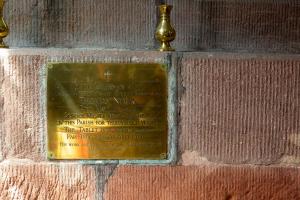
After 14th May 1923. St Oswald's Church, Brereton [Map]. Memorial to Thomas Nock, Schoolmaster and Organist for thirty years.
On 14th May 1958 Walter Stoneman (age 82) died.
On 14th May 1316 Charles IV King Bohemia Holy Roman Emperor Luxemburg was born to King John I of Bohemia (age 19) and Queen Elizabeth of Bohemia (age 24). He married (1) 1335 his fourth cousin once removed Blanche Valois Holy Roman Empress Luxemburg, daughter of Charles Valois I Count Valois and Mahaut Chatillon Countess Valois, and had issue (2) before 1350 Anna Bavaria Holy Roman Empress Luxemburg (3) before 19th April 1358 Anna Schweidnitz Holy Roman Empress Luxemburg and had issue (4) in or before 1366 Elizabeth Pomerania Holy Roman Empress Luxemburg and had issue.
On 14th May 1414 Francis Montfort I Duke Brittany was born to John Montfort V Duke Brittany (age 24) and Joan Valois Duchess Brittany (age 23). Coefficient of inbreeding 2.84%. He married (1) August 1431 his second cousin once removed Yolande Valois Anjou Duchess Brabant Duchess Brittany, daughter of King Louis of Naples and Yolande Barcelona Queen Consort Naples (2) 30th August 1442 his half fourth cousin once removed Isabella Stewart Duchess Brittany, daughter of King James I of Scotland and Joan Beaufort Queen Consort Scotland, and had issue.
On 14th May 1553 Margaret Valois Queen Consort France was born to King Henry II of France (age 34) and Catherine Medici Queen Consort France (age 34). She married 18th August 1572 her second cousin Henry IV King France, son of Antoine King Navarre and Jeanne Albret III Queen Navarre.
On 14th May 1605 Elizabeth Willoughby Lady Griffith was born to Henry Willoughby 1st Baronet (age 25) and Elizabeth Knollys (age 26). She married before 1633 Henry Griffith 2nd Baronet.
Jean de Waurin's Chronicle of England Volume 6 Books 3-6: The Wars of the Roses
Jean de Waurin was a French Chronicler, from the Artois region, who was born around 1400, and died around 1474. Waurin’s Chronicle of England, Volume 6, covering the period 1450 to 1471, from which we have selected and translated Chapters relating to the Wars of the Roses, provides a vivid, original, contemporary description of key events some of which he witnessed first-hand, some of which he was told by the key people involved with whom Waurin had a personal relationship.
Available at Amazon in eBook and Paperback format.

On 14th May 1614 Robert Hamilton was born to Thomas Hamilton 1st Earl Haddington (age 51).
On 14th May 1655 Catherine Willoughby was born to William Willoughby 6th Baron Willoughby of Parham (age 39) and Anne Carey Baroness Willoughby of Parham (age 40) at Belvoir Castle [Map]. She married 26th December 1678 Charles Cockayne 3rd Viscount Cullen, son of Brien Cockayne 2nd Viscount Cullen and Elizabeth Trentham Viscountess Cullen, and had issue.
On 14th May 1666 Victor Amadeus King Sardinia was born to Charles Emmanuel II Duke of Savoy (age 31) and Marie Jeanne Baptiste of Savoy (age 22). Coefficient of inbreeding 2.29%. He married 10th April 1684 his second cousin Anne Marie Bourbon Queen Consort Sardinia, daughter of Philip Bourbon I Duke Orléans and Princess Henrietta Stewart Duchess Orléans, and had issue.

On 14th May 1676 Mary Egerton Baroness Byron was born to John Egerton 3rd Earl Bridgewater (age 29) and Jane Paulet Countess Bridgewater (age 20). She married 1703 William Byron 4th Baron Byron, son of William Byron 3rd Baron Byron and Elizabeth Chaworth Baroness Byron.
On 14th May 1710 Adolph Frederick King Sweden was born to Christian August of Holstein Gottorp Prince Eutin (age 37). He married 29th August 1744 his fourth cousin once removed Louisa Ulrika of Prussia Queen Consort of Sweden, daughter of Frederick William "Soldier King" I King Prussia and Sophia Dorothea Hanover Queen Consort Prussia, and had issue.
On 14th May 1724 Dorothy Boyle Countess Euston was born to Richard Boyle 3rd Earl Burlington (age 30) and Dorothy Savile Countess Burlington (age 25). She married 10th October 1741 her fifth cousin George Fitzroy Earl Euston, son of Charles Fitzroy 2nd Duke Grafton and Henrietta Somerset Duchess Grafton.


On 14th May 1733 Elizabeth Letitia Winn was born to Rowland Winn 4th Baronet (age 27) and Susanna Henshaw Lady Winn (age 23). On 18th May 1733 she was baptised at St Anne's Church, Soho [Map]. She married 25th November 1751 George Strickland 5th Baronet, son of William Strickland 4th Baronet and Catherine Sambrooke Lady Strickland.

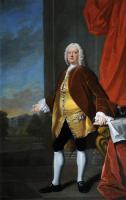

On 14th May 1756 Henry Oxenden 7th Baronet was born to Henry Oxenden 6th Baronet (age 34) and Margaret Chudleigh Lady Oxenden (age 32). He married 20th June 1793 Mary Graham Lady Oxenden and had issue.
On 14th May 1772 William Charles Keppel 4th Earl Albermarle was born to George Keppel 3rd Earl Albermarle (age 48) and Anne Miller Countess Albermarle (age 46). He a great x 2 grandson of King Charles II of England Scotland and Ireland. He married 9th April 1792 Elizabeth Southwell Countess Albermarle, daughter of Edward Southwell 20th Baron Clifford, and had issue.
The History of William Marshal was commissioned by his son shortly after William’s death in 1219 to celebrate the Marshal’s remarkable life; it is an authentic, contemporary voice. The manuscript was discovered in 1861 by French historian Paul Meyer. Meyer published the manuscript in its original Anglo-French in 1891 in two books. This book is a line by line translation of the first of Meyer’s books; lines 1-10152. Book 1 of the History begins in 1139 and ends in 1194. It describes the events of the Anarchy, the role of William’s father John, John’s marriages, William’s childhood, his role as a hostage at the siege of Newbury, his injury and imprisonment in Poitou where he met Eleanor of Aquitaine and his life as a knight errant. It continues with the accusation against him of an improper relationship with Margaret, wife of Henry the Young King, his exile, and return, the death of Henry the Young King, the rebellion of Richard, the future King Richard I, war with France, the death of King Henry II, and the capture of King Richard, and the rebellion of John, the future King John. It ends with the release of King Richard and the death of John Marshal.
Available at Amazon in eBook and Paperback format.
On 14th May 1774 Thomas Pakenham 2nd Earl Longford was born to Edward Pakenham 2nd Baron Longford (age 31) and Catherine Rowley Baroness Longford (age 26). He married 1817 Georgiana Lygon Countess Longford, daughter of William Lygon 1st Earl Beauchamp and Catherine Denn Countess Beauchamp, and had issue.
On 23rd April 1775 Joseph Mallord William Turner was born to William Turner (age 30) and Mary Marshall at Maiden Lane, Covent Garden. He was baptised on 14th May 1775 at the St Paul's Church, Covent Garden. His father was a barber and wig maker.
On 14th May 1786 Susanna Euphemia Beckford Duchess Hamilton Duchess Brandon was born to William Beckford (age 25). She married 26th April 1810 Alexander Hamilton 10th Duke Hamilton 7th Duke Brandon, son of Archibald Hamilton 9th Duke Hamilton 6th Duke Brandon and Harriet Stewart, and had issue.
On 14th May 1786 Captain Robert Rodney was born to George Rodney 2nd Baron Rodney (age 32) and Anne Harley Baroness Rodney (age 26).
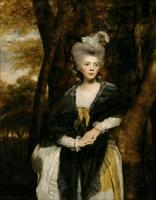
On 14th May 1795 Georgina Caroline Legge was born to George Legge 3rd Earl Dartmouth (age 39) and Frances Finch Countess Dartmouth (age 34).
On 14th May 1796 William John Monson 6th Baron Monson was born to Colonel William Monson (age 35) and Anne Debonnaire.


On 14th May 1805 Harriet Mary Montagu Baroness Ashburton was born to George Montagu 6th Earl Sandwich (age 32) and Louisa Lowry-Corry Countess of Sandwich (age 24). She married 12th April 1823 Bingham Baring 2nd Baron Ashburton, son of Alexander Baring 1st Baron Ashburton and Ann Louisa Bingham Baroness Ashburton, and had issue.


On 14th May 1805 Baldwin Leighton 7th Baronet was born to Baldwin Leighton 6th Baronet (age 58) and Louisa Margaret Anne Lady Leighton. He married 1832 Mary Parker Lady Leighton and had issue.
Chronicle of Geoffrey le Baker of Swinbroke
Baker was a secular clerk from Swinbroke, now Swinbrook, an Oxfordshire village two miles east of Burford. His Chronicle describes the events of the period 1303-1356: Gaveston, Bannockburn, Boroughbridge, the murder of King Edward II, the Scottish Wars, Sluys, Crécy, the Black Death, Winchelsea and Poitiers. To quote Herbert Bruce 'it possesses a vigorous and characteristic style, and its value for particular events between 1303 and 1356 has been recognised by its editor and by subsequent writers'. The book provides remarkable detail about the events it describes. Baker's text has been augmented with hundreds of notes, including extracts from other contemporary chronicles, such as the Annales Londonienses, Annales Paulini, Murimuth, Lanercost, Avesbury, Guisborough and Froissart to enrich the reader's understanding. The translation takes as its source the 'Chronicon Galfridi le Baker de Swynebroke' published in 1889, edited by Edward Maunde Thompson.
Available at Amazon in eBook and Paperback format.

On 14th May 1806 Berkeley Wodehouse was born to John Wodehouse 2nd Baron Wodehouse (age 35) and Charlotte Norris Baroness Woodhouse.
On 14th May 1819 Anne Wentworth-Fitzwilliam was born to Charles Wentworth-Fitzwilliam 5th and 3rd Earl Fitzwilliam (age 33) and Mary Dundas (age 31). Coefficient of inbreeding 6.25%.
On 14th May 1820 Henry Bunbury Blake was born to Henry Charles Blake 4th Baronet (age 25).
On 14th May 1833 Jane St Maur Blanche Stanhope Marchioness Conyngham was born to Charles Stanhope 4th Earl of Harrington (age 53) and Maria Foote Countess Harrington. She married 17th June 1854 George Henry Conyngham 3rd Marquess Conyngham, son of Francis Nathaniel Conyngham 2nd Marquess Conyngham and Jane Paget Marchioness Conyngham, and had issue.
On 14th May 1838 Charles Shelley 5th Baronet was born to John Shelley (age 32).
On 14th May 1844 Henry Verney 26th Baron Latimer 18th Baron Willoughby de Broke was born to Robert John Verney 25th Baron Latimer 17th Baron Willoughby de Broke (age 34) and Georgiana Jane Taylor.
On 14th May 1853 Philip Sidney 3rd Baron De Lisle and Dudley was born to Philip Sidney 2nd Baron De Lisle and Dudley (age 25) and Mary Foulis (age 26). He a great grandson of King William IV of the United Kingdom. He married 12th June 1902 Elizabeth Maria Prendergast Vereker, daughter of Standish Prendergast Vereker 4th Viscount Gort and Caroline Harriet Gage.
On 14th May 1854 Herbert Gibbs 1st Baron Hunsdon was born to Henry Hucks Gibbs 1st Baron Aldenham (age 34) and Louisa Anne Adams Baroness Aldenham (age 35). He married before 29th March 1887 Anna Maria Gibbs Baroness Hunsdon and had issue.
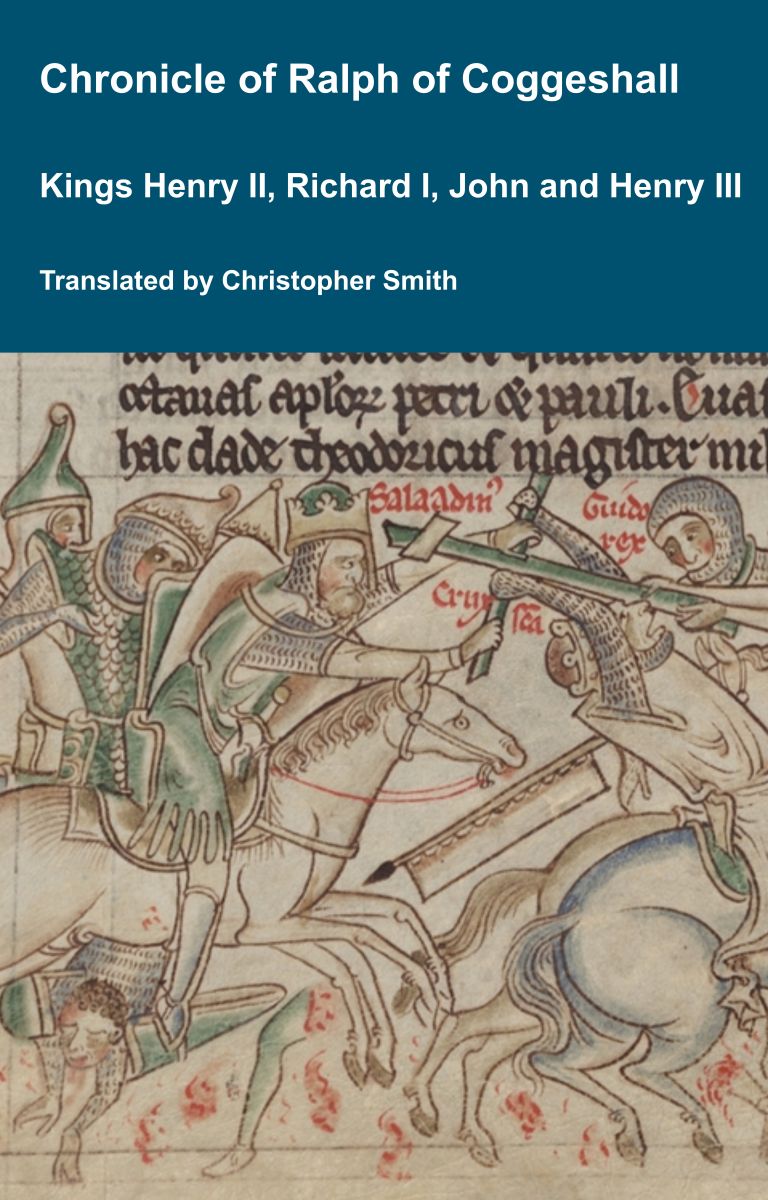
Chronicle of Abbot Ralph of Coggeshall
The Chronicle of Abbot Ralph of Coggeshall (Chronicon Anglicanum) is an indispensable medieval history that brings to life centuries of English and European affairs through the eyes of a learned Cistercian monk. Ralph of Coggeshall, abbot of the Abbey of Coggeshall in Essex in the early 13th century, continued and expanded his community’s chronicle, documenting events from the Norman Conquest of 1066 into the tumultuous reign of King Henry III. Blending eyewitness testimony, careful compilation, and the monastic commitment to record-keeping, this chronicle offers a rare narrative of political intrigue, royal power struggles, and social upheaval in England and beyond. Ralph’s work captures the reigns of pivotal figures such as Richard I and King John, providing invaluable insights into their characters, decisions, and the forces that shaped medieval rule. More than a simple annal, Chronicon Anglicanum conveys the texture of medieval life and governance, making it a rich source for scholars and readers fascinated by English history, monastic authorship, and the shaping of the medieval world.
Available at Amazon in eBook and Paperback format.
On 14th May 1860 Georgiana Elizabeth Spencer-Churchill Countess Howe was born to John Winston Spencer-Churchill 7th Duke of Marlborough (age 37) and Frances Anne Emily Vane Duchess of Marlborough (age 38). She married 4th June 1883 her sixth cousin Richard George Penn Curzon 4th Earl Howe, son of Richard William Penn Curzon Howe 3rd Earl Howe and Isabella Maria Katherine Anson Countess Howe, and had issue.
On 14th May 1877 Merrik Raymond Burrell 7th Baronet was born to Charles Raymond Burrell 6th Baronet (age 29).
On 14th May 1878 Edward John Stanley was born to Edward Lyulph Stanley 4th Baron Stanley 3rd Baron Eddisbury (age 38) and Mary Catherine Bell Baroness Stanley.
On 14th May 1880 James Ian Macpherson 1st Baron Strathcarron was born.
On 14th May 1912 Ronald Orr-Ewing 5th Baronet was born to Norman Archibald Orr-Ewing 4th Baronet (age 31) and Laura Louisa Robarts (age 28). He married 6th April 1938 Marion Hester Cameron Lady Orr-Ewing and had issue.
On 14th May 1936 Richard Cornwall-Legh 6th or 9th Baron Grey of Codnor was born to Charles Cornwall-Legh 5th or 8th Baron Grey of Codnor (age 33).
On 14th May 1942 Nicholas John Harington 14th Baronet was born to John Charles Dundas Harington (age 38) and Lavender Cecilia Denny.
On 14th May 1954 Elizabeth Sophia Rhiannon Paget was born to George Charles Henry Victor Paget 7th Marquess Anglesey (age 31).
Anne Boleyn. Her Life as told by Lancelot de Carle's 1536 Letter.
In 1536, two weeks after the execution of Anne Boleyn, her brother George and four others, Lancelot du Carle, wrote an extraordinary letter that described Anne's life, and her trial and execution, to which he was a witness. This book presents a new translation of that letter, with additional material from other contemporary sources such as Letters, Hall's and Wriothesley's Chronicles, the pamphlets of Wynkyn the Worde, the Memorial of George Constantyne, the Portuguese Letter and the Baga de Secrets, all of which are provided in Appendices.
Available at Amazon in eBook and Paperback format.
On 14th May 1488 Rene Valois Duke Alençon (age 34) and Margaret Lorraine Duchess Alençon (age 25) were married. She by marriage Duchess Alençon. She the daughter of Frederick Lorraine Count Vaudémont and Yolande Valois Anjou. He the son of John Valois II Duke Alençon and Marie Armagnac Duchess Alençon. They were fourth cousins. He a great x 5 grandson of King Henry III of England.
On 14th May 1602 Thomas Savage 1st Viscount Savage (age 16) and Elizabeth Darcy 1st Countess Rivers (age 21) were married. She the daughter of Thomas Darcy 1st Earl Rivers (age 37) and Mary Kitson Countess Rivers (age 35).
On 14th May 1615 William Maynard 1st Baron Maynard (age 28) and Anne Everard Baroness Maynard (age 21) were married at St Mary's Church, Little Easton [Map]. They had 2 sons and 5 daughters.
On 14th May 1668 Kingsmill Lucy 2nd Baronet (age 19) and Theophila Berkeley were married at St James' Church, Clerkenwell. She the daughter of George Berkeley 1st Earl Berkeley (age 40) and Elizabeth Massingberd Couness Berkeley.
On 14th May 1722 James Tuchet 6th Earl Castlehaven and Elizabeth Arundell Countess Castlehaven (age 29) were married. She by marriage Countess Castlehaven. He the son of James Tuchet 5th Earl Castlehaven and Anne Pelson Countess Castlehaven.
On 2nd June 1762 Thomas Charles Bunbury 6th Baronet (age 22) and Sarah Lennox Lady Bunbury (age 17) were married. The marriage was dissolved in Feb 1769 since she had had a child with William Gordon (age 18) in 1768. The decree for divorce was issued on 14th May 1776. One of her daughters with Colonel George Napier (age 11), Emily Louisa Augusta Napier Lady Bunbury, would subsequently marry Charles Bunbury's nephew and heir Henry Edward Bunbury 7th Baronet. She the daughter of Charles Lennox 2nd Duke Richmond and Sarah Cadogan Duchess Richmond.
On 14th May 1771 Louis XVIII King France (age 15) and Maria Joséphine of Savoy (age 17) were married. She the daughter of Victor Amadeus III King Sardinia (age 45) and Infanta Maria Antonia Spain (age 41). They were second cousin once removed. He a great x 4 grandson of King Charles I of England, Scotland and Ireland. She a great x 3 granddaughter of King Charles I of England, Scotland and Ireland.
On 14th May 1781 John Turner aka Dryden 1st Baronet (age 28) and Elizabeth Dryden (age 27) were married.
Jean de Waurin's Chronicle of England Volume 6 Books 3-6: The Wars of the Roses
Jean de Waurin was a French Chronicler, from the Artois region, who was born around 1400, and died around 1474. Waurin’s Chronicle of England, Volume 6, covering the period 1450 to 1471, from which we have selected and translated Chapters relating to the Wars of the Roses, provides a vivid, original, contemporary description of key events some of which he witnessed first-hand, some of which he was told by the key people involved with whom Waurin had a personal relationship.
Available at Amazon in eBook and Paperback format.
On 14th May 1808 John Thomas Duckworth 1st Baronet (age 61) and Susannah Catherine Buller were married. She the daughter of Bishop William Buller and Anne Thomas.
On 14th May 1823 William Lascelles (age 24) and Caroline Georgiana Howard (age 19) were married. She the daughter of George Howard 6th Earl Carlisle (age 49) and Georgiana Cavendish Countess Carlisle (age 39). He the son of Henry Lascelles 2nd Earl Harewood (age 55) and Henrietta Sebright Countess Harewood.
On 14th May 1833 George Brodrick (age 26) and Ellen Griffiths were married.
On 14th May 1080 Bishop Walchere of Lorraine aka Lotharingia died.
On 14th May 1219 William Marshal 1st Earl Pembroke (age 73) died. His son William (age 29) succeeded 2nd Earl Pembroke.
On 14th May 1264 the army of Simon de Montfort 6th Earl of Leicester 1st Earl Chester (age 56) including Gilbert "Red Earl" Clare 7th Earl Gloucester 6th Earl Hertford (age 20), Henry Hastings (age 29) and Nicholas Segrave 1st Baron Segrave (age 26) defeated the army of King Henry III of England (age 56) during the Battle of Lewes at Lewes [Map].
King Henry III of England, his son, the future, King Edward I of England (age 24), Humphrey Bohun 2nd Earl Hereford 1st Earl Essex (age 60), Richard of Cornwall 1st Earl Cornwall (age 55), John "Red" Comyn 1st Lord Baddenoch (age 44), Philip Marmion 5th Baron Marmion (age 30) and John Giffard 1st Baron Giffard Brimpsfield (age 32) were captured. John Warenne 6th Earl of Surrey (age 33), John Balliol (age 56), Robert Bruce 5th Lord Annandale (age 49), Roger Leybourne (age 49) and William de Valence 1st Earl Pembroke fought for the King. Guy Lusignan was killed. Fulk IV Fitzwarin (age 44) drowned. Bishop Walter de Cantelupe (age 73) was present and blessed the Montfort army before the battle.
On 14th May 1329 John St John 1st Baron St John of Basing (age 55) died at Basing, Hampshire. His son Hugh (age 18) succeeded 2nd Baron St John of Basing. Mirabelle Wake Baroness St John Basing by marriage Baroness St John of Basing.
On 14th May 1431 Margaret Tiptoft Baroness Scrope Bolton (age 66) died.
On 14th May 1462 Jeanne of Bar Countess Soissons (age 47) died. Her son John succeeded Count Soissons.

On 14th May 1523 Nicholas Vaux 1st Baron Vaux Harrowden (age 63) died. His son Thomas (age 13) succeeded 2nd Baron Vaux Harrowden.
The History of William Marshal was commissioned by his son shortly after William’s death in 1219 to celebrate the Marshal’s remarkable life; it is an authentic, contemporary voice. The manuscript was discovered in 1861 by French historian Paul Meyer. Meyer published the manuscript in its original Anglo-French in 1891 in two books. This book is a line by line translation of the first of Meyer’s books; lines 1-10152. Book 1 of the History begins in 1139 and ends in 1194. It describes the events of the Anarchy, the role of William’s father John, John’s marriages, William’s childhood, his role as a hostage at the siege of Newbury, his injury and imprisonment in Poitou where he met Eleanor of Aquitaine and his life as a knight errant. It continues with the accusation against him of an improper relationship with Margaret, wife of Henry the Young King, his exile, and return, the death of Henry the Young King, the rebellion of Richard, the future King Richard I, war with France, the death of King Henry II, and the capture of King Richard, and the rebellion of John, the future King John. It ends with the release of King Richard and the death of John Marshal.
Available at Amazon in eBook and Paperback format.
On 14th May 1555 Katherine Stafford Countess of Westmoreland (age 56) died at Holywell, the house of her son-in-law the earl of Rutland (age 28), in the parish of Shoreditch.
On 14th May 1598 Frances Howard Countess Hertford (age 44) died.
On 14th May 1608 Charles "The Great" Lorraine III Duke Lorraine (age 65) died. His son Henry (age 45) succeeded II Duke Lorraine. Margherita Gonzaga Duchess Lorraine (age 16) by marriage Duchess Lorraine.
On 30th March 1610 Thomas Gorges of Longford Castle (age 74) died. On 14th May 1635 Helena Snakenbourg Marchioness Northampton (age 61) was buried in Salisbury Cathedral [Map].
Thomas Gorges of Longford Castle: In 1536 he was born to Edward Gorges and Mary Poyntz in Wraxall, Somerset [Map]. In 1573 Thomas Gorges of Longford Castle acquired the manor of Longford, Wiltshire [Map] which had been owned by the Servington aka Cervington family. In 1576 after his marriage to Helena Snakenbourg Marchioness Northampton they commissioned the building of a house on the triangular Swedish style on the banks of the Wiltshire River Avon with money from a shipwreck of the Spanish Armada. In 1576 Thomas Gorges of Longford Castle and Helena Snakenbourg Marchioness Northampton were married secretly. In 1586 Thomas Gorges of Longford Castle was knighted at Beddington, Surrey.
On 14th May 1610 Henry IV King France (age 56) was murdered by François Ravaillac, a Catholic zealot who stabbed him while his coach was stopped on Rue de la Ferronnerie. His son Louis (age 8) succeeded XIII King France: Capet Valois Bourbon.
On 14th May 1629 Jean Gordon Countess Bothwell and Sutherland (age 83) died at Dunrobin Castle, Dunrobin.
On 14th May 1643 Louis XIII King France (age 41) died. His son Louis (age 4) succeeded XIV King France: Capet Valois Bourbon.
On 14th May 1661 William Fermor 1st Baronet (age 40) died. His son William (age 12) succeeded 2nd Baronet Fermor of Easton Neston in Northamptonshire.
The Deeds of the Dukes of Normandy
The Gesta Normannorum Ducum [The Deeds of the Dukes of Normandy] is a landmark medieval chronicle tracing the rise and fall of the Norman dynasty from its early roots through the pivotal events surrounding the Norman Conquest of England. Originally penned in Latin by the monk William of Jumièges shortly before 1060 and later expanded at the behest of William the Conqueror, the work chronicles the deeds, politics, battles, and leadership of the Norman dukes, especially William’s own claim to the English throne. The narrative combines earlier historical sources with firsthand information and oral testimony to present an authoritative account of Normandy’s transformation from a Viking settlement into one of medieval Europe’s most powerful realms. William’s history emphasizes the legitimacy, military prowess, and governance of the Norman line, framing their expansion, including the conquest of England, as both divinely sanctioned and noble in purpose. Later chroniclers such as Orderic Vitalis and Robert of Torigni continued the history, extending the coverage into the 12th century, providing broader context on ducal rule and its impact. Today this classic work remains a foundational source for understanding Norman identity, medieval statesmanship, and the historical forces that reshaped England and Western Europe between 800AD and 1100AD.
Available at Amazon in eBook and Paperback format.
On 14th May 1673 Garrard Napier 1st Baronet (age 66) died. His son Nathaniel (age 37) succeeded 2nd Baronet Napier of Middle Marsh in Dorset. Blanche Wyndham Lady Napier by marriage Lady Napier of Middle Marsh in Dorset.
On 14th May 1712 Pope Danvers 2nd Baronet (age 67) died. He was buried at St Mary the Virgin Church, Culworth [Map]. His son John (age 38) succeeded 3rd Baronet D'Anvers of Culworth in Northamptonshire.
On 14th May 1728 Fulwar Skipwith 2nd Baronet (age 51) died. His son Francis (age 23) succeeded 3rd Baronet Skipwith of Newbold Revel in Warwickshire
On 14th May 1736 Louis Auguste Bourbon Duke Maine (age 66) died.
On 14th May 1751 Mary Churchill Duchess of Montagu (age 61) died. Monument in St Edmund's Church, Warkton [Map]. Sculpted by Louis Francois Roubiliac (age 48). Erected by her Daughter, Lady Mary Montagu. The monument is adorned with figures representing the three fates of Clotho, Atropos and Lachesis, arranged to show the cutting of Mary's life thread, and Lachesis' dismay at it being cut short. Three putti also figure on the monument, one of whom holds the spindle from which the thread was cut.
Clotho: Clotho is one of the Three Fates. She spins the thread of human life.
Atropos: Atropos is one of the Three Fates. She cuts the thread of human life.
Lachesis: Lachesis is one of the Three Fates. She measures the thread of human life.
On 14th May 1752 Miles Stapylton 4th Baronet (age 44) died. He was buried at Bath Abbey [Map] on 18 May 1752. His brother Brian (age 40) succeeded 5th Baronet Stapylton Stapleton of Myton in Yorkshire.
On 14th May 1761 Louisa Egerton Countess Gower (age 38) died.
On 14th May 1761 John Petty-Fitzmaurice 1st Earl Shelburne (age 55) died. His son William (age 24) succeeded 2nd Earl Shelburne in County Wexford.
The History of William Marshal was commissioned by his son shortly after William’s death in 1219 to celebrate the Marshal’s remarkable life; it is an authentic, contemporary voice. The manuscript was discovered in 1861 by French historian Paul Meyer. Meyer published the manuscript in its original Anglo-French in 1891 in two books. This book is a line by line translation of the first of Meyer’s books; lines 1-10152. Book 1 of the History begins in 1139 and ends in 1194. It describes the events of the Anarchy, the role of William’s father John, John’s marriages, William’s childhood, his role as a hostage at the siege of Newbury, his injury and imprisonment in Poitou where he met Eleanor of Aquitaine and his life as a knight errant. It continues with the accusation against him of an improper relationship with Margaret, wife of Henry the Young King, his exile, and return, the death of Henry the Young King, the rebellion of Richard, the future King Richard I, war with France, the death of King Henry II, and the capture of King Richard, and the rebellion of John, the future King John. It ends with the release of King Richard and the death of John Marshal.
Available at Amazon in eBook and Paperback format.
On 14th May 1763 Chaworth Brabazon 6th Earl Meath (age 77) died. His brother Edward (age 72) succeeded 7th Earl Meath, 8th Baron Ardee
On 14th May 1763 Isabella Blackett Countess Buchan (age 72) died in Hanover Square.


On 14th May 1766 John Fitzgerald Villiers 1st Earl Grandison (age 82) died. His second cousin once removed William (age 59) succeeded 6th Viscount Grandison.
On 14th May 1771 Charles Bruce 9th Earl Kincardine 5th Earl Elgin (age 38) died. His son Charles (age 7) succeeded 10th Earl Kincardine, 6th Earl Elgin.
On 14th May 1790 Stephen Moore 1st Earl Mount Cashell (age 59) died. His son Stephen (age 20) succeeded 2nd Earl Mount Cashell. Margaret King Baroness Monthermer (age 17) by marriage Baroness Monthermer.
On 14th May 1804 Archdeacon William Whitworth died. He left £45,000 in his will to his great nephew Robert Stuart Hurst aka Whitworth (age 10) who changed his name from Hurst to Whitworth.
On 14th May 1811 Anthony Ashley-Cooper 5th Earl Shaftesbury (age 49) died. His brother Cropley (age 42) succeeded 6th Earl Shaftesbury, 6th Baron Ashley of Wimborne St Giles, 7th Baronet Cooper of Rockbourne in Southampton. Anne Spencer-Churchill Countess Shaftesbury (age 38) by marriage Countess Shaftesbury.
On 14th May 1812 William Eliott 6th Baronet (age 45) died. His son William (age 20) succeeded 7th Baronet Eliott of Stobs.
Anne Boleyn. Her Life as told by Lancelot de Carle's 1536 Letter.
In 1536, two weeks after the execution of Anne Boleyn, her brother George and four others, Lancelot du Carle, wrote an extraordinary letter that described Anne's life, and her trial and execution, to which he was a witness. This book presents a new translation of that letter, with additional material from other contemporary sources such as Letters, Hall's and Wriothesley's Chronicles, the pamphlets of Wynkyn the Worde, the Memorial of George Constantyne, the Portuguese Letter and the Baga de Secrets, all of which are provided in Appendices.
Available at Amazon in eBook and Paperback format.
On 14th May 1833 John Evelyn 4th Baronet (age 75) died unmarried. His brother Hugh (age 64) succeeded 5th Baronet Evelyn of Wotton in Surrey.
On 14th May 1854 William Amcotts-Ingilby 2nd Baronet (age 70) died. Baronet Ingilby of Ripley in Yorkshire and Baronet Amcotts of Kettlethopre Park in Lincolnshire extinct.
On 14th May 1861 Francis Russell 7th Duke Bedford (age 73) died. His son William (age 51) succeeded 8th Duke Bedford, 8th Marquess Tavistock, 12th Earl Bedford, 12th Baron Russell of Cheneys, 10th Baron Russell of Thornhaugh, 8th Baron Howland of Streatham.
On 14th May 1908 John St Aubyn 1st Baron St Levan (age 78) died. His son John (age 50) succeeded 2nd Baron St Levan of St Michael's Mount in Cornwall, 3rd Baronet St Aubyn of St Michael's Mount in Cornwall.
On 14th May 1912 Frederick VIII King of Denmark (age 68) died. His son Christian (age 41) succeeded X King of Denmark.
On 14th May 1918 Henry George Percy 7th Duke Northumberland (age 71) died. He was buried at the Church of St Mary the Virgin, Lesbury [Map]. His son Alan (age 38) succeeded 8th Duke Northumberland, 5th Earl Beverley, 11th Baronet Smithson of Stanwick in Yorkshire. Helen Gordon-Lennox Duchess Northumberland (age 31) by marriage Duchess Northumberland.
On 14th May 1930 Mary Josephine Hardcastle Baroness Monkswell (age 80) died.
On 14th May 1952 Charles Beresford Fulke 3rd Baron Greville (age 81) died. His son Ronald (age 40) succeeded 4th Baron Greville of Clonyn in Westmeath.
On 14th May 1958 Walter Stoneman (age 82) died.
Chronicle of Walter of Guisborough
A canon regular of the Augustinian Guisborough Priory, Yorkshire, formerly known as The Chronicle of Walter of Hemingburgh, describes the period from 1066 to 1346. Before 1274 the Chronicle is based on other works. Thereafter, the Chronicle is original, and a remarkable source for the events of the time. This book provides a translation of the Chronicle from that date. The Latin source for our translation is the 1849 work edited by Hans Claude Hamilton. Hamilton, in his preface, says: 'In the present work we behold perhaps one of the finest samples of our early chronicles, both as regards the value of the events recorded, and the correctness with which they are detailed; Nor will the pleasing style of composition be lightly passed over by those capable of seeing reflected from it the tokens of a vigorous and cultivated mind, and a favourable specimen of the learning and taste of the age in which it was framed.'
Available at Amazon in eBook and Paperback format.
On 14th May 1976 Elspeth Grace Whitaker Marchioness Northampton (age 71) died.
On 14th May 1984 Charles Cooper 5th Baronet (age 77) died. His son William (age 29) succeeded 6th Baronet Cooper of Woollahra in New South Wales.
On 14th May 1992 Ralph Regnault Millais 5th Baronet (age 87) died. His son Geoffroy (age 50) succeeded 6th Baronet Millais of Palace Gate in Kensington in Middlesex.
On 14th May 2007 Edward John Chichester 11th Baronet (age 91) died. His son James (age 55) succeeded 12th Baronet Chichester of Raleigh in Devon.
On 14th May 2011 Michael Onslow 7th Earl of Onslow (age 73) died. His son Rupert (age 43) succeeded 8th Earl Onslow, 8th Viscount Cranley, 11th Baron Onslow, 12th Baronet Onslow of West Clandon in Surrey, 13th Baronet Foote of London.