

Anne Boleyn. Her Life as told by Lancelot de Carle's 1536 Letter.
In 1536, two weeks after the execution of Anne Boleyn, her brother George and four others, Lancelot du Carle, wrote an extraordinary letter that described Anne's life, and her trial and execution, to which he was a witness. This book presents a new translation of that letter, with additional material from other contemporary sources such as Letters, Hall's and Wriothesley's Chronicles, the pamphlets of Wynkyn the Worde, the Memorial of George Constantyne, the Portuguese Letter and the Baga de Secrets, all of which are provided in Appendices.
Available at Amazon in eBook and Paperback format.
17 Mar is in March.
On 17th March 1040 Harold "Harefoot" King England (age 24) died at Oxford, Oxfordshire [Map]. His half brother Harthacnut (age 22) succeeded King of England.
Anglo-Saxon Chronicle. 1040. This year died King Harold (age 24) at Oxford, Oxfordshire [Map], on the sixteenth before the calends of April; and he was buried at Westminster. He governed England four years and sixteen weeks; and in his days tribute was paid to sixteen ships, at the rate of eight marks for each steersman, as was done before in King Knute's days. The same year they sent after Hardacnute (age 22) to Bruges [Map], supposing they did well; and he came hither to Sandwich, Kent [Map] with sixty ships, seven nights before midsummer. He was soon received both by the Angles and Danes, though his advisers afterwards severely paid for it. They ordered a tribute for sixty-two ships, at the rate of eight marks for each steersman. Then were alienated from him all that before desired him; for he framed nothing royal during his whole reign. He ordered the dead Harold to be dragged up and thrown into a ditch. This year rose the sester of wheat to fifty-five pence, and even further. This year Archbishop Edsy went to Rome.
On 17th March 1126 Conrad Welf (age 21) died. His brother Henry (age 18) succeeded X Duke Bavaria.
On 14th March 1190 twin boys Robert Capet and Philip Capet were born to King Philip II of France (age 24) and Isabelle Flanders Queen Consort France (age 19). The eldest Robert died the same day, the youngest Philip died three days later. Their mother Isabelle Flanders Queen Consort France died from childbirth the day after the birth.
Bourgeois de Valenciennes. When the king of England learned of it, he went forth against them very vigorously and swiftly summoned and assembled his host, along with his archers, until he had enough to give battle1. Then he advanced to meet the king of Scotland boldly, resolutely, and with a confident bearing. There was fought a battle so fierce, so bitter, and so excessive that for a long time none had heard of one more cruel, more deadly, or more perilous. There was such great slaughter on both sides that it was a great and indescribable pity, and the struggle lasted long. In the end the Scots could no longer endure nor withstand the fight, but turned their backs and were defeated. The English pursued them, killing, wounding, and striking them down. They drove them so far that the Scots were forced out of the land of England. And there was such great defeat that day that there were well thirty thousand men of Scotland slain, not counting the English.
Et quant le roy d’Engleterre le sceult, il alla au devant moult vigoreusement et manda et assambla ses gens en son ost hastivement et ses archiers tant qu’il en eult assez pour combatre. Et puis alla à l'encontre du roy d’Escoce, vistement, hardiment et à bon visage. Et là eult une bataille sy fière et sy aspre etsy à desmesurée qu’on n’oyt piècha parler de plus cruele, plus mortele, ne plus périlleuse. Et y eult sy grande ochision d’une partye et d'aultre que ce fut une grande et indisible pité, et longuement dura. En la fin les Escochois ne seurent plus souffrir, ne soustenir l’estour, ains tournèrent les dos et furent desconfis. Et les Englecqs les encachoient, en eulx tuant, navrant et abatant. Et tant les cachèrent les Englecqs que les Escochois furent hors de la terre d'Engleterre. Et y eult sy grande desconfiture celle journée qu’il y eult bien de mors XXX mille hommes d’Escoce sans les Englecqs.
Note 1. The name of this battle, if it occurred, is unknown. The Treaty of Edinburgh-Northampton was signed on 17th March 1328 bring to an end the First War of Scottish Independence.
On 17th March 1328 Robert the Bruce (age 53) signed the Treaty of Edinburgh-Northampton bringing to an end the First Scottish War of Independence. The English Parliament signed at Northampton [Map] on 03 May 1328. The terms of the Treaty included:
Scotland to pay England £100,000 sterling,
The Kingdom of Scotland as fully independent,
Robert the Bruce, and his heirs and successors, as the rightful rulers of Scotland, and.
The border between Scotland and England as that recognised under the reign of Alexander III (1249-1286).
The Treaty lasted four years only being regarded by the English nobility as humiliating; the work of Edward's (age 15) mother Isabella of France Queen Consort England (age 33) and Roger Mortimer 1st Earl March (age 40) rather than King Edward. Two years after King Edward commenced his personal reign he commenced the Second War of Scottish Independence in Aug 1332.
Froissart Book 1: 1307-1340. [17th March 1328] 40. After the Scots departed by night from the mountain where young King Edward and the lords of England had besieged them, as you have heard, they traveled twenty-two leagues through that wild land without stopping, and crossed the River Tyne1 not far from Carlisle, in Wales. The next day, they returned to their own country, and then dispersed according to the orders of their lords, each one going back to his own home. Soon afterward, some lords and wise men worked diligently between the King of England and his council, and the King of Scotland, until a truce was agreed upon between them, to last for the space of three years.
40. Apriès chou que li Escot se partirent par nuit de le montagne, là où li jones rois Edowars et li signeur d'Engleterre les avoient assegiés, si com vous avés oy, il alèrent vingt et deus liewes de celui sauvage pays, sans arrester, et passèrent celle rivière de Thin assés priès de Cardueil, en Galles. Et à l'endemain, il revinrent en leur pays, et se departirent par l'ordenance des signeurs, et en rala cescuns en se maison. Assés tost apriès, signeur et aucun bon preudomme pourcacièrent tant entre le roy d'Engleterre et son conseil et entre le roy d'Escoce, que une triewe fu acordée entre yaus, à durer par l'espasse de trois ans.
Note 1. This may be a mistake since the River Tyne doesn't flows near Carlisle. The River Eden flows through Carlisle.
On 17th March 1337 Edward "Black Prince" (age 6) was created 1st Duke of Cornwall.
 Chronicle of Walter of Guisborough. In this year, in the month of March, the King of England held a parliament in London, where he created his eldest son Edward, the fourth [king] since the Conquest and at that time Earl of Chester, Duke of Cornwall, which had never before been seen since the coming of the English into Britain1. In the same parliament he also made six earls: Henry of Lancaster the younger, Earl of Derby; William de Montagu, Earl of Salisbury; Hugh de Audley, Earl of Gloucester; William de Clinton, Earl of Huntingdon; William Bohun, Earl of Northampton; and Robert de Ufford, Earl of Suffolk, granting them certain lands or revenues from his own munificence. On the Sunday of the third week of Lent, the king held at Westminster a great feast in celebration of these creations. Meanwhile, while these things were taking place, Earl Patrick, Andrew de Moray, and William Douglas attacked and captured many strongholds, namely St Andrews and Bothwell, and laid siege to Stirling Castle. When the King of England heard of this, he made for Scotland. The Scots, learning of his coming, pressed the siege of the castle all the harder; in the fighting, William de Keith, one of the chief of the besiegers, was killed. Thus, abandoning the siege before the king's arrival, they withdrew. The King of England, supplying the castle with provisions and new paid troops, took with him back to England the wounded, the harassed, the weak, and the sick.
Hoc anno mense Martii rex Angliæ tenuit parliamentum apud Londonias, ubi filium suum primogenitum Edwardum post Conquæstum quartum tunc comitem Cestria in ducem creavit Cornubiæ, quod antea ab adventu Anglorum in Britanniam visum non fuit. Fecit etiam in eodem parliamento sex comites, videlicet Henricum de Lancastre juniorem comitem de Derby, Willelmum de Monte-acuto comitem Sarum, Hugonem de Audeley comitem Gloverniæ, Willelmum de Clinton comitem de Huntingdon, Willelmum Boun comitem Norhamptoniæ, Robertum de Ufford comitem Southfolche; et terras certas sive redditus ex munificentia sua illis conferendo; in quorum solemnitate fecit rex apud Westmonasterium maximum convivium Dominica tertia Quadragesimæ. Interea, dum Sunday, hæc agerentur, comes Patricius, et Andreas de Moravia, et Willelmus Douglas, plurima fortalitia, videlicet Sancti Andreæ et Bothevile, invadentes, ceperunt, et castrum de Strevelin obsederunt. Quo audito rex Angliæ ad partes Scotia se stirling direxit; audientes vero Scoti ejus adventum castrum prædictum fortius sunt aggressi; in quo conflictu Willelmus de Keth, qui de obsidentibus principalis erat, interfectus est; sicque dimissa obsidione ante regis adventum recesserunt. Rex enim Angliæ castrum illud victualibus et novis stipendiariis muniens, vulneratos, vexatos, debiles, et infirmos in Angliam secum duxit.
Note 1. Prince Edward, the Black Prince, was created Duke of Cornwall shortly before the 17th of March, 1337, on which day he received the grant of the Cornish stanneries. Rymer, Fœdera, 2.961.
He was afterwards created Prince of Wales, when the dukedom merged in that title, and has been ever since vested in the heir-apparent to the Crown, who becomes Duke of Cornwall immediately after his birth, and who has always been created Prince of Wales. Prince Edward is described as the fourth King Edward. In the event he predeceased his father and didn't become King.
Chronicle of Walter of Guisborough
A canon regular of the Augustinian Guisborough Priory, Yorkshire, formerly known as The Chronicle of Walter of Hemingburgh, describes the period from 1066 to 1346. Before 1274 the Chronicle is based on other works. Thereafter, the Chronicle is original, and a remarkable source for the events of the time. This book provides a translation of the Chronicle from that date. The Latin source for our translation is the 1849 work edited by Hans Claude Hamilton. Hamilton, in his preface, says: 'In the present work we behold perhaps one of the finest samples of our early chronicles, both as regards the value of the events recorded, and the correctness with which they are detailed; Nor will the pleasing style of composition be lightly passed over by those capable of seeing reflected from it the tokens of a vigorous and cultivated mind, and a favourable specimen of the learning and taste of the age in which it was framed.'
Available at Amazon in eBook and Paperback format.
On 17th March 1360 Archbishop William Courtenay (age 18) was consecrated Bishop of Hereford.
On 17th March 1372 Bishop John Gilbert was elected Bishop of Bangor.
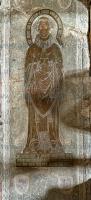
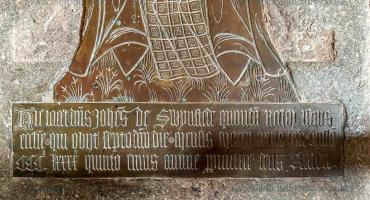
Brass of Rector John de Swynstede, died 17th March 1395, in the north aisle at St Mary the Virgin Church, Edelsborough [Map]. The head scroll reads: "Christ loved usand wshed us from our sins in his own blood." The inscription at his feet reads "Here lies Sir John de Swynstede, formerly Rector of this Church, who died the 17th day of March, in the year of our Lord 1395 on whose soul may God have mercy. Amen."
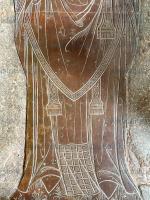
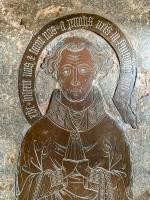
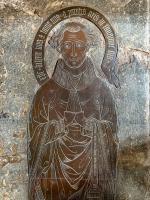
Patent Rolls. 17th March 1466. General pardon to Robert Stillyngton (age 46), Bishop of Bath and Wells, dean of Westminster, the king's free chapel of St. Martin le Grand, London, and keeper of the privy seal, of all provisions of apostolic letters or bulls and all other offences committed by him before 13 January. By p.s.
On 17th March 1473 King James IV of Scotland was born to King James III of Scotland (age 21) and Margaret Oldenburg Queen Consort Scotland (age 16) at Stirling Castle [Map]. He a great x 4 grandson of King Edward III of England. He married 8th August 1503 his third cousin Margaret Tudor Queen Scotland, daughter of King Henry VII of England and Ireland and Elizabeth York Queen Consort England, and had issue.
On 17th March 1516 Giuliano Medici Duke Nemours (age 37) died.
Henry Machyn's Diary. 17th March 1552. The xvij day of Marche rod thrugh London unto [St.] James in the feld, the kyng('s) plase [Note. palace], the kynges syster my [lady] Elsabeth (age 18), with a grett compeny of lordes and knyghtes and gentyll men, and after her a grett nombur of lades and gentyllwomen to the nombur of ij C. on horsse-bake, and yomen.
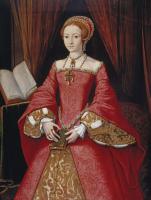


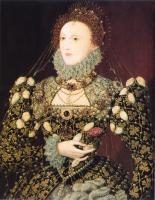
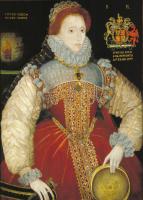


Henry Machyn's Diary. 17th March 1554. The xvij day of Marche was deprevyd the bysshope of Harfford and the bysshope of Glosetur (age 59); commyssyonars that dyd depreyffe them my lord chansseler and my lord of Durram, my lord of Londun, my lord of Chechastur, and my lord of sant Asse.
Henry Machyn's Diary. 17th March 1557. The xvij day of Marche cam rydyng from kyng Phelype (age 29) from be-yond the see unto the court at Grenwyche [Map], to owre quen (age 41), with letters in post, my lord Robart Dudley (age 24), and after master Kemp of the preve chambur, that the kyng wold com to Cales [Map] the xvij day of Marche; and the sam day dyd pryche a-for the quen the nuwe bysshope of Lynckolne doctur Watsun (age 42).


Henry Machyn's Diary. 17th March 1560. The sam day at after-non dyd pryche at the cowrt [at] the prychyng plasse master Juell (age 37) the nuw byshope of Salysbere, in ys rochet and chymmer.
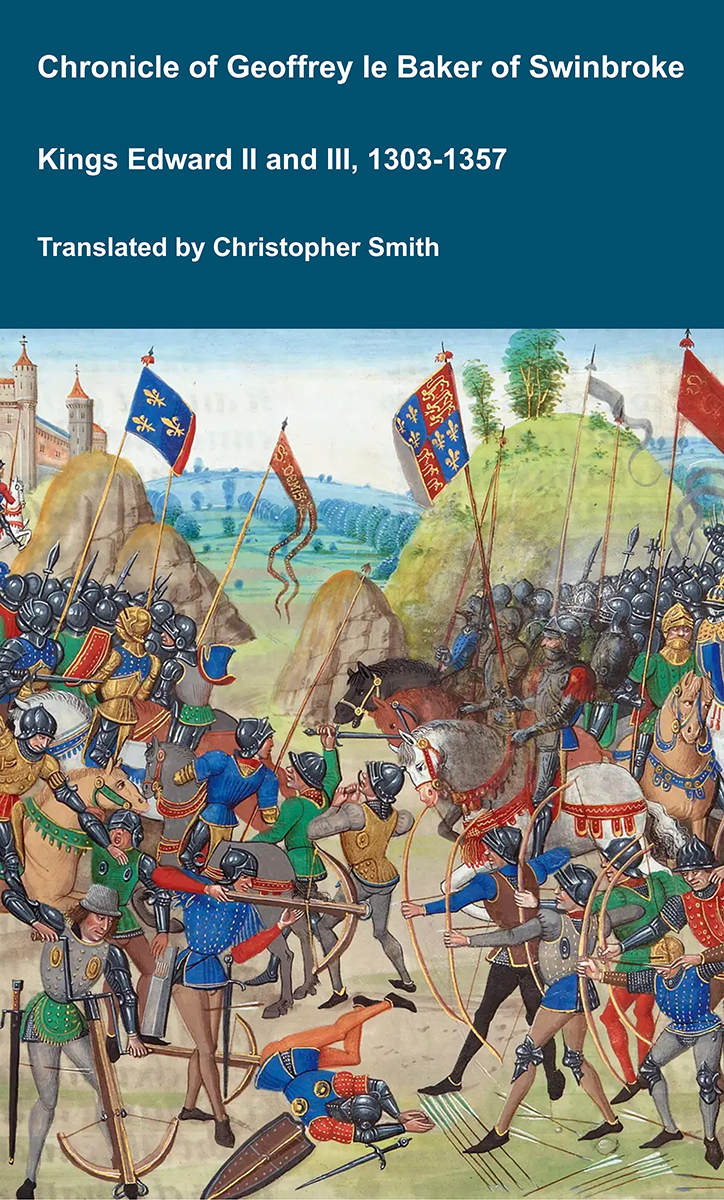
Chronicle of Geoffrey le Baker of Swinbroke
Baker was a secular clerk from Swinbroke, now Swinbrook, an Oxfordshire village two miles east of Burford. His Chronicle describes the events of the period 1303-1356: Gaveston, Bannockburn, Boroughbridge, the murder of King Edward II, the Scottish Wars, Sluys, Crécy, the Black Death, Winchelsea and Poitiers. To quote Herbert Bruce 'it possesses a vigorous and characteristic style, and its value for particular events between 1303 and 1356 has been recognised by its editor and by subsequent writers'. The book provides remarkable detail about the events it describes. Baker's text has been augmented with hundreds of notes, including extracts from other contemporary chronicles, such as the Annales Londonienses, Annales Paulini, Murimuth, Lanercost, Avesbury, Guisborough and Froissart to enrich the reader's understanding. The translation takes as its source the 'Chronicon Galfridi le Baker de Swynebroke' published in 1889, edited by Edward Maunde Thompson.
Available at Amazon in eBook and Paperback format.
Henry Machyn's Diary. 17th March 1561. The xvij day dyd pryche at the cowrt the [bishop] of Durram (age 41), that was Mydlent sonday.
On 17th March 1608 Maximilian Colt (age 33) was employed on a second monument in Westminster Abbey above the grave of the Princess Sophia, the infant child of King James I (age 41), who was born and died in the preceding June. Colt received 215l for this work.


Diary of Anne Clifford. 17th March 1619. The 17th my Lord (age 29) went to Buckhurst to search for armour and provision which should be laid up by the Papists. This day I made an end of my Lady's Book of Praise of a solitary life.
Autobiography Simon D'Ewes. 17th February 1623. There happened on Monday, the 17th day of the month, so strange an accident as after ages will scarce believe it. For Charles Prince of Wales (age 22) began his journey from London into Spain on Monday, the 17th day of February, with the beloved Marquis of Buckingham (age 30), Sir Francis Cottington (age 44), and Mr. Endimion Porter (age 36), only in his campaign; who only, besides the King himself, were the alone men aquainted with the Prince's resolution. Their going was so secretly carried as none, I believe, knew of it in England till they were landed in France, through which kingdom they passed by posthorse into Spain.1 The journey was thought so dangerous, being above 1100 English miles by land, besides the crossing of the seas between Dover and Calais, as all men were generally ensaddened at the ad- venture, often wishing it had been better advised upon; although they knew the Spaniards durst do the Prince no harm, so long as his royal sister and her illustrious oflspring survived. Soon after followed the Lord Hays (age 43), Earl of Carlisle, and passed into France to excuse to that King the Prince's sudden and secret passing through his kingdom without giving him a visit. All men now took it for granted, that the Prince's marriage with the Infanta Maria, the King of Spain's sister, was concluded on, and that he went over only to consummate it; no man imagining that he would take up such a resolution upon uncertainties, especially occasioning so vast and unnecessary expense at a time when the King's wants pressed him much. But God, whose decree binds princes as well as peasants, had otherwise disposed, so as our royal suitor, arriving at Madrid in Spain on Friday the 7th (or 17th) of March, about three weeks later his departure from London, and taking ship for his return to England on the 18th (or 28th) of September, then next ensuing, stayed in Spain about seven months; in all which time he seldom saw or spoke with the Spanish Princess, nor could ever receive a fair or sincere denial from her brother, although her marriage had been absolutely disposed of by her father's last will and testament; he bequeathing her to Ferdinand, son and heir of Ferdinand the Second, Emperor of Germany, who afterwards did accordingly espouse her.
Note 1. "And now behold a, strange adventure and enterprise! The Prince and the Marquis of Buckingham, accompanied with Cottington and Endimion Porter, post in disgiuse to Spain to accelerate the marriage. The 17th of February they went privately from Court, and the next day came to Dover, where they embarked for Boulogne, and from thence rode post to Paris, where they made some atop. The Prince, shadowed under a bushy peruque, beheld the splendour of that court, and had a full view of the Princess Henrietta Maria (age 13), who was afterwards his royal consort. For, besides the great privacy of the journey, they had so laid the English ports, that none should follow or give the least advertisement, until they had got the start of intelligencers, and passed the bounds of France. Howbeit they escaped narrowly, and a swift intelligence sent to the King of Spain from Don Carlos Coloma was even at their heels before they arrived at Madrid. The Prince and Buckingham being in the territories of Spain, to make but little noise, rode post before their company.
Samuel Pepys' Diary. 17th March 1664. Up and to my brother's (deceased), where all the morning doing business against to-morrow, and so to my cozen Stradwicke's about the same business, and to the 'Change [Map], and thence home to dinner, where my wife in bed sick still, but not so bad as yesterday. I dined by her, and so to the office, where we sat this afternoon, having changed this day our sittings from morning to afternoons, because of the Parliament which returned yesterday; but was adjourned till Monday next; upon pretence that many of the members were said to be upon the road; and also the King (age 33) had other affairs, and so desired them to adjourn till then. But the truth is, the King is offended at my Lord of Bristol (age 51), as they say, whom he hath found to have been all this while (pretending a desire of leave to go into France, and to have all the difference between him and the Chancellor (age 55) made up,) endeavouring to make factions in both Houses to the Chancellor. So the King did this to keep the Houses from meeting; and in the meanwhile sent a guard and a herald last night to have taken him at Wimbleton, where he was in the morning, but could not find him: at which the King was and is still mightily concerned, and runs up and down to and from the Chancellor's like a boy: and it seems would make Digby's articles against the Chancellor to be treasonable reflections against his Majesty. So that the King is very high, as they say; and God knows what will follow upon it!


Samuel Pepys' Diary. 17th March 1665. Thence to the Committee of Tangier, where the Duke (age 31) a little, and then left us and we staid. A very great Committee, the Lords Albemarle (age 56), Sandwich (age 39), Barkely (age 63), Fitzharding (age 35), Peterborough (age 43), Ashley (age 43), Sir Thos. Ingram (age 50), Sir G. Carteret (age 55) and others. The whole business was the stating of Povy's (age 51) accounts, of whom to say no more, never could man say worse himself nor have worse said of him than was by the company to his face; I mean, as to his folly and very reflecting words to his honesty. Broke up without anything but trouble and shame, only I got my businesses done to the signing of two bills for the Contractors and Captain Taylor, and so come away well pleased, and home, taking up my wife at the 'Change [Map], to dinner.

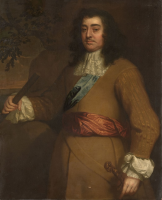


Samuel Pepys' Diary. 17th March 1665. This night my Lady Wood (age 38) died of the small-pox, and is much lamented among the great persons for a good-natured woman and a good wife, but for all that it was ever believed she was as others are. The Duke (age 31) did give us some commands, and so broke up, not taking leave of him. But the best piece of newes is, that instead of a great many troublesome Lords, the whole business is to be left with the Duke of Albemarle (age 56) to act as Admirall in his stead; which is a thing that do cheer my heart. For the other would have vexed us with attendance, and never done the business.
On 17th March 1665 Mary Gardiner (age 38) died of smallpox. On 1st April 1665 she was buried at Westminster Abbey [Map].
Samuel Pepys' Diary. 17th March 1666. At noon home to dinner and presently with my wife out to Hales's (age 66), where I am still infinitely pleased with my wife's picture. I paid him £14 for it, and 25s. for the frame, and I think it is not a whit too deare for so good a picture. It is not yet quite finished and dry, so as to be fit to bring home yet. This day I begun to sit, and he will make me, I think, a very fine picture. He promises it shall be as good as my wife's, and I sit to have it full of shadows, and do almost break my neck looking over my shoulder to make the posture for him to work by.
Samuel Pepys' Diary. 17th March 1667. Then I went back to White Hall, and there up to the closet, and spoke with several people till sermon was ended, which was preached by the Bishop of Hereford (age 64), an old good man, that they say made an excellent sermon. He was by birth a Catholique, and a great gallant, having £1500 per annum, patrimony, and is a Knight Barronet; was turned from his persuasion by the late Archbishop Laud. He and the Bishop of Exeter, Dr. Ward, are the two Bishops that the King (age 36) do say he cannot have bad sermons from. Here I met with Sir H. Cholmly (age 34), who tells me, that undoubtedly my Lord Bellasses (age 52) do go no more to Tangier, and that he do believe he do stand in a likely way to go Governor; though he says, and showed me, a young silly Lord, one Lord Allington (age 27), who hath offered a great sum of money to go, and will put hard for it, he having a fine lady (age 22), and a great man would be glad to have him out of the way.


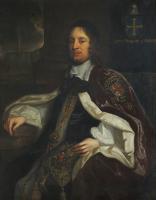


Samuel Pepys' Diary. 17th March 1667. After dinner he and I alone awhile and did joy ourselves in my Lord Sandwich's (age 41) being out of the way all this time. He concurs that we are in a way of ruin by thus being forced to keep only small squadrons out, but do tell me that it was not choice, but only force, that we could not keep out the whole fleete. He tells me that the King (age 36) is very kind to my Lord Sandwich, and did himself observe to him (Sir G. Carteret (age 57)), how those very people, meaning the Prince (age 47) and Duke of Albemarle (age 58), are punished in the same kind as they did seek to abuse my Lord Sandwich.
Samuel Pepys' Diary. 17th March 1667. Thence away, and got a Hackney coach and carried my wife home, and there only drank, and myself back again to my Lord Treasurer's (age 60), where the King (age 36), Duke of York (age 33), and Sir G. Carteret (age 57) and Lord Arlington (age 49) were and none else, so I staid not, but to White Hall, and there meeting nobody I would speak with, walked into the Park and took two or three turns all alone, and then took coach and home, where I find Mercer, who I was glad to see, but durst [not] shew so, my wife being displeased with her, and indeed I fear she is grown a very gossip. I to my chamber, and there fitted my arguments which I had promised Mr. Gawden in his behalf in some pretences to allowance of the King, and then to supper, and so to my chamber a little again, and then to bed. Duke of Buckingham (age 39) not heard of yet.
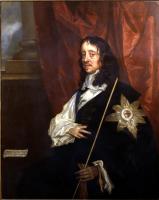


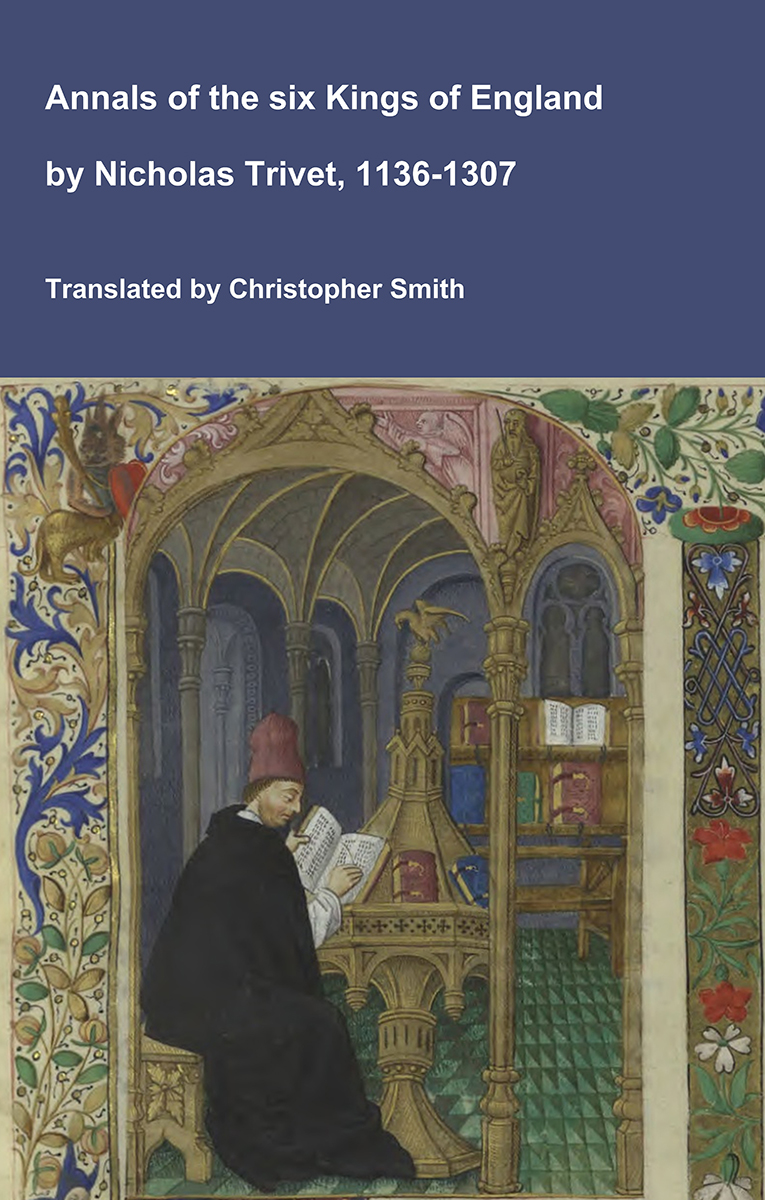
Annals of the six Kings of England by Nicholas Trivet
Translation of the Annals of the Six Kings of England by that traces the rise and rule of the Angevin aka Plantagenet dynasty from the mid-12th to early 14th century. Written by the Dominican scholar Nicholas Trivet, the work offers a vivid account of English history from the reign of King Stephen through to the death of King Edward I, blending political narrative with moral reflection. Covering the reigns of six monarchs—from Stephen to Edward I—the chronicle explores royal authority, rebellion, war, and the shifting balance between crown, church, and nobility. Trivet provides detailed insight into defining moments such as baronial conflicts, Anglo-French rivalry, and the consolidation of royal power under Edward I, whose reign he describes with particular immediacy. The Annals combines careful year-by-year reporting with thoughtful interpretation, presenting history not merely as a sequence of events but as a moral and political lesson. Ideal for readers interested in medieval history, kingship, and the origins of the English state, this chronicle remains a valuable and accessible window into the turbulent world of the Plantagenet kings.
Available at Amazon in eBook and Paperback format.
Samuel Pepys' Diary. 17th March 1667. Lord's Day. Up betime with my wife, and by coach with Sir W. Pen (age 45) and Sir Thomas Allen (age 34) to White Hall, there my wife and I the first time that ever we went to my Lady Jemimah's chamber at Sir Edward Carteret's (age 47) lodgings. I confess I have been much to blame and much ashamed of our not visiting her sooner, but better now than never. Here we took her before she was up, which I was sorry for, so only saw her, and away to chapel, leaving further visit till after sermon. I put my wife into the pew below, but it was pretty to see, myself being but in a plain band, and every way else ordinary, how the verger took me for her man, I think, and I was fain to tell him she was a kinswoman of my Lord Sandwich's (age 41), he saying that none under knights-baronets' ladies are to go into that pew. So she being there, I to the Duke of York's (age 33) lodging, where in his dressing-chamber he talking of his journey to-morrow or next day to Harwich, Essex [Map], to prepare some fortifications there; so that we are wholly upon the defensive part this year, only we have some expectations that we may by our squadrons annoy them in their trade by the North of Scotland and to the Westward. Here Sir W. Pen did show the Duke of York a letter of Hogg's about a prize he drove in within the Sound at Plymouth, Devon [Map], where the Vice-Admiral claims her. Sir W. Pen would have me speak to the latter, which I did, and I think without any offence, but afterwards I was sorry for it, and Sir W. Pen did plainly say that he had no mind to speak to the Duke of York about it, so that he put me upon it, but it shall be, the last time that I will do such another thing, though I think no manner of hurt done by it to me at all.
Samuel Pepys' Diary. 17th March 1668. Up betimes and to the office, where all the morning busy, and then at noon home to dinner, and so again to the office awhile, and then abroad to the Excize-Office, where I met Mr. Ball, and did receive the paper I went for; and there fell in talk with him, who, being an old cavalier, do swear and curse at the present state of things, that we should be brought to this, that we must be undone and cannot be saved; that the Parliament is sitting now, and will till midnight, to find how to raise this £300,000, and he doubts they will not do it so as to be seasonable for the King (age 37): but do cry out against our great men at Court; how it is a fine thing for a Secretary of State to dance a jigg, and that it was not so heretofore; and, above all, do curse my Lord of Bristol (age 55), saying the worst news that ever he heard in his life, or that the Devil could ever bring us, was this Lord's coming to prayers the other day in the House of Lords, by which he is coming about again from being a Papist, which will undo this nation; and he says he ever did say, at the King's first coming in, that this nation could not be safe while that man was alive. Having done there, I away towards Westminster, but seeing by the coaches the House to be up, I stopped at the 'Change [Map] (where, I met Mrs. Turner (age 45), and did give her a pair of gloves), and there bought several things for my wife, and so to my bookseller's, and there looked for Montaigne's Essays1, which I heard by my Lord Arlington (age 50) and Lord Blaney so much commended, and intend to buy it, but did not now, but home, where at the office did some business, as much as my eyes would give leave, and so home to supper, Mercer with us talking and singing, and so to bed. The House, I hear, have this day concluded upon raising £100,000 of the £300,000 by wine, and the rest by a poll-[tax], and have resolved to excuse the Church, in expectation that they will do the more of themselves at this juncture; and I do hear that Sir W. Coventry (age 40) did make a speech in behalf of the Clergy.
Note 1. This must have been Florio's translation, as Cotton's was not published until 1685.

On 17th March 1682 Henry Bentinck 1st Duke Portland was born to William Bentinck 1st Earl of Portland (age 32) and Anne Villiers Countess Portland (age 31). He married before 1st March 1709 his third cousin twice removed Elizabeth Noel Duchess Portland, daughter of Wriothesley Baptist Noel 2nd Earl Gainsborough and Catherine Greville Duchess Buckingham and Normandby, and had issue.
John Evelyn's Diary. 17th March 1686. I went to my house in the country, refusing to be present at what was to passe at the Privy Seale the next day. In the morning Dr. Tenison (age 49) preached an incomparable discourse at Whitehall [Map], on 2 Timothy 3, 4.
On 17th March 1704 Charles Cavendish was born to William Cavendish 2nd Duke Devonshire (age 32) and Rachel Russell Duchess Devonshire (age 30). He married 9th January 1729 Anne Grey, daughter of Henry Grey 1st Duke Kent and Jemima Crew Marchioness Kent, and had issue.


On 17th March 1715 Bishop Gilbert Burnet (age 71) died. Salisbury Cathedral [Map].


Archaeologia Volume 3 Section XXIX. Discoveries in a Barrow [Winster Barrow [Map]] in Derbyshire. Communicated by Mr. Mander, of Bakewell, in the said County. Read at the Society of Antiquaries, March 17, 1768.
Archaeologia Volume 8 Appendix. The Hon. Daines Barrington (age 58) communicated the following observations by him on the Grey Weathers in Berkshire, and the Crypts in Canterbury Cathedral. Read March 17, 17 85.

On 17th March 1801 George Legge 3rd Earl Dartmouth (age 45) was appointed to the Privy Council.
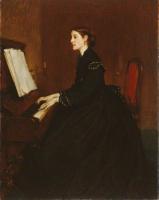
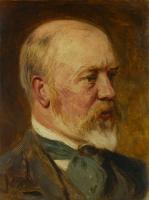
On 17th March 1839 John Pettie was born.
Annals of the six Kings of England by Nicholas Trivet
Translation of the Annals of the Six Kings of England by that traces the rise and rule of the Angevin aka Plantagenet dynasty from the mid-12th to early 14th century. Written by the Dominican scholar Nicholas Trivet, the work offers a vivid account of English history from the reign of King Stephen through to the death of King Edward I, blending political narrative with moral reflection. Covering the reigns of six monarchs—from Stephen to Edward I—the chronicle explores royal authority, rebellion, war, and the shifting balance between crown, church, and nobility. Trivet provides detailed insight into defining moments such as baronial conflicts, Anglo-French rivalry, and the consolidation of royal power under Edward I, whose reign he describes with particular immediacy. The Annals combines careful year-by-year reporting with thoughtful interpretation, presenting history not merely as a sequence of events but as a moral and political lesson. Ideal for readers interested in medieval history, kingship, and the origins of the English state, this chronicle remains a valuable and accessible window into the turbulent world of the Plantagenet kings.
Available at Amazon in eBook and Paperback format.
Thomas Bateman 1846. On the 17th of the same month a very remarkable tumulus was visited, which is situated upon a piece of ground near the village of Monyash, called Ringham Lowe [Map]. The upper portion being removed, it now presents the appearance of an oval elevation of considerable extent and trifling height, bearing in its present state no slight resemblance to the temple at Arbor Lowe, this idea being strengthened by the immense stones of which the kistvaen is composed.
The oval measures about fifty-four yards by thirty-five, and is thickly studded with vaults of the usual construction, many of which radiate from the central part of the barrow, where one of rather superior size is placed. The latter was cleared out on the above-mentioned day, and was found to consist of four large stones; the one employed to form a side of the cell was ascertained to measure four yards in length, from four to five feet in width, and two feet in thickness; within lay the skeleton of a very old man, upon a flooring of flat stones; with him a small piece of gray flint, apparently a part of a knife, and a cow's tooth. These bones retain much of their natural appearance, being hard and sound, excepting at the ends, which are entirely removed by decay. Two other vaults were opened without success, and in no part of this barrow which could be examined were any traces of calcined bone or pottery apparent.
Near one extremity of this oval tumulus is a small barrow, as at Arbor Lowe; it is much flattened by cultivation, and on opening afforded no relics, its contents being merely a disjointed human skeleton amidst a profusion of rats' bones.
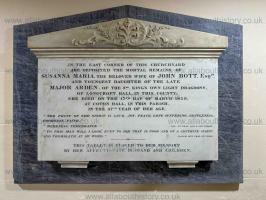
Memorial at St Werburgh's Church, Hanbury [Map] to Susanna Maria, died 17th March 1859, aged 57, at Coton Hall, Staffordshire [Map]. Wife of John Bott, daughter of Major Arden of Longcroft Hall, Staffordshire. She is buried in the chuchyard.
On 17th March 1867 Henry Peter Pitt-Rivers 5th Baron Rivers (age 17) died from lung disease in Torquay, Devon. His uncle George (age 52) succeeded 6th Baron Rivers of Sudeley Castle in Gloucestershire.
On 17th March 1886 Victoria Patricia "Patsy" Windsor was born to Prince Arthur Windsor 1st Duke Connaught and Strathearn (age 35) and Luise Margarete Hohenzollern Duchess Connaught (age 25). She a granddaughter of Queen Victoria of the United Kingdom. She married 27th February 1919 Alexander Ramsay and had issue.


On 17th March 1891 Archbishop William Connor Magee (age 69) was appointed Archbishop of York. He died seven weeks later.

On 17th March 1904 Prince George Hanover 2nd Duke Cambridge (age 84) died at Gloucester House without issue. Duke Cambridge extinct.

After 17th March 1921. Monument to Adelbert Wellington Brownlow Cust 3rd Earl Brownlow (deceased) in St Peter and St Paul Church, Belton [Map].
Adelbert Wellington Brownlow Cust 3rd Earl Brownlow: On 19th August 1844 he was born to John Hume Egerton and Marianne Margaret Compton. On 20th February 1867 John William Spencer Brownlow Egerton-Cust 2nd Earl Brownlow died in Mentone Italy. His brother Adelbert succeeded 3rd Earl Brownlow, 3rd Viscount Alford, 4th Baron Brownlow of Belton in Lincolnshire, 7th Baronet Cust of Stamford in Lincolnshire, and inherited Belton House [Map]. In 1868 Adelbert Wellington Brownlow Cust 3rd Earl Brownlow and Adelaide Chetwynd-Talbot Countess Brownlow were married. She by marriage Countess Brownlow. She the daughter of Henry John Chetwynd-Talbot 3rd Earl Talbot 18th Earl of Shrewsbury and Sarah Elizabeth Beresford Countess Talbot Shrewsbury Waterford. They were half fifth cousins. On 17th March 1921 Adelbert Wellington Brownlow Cust 3rd Earl Brownlow died. Earl Brownlow, Viscount Alford extinct. His second cousin Adelbert succeeded 5th Baron Brownlow of Belton in Lincolnshire, 8th Baronet Cust of Stamford in Lincolnshire, and inherited Belton House [Map]. Maud Buckle Baroness Brownlow by marriage Baroness Brownlow of Belton in Lincolnshire.
On 17th March 1943 Nicholas Townshend Durham was killed in action at the Battle of the Mareth Line.

On 25th December 1962 All Saints' Church, Branston [Map] was damaged by fire. The Church was rehallowed on 17th March 1966.
On 17th March 1473 King James IV of Scotland was born to King James III of Scotland (age 21) and Margaret Oldenburg Queen Consort Scotland (age 16) at Stirling Castle [Map]. He a great x 4 grandson of King Edward III of England. He married 8th August 1503 his third cousin Margaret Tudor Queen Scotland, daughter of King Henry VII of England and Ireland and Elizabeth York Queen Consort England, and had issue.

On 17th March 1609 Elizabeth Hobart was born to Henry Hobart 1st Baronet (age 49) and Dorothy Bell Lady Hobart. She was baptised at St Ann Blackfriars Church on 21st March 1609. She married 15th February 1632 John Lisle.
On 17th March 1682 Henry Bentinck 1st Duke Portland was born to William Bentinck 1st Earl of Portland (age 32) and Anne Villiers Countess Portland (age 31). He married before 1st March 1709 his third cousin twice removed Elizabeth Noel Duchess Portland, daughter of Wriothesley Baptist Noel 2nd Earl Gainsborough and Catherine Greville Duchess Buckingham and Normandby, and had issue.

On 17th March 1683 Ann Heathcote was born to Gilbert Heathcote 1st Baronet (age 31).

On 17th March 1698 Jane Douglas was born to James Douglas 2nd Marquess Douglas (age 52) and Mary Kerr Marchioness Douglas (age 24). She married 1746 John Stewart 3rd Baronet.
On 17th March 1704 Charles Cavendish was born to William Cavendish 2nd Duke Devonshire (age 32) and Rachel Russell Duchess Devonshire (age 30). He married 9th January 1729 Anne Grey, daughter of Henry Grey 1st Duke Kent and Jemima Crew Marchioness Kent, and had issue.

On 17th March 1720 John Rawdon 1st Earl Moira was born.
On 17th March 1722 William Wentworth 2nd Earl Strafford was born to Thomas Wentworth 1st Earl Strafford (age 49) and Anne Johnson Countess Strafford. He married 1741 Anne Campbell Countess Strafford, daughter of John Campbell 2nd Duke Argyll and Jane Warburton Duchess of Argyll.
On 17th March 1728 John Delaval 1st Baron Delaval was born to Francis Blake Delaval (age 35) and Rhoda Apreece. He married in or before 1755 his first cousin Susanna Robinson Baroness Delaval and had issue.


On 17th March 1745 Prudence Penelope was born to Arthur Hill aka Hill-Trevor 1st Viscount Dungannon (age 51). She married 1765 Charles Powell Leslie and had issue.
On 17th March 1746 Francis Buller 1st Baronet was born to James Buller (age 29) and Jane Bathurst at Downes House Downes Crediton, Devon.
On 17th March 1753 Charles Stanhope 3rd Earl of Harrington was born to William Stanhope 2nd Earl of Harrington (age 33) and Caroline Fitzroy Countess Harrington (age 30). He a great x 2 grandson of King Charles II of England Scotland and Ireland. He married 23rd May 1778 Jane Fleming Countess Harrington, daughter of John Fleming 1st Baronet, and had issue.
On 17th March 1761 Oswald Mosley was born to John Parker Mosley 1st Baronet (age 29). He married 3rd February 1784 Elizabeth Tonman and had issue.
On 17th March 1769 Charlotte Maria Whittaker Countess of Stradbroke was born to Abraham Whittaker (age 38) and Penelope Tempest (age 36). She married before 27th February 1793 John Rous 1st Earl Stradbroke, son of John Rous 5th Baronet, and had issue.
On 17th March 1794 Edward Cust 1st Baronet was born to Brownlow Cust 1st Baron Brownlow (age 49) and Frances Bankes Baroness Brownlow at Hill Street, Berkeley Square.


Anne Boleyn. Her Life as told by Lancelot de Carle's 1536 Letter.
In 1536, two weeks after the execution of Anne Boleyn, her brother George and four others, Lancelot du Carle, wrote an extraordinary letter that described Anne's life, and her trial and execution, to which he was a witness. This book presents a new translation of that letter, with additional material from other contemporary sources such as Letters, Hall's and Wriothesley's Chronicles, the pamphlets of Wynkyn the Worde, the Memorial of George Constantyne, the Portuguese Letter and the Baga de Secrets, all of which are provided in Appendices.
Available at Amazon in eBook and Paperback format.
On 17th March 1806 George Joseph Stanhope was born to Philip Henry Stanhope 4th Earl Stanhope (age 24) and Catherine Lucy Smith Countess Stanhope.
On 17th March 1809 John Thomas Duckworth aka Buller 2nd Baronet was born to John Thomas Duckworth 1st Baronet (age 62) and Susannah Catherine Buller. He married 1850 his second cousin once removed Mary Isabella Buller.
On 17th March 1810 George Patrick Evans 7th Baron Carbery was born to Percy Evans (age 36).
On 17th March 1811 Thomas Parker 6th Earl Macclesfield was born to Thomas Parker 5th Earl Macclesfield (age 48) and Eliza Wolstenholme Countess Macclesfield (age 30). He married before 24th July 1896 Mary Frances Grosvenor Countess Macclesfield, daughter of Richard Grosvenor 2nd Marquess Westminster and Elizabeth Mary Leveson-Gower Marchioness Westminster, and had issue.
On 17th March 1820 Richard Cornwallis Neville 4th Baron Braybrooke was born to Richard Griffin 3rd Baron Braybrook (age 36) and Jane Cornwallis Baroness Braybrook (age 21) at Charles Street, Berkeley Square. He married 1852 Charlotte Graham-Toller, daughter of Hector John Graham-Toler 2nd Earl of Norbury.
On 17th March 1839 John Pettie was born.
On 17th March 1847 William Bilsland 1st Baronet was born.
On 17th March 1863 Ellen Gallwey Countess of Wharncliffe was born to Lieutenant-General Thomas Gallwey and Alicia Dorinda Le Fanu Macdougall. She married 17th August 1886 Francis Montagu Stuart-Wortley-Mackenzie 2nd Earl of Wharncliffe and had issue.
On 17th March 1868 Winifred Selina Sturt was born to Henry Gerard Sturt 1st Baron Alington (age 42) and Augusta Bingham Baroness Alington (age 36). Coefficient of inbreeding 6.25%. She married 17th April 1890 her first cousin Charles Hardinge 1st Baron Penshurt, son of Charles Stewart Hardinge 2nd Viscount Hardinge and Lavinia Bingham Viscountess Hardinge, and had issue.
On 17th March 1886 Victoria Patricia "Patsy" Windsor was born to Prince Arthur Windsor 1st Duke Connaught and Strathearn (age 35) and Luise Margarete Hohenzollern Duchess Connaught (age 25). She a granddaughter of Queen Victoria of the United Kingdom. She married 27th February 1919 Alexander Ramsay and had issue.
Anne Boleyn. Her Life as told by Lancelot de Carle's 1536 Letter.
In 1536, two weeks after the execution of Anne Boleyn, her brother George and four others, Lancelot du Carle, wrote an extraordinary letter that described Anne's life, and her trial and execution, to which he was a witness. This book presents a new translation of that letter, with additional material from other contemporary sources such as Letters, Hall's and Wriothesley's Chronicles, the pamphlets of Wynkyn the Worde, the Memorial of George Constantyne, the Portuguese Letter and the Baga de Secrets, all of which are provided in Appendices.
Available at Amazon in eBook and Paperback format.
On 17th March 1911 Patrick Maitland 17th Earl of Lauderdale was born to Sydney Maitland (age 41).
On 17th March 1915 Elisabeth Knatchbull-Hugessen Lady Young was born to Hughe Montgomery Knatchbull-Hugessen (age 28). She married 14th February 1939 George Peregrine Young 5th Baronet, son of George Young 4th Baronet, and had issue.

On 17th March 1932 Anne-Louise Keppel was born to Walter Keppel 9th Earl Albermarle (age 50) and Diana Grove Countess of Albermarle (age 22). She married 1954 Hew Hamilton-Dalrymple 10th Baronet.
On 17th March 1948 Thomas Clifford 14th Baron Clifford was born to Colonel Lewis Clifford 13th Baron Clifford (age 31).
On 17th March 1959 John Parnell 9th Baron Congleton was born to Christopher Patrick Parnell 8th Baron Congleton (age 29).
On 17th March 1966 Thomas Henry Fremantle 6th Baron Cottesloe was born to John Fremantle 5th Baron Cottesloe (age 39).
On 17th March 1785 Henry Burgh 1st Marquess Clarincade (age 43) and Urania Paulet Marchioness Clanricarde (age 18) were married. The difference in their ages was 24 years. She the daughter of George Paulett 12th Marquess Winchester (age 62) and Martha Ingoldsby Marchioness Winchester. He the son of John Smith Burgh 11th Earl Clanricarde and Hester Amelia Vincent Countess Clanricarde.
On 17th March 1805 Walter Butler 1st Marquess Ormonde (age 35) and Anne Price-Clarke (age 16) were married. She by marriage Countess Ormonde and Countess Ossory. He the son of John Butler 17th Earl Ormonde 11th Earl Ossory and Frances Wandesford Countess Ormonde and Ossory (age 51).
On 17th March 1823 George Glyn Banker 1st Baron Wolverton (age 25) and Marianne Grenfell Baroness Wolverton (age 21) were married.
On 17th March 1823 George Dashwood 5th Baronet (age 33) and Elizabeth Broadhead were married.
On 17th March 1841 John Charles Thorold 11th Baronet (age 24) and Elizabeth Frances Thoroton-Hildyard were married.
Chronicle of Geoffrey le Baker of Swinbroke
Baker was a secular clerk from Swinbroke, now Swinbrook, an Oxfordshire village two miles east of Burford. His Chronicle describes the events of the period 1303-1356: Gaveston, Bannockburn, Boroughbridge, the murder of King Edward II, the Scottish Wars, Sluys, Crécy, the Black Death, Winchelsea and Poitiers. To quote Herbert Bruce 'it possesses a vigorous and characteristic style, and its value for particular events between 1303 and 1356 has been recognised by its editor and by subsequent writers'. The book provides remarkable detail about the events it describes. Baker's text has been augmented with hundreds of notes, including extracts from other contemporary chronicles, such as the Annales Londonienses, Annales Paulini, Murimuth, Lanercost, Avesbury, Guisborough and Froissart to enrich the reader's understanding. The translation takes as its source the 'Chronicon Galfridi le Baker de Swynebroke' published in 1889, edited by Edward Maunde Thompson.
Available at Amazon in eBook and Paperback format.
On 17th March 1853 Henry Hickman Bacon 11th and 10th Baronet (age 32) and Elizabeth Beckett Lady Hickman (age 23) were married.
On 17th March 1891 Wentworth Beaumont 1st Baron Allendale (age 61) and Edith Althea Hamilton Baroness Allendale (age 42) were married at St Paul's Church, Knightsbridge. No issue.
On 17th March 1905 George Lane-Fox 1st Baron Bingley (age 34) and Mary Agnes Emily Wood Baroness Bingley (age 27) were married.
On 17th March 1915 Evelyn Hugh Boscawen 8th Viscount Falmouth (age 27) and Mary Margaret Desiree Meynell Viscountess Falmouth (age 20) were married.
On 17th March 1952 Michael Brudenell-Bruce 8th Marquess of Ailesbury (age 25) and Edwina Sylvia de Winton-Wills (age 19) were married. He the son of Cedric Brudenell-Bruce 7th Marquess of Ailesbury (age 48).
On 17th March 1040 Harold "Harefoot" King England (age 24) died at Oxford, Oxfordshire [Map]. His half brother Harthacnut (age 22) succeeded King of England.
On 17th March 1126 Conrad Welf (age 21) died. His brother Henry (age 18) succeeded X Duke Bavaria.
On 14th March 1190 twin boys Robert Capet and Philip Capet were born to King Philip II of France (age 24) and Isabelle Flanders Queen Consort France (age 19). The eldest Robert died the same day, the youngest Philip died three days later. Their mother Isabelle Flanders Queen Consort France died from childbirth the day after the birth.
On 16 or 17th March 1377 Marie Chatillon Countess Pembroke (age 74) died.
On 17th March 1416 Alice Fitzalan Countess Kent (age 66) died.
On 17th March 1454 Elizabeth Cobham Baroness Strange and Mohun (age 35) died.
On 17th March 1505 Annabella Dummond Countess Montrose (age 42) died.
On 17th March 1516 Giuliano Medici Duke Nemours (age 37) died.
On 17th March 1536 Katherine Howard Baroness Berners (age 68) died.

On 17th March 1570 William Herbert 1st Earl Pembroke (age 69) died at Hampton Court Palace, Richmond [Map]. His son Henry (age 32) succeeded 2nd Earl Pembroke. Catherine Talbot Countess Pembroke (age 20) by marriage Countess Pembroke.
Chronicle of Geoffrey le Baker of Swinbroke
Baker was a secular clerk from Swinbroke, now Swinbrook, an Oxfordshire village two miles east of Burford. His Chronicle describes the events of the period 1303-1356: Gaveston, Bannockburn, Boroughbridge, the murder of King Edward II, the Scottish Wars, Sluys, Crécy, the Black Death, Winchelsea and Poitiers. To quote Herbert Bruce 'it possesses a vigorous and characteristic style, and its value for particular events between 1303 and 1356 has been recognised by its editor and by subsequent writers'. The book provides remarkable detail about the events it describes. Baker's text has been augmented with hundreds of notes, including extracts from other contemporary chronicles, such as the Annales Londonienses, Annales Paulini, Murimuth, Lanercost, Avesbury, Guisborough and Froissart to enrich the reader's understanding. The translation takes as its source the 'Chronicon Galfridi le Baker de Swynebroke' published in 1889, edited by Edward Maunde Thompson.
Available at Amazon in eBook and Paperback format.
On 17th March 1591 Margaret Howard Baroness Scrope Bolton (age 48) died.
On 17th March 1602 Patrick Plunkett 7th Baron Dunsany (age 58) died. His son Christopher succeeded 8th Baron Dunsany.
On 17th March 1663 Jerome Weston 2nd Earl of Portland (age 57) died. His son Charles (age 23) succeeded 3rd Earl of Portland, 3rd Baron Weston of Nayland in Suffolk.
On 17th March 1680 William Brereton 3rd Baron Brereton (age 48) died. His son John (age 20) succeeded 4th Baron Brereton and inherited Brereton Hall, Cheshire [Map].
On 17th March 1713 Charles Fettiplace 3rd Baronet (age 51) died. He was buried at St Mary's Church, Swinbrook [Map]. His brother Lorenzo (age 50) succeeded 4th Baronet Fettiplace of Childrey in Berkshire.
On 17th March 1715 Bishop Gilbert Burnet (age 71) died. Salisbury Cathedral [Map].
On 17th March 1758 James Hamilton 1st Earl Clanbrassil (age 63) died.

On 17th March 1764 George Parker 2nd Earl Macclesfield (age 68) died. His son Thomas (age 40) succeeded 3rd Earl Macclesfield. Mary Heathcote Countess Macclesfield by marriage Countess Macclesfield.

On 17th March 1769 William Craven 5th Baron Craven (age 63) died. His grandson William (age 30) succeeded 6th Baron Craven of Hamstead Marshall in Berkshire. Elizabeth Berkeley Margrave Brandenburg-Ansbach (age 18) by marriage Baroness Craven of Hamstead Marshall in Berkshire.
On 17th March 1770 Richard Mill 6th Baronet (age 53) died. His brother John (age 51) succeeded 7th Baronet Mill of Camois Court in Sussex.
Chronicle of Geoffrey le Baker of Swinbroke
Baker was a secular clerk from Swinbroke, now Swinbrook, an Oxfordshire village two miles east of Burford. His Chronicle describes the events of the period 1303-1356: Gaveston, Bannockburn, Boroughbridge, the murder of King Edward II, the Scottish Wars, Sluys, Crécy, the Black Death, Winchelsea and Poitiers. To quote Herbert Bruce 'it possesses a vigorous and characteristic style, and its value for particular events between 1303 and 1356 has been recognised by its editor and by subsequent writers'. The book provides remarkable detail about the events it describes. Baker's text has been augmented with hundreds of notes, including extracts from other contemporary chronicles, such as the Annales Londonienses, Annales Paulini, Murimuth, Lanercost, Avesbury, Guisborough and Froissart to enrich the reader's understanding. The translation takes as its source the 'Chronicon Galfridi le Baker de Swynebroke' published in 1889, edited by Edward Maunde Thompson.
Available at Amazon in eBook and Paperback format.
On 17th March 1799 Charles Thompson 1st Baronet (age 59) died. His son Norborne (age 14) succeeded 2nd Baronet Virkees.
On 17th March 1807 William Jardine 5th Baronet (age 86) died. His son Alexander succeeded 6th Baronet Jardine of Applegirth in Dumfrieshire.
On 17th March 1824 William Boothby 7th Baronet (age 78) died at Edwinstowe, Nottinghamshire. His son William (age 41) succeeded 8th Baronet Boothby of Broadlow Ash in Derbyshire. Frances Jenkinson Lady Boothby by marriage Lady Boothby of Broadlow Ash in Derbyshire.
On 17th March 1828 Charles Hamilton 8th Earl Haddington (age 74) died. His son Thomas (age 47) succeeded 9th Earl Haddington.
On 17th March 1831 John Bligh 4th Earl Darnley (age 63) died. His son Edward (age 36) succeeded 5th Earl Darnley, 14th Baron Clifton of Leighton Bromswold in Huntingdonshire. Emma Jane Parnell Countess Darnley by marriage Countess Darnley.
On 17th March 1835 Peter Parker 3rd Baronet (age 25) died. His uncle John (age 46) succeeded 4th Baronet Parker of Bassingbourn in Essex.
On 17th March 1851 Stafford Henry Northcote 7th Baronet (age 88) died. His grandson Stafford (age 32) succeeded 8th Baronet Northcote of Hayne in Devon.
On 17th March 1857 John Kenward Shaw 6th Baronet (age 74) died. His nephew John (age 27) succeeded 7th Baronet Shaw of Eltham in Kent.
On 17th March 1858 John Montagu Burgoyne 9th Baronet (age 61) died. His son John (age 25) succeeded 10th Baronet Burgoyne of Sutton in Bedfordshire. Amy Henrietta Nelson-Smith Lady Burgoyne (age 26) by marriage Lady Burgoyne of Sutton in Bedfordshire.
On 17th March 1867 Henry Peter Pitt-Rivers 5th Baron Rivers (age 17) died from lung disease in Torquay, Devon. His uncle George (age 52) succeeded 6th Baron Rivers of Sudeley Castle in Gloucestershire.
On 17th March 1868 Robert Carrington 2nd Baron Carrington (age 72) died. His son Charles (age 24) succeeded 3rd Baron Carrington of Bulcote Lodge, 3rd Baron Carrington of Upton in Nottinghamshire.
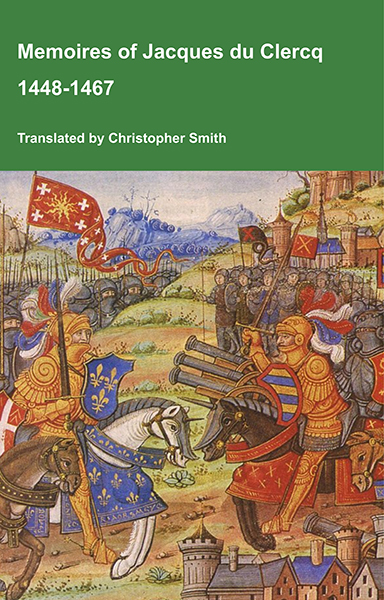
This is a translation of the 'Memoires of Jacques du Clercq', published in 1823 in two volumes, edited by Frederic, Baron de Reissenberg. In his introduction Reissenberg writes: 'Jacques du Clercq tells us that he was born in 1424, and that he was a licentiate in law and a counsellor to Philip the Good, Duke of Burgundy, in the castellany of Douai, Lille, and Orchies. It appears that he established his residence at Arras. In 1446, he married the daughter of Baldwin de la Lacherie, a gentleman who lived in Lille. We read in the fifth book of his Memoirs that his father, also named Jacques du Clercq, had married a lady of the Le Camelin family, from Compiègne. His ancestors, always attached to the counts of Flanders, had constantly served them, whether in their councils or in their armies.' The Memoires cover a period of nineteen years beginning in in 1448, ending in in 1467. It appears that the author had intended to extend the Memoirs beyond that date; no doubt illness or death prevented him from carrying out this plan. As Reissenberg writes the 'merit of this work lies in the simplicity of its narrative, in its tone of good faith, and in a certain air of frankness which naturally wins the reader’s confidence.' Du Clercq ranges from events of national and international importance, including events of the Wars of the Roses in England, to simple, everyday local events such as marriages, robberies, murders, trials and deaths, including that of his own father in Book 5; one of his last entries.
Available at Amazon in eBook and Paperback format.

On 17th March 1884 Edward Lloyd aka Lloyd-Mostyn 2nd Baron Mostyn (age 89) died. His grandson Llewelyn (age 27) succeeded 3rd Baron Mostyn of Mostyn in Flintshire, 4th Baronet Lloyd of Pengwerra in Flintshire.
On 17th March 1891 Gilbert Elliot-Murray-Kynynmound 3rd Earl Minto (age 76) died. His son Gilbert (age 45) succeeded 4th Earl Minto of Minto in Roxburghshire, 7th Baronet Elliot of Minto. Mary Caroline Grey Countess Minto (age 33) by marriage Countess Minto of Minto in Roxburghshire.
On 17th March 1904 Prince George Hanover 2nd Duke Cambridge (age 84) died at Gloucester House without issue. Duke Cambridge extinct.
On 17th March 1921 Adelbert Wellington Brownlow Cust 3rd Earl Brownlow (age 76) died. Earl Brownlow, Viscount Alford extinct. His second cousin Adelbert (age 53) succeeded 5th Baron Brownlow of Belton in Lincolnshire, 8th Baronet Cust of Stamford in Lincolnshire, and inherited Belton House [Map]. Maud Buckle Baroness Brownlow (age 50) by marriage Baroness Brownlow of Belton in Lincolnshire.
On 17th March 1951 Seymour William Brooke Boothby 13th Baronet (age 85) died. His son Hugo (age 43) succeeded 14th Baronet Boothby of Broadlow Ash in Derbyshire.
On 17th March 1958 David Freeman-Mitford 2nd Baron Redesdale (age 80) died. His brother Bertram (age 78) succeeded 3rd Baron Redesdale of Redesdale in Northumberland.
On 17th March 1960 George Peregrine Young 5th Baronet (age 51) died. His son George (age 18) succeeded 6th Baronet Young of Formosa Place in Berkshire.
On 17th March 1998 Colonel Lewis Clifford 13th Baron Clifford (age 81) died. His son Thomas (age 50) succeeded 14th Baron Clifford of Chudleigh in Devon.
On 17th March 2023 Anthony Harris 8th Baron Harris (age 81) died. His fourth cousin Michael (age 81) succeeded 9th Baron Harris of Seringapatam and Mysore and of Belmont in Kent.