

Adam Murimuth's Continuation and Robert of Avesbury’s 'The Wonderful Deeds of King Edward III'
This volume brings together two of the most important contemporary chronicles for the reign of Edward III and the opening phases of the Hundred Years’ War. Written in Latin by English clerical observers, these texts provide a vivid and authoritative window into the political, diplomatic, and military history of fourteenth-century England and its continental ambitions. Adam Murimuth Continuatio's Chronicarum continues an earlier chronicle into the mid-fourteenth century, offering concise but valuable notices on royal policy, foreign relations, and ecclesiastical affairs. Its annalistic structure makes it especially useful for establishing chronology and tracing the development of events year by year. Complementing it, Robert of Avesbury’s De gestis mirabilibus regis Edwardi tertii is a rich documentary chronicle preserving letters, treaties, and official records alongside narrative passages. It is an indispensable source for understanding Edward III’s claim to the French crown, the conduct of war, and the mechanisms of medieval diplomacy. Together, these works offer scholars, students, and enthusiasts a reliable and unembellished account of a transformative period in English and European history. Essential for anyone interested in medieval chronicles, the Hundred Years’ War, or the reign of Edward III.
Available at Amazon in eBook and Paperback format.
17 Oct is in October.
1330 Trial and Execution of Mortimer and his Faction
1346 Battle of Neville's Cross
1529 Oct Wolsey surrenders the Great Seal
1551 Arrest of the Duke of Somerset and his Supporters
Rotuli Litterarum Clausarum. The King to the constable of Hertford, etc., greetings. We order you to cause Walter de Mungumi, knight of the Earl of Ferrers, to have seisin of his land in Hoddesdon, such as he held it before the war was begun between us, from which he was disseised on account of that war. Witness myself at Newark [Map], on the 17th day of October.
Rex Constabulo de Hertford tc. Mandam vob qd tale saisina hre faciatis Walto de Mungumi militi Comitis de Ferar de tra sua in Houdesdoni qualé inde huit ante guerram mota int nos [t unde occoe guerre fuit] disseisit. T. me ipo apd Newerk, xvij. die Oct.
Rotuli Litterarum Clausarum. The King to William, nephew of Warin, etc., greetings. We order you that you make yourself surety for one hundred pounds' worth of cloths, which our beloved and faithful Walter de Lacy will take on credit in the town of Lincoln, until the octave of Saint Andrew next to come, when he will pay his creditors for them. And if by that term he shall not have paid those one hundred pounds to them, then we will repay you from our merchandise which we are sending from Lynn to your town. Witness myself at Newark [Map], on the 17th day of October[1216].
Rex Witto nepoti Warin tc. Mandam vob qd centulibatas pannoz quas dilcus t fidet nr Walter de Lascy capiet ad credencia in villa Linc manucapiatis usq, ad Octab SCi Andr instantis qui [tuc illas creditoribz suis psolvet t nisi ad] tminu illu illas centu libas eis solvit illas tuc vob reddem de mcandisa nra qua mittim de Lennia usq, villa vram. T. me ipo apd Newerk, xvij. die Oct.
Chronicle of Robert Fabyan [-1512]. [17th October 1330]. In ye moneth of Octobre, upon the. xvii. daye, and euyn of seynt Luke, syr Roger Mortymer (age 43) before named, by means of syr Wyllyam Montaygne (age 29), syr Rafe Staforde, syr lohn Neuyle, and other, by a compassyd meane was takyn in the castell of Notyngham [Map], notwithstandyrige that the keyes of the sayde eastell were dayly and nyghtlye under his warde and kepynge; the kynge, the quene, the olde quene (age 35), with dyuerse other noblys that beynge in the same eastell lodgyd. The maner of the takynge of this erle syr Roger Mortymer I passe ouer, for the dyuersyte that I haue seen thereof of sundry wryters; but many agreen, yt he with syr Symonde of Bedforde, & other, were in that nyght takyn, and after sent unto the Towre of London, and there put in streyghte kepynge. Then the kynge, in short processe after, callyd a parlyament at London for ye reformacion of many thynges rnysorderyd in the realme, by mtatie of the foresayde syr Roger, as the comon fame then went.
 Chronicle of Walter of Guisborough. Most dread lord, Know that my lord the king of France has commanded me to let you know that he has often heard it said that you everywhere openly declare that, if you knew he ought or even wished to enter battle with you, you would, with your knights and army, wait for fifteen days, or at least three weeks, on the condition of engaging him in battle. On this matter, know that if you wait until next Wednesday, my lord the king will encamp so near to you that on the following Thursday or Friday, provided that in a common field, with no rivers or other obstacles, nor any notable stratagems to impede it, he will, with eager desire, not delay to engage you in battle. And if, as said above, you will wait, I, on behalf of my lord the king, am your surety that you will not be disappointed. Most dread lord, if you do not believe what I have said, my lord of Bohemia, my lord de Niez, my lord the constable, and my lord of Lorraine will, by their own letters, bear witness to you that it is as I have written. Written at Saint-Quentin, the night of October 17 [1339].
Trementissime domine, noveritis quod dominus meus rex Franciæ mihi in præceptis dedit quod vobis scire faciam quod sæpe ad aures suas pervenit quod ubique palam vos facitis, si sciretis ipsum debere vel etiam velle vobiscum pugnam inire, XV diebus aut certe septimanis tribus cum militia vestra et exercitu, sub conditione bellum committendi cum ipso, ardenti affectu moram faceretis. Super quibus sciatis, quod si usque ad diem Mercurii proximo futurum expectaveritis, dominus meus rex vobis sic approximando castrametabitur, quod die Jovis vel Veneris sequente, si tamen in loco communi, aquis vel aliis impedimentis, deceptionibusve notabilibus, nullatenus impedientibus, fueritis, bellum vobiscum committere et ipse ardenti affectu non tardabit. Et si, ut præmittitur, moram feceritis, ex parte domini mei regis quod non deficietis, vobis fidejussor ego sum. Trementissime domine, si prædicta vera non creditis, dominus meus Boemiæ, dominus de Niez, dominus constabularius, dominus meus Lothoringiæ, sicut vobis scribo per literas suas testes fient. Scriptum apud Sanctum Quintinum XVII die Octobris in nocte.
On 17th October 1346 at the Battle of Neville's Cross at [Map] the English inflicted a heavy defeat on the Scottish army that had invaded England in compliance with their treaty with the French for mutual support against England.
The English army included: William Deincourt 2nd Baron Deincourt (age 45), Henry Scrope 1st Baron Scrope of Masham (age 34), Ralph Hastings (age 55), Ralph Neville 2nd Baron Neville of Raby (age 55), Archbishop William Zouche, Henry Percy 10th and 2nd Baron Percy (age 45) and John Mowbray 3rd Baron Mowbray (age 35).
Of the Scottish army King David II of Scotland (age 22), John Graham Earl Menteith (age 56) and William "Flower of Chivalry and Knight Liddesdale" Douglas 1st Earl Atholl (age 46) were captured and imprisoned in the Tower of London [Map].
Neil Bruce, John Randolph 3rd Earl of Moray (age 40), David Hay 6th Baron Erroll (age 28) and Edward Keith of Sinton (age 66) were killed.


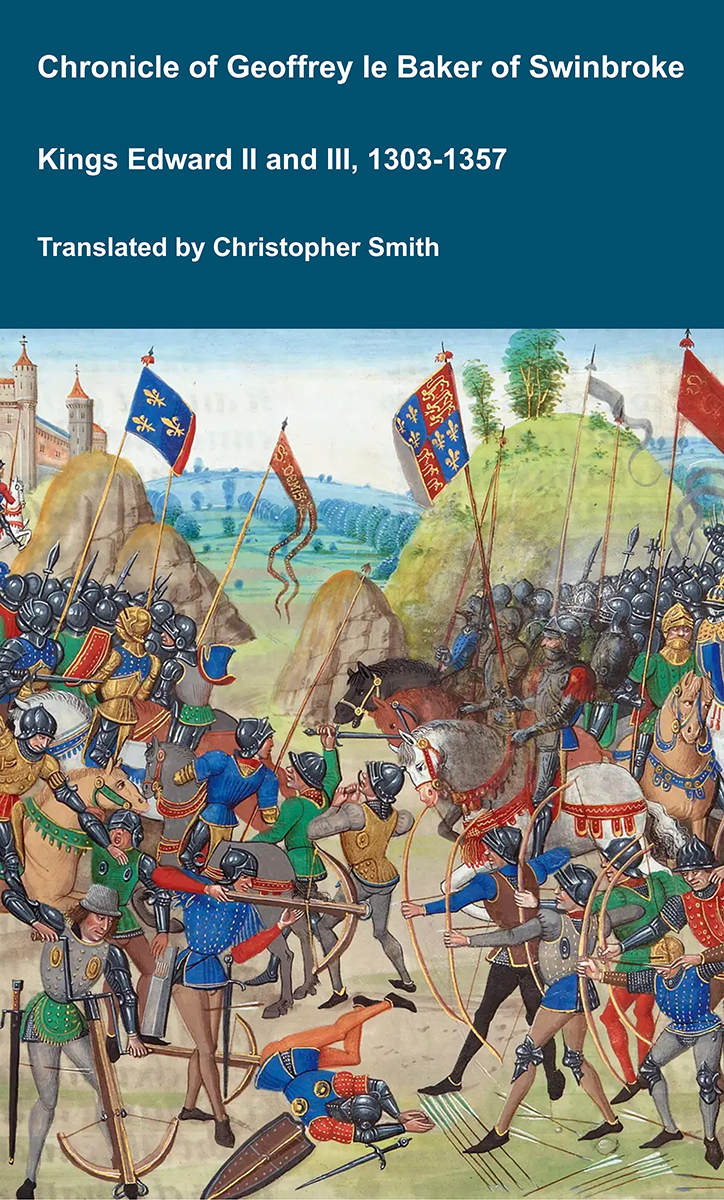 Chronicle of Geoffrey le Baker of Swinbroke [-1360]. The English lords of the Marches were grieved at the flight of their enemy's army; thus Lord William de la Zouche, Archbishop of York, who at that time held the king's authority in those parts, summoned with their forces the Bishop of Carlisle, the Earl of Angus, Lord de Mowbray, Lord Percy, Lord Neville, and other northern nobles, along with archers from the county of Lancaster. On the eve [17th October 1346] of the feast of Saint Luke the Evangelist, they confronted the Scottish army at a place called Neville's Cross.
The Scottish nation, unaccustomed to flight, stood boldly. With their heads protected in iron helms and forming a dense battle line, they attacked the English. Their polished helmets and numerous reinforced shields initially rendered the English archers' arrows ineffective. But the front line of English men-at-arms greeted the enemy with deadly blows. On both sides the warriors stood, more ready for death than retreat.
One could see the Scots, exhausted from effort and stunned by blows from battle axes to their heads, still standing. In places where ten men stood closely packed, one well-aimed blow could bring down all ten, as was reported by those who saw them fall. The Scottish marshal, Earl Patrick, to whom command of the rear guard had been given, fled when he realized the English were standing firm and his men were falling, along with some of his equally rash companions. Lord Percy had predicted earlier that day: "The rashness of that traitor, who never dared meet us even in the field, will benefit our army more than a thousand Scots could harm it." While he fled, the rest remained loyal to their king, choosing a noble death over a disgraceful life. They stood tightly packed in the manner of a round tower, protecting the king in the centre, until scarcely forty were left alive. None of those could escape.
At last, King David was captured by John de Copeland, and all others either perished or were taken for ransom, those, that is, who had remained steadfast with their king. The rest were pursued as they fled, killed or captured, all the way to Prudhoe and Corbridge.
In that great battle were captured: David de Bruce, King of the Scots; the Earl of Menteith; the Earl of Fife; Lord Malcolm Fleming; the Earl of Wigtown; William Douglas; William de Livingstone; Walter de Haliburton; John Douglas; David of Annandale; John de St. Clair; William Mowbray; David FitzRobert FitzCant; William de Ramsay; Adam Moigne; John Stewart; Roger de Kirkpatrick; John Hume; and William Moray, knights; as well as James Sandilands, James Lorraine, and Henry del Kerr, squires.
Killed in the same battle were: the Earl of Moray and the Earl of Strathearn; also Alexander Strachan, John de Haliburton, Henry de Ramsay, Nasus de Ramsay, Adam Nicholson, Thomas Boyd, John Stewart, Alan Stewart, David de la Haye, Edward de Keith, John de Crawford, John de Kindace, Philip de Meldrum, Henry de Ramsay, Alexander Moray, Humphrey de Boys, Gilbert Inchmartin, Robert Mautalent, and his brother Humphrey Kirkpatrick, John Strachan, and Patrick Heron, knights.
Besides these, many others were also killed in the pursuit of the fleeing, by those chasing them; but no more than the number of surcoats taken from the main battlefield were brought back, so that by the number of cloaks, the number and names of the slain might be known.
Oritur luctus Anglicorum marchionum a facie exercitus fugiencium; unde dominus Willelmus de la Zouche, archiepiscopus Eboracensis, qui locum regium in ilia marchia tune habebat, convocatis cum eorum copiis episcopo Carliolensi, comite Danegos, domino de Moubray, domino de Percy, domino de Neville, et aliis nobilibus borealibus, cum sagittariis de comitatu Lancastrie, in vigilia sancti Luce Ewangeliste ad locum qui vocatur Neville cros exercitui Scotorum occurrebat.
Restitit animose nacio Scotia nescia fuge, et, capitibus ferro tectis inclinatis, acies densa Anglicos invadens, cassidibus politis et umbonibus numero firmatis, sagittas Anglicorum in primordio belli frustravit; set armatorum acies prima ictubus letalibus hostes salutavit. Stant pugnaces ex utraque parte morti quam fuge paraciores.
Vidisses Scotos pre labore fessos ictubus securium capitatarum sic atonitos, et tamen stantes, quod ubi forsan steterunt decem, singuli singulis appodiati, ad unum ictum uno ruente omnes illos decem corruere; sicud retulerunt hii qui viderunt eos cadentes. Marescallus Scotorum, comes Patricius, cui posterior custodia fuerat deputata, ut primo percepit Anglicos resistere suosque cadere, fugam iniit cum quibusdam conciis sue vecordie, quam dominus de Percy eodem die prophetavit dicens: 'Vecordia illius proditoris, numquam ausi nobis in campo eciam obviare, plus proficiet nostro exercitui quam nocerent mille Scoti.' Illo fugam ineunte, ceteri fideliter cum suo rege persistentes pulcram mortem turpi vite pretulerunt. Steterunt nempe in modum rotunde turris glomerati, regem in medio protegentes, quousque vix fuerant quadraginta superstites relicti, de quibus non potuit aliquis affugere.
Tandem eorum rege David per lohannem de Copelond captivato et ceterorum quolibet occiso aut redempcioni reservato, illorum dico qui cum rege perstiterunt, alios fugitives insequebantur occidendo et capiendo usque ad Prudhow et Corebrigge.
In tanto certamine fuerunt capti David de Bruys rex Scotorum, comes de Menteth, comes de Fiffe, dominus Malcolmus Flemyng, comes de Wixtone; Willelmus Douglas, Willelmus de Levingstone, Walterus de Haliburtone, Johannes Dowglas, David de Anand, lohannes de Seint Clere, Willelmus Mombray, David fitz Robert fiz Cante, Willelmus de Ramsey, Adam Moigne, lohannes Stiward, Rogerus de Kyrkepatrik, lohannes Hume, et Willelmus Morre, milites; lacobus Sandelflome, lacobus Lorein, et Henricus del Ker, domicelli.
Occisi fuerunt in eodem bello comes de Morif, et comes de Straterne; item Alexander Stragy, lohannes de Halybortone, Henricus de Rammesey, Naso de Rammesey, Adam Nilkessone, Thomas Boyde, lohannes Styward, Alanus Styward, David de la Haye, Edwardus de Keth, lohannes de Crauford, lohannes de Kyndeseye, Philippus de Meldrun, Henricus de Ramesey, Alexander Morre, Humfridus de Boys, Gilbertus Ynchemartyn, Robertus Maltalent, et suus germanus Humfridus Kyrkepatrik, lohannes Stragy, et Patricius Heringe, milites.
Preter hos eciam in venacione fugiencium multos occiderunt insequentes; set non plurium quam illorum toge fuerunt de campo principali reportate, ut numero togarum numerus et nomina occisorum innotescerent.
Collectanea by John Leland [1502-1552]. King Davy of Scotland, yn the meane while, wan agayne, part by Strenght, parte by Treason, part by Famyne, al the Holdes that King Eduard had yn Scotland, saving the only Toun of Berwik. And the tyme of the ii firste Monithes of the Affege of Calays he enterid ons in Somer in to the Parties of Cairluelshir; and a nother by Sulwath, and after afsaylid the Pile of Lidel, and wan it by Assaute, and then cut of the Hedde of Water Selby Capitayne there, that afore had beene of the Covyn of Gilbetert Midleton, that kept Mitford Castel and Horton Pile agayn King Eduarde. Davy King of Scottes went forth in to the Bisshoprik, and there did much Hurte, wher the Archbishop of York, the Counte of Angous, the Lorde Percy, the Lorde Neville, and Lord Moubray, with other Marchers wan the Batelle1, and John Coplande toke hym Prifoner. The Countes of Murref and Strathern wer killid, and also Morice Murref, with many Barons, Banerettes, and Knightes wer killid. The Counte of March, and the Seneschal of Scotland, fled. The Counte of Marche was taken, and the Counte of Menteth, that shortely after was hangid and drawen at London. Wylliam Duglas, that had greatly holp the Quarel of King David, was restorid to his Castel of the Heremitage, apon Conditions that he after should bere Wepen agayn King Edwarde, and alway be ready to take his Part. This Duglas was fone after slayn of the Lord Wylliam Duglas yn the Forest of Selkirk.
Note 1. The Battle of Neville's Cross was fought on 17th October 1346.
Original Chronicle of Scotland by Andrew of Wyntoun. [17th October 1346] The Erle off Murrawe and his menyhé
Than nere wes that assemblé:
At hey dykis assemblid thai,
And that brak gretly thaire aray;
Tharfor thai war swne dyscumfyte.
Thai, that held hale, sped thame full tyte
To the Kyng, that assemblid was
In till a full anoyus plas,
Than nane, but hurt, mycht lyfft his hand,
Qwhen thai thaire fayis mycht noucht wythstand.
To the Stwartis rowt than went thai,
That was assemblyd nere that way.
Thare had thai rowme to stand in fycht;
Thare mycht thai welle assay thare mycht.
Than bathe the fyrst rowtis rycht thare
At that assemblé Wencust war.
Thare wes hard fechtyng; as man sayis,
Swilk wes nevyre sene befor thai dayis:
Swa hard fechtyng than wes thare,
That qwhen the flearis twa myle and mare
'War fled, the banaris war standand,
And thai ware face to face fychtand,
As mony sayd; bot noucht for-thi
Thai war syne wencust wtarly.
Mony fled, and noucht agayne
Repayrid, and thaire war mony slayne.
Chronicle of Henry Knighton. Therefore the Bishop of York, Lord William le Zouche, together with Lord Henry de Percy, and all the knights, squires, chaplains, and clerics of those parts, all, with unanimous agreement, prepared to live and die for the salvation of the kingdom, gathered together on one day, namely on the Monday next before the Feast of Saint Luke [17th October 1346]. They assembled about four leagues this side of Durham, while the Scots, in great strength and with uplifted hand, were encamped a little distance beyond them. Lord William Douglas, with his men, had advanced ahead of the main Scottish army; but the English unexpectedly fell upon him, and he was captured by a certain squire of Lord Deyncourt, while many of his men were slain there. When the King of Scotland learned of this, he hastily prepared himself for battle and arrayed his army in battle-lines. The air was filled with the sound of trumpets and clarions, and they directed their line against the English. But the English, placing all their hope in God, setting the justice of their cause before the fear of death, and having full confidence in the sign of the Cross, which was borne before them along with the other banners, committed themselves wholly to the divine mercy, from which none is deceived, and bravely gave themselves to the fight with great courage. Thus the two armies engaged, as though the whole world's victory depended upon that hour, and they fought until about the hour of [blank]
At length, through the divine mercy granted to them, the English won a joyful and glorious victory over their enemies at Beaurepair, about three leagues from Durham, on the vigil of Saint Luke [17th October 1346]. The monks, who were in the belfry of their church and saw the Scots fleeing, lifted up their voices, and the clouds were filled with the sound of their cries. They shouted and praised God with tearful joy, singing, "Te Deum laudamus." The English heard that cry as though it were close behind them, and, taking from it greater courage in God, pursued their enemies more fiercely and crushed them more completely. For the monks of Durham had made an agreement with the Scots for their own safety and for that of their manors and tenants in the countryside, that on the following day they would pay one thousand pounds without further delay; and thus they were freed from the yoke of that oppression. The Scots had planned to march onward to Beverley, and from there to York, for they believed that no one remained in the land who could resist them, since all were said to be away at the siege of Calais. Captured in the battle These were taken prisoner in the battle: David, King of Scotland, the Earl of Fife, the Earl of Menteith, the Earl of Wigtown, the Earl of Carrick, Sir William Douglas and his brother, Sir William de Lemyngton, Sir William Ramsay and his son, Sir Malcolm Fleming, Sir David Bennet (Banaude), Sir John Sinclair, Sir William Mowbray. Slain in the battle of Durham These were slain in the battle of Durham: The Earl of Moray, the Earl of Sutherland, the Earl of Strathearn; Sir Philip Meldrum, Sir Humphrey de Boys, Sir Robert Montalent and his brother, Sir John Steward, Sir Alan Steward his brother, Sir Maurice Murray, Sir David de la Haye, Sir Edward Keith, Sir John Cranforth, Sir John Lummesey, Sir Adam Newton, Sir Alexander Strachan and his brother. Also slain in the battle were Sir William de la Haye, Sir John de la More, Sir Thomas Boyd, Brother Edmund of the Lord Keith, Sir William Ramsay the elder, Sir John Sinclair, Sir Adam Moygrave, Sir David FitzRobert, Sir William Mowbray, Sir Reginald Kirkpatrick, Sir William de Haliburton, and Sir Patrick Herring, and besides these, more than one hundred of the best knights of all Scotland, and of the common people more than twenty thousand. English losses On the side of the English, there were four knights and five squires slain. The capture of King David The King of Scotland fled from the field and was wounded in the head by an arrow. He was taken at Merrington by a valet of John de Coupland, and brought to the castle of Bamburgh, where for some time he remained under the custody of Lord Percy, because his wound prevented him from travelling. Later, together with many other nobles, he was, by command of the king, led to London.
Unde episcopus Eboracensis dominus Willelmus le Sowche, dominus de Percy et cæteri omnes de illis partibus milites armigeri, capellani et clerici, omnes unanimi assensu parati vivere et mori pro salvatione regni convenerunt in unum diem die Lunæ proximo ante festum sancti Lucæ per iiijor leucas citra Dunelmum, et Scoti fuerunt modico spatio ultra eos in ingenti fortitudine et elata manu. Dominus Willelmus Duglas cum suis præcesserat exercitum Scotia, et Anglici inopinate supervenerunt super eum, et captus est per unum armigerum dominum le Deyncourte, et multi de suis ibidem interfecti sunt. Quod cum Quod cum rex Scotia intellixisset cum festinatione paravit se ad bellum, distrinxitque exercitum per acies, repleverunt terram in sonitu tubarum et clarionum, et direxerunt aciem in occursum Angligenarum. Anglici vero spem suam totam in deo ponentes, et juris titulum morti suæ præponentes, et in signo crucis, quæ ante eos cum aliis vexillis ferebatur, plenam fiduciam habentes, divinæ clementiæ a qua nullus fallitur se totum commendaverunt, et se conflictui cum summa audacia fortiter dederunt, sicque miscuerunt se exercitus quasi Victory of tertia et pugaverunt usque ad horam ....
Tandem the English mediante divina clementia concessa est Anglicis de hostibus tripudialis victoria apud Beal repayr per tres leucas juxta Dunelmum in vigilia sancti Lucæ. Monachi existentes in campanili ecclesiæ suæ et videntes fugientes Scotos, levaverunt vocem nubesque repleverunt sonitu clamoris, clamantes et deum laudantes, flebilibusque lacrimis præ gaudio dicentes, Te deum laudamus, quam vocem Angli audierunt acsi a tergo eorum prope adessent, et fortiorem audaciam in deo inde sumentes inimicos acrius insecuti sunt et fortius eos protriverunt. Nam monachi Dunelmenses finem fecerant cum Scotis pro se et maneriis suis et suis tenentibus in patria in crastino sequenti pro mille libris solvendis absque ulteriori mora, et sic liberati sunt ab ipso jugo. Scoti proposuerant iter dirigere ad Beverlacum et abinde apud Eboracum. Crediderunt namque nullos esse in patria eis resistere valentes quin omnes essent ad obsidionem Calesiæ. Isti sunt capti in bello. David rex Scotia, comes de Fyth, comes de Meyntife, comes de Wygton, comes de Carryk, dominus Willelmus Duglas, et frater ejusdem Willelmi, dominus Willelmus de Lemyston, dominus Willelmus de Rameseye et filius, dominus Malcolmus Flemyng, dominus David Banaude, dominus Johannes Seyntclere, dominus Willelmus Moubraye. Isti fuerunt occisi in bello Dunelmensi. Comes de Moryf, comes de Suthlande, comes de Struernh. Dominus Philippus de Myldron, dominus Umfridus de Bloys, dominus Robertus Mantalent et frater ejus, dominus Johannes Styward, dominus Alanus Styward frater ejus, dominus Mauricius de Morref, dominus David de la Haye, dominus Edwardus de Keth, dominus Johannes de Cranforde, dominus Johannes de Lymesheye, dominus Adam de Nytfon, dominus Alexander Stragy et frater ejus. Item occisi in bello dominus Willelmus de la Haye, dominus Johannes de la Morre, dominus Thomas Boyde, frater Edmundus domini de Keth, dominus Willelmus de Rameseye pater, dominus Johannes Seynthillere, dominus Adam Moygrave, dominus David Fyth-Roberd, dominus Willelmus Moubray, dominus Reginaldus Kirkepatrik, dominus Willelmus de Halyburton, dominus Patonus Heryng. Et præter istos ultra centum milites meliores totius Scotiæ, et de communibus plusquam xx mille. Ex parte Anglorum the Engoccisi sunt quatuor milites et quinque armigeri. Rex Scotiæ fugit de prælio et vulneratus est de una sagitta in capite et captus apud Meryngton per unum valettum Johannis Coupelande, et ductus apud castellum de Bamburgh, ibique aliquamdiu moram traxit sub custodia domini de Percy, pro eo quod non potuit laborare, cum multis aliis magnatibus, quoadusque ex jussu regis ducti sunt Londonias.
Lanercost Chronicle. [17th October 1346] So then, when the army was assembled, David summoned the Scots, those nations to be scattered who had desired war, and, like another Jabin against Joshua, he ordered three great and strong divisions to go out to meet the English. In the first division he appointed Earl Patrick; but he, as a cowardly waverer, refused the leadership that was offered him, more from weakness of mind than from prudence. His place was immediately taken by the Earl of Moray, who thus held the command of the foremost line of battle, and there, in the fight, he gave up his life. With him were many valiant men of Scotland, the Earl of Strathearn, the Earl of Fife, John Douglas, brother of Sir William Douglas, Sir Alexander Ramsay, and many other brave earls and barons, knights and squires, all raging furiously, frenzied in mind, advancing with one heart against the English. In their own strength they trusted firmly, rising up in pride like Satan himself, all thinking they would soar to the stars. The second division was led by King David himself, not the David of whom men sang in choir that he "put ten thousand to flight in battle," but that David of whom men in the marketplace declared that "his stench and filth defiled the altar." With him came the Earl of Buchan, Malcolm Fleming, Sir Alexander of Strathearn, father and son alike devoid of the Holy Spirit, the Earl of Menteith, and many others whose names we know not, and even if we did, it would be tedious to recount them all. In the third division was Earl Patrick, but better would he be called "of the homeland," for he did best of all by staying far away. He came not late, yet always stood afar off like another Peter, unwilling to await the end of the matter. In that battle he struck down no one, for he intended to take holy orders and to say Mass for the souls of the Scots who were slain, knowing that it is wholesome to pray the Lord for the rest of the departed. He was, indeed, a priest that day, for he gave the others a fine example of flight. His companion, Robert Stewart (later to be King Robert II), was no better, or rather, if one was worthless, the other was worse. Overcome with cowardice, he broke his vow to the Lord that he would never flee before the first blow was struck in battle. He fled with the priest, and as a good cleric thereafter, he will celebrate that "Mass" again! These two, turning their backs, fought manfully indeed, for with their whole company, and without a wound, they entered Scotland again, leading, as it were, a victory dance (and let David dance to it if he will). Around the third hour (about nine in the morning), a little distance from Durham, the English army met the Scots. In the first line stood the Earl of Angus, a noble man above all the nobles of England, of great courage and wondrous goodness, always ready to fight body and soul for his country, whose noble deeds scarcely tongue nor pen could express. Lord Henry de Percy, like another Judas Maccabaeus, son of Mattathias, was a brave warrior; though young, he was wise and valiant. He placed his own body in the front of the battle, and by his example stirred up all the others to rise bravely in the field. Lord Ralph de Neville, a true and mighty man, bold, shrewd, and greatly to be feared, fought in that battle so fiercely that afterward the marks of his blows were found fast upon his enemies. Lord Henry de Scrope was not the last, but the foremost in the front of the fight, striking down the foe. In the second division the Archbishop of York was leader, a prudent father who, having called his sons together, blessed them all; and, by God's grace, his devout blessing had full effect. There was also with him another bishop, of the Order of Friars Minor (a Franciscan), who for his blessing charged the English to fight manfully, under pain of great punishment, never to spare the Scots. And whenever he met the enemy, he gave, with a certain staff of days, not penance nor pardon, but indulgence, granting great absolution and full remission to the English for smiting their foes. Such was his power at that time that without confession he absolved the Scots from every lawful act with that staff! In the third division was Lord John de Mowbray, a man whose name suits his deeds, filled with grace and goodness, whose happy fame, worthy of great praise, spread widely abroad. He and all his men bore themselves so well that their deeds will redound to their honor through the ages. Sir Thomas de Rokeby, a noble captain, offered the Scots such a draught from his cup that, once they had tasted it, they had no desire to drink again. Thus he gave to all who saw an example of how to fight bravely for the holy cause of one's country. John de Coupland dealt such heavy blows among the enemy that those who felt the weight of his fists, as men afterward said, had no wish to prolong the fight. Then the trumpets sounded, shields clashed, arrows flew, lances pierced, swords struck, shouts rang out, and war-cries echoed, arms were shattered, heads were crushed, and, alas! many fell dead upon the field. Around the hour of Vespers the battle ceased, the Scots fleeing, the English slaying, praise and honor be to the Most High! On that day the English gained the victory. And so, through the prayers of the Blessed Virgin Mary and Saint Cuthbert, confessor of Christ, David and the "flower of Scotland" fell by the just judgment of God into the pit which they themselves had dug. Thus, the battle between the English and the Scots was fought as described; and, though few English were slain, nearly the whole knighthood of Scotland was captured or killed. For in that fight fell Robert, Earl of Moray, and Maurice, Earl of Strathearn, together with the best of the Scottish nobility. But David, called King of Scots, was taken prisoner along with the Earls of Fife, Menteith, and Wigtown, and Sir William Douglas, and, besides them, a great number of armed men. Not long afterward, the said David, King of Scots, with many of the chief captives, was brought to London and cast into prison. There the Earl of Menteith was drawn, hanged, and quartered, and his limbs were sent to various parts of England and Scotland. One of the said captives, namely Malcolm Fleming, Earl of Wigtown, because of infirmity, was not taken to London with the others, but left at Bothal, where, alas! through the treachery of a certain squire, his keeper, one Robert de la Vale, he was released and returned to Scotland without any ransom.
Igitur, confiderato populo, David Scottos convocat, gentes diffipandas quæ bella voluerunt, et, ut alter Jabyn contra Jofue, ad occurrendum Anglicis tres magnos exercitus et fortes ordinavit. In prima acie constituit comitem Patrik, fed ipfe, ficut sciolus, abnegans principium fiet poftulavit, magis ex vecordia quam ex profecutione. Ejus autem gradum comes de Moravia statim perpetravit, et fic in prima acie exercitus primarie primatum gerebat, qui in conflictu postea spiritum exhalavit. Cum illo erant multi valentes de Scotia, puta, comes de Strathern, et comes de Fife, Johannes de Douglas germanus domini Willelmi de Douglas, dominus Alexander de Rampsei, et multi alii valentes comites et barones, milites et armigeri, furiose furibundi, mente effrænati, omnes uno animo contra Anglicos, et proni procedentes nolebant cessare, in poteftate propria firmiter confifi, præ nimis superbia furgentes [ut] Sathana, omnes putabant ad stellas evolare. Secundum exercitum duxit ipse rex David, non tamen de quo canebant in choro quod decem millia in bello fugavit, fed ille David de quo in foro firmabant quod ejus fetor et fæx altare fedavit. Secum vero conduxit comitem de Boghane, Malcolm Flemynge, dominum Alexandrum de Straghern, fine spiritu fancto patrem et filium, comitem de Mentite, multos etiam alios quorum nefcimus, et si sciremus effet tædiofum omnia recitare. In tertio exercitu erat comes Patrik, fed melius vocaretur de patria, non hic ipfe venit tarde fed fecit optime, stetit femper a longe, ficut alter Petrus, finem tamen facti noluit exfpectare. In illo conflictu neminem mutulavit, quia intendebat ordines fufcipere, et pro Scottis interfectis missam celebrare, sciens quod falubre est pro defunctorum requiem Dominum exorare; tunc vero fuit prefbyter, quia aliis ad fugendum ipfe præbuit iter. Socius autem fuus Robertus Stewarde, si unus nequam alter nequaquam, ipse victus vecordia votum violavit Domino, quod primum ictum in prælio nunquam exfpectabit, qui fugit cum prefbytero, et ut bonus clericus illam miffam celebrare de cætero rimabit. Hi duo dorfa vertentes valide pugnaverunt, quia cum eorum exercitu fine aliquo vulnere Scotiam intraverunt, et fic ad tripudium (tripudiet fi voluerit David) eduxerunt. Circa horam tertiam modicum juxta Dunelmiam exercitus Anglicanus Scottis obviabat, tunc in prima acie comes de Angos inter omnes Angliæ nobilis persona, ingentis audaciæ et miræ bonitatis, in conflictu et anima pugnare pro patria femper est paratus, cujus optima facta vix lingua vel lingua poterant explicari. Dominus Henricus de Percy, ut alter Judas Machabæus filius Matathiæ, bonus præliator, hic parvus miles et providus ad occurrendum hoftibus in prima belli acie proponens corpus proprium, cunctos fic confurgere in campo confortabat. Dominus Radulfus de Neville, vir verax et validus, audax et aftutus et multum metuendus, in prædicto prælio iste sic pugnavit quod, ficut poftea patuit, veftigia ejus ictuum hoftibus inhærebant. Dominus Henricus de Scrope non erat ultimus, fed primus in fronte conflictus stationem ceperat, hoftes deprimendo. In fecundo exercitu dominus archiepifcopus Eboracenfis eorum ductor erat, qui, convocatis filiis, omnes benedixit, cujus, Dei gratia, devota benedictio locum habuit. Erat etiam alius epifcopus de ordine fratrum Minorum, hic pro fua benedictione viriliter pugnare præcepit Anglicis fub pœna maxima, ne quis Scottis parceret femper addidit, et quando hoftibus obviabat nec a pœna nec a culpa sed cum quodam baculo dierum indulgentiam, magnam pœnitentiam et bonam abfolutionem illis tribuit; talem poteftatem tunc temporis habebat quod fine confeffione aliqua cum prædicto baculo ab omni actu legitimo Scottos abfolvabat. In tertio exercitu dominus Johannes de Moubrai, qui habet nomen a re, repletus erat gratia et cum bonitate, cujus felix fama larga laude digna per diversa loca latius divulgatur, ipfe, et omnes fui, ita fe habebant quod cedet eis in decus per tempora diuturna. Dominus Thomas de Rokeby, ficut ductor nobilis, ipse talem poculum Scottis propinavit, quod poftquam femel fenferint non defiderabant iterum degustare, et fic exemplar exftitit omnibus videntibus pro pia caufa patriæ fortiter pugnare. Johannes de Couplande distribuit tales ictus inter inimicos quod ejus alaparum pondera portantes, ficut erat dictum, non dignabantur diu debellare. Tunc tubis clangentibus, scutis concurrentibus, sagittis volantibus, hastis perforantibus, percuffis proclamantibus, et turmis ululantibus, armis penetratis, capitibus conquassatis, pluribus, proh dolor! in campo prostratis, circa horam vefperarum conflictus cessavit, Scottis fugientibus, noftri occiderunt, laus, honor fit Altissimo! illo die Anglici victoriam habuerunt. Et fic precibus beatæ virginis Mariæ fanctique Cuthberti, Christi confefforis, David et flos Scotiæ justo Dei judicio cadebant in foveam quam ipfimet fecerunt. Commissum est igitur bellum inter Anglicos et Scottos, ut prædicitur, ubi, paucis Anglicis interfectis, pene tota militia Scotiæ capta fuit vel occifa; nam in illo prælio comes Moraviæ Robertus, et comes de Stratherne Mauricius, cum meliori militia Scotiæ pariter ceciderunt; David autem, dictus rex Scotiæ, cum comitibus de Fife, et de Mentef, et de Wightoun, ac domino Willelmo de Douglas, ac infuper [ ] armatorum copiofa, captus fuit, et non multo poft prædictus David rex Scottorum cum multis nobilioribus captis usque Londonias est perductus, et carcere mancipatus, ubi comes de Mentethe tractus fuit et suspensus, quarterizatus, et ejus membra ad diversa loca Angliæ et Scotiæ funt transmissa. Unus autem prædictorum captivorum, scilicet, dominus Malcolmus Flemyng, comes de Wyghtoun, [propter] infirmitatem Londonias cum aliis captis nullatenus tranfmiffus, fed apud Bothale, proh dolor! dimiffus, proditione cujufdam armigeri custodis fui, dicti Roberti de la Vale, in Scotiam fine redemptione aliqua est reverfus.
Annales of England by John Stow. [17th October 1346] The French king in this meanetime sent a number of Genowayes and other hired souldiours unto David king of Scots, earnestly requesting him that he would invade England with all his force: wherefore about the 7th of October [1346] he with a mighty power entred England, passing along by Berwicke, which was strongly defended by the Englishmen, and so, ranging over the forest of Alnewike, they wonne a certaine mannour place called Luden, belonging to the lord Walter Wake1, who yeelded himselfe on condition to be ransomed, where (Selby a knight being desirous by law of armes to save his life) he was taken, which when it was known to David, he commanded him to be slaine: but Selby intreated for him that he might be brought alive to the presence of David, who having obtained his request, he falleth downe before David, requesting his life for ransotne, but he was againe adjudged to die. The malice of the tyrant was such, that he commanded two of the children of the poore knight to be strangled in sight of their father, and afterwards himselfe, being almost madde for sorrow, was beheaded. From thence the Scots passed forward, wasting along the countrey, wherein were many farmers belonging to the monasterie of Durham, and comming within two miles of Durham they tooke certaine of the monks, which they kept prisoners for their ransome, making covenant with the residue for a certaine summe of money and corne to redeeme their mannours from spoyling. The Englishmen of the marches fleeing before the face of the enemie, William de la Zouch, archbishop of Yorke, vicegerent to the king in the marches, calling together the bishop of Carleile, the earle of Anguise, the lord Mowbray, the lord Henry Percy, the lord Ralph Nevel, Ralph Hastings, with all their ayde, together with the archers of Lancashire, went towards the armie of the Scots, and on the eeven of saint Luke met them at a place called Bewre Parke, neere Nevils Crosse. The Scottish nation, not accustomed to flee, withstoode them stoutely, and having head-pieces on their heads and targets on their armes, preasing sore upon the Englishmen, they abode the brunt of the archers: but the men of armes, which were in the forefronts, gave their enemies many deadly wounds. The marshall of the Scottes, earle Patrike, who had the charge of the rereward, when he perceived his men to be beaten downe, he fled away with other that were privie to his cowardlines: he being fled, the residue of the Scottes, continuing faithfully with their king, stoode about him like a round tower, keeping him in the middle, who so continued till there was scarce fortie of them left alive, of the which not one of them could escape away. At length, David their king valiantly fighting and sore hurt, an esquire of Northumberland, named John Copland, tooke him, who with eight of his servants rode straite out of the field with the king, and so rode fifteen leagues from that place to a castle called Orgalus, the residue about him being taken or slaine; the Englishmen pursued the chase after them which were fled, slaying and taking them as farre as Prudihow and Corbridge.
Note 1. It will be noticed that, owing to the corrupt state of the Latin text, Stow has fallen into great confusion regarding the death of Selby, substituting an imaginary 'lord Walter Wake' for the unfortunate man.
John of Fordun's Chronicle. 165. Battle of Durham fought.
In the month of October 1346 [17th October 1346], David, king of Scotland, gathered his army together, and marched, in great force, into England. On the 17th of October, a battle was fought at Durham, with the English, and King David was defeated and taken prisoner; while all his nobles were taken with him, or killed, except Patrick of Dunbar, Earl of March, and Robert, steward of Scotland, who took to flight, and got away unhurt. Together with the king, were there taken the Earl of Fife; Malcolm Flemyng, Earl of Wigtown; the Earl of Menteith, who was afterwards drawn by horses in England, and was put to death, racked with divers tortures; William of Douglas; and many other barons, nobles, valiant knights, and picked squires. The killed were John of Randolph, Earl of Moray (age 40); the Earl of Stratherne; the constable of Scotland; the marshal of Scotland; the chamberlain of Scotland; and numberless other barons, knights, squires, and good men. The same year, just after the aforesaid battle, the castles of Roxburgh and Hermitage (near Castleton) were surrendered to the English; and Lothian was consumed by fire.
Chronicle of Walter of Guisborough. Dearest kinsman, I send to you my letters, written to the most excellent lord king of England, earnestly begging from my heart that you will present them to him on my behalf. And that these things are true, the lord king of Bohemia, the lord of Neufchâtel, the lord constable, and the lord of Lorraine have, by their letters, borne witness to me. May our Lord preserve you. Written at Saint-Quentin, the seventeenth day of October [1399].
Dilectissime consanguinee, literas meas domino regi Angliæ excellentissimo scriptas, vobis transmitto, ex corde rogans quatinus ex parte mea sibi illas præsentare velitis. Et quod ista vera sunt dominus rex Boemia, dominus de Niez, dominus constabularius, dominus Lothoringiæ mihi per literas suas testes effecti sunt. Dominus noster vos conservet. Scriptum apud Sanctum Quintinum XVII die Octobris.
On 17th October 1404 Caterina Visconti Duke Milan (age 43) died.
On 17th October 1517 Amalia La Marck was born to John La Marck III Duke Cleves (age 26) and Maria Jülich Berg Duchess Cleves at Dusseldorf.
On 17th October 1529 Cardinal Thomas Wolsey (age 56) surrendered the Great Seal to Thomas Howard 3rd Duke of Norfolk (age 56) and Charles Brandon 1st Duke of Suffolk (age 45).


Chronicle of a Bourgeois of Valenciennes
Récits d’un bourgeois de Valenciennes aka The Chronicle of a Bourgeois of Valenciennes is a vivid 14th-century vernacular chronicle written by an anonymous urban chronicler from Valenciennes in the County of Hainaut. It survives in a manuscript that describes local and regional history from about 1253 to 1366, blending chronology, narrative episodes, and eyewitness-style accounts of political, military, and social events in medieval France, Flanders, and the Low Countries. The work begins with a chronological framework of events affecting Valenciennes and its region under rulers such as King Philip VI of France and the shifting allegiances of local nobility. It includes accounts of conflicts, sieges, diplomatic manoeuvres, and the impact of broader struggles like the Hundred Years’ War on urban life in Hainaut. Written from the perspective of a burgher (bourgeois) rather than a monastery or royal court, the chronicle offers a rare lay viewpoint on high politics and warfare, reflecting how merchants, townspeople, and civic institutions experienced the turbulence of the 13th and 14th centuries. Its narrative style combines straightforward reporting of events with moral and civic observations, making it a valuable source for readers interested in medieval urban society, regional politics, and the lived experience of war and governance in pre-modern Europe.
Available at Amazon in eBook and Paperback format.
Letters and Papers Foreign and Domestic Henry VIII 1529. 25th October 1529. Rym. XIV. 349. 6025. Cardinal Wolsey (age 56).
Memorandum of the surrender of the Great Seal by Cardinal Wolsey, on 17 Oct., to the dukes of Norfolk (age 56) and Suffolk (age 45), in his gallery at his house at Westminster, at 6 o'clock p.m., in the presence of Sir William Fitzwilliam (age 39), John Tayler, and Stephen Gardiner (age 46). The same was delivered by Tayler to the King (age 38) at Windsor [Map], on the 20 Oct., by whom it was taken out and attached to certain documents, in the presence of Tayler and Gardiner, Henry Norris (age 47), Thomas Heneage (age 49), Ralph Pexsall, clerk of the Crown, John Croke, John Judd, and Thomas Hall, of the Hanaper.
On the 25th Oct. the seal was delivered by the King at East Greenwich to Sir Thomas More (age 51), in the presence of Henry Norres and Chr. Hales, Attorney General, in the King's privy chamber; and on the next day, Tuesday, 26 Oct., More took his oath as Chancellor in the Great Hall [Map] at Westminster, in presence of the dukes of Norfolk and Suffolk, Th. marquis of Dorset (age 52), Henry marquis of Exeter (age 33), John Earl of Oxford (age 58), Henry Earl of Northumberland (age 27), George Earl of Shrewsbury (age 61), Ralph Earl of Westmoreland (age 31), John Bishop of Lincoln (age 56), Cuthbert Bishop of London (age 55), John Bishop of Bath and Wells, Sir Rob. Radclyf, Viscount Fitzwater (age 46), Sir Tho. Boleyn, Viscount Rocheforde (age 52), Sir WilliamSandys, Lord and others.
Close Roll, 21 Henry VIII. m. 19d.


Diary of Edward VI. [17th October 1549]. a. "The 17 of Octobre, King Edward came from Hampton court to his place in Southwarke, then called Suffolke place, and there dined, where after dinner he made master John Yorke one of the sheriffes of London knight, and then rode through the citie of London to Westminster." Stowe's Chronicle. In a subsequent entry (see p. 249) the King dated this passage through London as having taken place on the 15th of October; but "the xvij. day" is the date confirmed by the Chronicle of the Grey Friars of London, p. 64. At the Council, "14 Oct. Sir Ralph Sadler (age 42), master of the wardrobe, (was directed) to deliver to the master of the King's horses so much cloth of gold and silke as shall serve for his Maties person and his horse at his highness' entering through London to Westminster in this month."
Note 3a. The letters patent for this second appointment of the earl of Warwick (age 45) as High Admiral, dated 28 Oct. 1549, are printed by Kymer, Foedera, xv. 194. The office had remained vacant from the time of the attainder of lord Seymour of Sudeley.
Note 4a. "18 Oct. The Lords agreed this day to send sir Thomas Cheyney, knt of the order, and treasurer of his Majties houshold, and sir Philip Hobbey (age 44), knight, gentleman of his Majties privy chamber, and ambassadour ordinary with the Emperour, as Ambassadours to the said Emperour, aswell to declare to the same, as to his Majties good brother, the alteration of the present state, as to demand and require ayd of men, of carriages and victualls out of his Low Countries towards the defence and succour of Bulloin, according to the instructions delivered to them in that behalfe, the double whereof remayneth in the councell chamber." (Council Book.)
Note 5a. "14 Oct. This day mr. doctour Wotton, deane of Canterbury and Yorke, was by their lordships appointed to the roome of one of his Maties principall secretaryes, in the lieu of sir Thomas Smith." (Council Book.) He continued in this office to the 5th September, 1550, when he was succeeded by Cecill.


Annales of England by John Stow. The 16, of October [1551], Edward Seimer Duke of Somerset (age 51), the Lord Gray of Wilton (age 42), Sir Ralph Vane, Sir Thomas Palmer, Sir Myles Partridge, Sir Michael Stanhope (age 44), Sir Thomas Arundell (age 49) knightes, and divers other Gentlemen, were brought to the Tower of London [Map]. The next morrowe, the Dutchesse of Somerset (age 54) was also brought to the Tower [Map].
The liberties of the Stilpard [Map] were ceased into the kings hands for divers causes forfeited, contrarie to the enter-course.

On 17th October 1586 Philip Sidney (age 31) died from wounds received at the Battle of Zutphen.
On 17th October 1589 Archbishop William Laud (age 16) matriculated St John's College, Oxford University.


On 17th October 1592 Frances Newton Baroness Cobham (age 53) died at Cobham Hall, Kent [Map].
On 17th October 1629 Balthasar Charles Habsburg Spain Prince Asturias was born to Philip IV King Spain (age 24) and Elisabeth Bourbon Queen Consort Spain (age 26). Coefficient of inbreeding 4.39%.


John Evelyn's Diary. 17th October 1659. I visited Mr. Howard (age 31), at Arundel House [Map], who gave me a fair onyx set in gold, and showed me his design of a palace there.


On 17th October 1660 Gregory Clement (age 66), Adrian Scrope (age 59), John Jones (age 63) and Thomas Scot were hanged, drawn and quartered at Charing Cross [Map].
John Evelyn's Diary. 17th October 1660. Scot, Scroop (age 59), Cook (deceased), and Jones (age 63), suffered for reward of their iniquities at Charing Cross [Map], in sight of the place where they put to death their natural prince, and in the presence of the King (age 30) his son, whom they also sought to kill. I saw not their execution, but met their quarters, mangled, and cut, and reeking, as they were brought from the gallows in baskets on the hurdle. Oh, the miraculous providence of God!
Note 1. John Cook was executed the day before. Evelyn is referring to Gregory Clement (age 66).
Complete Collection of State Trials and Proceedings for High Treason Volume 5. The Execution Of Gregory Clements (age 66), the 17th of October, 1660, at the same place. Mr. Clements was very silent both in the time of his imprisonment at Newgate, and at the time and place of his execution at Charing cross, only it is said, that he expressed his trouble (to some friends in the prison) for yielding so far to the importunity of his relations, as to plead Guilty to the Indictment: and though he spoke little at the place of execution, yet (so far as could be judged by some discerning persons that were near him) he departed this life in peace.
Complete Collection of State Trials and Proceedings for High Treason Volume 5. Some Particulars of the Behaviour, and of the Execution of Col. John Jones (age 63), the 17th of October, 1660, at the same place.
The Copy of a Letter sent from Col. John Jones, when prisoner in the Tower of London, to a Relation.
I am very much grieved, to find (by the note I received from you) such dark and sad apprehensions upon your spirits concerning me: We are in the hands of the Lord, and what he hath appointed for us, will be our portion, and no man can frustrate his holy purpose concerning us; which I question not will be found to be in love, whatever appearance it may have to men. My advice is to you and all that love me, That (in case I be removed from you) you do not, neither in reality, nor outward garb, mourn for me; but rather rejoice, that my portion is in heaven; and that my dissolution or removal out of this earthly Tabernacle, is but in order to my cloathing with immortality, and possess ing my eternal mansion; and to my being for ever with Christ, to behold his glory; and therefore that you do not.behave yourself, as those that have no hopes but of this life.
Secondly, That you take off your mind from have no resting-place to delight in, or to promise them safety; until we return to the ark of his testimony, the bosom of his love manifested and exhibited for us in our blessed Lord Jesus Christ. I write in haste, therefore excuse my abruptness. Thine in sincere love, Tower, Sept. 19, 1660. JOHN JONES.
Let the first and last verses of Psalm 27, be constantly fixed upon thy mind.
Ver. 1. The Lord is my light and my salvation, whom shall I fear? The Lord is the strength of my life, of whom shall I be afraid?
Ver. 14. Wait on the Lord, be of good courage, and he shall strengthen thy heart? wait I say on the Lord.
Some few living Sentences, that fell from a dying man, Col. John Jones, when he was in his chains in Newgate. Observing one of col. Scroop's children weeping, he takes her by the hand, saying to her, You are weeping for your father, but suppose your father were to morrow to be king of would you weep so? Why he is going to reign France, and you were to tarry a little behind, with the King of kings, in everlasting glory.
Speaking to a friend, that was to have açcompanied him into Ireland, Ah! dear heart (says he) thee and I were in that storm toether, going to Ireland, and if we had gone this journey then, we had been in heaven to have welcomed honest Harrison and Carew; but we will be content to go after them, we will go after.
Speaking of those that were gone beyond the seas, (O dear hearts, says he) in what a sad condition are our dear friends beyond sea, where they may be hunted from place to place, and never be in safety, nor hear the voice of the turtle; how much have we gotten the start of them, for we are at a point, and are now going to heaven?
Speaking of the sledge in which he was to be carried to execution; it is (said he) like Elijah's fiery chariot, only it goes through Fleetstreet.
The time of his departure being come, this aged gentleman was drawn in one sledge, with his aged companion colonel Scroop, whose grave and graceful countenances, accompanied with courage and chearfulness, caused great admiration and compassion in the spectators, as they passed along the streets to Charingcross, the place of their execution: And after the executioner had done his part upon three others that day, he was so drunk with blood, that like one surfeited, he grew sick at stomach; and not being able himself, he set his boy to finish the tragedy upon colonel Jones; who coming up the ladder with the like chearfulness as his brethren did before him, and being placed fit for execution, he proceeded to speak as followeth:
Colonel John Jones's Speech upon the Ladder.
There are two things that are necessary now I am going through this narrow gate or passage to the eternal majesty; I say, two things are necessary as to the occasion of my coming hither to receive my Father's good pleasure.
1st, Peace with God. 2ndly, peace with man.
I shall speak something to each of these; and, in the first place, speak something of the Court wherein I received the sentence: it hath been reported, as I was told, that I confessed this fact, and confessed that I was guilty of murder, as under those several expressions that are in the Indictment, viz.
I desire to clear myself before the Lord, and before the world, in that particular; for should I grant that I was guilty in reality and truth of murder and malice, I should belye my own conscience, and draw upon me a greater weight than I could bear. But thus far I do confess, I was willing to make the work as short as I could; and because I would not stand so long, I told them I would take the first jury that came; and when a jury was called, then I did confess so much as I was convinced of, as to the matter of fact; I desire you will judge cha- ritably of this that I speak at this time, as in the presence of the Lord, that it is not so really (viz. that I acknowledged myself guilty of murder), I had no such thing in my heart.
I must confess I very freely quit his majesty, considering what he doth in this case is the part of a loving son to a father, especially the judges telling him that it is the law; and I conceive that the Court did nothing but what they, to their best understandings, judged right as to law; therefore I freely acquit the Court, though there was not enough said to satisfy such a poor creature as I am, in so great and deep a point as that was: as for all others, I do not know any man on the earth, to whom I do bear any malice, but I am in perfect cha- rity with all men, and I hope the Lord is in charity with me: and therefore, as I desire to have forgiveness myself from all those I have offended, even so I do freely forgive all those that have in any measure offended me.
The next thing is towards God, and it is that which should be last upon my heart it is not expected that I should give an account here of my state and condition, for that is betwixt God and my own soul; and I do, through the grace and goodness of God, firmly believe that my redemption is wrought, and my pardon is sealed, and that I shall be immediately in my father's arms, and that I shall be translated and brought to behold the Lord Jesus Christ in glory, with comfort and fulness of joy.
Then he betook himself to his prayers.
Col. Jones's Prayer.
"Blessed Lord God, thou art the great opener, open unto my soul the Lord Jesus' Christ, who will lead me into the ways of truth and life; O God save me, make good all the pledges of thy love unto my soul; oh make all the promises which I have believed all the days of my life, make them now good unto my soul, giving me the full enjoyment of thyself: I desire to bless and praise thy name for this hour that thou hast brought me to, oh, what am I poor worm, that thou shouldest give me this opportunity to suffer for thy name, and to acknowledge thy mercies before so great a congregation at this place. Holy Father, Holy Father, oh that thou wouldest now rain down blessings from heaven upon thy poor creatures, that do hear and behold this action, this day; oh that thou wouldest sanctify this thing to them, and let poor England be a land of truth and happiness, O Lord let England flourish: and oh that thou wouldest make thy angel of light to go before thy people: good God we pray thee keep off those great judgments that hang over the heads of these nations, because they have sinned against thee: through thy name sanctify us, let not thy name be reproached. Dear Father, receive my soul, I am ready to come unto thee: blessed Father, into thy hands I commend my spirit: thou hast redeemed me, blessed be thy name, in that thou hast opened the treasures of thy love unto my poor soul. Thou hast given me this hope, whereof I need not be ashamed. Blessed be thy name, my spirit is full of joy. Oh Holy Father, holy Father, I pray thee let thy blessing come down upon thy poor people. Look upon me, Holy Father: stretch out thine arms to carry me over this brook. I pray thee stand by me, dear Father, I cast myself into thy hand, I commit my soul unto thee."
His prayers being ended, he said, Mr. Sheriff, I must needs return you many thanks for your civility.
Sher. Repl.I am glad to hear such an ingenuous confession, and that you make such an end, and that you have not gone into any reviling language, as some others have done before.
Some more Passages of Colonel John Jones in Prison.
Col. Jones, the night before he suffered, told a friend he had no other temptation upon him but this, lest he should be too much transported, and carried out to neglect and slight his life, so greatly was he satisfied to die in that cause.
The day he suffered, he grasped a friend in his arms, and said to him with some expressions of endearedness, Farewell: I could wish thee in the same condition with myself, that thou mightest share with me in my joys.
After this he committed his soul to God, and was turned off.
Samuel Pepys' Diary. 17th October 1663. Thence to the Dolphin Tavern, and there Mr. Gauden did give us a great dinner. Here we had some discourse of the Queen's (age 24) being very sick, if not dead, the Duke (age 30) and Duchess of York (age 26) being sent for betimes this morning to come to White Hall to her.


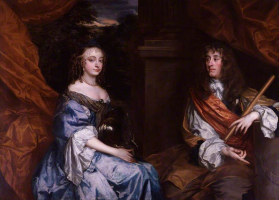
Samuel Pepys' Diary. 17th October 1664. Rose very well and not weary, and with Sir W. Batten (age 63) to St. James's; there did our business. I saw Sir J. Lawson (age 49) since his return from sea first this morning, and hear that my Lord Sandwich (age 39) is come from Portsmouth, Hampshire [Map] to town.


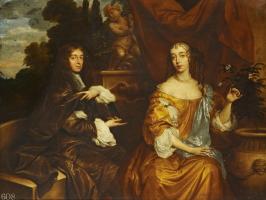
John Evelyn's Diary. 17th October 1664. I went with my Lord Viscount Cornbury, to Cornbury, in Oxfordshire, to assist him in the planting of the park, and bear him company, with Mr. Belin and Mr. May (age 43), in a coach with six horses; dined at Uxbridge, lay at Wycombe.
Chronicle of a Bourgeois of Valenciennes
Récits d’un bourgeois de Valenciennes aka The Chronicle of a Bourgeois of Valenciennes is a vivid 14th-century vernacular chronicle written by an anonymous urban chronicler from Valenciennes in the County of Hainaut. It survives in a manuscript that describes local and regional history from about 1253 to 1366, blending chronology, narrative episodes, and eyewitness-style accounts of political, military, and social events in medieval France, Flanders, and the Low Countries. The work begins with a chronological framework of events affecting Valenciennes and its region under rulers such as King Philip VI of France and the shifting allegiances of local nobility. It includes accounts of conflicts, sieges, diplomatic manoeuvres, and the impact of broader struggles like the Hundred Years’ War on urban life in Hainaut. Written from the perspective of a burgher (bourgeois) rather than a monastery or royal court, the chronicle offers a rare lay viewpoint on high politics and warfare, reflecting how merchants, townspeople, and civic institutions experienced the turbulence of the 13th and 14th centuries. Its narrative style combines straightforward reporting of events with moral and civic observations, making it a valuable source for readers interested in medieval urban society, regional politics, and the lived experience of war and governance in pre-modern Europe.
Available at Amazon in eBook and Paperback format.
Samuel Pepys' Diary. 17th October 1666. After dinner took him and my wife and Barker (for so is our new woman called, and is yet but a sorry girle), and set them down at Unthanke's, and so to White Hall, and there find some of my brethren with the Duke of York (age 33), but so few I put off the meeting. So staid and heard the Duke discourse, which he did mighty scurrilously, of the French, and with reason, that they should give Beaufort (age 50) orders when he was to bring, and did bring, his fleete hither, that his rendezvous for his fleete, and for all sluggs to come to, should be between Calais [Map] and Dover, Kent [Map]; which did prove the taking of La Roche[lle], who, among other sluggs behind, did, by their instructions, make for that place, to rendezvous with the fleete; and Beaufort, seeing them as he was returning, took them for the English fleete, and wrote word to the King of France (age 28) that he had passed by the English fleete, and the English fleete durst not meddle with him. The Court is all full of vests, only my Lord St. Albans (age 61) not pinked but plain black; and they say the King (age 36) says the pinking upon white makes them look too much like magpyes, and therefore hath bespoke one of plain velvet.
John Evelyn's Diary. 17th October 1667. Came Dr. Barlow (age 59), Provost of Queen's College and Protobibliothecus of the Bodleian library, to take order about the transportation of the marbles.
Samuel Pepys' Diary. 17th October 1667. This afternoon my Lord Anglesey (age 53) tells us that the House of Commons have this morning run into the inquiry in many things; as, the sale of Dunkirke, the dividing of the fleete the last year, the business of the prizes with my Lord Sandwich (age 42), and many other things; so that now they begin to fall close upon it, and God knows what will be the end of it, but a Committee they have chosen to inquire into the miscarriages of the war. Having done, and being a little tired, Sir W. Pen (age 46) and I in his coach out to Mile End [Map] Green, and there drank a cup of Byde's ale, and so talking about the proceedings of Parliament, and how little a thing the King (age 37) is become to be forced to suffer it, though I declare my being satisfied that things should be enquired into, we back again home, and I to my office to my letters, and so home to supper and to bed.

Samuel Pepys' Diary. 17th October 1667. After dinner I to the office, where we all met with intent to proceed to the publique sale of several prize ships, but upon discourse my Lord Anglesey (age 53) did discover (which troubled me that he that is a stranger almost should do more than we ourselves could) that the appraisements made by our officers were not above half of what he had been offered for one of them, and did make it good by bringing a gentleman to give us £700 for the Wildboare, which they valued but at £276, which made us all startle and stop the sale, and I did propose to acquaint the Duke of York (age 34) with it, and accordingly we did agree on it, and I wrote a severe letter about it, and we are to attend him with it to-morrow about it.
Samuel Pepys' Diary. 17th October 1668. Up, and to the office, where all the morning sitting, and at noon home to dinner, and to the office all the afternoon, and then late home, and there with much pleasure getting Mr. Gibbs, that writes well, to write the name upon my new draught of "The Resolution"; and so set it up, and altered the situation of some of my pictures in my closet, to my extraordinary content, and at it with much pleasure till almost 12 at night. Mr. Moore and Seymour were with me this afternoon, who tell me that my Lord Sandwich (age 43) was received mighty kindly by the King (age 38), and is in exceeding great esteem with him, and the rest about him; but I doubt it will be hard for him to please both the King and the Duke of York (age 35), which I shall be sorry for. Mr. Moore tells me the sad condition my Lord is in, in his estate and debts; and the way he now lives in, so high, and so many vain servants about him, that he must be ruined, if he do not take up, which, by the grace of God, I will put him upon, when I come to see him.
John Evelyn's Diary. 17th October 1671. My Lord Henry Howard (age 43) coming this night to visit my Lord Chamberlain, and staying a day, would needs have me go with him to Norwich, Norfolk [Map], promising to convey me back, after a day or two; this, as I could not refuse, I was not hard to be pursuaded to, having a desire to see that famous scholar and physician, Dr. T. Browne (age 65), author of the Religio Medici and Vulgar Errors, now lately knighted. Thither, then, went my Lord and I alone, in his flying chariot with six horses; and by the way, discoursing with me of several of his concerns, he acquainted me of his going to marry his eldest son to one of the King's (age 41) natural daughters [Note. Either Anne Fitzroy Countess Sussex (age 10) or Charlotte Fitzroy Countess Lichfield (age 7).], by the Duchess of Cleveland (age 30); by which he reckoned he should come into mighty favor. He also told me that, though he kept that idle creature, Mrs. B-- [Note. Jane Bickerton Duchess Norfolk (age 28)], and would leave £200 a year to the son [Note. Henry Howard and Jane Bickerton had three sons; not clear which is being referred to since the eldest may have died and the reference may be to a surviving son.] he had by her, he would never marry her, and that the King himself had cautioned him against it. All the world knows how he kept his promise [Note. meaning he didn't keep his promise since Henry Howard did marry Jane Bickerton - this a case of John Evelyn writing his diary retrospectively?], and I was sorry at heart to hear what now he confessed to me; and that a person and a family which I so much honored for the sake of that noble and illustrious friend of mine, his grandfather, should dishonor and pollute them both with those base and vicious courses he of late had taken since the death of Sir Samuel Tuke (age 56), and that of his own virtuous lady (my Lady Anne Somerset, sister to the Marquis); who, while they lived, preserved this gentleman by their example and advice from those many extravagances that impaired both his fortune and reputation.
John Evelyn's Diary. 17th October 1671. Next morning, I went to see Sir Thomas Browne (age 65) (with whom I had some time corresponded by letter, though I had never seen him before); his whole house and garden being a paradise and cabinet of rarities; and that of the best collection, especially medals, books, plants, and natural things. Among other curiosities, Sir Thomas had a collection of the eggs of all the fowl and birds he could procure, that country (especially the promontory of Norfolk) being frequented, as he said, by several kinds which seldom or never go further into the land, as cranes, storks, eagles, and variety of water fowl. He led me to see all the remarkable places of this ancient city, being one of the largest, and certainly, after London, one of the noblest of England, for its venerable cathedral [Map], number of stately churches, cleanness of the streets, and buildings of flint so exquisitely headed and squared, as I was much astonished at; but he told me they had lost the art of squaring the flints, in which they so much excelled, and of which the churches, best houses, and walls, are built. The Castle [Map] is an antique extent of ground, which now they call Marsfield, and would have been a fitting area to have placed the Ducal palace in. The suburbs are large, the prospects sweet, with other amenities, not omitting the flower gardens, in which all the inhabitants excel. The fabric of stuffs brings a vast trade to this populous town.
John Evelyn's Diary. 17th October 1671. Being come to the Ducal palace [Map], my Lord (age 43) made very much of me; but I had little rest, so exceedingly desirous he was to show me the contrivance he had made for the entertainment of their Majesties, and the whole Court not long before, and which, though much of it was but temporary, apparently framed of boards only, was yet standing. As to the palace, it is an old wretched building, and that part of it newly built of brick, is very ill understood; so as I was of the opinion it had been much better to have demolished all, and set it up in a better place, than to proceed any further; for it stands in the very market-place, and, though near a river, yet a very narrow muddy one, without any extent.

On 17th October 1673 Thomas Clifford 1st Baron Clifford Chudleigh (age 43) committed suicide. His son Hugh (age 10) succeeded 2nd Baron Clifford of Chudleigh in Devon.
On 17th October 1680 Charles "Don Carlo" Fitzcharles 1st Earl Plymouth (age 23) died of dysentery at Tangier [Map] during the Siege of Tangier. Earl Plymouth, Viscount Totnes and Baron Dartmouth extinct.
John Evelyn's Diary. 17th October 1683. I was at the court-leet of this manor, my Lord Arlington (age 65) his Majesty's (age 53) High Steward.


John Evelyn's Diary. 17th October 1686. Dr. Patrick, Dean of Peterborough (age 60), preached at Covent Garden Church on Ephes. v. 18, 19, showing the custom of the primitive saints in serving God with hymns, and their frequent use of them upon all occasions: touching the profane way of mirth and intemperance of this ungodly age. Afterward I visited my Lord Chief Justice of Ireland (age 53), with whom I had long and private discourse concerning the miserable condition that kingdom was like to be in, if Tyrconnel's (age 56) counsel should prevail at Court.
On 17th October 1693 Charles Schomberg 2nd Duke Schomberg (age 48) died at Turin. His brother Meinhart (age 52) succeeded 3rd Duke Schomberg.
William of Worcester's Chronicle of England
William of Worcester, born around 1415, and died around 1482 was secretary to John Fastolf, the renowned soldier of the Hundred Years War, during which time he collected documents, letters, and wrote a record of events. Following their return to England in 1440 William was witness to major events. Twice in his chronicle he uses the first person: 1. when writing about the murder of Thomas, 7th Baron Scales, in 1460, he writes '… and I saw him lying naked in the cemetery near the porch of the church of St. Mary Overie in Southwark …' and 2. describing King Edward IV's entry into London in 1461 he writes '… proclaimed that all the people themselves were to recognize and acknowledge Edward as king. I was present and heard this, and immediately went down with them into the city'. William’s Chronicle is rich in detail. It is the source of much information about the Wars of the Roses, including the term 'Diabolical Marriage' to describe the marriage of Queen Elizabeth Woodville’s brother John’s marriage to Katherine, Dowager Duchess of Norfolk, he aged twenty, she sixty-five or more, and the story about a paper crown being placed in mockery on the severed head of Richard, 3rd Duke of York.
Available at Amazon in eBook and Paperback format.
On 17th October 1716 Anne Hamilton 3rd Duchess Hamilton (age 84) died.
On 17th October 1744 Henry Fiennes Pelham-Clinton 2nd Duke Newcastle-under-Lyne (age 24) and Catherine Pelham Countess of Lincoln (age 17) were married. She by marriage Countess Lincoln. He the son of Henry Clinton 7th Earl Lincoln and Lucy Pelham Countess Lincoln. They were first cousins.

On 17th October 1756 Robert Bertie 4th Duke Ancaster and Kesteven was born to Peregrine Bertie 3rd Duke Ancaster and Kesteven (age 42) and Mary Panton Duchess Ancaster and Kesteven at Grimsthorpe, South Kesteven.
On 17th October 1777 Captain George Marlay (age 29) was captured at the Battle of Saratoga.
Wiltshire Archaeological Magazine 1955 V56 Page 4-11. 17th October 1807. If Hoare had been present all the time, or even at the finish, as his account in A. W. suggests, we might consider his opinion as good as Cunnington's; but the evidence from the MS. is clear that he was not. Cunnington's first announcement of his failure to find the interment is in a letter addressed to Hoare in his own hand (Vol. III, page 141 of the Burlington House MS., and copied by William Cunnington, F.G.S., for the Devizes collection, Book XII, page 39); and he would not have written if Hoare had been present. The letter is dated 17th October, 1807; but when I first saw it, I mistook the 7 for 9 in the year. William Cunnington made the same mistake when he copied the letter; and probably the same misreading led Hoare to date the 'Journal " 1809.
The letter reads:—
I am sorry to inform you that after a severe contest we have been defeated by the Giant of Marden. We explored 23 by 24 feet of the floor of the barrow and found ashes, charr'd wood, and some fragments of burnt bones, also two or three small pieces of pottery1; but missed the primary interment.
The finding so many stags horns, animal bones, two small parcels of burnt human bones, together with a floor scattered with ashes, charr'd wood, etc., so similar to what we discover in tumuli when cremation has been practised, convinced me on Tuesday night that the Barrow was sepulchral. On Thursday evening my opinion was more strongly confirmed. From this circumstance and from feeling myself uneasy at spending so much of your money, I thought it my duty to put a stop to further proceedings. I consider also that it would have been throwing away ten pounds more money, not to inform us, but only to convince our own modern Druids of its being sepulchral. I hope these reasons may be deemed sufficient by yourself. I have only to add that although a good deal of money has been expended, yet it has been well earned by the men, as all the farmers can testify. I am very respectfully, Sir,
Your most obedient servant,
W. Cunnington.
Note 1. These bits are similar to our sepulchral urns. (Note to original letter).
The London Beer Flood was an accident at Meux & Co's Horse Shoe Brewery, London, on 17th October 1814 when one of the 6.7m wooden vats of fermenting porter burst. The escaping liquid dislodged the valve of another vessel and destroyed several large barrels: between 128,000 and 323,000 imperial gallons of beer were released in total. The resulting wave of porter destroyed the back wall of the brewery and swept into an area of slum dwellings known as the St Giles rookery. Eight people were killed, five of them mourners at the wake being held by an Irish family for a two-year-old boy.
The Gentleman's Magazine Volume 84. Monday, Oct. 17 [1814]. About six o'clock one of the vats, in the extensive premises of Messrs. Henry Meux and Co. in Banbury-street, St. Giles's, burst, and in a moment New-street, George-street, and several others in the vicinity, were deluged with the contents, amounting to 3,555 barrels of strong beer. The fluid, in its course, swept every thing before it. Two houses in New-street, adjoining the brew-house, were totally demolished. The ihbhabitants, who were of the poorer class, were all at home. In the first floor of one of them, a mother and daughter were at tea; the mother was washed out of the window, and the daughter was swept away by the current through a partition, and dashed to pieces. The back parts of the houses of Mr. Goodwin, poulterer, of Mr. Hawse, Tavistock Arms, and Nos. 24 and 25, in Great Russell-street, were nearly destroyed. The female servant of the Tavistock Arms was suffocated. Three of Mr. Meux's men, employed in the brewery, were rescued with great difficulty. The site of the place is low and flat; and there being no declivity to carry off the fluid, in its fall it spread and sunk into the neighbouring cellars, all of whieh were inhabited. Even the cellars in Russell-street, were inundated; and breaches made through the houses. The inhabitants, to save themselves from drowning, had to mount their highest pieces of furniture. The bursting of the brew-house walls and the fall of heavy timber, materially contributed to aggravate the mischief, by forcing the roofs and walls of the adjoining houses. By this sudden calamity, eight persons lost their lives; and five were dreadlully bruised, but are expected to recover. Collections have been made for the famiies of the sufferers. Messrs, Meux's loss is estimated at about £15,000.

After 17th October 1839. Memorial to William Drake Irby (deceased) at St Nicholas Church, Whiston [Map].
William Drake Irby: On 18th September 1808 he was born to George Irby 3rd Baron Boston and Rachel Ives Drake Baroness Boston. On 17th October 1839 William Drake Irby died.

Ten Years' Digging. On the 17th, 18th, and 19th of October, and 1st of November, some further researches were made in the Flax Dale Barrow [Map], near Middleton-by-Youlgrave, where a large cinerary urn with its deposit of burnt bones was found, in 1846. Although the present more extensive excavation was not equally successful, it afforded us an opportunity of becoming acquainted with a plan commonly adopted by the Britons in the construction of their tumuli, by first making a circle of large stones, within which the interments were placed, and then covered with an accumulation of stones, until a mound was formed surrounded by a kind of wall of one or two courses, consisting of the aforesaid circle; the whole was then covered with earth, which, though thinly laid on at the summit, was suffered to extend considerably further than the walled circle thus concealing all the stonework. The earth around the circumference of the barrow was very compact, particularly near the outside, and in some places abounded with pieces of melted lead and calcined flints, which led us to think it probable that fire had been employed to harden the earth whilst moist, with the intention of rendering the mound more durable. The only interment discovered on this occasion was just within the S.W. side of the stone circle: it consisted of a deposit of calcined bones which had originally been placed within an urn so imperfectly baked as to have almost become disintegrated, the decay having been accelerated by the atmosphere, eighteen inches of loose stone only covering the deposit. Some flints, fragmentary human bones, and a chip from a stone celt were casually found in the stony part of the mound.
The adjoining field is called Foggy Lees, which may be a corruption of Foggy Low.
On 17th October 1878 Jacobo Fitz-James Stuart 17th Duke of Alba 10th Duke of Berwick was born to Carlos María Fitz James Stuart 16th Duke Alba 14th Duke Veragua 9th Duke Berwick (age 28). He married 7th October 1920 María del Rosario de Silva Duchess of Alba and had issue.
On 17th October 1893 Violet Hyacinth Bowes-Lyon (age 11) died of diptherea.
On 17th October 1917 Lydia Yarde-Buller Duchess Bedford was born to John Yarde-Buller 3rd Baron Churston (age 43) and Jessie Smither aka Denise Orme Duchess Leinster (age 32). She married (1) 13th February 1947 John Ian Robert Russell 13th Duke Bedford, son of Hastings William Russell 12th Duke Bedford and Louisa Crommelin Roberta Jowitt Whitwell Duchess Bedford.
Anne Boleyn. Her Life as told by Lancelot de Carle's 1536 Letter.
In 1536, two weeks after the execution of Anne Boleyn, her brother George and four others, Lancelot du Carle, wrote an extraordinary letter that described Anne's life, and her trial and execution, to which he was a witness. This book presents a new translation of that letter, with additional material from other contemporary sources such as Letters, Hall's and Wriothesley's Chronicles, the pamphlets of Wynkyn the Worde, the Memorial of George Constantyne, the Portuguese Letter and the Baga de Secrets, all of which are provided in Appendices.
Available at Amazon in eBook and Paperback format.
On 17th October 1928 Frank Bernard Dicksee (age 74) died.

On 17th October 1961 Harry Frederick Crookshank 1st Viscount Crookshank (age 68) died. Viscount Crookshank of Gainsborough in Lincolnshire extinct.
Memorial to Harry Frederick Crookshank 1st Viscount Crookshank and his sister Helen Elizabeth at Lincoln Cathedral [Map] where both he and his sister are buried.
Harry Frederick Crookshank 1st Viscount Crookshank: On 27th May 1893 he was born at Cairo, Egypt. The London Gazette 40684. Whitehall, January 13, 1956. The Queen has been pleased by Letters Patent under the Great Seal of the Realm, bearing date the 13th instant, to confer the dignity of a Viscounty of the United Kingdom upon Captain the Right Honourable Harry Frederick Comfort Crookshank, C.H., and the heirs male of his body lawfully begotten, by the name, style and title of Viscount Crookshank, of Gainsborough in the County of Lincoln.
On 17th October 1304 Eleanor Bohun Countess Ormonde was born to Humphrey Bohun 4th Earl Hereford 3rd Earl Essex (age 28) and Princess Elizabeth of Rhuddlan Countess Essex, Hereford and Holland (age 22). She a granddaughter of King Edward I of England. She married (1) 1327 her fourth cousin James Butler 1st Earl Ormonde, son of Edmund Butler 1st Earl Carrick, and had issue (2) 1343 Thomas Dagworth 1st Baron Dagworth and had issue.
On 17th October 1517 Amalia La Marck was born to John La Marck III Duke Cleves (age 26) and Maria Jülich Berg Duchess Cleves at Dusseldorf.

On 17th October 1624 Edward Bertie was born to Robert Bertie 1st Earl Lindsey (age 41) and Elizabeth Montagu Countess Lindsey.
On 17th October 1629 Balthasar Charles Habsburg Spain Prince Asturias was born to Philip IV King Spain (age 24) and Elisabeth Bourbon Queen Consort Spain (age 26). Coefficient of inbreeding 4.39%.

On 17th October 1693 Edward Griffin 3rd Baron Griffin was born to James Griffin 2nd Baron Griffin (age 25).
On 17th October 1704 Letitia Seymour-Conway was born to Francis Seymour-Conway 1st Baron Conway (age 25) and Mary Hyde.
On 17th October 1709 John Every 7th Baronet was born to Reverend Simon Every 5th Baronet (age 54).
On 17th October 1724 George Cholmondeley was born to George Cholmondeley 3rd Earl Cholmondeley (age 21) and Mary Walpole. He married 1747 Hester Edwardes, daughter of Francis Edwardes 4th Baronet, and had issue.
Jean de Waurin's Chronicle of England Volume 6 Books 3-6: The Wars of the Roses
Jean de Waurin was a French Chronicler, from the Artois region, who was born around 1400, and died around 1474. Waurin’s Chronicle of England, Volume 6, covering the period 1450 to 1471, from which we have selected and translated Chapters relating to the Wars of the Roses, provides a vivid, original, contemporary description of key events some of which he witnessed first-hand, some of which he was told by the key people involved with whom Waurin had a personal relationship.
Available at Amazon in eBook and Paperback format.
On 17th October 1736 Harriet Bouverie was born to Jacob Bouverie 1st Viscount Folkestone (age 42) and Mary Clarke. She married 1775 James Long aka Tylney-Long 7th Baronet, son of Robert Long 6th Baronet and Emma Tylney Lady Long.
On 17th October 1745 William Scott 1st Baron Stowell was born. He married (1) 1781 Anna Maria Scott (2) 1813 Louisa Catharine Howe, daughter of Richard Howe 1st Earl Howe and Mary Hartop.
On 17th October 1747 Campbell Scott was born to Francis Scott (age 26) and Caroline Campbell 1st Baroness Greenwich (age 29). He a great x 3 grandson of King Charles II of England Scotland and Ireland.
On 17th October 1756 Robert Bertie 4th Duke Ancaster and Kesteven was born to Peregrine Bertie 3rd Duke Ancaster and Kesteven (age 42) and Mary Panton Duchess Ancaster and Kesteven at Grimsthorpe, South Kesteven.
On 17th October 1761 Frederick Lumley-Savile was born to Richard Lumley-Saunderson 4th Earl Scarborough (age 36) and Barbara Savile Countess Scarborough.

On 17th October 1766 Lucy Elizabeth Byng Countess Bradford was born to George Byng 4th Viscount Torrington (age 26) and Lucy Boyle Viscountess Torrington. She married 29th May 1788 Orlando Bridgeman 1st Earl Bradford, son of Henry Bridgeman 1st Baron Bradford and Elizabeth Simpson Baroness Bradford, and had issue.
On 17th October 1776 Charlotte Smith-Stanley was born to Edward Smith-Stanley 12th Earl of Derby (age 23) and Elizabeth Hamilton Countess Derby (age 23). She married Edmund Hornby.


On 17th October 1783 Barbara Pleydell-Bouverie was born to Jacob Pleydell-Bouverie 2nd Earl Radnor (age 33) and Anne Duncombe Countess Radnor (age 25).


On 17th October 1796 John Montagu Burgoyne 9th Baronet was born to Montagu Roger Burgoyne 8th Baronet (age 23). He married 20th December 1831 Mary Harriet Gore-Langton Lady Burgoyne and had issue.
On 17th October 1803 William Thynne was born to Thomas Thynne 2nd Marquess of Bath (age 38) and Isabella Elizabeth Byng Marchioness Bath (age 30). He married 19th December 1861 Belinda Brummell.
On 17th October 1813 George Molyneux 6th Baronet was born to General Thomas Molyneau 5th Baronet (age 46) and Elizabeth Perrin Lady Molyneux (age 44). He married 6th July 1838 Emma Green Lady Molyneux and had issue.
Anne Boleyn. Her Life as told by Lancelot de Carle's 1536 Letter.
In 1536, two weeks after the execution of Anne Boleyn, her brother George and four others, Lancelot du Carle, wrote an extraordinary letter that described Anne's life, and her trial and execution, to which he was a witness. This book presents a new translation of that letter, with additional material from other contemporary sources such as Letters, Hall's and Wriothesley's Chronicles, the pamphlets of Wynkyn the Worde, the Memorial of George Constantyne, the Portuguese Letter and the Baga de Secrets, all of which are provided in Appendices.
Available at Amazon in eBook and Paperback format.
On 17th October 1816 Henry William Dashwood 5th Baronet was born to George Dashwood 4th Baronet (age 30) and Marianne Sarah Rowley (age 26)
On 17th October 1826 Mary Caroline Stuart-Wortley-Mackenzie Marchioness Drogheda was born to John Stuart-Wortley-Mackenzie 2nd Baron Wharncliffe (age 25) and Georgiana Elizabeth Ryder Baroness Wharncliffe (age 22). She married 25th August 1847 her third cousin Henry Seymour Moore 3rd Marquess Drogheda.
On 17th October 1841 Francis Lindley Wood was born to Charles Wood 1st Viscount Halifax (age 40) and Mary Grey Viscountess Halifax (age 34).
On 17th October 1844 Constance Rhiannon Guest was born to John Josiah Guest 1st Baronet (age 59) and Charlotte Elizabeth Bertie (age 32). She married 26th October 1865 Charles George Cornwallis Eliot, son of Edward Granville Eliot 3rd Earl St Germans and Jemima Cornwallis Countess St Germans, and had issue.
On 17th October 1844 Charlotte Louisa Rowley Baroness Hatherton was born to Charles Robert Rowley 4th Baronet (age 44) and Maria Louisa Vanneck (age 33). She married before 1868 Edward George Littleton 3rd Baron Hatherton, son of Edward Richard Littleton 2nd Baron Hatherton and Margaret Percy Baroness Hatherton, and had issue.
On 17th October 1859 William Palmer 2nd Earl Selborne was born to Roundell Palmer 1st Earl Selborne (age 46) and Laura Waldegrave Countess Selborne (age 38). He married 27th October 1883 Beatrix Maud Gascoyne-Cecil Countess Selborne, daughter of Robert Gascoyne-Cecil 3rd Marquess Salisbury and Georgina Alderson Marchioness of Salisbury, and had issue.


On 17th October 1866 John Townshend 6th Marquess Townshend was born to John Villiers Stuart Townshend 5th Marquess Townshend (age 35) and Anne Elizabeth Clementina Duff Marchioness Townshend (age 19). He a great x 2 grandson of King William IV of the United Kingdom. He married 9th August 1905 Gwladys Sutherst Marchioness Townshend and had issue.
On 17th October 1876 Victor Hay 21st Earl of Erroll was born to Charles Hay 20th Earl of Erroll (age 24) and Mary Caroline L'Estrange Countess of Erroll. He a great x 2 grandson of King William IV of the United Kingdom.
On 17th October 1878 Jacobo Fitz-James Stuart 17th Duke of Alba 10th Duke of Berwick was born to Carlos María Fitz James Stuart 16th Duke Alba 14th Duke Veragua 9th Duke Berwick (age 28). He married 7th October 1920 María del Rosario de Silva Duchess of Alba and had issue.
On 17th October 1879 Edward Coke was born to Thomas Coke 2nd Earl of Leicester (age 56) and Georgina Caroline Cavendish Countess Leicester (age 27).
On 17th October 1900 Maurice Fox Pitt Lubbock was born to John Lubbock 1st Baron Avebury (age 66) and Alice Lane Fox-Pitt Baroness Avebury (age 38). He married 9th January 1926 his second cousin Mary Katherine Adelaide Stanley, daughter of Arthur Stanley 5th Baron Stanley, 5th Baron Sheffield, 4th Baron Eddisbury, and had issue.


On 17th October 1915 Lieutenant-Colonel Rupert Yea Dering 12th Baronet was born to Captain Rupert Cholmeley Yea Dering.
On 17th October 1916 Francis David Somerville Head 5th Baronet was born to Robert Pollock Somerville Head 4th Baronet (age 32). He married (1) 11th February 1950 Susan Patricia Ramsay Lady Head and had issue.
Jean de Waurin's Chronicle of England Volume 6 Books 3-6: The Wars of the Roses
Jean de Waurin was a French Chronicler, from the Artois region, who was born around 1400, and died around 1474. Waurin’s Chronicle of England, Volume 6, covering the period 1450 to 1471, from which we have selected and translated Chapters relating to the Wars of the Roses, provides a vivid, original, contemporary description of key events some of which he witnessed first-hand, some of which he was told by the key people involved with whom Waurin had a personal relationship.
Available at Amazon in eBook and Paperback format.
On 17th October 1917 Lydia Yarde-Buller Duchess Bedford was born to John Yarde-Buller 3rd Baron Churston (age 43) and Jessie Smither aka Denise Orme Duchess Leinster (age 32). She married (1) 13th February 1947 John Ian Robert Russell 13th Duke Bedford, son of Hastings William Russell 12th Duke Bedford and Louisa Crommelin Roberta Jowitt Whitwell Duchess Bedford.

On 17th October 1919 Georgina Wernher was born to Harold Augustus Wernher 3rd Baronet (age 26) and Countess Anastasia Torby (age 27). She married 10th October 1944 Harold Philips and had issue.
On 17th October 1933 Andrew Cosmo Lewis Duff-Gordon 8th Baronet was born to Douglas Frederick Duff-Gordon 7th Baronet (age 41). He married (1) 2nd September 1967 Grania Mary Villiers-Stuart Lady Duff-Gordon and had issue.
On 17th October 1935 Rivers Verain Carew 11th Baronet was born to Thomas Palk Carew 10th Baronet (age 45) and Phyllis Evelyn Mayman Lady Carew.
On 17th October 1945 Peter David Clegg-Hill 9th Viscount Hill was born to Frederic Raymond Clegg-Hill and Alice Dorothy Chapman posthumously. Coefficient of inbreeding 1.66%.
On 17th October 1956 Alexander Murray 9th and 8th Earl Mansfield was born to William Murray 8th and 7th Earl Mansfield (age 26).
On 17th October 1620 Alexander Livingston 2nd Earl Linlithgow and Mary Douglas (age 23) were married. She the daughter of William Douglas 10th Earl Angus and Elizabeth Oliphant Countess Angus. He the son of Alexander Livingston 1st Earl Linlithgow and Helen Hay. They were second cousins.

On 17th October 1710 John Carteret 2nd Earl Granville (age 20) and Frances Worsley Countess Granville (age 17) were married at Longleat House. She by marriage Countess Granville. He the son of George Carteret 1st Baron Carteret and Jane Granville Baroness Gower (age 56). They were sixth cousins.
On 17th October 1744 Henry Fiennes Pelham-Clinton 2nd Duke Newcastle-under-Lyne (age 24) and Catherine Pelham Countess of Lincoln (age 17) were married. She by marriage Countess Lincoln. He the son of Henry Clinton 7th Earl Lincoln and Lucy Pelham Countess Lincoln. They were first cousins.
On 17th October 1772 William Gleadowe-Newcomen 1st Baronet (age 31) and Charlotte Gleadowe-Newcomen 1st Viscountess Newcomen were married.
On 17th October 1801 George Irby 3rd Baron Boston (age 23) and Rachel Ives Drake Baroness Boston (age 18) were married.
Chronicle of Walter of Guisborough
A canon regular of the Augustinian Guisborough Priory, Yorkshire, formerly known as The Chronicle of Walter of Hemingburgh, describes the period from 1066 to 1346. Before 1274 the Chronicle is based on other works. Thereafter, the Chronicle is original, and a remarkable source for the events of the time. This book provides a translation of the Chronicle from that date. The Latin source for our translation is the 1849 work edited by Hans Claude Hamilton. Hamilton, in his preface, says: 'In the present work we behold perhaps one of the finest samples of our early chronicles, both as regards the value of the events recorded, and the correctness with which they are detailed; Nor will the pleasing style of composition be lightly passed over by those capable of seeing reflected from it the tokens of a vigorous and cultivated mind, and a favourable specimen of the learning and taste of the age in which it was framed.'
Available at Amazon in eBook and Paperback format.
On 17th October 1841 George Gough 2nd Viscount Gough (age 26) and Sarah-Elizabeth Palliser were married.
On 17th October 1848 William Alleyne Cecil 3rd Marquess Exeter (age 23) and Georgina Sophia Pakenham Marchioness Exeter (age 21) were married. She the daughter of Thomas Pakenham 2nd Earl Longford and Georgiana Lygon Countess Longford (age 50). He the son of Brownlow Cecil 2nd Marquess Exeter (age 53) and Frances Isabella Selina Poyntz Marchioness of Exeter (age 45).
On 17th October 1849 George Finch-Hatton 5th Earl Nottingham 10th Earl Winchilsea (age 58) and Fanny Margaretta Rice Countess Nottingham Winchilsea were married. She by marriage Countess Nottingham, Countess Winchilsea.

On 17th October 1861 Harry Foley Vernon 1st Baronet (age 27) and Georgina Sophia Baillie-Hamilton Lady Vernon (age 22) were married. She the daughter of George Baillie-Hamilton 10th Earl of Haddington (age 59).
On 17th October 1865 John Villiers Stuart Townshend 5th Marquess Townshend (age 34) and Anne Elizabeth Clementina Duff Marchioness Townshend (age 18) were married. She by marriage Marchioness Townshend. She the daughter of James Duff 5th Earl Fife (age 51) and Agnes Georgiana Elizabeth Hay Countess Fife (age 36). He the son of John Townshend 4th Marquess Townshend and Elizabeth Jane Stuart (age 62).
On 17th October 1888 Charles Gunning 7th Baronet (age 28) and Ethel Finch-Hatton Lady Gunning were married.
On 17th October 1909 Samuel Hoare 1st Viscount Templewood (age 29) and Maud Lygon (age 27) were married. Their marriage produced no issue. She the daughter of Frederick Lygon 6th Earl Beauchamp and Emily Annora Charlotte Pierrepont Countess Beauchamp (age 56).
On 17th October 1311 John Grey (age 40) died at Rotherfield Greys, Oxfordshire.
On 17th October 1346 at the Battle of Neville's Cross at [Map] the English inflicted a heavy defeat on the Scottish army that had invaded England in compliance with their treaty with the French for mutual support against England.
The English army included: William Deincourt 2nd Baron Deincourt (age 45), Henry Scrope 1st Baron Scrope of Masham (age 34), Ralph Hastings (age 55), Ralph Neville 2nd Baron Neville of Raby (age 55), Archbishop William Zouche, Henry Percy 10th and 2nd Baron Percy (age 45) and John Mowbray 3rd Baron Mowbray (age 35).
Of the Scottish army King David II of Scotland (age 22), John Graham Earl Menteith (age 56) and William "Flower of Chivalry and Knight Liddesdale" Douglas 1st Earl Atholl (age 46) were captured and imprisoned in the Tower of London [Map].
Neil Bruce, John Randolph 3rd Earl of Moray (age 40), David Hay 6th Baron Erroll (age 28) and Edward Keith of Sinton (age 66) were killed.
On 17th October 1357 Margaret Ros Baroness Musgrave (age 59) died at Great Musgrave Musgrave.
On 17th October 1388 John Neville 3rd Baron Neville of Raby (age 51) died. His son Ralph (age 24) succeeded 4th Baron Neville Raby. Margaret Stafford Baroness Neville Raby (age 24) by marriage Baroness Neville Raby.
Anne Boleyn. Her Life as told by Lancelot de Carle's 1536 Letter.
In 1536, two weeks after the execution of Anne Boleyn, her brother George and four others, Lancelot du Carle, wrote an extraordinary letter that described Anne's life, and her trial and execution, to which he was a witness. This book presents a new translation of that letter, with additional material from other contemporary sources such as Letters, Hall's and Wriothesley's Chronicles, the pamphlets of Wynkyn the Worde, the Memorial of George Constantyne, the Portuguese Letter and the Baga de Secrets, all of which are provided in Appendices.
Available at Amazon in eBook and Paperback format.
On 17th October 1404 Caterina Visconti Duke Milan (age 43) died.
On 17th October 1528 Richard Wentworth 5th Baron Despencer (age 48) died. His son Thomas (age 27) de jure 6th Baron Despencer.


On 17th October 1549 Henry Somerset 2nd Earl of Worcester (age 53) died. His son William (age 23) succeeded 3rd Earl Worcester, 5th Baron Herbert of Raglan.


On 17th October 1592 Frances Newton Baroness Cobham (age 53) died at Cobham Hall, Kent [Map].
On 17th October 1596 Anne Somerset Countess Northumberland (age 58) died.
On 17th October 1669 William Wray 1st Baronet (age 44) died. His son Christopher (age 17) succeeded 2nd Baronet Wray of Ashby in Lincolnshire.
On 17th October 1673 Thomas Clifford 1st Baron Clifford Chudleigh (age 43) committed suicide. His son Hugh (age 10) succeeded 2nd Baron Clifford of Chudleigh in Devon.
On 17th October 1680 Charles "Don Carlo" Fitzcharles 1st Earl Plymouth (age 23) died of dysentery at Tangier [Map] during the Siege of Tangier. Earl Plymouth, Viscount Totnes and Baron Dartmouth extinct.
On 17th October 1693 Charles Schomberg 2nd Duke Schomberg (age 48) died at Turin. His brother Meinhart (age 52) succeeded 3rd Duke Schomberg.

On 17th October 1706 Charles Rich 3rd Baronet (age 26) died. He was buried in St Margaret's Church, Westminster [Map]. His brother Robert (age 21) succeeded 4th Baronet Rich of London.
On 17th October 1709 Elizabeth Boyle Viscountess Powerscourt (age 67) died.
On 17th October 1716 Anne Hamilton 3rd Duchess Hamilton (age 84) died.
Henrici Quinti, Angliæ Regis, Gesta, is a first-hand account of the Agincourt Campaign, and subsequent events to his death in 1422. The author of the first part was a Chaplain in King Henry's retinue who was present from King Henry's departure at Southampton in 1415, at the siege of Harfleur, the battle of Agincourt, and the celebrations on King Henry's return to London. The second part, by another writer, relates the events that took place including the negotiations at Troye, Henry's marriage and his death in 1422.
Available at Amazon in eBook and Paperback format.
On 17th October 1716 Henry Folliott 3rd Baron Folliott died. Baron Folliott of Ballyshannon in Donegal extinct.
On 17th October 1729 Francis North 2nd Baron Guildford (age 55) died. His son Francis (age 25) succeeded 3rd Baron Guildford. Lucy Montagu Baroness Guildford by marriage Baroness Guildford.


On 17th October 1849 Thomas Buckler Lethbridge 2nd Baronet (age 71) died. He was buried at St Mary The Virgin Church, Rufford [Map]. His son John (age 51) succeeded 3rd Baronet Lethbridge of Westaway House in Devon and Winkley Court in Somerset.
On 17th October 1849 Martha Sophia Thomson Maling Countess Mulgrave died.
On 17th October 1888 Mary Bradshaw Lady Buckwoth-Herne Soame (age 88) died.
On 17th October 1920 Henry St John 18th Baron St John (age 44) died. His brother Moubray (age 42) succeeded 19th Baron St John of Bletso, 16th Baronet St John of Woodford in Northamptonshire.
On 17th October 1928 Frank Bernard Dicksee (age 74) died.
On 17th October 1955 Edward Vane-Tempest-Stewart 8th Marquess of Londonderry (age 52) died. His son Alistair (age 18) succeeded 9th Marquess Londonderry.
On 17th October 1961 Harry Frederick Crookshank 1st Viscount Crookshank (age 68) died. Viscount Crookshank of Gainsborough in Lincolnshire extinct.
Memorial to Harry Frederick Crookshank 1st Viscount Crookshank and his sister Helen Elizabeth at Lincoln Cathedral [Map] where both he and his sister are buried.
Harry Frederick Crookshank 1st Viscount Crookshank: On 27th May 1893 he was born at Cairo, Egypt. The London Gazette 40684. Whitehall, January 13, 1956. The Queen has been pleased by Letters Patent under the Great Seal of the Realm, bearing date the 13th instant, to confer the dignity of a Viscounty of the United Kingdom upon Captain the Right Honourable Harry Frederick Comfort Crookshank, C.H., and the heirs male of his body lawfully begotten, by the name, style and title of Viscount Crookshank, of Gainsborough in the County of Lincoln.
On 17th October 1965 Thomas Brand 4th Viscount Hampden (age 65) died. His brother David (age 63) succeeded 5th Viscount Hampden. Imogen Alice Rice Viscountess Hampden (age 62) by marriage Viscountess Hampden. Baron Dacre Gilsland, Baron Multon of Gilsland abeyant between his two surviving daughters Rachel Leila Brand 27th Baroness Dacre (age 35) and Tessa Mary Brand (age 31). The former succeeded in 1970 when the abeyance was terminated.
Adam Murimuth's Continuation and Robert of Avesbury’s 'The Wonderful Deeds of King Edward III'
This volume brings together two of the most important contemporary chronicles for the reign of Edward III and the opening phases of the Hundred Years’ War. Written in Latin by English clerical observers, these texts provide a vivid and authoritative window into the political, diplomatic, and military history of fourteenth-century England and its continental ambitions. Adam Murimuth Continuatio's Chronicarum continues an earlier chronicle into the mid-fourteenth century, offering concise but valuable notices on royal policy, foreign relations, and ecclesiastical affairs. Its annalistic structure makes it especially useful for establishing chronology and tracing the development of events year by year. Complementing it, Robert of Avesbury’s De gestis mirabilibus regis Edwardi tertii is a rich documentary chronicle preserving letters, treaties, and official records alongside narrative passages. It is an indispensable source for understanding Edward III’s claim to the French crown, the conduct of war, and the mechanisms of medieval diplomacy. Together, these works offer scholars, students, and enthusiasts a reliable and unembellished account of a transformative period in English and European history. Essential for anyone interested in medieval chronicles, the Hundred Years’ War, or the reign of Edward III.
Available at Amazon in eBook and Paperback format.
On 17th October 1992 Mary Lalle Foley 17th Baroness Berkeley (age 87) died. Her nephew Anthony (age 53) succeeded 18th Baron Berkeley.
On 17th October 1999 Ralph Grey 1st Baron Grey of Naunton (age 89) died. Baron Grey of Naunton in Gloucestershire extinct since the title had been created for life only.
On 17th October 2001 Aline Margaret Bruce Countesss Wharncliffe (age 64) died.
On 17th October 2002 Captain Gerald Ponsonby 6th Baron de Mauley (age 80) died. His first cousin Rupert (age 45) succeeded 7th Baron de Mauley.