

Chronicle of a Bourgeois of Valenciennes
Récits d’un bourgeois de Valenciennes aka The Chronicle of a Bourgeois of Valenciennes is a vivid 14th-century vernacular chronicle written by an anonymous urban chronicler from Valenciennes in the County of Hainaut. It survives in a manuscript that describes local and regional history from about 1253 to 1366, blending chronology, narrative episodes, and eyewitness-style accounts of political, military, and social events in medieval France, Flanders, and the Low Countries. The work begins with a chronological framework of events affecting Valenciennes and its region under rulers such as King Philip VI of France and the shifting allegiances of local nobility. It includes accounts of conflicts, sieges, diplomatic manoeuvres, and the impact of broader struggles like the Hundred Years’ War on urban life in Hainaut. Written from the perspective of a burgher (bourgeois) rather than a monastery or royal court, the chronicle offers a rare lay viewpoint on high politics and warfare, reflecting how merchants, townspeople, and civic institutions experienced the turbulence of the 13th and 14th centuries. Its narrative style combines straightforward reporting of events with moral and civic observations, making it a valuable source for readers interested in medieval urban society, regional politics, and the lived experience of war and governance in pre-modern Europe.
Available at Amazon in eBook and Paperback format.
20 Jul is in July.
1503 Margaret Tudor's Journey to Scotland
1559 Henry II of France Dies Francis and Mary "Queen of Scots" Succeeds
History of the Dukes of Normandy by William of Jumieges. At last he surrounded the city of Chartres with a siege; and as he attacked it with engines and siege-weapons Richard, duke of the Burgundians, arrived with his own army and that of the Franks, and fell upon him [20th July 911]. Rollo met them in battle, and with his men resisted fiercely, until Anselm the bishop, unexpectedly bursting forth from the city with armed troops and bearing the tunic of the holy Mother of God, Mary, attacked him from behind, cutting down his men. Then at length Rollo, seeing himself and his followers brought to the brink of death, resolved for the moment to yield to his enemies, rather than to continue fighting to the ruin of his own people; and withdrawing by prudent counsel, though not through cowardice, he disengaged from the battle.
Postremo, Carnotenam urbem obsidione circumdat; quam cum machinis et tormentis impugnaret, Richardus Burgundionum dux cum suo Francorumque exercitu adveniens, super eum irruit. Cum quo congressus, cum suis atrociter resistebat, quousque Antelmus episcopus ex civitate cum armis inopinato prosiliens, sanctæque Dei genitricis Mariæ supparum præferens, a tergo eum invasit cædendo. Hic tandem videns Rollo se suosque in extremo mortis, decrevit ad horam hostibus cedere, quam cum suorum detrimento pugnare; et provido consilio, non tamen ignavia declinavit a certamine.
History of the Dukes of Normandy by William of Jumieges. At the same time, Baldwin, the count of Flanders, wishing to ennoble his offspring with royal lineage, sought out Robert, king of the Franks, and asked that the king's daughter1 be given to his son Baldwin. Having received her in the royal palace, he brought her to his own house in a cradle, and raised her with careful attention until she reached marriageable age. But his son, once he began to enjoy the embraces of the noble maiden, relying on the royal alliance, drove his own father from his land, drawing the Flemings away from their loyalty to him. The father, shamefully cast out by his own people, hurried to the duke of the Normans, seeking help against his son. The duke, moved by compassion for such a noble man's misfortune, gathered his forces and, like a raging storm, went forth from his land and invaded Flanders, laying it waste with destructive fire. Marching on to the castle called Cioca2, he immediately overthrew it and burned everything within. The other nobles, seeing this and fearing to suffer the same, abandoned the son and returned to the father, sending hostages to the duke. The young Baldwin, realising that he could not in any way withstand the unbearable attacks of the duke, sent envoys to him with the most humble entreaties, declaring his desire to be reconciled to his father through the duke's mediation. The duke, being a man of great kindness, gladly granted the request and persuaded them both, with the kiss of peace, to return at once to their former concord. Thus the disputes being settled, they remained thereafter in peace and affection as was fitting. The duke, having overthrown the rebels' resources, returned with his army unharmed to Normandy. At this time King Robert3 of the Franks died, and his son Henry succeeded him.
Sub eodem tempore Balduinus satrapa Frandrensis sobolem suam cupiens innormare prosapia regali Robertum regem Francorum expetiit, et filiam ejus Balduino filio suo dari poposcit. Palatinis vero tricliniis adeptam tulit, ac ad domum propriam in cu nis asportavit, camque usque ad annos nubiles diligenti cura nutrivit. Filius autem ipsius mox ut nobilis puellæ amplexibus cœpit frui, affinitate fretus. regali, patrem a proprio solo pepulit, Flandrensibus ab ejus fidelitate avulsis. Qui indecenter a suis destitutus, Northmannorum ducem festinanter aggreditur, suffragium adversus filium postulaturus. Dux ergo nobilis viri calamitatem miseratus, contractis militum viribus velut horridus turbo a patria egressus, Flandoniam est aggressus, illam exterminans flammis exitialibus. Progrediens itaque ad castrum quod Cioca vocabatur, confestim illud subvertit, et omnia quæ in eo consistebant combussit. Videntes autem reliqui proceres, et similia pati formidantes, relicto filio ad patrem reversi obsides dirigunt duci. Adolescens vero Balduinus intuens se non posse ullo modo subsistere ante ducis intolerabiles excursus, legatos illi cum precibus humillimis dirigit, patri se cupere eo mediatore reconciliari. Desiderio ejus ac petitioni vir summæ benevolentiæ congratulanti affectu favit, et utrosque libato pacis osculo in pristinam concordiam continuo redire persuasit. Sic litibus compressis, ulterius in pace et amore quo decuit perstiterunt. Ipse vero dux, demolitis rebellium rebus, cum incolumi exercitu in Northmanniam regreditur.Qua tempestate Robertus rex Francorum moritur, cui successit Henricus filius ejus.
Note 1. Adela of France, -1076, was the second daughter of King Robert II of France and Constance of Arles. She married Baldwin of Flanders in 1028. Their daughter Matilda married William the Conqueror.
Note 2. Cioca Castle. Location unknown. Guizot, in his French translation has 'Chioc'.
Note 3. King Robert II of France died 20th July 1031. He was succeeded by his son King Henry I, 1008-1060, who had been crowned at the Cathedral of Reims on 14 May 1027, and whose mother was Constance of Arles, ~986-1032.
On 20th July 1031 Robert "Pious" II King of the Franks (age 59) died at Melun, Seine et Marne. His son Henry (age 23) succeeded I King France: Capet.
On 20th July 1101 Robert Curthose III Duke Normandy (age 50) landed at Portsmouth, Hampshire [Map].
On 20th July 1153 Sancho "Wise" King Navarre (age 21) and Sancha Ivrea (age 14) were married. She the daughter of Alfonso VII King Castile VII King Leon (age 48) and Berenguela Barcelona Queen Consort Castile and Leon. He the son of García "Restorer" IV King Navarre and Marguerite Aigle Queen Consort Navarre. They were fourth cousins.
On 13th June 1222 Eleanor Fair Maid of Brittany (age 38) was imprisoned at Gloucester Castle, Gloucestershire [Map] where she remained until 20th July 1223.
On 20th July 1235 Frederick I King Jerusalem II Holy Roman Emperor (age 40) and Isabella Plantagenet Holy Roman Empress (age 21) were married at Worms Cathedral [Map]. She the daughter of King John of England and Isabella of Angoulême Queen Consort England (age 47). He the son of Henry Hohenstaufen VI Holy Roman Emperor. They were fourth cousin once removed.
On 20th July 1304 William Oliphant, Governor of Stirling Castle [Map], surrendered the castle to King Edward I of England (age 65). King Edward refused the surrender, wanting to test his new trebuchet 'Warwolf'. He eventually accepted the surrender four days later on 24th July 1304. See  Walter of Guisborough and John of Fordun.
John of Fordun's Chronicle. 111. Stirling Castle [Map] besieged by the King of England
Just after Easter, in the year 1304, that same king besieged Strivelyn [Map] Castle for three months without a break. For this siege, he commanded all the lead of the refectory of Saint Andrews [Map] to be pulled down, and had it taken away for the use of his engines. At last, the aforesaid castle was surrendered [20th July 1304] and delivered unto him on certain conditions, drawn up in writing, and sealed with his seal. But when he had got the castle, the king (age 64) belied his troth, and broke through the conditions: for William Oliphant, the warden thereof, he threw bound into prison in London, and kept him a long time in thrall. The same year, when both great and small in the kingdom of Scotland (except William Wallace alone) had made their submission unto him; when the surrendered castles and fortified towns, which had formerly been broken down and knocked to pieces, had been all rebuilt, and he had appointed wardens of his own therein; and after all and sundry of Scottish birth had tendered him homage, the king, with the Prince of Wales (age 19), and his whole army, returned to England. He left, however, the chief warden as his lieutenant, to amend and control the lawlessness of all the rest, both Scots and English. He did not show his face in Scotland after this.
On 20th July 1304 Hugh Mortimer 3rd Baron Mortimer (age 49) died from poisoning, possibly by his wife Matilda Baroness Mortimer. He was buried in Worcester Cathedral [Map]. Baron Mortimer Burford aka Richard's Castle abeyant between his daughters Joan Mortimer Baroness Talbot and Alice Mortimer (age 4) and their descendants. His wife sought the protection of Margaret of France Queen Consort England (age 25). After the death of King Edward I of England (age 65) in 1307 she, Matilda Baroness Mortimer died suddenly, probably murdered in revenge for the murder of her husband.
Chronicle of Walter of Guisborough. When the besieged saw this, they asked, again and again, that their lives and limbs might be spared if they surrendered; but the king would not hear them, nor would he consent unless they submitted themselves wholly to his and his council's judgment. They delayed for a time, fearing death; but at last, overcome and unable to hold out any longer, they submitted themselves to the king's mercy and surrendered the castle on the feast of Saint Margaret the Virgin [20th July 1304] in the following year. The king ordered them to be safely kept until his parliament at London; they numbered more than one hundred and forty, and they were handed over to prisons in various places. The king then returned with the victory, moving south by very short marches, and he held Christmas at Lincoln with the highest honour. On his return, he ordered that his justices of the Bench, and his Exchequer with the full Bench, which, for seven years, from the Feast of the Holy Trinity in the year of Our Lord 1297 until the present Christmas, had been sitting together at York along with the Chancery, should return to Westminster in London; and so it was done.
Quod videntes obsessi petierunt vitam et membra ut darent se, et hoc iteratis vicibus; sed non audivit eos rex, nec audire voluit nisi suæ gratiæ et suorum judicio se mere supponerent. Distuleruntque ad tempus, mortem metuentes; tandem vero attoniti, nec valentes ulterius sustinere, dederunt se gratiæ regis, et castrum reddiderunt die Sanctæ Margaretæ virginis anni subsequentis, jussitque eos salvo custodiri usque ad parliamentum suum Londoniis; et erant in numero plusquam CXL, et traditi sunt carceribus per diversa loca. Reversusque est rex cum victoria, tendens ad austrum per dietas pervalde modicas, et tenuit Lincolniæ Natale Domini cum summo honore. Jussitque in redeundo quod justiciarii sui de banco, et Scaccarium suum cum banco integro, quæ jam per septem annos, a festo Sanctæ Trinitatis anno Domini MCCXCVII usque in præsens Natale Domini, apud Eborum cum cancellaria sua communiter sederant, ad Westmonasterium Londoniis reverterentur et redirent, et factum est ita.
. And afterwards, within a month, the king himself came to the siege with many earls, barons, and other men-at-arms and archers, and continued it until Monday, on the eve [20th July 1333] of Saint Margaret. On that day, the Scots came in great multitude, intending to break the said siege with force. But the King of England, coming to meet them with his army, he himself leading, engaged in battle [Battle of Halidon Hill] with the Scots in a very fierce fight at a place near Berwick, commonly called Huntenemour. There, with the English remaining unharmed, forty thousand Scots fell. The rest of the Scots turned to flight; then the besieged within the said town and castle surrendered themselves. And the said lord King of the English kept the aforesaid town with its castle under his control, subdued to his dominion.
Et postea infra mensem ad ipsam obsidionem cum multis comitibus, baronibus, et aliis hominibus armorum et sagittariis veniens, continuavit eandem usque ad diem Lunæ in vigilia sanctæ Margarete; quo die venerunt Scoti in magna multitudine, intendentes dictam obsidionem cum potentia removere. Quibus rex Angliæ cum suo exercitu, ipso rege præcedente, veniens in occursum, et bello inter Scotos et Anglicos inito valde forti in quodam loco prope Berewyke, Huntenemour vulgariter nuncupato, Anglicis conservatis illæsis, xlta millia Scotorum ceciderunt. Ceteris Scotis in fugam conversis, tunc obsessi in dictis villa et castro se reddiderunt; et dictus dominus rex Anglorum præfatam villam cum castro suo imperio retinuit subjugatam.
William of Worcester's Chronicle of England
William of Worcester, born around 1415, and died around 1482 was secretary to John Fastolf, the renowned soldier of the Hundred Years War, during which time he collected documents, letters, and wrote a record of events. Following their return to England in 1440 William was witness to major events. Twice in his chronicle he uses the first person: 1. when writing about the murder of Thomas, 7th Baron Scales, in 1460, he writes '… and I saw him lying naked in the cemetery near the porch of the church of St. Mary Overie in Southwark …' and 2. describing King Edward IV's entry into London in 1461 he writes '… proclaimed that all the people themselves were to recognize and acknowledge Edward as king. I was present and heard this, and immediately went down with them into the city'. William’s Chronicle is rich in detail. It is the source of much information about the Wars of the Roses, including the term 'Diabolical Marriage' to describe the marriage of Queen Elizabeth Woodville’s brother John’s marriage to Katherine, Dowager Duchess of Norfolk, he aged twenty, she sixty-five or more, and the story about a paper crown being placed in mockery on the severed head of Richard, 3rd Duke of York.
Available at Amazon in eBook and Paperback format.
 Chronicle of Geoffrey le Baker of Swinbroke [-1360]. Immediately the opposing forces clashed. The King of England, with wise words and cheerful courage, heartened his men. Yet the battle, though intense, lasted scarcely half an hour of natural daylight, as fierce resistance on both sides gave way: the Scots, now with their three battles compressed into one great host, at last sought the only refuge left, flight. Then the king and his forces, spurring their warhorses, swiftly pursued them, cutting them down, capturing them, driving them into pits and lakes, and scattered them for a distance of five miles. The estimated number of Scots slain exceeded sixty thousand men. After this battle, a false belief spread that the Scottish war was finally ended, since scarcely anyone remained in that nation who could, would, or dared to gather fighters for war, or to lead those gathered. Nearly all the bishops of the kingdom of Scotland fled to France, and their wealthiest men hastened to the Supreme Pontiff, tearfully seeking aid and remedy for their misfortune. After this triumph, the king returned to the siege of Berwick,1 and both the castle and the town, surrendered by the guardian of both, Earl Patrick, were received into the king's hand. The same Earl Patrick, in the next Parliament held at York, swore fealty and homage to the king and received many honours from him. But again, returning treacherously to his rebellion, he suffered a second siege at Dunbar, this time at the hands of Lord William de Montagu (age 32), Earl of Salisbury.
Continuo congrediuntur partes adverse, rege Anglorum suos sapienter atque decenti hilaritate confortante, set vix per mediam horam diei naturalis attrocitate utrobique resistencium Scotis aliquali numero peremptis et iam illorum tribus aciebus in unum exercitum conglobatis, tandem necessarium fuge presidium arripientes dominus rex et sui, dextrariis concensis, celeriter persecuti, occidendo, capiendo, in puteos et lacus ipsos fugando, per quinque miliaria ventilarunt. Numerus estimatus Scotorum occisorum excedebat sexaginta millia virorum. Post istud bellum opinio falsa fuit pupplicata quod guerra Scotica fuerat finaliter terminata, eo quod vix aliquis de illa nacione remansit, qui posset, sciret, et vellet preliaturos congregare, et regere congregatos, Prelati fere tocius regni Scocie in Franciam fugierunt, et eorum valenciores ad summum pontificem de illorum infortunio adiutorium et remedium flebiliter requirentes. Post belli triumphum rex ad obsidionem Berewici reversus, tam castruim quam villam, per comitem Patricium custodem eorumdem reddita, suscepit. Et idem comes Patricius in proximo sequenti parliamento Eboracensi fidelitatem et homagium iuravit regi, et ab eodem multos recepit honoures; set, iterum infideliter ad suam reversus rebellionem, secundam apud Dunbar passus est obsidionem per dominum Willelmum de Monte acuto, comitem Sarisburie.
Note 1. Berwick surrendered on the 20th July 1333. The siege of Dunbar, referred to in the next sentence, is the famous siege of 1338, when 'Black Agnes,' the earl of March's wife, so gallantly defended the fortress for some five months. March was not present.
On 20th July 1346 Margaret Plantagenet Countess of Pembroke was born to King Edward III of England (age 33) and Philippa of Hainaut Queen Consort England (age 32) at Windsor Castle [Map]. Coefficient of inbreeding 3.00%. She married her half fourth cousin John Hastings 2nd Earl Pembroke, son of Laurence Hastings 1st Earl Pembroke and Agnes Mortimer Countess of Pembroke.
On 20th July 1372 Janet Stewart was born to Robert Stewart 1st Duke Albany (age 32) and Margaret Graham 3rd Countess Menteith (age 38).
On 20th July 1385 Richard of Conisbrough 1st Earl Cambridge was born to Edmund of Langley 1st Duke of York (age 44) and Isabella of Castile Duchess York (age 30) at Conisbrough Castle [Map]. Some historians suggest the father was John Holland 1st Duke Exeter (age 33) with whom Isabella of Castile Duchess York was suspected of having an affair since 1. Richard received no lands from his father and was not mentioned either in his father's will nor his brother's will, 2. the age gap, around ten years, between Richard and his older siblings. He a grandson of King Edward III of England. He married (1) May 1406 his first cousin twice removed Anne Mortimer, daughter of Roger Mortimer 4th Earl March 3rd Earl of Ulster and Eleanor Holland Countess March and Ulster, and had issue (2) after 21st September 1411 his third cousin twice removed Maud Clifford Countess Cambridge, daughter of Thomas Clifford 6th Baron Clifford and Elizabeth Ros Baroness Clifford.
On 20th July 1387 Robert IV Artois Count of Eu (age 31) died from poisoning.
On 20th July 1405 John Fauconberg was beheaded in Durham, County Durham [Map].
On 20th July 1454 John II King Castile (age 49) died. His son Henry (age 29) succeeded IV King Castile. Blanche Trastámara II Queen Navarre (age 30) by marriage Queen Consort Castile.
On 20th July 1455 Ursula of York was born to Richard Plantagenet 3rd Duke of York (age 43) and Cecily "Rose of Raby" Neville Duchess York (age 40). She died young. She a great x 2 granddaughter of King Edward III of England. Coefficient of inbreeding 2.42%.
On 20th July 1460 Thomas Scales 7th Baron Scales (age 63) was murdered by boatmen whilst travelling from the Tower of London [Map] to Sanctuary, Westminster Abbey [Map]. His daughter Elizabeth succeeded 8th Baroness Scales. She was, or had been married to, Henry Bourchier (the year of his death may been 1458). She was in 1466 married to Anthony Woodville 2nd Earl Rivers (age 20), brother of King Edward IV's (age 18) wife Elizabeth Woodville Queen Consort England (age 23); an example of the Woodville family marrying rich heiresses.
A Brief Latin Chronicle. Meanwhile, with Lord Scales (age 62) and many others guarding the Tower of London, after cannon shots were fired at the besiegers outside the Tower and sailors on the Thames, many were killed. Eventually, after the Tower was surrendered to Sir John Wenlock (age 59), who was besieging it, Lord Scales, on the night of Saint Margaret1, attempting to escape by boat from those lying in wait for him, was captured and killed. And shortly thereafter, Sir Thomas Browne (age 57) along with five others, who were condemned for extortion, robbery, and treason, were beheaded at Tyburn.
Note 1. The Feast of Saint Margaret the Virgin i.e. 20th July.
Interim, domino Scales cum multis aliis Turrim London. servante, factis jacturis gunnorum in extra existentes obsessores Turris et nautas in Tamesi, multi interfecti sunt. Tandem, reddita Turre predicta Johanni Wenloc militi obsidenti eam, dominus Scales in nocte Sancte Margarete volens in cimba evadere ab insidiantibus sibi, captus et interfectus est. Et infra breve Thomas Browne miles cum aliis quinque qui super extorcione rapinis et prodicione damnati sunt apud Tyburne decapitati sunt.
Chronicle of Gregory [1400-1467]. 20th July 1460. As for the sege of the Towre, it is com1 and opyn i-knowe, I passe ovyr. But son aftyr the ende of the sege the Lord Schalys (age 63), that notabylle warryoure, was slayne at Synt Mary Overeyes [Map] with water men, and laye there dyspoyly nakyd as a worme. But the lordys were full sory of his dethe.
Note 1. Apparently the writer intended to say "commonly."
An English Chronicle. 20th July 1460. The lord Scales, for as meche as men of Londoun loued hym nat, he thoughte that he myghte haue stande in the more sewrte in the saintwary of Westmynstre thanne in the toure. Late in the euyn, [he] entred a boote with iij [3] persones rowyng toward Westmynstre, and a wommanne the whiche that knewe hym ascryed hym, and anone the boote men gadered theym togedre and folowed hym, and fylle vpponne hym, and kylde hym and caste hym on the lond, besyde seynt Mary Ouerey. And grete pyte it was, that so noble and so worshypfulle a knyghte, and so welle approued in the warrys of Normandy and Fraunce, shuld dy so myscheuously.
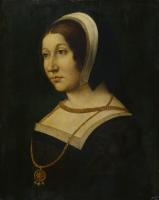
Collectanea by John Leland [1502-1552]. The XXth Day of the said Monneth [20th July 1503] the Quene (age 13) departed from Darnton in fayr Aray, and with the precedente Company went to the Town of Durham. A Mylle out of the said Towne, cam before hyr Syr Richard Stanley and my Lady his Wyffe, accompanyd of Gentlemen and Gentlewomen varey well appoynted, hys Folks arayd in hys Livery, to the Nombre of L Horsys, v/ell mounted.
Then the Quene prepared hyrselfe to enter into the said Towne, and every ychon in lyk wys, in fayr Aray, and rychely, after the Manere acostomed. In specyall th Erle of Northumberlaund (age 25) ware on a goodly Gowne of Tynfill, fourred with Hermynes1. He was mounted upon a fayr Courser, hys Harnays of Goldsmyth Warke, and thorough that sam was sawen small Bells that maid a mellodyous Noyse, without sparing Gambads. Hys Gentylmen of Honor and hys Company wer well appoynted.
At the Intryng of the said Towne, and with in, in the Streytts and in the Wyndowes was so innumerable People, that it was a fayr Thing for to se. And in fayr Ordre she was conveyd to the Church, the Officers of Armes, Sergeants of Armes, Trompetts, and Mynstrells going before her.
At the Gatt of the Church [Durham Cathedral [Map]] was my Lord the Byschop of the sayd Place, and my Lord the Prior, revested in Pontificalis, with the Convent all revested of ryches Copps, in Processyon, with the Crossys. And ther was apoynted a Place for to kisse them.
Then the sayd Processyon departed in Ordre, and all the Noblesse in lyke wys, to the Church, in whiche ny to the Fount was a ryche Awter, adorned of ryches Jwells and precyowses Relikes, the wich the said Bischop delivered to the said Qwene to kiss. And by the Erle of Surrey (age 60) was gyffyn hyr Offrynge. After this sche was noble conveyd to the Castell, wher her Lodging was prepared and drest honnestly. And every ychon retourned agayn to hys Repayre.
Note 1. 'fourred with Hermynes i.e. furred with ermines. Ermine in heraldry is a fur consisting of a white background with a pattern of black shapes representing the winter coat of the stoat with white fur and a black-tipped tail.
William of Worcester's Chronicle of England
William of Worcester, born around 1415, and died around 1482 was secretary to John Fastolf, the renowned soldier of the Hundred Years War, during which time he collected documents, letters, and wrote a record of events. Following their return to England in 1440 William was witness to major events. Twice in his chronicle he uses the first person: 1. when writing about the murder of Thomas, 7th Baron Scales, in 1460, he writes '… and I saw him lying naked in the cemetery near the porch of the church of St. Mary Overie in Southwark …' and 2. describing King Edward IV's entry into London in 1461 he writes '… proclaimed that all the people themselves were to recognize and acknowledge Edward as king. I was present and heard this, and immediately went down with them into the city'. William’s Chronicle is rich in detail. It is the source of much information about the Wars of the Roses, including the term 'Diabolical Marriage' to describe the marriage of Queen Elizabeth Woodville’s brother John’s marriage to Katherine, Dowager Duchess of Norfolk, he aged twenty, she sixty-five or more, and the story about a paper crown being placed in mockery on the severed head of Richard, 3rd Duke of York.
Available at Amazon in eBook and Paperback format.
Letters and Papers Foreign and Domestic Henry VIII 1528. 20th July 1520. R.O. 4534. Henry Duke of Richmond (age 1) to Henry VIII (age 29).
I have received your letters and the goodly apparel you sent me by Master Magnus, director of my council. According to the purport of your said letters, I shall apply myself to learning, and proceed in virtue. Sheriffhutton [Map], 20 July.


On 20th July 1524 Claude Valois Orléans Queen Consort France (age 24) died.
The Love Letters of Henry VIII to Anne Boleyn. Letter 5. Henry VIII (age 36) to Anne Boleyn (age 26).
For a present so beautiful that nothing could be more so (considering the whole of it), 1 thank you most cordially, not only on account of the fine diamond and the ship in which the solitary damsel is tossed about, but chiefly for the fine interpretation and the too humble submission which your goodness hath used towards me in this case; for I think it would be very difficult for me to find an occasion to deserve it, if I were not assisted by your great humanity and favour, which I have always sought to seek, and will seek to preserve by all the kindness in my power, in which my hope has placed its unchangeable intention, which says, Aut illic aut nullibi. The demonstrations of your affection are such, the beautiful mottoes of the letter so cordially expressed, that they oblige me for ever to honour, love, and serve you sincerely, beseeching you to continue in the same firm and constant purpose, assuring you that, on my part, I will surpass it rather than make it reciprocal, if loyalty of heart and a desire to please you can accomplish this. I beg, also, if at any time before this I have in anyway offended you, that you would give me the same absolution that you ask, assuring you, that henceforward my heart shall be dedicated to you alone. I wish my person was so too. God can do it, if He pleases, to whom I pray every day for that end, hoping that at length my prayers will be heard. I wish the time may be short, but I shall think it long till we see one another. Written by the hand of that secretary, who in heart, body, and will, is. Your loyal and most assured Servant, H. aultre A.B. ne chrse R.


The Love Letters of Henry VIII to Anne Boleyn. Letter 12. Henry VIII (age 37) to Anne Boleyn (age 27).
The approach of the time for which I have so long waited rejoices me so much, that it seems almost to have come already. However, the entire accomplishment cannot be till the two persons meet, which meeting is more desired by me than anything in this world; for what joy can be greater upon earth than to have the company of her who is dearest to me, knowing likewise that she does the same on her part, the thought of which gives me the greatest pleasure.
Judge what an effect the presence of that person must have on me, whose absence has grieved my heart more than either words or writing can express, and which nothing can cure, but that begging you, my mistress, to tell your father from me, that I desire him to hasten the time appointed by two days, that he may be at court before the old term, or, at farthest, on the day prefixed; for otherwise I shall think he will not do the lover's turn, as he said he would, nor answer my expectation.
No more at present for lack of time, hoping shortly that by word of mouth I shall tell you the rest of the sufferings endured by me from your absence.
Written by the hand of the secretary, who wishes himself at this moment privately with you, and who is, and always will be.
Your loyal and most assured Servant,
H. no other A B seek R.
Note. The date of this letter is presumed to be middle July 1528.
Letters and Papers Foreign and Domestic Henry VIII 1537. 20th July 1537. 292. Richard Coren to Cromwell.
R. O. St. P. i. 557.
Excuses his slack letters by his absence from my Lord of Norfolk at the expedition of the last post. Was present at Aske's (deceased) execution, as well as at that of Sir Robert Constable (deceased), which no doubt Thomas Hossy has described. Noted in both men "that they thought a religion to keep secret between God and them certain things rather than open their whole stomach; from the which opinion I could not abduce them." For Robert Aske's demeanour, refers to the schedule enclosed. Sherifhoton, 20 July.
ii. Goods which Robert Aske had during the commotion, whereof no satisfaction is made, to his remembrance.
First, Mr. Lacy sent to him to Hull £10 of Dr. Halsworth's goods, and an obligation of the Abbot of Kirkstead, Linc, which the subprior of Watton had. 2. The vicar of Braton sent him 10 sheep and 30s., but of whose goods he knows not. 3. Had sent from Drake Abbey to Wresill 10 or 12 qrs. of oats and 3 qrs. of wheat. 4. From Wato[n], 40 sheep. 5. Had of Mr. Krake's goods, sheep to the value of £4 10s. Thinks that is all he had, "not given and not restored," and begs the King to pay them out of his goods for the discharge of his conscience.
In Aske's hand and subscribed: "This is Ask's own hand delivered unto me, Richard Coren."
St. P. i. 558.
iii. "The saying of Robert Aske to me, Richard Coren, out of confession to-for his death.
"First, he said that my lord Darcy (deceased) did tell him that he had spoken with the emperor's ambassador concerning his purpose in this late rebellion, for the causes of the Church, as he said, and that the said ambassador should encourage him unto the same, saying that he should lack none help."
2. Lord Darcy, Sir Robt. Constable, and he were about to send Doctor Marmaduke to the Council in Flanders for aid and ordnance.
3. That my lord Privy Seal "did not bear so great favour to my Lord of Norfolk as he thought he did; which thing I have kept secret from my said Lord of Norfolk."
4. When he "should be" laid on the hurdle to be drawn he openly confessed he had offended God, the King, and the world. After this he declared that the King was so gracious that none should be troubled for offences comprised in the pardon. He was then laid on the hurdle and drawn through the notable places of the city "desiring the people ever as he passed by to pray for him."
5. At the place of execution he was taken off the hurdle, repeated like confession, and ascended up into the dungeon to wait the coming of my Lord of Norfolk.
6. "Item, there were two things, wherewithal he was aggrieved. The one was, that he said my lord Privy Seal spake a sore word and affirmed it with a stomach, swearing that all the Northern men were but traitors: where-withal he was somewhat offended. The second was that my lord Privy Seal sundry times promised him a pardon of his life, and at one time he had a token from the King's Majesty of pardon for confessing the truth. These two things he showed to no man in these North parts, as he said, but to me only; which I have and will ever keep secret."
7. At Norfolk's arrival Aske ascended the tower to the gallows, repeated his former confession and asked forgiveness of the King, my lord Chancellor, my Lord of Norfolk, my lord Privy Seal, my Lord of Sussex, and all the world; and after orisons made on the ladder, commended his soul to God.
Pp. 5. All in Coren's hand, except § ii. Add.: Privy Seal. Sealed and endd.
On 20th July 1542 King Henry VIII of England and Ireland (age 51) purchased the premises at Stanmore, with a windmill, lands in Great and Little Stanmore and Harrow, others in Essex, and also the "premises in the parish of St Sepulchre in the ward of Faryngton Without" from Geoffrey Chamber of Stanmore in Middlesex -1550.
Wriothesley's Chronicle [1508-1562]. 20th July 1554. Fryday the xxth of Julie tydinges came to the Lord Mayre payne that the Prince of Spayne (age 27) was come into Englande, and landed at Southampton, Hampshire [Map] this daye, and came with viiixx sayle of Spanish shippes well appoynted, beside the navie of Flaunders and the Queens navie, which were to the number of lx [60] shippes and more, Lord Wm. Howarde, Lord Admirall of England (age 44), conductinge them, after they came into the costes of Englande.


On 20th July 1559 Philip "The Prudent" II King Spain (age 32) and Elizabeth Valois Queen Consort Spain (age 14) were married. She by marriage Queen Consort Spain. She the daughter of King Henry II of France (deceased) and Catherine Medici Queen Consort France (age 40). He the son of Charles V Holy Roman Emperor and Isabel Aviz Queen Consort Spain. They were fourth cousins. He a great x 5 grandson of King Edward III of England.


Henry Machyn's Diary. 20th July 1559. The xx day of July kyng Phelype (age 32) was mared [married] unto the Frenche kyng('s) (deceased) dowthur (age 14), and grett justes mad ther, and the Frenche kyng dyd just [joust], and ther he had on of ys ees stryken owtt with a spyld [splinter] of a spayre, that he ded of the stroke, by one (blank).
Henry Machyn's Diary. 20th July 1559. The xx day of July the good old the bysshope of D[urham] (age 85) cam rydyng to London with iijxx [60] hors, and so to Sowth[wark] unto master Dolman('s) howsse, a talowchandler, and ther he lys aganst the chene gatte.

Henry Machyn's Diary. 20th July 1562. The sam nyght was the Mercers' soper, and ther sopy[d my] lord of Penbroke (age 61) and (unfinished)
On 20th July 1572 Frederick II King of Denmark (age 38) and Sophie Mecklenburg-Schwerin Queen Consort Denmark (age 14) were married. She by marriage Queen Consort Denmark. The difference in their ages was 23 years. He the son of Christian III King of Denmark and Dorothea of Saxe Lauenburg Queen Consort Denmark and Norway. They were second cousin once removed.
Henrici Quinti, Angliæ Regis, Gesta, is a first-hand account of the Agincourt Campaign, and subsequent events to his death in 1422. The author of the first part was a Chaplain in King Henry's retinue who was present from King Henry's departure at Southampton in 1415, at the siege of Harfleur, the battle of Agincourt, and the celebrations on King Henry's return to London. The second part, by another writer, relates the events that took place including the negotiations at Troye, Henry's marriage and his death in 1422.
Available at Amazon in eBook and Paperback format.
On 20th July 1577 Bishop Richard Howand (age 36) was admitted as Master of St John's College, Cambridge University [Map].
On 20th July 1590 James Stewart 1st Lord Doune (age 61) was assassinated (the first in Scotland by a fiream). His son James (age 25) succeeded 2nd Lord Doune.
On 20th July 1642 William Cavendish 3rd Earl Devonshire (age 24) was expelled from the House of Lords for having refused to come to the bar to answer charges of high crimes and misdemeanors. He left England, and his estates were sequestrated.


Samuel Pepys' Diary. 20th July 1664. Up, and a while to my office, and then home with Deane (age 30) till dinner, discoursing upon the business of my Chancellor's (age 55) timber in Clarendon Parke [Map], and how to make a report therein without offending him; which at last I drew up, and hope it will please him. But I would to God neither I nor he ever had had any thing to have done with it! Dined together with a good pig, and then out by coach to White Hall, to the Committee for Fishing; but nothing done, it being a great day to-day there upon drawing at the Lottery of Sir Arthur Slingsby (age 41). I got in and stood by the two Queenes [Note. Catherine of Braganza Queen Consort England (age 25) and Henrietta Maria Bourbon Queen Consort England (age 54) ] and the Duchesse of Yorke (age 27), and just behind my Baroness Castlemayne (age 23), whom I do heartily adore; and good sport it was to see how most that did give their ten pounds did go away with a pair of globes only for their lot, and one gentlewoman, one Mrs. Fish, with the only blanke. And one I staid to see drew a suit of hangings valued at £430, and they say are well worth the money, or near it. One other suit there is better than that; but very many lots of three and fourscore pounds. I observed the King (age 34) and Queenes did get but as poor lots as any else. But the wisest man I met with was Mr. Cholmley (age 31), who insured as many as would, from drawing of the one blank for 12d.; in which case there was the whole number of persons to one, which I think was three or four hundred. And so he insured about 200 for 200 shillings, so that he could not have lost if one of them had drawn it, for there was enough to pay the £10; but it happened another drew it, and so he got all the money he took.
Samuel Pepys' Diary. 20th July 1665. So walked to Redriffe [Map], where I hear the sickness is, and indeed is scattered almost every where, there dying 1089 of the plague this week. My Baroness Carteret (age 63) did this day give me a bottle of plague-water1 home with me.
This afternoon I waited on the Duke of Albemarle (age 56), and so to Mrs. Croft's, where I found and saluted Mrs. Burrows, who is a very pretty woman for a mother of so many children. But, Lord! to see how the plague spreads. It being now all over King's Streete, at the Axe, and next door to it, and in other places.
Note 1. The recipe for Plague Water from The London Distiller is full of ingredients once thought to mitigate this feared illness. Angelica roots, for example, "is a singular remedy against pestilence and poyson." Contra Yerva was considered to be "binding and stops blood," and zedoary could "resist poyson."

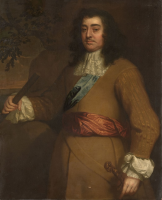

Samuel Pepys' Diary. 20th July 1665. So down to Deptford, Kent [Map] and there dined, and after dinner saw my Lady Sandwich (age 40) and Mr. Carteret (age 24) and his two sisters over the water, going to Dagenhams, and my Baroness Carteret (age 63) towards Cranburne1. So all the company broke up in most extraordinary joy, wherein I am mighty contented that I have had the good fortune to be so instrumental, and I think it will be of good use to me.
Note 1. The royal lodge of that name in Windsor Forest, occupied by Sir George Carteret (age 55) as Vice-Chamberlain to the King (age 35). B.
Samuel Pepys' Diary. 20th July 1665. So home to write letters late, and then home to bed, where I have not lain these 3 or 4 nights. I received yesterday a letter from my Lord Sandwich (age 39), giving me thanks for my care about their marriage business, and desiring it to be dispatched, that no disappointment may happen therein, which I will help on all I can.


John Evelyn's Diary. 20th July 1670. We went to dine at Lord Allington's (age 30), who had newly built a house of great cost, I believe a little less than £20,000. His architect was Mr. Pratt (age 50). It is seated in a park, with a sweet prospect and stately avenue; but water still defective; the house has also its infirmities. Went back to Mr. Slingsby's (age 49).
John Evelyn's Diary. 20th July 1683. Several of the conspirators of the lower form were executed at Tyburn [Map]; and the next day.
John Evelyn's Diary. 20th July 1685. The Trinity House met this day, which should have ben on ye Monday after Trinity, but was put off by reason of the Royal Charter being so large that it could not be ready before. Some immunities were super-added. Mr. Pepys (age 52), Secretary to ye Admiralty, was a second time chosen Master. There were present the Duke of Grafton (age 21), Lord Dartmouth (age 12), Master of ye Ordnance, the Commissioners of ye Navy, and brethren of the Corporation. We went to Church according to costome, and then took barge to the Trinity House [Map], in London, where we had a great dinner, above 80 at one table.


On 20th July 1729 William Stukeley (age 41) was ordained as a Deacon by Archbishop William Wake (age 72).
On 20th July 1742 Arthur Devis (age 30) and Elizabeth Faulkener (age 23) were married at Church of St Katharine's by the Tower, Tower Hill [Map]. They had twenty-two children of which only six survived infancy.

Letters of Horace Walpole. 20th July 1752. Arlington Street. To George Montagu Esq (age 39).
You have threatened me with a messenger from the secretary's office to seize my papers; who would ever have taken you for a prophet? If Goody Compton (age 60)320, your colleague, had taken upon her to foretell, there was enough of the witch and prophetess in her person and mysteriousness to have made a superstitious person believe she might be a cousin of Nostradamus, and heiress of some of her visions; but how came you by second sight? Which of the Cues matched in the Highlands? In short, not to keep you in suspense, for I believe you are so far inspired as to be ignorant how your prophecy was to be accomplished, as we were sitting at dinner t'other day, word was brought that one of the King's messengers was at the door. Every drop of ink in my pen ran cold; Algernon Sidney danced before my eyes, and methought I heard my Lord Chief-Justice Lee, in a voice as dreadful as Jefferies', mumble out, Scribere est agere. How comfortable it was to find that Mr. Amyand, who was at table, had ordered this appanage of his dignity to attend him here for orders! However, I have buried the Memoires under the oak in my garden, where they are to be found a thousand years hence, and taken perhaps for a Runic history in rhyme. I have part of another valuable MS. to dispose of, which I shall beg leave to commit to your care, and desire it may be concealed behind the wainscot in Mr. Bentley's Gothic house, whenever you build it. As the great person is living to whom it belonged, it would be highly dangerous to make it public; as soon as she is in disgrace, I don't know whether it Will not be a good way of making court to her successor, to communicate it to the world, as I propose doing, under the following title: "The Treasury of Art and Nature, or a Collection of inestimable Receipts, stolen out of the Cabinet of Madame de Pompadour (age 30), and now first published for the use of his fair Countrywomen, by a true born Englishman and philomystic." * * * * * * * * * * * * *
So the pretty Miss Bishop (age 24)321, instead of being my niece, is to be Mrs. Bob Brudenel (age 25). What foolish birds are turtles when they have scarce a hole to roost in! Adieu!
Note 320. The Hon. George Compton son of Lord Northampton, Mr. Montagu's colleague for Northampton.-E.
Note 321. Daughter of Sir Cecil Bishop (age 51).
Chronicle of a Bourgeois of Valenciennes
Récits d’un bourgeois de Valenciennes aka The Chronicle of a Bourgeois of Valenciennes is a vivid 14th-century vernacular chronicle written by an anonymous urban chronicler from Valenciennes in the County of Hainaut. It survives in a manuscript that describes local and regional history from about 1253 to 1366, blending chronology, narrative episodes, and eyewitness-style accounts of political, military, and social events in medieval France, Flanders, and the Low Countries. The work begins with a chronological framework of events affecting Valenciennes and its region under rulers such as King Philip VI of France and the shifting allegiances of local nobility. It includes accounts of conflicts, sieges, diplomatic manoeuvres, and the impact of broader struggles like the Hundred Years’ War on urban life in Hainaut. Written from the perspective of a burgher (bourgeois) rather than a monastery or royal court, the chronicle offers a rare lay viewpoint on high politics and warfare, reflecting how merchants, townspeople, and civic institutions experienced the turbulence of the 13th and 14th centuries. Its narrative style combines straightforward reporting of events with moral and civic observations, making it a valuable source for readers interested in medieval urban society, regional politics, and the lived experience of war and governance in pre-modern Europe.
Available at Amazon in eBook and Paperback format.
On 20th July 1821 Alexander Frederick Oldenburg was born to Christian August Oldenburg II Duke Schleswig Holstein Sonderburg Augustenburg (age 23) and Louise Sophie Danneskiold Samsøe Duchess Schleswig Holstein Sonderburg Augustenburg. He a great x 3 grandson of King George II of Great Britain and Ireland. He died aged one in 1823.
Greville Memoirs. 20th July 1830. Yesterday was a very busy day with his Majesty, who is going much too fast, and begins to alarm his Ministers and astonish the world. In the morning he inspected the Coldstream Guards, dressed (for the first time in his life) in a military uniform and with a great pair of gold spurs half-way up his legs like a game cock, although he was not to ride, for having chalk-stones in his hands he can't hold the reins. The Queen came to Lady Bathurst's (age 64) to see the review and hold a sort of drawing-room, when the Ministers' wives were presented to her, and official men, to which were added Lady Bathurst's relations; everybody was in undress except the officers. She is very ugly, with a horrid complexion, but has good manners, and did all this (which she hated) very well. She said the part as if she was acting, and wished the green curtain to drop. After the review the King, with the Dukes of Cumberland, Sussex, and Gloucester, and Prince George and the Prince of Prussia, and the Duchess of Cumberland's son, came in through the garden gate; the Duchess of Gloucester and Princess Augusta were already there; they breakfasted and then went away, the Duke of Gloucester bowing to the company while nobody was taking any notice of him or thinking about him. Nature must have been merry when she made this Prince, and in the sort of mood that certain great artists used to exhibit in their comical caricatures; I never saw a countenance which that line in Dryden's M'Flecknoe would so well describe—
And lambent dulness plays around his face.
Greville Memoirs. 20th July 1830. All this was very well; no great harm in it; more affable, less dignified than the late King; but when this was over, and he might very well have sat himself quietly down and rested, he must needs put on his plainer clothes and start on a ramble about the streets, alone too. In Pall Mall he met Watson Taylor, and took his arm and went up St. James's Street. There he was soon followed by a mob making an uproar, and when he got near White's a woman came up and kissed him. Belfast (who had been sworn in Privy Councillor in the morning), who saw this from White's, and Clinton thought it time to interfere, and came out to attend upon him. The mob increased, and, always holding W. Taylor's arm, and flanked by Clinton and Belfast, who got shoved and kicked about to their inexpressible wrath, he got back to the Palace amid shouting and bawling and applause. When he got home he asked them to go in and take a quiet walk in the garden, and said, 'Oh, never mind all this; when I have walked about a few times they will get used to it, and will take no notice.' There are other stories, but I will put down nothing I do not see or hear, or hear from the witnesses. Belfast told me this in the Park, fresh from the scene and smarting from the buffeting he had got. All the Park was ringing with it, and I told Lady Bathurst (age 64), who thought it so serious she said she would get Lord Bathurst (age 68) to write to the Duke directly about it. Lord Combermere wanted to be made a Privy Councillor yesterday, but the Duke would not let it be done; he is in a sort of half-disgrace, and is not to be made yet, but will be by-and-by.
Thomas Bateman 1846. The second barrow [Note. Probably Stanshope Barrow 2 [Map]] was at the distance of about five hundred yards from the foregoing, and had been entirely removed to the surface of the ground whereon it stood; on digging, however, in the centre, it was found to descend a few inches in a dish-like form, at which point a few pieces of human bone, the fragments of a skeleton, and some pieces of a small cup of Samian ware, probably of Romano-British manufacture, were found. Owing to the barrow having been taken away, these things were in a lamentably shattered condition, which is the more to be regretted, as this is the only instance of Samian ware being applied to a sepulchral purpose as yet brought to light in the counties of Derby or Stafford.
Thomas Bateman 1846. On the 20th of July, 1846, were opened two barrows, upon Stanshope Pasture, near Dovedale, Staffordshire. The first [Note. Probably Stanshope Barrow 1 [Map]] is of considerable magnitude, and appeared beautifully perfect, but, as is not unfrequently the case under similar circumstances, proved entirely deceptive. A natural elevation in this rocky neighbourhood having been taken advantage of in the construction of this barrow, and trimmed into form, consequently the greater part of it was solid rock, and the small portion of soil which had been added had been much disturbed at some prior excavation. In one situation in the interior of the barrow, the rock seemed to have been slightly cut, in order to form a cist, and here were found the only traces of interment that were met with; namely, a small piece of a coarse urn, some calcined human bones, and various pieces of flint, which had undergone the same process.
Ten Years' Digging. 20th of July, opened a large tumulus in a narrow valley by the river Manifold, between Castern [Map] and Throwley [Map], called Cow Close Lea. The mountainous scenery through which the river winds its serpentine course (whence the name) is most picturesque, the hills, on the Throwley side especially, rising to a great height. On account of the barrows in this district being for the most part on the tops of the hills, this one had been previously overlooked by us. The search was commenced by a section through the midst of the barrow, which, to the depth of four feet was composed of boulders from the bed of the river; next was a layer of clay and soil mixed with stone, a foot in thickness; below this was sand like the bed of the river, into which we dug for two feet without perceiving any mixture, as would probably have been the case had it been before disturbed: and as the remains of human bones, and those of the rat which we found, were confined to the level of the clay, we took advantage of the hole made by digging in the sand, to remove by undermining, a very large stone from the centre of the barrow, by the side of which were piled several smaller ones.
No trace of interment was observed near these stones, which lay within a foot of the surface. Confining the depth of the cutting to the level of the clay, we discovered at the side a skeleton and a few burnt bones; pursuing the same direction about five feet further, we found another skeleton, lying on its left side in a contracted posture, having with it burnt bones, a round-ended instrument and a pebble, both of flint. An arrow-head and some chippings of flints were found in other parts of the mound, and the earth on being turned over, emitted an odour so fragrant as to cause us to look about more than once to see whether there were not many flowers close by.
Ten Years' Digging. On the 20th of July we opened a small mound [Map] [Rockhurst Barrow [Map]] near the preceding, on the face of the hill declining towards the Brassington and Elton road. Upon cutting a section through the middle, traces of a large fire appeared, the earth forming the tumulus being changed in colour and consolidated. The natural surface in the centre was strewed with charred wood, calcined human bones, and stones which had been cracked and flaked by heat. Amongst these relics of the long quenched pile, were portions of three vessels of compact wheel-formed earthenware, precisely like the bulk of the fragments from the large barrow last described, and one small brass coin of the Lower Empire; all much burnt. One, only, of the three vessels is sufficiently complete to afford an, outline of its form, which is clearly an improvement on the usual globular shape of the Roman olla: it is very elegant in outline, and measures 7 inches in height, and differs from the Roman ware in the quality of the paste, which is extremely gritty and hard, and is externally grey. One of the others has been of the same shape, but of a dark red colour. It is certain that this mound covers the place where the corpse was reduced to ashes along with the three vases and the coin, but from so few bones being found, it is rather likely that the collected remains were deposited in some part of the mound not explored unless, indeed, they were so completely burnt as to leave but a slight residuum.
I have frequently observed the difference between Celtic deposits from tumuli, and Roman incinerated bones, to be most strongly marked; the former are almost uniformly cleanly burnt in pieces sufficiently large to be recognised as parts of the skeleton, and consequently far exceed the latter in quantity, which are as constantly reduced to ashes, and are frequently mixed with sand and other impurities from the embers of the pile. This discovery is chiefly interesting as fixing the date of a kind of pottery which might easily be mistaken for medieval ware by persons not accustomed to the critical examination of texture.

On 20th July 1851 Cromartie Sutherland-Leveson-Gower 4th Duke of Sutherland was born to George Leveson-Gower 3rd Duke Sutherland (age 22) and Anne Hay Mackenzie Duchess Sutherland (age 22). He married 20th October 1884 his fourth cousin once removed Millicent Fanny St Clair-Erskine Duchess of Sutherland and had issue.
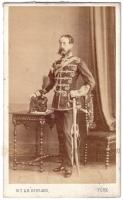
Before 20th July 1889. Carte-de-Visite, Studio W.T.&R. Gowland in York. Major Bryan Burrell (age 50).
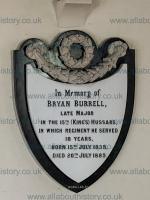
On 20th July 1889 Major Bryan Burrell (age 50) died. Memorial at the Chapel of St John the Evangelist, Bolton [Map].
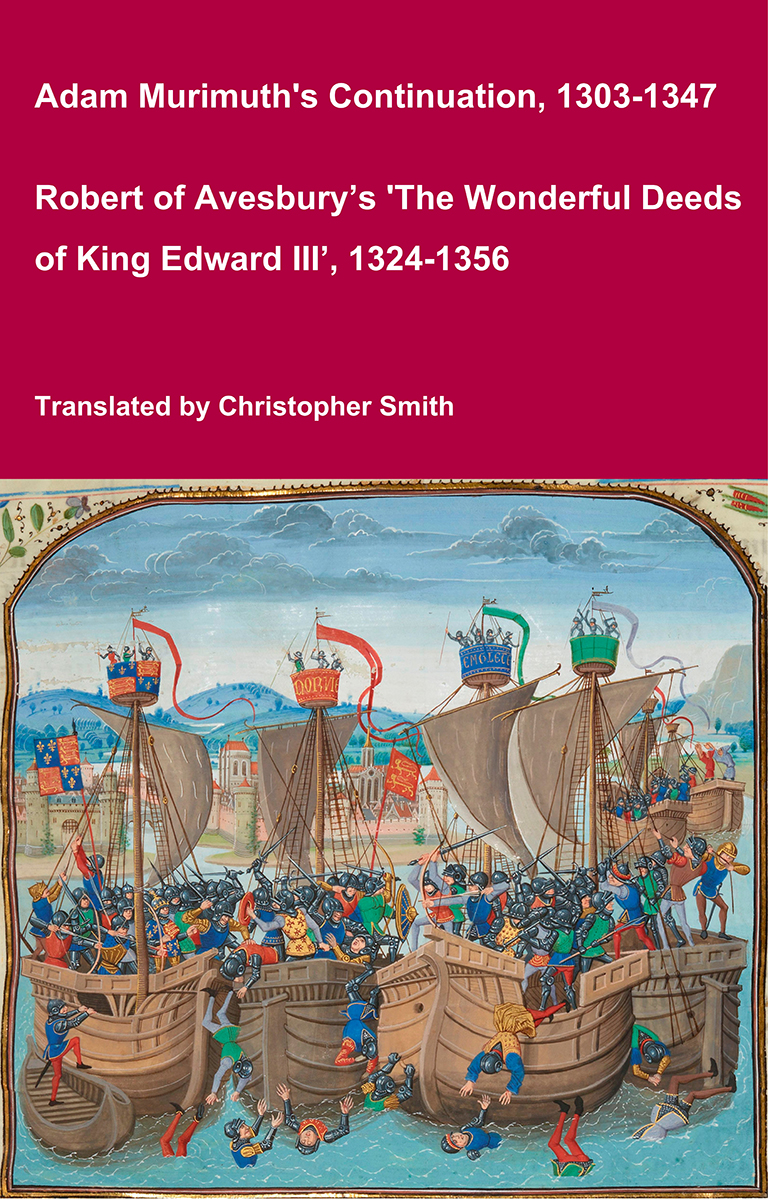
Adam Murimuth's Continuation and Robert of Avesbury’s 'The Wonderful Deeds of King Edward III'
This volume brings together two of the most important contemporary chronicles for the reign of Edward III and the opening phases of the Hundred Years’ War. Written in Latin by English clerical observers, these texts provide a vivid and authoritative window into the political, diplomatic, and military history of fourteenth-century England and its continental ambitions. Adam Murimuth Continuatio's Chronicarum continues an earlier chronicle into the mid-fourteenth century, offering concise but valuable notices on royal policy, foreign relations, and ecclesiastical affairs. Its annalistic structure makes it especially useful for establishing chronology and tracing the development of events year by year. Complementing it, Robert of Avesbury’s De gestis mirabilibus regis Edwardi tertii is a rich documentary chronicle preserving letters, treaties, and official records alongside narrative passages. It is an indispensable source for understanding Edward III’s claim to the French crown, the conduct of war, and the mechanisms of medieval diplomacy. Together, these works offer scholars, students, and enthusiasts a reliable and unembellished account of a transformative period in English and European history. Essential for anyone interested in medieval chronicles, the Hundred Years’ War, or the reign of Edward III.
Available at Amazon in eBook and Paperback format.
On 20th July 1890 George II King Hellenes was born to Constantine I King Greece (age 21) and Sophia Hohenzollern Queen Consort Greece (age 20). He a great grandson of Queen Victoria of the United Kingdom. He married 27th February 1921 his second cousin Elisabeth Hohenzollern Sigmaringen Queen Consort Greece Queen Consort Hellenes.


On 20th July 1947 Sylvia Storey Countess Poulett (age 57) died.

On 20th July 2011 Lucian Freud (age 88) died.
On 20th July 1313 John Tiptoft 2nd Baron Tibetot was born to Pain Tiptoft 1st Baron Tibetot (age 33) and Agnes Ros Baroness Tibetot. He married (1) in or before 1341 Margaret Badlesmere Baroness Tibetot, daughter of Bartholomew Badlesmere 1st Baron Badlesmere and Margaret Clare Baroness Badlesmere, and had issue (2) before 13th April 1367 Elizabeth Aspall Baroness Tibetot and had issue.
On 20th July 1345 Thomas Fauconberg 5th Baron Fauconberg was born to Walter Fauconberg 4th Baron Fauconberg (age 26) and Maud Pateshull Baroness Fauconberg (age 22). He married (1) 17th November 1366 Constance Felton Baroness Fauconberg and had issue (2) before 18th October 1406 Joan Brounflete Baroness Fauconberg and had issue.
On 20th July 1346 Margaret Plantagenet Countess of Pembroke was born to King Edward III of England (age 33) and Philippa of Hainaut Queen Consort England (age 32) at Windsor Castle [Map]. Coefficient of inbreeding 3.00%. She married her half fourth cousin John Hastings 2nd Earl Pembroke, son of Laurence Hastings 1st Earl Pembroke and Agnes Mortimer Countess of Pembroke.
On 20th July 1372 Janet Stewart was born to Robert Stewart 1st Duke Albany (age 32) and Margaret Graham 3rd Countess Menteith (age 38).
On 20th July 1385 Richard of Conisbrough 1st Earl Cambridge was born to Edmund of Langley 1st Duke of York (age 44) and Isabella of Castile Duchess York (age 30) at Conisbrough Castle [Map]. Some historians suggest the father was John Holland 1st Duke Exeter (age 33) with whom Isabella of Castile Duchess York was suspected of having an affair since 1. Richard received no lands from his father and was not mentioned either in his father's will nor his brother's will, 2. the age gap, around ten years, between Richard and his older siblings. He a grandson of King Edward III of England. He married (1) May 1406 his first cousin twice removed Anne Mortimer, daughter of Roger Mortimer 4th Earl March 3rd Earl of Ulster and Eleanor Holland Countess March and Ulster, and had issue (2) after 21st September 1411 his third cousin twice removed Maud Clifford Countess Cambridge, daughter of Thomas Clifford 6th Baron Clifford and Elizabeth Ros Baroness Clifford.
On 20th July 1386 Joan Grey 5th Baroness Grey was born to Robert Grey 4th Baron Grey (age 37). She married 24th February 1404 her fourth cousin John Deincourt 5th Baron Deincourt, son of William Deincourt 3rd Baron Deincourt and Alice Neville Baroness Deincourt, and had issue.
On 20th July 1455 Ursula of York was born to Richard Plantagenet 3rd Duke of York (age 43) and Cecily "Rose of Raby" Neville Duchess York (age 40). She died young. She a great x 2 granddaughter of King Edward III of England. Coefficient of inbreeding 2.42%.
Chronicle of Geoffrey le Baker of Swinbroke
Baker was a secular clerk from Swinbroke, now Swinbrook, an Oxfordshire village two miles east of Burford. His Chronicle describes the events of the period 1303-1356: Gaveston, Bannockburn, Boroughbridge, the murder of King Edward II, the Scottish Wars, Sluys, Crécy, the Black Death, Winchelsea and Poitiers. To quote Herbert Bruce 'it possesses a vigorous and characteristic style, and its value for particular events between 1303 and 1356 has been recognised by its editor and by subsequent writers'. The book provides remarkable detail about the events it describes. Baker's text has been augmented with hundreds of notes, including extracts from other contemporary chronicles, such as the Annales Londonienses, Annales Paulini, Murimuth, Lanercost, Avesbury, Guisborough and Froissart to enrich the reader's understanding. The translation takes as its source the 'Chronicon Galfridi le Baker de Swynebroke' published in 1889, edited by Edward Maunde Thompson.
Available at Amazon in eBook and Paperback format.
On 20th July 1470 John Bourchier 1st Earl Bath was born to Fulk Bourchier 10th Baron Fitzwarin (age 24) and Elizabeth Dynham Baroness Fitzwarin. He a great x 3 grandson of King Edward III of England. He married (1) in or shortly before 1499 his fifth cousin once removed Cecily Daubeney Baroness Fitzwarin, daughter of Giles Daubeney 1st Baron Daubeney and Elizabeth Arundell Baroness Offaly, and had issue (2) before 30th October 1524 his fourth cousin once removed Florence Bonville Countess Bath (3) after 30th October 1524 his fourth cousin twice removed Elizabeth Wentworth Countess Bath, daughter of Henry Wentworth 4th Baron Despencer and Anne Saye Baroness Despencer.
On 20th July 1649 William Bentinck 1st Earl of Portland was born. He married (1) 1st February 1678 Anne Villiers Countess Portland and had issue (2) 12th May 1700 Jane Martha Temple Countess Portland and had issue.
On 20th July 1655 Ford Grey 1st Earl Tankerville was born to Ralph Grey 2nd Baron Grey Werke (age 25) and Catherine Anna Ford (age 21). He married before 1678 his fourth cousin twice removed Mary Berkeley Countess Tankerville, daughter of George Berkeley 1st Earl Berkeley and Elizabeth Massingberd Couness Berkeley, and had issue.

On 20th July 1667 Philip Astley 2nd Baronet was born to Jacob Astley 1st Baronet (age 28) and Blanche Wodehouse Lady Astley (age 25).
On 20th July 1673 John Dalrymple 2nd Earl of Stair was born to John Dalrymple 1st Earl of Stair (age 24).

On 20th July 1687 Justinian Isham 5th Baronet was born to Justinian Isham 4th Baronet (age 28) and Elizabeth Turnor Lady Isham (age 21).
On 20th July 1723 Robert Shirley 6th Earl Ferrers was born to Laurence Shirley (age 29) and Anne Clarges (age 28) at St James'. He married 26th December 1754 Catherine Cotton Countess Ferrers and had issue.

On 20th July 1761 Arthur Saunders Gore 3rd Earl Arran was born to Arthur Saunders Gore 2nd Earl Arran (age 26) and Catherine Annesley. He married 1787 Mary Tyrrell 3rd Countess Arran, daughter of John Tyrrell 5th Baronet.
On 20th July 1764 Robert Williams 9th Baronet was born to Hugh Williams 8th Baronet (age 46) and Emma Bridget Rowlands Viscountess Bulkeley.
On 20th July 1766 Thomas Bruce 11th Earl Kincardine 7th Earl Elgin was born to Charles Bruce 9th Earl Kincardine 5th Earl Elgin (age 34) at Broomhall House, Broomhall. He married (1) 11th March 1799 Mary Nisbet Countess Elgin and had issue (2) 21st September 1810 Elizabeth Oswald Countess Kincardine and Elgin and had issue.
Abbot John Whethamstede’s Chronicle of the Abbey of St Albans
Abbot John Whethamstede's Register aka Chronicle of his second term at the Abbey of St Albans, 1451-1461, is a remarkable text that describes his first-hand experience of the beginning of the Wars of the Roses including the First and Second Battles of St Albans, 1455 and 1461, respectively, their cause, and their consequences, not least on the Abbey itself. His text also includes Loveday, Blore Heath, Northampton, the Act of Accord, Wakefield, and Towton, and ends with the Coronation of King Edward IV. In addition to the events of the Wars of the Roses, Abbot John, or his scribes who wrote the Chronicle, include details in the life of the Abbey such as charters, letters, land exchanges, visits by legates, and disputes, which provide a rich insight into the day-to-day life of the Abbey, and the challenges faced by its Abbot.
Available at Amazon in eBook and Paperback format.
On 20th July 1799 Grenville Temple 10th Baronet was born to Grenville Temple 9th Baronet (age 30). He married 5th May 1829 Mary Baring and had issue.
On 20th July 1804 James Phillips Kay-Shuttleworth 1st Baronet was born to Robert Kay. He married 24th February 1842 Janet Shuttleworth and had issue.
On 20th July 1807 Charles Vincent Loraine 7th Baronet was born to Charles Loraine 5th Baronet (age 28) and Elizabeth Campart Lady Loraine (age 28). He was baptised on 31st August 1807 at St Wilfrid's Church, Kirkharle [Map].

On 20th July 1811 James Bruce 12th Earl Kincardine 8th Earl Elgin was born to Thomas Bruce 11th Earl Kincardine 7th Earl Elgin (age 45) and Mary Nisbet Countess Elgin (age 33). He married (1) 22nd April 1841 Elizabeth Mary Cumming Bruce Countess Kincardine and Elgin and had issue (2) 7th November 1846 Mary Louisa Lambton Countess Kincardine and Elgin, daughter of John "Radical Jack" Lambton 1st Earl Durham and Louisa Elizabeth Grey Countess Durham, and had issue.
On 20th July 1811 John Dunn-Gardner was born to John Margetts Brewer and Sarah Dunn-Gardner Marchioness Townshend. His mother had married John Margetts Brewer bigamously so legally John Dunn-Gardner was the son of her first husband George Ferrers Townshend 3rd Marquess Townshend (age 32) and was, therefore, styled by the courtesy title Earl of Leicester.
On 20th July 1812 Henry Edwards 1st Baronet was born to Henry Lees Edwards and Lea Priestley at Pye Nest, Halifax.
On 20th July 1821 Alexander Frederick Oldenburg was born to Christian August Oldenburg II Duke Schleswig Holstein Sonderburg Augustenburg (age 23) and Louise Sophie Danneskiold Samsøe Duchess Schleswig Holstein Sonderburg Augustenburg. He a great x 3 grandson of King George II of Great Britain and Ireland. He died aged one in 1823.
On 20th July 1838 George Trevelyan 2nd Baronet was born to Charles Edward Trevelyan 1st Baronet (age 31). He married 1869 Caroline Philips Lady Trevelyan and had issue.


On 20th July 1844 Major-General Hugh Richard Dawnay 8th Viscount Downe was born to William Henry Dawnay 7th Viscount Downe (age 32) and Mary Isabel Bagot. He married 12th July 1869 Cecilia Maria Charlotte Molyneux, daughter of Charles William Molyneux 3rd Earl Sefton, and had issue.
On 20th July 1844 John Sholto Douglas 9th Marquess Queensberry was born to Archibald William Douglas 8th Marquess Queensberry (age 26) and Caroline Clayton Marchioness Queensbury (age 23).
Abbot John Whethamstede’s Chronicle of the Abbey of St Albans
Abbot John Whethamstede's Register aka Chronicle of his second term at the Abbey of St Albans, 1451-1461, is a remarkable text that describes his first-hand experience of the beginning of the Wars of the Roses including the First and Second Battles of St Albans, 1455 and 1461, respectively, their cause, and their consequences, not least on the Abbey itself. His text also includes Loveday, Blore Heath, Northampton, the Act of Accord, Wakefield, and Towton, and ends with the Coronation of King Edward IV. In addition to the events of the Wars of the Roses, Abbot John, or his scribes who wrote the Chronicle, include details in the life of the Abbey such as charters, letters, land exchanges, visits by legates, and disputes, which provide a rich insight into the day-to-day life of the Abbey, and the challenges faced by its Abbot.
Available at Amazon in eBook and Paperback format.
On 20th July 1848 Thomas William Coke 3rd Earl of Leicester was born to Thomas Coke 2nd Earl of Leicester (age 25) and Juliana Whitbread Countess Leicester (age 23). He married Alice Emily White Countess Leicester and had issue.
On 20th July 1851 Cromartie Sutherland-Leveson-Gower 4th Duke of Sutherland was born to George Leveson-Gower 3rd Duke Sutherland (age 22) and Anne Hay Mackenzie Duchess Sutherland (age 22). He married 20th October 1884 his fourth cousin once removed Millicent Fanny St Clair-Erskine Duchess of Sutherland and had issue.
On 20th July 1860 William Murray 5th and 4th Earl Mansfield was born to William David Murray (age 24).
On 20th July 1866 Francis Denzil Edward Baring 5th Baron Ashburton was born to Alexander Hugh Baring 4th Baron Ashburton (age 31) and Leonara Caroline Digby Baroness Ashburton (age 21). He married 25th July 1889 Mabel Edith Hood Baroness Ashburton, daughter of Francis Wheler Hood 4th Viscount Hood and Edith Lydia Drummond Ward Viscountess Hood, and had issue.
On 20th July 1870 George Francis Cradock-Hartopp 8th Baronet was born to John William Cradock-Hartopp 4th Baronet (age 41). He married 28th July 1909 Ethel Caroline Jane Wellesley Lady Cradock-Hartopp.
On 20th July 1874 Ivo Francis Byng was born to Francis Edmund Cecil Byng 5th Earl Strafford (age 39) and Emily Georgina Kerr Countess Strafford (age 27).
On 20th July 1881 John Crichton-Stuart 4th Marquis of the Isle of Bute was born to John Crichton-Stuart 3rd Marquis of the Isle of Bute (age 33) and Gwendolen Mary Anne Fitzalan Howard Marchioness Bute (age 27).
On 20th July 1890 George II King Hellenes was born to Constantine I King Greece (age 21) and Sophia Hohenzollern Queen Consort Greece (age 20). He a great grandson of Queen Victoria of the United Kingdom. He married 27th February 1921 his second cousin Elisabeth Hohenzollern Sigmaringen Queen Consort Greece Queen Consort Hellenes.
On 20th July 1918 Fiona Colquhoun Countess of Arran was born to Iain Colquhoun 7th Baronet (age 31) and Geraldine Bryde Dinah Tennant Lady Colquhoun (age 29). She married in or before 1938 Arthur Gore 8th Earl of Arran, son of Arthur Gore 6th Earl of Arran and Maud Jacqueline Marie Beauclerk van Kattendyke Countess of Arran, and had issue.
On 20th July 1931 Rosemary Tyrwhit Williams was born to Harold Williams Baron Berners and Vera Ruby Tyrwhitt 15th Baroness Berners (age 29).
On 20th July 1945 Charles Stanhope 12th Earl of Harrington was born to William Stanhope 11th Earl of Harrington (age 22) and Eileen Foley Grey Countess Harrington (age 23).
On 20th July 1952 Emma Howard was born to Charles James Ruthven Howard 12th Earl Carlisle (age 29) and Ela Helen Aline Beaumont Countess Carlisle (age 27).
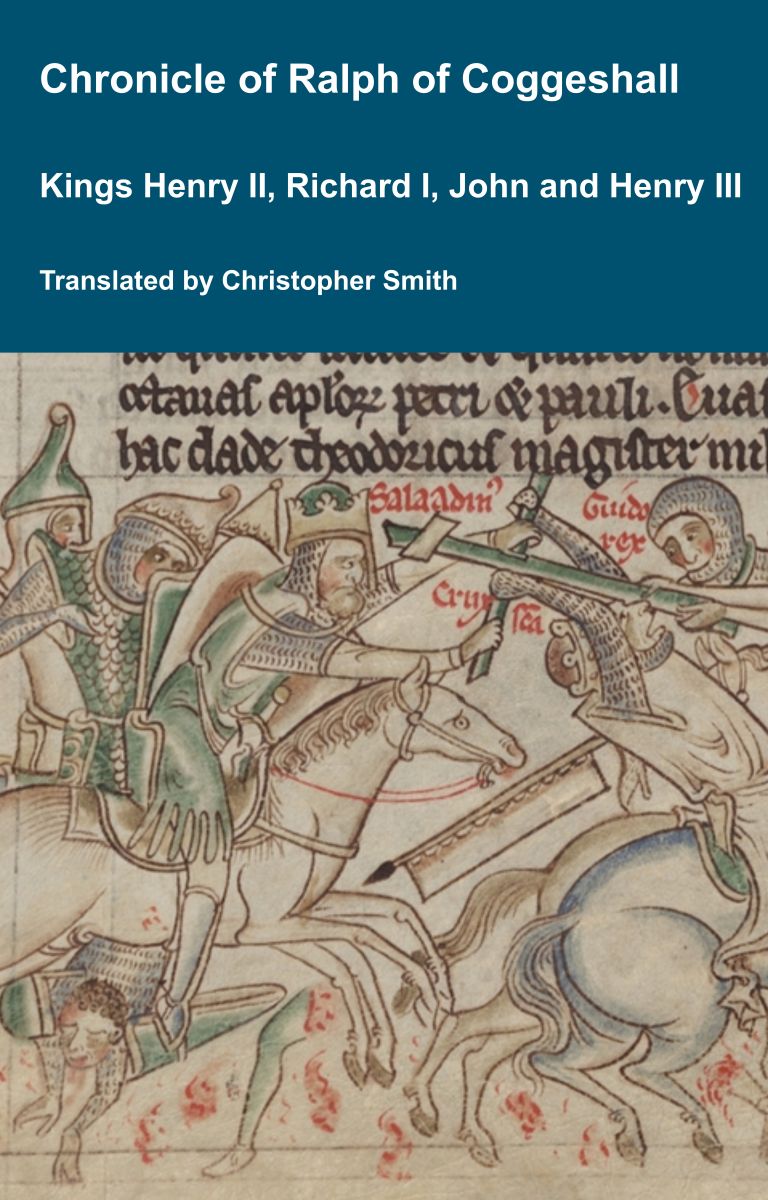
Chronicle of Abbot Ralph of Coggeshall
The Chronicle of Abbot Ralph of Coggeshall (Chronicon Anglicanum) is an indispensable medieval history that brings to life centuries of English and European affairs through the eyes of a learned Cistercian monk. Ralph of Coggeshall, abbot of the Abbey of Coggeshall in Essex in the early 13th century, continued and expanded his community’s chronicle, documenting events from the Norman Conquest of 1066 into the tumultuous reign of King Henry III. Blending eyewitness testimony, careful compilation, and the monastic commitment to record-keeping, this chronicle offers a rare narrative of political intrigue, royal power struggles, and social upheaval in England and beyond. Ralph’s work captures the reigns of pivotal figures such as Richard I and King John, providing invaluable insights into their characters, decisions, and the forces that shaped medieval rule. More than a simple annal, Chronicon Anglicanum conveys the texture of medieval life and governance, making it a rich source for scholars and readers fascinated by English history, monastic authorship, and the shaping of the medieval world.
Available at Amazon in eBook and Paperback format.
On 20th July 1153 Sancho "Wise" King Navarre (age 21) and Sancha Ivrea (age 14) were married. She the daughter of Alfonso VII King Castile VII King Leon (age 48) and Berenguela Barcelona Queen Consort Castile and Leon. He the son of García "Restorer" IV King Navarre and Marguerite Aigle Queen Consort Navarre. They were fourth cousins.
On 20th July 1235 Frederick I King Jerusalem II Holy Roman Emperor (age 40) and Isabella Plantagenet Holy Roman Empress (age 21) were married at Worms Cathedral [Map]. She the daughter of King John of England and Isabella of Angoulême Queen Consort England (age 47). He the son of Henry Hohenstaufen VI Holy Roman Emperor. They were fourth cousin once removed.
On 20th July 1559 Philip "The Prudent" II King Spain (age 32) and Elizabeth Valois Queen Consort Spain (age 14) were married. She by marriage Queen Consort Spain. She the daughter of King Henry II of France (deceased) and Catherine Medici Queen Consort France (age 40). He the son of Charles V Holy Roman Emperor and Isabel Aviz Queen Consort Spain. They were fourth cousins. He a great x 5 grandson of King Edward III of England.
On 20th July 1572 Frederick II King of Denmark (age 38) and Sophie Mecklenburg-Schwerin Queen Consort Denmark (age 14) were married. She by marriage Queen Consort Denmark. The difference in their ages was 23 years. He the son of Christian III King of Denmark and Dorothea of Saxe Lauenburg Queen Consort Denmark and Norway. They were second cousin once removed.
On 20th July 1615 Henry Portman 2nd Baronet (age 18) and Anne Stanley (age 15) were married. She brought £5000 to the marriage. She the daughter of William Stanley 6th Earl of Derby (age 54) and Elizabeth Vere Countess Derby (age 40).
On 20th July 1639, some sources say 11th July 1639, Henry Spencer 1st Earl of Sunderland (age 18) and Dorothy Sidney Countess Sunderland (age 21) were married at Penhurst Rother. She by marriage Baroness Spencer Wormleighton. Her long-term suitor, she was the 'Sacharissa' of his poems, Edmund Waller (age 33) wrote a letter to the bride's sister (age 12) on the occasion of the wedding. She the daughter of Robert Sidney 2nd Earl of Leicester (age 43) and Dorothy Percy Countess Leicester (age 41). They were third cousins.
Madam,
In this common joy at Penshurst, I know none to whom complaints may come less unseasonably than to your ladyship, the loss of a bedfellow being almost equal to that of a mistress; and therefore you ought at least to pardon, if you consent not to the imprecations of, the deserted, which just Heaven no doubt will hear. May my lady Dorothy, if we may yet call her so, suffer as much, and have the like passion for this young lord, whom she has preferred to the rest of mankind, as others have had for her; and may his love, before the year go about, make her taste of the first curse imposed upon womankind, the pains of becoming a mother. May her first born be none of her own sex, nor so like her but that he may resemble her lord as much as herself. May she that always affected silence and retirement have the house filled with the noise and number of her children, and hereafter of her grandchildren; and then may she arrive at that great curse, so much declined by fair ladies, old age; may she live to be very old and yet seem young; be told so by her glass, and have no aches to inform her of the truth; and when she shall appear to be mortal, may her lord not mourn for her, but go hand in hand with her to that place where we are told there is neither marrying nor giving in marriage, that being there divorced we may all have an equal interest in her again! My revenge being immortal, I wish all this may befall her posterity to the world's end and afterwards! To you, madam, I wish all good things, and that this loss may in good time be happily supplied with a more constant bedfellow of the other sex. Madam, I humbly kiss your hands, and beg pardon for this trouble, from
Your ladyship's
most humble servant,
E. Waller.


On 20th July 1654 John Skeffington 2nd Viscount Massereene and Mary Clotworthy were married at St Paul's Church, Covent Garden.
On 20th July 1700 Louis Otto Salm Count Salm Salm (age 25) and Albertine Johannette Nassau Hadamar Countess Salm (age 25) were married. He the son of Charles Theodore Salm Prince Salm (age 55) and Luise Marie Palatinate Simmern Countess Salm.
On 20th July 1730 Charles Calvert 5th Baron Baltimore (age 30) and Mary Janssen Baroness Baltimore were married. She by marriage Baroness Baltimore of Longford in Leinster.
On 20th July 1742 Arthur Devis (age 30) and Elizabeth Faulkener (age 23) were married at Church of St Katharine's by the Tower, Tower Hill [Map]. They had twenty-two children of which only six survived infancy.

On 20th July 1765 George Byng 4th Viscount Torrington (age 24) and Lucy Boyle Viscountess Torrington were married. She the daughter of John Boyle 5th Earl Cork.

On 20th July 1805 Peter Nassau Clavering-Cowper 5th Earl Cowper (age 27) and Emily Lamb Countess Cowper (age 18) were married. She by marriage Countess Cowper. He the son of George Nassau Clavering-Cowper 3rd Earl Cowper and Hannah Anna Gore 3rd Countess Cowper.
Henrici Quinti, Angliæ Regis, Gesta, is a first-hand account of the Agincourt Campaign, and subsequent events to his death in 1422. The author of the first part was a Chaplain in King Henry's retinue who was present from King Henry's departure at Southampton in 1415, at the siege of Harfleur, the battle of Agincourt, and the celebrations on King Henry's return to London. The second part, by another writer, relates the events that took place including the negotiations at Troye, Henry's marriage and his death in 1422.
Available at Amazon in eBook and Paperback format.
On 20th July 1805 Thomas de Grey 2nd Earl de Grey (age 23) and Henrietta Cole Countess de Grey (age 21) were married. She the daughter of William Willoughby Cole 1st Earl Enniskillen and Anne Lowry-Corry Countess Enniskillen.


On 20th July 1841 John Russell 1st Earl Russell (age 48) and Frances Elliot-Murray-Kynynmound Countess Russell (age 25) were married. The difference in their ages was 23 years. She the daughter of Gilbert Elliot-Murray-Kynynmound 2nd Earl Minto (age 58) and Mary Brydone Countess Minto. He the son of John Russell 6th Duke Bedford and Georgiana Elizabeth Byng.


On 20th July 1842 Isaac Lowthian Bell 1st Baronet (age 38) and Margaret Pattinson were married.
On 20th July 1842 Thomas Taylour 3rd Marquess of Headfort (age 19) and Amelia Thompson were married. He the son of Thomas Taylour 2nd Marquess of Headfort (age 55) and Olivia Stevenson.
On 20th July 1848 George Hay-Drummond 12th Earl Kinnoull (age 21) and Emily Blanche Charlotte Somerset Countess Kinnoul (age 20) were married. She the daughter of Henry Somerset 7th Duke Beaufort (age 56) and Emily Frances Smith Duchess Beaufort (age 48). He the son of Thomas Hay-Drummond 11th Earl Kinnoull (age 63) and Louisa Burton Rowley Countess Kinnoul.
On 20th July 1853 Richard Boyle 9th Earl Cork (age 24) and Emily Charlotte Burgh Countess Cork (age 24) were married. She the daughter of Ulick Burgh 1st Marquess Clanricarde (age 50) and Harriet Canning Marchioness Clanricarde (age 49).
On 20th July 1858 Arthur Walsh 2nd Baron Ormathwaite (age 31) and Katherine Somerset Baroness Ormathwaite (age 23) were married. She the daughter of Henry Somerset 7th Duke Beaufort and Emily Frances Smith Duchess Beaufort (age 58). They were fifth cousins.
On 20th July 1867 Robert Grosvenor 2nd Baron Ebury (age 33) and Emilie Beaujolais White were married.
On 20th July 1875 William Eden 4th Baron Auckland (age 46) and Edith Eden Baroness Auckland (age 15) were married. She by marriage Baroness Auckland of West Auckland. The difference in their ages was 30 years. He the son of Bishop Robert Eden 3rd Baron Auckland. They were second cousin once removed. She a great x 5 granddaughter of King Charles II of England Scotland and Ireland.
On 20th July 1882 Walter John Grove 2nd Baronet (age 29) and Agnes Geraldine Lane Fox-Pitt Lady Grove (age 19) were married. She the daughter of Augustus Henry Fox Pitt-Rivers (age 55) and Alice Margaret Stanley (age 54).
Henrici Quinti, Angliæ Regis, Gesta, is a first-hand account of the Agincourt Campaign, and subsequent events to his death in 1422. The author of the first part was a Chaplain in King Henry's retinue who was present from King Henry's departure at Southampton in 1415, at the siege of Harfleur, the battle of Agincourt, and the celebrations on King Henry's return to London. The second part, by another writer, relates the events that took place including the negotiations at Troye, Henry's marriage and his death in 1422.
Available at Amazon in eBook and Paperback format.

On 20th July 1917 Harold Augustus Wernher 3rd Baronet (age 24) and Countess Anastasia Torby (age 24) were married.
On 20th July 1921 Wentworth Henry Canning Beaumont 2nd Viscount Allendale (age 30) and Violet Lucy Emily Seely Viscountess Allendale (age 24) were married at St Martin in the Fields Church [Map].
On 20th July 1931 Gerard Henry Fleetwood Fuller 2nd Baronet (age 25) and Fiona Pratt were married. They were divorced in 1944. She by marriage Lady Fuller of Neston Park in Corsham in Wiltshire. She the daughter of John Pratt 4th Marquess Camden (age 59) and Joan Marion Neville Marchioness Camden (age 54).
On 20th July 1031 Robert "Pious" II King of the Franks (age 59) died at Melun, Seine et Marne. His son Henry (age 23) succeeded I King France: Capet.
On 20th July 1304 Hugh Mortimer 3rd Baron Mortimer (age 49) died from poisoning, possibly by his wife Matilda Baroness Mortimer. He was buried in Worcester Cathedral [Map]. Baron Mortimer Burford aka Richard's Castle abeyant between his daughters Joan Mortimer Baroness Talbot and Alice Mortimer (age 4) and their descendants. His wife sought the protection of Margaret of France Queen Consort England (age 25). After the death of King Edward I of England (age 65) in 1307 she, Matilda Baroness Mortimer died suddenly, probably murdered in revenge for the murder of her husband.
On 20th July 1332 Thomas Randolph 1st Earl of Moray (age 54) died. His son Thomas succeeded 2nd Earl Moray. He would be Earl for twenty days only.
On 20th July 1387 Robert IV Artois Count of Eu (age 31) died from poisoning.
On 20th July 1398 Roger Mortimer 4th Earl March 3rd Earl of Ulster (age 24) died at Kells, County Meath. He was buried at Wigmore Abbey [Map]. His son Edmund (age 6) succeeded Heir to the Throne of England, 5th Earl March, 4th Earl of Ulster, 7th Baron Mortimer of Wigmore.
On 20th July 1454 John II King Castile (age 49) died. His son Henry (age 29) succeeded IV King Castile. Blanche Trastámara II Queen Navarre (age 30) by marriage Queen Consort Castile.
On 20th July 1524 Claude Valois Orléans Queen Consort France (age 24) died.
William of Worcester's Chronicle of England
William of Worcester, born around 1415, and died around 1482 was secretary to John Fastolf, the renowned soldier of the Hundred Years War, during which time he collected documents, letters, and wrote a record of events. Following their return to England in 1440 William was witness to major events. Twice in his chronicle he uses the first person: 1. when writing about the murder of Thomas, 7th Baron Scales, in 1460, he writes '… and I saw him lying naked in the cemetery near the porch of the church of St. Mary Overie in Southwark …' and 2. describing King Edward IV's entry into London in 1461 he writes '… proclaimed that all the people themselves were to recognize and acknowledge Edward as king. I was present and heard this, and immediately went down with them into the city'. William’s Chronicle is rich in detail. It is the source of much information about the Wars of the Roses, including the term 'Diabolical Marriage' to describe the marriage of Queen Elizabeth Woodville’s brother John’s marriage to Katherine, Dowager Duchess of Norfolk, he aged twenty, she sixty-five or more, and the story about a paper crown being placed in mockery on the severed head of Richard, 3rd Duke of York.
Available at Amazon in eBook and Paperback format.
On 20th July 1590 James Stewart 1st Lord Doune (age 61) was assassinated (the first in Scotland by a fiream). His son James (age 25) succeeded 2nd Lord Doune.
On 20th July 1618 Bishop James Montagu (age 50) died. He was buried at Bath Abbey [Map].
On 20th July 1628 Anne Ashley Lady Cooper died.
On 20th July 1649 John Gayer (age 65) died.
On 20th July 1733 Elizabeth Russell Lady Thirkleby (age 69) died.
On 20th July 1736 Lucy Pelham Countess Lincoln died.
On 20th July 1750 Philip Sherard 2nd Earl Harborough (age 70) died. His son Bennet (age 40) succeeded 3rd Earl Harborough, 3rd Viscount Sherard, 5th Baron Sherard of Leitrim, 3rd Baron Sherard of Harborough.
On 20th July 1754 Catherine Tipping Baroness Archer died.
On 20th July 1765 Robert Cann 6th Baronet (age 24) died. Baronet Cann of Compton Green in Gloucestershire extinct.
On 20th July 1786 Thomas Robinson 2nd Baron Grantham (age 47) died. His son Thomas (age 4) succeeded 3rd Baron Grantham.
Chronicle of a Bourgeois of Valenciennes
Récits d’un bourgeois de Valenciennes aka The Chronicle of a Bourgeois of Valenciennes is a vivid 14th-century vernacular chronicle written by an anonymous urban chronicler from Valenciennes in the County of Hainaut. It survives in a manuscript that describes local and regional history from about 1253 to 1366, blending chronology, narrative episodes, and eyewitness-style accounts of political, military, and social events in medieval France, Flanders, and the Low Countries. The work begins with a chronological framework of events affecting Valenciennes and its region under rulers such as King Philip VI of France and the shifting allegiances of local nobility. It includes accounts of conflicts, sieges, diplomatic manoeuvres, and the impact of broader struggles like the Hundred Years’ War on urban life in Hainaut. Written from the perspective of a burgher (bourgeois) rather than a monastery or royal court, the chronicle offers a rare lay viewpoint on high politics and warfare, reflecting how merchants, townspeople, and civic institutions experienced the turbulence of the 13th and 14th centuries. Its narrative style combines straightforward reporting of events with moral and civic observations, making it a valuable source for readers interested in medieval urban society, regional politics, and the lived experience of war and governance in pre-modern Europe.
Available at Amazon in eBook and Paperback format.
On 20th July 1807 Archibald Edmonstone 1st Baronet (age 89) died. His son Charles (age 43) succeeded 2nd Baronet Edmonstone of Duntreath in Stirlingshire.
On 20th July 1828 George Pitt 2nd Baron Rivers (age 76) died in Grosvenor Place, Belgravia. His nephew Horace (age 50) succeeded 3rd Baron Rivers of Sudeley Castle in Gloucestershire. Baron Rivers of Stratfield Saye in Hampshire extinct.
On 20th July 1833 Other Archer Windsor 6th Earl Plymouth (age 44) died aboard his yacht at Deptford, Kent [Map]. His uncle Andrew (age 69) succeeded 7th Earl Plymouth. Baron Windsor of Stanwell in Buckinghamshire abeyant between his daughters Maria Windsor Marchioness Downshire (age 43) and Harriet Windsor (age 35).

On 20th July 1864 Mary Sackville Countess Plymouth Amherst (age 71) died.
On 20th July 1867 Charles Miles Lambert Monck 6th Baronet (age 88) died. His grandson Arthur (age 29) succeeded 7th Baronet Monck of Belsay Castle in Northumberland.
On 20th July 1873 Richard Bethell 1st Baron Westbury (age 73) died. His son Richard (age 43) succeeded 2nd Baron Westbury of Westbury in Wiltshire.
On 20th July 1877 Thomas Neville Abdy 1st Baronet (age 66) died. His son William (age 33) succeeded 2nd Baronet Abdy of Albyns in Essex.
On 20th July 1900 William Charles Wynn 4th Baron Newborough (age 26) died.
On 20th July 1902 Charles Shelley 5th Baronet (age 64) died. His son John (age 30) succeeded 6th Baronet Shelley of Castle Goring in Sussex.
On 20th July 1925 Violet Franklin Lady de Trafford died.
On 20th July 1944 Thomas Fermor-Hesketh 1st Baron Hesketh (age 62) died. His son Frederick (age 28) succeeded 2nd Baron Hesketh of Hesketh Lancashire, 9th Baronet Fermor-Hesketh of Rufford in Lancashire.
Henrici Quinti, Angliæ Regis, Gesta, is a first-hand account of the Agincourt Campaign, and subsequent events to his death in 1422. The author of the first part was a Chaplain in King Henry's retinue who was present from King Henry's departure at Southampton in 1415, at the siege of Harfleur, the battle of Agincourt, and the celebrations on King Henry's return to London. The second part, by another writer, relates the events that took place including the negotiations at Troye, Henry's marriage and his death in 1422.
Available at Amazon in eBook and Paperback format.
On 20th July 1947 Sylvia Storey Countess Poulett (age 57) died.
On 20th July 1956 Algernon Skeffington 12th Viscount Massereene, 5th Viscount Ferrard (age 82) died. His son John (age 41) succeeded 13th Viscount Massereene, 6th Viscount Ferrard, 12th Baron Lough Neagh, 6th Baron Oriel, 6th Baron Oriel of Ferrand in Louth.
On 20th July 1968 Ralph Alured Newman 5th Baronet (age 66) died. His son Geoffrey (age 21) succeeded 6th Baronet Newman of Stokeley and Mamhead in Devon.
On 20th July 1974 Geraldine Bryde Dinah Tennant Lady Colquhoun (age 85) died.
On 20th July 2005 Phillipa Victoria Hunloke Viscountess Astor (age 74) died.
On 20th July 2011 Lucian Freud (age 88) died.