

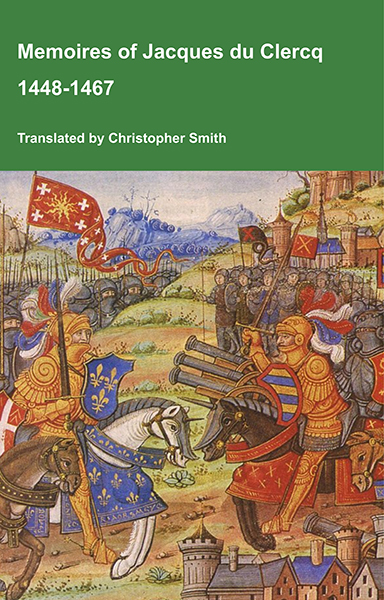
This is a translation of the 'Memoires of Jacques du Clercq', published in 1823 in two volumes, edited by Frederic, Baron de Reissenberg. In his introduction Reissenberg writes: 'Jacques du Clercq tells us that he was born in 1424, and that he was a licentiate in law and a counsellor to Philip the Good, Duke of Burgundy, in the castellany of Douai, Lille, and Orchies. It appears that he established his residence at Arras. In 1446, he married the daughter of Baldwin de la Lacherie, a gentleman who lived in Lille. We read in the fifth book of his Memoirs that his father, also named Jacques du Clercq, had married a lady of the Le Camelin family, from Compiègne. His ancestors, always attached to the counts of Flanders, had constantly served them, whether in their councils or in their armies.' The Memoires cover a period of nineteen years beginning in in 1448, ending in in 1467. It appears that the author had intended to extend the Memoirs beyond that date; no doubt illness or death prevented him from carrying out this plan. As Reissenberg writes the 'merit of this work lies in the simplicity of its narrative, in its tone of good faith, and in a certain air of frankness which naturally wins the reader’s confidence.' Du Clercq ranges from events of national and international importance, including events of the Wars of the Roses in England, to simple, everyday local events such as marriages, robberies, murders, trials and deaths, including that of his own father in Book 5; one of his last entries.
Available at Amazon in eBook and Paperback format.
20 Nov is in November.
12th November 1272 - Death of King Henry III
1559 Death and Funeral of Frances Brandon
On 20th November 869 Edmund "The Martyr" King East Anglia died.
Anglo-Saxon Chronicle. This year the army rode over Mercia into East-Anglia, and there fixed their winter-quarters at Thetford [Map]. And in the winter King Edmund fought with them; but the Danes gained the victory, and slew the king [20th November 869]; whereupon they overran all that land, and destroyed all the monasteries to which they came. The names of the leaders who slew the king were Hingwar and Hubba. At the same time came they to Medhamsted [Map], burning and breaking, and slaying abbot and monks, and all that they there found. They made such havoc there, that a monastery [Map], which was before full rich, was now reduced to nothing. The same year died Archbishop Ceolnoth; and Ethered, Bishop of Witshire, was chosen Archbishop of Canterbury.
Assers Life of Alfred 870. 33. The Danes triumph.74 That same year Edmund, King of the East Angles, fought most fiercely against that army; but, lamentable to say, the heathen triumphed, for he and most of his men were there slain [20th November 869], while the enemy held the battle-field, and reduced all that region to subjection.
Note 74. From the Chronicle.
The Passion of St Edmund by Abbo of Fleury. X. The saintly man [Edmund "The Martyr" King East Anglia] had but just ended his speech, and the soldier taken his departure from the palace to carry back the answer, when, behold! Inguar met him, and bade him waste no words in declaring the final purport of the king's reply. As the messenger obeyed this behest, the tyrant ordered the crowd of his attendants to form a ring round the place, and to take the king alone prisoner, as showing palpable defiance of the conditions laid down. Then the holy King Eadmund was taken in his palace, as a member of Christ, his weapons thrown aside, and was pinioned and tightly bound with chains, and in his innocence was made to stand before the impious general, like Christ before the governor Pilate, and eager to follow in the footsteps of Him who was sacrificed as a victim for us. And so in chains he was mocked in many ways, and at length, after being savagely beaten, he was brought to a tree in the neighbourhood, tied to it, and for a long while tortured with terrible lashes. But his constancy was unbroken, while without ceasing he called on Christ with broken voice. This roused the fury of his enemies, who, as if practising at a target, pierced his whole body with arrow-spikes, augmenting the severity of his torment by frequent discharges of their weapons, and inflicting wound upon wound, while one javelin made room for another. And thus, all haggled over by the sharp points of their darts, and scarce able to draw breath, he actually bristled with them, like a prickly hedgehog or a thistle fretted with spines, resembling in his agony the illustrious martyr Sebastian. But when it was made apparent to the villainous Inguar that not even by these means could the king be made to yield to the agents of his cruelty, but that he continued to call upon the name of Christ, the Dane commanded the executioner to cut off his head forthwith. The king was by this time almost lifeless, though the warm life-stream still throbbed in his breast, and he was scarcely able to stand erect. In this plight he was hastily wrenched from the blood-stained stem, his ribs laid bare by numberless gashes, as if he had been put to the torture of the rack, or had been torn by savage claws, and was bidden to stretch forth the head which had ever been adorned by the royal diadem. Then, as he stood in all his meekness, like a ram chosen out of the whole flock, and desirous of hastening by a happy exchange this life for eternity, absorbed as he was in the mercies of God, he was refreshed by the vision of the light within, for the satisfaction of which he earnestly yearned in his hour of agony. Thus, while the words of prayer were still on his lips, the executioner, sword in hand, deprived the king of life, striking off his head with a single blow. And so, on the 20th November [869], as an offering to God of sweetest savour, Eadmund, after he had been tried in the fire of suffering, rose with the palm of victory and the crown of righteousness, to enter as king and martyr the assembly of the court of heaven.
On 20th November 996 Richard "Fearless" Normandy I Duke Normandy (age 64) died. His son Richard (age 33) succeeded II Duke Normandy.
History of the Dukes of Normandy by William of Jumieges. Meanwhile, this precious jewel of Christ, adorned with these and similar fragrant flowers in his layman's life, began to be greatly burdened with bodily sickness. And having summoned Count Rodulf1, his brother by the same mother, he sought counsel from him concerning the ordering of the land. But Rodulf, struck with deep grief and for a time rendered speechless, at last, when his breath returned to him, gave this reply to the duke: "Although, sweetest brother and most noble lord, you appear to be weakened in bodily strength, yet while we still rejoice to embrace you in this life, it is yours to determine the state of the whole country." Hearing this, the duke called together all the nobles around him, and set his son Richard before them, commending and appointing him with these words: "Until now, excellent comrades, I have been set as leader of your forces; but now, since God calls me, and my disease grows stronger, I can no longer have your service, since I am about to go the way of all flesh, laying aside the burden of this corruptible life." When these sorrowful words were spoken, the whole household was shaken with groans and tears. At last, when their weeping quieted, they agreed to the duke's will, praising with calm affection the young Richard as their prince, and swearing him fidelity. Then, as the sickness grew heavier, he laid himself down upon his bed, and lifting his eyes upward, while uttering words of prayer, full of days, he breathed forth his spirit2.
His et hujusmodi boni odoris flosculis in laicali habitu redolens gemma Christi, ægritudine corporis cœpit vehementer aggravari. Convocatoque Rodulfo comite, suo equidem uterino fratre, consilium exigit de patriæ dispositione. Qui nimio turbatus dolore, ac aliquantisper factus elinguis, novissime resumpto spiritu hæc duci responsa dedit: "Quamvis, dulcissime frater, atque serenissime senior, viribus corporis videaris destitui, tamen, dum in hac vita te gaudemus amplecti, tuum est de totius patric statu disponere." Quo audito dux, suis undique optimatibus ascitis, Richardum filium suum coram exponit, hoc eum eloquio commendans et præficiens: Hactenus, commilitones optimi, vestræ militiæ præfui; nunc vocante Deo, morbo crudescente ingredientem viam universæ carnis ulteA rius habere non potestis, deposito onere vitæ corruptibilis" His ab eo lugubre prolatis, protinus tota domus concutitur gemitibus et lacrymis. Tandem fletibus sopitis, assensum præbent voluntati ducis, Richardum adolescentem, pacta ei fidelitate, æquanimiter collaudantes principem. Dehinc languore ingravescente, lecto prosternitur, et, libratis sursum oculis, inter verba orationis plenus dierum spiritum efflavit.
Note 1. Count Rodulf was the son of a man named Esperling, a rich mill-owner, and Sprota, mother of Duke Richard I. Rodulf died around 1015.
Note 2. Duke Richard I died on 20th November 996. He was succeeded by his son Duke Richard II.
Chronicon ex Chronicis by Florence and John of Worcester. 20th November 1136. William (age 66), archbishop of Canterbury, died at one of his vills1, on the twelfth of the calends of December [20th November], in the fifteenth year of his patriarchate, and was buried at Canterbury.
Note 1. Probably at his "vill of Westminster," where Henry of Huntingdon tells us (Hist. p. 254) that this William Curboil, archbishop of Canterbury, sometimes resided. Huntingdon draws no favourable character of this prelate, either in his History, p. 262, or in the "Letter to Warin," pp. 315 and 326.
Chronicon ex Chronicis by Florence and John of Worcester. 20th November 1138. A most pious monk, named William, belonging to the cell of Eye, having been elected, was ordained abbot of Pershore by Simon, bishop of Worcester, on Sunday, the twelfth of the calends of December (20th November).
On 20th November 1174 Archbishop Edmund Rich was born at St Edmund's Lane, Abingdon.
On 20th November 1230 Nichola de la Haie (age 80) died at Swaton, Lincolnshire. She was buried at St Michael's Church, Swaton.


The Deeds of the Dukes of Normandy
The Gesta Normannorum Ducum [The Deeds of the Dukes of Normandy] is a landmark medieval chronicle tracing the rise and fall of the Norman dynasty from its early roots through the pivotal events surrounding the Norman Conquest of England. Originally penned in Latin by the monk William of Jumièges shortly before 1060 and later expanded at the behest of William the Conqueror, the work chronicles the deeds, politics, battles, and leadership of the Norman dukes, especially William’s own claim to the English throne. The narrative combines earlier historical sources with firsthand information and oral testimony to present an authoritative account of Normandy’s transformation from a Viking settlement into one of medieval Europe’s most powerful realms. William’s history emphasizes the legitimacy, military prowess, and governance of the Norman line, framing their expansion, including the conquest of England, as both divinely sanctioned and noble in purpose. Later chroniclers such as Orderic Vitalis and Robert of Torigni continued the history, extending the coverage into the 12th century, providing broader context on ducal rule and its impact. Today this classic work remains a foundational source for understanding Norman identity, medieval statesmanship, and the historical forces that reshaped England and Western Europe between 800AD and 1100AD.
Available at Amazon in eBook and Paperback format.
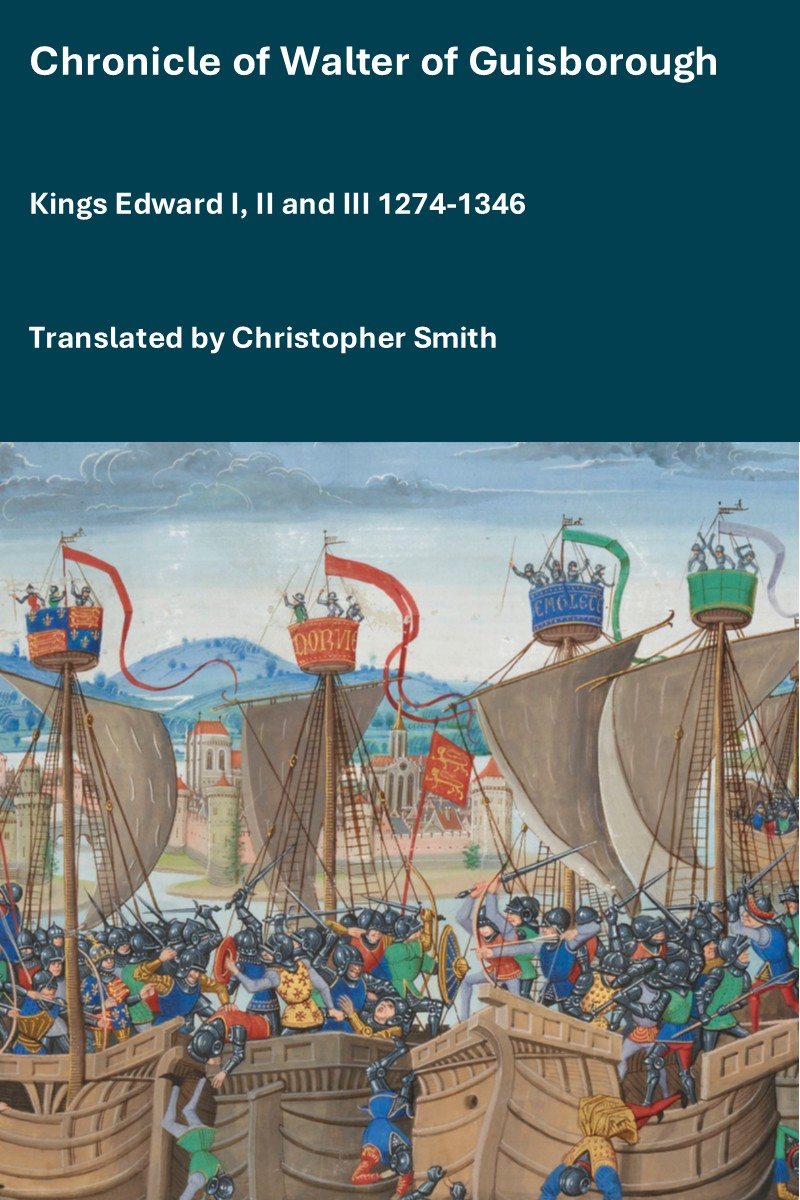 Chronicle of Walter of Guisborough. On the Death of King Henry, and His Commendation.
In the year of our Lord 12731, on the sixteenth day before the Kalends of December, that is, on the feast of Saint Edmund the Archbishop and Confessor [16th November 1272], King Henry fell asleep with his fathers and entered the way of all flesh. A man indeed glorious in the world, but of no less glory in Christ; for he was a religious and devout man, and although simple in the administration of temporal matters, he was nevertheless of great devotion toward God: in pious almsgiving so profuse that, besides abundant distributions to the poor, many churches of the saints felt his generosity, and especially Westminster at London. In that same church of Westminster, which he had decently raised from the foundations in noble design, he was laid to rest with proper human reverence and lies there honorably, in the fifty-seventh year of his reign; and his funeral rites were performed on the feast of Saint Edmund the King and Martyr [20th November 1273] in the same year.
De Morte Regis Henrici, et Commendatione.
Anno Domini MCCLXXIII XVI kalendas Decembris die scilicet sancti Edmundi archiepiscopi et confessoris dormivit rex Henricus cum patribus suis et viam universæ carnis ingressus est. Vir quidem gloriosus in seculo sed non minoris gloriæ in Christo; extitit enim vir religiosus et pius, et licet simplex in administratione temporalium tamen magnæ devotionis in Deum : in piis largitionibus tam profusus ut præter copiosam distributionem pauperum eleemosinas etiam ipsius sentirent multæ ecclesiæ sanctorum et præcipue Westmonasterium Londoniis; in qua quidem basilica Westmonasterii, quam ipse nobili schemate a fundamento decenter erexit, humaniter reconditus, honorifice jacet, anno scilicet regni sui LVII, factæque sunt funeris ipsius exequiæ die sancti Edmundi regis et martyris anno quo supra.
Note 1. King Edward did not return to England till 2nd August 1274, and hence may have arisen the inaccuracy of this date.
Chronicle of the Mayors and Sheriffs of London by Arnold Fitz Thedmar, 1201-1275. On the fourth day after the King's death, namely, on the Feast of Saint Edmund the King, [20th November 1272] which then fell on a Sunday his body, nobly attended, in such manner as befits royalty, was committed to the tomb in the Conventual Church of the Monks at Westminster, before the great altar there. And after he had been buried, the Archbishop of York, who had been celebrating Mass there, the Earl of Gloucester, the Earl of Warenne, the Earl of Hereford, and other Bishops, Barons, and all the nobles there present, made oath that they would keep the peace in the realm, and would with all their strength cause the same to be kept; and that they would keep the kingdom in behalf of Sir Edward, who was then in the Holy Land. The King's Seal also was then broken, in presence of all the people.
On 20th November 1316 John "The Posthumous" I King France died. His uncle Philip (age 23) succeeded V King France: Capet. He also claimed the Kingdom of Navarre although he had no hereditary right to do so since the Kingdom of Navarre was subject to inheritance by the female as well as male line meaning the four year old Joan Capet II Queen Navarre (age 4) was successor by right. The Navarese didn't recognise his claim.
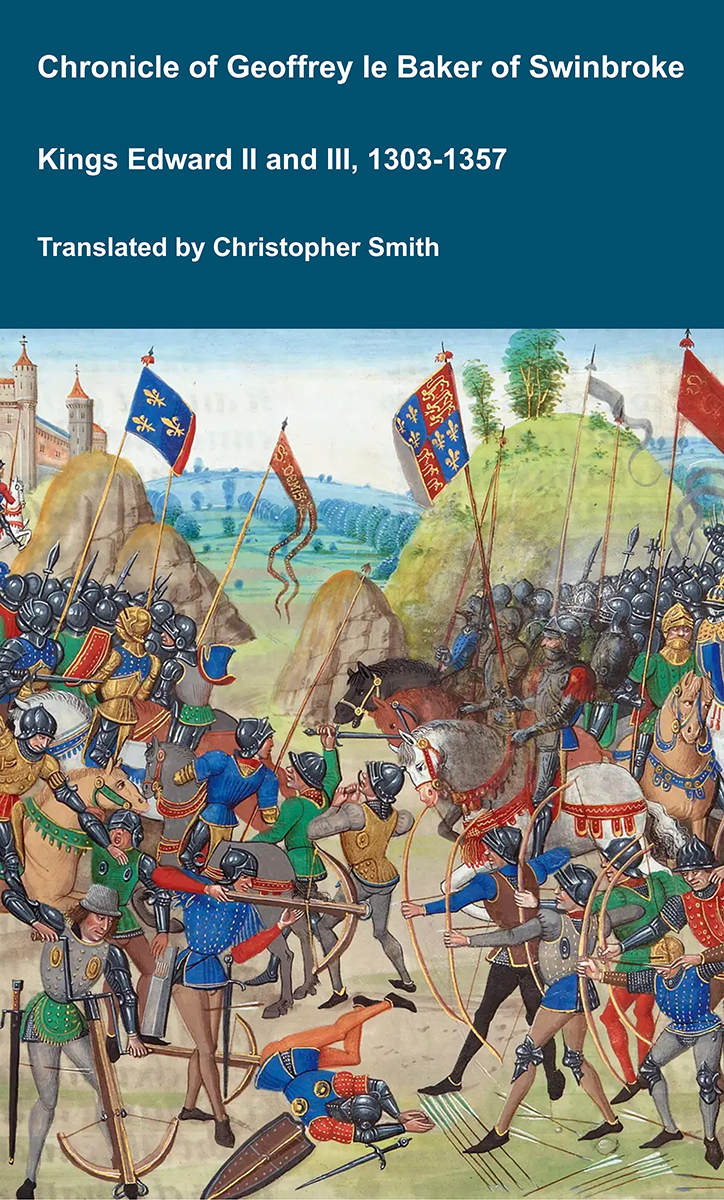 Chronicle of Geoffrey le Baker of Swinbroke [-1360]. On Friday [20th November 1355], having been informed that the French were nearby and had formed themselves into five large battles, our forces advanced about one mile from their lodging and drew themselves up in a suitable field, prepared for battle. Thus, with the army arrayed, someone cried out that a hare had been roused; hearing this, the enemy sent out forty lancers, who, upon seeing the army drawn up in full order and quickly returning with this report, caused all the French to flee in great panic, as was reported by those captured in the pursuit. That day, Bartholomew de Burghersh (age 27),1 John Chandos (age 35), and James Audley (age 37), leading a force of eighty lancers, attacked the rear of the French host, capturing thirty-two knights and squires, among them the Count of Roumania,2 and killing many baggage handlers, destroying their supplies. Later, the prince lodged at the town of Muwos, where four French men-at-arms who had fled into the church were captured by the English; they lost only their horses and arms. On Saturday, in rainy weather, they took a difficult and narrow road to the castle of Oradrie, where the prince spent the night, and the next morning had it burned.
Die Veneris, certificato quod Gallici in acies quinque magnas fuerant divisi de prope existentes, progressi nostri ad spacium unius miliaris de ospicio seipsos in campo apto ordinarunt ad preliandum. Itaque exercitu ordinato, quidam suscitatum leporem exclamarunt; quod audientes inimici emiserunt xl. lanceatos, per quos viso exercitu ordinato reversosque celeriter hec nunciantes, omnes fugerunt cum magno pavore, sicud retulerunt capti ex eiis in persecucione. Illo die Bartholomeus de Burghasche, Iohannes Chandos, et Iacobus Daudeleye, ad summam quater viginti lanceatorum ordinati discooperatores, accedentes ad caudam exercitus Gallicorum, captivarunt triginta duos milites et domicellos, et inter eos dominum comitem de Romenie; item, multos bigarios occiderunt, destruentes eorum victualia. Sero principe ospitato in villa de Muwos, quatuor Gallici armorum, Anglicos fugitivi in ecclesiam illius ville, equos et arma dumtaxat perdiderunt. Sabbato pluvioso carpserunt malum iter et strictum ad castrum de Oradrie, in quo princeps pernoctavit, et mane id combussit.
Note 1. The prince of Wales's letter to the bishop of Winchester (Avesbury 434 The two famous comrades of the Black Prince, sir John Chandos and sir James Audley, were both founders of the Garter. Chandos was mortally wounded in a skirmish near Lussac in Poitou, 31st December 1369.
Note 2. There was a seigneur de Romeny, but no count with that title.
An English Chronicle. 20th November 1459. Thanne was a parlement holden at Couentre, and they that were chosenne knyghtes of the shyres, and other that had interesse in the parlement, were nat dyfferent but chosen a denominacione of thaym that were enemyes to the forseyde lordes so beyng oute of the reame. In the whiche parlement, the sayde duk of York and the iij. erles and other, whos names shalle be rehersed afterward, withoute any answere, as traytours and rebelles to the kyng were atteynt of treson, and theyre goodes, lordshyppys and possessyons escheted in to the kynges hande, and they and theyre heyres dysheryted vn to the ixthe degre. And by the kynges commissione in euery cyte, burghe, and toune cryed opynly and proclamed as for rebelles and traytoures; and theyre tenauntes and there men spoyled of theyre goodes, maymed, bete, and slayne withoute eny pyte; the toune of Ludlow, [folio 198b] longyng thanne to the duk of York, was robbed to the bare walles, and the noble duches of York vnmanly and cruelly was entreted and spoyled.
On 20th November 1480 Eleanor Stewart Duchess Austria (age 47) died.
On 20th November 1518 Marmaduke Constable (age 61) died after swallowing a frog while drinking a glass of water. He was buried at Church of St Oswald, Flamborough. His tomb in Flamborough church is described by a writer in the 'Gentleman's Magazine' of 1753 (p. 456): 'This epitaph is written on a copper plate fixed into a large stone, which is placed upon a large stone coffin or chest in which the body was reposited, and beside it is the upper part of a skeleton in stone; the ribs project greatly and the breast is laid open, in the inner side of which appears what by tradition is held to be a toad at the heart (of which he was supposed to die), but it bears little or no resemblance of a toad.' The brass has now been separated from the coin and skeleton, and their connection with each other forgotten (Prickett, Bridlinqton, p. 187).
Here lieth Marmaduke Constable of Flaymburght, knight,
Who made adventure into France for the right of the same;
Passed over with King Edward the Fourth, that noble knight,
And also with noble King Harry the Seventh of that name.
He was also at Barvik at the winning of the same
And by King Edward chosen captain then first of any on,
And ruled and governed there his time without
But for all that, as ye see, he lieth under this
At Brankiston Field [Flodden], where the King of Scots was slain
He then being of the age of threescore and ten,
With the good Duke of Norfolk that journey he hath ta'en
And couragely advanced himself among other there and then,
The king being in France with great number of English men.
He, nothing heeding his age there, but Jeoparde him as one
With his sons, brethren, servants, and kinsmen,
But now, as ye see, he lieth under this stone.
Wriothesley's Chronicle [1508-1562]. 20th November 1531. This yeare, in November, on St. Edmonds day,a there was oneb convict of heresie which was some tyme a moncke in St. Edmondsburie, and was disgraded in Powles by the Bishop of London (age 56) of the orders of priesthoode, and so delivered to the Sherifies of London; and the 4th day of December followinge he was burnt in Smythfeilde [Map].
Note a. 20th November.
Note b. Bayfield.
On 20th November 1539 Nicholas Tempest of Holmeside (age 53) was hanged for his part in the Pilgrimage of Grace.
Henry Machyn's Diary. 20th November 1558. The xx day of November ded the bysshope of Rochestur (age 51) and parsun of sant Mangnus on London bryge [Map].
oN 20th November 1559 or 21st November 1559 Frances Brandon Duchess of Suffolk (age 42) died at Richmond, Surrey [Map].
On 20th November 1616 Gervase Helwys (age 55) was hanged at Tower Hill [Map]. He gave a speech to the crowd...
... many others of seuerall dispositions. All you beeing thus assembled to see mee finish my dayes, the number of which is sum'd up, for the very minutes of my life may now be reckoned. Your expectation is to have mee say something, to give satisfaction to the World, and I will doe it so farre as I can, albeit in that speech of mine, I shall (as it was spoken unto me the last night) but chatter like a Crow. But whatsoeuer I deliuer, I beseech you to take from a wounded bosome, for my purpose is to rip up my very heart, and to leaue nothing there which may proue any clogge to my Conscience. Hither am I come to performe a worke which of all others is to Man the most easie and yet to Flesh and Blood is the hardest, and that is, To die. To hide therefore any thing, for any worldly respect, were to leaue a blot upon my owne Soule, which I trust shall be presented (through the mercies of my Maker, and merits of my Sauiour) acceptable before GODS high Tribunall. And first I will labour to satisfie some, who before my apprehension were well conceipted of mee, but since my Arraignment, as I vnderstand, carryed of mee but hard opinions, for that at the Barre I stood stiffly upon the Justice of my Innocence; and this they impute as a great fault, beeing afterwards that I was found guilty of the Crime. To which I answer, that I did it ignorantly: Nay I was so farre from thinking my selfe foule in the Fact, that untill these two Gentlemen, (Doctor Felton and Doctor Whiting, the Physitions for my Soule) told mee how deepely I had imbrewed my hands in the blood of that gentleman, making mee by GODS law as guilty in the Concealing, as if I had beene a personall Actor in it: till then I say, I held my selfe so ignorant of the deede, and my Conscience so cleere, that I did never aske GOD forgivenesse, nor once repent mee of the Fact, such was my blindnesse. So that it was not onely an error, or rather a horrible sinne, in mee to consent, but a worse, to deny it, so Bloody, so Treacherous, so Foule, so Filthy a Fact as that was; for which I must confesse the King, and the State have dealt honourably, roundly, and justly, with mee, in condemning mee unto this death. And thus have I laboured and done my best to cleere this point, being willing by all good meanes to reduce your first opinions of mee; that as formerly your conceipted well of mee, so you would now with a charitable affection performe the last duty of your Christian loues towards mee, praying to GOD, both with me, and for mee; to the intent that this Cup, whereof I am to drinke, may not be greiuous unto mee, but that it may be a ioyfull conueiance to a better and more blessed comfort.
Some perhaps will thinke it to be a Rigor of the State, or aggravation of my iudgement, that I should die in this place, but this doe I take as an honor unto me, & herein doe I acknowledge my selfe to stand much bound to the State, in that I have this favour vouchsafed me to suffer Death in sight of my Charge, even where I had sinned, on the Tower-hill [Map], rather than in the place of common Execution [Map], where every base Malefactor dyeth.
Many doe I see here whom I know well, and of whom I am likewise knowne: and now am I a Spectacle for them to be looked on, whom in former times (and in all mens accounts) they held never likely to come to such an end. But herein he hold the justice of God, who is so oppos'd against sinne, because that if we forget to seeke him whilst we may, he will finde us out when we would not be found of him.
It is expected I should say something of the fact which I have committed: And hither am I come resolued to cleare my conscience (before I depart this world) of all matters which I either knowe, or can now remember. And so much I have already delivered in writing to my Lo. Chiefe Justice (age 64) and to prove that which I wrote is true, I yesterday confirmed it with the receiuing of the blessed Sacrament, wishing unto you all as much comfort by those holy Mysteries, as I tooke by them: and I doe heere (though not with such a bloud) yet with mine own bloud, seale that which I have written. For my selfe, I will hide nothing to make my fault seeme lesse, but will rip open this very heart of mine, and confesse before God myne owne uncleannesse. I have sinned exceedingly against thee O my maker, and in this am I most faulty, that I did not reveale to the King (age 50), so soone as I my selfe had knowledge of the busines. But (alas) feare to loose these worldly pleasures, and the loue to promotion, made me forget my duty to my Soueraigne, and not to regard my God, who is a swift auenger of blood: and would to heaven I had trusted to his providence, and set the thinges of this world at nought, for heavens sake, and a good conscience. You see, Gentlemen, promotion cannot rescue us from the justice of God, which alwaies pursues after sinne: And therefore I exhort you not to trust in men (how great soeuer) for they cannot hide themselues when God is angry; neither can they protect you from shame, when God will consume you: he that sitteth in heaven, will deride and scorne their foolish Inventions. As for me, I will not spare to lay open my owne shame: Thinke you I care for the reputation of this world? No, I weigh it not. This my soule shall receiue more comfort from God in my upright dealing.
My sinne, in this foule fact, was great, for upon me lay all the blood, shed, and to be shed: I have made many children fatherles, many wives husbandles, many parents childelesse: and I my selfe leave a comfortlesse wife and eight children behinde me for it too: for if I had revealed it when I might, I had freed much blood from being spilt, in so much as I could wish (Gods Justice and charity reserved) I might hang in chaines, till I rotte away by peecemeale: nor cared I what tortures my body were put unto, so I might expaite or free the bloud of so many, (some in one place, and some in another) which is both like to bee shed, and is already shed, and the Lord knowes when it will have an end. Concerning my selfe, I will aggravate the crime, by speaking of every circumstance I can remember. And now it comes into my mind, what trust that gentleman put into me: hee reputed me to bee most faithfull unto him; (Oh the wildnesse of my heart!) I proved unfaithfull, and was his deadly deceitfull friend. And here (Gentlemen) I exhort you all that you would take notice of this, ever to bee faithfull to those who put you in trust. Sir Thomas O. trusted me, and I was unfaithfull and treacherous to him, in drawing tickets for him to his disadvantage. I promised him secrecy, yet betrayed him, onely to satisfy greatnesse: But God, who sees the secret thoughts of mans heart, will disclose all unuist actions at last: nay, I am perswaded that whosoeuer they bee that commit sinne in their child-hood, at one time or other it will be revealed. In this place it commeth to my mind, that in my yonger dayes (as wel beyond the Seas as here) I was much addicted to that idle veyne of Gaming, I was bewitched with it indeed: And I played not for little for final sums neither, but for Great-ones, yet ever haunted with ill lucke: And upon a time, being much displeased at my losse, I sayd, not in a carelesse maner, Would I might be hanged; But seriously, and advisedly (betweene God and my selfe) clapping my hands upon my breast, I spake thus, If ever I play again, then let me be hangd. Now gentlemen here you may behold the justice of God, paying mee my wish and imprecation home. Bee carefull therefore I exhort you, that you vow nothing but that unto which you will give all diligence to performe: for the powerful God, before whom you make such vowes, will otherwise bee auegned: Jn this place Doctor VVhiting putting him in mind to satisfie the World touching his Religion thus he went on. THe matter you speake to mee of, faith hee, is well thought upon: for I heare that abroad hath beene some murmuring and questions made about mee for my Religion; Some giving out that I was infected with Anabaptisme: A fond, ridiculous, foolish and phantasticall opinion, which I never affected but rather despised. Many may thinke that the manner of my death doth much discourage mee, that I should dye in a halter: I would have you all to thinke that I scorne all such worldly thoughts: I care not for it, I value not any earthly shame at all, so as may have honour and glory anon in Heaven: and I make no doubt, but I shall sodainely be more happie then you all, and that I shall see GOD face to face: and if there be any point of innocency in mee at all, I doe utterly cast it from mee, and I doe commit it wholly to GOD.
And for any matter of Glory, I doe with the Saints of GOD expect it through the merits of Christ, at the Resurrection: yea it is my glorie to die thus. I might have died in my Bedde, or shooting the Bridge or else have fallen downe sodainly, in which death I should have wanted this space to repent, being the sweet comfort and assured hope of Gods favour which of his mercy he hath vouchsafed mee; So that it swalloweth up all feare of death or reproch of the World: wishing unto all you (Gentlemen) who now behold mee, that wheresoeuer you shall dye, (either in your Beddes or else-where howsoewer) you may feele such comfort and resolution as God in his mercy hath bestowed uppon mee and my wounded Soule for this and the rest of my grieuous Sinnes. But mee thinkes I heare some of you conjecture and say, that I expresse no great Arguments or signes of sorrow: You think my heart should rather dissolue and melt into teares, then to appeare so insensible of feare as I may seeme: but I must tell you, teares were never common in mee: I may therefore feare though I do not weepe. I have been couragious both beyond the Seas and heere in mine owne Country: but (Gentlemen) that was when there was no perill before mee. But now the stroke of death is upon mee. It affrights mee, and there is cause to feare: yet notwithstanding, my heart seemeth unto you to be rather of stone than of flesh. But I would have you understand, that this boldnes doth not proceed from any manly fortitude, for I am a man, fraile as you are, and dare as little look death in the face as any other: ther terors of death doe as much trouble my humane sense, as of any man whatsoeuer: but that which swalloweth up all manner of feare in me, & maketh me to glory and to reioyce in, is, the full assurance which I conceiue of the vnspeakable love of God to those who are his, of which number I perswade my selfe to bee one, and that I shall presently enioy it.
I confesse I have sinned exceedingly, against thee (oh God) many wayes, in prophaning thy holy Sabaoths, in taking thy glorious name in vaine, in my concupiscence in turning all thy graces into wantonnes, in my Riotous wasting so many of thy good Creatures, as would have belieued many poore people, whose prayers I might have had this day. I have sinned against thee in my Child-hood: but Childrens sinnes are childishly performed: but I confirmed them in my manhood, there was my sinne. I am perswaded, there is no sinne, that a man committeth in his life, knowing it to be a sin, and not repenting of it, but the Lord will iudge it. I admonish you therefore that are heere assembled, to take good notice of your sinnes, and let none escape you vnrepented. And yet when you have done the best you can, there will lie buried some one sinne or other sufficent to condemne you. O Lord clense mee from my secret sinnes, which are in me so rife. I abused the tender education of my Parents. You perhaps that knew mee will say no; I liued in an honest forme, and was not bad in my life. But I know best my selfe what I was: & if I who was so esteemed of amongst Men, shall scarcely be saued, what will become of those, whom you point at for notorious lievers? The last night God put into my mind the remembrance of one sinne of mine, which heere I will lay open, that others may take heed. I tooke a vaine pride in my pen, and some of my friendes would tell me I had some induments and speciall gift that way: (though I say nor so my selfe) but mark the iudgement of God in this; that Pen which I was so proud of, hatch struck mee dead, and like Absolons hayre hath hanged me: for there hath dropt a word or two from my Pen, in a letter of mine, which upon my Saluation I am not able to answer, or to give any good accompt of. At my Arraignment I pleaded hard for life, & protested my Innocency, but when my owne Pen came against mee, I was forthwith not able to speake anything for my selfe: for I stood as one amazed, or that had no Tongue. See (Gentlemen) the just Iudgement of GOD, who made that thing of which I was most proud, to be my bane: take notice how strangely sinne is punished, and learne every-one to striue against it.
I have heard the word of GOD, and often read it (but without vse) for I must tell you these two worthy, Gentlemen (to whom I am so much bounden, God reward them for their loue) even they begat mee very lately, for I am not ashamed to confesse that I was to be begotten unto Christ within these three daies: yea I have often prayed against sinne, and made many vowes to forsake it, but uppon the next occasion, my foule heart hath beene ready to runne with the wicked. Had I learned but this one lesson in the 119. Psalme, (Depart from mee ye wicked, I will keepe the Commandements of my God &c.) I had beene likely to have enioyed many dayes heere on eath: whereas now you all see mee ready to bee cut short by reason of my sinne. But (O LORD) albeit thou slayest mee, yet will I put my trust in thee: let the LORD doe to me what hee will, I will dye upon this hand (of trusting in him) if I faile many a soule hath miss'd, but I have sure hope of mercy in him; hee hath sufficed and succoured mee, I am sure, euer since the sentence of death hath passed uppon mee: such comfort flowing from the Godly indeauors of these Gentlemen (the Diuines) that neither the Reproach of this Death, nor the Torment of it hath any whit discouraged me; nay, let me tell you, the last night when I heard the time was appoynted, and saw the warrant in Master Sheriffs hand for my death, it no whit daunted me: But what put this courage into me? onely the hope which I had in GODS mercies. This Hope was a Seede, and this Seed must come from a Roote; I looked upon my selfe, and there was rather cause despaire; and just cause, that I should not approach GODS presence. Thus then I disputed with GOD: This Hope being a Seede must have a Roote, and this Roote is not any thing in Man, no, it is Praescientia (thy fore-knowledge,) O God, who hast elected me from eternity. I will tell you, I receiued more comfort this morning, comming along the streetes, than euer I did in all my life. I saw much people gathered together, all the way as I came, to see mee brought to this shamefull end: who with their hearty prayers and well wishings gladded and comforted my very soule: insomuch as I could wish that I had come from Westminster hither. I protest unto you, I thinke I could never have dyed so happily in my bed. But you will say, these are but speechees, and that I being so neere death, my heart cannot be so free, as I seeme in my speech: I confesse, there are in my brest frailties, which doe terrifie, and will still be busie with me, but I beseech you when I am at the stroake of death, that you would praie to GOD (with mee) that neither Sathans power, nor my weakenesse, may hinder my confidence. And I beseech God that amongst all who this daie heare mee, some may profit by my end: If I get but one Soule, I shall have much comfort in that; for that one soule my beget another, and that other another. I have held you too long, but I will draw to an end: intreating you all to ioyne in praier to God for me.
The summe of his Prayer.
O Lord God omnipotent, who sittest in Heaven, and seest all things which are done on earth: to whom are knowne all occasions of men; And who dost deride and laugh to scorne their Foolish inuentions: thou (Lord) who art powerfull to Saue at an instant, bow downe the heavens, and behold Mee (wretched sinner!) vnworthy to looke up, or lift up my hands unto thee. Remember not (O Lord) the sinnes which I have committed. Driue away this Mist which is before mee; and breake those thick Clowdes which my sinnes have made, and may let my request to come into thy presence. Strengthen mee in the middest of Death, in the assurance of thy.
Mercies; and give mee a ioyfull Passage into thy Heavenly Rest, now and for euer. Amen.
After hee had thus Prayed, hee tooke his leaue of all, with these words.
Gentlemen, I shall see your faces now no more: and pulling down his Cap in his eyes, said some privat prayer; in which time the Doctors prayed, and called to him, that hee would remember his assurance, and not be dismaied at the Cup, that hee was not drinke of: Hee answered, I will drinke it up, and never looke what is in it. And after a little time more spent in privat prayer, hee said, Lord receaue my Soule: And so yeelded up the Ghost. His Meditation and Vow. not long before his Death. When I considered Herods State, who though hee heard John Baptist gladly, yet was he intangled with Herodias: and how Agrippa liked so well of Paul as hee was perswaded almost to become a Christian, and how young mans will was good to follow Chirst yet was there one thing wanting: meethought the state of sinfull man was not vnlike. For also how the Angler though hauing caught a Fish but by the chaps accounts it as his owne: the Bird taken but by the heele is a prey unto the Fowler: the Iayler also holds his prisoner by one ioint as safe, as cast in iron chaines: then did I think what do these motions good, if not effected to the full? what though not notoriously evill? one sinne sufficent to condemn: and is he guilty of all that guilty is of one? then said I vnto the Lord I will freely cleanse my waies and wash my hands in innocency: I will take heed that I offend not in my tongue. Lord let my thoughts be such as I may al-waies say, try and examine mee if there be any unrighteousnes in mee. Sir Geruase Ellowis.


Diary of Anne Clifford. 20th November 1616. Upon the 20th I spent most of the day in playing at Tables. All this time since my Lord (age 27) went away I wore my black taffety night gown and a yellow taffety waistcoat and used to rise betimes in the morning and walk upon the leads and afterwards to hear reading.
Diary of Anne Clifford. 20th November 1617. The 20th I came down to Knole leaving my Lord (age 28) behind me.
Diary of Anne Clifford. 20th November 1619. The 20th my Lord and Lady Suffolk1 were sent to the Tower.
Note 1. Thomas Howard 1st Earl Suffolk (age 58) and Catherine Knyvet Countess Suffolk (age 55).


Autobiography Simon D'Ewes. 20th November 1621. There was much good hoped in the public by the meeting again of the two Houses of Parliament upon Tuesday, (which day of the week the King held propitious to himself,) the 20th day of this instant November, especially after it was declared in the Upper House the day following, by the new Lord Keeper and Sir Lionel Cranfield (age 46), Knt., - Lord Cranfield, (who, but a few years before, had himself been a shopkeeper in the city of London, as his father had been before him,) lately made Lord Treasurer, that the King purposed to aid his son-in-law for the recovery of the Palatinate.


On 20th November 1629 Ernest Augustus Hanover Elector Brunswick-Lüneburg was born to George Hanover Duke Brunswick-Lüneburg (age 47) and Anne Eleonore Hesse Darmstadt Duchess Brunswick-Lüneburg (age 28). He married 30th September 1658 Electress Sophia Palatinate Simmern, daughter of Frederick Palatinate Simmern V Elector Palatine Rhine and Princess Elizabeth Stewart Queen Bohemia, and had issue.
On 20th November 1630 Anna Marie Eleonore Hanover was born to George Hanover Duke Brunswick-Lüneburg (age 48) and Anne Eleonore Hesse Darmstadt Duchess Brunswick-Lüneburg (age 29).
Samuel Pepys' Diary. 20th November 1660. From thence, after a pot of ale with Mr. Shepley at a house hard by, I went by link home, calling a little by the way at my father's (age 59) and my uncle Fenner's, where all pretty well, and so home, where I found the house in a washing pickle, and my wife in a very joyful condition when I told her that she is to see the Queen (age 50) next Thursday, which puts me in mind to say that this morning I found my Lord in bed late, he having been with the King, Queen, and Princess, at the Cockpit [Map]1 all night, where. General Monk (age 51) treated them; and after supper a play, where the King did put a great affront upon Singleton's' musique, he bidding them stop and bade the French musique play, which, my Lord says, do much outdo all ours. But while my Lord was rising, I went to Mr. Fox's (age 33), and there did leave the gilt tankard for Mrs. Fox, and then to the counting-house to him, who hath invited me and my wife to dine with him on Thursday next, and so to see the Queen and Princesses.
Note 1. The Cockpit [Map] at Whitehall. The plays at the Cockpit [Map] in Drury Lane were acted in the afternoon.



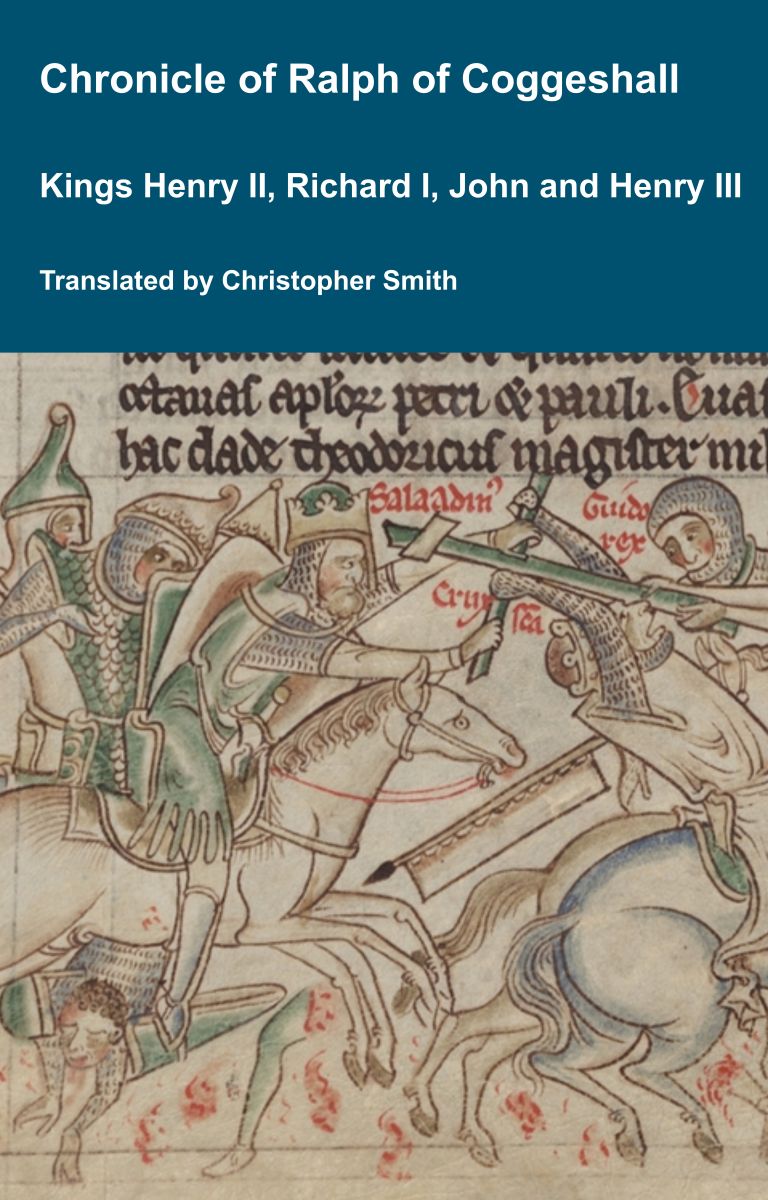
Chronicle of Abbot Ralph of Coggeshall
The Chronicle of Abbot Ralph of Coggeshall (Chronicon Anglicanum) is an indispensable medieval history that brings to life centuries of English and European affairs through the eyes of a learned Cistercian monk. Ralph of Coggeshall, abbot of the Abbey of Coggeshall in Essex in the early 13th century, continued and expanded his community’s chronicle, documenting events from the Norman Conquest of 1066 into the tumultuous reign of King Henry III. Blending eyewitness testimony, careful compilation, and the monastic commitment to record-keeping, this chronicle offers a rare narrative of political intrigue, royal power struggles, and social upheaval in England and beyond. Ralph’s work captures the reigns of pivotal figures such as Richard I and King John, providing invaluable insights into their characters, decisions, and the forces that shaped medieval rule. More than a simple annal, Chronicon Anglicanum conveys the texture of medieval life and governance, making it a rich source for scholars and readers fascinated by English history, monastic authorship, and the shaping of the medieval world.
Available at Amazon in eBook and Paperback format.
Samuel Pepys' Diary. 20th November 1661. To Westminster Hall [Map] by water in the morning, where I saw the King (age 31) going in his barge to the Parliament House; this being the first day of their meeting again. And the Bishops, I hear, do take their places in the Lords House this day. I walked long in the Hall, but hear nothing of news, but what Ned Pickering (age 43) tells me, which I am troubled at, that Sir J. Minnes (age 62) should send word to the King, that if he did not remove all my Lord Sandwich's (age 36) captains out of this fleet, he believed the King would not be master of the fleet at its coming again: and so do endeavour to bring disgrace upon my Lord. But I hope all that will not do, for the King loves him.


John Evelyn's Diary. 20th November 1661. At the Royal Society, Sir William Petty (age 38) proposed divers things for the improvement of shipping; a versatile keel that should be on hinges and concerning sheathing ships with thin lead.
Samuel Pepys' Diary. 20th November 1663. Up, and as soon as I could to my Lord Sandwich's (age 38) lodgings, but he was gone out before, and so I am defeated of my expectation of being eased one way or other in the business of my Lord. But I went up to Mr. Howe, who I saw this day the first time in a periwigg, which becomes him very well, and discoursed with him. He tells me that my Lord is of a sudden much changed, and he do believe that he do take my letter well. However, we do both bless God that it hath so good an effect upon him.
Samuel Pepys' Diary. 20th November 1664. They gone, in the evening comes Mr. Andrews and sings with us, and he gone, I to Sir W. Batten's (age 63), where Sir J. Minnes (age 65) and he and I to talk about our letter to my Lord Treasurer (age 57), where his folly and simple confidence so great in a report so ridiculous that he hath drawn up to present to my Lord, nothing of it being true, that I was ashamed, and did roundly and in many words for an houre together talk boldly to him, which pleased Sir W. Batten and my Lady, but I was in the right, and was the willinger to do so before them, that they might see that I am somebody, and shall serve him so in his way another time.
Samuel Pepys' Diary. 20th November 1666. After church home, where I met Mr. Gregory, who I did then agree with to come to teach my wife to play on the Viall, and he being an able and sober man, I am mightily glad of it. He had dined, therefore went away, and I to dinner, and after dinner by coach to Barkeshire-house, and there did get a very great meeting; the Duke of York (age 33) being there, and much business done, though not in proportion to the greatness of the business, and my Chancellor (age 57) sleeping and snoring the greater part of the time. Among other things I declared the state of our credit as to tallys to raise money by, and there was an order for payment of £5000 to Mr. Gawden, out of which I hope to get something against Christmas.


Samuel Pepys' Diary. 20th November 1666. He gone, and Sheply, I to the office a little, and then to church, it being thanksgiving-day for the cessation of the plague; but, Lord! how the towne do say that it is hastened before the plague is quite over, there dying some people still1, but only to get ground for plays to be publickly acted, which the Bishops would not suffer till the plague was over; and one would thinke so, by the suddenness of the notice given of the day, which was last Sunday, and the little ceremony. The sermon being dull of Mr. Minnes, and people with great indifferency come to hear him.
Note 1. According to the Bills of Mortality seven persons died in London of the plague during the week November 20th to 27th; and for some weeks after deaths continued from this cause.
John Evelyn's Diary. 20th November 1685. The Parliament was adjourn'd to February, severall both of Lords and Commons excepting against some passage of his Majesty's (age 52) speech relating to the Test, and continuance of Popish officers in command. This was a greate surprize in a Parliament which people believ'd would have complied in all things.


On 20th November 1698 Henriette Albertine Saxe Coburg Saalfeld was born to John Ernest Saxe Coburg Saalfeld IV Duke Saxe Coburg Saalfeld (age 40) and Charlotte Johanna Waldeck Wildungen Duchess Saxe Coburg Saalfeld at Saalfield.
On 20th November 1713 Elizabeth Harley (age 24) died from childbirth at at Wimbledon, Surrey, having given birth to Thomas Osborne 4th Duke Leeds two weeks before.

After 20th November 1734. Church of St Mary Magdalene, Eardisley [Map]. Monument to Jane L'Estrange (deceased) with the unusual inscription "Bubbles Broken".
Jane L'Estrange: Around 1666 she was born to Nicholas L'Estrange 3rd Baronet and Mary Coke. On or after 1st June 1696, the date of the licence, William Barnesley and she were married. On 20th November 1734 Jane L'Estrange died. She was buried at the Church of St Mary Magdalene, Eardisley [Map].
On 20th November 1737 Caroline Hohenzollern Queen Consort England (age 54) died.


William of Worcester's Chronicle of England
William of Worcester, born around 1415, and died around 1482 was secretary to John Fastolf, the renowned soldier of the Hundred Years War, during which time he collected documents, letters, and wrote a record of events. Following their return to England in 1440 William was witness to major events. Twice in his chronicle he uses the first person: 1. when writing about the murder of Thomas, 7th Baron Scales, in 1460, he writes '… and I saw him lying naked in the cemetery near the porch of the church of St. Mary Overie in Southwark …' and 2. describing King Edward IV's entry into London in 1461 he writes '… proclaimed that all the people themselves were to recognize and acknowledge Edward as king. I was present and heard this, and immediately went down with them into the city'. William’s Chronicle is rich in detail. It is the source of much information about the Wars of the Roses, including the term 'Diabolical Marriage' to describe the marriage of Queen Elizabeth Woodville’s brother John’s marriage to Katherine, Dowager Duchess of Norfolk, he aged twenty, she sixty-five or more, and the story about a paper crown being placed in mockery on the severed head of Richard, 3rd Duke of York.
Available at Amazon in eBook and Paperback format.
On 20th November 1800 Richard Rothwell was born.

Archaeologia Volume 16 Appendix. November 20, 1806. The Rev. W. H. Thornbury, in two letters addressed to the Rev. John Brand, M. A. Secretary, and William Bray, Esq. Treasurer of the Society, sent an account of a Barrow [Norn's Tump aka Avening Long Barrow [Map]], opened in the parish of Avening, in Gloucestershire, whose length, from east to west, was fifty-five yards, the greatest breadth nineteen two-thirds, and the smallest twelve yards and one-third; having within it two small chambers, in one of which were found eight, and in the other three skeletons, but no celts or other remains, except some bones of animals, which were buried in the Tumulus at C. Pl. LVII.
Mr. Fosbrook, F. A. S. in a letter addressed to the Society, observes, that as none of the characteristic marks of its being Danish, Saxon, or Roman exist, it may possibly be British, and have been formed before the Roman invasion.
Archaeologia Volume 16 Appendix. November 20, 1806. An account of a Tumulus [Hoar Stone Long Barrow [Map]], opened on an estate of Matthew Baillie, M. D. in the parish of Duntesbourne Abbots, in Gloucestershire, communicated to Samuel Lysons, Esq. Director, by the Rev. Anthony Freston, Rector of Edgeworth, in the same county.
The length of the Barrow was about forty yards, and the width thirty; it contained about eight or nine bodies of different ages; it was composed of loose quarry stones; the largest stone, at the east end, has been long known, in that County, by the name of the Hoar Stone. It is of the calcareous kind, twelve feet high, fifteen in circumference, and weighs probably about five or six tons. All that part under the dotted line was below the surface of the ground.
See Plate LV.
N° 1. South east view before it was opened. 2. The Hoar Stone.
Plate LVI. 3. The Kistvaen before it was opened. 4. The same, after it was opened.


After 20th November 1819. Memorial at St Andrew's Church, Kimbolton [Map] to Reverend Henry Welstead (deceased).
Reverend Henry Welstead: Around 1776 he was born to Charles Marion Welstead and Ann Richards. On 29th May 1776 Reverend Henry Welstead was baptised at St Andrew's Church, Kimbolton [Map]. On 20th November 1819 Reverend Henry Welstead died. He was buried at St Andrew's Church, Kimbolton [Map].
Greville Memoirs. 20th November 1830. Here I was interrupted, and broke off yesterday morning. At twelve o'clock yesterday everything was settled but the Great Seal, and in the afternoon the great news transpired that Brougham had accepted it. Great was the surprise, greater still the joy at a charm having been found potent enough to lay the unquiet spirit, a bait rich enough to tempt his restless ambition. I confess I had no idea he would have accepted the Chancellorship after his declarations in the House of Commons and the whole tenor of his conduct. I was persuaded that he had made to himself a political existence the like of which no man had ever before possessed, and that to have refused the Great Seal would have appeared more glorious than to take it; intoxicated with his Yorkshire honours, swollen with his own importance, and holding in his hands questions which he could employ to thwart, embarrass, and ruin any Ministry, I thought that he meant to domineer in the House of Commons and to gather popularity throughout the country by enforcing popular measures of which he would have all the credit, and thus establish a sort of individual power and authority, which would ensure his being dreaded, courted, and consulted by all parties. He could then have gratified his vanity, ambition, and turbulence; the Bar would have supplied fortune, and events would have supplied enjoyments suited to his temperament; it would have been a sort of madness, mischievous but splendid. As it is the joy is great and universal; all men feel that he is emasculated and drops on the Woolsack as on his political death-bed; once in the House of Lords, there is an end of him, and he may rant storm and thunder without hurting anybody.18
Lord Grey's Administration was thus composed:—
First Lord of the Treasury Earl Grey.
Lord Chancellor Lord Brougham.
Lord President Marquis of Lansdowne.
Lord Privy Seal Lord Ripon (in 1833).
Chancellor of the Exchequer Viscount Althorp.
Home Secretary Viscount Melbourne.
Foreign Secretary Viscount Palmerston.
Colonial Secretary Viscount Goderich, and afterwards Mr. Stanley.
Board of Control Mr. Charles Grant.
Board of Trade Lord Auckland.
Admiralty Sir James Graham.
Postmaster-General Duke of Richmond.
Paymaster-General Lord John Russell (age 38).
Irish Secretary Mr. Stanley.


Archaeologia Volume 28 Section 7. VII. The Life of Sir Peter Carew, of Mohun Ottery, co. Devon. Communicated by Sir Thomas Phillipps, Bart ., F.R.S., F.S.A. in a Letter to Sir Henry Ellis, K.H., F.R,S., Secretary. Read Nov. 20, 1838.

20th November 1839. The Massacre of the Lamented Missionary, The Rev. J. Williams (age 43) and Mr Harris. Rev. Williams in the water, James Harris and other missionaries in a boat in the distance, being attacked by the local people of Erromanga, Vanuatu. Published by G. Baxter, 1841.

St Werburgh's Church, Hanbury [Map]. Sacred to the memory of Mary, widow of Thomas Chawner, Gent, late of Denstone Hall, Staffordshire [Map], in this country, who died in the Lord, Jany 14th 1842: aged 85 years.
This tablet is erected by her two surviving children, Thomas Chawner, and Mary Williams, relict of that devoted and enterprising missionary [John Williams (age 43)] to the South Sea Islands, who was massacred by the natives of Erromango whilse hazarding this life for the name of the Lord Jesus Christ Novr 20th 1839.
Note. Mary Chawner married the missionary John Williams who was killed, and reportedly eaten, by the inhabitants of the Island of Erromango in the Vanuatu archipelago.

On 20th November 1844 Victoria Alexandrina Montagu-Douglas-Scott Marchioness Lothian was born to Walter Scott 5th Duke Buccleuch 7th Duke Queensberry and Charlotte Anne Thynne Duchess Buccleuch Duchess Queensbury (age 33). She married 1865 her sixth cousin Schomberg Henry Kerr Kerr 9th Marquess Lothian, son of John Kerr 7th Marquess Lothian and Cecil Chetwynd-Talbot Marchioness Lothian, and had issue.
Archaeologia Volume 31 Section XX1. 20th November 1845. XXI. Account of the Ceremonial of the Marriage of the Princess Margaret, sister of King Edward the Fourth, to Charles, Duke of Burgundy, in 1468: communicated to the Archaological Institute Of Great Britain And Ireland by Sir Thomas Phlilipps (age 53), Bart., F.S.A., and, with his permission, by the Central Committee of the Institute to the Society of Antiquaries.
Read 4th November and 20th November, 1845.
William of Worcester's Chronicle of England
William of Worcester, born around 1415, and died around 1482 was secretary to John Fastolf, the renowned soldier of the Hundred Years War, during which time he collected documents, letters, and wrote a record of events. Following their return to England in 1440 William was witness to major events. Twice in his chronicle he uses the first person: 1. when writing about the murder of Thomas, 7th Baron Scales, in 1460, he writes '… and I saw him lying naked in the cemetery near the porch of the church of St. Mary Overie in Southwark …' and 2. describing King Edward IV's entry into London in 1461 he writes '… proclaimed that all the people themselves were to recognize and acknowledge Edward as king. I was present and heard this, and immediately went down with them into the city'. William’s Chronicle is rich in detail. It is the source of much information about the Wars of the Roses, including the term 'Diabolical Marriage' to describe the marriage of Queen Elizabeth Woodville’s brother John’s marriage to Katherine, Dowager Duchess of Norfolk, he aged twenty, she sixty-five or more, and the story about a paper crown being placed in mockery on the severed head of Richard, 3rd Duke of York.
Available at Amazon in eBook and Paperback format.
On 20th November 1854 Lieutenant Henry Tryon (age 25) was killed in action when in command of a night attack on some rifle pits before Sebastopol.
On 20th November 1863 James Bruce 12th Earl Kincardine 8th Earl Elgin (age 52) died of a heart attack while crossing a swinging rope and wood bridge over the river Chadly, on the lap between Kullu and Lahul in Himachal Pradesh. He was buried at St John in the Wilderness Church, Dharamshala. His son Victor (age 14) succeeded 13th Earl Kincardine, 9th Earl Elgin.
On 20th November 1889 Arthur Gore 6th Earl of Arran (age 21) was commissioned a Second Lieutenant in the Royal Horse Guards.
On 20th November 1909 Consuelo Yznaga Duchess Manchester (age 56) died. Monument at St Andrew's Church, Kimbolton [Map] sculpted by René de Saint-Marceaux (age 64).


On 20th November 1925 Alexandra of Denmark Queen Consort England (age 80) died at Sandringham House, Norfolk at 5.25pm following a heart attack.


On 20th November 1925 Robert "Bobby" Francis Kennedy was born to Joseph Patrick Kennedy (age 37) and Rose Elizabeth Fitzgerald (age 35). He died aged two in 1928.
On 20th November 1938 Maud Windsor Queen Consort Norway (age 68) died; her mother Alexandra of Denmark Queen Consort England had died on the same day thirteen years before. Whilst on a visit to England she had been admitted to hospital and an abdominal operation was performed. She died of heart failure following the operation. Her body was returned to Norway on board HMS Royal Oak, the flagship of the Second Battle Squadron of the Royal Navy's Home Fleet. Her body was moved to a small church in Oslo before the burial. Queen Maud was buried in the royal mausoleum at Akershus Castle in Oslo.


On 20th November 1947 Philip Mountbatten Duke Edinburgh (age 26) and Queen Elizabeth II of the United Kingdom (age 21) were married at Westminster Abbey [Map]. She the daughter of King George VI of the United Kingdom (age 51) and Elizabeth Bowes-Lyon Queen Consort England (age 47). They were second cousin once removed. He a great x 2 grandson of Queen Victoria of the United Kingdom.

St Bartholomew's Church, Whittingham [Map]. Memorial to John Francis Houston-Boswall died 20th November 1963.
On 20th November 1977 Jonathan Oliver Tollemache Blow (age 58) died after deliberately consuming the weedkiller paraquat.
Chronicle of Geoffrey le Baker of Swinbroke
Baker was a secular clerk from Swinbroke, now Swinbrook, an Oxfordshire village two miles east of Burford. His Chronicle describes the events of the period 1303-1356: Gaveston, Bannockburn, Boroughbridge, the murder of King Edward II, the Scottish Wars, Sluys, Crécy, the Black Death, Winchelsea and Poitiers. To quote Herbert Bruce 'it possesses a vigorous and characteristic style, and its value for particular events between 1303 and 1356 has been recognised by its editor and by subsequent writers'. The book provides remarkable detail about the events it describes. Baker's text has been augmented with hundreds of notes, including extracts from other contemporary chronicles, such as the Annales Londonienses, Annales Paulini, Murimuth, Lanercost, Avesbury, Guisborough and Froissart to enrich the reader's understanding. The translation takes as its source the 'Chronicon Galfridi le Baker de Swynebroke' published in 1889, edited by Edward Maunde Thompson.
Available at Amazon in eBook and Paperback format.
On 20th November 2014 María del Rosario Cayetana Fitz-James Stuart 18th Duchess of Alba 11th Duke of Berwick (age 88) died. Her son Carlos (age 66) succeeded 19th Duke Alba, 17th Duke Veragua, 12th Duke of Jérica, 12th Duke of Liria, 12th Duke Berwick.
On 20th November 1174 Archbishop Edmund Rich was born at St Edmund's Lane, Abingdon.
On 20th November 1552 Gilbert Talbot 7th Earl of Shrewsbury was born to George Talbot 6th Earl of Shrewsbury (age 24) and Gertrude Manners Countess Shrewsbury and Waterford (age 27). He married 6th February 1568 his sixth cousin Mary Cavendish Countess Shrewsbury and Waterford, daughter of William Cavendish and Bess of Hardwick Countess Shrewsbury and Waterford, and had issue.


On 20th November 1627 Charlotte Hesse-Kassel was born to Landgrave William V of Hesse-Kassel (age 25) at Kassel. She married (1) 22nd February 1650 Charles Louis Palatinate Simmern, son of Frederick Palatinate Simmern V Elector Palatine Rhine and Princess Elizabeth Stewart Queen Bohemia, and had issue.
On 20th November 1629 Ernest Augustus Hanover Elector Brunswick-Lüneburg was born to George Hanover Duke Brunswick-Lüneburg (age 47) and Anne Eleonore Hesse Darmstadt Duchess Brunswick-Lüneburg (age 28). He married 30th September 1658 Electress Sophia Palatinate Simmern, daughter of Frederick Palatinate Simmern V Elector Palatine Rhine and Princess Elizabeth Stewart Queen Bohemia, and had issue.
On 20th November 1630 Anna Marie Eleonore Hanover was born to George Hanover Duke Brunswick-Lüneburg (age 48) and Anne Eleonore Hesse Darmstadt Duchess Brunswick-Lüneburg (age 29).
On 20th November 1645 Henry Hunloke 2nd Baronet was born to Henry Hunloke 1st Baronet (age 27). He married in or before 1683 Catherine Tyrwhitt Lady Hunloke and had issue.
On 20th November 1656 Thomas Grosvenor 3rd Baronet was born to Roger Grosvenor (age 28) at Eaton Hall, Cheshire [Map].
On 20th November 1698 Henriette Albertine Saxe Coburg Saalfeld was born to John Ernest Saxe Coburg Saalfeld IV Duke Saxe Coburg Saalfeld (age 40) and Charlotte Johanna Waldeck Wildungen Duchess Saxe Coburg Saalfeld at Saalfield.

On 20th November 1702 Mary Shirley was born to Robert Shirley 1st Earl Ferrers (age 52) and Selina Finch Countess Ferrers (age 21). She married 2nd July 1722 Charles Tryon and had issue.
On 20th November 1777 John Minet Henniker-Major 3rd Baron Henniker was born to Major Henniker (age 22). He married 1st January 1799 Mary Chafy.

On 20th November 1780 William Beresford was born to Archbishop William Beresford 1st Baron Decies (age 37) and Elizabeth Fitzgibbon (age 44). He married 19th July 1804 Anna Bennett, daughter of Charles Bennet 4th Earl Tankerville and Emma Colebrooke Countess Tankerville.
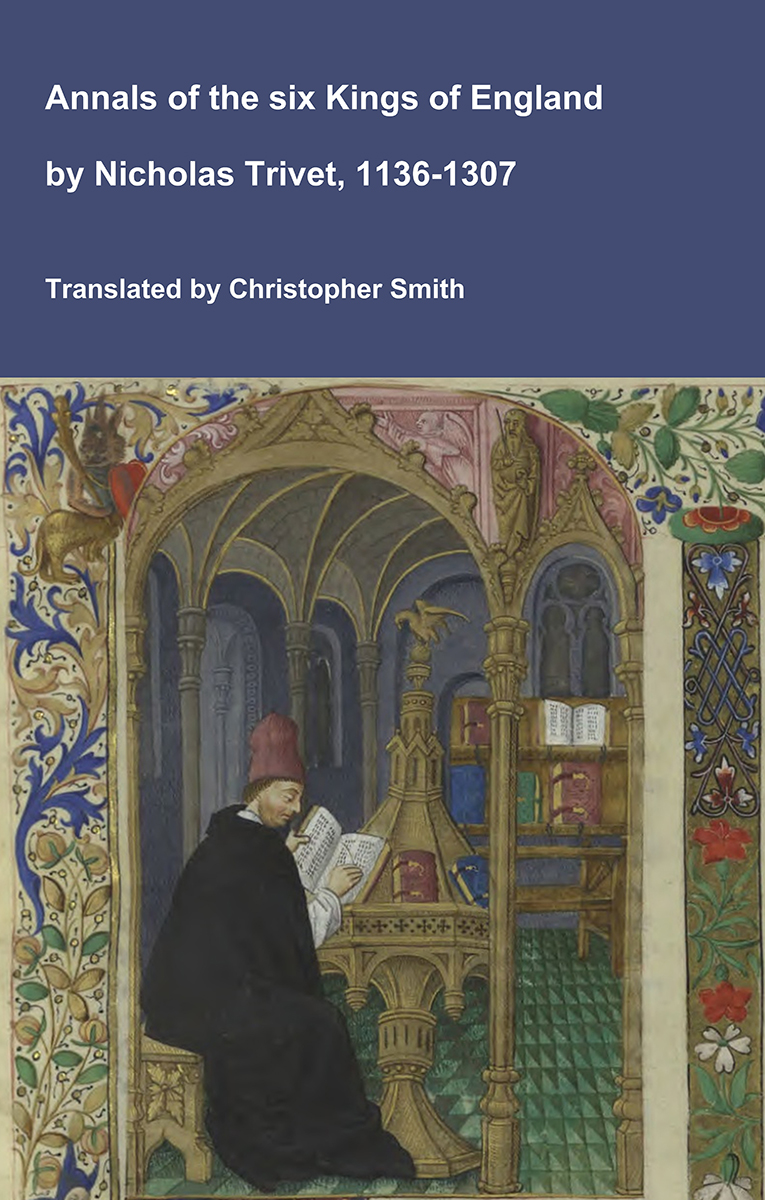
Annals of the six Kings of England by Nicholas Trivet
Translation of the Annals of the Six Kings of England by that traces the rise and rule of the Angevin aka Plantagenet dynasty from the mid-12th to early 14th century. Written by the Dominican scholar Nicholas Trivet, the work offers a vivid account of English history from the reign of King Stephen through to the death of King Edward I, blending political narrative with moral reflection. Covering the reigns of six monarchs—from Stephen to Edward I—the chronicle explores royal authority, rebellion, war, and the shifting balance between crown, church, and nobility. Trivet provides detailed insight into defining moments such as baronial conflicts, Anglo-French rivalry, and the consolidation of royal power under Edward I, whose reign he describes with particular immediacy. The Annals combines careful year-by-year reporting with thoughtful interpretation, presenting history not merely as a sequence of events but as a moral and political lesson. Ideal for readers interested in medieval history, kingship, and the origins of the English state, this chronicle remains a valuable and accessible window into the turbulent world of the Plantagenet kings.
Available at Amazon in eBook and Paperback format.
On 20th November 1791 Caroline Anne Stanhope was born to Charles Stanhope 3rd Earl of Harrington (age 38) and Jane Fleming Countess Harrington (age 36). She a great x 3 granddaughter of King Charles II of England Scotland and Ireland. She married 21st June 1841 Edward Ayshford Sanford.


On 20th November 1794 George Barrington was born to George Barrington 5th Viscount Barrington (age 33) and Elizabeth Adair Viscountess Barrington (age 25). He a great x 3 grandson of King Charles II of England Scotland and Ireland. He married 15th January 1827 Caroline Grey, daughter of Charles Grey 2nd Earl Grey and Mary Elizabeth Ponsonby Countess Grey.
On 20th November 1800 Richard Rothwell was born.
On 20th November 1804 George William Frederick Brudenell 2nd Marquess Ailesbury was born to Charles Brudenell 1st Marquess Ailesbury (age 31) and Henrietta Maria Hill. He married 11th May 1837 his half fifth cousin once removed Mary Herbert Marchioness Ailesbury, daughter of George Augustus Herbert 11th Earl Pembroke 8th Earl Montgomery and Yekaterina Semyonovna Vorontsova Countess Pembroke and Montgomery.


On 20th November 1814 Frances Jocelyn Countess Gainsborough was born to Robert Jocelyn 3rd Earl Roden (age 26) and Maria Frances Catherine Stapleton Countess Roden. She married 25th July 1833 Charles Noel 1st Earl Gainsborough, son of Gerard Edwardes aka Noel 2nd Baronet and Diana Middleton 2nd Baroness Barham, and had issue.
On 20th November 1823 Charles de Hoghton 10th Baronet was born to Henry Bold-Hoghton 8th Baronet (age 24).
On 20th November 1844 Victoria Alexandrina Montagu-Douglas-Scott Marchioness Lothian was born to Walter Scott 5th Duke Buccleuch 7th Duke Queensberry and Charlotte Anne Thynne Duchess Buccleuch Duchess Queensbury (age 33). She married 1865 her sixth cousin Schomberg Henry Kerr Kerr 9th Marquess Lothian, son of John Kerr 7th Marquess Lothian and Cecil Chetwynd-Talbot Marchioness Lothian, and had issue.
On 20th November 1849 Edward Chichester 9th Baronet was born to Arthur Chichester 8th Baronet (age 27) and Mary Nicholetts.
On 20th November 1855 Wenman Coke was born to Thomas Coke 2nd Earl of Leicester (age 32) and Juliana Whitbread Countess Leicester (age 30).
On 20th November 1870 George Yarburgh-Bateson 4th Baron Deramore was born to George de Yarburgh-Bateson 2nd Baron Deramore (age 47). He married 12th December 1900 Muriel Katharine Duncombe and had issue.
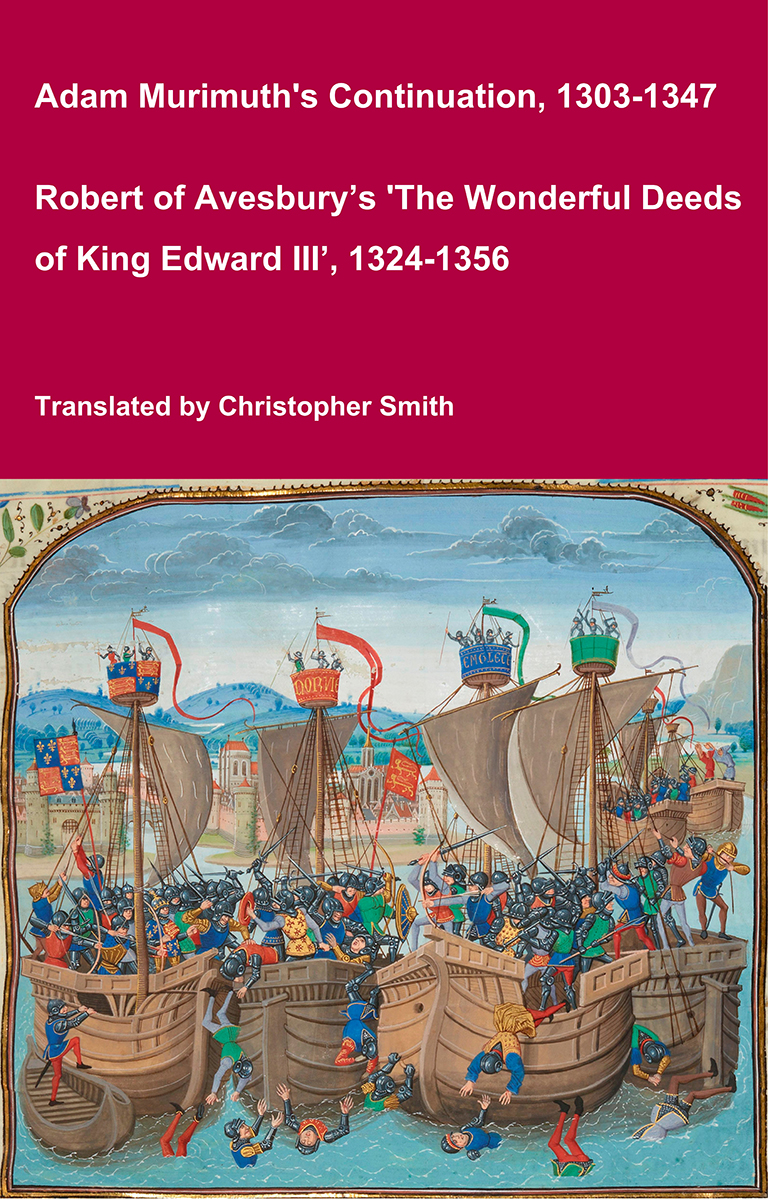
Adam Murimuth's Continuation and Robert of Avesbury’s 'The Wonderful Deeds of King Edward III'
This volume brings together two of the most important contemporary chronicles for the reign of Edward III and the opening phases of the Hundred Years’ War. Written in Latin by English clerical observers, these texts provide a vivid and authoritative window into the political, diplomatic, and military history of fourteenth-century England and its continental ambitions. Adam Murimuth Continuatio's Chronicarum continues an earlier chronicle into the mid-fourteenth century, offering concise but valuable notices on royal policy, foreign relations, and ecclesiastical affairs. Its annalistic structure makes it especially useful for establishing chronology and tracing the development of events year by year. Complementing it, Robert of Avesbury’s De gestis mirabilibus regis Edwardi tertii is a rich documentary chronicle preserving letters, treaties, and official records alongside narrative passages. It is an indispensable source for understanding Edward III’s claim to the French crown, the conduct of war, and the mechanisms of medieval diplomacy. Together, these works offer scholars, students, and enthusiasts a reliable and unembellished account of a transformative period in English and European history. Essential for anyone interested in medieval chronicles, the Hundred Years’ War, or the reign of Edward III.
Available at Amazon in eBook and Paperback format.
On 20th November 1881 Agnes Beryl Spencer-Churchill Viscountess Cowdray was born to Edward Spencer-Churchill (age 28) and Augusta Warburton (age 27). She married 1905 Harold Pearson 2nd Viscount Cowdray, son of Weetman Dickinson Pearson 1st Viscount Cowdray and Annie Cass Viscountess Cowdray, and had issue.
On 20th November 1900 David Lindsay 28th Earl of Crawford 11th Earl Balcarres was born to David Lindsay 27th Earl of Crawford 10th Earl Balcarres (age 29) and Constance Lilian Pelly Countess Crawford and Balcarres. He married 9th December 1925 Mary Katherine Cavendish Countess of Crawford and Balcarres and had issue.

On 20th November 1903 Letitia Sibell Winifred Brownlow-Cecil Baroness Hotham was born to William Cecil 5th Marquess Exeter (age 27) and Myra Rowena Sibell Orde-Powlett Marchioness of Exeter (age 23). She married before 3rd May 1940 Henry Hotham 7th Baron Hotham and had issue.
On 20th November 1905 Mowbray Henry Gordon Howard 6th Earl of Effingham was born to Gordon Howard 5th Earl of Effingham (age 32).
On 20th November 1925 Robert "Bobby" Francis Kennedy was born to Joseph Patrick Kennedy (age 37) and Rose Elizabeth Fitzgerald (age 35). He died aged two in 1928.
On 20th November 1954 Edward Beckett 5th Baron Grimthorpe was born to Christopher Beckett 4th Baron Grimthorpe (age 39) and Elizabeth Lumley Baroness Grimthorpe (age 29). He married 14th June 2013 his fifth cousin once removed Emma Villers Baroness Grimthorpe.

On 20th November 1586 John Savile 1st Baron Savile (age 30) and Elizabeth Carey Baroness Savile (age 16) were married. They were half third cousin once removed.
On 20th November 1657 Robert Kemp 2nd Baronet (age 29) and Mary Sone Lady Kemp were married. She by marriage Lady Kemp of Gissing in Norfolk.
On 20th November 1795 John Evelyn Pierrepont Dormer 10th Baron Dormer (age 24) and Elizabeth Kerr Baroness Dormer (age 30) were married. She the daughter of William John Kerr 5th Marquess Lothian (age 58) and Elizabeth Fortescue 5th Marchioness Lothian.
On 20th November 1819 General Lionel Smith 1st Baronet (age 41) and Isabella Pottinger Lady Smith (age 39) were married.
Henrici Quinti, Angliæ Regis, Gesta, is a first-hand account of the Agincourt Campaign, and subsequent events to his death in 1422. The author of the first part was a Chaplain in King Henry's retinue who was present from King Henry's departure at Southampton in 1415, at the siege of Harfleur, the battle of Agincourt, and the celebrations on King Henry's return to London. The second part, by another writer, relates the events that took place including the negotiations at Troye, Henry's marriage and his death in 1422.
Available at Amazon in eBook and Paperback format.
On 20th November 1847 Arthur Chichester 8th Baronet (age 25) and Mary Nicholetts were married.
On 20th November 1909 Warren Hastings D'Oyly 10th Baronet (age 71) and Amy Agnes White Lady D'Oyly were married at St George's Church, Hanover Square. She by marriage Lady D'Oyly of Shottisham in Suffolk.
On 20th November 1947 Philip Mountbatten Duke Edinburgh (age 26) and Queen Elizabeth II of the United Kingdom (age 21) were married at Westminster Abbey [Map]. She the daughter of King George VI of the United Kingdom (age 51) and Elizabeth Bowes-Lyon Queen Consort England (age 47). They were second cousin once removed. He a great x 2 grandson of Queen Victoria of the United Kingdom.
On 20th November 869 Edmund "The Martyr" King East Anglia died.
On 20th November 996 Richard "Fearless" Normandy I Duke Normandy (age 64) died. His son Richard (age 33) succeeded II Duke Normandy.
On 20th November 1316 John "The Posthumous" I King France died. His uncle Philip (age 23) succeeded V King France: Capet. He also claimed the Kingdom of Navarre although he had no hereditary right to do so since the Kingdom of Navarre was subject to inheritance by the female as well as male line meaning the four year old Joan Capet II Queen Navarre (age 4) was successor by right. The Navarese didn't recognise his claim.
On 20th November 1408 Joan Grey 5th Baroness Grey (age 22) died. Her son William (age 5) succeeded 6th Baron Grey of Rotherfield.
On 20th November 1480 Eleanor Stewart Duchess Austria (age 47) died.
On 20th November 1487 Richard Fitzhugh 6th Baron Fitzhugh (age 30) died. His son George (age 1) succeeded 7th Baron Fitzhugh.

On 20th November 1556 Elizabeth Cheney Baroness Vaux Harrowden (age 51) died.
William of Worcester's Chronicle of England
William of Worcester, born around 1415, and died around 1482 was secretary to John Fastolf, the renowned soldier of the Hundred Years War, during which time he collected documents, letters, and wrote a record of events. Following their return to England in 1440 William was witness to major events. Twice in his chronicle he uses the first person: 1. when writing about the murder of Thomas, 7th Baron Scales, in 1460, he writes '… and I saw him lying naked in the cemetery near the porch of the church of St. Mary Overie in Southwark …' and 2. describing King Edward IV's entry into London in 1461 he writes '… proclaimed that all the people themselves were to recognize and acknowledge Edward as king. I was present and heard this, and immediately went down with them into the city'. William’s Chronicle is rich in detail. It is the source of much information about the Wars of the Roses, including the term 'Diabolical Marriage' to describe the marriage of Queen Elizabeth Woodville’s brother John’s marriage to Katherine, Dowager Duchess of Norfolk, he aged twenty, she sixty-five or more, and the story about a paper crown being placed in mockery on the severed head of Richard, 3rd Duke of York.
Available at Amazon in eBook and Paperback format.
On 20th November 1558 Bishop Maurice Griffiths (age 51) died.
On 20th November 1558 Bishop Maurice Griffith (age 51) died. He was buried at St Magnus the Martyr Church [Map]. His executors were William Petre (age 53), William Garrard (age 51) and Simon Lowe aka Fyfield.
On 20th November 1597 Cuthbert Ogle 7th Baron Ogle (age 57) died at Cockle Park, Northumberland [Map]. Baron Ogle abeyant between his two daughters Joane Ogle Countess Shrewsbury and Waterford (age 31) and Catherine Ogle 8th Baroness Ogle (age 27).
On 20th November 1616 Gervase Helwys (age 55) was hanged at Tower Hill [Map]. He gave a speech to the crowd...
... many others of seuerall dispositions. All you beeing thus assembled to see mee finish my dayes, the number of which is sum'd up, for the very minutes of my life may now be reckoned. Your expectation is to have mee say something, to give satisfaction to the World, and I will doe it so farre as I can, albeit in that speech of mine, I shall (as it was spoken unto me the last night) but chatter like a Crow. But whatsoeuer I deliuer, I beseech you to take from a wounded bosome, for my purpose is to rip up my very heart, and to leaue nothing there which may proue any clogge to my Conscience. Hither am I come to performe a worke which of all others is to Man the most easie and yet to Flesh and Blood is the hardest, and that is, To die. To hide therefore any thing, for any worldly respect, were to leaue a blot upon my owne Soule, which I trust shall be presented (through the mercies of my Maker, and merits of my Sauiour) acceptable before GODS high Tribunall. And first I will labour to satisfie some, who before my apprehension were well conceipted of mee, but since my Arraignment, as I vnderstand, carryed of mee but hard opinions, for that at the Barre I stood stiffly upon the Justice of my Innocence; and this they impute as a great fault, beeing afterwards that I was found guilty of the Crime. To which I answer, that I did it ignorantly: Nay I was so farre from thinking my selfe foule in the Fact, that untill these two Gentlemen, (Doctor Felton and Doctor Whiting, the Physitions for my Soule) told mee how deepely I had imbrewed my hands in the blood of that gentleman, making mee by GODS law as guilty in the Concealing, as if I had beene a personall Actor in it: till then I say, I held my selfe so ignorant of the deede, and my Conscience so cleere, that I did never aske GOD forgivenesse, nor once repent mee of the Fact, such was my blindnesse. So that it was not onely an error, or rather a horrible sinne, in mee to consent, but a worse, to deny it, so Bloody, so Treacherous, so Foule, so Filthy a Fact as that was; for which I must confesse the King, and the State have dealt honourably, roundly, and justly, with mee, in condemning mee unto this death. And thus have I laboured and done my best to cleere this point, being willing by all good meanes to reduce your first opinions of mee; that as formerly your conceipted well of mee, so you would now with a charitable affection performe the last duty of your Christian loues towards mee, praying to GOD, both with me, and for mee; to the intent that this Cup, whereof I am to drinke, may not be greiuous unto mee, but that it may be a ioyfull conueiance to a better and more blessed comfort.
Some perhaps will thinke it to be a Rigor of the State, or aggravation of my iudgement, that I should die in this place, but this doe I take as an honor unto me, & herein doe I acknowledge my selfe to stand much bound to the State, in that I have this favour vouchsafed me to suffer Death in sight of my Charge, even where I had sinned, on the Tower-hill [Map], rather than in the place of common Execution [Map], where every base Malefactor dyeth.
Many doe I see here whom I know well, and of whom I am likewise knowne: and now am I a Spectacle for them to be looked on, whom in former times (and in all mens accounts) they held never likely to come to such an end. But herein he hold the justice of God, who is so oppos'd against sinne, because that if we forget to seeke him whilst we may, he will finde us out when we would not be found of him.
It is expected I should say something of the fact which I have committed: And hither am I come resolued to cleare my conscience (before I depart this world) of all matters which I either knowe, or can now remember. And so much I have already delivered in writing to my Lo. Chiefe Justice (age 64) and to prove that which I wrote is true, I yesterday confirmed it with the receiuing of the blessed Sacrament, wishing unto you all as much comfort by those holy Mysteries, as I tooke by them: and I doe heere (though not with such a bloud) yet with mine own bloud, seale that which I have written. For my selfe, I will hide nothing to make my fault seeme lesse, but will rip open this very heart of mine, and confesse before God myne owne uncleannesse. I have sinned exceedingly against thee O my maker, and in this am I most faulty, that I did not reveale to the King (age 50), so soone as I my selfe had knowledge of the busines. But (alas) feare to loose these worldly pleasures, and the loue to promotion, made me forget my duty to my Soueraigne, and not to regard my God, who is a swift auenger of blood: and would to heaven I had trusted to his providence, and set the thinges of this world at nought, for heavens sake, and a good conscience. You see, Gentlemen, promotion cannot rescue us from the justice of God, which alwaies pursues after sinne: And therefore I exhort you not to trust in men (how great soeuer) for they cannot hide themselues when God is angry; neither can they protect you from shame, when God will consume you: he that sitteth in heaven, will deride and scorne their foolish Inventions. As for me, I will not spare to lay open my owne shame: Thinke you I care for the reputation of this world? No, I weigh it not. This my soule shall receiue more comfort from God in my upright dealing.
My sinne, in this foule fact, was great, for upon me lay all the blood, shed, and to be shed: I have made many children fatherles, many wives husbandles, many parents childelesse: and I my selfe leave a comfortlesse wife and eight children behinde me for it too: for if I had revealed it when I might, I had freed much blood from being spilt, in so much as I could wish (Gods Justice and charity reserved) I might hang in chaines, till I rotte away by peecemeale: nor cared I what tortures my body were put unto, so I might expaite or free the bloud of so many, (some in one place, and some in another) which is both like to bee shed, and is already shed, and the Lord knowes when it will have an end. Concerning my selfe, I will aggravate the crime, by speaking of every circumstance I can remember. And now it comes into my mind, what trust that gentleman put into me: hee reputed me to bee most faithfull unto him; (Oh the wildnesse of my heart!) I proved unfaithfull, and was his deadly deceitfull friend. And here (Gentlemen) I exhort you all that you would take notice of this, ever to bee faithfull to those who put you in trust. Sir Thomas O. trusted me, and I was unfaithfull and treacherous to him, in drawing tickets for him to his disadvantage. I promised him secrecy, yet betrayed him, onely to satisfy greatnesse: But God, who sees the secret thoughts of mans heart, will disclose all unuist actions at last: nay, I am perswaded that whosoeuer they bee that commit sinne in their child-hood, at one time or other it will be revealed. In this place it commeth to my mind, that in my yonger dayes (as wel beyond the Seas as here) I was much addicted to that idle veyne of Gaming, I was bewitched with it indeed: And I played not for little for final sums neither, but for Great-ones, yet ever haunted with ill lucke: And upon a time, being much displeased at my losse, I sayd, not in a carelesse maner, Would I might be hanged; But seriously, and advisedly (betweene God and my selfe) clapping my hands upon my breast, I spake thus, If ever I play again, then let me be hangd. Now gentlemen here you may behold the justice of God, paying mee my wish and imprecation home. Bee carefull therefore I exhort you, that you vow nothing but that unto which you will give all diligence to performe: for the powerful God, before whom you make such vowes, will otherwise bee auegned: Jn this place Doctor VVhiting putting him in mind to satisfie the World touching his Religion thus he went on. THe matter you speake to mee of, faith hee, is well thought upon: for I heare that abroad hath beene some murmuring and questions made about mee for my Religion; Some giving out that I was infected with Anabaptisme: A fond, ridiculous, foolish and phantasticall opinion, which I never affected but rather despised. Many may thinke that the manner of my death doth much discourage mee, that I should dye in a halter: I would have you all to thinke that I scorne all such worldly thoughts: I care not for it, I value not any earthly shame at all, so as may have honour and glory anon in Heaven: and I make no doubt, but I shall sodainely be more happie then you all, and that I shall see GOD face to face: and if there be any point of innocency in mee at all, I doe utterly cast it from mee, and I doe commit it wholly to GOD.
And for any matter of Glory, I doe with the Saints of GOD expect it through the merits of Christ, at the Resurrection: yea it is my glorie to die thus. I might have died in my Bedde, or shooting the Bridge or else have fallen downe sodainly, in which death I should have wanted this space to repent, being the sweet comfort and assured hope of Gods favour which of his mercy he hath vouchsafed mee; So that it swalloweth up all feare of death or reproch of the World: wishing unto all you (Gentlemen) who now behold mee, that wheresoeuer you shall dye, (either in your Beddes or else-where howsoewer) you may feele such comfort and resolution as God in his mercy hath bestowed uppon mee and my wounded Soule for this and the rest of my grieuous Sinnes. But mee thinkes I heare some of you conjecture and say, that I expresse no great Arguments or signes of sorrow: You think my heart should rather dissolue and melt into teares, then to appeare so insensible of feare as I may seeme: but I must tell you, teares were never common in mee: I may therefore feare though I do not weepe. I have been couragious both beyond the Seas and heere in mine owne Country: but (Gentlemen) that was when there was no perill before mee. But now the stroke of death is upon mee. It affrights mee, and there is cause to feare: yet notwithstanding, my heart seemeth unto you to be rather of stone than of flesh. But I would have you understand, that this boldnes doth not proceed from any manly fortitude, for I am a man, fraile as you are, and dare as little look death in the face as any other: ther terors of death doe as much trouble my humane sense, as of any man whatsoeuer: but that which swalloweth up all manner of feare in me, & maketh me to glory and to reioyce in, is, the full assurance which I conceiue of the vnspeakable love of God to those who are his, of which number I perswade my selfe to bee one, and that I shall presently enioy it.
I confesse I have sinned exceedingly, against thee (oh God) many wayes, in prophaning thy holy Sabaoths, in taking thy glorious name in vaine, in my concupiscence in turning all thy graces into wantonnes, in my Riotous wasting so many of thy good Creatures, as would have belieued many poore people, whose prayers I might have had this day. I have sinned against thee in my Child-hood: but Childrens sinnes are childishly performed: but I confirmed them in my manhood, there was my sinne. I am perswaded, there is no sinne, that a man committeth in his life, knowing it to be a sin, and not repenting of it, but the Lord will iudge it. I admonish you therefore that are heere assembled, to take good notice of your sinnes, and let none escape you vnrepented. And yet when you have done the best you can, there will lie buried some one sinne or other sufficent to condemne you. O Lord clense mee from my secret sinnes, which are in me so rife. I abused the tender education of my Parents. You perhaps that knew mee will say no; I liued in an honest forme, and was not bad in my life. But I know best my selfe what I was: & if I who was so esteemed of amongst Men, shall scarcely be saued, what will become of those, whom you point at for notorious lievers? The last night God put into my mind the remembrance of one sinne of mine, which heere I will lay open, that others may take heed. I tooke a vaine pride in my pen, and some of my friendes would tell me I had some induments and speciall gift that way: (though I say nor so my selfe) but mark the iudgement of God in this; that Pen which I was so proud of, hatch struck mee dead, and like Absolons hayre hath hanged me: for there hath dropt a word or two from my Pen, in a letter of mine, which upon my Saluation I am not able to answer, or to give any good accompt of. At my Arraignment I pleaded hard for life, & protested my Innocency, but when my owne Pen came against mee, I was forthwith not able to speake anything for my selfe: for I stood as one amazed, or that had no Tongue. See (Gentlemen) the just Iudgement of GOD, who made that thing of which I was most proud, to be my bane: take notice how strangely sinne is punished, and learne every-one to striue against it.
I have heard the word of GOD, and often read it (but without vse) for I must tell you these two worthy, Gentlemen (to whom I am so much bounden, God reward them for their loue) even they begat mee very lately, for I am not ashamed to confesse that I was to be begotten unto Christ within these three daies: yea I have often prayed against sinne, and made many vowes to forsake it, but uppon the next occasion, my foule heart hath beene ready to runne with the wicked. Had I learned but this one lesson in the 119. Psalme, (Depart from mee ye wicked, I will keepe the Commandements of my God &c.) I had beene likely to have enioyed many dayes heere on eath: whereas now you all see mee ready to bee cut short by reason of my sinne. But (O LORD) albeit thou slayest mee, yet will I put my trust in thee: let the LORD doe to me what hee will, I will dye upon this hand (of trusting in him) if I faile many a soule hath miss'd, but I have sure hope of mercy in him; hee hath sufficed and succoured mee, I am sure, euer since the sentence of death hath passed uppon mee: such comfort flowing from the Godly indeauors of these Gentlemen (the Diuines) that neither the Reproach of this Death, nor the Torment of it hath any whit discouraged me; nay, let me tell you, the last night when I heard the time was appoynted, and saw the warrant in Master Sheriffs hand for my death, it no whit daunted me: But what put this courage into me? onely the hope which I had in GODS mercies. This Hope was a Seede, and this Seed must come from a Roote; I looked upon my selfe, and there was rather cause despaire; and just cause, that I should not approach GODS presence. Thus then I disputed with GOD: This Hope being a Seede must have a Roote, and this Roote is not any thing in Man, no, it is Praescientia (thy fore-knowledge,) O God, who hast elected me from eternity. I will tell you, I receiued more comfort this morning, comming along the streetes, than euer I did in all my life. I saw much people gathered together, all the way as I came, to see mee brought to this shamefull end: who with their hearty prayers and well wishings gladded and comforted my very soule: insomuch as I could wish that I had come from Westminster hither. I protest unto you, I thinke I could never have dyed so happily in my bed. But you will say, these are but speechees, and that I being so neere death, my heart cannot be so free, as I seeme in my speech: I confesse, there are in my brest frailties, which doe terrifie, and will still be busie with me, but I beseech you when I am at the stroake of death, that you would praie to GOD (with mee) that neither Sathans power, nor my weakenesse, may hinder my confidence. And I beseech God that amongst all who this daie heare mee, some may profit by my end: If I get but one Soule, I shall have much comfort in that; for that one soule my beget another, and that other another. I have held you too long, but I will draw to an end: intreating you all to ioyne in praier to God for me.
The summe of his Prayer.
O Lord God omnipotent, who sittest in Heaven, and seest all things which are done on earth: to whom are knowne all occasions of men; And who dost deride and laugh to scorne their Foolish inuentions: thou (Lord) who art powerfull to Saue at an instant, bow downe the heavens, and behold Mee (wretched sinner!) vnworthy to looke up, or lift up my hands unto thee. Remember not (O Lord) the sinnes which I have committed. Driue away this Mist which is before mee; and breake those thick Clowdes which my sinnes have made, and may let my request to come into thy presence. Strengthen mee in the middest of Death, in the assurance of thy.
Mercies; and give mee a ioyfull Passage into thy Heavenly Rest, now and for euer. Amen.
After hee had thus Prayed, hee tooke his leaue of all, with these words.
Gentlemen, I shall see your faces now no more: and pulling down his Cap in his eyes, said some privat prayer; in which time the Doctors prayed, and called to him, that hee would remember his assurance, and not be dismaied at the Cup, that hee was not drinke of: Hee answered, I will drinke it up, and never looke what is in it. And after a little time more spent in privat prayer, hee said, Lord receaue my Soule: And so yeelded up the Ghost. His Meditation and Vow. not long before his Death. When I considered Herods State, who though hee heard John Baptist gladly, yet was he intangled with Herodias: and how Agrippa liked so well of Paul as hee was perswaded almost to become a Christian, and how young mans will was good to follow Chirst yet was there one thing wanting: meethought the state of sinfull man was not vnlike. For also how the Angler though hauing caught a Fish but by the chaps accounts it as his owne: the Bird taken but by the heele is a prey unto the Fowler: the Iayler also holds his prisoner by one ioint as safe, as cast in iron chaines: then did I think what do these motions good, if not effected to the full? what though not notoriously evill? one sinne sufficent to condemn: and is he guilty of all that guilty is of one? then said I vnto the Lord I will freely cleanse my waies and wash my hands in innocency: I will take heed that I offend not in my tongue. Lord let my thoughts be such as I may al-waies say, try and examine mee if there be any unrighteousnes in mee. Sir Geruase Ellowis.
On 20th November 1627 Catherine Arden Baroness Devereux (age 69) died.
On 20th November 1629 Mary Scudamore Lady Bridges (age 29) died.
On 20th November 1633 Walter Scott 1st Earl Buccleuch (age 27) died. His son Francis (age 6) succeeded 2nd Earl Buccleuch.
On 20th November 1635 Thomas Savage 1st Viscount Savage (age 49) died. His son John (age 32) succeeded 2nd Viscount Savage, 2nd Baron Darcy of Chiche, 3rd Baronet Savage of Rocksavage in Cheshire.
On 20th November 1649 Henry Willoughby 1st Baronet (age 70) died at Lavenham, Suffolk. He was buried at Wilne, Derbyshire [Map]. Baronet Willoughby of Risley in Derbyshire extinct.
On 19th November 1651 John Skeffington 2nd Baronet (age 61) died. He was buried at the Church of St Thomas Becket, Skeffington [Map] on 20th November 1651. His son William succeeded 3rd Baronet Skeffington of Fisherwick in Staffordshire.
On 20th November 1682 Barbara Boyle Countess Donegall (age 20) died.
Henrici Quinti, Angliæ Regis, Gesta, is a first-hand account of the Agincourt Campaign, and subsequent events to his death in 1422. The author of the first part was a Chaplain in King Henry's retinue who was present from King Henry's departure at Southampton in 1415, at the siege of Harfleur, the battle of Agincourt, and the celebrations on King Henry's return to London. The second part, by another writer, relates the events that took place including the negotiations at Troye, Henry's marriage and his death in 1422.
Available at Amazon in eBook and Paperback format.
On 20th November 1713 Elizabeth Harley (age 24) died from childbirth at at Wimbledon, Surrey, having given birth to Thomas Osborne 4th Duke Leeds two weeks before.
On 20th November 1723 Hopton Williams 3rd Baronet (age 60) died. His nephew John succeeded 4th Baronet Williams of Llangibby.
On 20th November 1731 Hugh Campbell 3rd Earl Loudon (age 56) died. His son John (age 26) succeeded 4th Earl Loudon.
On 20th November 1737 Caroline Hohenzollern Queen Consort England (age 54) died.
On 20th November 1791 Anne Grey Lady Acton (age 65) died.
On 20th November 1791 Richard Acton 5th Baronet (age 80) died. His second cousin once removed John (age 55) succeeded 6th Baronet Acton of Aldenham Hall.
On 27th June 1792 John Morgan (age 50) died. His sister Jane Morgan (age 61) and her husband Charles Gould aka Morgan 1st Baronet (age 66) and inherited Tredegar House, Monmouthshire on condition he changed his name from Gould to Morgan which he did by royal licence on 20th November 1792. His children including Charles Gould aka Morgan 2nd Baronet (age 32) also changed their surname.


On 20th November 1826 Bourchier Wrey 7th Baronet (age 69) died. His son Bourchier (age 37) succeeded 8th Baronet Wrey of Trebitch in Cornwall.
On 20th November 1830 David Moncrieffe 6th Baronet (age 41) died. His son Thomas (age 8) succeeded 7th Baronet Moncreiffe 1685.
On 20th November 1838 William "Lord Dashalong" Molyneux 2nd Earl Sefton (age 66) died. His son Charles (age 42) succeeded 3rd Earl Sefton, 10th Viscount Molyneux, 11th Baronet Molyneux of Sefton.
The History of William Marshal was commissioned by his son shortly after William’s death in 1219 to celebrate the Marshal’s remarkable life; it is an authentic, contemporary voice. The manuscript was discovered in 1861 by French historian Paul Meyer. Meyer published the manuscript in its original Anglo-French in 1891 in two books. This book is a line by line translation of the first of Meyer’s books; lines 1-10152. Book 1 of the History begins in 1139 and ends in 1194. It describes the events of the Anarchy, the role of William’s father John, John’s marriages, William’s childhood, his role as a hostage at the siege of Newbury, his injury and imprisonment in Poitou where he met Eleanor of Aquitaine and his life as a knight errant. It continues with the accusation against him of an improper relationship with Margaret, wife of Henry the Young King, his exile, and return, the death of Henry the Young King, the rebellion of Richard, the future King Richard I, war with France, the death of King Henry II, and the capture of King Richard, and the rebellion of John, the future King John. It ends with the release of King Richard and the death of John Marshal.
Available at Amazon in eBook and Paperback format.
On 20th November 1863 James Bruce 12th Earl Kincardine 8th Earl Elgin (age 52) died of a heart attack while crossing a swinging rope and wood bridge over the river Chadly, on the lap between Kullu and Lahul in Himachal Pradesh. He was buried at St John in the Wilderness Church, Dharamshala. His son Victor (age 14) succeeded 13th Earl Kincardine, 9th Earl Elgin.
On 20th November 1869 Thomas Henry Foley 4th Baron Foley (age 60) died. His son Henry (age 18) succeeded 5th Baron Foley of Kidderminster in Worcestershire.
On 20th November 1870 Henry Onslow 3rd Baronet (age 61) died. His brother Matthew (age 60) succeeded 4th Baronet Onslow of Althain.
On 20th November 1874 Alexander Spearman 1st Baronet (age 81) died. His grandson Joseph (age 17) succeeded 2nd Baronet Spearman of Hanwell in Middlesex.
On 20th November 1883 William Bowyer-Smijth 11th Baronet (age 69) died. His son William (age 43) succeeded 12th Baronet Smith of Hill Hall in Essex.
On 20th November 1891 Mary Stapleton Viscountess Falmouth 13th Baroness Despencer (age 69) died. Her son Evelyn (age 44) succeeded 14th Baron Despencer.
On 20th November 1899 Georgina Alderson Marchioness of Salisbury (age 72) died.
On 20th November 1909 Consuelo Yznaga Duchess Manchester (age 56) died. Monument at St Andrew's Church, Kimbolton [Map] sculpted by René de Saint-Marceaux (age 64).
On 20th November 1917 Cecil Weld-Forester 5th Baron Forester (age 75) died at Brighton. He was buried at Willey Church, Shropshire. His son George (age 50) succeeded 6th Baron Forester of Willey Park in Shropshire.
On 20th November 1925 Alexandra of Denmark Queen Consort England (age 80) died at Sandringham House, Norfolk at 5.25pm following a heart attack.
Anne Boleyn. Her Life as told by Lancelot de Carle's 1536 Letter.
In 1536, two weeks after the execution of Anne Boleyn, her brother George and four others, Lancelot du Carle, wrote an extraordinary letter that described Anne's life, and her trial and execution, to which he was a witness. This book presents a new translation of that letter, with additional material from other contemporary sources such as Letters, Hall's and Wriothesley's Chronicles, the pamphlets of Wynkyn the Worde, the Memorial of George Constantyne, the Portuguese Letter and the Baga de Secrets, all of which are provided in Appendices.
Available at Amazon in eBook and Paperback format.
On 20th November 1938 Maud Windsor Queen Consort Norway (age 68) died; her mother Alexandra of Denmark Queen Consort England had died on the same day thirteen years before. Whilst on a visit to England she had been admitted to hospital and an abdominal operation was performed. She died of heart failure following the operation. Her body was returned to Norway on board HMS Royal Oak, the flagship of the Second Battle Squadron of the Royal Navy's Home Fleet. Her body was moved to a small church in Oslo before the burial. Queen Maud was buried in the royal mausoleum at Akershus Castle in Oslo.
On 20th November 1942 Granville Eliot 7th Earl of St Germans (age 75) died unmarried. His brother Montague (age 72) succeeded 8th Earl St Germans, 9th Baron Eliot of St Germans in Cornwall.
On 20th November 1969 William Charles Arcedeckne Vanneck 5th Baron Huntingfield (age 86) died. His son Gerard (age 54) succeeded 6th Baron Huntingfield of Heveningham Hall in Suffolk, 8th Baronet Vanneck of Putney.
On 20th November 1973 John Renton Aird 3rd Baronet (age 75) died. His son John (age 33) succeeded 4th Baronet Aird of Hyde Park Terrace in Paddington in the County of London.
On 20th November 2000 Charles Thomas Wilson 5th Baron Nunburnholme (age 65) died. His son Stephen (age 27) succeeded 6th Baron Nunburnholme.
On 20th November 2014 María del Rosario Cayetana Fitz-James Stuart 18th Duchess of Alba 11th Duke of Berwick (age 88) died. Her son Carlos (age 66) succeeded 19th Duke Alba, 17th Duke Veragua, 12th Duke of Jérica, 12th Duke of Liria, 12th Duke Berwick.