

Anne Boleyn. Her Life as told by Lancelot de Carle's 1536 Letter.
In 1536, two weeks after the execution of Anne Boleyn, her brother George and four others, Lancelot du Carle, wrote an extraordinary letter that described Anne's life, and her trial and execution, to which he was a witness. This book presents a new translation of that letter, with additional material from other contemporary sources such as Letters, Hall's and Wriothesley's Chronicles, the pamphlets of Wynkyn the Worde, the Memorial of George Constantyne, the Portuguese Letter and the Baga de Secrets, all of which are provided in Appendices.
Available at Amazon in eBook and Paperback format.
22 May is in May.
1455 First Battle of St Albans
1538 Execution of Friar John Forest
On 22nd May 1233 Hugh de Vere 4th Earl of Oxford (age 25) was knighted at Gloucester [Map].
On 22nd May 1264 Archbishop Walter Giffard (age 39) was elected Bishop of Bath and Wells.
On 22nd May 1306 the Feast of the Swans was a collective knighting of two hundred and sixty seven men at Westminster Abbey [Map].
At the feast following the knightings two swans were brought in. King Edward I of England (age 66) swore before God and the swans to avenge the death of John Comyn 3rd Lord Baddenoch - see Murder of John "Red" Comyn.
King Edward I of England first knighted his son King Edward II of England (age 22).
King Edward II of England then knighted the remaining two-hundred and sixty six including...
Hugh "Younger" Despencer 1st Baron Despencer (age 20)
Edmund Fitzalan 2nd or 9th Earl of Arundel (age 21)
John le Blund, Mayor of London
William Brabazon
Roger Mortimer 1st Baron Mortimer of Chirk (age 50)
Piers Gaveston 1st Earl Cornwall (age 22) - this may have been the first time Piers Gaveston 1st Earl Cornwall and King Edward II of England met?
John Harrington 1st Baron Harington (age 25)
John Maltravers 1st Baron Maltravers (age 16)
Roger Mortimer 1st Earl March (age 19)
William Montagu 2nd Baron Montagu (age 31)
John Mowbray 2nd Baron Mowbray (age 19)
Thomas Multon 1st Baron Multon (age 30)
John Warenne 7th Earl of Surrey (age 19)
 Chronicle of Geoffrey le Baker of Swinbroke [-1360]. After this, at the Feast of Pentecost [22nd May 1306], the king adorned his firstborn son, Edward of Caernarfon (age 22), with the military belt,1 and at Westminster, he ordained a hundred other knights along with him. He also endowed his aforementioned son with the Duchy of Aquitaine.
Exinde, ad festum Pentecosten, rex filium suum primogenitum, Edwardum de Carnarvan, cingulo militari decoravit, et cum ipso alios centum milites ordinavit, apud Westmonasterium; filium quoque suum predictum ducatu Aquitannie dotavit.
Note 1. See the curious account of the ceremony as given by Matthew of Westminster 454-5 and Paris, Flowers of History, 132. Compare Edward's instructions in this last sentence with the dying charge which Froissart 53 says he gave to his son. The duchy of Aquitaine was conferred upon the prince, 7th April 1306. Rymer's Fœdera 1.983.
 Chronicle of Walter of Guisborough. The king himself, having called together his magnates, ordered it to be publicly proclaimed throughout the kingdom that all who wished to take up the profession of arms should be ready in London on the Feast of Pentecost [22nd May 1306], together with Edward, his son, the Prince of Wales. On that same day the king himself ceremoniously made his son a knight, along with 297 new companions, all of whom received their full equipment from the royal treasury. Immediately afterwards, by his father's order, the prince went on ahead into Scotland with many of his fellow knights and with great display, while the king himself and the queen followed at a slower pace. However, the king had ordered that all should be ready with the prince at Carlisle on the fifteenth day after the Feast of Saint John the Baptist [8th July 1306]. When the king arrived, he stayed at Lanercost [Map].
Ipse vero rex convocatis magnatibus suis, ex edicto præconizari præcepit in regno, quod omnes qui arma militaria suscipere vellent, cum Edwardo The Prince filio suo, principe Walliæ, essent parati Londoniis in festo Pentecostes: fecitque ipse rex honorifice filium suum militem eodem die cum novis commilitonibus ducentis nonaginta et septem viris, qui omnem apparatum ex ærario regis acceperunt; statimque, ex præcepto patris, præcessit princeps filius cum multis commilitonibus suis et magno apparatu in Scotiam, ipse vero rex et regina lento gradu insequebantur; jusserat tamen rex ut omnes essent parati cum principe in quindenam Sancti Johannis Baptistæ apud Carliolum. Rex autem in adventu suo mansit apud Lanercost.
Annales Paulini. 22nd May 1331. In these days, the king greatly delighted in tournaments and jousts, which were held in many parts of England. Among others, a tournament was proclaimed at Dartford on the day after the feast of Saints Philip and James [May 2]. This tournament was held under the banner of Lord William de Clinton, who stood as standard-bearer on the inner side, under whose banner the king himself jousted. And although he was of tender age, the king performed admirably and endured strong blows with great skill. It is worth noting that when the tournament had ended and the king was leaving the field, he was displeased with the horse he had used during the joust, because it was unbroken and wild. He ordered that a palfrey be brought to him. But one of the knights told him that it was not fitting for his royal status to change horses in the field, so the king, for a short time, heeded the knight's advice. Yet the horse continued to displease him, and being somewhat irritated, he again ordered that a palfrey be brought. When it was brought, he returned cheerfully and safely with his retinue to his lodging at Dartford. But the man who had been assigned to care for the destrier (warhorse) from which the king had dismounted, mounted it himself and, while riding down from a hill and crossing a stream, narrowly escaped being drowned, even with much help from those riding alongside. For the horse, overheated and overworked from the tournament, suddenly threw itself into the water like a bather. Thus it was considered a miracle that the king, in full armour at that hour, had not still been mounted on that horse.
Hiis diebus rex multum delectabatur in torneamentis et hastiludiis quæ fiebant in pluribus partibus Angliæ; unde inter alia proclamatum fuit torneamentum apud Derteford, in crastino Sanctorum Philippi et Jacobi; et percussum fuit hoc torneamentum sub vexillis domini Willelmi de Clintone, qui stetit pro standardo ex parte interiori sub quo rex torniavit; qui, licet teneræ ætatis fuisset, optime tamen profecit, et egregie verberatus ictus fortes sustinuit. Et memorandum quod, finito torneamento et Torniamentum rege recedente de campo, equus super apud Derteforde. quem rex torniaverat, eo quod esset indomitus, regi displicuit, et jussit sibi palefridum duci; sed unus de militibus dixit sibi quod non deceret statum suum in campo mutare equum suum, qui per modicum tempus adquievit consilio militis; sed iterum atque iterum displicuit ei equus, et quasi ira motus jussit sibi afferri palefridum. Quo allato, reversus est cum comitiva sua alacriter et incolumis ad hospitium suum in Derteforde. Sed ille qui ad custodiam illius dextrarii, de quo rex descendebat, erat deputatus, illum ascendens equitando de monte transiens per torrentem vix cum magno auxilio coequitantium periculum mersionis evasit. Nam equus ille pre nimio calore et labore torneamenti calefactus, se projecit in aquam ut balneator; unde pro miraculo reputatum est quod rex armatus illa hora dictum equum non supersederet.
Issue of the Exchequer. 22nd May [1353]. To Ralph, Earl of Stafford (age 51), by a tally raised this day from the fifteenths granted to the clergy in the twenty-fifth year, containing £1000, granted to the said Earl of the King's gift for lately capturing Burseald (age 43), a French knight, in the war in Gascony. By writ of privy seal amongst the mandates of this term, £1000.
On 22nd May 1409 Blanche Lancaster Elector Palatinate (age 17) died in childbirth at Haguenau.

Letters. 22nd May 1441. Letter XXXVI. Constance Baroness Hussey to King Henry IV.
To the king our sovereign lord,.
Beseecheth meekly your humble and continual oratrice Dame Constance, the wife of Henry Husee, knight, the which was menial servant with the most worthy and Christian king your father, whose soul God assoil, and continued in his service as well beyond the sea as on this side the sea all the times of his noble reign, without any fee or reward; that whereas your said oratrice continued in the service of the noble princess your grandame, whose soul God assoil, as well in the time of your full noble father and ayeul (grandfather) as in yours, unto the time of his dying, in recompense of which service it liked the queen your said grandame, of her grace special, for the term of her life, to grant by her gracious letters patent unto your said oratrice 20/. yearly, to be taken of the issues and profits of the manor of Kingsthorp, in the county of Northampton; and also in likewise 100^. yearly, to be taken of the issues and profits of the manor of Odiham, in the county of Southampton, as in the said letters patent openly appeareth; that it please you of your especial grace tenderly to consider the long service of the said Sir Henry and Dame Constance, that they never had other fee nor reward than the said 25/., the which is now ceased by the death of your said grandame, and thereupon to grant unto your said oratrice, by your several letters patents, the said 25/. in like form as she had it, term of her life, yearly to be taken of the issues and profits of the manors abovesaid. And your said oratrice shall pray God continually for you. Beneath is written - "The Chamberlain of England. My lord hath granted this bill; notwithstanding that it was signed with his ow^n hand, yet he commanded me to endorse it.".
On 22nd May 1455 the Wars of the Roses commenced with the First Battle of St Albans. Richard Plantagenet 3rd Duke of York (age 43) commanded with Richard "Kingmaker" Neville Earl Warwick, 6th Earl Salisbury (age 26), Richard Neville Earl Salisbury (age 55), Edward Brooke 6th Baron Cobham (age 40) and Walter Strickland (age 44).
The Lancastrians...
Edmund Beaufort 1st or 2nd Duke of Somerset (age 49) was killed. His son Henry (age 19) succeeded 2nd Duke Somerset, 2nd Marquess Dorset, 5th Earl Somerset, 2nd Earl Dorset. Note his father is frequently incorrectly referred to as the second Duke and Henry as the third Duke. His father's Dukedom, however, was a new creation.
Henry Percy 2nd Earl of Northumberland (age 62) was killed. His son Henry (age 33) succeeded 3rd Earl of Northumberland, 6th Baron Percy of Alnwick, 14th Baron Percy of Topcliffe. Eleanor Poynings Countess Northumberland (age 33) by marriage Countess of Northumberland.
Thomas Clifford 8th Baron Clifford (age 41) was killed. His son John (age 20) succeeded 9th Baron de Clifford, 9th Lord Skipton. Margaret Bromflete Baroness Clifford (age 21) by marriage Baroness de Clifford.
William Cotton (age 45) and Richard Fortescue (age 41) were killed.
Humphrey Stafford 1st Duke of Buckingham (age 52) was wounded and captured.
King Henry VI of England and II of France (age 33), John Sutton 1st Baron Dudley (age 54) and Edmund Sutton (age 30) were captured.
Henry Beaufort 2nd or 3rd Duke of Somerset was wounded. James Butler 1st Earl Wiltshire 5th Earl Ormonde (age 34) and John Wenlock 1st Baron Wenlock (age 55) fought.
Richard Cotton of Hampstall Ridware (age 51) and his son William Cotton of Connington in Huntingdonshire (age 27) were killed.
22nd May 1445 Castle Inn, St Albans.


Chronicle of Jean de Waurin Books 3-5 [1400-1474]. [22nd May 1455]. Then the two forces, seeing each other and advancing, began to march, and each side fired so accurately that from the arrows and gunpowder the horses kicked up, the air became so thick that the sun lost its brightness. The battle was so terrible that there was no one who spared brother or cousin, so much so that in the end the King lost the day. Some say, as I was informed, that the King was wounded by an arrow in the arm, and the Duke of Somerset (age 49), the Earl of Northumberland (age 62), Lord Clifford (age 41), and many other great lords and gentlemen died in the battle.
And the King was taken by some of his men towards London, but the Duke of York (age 43) did not pursue him; rather, very pleased with his victory, he returned to York with the two earls mentioned above.
Lors les deux puissances voians et advisans lune lautre commencerent a marchier, et chascun de sa partie tyrer si onniement que, du trait et de la pouldriere que faisoient les chevaulz, lair sespessy telement que le solleil en perdy sa clarete. Tant fut horrible celle bataille quil ny avoit cellui quy espargnast frere ne cousin telement que en fin le roy perdy la journee, et dient les aulcuns, comme je feus adverty, que le roy y fut blechie dune flesche ou bras, et y morurent le duc de Sombresset, le comte de Northumbelland, le seigneur de Cliffort et plusieurs autres grans seigneurs et gentilz hommes.
Et le roy fut par aulcuns des siens emmenez vers Londres, mais le duc dYorc ne le poursievy pas, anchois moult joieulz de sa victore sen retourna a Yorc avec les deux comtes cy dessus nommez.
The Deeds of the Dukes of Normandy
The Gesta Normannorum Ducum [The Deeds of the Dukes of Normandy] is a landmark medieval chronicle tracing the rise and fall of the Norman dynasty from its early roots through the pivotal events surrounding the Norman Conquest of England. Originally penned in Latin by the monk William of Jumièges shortly before 1060 and later expanded at the behest of William the Conqueror, the work chronicles the deeds, politics, battles, and leadership of the Norman dukes, especially William’s own claim to the English throne. The narrative combines earlier historical sources with firsthand information and oral testimony to present an authoritative account of Normandy’s transformation from a Viking settlement into one of medieval Europe’s most powerful realms. William’s history emphasizes the legitimacy, military prowess, and governance of the Norman line, framing their expansion, including the conquest of England, as both divinely sanctioned and noble in purpose. Later chroniclers such as Orderic Vitalis and Robert of Torigni continued the history, extending the coverage into the 12th century, providing broader context on ducal rule and its impact. Today this classic work remains a foundational source for understanding Norman identity, medieval statesmanship, and the historical forces that reshaped England and Western Europe between 800AD and 1100AD.
Available at Amazon in eBook and Paperback format.
Chronicle of St Albans by Abbot John Whethamstede [-1465]. 22nd May 1455. The King, accompanied by nobles and various armed men, came to the town of St. Albans, and there in the midst of St. Peter's Street [Map], engaged in a great battle or conflict with the Duke of York (age 43). Finally, with his side succumbing, he withdrew to a private location. And the original cause or occasion of that war, or conflict, was as follows:
Rex cum proceribus, virisque armatis variis, ad villam Sancti Albani venit, ibidemque in medio Vici Sancti Petri grande habens bellum, sive conflictum, cum Domino Duce Eboraci, tandem, subcumbente sua parte, ad privatum locum se subtraxit. Et erat belli istius, sive conflictus, causa originalis, sive occasio, talis.—
Chronicle of Gregory [1400-1467]. 22nd May 1455. Ande that year there was a batayle at Synt Albonys by-twyne Kyng Harry the VI (age 33). and the Duke of Yorke (age 43), and this batayle was the weke be-fore Whytte Sonday. And Kyng Harry was in harnys his owne propyr person, and was hurte with the shotte of an arowe in the necke. And the Duke of Yorke brought him unto London as King and not as a presener. The Erle of Wyltschyre (age 34) bare the kyngys baner that day in the batayle, for he was at that tyme namyd but Syr Jamys Urmon;b and this said Jamys sette the kyngys baner agayne an howse ende and fought manly with the helys, for he was a feryd of lesynge of beute, for he was namyd the fayryd knyght of this londe. And with yn a lytyl whyle aftyr was made the Erle of Wyltschyre.
A Chronicle of London. 22nd May 1455. In this yere the xxij day of Maij was the first bataile at Seint Albanes; and was there slayne the duke of Somerset, therle of Northumberland, the lord Clifford, and a knyght callid Sr. Barthilmeu Nantwesil, and xxv squyers, with other people, which were buried there. Also this yere Scotts leide sege to Berwik.
Paston Letters V1 120 William Lomner to John Paston. 239. A.D. 1455, 21-22 May. — THE BATTLE OF ST. ALBAN'S.
This paper is reprinted from the Archaeologia, vol. xx. p. 519, to which it was communicated by Mr. Bayley, keeper ol the records in the Tower, in 1822.
Bellum apud Seynt Albons.
Be yt knovven and hadde in mynde that the xxj. day of May the xxxiij. zere of the regne of Kyng Kerry the Sext, our sovereigne Lord Kyng toke his jurnay from Westmynster toward Seynt Albones, and rested at Watford all nyght; and on the morwe be tymes he cam to Seynt Albones, and wyth him on his partye assembled under his baner the Duyke of Bockingham, the Duke of Somersete, the Erle of Penbrok, the Erle of Northumburlond, the Erle of Devynsshire, the Erle of Stafford, the Erle of Dorsete, the Erle of Wyltsshire, the Lorde Clyfford, the Lord Dudley, the Lord Burneys, the Lord Rose, wyth other dyversse knyghtes, squyeres, and other gentilmen and yemen to the nounbre of ijml [2000] and moo. And upon the xxij. day of the seyde moneth above rehersed assembled the Duyk of Yorke, and wyth hym come yn companye the Erle of Salesbury, the Erle of Warrewyke with diverse knyghtes and squyers unto ther partye into the felde, called the Key Feld, besyde Seynt Albones. Fyrthermore, oure seyd sovereyne Lord the Kyng, heryng and knowyng of the seyde Dukes comyng with other Lordes afore seyde, pygth his baner at the place called Boslawe in Seynt Petrus Strete [Map], whych place was called afore tyme past Sandeforde, and commaundeth the warde and barrers to be kepte in stronge wyse; the for seyde Duyk of York abydyng in the feld aforeseyde frome vij. of the clokke in the morn tyl yt was al most x. without ony stroke smeton on eyther partye. The seyde Duke sende to the Kyng our sovereyne Lord, be the avyse of his councell, prayng and be sekyng hym to take him as his true man and humble suget; and to consider and to tender at the reverence of Almyghty God, and in way of charite the true entent of his comyng — to be good and gracyous sovereyne Lorde to his legemen, whech with al ther power and mygth wille be redy at alle tymes to leve and dye with hym in his rigth. And to what thyng yt shoulde lyke his Mageste Ryall to commaunde hem, yf yt be his worsship, kepyng right of the Croune and welffare of the londe; "More over, gracyous Lord, plese yt zour Majeste Ryall of zour grete goodnesse and ryghtwesnesse to enclyne zour wille to here and fele the ryghtwyse partye of us zoure sugettes and legemen; fyrst, prayng and besechyng to oure Lord Jesus of his hye and myghty power to geve un to zou vertu and prudence, and that thorugh the medyacyon of the glorious martyr Seynt Albon to geve zou very knowleche to knowe the entent of oure assembleng at this tyme; for God that is [in] Heven knoweth than our entent is rightful and true. And there fore we pray unto Al myghty Lord Jesus these wordes — Domine sis clipeus defensionis nostræ. Wherefore, gracyus Lord, plese it your hyghe Majeste to delyvere such as we wole accuse, and they to have lyke, as they have deserved and done, and ze to be honorabled and worsshepyt as most ryghtffull Kyng and oure governour. For and we shall now at this tyme be promysed, as afore this tyme ys not unknowen, of promes broken whech ful fayth fully hath ben promysed, and there upon grete othes made, we wyll not now cesse for noon such promysse, surete, ne other, tyl we have hem whych hav deserved deth, or elles we to dye there fore."
Paston Letters V1 120 William Lomner to John Paston. 240. A.D. 1455, [22 May]. THE BATTLE OF ST. ALBAN'S. [From MS. Phillipps, 9735, No. 278.]
The solecytouriz and causerys of the feld takyng at Seynt Albonys, ther namys shewyn her aftyr:—
The Lord Clyfford.
Rauff Percy.
Thorpe.
Tresham and Josep.
William of Worcester Itineraries. [22nd May 1455] 169. At the journey of St Albans against the Duke of York, near London, about three miliaria away: the King, John Duke of Norfolk, Humphrey of Buckingham (age 52), Edmund Duke of Somerset (age 49), Henry Duke of Exeter (age 24), Earl Warwick Neville (age 26), John Earl of Shrewsbury (age 37), Earl Salisbury (age 55), Viscount Beaumount (age 45).
Apud le jorney de Wenlyngg1 contra ducem Ebor. prope London per iii. miliaria. Rex, Johannes dux Norff, Humfridus dux Bokyngham, Edmundus dux Somerset, Henricus dux Excestre, Comes Warwici Nevyle, Johannes Comes de Shrewysbery, Comes Sarum, Vicont Beaumont.
Note 1. The place-name may be Intended for "Waecthing[ceaster] i.e. St. Albans. I owe this interesting suggestion to Professor Bruce Dickins.
After 22nd May 1455 Edmund Beaufort 1st or 2nd Duke of Somerset (deceased), Henry Percy 2nd Earl of Northumberland (deceased) and Thomas Clifford 8th Baron Clifford (deceased) were buried at St Albans Cathedral [Map].
English Historical Literature in the Fifteenth Century Appendix 13. On the following day [22nd May 1471], the Duke of Gloucester (age 18) entered Kent with the vanguard of the king's army; the lord king followed on Ascension Day, that is, on the 23rd day of the said month of May, with the rest of the army.
In crastino Dux Gloucester cum primo exercitu Regis intravit Canciam ; quem sequitur dominus Rex in die Ascensionis cum residuo exercitu, viz. xxiij die dicti mensis Mail.
Chronicle of Robert Fabyan [-1512]. [22nd May 1471] Thanne upon Assencion Euyn next ensuynge, ye corps of Henry the. vi. (deceased) late kynge was brought vnreuerently from ye Tower thorugh ye hygh stretes of ye cytie unto Paulis Church, and there lefte for that nyght, and upon ye morowe conveyed with gleyuys & other wepyns, as he before thyther was broughte unto Chertyssey, where he was buryed.
Of ye deth of this prynce dyuerse tales were tolde: but the moost comon fame wente, that he was stykked with a dagger, by the handes of the duke of Glouceter (age 18), which after Edwarde the. iiii. vsurpyd the crowne, and was kynge as after shall appere.
Chronicle of Edward Hall [1496-1548]. 22nd May 1522. The King had perfect knowledge, that Charles the Emperor would be at the King's town at Calais the twenty-third day of May, to pass through England into Spain, wherefore the King sent the Marquess Dorset (age 44), accompanied with diverse knights and gentlemen, to receive him at Calais, which in all haste sped them thither. Likewise the Cardinal took his journey towards Dover the twentieth day of May, and rode through London, accompanied with two Earles, thirty-six knights, and a hundred gentlemen, eight bishops, ten abbots, thirty chaplains all in velvet and satin, and yeomen seven hundred and so by journeying he came to Dover the twenty-sixth day being Monday. In the mean season tidings were brought to the King, that the French King had sent a great army toward Calais, and the men of war lay at Abbeville, Munstrell, Boulogne, and about, near the English pale. Wherefore the King like a Prince that foresaw all, and intending not to be deceived, wrote to his nobles and cities and towns, to prepare certain men of war in a readiness which was shortly done, and so they were sent to the navy, so that they might shortly be at Calais if need required.
Chronicle of Edward Hall [1496-1548]. 22nd May 1538. In May there was a Friar, called Friar Forest, one of the Observant Friars, but he might have bene more truly named as after shall appear, an Obstinate Friar, this obstinate friar had secretly in confessions declared to many of the King's subjects that the King was not Supreme Head, and being hereof accused and apprehended, he was examined how he could say that the King was not Supreme Head of the Church, when he himself had sworn to the contrary, he answered that he took his oath with his outward man, but his inward man never consented thereunto: At this answer the lords who examined him looked very strangely at the dissimulation of the Friar, but being farther accused of diverse heretical and damnable articles, that he held contrary to the scripture of god, he was after sundry examinations convinced and confuted, and gladly submitted himself to abide the punishment of the church. But upon this his submission, having more liberty than before he had, as well to talk with whom he would, as also, who that he would to talk with him, certain such outward men as he was so talked with him and so incensed him, that the outward Freer was as far from his open submission as ever he was, and when his abjuration was sent him to read, and loke upon, he utterly refused it, and obstinately stood in all his heresies and treasons before conspired, al gentle meanes that was possible to be sought for his reconciliation was had, but the more gentler that the magistrates were to him, the more obstinate was the friar, and would neither argue nor answer wherefore justly he was condemned, and after for him was prepared in Smithfeld [Map] in London a gallows on the which he was hanged in chains by the middle and armholes all quick, and under the gallows was made a fire, and he so consumed and burned to death. At his coming to the place of execution, there was prepared a great scaffold, on which sat the nobles of the realm, and the King's Majesty's most honourable counsel only to have granted pardon to that wretched creature, if any spark of repentance would have happened in him there was also prepared a pulpit where a right reverend father in God and a renowned and famous Clerck the bishop of Worcester called Hugh Latimer (age 51), declared to him his errors, and openly and manifestly by the scripture of God confuted them, and with many and godly exhortations moved him to repentance, but such was his forwardness that he neither would hear nor speak. And a little before the execution, a huge and great image was brought to the gallows, which image was brought out of Wales, and of the Welshmen much sought and worshipped. This image was called Darvel Gatheren, and the Welshmen had a prophesy that this image should set a whole forest on fire, which prophesy now took effect, for he set this friar Forest on fire and consumed him to nothing. This Friar when he saw the fire come, and that present death was at hand, caught hold upon the ladder, which he would not let go, but so unpatiently took his death, that no man that ever put his trust in God never so unquietly nor so ungodly ended his life. If men might judge him by his outward man, he appeared to have little knowledge of God and his sincere truth, and less trust in him at his ending.
Upon the gallows that he died on, was set with great letters these verses following.
David Darvel Gatheren
As sayth the Welshmen
Fetched Outlawes out of Hell.
Now is he come, with spere and shild
In harnes to burne in Smithfeld
For in Wales he may not dwel
And Foreest the Freer
That obstinate Iyer
That wylfully shalbe dead.
In his contumacie
The Gospel doeth deny
The King to be supreme heade.
Spanish Chronicle Chapter 36. [22nd May 1538] When Dr. Forest saw they would not let him speak to anyone, he made the sign of the cross, and said, "Gentlemen, with this body of mine deal as you wish." So they brought him down, and took him to the gibbet, which was just near, and they tied him with a chain round his waist, and hung him up suspended by the middle. He begged them to let his hands be free, which they did. Then they began to set fire underneath him, and as it reached his feet he drew them up a little, but directly afterwards let them down again, and he began to burn. The holy man beat his breast with his right hand, and then raised both his hands to heaven and said many prayers in Latin, his last spoken words being "Domine miserere mei," and when the fire reached his breast he spoke no more and gave up his soul to God.
As soon as the fire was lighted they cast the wooden saint into it and it was burnt. A miracle happened, for the fire had hardly destroyed the body when at midday was seen a dove, as white as snow, over the head of the sainted dead, and remained there for a long time seen by many people. After dinner the body was taken down and buried in a hospital, and so ended this good Doctor.1
Note 1. This interesting account of the martyrdom of this venerable and learned priest is plainly that of an eye-witness; although more detailed than any other I have seen, it differs only slightly from that given by English chroniclers, who, however, swayed no doubt by religious bias, represent Forest as being less resigned at the moment of his death, and say that he clung to the ladder with both hands, and struggled to avoid the fire, "unrepentant to the last." He was formerly the confessor and close confidant of Queen Katharine, whose language he spoke well; and on the occasion of his first imprisonment in Newgate in 1535, mainly in order to isolate the unhappy lady, some pathetic letters passed between them, which are quoted by the Jesuit historian, Father Rivadaneyra. Forest was at that time condemed to death, but, according to Rivadaneyra, he appears to have escaped owing to the help of the ladies of the Queen's household.
He was finally sacrificed on the 22nd May, 1538, as we are told, "hung up by his armepitts all quicke on a new gallows made specially for him."
Wriothesley's Chronicle [1508-1562]. 22nd May 1538. Also the 22th daie of Maie, being Wednesdaie this same yeare, the said Friar Forrest was drawen from Newgate to the place of execution in Smythfielde, where was a noble sermon made by the Bishopp of Worcestre (age 51), afore writton, to have drawen the said Friar Forrest from his opinions; but he, obstinatlie standing still and stiffe in his opininons, and beinge asked by the said bishopp in what state he would die, he openlie declaring their with a lowde voyce to the Bishopp as followeth: That if an angell should come downe from heaven and shew him any other thing then that he had beleeved all his liffe tyme past he would not beleeve him, and that if his bodie should be cutt joynt after joynt or membre after membre, brent, hanged, or what paine soever might de donne to his bodie, he wold neaver turne from his old sect of this Bishopp of Rome; and also seaven yeare agone hea durst not have made such a sermon for his lief. And then after this, being a false traitor to his Praynce, an hereticke, and a seditious person to the Kinges leighe people, was had to the place of executionb and their hanged about the middle in chains of iron on a paire of gallowes alive, a great fire made under him and about him, and so was burned for his said heresie and treason.
Also their was brent with him an idollc that was brought out of Gidarne was North Wales, which idoll was of woode like a man of armes in his armes in his harneies having a litle speare in his hande and a caskett of iron about his necke hanging with a ribond, the which people of North Walles honored as a sainct. The name of the idoll was called in Walch Darvell Gadarn.d Present at this execution were the Duke of Norfolke (age 65), the Duke of Suffolke (age 54), the Erle of Sussex (age 31), the Earle of Hartford (age 38) being Vicount Beawchampe, the Bishoppe of London, with other of the Kinges Counsell, the Major (age 53)e of London, with the most part of the aldermen and shrives, and, as I thinke, tenne thousand persons and more; also the place of execution where the gallowes and fire was made was railed round about; and their was a skaffold made to sett the pulpitt on where the preacher stoode, and an other against itt where the friar stoode all the sermon tyme, and a long skaffold next to Sainct Bartholomewes spittell gate, where the Lordes of the Privie Counsell sate with the major and aldermen and other gentlemen and commons of the cittie.
Note a. Bishop Latimer.
Note b. Compare this with the account of the burning of Friar Forest in Harleian MS. 530, f. 120.
Note c. The Welshmen had a prophesy that this image should set a whole forest a fire, which prophesie now toke effect, for it set this Frier Forest on fyre, and consumed him to nothing. Hall, p 826.
Note d. Usually written Darvell or David Gatheren.
Note e. Sir Richard Gresham.


On 22nd May 1539 Edward Seymour 1st Earl Hertford was born to Edward Seymour 1st Duke of Somerset (age 39) and Anne Stanhope Duchess Somerset (age 42) at Wulf aka Wolf Hall, Wiltshire [Map]. He married (1) before 25th December 1560 his sixth cousin Catherine Grey Countess Hertford, daughter of Henry Grey 1st Duke of Suffolk and Frances Brandon Duchess of Suffolk, and had issue (2) 1582 his half sixth cousin Frances Howard Countess Hertford, daughter of William Howard 1st Baron Howard and Margaret Gamage Baroness Howard, and had issue (3) 27th May 1601 his half third cousin Frances Howard Duchess Lennox and Richmond, daughter of Thomas Howard 1st Viscount Howard Bindon and Mabel Burton Viscountess Howard Bindon.
On 22nd May 1540 James Stewart was born to King James V of Scotland (age 28) and Mary of Guise Queen Consort Scotland (age 24). He a great grandson of King Henry VII of England and Ireland. He died aged less than one years old.


On 22nd May 1554 Queen Elizabeth I of England and Ireland (age 20) was imprisoned at Woodstock Palace, Oxfordshire [Map].




Henry Machyn's Diary. 22nd May 1557. The xxij day of May was bered master Doge .... gren cloth at sant Martens in the feld [Map] be-syd Charyng-crose, with ij whytt branchys and .... and ij dosen of skochyons and dyver mornars.
23rd May 1557. The xxiij day of May dyd pryche the bysshope of Wynchaster doctur Whytt (age 47) at sant Mare Overes [Map] in Sowthwarke, and ther was a heretyke ther for to here the sermon.
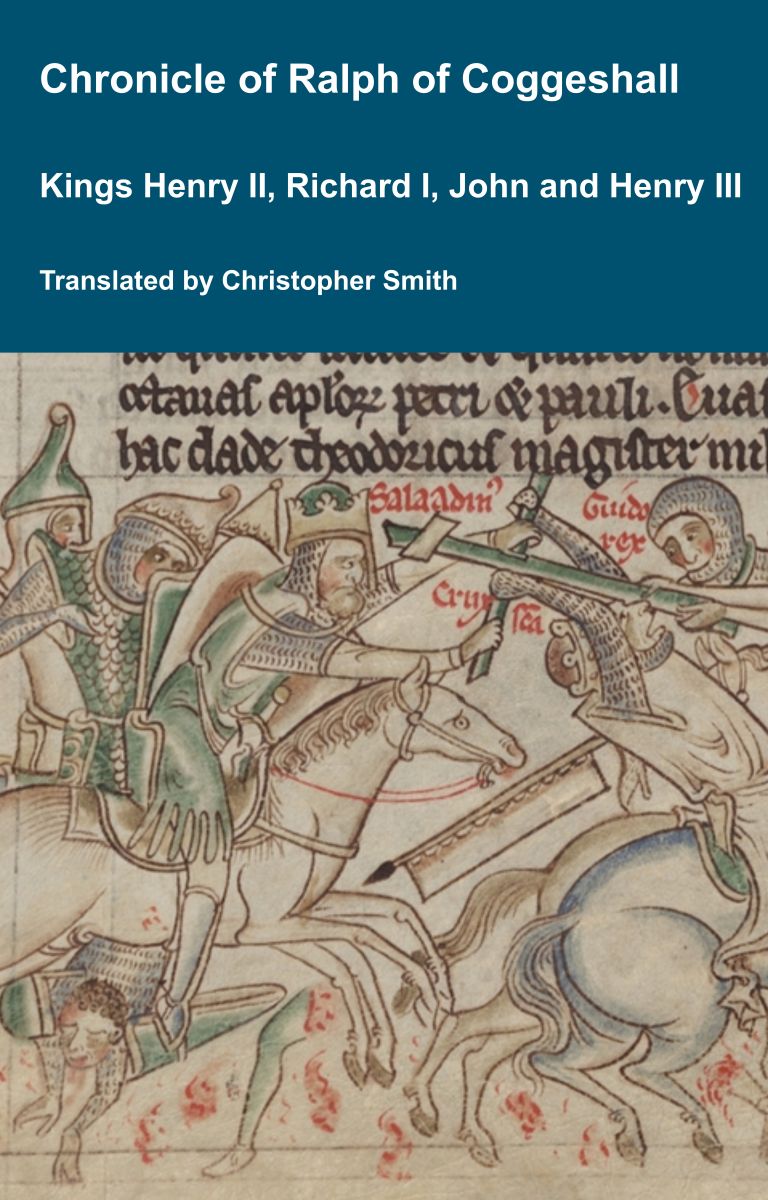
Chronicle of Abbot Ralph of Coggeshall
The Chronicle of Abbot Ralph of Coggeshall (Chronicon Anglicanum) is an indispensable medieval history that brings to life centuries of English and European affairs through the eyes of a learned Cistercian monk. Ralph of Coggeshall, abbot of the Abbey of Coggeshall in Essex in the early 13th century, continued and expanded his community’s chronicle, documenting events from the Norman Conquest of 1066 into the tumultuous reign of King Henry III. Blending eyewitness testimony, careful compilation, and the monastic commitment to record-keeping, this chronicle offers a rare narrative of political intrigue, royal power struggles, and social upheaval in England and beyond. Ralph’s work captures the reigns of pivotal figures such as Richard I and King John, providing invaluable insights into their characters, decisions, and the forces that shaped medieval rule. More than a simple annal, Chronicon Anglicanum conveys the texture of medieval life and governance, making it a rich source for scholars and readers fascinated by English history, monastic authorship, and the shaping of the medieval world.
Available at Amazon in eBook and Paperback format.
On 22nd May 1560 Joanne Daborn (age 37) died in childbirth.
After 22nd May 1560 she was buried at St Leonard Eastcheap Church [Map] where the inscription read:
"Here under this stone lieth Joane wife of William Allyn (age 45) citizen and alderman, who died in childbed of her 9th child the 22. of May 1560." (MS. Lansd. 874, f. 10b.)
Sir William Allen (for he was afterwards knighted) was the son of William Allen, citizen and poulterer of London; was sheriff 1562-3, lord mayor 1571-2. "He was at first free of the Leathersellers, afterwards a Mercer. And dwelled when he was sheriff in Bow-lane; when he was maior, in Tower-strete. But buried at St. Botulphes without Bishopsgate, in which parish he was borne."
Arms, Per fess sable and argent, a pale engrailed counterchanged, and three talbots passant of the second, collared gules.
On 22nd May 1570 Johann Wettin II Duke Saxe Weimar was born to Johann Wilhelm Wettin Duke Saxe Weimar (age 40) and Dorothea Susanne Palatine Duchess Saxe Weimar. He married 7th January 1593 Dorothea Maria Anhalt and had issue.
On 22nd May 1582 Edward Hoby (age 22) was knighted by Queen Elizabeth I of England and Ireland (age 48).
Calendar of State Papers Domestic Series Elizabeth I Addenda. 22nd May 1594, Newcastle. 17. Lionel Maddison (age 57), Mayor of Newcastle, to Sir Robt. Cecil (age 30). The persons who robbed the Scottish Queen [Anne of Denmark Queen Consort Scotland England and Ireland (age 19)] of her jewels, have been apprehended by the Captain of Tynemouth castle, whom I have dealt with in your name, to stay them and such of the jewels as have come to his hands, until Her Majesty's pleasure is further known, which he has promised. ½ page.


On 22nd May 1602 Renata Lorraine Duchess Bavaria (age 58) died.
On 22nd May 1611 the first Baronets were created by James I (age 44)
Walter Aston 1st Baronet (age 27) was created 1st Baronet Aston of Tixall.
Nicolas Bacon (age 71) was created 1st Baronet Bacon of Redgrave in Suffolk. The Premier Baronet being the first creation.
Henry Belasyse 1st Baronet (age 55) was created 1st Baronet Belasyse of Newborough.
George Booth (age 54) was created 1st Baronet Booth of Dunham Massey. Katherine Anderson Lady Dunham Massey (age 43) by marriage Lady Booth of Dunham Massey.
Edward Carr (age 68) was created 1st Baronet Carr of Sleaford in Lincolnshire. Anne Dyer Lady Carr by marriage Lady Carr of Sleaford in Lincolnshire.
Gervase Clifton 1st Baronet (age 23) was created 1st Baronet Clifton of Clifton in Nottinghamshire.
Moyle Finch 1st Baronet (age 61) was created 1st Baronet Finch of Eastwell in Kent. Elizabeth Heneage 1st Countess Winchelsea (age 54) by marriage Lady Finch of Eastwell in Kent.
Thomas Gerard 1st Baronet (age 51) was created 1st Baronet Gerard of Bryn in Lancashire.
Henry Hobart 1st Baronet (age 51) was created 1st Baronet Hobart of Intwood in Norfolk. Dorothy Bell Lady Hobart by marriage Lady Hobart of Intwood in Norfolk.
Richard Hoghton 1st Baronet (age 40) was created 1st Baronet Hoghton of Hoghton Tower in Lancashire.
Phillip Knyvet (age 41) was created 1st Baronet Knyvet of Buckenham in Norfolk.
Thomas Mansel 1st Baronet (age 55) was created 1st Baronet Mansel of Margam.
Thomas Pelham 1st Baronet (age 71) was created 1st Baronet Pelham of Laughton. Mary Walsingham Baroness Pelham Laughton (age 47) by marriage Lady Pelham of Laughton.
John Peyton 1st Baronet (age 50) was created 1st Baronet Peyton of Isleham.
George Savile 1st Baronet (age 61) was created 1st Baronet Savile of Thornhill.
John Shelley of Mitchelgrove 1st Baronet was created 1st Baronet Shelley of Mitchelgrove in Sussex.
George Shirley 1st Baronet (age 52) was created 1st Baronet Shirley of Staunton Harold in Leicestershire. Dorothy Wroughton Lady Shirley (age 41) by marriage Lady Shirley of Staunton Harold in Leicestershire.
John St John (age 25) was created 1st Baronet St John Lydiard Tregoze in Wiltshire.
John Stradling 1st Baronet (age 48) was created 1st Baronet Stradling of St Donats in Glamorganshire.
Thomas Temple 1st Baronet (age 44) was created 1st Baronet Temple of Stowe.
Lionel Tollemache 1st Baronet (age 48) was created 1st Baronet Talmash of Helmingham in Suffolk.

Diary of Anne Clifford. 22nd May 1616. Upon the 22nd Mr Davy's came down from London and brought me word that my Mother was very well recovered of her dangerous sickness. By him I writ a letter to my Lord (age 27) that Mr Amherst1 and Mr Davy might confer together about my jointure to free it from the payment of debts and all other incumbrances.
Note 1. Serjeant at law and Queen's serjeant, described by Thomas 1st Earl of Dorset in his will as 'his very loving friend Richard Amherst, Esq., high steward of all his manors, lands, and possessions within the county of Sussex."

After 22nd May 1648. St Vincent's Church, Caythorpe [Map]. Memorial to Edward Hussey 1st Baronet and his second wife Elizabeth de Vic.
Elizabeth de Vic: she was born to Charles de Vic 2nd Baronet. On 31st May 1698 Edward Hussey 3rd Baronet and she were married.
On 22nd May 1653 unamed child was born to Charles Paulet 1st Duke Bolton (age 23) and Christian Freschville (age 19). She died in childbirth. The child died seven days later on 29th May 1653. Both were buried at the St John the Baptist's Church, Staveley [Map]. Monument erected by her husband Charles Paulet 1st Duke Bolton the future Duke Bolton. Reclining figure with Chrisom Child.
Armorials...
Top Middle  Paulet Arms differenced with a label argent three points impaled
  Freschville Arms.
Top Left: His Arms, in sixths 1 Paulet Arms 2 Possibly  Seymour Arms although wings should be Or 3 Unknown Arms 4 Unknown Arms 5 Unknown Arms 6
  St John Arms with a label argent three points to reflect his status as son of the current owner of the Arms.
Top Right: Her Arms, in sixths 1 Freschville Arms 2 Unknown Arms 3 Unknown Arms 4 Unknown Arms 5 Unknown Arms 6  Harrington Arms.
Christian Freschville: On 13th December 1633 she was born to John Freschville 1st Baron Frescheville and Sarah Harrington. On 28th February 1652 Charles Paulet 1st Duke Bolton and she were married. He the son of John Paulet 5th Marquess Winchester and Jane Savage Marchioness Winchester.


Samuel Pepys' Diary. 22nd May 1660. Up very early, and now beginning to be settled in my wits again, I went about setting down my last four days' observations this morning. After that, was trimmed by a barber that has not trimmed me yet, my Spaniard being on shore. News brought that the two Dukes are coming on board, which, by and by, they did, in a Dutch boats the Duke of York in yellow trimmings, the Duke of Gloucester (age 19)1 in grey and red. My Lord went in a boat to meet them, the Captain, myself, and others, standing at the entering port. So soon as they were entered we shot the guns off round the fleet. After that they went to view the ship all over, and were most exceedingly pleased with it. They seem to be both very fine gentlemen. After that done, upon the quarter-deck table, under the awning, the Duke of York and my Lord, Mr. Coventry2, and I, spent an hour at allotting to every ship their service, in their return to England; which having done, they went to dinner, where the table was very full: the two Dukes at the upper end, my Lord Opdam next on one side, and my Lord on the other. Two guns given to every man while he was drinking the King's (age 29) health, and so likewise to the Duke's health. I took down Monsieur d'Esquier to the great cabin below, and dined with him in state alone with only one or two friends of his. All dinner the harper belonging to Captain Sparling played to the Dukes. After dinner, the Dukes and my Lord to see the Vice and Rear-Admirals; and I in a boat after them. After that done, they made to the shore in the Dutch boat that brought them, and I got into the boat with them; but the shore was so full of people to expect their coming, as that it was as black (which otherwise is white sand), as every one could stand by another. When we came near the shore, my Lord left them and came into his own boat, and General Pen and I with him; my Lord being very well pleased with this day's work. By the time we came on board again, news is sent us that the King is on shore; so my Lord fired all his guns round twice, and all the fleet after him, which in the end fell into disorder, which seemed very handsome. The gun over against my cabin I fired myself to the King, which was the first time that he had been saluted by his own ships since this change; but holding my head too much over the gun, I had almost spoiled my right eye. Nothing in the world but going of guns almost all this day. In the evening we began to remove cabins; I to the carpenter's cabin, and Dr. Clerke with me, who came on board this afternoon, having been twice ducked in the sea to-day coming from shore, and Mr. North and John Pickering the like. Many of the King's servants came on board to-night; and so many Dutch of all sorts came to see the ship till it was quite dark, that we could not pass by one another, which was a great trouble to us all. This afternoon Mr Downing (age 35) (who was knighted yesterday by the King') was here on board, and had a ship for his passage into England, with his lady and servants3. By the same token he called me to him when I was going to write the order, to tell me that I must write him Sir G. Downing. My Lord lay in the roundhouse to-night. This evening I was late writing a French letter myself by my Lord's order to Monsieur Kragh, Embassador de Denmarke a la Haye, which my Lord signed in bed. After that I to bed, and the Doctor, and sleep well.
Note 1. Henry, Duke of Gloucester, the youngest child of Charles L, born July 6th, 16-, who, with his sister Elizabeth, was allowed a meeting with his father on the night before the King's execution. Burnet says: "He was active, and loved business; was apt to have particular friendships, and had an insinuating temper which was generally very acceptable. The King loved him much better than the Duke of York". He died of smallpox at Whitehall, September 13th, 1660, and was buried in Henry VII's Chapel.
Note 2. William Coventry (age 32), to whom Pepys became so warmly attached afterwards, was the fourth son of Thomas, first Lord Coventry, the Lord Keeper. He was born in 1628, and entered at Queen's College, Oxford, in 1642; after the Restoration he became private secretary to the Duke of York, his commission as Secretary to the Lord High Admiral not being conferred until 1664; elected M.P. for Great Yarmouth in 1661. In 1662 he was appointed an extra Commissioner of the Navy, an office he held until 1667; in 1665, knighted and sworn a Privy Councillor, and, in 1667, constituted a Commissioner of the Treasury; but, having been forbid the court on account of his challenging the Duke of Buckingham, he retired into the country, nor could he subsequently be prevailed upon to accept of any official employment. Burnet calls Sir William Coventry the best speaker in the House of Commons, and "a man of the finest and best temper that belonged to the court", and Pepys never omits an opportunity of paying a tribute to his public and private worth. He died, 1686, of gout in the stomach.
Note 3. "About midnight arrived there Mr Downing, who did the affairs of England to the Lords the Estates, in quality of Resident under Oliver Cromwell, and afterward under the pretended Parliament, which having changed the form of the government, after having cast forth the last Protector, had continued him in his imploiment, under the quality of Extraordinary Envoy. He began to have respect for the King's person, when he knew that all England declared for a free parliament, and departed from Holland without order, as soon as he understood that there was nothing that could longer oppose the re- establishment of monarchal government, with a design to crave letters of recommendation to General Monk (age 51). This lord considered him, as well because of the birth of his wife, which is illustrious, as because Downing had expressed some respect for him in a time when that eminent person could not yet discover his intentions. He had his letters when he arrived at midnight at the house of the Spanish Embassador, as we have said. He presented them forthwith to the King, who arose from table a while after, read the letters, receiv'd the submissions of Downing, and granted him the pardon and grace which he asked for him to whom he could deny nothing. Some daies after the King knighted him, and would it should be believed, that the strong aversions which this minister of the Protector had made appear against him on all occasions, and with all sorts of persons indifferently, even a few daies before the publick and general declaration of all England, proceeded not from any evil intention, but only from a deep dissimulation, wherewith he was constrained to cover his true sentiments, for fear to prejudice the affairs of his Majesty".-Sir William Lowers Relation... of the Voiage and Residence which... Charles the II hath made in Holland, Hague, 1660, folio, pp. 72-73.


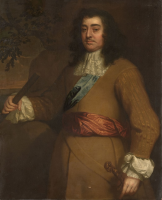

Samuel Pepys' Diary. 22nd May 1665. So to the Duke of Albemarle (age 56), and thence down by water to Deptford, Kent [Map], it being Trinity Monday, and so the day of choosing the Master of Trinity House, Deptford [Map] for the next yeare, where, to my great content, I find that, contrary to the practice and design of Sir W. Batten (age 64), to breake the rule and custom of the Company in choosing their Masters by succession, he would have brought in Sir W. Rider or Sir W. Pen (age 44), over the head of Hurleston (who is a knave too besides, I believe), the younger brothers did all oppose it against the elder, and with great heat did carry it for Hurleston, which I know will vex him to the heart.

Chronicle of Abbot Ralph of Coggeshall
The Chronicle of Abbot Ralph of Coggeshall (Chronicon Anglicanum) is an indispensable medieval history that brings to life centuries of English and European affairs through the eyes of a learned Cistercian monk. Ralph of Coggeshall, abbot of the Abbey of Coggeshall in Essex in the early 13th century, continued and expanded his community’s chronicle, documenting events from the Norman Conquest of 1066 into the tumultuous reign of King Henry III. Blending eyewitness testimony, careful compilation, and the monastic commitment to record-keeping, this chronicle offers a rare narrative of political intrigue, royal power struggles, and social upheaval in England and beyond. Ralph’s work captures the reigns of pivotal figures such as Richard I and King John, providing invaluable insights into their characters, decisions, and the forces that shaped medieval rule. More than a simple annal, Chronicon Anglicanum conveys the texture of medieval life and governance, making it a rich source for scholars and readers fascinated by English history, monastic authorship, and the shaping of the medieval world.
Available at Amazon in eBook and Paperback format.
John Evelyn's Diary. 22nd May 1666. Waited on my Lord Chancellor (age 57) at his new palace; and Lord Berkeley's (age 38) built next to it.
On 22nd May 1667 Charles Stewart 1st Duke Kendal died. Duke Kendal extinct.
Samuel Pepys' Diary. 22nd May 1667. Up, and by water to White Hall to Sir G. Carteret (age 57), who tells me now for certain how the Commission for the Treasury is disposed of: viz., to Duke of Albemarle (age 58), Lord Ashly (age 45), Sir W. Coventry (age 39), Sir John Duncomb (age 44), and Sir Thomas Clifford (age 36): at which, he says, all the whole Court is disturbed; it having been once concluded otherwise into the other hands formerly mentioned in yesterday's notes, but all of a sudden the King's choice was changed, and these are to be the men; the first of which is only for a puppet to give honour to the rest. He do presage that these men will make it their business to find faults in the management of the late Lord Treasurer (deceased), and in discouraging the bankers: but I am, whatever I in compliance do say to him, of another mind, and my heart is very glad of it, for I do expect they will do much good, and that it is the happiest thing that hath appeared to me for the good of the nation since the King (age 36) come in.


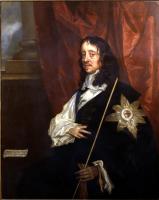
Samuel Pepys' Diary. 22nd May 1667. Thence I to Westminster Hall [Map] with Sir G. Carteret (age 57) to the Chequer Chamber to hear our cause of the Lindeboome prize there before the Lords of Appeal, where was Lord Ashly (age 45), Arlington (age 49), Barkely (age 65), and Sir G. Carteret, but the latter three signified nothing, the former only either minding or understanding what was said. Here was good pleading of Sir Walter Walker's and worth hearing, but little done in our business.


John Evelyn's Diary. 22nd May 1676. Trinity Monday. A chaplain of my Lord Ossory's (age 41) preached, after which we took barge to Trinity House in London. Mr. Pepys (age 43) (Secretary of the Admiralty) succeeded my Lord as Master.


John Evelyn's Diary. 22nd May 1685. In the morning I went with a French gentleman, and my Lord Privy Seale, to the House of Lords, where we were plac'd by his lordship next the Bar, just below ye Bishops, very commodiously both for hearing and seeing. After a short space came in ye Queene (age 26) and Princesse of Denmark (age 20), and stood next above the Archbishops, at the side of the House on the right hand of the throne. In the interim divers of the Lords, who had not finish'd before, tooke the Test and usual Oathes, so that her Ma*, the Spanish and other Ambassadors, who stood behind the throne, heard the Pope and worship of the Virgin Mary, &c. renounc'd very decently, as likewise the prayers which follow'd, standing all the while. Then came in the King (age 51), the Crowne on his head, and being seated, the Commons were introduced, and the House being full, he drew forth a paper containing his speech, which he read distinctly enough, to this effect: "That he resolv'd to call a Parliament from the moment of his brother's decease, as the best meanes to settle all the concernes of the Nation, so as to be most easy and happy to himselfe and his subjects; that he would confirme whatever he had said in his declaration at the first Council concerning his opinion of the principles of the Church of England, for their loyaltie, and would defend and support it, and preserve its government as by law now establish'd; that, as he would invade no man's property, so he would never depart from his owne prerogative; and as he had ventur'd his life in defence of the Nation, so he would proceede to do still; that, having given this assurance of his care of our Religion (his word was your Religion) and Property (wch he had not said by chance but solemnly), so he doubted not of suitable returnes of his subjects duty and kindnesse, especialy as to settling his Revenue for life, for yte many weighty necessities of go vernment, weh he would not suffer to be precarious; that some might possibly suggest that it were better to feede and supply him from time to time only, out of their inclination to frequent Parliaments, but that that would be a very improper method to take with him, since the best way to engage him to meete oftener would be always to use him well, and therefore he expected their compliance speedily, that this Session being but short, they might meet againe to satisfaction". At every period of this the House gave loud shouts. Then he acquainted them with that morning's news of Argyle's (age 56) being landed in the West High lands of Scotland from Holland, and the treasonous declaration he had published, which he would communicate to them, and that he should take the best care he could it should meete with the reward It deserv'd, not questioning the Parliament's zeale and readinesse to assist him as he desir'd; at which there follow'd another Vive le Roi, and so his Ma* retlr'd.
John Evelyn's Diary. 22nd May 1685. So soone as ye Commons were return'd and had put themselves into a grand Committee, they immediately put the question, and unanimously voted the Revenue to his Ma* for life. Mr. Seymour made a bold speech against many Elections, and would have had those members who (he pretended) were obnoxious, to withdraw, till they had clear'd the matter of their being legally return'd; but no one seconded him. The truth is, there were many of the new members whose Elections and Returns were universally censur'd, many of them being persons of no condition or interest in the Nation, or places for which they serv'd, especially in Devon, Cornwall, Norfolk, &c. said to have ben recommended by the Court and from the effect of the new charters changing ye electors. It was reported that Lord Bath (age 56) carried down with him [into Cornwall] no fewer than 15 charters, so that some call'd him the Prince Elector; whence Seymour told the House in his speech that if this was digested, they might introduce what religion and lawes they pleas'd, and that tho' he never gave heed to ye feares and jealousies of the people before, he now was really apprehensive of Popery. By the printed list of Members of 505 there did not appeare to be above 135 who had ben in former Parliaments, especialy that lately held at Oxford. In ye Lords House Lord Newport (age 65) made an exception against two or three young Peeres, who wanted some moneths, and some only four or five daies of being of age.
On 22nd May 1689 Leopold Ferdinand of Bavaria was born to Maximilian Wittelsbach II Elector Bavaria (age 26) and Maria Antonia of Austria (age 20). He died the same day. Coefficient of inbreeding 8.42%.
On 22nd May 1698 William Beauclerk was born to Charles Beauclerk 1st Duke St Albans (age 28) and Diana Vere Duchess St Albans (age 19). He a grandson of King Charles II of England Scotland and Ireland. He married before 1726 Charlotte Werden, daughter of John Werden 2nd Baronet, and had issue.


On 22nd May 1724 Elizabeth Scroggs died. Memorial at Lincoln Cathedral [Map] commissioned by her only surviving son William Gylby (age 55).
Elizabeth Scroggs: Before 1669 Anthony Gilby and she were married. Before January 1708 Charles Hatton and she were married.
William Gylby: In 1669 he was born to Anthony Gilby and Elizabeth Scroggs. On 10th May 1744 he died.
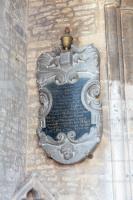
On 22nd May 1733 Jane Dymoke died. She was buried at the Church of St John the Baptist, Great Hale [Map].
Jane Dymoke: she was born to Charles Dymoke. On 28th October 1686 Robert Cawdron and she were married.
On 22nd May 1770 Princess Elizabeth Hanover was born to King George III of Great Britain and Ireland (age 31) and Charlotte Mecklenburg Strelitz Queen Consort England (age 26).
On 22nd May 1775 Peter August Oldenburg I Duke Schleswig-Holstein-Sonderburg-Beck (age 77) died.
On 22nd May 1788 Anne Elizabeth Cholmley Baroness Mulgrave (age 18) died in childbirth.
Archaeologia Volume 9 Appendix. 22nd May 1788. Owen Salusbury Brereton (age 73), Esq. V. P. exhibited a beautiful coloured drawing of a window in the parish-church of Brereton [Map], one of the oldest in the county-palatine of Chester; but the date of it is not exactly known1. In the lower compartments are four figures representing the four persons who slew Thomas Becket at the high altar in Canterbury cathedral, 1170. They are in complete armour, with drawn swords in their hands, and on pendant scrolls are inscribed their names; William Tracy, Richard Britton, Reginald Fitzurse, and Hugh Morrel. A fifth figure, exactly correiponding with these, in the centre compartments, bears, on the like scroll, these words, Martyrum Thomam. In three compartments of the Upper division of the window are two priests [Note. In the original the word priests is crossed out, and the word "saints" written in the margin.], and between them a figure episcopally habited, most probably intended for Becket himself. Under the five lower figures, after their names are these words tended for two hexameter lines:
Martyrum Thomam fieri fecere beatum
Anno milleno centeno septuageno.
[Note. The above two lines in Gothic script]
Under these the following inscription represented in the opposite page:
"Left this monument in Glase being in the upper window of the North syde the chauncell of Brereton churche shoulde be broken, I Sir Will'm Brereton, knight, to the end hyt may remayne in memorie to the posteritie, have caused the same to be heare purtred, the 25th of Marche, 1608. W. Brereton."
Note 1. See Pl. XXIII.


On 22nd May 1811 Henry Pelham-Clinton 5th Duke Newcastle-under-Lyne was born to Henry Pelham-Clinton 4th Duke Newcastle-under-Lyne (age 26) and Georgiana Elizabeth Mundy Duchess Newcastle under Lyne (age 21). See Life of Henry Pelham. He married 27th November 1832 Susan Harriet Catherine Hamilton Duchess Newcastle under Lyne, daughter of Alexander Hamilton 10th Duke Hamilton 7th Duke Brandon and Susanna Euphemia Beckford Duchess Hamilton Duchess Brandon, and had issue.

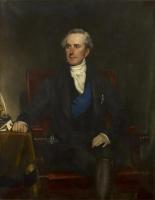
Henrici Quinti, Angliæ Regis, Gesta, is a first-hand account of the Agincourt Campaign, and subsequent events to his death in 1422. The author of the first part was a Chaplain in King Henry's retinue who was present from King Henry's departure at Southampton in 1415, at the siege of Harfleur, the battle of Agincourt, and the celebrations on King Henry's return to London. The second part, by another writer, relates the events that took place including the negotiations at Troye, Henry's marriage and his death in 1422.
Available at Amazon in eBook and Paperback format.
On 22nd May 1820 James Dutton 1st Baron Sherborne (age 75) died. His son John (age 40) succeeded 2nd Baron Sherborne. He was buried in the Saint Mary Magdalene's Church, Sherborne [Map]. Monument sculpted by William "The Younger" Theed (age 16). Trefoil-headed niche containing full figure of a woman holding a cross.
John Dutton 2nd Baron Sherborne: On 24th June 1779 he was born to James Dutton 1st Baron Sherborne and Elizabeth Coke Baroness Sherborne. Before 1804 John Dutton 2nd Baron Sherborne and Mary Bilson Legge Baroness Sherborne were married. She by marriage Baroness Sherborne.


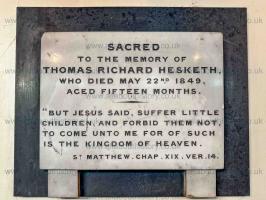
On 22nd May 1849 Thomas Richard Hesketh (age 1) died. Memorial at St Mary The Virgin Church, Rufford [Map].
Thomas Richard Hesketh: Around February 1848 he was born to Thomas Fermor-Hesketh 5th Baronet and Arabella Fermor Lady Hesketh.

On 22nd May 1854 Victoria Campbell was born to George Douglas Campbell 8th Duke Argyll (age 31) and Elizabeth Georgiana Leveson-Gower Duchess Argyll.
Ten Years' Digging. On the 22nd of May, we examined a few of the very numerous tumuli [Probably [Map]] situated in a plantation called "The Ferns," near Foremark Hall. The locality is a continuation of the eminence called Knoll Hill, and were it not covered by trees, would command an extensive view of the fertile vale of the Trent. The mounds, more than fifty in number, are placed without regularity, but are very uniform in appearance; their size varies from seven to ten yards across, and their average height is from two to three feet. The opening of five of them in places least encumbered with timber, afforded, it is presumed, a complete insight into the manner of interment practised throughout the whole. We found in every instance, that the mound had been raised over calcined human bones, which lay in the same place on the natural surface as they occupied when the funeral pile was smothered out by the casting up of the tumulus. The bones and black ashes of the pyre, reduced by compression to a layer about an inch thick, generally covered a space about four or five feet diameter in the centre; above were accumulated stones bearing marks of fire, which had been first thrown on the glowing embers, and over these earth was heaped to form the bowl-shaped mound. The only indication of man's workmanship brought to light by these researches, were two very small fragments of iron, found with two separate interments, one only having the definite form of a very slender pin, 1¾ inches long.
The origin of this tumular cemetery is enveloped in obscurity, and I fear to express an opinion upon a subject so uncertain, where opinion can be but mere conjecture; the absence of pottery and weapons affording no clue to the age or people to which the sepulchres should be attributed. Yet, taking it for granted that all the mounds would, if opened, reveal the same mode of burial, it would be natural to suppose that no great variation of date, if any, existed as to their age. Inferring further, from the lack of remains of a primitive character, and the presence of the iron fragments in two out of the five mounds opened, I should hesitate in assigning to them a high antiquity; and would rather seek to connect them with the eventful period in which tradition affirms the place to have been the scene of a sanguinary conflict between the Saxons and their Danish enemies, of whose successful forays in the Vale of Trent we have evidence in the name of the adjacent village of Ingleby, as well as in that of the still nearer domain of Foremark.
The Diary of George Price Boyce 1858. 22nd May 1858. To Wyld's reading rooms where I met Dante Rossetti (age 30). We went off to his rooms in a cab and had tea there. While I was looking at his excellent drawings he read aloud to me several translations of his in the metre of the original early Italian Sonnets and other pieces before and contemporary with Dante. Several of them most touching and graphic, terse and simple. Admiring a little pen and ink sketch of a little girl wheeling a child along in a go-cart, he gave it me. He came back with me in a cab to my place and there we sat and read and talked of Browning. He recited also 2 excellent little pieces by Morris (Topsy). He spoke of Jones being "an angel on earth, and too good for this world.


On 22nd May 1858 Margaret Compton (age 28) died from childbirth. Monument at Church of St Mary Magdalen, Castle Ashby [Map] erected by her husband Edward Frederick Leveson-Gower (age 39). Sculpted by Baron Pietro Carlo Marochetti (age 53).
Margaret Compton: On 14th March 1830 she was born to Spencer Compton 2nd Marquess Northampton and Margaret Douglas-Maclean-Clephane Marchioness Northampton in Rome, Italy [Map]. On 1st June 1851 Edward Frederick Leveson-Gower and she were married at St Margaret's Church, Westminster [Map]. She the daughter of Spencer Compton 2nd Marquess Northampton and Margaret Douglas-Maclean-Clephane Marchioness Northampton. He the son of Granville Leveson-Gower 1st Earl Granville and Harriet Cavendish Countess Granville. They were half fifth cousin once removed.


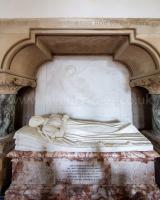


On 22nd May 1861 Francis Russell 7th Duke Bedford (deceased) was buried at Bedford Chapel, St Michael's Church, Chenies.
The Diary of George Price Boyce 1865. 22nd May 1865. Rossetti (age 37) sent down by Pope 13 pencil studies of heads, of which 2 (one of Ellen Smith and another ¾ of a new model) are gifts.
The other 11, viz, 3 of Fanny Cornforth (age 30), 2 of Ellen Smith, 1 of Ada, 1 of Mrs. Morris of Upton, £10, 1 of the negro boy, 1 of a negro girl, 1 of Mrs. Eaton, and 1 of Marie Ford I pay £60 for.
On 22nd May 1867 Edward Hodges Baily (age 79) died.
On 22nd May 1867 The Derby, run during a freak snowstorm, was won by Hermit (age 3), owned by Henry Chaplin 1st Viscount Chaplin (age 26). The jockey was John Daley. Hermit was bred by Mr William Blenkiron and trained by Mr Bloss at Newmarket. There were 29 runners from an initial entry of 256. The winner won by a neck in 2 mins 52 secs, with a good distance between second and third. The winner won a first prize of £7,000. As a result of betting against Hermit Henry Hastings, 4th Marquess (age 24), who had three years earlier eloped with Henry Chaplin's fiancé Florence Cecilia Paget Marchioness Hastings (age 24), was ruined. Henry Chaplin's, who had bet on his horse Hermit, whose odds had lengthened out to 66-1 as a result of doubts about his pre-race fitness, won a fortune.


On 22nd May 1876 George Victor Drogo Montagu 8th Duke Manchester (age 22) and Consuelo Yznaga Duchess Manchester (age 23) were married at Grace Church, Manhattan. Arguably a Dollar Princess. He the son of William Drogo Montagu 7th Duke Manchester (age 52) and Louisa Vonalten Duchess Devonshire and Manchester (age 43).


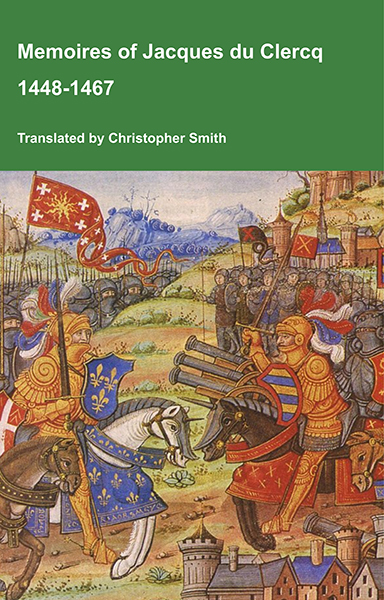
This is a translation of the 'Memoires of Jacques du Clercq', published in 1823 in two volumes, edited by Frederic, Baron de Reissenberg. In his introduction Reissenberg writes: 'Jacques du Clercq tells us that he was born in 1424, and that he was a licentiate in law and a counsellor to Philip the Good, Duke of Burgundy, in the castellany of Douai, Lille, and Orchies. It appears that he established his residence at Arras. In 1446, he married the daughter of Baldwin de la Lacherie, a gentleman who lived in Lille. We read in the fifth book of his Memoirs that his father, also named Jacques du Clercq, had married a lady of the Le Camelin family, from Compiègne. His ancestors, always attached to the counts of Flanders, had constantly served them, whether in their councils or in their armies.' The Memoires cover a period of nineteen years beginning in in 1448, ending in in 1467. It appears that the author had intended to extend the Memoirs beyond that date; no doubt illness or death prevented him from carrying out this plan. As Reissenberg writes the 'merit of this work lies in the simplicity of its narrative, in its tone of good faith, and in a certain air of frankness which naturally wins the reader’s confidence.' Du Clercq ranges from events of national and international importance, including events of the Wars of the Roses in England, to simple, everyday local events such as marriages, robberies, murders, trials and deaths, including that of his own father in Book 5; one of his last entries.
Available at Amazon in eBook and Paperback format.
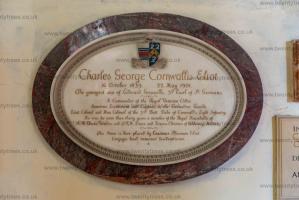
On 22nd May 1901 Charles George Cornwallis Eliot (age 61) died. Memorial at St Germans Priory [Map].
Charles George Cornwallis Eliot: On 16th October 1839 he was born to Edward Granville Eliot 3rd Earl St Germans and Jemima Cornwallis Countess St Germans. On 26th October 1865 Charles George Cornwallis Eliot and Constance Rhiannon Guest were married. He the son of Edward Granville Eliot 3rd Earl St Germans and Jemima Cornwallis Countess St Germans.
On 22nd May 1941 Midshipman James Weyland Darling (age 19) was killed in action when HMS Gloucester was sunk off Crete.
On 22nd May 1952 Henry John Fitzroy 12th Duke of Beaufort was born to David Fitzroy 11th Duke Beaufort (age 24) and Caroline Jane Thynne 11th Duchess Beaufort (age 24). He married (1) 13th June 1987 his fourth cousin Tracey Ward and had issue (2) 30th April 2018 Georgia Powell Duchess of Beaufort.
On 22nd May 1070 Amaury Montfort Count Évreux was born to Simon Montfort (age 45) and Agnès of Normandy (age 40). He married 1115 his half fourth cousin once removed Richilde Flanders Countess Évreux, daughter of Baldwin II Count Hainaut and Ida Reginar Countess Hainaut.
On 22nd May 1539 Edward Seymour 1st Earl Hertford was born to Edward Seymour 1st Duke of Somerset (age 39) and Anne Stanhope Duchess Somerset (age 42) at Wulf aka Wolf Hall, Wiltshire [Map]. He married (1) before 25th December 1560 his sixth cousin Catherine Grey Countess Hertford, daughter of Henry Grey 1st Duke of Suffolk and Frances Brandon Duchess of Suffolk, and had issue (2) 1582 his half sixth cousin Frances Howard Countess Hertford, daughter of William Howard 1st Baron Howard and Margaret Gamage Baroness Howard, and had issue (3) 27th May 1601 his half third cousin Frances Howard Duchess Lennox and Richmond, daughter of Thomas Howard 1st Viscount Howard Bindon and Mabel Burton Viscountess Howard Bindon.
On 22nd May 1540 James Stewart was born to King James V of Scotland (age 28) and Mary of Guise Queen Consort Scotland (age 24). He a great grandson of King Henry VII of England and Ireland. He died aged less than one years old.
On 22nd May 1563 John Stewart 5th Earl Atholl was born to John Stewart 4th Earl Atholl and Margaret Fleming Countess Atholl (age 34). He married before 14th November 1578 his second cousin Mary Ruthven Countess Atholl, daughter of William Ruthven 1st Earl Gowrie and Dorothea Stewart Countess Gowrie, and had issue.
On 22nd May 1570 Johann Wettin II Duke Saxe Weimar was born to Johann Wilhelm Wettin Duke Saxe Weimar (age 40) and Dorothea Susanne Palatine Duchess Saxe Weimar. He married 7th January 1593 Dorothea Maria Anhalt and had issue.
On 22nd May 1624 Arthur Onslow 1st and 2nd Baronet was born to Richard Onslow (age 23). He married before 23rd June 1654 Mary Foote, daughter of Thomas Foote 1st Baronet, and had issue.
On 22nd May 1653 unamed child was born to Charles Paulet 1st Duke Bolton (age 23) and Christian Freschville (age 19). She died in childbirth. The child died seven days later on 29th May 1653. Both were buried at the St John the Baptist's Church, Staveley [Map]. Monument erected by her husband Charles Paulet 1st Duke Bolton the future Duke Bolton. Reclining figure with Chrisom Child.
Armorials...
Top Middle Paulet Arms differenced with a label argent three points impaled Freschville Arms.
Top Left: His Arms, in sixths 1 Paulet Arms 2 Possibly Seymour Arms although wings should be Or 3 Unknown Arms 4 Unknown Arms 5 Unknown Arms 6 St John Arms with a label argent three points to reflect his status as son of the current owner of the Arms.
Top Right: Her Arms, in sixths 1 Freschville Arms 2 Unknown Arms 3 Unknown Arms 4 Unknown Arms 5 Unknown Arms 6 Harrington Arms.
Christian Freschville: On 13th December 1633 she was born to John Freschville 1st Baron Frescheville and Sarah Harrington. On 28th February 1652 Charles Paulet 1st Duke Bolton and she were married. He the son of John Paulet 5th Marquess Winchester and Jane Savage Marchioness Winchester.
On 22nd May 1689 Leopold Ferdinand of Bavaria was born to Maximilian Wittelsbach II Elector Bavaria (age 26) and Maria Antonia of Austria (age 20). He died the same day. Coefficient of inbreeding 8.42%.
On 22nd May 1698 William Beauclerk was born to Charles Beauclerk 1st Duke St Albans (age 28) and Diana Vere Duchess St Albans (age 19). He a grandson of King Charles II of England Scotland and Ireland. He married before 1726 Charlotte Werden, daughter of John Werden 2nd Baronet, and had issue.
Chronicle of Abbot Ralph of Coggeshall
The Chronicle of Abbot Ralph of Coggeshall (Chronicon Anglicanum) is an indispensable medieval history that brings to life centuries of English and European affairs through the eyes of a learned Cistercian monk. Ralph of Coggeshall, abbot of the Abbey of Coggeshall in Essex in the early 13th century, continued and expanded his community’s chronicle, documenting events from the Norman Conquest of 1066 into the tumultuous reign of King Henry III. Blending eyewitness testimony, careful compilation, and the monastic commitment to record-keeping, this chronicle offers a rare narrative of political intrigue, royal power struggles, and social upheaval in England and beyond. Ralph’s work captures the reigns of pivotal figures such as Richard I and King John, providing invaluable insights into their characters, decisions, and the forces that shaped medieval rule. More than a simple annal, Chronicon Anglicanum conveys the texture of medieval life and governance, making it a rich source for scholars and readers fascinated by English history, monastic authorship, and the shaping of the medieval world.
Available at Amazon in eBook and Paperback format.
On 22nd May 1709 Reverend Hadley D'Oyly 5th Baronet was born to Hadley D'Oyly and Elizabeth Yallop. He married before January 1754 Henrietta Osborn Lady D'Oyly and had issue.
On 22nd May 1755 John Finch was born to Heneage Finch 3rd Earl Aylesford (age 39) and Charlotte Seymour Countess Aylesford (age 24).

On 22nd May 1762 Henry Bathurst 3rd Earl Bathurst was born to Henry Bathurst 2nd Earl Bathurst (age 48) and Tryphena Scawen Countess Bathurst Sussex (age 31). He married April 1789 his fifth cousin once removed Georgiana Lennox Countess Bathurst and had issue.
On 22nd May 1770 Princess Elizabeth Hanover was born to King George III of Great Britain and Ireland (age 31) and Charlotte Mecklenburg Strelitz Queen Consort England (age 26).
On 22nd May 1811 Henry Pelham-Clinton 5th Duke Newcastle-under-Lyne was born to Henry Pelham-Clinton 4th Duke Newcastle-under-Lyne (age 26) and Georgiana Elizabeth Mundy Duchess Newcastle under Lyne (age 21). See Life of Henry Pelham. He married 27th November 1832 Susan Harriet Catherine Hamilton Duchess Newcastle under Lyne, daughter of Alexander Hamilton 10th Duke Hamilton 7th Duke Brandon and Susanna Euphemia Beckford Duchess Hamilton Duchess Brandon, and had issue.

On 22nd May 1815 Eleanor Henrietta Robinson was born to Frederick John Robinson 1st Earl Ripon (age 32) and Sarah Albinia Louisa Hobart (age 22). She died aged eleven in 1826.

On 22nd May 1818 Henry George Howard was born to George Howard 6th Earl Carlisle (age 44) and Georgiana Cavendish Countess Carlisle (age 34). He married 1845 Mary Wellesley MacTavish.
On 22nd May 1820 Watkin Williams-Wynn 6th Baronet was born to Watkin Williams-Wynn 5th Baronet (age 47) and Henrietta Antonia Clive Lady Williams-Wynn. He married 28th April 1852 his first cousin Marie Emily Williams-Wynn Lady Williams-Wynn and had issue.
On 22nd May 1821 John Edward Harington 10th Baronet was born to James Harington 9th Baronet (age 32).
On 22nd May 1830 John Baptist Dormer 12th Baron Dormer was born to Joseph Thaddeus Dormer 11th Baron Dormer (age 39) and Elizabeth Anne Tichborne Baroness Dormer. He married 14th June 1866 Louisa Frances Mary King-Tenison and had issue.
On 22nd May 1844 Edward Archibald Acheson was born to Archibald Acheson 3rd Earl Gosford (age 37) and Theodosia Brabazon Countess Gosford (age 33).
On 22nd May 1851 Edwyn Hoskyns 12th Baronet was born to John Leigh Hoskyns 9th Baronet (age 34).
The Deeds of the Dukes of Normandy
The Gesta Normannorum Ducum [The Deeds of the Dukes of Normandy] is a landmark medieval chronicle tracing the rise and fall of the Norman dynasty from its early roots through the pivotal events surrounding the Norman Conquest of England. Originally penned in Latin by the monk William of Jumièges shortly before 1060 and later expanded at the behest of William the Conqueror, the work chronicles the deeds, politics, battles, and leadership of the Norman dukes, especially William’s own claim to the English throne. The narrative combines earlier historical sources with firsthand information and oral testimony to present an authoritative account of Normandy’s transformation from a Viking settlement into one of medieval Europe’s most powerful realms. William’s history emphasizes the legitimacy, military prowess, and governance of the Norman line, framing their expansion, including the conquest of England, as both divinely sanctioned and noble in purpose. Later chroniclers such as Orderic Vitalis and Robert of Torigni continued the history, extending the coverage into the 12th century, providing broader context on ducal rule and its impact. Today this classic work remains a foundational source for understanding Norman identity, medieval statesmanship, and the historical forces that reshaped England and Western Europe between 800AD and 1100AD.
Available at Amazon in eBook and Paperback format.
On 22nd May 1854 Victoria Campbell was born to George Douglas Campbell 8th Duke Argyll (age 31) and Elizabeth Georgiana Leveson-Gower Duchess Argyll.

On 22nd May 1872 Archibald Kennedy 4th Marquess of Ailsa was born to Archibald Kennedy 3rd Marquess of Ailsa (age 24) and Evelyn Stuart (age 24).
On 22nd May 1880 Thomas Agar-Robartes was born to Thomas Agar-Robartes 6th Viscount Clifden (age 36) and Mary Dickinson Viscountess Clifden.
On 22nd May 1890 Captain Valentine Maurice Wyndham-Quin was born to Windham Wyndham-Quin 5th Earl of Dunraven and Mount Earl (age 33).
On 22nd May 1906 Victor Montagu 10th Earl Sandwich was born to George Charles Montagu 9th Earl Sandwich (age 31) and Alberta Sturges Countess Sandwich (age 28). He married (1) 27th July 1934 Maud Rosemary Peto (2) 7th June 1962 Anne Cavendish Countess Sandwich, daughter of Victor Christian William Cavendish 9th Duke Devonshire and Evelyn Emily Mary Petty-Fitzmaurice Duchess Devonshire.
On 22nd May 1911 Randal McDonnell 8th Earl of Antrim was born to Randall McDonnell 7th Earl of Antrim (age 32) and Margaret Isabel Talbot Countess of Antrim. He married 11th May 1934 his sixth cousin Angela Christina Sykes Countess of Antrim, daughter of Mark Sykes 6th Baronet and Edith Violet Gorst, and had issue.
On 22nd May 1938 Anthony Ashley-Cooper 10th Earl of Shaftesbury was born to Major Anthony Ashley-Cooper (age 37) and Françoise Soulier. He married (1) July 1966 Christina Eva Montan Countess of Shaftesbury and had issue (2) July 1966 Bianca Maria de Paolis Countess of Shaftesbury (3) 5th November 2002 Jamila Ben M'Barek Countess of Shaftesbury.
On 22nd May 1952 Henry John Fitzroy 12th Duke of Beaufort was born to David Fitzroy 11th Duke Beaufort (age 24) and Caroline Jane Thynne 11th Duchess Beaufort (age 24). He married (1) 13th June 1987 his fourth cousin Tracey Ward and had issue (2) 30th April 2018 Georgia Powell Duchess of Beaufort.
On 22nd May 1657 George Sinclair 6th Earl Caithness (age 21) and Mary Campbell Countess Caithness, Breadalbaine and Holland (age 23) were married. She by marriage Countess Caithness. She the daughter of Archibald Campbell 1st Marquess Argyll (age 50) and Margaret Douglas Marchioness Argyll (age 47). They were fifth cousin once removed.
On 22nd May 1678 Charles Granville 2nd Earl Bath (age 16) and Martha Osborne (age 14) were married. She the daughter of Thomas Osborne 1st Duke Leeds (age 46) and Bridget Bertie Duchess Leeds (age 49). He the son of John Granville 1st Earl Bath (age 49) and Jane Wyche.
Henrici Quinti, Angliæ Regis, Gesta, is a first-hand account of the Agincourt Campaign, and subsequent events to his death in 1422. The author of the first part was a Chaplain in King Henry's retinue who was present from King Henry's departure at Southampton in 1415, at the siege of Harfleur, the battle of Agincourt, and the celebrations on King Henry's return to London. The second part, by another writer, relates the events that took place including the negotiations at Troye, Henry's marriage and his death in 1422.
Available at Amazon in eBook and Paperback format.
On 22nd May 1695 John St Aubyn 2nd Baronet (age 24) and Mary de la Hay were married.
On 22nd May 1700 John Trevelyan 2nd Baronet (age 30) and Susanna Warren Lady Trevelyan (age 25) were married. She by marriage Lady Trevelyan of Nettlecombe.
On 22nd May 1700 Charles Goring 3rd Baronet (age 32) and Elizabeth Bridger were married at St Martin in the Fields Church [Map].
On 22nd May 1701 Henry St John 1st Viscount Bolingbroke (age 22) and Frances Winchcombe Viscountess Bolingbroke (age 20) were married at St Dunstan's in the East Parish.


On 21st or 22nd May 1772 Guy Carleton 1st Baron Dorchester and Maria Howard Baroness Dorchester were married. They had nine sons and two daughters. She the daughter of Thomas Howard 2nd Earl of Effingham and Elizabeth Beckford Countess Effingham (age 47).
On 22nd May 1777 Robert John Buxton 1st Baronet (age 23) and Juliana Mary Beevor were married at St George's Church, Hanover Square.
On 22nd May 1810 John Loftus 2nd Marquess Ely (age 40) and Anna Maria Dashwood Marchioness Ely (age 20) were married at St George's Church, Hanover Square. He the son of Charles Tottenham aka Loftus 1st Marquess Ely and Jane Myhill Marchioness Ely.
On 22nd May 1813 Admiral Joseph Sydney Yorke (age 44) and Urania Paulet Marchioness Clanricarde (age 46) were married at St Martin in the Fields Church [Map]. She the daughter of George Paulett 12th Marquess Winchester and Martha Ingoldsby Marchioness Winchester.
On 22nd May 1858 John Dugdale Astley 3rd Baronet (age 30) and Eleanor Blanche Mary Corbett were married.

On 22nd May 1866 Charles Strickland 8th Baronet (age 47) and Anne Elizabeth Nevile were married.
William of Worcester's Chronicle of England
William of Worcester, born around 1415, and died around 1482 was secretary to John Fastolf, the renowned soldier of the Hundred Years War, during which time he collected documents, letters, and wrote a record of events. Following their return to England in 1440 William was witness to major events. Twice in his chronicle he uses the first person: 1. when writing about the murder of Thomas, 7th Baron Scales, in 1460, he writes '… and I saw him lying naked in the cemetery near the porch of the church of St. Mary Overie in Southwark …' and 2. describing King Edward IV's entry into London in 1461 he writes '… proclaimed that all the people themselves were to recognize and acknowledge Edward as king. I was present and heard this, and immediately went down with them into the city'. William’s Chronicle is rich in detail. It is the source of much information about the Wars of the Roses, including the term 'Diabolical Marriage' to describe the marriage of Queen Elizabeth Woodville’s brother John’s marriage to Katherine, Dowager Duchess of Norfolk, he aged twenty, she sixty-five or more, and the story about a paper crown being placed in mockery on the severed head of Richard, 3rd Duke of York.
Available at Amazon in eBook and Paperback format.
On 22nd May 1876 George Victor Drogo Montagu 8th Duke Manchester (age 22) and Consuelo Yznaga Duchess Manchester (age 23) were married at Grace Church, Manhattan. Arguably a Dollar Princess. He the son of William Drogo Montagu 7th Duke Manchester (age 52) and Louisa Vonalten Duchess Devonshire and Manchester (age 43).
On 22nd May 1937 Charles Gerald Shuckburgh 12th Baronet (age 26) and Nancy Diana Mary Lubbock Lady Schuckburgh (age 22) were married. She by marriage Lady Schuckburgh of Schuckburgh in Warwickshire.
On 22nd May 1276 Joan Somery Baroness Berkeley (age 81) died at St Augustine's Abbey, Bristol [Map].
On 22nd May 1455 the Wars of the Roses commenced with the First Battle of St Albans. Richard Plantagenet 3rd Duke of York (age 43) commanded with Richard "Kingmaker" Neville Earl Warwick, 6th Earl Salisbury (age 26), Richard Neville Earl Salisbury (age 55), Edward Brooke 6th Baron Cobham (age 40) and Walter Strickland (age 44).
The Lancastrians...
Edmund Beaufort 1st or 2nd Duke of Somerset (age 49) was killed. His son Henry (age 19) succeeded 2nd Duke Somerset, 2nd Marquess Dorset, 5th Earl Somerset, 2nd Earl Dorset. Note his father is frequently incorrectly referred to as the second Duke and Henry as the third Duke. His father's Dukedom, however, was a new creation.
Henry Percy 2nd Earl of Northumberland (age 62) was killed. His son Henry (age 33) succeeded 3rd Earl of Northumberland, 6th Baron Percy of Alnwick, 14th Baron Percy of Topcliffe. Eleanor Poynings Countess Northumberland (age 33) by marriage Countess of Northumberland.
Thomas Clifford 8th Baron Clifford (age 41) was killed. His son John (age 20) succeeded 9th Baron de Clifford, 9th Lord Skipton. Margaret Bromflete Baroness Clifford (age 21) by marriage Baroness de Clifford.
William Cotton (age 45) and Richard Fortescue (age 41) were killed.
Humphrey Stafford 1st Duke of Buckingham (age 52) was wounded and captured.
King Henry VI of England and II of France (age 33), John Sutton 1st Baron Dudley (age 54) and Edmund Sutton (age 30) were captured.
Henry Beaufort 2nd or 3rd Duke of Somerset was wounded. James Butler 1st Earl Wiltshire 5th Earl Ormonde (age 34) and John Wenlock 1st Baron Wenlock (age 55) fought.
Richard Cotton of Hampstall Ridware (age 51) and his son William Cotton of Connington in Huntingdonshire (age 27) were killed.
On 22nd May 1490 Edmund Grey 1st Earl Kent (age 73) died. His son George (age 36) succeeded 2nd Earl Kent, 5th Baron Grey of Ruthyn. Katherine Herbert Countess Kent (age 26) by marriage Countess Kent.
On 22nd May 1602 Renata Lorraine Duchess Bavaria (age 58) died.
On 22nd May 1632 Erasmus Dryden 1st Baronet (age 78) died. His son John (age 52) succeeded 2nd Baronet Dryden of Canons Ashby in Northamptonshire.
On 22nd May 1667 Charles Stewart 1st Duke Kendal died. Duke Kendal extinct.
On 22nd May 1675 Thomas Smith 1st Baronet (age 53) died. His nephew Thomas succeeded 2nd Baronet Smith of Hatherton in Cheshire.
On 22nd May 1681 Robert Cholmondeley 1st Viscount Cholmondeley (age 41) died at St James'. His son Hugh (age 19) succeeded 2nd Viscount Cholmondeley of Kells in County Meath.

On 22nd May 1699 James Bertie 1st Earl of Abingdon (age 45) died. His son Montagu (age 26) succeeded 2nd Earl Abingdon, 6th Baron Norreys of Rycote.
On 22nd May 1713 Robert Haselrigge 5th Baronet (age 73) died. His son Robert (age 45) succeeded 6th Baronet Haselrigge of Noseley Hall in Leicestershire. Dorothy Maynard Lady Haselrigge (age 45) by marriage Lady Haselrigge of Noseley Hall in Leicestershire.
On 22nd May 1715 Gervase Pierrepont 1st Baron Pierrepont (age 66) died. Baron Pierrepont of Ardglass in Antrim, Baron Pierrepont of Hanslope in Buckinghamshire extinct.
Abbot John Whethamstede’s Chronicle of the Abbey of St Albans
Abbot John Whethamstede's Register aka Chronicle of his second term at the Abbey of St Albans, 1451-1461, is a remarkable text that describes his first-hand experience of the beginning of the Wars of the Roses including the First and Second Battles of St Albans, 1455 and 1461, respectively, their cause, and their consequences, not least on the Abbey itself. His text also includes Loveday, Blore Heath, Northampton, the Act of Accord, Wakefield, and Towton, and ends with the Coronation of King Edward IV. In addition to the events of the Wars of the Roses, Abbot John, or his scribes who wrote the Chronicle, include details in the life of the Abbey such as charters, letters, land exchanges, visits by legates, and disputes, which provide a rich insight into the day-to-day life of the Abbey, and the challenges faced by its Abbot.
Available at Amazon in eBook and Paperback format.
On 22nd May 1725 Robert Molesworth 1st Viscount Molesworth (age 68) died. His son John (age 46) succeeded 2nd Viscount Molesworth of Swords.
On 22nd May 1739 John Coryton 4th Baronet (age 49) died. He was buried on 9th June 1739 at St Melanus' Church, St Mellion. Baronet Coryton of Newton extinct. Despite having a sister Susanna Coryton his estates appear to have devolved to his cousin Peter Goodall, who took the name Coryton, grandson of Elizabeth Coryton who was daughter of John Coryton 1st Baronet.
On 22nd May 1755 Robert King 1st Baron Kingsborough (age 31) died unmarried. Baron Kingsborough extinct. His brother Edward (age 29) succeeded 5th Baronet King of Boyle Abbot.
On 22nd May 1775 Peter August Oldenburg I Duke Schleswig-Holstein-Sonderburg-Beck (age 77) died.
On 22nd May 1775 Francis Vincent 7th Baronet (age 58) died. His son Francis (age 28) succeeded 8th Baronet Vincent of Stoke d'Abernon.

On 22nd May 1781 Garrett Wellesley 1st Earl Mornington (age 45) died at Kensington. He was buried at Grosvenor Chapel, Mayfair. His son Richard (age 20) succeeded 2nd Earl Mornington, 2nd Viscount Wellesley of Dangan Castle.
On 22nd May 1787 Francis Burton aka Conyngham 2nd Baron Conyngham (age 62) died. His son Henry (age 20) succeeded 3rd Baron Conyngham.
On 22nd May 1788 Anne Elizabeth Cholmley Baroness Mulgrave (age 18) died in childbirth.
On 22nd May 1803 William Willoughby Cole 1st Earl Enniskillen (age 67) died. His son John (age 35) succeeded 2nd Earl Enniskillen.


On 22nd May 1805 Anne Eyre Countess Massereene (age 88) died.
Anne Boleyn. Her Life as told by Lancelot de Carle's 1536 Letter.
In 1536, two weeks after the execution of Anne Boleyn, her brother George and four others, Lancelot du Carle, wrote an extraordinary letter that described Anne's life, and her trial and execution, to which he was a witness. This book presents a new translation of that letter, with additional material from other contemporary sources such as Letters, Hall's and Wriothesley's Chronicles, the pamphlets of Wynkyn the Worde, the Memorial of George Constantyne, the Portuguese Letter and the Baga de Secrets, all of which are provided in Appendices.
Available at Amazon in eBook and Paperback format.
On 22nd May 1818 Francis Blake 2nd Baronet (age 81) died. His son Francis (age 44) succeeded 3rd Baronet Blake of Twizel Castle in County Durham.
On 22nd May 1820 James Dutton 1st Baron Sherborne (age 75) died. His son John (age 40) succeeded 2nd Baron Sherborne. He was buried in the Saint Mary Magdalene's Church, Sherborne [Map]. Monument sculpted by William "The Younger" Theed (age 16). Trefoil-headed niche containing full figure of a woman holding a cross.
John Dutton 2nd Baron Sherborne: On 24th June 1779 he was born to James Dutton 1st Baron Sherborne and Elizabeth Coke Baroness Sherborne. Before 1804 John Dutton 2nd Baron Sherborne and Mary Bilson Legge Baroness Sherborne were married. She by marriage Baroness Sherborne.
On 22nd May 1858 Margaret Compton (age 28) died from childbirth. Monument at Church of St Mary Magdalen, Castle Ashby [Map] erected by her husband Edward Frederick Leveson-Gower (age 39). Sculpted by Baron Pietro Carlo Marochetti (age 53).
Margaret Compton: On 14th March 1830 she was born to Spencer Compton 2nd Marquess Northampton and Margaret Douglas-Maclean-Clephane Marchioness Northampton in Rome, Italy [Map]. On 1st June 1851 Edward Frederick Leveson-Gower and she were married at St Margaret's Church, Westminster [Map]. She the daughter of Spencer Compton 2nd Marquess Northampton and Margaret Douglas-Maclean-Clephane Marchioness Northampton. He the son of Granville Leveson-Gower 1st Earl Granville and Harriet Cavendish Countess Granville. They were half fifth cousin once removed.
On 22nd May 1867 Edward Hodges Baily (age 79) died.
On 22nd May 1867 Mary Brudenell Countess Chichester (age 60) died.

On 22nd May 1868 Henry Halford 2nd Baronet (age 71) died. His son Henry (age 39) succeeded 3rd Baronet Vaughan aka Halford of Wistow in Leicestershire.
On 22nd May 1891 Vincent Rowland Corbet 3rd Baronet (age 69) died. His son Walter (age 34) succeeded 4th Baronet Corbet of Moreton Corbet in Shropshire.
On 22nd May 1892 Mary Christian Law Lady Williams died.
On 22nd May 1913 Edward Gibson 1st Baron Ashbourne (age 75) died.
On 22nd May 1921 Robert Boughey 7th Baronet (age 78) died. His brother George (age 73) succeeded 8th Baronet Boughey of Newcastle under Lyme in Staffordshire.
On 22nd May 1924 Herbert Ramsay 5th Baronet (age 56) died. His son Alexander (age 21) succeeded 6th Baronet Ramsay of Balmain in Kincardineshire.
On 22nd May 1935 Herbert Gibbs 1st Baron Hunsdon (age 81) died. His son Walter (age 46) succeeded 2nd Baron Hunsdon of Hunsdon of Briggens Hertfordshire. Beatrix Elinor Paul Baroness Aldenham and Hunsdon (age 44) by marriage Baroness Hunsdon of Hunsdon of Briggens Hertfordshire.
The Deeds of the Dukes of Normandy
The Gesta Normannorum Ducum [The Deeds of the Dukes of Normandy] is a landmark medieval chronicle tracing the rise and fall of the Norman dynasty from its early roots through the pivotal events surrounding the Norman Conquest of England. Originally penned in Latin by the monk William of Jumièges shortly before 1060 and later expanded at the behest of William the Conqueror, the work chronicles the deeds, politics, battles, and leadership of the Norman dukes, especially William’s own claim to the English throne. The narrative combines earlier historical sources with firsthand information and oral testimony to present an authoritative account of Normandy’s transformation from a Viking settlement into one of medieval Europe’s most powerful realms. William’s history emphasizes the legitimacy, military prowess, and governance of the Norman line, framing their expansion, including the conquest of England, as both divinely sanctioned and noble in purpose. Later chroniclers such as Orderic Vitalis and Robert of Torigni continued the history, extending the coverage into the 12th century, providing broader context on ducal rule and its impact. Today this classic work remains a foundational source for understanding Norman identity, medieval statesmanship, and the historical forces that reshaped England and Western Europe between 800AD and 1100AD.
Available at Amazon in eBook and Paperback format.
On 22nd May 1945 Margaret Elizabeth Leigh Countess Jersey (age 95) died.
On 22nd May 1956 Beatrice Violet Rawson Baroness Leconfield (age 64) died.
On 22nd May 2004 Bridget Assheton Lady Worsley (age 77) died.