

The History of William Marshal was commissioned by his son shortly after William’s death in 1219 to celebrate the Marshal’s remarkable life; it is an authentic, contemporary voice. The manuscript was discovered in 1861 by French historian Paul Meyer. Meyer published the manuscript in its original Anglo-French in 1891 in two books. This book is a line by line translation of the first of Meyer’s books; lines 1-10152. Book 1 of the History begins in 1139 and ends in 1194. It describes the events of the Anarchy, the role of William’s father John, John’s marriages, William’s childhood, his role as a hostage at the siege of Newbury, his injury and imprisonment in Poitou where he met Eleanor of Aquitaine and his life as a knight errant. It continues with the accusation against him of an improper relationship with Margaret, wife of Henry the Young King, his exile, and return, the death of Henry the Young King, the rebellion of Richard, the future King Richard I, war with France, the death of King Henry II, and the capture of King Richard, and the rebellion of John, the future King John. It ends with the release of King Richard and the death of John Marshal.
Available at Amazon in eBook and Paperback format.
22 Oct is in October.
1189 Richard I Appoints his Bishops
1591 Elizabeth's Royal Progress
On 22nd October 1071 William "Troubadour" Poitiers IX Duke Aquitaine was born to Guy William Poitiers VIII Duke Aquitaine (age 46) and Hildegarde Burgundy Duchess Aquitaine (age 15) at Toulouse. He married (1) 1088 his half first cousin Ermengarde Anjou Duchess Brittany and Aquitaine, daughter of Fulk "Réchin" Anjou 4th Count Anjou and Hildegarde Beaugency Countess Anjou (2) 1094 Philippa Rouerge Duchess Aquitaine, daughter of William Rouerge Duke Narbonne and Emma Mortain Duchess Narbonne, and had issue.
On 22nd October 1189 two of Richard's new Bishops were consecrated...
Bishop Godfrey Lucy was consecrated Bishop of Winchester.
Archbishop Hubert Walter (age 29) was consecrated Bishop of Salisbury.
Annals of Dunstable. In the same year Brother John (age 54), archbishop of Canterbury, visited the diocese of Lincoln for the first time. And on the feast of Saint Luke [18th October 1284] he turned aside to Dunstable for the purpose of visitation. And since he found everything there in good order, because the bishop of Lincoln had quite recently visited that house, he nevertheless stayed there one night. And he received from that monastery for his procuration four marks; and he departed. Also, to a certain canon of Dunstable who had incurred irregularity, the said archbishop gave the cross, and by the authority granted to those signed with the cross absolved the said canon from that irregularity, provided that on the first expedition he should make redemption of it, so far as he might be able to obtain the money from his own chamber or also from his friends, without loss to the monastery. On the following Sunday [22nd October 1284] the said archbishop consecrated Walter Scammel as bishop of Salisbury, namely in one of the manors1 of that bishop near Reading. Also, the inspection of our privileges concerning the appropriation of churches the same archbishop then postponed."
Eodem anno, frater Johannes, Cantuariensis archiepiscopus, primo visitavit Lincolniensem diocesim. Et die Sancti Lucæ apud Dunstaple causa visitationis divertit. Cumque ibi omnia prospere reperisset, eo quod Lincolniensis episcopus quasi recenter domum illam visitasset, una tamen nocte ibidem pernoctavit. Et recepit ab illo monasterio pro procuratione sua quatuor marcas; et discessit. Item, cuidam canonico de Dunstaple, qui irregularitatem contraxerat, dictus archiepiscopus dedit crucem, et auctoritate cruce signatis indulta, dictum canonicum ab ipsa irregularitate absolvit. Ita quod in prima expeditione faceret inde redemptionem, quatenus assequi posset pecuniam a sua propria camera, seu etiam ab amicis, sine monasterii læsione. Dominica proxima sequenti dictus archiepiscopus Walterum Scamal in episcopum Sarisburiensem Salisbury, consecravit; videlicet, in quodam manerio ipsius episcopi juxta Redingges. Item, inspectionem privilegioleges as to rum nostrorum super appropriatione ecclesiarum, idem archiepiscopus ad tunc posuit in respectum.
Note 1. The manor of Sunning, aka Sunninghill, in Berkshire.
On 22nd October 1284 Bishop Walter Scammel was consecrated Bishop of Salisbury by Archbishop John Peckham (age 54). See Annals of Dunstable.
Rymer's Fœdera Volume 1. A confederation entered into between the King of England and the King of the Romans.
Edward, by the grace of God King of England, Lord of Ireland, and Duke of Aquitaine, to all who shall inspect these present letters, greeting. Know that we have given, transferred, and conveyed full and free power, and special mandate of ordering, establishing, and concluding, between us and our heirs, and the renowned prince Lord Adolf, illustrious King of the Romans and ever august, an indissoluble bond of confederation and union of special friendship, to John of good memory, then Archbishop of Dublin, and to the venerable father Anthony, Bishop of Durham, and to the noble man Florent, Count of Holland and Zeeland, and to Hugh le Despencer, knight, by our letters patent which we delivered to them upon this matter. Truly, the same Archbishop, Bishop, Count, and Hugh, by force of the authority granted to them by us, first said, pronounced, and ordained that we and our heirs shall in particular assist that same King of the Romans against Philip King of France and his heirs, and against whatsoever other princes and magnates (the most holy Roman Church alone excepted), because by the King of France and his progenitors our goods, lands, and fiefs, and those of our predecessors, have been and still are for a long time powerfully and openly occupied; and that we, with all our power so long as we live, and our heirs after us, shall render and provide him assistance and help, at our and their own costs, perils, and expenses, both in prosecuting his rights and wrongs, and likewise in the recovery of the goods, possessions, and lands of the Empire occupied by the Kings of France. II. Likewise they said and ordained that we, or our heirs, shall not make truce or peace with the King of France, his heirs, or his helpers, or with any other adversaries of the said King of the Romans, in the aforesaid matters, nor shall we enter into such truce or peace, without the request of the said King of the Romans, and his express will and consent. III. Likewise they said and ordained that, if it should happen that we or our heirs, in conflict or otherwise, together or separately, should acquire fortresses, lands, and castles against the King of France or his heirs, or against other enemies of the said King of the Romans, the profit arising from the aforesaid, and from captives, and from other sources, shall be equally shared and divided between us and our heirs, and the same King of the Romans; unless perhaps such castles and fortresses and tracts of land should descend by right of dominion or as a fief, or by title of fee, to one or the other of us, and ought to belong to him, which shall not be shared, but each shall keep for himself alone that which is his or ought to be his, and shall restore it to his kingdom and dominion. IV. Likewise they said and ordained that, if any presumptuous persons, whoever they may be, established within our kingdom of England, by reason of wages, favour, friendship, or gratuities, shall afford aid or assistance to the King of France, or to his heirs, or to other enemies of the said King of the Romans, in the recovery of the aforesaid, we and our heirs shall perpetually banish their persons, together with the confiscation of all their goods, without hope of revocation or pardon. And we declare that this penalty shall extend also to those who, by occasion or cause of the discord and strife stirred between the Kings of the Romans and of France, shall have attacked or directly or indirectly disturbed the friends and helpers, either ours and our heirs', or of the said King of the Romans, so that they cannot pass over into our aid and that of our heirs and of the said King of the Romans. V. For greater security and observance of the aforesaid ordinance, they said and ordained that we, for ourselves and our heirs, ought to render corporal oath; and that nevertheless the said archbishop, earl, and Hugh, or others, shall renew the oath already sworn in our soul concerning the firm observance of this confederation and friendship, in our presence when opportunity shall arise, that we and our heirs shall faithfully observe all and singular the aforesaid, so long as the said King of the Romans shall live, and also afterwards to the Empire, after the death of the said King, provided however that he who shall preside over the kingdom or empire shall renew and observe the same pacts with us or our heirs, Kings of England. And nonetheless, for ourselves and our heirs, we shall willingly give our consent that the princes of our kingdom, whose number and consent may be obtained, with protestation, shall withdraw their services from us and our heirs, so long as we should not keep the conventions entered into with the said King of the Romans (which may God forbid), the aforesaid obligation still remaining in full force. Provided also that the princes, by their letters patent, shall protest that, by our will and special mandate, they shall inviolably observe such withdrawal of services, if (which God forbid) we or our heirs should in any way fail to keep the said conventions: and concerning these matters we shall give our letters patent, for us and our heirs, to the aforesaid King of the Romans. VI. Item, they said and ordained that we, for ourselves and our heirs, under our seal, should expressly ratify by our duplicate letters all the aforesaid. VII. Item, they said and ordained that we and our heirs, setting aside all deliberate delay, shall, as speedily as we can, in good faith move our forces, and with our army, at a certain day and place to be appointed by the aforesaid archbishop, bishop, earl, and Hugh, together with the envoys of the aforesaid King of the Romans, shall take the road and march to the said King of the Romans with our men, and shall join him; nor shall we and the aforesaid King of the Romans separate from one another, unless and until our business against the King of France and his heirs shall have been successfully completed. VIII. Likewise, they reserved the right of amendment of the said confederation, both for us and for the said King of the Romans, whenever we shall meet together, for the honor and advantage of us both. IX. Item, they said and ordained that we would aid the same King of the Romans, by our envoys and letters, before the Supreme Pontiff and the lord cardinals, for obtaining the imperial diadem, in good faith. For the inviolable observance of all and singular the foregoing, they firmly bound us and our heirs, by their letters patent strengthened with the safeguard of their seals, by virtue of the power granted to them by us, we having solemnly sworn upon our soul concerning these things. We therefore hold as ratified and acceptable all and singular the things which the aforesaid archbishop, bishop, earl, and Hugh have said, pronounced, and ordained, as expressed above; and by these presents, for ourselves and our heirs, we renew, ratify, and confirm them, having pledged manual faith for their inviolable observance. And furthermore, by the noble men, Edmund, Earl of Cornwall, our cousin, Roger le Bygot, Earl of Norfolk and Marshal of England, Hugh le Despenser, knight, and John de Langeton, our chancellor, in our presence, by corporal oath sworn upon our soul, we and our heirs, by the tenor of these presents, are firmly bound. In testimony and for the strength and fuller evidence of this matter, we have caused these present letters to be made and fortified with the safeguard of our seal. Given at Westminster, on the eleventh day before the Kalends of November [22nd October], in the year of our Lord 1294, and in the 22nd year of our reign.
Confœderatio inita inter Regem Angliæ & Regem Romanorum.
Edwardus, Dei gratiâ, Rex Angliæ, dominus Hiberniæ, & dux Aquitanniæ, præsentium inspectoribus universis, salutem. Noveritis quod nos plenam & liberam potestatem, ac mandatum speciale ordinandi, firmandi & terminandi inter nos, & hæredes nostros, & inclitum principem, dominum Adolphum, Regem Romanorum illustrem, & semper augustum, indissolubile confœderationis vinculum, & unionem amicitiæ specialis dedimus, transtulimus & transfudimus in, bonæ memoriæ, Johannem tunc archiepiscopum Dublinensem, & venerabilem patrem, Antonium episcopum Dunelmensem, & nobilem virum Florentium Hollandiæ & Zelandiæ comitem, ac Hugonem le Despencer militem, per nostras patentes litteras, quas ipsis tradidimus super eo. I. Sanè iidem, archiepiscopus, episcopus, comes, & Hugo, in primis, ex vi autoritatis eis concessæ à nobis, dixerunt, pronunciaverunt, & ordinaverunt quod nos, & hæredes nostri, eidem Regi Romanorum specialiter contra Philippum Regem Franciæ, & hæredes suos, & alios quoscumque principes & magnates (sacrosanctâ Romanâ ecclesiâ dumtaxat exceptâ) quia per Regem Franciæ, & suos progenitores, bona, terræ, & feoda nostra & prædecessorum nostrorum extiterunt, & sunt jam à multo tempore occupata potenter & patenter, toto posse nostro, quoad vixerimus, & hæredes nostri post nos, assistemus, & assistent, & auxilium præstabimus, & præstabunt nostris & eorum sumptibus, periculis & expensis, in prosecutione jurium suorum, & injuriarum suarum, & similiter in recuperatione bonorum, possessionum, & terrarum imperii per Reges Franciæ occupatarum. II. Item, dixerunt & ordinaverunt quod nos, vel hæredes nostri, treugas vel pacem, cum Rege Franciæ, ipsius hæredibus, vel adjutoribus, seu aliis quibuscumque adversariis dicti Regis Romanorum, in præmissis non faciemus, vel facient, inibimus vel inibunt, sine requisitione dicti Regis Romanorum, & ipsius voluntate & consensu expresso. III. Item, dixerunt & ordinaverunt quod, si nos, vel hæredes nostros, contra Regem Franciæ, aut hæredes suos, seu hostes alios, ipsius Regis Romanorum inimicos, munitiones, terras & castra in conflictu, vel extra, conjunctim, vel divisim, adconquirere contigerit, lucrum de prædictis, & ex captivis, & aliundè proveniens, nos, & hæredes nostri, & idem Rex Romanorum æqualiter condividemus & partiemur: nisi fortè castra & munitiones hujusmodi, & tractus terrarum, ab altero nostrum jure dominii vel quasi, aut titulo feodi descenderent, & haberi deberent; quæ non condividemus, sed quilibet, quod suum est, vel esse deberet, per se solus retinebit, & ad suum regnum & dominium revocabit. IV. Item, dixerunt & ordinaverunt quod, si præsumptiosi, quicumque sint illi, in regno nostro Angliæ constituti, qui occasione stipendiorum, favoris, amicitiæ, aut gratis, Regi Franciæ, vel hæredibus suis, aut aliis inimicis Regis prædicti Romanorum, in recuperatione præmissorum, auxilium præstiterint & juvamen; nos & hæredes nostri, personas eorum, cum publicatione omnium bonorum suorum, sine spe revocationis & gratiæ, perpetuò relegabimus, vel relegabunt: Quam pœnam ad illos dicimus extendendam, qui occasione, & ex causâ discordiæ litisque, motæ inter Romanorum & Franciæ Reges, amicos & auxiliatores, tam nostros, & hæredum nostrorum, quàm ipsius Regis Romanorum invaserint, directè vel indirectè turbaverint, quominus in auxilium nostrum, & hæredum nostrorum, ac ejusdem Regis Romanorum, valeant se transferre. V. Ad majorem etiam securitatem & observationem ordinationis prædictæ, dixerunt & ordinaverunt quod nos, pro nobis, & hæredibus nostris fidem præstare deberemus corporalem; & quod nichilominus dicti, archieAngliæ & Regem Romanorum. piscopus, comes, & Hugo, vel alii, juramentum, in animam nostram, super firmâ observatione confoederationis & amicitiæ hujusmodi, jam præstitum, in præsentiâ nostrâ, dum oportunitas fuerit, innovabunt, quod nos, & hæredes nostri, omnia & singula prædicta, quamdiu dictus Rex Romanorum vixerit, fideliter observabimus: & etiam imperio, post ipsius Regis decessum; dum tamen ille, qui præerit regno vel imperio, easdem pactiones nobis, vel hæredibus nostris, Regibus Angliæ, innovet & observet: & nichilominus, pro nobis, & hæredibus nostris, nostruin voluntarium adhibebimus consensum, quod principes regni nostri, quorum copia & consensus haberi poterunt, cum protestatione, sua servitia nobis & hæredibus nostris subtrahent, quamdiu conventiones, cum dicto Rege Romanorum initas, non servaverimus, quod absit: obligatione nichilominus prædictâ in suo robore duraturâ; dum etiam principes suis patentibus litteris protestabuntur, quod, de voluntate & mandato nostro speciali, hujusmodi subtractiones servitiorum inviolabiliter observabunt, si, quod absit, conventiones easdem nos, vel hæredes nostri minimè servaremus: super quibus etiam nostras litteras patentes, pro nobis, & hæredibus nostris, dabimus Regi Romanorum antedicto. VI. Item, dixerunt & ordinaverunt quod nos, pro nobis, & hæredibus nostris, sub sigillo nostro, expressè per litteras nostras duplicatas ratificemus omnia prælibata. VII Item dixerunt & ordinaverunt quod nos, & hæredes nostri, omni morâ affectatâ postpositâ, ad citius quod poterimus, bonâ fide, castra nostra movebimus, vel movebunt, & cum exercitu nostro, ad certos diem & locum per præfatos, archiepiscopum, episcopum, comitem, & Hugonem, & nuncios præfati Regis Romanorum condicendos, ad ipsum Regem Romanorum, cum nostris hominibus, iter arripiemus, vel arripient, & declinabimus, vel declinabunt; nec seperabimur nos & præfatus Rex Romanorum abinvicem, nisi nostris negotiis, contra Regem Franciæ, vel hæredes suos, fæliciter expeditis: VIII. Emendationem etiam dictæ confœderationis, tam nobis, quàm eidem Regi Romanorum, dum convenerimus, pro utriusque nostrûm honore & commodo, reservârunt. IX. Item dixerunt & ordinaverunt quod nos eundem Romanorum Regem, nunciis & litteris nostris, apud summum Pontificem & dominos cardinales, pro diademate imperii consequendo, juvabimus bonâ fide. Ad quorum omnium & singulorum inviolabilem observantiam, nos, & hæredes nostros, præstito super hiis in animam nostram solempniter juramento, per eorum patentes litteras, sigillorum suorum munimine roboratas, ex vi potestatis sibi à nobis traditæ, firmiter obligârunt. Nos itaque omnia & singula, quæ in præmissis antefati, archiepiscopus, episcopus, comes, & Hugo, dixerunt, pronunciaverunt, & ordinaverunt, prout superius sunt expressa: Rata habemus & grata, ac ea præsentibus, pro nobis, & hæredibus nostris, innovamus, ratificamus, & confirmamus, ab observantiam eorum inviolabilem manuali fide præstitâ super eis: & nichilominus per spectabiles viros, Edmundum comitem Cornubiæ consanguineum nostrum, Rogerum le Bygot comitem Norfolciæ & marescallum Angliæ, Hugonem le Despenser militem, & Johannem de Langeton cancellarium nostrum, in nostrâ præsentiâ, corporali in animam nostram præstito juramento, nos, & hæredes nostros, tenore præsentium, firmiter obligantes. In cujus rei testimonium, & robur, ac evidentiam pleniorem, præsentes litteras fieri fecimus, & sigilli nostri munimine roborari. Dat' apud Westm', undecimo kal' Novembris, anno Domini MCCXCIV, regni verò nostri anno XXII.
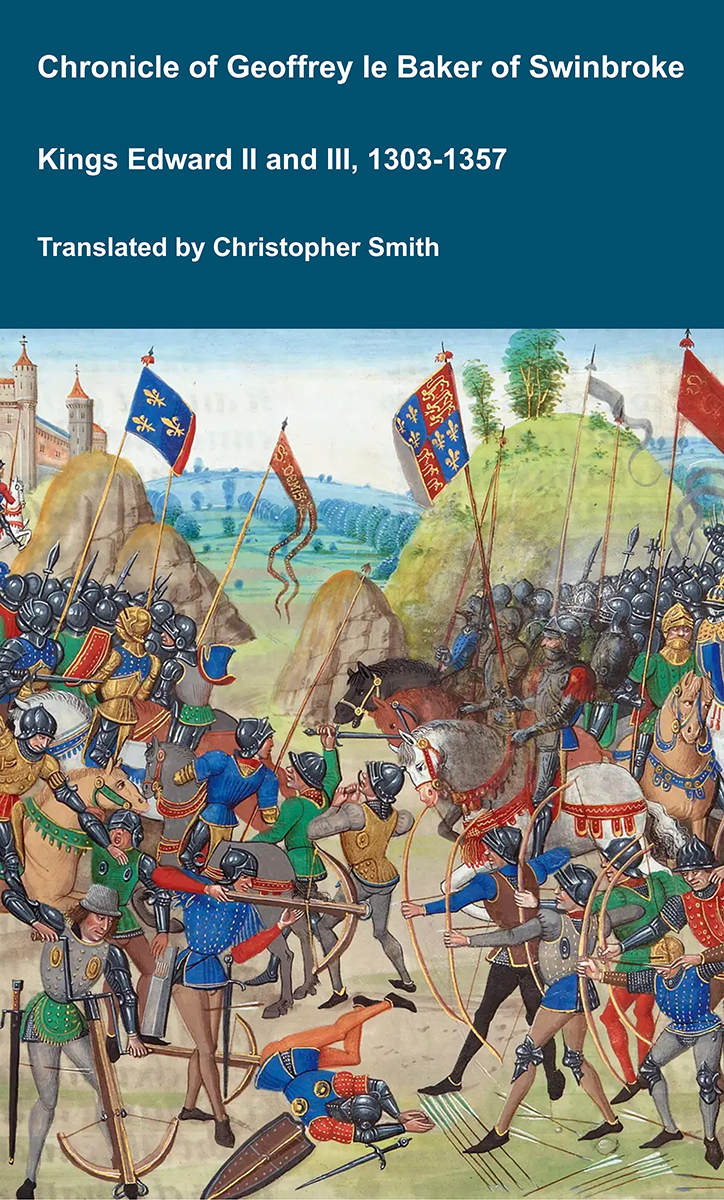 Chronicle of Geoffrey le Baker of Swinbroke [-1360]. In the following year, that is, 1304, Benedict XI succeeded the aforementioned Boniface [VIII] as Pope. He was a Lombard by birth, elected in Rome on the 22nd of October 1303 and crowned on the following Sunday. He had previously been a member of the Order of Preachers [Dominicans], later becoming Cardinal of Ostia, and ultimately the Father of Fathers. He excommunicated and publicly denounced all those who had consented to the capture of his predecessor. Later, on the 7th July 1304, he passed away.
Anno sequenti, scilicet Christi MCCCIIIJ, Bonefacio predicto successit Benedictus papa XJ nacione Lumbardus, qui XJ kalendas Novembris Rome fuit electus et die Dominica sequenti coronatus. Iste prius fuit de ordine Predicatorum et postea cardinalis Hostiensis finaliterque pater patrum, qui excommunicavit et excommunicatos denunciavit omnes qui capcioni predecessoris sui consenserunt, et postea, nonis Iulii, diem clausit extremum.
On 22nd October 1361 Archbishop Simon Sudbury (age 45) was appointed Bishop of London.
On 22nd October 1383 Ferdinand I King Portugal (age 37) died. His half brother John (age 31) succeeded I King Portugal.
Letters and Papers Foreign and Domestic Henry VIII 1529. 25th October 1529. Bradford, 256. 6026. Chapuys (age 39) to Charles V (age 29).
On the receipt of your letter on Thursday the 21st, dated Piacenza, I sent to Windsor to ask for an audience. As the administration has fallen principally into the hands of the Duke of Norfolk (age 56), and the communication is more agreeable to him than that of the marriage, I hastened to visit him. The Cardinal (age 56), who was dis-evangelised on the day of St. Luke the Evangelist (18 Oct.), has been deprived of his offices. I was received by the Duke with great distinction, and expressed to him the regard in which you had always held him for his goodwill. He seemed highly pleased, and said that he and his family had always been attached to the house of Burgundy; that no one more lamented the late disagreements than himself, but that all the evil and misunderstanding ought to be attributed to those who formerly directed the King's councils, acting by their own will and authority, with which the King himself was often dissatisfied.
In reply to his remark that he should like to serve your Majesty against the Turk, I praised his virtuous feelings, and told him that was the main object of my communication; but for the better security of peace, which the King had done so much to establish, one unhappy difference between himself and the Queen remained to be settled. I told him that, however strongly he might feel from family considerations, he could not but feel as a true knight, nor act otherwise than if it had been his own daughter, and as conscience directed; and that your Majesty was convinced that he had not been the promoter of this step. He replied that he would sooner have lost one of his hands than that such a question should have arisen; but it was entirely a matter of law and conscience, and he had never been appealed to; that it had been submitted to ecclesiastics and doctors, who had pronounced against the validity of the marriage; that if the dispensation you held was illegal, the King would consider himself the most abused prince in Christendom; and that if you had not declared yourself in it so openly, it might have sooner been brought to a satisfactory issue. I explained to him the constraint under which you acted; and that, as to the king of England not having declared himself a party in the matter, it was clear that he had done so from the proceedings of the English ambassadors at Rome. Finding he remained thoughtful, I changed the subject. Shortly after he turned to me with a laugh, and said, "How glad the Emperor will be to hear of this fall of the Cardinal, and his loss of office?" I answered, I thought you would, but not from any hatred you had to the Cardinal; and that he could have done neither good nor ill to you, and was not of such importance as that you would care to be avenged, or trouble yourself about his disgrace; but what you rejoiced at was, that the king of England would now learn who had been his evil counsellors, and leave the management of affairs to men who from birth and circumstances were more competent. I told him that I was the first who had broken through the chain of paying court to the Cardinal, and addressed myself to him. He thanked me for my good intentions, and said that the government was managed not by an individual but by the Council, where he usually assisted, and would promote Your Majesty's interests.
In order to please the Duke I asked him what I should do, although I had already sent one of my secretaries to the King. He told me that the King had ordered that application should be made direct to himself, before any other person was acquainted with the communication. He followed me to the hall, using very courteous language.
On the 22nd my secretary returned from Windsor, stating that the King would be at Greenwich on Saturday, and I was to go the day after. On my reaching Greenwich [Map] I found a civil gentleman, named Poller (Bollen?), sent by the King to conduct me to the palace. There I found the bishop of London (age 55), who led me to the King's antechamber, where the Court was assembled, and was received by two dukes and the archbishop of Canterbury (age 79). I conversed with these lords, waiting for the King to go to mass; and we talked of the conference at Bologna. The King, on going to mass, came directly to me, and taking me by the sleeve said, with the utmost graciousness, "You have news from my brother the Emperor." On answering Yes, he asked the date, and then said your Majesty was very careful to give him information. I assured him that you were anxious to make him partaker of all affairs, and thus show your brotherly affection. I then presented your letters, and, as to the particulars of my credentials, he said that the ambassadors in your court were authorised to treat about them. Speaking of your going into Italy I bespoke his good offices.
On his return from mass, he came up to me again, and resumed the subject. When we talked of the necessity of resisting the Turk, and of the Pope's arrival at Bologna on the 5th, I said I thought it advisable that he should commission his ambassadors with the Pope to treat; and I combated his remark that he could do but little against the Turk, seeing he was wealthy, and as absolute in his dominions as the Pope. He urged that this affair was chiefly yours, and if you wished to accomplish it you must make peace with the princes of Italy. I assured him you had never ceased from efforts in this direction. The conversation then turned on the duke Francesco Sforza; and I urged, in opposition to his remark, that your proceedings were as favorable to the Duke as could be. He objected to the cession of Pavia and Alexandria, alleging the cruelties which had taken place at Sienna. I told him Pavia was out of dispute, as it was already given up. "Between ourselves," said he, "I think it is a great shame that whilst the Turk is in Austria, the patrimony of the Emperor, he should not rescue it, but make war upon Christians." On my urging the danger that might be expected from Sforza and the Venetians if your troops were withdrawn, he urged that neither could do anything. Shortly after, changing his tone, he said, with some emphasis, "My brother the king of France has made your Emperor a marvellous offer." This he repeated three times. I said, if it were so, he had now done a virtuous part, and kept his professions. After various other topics it grew late. Not a word was said of the Queen. After dinner he asked me if I had anything more to say.
All here are satisfied with the treaty of Cambray. As for the observance of it, the Queen, as I have already written, has expressed her doubt of its duration. It is supposed to have cost this King 800,000 ducats. He is not therefore likely to break it. People here are not very anxious to repeat the dose, as it is not to their taste. At present they seem on good terms with the French. The ambassador has been only once at court with his brother since my arrival. He has been commanded to deliver his message to the Council, and abstain from communication with the Cardinal; at which he was greatly vexed. Various ambassadors are here. The most in favour is the Milanese, on whom the King has spent money. Those who are now in most credit are the dukes of Norfolk and Suffolk (age 45). There is not a single person about the King who is not saturated with French money; and though they profess great affection to you, their affection for money is much stronger. I have submitted the proposition to the King respecting the sea being kept free from pirates. He has ordered a good reception for Mons. Rosymbez.
The downfall of the Cardinal is complete. He is dismissed from the Council, deprived of the Chancellorship, and constrained to make an inventory of his goods in his own hand, that nothing may be forgotten. It is said that he has acknowledged his faults, and presented all his effects to the King. Yesterday the King returned to Greenwich by water secretly, in order to see them, and found them much greater than he expected. He took with him "sa mye" (his darling-Ann Boleyn (age 28)), her mother (age 49), and a gentleman of his chamber (Norris?) The Cardinal, notwithstanding his troubles, has always shown a good face, especially towards the town, but since St. Luke's Day all has been changed to sighs and tears night and day. The King, either moved by pity, or for fear if he should die the whole extent of his effects would not be found, sent him a ring for his comfort. He has withdrawn with a small attendance to a place ten miles off. They have sent for his son from Paris. People say execrable things of him, all which will be known at this Parliament. But those who have raised the storm will not let it abate, not knowing, if he returned to power, what would become of them. The ambassador of France commiserates him most. It was feared the Cardinal would get his goods out of the country, and therefore a strict watch was kept at the ports, and the watch insisted on opening the coffers of cardinal Campeggio (age 54), notwithstanding his passport, and, on his refusal, broke open the locks. He said they had done him great wrong to suppose that he could be corrupted by the Cardinal, since he had been proof against the innumerable presents offered him by the King.
The Chancellor's seal has remained in the hands of the Duke of Norfolk till this morning, when it was transferred to Sir Thomas More (age 51). Every one is delighted at his promotion, because he is an upright and learned man, and a good servant of the Queen. He was Chancellor of Lancaster, an office now conferred on the Sieur Villeury (Fitzwilliam). Richard Pace, a faithful servant of your Majesty, whom the Cardinal had kept in prison for two years, as well in the Tower of London as in a monastery (Syon House), is set at liberty. Unless his mind should again become unsettled, it is thought he will rise in higher favour at Court than ever.
There is a young man here, sent by the duke of Saxony, who has much business with the King and the bishop of London.
Of the King's affair there is nothing new to communicate, except what the bishop of London has told me, that Dr. Stokesley (age 54) had been sent to France to consult the doctors of Paris. The Queen begs your Majesty will send some respectable person there to do the same, for without some definitive sentence the King will remain obstinate in his opinions. She thinks that delay will be more dangerous than profitable, and therefore we have thought it desirable not to consent to the postponement demanded. To avoid creating suspicion in the mind of the King, she thinks I had better cease to visit her, but she will provide means for my speaking with her in private. London, 25 Oct. 1529.
P.S.-Two days after I had written the above, the Cardinal was definitively condemned by the Council, declared a rebel, and guilty of high treason for having obtained a legatine bull, whereby he had conferred many benefices in the King's patronage. He has been deprived of his dignities, his goods confiscated, and himself sentenced to prison until the King shall decide. This sentence was not given in his presence, but to his two proctors. This he will not find easy of digestion, but worse remains behind (mais encoures ne serat il quicte pour le prix).
Letters and Papers Foreign and Domestic Henry VIII 1535. 22nd October 1535. R. O. 663. W. Lord Sandys to Cromwell.
The King and Queen (age 34) came to my poor house on Friday the 15th of this month, and continued there till Tuesday. I expected to have seen you, which would have been a great comfort to me and my poor wife. Please to remember that on behalf of my friend, John Awdelett, of Abingdon, you were pleased to befriend him; but I hear from him that the matter at variance betwixt the abbot and him has not been committed, as you promised, to be decided by certain indifferent persons. The Vine [Map], 22 Oct. 27 Hen. VIII. Signed.
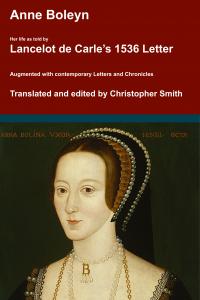
Anne Boleyn. Her Life as told by Lancelot de Carle's 1536 Letter.
In 1536, two weeks after the execution of Anne Boleyn, her brother George and four others, Lancelot du Carle, wrote an extraordinary letter that described Anne's life, and her trial and execution, to which he was a witness. This book presents a new translation of that letter, with additional material from other contemporary sources such as Letters, Hall's and Wriothesley's Chronicles, the pamphlets of Wynkyn the Worde, the Memorial of George Constantyne, the Portuguese Letter and the Baga de Secrets, all of which are provided in Appendices.
Available at Amazon in eBook and Paperback format.
On 22nd October 1539 Louis Gonzaga Duke Nevers was born to Federico Gonzaga II Duke Mantua (age 39) and Margaret Palaeologina Duchess Mantua (age 29).


On 22nd October 1549 Francesco Gonzaga III Duke Mantua (age 16) and Catherine of Austria Queen Consort Poland (age 16) were married. She by marriage Duchess Mantua. She the daughter of Ferdinand I Holy Roman Emperor (age 46) and Anne Jagiellon. He the son of Federico Gonzaga II Duke Mantua and Margaret Palaeologina Duchess Mantua (age 39). They were fifth cousins. She a great x 5 granddaughter of King Edward III of England.
Henry Machyn's Diary. 22nd October 1551. The xxij day of October was alle the craftes [of London] commandyd to go to ther halles, and ther yt was [shewed] them that the duke of Somersett (age 51) wold have taken the Towre, and to have taken the brod-selle, and to have [destroyed] the cete, and then to go to the ylle of Whyth; and so evere craft to ward at evere gatt in London, and to have a rydyng wache thrugh the cete,-the v K. E. the vjth.
Henry Machyn's Diary. 22nd October 1556. The xxij day of October was bered doctur [Man], sumtime the pryor of Shen the charterhowse, and after mad bysshope of Man by kyng Edward the vjth; [and] was mared [married]; and bered at sant Andrews hundershaft [Map], London, and ded at master Whetheley('s) marchand tayller.
Note. P. 116. Burial of bishop Man at St. Andrew's Undershaft. "Henry Man, doctor of divinity in the university of Oxenford, and sometime bishop of Man, which Henry departed this life the 19. day of October, An. Do. 1556, and lyeth buried under this stone."—"before the doore within the chancell." (Stowe.) The letters patent of his appointment by Henry VIII. dated 22 Jan. 1545–6 are printed in Rymer's Fœdera, xv. 85.
On 22nd October 1583 Louis VI Elector Palatine (age 44) died. His son Frederick (age 9) succeeded IV Elector Palatine Rhine.
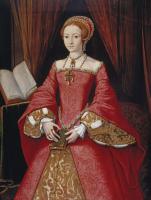
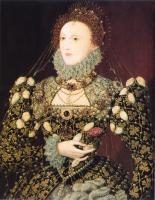
On 22nd October 1591 Queen Elizabeth I of England and Ireland (age 58) arrived in Elvetham Hall, Hampshire [Map] where she was entertained in magnificent style by Edward Seymour 1st Earl Hertford (age 52).


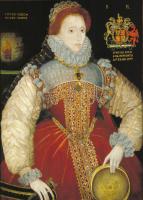


On 22nd October 1609 Charles Gonzaga Duke Nevers Duke Rethel was born to Charles Gonzaga I Duke Mantua (age 29). He married December 1627 his second cousin once removed Maria Gonzaga Duchess of Montferrat, daughter of Francesco IV Gonzaga Duke of Mantua and Margaret of Savoy Vicereine Portugal, and had issue.

John Evelyn's Diary. 22nd October 1658. Saw the superb funeral of the protector (deceased). He was carried from Somerset House [Map] in a velvet bed of state, drawn by six horses, housed with the same; the pall held by his new lords; Oliver lying in effigy, in royal robes, and crowned with a crown, sceptre, and globe, like a king. The pendants and guidons were carried by the officers of the army; the imperial banners, achievements, etc., by the heralds in their coats; a rich caparisoned horse, embroidered all over with gold; a knight of honor, armed cap-a-pie, and, after all, his guards, soldiers, and innumerable mourners. In this equipage, they proceeded to Westminster: but it was the most joyful funeral I ever saw; for there were none that cried but dogs, which the soldiers hooted away with a barbarous noise, drinking and taking tobacco in the streets as they went.
On 22nd October 1659 Ferdinand Thomas Charles Habsburg Spain died.
Samuel Pepys' Diary. 22nd October 1660. Office day; after that to dinner at home upon some ribs of roast beef from the Cook's (which of late we have been forced to do because of our house being always under the painters' and other people's hands, that we could not dress it ourselves). After dinner to my Lord's, where I found all preparing for my Lord's going to sea to fetch the Queen (age 50) tomorrow. At night my Lord came home, with whom I staid long, and talked of many things. Among others I got leave to have his picture, that was done by Lilly (age 42)1, copied, and talking of religion, I found him to be a perfect Sceptic, and said that all things would not be well while there was so much preaching, and that it would be better if nothing but Homilies were to be read in Churches. This afternoon (he told me) there hath been a meeting before the King and my Lord Chancellor (age 51), of some Episcopalian and Presbyterian Divines; but what had passed he could not tell me. After I had done talk with him, I went to bed with Mr. Sheply in his chamber, but could hardly get any sleep all night, the bed being ill made and he a bad bedfellow.


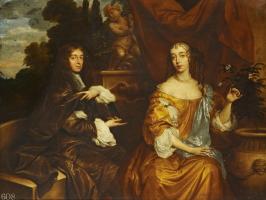
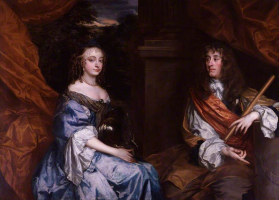


On 22nd October 1660 Charles Stewart was born to James, Duke of York (age 27) and Anne Hyde Duchess of York (age 23) at Worcester House Worcester Park Sutton, Surrey. He died aged less than one years old.


Samuel Pepys' Diary. 22nd October 1660. Note. Peter Lely (age 42), afterwards knighted. He lived in the Piazza, Covent Garden. This portrait was bought by Lord Braybrooke at Mr. Pepys Cockerell's sale in 1848, and is now at Audley End.
Chronicle of Geoffrey le Baker of Swinbroke
Baker was a secular clerk from Swinbroke, now Swinbrook, an Oxfordshire village two miles east of Burford. His Chronicle describes the events of the period 1303-1356: Gaveston, Bannockburn, Boroughbridge, the murder of King Edward II, the Scottish Wars, Sluys, Crécy, the Black Death, Winchelsea and Poitiers. To quote Herbert Bruce 'it possesses a vigorous and characteristic style, and its value for particular events between 1303 and 1356 has been recognised by its editor and by subsequent writers'. The book provides remarkable detail about the events it describes. Baker's text has been augmented with hundreds of notes, including extracts from other contemporary chronicles, such as the Annales Londonienses, Annales Paulini, Murimuth, Lanercost, Avesbury, Guisborough and Froissart to enrich the reader's understanding. The translation takes as its source the 'Chronicon Galfridi le Baker de Swynebroke' published in 1889, edited by Edward Maunde Thompson.
Available at Amazon in eBook and Paperback format.

On 22nd October 1661 Margaret Cavendish Duchess Newcastle upon Tyne was born to Henry Cavendish 2nd Duke Newcastle upon Tyne (age 31) and Frances Pierrepont Duchess Newcastle upon Tyne (age 31). She married 1st March 1690 her first cousin John Holles 1st Duke Newcastle upon Tyne, son of Gilbert Holles 3rd Earl de Clare and Grace Pierrepont Countess de Clare, and had issue.
Samuel Pepys' Diary. 22nd October 1662. Up, and carrying my wife and her brother to Covent Garden [Map], near their father's new lodging, by coach, I to my Lord Sandwich's (age 37), who receives me now more and more kindly, now he sees that I am respected in the world; and is my most noble patron. Here I staid and talked about many things, with my Lord and Mr. Povy (age 48), being there about Tangier [Map] business, for which the Commission is a taking out. Hence (after talking with Mr. Cooke, whom I met here about Mrs. Butler's portion, he do persist to say that it will be worth £600 certain, when he knows as well as I do now that it is but £400, and so I told him, but he is a fool, and has made fools of us).


On 22nd October 1665 César Bourbon Vendôme 1st Duke Vendôme (age 71) died. His son Louis (age 53) succeeded 2nd Duke Vendôme.
Samuel Pepys' Diary. 22nd October 1665. Lord's Day. Up, and after ready and going to Captain Cocke's (age 48), where I find we are a little further safe in some part of our goods, I to Church, in my way was meeting with some letters, which made me resolve to go after church to my Duke of Albemarle's (age 56) so, after sermon, I took Cocke's chariott, and to Lambeth, Surrey [Map]; but, in going and getting over the water, and through White Hall, I spent so much time, the Duke had almost dined. However, fresh meat was brought for me to his table, and there I dined, and full of discourse and very kind. Here they are again talking of the prizes, and my Lord Duke did speake very broad that my Lord Sandwich (age 40) and Pen (age 44) should do what they would, and answer for themselves. For his part, he would lay all before the King (age 35). Here he tells me the Dutch Embassador at Oxford is clapped up, but since I hear it is not true.
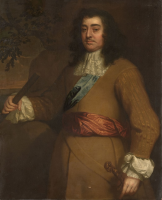

Samuel Pepys' Diary. 22nd October 1667. Slept but ill all the last part of the night, for fear of this day's success in Parliament: therefore up, and all of us all the morning close, till almost two o'clock, collecting all we had to say and had done from the beginning, touching the safety of the River Medway and Chatham, Kent [Map]. And, having done this, and put it into order, we away, I not having time to eat my dinner; and so all in my Lord Bruncker's (age 47) coach, that is to say, Bruncker, W. Pen (age 46), T. Harvy (age 42), and myself, talking of the other great matter with which they charge us, that is, of discharging men by ticket, in order to our defence in case that should be asked. We come to the Parliament-door, and there, after a little waiting till the Committee was sat, we were, the House being very full, called in: Sir W. Pen went in and sat as a Member; and my Lord Bruncker would not at first go in, expecting to have a chair set for him, and his brother (age 40) had bid him not go in, till he was called for; but, after a few words, I had occasion to mention him, and so he was called in, but without any more chair or respect paid him than myself: and so Bruncker, and T. Harvy, and I, were there to answer: and I had a chair brought me to lean my books upon: and so did give them such an account, in a series of the whole business that had passed the Office touching the matter, and so answered all questions given me about it, that I did not perceive but they were fully satisfied with me and the business as to our Office: and then Commissioner Pett (age 57) (who was by at all my discourse, and this held till within an hour after candlelight, for I had candles brought in to read my papers by) was to answer for himself, we having lodged all matters with him for execution. But, Lord! what a tumultuous thing this Committee is, for all the reputation they have of a great council, is a strange consideration; there being as impertinent questions, and as disorderly proposed, as any man could make. But Commissioner Pett, of all men living, did make the weakest defence for himself: nothing to the purpose, nor to satisfaction, nor certain; but sometimes one thing and sometimes another, sometimes for himself and sometimes against him; and his greatest failure was, that I observed, from his [not] considering whether the question propounded was his part to answer or no, and the thing to be done was his work to do: the want of which distinction will overthrow him; for he concerns himself in giving an account of the disposal of the boats, which he had no reason at all to do, or take any blame upon him for them. He charged the not carrying up of "The Charles" upon the Tuesday, to the Duke of Albemarle (age 58); but I see the House is mighty favourable to the Duke of Albemarle, and would give little weight to it. And something of want of armes he spoke, which Sir J. Duncomb (age 45) answered with great imperiousness and earnestness; but, for all that, I do see the House is resolved to be better satisfied in the business of the unreadiness of Sherenesse, and want of armes and ammunition there and every where: and all their officers were here to-day attending, but only one called in, about armes for boats, to answer Commissioner Pett.
On 22nd October 1675 Henry Petty 1st Earl Shelburne was born to William Petty (age 52) and Elizabeth Waller 1st Baroness Shelburne (age 39). He married 1699 Arabella Boyle Countess Shelburne, daughter of Charles Boyle 3rd Baron Clifford and Jane Seymour.
John Evelyn's Diary. 22nd October 1685. I accompanied my Lady Clarendon to her house at Swallowfield in Berks, dining by the way at Mr. Graham's (age 36) lodge at Bagshot; the house, new repair'd and capacious enough for a good family, stands in a Park [Map]. Hence we went to Swallowfield; this house is after the antient build ing of honourable gentlemen's houses, when they kept up antient hospitality, but the gardens and waters as elegant as 'tis possible to make a flat, by art and industrie, and no meane expence, my lady being so extraordinarily skill'd in ye flowery part, and my lord in diligence of planting; so that I have hardly seene a seate whrch shews more tokens of it than what is to be found here, not only in the delicious and rarest fruits of a garden, but in those innumerable timber trees in the ground about the seate, to the greatest ornament and benefit of the place. There is one orchard of 1000 golden, and other cider pippins; walks and groves of elms, limes, oaks, and other trees. The garden is so beset with all manner of sweete shrubbs, that it per fumes the aire. The distribution also of the quarters, walks, and parterres, is excellent. The nurseries, kitchin garden full of ye most desireable plants; two very noble Orangeries well furnished; but above all, the canall and fishponds, the one fed with a white, the other with a black running water, fed by a quick and swift river, so well and plen tifully stor'd with fish, that for pike, carp, breame and tench, I never saw any thing approching it. We had at every meale carp and pike of size fit for the table of a Prince, and what added to ye delight was to see the hundreds taken by the drag, out of which, the cooke standing by, we pointed out what we had most mind to, and had carp that would have ben worth at London twenty shillings a piece. The waters are flagg'd about with Calamus aromaticus, with wch my lady has hung a closet, that retains the smell very perfectly. There is also a certaine sweete willow and other exotics: also a very fine bowllng-greene, meadow, pasture, and wood; in a word, all that can render a country seate delightful. There is besides a well furnish'd library in ye house.
On 22nd October 1689 John V King Portugal was born to Peter II King Portugal (age 40) and Maria Sophia of Neuburg Queen Consort Portugal (age 23).
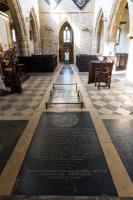
On 22nd October 1691 Lucius Knightley (age 68) died in Fawsley, Northamptonshire. On 21st January 1710 Elizabeth Dent (age 58) died. They were buried in St Mary's Church, Fawsley [Map].
Lucius Knightley: On 3rd April 1623 he was born to Richard Knightley in Fawsley, Northamptonshire. Before 22nd October 1691 Lucius Knightley and Elizabeth Dent were married.
Elizabeth Dent: On 2nd November 1632 she was born.
The 1707 Scilly Naval Disaster was the loss of four warships of a Royal Navy fleet off the Scilly Isles [Map] in severe weather on 22nd October 1707. Around 1,700 sailors lost their lives; one of the worst maritime disasters in British naval history.
On 22nd October 1707 Rear-Admiral Cloudesley Shovell (age 56) drowned.
The True Chronicles of Jean le Bel Volume 1 Chapters 1-60 1307-1342
The True Chronicles of Jean le Bel offer one of the most vivid and immediate accounts of 14th-century Europe, written by a knight who lived through the events he describes, and experienced some of them first hand. Covering the early decades of the Hundred Years’ War, this remarkable chronicle follows the campaigns of Edward III of England, the politics of France and the Low Countries, and the shifting alliances that shaped medieval warfare. Unlike later historians, Jean le Bel writes with a strong sense of eyewitness authenticity, drawing on personal experience and the testimony of fellow soldiers. His narrative captures not only battles and sieges, but also the realities of military life, diplomacy, and the ideals of chivalry that governed noble society. A key source for Jean Froissart, Le Bel’s chronicle stands on its own as a compelling and insightful work, at once historical record and literary achievement. This translation builds on the 1905 edition published in French by Jules Viard, adding extensive translations from other sources Rymer's Fœdera, the Chronicles of Adam Murimuth, William Nangis, Walter of Guisborough, a Bourgeois of Valenciennes, Geoffrey le Baker of Swinbroke and Richard Lescot to enrich the original text and Viard's notes.
Available at Amazon in eBook and Paperback format.
On 22nd October 1712 John Tylney 2nd Earl Tylney was baptised.
On 22nd October 1717 Henry Luttrell (age 62) was shot and killed whilst in his sedan chair at Blind Quay Dublin as he was proceeding from Lucas' Coffee House on Cork-hill to his house in Stafford Street Dublin. His murderers were unknown.
On 22nd October 1727 King George II of Great Britain and Ireland (age 43) was crowned II King Great Britain and Ireland at Westminster Abbey [Map].


On 22nd October 1746 James Northcote was born to Samuel Northcote Watchmaker in Plymouth, Devon [Map].
On 22nd October 1762 George Montagu 4th Duke Manchester (age 25) and Elizabeth Dashwood Duchess Manchester (age 22) were married. She by marriage Duchess Manchester. He the son of Robert Montagu 3rd Duke Manchester and Harriet Dunch Duchess Manchester.
On 22nd October 1766 Henry Frederick Hanover 1st Duke Cumberland and Strathearn (age 20) was created 1st Duke Cumberland and Strathearn.


On 22nd October 1767 Luise Dorothea Saxe Meiningen Duchess Saxe Gotha Altenburg (age 57) died.

From 1770 to 1771 George Legge 3rd Earl Dartmouth (age 16) was educated at Harrow School. On 22nd October 1771 George Legge 3rd Earl Dartmouth matriculated Christ Church College, Oxford University. He was awarded MA on 3rd July 1775, D.C.L. on 28th October 1778.
On 22nd October 1778 Charles Douglas 3rd Duke Queensberry (age 79) died.

On 22nd October 1801 Evelyn Henry Frederick Pierrepont (age 26) died. Church of St Edmund, Holme Pierrepoint [Map].
Evelyn Henry Frederick Pierrepont: On 18th January 1775 he was born to Charles Medows aka Pierrepont 1st Earl Manvers and Anne Mills Countess Manvers.
On 22nd October 1820 Eleanor Grosvenor Duchess Northumberland was born to Richard Grosvenor 2nd Marquess Westminster (age 25) and Elizabeth Mary Leveson-Gower Marchioness Westminster (age 23). She married 25th August 1842 her half fifth cousin once removed Algernon Percy 4th Duke Northumberland, son of Hugh Percy 2nd Duke Northumberland and Frances Julia Burrell Duchess Northumberland.
This is a translation of the 'Memoires of Jacques du Clercq', published in 1823 in two volumes, edited by Frederic, Baron de Reissenberg. In his introduction Reissenberg writes: 'Jacques du Clercq tells us that he was born in 1424, and that he was a licentiate in law and a counsellor to Philip the Good, Duke of Burgundy, in the castellany of Douai, Lille, and Orchies. It appears that he established his residence at Arras. In 1446, he married the daughter of Baldwin de la Lacherie, a gentleman who lived in Lille. We read in the fifth book of his Memoirs that his father, also named Jacques du Clercq, had married a lady of the Le Camelin family, from Compiègne. His ancestors, always attached to the counts of Flanders, had constantly served them, whether in their councils or in their armies.' The Memoires cover a period of nineteen years beginning in in 1448, ending in in 1467. It appears that the author had intended to extend the Memoirs beyond that date; no doubt illness or death prevented him from carrying out this plan. As Reissenberg writes the 'merit of this work lies in the simplicity of its narrative, in its tone of good faith, and in a certain air of frankness which naturally wins the reader’s confidence.' Du Clercq ranges from events of national and international importance, including events of the Wars of the Roses in England, to simple, everyday local events such as marriages, robberies, murders, trials and deaths, including that of his own father in Book 5; one of his last entries.
Available at Amazon in eBook and Paperback format.
On 22nd October 1829 George Charles Gordon-Lennox was born to Charles Gordon-Lennox 5th Duke Richmond (age 38) and Caroline Paget Duchess Richmond (age 33). He married Minnie Palmer.
On 22nd October 1839 George William Campbell 6th Duke Argyll (age 71) died. His brother John (age 61) succeeded 7th Duke Argyll, 4th Baron Hamilton of Hameldon in Leicestershire.

On 22nd October 1858 Empress Auguste Viktoria Oldenburg was born to Frederick Christian Oldenburg II Duke Schleswig Holstein Sonderburg Augustenburg (age 29) and Adelheid Hohenlohe Langenburg Duchess Schleswig Holstein Sonderburg Augustenburg. She married 27th February 1881 her fourth cousin Wilhelm Hohenzollern, son of Frederick III King Prussia and Victoria Empress Germany Queen Consort Prussia, and had issue.
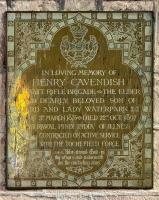
On 22nd October 1897 Henry Anson Cavendish (age 22) died of enteric fever at Rawalpindi, Punjab whilst serving on the on the Tochi Valley Expedition. He has a memorial at St Cuthbert's Church, Doveridge [Map].
Henry Anson Cavendish: On 3rd March 1875 he was born to Henry Anson Cavendish 4th Baron Waterpark and Emily Stenning Baroness Waterpark.
On 22nd October 1923 Algernon St Maur 15th Duke of Somerset (age 77) died at Maiden Bradley, Wiltshire. He was buried at Brimble Hill Clump, Bradley House. His third cousin once removed Edward (age 63) succeeded 16th Duke Somerset, 14th Baronet Seymour of Berry Pomeroy. Rowena Wall Duchess Somerset (age 62) by marriage Duchess Somerset.

On 22nd October 1942. St Cuby's Church, Duloe [Map]. C Rawlings, Regulating Petty Officer, Royal Navy. D/MX 60806. HMS Drake. Aged thirty. Died of acute appendicitis.
On 22nd October 1983 a Memorial Service was held for David Niven at St Martin in the Fields Church [Map]. The servie was attended by Margaret Whigham (age 70), Richard Attenborough, Michael Caine, Jon Pertwee, Anthony Quayle, Sir John Mills, Shirley Anne Field and John Mortimer.


On 22nd October 1983 Thomas Craven 7th Earl Craven (age 26) shot himself. His brother Simon (age 22) succeeded 8th Earl Craven in Yorkshire, 8th Viscount Uffington, 14th Baron Craven of Hamstead Marshall in Berkshire.
Montreal Gazette: "Earl of Craven fears olf curse and kills himself. Eastbourne, England (AP). The seventh Earl of Craven — who lived in fear of a curse that all the males of his family would die young — has killed himself at age 26, police said. Thomas Robert Douglas Craven fatally shot himself at the home of his mother, Countess Elizabeth Craven, police reported. His body was found Saturday. None of Craven's direct ancestors going back to the 17th century reached the age of 60. His father, the sixth earl, drowned at age 47 when he fell off a yacht during a party in 1965. Leukemia killed his grandfather, the fifth earl, at age 35. The reputed curse says that all Craven boys will die before their mothers, Residents in the earl's village of Hampstead Marshall, Berkshire, said it was uttered by a village mother whose daughter was made pregnant by a Craven ancestor. 'They were a family that over the years never mixed closely in village affairs and I think the curse developed because of the antagonism between them and the local folk,' said one elderly man. The young earl was unmarried. Anne Nicholson, his former girlfriend and mother of their seven-year-old son, Thomas, was quoted last year as saying: 'The curse of the Cravens does worry him (the earl) a lot. He rarely discusses it, but it's at the back of his mind most of the time. It's an awful thing because it seems tp have come true in the past. It makes me worry about our little Tommy.' The earl's only son will not inherit the earldom because he is illegitimate. The title passes to the earl's 22-year-old brother, Simon George Craven, The Cravens can trace their line back to William the Conqueror, who invaded England and won its crown in 1066. The Craven estates were once among the largest in Britain, embracing 8,000 hectares in Berkshire alone, but they have dwindled to a few properties."
On 22nd October 1071 William "Troubadour" Poitiers IX Duke Aquitaine was born to Guy William Poitiers VIII Duke Aquitaine (age 46) and Hildegarde Burgundy Duchess Aquitaine (age 15) at Toulouse. He married (1) 1088 his half first cousin Ermengarde Anjou Duchess Brittany and Aquitaine, daughter of Fulk "Réchin" Anjou 4th Count Anjou and Hildegarde Beaugency Countess Anjou (2) 1094 Philippa Rouerge Duchess Aquitaine, daughter of William Rouerge Duke Narbonne and Emma Mortain Duchess Narbonne, and had issue.
On 22nd October 1539 Louis Gonzaga Duke Nevers was born to Federico Gonzaga II Duke Mantua (age 39) and Margaret Palaeologina Duchess Mantua (age 29).
Abbot John Whethamstede’s Chronicle of the Abbey of St Albans
Abbot John Whethamstede's Register aka Chronicle of his second term at the Abbey of St Albans, 1451-1461, is a remarkable text that describes his first-hand experience of the beginning of the Wars of the Roses including the First and Second Battles of St Albans, 1455 and 1461, respectively, their cause, and their consequences, not least on the Abbey itself. His text also includes Loveday, Blore Heath, Northampton, the Act of Accord, Wakefield, and Towton, and ends with the Coronation of King Edward IV. In addition to the events of the Wars of the Roses, Abbot John, or his scribes who wrote the Chronicle, include details in the life of the Abbey such as charters, letters, land exchanges, visits by legates, and disputes, which provide a rich insight into the day-to-day life of the Abbey, and the challenges faced by its Abbot.
Available at Amazon in eBook and Paperback format.
On 22nd October 1574 Mary Lennard was born to Samson Lennard Baron Dacre Gilsland (age 30) and Margaret Fiennes 11th Baroness Dacre of Gilsland (age 33) at Chevening, Sevenoaks.
On 22nd October 1588 Frances Manners Baroness Willoughby of Parham was born to John Manners 4th Earl of Rutland and Elizabeth Charlton Countess Rutland (age 35). She was born postumously; her father had died nine months previously on 24th February 1588. She married on or after 4th February 1603 her fifth cousin once removed William Willoughby 3rd Baron Willoughby of Parham and had issue.
On 22nd October 1609 Charles Gonzaga Duke Nevers Duke Rethel was born to Charles Gonzaga I Duke Mantua (age 29). He married December 1627 his second cousin once removed Maria Gonzaga Duchess of Montferrat, daughter of Francesco IV Gonzaga Duke of Mantua and Margaret of Savoy Vicereine Portugal, and had issue.
On 22nd October 1637 Francis North 1st Baron Guildford was born to Dudley North 4th Baron North (age 35) and Anne Montagu Baroness North (age 25).


On 22nd October 1660 Charles Stewart was born to James, Duke of York (age 27) and Anne Hyde Duchess of York (age 23) at Worcester House Worcester Park Sutton, Surrey. He died aged less than one years old.
On 22nd October 1661 Margaret Cavendish Duchess Newcastle upon Tyne was born to Henry Cavendish 2nd Duke Newcastle upon Tyne (age 31) and Frances Pierrepont Duchess Newcastle upon Tyne (age 31). She married 1st March 1690 her first cousin John Holles 1st Duke Newcastle upon Tyne, son of Gilbert Holles 3rd Earl de Clare and Grace Pierrepont Countess de Clare, and had issue.
On 22nd October 1675 Henry Petty 1st Earl Shelburne was born to William Petty (age 52) and Elizabeth Waller 1st Baroness Shelburne (age 39). He married 1699 Arabella Boyle Countess Shelburne, daughter of Charles Boyle 3rd Baron Clifford and Jane Seymour.
On 22nd October 1689 John V King Portugal was born to Peter II King Portugal (age 40) and Maria Sophia of Neuburg Queen Consort Portugal (age 23).
On 22nd October 1712 James Hamilton 8th Earl Abercorn was born to James Hamilton 7th Earl Abercorn (age 26) and Anne Plumer Countess Abercorn (age 22) in Queen Street, St George the Martyr.
On 22nd October 1728 Henry Hoghton 6th Baronet was born to Philip Hoghton and Elizabeth Slater. He married (1) 23rd June 1760 Elizabeth Ashurst (2) 8th July 1766 Fanny Booth Lady Hoghton and had issue.
William of Worcester's Chronicle of England
William of Worcester, born around 1415, and died around 1482 was secretary to John Fastolf, the renowned soldier of the Hundred Years War, during which time he collected documents, letters, and wrote a record of events. Following their return to England in 1440 William was witness to major events. Twice in his chronicle he uses the first person: 1. when writing about the murder of Thomas, 7th Baron Scales, in 1460, he writes '… and I saw him lying naked in the cemetery near the porch of the church of St. Mary Overie in Southwark …' and 2. describing King Edward IV's entry into London in 1461 he writes '… proclaimed that all the people themselves were to recognize and acknowledge Edward as king. I was present and heard this, and immediately went down with them into the city'. William’s Chronicle is rich in detail. It is the source of much information about the Wars of the Roses, including the term 'Diabolical Marriage' to describe the marriage of Queen Elizabeth Woodville’s brother John’s marriage to Katherine, Dowager Duchess of Norfolk, he aged twenty, she sixty-five or more, and the story about a paper crown being placed in mockery on the severed head of Richard, 3rd Duke of York.
Available at Amazon in eBook and Paperback format.

On 22nd October 1744 James Dutton 1st Baron Sherborne was born to James Lenox Dutton (age 31) and Jane Bond. He married 1774 Elizabeth Coke Baroness Sherborne and had issue.
On 22nd October 1746 James Northcote was born to Samuel Northcote Watchmaker in Plymouth, Devon [Map].

On 22nd October 1772 Caroline Bennett Lady Wrottesley was born to Charles Bennet 4th Earl Tankerville (age 28) and Emma Colebrooke Countess Tankerville (age 20). She married 1795 John Wrottesley 1st Baron Wrottesley, son of John Wrottesley 8th Baronet and Frances Courtenay Lady Wrottesley, and had issue.
On 22nd October 1783 Brinsley Butler 4th Earl of Lanesborough was born to Robert Herbert Butler 3rd Earl Lanesborough (age 24) and Elizabeth La Touche (age 19).

On 22nd October 1792 Caroline Anne Edgecumbe was born to Richard Edgecumbe 2nd Earl of Mount Edgcumbe (age 28) and Sophia Hobart Countess Mount Edgcumbe (age 24) in Portugal Street. She married April 1812 Reginald George Macdonald Macdonald.
On 22nd October 1793 Edward Dolman Scott 2nd Baronet was born to Joseph Scott 1st Baronet (age 41). He married 14th February 1815 Catherine Juliana Bateman Lady Scott, daughter of Hugh Bateman 1st Baronet, and had issue.
On 22nd October 1796 Priscilla Strickland was born to William Strickland 6th Baronet (age 43) and Henrietta Cholmley Lady Strickland (age 36). She married before 19th February 1820 Charles Williamson aka Winn and had issue.
On 22nd October 1797 Thomas Stonor 3rd Baron Camoys was born to Thomas Stonor of Stonor Park in Oxfordshire (age 30) and Katherine Blundell. He married 25th July 1821 Frances Towneley Baroness Camoys and had issue.
On 22nd October 1799 Captain Henry James Ramsden was born to John Ramsden 4th Baronet (age 43) and Louise Ingram Lady Ramsden (age 33).
On 22nd October 1805 Thomas Pym Bridges 7th Baronet was born to Brooke Henry Bridges (age 36).
On 22nd October 1806 George Barrow 2nd Baronet was born to John Barrow 1st Baronet (age 42) and Anna Maria Truter Lady Barrow (age 29). He married 23rd July 1832 Rosamund Pennell Lady Barrow and had issue.
The True Chronicles of Jean le Bel Volume 1 Chapters 1-60 1307-1342
The True Chronicles of Jean le Bel offer one of the most vivid and immediate accounts of 14th-century Europe, written by a knight who lived through the events he describes, and experienced some of them first hand. Covering the early decades of the Hundred Years’ War, this remarkable chronicle follows the campaigns of Edward III of England, the politics of France and the Low Countries, and the shifting alliances that shaped medieval warfare. Unlike later historians, Jean le Bel writes with a strong sense of eyewitness authenticity, drawing on personal experience and the testimony of fellow soldiers. His narrative captures not only battles and sieges, but also the realities of military life, diplomacy, and the ideals of chivalry that governed noble society. A key source for Jean Froissart, Le Bel’s chronicle stands on its own as a compelling and insightful work, at once historical record and literary achievement. This translation builds on the 1905 edition published in French by Jules Viard, adding extensive translations from other sources Rymer's Fœdera, the Chronicles of Adam Murimuth, William Nangis, Walter of Guisborough, a Bourgeois of Valenciennes, Geoffrey le Baker of Swinbroke and Richard Lescot to enrich the original text and Viard's notes.
Available at Amazon in eBook and Paperback format.
On 22nd October 1813 Frances Laura Wentworth-Fitzwilliam was born to Charles Wentworth-Fitzwilliam 5th and 3rd Earl Fitzwilliam (age 27) and Mary Dundas (age 26). Coefficient of inbreeding 6.25%. She married 23rd June 1837 Reverend William Bridgeman-Simpson and had issue.
On 22nd October 1816 Jane Arbuthnot Viscountess Gough was born to George Arbuthnot 1st of Elderslie (age 44) and Elizabeth aka Eliza Fraser. She married 3rd June 1846 George Gough 2nd Viscount Gough, son of Hugh Gough 1st Viscount Gough and Frances Maria Stephens, and had issue.
On 22nd October 1819 Rainald Knightley 1st Baron Knightley was born to Charles Knightley 2nd Baronet (age 38) and Selina Mary Hervey Lady Knightley.
On 22nd October 1820 Eleanor Grosvenor Duchess Northumberland was born to Richard Grosvenor 2nd Marquess Westminster (age 25) and Elizabeth Mary Leveson-Gower Marchioness Westminster (age 23). She married 25th August 1842 her half fifth cousin once removed Algernon Percy 4th Duke Northumberland, son of Hugh Percy 2nd Duke Northumberland and Frances Julia Burrell Duchess Northumberland.
On 22nd October 1829 George Charles Gordon-Lennox was born to Charles Gordon-Lennox 5th Duke Richmond (age 38) and Caroline Paget Duchess Richmond (age 33). He married Minnie Palmer.
On 22nd October 1842 Anne Lucy Errington Baroness Arundel Wardour was born to John Errington of High Warden Northumberland. She married 13th October 1862 John Francis Arundell 12th Baron Arundel, son of Henry Benedict Arundell 11th Baron Arundel and Frances Catherine Tichborne Baroness Arundel.
On 22nd October 1843 Hugh de Grey Seymour-Conway 6th Marquess Hertford was born to Francis George Hugh Seymour-Conway 5th Marquess Hertford (age 31) and Frances Elizabeth Anson Marchioness Hertford (age 33) at and Frances Elizabeth Anson Marchioness Hertford Dublin [Map]. He married 16th April 1868 Mary Hood Marchioness Hertford and had issue.
On 22nd October 1851 William Charles Cooper 3rd Baronet Cooper was born to Daniel Cooper 1st Baronet (age 30).
On 22nd October 1852 Captain Cornwallis Maude was born to Cornwallis Maude 1st Earl Montalt (age 35) and Clementina Elphinstone-Fleming Viscountess Hawarden (age 30). He married 28th February 1878 his half third cousin Eva Henrietta Brooke and had issue.
On 22nd October 1857 Nicholas Henry Bacon 13th and 12th Baronet was born to Henry Hickman Bacon 11th and 10th Baronet (age 37).
Anne Boleyn. Her Life as told by Lancelot de Carle's 1536 Letter.
In 1536, two weeks after the execution of Anne Boleyn, her brother George and four others, Lancelot du Carle, wrote an extraordinary letter that described Anne's life, and her trial and execution, to which he was a witness. This book presents a new translation of that letter, with additional material from other contemporary sources such as Letters, Hall's and Wriothesley's Chronicles, the pamphlets of Wynkyn the Worde, the Memorial of George Constantyne, the Portuguese Letter and the Baga de Secrets, all of which are provided in Appendices.
Available at Amazon in eBook and Paperback format.
On 22nd October 1858 Empress Auguste Viktoria Oldenburg was born to Frederick Christian Oldenburg II Duke Schleswig Holstein Sonderburg Augustenburg (age 29) and Adelheid Hohenlohe Langenburg Duchess Schleswig Holstein Sonderburg Augustenburg. She married 27th February 1881 her fourth cousin Wilhelm Hohenzollern, son of Frederick III King Prussia and Victoria Empress Germany Queen Consort Prussia, and had issue.
On 22nd October 1859 Cosmo Gordon Antrobus 5th Baronet was born to Edmund Antrobus 3rd Baronet (age 41) and Marianne Georgiana Dashwood Lady Antrobus.
On 22nd October 1864 James Percy Miller 2nd Baronet was born to William Miller 1st Baronet (age 55). He married 19th January 1893 Eveline Mary Curzon, daughter of Alfred Nathaniel Holden Curzon 4th Baron Scarsdale and Blanche Pocklington Senhouse Baroness Scarsdale.
On 22nd October 1903 Robert Frederick-Strickland-Constable 11th Baronet was born to Frederick Charles Strickland-Constable (age 43).
On 22nd October 1912 Richard David Harvey Blunt 11th Baronet was born to John Harvey Blunt 9th Baronet (age 40).
On 22nd October 1914 John Skeffington 13th Viscount Massereene, 6th Viscount Ferrard was born to Algernon Skeffington 12th Viscount Massereene, 5th Viscount Ferrard (age 40).
On 22nd October 1915 Lyulph Stanley 7th Baron Stanley, 7th Baron Sheffield, 6th Baron Eddisbury was born to Arthur Stanley 5th Baron Stanley, 5th Baron Sheffield, 4th Baron Eddisbury (age 40).
On 22nd October 1494 Henry Wentworth 4th Baron Despencer (age 46) and Elizabeth Neville Baroness Scrope and Despencer were married. She by marriage Baroness Despencer. She the daughter of John Neville 1st Marquess Montagu and Isabel Ingaldsthorpe. They were fourth cousins. He a great x 4 grandson of King Edward III of England. She a great x 3 granddaughter of King Edward III of England.
On 22nd October 1549 Francesco Gonzaga III Duke Mantua (age 16) and Catherine of Austria Queen Consort Poland (age 16) were married. She by marriage Duchess Mantua. She the daughter of Ferdinand I Holy Roman Emperor (age 46) and Anne Jagiellon. He the son of Federico Gonzaga II Duke Mantua and Margaret Palaeologina Duchess Mantua (age 39). They were fifth cousins. She a great x 5 granddaughter of King Edward III of England.
On 22nd October 1698 George Neville 1st Baron Abergavenny (age 39) and Anne Walker were married. She by marriage Baroness Abergavenny.
On 22nd October 1762 George Montagu 4th Duke Manchester (age 25) and Elizabeth Dashwood Duchess Manchester (age 22) were married. She by marriage Duchess Manchester. He the son of Robert Montagu 3rd Duke Manchester and Harriet Dunch Duchess Manchester.
On 22nd October 1892 Wroth Periam Christopher Lethbridge 5th Baronet (age 28) and Alianore Chandos-Pole Lady Lethbridge (age 24) were married.

On 22nd October 1901 Evelyn Baring 1st Earl Cromer (age 60) and Katherine Georgina Louisa Thynne Countess Cromer (age 36) were married. The difference in their ages was 24 years. She the daughter of John Alexander Thynne 4th Marquess of Bath and Frances Isabella Catherine Vesey Marchioness Bath. They were first cousin twice removed.
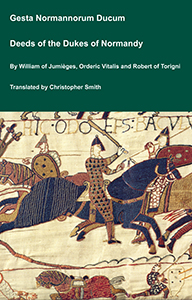
The Deeds of the Dukes of Normandy
The Gesta Normannorum Ducum [The Deeds of the Dukes of Normandy] is a landmark medieval chronicle tracing the rise and fall of the Norman dynasty from its early roots through the pivotal events surrounding the Norman Conquest of England. Originally penned in Latin by the monk William of Jumièges shortly before 1060 and later expanded at the behest of William the Conqueror, the work chronicles the deeds, politics, battles, and leadership of the Norman dukes, especially William’s own claim to the English throne. The narrative combines earlier historical sources with firsthand information and oral testimony to present an authoritative account of Normandy’s transformation from a Viking settlement into one of medieval Europe’s most powerful realms. William’s history emphasizes the legitimacy, military prowess, and governance of the Norman line, framing their expansion, including the conquest of England, as both divinely sanctioned and noble in purpose. Later chroniclers such as Orderic Vitalis and Robert of Torigni continued the history, extending the coverage into the 12th century, providing broader context on ducal rule and its impact. Today this classic work remains a foundational source for understanding Norman identity, medieval statesmanship, and the historical forces that reshaped England and Western Europe between 800AD and 1100AD.
Available at Amazon in eBook and Paperback format.
On 22nd October 1930 Geoffrey Waldegrave 12th Earl Waldegrave (age 24) and Mary Hermione Grenfell Countess Waldegrave (age 20) were married. He the son of Henry Waldegrave 11th Earl Waldegrave (age 76) and Anne Katherine Bastard Countess Waldegrave (age 63).
On 22nd October 1229 Gerard III Count Guelders (age 44) died. His son Otto (age 14) succeeded II Count Guelders.
On 22nd October 1333 Margaret Clare Baroness Badlesmere (age 46) died.
On 22nd October 1383 Ferdinand I King Portugal (age 37) died. His half brother John (age 31) succeeded I King Portugal.
On 22nd October 1452 William Fitzhugh 4th Baron Fitzhugh (age 53) died. His son Henry (age 23) succeeded 5th Baron Fitzhugh.
On 22nd October 1463 James Berkeley 11th and 1st Baron Berkeley (age 69) died at Berkeley Castle [Map]. He was buried at St Augustine's Abbey, Bristol [Map]. His son William (age 37) succeeded 12th Baron Berkeley Feudal, 2nd Baron Berkeley.
On 22nd October 1493 James Douglas 1st Earl Morton died. His son John succeeded 2nd Earl Morton, 5th Lord Dalkeith.
On 22nd October 1577 Henry Parker 12th Baron Marshal 11th Baron Morley (age 44) died in Madrid [Map]. His son Henry (age 27) succeeded 13th Baron Marshal, 12th Baron Morley. Elizabeth Stanley Baroness Marshal Morley (age 19) by marriage Baroness Marshal, Baroness Morley.
On 22nd October 1583 Louis VI Elector Palatine (age 44) died. His son Frederick (age 9) succeeded IV Elector Palatine Rhine.
On 22nd October 1659 Ferdinand Thomas Charles Habsburg Spain died.
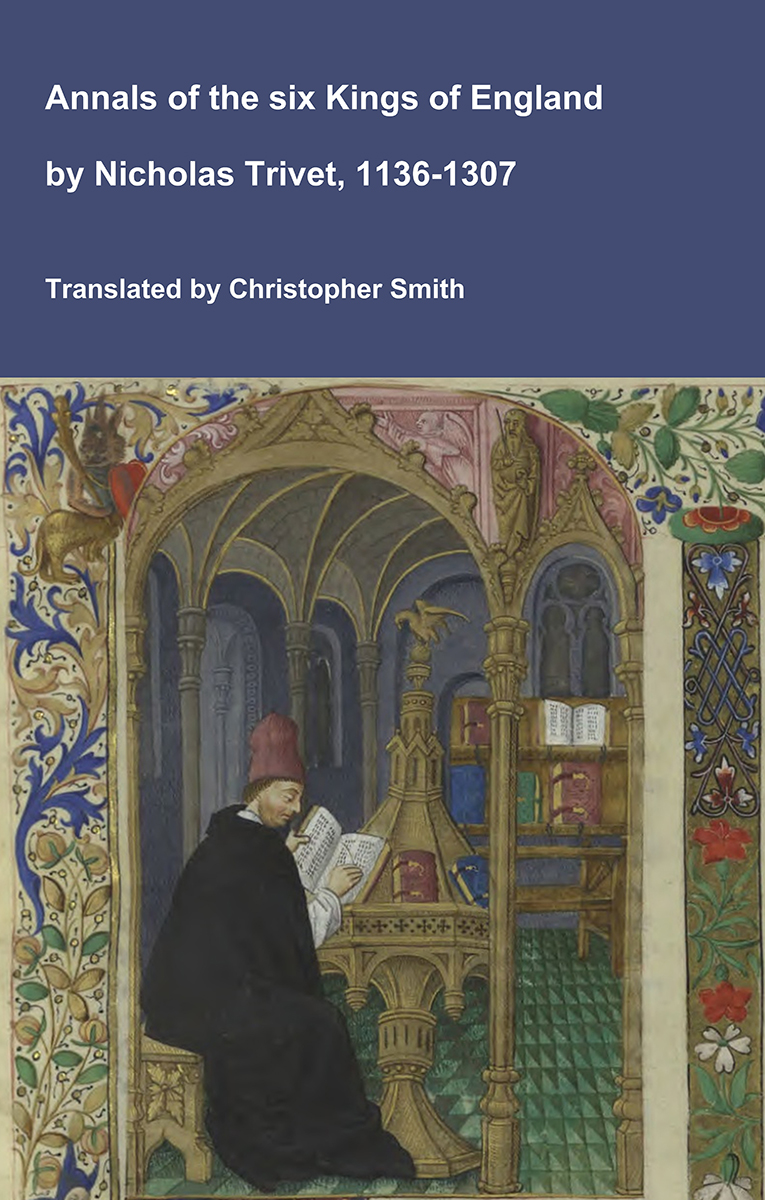
Annals of the six Kings of England by Nicholas Trivet
Translation of the Annals of the Six Kings of England by that traces the rise and rule of the Angevin aka Plantagenet dynasty from the mid-12th to early 14th century. Written by the Dominican scholar Nicholas Trivet, the work offers a vivid account of English history from the reign of King Stephen through to the death of King Edward I, blending political narrative with moral reflection. Covering the reigns of six monarchs—from Stephen to Edward I—the chronicle explores royal authority, rebellion, war, and the shifting balance between crown, church, and nobility. Trivet provides detailed insight into defining moments such as baronial conflicts, Anglo-French rivalry, and the consolidation of royal power under Edward I, whose reign he describes with particular immediacy. The Annals combines careful year-by-year reporting with thoughtful interpretation, presenting history not merely as a sequence of events but as a moral and political lesson. Ideal for readers interested in medieval history, kingship, and the origins of the English state, this chronicle remains a valuable and accessible window into the turbulent world of the Plantagenet kings.
Available at Amazon in eBook and Paperback format.
On 22nd October 1665 César Bourbon Vendôme 1st Duke Vendôme (age 71) died. His son Louis (age 53) succeeded 2nd Duke Vendôme.
On 22nd October 1710 Fulke Greville 5th Baron Brooke (age 67) died at Twickenham, Richmond. He was buried at St Mary's Church, Warwick [Map]. His grandson Fulke (age 17) succeeded 6th Baron Brooke of Beauchamps Court in Warwickshire.
On 22nd October 1713 John Cropley 2nd Baronet (age 50) died unmarried. Baronet Cropley of Clerkenwell in Middlesex extinct. He left an estate worth about £4,000 p.a. to Thomas Micklethwayte, described as a kinsman.
On 22nd October 1720 Anne Duncombe Countess Deloraine died.
On 22nd October 1745 William Herbert 2nd Marquess Powis (age 85) died. His son William (age 47) succeeded 3rd Marquess Powis, 3rd Earl Powis, 5th Baron Powis of Powis Castle in Powys, 4th Baronet Powis of Red Castle in Montgomeryshire.
On 22nd October 1767 Luise Dorothea Saxe Meiningen Duchess Saxe Gotha Altenburg (age 57) died.
On 22nd October 1778 Charles Douglas 3rd Duke Queensberry (age 79) died.

On 22nd October 1784 John Waldegrave 3rd Earl Waldegrave (age 66) died. His son George (age 32) succeeded 4th Earl Waldegrave, 5th Baron Waldegrave Chewton Somerset, 8th Baronet Waldegrave of Hever Castle. Elizabeth Laura Waldegrave Countess Waldegrave (age 24) by marriage Countess Waldegrave.
On 22nd October 1789 George Waldegrave 4th Earl Waldegrave (age 37) died. His son George (age 5) succeeded 5th Earl Waldegrave, 6th Baron Waldegrave Chewton Somerset, 9th Baronet Waldegrave of Hever Castle.
On 22nd October 1798 William Bagot 1st Baron Bagot (age 70) died. His son William (age 25) succeeded 2nd Baron Bagot of Bagot's Bromley in Staffordshire, 7th Baronet Bagot of Blithfield Hall. Emily Fitzroy Baroness Bagot (age 27) by marriage Baroness Bagot of Bagot's Bromley in Staffordshire.
On 22nd October 1839 George William Campbell 6th Duke Argyll (age 71) died. His brother John (age 61) succeeded 7th Duke Argyll, 4th Baron Hamilton of Hameldon in Leicestershire.
On 22nd October 1840 John Lubbock 2nd Baronet (age 66) died. His son John (age 37) succeeded 3rd Baronet Lubbock of Lammas in Norfolk.
On 22nd October 1840 Henry Vassal-Fox 3rd Baron Holland (age 66) died. His son Henry (age 38) succeeded 4th Baron Holland in Lincolnshire and 4th Baron Holland of Foxley in Wiltshire.
On 22nd October 1849 John Dashwood-King 4th Baronet (age 84) died. His son George (age 59) succeeded 5th Baronet Dashwood of West Wycombe in Buckinghamshire.
On 22nd October 1851 James Whalley-Smythe-Gardiner 3rd Baronet (age 66) died. His son John (age 37) succeeded 4th Baronet Whalley-Smythe-Gardiner of Roch Court in Hampshire.
The True Chronicles of Jean le Bel Volume 1 Chapters 1-60 1307-1342
The True Chronicles of Jean le Bel offer one of the most vivid and immediate accounts of 14th-century Europe, written by a knight who lived through the events he describes, and experienced some of them first hand. Covering the early decades of the Hundred Years’ War, this remarkable chronicle follows the campaigns of Edward III of England, the politics of France and the Low Countries, and the shifting alliances that shaped medieval warfare. Unlike later historians, Jean le Bel writes with a strong sense of eyewitness authenticity, drawing on personal experience and the testimony of fellow soldiers. His narrative captures not only battles and sieges, but also the realities of military life, diplomacy, and the ideals of chivalry that governed noble society. A key source for Jean Froissart, Le Bel’s chronicle stands on its own as a compelling and insightful work, at once historical record and literary achievement. This translation builds on the 1905 edition published in French by Jules Viard, adding extensive translations from other sources Rymer's Fœdera, the Chronicles of Adam Murimuth, William Nangis, Walter of Guisborough, a Bourgeois of Valenciennes, Geoffrey le Baker of Swinbroke and Richard Lescot to enrich the original text and Viard's notes.
Available at Amazon in eBook and Paperback format.
On 22nd October 1855 John Stuart-Wortley-Mackenzie 2nd Baron Wharncliffe (age 54) died. He was buried at the Church of St Leonard, Wortley [Map].His son Edward (age 27) succeeded 3rd Baron Wharncliffe of Wortley in Yorkshire.


On 22nd October 1855 William Molesworth 8th Baronet (age 45) died without issue. His half first cousin Hugh (age 37) succeeded 9th Baronet Molesworth of Pencarrow in Cornwall. His will provided for his widow Andalusia Carstairs (age 45) to live at Pencarrow during her lifetime.
On 22nd October 1857 Charles Henry Rich 2nd Baronet (age 73) died. His son Charles (age 44) succeeded 3rd Baronet Rich of Shirley House in Hampshire.
On 22nd October 1867 Ida Harriet Augusta Hay Countess Gainsborough (age 46) died.
On 22nd October 1923 Algernon St Maur 15th Duke of Somerset (age 77) died at Maiden Bradley, Wiltshire. He was buried at Brimble Hill Clump, Bradley House. His third cousin once removed Edward (age 63) succeeded 16th Duke Somerset, 14th Baronet Seymour of Berry Pomeroy. Rowena Wall Duchess Somerset (age 62) by marriage Duchess Somerset.
On 22nd October 1981 David George Brownlow-Cecil 6th Marquess Exeter (age 76) died. His brother William (age 72) succeeded 7th Marquess Exeter, 16th Earl Exeter, 17th Baron Burghley.
On 22nd October 1983 Thomas Craven 7th Earl Craven (age 26) shot himself. His brother Simon (age 22) succeeded 8th Earl Craven in Yorkshire, 8th Viscount Uffington, 14th Baron Craven of Hamstead Marshall in Berkshire.
Montreal Gazette: "Earl of Craven fears olf curse and kills himself. Eastbourne, England (AP). The seventh Earl of Craven — who lived in fear of a curse that all the males of his family would die young — has killed himself at age 26, police said. Thomas Robert Douglas Craven fatally shot himself at the home of his mother, Countess Elizabeth Craven, police reported. His body was found Saturday. None of Craven's direct ancestors going back to the 17th century reached the age of 60. His father, the sixth earl, drowned at age 47 when he fell off a yacht during a party in 1965. Leukemia killed his grandfather, the fifth earl, at age 35. The reputed curse says that all Craven boys will die before their mothers, Residents in the earl's village of Hampstead Marshall, Berkshire, said it was uttered by a village mother whose daughter was made pregnant by a Craven ancestor. 'They were a family that over the years never mixed closely in village affairs and I think the curse developed because of the antagonism between them and the local folk,' said one elderly man. The young earl was unmarried. Anne Nicholson, his former girlfriend and mother of their seven-year-old son, Thomas, was quoted last year as saying: 'The curse of the Cravens does worry him (the earl) a lot. He rarely discusses it, but it's at the back of his mind most of the time. It's an awful thing because it seems tp have come true in the past. It makes me worry about our little Tommy.' The earl's only son will not inherit the earldom because he is illegitimate. The title passes to the earl's 22-year-old brother, Simon George Craven, The Cravens can trace their line back to William the Conqueror, who invaded England and won its crown in 1066. The Craven estates were once among the largest in Britain, embracing 8,000 hectares in Berkshire alone, but they have dwindled to a few properties."
On 22nd October 2017 John Lawrence Kennaway 5th Baronet (age 84) died. His son John (age 55) succeeded 6th Baronet Kennaway of Hyderabad.