

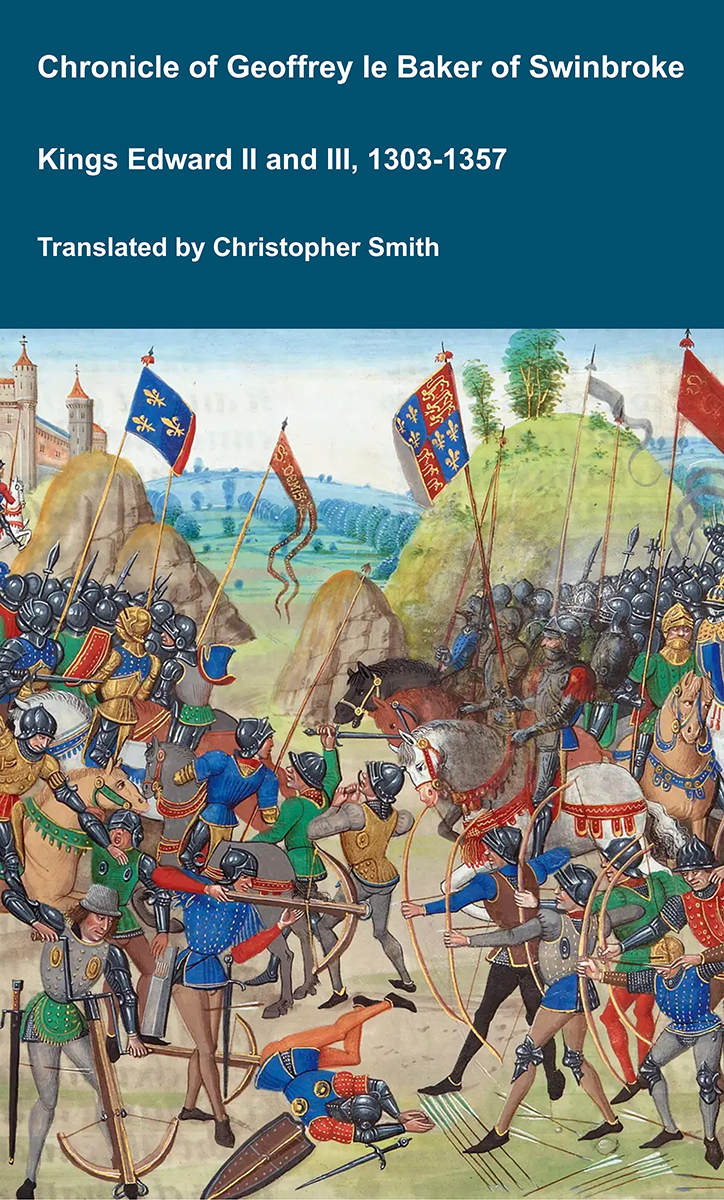
Chronicle of Geoffrey le Baker of Swinbroke
Baker was a secular clerk from Swinbroke, now Swinbrook, an Oxfordshire village two miles east of Burford. His Chronicle describes the events of the period 1303-1356: Gaveston, Bannockburn, Boroughbridge, the murder of King Edward II, the Scottish Wars, Sluys, Crécy, the Black Death, Winchelsea and Poitiers. To quote Herbert Bruce 'it possesses a vigorous and characteristic style, and its value for particular events between 1303 and 1356 has been recognised by its editor and by subsequent writers'. The book provides remarkable detail about the events it describes. Baker's text has been augmented with hundreds of notes, including extracts from other contemporary chronicles, such as the Annales Londonienses, Annales Paulini, Murimuth, Lanercost, Avesbury, Guisborough and Froissart to enrich the reader's understanding. The translation takes as its source the 'Chronicon Galfridi le Baker de Swynebroke' published in 1889, edited by Edward Maunde Thompson.
Available at Amazon in eBook and Paperback format.
23 Jul is in July.
1486 Marriage of Henry VII and Elizabeth York
1554 Marriage of Queen Mary with Philip II of Spain
1596 Death of Henry Carey 1st Baron Hunsdon
On 23rd July 1301 Otto Habsburg was born to Albert Habsburg I Duke Austria (age 46) and Elizabeth Carinthia Duchess Austria. He married Elizabeth Bavaria, daughter of Stephen Bavaria 1st Duke Bavaria.
On 23rd July 1338 Peter IV King Aragon (age 18) and Maria Évreux Queen Consort Aragon (age 9) were married. She by marriage Queen Consort Aragon. She the daughter of Philip "Noble" III King Navarre (age 32) and Joan Capet II Queen Navarre (age 26). He the son of Alfonso IV King Aragon and Teresa Enteca Queen Consort Aragon. They were third cousin once removed. He a great x 5 grandson of King Henry "Curtmantle" II of England. She a great x 3 granddaughter of King Henry III of England.
On 23rd July 1339 Louis Valois Anjou I Duke Anjou was born to King John "The Good" II of France (age 20) and Bonne Luxemburg Queen Consort France (age 24) at Château de Vincennes, Vincennes. He married 1360 his second cousin Marie Chatillon Duchess Anjou, daughter of Charles of Blois Duke Brittany and Joan "Lame" Capet Countess Penthièvre, and had issue.
On 23rd July 1401 Francesco Sforza I Duke Milan was born illegitimately to Muzio Attendolo Sforza (age 32). He married 25th October 1441 Bianca Maria Visconti and had issue.
On 23rd July 1423 Arnold Egmont Duke Guelders (age 13) and Catherine La Marck (age 6) were married. She the daughter of Adolph La Marck I Duke Cleves (age 49) and Marie Valois Duchess Cleves (age 30).
Vatican Regesta Vol. DCLXXXV Secretarum Tomus IV 2 Innocent VIII. 10 Kal. Aug. Decree, at the petition of king Henry (age 29) and queen Elizabeth (age 20), that a notarial copy of the process before James, bishop of Imola, Apostolic Nuncio with the power of a legate de latere, in regard to the dispensation granted by him to them to contract marriage, notwithstanding the impediment arising from their being related in the double fourth degree of kindred, shall have the same credence as the original letters of the said bishop. The Pope (age 54) exemplifies the said letters and process as follows:
Public instrument, setting forth that in the year of the Incarnation 1486, after the computation of the English church, the 4th indiction, anno 2 Innocent VIII [16th January 1486], in the chapel of St. Mary [the Virgin] on the east side of the cathedral church of St. Paul, London [Map], before James, bishop of Imola, apostolic legate to England and Scotland, in presence of the below-written notaries public, appointed by the said bishop as scribes in the below-written matter of dispensation, and witnesses below-named, there appeared in person Master Robert Morton (age 51), Archdeacon of Winchester, and John de Giglis, I.U.D., as proctors of king Henry, and Richard Hill, dean of the chapel of the household of the said king, and David William, doctor of decrees, dean of St. Mary's Arches, London, as proctors of the lady Elizabeth, eldest daughter of the late king Edward IV, who produced their mandates of procuration and presented to the said legate a schedule of petition on behalf of the said king and lady, praying him to dispense them to marry, notwithstanding the impediment of their relationship in the fourth and fourth degrees of kindred, as was specified by the said Master Robert Morton.
The said instrument exemplifies the said procurations and schedule, as follows:
(i) A public instrument, setting forth that in the year of the Incarnation, etc., 1486, the 4th indiction, anno 2 Innocent VIII, January 14, in a certain great chamber within the palace royal at Westminster, before Thomas, archbishop of York (age 62) and legate of the apostolic see, John, bishop of Worcester (age 56), chancellor of England, and Jasper duke of Bedford (age 54), and many other nobles and magnates, in the presence of me, Richard Spencer, notary public below-written, the said king, present in person, appointed Masters John de Giglis, I.U.D., and Robert Morton, master or keeper of the rolls of the chancery of the said king, as his proctors to appear before the said bishop and legate (who, as is said, has faculty from the apostolic see to dispense a certain number of persons related in the fourth and fourth degrees of kindred and affinity to contract marriage), and to request him to exhibit, etc., the said letters, and execute them in accordance with the desire of the said king, etc. Of all which things, done on the above date and in the above place, in the presence of the above-named witnesses and of Richard Spencer, clerk, of the diocese of Lincoln, notary public by apostolic and imperial authorities, registrar-principal of the court of Canterbury, and keeper of the registers of the same court, the said notary has made the present public instrument, and, being otherwise engaged, has caused it to be written by another, and has published and drawn it up in this public form, and has signed it with his wonted sign and name;.
(ii) A like public instrument, setting forth that on the same date as in the preceding, and in a certain chamber within the royal palace of Westminster, before John, bishop of Worcester, chancellor of England, John lord de Wellys (age 36), Master William Smyth, dean of the chapel royal of Wymbourn in the diocese of Salisbury, and other witnesses, in the presence of the above notary, Richard Spencer, the above lady Elizabeth, present in person, appointed Masters Richard Hill, dean of the chapel of the king's household, and David William, doctor of decrees, dean of St. Mary's Arches, London, and commissary-general of the official of the court of Canterbury and president of the said court, in the absence of the said official, as her proctors to appear, etc., as in the preceding. Of all which things, done on the above date and in the above place, in the presence of the abovenamed witnesses and of … Richard Spencer, clerk, etc., as above, the said notary has made, written, subscribed, published, and drawn up in this public form the present public instrument, and has signed it with his wonted sign and name;.
(iii) The petition to James, bishop of Imola, apostolic legate to England and Scotland, on behalf of the most serene prince and lord, the lord Henry, by the grace of God king of England and France and lord of Ireland, of the one part, and of the most illustrious (clarissime) lady, the lady Elizabeth, eldest legitimate and natural daughter of the late Edward, sometime king of England and France and lord of Ireland, of the other part, setting forth that whereas the said king Henry has by God's providence won his realm of England, and is in peaceful possession thereof, and has been asked by all the lords of his realm, both spiritual and temporal, and also by the general council of the said realm, called Parliament, to take the said lady Elizabeth to wife, he, wishing to accede to the just petitions of his subjects, desires to take the said lady to wife, but cannot do so without dispensation, inasmuch as they are related in the fourth and fourth degrees of kindred, wherefore petition is made on their behalf to the said legate to grant them dispensation by his apostolic authority to contract marriage and remain therein, notwithstanding the said impediment of kindred, and to decree the offspring to be born thereof legitimate.


On 23rd July 1503 Anne Jagiellon was born to Vladislaus II King Hungary (age 47) and Anna Foix Queen Consort of Hungary and Bohemia (age 19). She married before 9th July 1526 her half second cousin once removed Ferdinand I Holy Roman Emperor, son of Philip "Handsome Fair" King Castile and Joanna "The Mad" Trastámara Queen Castile, and had issue.


On 22nd July 1536 or 23rd July 1536 Henry Fitzroy 1st Duke Richmond and Somerset (age 17) died at St James's Palace [Map]. He the illegitimate son of King Henry VIII of England and Ireland (age 45). He was buried at Church of St Michael the Archangel, Framlingham [Map]. Duke of Richmond and Somerset, Earl Nottingham extinct.


Letters and Papers. 23rd July 1536. 147. Vienna Archives. Chapuys (age 46) to Charles V.
My man, as your Majesty will have understood by my former letters, arrived on the 14th, and the same hour I sent Cromwell a packet from their ambassador with you, informing him that I had letters from you for the King his master, and wished an hour appointed for me to present them, but that I first wished to speak to him to learn the state of matters, so as to be guided by his advice. He sent to me to say that we should be together next morning, and he would inform me of the King's will both as to the presentation of your Majesty's letters and the rest. Next day we met in a church, and he began to say that their ambassadors in France wrote of the issue of the French from Fossan, of certain men-of-arms and horses accidentally burnt in Lyons, of the coming of your Majesty into Provence, of the bravery shown by the French king, who wished to go and fight your Majesty, though the preparation made for it was very small, as he had not been able to get more than 5,000 or 6,000 Swiss, and that they considered it certain that your Majesty would derive great glory and reputation from your enterprise. I then repeated briefly what your Majesty wrote to me touching the peace between you and the French king, adding that, to be frank, I had written of it to your Majesty as angrily (chauldement) as could be, being persuaded that the King his master spoke of the said peace more as a matter of form than from good will (plus pour complement que affection) for several reasons which I alleged; to which he knew not what to reply, especially to this, that when news came of the said peace, they appeared very sorry, and that the King and all his Council did not appear pleased that your Majesty was to deliver Milan either to the second or third son of France, without which, unless they somewhat humbled the ambition and glory of the French king, it was impossible to come to terms; and that I was assured that since your Majesty had heard that the said King did not think it wise or prudent for your Majesty to deliver the dukedom of Milan to any of the French children you had altogether cooled and given no further ear to the French, (especially being informed by me that the said King went roundly to business, and endeavoured sincerely to promote the establishment and augmentation of the peace) as he might have seen by your Majesty's letters, written from Rome on the second day of Easter; and that it appeared to me the King had only spoken to me about the said peace with France because he thought your Majesty dissembled with him, wishing to gain time, seeing that we did not come to a point; which, however, could not be imputed to your Majesty or your ministers, for he knew well I had never ceased to use efforts for its establishment. Having heard me, Cromwell, contrary to his custom, remained pensive, and called God to witness that it would have been a most praiseworthy deed, most agreeable to God and the world, and especially to the King his master, if you had been pleased to consent to the said peace, especially at his master's request, to whom he could have wished you had written in a certain form, impertinent enough. And on my putting before him the considerations, he was silent, not knowing what to reply. As to the renewal of amity, he said to me that he had that very morning spoken of it to the King more than an hour and a half, and that when everything was well turned and considered, they could find no reason or ground to make any other treaty with your Majesty, since past treaties ought to suffice, which they had always observed, and being in peace, without suspicion of war, they had no occasion to depart from that position without any advantage, and they believed your Majesty would rather have the kingdom of France for yourself than deliver it to them; moreover, you would not consent to act with them against the Pope; which were the only points that should move them to come to any treaty. I was astonished at this reply, especially as on reminding him of several things he had said to me before touching the said establishment he pretended not to remember them, and knew not what to answer; and having asked him why he had solicited me so strongly before, after some conversation I told him that your Majesty had been pleased to make great endeavours everywhere to restore and establish the said amity, and had sent me power to treat. I begged, therefore, he would use his influence to bring matters to a conclusion.
He then showed himself more glad than before, saying it was better news that I had the said power ready than those which their ambassador wrote, viz., that there had been some talk in your Majesty's Court of sending hither a person to treat of the said matters, and that it would not be owing to him if all did not turn out well; also that it was not a bad commencement to have reconciled the Princess with her father, who now bore her as much affection as ever father did. He also said that the King had given orders all over the coast that no one should assist French ships in the channel, and that no one should dare to buy any of the booty taken by the French. On departing he said to me that if he had not been so busy he would have gone to Court with me, and procured me an audience which he had forgot to ask for me, and that he thought that next day, Sunday, I might have one. But on Sunday Cromwell, for some indisposition, was not at Court, for which cause or perhaps to give place to the French ambassador, who was there all day, he sent me no message, nor on Monday or Tuesday, which I attribute partly to the great business the King and his ministers had in concluding the parliament. And on Wednesday, seeing that the King intended to go to Dover, I sent again to desire an audience which was granted to me.
On coming to the King, fearing that Cromwell might not have let him know all the urgency I had made in soliciting audiences, not only since the arrival of my man, but before I related to him what had passed, of which he confessed he was informed, and I presented your Majesty's letters, with the reading of which he was long occupied, more I think to see if he could find something to carp at than for any other reason. After which he asked me for my credence. As to the excuse of your Majesty with regard to the peace with France he knew not what to object, except that he would have been glad to mediate, and since there was no other way but war, he hoped it would be made where he should not be compelled by his treaties with France to give his assistance, as he should be in the neighbouring frontiers, in which lay the town of Bray, which had been occupied of late days by your Majesty's forces, although there was no great probability that they would proceed much further; and that there his honor was concerned for which he was bound to imperil his goods, his blood, and those of his subjects; he did not care if heads were broken in other quarters. And on my saying that if so, he had no great occasion to complain, as he lately did of the invasion, as he called it, of Piedmont by your Majesty's men against the French, and the summons sent on your part to the marquis of Saluces, he replied that it was not he who made that complaint, but only the French. It was true that although he was not compelled to assist the French in the quarrel of Piedmont, yet he could well debate that on that side your Majesty was the aggressor; and on that point we entered again into discussion, and having shown him irrefragably that Francis was not only the violator of treaties, but also a wilful invader, and having further pointed out the right that you might lawfully claim to Provence and Dauphiné, he said you might fairly put that in force there and elsewhere as you thought best, provided it was not on the frontiers on this side, to the defence of which he felt himself bound. To this I replied that as it was the French who had begun the incursions on the frontiers of which he spoke, it was lawful for your Majesty to revenge them and even pursue your enemy to the death, or bring him to such terms that he could not easily give further trouble, and that he ought to resent the fact that the French had begun as well on the said frontiers as principally by taking certain Spanish ships in his harbours, or close to them; and even though he had promised the king of France to defend him against invasions, yet as he declared that his agreements with France nowise derogated from the treaties he had with your Majesty, the said defence should not be understood to be against you; and even though the promise was so general that it included everybody, it must be understood to apply to an unjust invasion. For though some jurists say that the vassal who swears fealty to his lord, promising to serve him against all the world, ought not to enquire whether his lord's quarrel is just or lawful, yet it was quite otherwise with him, and all oaths had certain understood conditions, among which is, that the promise be just and honest, which it would not be in this case if he proposed to defend a disturber of the peace of Christendom and occupier of the patrimony of such an old kinsman and friend as your Majesty. Besides, according to law, whoever promised to defend any one from his enemies and recompence him for all damages was nowise bound if the enormity arose from the fault of him to whom the promise was made. On this the King replied that he had fully considered the law, and also the reason of the treaties and confederacies, and as the text was clear it must not be evaded; moreover it mattered not to him who was the first violator of the treaties touching other places with which he had nothing to do. And as to my assertion that the French had been the first aggressors on the frontiers, he said as redress had been made a rupture could not be pretended, but by occupying the lands as your men had done it was impossible to excuse the rupture. I then said that he who adhered so strongly to the text of treaties would not find such a distinction in them, and that restitution was due for towns taken just as much as for what he referred to; that your Majesty, even if peacefully possessed of France, would be content with what was yours, and even with less for the peace of Christendom, and that he might judge from the covetousness and ambition of the French that if they could have taken as easily the towns of Flanders as the cows, there would not have been one that they would not have taken long ago, whatever peace there might be. To which he made no reply worth writing. The King having asked me what quarrel your Majesty pretended against the French king, I answered that I did not know what your Majesty would demand, but I could show him a part of what you might claim, and among other things the duchy of Burgundy, which belonged quite clearly to your Majesty, and which had not been ceded according to the treaties of Madrid and Cambray, though even if you had no other title you might claim it by those treaties alone; for as Francis had contravened the treaty of Cambray he could not avail himself of the mitigation of the terms as regards Burgundy, but was bound on pain of perjury to fulfil everything he had promised in those two treaties. The King replied that then you ought to attack Burgundy, and leave Picardy in peace, and that I must not suppose what he had said in behalf of France was merely by way of conversational discussion, for he thought so in truth, and would write of it to your Majesty. I said he knew what the law of war implied, viz., to seek every means to bring one's enemy to reason, and that for the rest he was so courteous and virtuous a prince, that in this case he would write and do according to his magnanimity and prudence, as the duty of old friendship and relationship required.
I also told him that as the French had broken their promise everywhere, he was not bound to observe his, especially as the French, if they had found the like disposition on your part, would have readily abandoned him. He said Francis denied this, and offered to maintain the contrary in his person if you would affirm it, and if I wished he would call the French ambassador, and I should see how he would answer me. I said I had no charge to speak of such matters to the French ambassador, and I reminded him that when I entered on these subjects with the King, I begged him to keep our conversations to himself, and that I thought your Majesty would not be pleased that I had reported a matter spoken to you confidentially in private; "et quant il y eust bien parle il se fut bien excusee de le faire savoir audit roy, et nen devoit demander autre justifficacion ne tesmoingnagez que de considerer la veracite et integrite du diseur et la grande loyaulte et fiducite de lautre parte." As to the bravery of their fights they ought to be ashamed to speak of them, considering what had passed, and now these and other quarrels were on the point of being settled; and I knew not how the king of France would venture to say that his ambassador had not put such things forward. This King replied that he had certainly fought as much as he could not to disclose from whom proceeded such proposals, but at last he had been compelled to tell it; and certainly he showed by change of colour and bearing that he was vexed and confused at having spoken thus to me.
He afterwards said to me that the legates "qui traictoient par le monde" would conclude this peace. I smiled and said, if the Holy Father had not been able to do it when matters were in a more favorable condition than at present, I did not see how the legates could bring it about, and that he must have that honor himself by declaring himself on your Majesty's side. At last I told him that I had authentic power and sufficient instructions, and if he wished I would show him the power. He tried two or three times to discover de loin if I had any charge to treat for the recovery of what he claims in France, but I always dissembled to learn what he wanted to say. And so I took leave of the King, who treated me with great kindness throughout. I must not omit to say that he objected to me that your Majesty aimed at this monarchy; but I brought him home by such reasons that he could not answer me.
It is three days since I spoke with the King and I expected that the Council would send for me, but I see no appearance of it. I think, as I have always said, the more one shows a desire to come to business with them, the more they draw back. I believe whatever show of it they make they will not declare either for one side or other till they see some indication which way fortune will fall. They are in great perplexity and fear that the legates do not conclude peace, and since they have received news of their arrival, and especially that it was said Likerke had a safe conduct to return to France they have bestowed more caresses on the French ambassador, I know not whether in order to hinder the peace, or to raise my jealousy, so as to draw me to what they wish.
The parliament finished on Tuesday, and as I have before written, the nomination of the successor to the kingdom is left to the King. As to the faith and ceremonies of the Church certain very cold constitutions have been made by the said parliament; and they have condemned to death, as rebels, the lord of Kildare and four or five of his kinsmen, and likewise the younger brother of the duke of Norfolk for having treated a marriage par parolles de present with the daughter of the queen of Scots and earl of Angus. A statute has also been passed making it treason to treat for marriage with anyone of the blood royal without the King's consent. The said personage of the blood royal was also to die, but for the present has been pardoned her life considering that copulation had not taken place; and certainly if she had done much worse she deserved pardon, seeing the number of domestic examples she has seen and sees daily, and that she has been for eight years of age and capacity to marry. Since the case has been discovered she has not been seen, and no one knows whether she be in the Tower, or some other prison.
The King is much mortified "devant mariage dicelle sa nyece;" much more because he has no hope that the duke of Richmond (age 17) can live long, whom he certainly intended to make his successor, and but for his illness, would have got him declared so by parliament; and this was one of the reasons why he was so very urgent that the Princess should approve the statutes that made her a bastard. London, 23 July.
Fr., from a modern copy, pp. 10. The original is endorsed: "De lambassadeur en Angleterre des premier, viii., xiii., et xxiiie de juilliet, reçues joinctement au camp prez Aix en Provence le xxixe du mois daoust, 1536."
Letters and Papers. 23rd July 1536. Vienna Archives. 148. Chapuys (age 46) to Granvelle.
I have always thought the more these people are pressed the more they grow stubborn like donkeys, as you may see by what I write to his Majesty. Still I will not forbear to stir them up as opportunity serves, preserving such moderation that they shall be unable to pretend they were never asked, or to imagine that the success of his Majesty's affairs depends upon them. It may be conjectured, seeing the King's great desire to have the management of the peace, that he knows if it be made at the Pope's intercession, "quil nen libreroit bien," and I think that conducting the affair himself he might draw the parties to his opinion against the Holy See; or it may be that the king of France has given him to understand that while he is in this perplexity he dare not divorce himself from the Church, lest he should make enemies of the Pope and his forces. Secretary Cromwell within these two months only wished to see the French punished, but since then he will hear of nothing but an accommodation.
The King three days ago despatched a courier to Italy; and some say he only goes to Venice to seek Mr. Reynold Pole, whom, if he come, the King will make a cardinal like the bishop of Rochester, by reason of a book he has written in favour of papal authority. Others say that the said courier is gone to Rome.
The greatest difficulty the King has had with this parliament has been to enact that all papal dispensations, alike of the present Pope and of his predecessors, should be invalid, a thing involving serious consequences, especially in matrimonial causes as to the legitimacy of issue; but in the end everything must go as the King wishes, were he to demand something still more strange.
I have just this moment heard that the duke of Richmond (age 17) died this morning; not a bad thing for the interests of the Princess. She, thank God, is very well, and I think her father's affection for her increases daily. Of late Cromwell got a gold ring made, on one side of which is, in relief, the figure of the King and Queen, on the other that of the Princess; and round about was a writing in Latin, which you will see by the enclosed bill. Cromwell meant to make a present of it to the Princess, but the King wishes to have the honor of it himself, and Cromwell will have to find other presents. The King is also getting his goldsmith to make a little two-headed eagle with plenty of jewels. I know not what he means to do with it.
They have begun appointing the household (dresser l'estat) of the Princess, and I think she will be magnificently provided for. London, 23 July 1536.
Fr., from a modern copy, pp. 2.
ii. Inscription on Cromwell's ring:—
"Obedientia unitatem parit, Unitas animi quietem et constantiam; Constans vero animi quies thesaurus inestimabilis. Respexit humilitatem Qui in Filio nobis reliquit Perfectum humilitatis exemplar. Factus est obediens Patri, Et ipsa etiam natura parentibus Et patrie obediendum docuit."
The Deeds of the Dukes of Normandy
The Gesta Normannorum Ducum [The Deeds of the Dukes of Normandy] is a landmark medieval chronicle tracing the rise and fall of the Norman dynasty from its early roots through the pivotal events surrounding the Norman Conquest of England. Originally penned in Latin by the monk William of Jumièges shortly before 1060 and later expanded at the behest of William the Conqueror, the work chronicles the deeds, politics, battles, and leadership of the Norman dukes, especially William’s own claim to the English throne. The narrative combines earlier historical sources with firsthand information and oral testimony to present an authoritative account of Normandy’s transformation from a Viking settlement into one of medieval Europe’s most powerful realms. William’s history emphasizes the legitimacy, military prowess, and governance of the Norman line, framing their expansion, including the conquest of England, as both divinely sanctioned and noble in purpose. Later chroniclers such as Orderic Vitalis and Robert of Torigni continued the history, extending the coverage into the 12th century, providing broader context on ducal rule and its impact. Today this classic work remains a foundational source for understanding Norman identity, medieval statesmanship, and the historical forces that reshaped England and Western Europe between 800AD and 1100AD.
Available at Amazon in eBook and Paperback format.
On 23rd July 1547 the remains of Bishop Osmund 1st Earl Dorset were transated to the Lady Chapel of Salisbury Cathedral [Map].His shrine was destroyed during the reign of King Henry VIII.
Chronicle of Queen Jane and Two Years of Queen Mary 1553. 23rd July 1553. A lettere written in London mentiones that the lord admirall, and the lords Greye (age 44),b Garret, Wormon,c and the lord Fitzwarren, sir Henry Sidney (age 24), and sir James Croffts (age 35), with divers others, have already their pardon graunted them.
The duke of Northumberland is in custody of the garde as a prisoner in Cambridge, and my ladie his wyfe, the lord Guilford (age 18), and the lady Jane (age 17), are in the Towere as prisoneres. My lord marques of Northampton, the earle of Huntingdon, sir Henry Gates, and divers other, cannot as yet gett their pardones."
Note b. William lord Grey of Wilton was the commander upon whose military talents the duke of Northumberland seems to have mainly relied: but lord Grey, who had been an adherent of the duke of Somerset, probably did not serve on this occasion very cordially. He seems to have left Northumberland when at Cambridge, and made his submission to Mary; who on her arrival at her manor of Newhall in Essex, on the 31st of July, dismissed him to his former charge of the castle of Guisnes, with a reinforcement of 350 footmen and 50 horsemen demi-lances: see her letters patent, printed in the Appendix to the Life of Lord Grey of Wilton, No. VI.
Note c. The earl of Ormond.


Wriothesley's Chronicle [1508-1562]. 23rd July 1554. The 23 of Julie the Prince of Spayne (age 27) came to Winchesterd about vi of the clock at night, accompanied with noblemen as well of England as of his owne countriea, with trumpetts blowinge and bells ringinge, and came to the Cathedrall [Map] churche, where he alighted. And there the Bishop of Winchester, Lord Chauncellor (age 71), with 4 bishops more, with the priests, singinge-men, and children, receaved him with procession in riche copes and with iii crosses up into the quiere, where was a riche traves richlye hanged for him; and there he kneeled downe before the sacrament; and then the Lord Chauncellor began Te Deum, the organs playinge and the quier singinge the rest. This done he was brought out with torche light to his lodginge throughe the cloyster to the Deanes howsse, all the Queens garde standinge in their riche cotes all the waye. He was apparelled in a riche cote richlie imbroydered with goulde, and an hatt much like the same with a feather in it. The same night after he had supped, which was about x of the clock, certeyne of the Councell brought him to the Queen (age 38) by a secrett waye, where she receaved him right lovinglye and kissed him, and after halfe an howre they tooke their leave, eche kissinge the other, and so departed that night to his lodginge.
Note d. Philip lingered a few days at Southampton, where he disembarked, as if in order to ascertain the humour of the nation, as one of his ambassadors, the Count of Egmont (age 31), had been recently violently assaulted by the populace, who mistook him for his master.
Note a. He came well attended with a bodyguard and troops.


Henry Machyn's Diary. 23rd July 1557. The xxiij day of July sir Gorge Pallett (age 65) and ser Wyllyam Cortnay (age 28) toke ther barge at Towre warff [Map], at ... of the cloke at after-non, toward Dover, Kent [Map], and dyvers captaynes.
On 23rd July 1596 Henry Carey 1st Baron Hunsdon (age 70) died at Somerset House [Map]. Queen Elizabeth I of England and Ireland (age 62) was present. She, apparently, proposed he be made Earl of Wiltshire. He refused saying... "Madam, as you did not count me worthy of this honour in life, then I shall account myself not worthy of it in death". His son George (age 49) succeeded 2nd Baron Hunsdon. Elizabeth Spencer Baroness Hunsdon and Eure (age 44) by marriage Baroness Hunsdon.


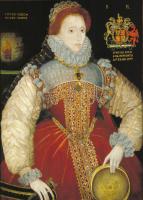


On 23rd July 1599 Dorothea Marie Oldenburg was born to John "Younger" Oldenburg Duke Schleswig Holstein Sonderburg (age 54) and Agnes Hedwig of Anhalt (age 26). She died aged less than one years old.
On 23rd July 1603 King James I of England and Ireland and VI of Scotland (age 37) created a number Knights at the Royal Gardens Whitehall Palace:
Henry Savile 1st Baronet (age 24), William Morgan (age 43), George Carew, Baptist Hicks 1st Viscount Campden (age 46), Richard Musgrave 1st Baronet (age 18), James Calthorpe (age 44), Thomas Gresham (age 56), George Fane of Burston (age 22), Francis Fane 1st Earl of Westmoreland (age 23), Robert Chichester (age 25), William Pope 1st Earl Downe (age 29), Gervase Clifton 1st Baronet (age 15), Thomas Berkeley (age 28), Edward Montagu 1st Baron Montagu (age 40), William Herbert 1st Baron Powis (age 30), Anthony Irby (age 26), Drue Drury of Eccles and Rollesby in Norfolk and Arnold Lygon (age 45).
24th July 1603 Richard Browne (age 64).


In July 1660 King Charles II of England Scotland and Ireland (age 30) rewarded those who supported his Restoration...
2nd. Maurice Berkeley 3rd Viscount Fitzhardinge (age 32) was created 1st Baronet Berkeley of Bruton in Somerset. Anne Lee Viscountess Fitzhardinge (age 37) by marriage Lady Berkeley of Bruton in Somerset.
4th. Thomas Myddelton 1st Baronet (age 35) was created 1st Baronet Myddelton of Chirk Castle.
6th. Varney Noel 1st Baronet was created 1st Baronet Noel.
7th. George Monck 1st Duke Albemarle (age 51) was created 1st Duke Albemarle, 1st Earl Torrington in Devon. Anne Clarges Duchess Albermarle (age 41) by marriage Duchess Albemarle.
12th. Robert Hales 1st Baronet (age 50) was created 1st Baronet Hales of Beakesbourne in Kent.
12th. Edward Montagu 1st Earl Sandwich (age 34) was created 1st Earl Sandwich. Jemima Crew Countess Sandwich (age 35) by marriage Countess Sandwich.
14th. Elizabeth Feilding Countess Guildford was created 1st Countess Guildford by King Charles II of England Scotland and Ireland. The peerage for life.
18th. Samuel Morland 1st Baronet (age 35) was created 1st Baronet Morland of Sulhamstead Banister. Susanne de Milleville Lady Morland by marriage Lady Morland of Sulhamstead Banister.
23rd. Henry Vernon 1st Baronet (age 55) was created 1st Baronet Vernon of Hodnet in Shropshire.
23rd. John Aubrey 1st Baronet (age 54) was created 1st Baronet Aubrey of Llantrithyd in Glamorganshire.
Samuel Pepys' Diary. 23rd July 1661. Put on my mourning. Made visits to Sir W. Pen (age 40) and Batten. Then to Westminster, and at the Hall staid talking with Mrs. Michell a good while, and in the afternoon, finding myself unfit for business, I went to the Theatre [Map], and saw "Brenoralt", I never saw before. It seemed a good play, but ill acted; only I sat before Mrs. Palmer (age 20), the King's mistress, and filled my eyes with her, which much pleased me.


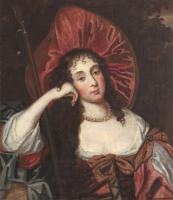


Samuel Pepys' Diary. 23rd July 1662. At night home, and late packing up things in order to their going to Brampton to-morrow, and so to bed, quite out of sorts in my mind by reason that the weather is so bad, and my house all full of wet, and the trouble of going from one house to another to Sir W. Pen's (age 41) upon every occasion. Besides much disturbed by reason of the talk up and down the town, that my Lord Sandwich (age 36) is lost; but I trust in God the contrary.
On 23rd July 1664 the Battle of St Gothard was a victory for the Imperial Army (Germans, Swedish and French) over the Ottoman army.
Samuel Pepys' Diary. 23rd July 1664. At noon to the 'Change [Map], where I took occasion to break the business of my Chancellor's (age 55) timber to Mr. Coventry (age 36) in the best manner I could. He professed to me, that, till, Sir G. Carteret (age 54) did speake of it at the table, after our officers were gone to survey it, he did not know that my Chancellor had any thing to do with it; but now he says that he had been told by the Duke (age 30) that Sir G. Carteret had spoke to him about it, and that he had told the Duke that, were he in my Chancellor's case, if he were his father, he would rather fling away the gains of two or £3,000, than have it said that the timber, which should have been the King's, if it had continued the Duke of Albemarle's (age 55), was concealed by us in favour of my Chancellor; for, says he, he is a great man, and all such as he, and he himself particularly, have a great many enemies that would be glad of such an advantage against him. When I told him it was strange that Sir J. Minnes (age 65) and Sir G. Carteret, that knew my Chancellor's concernment therein, should not at first inform us, he answered me that for Sir J. Minnes, he is looked upon to be an old good companion, but by nobody at the other end of the towne as any man of business, and that my Chancellor, he dares say, never did tell him of it, only Sir G. Carteret, he do believe, must needs know it, for he and Sir J. Shaw are the greatest confidants he hath in the world. So for himself, he said, he would not mince the matter, but was resolved to do what was fit, and stand upon his owne legs therein, and that he would speak to the Duke, that he and Sir G. Carteret might be appointed to attend my Chancellor in it. All this disturbs me mightily. I know not what to say to it, nor how to carry myself therein; for a compliance will discommend me to Mr. Coventry, and a discompliance to my Chancellor. But I think to let it alone, or at least meddle in it as little more as I can.


Samuel Pepys' Diary. 23rd July 1665. I followed the King (age 35) to chappell, and there hear a good sermon; and after sermon with my Lord Arlington (age 47), Sir Thomas Ingram (age 51) and others, spoke to the Duke (age 31) about Tangier, but not to much purpose. I was not invited any whither to dinner, though a stranger, which did also trouble me; but yet I must remember it is a Court, and indeed where most are strangers; but, however, Mr. Cutler carried me to Mr. Marriott's the house-keeper, and there we had a very good dinner and good company, among others Lilly (age 46), the painter.


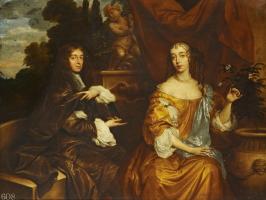
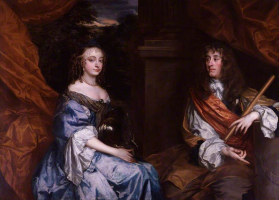
John Evelyn's Diary. 23rd July 1678. Went to see Mr. Elias Ashmole's (age 61) library and curiosities, at Lambeth. He had divers MSS., but most of them astrological, to which study he is addicted, though I believe not learned, but very industrious, as his History of the order of the Garter proves. He showed me a toad included in amber. The prospect from a turret is very fine, it being so near London, and yet not discovering any house about the country. The famous John Tradescant bequeathed his Repository to this gentleman, who has given them to the University of Oxford, and erected a lecture on them, over the laboratory, in imitation of the Royal Society.


John Evelyn's Diary. 23rd July 1678. Mr. Godolphin (age 33) was made Master of the Robes to the King (age 48).
Annals of the six Kings of England by Nicholas Trivet
Translation of the Annals of the Six Kings of England by that traces the rise and rule of the Angevin aka Plantagenet dynasty from the mid-12th to early 14th century. Written by the Dominican scholar Nicholas Trivet, the work offers a vivid account of English history from the reign of King Stephen through to the death of King Edward I, blending political narrative with moral reflection. Covering the reigns of six monarchs—from Stephen to Edward I—the chronicle explores royal authority, rebellion, war, and the shifting balance between crown, church, and nobility. Trivet provides detailed insight into defining moments such as baronial conflicts, Anglo-French rivalry, and the consolidation of royal power under Edward I, whose reign he describes with particular immediacy. The Annals combines careful year-by-year reporting with thoughtful interpretation, presenting history not merely as a sequence of events but as a moral and political lesson. Ideal for readers interested in medieval history, kingship, and the origins of the English state, this chronicle remains a valuable and accessible window into the turbulent world of the Plantagenet kings.
Available at Amazon in eBook and Paperback format.
John Evelyn's Diary. 23rd July 1679. To Court: after dinner, I visited that excellent painter, Verrio (age 43), whose works in fresco in the King's (age 49) palace, at Windsor, Berkshire [Map], will celebrate his name as long as those walls last. He showed us his pretty garden, choice flowers, and curiosities, he himself being a skillful gardener.
John Evelyn's Diary. 23rd July 1679. I went to Clifden [Map], that stupendous natural rock, wood, and prospect, of the Duke of Buckingham's (age 51), and buildings of extraordinary expense. The grots in the chalky rocks are pretty: it is a romantic object, and the place altogether answers the most poetical description that can be made of solitude, precipice, prospect, or whatever can contribute to a thing so very like their imaginations. The stand, somewhat like Frascati as to its front, and on the platform is a circular view to the utmost verge of the horizon, which, with the serpenting of the Thames, is admirable. The staircase is for its materials singular; the cloisters, descents, gardens, and avenue through the wood, august and stately; but the land all about wretchedly barren, and producing nothing but fern. Indeed, as I told his Majesty (age 49) that evening (asking me how I liked Clifden) without flattery, that it did not please me so well as Windsor, Berkshire [Map] for the prospect and park, which is without compare; there being but one only opening, and that narrow, which led one to any variety; whereas that of Windsor is everywhere great and unconfined.


John Evelyn's Diary. 23rd July 1692. I went with my wife (age 57), son (age 37), and daughter (age 23), to Eton [Map], to see my grandson (age 10), and thence to my Lord Godolphin's (age 47), at Cranburn, where we lay, and were most honourably entertained. The next day to St. George's Chapel [Map], and returned to London late in the evening.
On 23rd July 1694 Charles Middleton 2nd Earl Middleton (age 44) was tried, in absentia, for treason and outlawed. He was attainted on 2nd July 1695. Earl Middleton forfeit.

On 23rd July 1723 William Stukeley (age 35) made sketches of Stanton Drew Great Circle.
On 23rd July 1724 Charles Emmanuel III King Sardinia (age 23) and Polyxena Hesse Rotenburg Queen Consort Sardinia (age 17) were married. She by marriage Queen Consort Sardinia. He the son of Victor Amadeus King Sardinia (age 58) and Anne Marie Bourbon Queen Consort Sardinia (age 54).
On 23rd July 1728 Louis Henri Bourbon Condé Duke Bourbon (age 35) and Landgravine Caroline Hesse Rotenburg (age 13) were married. The difference in their ages was 22 years.
On 23rd July 1765 Francis Russell 5th Duke Bedford was born to Francis Russell (age 25) and Elizabeth Keppel (age 26). He a great x 2 grandson of King Charles II of England Scotland and Ireland.
On 23rd July 1802 Anne Maria Bonnell Duchess Somerset died in Upper Grosvenor Street.
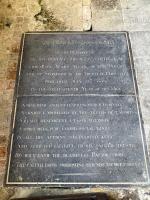
St Nicholas' Church, Stanford-on-Avon [Map]. Grave of Reverend Robert Thomas Smith. Vicar of the parish for thirty-six years. Died 23rd July 1818, aged sixty-seven.
Chronicle of a Bourgeois of Valenciennes
Récits d’un bourgeois de Valenciennes aka The Chronicle of a Bourgeois of Valenciennes is a vivid 14th-century vernacular chronicle written by an anonymous urban chronicler from Valenciennes in the County of Hainaut. It survives in a manuscript that describes local and regional history from about 1253 to 1366, blending chronology, narrative episodes, and eyewitness-style accounts of political, military, and social events in medieval France, Flanders, and the Low Countries. The work begins with a chronological framework of events affecting Valenciennes and its region under rulers such as King Philip VI of France and the shifting allegiances of local nobility. It includes accounts of conflicts, sieges, diplomatic manoeuvres, and the impact of broader struggles like the Hundred Years’ War on urban life in Hainaut. Written from the perspective of a burgher (bourgeois) rather than a monastery or royal court, the chronicle offers a rare lay viewpoint on high politics and warfare, reflecting how merchants, townspeople, and civic institutions experienced the turbulence of the 13th and 14th centuries. Its narrative style combines straightforward reporting of events with moral and civic observations, making it a valuable source for readers interested in medieval urban society, regional politics, and the lived experience of war and governance in pre-modern Europe.
Available at Amazon in eBook and Paperback format.
On 23rd July 1833 Spencer Cavendish 8th Duke Devonshire was born to William Cavendish 7th Duke Devonshire (age 25) and Blanche Georgiana Howard (age 21). Coefficient of inbreeding 1.65%. He married 16th August 1892 Louisa Vonalten Duchess Devonshire and Manchester.


On 23rd July 1855 Edward Fitz-Clarence (age 18) was killed at the Siege of Sevastopol.
Edwyn Sherard Burnaby (age 25) and Henry Hugh Manvers Percy (age 37) fought.
On 23rd July 1875 Oscar Folsom died in a carriage accident. President Grover Cleveland (age 38), her future husband, was appointed guardian of his daughter Frances Clara Folsom (age 11) .
Transactions of the Bristol and Gloucestershire Archaeological Society Volume 9 1876. Transactions of the Bristol anb Gloucestershire Archaeologhical Society. At the Annual Meeting, held at Evesham, on Wednesday, Thursday, and Friday, the 23rd, 24th and 25th July, 1884.
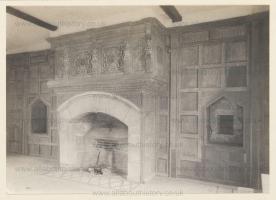
23rd July 1907. Godfrey Bingley (age 65). Wenlock Priory, Shropshire [Map].


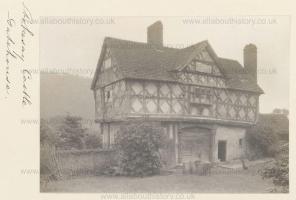
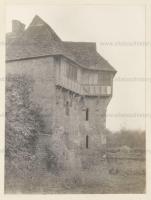
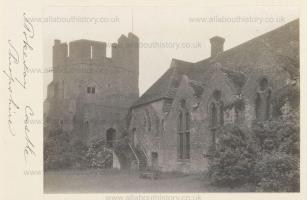
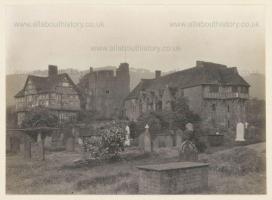
23rd July 1907. Godfrey Bingley (age 65). Stokesay Castle, Shropshire [Map].
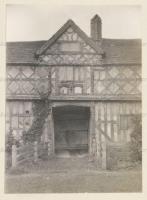
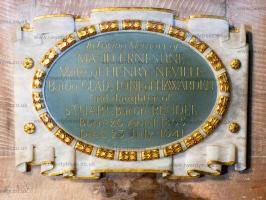
On 23rd July 1941 Maud Ernestine Rendel (age 76) died.
Maud Ernestine Rendel: On 26th April 1865 she was born to Stuart Rendel 1st Baron Rendel. On 30th January 1890 Henry Neville Gladstone 1st Baron Gladstone and she were married at St George's Church, Hanover Square.
On 23rd July 1245 Thomas Berkeley 6th and 1st Baron Berkeley was born to Maurice Berkeley 5th Baron Berkeley (age 27) and Isabella Plantagenet Baroness Berkeley at Berkeley Castle [Map]. He a great grandson of King John of England. He married in or before 1268 his half fifth cousin Joan Ferrers Baroness Berkeley, daughter of William Ferrers 5th Earl of Derby and Margaret Quincy Countess Derby, and had issue.
On 23rd July 1301 Otto Habsburg was born to Albert Habsburg I Duke Austria (age 46) and Elizabeth Carinthia Duchess Austria. He married Elizabeth Bavaria, daughter of Stephen Bavaria 1st Duke Bavaria.
On 23rd July 1339 Louis Valois Anjou I Duke Anjou was born to King John "The Good" II of France (age 20) and Bonne Luxemburg Queen Consort France (age 24) at Château de Vincennes, Vincennes. He married 1360 his second cousin Marie Chatillon Duchess Anjou, daughter of Charles of Blois Duke Brittany and Joan "Lame" Capet Countess Penthièvre, and had issue.
On 23rd July 1401 Francesco Sforza I Duke Milan was born illegitimately to Muzio Attendolo Sforza (age 32). He married 25th October 1441 Bianca Maria Visconti and had issue.
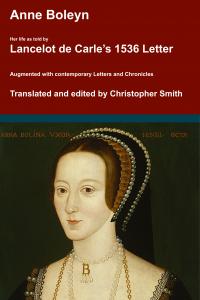
Anne Boleyn. Her Life as told by Lancelot de Carle's 1536 Letter.
In 1536, two weeks after the execution of Anne Boleyn, her brother George and four others, Lancelot du Carle, wrote an extraordinary letter that described Anne's life, and her trial and execution, to which he was a witness. This book presents a new translation of that letter, with additional material from other contemporary sources such as Letters, Hall's and Wriothesley's Chronicles, the pamphlets of Wynkyn the Worde, the Memorial of George Constantyne, the Portuguese Letter and the Baga de Secrets, all of which are provided in Appendices.
Available at Amazon in eBook and Paperback format.
On 23rd July 1409 Alice St Maur Baroness Zouche Harringworth was born to Richard St Maur at House of Thomas Cressy St Lawrence Jewry. She married in or before 1430 William Zouche 5th Baron Zouche Harringworth, son of William Zouche 4th Baron Zouche Harringworth, and had issue.
On 23rd July 1503 Anne Jagiellon was born to Vladislaus II King Hungary (age 47) and Anna Foix Queen Consort of Hungary and Bohemia (age 19). She married before 9th July 1526 her half second cousin once removed Ferdinand I Holy Roman Emperor, son of Philip "Handsome Fair" King Castile and Joanna "The Mad" Trastámara Queen Castile, and had issue.
On 23rd July 1599 Dorothea Marie Oldenburg was born to John "Younger" Oldenburg Duke Schleswig Holstein Sonderburg (age 54) and Agnes Hedwig of Anhalt (age 26). She died aged less than one years old.
On 23rd July 1611 Frances Sutton 6th Baroness Dudley was born to Ferdinando Dudley (age 23) and Honora Seymour (age 18) at Dudley Castle [Map]. She was baptised 18th August 1611 at the same place. She married 17th February 1628 Humble Ward 1st Baron Ward of Birmingham Baron Dudley and had issue.
On 23rd July 1634 John Hoskyns 2nd Baronet was born to Bennet Hoskyns 1st Baronet (age 25) and Anne Bingley. He married in or before 1675 Jane Lowe Lady Hoskyns and had issue.

On 23rd July 1647 Luise Marie Palatinate Simmern Countess Salm was born to Edward Palatinate Simmern (age 21). She a great granddaughter of King James I of England and Ireland and VI of Scotland. She married 20th March 1671 Charles Theodore Salm Prince Salm and had issue.
On 15th July 1663 John Cropley 2nd Baronet was born to Edward Cropley (age 26) and Martha Wilson. He was baptised at St James' Church, Clerkenwell on 23rd July 1663.
On 23rd July 1666 Thomas Parker 1st Earl Macclesfield was born to Thomas Parker (age 32). He married 23rd April 1691 Janet Carrier Countess Macclesfield and had issue.
On 23rd July 1721 Thomas Heathcote 2nd Baronet was born to William Heathcote 1st Baronet (age 28) and Elizabeth Parker Lady Heathcote (age 21). He married (1) 13th December 1742 Elizabeth Hinton and had issue (2) 30th May 1765 Anne Tollett Lady Heathcote and had issue.
On 23rd July 1727 John Monson 2nd Baron Monson was born to John Monson 1st Baron Monson (age 34) and Margaret Watson (age 32).
On 23rd July 1738 John Rushout 1st Baron Northwick was born to John Rushout 4th Baronet (age 53) and Anne Compton Lady Rushout. He married in or before 1767 Rebecca Bowles and had issue.


On 23rd July 1746 Frederick Rogers 5th Baronet was born to Frederick Rogers 4th Baronet (age 30).
On 23rd July 1765 Francis Russell 5th Duke Bedford was born to Francis Russell (age 25) and Elizabeth Keppel (age 26). He a great x 2 grandson of King Charles II of England Scotland and Ireland.
William of Worcester's Chronicle of England
William of Worcester, born around 1415, and died around 1482 was secretary to John Fastolf, the renowned soldier of the Hundred Years War, during which time he collected documents, letters, and wrote a record of events. Following their return to England in 1440 William was witness to major events. Twice in his chronicle he uses the first person: 1. when writing about the murder of Thomas, 7th Baron Scales, in 1460, he writes '… and I saw him lying naked in the cemetery near the porch of the church of St. Mary Overie in Southwark …' and 2. describing King Edward IV's entry into London in 1461 he writes '… proclaimed that all the people themselves were to recognize and acknowledge Edward as king. I was present and heard this, and immediately went down with them into the city'. William’s Chronicle is rich in detail. It is the source of much information about the Wars of the Roses, including the term 'Diabolical Marriage' to describe the marriage of Queen Elizabeth Woodville’s brother John’s marriage to Katherine, Dowager Duchess of Norfolk, he aged twenty, she sixty-five or more, and the story about a paper crown being placed in mockery on the severed head of Richard, 3rd Duke of York.
Available at Amazon in eBook and Paperback format.

On 23rd July 1785 George Edward Beauchamp was born to Thomas Beauchamp-Proctor 2nd Baronet (age 29) and Mary Palmer Lady Beauchamp-Proctor (age 25).
On 23rd July 1800 Alexander Malet 2nd Baronet was born to Charles Warre Malet 1st Baronet (age 47) and Susanna Wales Lady Malet at Hartham Park, Wiltshire [Map]. He married 1834 Marianne Dora Spalding Lady Malet, daughter of John Spalding and Mary Eden Baroness Brougham and Vaux, and had issue.
On 23rd July 1809 Charlotte Margaret Bertie was born to Montagu Bertie 5th Earl of Abingdon (age 25) and Emily Gage Countess of Abingdon.
On 23rd July 1811 Catherine Julia Jenkinson was born to Charles Jenkinson 3rd Earl Liverpool (age 27).
On 23rd July 1819 George Phipps 2nd Marquess Normanby was born to Constantine Phipps 1st Marquess Normanby (age 22) and Maria Liddell Marchioness Normanby (age 21). He married 1844 Laura Russell Marchioness Normanby and had issue.
On 23rd July 1823 Caroline Harriet Gage was born to Henry Hall Gage 4th Viscount Gage (age 31) and Elizabeth Maria Foley (age 30). She married 4th May 1847 Standish Prendergast Vereker 4th Viscount Gort, son of John Vereker 3rd Viscount Gort and Maria O'Grady Viscountess Gort, and had issue.
On 23rd July 1824 Mary Catherine Sackville-West Marchioness Salisbury was born to George Sackville-West 5th Earl De La Warr (age 32) and Elizabeth Sackville Countess De La Warr (age 28). She married (1) 29th April 1847 her fourth cousin twice removed James Brownlow William Gascoyne-Cecil 2nd Marquess Salisbury, son of James Cecil 1st Marquess Salisbury and Mary Amelia Hill Marchioness Salisbury, and had issue (2) 1870 Edward Henry Stanley 15th Earl of Derby, son of Edward Smith-Stanley 14th Earl of Derby and Emma Caroline Bootle-Wilbraham Countess Derby.
On 23rd July 1829 George Thomas Shuckburgh 9th Baronet was born to Francis Shuckburgh 8th Baronet (age 40) and Anna-Maria Draycott Denys. He married 24th June 1879 his first cousin once removed Ida Florence Geraldine Robertson Lady Schuckburgh and had issue.
On 23rd July 1829 Francis Dudley Stuart-Wortley-Mackenzie was born to John Stuart-Wortley-Mackenzie 2nd Baron Wharncliffe (age 28) and Georgiana Elizabeth Ryder Baroness Wharncliffe (age 25). He married 28th August 1855 Maria Elizabeth Martin and had issue.
On 23rd July 1830 Eliza Stonor was born to Thomas Stonor 3rd Baron Camoys (age 32) and Frances Towneley Baroness Camoys (age 29). She married 24th August 1852 Henry Charles Silvertop and had issue.
Henrici Quinti, Angliæ Regis, Gesta, is a first-hand account of the Agincourt Campaign, and subsequent events to his death in 1422. The author of the first part was a Chaplain in King Henry's retinue who was present from King Henry's departure at Southampton in 1415, at the siege of Harfleur, the battle of Agincourt, and the celebrations on King Henry's return to London. The second part, by another writer, relates the events that took place including the negotiations at Troye, Henry's marriage and his death in 1422.
Available at Amazon in eBook and Paperback format.
On 23rd July 1833 Spencer Cavendish 8th Duke Devonshire was born to William Cavendish 7th Duke Devonshire (age 25) and Blanche Georgiana Howard (age 21). Coefficient of inbreeding 1.65%. He married 16th August 1892 Louisa Vonalten Duchess Devonshire and Manchester.
On 23rd July 1849 Alfred Wyatt-Edgell 5th Baron Braye was born to Reverend Edgell Wyatt-Edgell Baron Braye (age 48) and Henrietta Otway 4th Baroness Braye (age 40).
On 23rd July 1876 Arthur Stanley Byng 10th Viscount Torrington was born to Sydney Bing (age 32).
On 23rd July 1877 Geoffrey Duke Coleridge 3rd Baron Coleridge was born to Bernard Coleridge 2nd Baron Coleridge (age 25) and Mary Alethea Mackarness Baroness Coleridge. Coefficient of inbreeding 6.25%. He married 14th September 1904 his second cousin Mary aka Jessie Alethea Mackarness Baroness Coleridge and had issue.
On 23rd July 1883 Field-Marshal Alan Brooke 1st Viscount Alanbrooke was born to Victor Alexander Brooke 3rd Baronet (age 40) and Alice Bellingham (age 39). He married 1929 Benita Pelly, daughter of Harold Pelly 4th Baronet.
On 23rd July 1902 Charles Athelstan Nightingale 16th Baronet was born to Percy Athelstan Nightingale (age 34).
On 23rd July 1921 Michael Fergus Constable Maxwell-Scott 13th Baronet was born to Rear-Admiral Malcolm Raphael Joseph Constable-Maxwell-Scott (age 37).
On 23rd July 1942 Christopher Makins 2nd Baron Sherfield was born to Roger Makins 1st Baron Sherfield (age 38) and Alice Brooks Davis.
On 23rd July 1944 Sarah Marion Coke was born to Major Thomas William Edward Coke 5th Earl of Leicester (age 36) and Elizabeth Mary Yorke Countess of Leicester (age 32).
On 23rd July 1338 Peter IV King Aragon (age 18) and Maria Évreux Queen Consort Aragon (age 9) were married. She by marriage Queen Consort Aragon. She the daughter of Philip "Noble" III King Navarre (age 32) and Joan Capet II Queen Navarre (age 26). He the son of Alfonso IV King Aragon and Teresa Enteca Queen Consort Aragon. They were third cousin once removed. He a great x 5 grandson of King Henry "Curtmantle" II of England. She a great x 3 granddaughter of King Henry III of England.
Chronicle of Walter of Guisborough
A canon regular of the Augustinian Guisborough Priory, Yorkshire, formerly known as The Chronicle of Walter of Hemingburgh, describes the period from 1066 to 1346. Before 1274 the Chronicle is based on other works. Thereafter, the Chronicle is original, and a remarkable source for the events of the time. This book provides a translation of the Chronicle from that date. The Latin source for our translation is the 1849 work edited by Hans Claude Hamilton. Hamilton, in his preface, says: 'In the present work we behold perhaps one of the finest samples of our early chronicles, both as regards the value of the events recorded, and the correctness with which they are detailed; Nor will the pleasing style of composition be lightly passed over by those capable of seeing reflected from it the tokens of a vigorous and cultivated mind, and a favourable specimen of the learning and taste of the age in which it was framed.'
Available at Amazon in eBook and Paperback format.
On 23rd July 1392 William Beauchamp 1st Baron Abergavenny (age 49) and Joan Fitzalan Baroness Bergavenny were married. She by marriage Baroness Abergavenny. She the daughter of Richard Fitzalan 9th Earl of Surrey 4th or 11th Earl of Arundel (age 46) and Elizabeth Bohun Countess Arundel and Surrey. He the son of Thomas Beauchamp 11th Earl Warwick and Katherine Mortimer Countess Warwick. They were second cousin twice removed. He a great x 5 grandson of King John of England. She a great x 2 granddaughter of King Edward I of England.
On 23rd July 1423 Arnold Egmont Duke Guelders (age 13) and Catherine La Marck (age 6) were married. She the daughter of Adolph La Marck I Duke Cleves (age 49) and Marie Valois Duchess Cleves (age 30).
On 23rd July 1700 Bishop Nathaniel Crew 3rd Baron Crew (age 67) and Dorothy Forster Baroness Crewe (age 29) were married. She by marriage Baroness Crew of Stene in Northamptonshire. The difference in their ages was 37 years.


On 23rd July 1724 Charles Emmanuel III King Sardinia (age 23) and Polyxena Hesse Rotenburg Queen Consort Sardinia (age 17) were married. She by marriage Queen Consort Sardinia. He the son of Victor Amadeus King Sardinia (age 58) and Anne Marie Bourbon Queen Consort Sardinia (age 54).
On 23rd July 1728 Louis Henri Bourbon Condé Duke Bourbon (age 35) and Landgravine Caroline Hesse Rotenburg (age 13) were married. The difference in their ages was 22 years.
On 23rd July 1768 John Palmer 5th Baronet (age 33) and Charlotte Gough Lady Palmer were married. They had five sons and two daughters. She by marriage Lady Palmer of Carlton in Northampton.
On 23rd July 1831 William Hare 2nd Earl Listowel (age 29) and Maria Augusta Windham Countess Listowel (age 26) were married.

On 23rd July 1832 George Barrow 2nd Baronet (age 25) and Rosamund Pennell Lady Barrow were married.
On 23rd July 1844 Edward Kerrison 2nd Baronet (age 23) and Caroline Margaret Fox-Strangways Lady Kerrison (age 25) were married. There was no issue from the marriage. She the daughter of Henry Fox-Strangways 3rd Earl of Ilchester (age 57) and Caroline Leonora Murray Countess Ilchester.
On 23rd July 1844 Washington Sewallis Shirley 9th Earl Ferrers (age 22) and Annabella Augusta Chichester Countess Ferrers were married. She by marriage Countess Ferrers. She the daughter of Edward Chichester 4th Marquess Donegal (age 45) and Amelia Ogrady Marchioness County Donegal.
The History of William Marshal was commissioned by his son shortly after William’s death in 1219 to celebrate the Marshal’s remarkable life; it is an authentic, contemporary voice. The manuscript was discovered in 1861 by French historian Paul Meyer. Meyer published the manuscript in its original Anglo-French in 1891 in two books. This book is a line by line translation of the first of Meyer’s books; lines 1-10152. Book 1 of the History begins in 1139 and ends in 1194. It describes the events of the Anarchy, the role of William’s father John, John’s marriages, William’s childhood, his role as a hostage at the siege of Newbury, his injury and imprisonment in Poitou where he met Eleanor of Aquitaine and his life as a knight errant. It continues with the accusation against him of an improper relationship with Margaret, wife of Henry the Young King, his exile, and return, the death of Henry the Young King, the rebellion of Richard, the future King Richard I, war with France, the death of King Henry II, and the capture of King Richard, and the rebellion of John, the future King John. It ends with the release of King Richard and the death of John Marshal.
Available at Amazon in eBook and Paperback format.

On 23rd July 1853 Henry St John Halford 3rd Baronet (age 24) and Elizabeth Ursula Bagshawe Lady Halford (age 23) were married.
On 23rd July 1874 Henry Monck 5th Viscount Monck (age 25) and Edith Caroline Sophia Scott Viscountess Monck (age 18) were married.
On 23rd July 1887 Charles Robert Spencer 6th Earl Spencer (age 29) and Margaret Baring Countess Spencer were married at St James' Church, Piccadilly. He the son of Frederick Spencer 4th Earl Spencer and Adelaide Horatia Seymour-Conway Countess Spencer.
On 23rd July 1895 Thomas Edward Milborne-Swinnerton-Pilkington 12th Baronet (age 37) and Kathleen Mary Alexina Cuffe Lady Milborne-Swinnerton-Pilkington (age 23) were married. She the daughter of William Ulick O'Connor Cuffe 4th Earl of Desart (age 50). They were fifth cousin once removed.
On 23rd July 1912 Charles Edward Ponsonby 1st Baronet (age 32) and Winifred Gibbs (age 25) were married.
On 23rd July 1916 Cuthbert Patrick Blake 6th Baronet (age 31) and Florence Wilhelmina Lidiard "Kitty" Apps Lady Blake (age 30) were married at St Mary's Church, Wimbledon.

On 23rd July 1935 Antony Head 1st Viscount Head (age 28) and Dorothea Louise Ashley-Cooper Viscountess Head (age 28) were married. She the daughter of Anthony Ashley-Cooper 9th Earl of Shaftesbury (age 65) and Constance Grosvenor Countess of Shaftesbury (age 59).
On 23rd July 1947 Anthony Gerard Edward Noel 5th Earl of Gainsborough (age 23) and Mary Stourton Countess Gainsborough (age 21) were married. She by marriage Countess Gainsborough. He the son of Arthur Noel 4th Earl of Gainsborough and Alice Mary Eyre Countess Gainsborough.
On 23rd July 1321 Thomas Berkeley 6th and 1st Baron Berkeley (age 76) died at St Augustine's Abbey, Bristol [Map]. His son Maurice (age 50) succeeded 7th Baron Berkeley Feudal, 2nd Baron Berkeley. Isabella Clare Baroness Berkeley (age 59) by marriage Baroness Berkeley Feudal, Baroness Berkeley.
On 23rd July 1476 William Lovell Baron Marshal, Baron Morley (age 49) died. His son Henry succeeded 9th Baron Marshal, 8th Baron Morley. Elizabeth Pole Baroness Marshal and Morley (age 8) by marriage Baroness Marshal, Baroness Morley.
Chronicle of Walter of Guisborough
A canon regular of the Augustinian Guisborough Priory, Yorkshire, formerly known as The Chronicle of Walter of Hemingburgh, describes the period from 1066 to 1346. Before 1274 the Chronicle is based on other works. Thereafter, the Chronicle is original, and a remarkable source for the events of the time. This book provides a translation of the Chronicle from that date. The Latin source for our translation is the 1849 work edited by Hans Claude Hamilton. Hamilton, in his preface, says: 'In the present work we behold perhaps one of the finest samples of our early chronicles, both as regards the value of the events recorded, and the correctness with which they are detailed; Nor will the pleasing style of composition be lightly passed over by those capable of seeing reflected from it the tokens of a vigorous and cultivated mind, and a favourable specimen of the learning and taste of the age in which it was framed.'
Available at Amazon in eBook and Paperback format.
On 22nd July 1536 or 23rd July 1536 Henry Fitzroy 1st Duke Richmond and Somerset (age 17) died at St James's Palace [Map]. He the illegitimate son of King Henry VIII of England and Ireland (age 45). He was buried at Church of St Michael the Archangel, Framlingham [Map]. Duke of Richmond and Somerset, Earl Nottingham extinct.
On 23rd July 1577 Thomas Wenman (age 29) died. He left significant debts to the Crown requiring some of his lands to be sold. Eaton, Berkshire was sold to John Danvers (age 37) for £7700. Richard Wenman 1st Viscount Wenman (age 4) was made a ward of his mother Jane West (age 19) and Robert Dudley 1st Earl of Leicester (age 45). Robert Dudley 1st Earl of Leicester sold his interest to James Cressy who subsequently married Jane West.


On 23rd July 1596 Henry Carey 1st Baron Hunsdon (age 70) died at Somerset House [Map]. Queen Elizabeth I of England and Ireland (age 62) was present. She, apparently, proposed he be made Earl of Wiltshire. He refused saying... "Madam, as you did not count me worthy of this honour in life, then I shall account myself not worthy of it in death". His son George (age 49) succeeded 2nd Baron Hunsdon. Elizabeth Spencer Baroness Hunsdon and Eure (age 44) by marriage Baroness Hunsdon.
On 23rd July 1623 William Bamburgh 1st Baronet died. His son Thomas (age 16) succeeded 2nd Baronet Bamburgh of Howsham in Yorkshire.
On 23rd July 1649 Ann Arundell Baroness Baltimore (age 33) died. She was buried at St John's Church, Tisbury.
On 23rd July 1666 Francis Willoughby 5th Baron Willoughby of Parham died. His brother William (age 50) succeeded 6th Baron Willoughby Parham. Anne Carey Baroness Willoughby of Parham (age 51) by marriage Baroness Willoughby Parham.
On 23rd July 1668 Greville Verney 17th Baron Latimer 9th Baron Willoughby (age 19) died. He was buried at Compton Verney Chapel [Map]. His son William succeeded 18th Baron Latimer of Corby, 10th Baron Willoughby Broke.

On 9th June 1691 Charles Maitland 3rd Earl Lauderdale died. His son Richard (age 37) succeeded 4th Earl Lauderdale, 4th Viscount Maitland, 4th Viscount Lauderdale although the Earldom was outlawed on 23rd July 1694 as a consequence of his being a Jacobite.
On 23rd July 1700 George Fletcher 2nd Baronet (age 67) died. His son Henry (age 39) succeeded 3rd Baronet Fletcher of Hutton le Forest in Cumberland.

On 23rd July 1701 John Kennedy 7th Earl Cassilis (age 47) died. His grandson John (age 1) succeeded 8th Earl Cassilis.
On 23rd July 1706 Charles Bourbon Condé Count Charolais (age 6) died.
On 23rd July 1710 Charlotte Argenteau Countess Elgin and Ailesbury (age 31) died.
Anne Boleyn. Her Life as told by Lancelot de Carle's 1536 Letter.
In 1536, two weeks after the execution of Anne Boleyn, her brother George and four others, Lancelot du Carle, wrote an extraordinary letter that described Anne's life, and her trial and execution, to which he was a witness. This book presents a new translation of that letter, with additional material from other contemporary sources such as Letters, Hall's and Wriothesley's Chronicles, the pamphlets of Wynkyn the Worde, the Memorial of George Constantyne, the Portuguese Letter and the Baga de Secrets, all of which are provided in Appendices.
Available at Amazon in eBook and Paperback format.
On 23rd July 1724 John Bellew 2nd Baronet (age 64) died. His son Edward (age 29) succeeded 3rd Baronet Bellew of Barmeath in Louth.

On 23rd July 1727 Simon Harcourt 1st Viscount Harcourt (age 65) died. Some sources say 28 Dec 1727. His grandson Simon (age 13) succeeded 2nd Viscount Harcourt of Stanton Harcourt in Oxfordshire.
On 23rd July 1728 Anne Monson Lady Throckmorton (age 90) died.
On 23rd July 1748 David Murray 6th Viscount Stormont (age 58) died. His son David (age 20) succeeded 7th Viscount Stormont.

On 23rd July 1755 Grace Carteret Countess Dysart (age 42) died.
On 23rd July 1784 John Monson 2nd Baron Monson (age 57) died. His son John (age 31) succeeded 3rd Baron Monson of Burton in Lincolnshire, 7th Baronet Monson of Carleton in Lincolnshire.
On 23rd July 1802 Anne Maria Bonnell Duchess Somerset died in Upper Grosvenor Street.
On 23rd July 1810 Robert Monckton-Arundell 4th Viscount Galway (age 58) died.
On 23rd July 1834 Robert Meade Wilmot 2nd Baronet (age 82) died. His son Robert (age 49) succeeded 3rd Baronet Wilmot of Osmaston in Derbyshire.
On 23rd July 1844 George Annesley 2nd Earl Mountnorris (age 73) died. Earl Mountnorris of Mountnorris Castle in Armagh and Baron Altham extinct. His half fourth cousin once removed Arthur (age 58) succeeded 10th Viscount Valentia.
Chronicle of Geoffrey le Baker of Swinbroke
Baker was a secular clerk from Swinbroke, now Swinbrook, an Oxfordshire village two miles east of Burford. His Chronicle describes the events of the period 1303-1356: Gaveston, Bannockburn, Boroughbridge, the murder of King Edward II, the Scottish Wars, Sluys, Crécy, the Black Death, Winchelsea and Poitiers. To quote Herbert Bruce 'it possesses a vigorous and characteristic style, and its value for particular events between 1303 and 1356 has been recognised by its editor and by subsequent writers'. The book provides remarkable detail about the events it describes. Baker's text has been augmented with hundreds of notes, including extracts from other contemporary chronicles, such as the Annales Londonienses, Annales Paulini, Murimuth, Lanercost, Avesbury, Guisborough and Froissart to enrich the reader's understanding. The translation takes as its source the 'Chronicon Galfridi le Baker de Swynebroke' published in 1889, edited by Edward Maunde Thompson.
Available at Amazon in eBook and Paperback format.
On 23rd July 1877 Anne Gore Countess Howe died.
On 23rd July 1879 Thomas Charles Style 8th Baronet (age 81) died. His second cousin William (age 52) succeeded 9th Baronet Style of Wateringbury in Kent.
On 23rd July 1883 Peroline Marcowitz Lady Rowley died.
On 23rd July 1915 Lieutenant-Colonel John Henry Trollope 2nd Baron Kesteven (age 63) died without issue. His nephew Thomas (age 24) succeeded 3rd Baron Kesteven, 9th Baronet Trollope of Casewick in Lincolnshire.
On 23rd July 1935 Agnes Anne Steven Lady Bilsland died.
On 23rd July 1957 Alice Maude Olivia Montagu Countess Derby (age 94) died at Coworth Park, Sunningdale.
On 23rd July 1972 George Thomas 7th Baronet (age 91) died. Baronet Thomas of Yapton in Sussex extinct.