


23 Mar is in March.
Adam Murimuth Continuation. In the year of our Lord 1319, in the fourth year of Pope John and the thirteenth year of King Edward, the pope, residing at Avignon as before, canonized blessed Thomas de Cantilupe, formerly bishop of Hereford, on the tenth day before the Kalends of April [23rd March 1319]. Also, in the month of May, rejecting the unanimous election of Master Anthony de Bek, chancellor of Lincoln, he provided the church of Lincoln, vacant through the death of Lord John Dalderby, with Lord Henry de Burghersh, nephew of Lord Bartholomew de Badlesmere, who at that time was the king’s envoy to the pope for various serious matters. He spent there more than fifteen thousand pounds of the king’s money, but obtained nothing useful for the king except the promotion of the said Henry, whom the king later found ungrateful.
Anno Domini millesimo CCCXIX, et ipsius Johannis Papæ IIIJ, ipsius vero regis Edwardi XIIJ, papa exsistens Avinoniæ, ut prius, Hordfordiontis. Canonizavit beatum Thomam de Cantilupo, quondam episcopum Herefordiensem, X kalendas Aprilis. Item, mense Maii, spreta electione concordi de magistro Antonio de Bek, cancellario Lincolniensi, providit ecclesiæ Lincolniensi, vacanti per mortem domini Johannis Daldreby, de domino Henrico de Borowasch, nepote domini Bartholomæi de BadelesmereS qui fuit tune nuncius regis ad papam pro negotiis arduis et diversis ; et plus quam XV millia librarum expendit ibidem de pecunia regis, sed nihil regi utile procuravit nisi promotionem dicti domini Henrici, quem rex postmodum invenit ingratum.
On 23rd March 1322 at York [Map]..
Roger Clifford 2nd Baron Clifford (age 22) was hanged. His brother Robert (age 16) succeeded 3rd Baron de Clifford.
John Mowbray 2nd Baron Mowbray (age 35) was hanged. He was buried at Fountains Abbey, North Yorkshire [Map]. His son John (age 11) succeeded 3rd Baron Mowbray.
Adam Murimuth Continuation. First, for the love which the people of Normandy bear toward the king and their lord the duke, and for the aforesaid matters, the people of Normandy—nobles and others—shall pass into England in the company of the said lord the duke, as their lord and captain, with four thousand men-at-arms (knights, esquires, and other men of arms of good standing), and forty thousand foot-sergeants; of which foot-sergeants the king, of his grace, relieves them of one half, and there shall be five thousand crossbowmen among the said forty thousand.
Item, for the goodwill which the king has toward the people of Normandy, he has assigned to them his son, the lord duke, as their captain for the said expedition.
Item, it is agreed that, because my lord the duke shall be captain of the expedition, the said lord the duke shall take from the said four thousand men-at-arms one thousand men-at-arms, such as shall please him—knights and esquires—without taking them from the companies (or captains) to which they belong, or else he shall retain them elsewhere, deducted from the number of the said four thousand. And the said land of Normandy shall pay for the said one thousand men-at-arms the high wages, namely: 30 sous of Tours for bannerets, 15 sous for bachelors, 7 sous 6 deniers for esquires. Each hundred men-at-arms to be furnished with 4 bannerets, 16 bachelors and 80 esquires.
Item, my lord the duke of Normandy shall likewise arrange the passage for the said one thousand men-at-arms whom he is to take.
Item, the land of Normandy shall likewise provide the passage for the other three thousand men-at-arms and twenty thousand foot-sergeants aforesaid.
Item, so long as the said expedition shall be in progress, and while they remain in England and return from there, the king shall secure the sea and the passage, and the merchants who shall carry provisions.
Item, the people of the land of Normandy shall provide for the said services for ten weeks.
Item, it is agreed that, if the duke of Normandy is in England and it seems good and honourable to him and to his council and to the men of the land of Normandy who shall be there with him in his council, they shall remain fifteen days beyond the said ten weeks; and if my lord wishes to retain them beyond those fifteen days, they shall remain at the wages of my lord the duke.
Item, if the said expedition into England should not take place, or if it should seem to the king that it cannot suitably be carried out in that year, the said land of Normandy shall perform for the king the aforesaid services from year to year during this war, at a fitting time. And if the expedition should be delayed and the people of the land have already freighted their ships, that expense shall be deducted from the service owed at their coming; and they shall be notified of this—namely, three months before they ought to set out on the other expedition.
Item, if the enemies of the king come against him by land, then whatever reinforcement he shall need from the said land of Normandy, they shall be bound—in place of the said expedition—to provide to the king four thousand men-at-arms and twenty thousand foot-sergeants as aforesaid, and they shall pay the wages of the one thousand men-at-arms whom the duke is to take, and of those foot-sergeants also, in the manner set out above. And in that case they shall perform the said services for the space of eight weeks only during this war; and, if the king or my lord the duke be present there, their retention shall be under one of them.
Item, it is agreed that those who hold fiefs from which the said services are owed shall not be bound in any way to perform the customary service.
Item, the land of Normandy shall be bound to carry out the aforesaid services—namely, the nobles and the good towns, or the greater part of them—and their charters (privileges) shall be brought to Rouen on the first day on which they assemble, all confirmed, sealed, and declared; and there shall be delivered to them the obligations thus made, as is said above, under penalty of three thousand pounds if the said expedition is not carried out by them.
Item, concerning the one thousand men for whom my lord the duke is to arrange passage, it is agreed that, from the ships of Normandy—apart from those of the king’s navy—the people of the land of Normandy shall have as many as they wish to take; except that my lord the duke, for the assistance of his passage of the men who are to cross, as has been said, shall have five or six ships, such as he shall wish to choose. And the surplus which he shall require for the said one thousand men-at-arms he shall obtain wherever it shall seem good to him; or, if he has more ships than he needs and the people of Normandy have need of some, it is granted to them by the king and by my lord the duke that they shall have those which are in the said land, or which my lord the duke shall take elsewhere, paying a suitable hire.
Item, it is agreed that, in the event that—God aiding—the kingdom of England shall be conquered by the said expedition, the conquest shall be made wholly in the name and for the honour of the said lord the duke; and that all that the king of England possesses shall belong and remain to the said lord the duke, as king and lord, with the rights and honours which the king of England holds. And the possessions, holdings, and other rights which the nobles and other secular lords have there shall belong and remain to the churches, to the barons, and to the noble towns of Normandy. And that which shall belong to the churches shall be held in mortmain from the king, up to twenty thousand sterling in annual revenue; and that which pertains to the pope and to the Church of Rome shall remain to them intact and without diminution.
Item, the kingdom of England shall never be separated from the lordship and dominion of my lord the duke, nor from that of his heirs, kings of France.
Item, because the king wishes to keep good faith, and especially toward his friends and allies, he wills and ordains that all that has been conquered in times past—by war or in any other way—against their will, from the king of Scotland and his subjects by the king of England or his people, shall be restored and fully delivered to them without any delay; and to this the king, the duke, and all the Normans agree.
Item, in case peace should be made before the passage into England or the expedition by land takes place, the privileges granted to the Normans shall remain in force, and they shall be bound to serve the king with two thousand men-at-arms, at high wages, for twelve weeks in the first war that he shall undertake thereafter, deducting the costs and expenses they shall have already incurred in beginning the said service.
Item, if they had crossed the sea and been in England before peace was made, or if they had performed the said services by land for the space of one month—going, remaining, and returning—they shall be quit of performing further service for one month; but if they had not crossed the sea or performed the service for one month, as is said above, they shall be bound to perform the service at a suitable time, deducting what they shall already have paid and expended.
This was done at the Bois de Vincennes, on the twenty-third day of March, in the year 1338.
Premerement, pur lamour ge ceaux du pais de Normandie ount envers le roi et duk lour seignur, et pur les choses desusditz, ceux du pais de Normandie, nobles et altres, devount passer en la compayngne le dit mon seignur le duk, com lour seignur et chevetyn, en Engleterre a IIIJ mille hommes darmes, chivalers et esqniers et altres gentz des armes de bone estat, et XL mille serjantz de pee, des qeux serjantz de pee le roi de sa grace lour aquite la moite, et il avera V mille alblastrors des dites XL mille.
Item, pur bone afeccoun qe le roy ad a ceux du pais de Normandie, il lour ad baile le seignur soun fitz a chevetayn pur le dite passage.
Item, acorde est qe, pur ceo ge mon seignur le duk serra chevetayn du passage, le dit moun seignur le duk prendra de dit IIIJ mille hommos darmes mille hommes darmes, tiels com luy plesra, chivalers et esquiers, sanz prendre le chevienteyn ou ces gentz, ou il les retendra dailours rebatu de noumbre de dit IIIJ mille hommes. Et le dit pais de Normandie ly paicra pur les mil hommes susditz les grantz gages, saver, XXX s. de Torneys les bancrites, XV s. les bachelers, VIJ s. et VJ d. lesquiers, fourny chescun 100 hommes darmes de IIIJ baners, XVI bachelers, et IIIJ esquiers.
Item, moun seignur le duk de Normandie fera auxink le passage des mille hommes darmes desusditz, qil det prendre.
Item, le pais de Normandie auxint des autres IIJ mille hommes darmes et de XX mille serjantz de pee desusditz.
Item, taunt com le dit passage ceo fera et qils demurrent en Engletorre et a returner par de sa, le roi gardera a seur la meere et la passage ct les inarchaunz qe les vyvers porterount.
Item, les gentz de pays de Normandie deit faire a lour le passage de dys symayns les services susditz.
Item, acorde est qe, si le duk de Normandie est en Engle terre ct il semble bone ct honorable a ly et a soun connsaille et a ces gentz de pais de Normandie qe serrount ovesge luy la a soun conseille, ils demurount XV jours outre les X symayns desusdites; et, si moun seignur les voet retener outre les XV jours, il demurount a gages moun seignur le duk.
Item, si le dit passage Dengleterre ne se fesoit, ou qil semblast a roy qil ne peut faire bonement en cest an, le dite pays de Normandie deit faire al roy les services susdites dan en an duraunt ceste gere, cn temps covenable ; et, si la viage roit aloinge et qe les gentz du pays ussount mys freittez en lour navie, il lour serrount rebatuz sour lour service n venir, et lour forreit len a saver IIJ moys devaunt ceo qils dusount mover en lautre viage.
Item, si les enemyes de roy viengnent sour luy par terre, si enforcement qil ont mestier dul dit pays de Normandie, serrount tenuz qe, en lieu de dit passage, qil faseunt cide au roy de iiij. mille hommes des armes et de XX mille serjantz susdites, et paierunt les gages de mille hommes darmes qe le duk deit prendre et de ces serjantz al pee auxi, par la manere si desus devise ; et en cel cas ferrount les ditz servicez par le space de VIIJ symayns taunt seulement duraunt ceste gere, et, en cas ge le roy ou mon seignur le duk i serrount, lour retenaunce serra ou un de eux.
Item, acorde est qe cenx qe tiengnent lez fcez des qeux les services sount duez ne serrount rien tenuz æ faire le serviz acoustume.
Item, le pais de Normandie se deit obliger a faire les services susditz, saver les noubles ct les bones villes ou la grenicre partie de caux, et lour serrount lour privileges portes a Rooan a la premer journe ou ils assemblerunt, totes confourmes enseales cet desclares, et la lour serrunt | bailes et deliverez les obligacouns ensi fetes, com desus est dit, sour peyne de trey mil livres, si par eaux demurt à faire la dit passage.
Item pur les mil hommes ou qeux mon seignur le duk deit passer, acorde est qe de neofs de Normandie, autres «je ceux de la navie le roi, les genz du pais de Normandie en averont cco ils voudrount aver, save qe mon seignur pur leide de sa passago de gentz qe deivent passer, com est dite, en avera v. ou vj. nocfs ticls com il voudra cslire, et le seurplus qe luy faudra pur les mil hommes darmes susdit il querra la ou boun si luy semblera; ou, sil cit plusour qe luy nest mestier et ceux de Normandie en averount mestier dascunz, outreye lour est par le roi ct par mon seignur le duk qils averount ceux qe serrunt en dit pais, ou mon seignur le duk prendra, seignur en altres parties, en paiaunt covenable salare.
Item, acordo est qe en tel cas qo, Dieu aidaunt, ge le roialme Dengleterre par le dit viage serra conquis, le conseignurquest scrra feat tot en le noum ct en le honur de dite seignur le duk, et qe tot qe le roy Dengleterre cn a serra et demura a dit mon seignur le duk, com roy et sire, et as dreitz et honours qe le roy Dengleterre les tient; et les posseignursessiouns et autres dreitz qe les nobles et autresseignur secles y ount serra et demura seignur eglises ct a barouns et a noibles villes de Normandie, et ceo de serra a les eglises serra amorti de roy jeses a XX, mille desterlings de rente, et cco yest a le pape ctal eglise du Rome lour demurra sauf sanz diminucoun.
Item, roialme Dengleterre ne se devisera james de la seignur mayne mon seignur le duk ne de ces heritiers, roys de France.
Item, pur ceo qe le roy velt garder bone foy et especialment a ces amys et allies,seignur il vent et ordeyne qe tot ceo seignur seignur est conquis en temps passe, par gere ou en altre manerce, countre lour volunte, sour le roy Descoce et ces sojetz par le roy Dengleterre ou les soens lour seit restitute et baile tot a pleyn saun nul delay ; et a ceo sount acordes le roy, le duk, et touz les Normands.
Item, en cas qe pees serait fet avant qe la passage fut fet en Engleterre ou le viage par terre, le privilege outrere a Normands lour demurrs en sa force, et serrount tenuz de servir al roi a IJ mille hommes darmes a grant gages par xij. symayns en la premere gere qil avera en temps ensuant, rebatuz les feez et les mises qil averount sustenu a comenser le dit servise.
Item, sil avoit passe la mier et fuisount en Engleterre avant qe pees fust faitz, ou sils avoient fetz les dites services par terre lespaco dun moys, alant, demurant et returnannt, il serrount quites de fere outre le dit service par un moys; mais, se ils navoient passe la mer ou fait le service par un mois, com desus est dit, ils serrount tenuz de faire les services en tens covenable, rebatuz ceux qe averount paie et des pendue.
Ceo fust fait a Boys de Vincenne, le XXIIJ jour de Mars, lan XXXVIIJ.
 Become a Member via our Buy Me a Coffee page to read more.
Chronicle of Robert de Avesbury. This was done at the Bois de Vincennes on the twenty-third day of March in the year of grace 1338.
Ceo feust fait au Bois de Vincenne, le XXIIJ jour de Marez, lan du grace mil CCCXXXVIII.
After the feast of Saint Lambert, in the month of September [17th September], in the year of grace 1339, King Edward departed from Vilvoorde in Brabant1 to burn and lay waste the kingdom of France and to fight King Philip of Valois, who, as he claimed, held it by force and wrong. With him, from his realm of England, were sixteen hundred men-at-arms of very noble chivalry. Among them was the Bishop of Lincoln, valiant and bold, who had long labored in these affairs. There was also the young Earl of Derby1, son of Sir Henry of "the Crooked Neck," Earl of Lancaster, who later performed so many feats of arms in so many places that he ought to be accounted valiant and more than valiant, as indeed he was regarded. After the death of his father, who had been a most worthy man, the noble King Edward granted him the title of Duke of Lancaster, and so he was called duke, as he still is.
Aprez la feste Saint Lambert, ou moys de septembre, l'an de grace mil CCC et XXXVIIII, se parti le roy Edowart de Vilvorde en Brabant pour ardoir et exillier le royaume de France et pour combatre au roy Philippe de Valoys, qui le tenoit à force et à tort, et avoit avecques luy, de son royaume d'Angleterre, XVIc armeures de fer de trés noble chevalerie, desquelz lung estoit l'evesque de Lincolle, prœu et hardi, et qui longuement avoit travaillé pour ces besongnes, et si estoit le jœune conte Derby, filx à messire Henry au Tort Col, conte de Lencaste, qui puis fist tant de proesses de son corps et en tant de lieux, que on le doibt tenir pour prœu et plus que prœu, et aussy le tindrent les gens. Et aprez le trespas de son pere, qui fut moult preudoms, le noble roy Edowart luy donna le nom d'estre duc de Lancaste, siques en l'apella duc, encores fait on.
Note 1. According to E. Déprez (op. cit., p. 256), Edward left Brussels on 6 September and, passing through Vilvoorde and Nivelles, came to lodge at the abbey of Saint-Ghislain (Spiennes/Spinlieu) near Mons. From Mons, where he was on the 13th, he reached Quiévrain on the 16th, and on the 20th he was at Valenciennes. See also Chronographia regum francorum, vol. II, p. 70.
1. D'après E. Déprez (op. cit., p. 256), Édouard avait quitté Bruxelles le 6 septembre, et, passant par Vilvorde et Nivelles, il était venu loger à l'abbaye de Spinlieu, aux portes de Mons. De Mons, où il était le 13, il avait atteint Quiévrain le 16, et le 20 il était à Valenciennes. Voy. aussi Chronographia regum francorum, t. II, p. 70.
Note 1. The Earl of Derby (age 51), who had married Isabel of Beaumont, died on 24th March 1360. See concerning him Froissart, ed. Kervyn de Lettenhove, vol. XXI, pp. 88–90. [The editor is mistaken here. Henry of Grosmont died 23rd March 1361. He was son of Henry, 3rd Earl of Lancaster, sometimes known as 'Crooked Neck'.]
1. Le comte de Derby, qui avait épousé Isabelle de Beaumont, mourut le 24 mars 1360. Voy. sur lui Froissert, éd. Kervyn de Lettenhove, t. XXI, p. 88 à 90.
Become a Member via our Buy Me a Coffee page to read more.
Chronicle of Walter of Guisborough. Clement the bishop, etc., to his dearest son in Christ, Edward, King of England, etc. We have received with our accustomed kindness the letters of your royal Serenity, presented to us by our beloved sons Michael of Northburgh, canon of Lichfield, and the noble man Nigel de Loring, knight, your royal envoys, in which, among other things, you, dearest son, excused yourself because you did not send to our presence our beloved sons, the noble men Henry of Lancaster, Earl of Derby, and Bartholomew of Burghersh, as had otherwise been previously arranged. And after more fully understanding what was contained in those letters, and likewise what the aforesaid envoys, in the presence of our venerable brother William, Bishop of Norwich, and our beloved son Master John of Offord, Dean of the Church of Lincoln, took care to explain to us on behalf of your Highness concerning the reasons which moved you to desist from sending the said envoys, we were indeed quite astonished at this change of purpose on your part. For, considering the reasons themselves as set forth by the aforesaid envoys, they do not seem, if weighed in the balance of sound judgment, to be so effective that, in view of the things which, as your royal excellence knows, had previously been agreed upon, they ought to have led you to withdraw from such a praiseworthy purpose. In truth, dearest son, just as for us, who, though unworthy, bear on earth the place of the peaceful King, peace ought always to be welcome among all the faithful, so, on the contrary, discord among them, especially from which necessarily arise dangers to souls, slaughter and ruin of persons, and countless losses of goods, is undoubtedly displeasing and hateful. And this is all the more so in these times, when against the Turks, persecutors and blasphemers of the Christian name, dwelling overseas, who cruelly, without distinction of sex or age, oppress the faithful of those regions, to the dishonour of our Creator and the disgrace of all Christianity, and who, thirsting for their blood, rage against them with inhuman and savage fury, many are being inflamed with zeal for the faith and with the affection of pious devotion. These are girding themselves manfully and usefully to repel the insolence of those infidels and to strengthen and support the weakness of the faithful. Yet, if by chance war should arise between you and our dearest son in Christ, Philip, the illustrious King of France, which God forbid, it is greatly to be feared, and reasonably so, that many would be turned aside from so useful and God-pleasing a purpose, not without grave harm to Christendom and peril of souls. Therefore, considering more carefully that, besides other various advantages, from mutual concord the cause of Christ might be more happily advanced, and that by the aforesaid war it might be more dangerously hindered, we, inquiring into all the ways by which peace could in any way be attained, after various labours which we voluntarily undertook, though neglecting many other weighty matters, so that peace might be had between you, dearest son, and the aforesaid King of France, offered ourselves ready for this task, if only the said Earl and Bartholomew, instructed in your intention as we had written and as had been arranged, had come. For the love of so fruitful a peace, so pleasing to God, and not only useful but even necessary for the said overseas enterprise, we would not have spared labour or expense, nor feared the heats or colds, or other discomforts of the season, but with all our strength would have worked faithfully and diligently for peace. Wherefore we earnestly entreat your royal magnificence with our whole affection, and we urgently beg you, that, gathering together with a devout and kindly understanding these matters and those contained in our other letters describing more fully the state of the said overseas business, and diligently reviewing them within the chambers of your heart, you would dispose yourself not to war, for which, as many say, you are preparing, though we cannot bring ourselves to believe it, especially on account of the truces formerly made and confirmed by oath, as your royal Highness well knows, which last until the feast of blessed Michael next to come, and thereafter for one year continuously, but rather to that peace so greatly desired by the world. And that you cause those truces, which, as is reported (though to your displeasure), some on your side are striving to break, to be observed inviolably, as befits royal honour. For the aforesaid King of France, to whom regarding the observance of those truces and certain other matters touching upon the aforesaid negotiations we had written very earnestly through our venerable brother Guy, Bishop of Adven, has written back to us that he wishes to observe the said truces, and, so far as it lay in him, has observed them inviolate until now, and that if you were to send your envoys to our presence, he in turn would send his, more fully instructed concerning those matters which we had written to him. As for that dispensation which we do not at present grant, lest it might provide an obstacle to the desired peace, and for other certain and reasonable causes, may your royal excellence, we beg, hold us excused. Given at Avignon, the tenth day before the Kalends of April [23rd March 1343], in the third year [of our pontificate].
Clemens episcopus, etc., carissimo in Christo Edwardo regi Angliæ, etc. Serenitatis tuæ regiæ literas, nobis per dilectos filios Michaelem de Northburgh canonicum Lichfeldensem, et nobilem virum Nigellum de Loring militem, nuncios regios, præsentatas, per quas inter cætera te, fili carissime, excusabas quia dilectos filios nobiles viros Henricum de Lancastria comitem Derby, et Bartholomæum de Burgharsh, prout alias ordinatum extiterat, ad nostram præsentiam non mittebas, benignitate recepimus consueta; et intellectis plenius quæ continebantur in eis, et illis, nihilominus quæ prædicti nuncii, præsentibus venerabilibus fratre nostro Willelmo episcopo Norwicensi, et dilecto filio magistro Johanne de Offord decano ecclesiæ Lincolniensis, nobis super causis quæ te ad desistendum a missione nunciorum ipsorum movebant, ex parte tuæ celsitudinis exponere curaverunt, satis de hujus tui mutatione propositi fuimus admirati, considerantes causas ipsas per prædictos nuncios expositas, non sic existere, si in libra recti deducantur judicii, efficaces, quod attentis hiis quæ, ut regalis novit excellentia, tractata fuerant a priori laudabili proposito te retrahere debuissent. Profecto, fili dilectissime, quanto nobis, qui regis pacifici vices in terris licet immeriti gerimus, inter cunctos fideles omni tempore debet existere pax acceptata, tanto e contrario discordia inter illos, præsertim ex quorum discidio animarum pericula, personarum strages et excidia, ac bonorum dispendia innumerabilia, necessario proveniunt, est proculdubio displicibilis et exosa, maxime peace with temporibus istis quibus contra Turcos in transmarinis partibus constitutos persecutores et blasphemos Christiani nominis, qui fideles illarum partium, sine sexus et ætatis delectu, crudeliter in nostri Creatoris contumeliam et totius Christianitatis opprobrium opprimunt, et eorum sitientes sanguinem in ipsos inhumaniter ferali rabie debacchantur, et quamplures zelo fidei et piæ devotionis affectu accensi, se ad repellendam dictorum infidelium proterviam, et confortandam ac corroborandam fidelium impotentiam, viriliter et utiliter accingebant, qui occasione guerræ si eam inter te et carissimum in Christo filium nostrum Philippum regem Franciæ illustrem, moveri, quod absit, contigerit, non sine magno Christianitatis dispendio et animarum periculo, ut verisimiliter æstimatur, a tam utili et Deo grato proposito retrahantur. Ideoque diligentius attendentes quod ex parte mutua præter alia varia commoda, Christi negotium promoveri posset felicius, et ex guerra prædicta periculosius impediri, nos vias omnes per quas ad pacem quomodolibet pervenire poterat perquirentes, post labores diversos quos voluntarie multis aliis negotiis arduis prætermissis, ut pax inter te, fili carissime, et prædictum regem Franciæ posset haberi, duximus subeundos, ad hoc nos offerebamus paratos si præfati comes et Bartholomæus de intentione tua sicut scripseramus et condictum fuerat instructi venissent, non parcentes laboribus et sumptibus, nec calores vel frigora, seu passiones alias temporis formidantes amore tam fructuosæ pacis, tam Deo placabilis, et nedum utilis sed necessariæ prædicto negotio transmarino, totis viribus peace with fideliter et sedule laborare. Quocirca magnificentiam regiam plenis deprecamur affectibus, et rogamus attente quatinus hiis et contentis in aliis nostris literis dicti negotii transmarini statum plenius describentibus, intellectu pio et benigno collectis et intra claustra tui pectoris diligentius recensitis, non ad guerram ad quam te parare plures asserunt, quod credere non valemus, maxime propter treugas dudum initas juramento, prout celsitudo regia non ignorat, firmatas, adhuc usque ad festum beati Michaelis proximo futurum, et abinde inantea per annum unum continue duraturas, sed potius ad pacem mundo desiderabilem effectualiter te disponas, treugas ipsas quas, prout habet relatus quorundam displicibilis, aliqui de parte tua infringere moliuntur, facias inviolabiliter, sicut decet honestatem regiam, observari; cum et præfatus rex Franciæ cui observationem treugarum ipsarum et quibusdam aliis tractatum prædictum tangentibus, per venerabilem fratrem nostrum Guidonem episcopum Edwen seriosius scripseramus, nobis rescripsit se velle prædictas treugas servare et quantum in eo erat hucusque inviolabiliter observasse, et quod inibi tu nuncios tuos ad nostram præsentiam destinares, ipse suos mitteret super hiis quæ scripseramus eidem plenius informatos. Cæterum super illa dispensatione quam ne desideratæ pacis obstaculum præbere valeat, et ex aliis certis et rationabilibus causis, de præsenti non concedimus, nos habeat regalis excellentia quæsumus excusatos. Datum Avinione X kalendas Aprilis, anno III.
Become a Member via our Buy Me a Coffee page to read more.
On 23rd March 1361 Henry of Grosmont 1st Duke Lancaster (age 51) died at Leicester Castle [Map]. He was buried at Church of the Annunciation of our Lady of the Newark [Map]. Duke Lancaster, Earl Lincoln extinct.
Blanche Duchess of Lancaster (age 18) succeeded 5th Countess Lancaster and 2nd Countess Derby. John of Gaunt 1st Duke Lancaster (age 21) by marriage Earl Lancaster, Earl Derby.
Maud Plantagenet Duchess Lower Bavaria (age 20) succeeded 5th Countess of Leicester.
Inquisitions Post Mortem 118. Leicester. Inq. taken at Leycestre, Saturday after St. George, 35 Edward III.
Leycestre. The castle, manor and honor, held of the kmg in chief. The manor (extent given) includes £8 sterling from perquisites of 'portmonnesmot,' 106s. 8d. from perquisites of views of frankpledge of the town, 100s. from the assize of ale, 40s. from butchers' stalls, 10s. from rents of booths (seldarum) in the market, a watermill charged with 100s. yearly to Master Nicholas le Cok, a windmill, and a wood called 'le Frith.'
Hynkeleye. The manor (extent given), held of the king in chief as parcel of the above honor. The extent includes 4s from perquisites of halimotes and the reversion of a plot called the Castle and a carucate of land after the death of Joan Hastinges and John, her son. The manor is charged with a yearly rent of 10 marks to Richard de Schelton, knight, for life.
Schelton. The manor (extent given). The extent includes agistments in Tolou park and 3s. 4d. from perquisites of haUmotes. The manor is charged with lOZ. yearly for life to Peter de Melborne, 81. yearly for life to John Marreys, 40s. yearly for life to Nicholas Spicer, 30s. yearly for life to Robert Porter, 13s. 4rf. yearly for life to Hugh Cok, 13s. 4d. yearly for life to Richard Carters, and 100s. [yearly] for life to John de Claybroke.
Hynkeley. The manor is also charged with 10 marks yearly for life to John de Hastinges and 20s. yearly for life to Wilham de Stillinton.
Leyoestre. The manor is charged with 3Os. yearly for life to William Squiler, 30s. 5d. yearly for life to Beatrice, recluse there, 100s. yearly for life to Adam de Derby, 30s. yearly for life to Wilham Fauconer, 26s. 8d. yearly for life to John Knotting, 5 marks yearly for life to Wilham de Isham, clerk, 40s. yearly for life to John Hastinges, 91. [yearly] for ever to the prior of Ware, £7. 19s. 1½d. yearly to the brethren of the hospital of St. Leonard and their successors, 6L [yearly] to the abbot of Leycestre and his successors, 10s. yearly to the canons of St. Mary de Castro, 10s. yearly for ever to the master and brethren of Burton Lazars, 10s. yearly for ever to the nuns of Wroxale, 6s. 8d. [yearly] to the prior of Oselescroft, and 101s. 8d, yearly to the abbess of Preaux (de Pratellis) in Normandy.
Schelton. The manor is also charged with 62s. 2d. yearly to Walter de Legh for life.
Dersford. The manor (extent given). The extent includes 3s. from perquisites of halimotes, 10s. from herbage of a garden and of 'les Leyes' called 'le Grete,' and 30s. from the farm of a watermiU. The manor is charged with 100s. yearly to John Haward, receiver, for life, 20s. yearly to Simon del Halle for life, 305. yearly to Richard de Cravene for life, and 5 marks yearly to Walter de Irland for life.
There are in the county four views of frankpledge in the baihwick of Selby, four in that of Carleton, and two in that of Schulton. There are also two views yearly at Dersford, and two at Hynkeley. Of all these the duke died seised.
He died on Tuesday before the Annunciation last. Maud (age 20) and Blanche (age 18) his daughters, aged respectively 22 years and more and 19 years and more, are his heirs.
Become a Member via our Buy Me a Coffee page to read more.
On 23rd March 1369 Peter "Cruel" I King Castile (age 34) was murdered by his half-brother Henry "Fratricide" II King Castile (age 35) outside the wall of the castle of Montiel, La Mancha. His half brother Henry succeeded II King Castile.
On 23rd March 1430 Margaret of Anjou Queen Consort England was born to René Valois Anjou I Duke Anjou (age 21) and Isabella Metz Duchess Anjou I Duchess Lorraine (age 30). She married 23rd April 1445 her third cousin King Henry VI of England and II of France, son of King Henry V of England and Catherine of Valois Queen Consort England, and had issue.
Chronicle of Walter of Guisborough
A canon regular of the Augustinian Guisborough Priory, Yorkshire, formerly known as The Chronicle of Walter of Hemingburgh, describes the period from 1066 to 1346. Before 1274 the Chronicle is based on other works. Thereafter, the Chronicle is original, and a remarkable source for the events of the time. This book provides a translation of the Chronicle from that date. The Latin source for our translation is the 1849 work edited by Hans Claude Hamilton. Hamilton, in his preface, says: 'In the present work we behold perhaps one of the finest samples of our early chronicles, both as regards the value of the events recorded, and the correctness with which they are detailed; Nor will the pleasing style of composition be lightly passed over by those capable of seeing reflected from it the tokens of a vigorous and cultivated mind, and a favourable specimen of the learning and taste of the age in which it was framed.'
Available at Amazon in eBook and Paperback format.
On 23rd March 1463 John de la Pole 2nd Duke of Suffolk (age 20) was restored 2nd Duke Suffolk. Elizabeth York Duchess Suffolk (age 18) by marriage Duchess Suffolk.
Letters and Papers Foreign and Domestic Henry VIII 1535. 23rd March 1535. Vienna Archives. 431. Chapuys to [Granvelle].
[Granvelle] will understand by Chapuys' last letter to the Emperor, and by the present, what the desire and hope of these men is. They think day and night of getting rid of these good ladies. Since there has been a talk of friendship they have been more determined to devise something against them, and speak of it without shame. It is more than ever necessary to consult for their protection. The Queen, as he writes to the Emperor, has no doubt that their amiability to her and the Princess is dangerous. Having heard that Cromwell had been to Chapuys, she wrote to her licentiate Medain the enclosed, and, if she had dared to write more, would have shown her reasons. In the letter "la seulle" means Cromwell, "Del Sobrino" is Chapuys, and "celluy que n'a dens" is the French king. Sends another letter from the Queen, which ought to have done wonders, considering how Cromwell had praised her; "sed induratum est cor Pharaonis."
Does not know how Granvelle interprets the coming of the King to where the Princess was without speaking to or sending to her, but it is spoken of here in various ways. The Princess is well, better than some would have her. She may be called the paragon of beauty, goodness and virtue.
The concubine (age 34) has suborned a person to say that he has had a revelation from God that she cannot conceive while the said two ladies are alive. Doubts not she has spoken of it to the King, and she has lately sent the man to Cromwell. She constantly speaks of them as rebels and traitresses deserving death, and Cromwell would willingly say what Caiaphas did. London, 23 March.
Fr., from a modern copy, pp. 2.


Become a Member via our Buy Me a Coffee page to read more.
Letters and Papers Foreign and Domestic Henry VIII 1538. 23rd March 1538. Spanish Calendar, V. ii. No. 220. 583. Chapuys (age 48) to the Queen of Hungary (age 32).
She has done well in writing to Cromwell (age 53), who was much gratified by her letter. The French ambassadors have had difficulty in getting an interview with the King (age 46), and were ill received; on which the Bishop of Tarbes said to the Venetian secretary he would do his best to promote a peace between the Emperor and France. Next day the Bishop received a present of 500 cr. and 150 cr. for a gentleman of his suite; but he has not yet got his passports, which the King will probably not give till he has heard from Spain. On the same day, the 18th, the painter (age 41) returned with the Duchess' (age 16) likeness, which has pleased the King much, and put him in much better humour. He has been masking and visiting the Duchess of Suffolk (age 19), &c. Does not think, however, that he is pleased at the meeting arranged between the Pope, the Emperor, and Francis. London, 23 March 1538.From a MS. at Vienna.


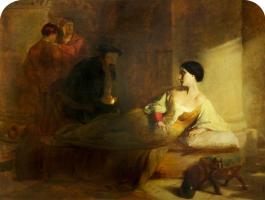
Foxe's Book of Martyrs. "The 23d day of March [1545], my cousin Brittayne came into the Compter unto me [Anne Askew (age 24)], and asked me whether I might be put to bail, or no? Then went he immediately unto my lord mayor, desiring him to be so good unto me, that I might be bailed. My Lord answered him and said, that he would be glad to do the best that in him lay; howbeit he could not bail me, without the consent of a spiritual officer: requiring him to go and speak with the chancellor of London. For, he said, like as he could not commit me to prison without the consent of a spiritual officer, no more could he bail me without the consent of the same.
"So, upon that, he went to the chancellor, requiring of him as he did before of my lord mayor. He answered him, that the matter was so heinous,that he durst not of himself do it, without my Lord of London were made privy thereunto. But, he said, he would speak unto my Lord in it, and bade him repair unto him the next morrow, and he should well know my Lord's pleasure. And upon the morrow after, he came thither, and spake both with the chancellor and with my Lord bishop of London. The bishop declared unto him, that he was very well contented that I should come forth to communication; and appointed me to appear before him the next day after, at three of the clock at afternoon. Moreover he said unto him, that he would there should be at the examination such learned men as I was affectioned to, that they might see, and also make report, that I was handled with no rigour. He answered him, that he knew no man that I had more affection to, than to other. Then said the bishop, 'Yes, as I understand, she is affectioned to Dr. Crome, Sir Guillam Whitehead, and Huntington, that they might hear the matter, for she doth know them to be learned and of a godly judgment.' Also he required my cousin Brittayne, that he should earnestly persuade me to utter even the very bottom of my heart; and he sware by his fidelity, that no man should take any advantage of my words, neither yet would he lay ought to my charge for any thing that I should there speak; but, if I said any manner of thing amiss, he, with others more, would he glad to reform me therein, with most godly counsel.
"On the morrow after, the bishop of London sent for me at one of the clock, his hour being appointed at three; and as I came before him, he said he was very sorry for my trouble, and desired to know my opinions in such matters as were laid against me. He required me also, in any wise, boldly to utter the secrets of my heart, bidding me not to fear in any point, for whatsoever I did say in his house, no man should hurt me for it. I answered, 'Forasmuch as your Lordship appointed three of the clock, and my friends will not come till that hour, I desire you to pardon me of giving answer till they come.' Then said he, that he thought it meet to send for those four men who were aforenamed and appointed. Then I desired him not to put them to pain, for it should not need, because the two gentlemen which were my friends, were able enough to testify what I should say.
Become a Member via our Buy Me a Coffee page to read more.
Henry Machyn's Diary. 23rd March 1557. The xxiij day of Marche was a commondement cam that the Kyng (age 29) and the Quen (age 41) wold ryd from the Towre-warff [Map] thrugh London with the nobuls of the rayme, boyth lordes and lades; and at the Towre-warff my lord mayre (age 57) mett ther gracys boyth, and thrugh London my masters the althermen and the shreyffes and alle the crafftes of London in ther leveres, and ther standynges set up of evere craft of tymbur, and the strett and the trumpettes blohyng with odur enstrementtes with grett joye and plesur, and grett shutyng of gones at the Towre, and the waytes plahyng on sant Peter's [Map] ledes [leads ie roofs] in Chepe; and my lord mayre bare the septer a-for the Kyng and the Quen.


Henry Machyn's Diary. 23rd March 1561. The sam day dyd pryche at the cowrte the byshope of Ely, docthur Cokes (age 68), and he w[ould that none] shuld pryche of he [high] matters butt they that were well le[arned.]


Henry Machyn's Diary. 23rd March 1561. The xxiij day of Marche dyd pryche at [Newington] be-yonde sant Gorgus the byshope of Canturbere, docthur Parker (age 56), and mad a goodly sermon.
John Evelyn's Diary. 23rd March 1646. It was Easter-Monday that I was invited to breakfast at the Earl of Arundel's. I took my leave of him in his bed, where I left that great and excellent man in tears on some private discourse of crosses that had befallen his illustrious family, particularly the undutifulness of his grandson Philip turning Dominican Friar (since Cardinal of Norfolk), and the misery of his country now embroiled in civil war. He caused his gentleman to give me directions, all written with his own hand, what curiosities I should inquire after in my journey; and, so enjoining me to write sometimes to him, I departed. There stayed for me below, Mr. Henry Howard (age 17) (afterward Duke of Norfolk), Mr. J. Digby (age 19), son of Sir Kenelm Digby (age 43), and other gentlemen, who conducted me to the coach.


Samuel Pepys' Diary. 23rd March 1662. So having sent for my wife, she and I to my Lady Sandwich (age 37), and after a short visit away home. She home, and I to Sir G. Carteret's (age 52) about business, and so home too, and Sarah having her fit we went to bed.
Samuel Pepys' Diary. 23rd March 1663. By and by the Duke (age 29) comes, and we with him about our usual business, and then the Committee for Tangier, where, after reading my Lord Rutherford's commission and consented to, Sir R. Ford (age 49), Sir W. Rider, and I were chosen to bring in some laws for the Civill government of it, which I am little able to do, but am glad to be joyned with them, for I shall learn something of them.
Samuel Pepys' Diary. 23rd March 1663. Thence to see my Lord Sandwich (age 37), and who should I meet at the door but Major Holmes (age 41). He would have gone away, but I told him I would not spoil his visitt, and would have gone, but however we fell to discourse and he did as good as desire excuse for the high words that did pass in his heat the other day, which I was willing enough to close with, and after telling him my mind we parted, and I left him to speak with my Lord, and I by coach home, where I found Will Howe come home to-day with my wife, and staid with us all night, staying late up singing songs, and then he and I to bed together in Ashwell's bed and she with my wife. This the first time that I ever lay in the room. This day Greatorex (age 38) brought me a very pretty weather-glass for heat and cold1. 24th. Lay pretty long, that is, till past six o'clock, and them up and W. Howe and I very merry together, till having eat our breakfast, he went away, and I to my office.
Note 1. The thermometer was invented in the sixteenth century, but it is disputed who the inventor was. The claims of Santorio are supported by Borelli and Malpighi, while the title of Cornelius Drebbel is considered undoubted by Boerhaave. Galileo's air thermometer, made before 1597, was the foundation of accurate thermometry. Galileo also invented the alcohol thermometer about 1611 or 1612. Spirit thermometers were made for the Accademia del Cimento, and described in the Memoirs of that academy. When the academy was dissolved by order of the Pope, some of these thermometers were packed away in a box, and were not discovered until early in the nineteenth century. Robert Hooke describes the manufacture and graduation of thermometers in his "Micrographia" (1665).


Samuel Pepys' Diary. 23rd March 1665. Up and to my Lord Sandwich (age 39), who follows the Duke (age 31) this day by water down to the Hope, where "The Prince" lies. He received me, busy as he was, with mighty kindness and joy at my promotions; telling me most largely how the Duke hath expressed on all occasions his good opinion of my service and love for me. I paid my thanks and acknowledgement to him; and so back home, where at the office all the morning.
Chronicle of Walter of Guisborough
A canon regular of the Augustinian Guisborough Priory, Yorkshire, formerly known as The Chronicle of Walter of Hemingburgh, describes the period from 1066 to 1346. Before 1274 the Chronicle is based on other works. Thereafter, the Chronicle is original, and a remarkable source for the events of the time. This book provides a translation of the Chronicle from that date. The Latin source for our translation is the 1849 work edited by Hans Claude Hamilton. Hamilton, in his preface, says: 'In the present work we behold perhaps one of the finest samples of our early chronicles, both as regards the value of the events recorded, and the correctness with which they are detailed; Nor will the pleasing style of composition be lightly passed over by those capable of seeing reflected from it the tokens of a vigorous and cultivated mind, and a favourable specimen of the learning and taste of the age in which it was framed.'
Available at Amazon in eBook and Paperback format.
Samuel Pepys' Diary. 23rd March 1666. I out by six o'clock by appointment to Hales's (age 66), where we fell to my picture presently very hard, and it comes on a very fine picture, and very merry, pleasant discourse we had all the morning while he was painting.
Samuel Pepys' Diary. 23rd March 1666. Anon comes my wife and Mercer and little Tooker, and having done with me we all to a picture drawer's hard by, Hales (age 66) carrying me to see some landskipps of a man's doing. But I do not [like] any of them, save only a piece of fruit, which indeed was very fine.
Samuel Pepys' Diary. 23rd March 1668. Thence to White Hall, expecting to have heard the Bishop of Lincolne (age 60), my friend, preach, for so I understood he would do yesterday, but was mistaken, and therefore away presently back again, and there find everything in good order against dinner, and at noon come Mr. Pierce and she, and Mrs. Manuel, the Jew's wife, and Mrs. Corbet, and Mrs. Pierce's boy and girl. But we are defeated of Knepp, by her being forced to act to-day, and also of Harris (age 34), which did trouble me, they being my chief guests. However, I had an extraordinary good dinner, and the better because dressed by my own servants, and were mighty merry; and here was Mr. Pelling by chance come and dined with me; and after sitting long at dinner, I had a barge ready at Tower-wharfe, to take us in, and so we went, all of us, up as high as Barne-Elms, a very fine day, and all the way sang; and Mrs. Manuel sings very finely, and is a mighty discreet, sober-carriaged woman, that both my wife and I are mightily taken with her, and sings well, and without importunity or the contrary. At Barne-Elms we walked round, and then to the barge again, and had much merry talk, and good singing; and come before it was dark to the New Exchange stairs, and there landed, and walked up to Mrs. Pierce's, where we sat awhile, and then up to their dining-room. And so, having a violin and Theorbo, did fall to dance, here being also Mrs. Floyd come hither, and by and by Mr. Harris. But there being so few of us that could dance, and my wife not being very well, we had not much pleasure in the dancing: there was Knepp also, by which with much pleasure we did sing a little, and so, about ten o'clock, I took coach with my wife and Deb., and so home, and there to bed.
John Evelyn's Diary. 23rd March 1676. To Twickenham Park, Lord Berkeley's (age 48) country seat, to examine how the bailiffs and servants ordered matters.
On 23rd March 1684 Essex Rich Countess Nottingham (age 32) died in childbirth. She was buried in the Finch family vault at All Saints' Church, Ravenstone [Map].


John Evelyn's Diary. 23rd March 1688. Dr. Parker, Bishop of Oxford (deceased), who so lately published his extravagant treatise about transubstantiation, and for abrogating the test and penal laws, died. He was esteemed a violent, passionate, haughty man, but yet being pressed to declare for the Church of Rome, he utterly refused it. A remarkable end!

On 23rd March 1707 Henry Somerset 3rd Duke Beaufort was born to Henry Somerset 2nd Duke Beaufort (age 22) and Rachel Noel Duchess Beaufort (age 20). He married (1) 28th June 1729 his second cousin Frances Scudamore 3rd Duchess Beaufort, daughter of James Scudamore 3rd Viscount Scudamore and Frances Digby Viscountess Scudamore.
On 23rd March 1732 Frederick Saxe Coburg Altenburg II Duke Saxe Gotha Altenburg (age 55) died at Altenburg. His son Duke (age 32) succeeded III Duke Saxe Gotha Altenburg. Luise Dorothea Saxe Meiningen Duchess Saxe Gotha Altenburg (age 21) by marriage Duchess Saxe Gotha Altenburg.
Chronicle of Geoffrey le Baker of Swinbroke
Baker was a secular clerk from Swinbroke, now Swinbrook, an Oxfordshire village two miles east of Burford. His Chronicle describes the events of the period 1303-1356: Gaveston, Bannockburn, Boroughbridge, the murder of King Edward II, the Scottish Wars, Sluys, Crécy, the Black Death, Winchelsea and Poitiers. To quote Herbert Bruce 'it possesses a vigorous and characteristic style, and its value for particular events between 1303 and 1356 has been recognised by its editor and by subsequent writers'. The book provides remarkable detail about the events it describes. Baker's text has been augmented with hundreds of notes, including extracts from other contemporary chronicles, such as the Annales Londonienses, Annales Paulini, Murimuth, Lanercost, Avesbury, Guisborough and Froissart to enrich the reader's understanding. The translation takes as its source the 'Chronicon Galfridi le Baker de Swynebroke' published in 1889, edited by Edward Maunde Thompson.
Available at Amazon in eBook and Paperback format.
On 23rd March 1743 Archbishop Lancelot Blackburne (age 84) died at his home in Downing Street.
Letters of Horace Walpole. 23rd March 1752. Arlington Street. To Horace Mann 1st Baronet (age 45).
Mr. Conway (age 31) has been arrived this fortnight, or a week sooner than we expected him: but my Lady Ailesbury (age 31) forgives it! He is full of your praises, so you have not sowed your goodness in unthankful ground. By a letter I have just received from you he finds you have missed some from him with Commissions; but he will tell you about them himself I find him much leaner, and great cracks in his beauty. Your picture is arrived, which he says is extremely like you. Mr. Chute (age 50) cannot bear it; says it wants your countenance and goodness; that it looks bonny and Irish. I am between both, and should know it; to be sure, there is none of your wet-brown-paperness in it, but it has a look with which I have known you come out of your little room, when Richcourt has raised your ministerial French, and you have writ to England about it till you were half fuddled. Au reste, it is gloriously coloured-will Astley promise to continue to do as well? or has he, like all other English painters, only laboured this to get reputation, and then intends to daub away to get money?
The year has not kept the promise of tranquillity that it made you at Christmas; there has been another parliamentary bustle. The Duke of Argyll (age 69)299 has drawn the ministry into accommodating him with a notable job, under the notion of buying for the King from the mortgagees the forfeited estates in Scotland, which are to be colonized and civilized. It passed with some inconsiderable hitches through the Commons; but in the Lords last week the Duke of Bedford (age 41) took it up warmly, and spoke like another Pitt.300 He attacked the Duke of Argyll on favouring Jacobites, and produced some flagrant instances, which the Scotch Duke neither answered nor endeavoured to excuse, but made a strange, hurt, mysterious, contemptuous, incoherent speech, neither in defence of the bill nor in reply to the Duke of Bedford, but to my Lord Bath (age 68), who had fallen upon the ministry for assuming a dispensing power, in suffering Scotland to pay no taxes for the last five years. This speech, which formerly would have made the House of Commons take up arms, was strangely flat and unanimated, for want of his old chorus. Twelve lords divided against eighty that were for the bill. The Duke, who was present, would not vote; none of his people had attended the bill in the other House, and General Mordaunt (age 55) (by his orders, as it is imagined) spoke against it. This concludes the session: the King goes to Hanover on Tuesday, he has been scattering ribands of all colours, blue ones [Note. Reference to being created a Knight of the Garter] on Prince Edward (age 12), the young Stadtholder, and the Earls of Lincoln (age 31), Winchilsea (age 62), and Cardigan (age 39);301 a green one [Note. Reference to being created a Knight of the Order of the Thistle] on Lord Dumfries;302 a red [Note. Order of the Bath] on Lord Onslow (age 39).303
The world is still mad about the Gunnings; the Duchess of Hamilton (age 18) was presented on Friday; the crowd was so great, that even the noble mob in the drawing-room clambered upon chairs and tables to look at her. There are mobs at their doors to see them get into their chairs; and people go early to get places at the theatres when it is known they will be there. Dr. Sacheverel never made more noise than these two beauties [Note. Elizabeth Gunning Duchess Hamilton and Argyll and Maria Gunning Countess Coventry (age 19)].
There are two wretched women that just now are as much talked of, a Miss Jefferies1 and a Miss Blandy (age 32)2; the one condemned for murdering her uncle, the other her father. Both their stories have horrid circumstances; the first, having been debauched by her uncle; the other had so tender a parent, that his whole concern while he was expiring, and knew her for his murderess, was to save her life. It is shocking to think what a shambles this country is grown! Seventeen were executed this morning, after having murdered the turnkey on Friday night, and almost forced open Newgate. One is forced to travel, even at noon, as if one was going to battle.
Mr. Chute is as much yours as ever, except in the article of pen and ink. Your brother transacts all he can for the Lucchi, as he has much more weight there304 than Mr. Chute. Adieu!
Note 299. Archibald Campbell, Duke of argyll, formerly Earl of Isla.
Note 300. For Lord Hardwicke's notes of this speech, see Parl. Hist. vol. xiv. P. 1235.-E.
Note 301. George Brudenell, fourth Earl of cardigan, created Duke of Montagu in 1776; died in 1790.-D.
Note 302. William Crichton Dalrymple (age 53), fourth Earl [Note. Mistake. He was 5th Earl] of Dumfries in Scotland, in right of his mother. He also became, in 1760, fourth Earl of stair, and died in 1768.-D.
Note 303. George, third Lord Onslow; died in 1776.-D.
Note 304. With the late Mr. Whithed's brothers, who scrupled paying a small legacy and annuity to his mistress and child.
Note 1. Elizabeth Jeffries was to have received her uncle's estate but as a consequence of her bad behaviour he stated he would change his will. She, with accomplices, murdered her uncle. She was executed at a temporary gibbet at the Sixth Milestone Epping Forest on 28th March 1572.
Note 2. Mary Blandy who was found guilty of poisoning her father and executed on 6th April 1752.
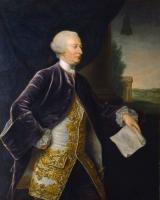


Become a Member via our Buy Me a Coffee page to read more.

On 23rd March 1757 Archbishop Thomas Herring (age 64) died. He was buried in Croydon Minster [Map].
On 23rd March 1769 Augustus Henry Fitzroy 3rd Duke Grafton (age 33) and Anne Liddell Duchess Grafton (age 32) were divorced when he discovered she was pregnant by her lover John Fitzpatrick 2nd Earl Upper Ossory (age 23) whom she subsequently married. Plans to marry his mistress Anne aka Nancy Parsons Viscountess Maynard (age 34), if they existed, were undermined by the discovery he discovered she was having an affair with John Frederick Sackville 3rd Duke Dorset (age 23).


On 23rd March 1770 Martin van Meytens (age 74) died.
On 23rd March 1789 Thomas Osborne 4th Duke Leeds (age 75) died at St James' Square. He was buried at the Osborne Family Chapel at All Hallows' Church Harthill [Map]. His son Francis (age 38) succeeded 5th Duke Leeds, 5th Earl of Danby, 5th Viscount Osborne, 5th Viscount Latimer, 5th Baron Osborne of Kinderton, 6th Baronet Osborne of Kiveton. Catherine Anguish Duchess Leeds (age 25) by marriage Duchess Leeds.

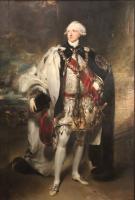

On 10th March 1796 Henry Askew of Redheugh (age 66) died. He was buried at St John the Baptist's Church, Newcastle upon Tyne [Map] on 23rd March 1796. Memorial at the Cathedral Church St Nicholas, Newcastle upon Tyne [Map] sculpted by Henry Webber (age 41).
Henry Askew of Redheugh: On 15th March 1729, or 1730, he was born. He was baptised at St John the Baptist's Church, Newcastle upon Tyne [Map] on 21st April 1730. Before 18th March 1792 he and Dorothy Boultby were married.
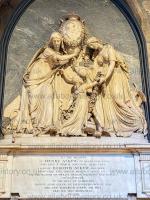
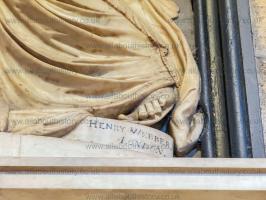
On or before 23rd March 1817, the date he was baptised at Hackness, Matthew Noble was born to Robert Noble at Hackness. He married 29th December 1855 Frances Mary Claxton.
On 23rd March 1820 Reverend William Greenwell was born to William Thomas Greenwell (age 43) and Dorothy Smales at Greenwell Ford, Lanchester.
Abbot John Whethamstede’s Chronicle of the Abbey of St Albans
Abbot John Whethamstede's Register aka Chronicle of his second term at the Abbey of St Albans, 1451-1461, is a remarkable text that describes his first-hand experience of the beginning of the Wars of the Roses including the First and Second Battles of St Albans, 1455 and 1461, respectively, their cause, and their consequences, not least on the Abbey itself. His text also includes Loveday, Blore Heath, Northampton, the Act of Accord, Wakefield, and Towton, and ends with the Coronation of King Edward IV. In addition to the events of the Wars of the Roses, Abbot John, or his scribes who wrote the Chronicle, include details in the life of the Abbey such as charters, letters, land exchanges, visits by legates, and disputes, which provide a rich insight into the day-to-day life of the Abbey, and the challenges faced by its Abbot.
Available at Amazon in eBook and Paperback format.

After 23rd March 1821. St Withburga's Church, Holkham [Map]. Grave slab to Anne Dutton (deceased).
Anne Dutton: Samuel Blackwell and she were married. Around 1743 she was born to James Lenox Dutton and Jane Bond. On 23rd March 1821 Anne Dutton died at Holkham Hall, Norfolk.
Letters of James McNeill Whistler 1863. 16th March 1863 or 23rd March 1863. 7a Queens Road West, Chelsea. Monday - / March
Dear Rose (age 43) -
Any news about "my house" - . Is it all right? am I wanted to take any step? or will it all be settled without me? Are you going to make him do anything at all to the house and can I go in shortly when the agreement is made
I have been knocked up for a couple of days with rheumatism but hope to get to work again tomorrow - I was very sorry not to see you the other day at Rossetti's (age 34) -
Will you drop me a line about the house.
With many thanks
Ever Yours
J Whistler (age 28)


Become a Member via our Buy Me a Coffee page to read more.
On 23rd March 1893 George William Sackville Russell 10th Duke Bedford (age 40) died. George William Sackville Russell 10th Duke Bedford was buried at Bedford Chapel, St Michael's Church, Chenies. His brother Herbrand (age 35) succeeded 11th Duke Bedford, 11th Marquess Tavistock, 15th Earl Bedford, 15th Baron Russell of Cheneys, 13th Baron Russell of Thornhaugh, 11th Baron Howland of Streatham. Mary Caurroy Tribe Duchess Bedford (age 27) by marriage Duchess Bedford.

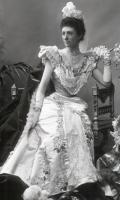
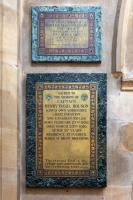
After 23rd March 1910. Memorials to Henry Basil Houson and his daughter Kathleen at St Nicholas' Church, Fulbeck.
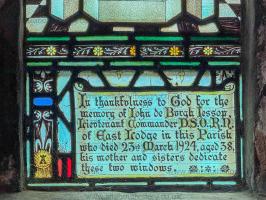
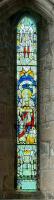
St Cuthbert's Church, Doveridge [Map]. Memorial window to John de Burgh Jessop Lieutenant Commander, of East Lodge, died 23rd March 1924.
On 23rd March 1927 Paul César Helleu (age 67) died.


On 23rd March 1430 Margaret of Anjou Queen Consort England was born to René Valois Anjou I Duke Anjou (age 21) and Isabella Metz Duchess Anjou I Duchess Lorraine (age 30). She married 23rd April 1445 her third cousin King Henry VI of England and II of France, son of King Henry V of England and Catherine of Valois Queen Consort England, and had issue.
On 23rd March 1581 Edward de Vere was born illegitimately to Edward de Vere 17th Earl of Oxford (age 30) and Anne Vavasour (age 21). Both parents were imprisoned in Tower of London [Map] the Queen Elizabeth I of England and Ireland (age 47) as a consequence. Edward de Vere 17th Earl of Oxford was released several months later but banished from court until 1583.


On 23rd March 1642 Hester Davenport Countess of Oxford was born.
Chronicle of a Bourgeois of Valenciennes
Récits d’un bourgeois de Valenciennes aka The Chronicle of a Bourgeois of Valenciennes is a vivid 14th-century vernacular chronicle written by an anonymous urban chronicler from Valenciennes in the County of Hainaut. It survives in a manuscript that describes local and regional history from about 1253 to 1366, blending chronology, narrative episodes, and eyewitness-style accounts of political, military, and social events in medieval France, Flanders, and the Low Countries. The work begins with a chronological framework of events affecting Valenciennes and its region under rulers such as King Philip VI of France and the shifting allegiances of local nobility. It includes accounts of conflicts, sieges, diplomatic manoeuvres, and the impact of broader struggles like the Hundred Years’ War on urban life in Hainaut. Written from the perspective of a burgher (bourgeois) rather than a monastery or royal court, the chronicle offers a rare lay viewpoint on high politics and warfare, reflecting how merchants, townspeople, and civic institutions experienced the turbulence of the 13th and 14th centuries. Its narrative style combines straightforward reporting of events with moral and civic observations, making it a valuable source for readers interested in medieval urban society, regional politics, and the lived experience of war and governance in pre-modern Europe.
Available at Amazon in eBook and Paperback format.

On 23rd March 1655 Richard Myddelton 3rd Baronet was born to Thomas Myddelton 1st Baronet (age 30) and Maria Cholmondeley (age 27). He married 19th April 1686 Frances Whitmore Lady Myddelton and had issue.
On 23rd March 1669 John Wodehouse 4th Baronet was born to Thomas Wodehouse. He married after 1700 his fifth cousin once removed Mary Fermor Lady Woodhouse, daughter of William Fermor 1st Baron Leominster and Catherine Paulett Baroness Leominster, and had issue.
On 23rd March 1678 Richard Granville was born to Richard Granville (age 32). He married 25th November 1710 Hester Temple 1st Countess Temple, daughter of Richard Temple 3rd Baronet and Mary Knapp Lady Temple, and had issue.
On 23rd March 1707 Henry Somerset 3rd Duke Beaufort was born to Henry Somerset 2nd Duke Beaufort (age 22) and Rachel Noel Duchess Beaufort (age 20). He married (1) 28th June 1729 his second cousin Frances Scudamore 3rd Duchess Beaufort, daughter of James Scudamore 3rd Viscount Scudamore and Frances Digby Viscountess Scudamore.
On 23rd March 1713 Bowen Southwell was born to Thomas Southwell 1st Baron Southwell (age 48) and Meliora Coningsby (age 37). He married July 1753 Elizabeth Cornwallis, daughter of Charles Cornwallis 1st Earl Cornwallis and Elizabeth Townshend Countess Cornwallis.
On 23rd March 1724 Thomas Alston 5th Baronet was born to Rowland Alston 4th Baronet (age 44).
On 23rd March 1731 Elizabeth Hastings Countess Moira was born to Theophilus Hastings 9th Earl Huntingdon (age 34) and Selina Shirley Countess Huntingdon (age 24). She married August 1751 John Rawdon 1st Earl Moira and had issue.


On 23rd March 1733 Margaret Yorke Lady Heathcote was born to Philip Yorke 1st Earl of Hardwicke (age 42) and Margaret Cocks Countess Hardwicke. She married 22nd June 1749 Gilbert Heathcote 3rd Baronet, son of John Heathcote 2nd Baronet.


The Deeds of the Dukes of Normandy
The Gesta Normannorum Ducum [The Deeds of the Dukes of Normandy] is a landmark medieval chronicle tracing the rise and fall of the Norman dynasty from its early roots through the pivotal events surrounding the Norman Conquest of England. Originally penned in Latin by the monk William of Jumièges shortly before 1060 and later expanded at the behest of William the Conqueror, the work chronicles the deeds, politics, battles, and leadership of the Norman dukes, especially William’s own claim to the English throne. The narrative combines earlier historical sources with firsthand information and oral testimony to present an authoritative account of Normandy’s transformation from a Viking settlement into one of medieval Europe’s most powerful realms. William’s history emphasizes the legitimacy, military prowess, and governance of the Norman line, framing their expansion, including the conquest of England, as both divinely sanctioned and noble in purpose. Later chroniclers such as Orderic Vitalis and Robert of Torigni continued the history, extending the coverage into the 12th century, providing broader context on ducal rule and its impact. Today this classic work remains a foundational source for understanding Norman identity, medieval statesmanship, and the historical forces that reshaped England and Western Europe between 800AD and 1100AD.
Available at Amazon in eBook and Paperback format.

On 23rd March 1737 Louisa North Baroness Latimer Baroness Willoughby of Broke was born to Francis North 1st Earl Guildford (age 32) and Elizabeth Kaye Baroness North and Guildford (age 30). She married 8th October 1761 John Peyto Verney 22nd Baron Latimer 14th Baron Willoughby and had issue.
On 23rd March 1768 John Cole 2nd Earl Enniskillen was born to William Willoughby Cole 1st Earl Enniskillen (age 32) and Anne Lowry-Corry Countess Enniskillen (age 26). He married 1805 Charlotte Paget Countess Enniskillen, daughter of Henry Bayly-Paget 1st Earl Uxbridge and Jane Champagné Countess Uxbridge, and had issue.


On 23rd March 1782 Frances Shirley was born to Washington Shirley 8th Earl Ferrers (age 21) and Frances Ward.
On 23rd March 1786 George Warwick Bamlfylde 1st Baron Poltimore was born to Charles Warwick Bampfylde 5th Baronet (age 33). He married 16th March 1836 Caroline Buller Baroness Poltimore and had issue.
On 23rd March 1793 John Henry Lowther 2nd Baronet was born to John Lowther 1st Baronet (age 33) and Elizabeth Fane (age 23).
On 23rd March 1797 Ernest Augustus Edgecumbe 3rd Earl of Mount Edgcumbe was born to Richard Edgecumbe 2nd Earl of Mount Edgcumbe (age 32) and Sophia Hobart Countess Mount Edgcumbe (age 29).
On 23rd March 1803 Charles Ashburnham was born to George Ashburnham 3rd Earl Ashburnham (age 42) and Charlotte Percy Countess Ashburham (age 27).
On 23rd March 1809 Henry William Parnell 3rd Baron Congleton was born to Henry Parnell 1st Baron Congleton (age 32) and Caroline Dawson Baroness Congleton. He married 10th March 1851 his first cousin Caroline Margaret Dawson and had issue.
On 23rd March 1813 Francis Burdett 7th Baronet was born to William Jones Burdett (age 41).
William of Worcester's Chronicle of England
William of Worcester, born around 1415, and died around 1482 was secretary to John Fastolf, the renowned soldier of the Hundred Years War, during which time he collected documents, letters, and wrote a record of events. Following their return to England in 1440 William was witness to major events. Twice in his chronicle he uses the first person: 1. when writing about the murder of Thomas, 7th Baron Scales, in 1460, he writes '… and I saw him lying naked in the cemetery near the porch of the church of St. Mary Overie in Southwark …' and 2. describing King Edward IV's entry into London in 1461 he writes '… proclaimed that all the people themselves were to recognize and acknowledge Edward as king. I was present and heard this, and immediately went down with them into the city'. William’s Chronicle is rich in detail. It is the source of much information about the Wars of the Roses, including the term 'Diabolical Marriage' to describe the marriage of Queen Elizabeth Woodville’s brother John’s marriage to Katherine, Dowager Duchess of Norfolk, he aged twenty, she sixty-five or more, and the story about a paper crown being placed in mockery on the severed head of Richard, 3rd Duke of York.
Available at Amazon in eBook and Paperback format.

On 23rd March 1814 Charles Wentworth George Howard was born to George Howard 6th Earl Carlisle (age 40) and Georgiana Cavendish Countess Carlisle (age 30). He married 8th August 1842 Mary Parke, daughter of James Parke 1st Baron Wensleydale, and had issue.
On 23rd March 1820 Reverend William Greenwell was born to William Thomas Greenwell (age 43) and Dorothy Smales at Greenwell Ford, Lanchester.
On 23rd March 1841 Frank Cavendish Lascelles was born to William Lascelles (age 42) and Caroline Georgiana Howard (age 37). He married Emma Olliffe and had issue.
On 23rd March 1854 Alfred Milner 1st Viscount Milner was born.
On 23rd March 1865 James Somerville 2nd Baron Meredyth and Athlumney was born to William Meredyth Somerville 1st Baron Meredyth and Athlumney (age 63) and Maria Georgiana Elizabeth Jones (age 33).
On 23rd March 1866 Margaret Mary Heathcote-Willoughby-Drummond was born to Gilbert Henry Heathcote Drummond Willoughby 1st Earl Ancaster (age 35) and Evelyn Elizabeth Gordon Countess Ancaster (age 20).
On 23rd March 1877 Egerton Hamond-Graeme 5th Baronet was born to Graham Hamond-Graeme 4th Baronet (age 31).

On 23rd March 1892 Jeane Pleydell-Bouverie was born to Jacob Pleydell-Bouverie 6th Earl Radnor (age 23) and Julian Eleanor Adelaide Balfour.
The Deeds of the Dukes of Normandy
The Gesta Normannorum Ducum [The Deeds of the Dukes of Normandy] is a landmark medieval chronicle tracing the rise and fall of the Norman dynasty from its early roots through the pivotal events surrounding the Norman Conquest of England. Originally penned in Latin by the monk William of Jumièges shortly before 1060 and later expanded at the behest of William the Conqueror, the work chronicles the deeds, politics, battles, and leadership of the Norman dukes, especially William’s own claim to the English throne. The narrative combines earlier historical sources with firsthand information and oral testimony to present an authoritative account of Normandy’s transformation from a Viking settlement into one of medieval Europe’s most powerful realms. William’s history emphasizes the legitimacy, military prowess, and governance of the Norman line, framing their expansion, including the conquest of England, as both divinely sanctioned and noble in purpose. Later chroniclers such as Orderic Vitalis and Robert of Torigni continued the history, extending the coverage into the 12th century, providing broader context on ducal rule and its impact. Today this classic work remains a foundational source for understanding Norman identity, medieval statesmanship, and the historical forces that reshaped England and Western Europe between 800AD and 1100AD.
Available at Amazon in eBook and Paperback format.
On 23rd March 1905 Francis Pelham 7th Earl Chichester was born to Jocelyn Pelham 6th Earl Chichester (age 33) and Ruth Buxton Countess Chichester.
On 23rd March 1912 Grey d'Estoteville Townsend Skipwith was born to Grey Humberstone d'Estoteville 11th Baronet (age 27).
On 23rd March 1914 Arthur Patrick Spencer Chichester was born to Arthur Claud Spencer Chichester 4th Baron Templemore (age 33) and Clare Meriel Wingfield Baroness Templemore (age 27).
On 23rd March 1925 Kenneth Ray Reade 13th Baronet was born to Leverne Elton Reade (age 33).
On 23rd March 1935 Alan Montagu Stuart-Wortley-Mackenzie 4th Earl of Wharncliffe was born to Archibald Montagu Stuart-Wortley-Mackenzie 3rd Earl of Wharncliffe (age 42) and Maud Lillian Elfreda Mary Wentworth-Fitzwilliam (age 36). He married 25th July 1957 Aline Margaret Bruce Countesss Wharncliffe and had issue.
On 23rd March 1958 Henry Beresford 9th Marquess of Waterford was born to John Beresford 8th Marquess of Waterford (age 24) and Caroline Wyndham-Quin Marchioness of Waterford (age 21).
On 23rd March 1658 Henry Wright 1st Baronet (age 21) and Ann Crew Lady Wright were married at the St Giles' in the Fields Church [Map].
On 23rd March 1736 Robert Nugent 1st Earl Nugent (age 27) and Anne Craggs were married.

On 23rd March 1756 Henry Herbert 10th Earl Pembroke 7th Earl Montgomery (age 21) and Elizabeth Spencer Countess Pembroke and Montgomery (age 19) were married. She by marriage Countess Pembroke, Countess Montgomery. She the daughter of Charles Spencer 3rd Duke of Marlborough (age 49) and Elizabeth Trevor Duchess of Marlborough (age 43). He the son of Henry Herbert 6th Earl Montgomery 9th Earl Pembroke and Mary Fitzwilliam Countess Pembroke and Montgomery (age 48). They were fourth cousin twice removed.
On 23rd March 1769 Augustus Henry Fitzroy 3rd Duke Grafton (age 33) and Anne Liddell Duchess Grafton (age 32) were divorced when he discovered she was pregnant by her lover John Fitzpatrick 2nd Earl Upper Ossory (age 23) whom she subsequently married. Plans to marry his mistress Anne aka Nancy Parsons Viscountess Maynard (age 34), if they existed, were undermined by the discovery he discovered she was having an affair with John Frederick Sackville 3rd Duke Dorset (age 23).
On 23rd March 1322 at York [Map]..
Roger Clifford 2nd Baron Clifford (age 22) was hanged. His brother Robert (age 16) succeeded 3rd Baron de Clifford.
John Mowbray 2nd Baron Mowbray (age 35) was hanged. He was buried at Fountains Abbey, North Yorkshire [Map]. His son John (age 11) succeeded 3rd Baron Mowbray.
On 23rd March 1361 Henry of Grosmont 1st Duke Lancaster (age 51) died at Leicester Castle [Map]. He was buried at Church of the Annunciation of our Lady of the Newark [Map]. Duke Lancaster, Earl Lincoln extinct.
Blanche Duchess of Lancaster (age 18) succeeded 5th Countess Lancaster and 2nd Countess Derby. John of Gaunt 1st Duke Lancaster (age 21) by marriage Earl Lancaster, Earl Derby.
Maud Plantagenet Duchess Lower Bavaria (age 20) succeeded 5th Countess of Leicester.
On 23rd March 1369 Peter "Cruel" I King Castile (age 34) was murdered by his half-brother Henry "Fratricide" II King Castile (age 35) outside the wall of the castle of Montiel, La Mancha. His half brother Henry succeeded II King Castile.
Chronicle of a Bourgeois of Valenciennes
Récits d’un bourgeois de Valenciennes aka The Chronicle of a Bourgeois of Valenciennes is a vivid 14th-century vernacular chronicle written by an anonymous urban chronicler from Valenciennes in the County of Hainaut. It survives in a manuscript that describes local and regional history from about 1253 to 1366, blending chronology, narrative episodes, and eyewitness-style accounts of political, military, and social events in medieval France, Flanders, and the Low Countries. The work begins with a chronological framework of events affecting Valenciennes and its region under rulers such as King Philip VI of France and the shifting allegiances of local nobility. It includes accounts of conflicts, sieges, diplomatic manoeuvres, and the impact of broader struggles like the Hundred Years’ War on urban life in Hainaut. Written from the perspective of a burgher (bourgeois) rather than a monastery or royal court, the chronicle offers a rare lay viewpoint on high politics and warfare, reflecting how merchants, townspeople, and civic institutions experienced the turbulence of the 13th and 14th centuries. Its narrative style combines straightforward reporting of events with moral and civic observations, making it a valuable source for readers interested in medieval urban society, regional politics, and the lived experience of war and governance in pre-modern Europe.
Available at Amazon in eBook and Paperback format.
On 23rd March 1602 Thomas West 2nd Baron De La Warr (age 46) died. His son Thomas (age 25) succeeded 3rd Baron De La Warr. Cecily Shirley Baroness De La Warr by marriage Baroness De La Warr.
On 23rd March 1618 James Hamilton 1st Earl Abercorn (age 42) died. His son James (age 14) succeeded 2nd Earl Abercorn.

On 23rd March 1629 Francis Fane 1st Earl of Westmoreland (age 49) died. His son Mildmay (age 27) succeeded 2nd Earl of Westmoreland, 5th Baron Despencer, 9th Baron Abergavenny, 7th Baron Abergavenny, 2nd Baron Burghesh in Suffolk. Grace Thornhurst Countess of Westmoreland (age 25) by marriage Countess of Westmoreland.
Francis Fane (age 18) inherited Fulbeck Hall. The Hall was confiscated from him during the Commonwealth; he bought it back.
On 23rd March 1631 John Cooper 1st Baronet (age 33) died at Cassiobury, Watford. He was buried in Wimborne St Giles Church. His son Anthony (age 9) succeeded 2nd Baronet Cooper of Rockbourne in Southampton.


On 23rd March 1634 Elizabeth Heneage 1st Countess Winchelsea (age 77) died. Her son Thomas (age 55) succeeded 2nd Earl Winchilsea, 2nd Viscount Maidstone. Cecily Wentworth Countess Winchelsea (age 40) by marriage Countess Winchilsea.
On 23rd March 1675 William Walter 1st Baronet (age 71) died. His son William (age 40) succeeded 2nd Baronet Walter of Saresden in Oxfordshire.
On 23rd March 1683 Robert Maxwell 4th Earl Nithsdale (age 55) died. His son William succeeded 5th Earl Nithsdale, 14th Lord Maxwell, 8th Lord Herries of Terregles.
On 23rd March 1684 Essex Rich Countess Nottingham (age 32) died in childbirth. She was buried in the Finch family vault at All Saints' Church, Ravenstone [Map].
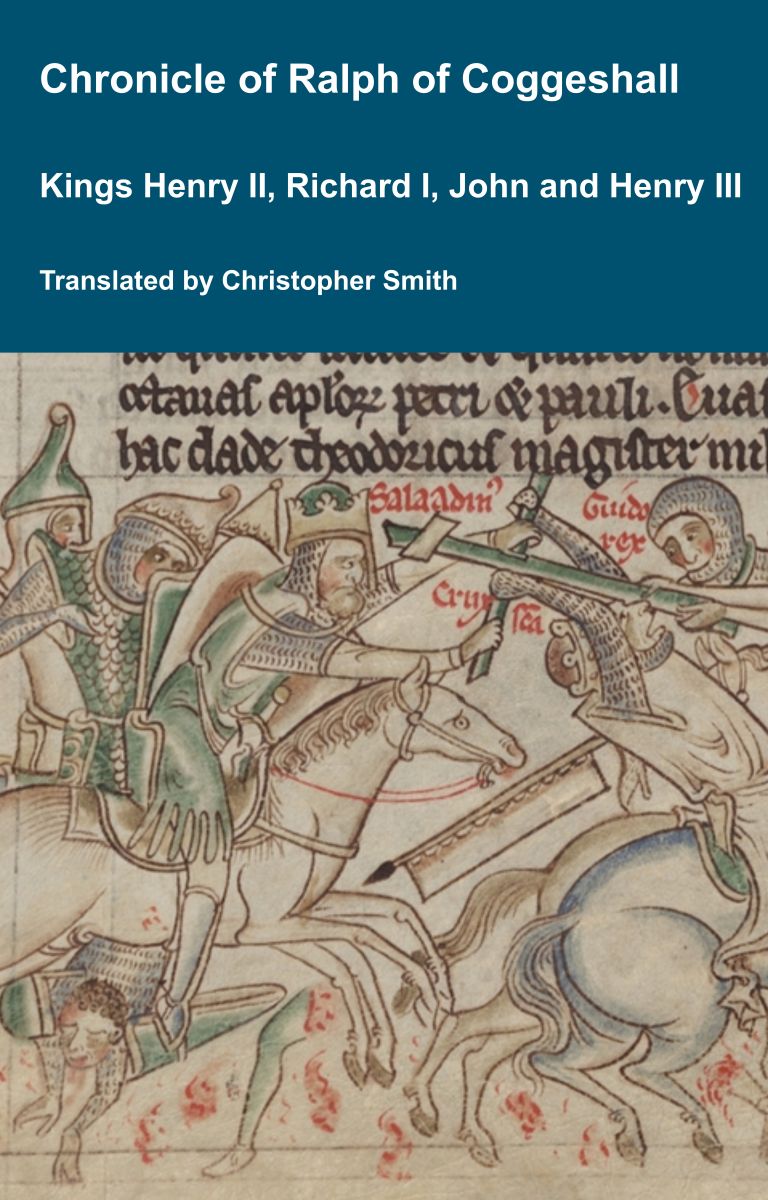
Chronicle of Abbot Ralph of Coggeshall
The Chronicle of Abbot Ralph of Coggeshall (Chronicon Anglicanum) is an indispensable medieval history that brings to life centuries of English and European affairs through the eyes of a learned Cistercian monk. Ralph of Coggeshall, abbot of the Abbey of Coggeshall in Essex in the early 13th century, continued and expanded his community’s chronicle, documenting events from the Norman Conquest of 1066 into the tumultuous reign of King Henry III. Blending eyewitness testimony, careful compilation, and the monastic commitment to record-keeping, this chronicle offers a rare narrative of political intrigue, royal power struggles, and social upheaval in England and beyond. Ralph’s work captures the reigns of pivotal figures such as Richard I and King John, providing invaluable insights into their characters, decisions, and the forces that shaped medieval rule. More than a simple annal, Chronicon Anglicanum conveys the texture of medieval life and governance, making it a rich source for scholars and readers fascinated by English history, monastic authorship, and the shaping of the medieval world.
Available at Amazon in eBook and Paperback format.
On 23rd March 1691 Mary Langham Countess Warrington (age 39) died. She was buried at Church of St Mary the Virgin, Bowdon [Map].
The inscription of his monument:
"Beneath lieth the body of the right hon'ble Henry Booth, earl of Warrington, and baron Delamer of Dunham Massey, a person of unblemished honour, impartial justice, strict integrity, an illustrious example of steady and unalterable adherence to the liberties and properties of his country in the worst of times, rejecting all offers to allure, and despising all dangers to deter him therefrom, for which he was thrice committed close prisoner to the Tower of London, and at length tried for his life upon a false accusation of high treason, from which he was unanimously acquitted by his peers, on 14 January, MDCLXXX V/VI which day he afterwards annually commemorated by acts of devotion and charity: in the year MDCLXXXVIII he greatly signalised himself at the Revolution, on behalf of the protestant religion and the rights of the nation, without mixture of self-interest, preferring the good of his country to the favour of the prince who then ascended the throne; and having served his generation according to the will of God was gathered to his fathers in peace, on the 2d of January, 169¾, in the XLIId year of his age, whose mortal part was here entombed on the same memorable day on which eight years before his trial had been."
"Also rest by him the earthly remains of the r. hon'ble Mary countess of Warrington, his wife, sole daughter and heir of sir James Langham (age 71), of Cottesbrooke, in the county of Northamptom, [sic] knt. and bart. a lady of ingenious parts, singular discretion, consummate judgement, great humility, meek and compassionate temper, extensive charity, exemplary and unaffected piety, perfect resignation to God's will, lowly in prosperity and patient in adversity, prudent in her affairs, and endowed with all other virtuous qualities, a conscientious discharger of her duty in all relations, being a faithful, affectionate, and observant, wife, alleviating the cares and afflictions of her husband by willingly sharing with him therein; a tender, indulgent, and careful mother, a dutiful and respectful daughter, gentle and kind to her servants, courteous and beneficent to her neighbours, a sincere friend, a lover and valuer of all good people, justly beloved and admired by all who knew her, who having perfected holiness in the fear of God, was by him received to an early and eternal rest from her labours, on 23 March 1690/1, in the XXXVIIth year of her age, calmly and composedly meeting and desiring death with joyful hope and steadfastness of faith, a lively draught of real worth and goodness, and a pattern deserving imitation, of whom the world was not worthy. Heb. XI. 38."


Become a Member via our Buy Me a Coffee page to read more.
On 23rd March 1730 Charles I Landgrave Hesse-Kassel (age 75) died.
On 23rd March 1732 Frederick Saxe Coburg Altenburg II Duke Saxe Gotha Altenburg (age 55) died at Altenburg. His son Duke (age 32) succeeded III Duke Saxe Gotha Altenburg. Luise Dorothea Saxe Meiningen Duchess Saxe Gotha Altenburg (age 21) by marriage Duchess Saxe Gotha Altenburg.
On 23rd March 1740 Thomas Bruce 7th Earl Kincardine (age 77) died. His son William succeeded 8th Earl Kincardine.
On 23rd March 1743 Archbishop Lancelot Blackburne (age 84) died at his home in Downing Street.
On 23rd March 1748 Bridget Bertie Countess Paulett died.
On 23rd March 1757 Archbishop Thomas Herring (age 64) died. He was buried in Croydon Minster [Map].
On 23rd March 1770 Martin van Meytens (age 74) died.
On 23rd March 1789 Thomas Osborne 4th Duke Leeds (age 75) died at St James' Square. He was buried at the Osborne Family Chapel at All Hallows' Church Harthill [Map]. His son Francis (age 38) succeeded 5th Duke Leeds, 5th Earl of Danby, 5th Viscount Osborne, 5th Viscount Latimer, 5th Baron Osborne of Kinderton, 6th Baronet Osborne of Kiveton. Catherine Anguish Duchess Leeds (age 25) by marriage Duchess Leeds.
On 23rd March 1795 St Andrew St John (age 63) died at Worcester, Worcestershire [Map].
On 10th March 1796 Henry Askew of Redheugh (age 66) died. He was buried at St John the Baptist's Church, Newcastle upon Tyne [Map] on 23rd March 1796. Memorial at the Cathedral Church St Nicholas, Newcastle upon Tyne [Map] sculpted by Henry Webber (age 41).
Henry Askew of Redheugh: On 15th March 1729, or 1730, he was born. He was baptised at St John the Baptist's Church, Newcastle upon Tyne [Map] on 21st April 1730. Before 18th March 1792 he and Dorothy Boultby were married.
Chronicle of Abbot Ralph of Coggeshall
The Chronicle of Abbot Ralph of Coggeshall (Chronicon Anglicanum) is an indispensable medieval history that brings to life centuries of English and European affairs through the eyes of a learned Cistercian monk. Ralph of Coggeshall, abbot of the Abbey of Coggeshall in Essex in the early 13th century, continued and expanded his community’s chronicle, documenting events from the Norman Conquest of 1066 into the tumultuous reign of King Henry III. Blending eyewitness testimony, careful compilation, and the monastic commitment to record-keeping, this chronicle offers a rare narrative of political intrigue, royal power struggles, and social upheaval in England and beyond. Ralph’s work captures the reigns of pivotal figures such as Richard I and King John, providing invaluable insights into their characters, decisions, and the forces that shaped medieval rule. More than a simple annal, Chronicon Anglicanum conveys the texture of medieval life and governance, making it a rich source for scholars and readers fascinated by English history, monastic authorship, and the shaping of the medieval world.
Available at Amazon in eBook and Paperback format.
On 23rd March 1802 Henry Belasyse 2nd Earl Fauconberg (age 59) died without male issue. Earl Fauconberg extinct. His second cousin Rowland (age 52) succeeded 6th Viscount Faunconberg, 7th Baronet Belasyse of Newborough.
On 23rd March 1825 Frederick Irby 2nd Baron Boston (age 75) died at Lower Grosvenor Street, Belgravia. His son George (age 47) succeeded 3rd Baron Boston, 4th Baronet Irby of Whaplode and Boston. Rachel Ives Drake Baroness Boston (age 42) by marriage Baroness Boston.
On 23rd March 1845 Justinian Isham 8th Baronet (age 71) died. His son Justinian (age 28) succeeded 9th Baronet Isham of Lamport in Northamptonshire.
On 23rd March 1864 Bingham Baring 2nd Baron Ashburton (age 64) died. His brother Francis (age 63) succeeded 3rd Baron Ashburton of Ashburton in Devon. Claire Hortense Maret Baroness Ashburton (age 52) by marriage Baroness Ashburton of Ashburton in Devon.
On 23rd March 1865 Henry Pollard Willoughby 3rd Baronet (age 68) died unmarried. His brother John (age 65) succeeded 4th Baronet Willoughby of Baldon House in Oxfordshire.
On 23rd March 1879 Walter Calverley Trevelyan 6th Baronet (age 81) died. His nephew Alfred (age 47) succeeded 7th Baronet Trevelyan of Nettlecombe.
On 23rd March 1879 Julia Valenza Somerville Lady Head (age 86) died.
On 23rd March 1883 Lawrence Palk 1st Baron Haldon (age 65) died. His son Lawrence (age 36) succeeded 2nd Baron Haldon of Haldon in Devon, 5th Baronet Palk of Haldon House in Devon. Constance Mary Barrington Baroness Haldon (age 36) by marriage Baroness Haldon of Haldon in Devon.
On 23rd March 1893 George William Sackville Russell 10th Duke Bedford (age 40) died. George William Sackville Russell 10th Duke Bedford was buried at Bedford Chapel, St Michael's Church, Chenies. His brother Herbrand (age 35) succeeded 11th Duke Bedford, 11th Marquess Tavistock, 15th Earl Bedford, 15th Baron Russell of Cheneys, 13th Baron Russell of Thornhaugh, 11th Baron Howland of Streatham. Mary Caurroy Tribe Duchess Bedford (age 27) by marriage Duchess Bedford.
The History of William Marshal was commissioned by his son shortly after William’s death in 1219 to celebrate the Marshal’s remarkable life; it is an authentic, contemporary voice. The manuscript was discovered in 1861 by French historian Paul Meyer. Meyer published the manuscript in its original Anglo-French in 1891 in two books. This book is a line by line translation of the first of Meyer’s books; lines 1-10152. Book 1 of the History begins in 1139 and ends in 1194. It describes the events of the Anarchy, the role of William’s father John, John’s marriages, William’s childhood, his role as a hostage at the siege of Newbury, his injury and imprisonment in Poitou where he met Eleanor of Aquitaine and his life as a knight errant. It continues with the accusation against him of an improper relationship with Margaret, wife of Henry the Young King, his exile, and return, the death of Henry the Young King, the rebellion of Richard, the future King Richard I, war with France, the death of King Henry II, and the capture of King Richard, and the rebellion of John, the future King John. It ends with the release of King Richard and the death of John Marshal.
Available at Amazon in eBook and Paperback format.
On 23rd March 1907 Cecil George Savile Foljambe 1st Earl Liverpool (age 60) died. His son Arthur (age 36) succeeded 2nd Earl Liverpool. Annette Louise Monck Countess Liverpool (age 31) by marriage Countess Liverpool.
On 23rd March 1912 Hugh de Grey Seymour-Conway 6th Marquess Hertford (age 68) died. His son George (age 41) succeeded 7th Marquess Hertford, 7th Earl Hertford, 7th Earl of Yarmouth, 7th Viscount Beauchamp, 8th Baron Conway of Ragley in Warwickshire, 8th Baron Conway of Killultagh in Antrim.

On 23rd March 1913 Katrine Cecilia Compton Countess Cowper (age 68) died.
On 23rd March 1916 Alfred Nathaniel Holden Curzon 4th Baron Scarsdale (age 84) died. His son George (age 57) succeeded 5th Baron Scarsdale, 9th Baronet Curzon of Kedleston in Derbyshire, 9th Baronet Curzon of Nova Scotia.


On 23rd March 1924 Florence Mary Cole Countess Erne (age 74) died.
On 23rd March 1927 Paul César Helleu (age 67) died.
On 23rd March 1943 Mervyn Horatio Herbert 17th Baron Darcy of Knayth (age 38) died whilst on active service. He was buried at St Mary's Church, Welshpool.
He was participating in a training night exercise when his Mosquito intercepted a Stirling bomber returning from a leaflet dropping raid in Europe, following which the Mosquito crashed into the ground near Manningtree, Essex [Map], killing both Herbert and his navigator Albert Eastwood; possibly a friendly fire incident?
Davina Darcy 18th Baroness Darcy of Knayth (age 4) succeeded 18th Baroness Darcy of Knayth.
On 23rd March 1960 Richard FitzGerald Glyn 8th and 4th Baronet (age 84) died. His son Richard (age 52) succeeded 9th Baronet Glyn of Ewell in Surrey, 5th Baronet Glyn of Gaunts in Dorset.
On 23rd March 1970 Noel Percy Hugh Dryden 10th and 7th Baronet (age 59) died. His son John (age 26) succeeded 11th Baronet Dryden of Ambrosden in Oxfordshire, 8th Baronet Dryden of Canons Ashby in Northamptonshire.
On 23rd March 1995 Rollo Feilding 11th Earl of Denbigh (age 51) died. His son Alexander (age 24) succeeded 11th Earl Desmond, 12th Earl Denbigh, 12th Viscount Feilding, 12th Baron Feilding of Newnham Paddocks in Warwickshire, 11th Viscount Callan of Callan in Kilkenny, 11th Baron Feilding of Lecagh in Tipperary, 11th Baron St Liz.
William of Worcester's Chronicle of England
William of Worcester, born around 1415, and died around 1482 was secretary to John Fastolf, the renowned soldier of the Hundred Years War, during which time he collected documents, letters, and wrote a record of events. Following their return to England in 1440 William was witness to major events. Twice in his chronicle he uses the first person: 1. when writing about the murder of Thomas, 7th Baron Scales, in 1460, he writes '… and I saw him lying naked in the cemetery near the porch of the church of St. Mary Overie in Southwark …' and 2. describing King Edward IV's entry into London in 1461 he writes '… proclaimed that all the people themselves were to recognize and acknowledge Edward as king. I was present and heard this, and immediately went down with them into the city'. William’s Chronicle is rich in detail. It is the source of much information about the Wars of the Roses, including the term 'Diabolical Marriage' to describe the marriage of Queen Elizabeth Woodville’s brother John’s marriage to Katherine, Dowager Duchess of Norfolk, he aged twenty, she sixty-five or more, and the story about a paper crown being placed in mockery on the severed head of Richard, 3rd Duke of York.
Available at Amazon in eBook and Paperback format.
On 23rd March 2004 Richard Lumley 12th Earl of Scarbrough (age 71) died. His son Richard (age 30) succeeded 13th Earl of Scarborough, 14th Viscount Lumley, 13th Baron Lumley.
On 23rd March 2011 George Howland Francis Beaumont 12th Baronet (age 86) died. Baronet Beaumont of Stoughton Grange in Leicestershire extinct.