

Chronicle of a Bourgeois of Valenciennes
Récits d’un bourgeois de Valenciennes aka The Chronicle of a Bourgeois of Valenciennes is a vivid 14th-century vernacular chronicle written by an anonymous urban chronicler from Valenciennes in the County of Hainaut. It survives in a manuscript that describes local and regional history from about 1253 to 1366, blending chronology, narrative episodes, and eyewitness-style accounts of political, military, and social events in medieval France, Flanders, and the Low Countries. The work begins with a chronological framework of events affecting Valenciennes and its region under rulers such as King Philip VI of France and the shifting allegiances of local nobility. It includes accounts of conflicts, sieges, diplomatic manoeuvres, and the impact of broader struggles like the Hundred Years’ War on urban life in Hainaut. Written from the perspective of a burgher (bourgeois) rather than a monastery or royal court, the chronicle offers a rare lay viewpoint on high politics and warfare, reflecting how merchants, townspeople, and civic institutions experienced the turbulence of the 13th and 14th centuries. Its narrative style combines straightforward reporting of events with moral and civic observations, making it a valuable source for readers interested in medieval urban society, regional politics, and the lived experience of war and governance in pre-modern Europe.
Available at Amazon in eBook and Paperback format.
26 Sep is in September.
History of the Dukes of Normandy by William of Jumieges. When King William, king of the English, departed from this life, William his son crossed the sea to England as quickly as he could to Dover, and was received there both by the English and the Normans. He was anointed1 king by Archbishop Lanfranc of Canterbury and his suffragan bishops at London, at Westminster.
Igitur rege Anglorum Willelmo rebus humanis subtracto, Willelmus filius ejus, quam citius potuit apud Tolcam mari transito, susceptus est ab Anglis et Francis, unctusque est in regem a Lanfranco archiepiscopo Cantuariensi, ejusque suffraganeis, Lundoniæ apud Westmonasterium.
Note 1. King William II was crowned on 26th September 1087.
On 26th September 1087 King William II of England (age 31) was crowned II King of England at Westminster Abbey [Map] by Archbishop Lanfranc (age 82). See Anglo-Saxon Chronicle
On 26th September 1290 Margaret "Maid of Norway" I Queen Scotland (age 7) died at St Margaret's Hope.
 Chronicle of Walter of Guisborough. After receiving these apostolic letters, the King convened a council at Lincoln1, and after due deliberation, he gave the following reply:
"The Most High2, the Inspector of hearts, knows, inscribed in the indelible script of our memory's archive, that our ancestors and forefathers, the kings of England, have from the most ancient times held superior and direct dominion over the kingdom of Scotland and its kings in temporal matters and their dependencies; and from those kings of Scotland, and from the nobles of that kingdom from whom they wished to receive it, they obtained lawful homage and oaths of fealty for the kingdom of Scotland. We, continuing in possession of this right and lordship in our own time, have likewise received the same homage and fealty from both the King of Scotland and the nobles of the realm. Nay more, such was the prerogative of right and dominion that our ancestors enjoyed over the kingdom of Scotland and its kings, that they would bestow that kingdom upon their loyal subjects; and even remove kings for just causes, and appoint others in their place to reign under them. These facts are undoubtedly held to have been known and acknowledged by all, though perhaps something else, falsely insinuated through deception by enemies of peace and sons of rebellion, may have been suggested to your paternal ears. We humbly pray that your Holiness may turn your eye away from their scheming and imaginary fabrications. And we devoutly entreat your paternal excellence that, keeping the deeds of former times intact for the sake of brevity, we may be permitted to mention a few things by way of example."3
Rex acceptis hujusmodi literis apostolicis, convocavit concilium Lincolniæ, et, deliberato consilio, respondit sic:
Altissimus, Inspector cordium, nostræ scrinio memoriæ indelebili stilo novit inscribi, quod antecessores et progenitores nostri, reges Angliæ, jure superiori et directo dominio ab antiquissimis retro temporibus regno Scotia et ipsius regibus in temporalibus et annexis eisdem præfuerunt, et ab eisdem regibus pro regno Scotiæ, et ejusdem regni proceribus a quibus habere volebant, legalia homagia et fidelitatis juramenta receperunt. Nos, juris et dominii possessionem continuantes hujuswards reply. modi, pro tempore nostro, eadem tam a rege Scotiæ quam ab ipsis regni proceribus recepimus. Quinimmo tanta juris et dominii prærogativa super regnum Scotia et ejusdem regem gaudebant, quod regnum ipsum fidelibus suis conferebant; reges etiam ex causis justis amovebant, et constituerunt sub se loco ipsorum alios regnaturos. Quæ proculdubio notoria fuisse et esse creduntur apud omnes, licet aliud forsan paternis auribus per pacis æmulos et rebellionis filios fuerit falsa insinuatione suggestum; a quorum machinosis et imaginariis figmentis ut vestræ sanctitatis oculus avertatur suppliciter quæsumus; et paternam excellentiam devotis affectibus exoramus, ut, brevitatis causa gestis anteriorum temporum salvis, quædam exempli causa tangamus.
Note 1. The writs of summons for the meeting of this parliament are dated at Rose Castle, Cumberland [Map], on the 26th of September, 1300. The King at the same time sent orders to the different monasteries to search their chronicles, and transmit to him whatever they could discover relative to the Scottish kingdom. He also directed the chancellors of the Universities of Oxford and Cambridge to send four or five doctors in the common law to consult on the Scottish succession. Rymer, Fœdera, 1.923, 924. The evidence thus collected was embodied in a letter to the Pope, drawn up, it appears, by Rishanger; which letter, we find from an entry in Bishop Stapleton's Kalendar, though intended to be sent, was never actually dispatched. Vide Documents and Records illustrating the History of Scotland, i. Introd. CXXX, by Sir F. Palgrave. The copy of this document preserved by Guisborough differs considerably from the enrolment extant on the Rot. Claus, 29 Edward I m, 10, dorso, in the Tower of London. As there seems some probability that the enrolment was made from an earlier draught of the letter, it has been thought advisable to print the text of the document from the MSS. of Guisborough, with the variations of the enrolment as notes.
Note 2. To the Most Holy Father in Christ, Lord Boniface, by divine providence Supreme Pontiff of the Holy Roman and Universal Church, Edward, by the same grace, King of England, Lord of Ireland, and Duke of Aquitaine, devout kisses of the blessed feet. The following we submit not in the form or guise of a legal judgment, but entirely outside the context of litigation, for the purpose of calming the conscience of your holy paternity. May the Most High,..." etc. Rot. Claus.
Note 3. In place of this passage, the enrolment has the following: These things, without a doubt, were known and are acknowledged from ancient times, although perhaps something different may have been falsely insinuated to Your Paternal Ears by the enemies of peace and sons of rebellion. May your providence, we beseech you, reject their scheming and imaginary fabrications. Now, in the time of Eli and the prophet Samuel, there was a certain brave and distinguished man named Brutus, of Trojan descent, who, after the destruction of the city of Troy, arrived with many Trojan nobles in a certain island then called Albion, which was inhabited by giants. Having overcome and slain them by his own power and that of his followers, he named the island 'Britain' after himself, and his companions he called 'Britons'. He also built a city, which he named Trinovantum, now called London. Later, he divided his kingdom among his three sons: to Locrinus, the eldest, he gave that part of Britain which is now called England; to Albanactus, the second-born, he gave the part that was then called Albania from the name of Albanactus, and is now called Scotland; and to Camber, the youngest, he gave the part then named Cambria after himself, now known as Wales, while reserving royal dignity for Locrinus as the eldest. Then, two years after Brutus's death, a certain king of the Huns named Humber arrived in Albania and killed Albanactus, brother of Locrinus. When Locrinus, King of the Britons, heard this, he pursued Humber, who, fleeing, drowned in a river which was thereafter named Humber after him. And thus, Albania reverted to the aforementioned Locrinus. Likewise, Dunwallo, King of the Britons, killed Stater, King of Scotland, who had rebelled against him, and received his land in submission. Also, the two sons of Dunwallo, Belinus and Brennius, divided their father's kingdom between them, in such a way that Belinus, the elder, held the crown of the island with Britain, Wales, and Cornwall; and Brennius, to reign under him, received Scotland, for Trojan custom required that the right of inheritance should fall to the eldest son. Likewise, Arthur, the most famous Prince and King of the Britons, subjugated Scotland, which had rebelled against him, and almost completely destroyed its people. Later, he appointed a certain man named Anguselus as King of Scotland. And afterward, when King Arthur celebrated a most splendid feast at the city of Legions [Caerleon, Gwent] all the kings subject to him were present there, among whom was Anguselus, King of Scotland, who, rendering the service owed for the kingdom of Scotland, carried King Arthur's sword before him. And so, in succession, all kings of Scotland were subject to all kings of the Britons. But when the English kings later came to power in the said island and obtained its monarchy and dominion, then thereafter Edward...
Quæ proculdubio ab antiquo notoria fuerunt et existunt, licet aliud forte paternis auribus per pacis æmulos et rebellionis filios fuerit falsa insinuatione suggestum; quorum machinosa et imaginaria figmenta vestra providentia quæsumus aspernetur. Sub temporibus itaque Ely et Samuelis prophetæ vir quidam strenuus et insignis Brutus nomine, de genere Trojanorum, post excidium urbis Trojæ cum multis nobilibus Trojanorum applicuit in quandam insulam tunc Albion vocatam, a gigantibus inhabitatam, quibus sua et suorum devictis potentia et occisis, eam nomine suo Britanniam sociosque suos Britones appellavit, Et ædificavit civitatem quam Trinovantum nuncupavit, qua modo Londonia nominatur. Et postea regnum suum tribus filiis suis divisit, scilicet Locrino primogenito illam partem Britanniæ quæ nunc Anglia dicitur; et Albanacto secundo natu illam partem que tunc Albania a nomine Albanacti, nunc vero Scotia nuncupatur; et Cambro filio minori partem illam nomine suo tunc Cambria vocatam, quæ nunc Wallia vocitatur; reservata Locrino seniori regia dignitate. Itaque biennio post mortem Bruti applicuit in Albaniam quidam rex Hunorum nomine Humber; et Albanactum fratrem Locrini occidit. Quo audito Locrinus rex Britonum persecutus est eum. Qui fugiens submersus est in flumine, quod de nomine suo Humber vocatur, Et sic Albania revertitur ad dictum Locrinum. Item Dunwallo rex Britonum Staterium regem Scotia sibi rebellem occidit, et terram ejus in deditionem recepit. Item duo filii Dunwallonis scilicet Belinus et Brennius inter se regnum patris sui diviserunt, ita quod Belinus senior diadema insula cum Britannia, Wallia, et Cornubia possideret. Brennius vero sub eo regnaturus Scotiam acciperet; petebat enim Trojana consuetudo ut dignitas hæreditatis primogenito proveniret. Item Arturus rex Britonum princeps famosissimus Scotiam sibi rebellem subjecit et pene totam gentem delevit. Et postea quendam nomine Anguselum inregem Scotiæ præfecit. Et cum postea idem rex Arturus apud civitatem Legionum festum faceret celeberrimum, interfuerunt ibidem omnes reges sibi subjecti, inter quos Anguselus rex Scotiæ servitium pro regno Scotiæ exhibens debitum, gladium regis Arturi detulit ante ipsum. Et successive omnes reges Scotiæ omnibus regibus Britonum fuere subjecti. Succedentibus autem regibus Anglis in prædicta insula, et ipsius monarchiam et dominium obtinentibus, subsequenter Edwardus, etc.
"Sanctissimo in Christo patri domino B, divina providentia sanctæ Romanæ ac universalis ecclesiæ summo pontifici, Edwardus ejusdem gratia rex Angliæ, dominus Hiberniæ, et dux Aquitaniæ, devota pedum oscula beatorum. Infrascripta non in forma nec in figura judicii, sed omnino extra judicium, pro serenanda sanctæ paternitatis vestre conscientia vobis transmittimus exhibenda. Altissimus," etc. Rot. Claus.
Chronicle of Walter of Guisborough. In the same year, Archbishop Thomas of York died in the month of September, namely, on the ninth day before the Kalends of October [23rd September 1304], and was buried at Southwell [Map] on the sixth day before the Kalends of October [26th September 1304]. He was succeeded by Master William de Greenfield, elected on the Friday before the feast of Saint Nicholas [4th December 1304], and confirmed at Lyon by Pope Clement XII in the following year. King Edward troubled Archbishop Thomas in a new way. Although custom had it that, because of the baronies which archbishops and bishops held from him, the king had custody of them during vacancies, and could grant the prebends and churches belonging to those baronies if they fell vacant in that time, still, the pope was accustomed to grant the prebends and dignities that fell vacant because of the confirmation and consecration of bishops-elect in the Roman Curia. So it happened that the pope granted the prebend of Stillingfleet of Archbishop Thomas. The archbishop had also obtained from the Curia the right, upon his return, to give the chapel of the Holy Sepulchre in York Minster to whomever he wished; and he gave it to one James Segrave. But the king, moved by counsel from I know not whom, began to claim such vacancies for himself, and granted it instead to one of his clerks, John Busse. He sent letters to the archbishop ordering him to admit Busse and give him corporal possession. The archbishop replied that the matter had been dealt with by the pope, and that he neither could nor should do anything. The king immediately had him summoned before his justices, to answer for contempt by a writ Quare non admisit ["Why he did not admit [him]"]. There was no one in the king's council, nor any of the lawyers, who could or dared to defend him; and so the archbishop himself, in his own person, like one of the common people, bareheaded before all the people, made his answer, for the courtiers did not love him. When he would not change his answer, but repeated that it was an act of the pope, they declared him undefended, and seized his barony into the king's hand. He went away sorrowful, and sorrow was followed by illness, and illness by death. When he was dead, the king carried out the same procedure against the dean and chapter. But they, fearing the king's harshness, because he intended to seize all their temporalities, placated him in part, and admitted the said clerk to the same chapel, putting the prebend, as a favour to the king, into suspension.
Eodem anno obiit Thomas archiepiscopus Eborum, mense Septembri scilicet nono kalendas Octobris, et sepultus est apud Sutwell, sexto kalendas Octobris. Cui successit magister Willelmus de Grenefelde, die Veneris ante William festum Sancti Nicholai electus, et Lugduno a papa Clemente XII confirmatus in sequenti anno. Dominus rex inquietavit archiepiscopum Thomam novo modo; licet consuetudo se habeat sic, quod dominus rex, ratione baroniarum quas tenent de eo archiepiscopi et episcopi, habeat custodias earundem tempore vacationis, et præbendas et ecclesias ad advocationes earundem spectantes vacantes medio tempore conferat; tamen præbendas et dignitates per confirmationem et consecrationem electorum in curia Romana vacantes, dominus papa conferre consuevit; tical affairs. et sic contulit præbendam istius Thomæ de Styvelington. Ipse etiam archiepiscopus impetravit in curia, quod capellam Sancti Sepulchri in ecclesia Eborum conferre posset in reditu suo cui vellet, et dedit eam cuidam Jacobo Segrave. Modo dominus rex, nescio quo ductus consilio, cœpit vendicare taliter vacantes, et eam" contulit cuidam clerico suo Johanni Busse, misitque literas suas domino archiepiscopo ut eum admitteret, et in possessionem duceret corporalem. Qui respondit, hoc esse factum domini papæ, nec se posse quicquam facere seu debere; statimque rex eum vocari fecit coram justitiariis suis de contemptu responsurus per breve, Quare non admisit. Nec fuit aliquis de consilio suo seu aliquis narratorum omnium qui posset vel auderet respondere pro eo; immo ipsemet in propria persona, quasi unus de populo et coram omni populo, discooperto capite respondebat, non enim eum amabant curiales. Cumque nollet suum mutare responsum, sed factum domini papæ iterabat, pronunciaverunt eum indefensum, et baroniam suam in manum domini regis seisierunt. Recessitque tristis, et tristitia successit infirmitas, et infirmitati mors extrema sociatur. Quo mortuo, fecit dominus rex eundem processum contra decanum et capitulum. At illi timentes sævitiam regis, eo quod dominus rex omnia temporalia sua seisisse voluerat, placaverunt eum in parte, et prædictum clericum admiserunt ad capellam eandem, ponentes præbendam ex gratia regis in suspenso.
 Chronicle of Geoffrey le Baker of Swinbroke [-1360]. The siege of Tournai1 lasted until the feast of Saints Cosmas and Damian [26th September 1340], which is the day before the vigil of Saint Michael. On that day, after many negotiations about arranging a truce, initiated by the French. a truce was agreed upon at their request, to last until the feast of Saint John the Baptist next following, so that peace could be negotiated in the meantime. Prisoners were released on both sides under a sworn agreement that they would return by the said feast day if no final peace was concluded. Thus, the siege of Tournai was lifted, and, to speak truly, it was much to the displeasure of the King of England. For the king had with him only a few Englishmen at that time; all the rest were mercenaries, who had received no pay for a fortnight, because the expected funds from England had not arrived. Furthermore, the Duke of Brabant and the Count of Hainault, who had fought primarily for the king so that the towns and castles which the French tyrant had taken from them and unjustly detained would be restored with the king's help, which had been done, no longer saw any benefit in continuing a war that was not their own. Therefore, once their objective had been achieved, they, by a unified decision, urged and almost forced the king to agree to a truce, whose will he had, for the time being, to follow. So the truce was made and the siege lifted, an outcome that displeased only the English, the Flemings, and a few other mercenaries.
Duravit obsidio Torneacensis usque ad festum sanctorum Cosme et Damiani, quod est pridie vigilie sancti Michaelis. Quo die, post plurimos tractatus super treuga ineunda, per Francos procurata, in quam fuerat consensum ad peticionem Gallicorum usque ad festum sancti Iohannis Baptiste, extunc proximo futurum, duraturam, ut posset interim de pace tractari, et redditi fuerunt hinc et inde captivi, sub convencione iurata redeundi ad dictum festum in casu quo non fieret pax finalis. Sic fuerat soluta obsidio Tornacensis, et, si verum fateatur, ad magnam displicenciam regis Anglie. Rex nempe non habuit secum nisi paucos Anglicos ibidem, set omnes alii fuerunt stipendiarii, quibus per quindenam nihil fuerat solutum pro eo quod pecunia expectata de Anglia non venit. Preterea dux Brabancie et comes Hannonie, qui pro eo potissime cum rege militarunt, ut ville et castra, que tirannus Francorum ipsis abstulit et iniuste detinuit, forent eis per auxilium regis restituta, quod et fuit factum, set, cessante causa pro qua laborabant, non plus placuit eiis guerra aliena, propterea uno assensu regem provocarunt, et quasi coegerunt, ad treugam ineundam, quorum oportuit ipsum pro tunc sequi voluntatem. Treuga igitur capta et obsidio soluta solis Anglicis et Flandrensibus et aliis paucis stipendiariis displicuerunt.
Note 1. The siege of Tournay lasted nine weeks, from the 23rd July. The truce was signed on the 25th September 1340. Avesbury 317.
Chronicle of Walter of Guisborough. "To the most holy father in Christ, lord Clement, by divine providence supreme pontiff of the most holy Roman Church, Edward, by the same grace king of England and France and lord of Ireland, [offers] the devout kisses of the blessed feet. Considering the clemency of the Apostolic See, which is wont to be supremely solicitous for the fostering of the devotion of Christ's faithful and the salvation of souls, seeking not its own things but those of Jesus Christ, our trust is reasonably held that your maturity, raised by divine grace to the watchtower of apostolic eminence and to the brightness of merits and knowledge, will mercifully take care to reform those things which diminish the honour of the Church and the devotion of the people, and which threaten the peril of souls and of property. We do not doubt that it has come to public knowledge how, from the beginning of the nascent Church in our kingdom of England, by the kings of England, our forebears, and by the nobles and faithful men of the said realm, worthy of perpetual remembrance, the primacy, for the increase of divine worship, constructed churches and further endowed them with possessions, strengthened them with privileges, and placed in them fit ministers who faithfully propagated the Catholic faith among the peoples and in the tongues subject to them; by whose care and diligence the vineyard of the Lord of Hosts wonderfully flourished there in worship and fruit. But, what is to be lamented, the shoots of that vineyard are degenerating into wild vines, and the boars from the forest are laying it waste, and solitary beasts are devouring it, while the impositions and provisions of the Apostolic See, which now prevail more heavily than before, seize for the hands of unworthy men, and especially foreigners, the possessions of that heritage, against the pious will and ordinance of the donors; and its dignities and rich benefices are conferred on unworthy persons and aliens, often suspected by us, who do not reside in the said benefices, who do not recognize the faces of the sheep committed to them, who do not understand the language, but, the care of souls neglected, like hirelings seek only temporal gains. And thus the worship of Christ is diminished, the care of souls is neglected, hospitality is withdrawn, the rights of the churches are destroyed, the buildings of the clergy fall into ruin, the devotion of the people is diminished, and the clergy of the said realm, men of great learning and honourable life, who could profitably exercise the care and governance [of souls] and who would be suitable for our counsels and those of the public, abandon study because the hope of fitting promotion is taken away, which we know is not pleasing to the will of God. Nay rather, a serious prejudice to us and to our faithful subjects, and inestimable peril, is at hand unless we take prompt and prudent precautions in this matter. For the right of patronage which we and our faithful subjects possess in such benefices is weakened; our court, in which alone cases concerning the right of patronage of the said benefices ought to be heard, is evaded; and thus the rights of our crown perish as disgracefully as they do harmfully, and the treasure of the realm is carried off to foreigners, nay, to say nothing of our ill-wishers, perhaps by subtle contrivance; and with the clergy of the realm thus brought low and the treasury thereof drained, the realm is rendered weak in adversity. All these things, and other inconveniences which follow from the aforesaid matters, were openly set forth before us in our general parliament by the commons of the said realm, accompanied by their unanimous and earnest petition that we should quickly take steps to meet the said losses, which to the said community seem intolerable. But we, plainly beholding with open eyes the depression of the English Church and the disinheritance of the royal crown, and the aforesaid evils, which, if long dissimulated, would likely increase to yet graver ones, bring these matters before you, the successor of the prince of the apostles, who received from Christ the command to feed, not to shear, the Lord's sheep, and to strengthen, not to cast down, his brethren, beseeching with earnest desire that, having duly weighed the premises, and considering that by right magistrates are to be chosen from among the people, and, according to the saying of the prophet, defenders are to be appointed from the midst of the people, something which we read was done by the blessed apostles when they sent to the nations men having knowledge of their own tongues, also considering the fullness of devotion in which our royal house, and the clergy and people of the said realm, have hitherto persevered in obedience to the said See (for which reason a fatherly affection would not heap upon them burdens and grievances), you may be willing, as a father laying up treasure for his children, to lighten the weight of the said impositions, provisions, and burdens, now prevailing through the Apostolic See; granting further that patrons may not lose the comfort of their patronage, and that the cathedral and other churches of the said realm may enjoy free elections and their effect, churches which our said progenitors in former times, upon each vacancy, were wont by their royal right to confer freely upon fit persons, and which they afterwards, at the request and instance of the said See, under certain modes and conditions, granted that elections should be made in the said churches by their chapters, a grant which was by the Apostolic See, of its certain knowledge, confirmed. But contrary to the form of the grant and confirmation aforesaid, the said See, by its reservations and provisions, takes away from the said chapters the aforesaid elections, and from us the right and prerogative which, according to the form of the said grant, belong to us in this matter; wherefore, according to the law of our said realm, since the condition expressed in the grant is not observed, the grant is annulled and the matter reverts to its original state. Wherefore, upon the premises, may your kindness deign, we beseech you, for the honour of God and the salvation of souls, and for the removal of the aforesaid scandals and prejudices, to apply a prompt and wholesome remedy, so that we and ours, desiring, as we ought, to revere your most holy person and the holy Roman Church, may, these said intolerable evils having ceased, rest in the sweetness of your fatherly love, and that our devotion may revive, refreshed by the display toward us of the mercy of your pious moderation. May the Most High preserve you for the governance of His holy Church through prosperous and long-lasting times. Given at Westminster on the 26th day of September [1343], in the fourth year of our reign of France and the seventeenth of our reign of England."
"Sanctissimo in Christo patri domino Clementi, divina providentia sacrosanctæ Romanæ ecclesiæ summo pontifici, Edwardus, eadem gratia, rex Angliæ et Franciæ et dominus Hiberniæ, devota pedum oscula beatorum. Pensata sedis apostolicæ clementia, quæ de fomento devotionis Christi fidelium et animarum salute, solet esse summe sollicita, non quærens quæ sunt sua sed quæ sunt potius Jesu Christi, tenet probabiliter nostra fiducia, quod vestra maturitas in specula celsitudinis apostolicæ, præclaritate meritorum et scientiæ divinitus jam erecta, ea quæ decus ecclesiæ et devotionem plebis attenuant, ac animarum et rerum pericula comminantur, curabit misericorditer reformare. In publicam autem non ambigimus notitiam pervenisse, qualiter ab exordio nascentis ecclesiæ in regno nostro Angliæ, progenitorum nostrorum regum Angliæ, et procerum ac fidelium dicti regni, digne recolenda, prioritas propter divini cultus augmentum construxit ecclesias, et ipsas amplius dotavit possessionibus, privilegiis communivit, et ponens in eis ministros idoneos, qui fidem catholicam in subjectis sibi linguis et populis fideliter propagarunt, per quorum curam et sollicitudinem vinea Domini Sabaoth in cultu et fructu ibidem mirifice fecundavit; sed quod dolendum est, ipsius vineæ propagines degenerantur in labruscas, et exterminant illam apri de silva, singularesque feræ depascunt eam, dum impositiones et provisiones sedis apostolicæ, quæ solito gravius invalescunt, ipsius peculium contra piam voluntatem et ordinationem donatorum manus occupant indignorum, et præsertim exterorum, et ejus dignitates et beneficia pinguia personis conferuntur indignis ac alienigenis, plerumque nobis suspectis, qui non resident in dictis beneficiis, et vultus commissorum eis pecorum non agnoscunt, linguam non intelligunt, sed animarum cura neglecta, velut mercenarii solummodo temporalia lucra quærunt, et sic diminuitur Christi cultus, animarum cura negligitur, subtrahitur hospitalitas, ecclesiarum jura depereunt, ruunt ædificia clericorum, attenuatur devotio populi, clerici dicti regni, viri magnæ literaturæ et conversationis honestæ, qui curam regimen possent salubriter peragere, et forent pro nostris et publicis consiliis opportuni, studium deserunt propter promotionis congruæ spem ablatam, quæ divinæ scimus non esse placita voluntati. Quinimmo grave nostrum et fidelium nostrorum versatur in præjudicium et inestimabile periculum, nisi super hoc citius et consultius caveamus. Nam jus patronatus, quod nos et fideles nostri in talibus obtinemus beneficiis, enervatur; curia nostra, in qua duntaxat causæ super jure patronatus dictorum beneficiorum tractari debent, deluditur; et sic jura coronæ nostræ tam probrose quam damnose depereunt, et regni thesaurus ad extraneos, ne dicamus nostros malivolos, asportatur, subtili forsitan conjectura, et regni depresso sacerdotio, et ejus exhausto thesauro, redditur regnum debile in adversis, quæ singula et alia quæ ex præmissis sequuntur incommoda, fuerunt coram nobis in parliamento nostro generali per communitatem dicti regni palam exposita, unanimi et ferventi petitione subjuncta, ut prædictis dispendiis quæ prædictæ communitati videntur intolerabilia, celeriter occurramus. Nos autem Anglicanæ depressionem ecclesiæ et exhæredationem coronæ regiæ, ac mala prædicta quæ dissimulata diutius adjicerent verisimiliter graviora, patulo cernentes intuitu, ad vos successorem apostolorum principis, qui ad pascendum non ad tondendum oves Dominicas, ac ad confirmandos non ad deprimendos fratres suos mandatum a Christo suscepit, ista deferimus votivis affectibus supplicantes, quatinus præmissis debite ponderatis, ac considerato quod de jure creandi sunt de vico populi magistratus, et juxta dictum prophetæ, dandi sunt de sedentis loco populi munitores, quod per beatos apostolos legitur esse factum, dum gentibus viros linguarum suarum habentes notitiam transmiserunt; pensata etiam devotionis plenitudine, qua domus nostra regia, et clerus et populus dicti regni perstiterunt hactenus in obedientiam dictæ sedis, propter quod non haberet paternus affectus eis onera et gravamina cumulare, velitis, ut pater filiis thesaurizans, alleviare dictarum impositionum et provisionum ac onerum, jam per sedem apostolicam invalescentium, gravitatem, permittentes ulterius ut patroni patronatus sui solatium non amittant, ecclesiæque cathedrales et aliæ dicti regni liberas electiones et earum effectum habeant, quas quidem ecclesias dicti progenitores nostri dudum in singulis vacationibus earundem personis idoneis jure suo regio libere conferebant, et postmodum ad rogatum et instantiam dicta sedis, sub certis modis et conditionibus concesserunt, quod electiones fierent in dictis ecclesiis per capitula earundem, quæ concessio fuit per sedem apostolicam ex certa scientia confirmata. Sed contra formam concessionis et confirmationis prædictarum, dicta sedes per reservationes et provisiones suas dictis capitulis electiones adimit supradictas, et nobis jus et prærogativam, quæ juxta formam dictæ concessionis, nobis competunt in hac parte, propter quod, juxta legem dicti regni nostri, ex quo lex in concessione posita non servatur, concessio resolvitur et res statum revertitur in primævum. Super præmissis itaque dignetur quæsumus vestra benignitas, ad honorem Dei et salutem animarum, necnon ad tollenda scandala, præjudicia prælibata, festinum et salubre temperamentum apponere, ut nos et nostri personam vestram sanctissimam et sanctam Romanam ecclesiam revereri cupimus ut debemus, cessantibus dictis malis intolerabilibus, in paternæ vestræ dilectionis dulcedine quiescamus, revirescatque vestra devotio per ostensam nobis piæ moderationis vestræ clementiam recreata. Conservet vos Altissimus ad regimen ecclesiæ suæ sanctæ per tempora prospera et longæva. Datum apud Westmonasterium XXVI die Septembris anno regni nostri Franciæ quarto, regni vero nostri Angliæ decimo septimo."
On 26th September 1345 William Hainaut II Count Hainaut (age 38) died. His sister Margaret (age 33) succeeded II Countess Hainault. Louis Wittelsbach IV Holy Roman Emperor (age 63) by marriage Count Hainault.
The Deeds of the Dukes of Normandy
The Gesta Normannorum Ducum [The Deeds of the Dukes of Normandy] is a landmark medieval chronicle tracing the rise and fall of the Norman dynasty from its early roots through the pivotal events surrounding the Norman Conquest of England. Originally penned in Latin by the monk William of Jumièges shortly before 1060 and later expanded at the behest of William the Conqueror, the work chronicles the deeds, politics, battles, and leadership of the Norman dukes, especially William’s own claim to the English throne. The narrative combines earlier historical sources with firsthand information and oral testimony to present an authoritative account of Normandy’s transformation from a Viking settlement into one of medieval Europe’s most powerful realms. William’s history emphasizes the legitimacy, military prowess, and governance of the Norman line, framing their expansion, including the conquest of England, as both divinely sanctioned and noble in purpose. Later chroniclers such as Orderic Vitalis and Robert of Torigni continued the history, extending the coverage into the 12th century, providing broader context on ducal rule and its impact. Today this classic work remains a foundational source for understanding Norman identity, medieval statesmanship, and the historical forces that reshaped England and Western Europe between 800AD and 1100AD.
Available at Amazon in eBook and Paperback format.
On 26th September 1413 Stephen "Magnificient Fop" Wittelsbach III Duke Bavaria (age 76) died. His son Louis (age 45) succeeded VII Duke Bavaria.
On 26th September 1415 William Boteler of Bewsey (age 39) died at the Siege of Harfleur.
On 26th September 1462 Engelbert La Marck Count Nevers was born to John La Marck I Duke Cleves (age 43) and Elizabeth Valois Duchess Cleves (age 23). Coefficient of inbreeding 2.07%. He married 23rd February 1489 Charlotte Bourbon Vendôme and had issue.
Patent Rolls. 26th September 1484. Grant, for the peace and tranquillity of the city, to the mayor and commonalty of London and their successors, that if the king should hereafter deal in mercy with the lives of John Norhampton, draper, late mayor of London, John More, mercer, and Richard Norbury, who with others lately made insurrection against the king's peace and Nicholas Brembre, the mayor, and the governors of the city and its government, for which they were indicted and, after acknowledging their misdeeds before the king and council in his presence and being separately arraigned before John de Monte Acuto, steward of the household and the other justices assigned to deliver the prison of the Tower of London [Map] of them, were condemned to be drawn and quartered, but execution, so far as their lives were concerned, was respited by the king's grace,-that they shall be sent to prisons in different counties 100 leagues distant from the city for ten years, and not then be released until they have found security that no evil or prejudice shall befall the city or any of the king's lieges thereby. If they should be released they are inhibited, under pain of losing their lives, from coming within 100 leagues of the city, and any one guilty of making suit or maintenance on their behalf is to be imprisoned and forfeit his goods. For the strengthening of good government in the city and for the punishinent of rioters and those who are guilty of such assemblies, congregations, covins or insurrections, this grant is to remain in force without revocation. By signet letter.
Chronicles of London Vitellius A XVI. 26th September 1497. And the Tuesday folowyng came vnto Westmynster a chape leyn of the said Perkyn (age 23), and one of his Chief Counseill wt other also to Seynt Martyns; and thus his disciples fled from theyir fayned Maister; the forsaid preest was named Sir William Lounde, sumtyme chapeleyn and Stieward of houshold wt Sir Rauf Hastynges, knyght,from whome full falsly and traytrously the said preest wt certeyn money and Juelles to a good Substaunce stale away from the said Sir Rauf, and so departed ouer the see vnto the said Perkyn; and there abode still wt hym by the Space of iij or iiij yeres to the grete trowble and daunger of the forsaid Sir Rauf Hastynges.
Letters and Papers Foreign and Domestic Henry VIII 1517. 26th September 1517. Giust. Desp. II. 130. 3697. Sebastian Giustinian (age 57) to the COUNCIL OF TEN.
Has left London to avoid the plague. Has heard of another conspiracy of the mob to murder the strangers and sack their houses. Thinks it was suggested by the absence of the King, Cardinal and other lords, who have gone in the country. The city is prepared: 3,000 householders are under arms. Three of the ringleaders have been arrested. Desires to return home. The present session will last all October, after which there will be no reason for him to stay. Westminster, 26 Sept. 1517.
On 26th September 1565 Charles Habsburg Spain was born to Maximilian Habsburg Spain II Holy Roman Emperor (age 38) and Maria of Spain Holy Roman Empress (age 37). Coefficient of inbreeding 10.03%. He died aged less than one years old.


On 26th September 1586 Friedrich Wettin was born to Friedrich Wilhelm Wettin I Duke Saxe Weimar (age 24) and Sophie of Württemberg Duchess of Saxe-Weimar (age 22) at Weimar. He died aged less than one years old.
The Letter Books of Amias Paulet Keeper of Mary Queen of Scots Published 1874 Marys Execution. [8th February 1587] Poulet (age 54), as has already been said, was made Chancellor of the Garter in April, 1587, but he did not retain this preferment for a whole year. He continued in the Captaincy of Jersey up to his death, but he appears to have resided in and near London. In the British Museum are two letters from him of small importance. One, addressed to the Lord High Admiral, is dated, "From my poor lodging in Fleet Street [Map], the 14th of January, 1587," about "right of tenths in Jersey, belonging to the Government." The other, "From my little lodge at Twickenham, the 24th of April, 1588," "on behalf of Berry," whose divorce was referred by the Justices of the Common Pleas to four Doctors of the Civil Law, of whom Mr. Doctor Caesar, Judge of the Admiralty, to whom the letter was written, was one.
His name also occurs in a letter, from Walsingham to Burghley, dated May 23, 1587, while Elizabeth still kept up the farce of Burghley's disgrace for despatching Mary Stuart's death-warrant. "Touching the Chancellorship of the Duchy, she told Sir Amias Poulet that in respect of her promise made unto me, she would not dispose of it otherwise. But yet hath he no power to deliver the seals unto me, though for that purpose the Attorney is commanded to attend him, who I suppose will be dismissed hence this day without any resolution." And on the 4th of January following, together with the other lords of the Council, he signed a letter addressed by the Privy Council to the Lord Admiral and to Lord Buckhurst, the Lieutenants of Sussex, against such Catholics as "most obstinately have refused to come to the church to prayers and divine service," requiring them to "cause the most obstinate and noted persons to be committed to such prisons as are fittest for their safe keeping: the rest that are of value, and not so obstinate, are to be referred to the custody of some -ecclesiastical persons and other gentlemen well affected, to remain at the charges of the recusant, to be restrained in such sort as they may be forthcoming, and kept from intelligence with one another." On the 26th of September, in the year in which this letter was written, 1588, Sir Amias Poulet died.
Poulet was buried in St. Martin-in-the-Fields, London. [Map]. When that church was pulled down to be rebuilt, his remains, with the handsome monument erected over them, were removed to the parish church of Hinton St. George. After various panegyrics in Latin, French, and English inscribed on his monument, a quatrain, expressive apparently of royal favour, pays the following tribute to the service rendered by him to the State as Keeper of the Queen of Scots: Never shall cease to spread wise Poulet's fame; These will speak, and men shall blush for shame: Without offence to speak what I do know, Great is the debt England to him doth owe.

On 26th September 1623 Charles Grey 7th Earl Kent died. He was buried at the De Grey Mausoleum, St John the Baptist Church, Flitton [Map]. His son Henry (age 40) succeeded 8th Earl Kent, 11th Baron Grey of Ruthyn.
Charles Grey 7th Earl Kent: he was born to Henry Grey and Margery St John. He was educated Trinity College. Around 1580 Charles Grey 7th Earl Kent and Susan Cotton Countess Kent were married. She by marriage Countess Kent.
John Evelyn's Diary. 26th September 1658. Mr. King preached at Ashted, on Proverbs xv. 24; a Quaker would have disputed with him. In the afternoon, we heard Dr. Hacket (age 66) (since Bishop of Litchfield) at Cheam, Surrey, where the family of the Lumleys lie buried.
Samuel Pepys' Diary. 26th September 1666. Here I met with good Mr. Evelyn (age 45), who cries out against it, and calls it bitchering1, for the Duke of Yorke (age 32) talks a little to her, and then she goes away, and then he follows her again like a dog. He observes that none of the nobility come out of the country at all to help the King (age 36), or comfort him, or prevent commotions at this fire; but do as if the King were nobody; nor ne'er a priest comes to give the King and Court good council, or to comfort the poor people that suffer; but all is dead, nothing of good in any of their minds: he bemoans it, and says he fears more ruin hangs over our heads.
Note 1. This word was apparently of Evelyn's own making.


Samuel Pepys' Diary. 26th September 1666. Thence away by coach, and called away my wife at Unthanke's, where she tells me she hath bought a gowne of 15s. per yard; the same, before her face, my Baroness Castlemayne (age 25) this day bought also, which I seemed vexed for, though I do not grudge it her, but to incline her to have Mercer again, which I believe I shall do, but the girle, I hear, has no mind to come to us again, which vexes me.


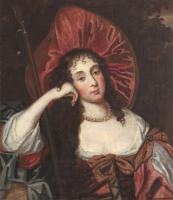


Samuel Pepys' Diary. 26th September 1666. So home, not agreeing for silk for a petticoat for her which she desired, but home to dinner and then back to White Hall, leaving my wife by the way to buy her petticoat of Bennet, and I to White Hall waiting all day on the Duke of Yorke (age 32) to move the King (age 36) for getting Lanyon some money at Plymouth, Devon [Map] out of some oyle prizes brought in thither, but could get nothing done, but here Mr. Dugdale I hear the great loss of books in St. Paul's Church-yarde [Map], and at their Hall also, which they value about £150,000; some booksellers being wholly undone, among others, they say, my poor Kirton. And Mr. Crumlu all his books and household stuff burned; they trusting St. Fayth's [Map], and the roof of the church falling, broke the arch down into the lower church, and so all the goods burned. A very great loss. His father hath lost above £1000 in books; one book newly printed, a Discourse, it seems, of Courts. Here I had the hap to see my Lady Denham (age 26): and at night went into the dining-room and saw several fine ladies; among others, Castlemayne (age 25), but chiefly Denham again; and the Duke of Yorke taking her aside and talking to her in the sight of all the world, all alone; which was strange, and what also I did not like.
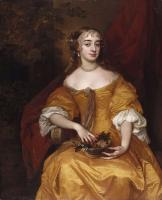
Chronicle of Geoffrey le Baker of Swinbroke
Baker was a secular clerk from Swinbroke, now Swinbrook, an Oxfordshire village two miles east of Burford. His Chronicle describes the events of the period 1303-1356: Gaveston, Bannockburn, Boroughbridge, the murder of King Edward II, the Scottish Wars, Sluys, Crécy, the Black Death, Winchelsea and Poitiers. To quote Herbert Bruce 'it possesses a vigorous and characteristic style, and its value for particular events between 1303 and 1356 has been recognised by its editor and by subsequent writers'. The book provides remarkable detail about the events it describes. Baker's text has been augmented with hundreds of notes, including extracts from other contemporary chronicles, such as the Annales Londonienses, Annales Paulini, Murimuth, Lanercost, Avesbury, Guisborough and Froissart to enrich the reader's understanding. The translation takes as its source the 'Chronicon Galfridi le Baker de Swynebroke' published in 1889, edited by Edward Maunde Thompson.
Available at Amazon in eBook and Paperback format.
Samuel Pepys' Diary. 26th September 1668. Could sleep but little last night, for my concernments in this business of the victualling for Sir Prince, so up in the morning and he comes to me, and there I did tell him all, and give him my advice, and so he away, and I to the office, where we met and did a little business, and I left them and by water to attend the Council, which I did all the morning, but was not called in, but the Council meets again in the afternoon on purpose about it. So I at noon to Westminster Hall [Map] and there stayed a little, and at the Swan [Map] also, thinking to have got Doll Lane thither, but elle did not understand my signs; and so I away and walked to Charing Cross [Map], and there into the great new Ordinary, by my Lord Mulgrave's, being led thither by Mr. Beale (age 36), one of Oliver's, and now of the King's Guards; and he sat with me while I had two grilled pigeons, very handsome and good meat: and there he and I talked of our old acquaintances, W. Clerke and others, he being a very civil man, and so walked to Westminster and there parted, and I to the Swan [Map] again, but did nothing, and so to White Hall, and there attended the King (age 38) and Council, who met and heard our answer. I present, and then withdrew; and they sent two hours at least afterwards about it, and at last rose; and to my great content, the Duke of York (age 34), at coming out, told me that it was carried for Prince at 6d. 8d., and 8 3/4d.; but with great difficulty, I understand, both from him and others, so much that Sir Edward Walker told me that he prays to God he may never live to need to plead his merit, for D. Gawden's sake; for that it hath stood him in no stead in this business at all, though both he and all the world that speaks of him, speaks of him as the most deserving man of any servant of the King's in the whole nation, and so I think he is: but it is done, and my heart is glad at it. So I took coach and away, and in Holborne overtook D. Gawden's coach, and stopped and went home, and Gibson to come after, and to my house, where Prince did talk a little, and he do mightily acknowledge my kindness to him, and I know I have done the King and myself good service in it. So he gone, and myself in mighty great content in what is done, I to the office a little, and then home to supper, and the boy to read to me, and so to bed. This noon I went to my Lady Peterborough's (age 46) house, and talked with her about the money due to her Lord, and it gives me great trouble, her importunity and impertinency about it. This afternoon at Court I met with Lord Hinchingbrooke (age 20), newly come out of the country, who tells me that Creed's business with Mrs. Pickering (age 26) will do, which I am neither troubled nor glad at.


John Evelyn's Diary. 26th September 1672. I carried with me to dinner my Lord H. Howard (age 44) (now to be made Earl of Norwich and Earl Marshal of England) to Sir Robert Clayton's (age 43), now Sheriff of London, at his new house, where we had a great feast; it is built indeed for a great magistrate, at excessive cost. The cedar dining room is painted with the history of the Giants' War, incomparably done by Mr. Streeter (age 51), but the figures are too near the eye.


John Evelyn's Diary. 26th September 1684. The King (age 54) being return'd from Winchester [Map], there was a numerous Court at White-hall. At this time the Earle of Rochester (age 42) was remov'd from the Treasury to the Presidentship of the Council; Lord Godolphin (age 39) was made first Commissioner of the Treasury in his place; Lord Middleton (age 34) (a Scot) made Secretary of State, in ye room of Lord Godolphin. These alterations being very unexpected and mysterious, gave greate occasion of discourse. There was now an Ambassador from ye King of Siam in ye East Indies to his Majesty.


On 26th September 1698 William Cavendish 3rd Duke Devonshire was born to William Cavendish 2nd Duke Devonshire (age 26) and Rachel Russell Duchess Devonshire (age 24). He married 27th March 1718 Catherine Hoskins Duchess Devonshire and had issue.


On 26th September 1706 Susan Hamilton was born to James Hamilton Duke Hamilton, 1st Duke Brandon (age 48) and Elizabeth Gerard Duchess Brandon (age 26). She married 3rd August 1736 Anthony Tracy Keck of Great Tew and had issue.
On 26th September 1754 Maria Shireburn Duchess Norfolk (age 61) died. Her aunt Elizabeth Shireburn inherited Stonyhurst by which it became into the ownership of the Weld family.
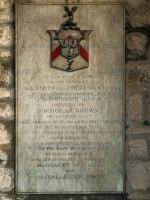
St Bartholomew's Church, Whittingham [Map]. Memorial to Alexander Collingwood of Collingwood House, Morpeth [Map], died 26th September 1795.
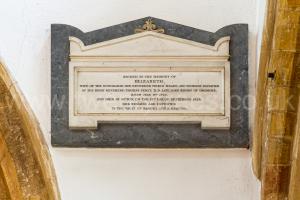
After 26th September 1811. Monument to Elizabeth Percy (age 46) at the Church of St Mary Magdalene, Ecton [Map].
Elizabeth Percy: Reverend Pierce Meade and she were married. On 11th July 1765 she was born to Bishop Thomas Percy and Anne Gutteridge. On 26th September 1825 she died at Ecton, Northamptonshire.
Thomas Bateman 1846. On the 26th of September was examined a small artificial mound near Buxton, called Staden Lowe [Map], in the immediate neighbourhood of which are some earthworks of early date. The "Lowe" did not present any appearance of having been applied to funereal purposes, as the name would indicate.
On 1864 James Nesfield Forsyth was born to James Forsyth (age 36) and Eliza Hastie (age 30). Baptised on 26th September 1869 Abode shown as Palatine Cottage. Two of his siblings were also baptised on the same day. He married 21st January 1902 Cecilia Naylor.
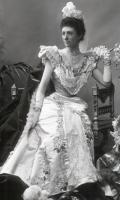
On 26th September 1865 Mary Caurroy Tribe Duchess Bedford was born to Walter Tribe (age 33). She married 31st January 1888 Herbrand Arthur Russell 11th Duke Bedford, son of Francis Russell 9th Duke Bedford and Elizabeth Sackville-West Duchess Bedford, and had issue.
In 1866 Agnes Ellen Forsyth was born to James Forsyth (age 38) and Eliza Hastie (age 32). She was baptised on the same day 26th September 1869 as her elder brother and younger sister.
On 26th September 1867 Ambrose Macdonald Poynter 2nd Baronet was born to Edward Poynter 1st Baronet (age 31) and Agnes Macdonald Lady Poynter (age 24).


Chronicle of Geoffrey le Baker of Swinbroke
Baker was a secular clerk from Swinbroke, now Swinbrook, an Oxfordshire village two miles east of Burford. His Chronicle describes the events of the period 1303-1356: Gaveston, Bannockburn, Boroughbridge, the murder of King Edward II, the Scottish Wars, Sluys, Crécy, the Black Death, Winchelsea and Poitiers. To quote Herbert Bruce 'it possesses a vigorous and characteristic style, and its value for particular events between 1303 and 1356 has been recognised by its editor and by subsequent writers'. The book provides remarkable detail about the events it describes. Baker's text has been augmented with hundreds of notes, including extracts from other contemporary chronicles, such as the Annales Londonienses, Annales Paulini, Murimuth, Lanercost, Avesbury, Guisborough and Froissart to enrich the reader's understanding. The translation takes as its source the 'Chronicon Galfridi le Baker de Swynebroke' published in 1889, edited by Edward Maunde Thompson.
Available at Amazon in eBook and Paperback format.
On 26th September 1870 Christian X King of Denmark was born to Frederick VIII King of Denmark (age 27) and Louise of Sweden Queen Consort Denmark (age 18). He married 26th April 1898 his fourth cousin once removed Alexandrine Mecklenburg-Schwerin Queen Consort Denmark and had issue.
On 26th September 1882 Walter Marsden was born to John Marsden at Church, Lancashire. He was baptised on 18th January 1883 at Church, Lancashire. His father's occupation on the 1891 census is Blacksmith. He married December 1916 Hilda Beatrice Hoare.
On 26th September 1888 Reverend Edgell Wyatt-Edgell Baron Braye (age 87) died. Memorial and window at St Nicholas' Church, Stanford-on-Avon [Map].
Reverend Edgell Wyatt-Edgell Baron Braye: On 6th January 1801 he was born to Edgell Wyatt of Milton Place in Egham in Surrey. On 24th September 1844 he and Henrietta Otway 4th Baroness Braye were married. On 13th May 1879 Maria Otway-Cave died. Her sister Henrietta abeyance terminated 4th Baroness Braye; she died six months later. He by marriage Baron Braye.
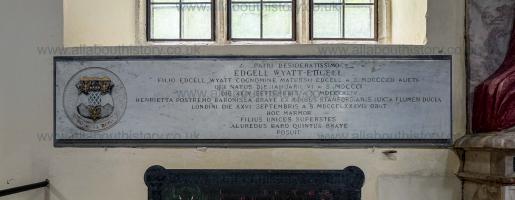
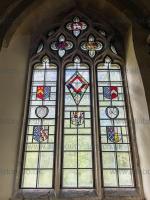
The London Gazette 30308. 26th September 1917. Awarded the Military Cross.
2nd Lt. Walter Marsden (age 35), N. Lan. R.
Old Eldon Square War Memorial, Newcastle upon Tyne [Map] was unveiled on 26th September 1923 by Field Marshal Earl Haig and dedicated by the Bishop of Newcastle. The monument was dedicated to the men of Newcastle district who lost their lives in the First World War. Later the monument was further dedicated to those lost in the Second World War. It was designed by John Dobson.


On 26th September 1923 Frederick Oliver Robinson 2nd Marquess Ripon (deceased) was buried at St Mary's Church Studley Royal Park, North Yorkshire.
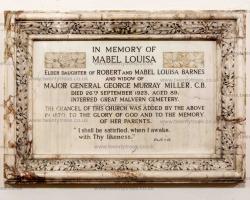
After 26th September 1923. St James' Church, Didsbury [Map]. Memorial to Mabel Louisa Barnes.
On 26th September 1931 Elizabeth Demarest (age 39) died. Her daughter Elizabeth Sutherland 24th Countess of Sutherland (age 10) became a ward of her uncle George Sutherland-Leveson-Gower 5th Duke of Sutherland (age 43).
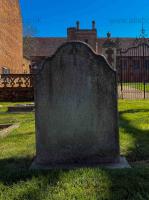
On 26th September 1936 Captain Arthur William James Gascoyne-Cecil (age 61) died. He was buried at St Etheldreda's Church, Hatfield [Map].
Captain Arthur William James Gascoyne-Cecil: On 4th April 1875 he was born to Arthur Gascoyne-Cecil. On 1st December 1906 Captain Arthur William James Gascoyne-Cecil and Beatrice Susan Theodosia Stuart-Wortley were married. They were sixth cousins.
On 26th September 1941 Arthur Valerian Wellesley 8th Duke Wellington (age 26) was awarded the Military Cross "in recognition of distinguished services in the Middle East (including Egypt, East Africa, The Western Desert, The Sudan, Greece, Crete, Syria and Tobruk) during the period February, 1941, to July, 1941."
Jean de Waurin's Chronicle of England Volume 6 Books 3-6: The Wars of the Roses
Jean de Waurin was a French Chronicler, from the Artois region, who was born around 1400, and died around 1474. Waurin’s Chronicle of England, Volume 6, covering the period 1450 to 1471, from which we have selected and translated Chapters relating to the Wars of the Roses, provides a vivid, original, contemporary description of key events some of which he witnessed first-hand, some of which he was told by the key people involved with whom Waurin had a personal relationship.
Available at Amazon in eBook and Paperback format.
On 26th September 1974 George Victor Robert John Innes-Kerr 9th Duke Roxburghe (age 61) died. His son Guy (age 19) succeeded 10th Duke Roxburghe.
North Transept, St Albans Cathedral. On 26th September 1989 the North Window by Alan Younger, 1933–2004, was unveiled by H.R.H. The Princess of Wales (age 28). It was the gift of Laporte plc.


On 26th September 2009 John Dyke Acland 16th Baronet (age 70) died the day after he had been involved in a car accident. His son Dominic (age 47) succeeded 17th Baronet Acland of Columb John in Devon.
On 26th September 1407 Thomas Ros 8th Baron Ros Helmsley was born to William Ros 6th Baron Ros Helmsley (age 37) and Margaret Fitzalan Baroness Ros of Helmsley (age 35). He married before 9th September 1427 his third cousin once removed Eleanor Beauchamp Duchess Somerset, daughter of Richard Beauchamp 13th Earl Warwick and Elizabeth Berkeley Countess Warwick, and had issue.
On 26th September 1462 Engelbert La Marck Count Nevers was born to John La Marck I Duke Cleves (age 43) and Elizabeth Valois Duchess Cleves (age 23). Coefficient of inbreeding 2.07%. He married 23rd February 1489 Charlotte Bourbon Vendôme and had issue.
On 26th September 1565 Charles Habsburg Spain was born to Maximilian Habsburg Spain II Holy Roman Emperor (age 38) and Maria of Spain Holy Roman Empress (age 37). Coefficient of inbreeding 10.03%. He died aged less than one years old.
On 26th September 1586 Friedrich Wettin was born to Friedrich Wilhelm Wettin I Duke Saxe Weimar (age 24) and Sophie of Württemberg Duchess of Saxe-Weimar (age 22) at Weimar. He died aged less than one years old.
On 26th September 1656 William des Bouverie 1st Baronet was born to Edward des Bouverie (age 34) and Anne de la Foterie. He married (1) on or after 12th September 1682 Mary Edwards (2) 29th April 1686 Anne Urry Lady Bouverie and had issue.
On 26th September 1672 Charles Finch 4th Earl Winchilsea was born to William Finch (age 19).
On 26th September 1693 Laurence Shirley was born to Robert Shirley 1st Earl Ferrers (age 42) and Elizabeth Washington Baroness Ferrers Chartley. He married before 18th August 1720 Anne Clarges, daughter of Walter Clarges 1st Baronet, and had issue.


On 26th September 1698 William Cavendish 3rd Duke Devonshire was born to William Cavendish 2nd Duke Devonshire (age 26) and Rachel Russell Duchess Devonshire (age 24). He married 27th March 1718 Catherine Hoskins Duchess Devonshire and had issue.
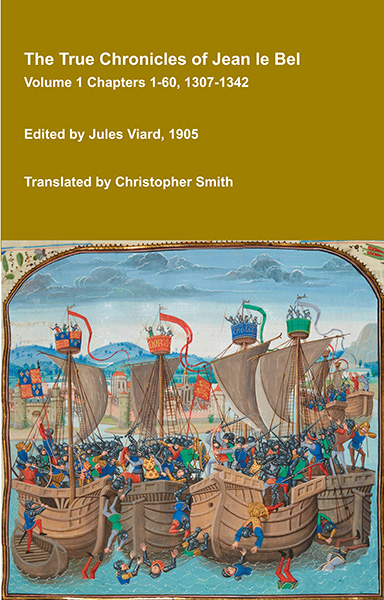
The True Chronicles of Jean le Bel Volume 1 Chapters 1-60 1307-1342
The True Chronicles of Jean le Bel offer one of the most vivid and immediate accounts of 14th-century Europe, written by a knight who lived through the events he describes, and experienced some of them first hand. Covering the early decades of the Hundred Years’ War, this remarkable chronicle follows the campaigns of Edward III of England, the politics of France and the Low Countries, and the shifting alliances that shaped medieval warfare. Unlike later historians, Jean le Bel writes with a strong sense of eyewitness authenticity, drawing on personal experience and the testimony of fellow soldiers. His narrative captures not only battles and sieges, but also the realities of military life, diplomacy, and the ideals of chivalry that governed noble society. A key source for Jean Froissart, Le Bel’s chronicle stands on its own as a compelling and insightful work, at once historical record and literary achievement. This translation builds on the 1905 edition published in French by Jules Viard, adding extensive translations from other sources Rymer's Fœdera, the Chronicles of Adam Murimuth, William Nangis, Walter of Guisborough, a Bourgeois of Valenciennes, Geoffrey le Baker of Swinbroke and Richard Lescot to enrich the original text and Viard's notes.
Available at Amazon in eBook and Paperback format.
On 26th September 1706 Susan Hamilton was born to James Hamilton Duke Hamilton, 1st Duke Brandon (age 48) and Elizabeth Gerard Duchess Brandon (age 26). She married 3rd August 1736 Anthony Tracy Keck of Great Tew and had issue.
On 26th September 1711 Richard Grenville-Temple 2nd Earl Temple was born to Richard Granville (age 33) and Hester Temple 1st Countess Temple (age 21). He married 9th May 1737 Anne Chamber Countess Temple.
On 26th September 1720 George Amyand 1st Baronet was born. He married 1748 Anna Maria Korteen Lady Amyand and had issue.

On 26th September 1748 Vice-Admiral Cuthbert Collingwood 1st Baron Collingwood was born to Cuthbert Collingwood of Newcastle upon Tyne (age 36). He married 1791 Sarah Blackett.
On 26th September 1775 James Grimston was born to James Grimston 3rd Viscount Grimston (age 28) and Harriet Walter Viscountess Grimston (age 19). He married 1807 Charlotte Jenkinson Countess Verulam, daughter of Charles Jenkinson 1st Earl Liverpool, and had issue.

On 26th September 1783 Richard Griffin 3rd Baron Braybrook was born to Richard Griffin 2nd Baron Braybrook (age 33) and Catherine Granville (age 22) at Stanlake Park, Bershire. He married 13th May 1819 Jane Cornwallis Baroness Braybrook, daughter of Charles Cornwallis 2nd Marquess Cornwallis and Louisa Gordon Marchioness Cornwallis, and had issue.
On 26th September 1785 Charles Powlett 2nd Baron Bayning was born to Charles Townshend 1st Baron Bayning (age 56) and Annabella Smith-Powlett (age 31). He was educated at Trinity College, Cambridge University [Map]. Coefficient of inbreeding 3.24%.
On 26th September 1785 Henry Allen Johnson 2nd Baronet was born to Henry Johnson 1st Baronet (age 37).
On 26th September 1794 Charles Henry Farrington 2nd Baronet was born to Charles Colden Farrington (age 24).
On 26th September 1795 William Brougham 2nd Baron Brougham and Vaux was born to Henry Brougham (age 53) He married 1834 Emily Frances Taylor Lady Brougham and had issue.
On 26th September 1803 Charles Lowther 3rd Baronet was born to John Lowther 1st Baronet (age 44) and Elizabeth Fane (age 33). He was blind from infancy due to an attack of scarlet fever.
On 26th September 1811 Albemarle Bertie was born to Montagu Bertie 5th Earl of Abingdon (age 27) and Emily Gage Countess of Abingdon.
The True Chronicles of Jean le Bel Volume 1 Chapters 1-60 1307-1342
The True Chronicles of Jean le Bel offer one of the most vivid and immediate accounts of 14th-century Europe, written by a knight who lived through the events he describes, and experienced some of them first hand. Covering the early decades of the Hundred Years’ War, this remarkable chronicle follows the campaigns of Edward III of England, the politics of France and the Low Countries, and the shifting alliances that shaped medieval warfare. Unlike later historians, Jean le Bel writes with a strong sense of eyewitness authenticity, drawing on personal experience and the testimony of fellow soldiers. His narrative captures not only battles and sieges, but also the realities of military life, diplomacy, and the ideals of chivalry that governed noble society. A key source for Jean Froissart, Le Bel’s chronicle stands on its own as a compelling and insightful work, at once historical record and literary achievement. This translation builds on the 1905 edition published in French by Jules Viard, adding extensive translations from other sources Rymer's Fœdera, the Chronicles of Adam Murimuth, William Nangis, Walter of Guisborough, a Bourgeois of Valenciennes, Geoffrey le Baker of Swinbroke and Richard Lescot to enrich the original text and Viard's notes.
Available at Amazon in eBook and Paperback format.
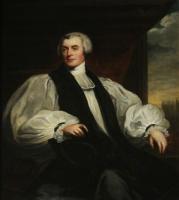
On 26th September 1826 Robert Hay Murray was born to Bishop George Murray (age 42) and Sarah Hay-Drummond (age 38).
On 26th September 1837 Blanche Pocklington Senhouse Baroness Scarsdale was born to Joseph Pocklington Senhouse (age 33). She married 3rd July 1856 Alfred Nathaniel Holden Curzon 4th Baron Scarsdale and had issue.
On 26th September 1844 George Charles Erskine Rowley 3rd Baronet was born to Captain George Rowley (age 39).
On 26th September 1853 Alexander Fuller-Acland-Hood 1st Baron St Audries was born to Alexander Hood 3rd Baronet (age 34) and Isabel Harriet Fuller-Palmer-Acland Lady Hood (age 21). He married 1888 Mildred Rose Evelyn Eveleigh-de-Moleyns Baroness St Audries and had issue.
On 1864 James Nesfield Forsyth was born to James Forsyth (age 36) and Eliza Hastie (age 30). Baptised on 26th September 1869 Abode shown as Palatine Cottage. Two of his siblings were also baptised on the same day. He married 21st January 1902 Cecilia Naylor.
On 26th September 1865 Mary Caurroy Tribe Duchess Bedford was born to Walter Tribe (age 33). She married 31st January 1888 Herbrand Arthur Russell 11th Duke Bedford, son of Francis Russell 9th Duke Bedford and Elizabeth Sackville-West Duchess Bedford, and had issue.
On 26th September 1867 Ambrose Macdonald Poynter 2nd Baronet was born to Edward Poynter 1st Baronet (age 31) and Agnes Macdonald Lady Poynter (age 24).
On 26th September 1870 Christian X King of Denmark was born to Frederick VIII King of Denmark (age 27) and Louise of Sweden Queen Consort Denmark (age 18). He married 26th April 1898 his fourth cousin once removed Alexandrine Mecklenburg-Schwerin Queen Consort Denmark and had issue.
On 26th September 1880 Alice Katherine Sibell Grosvenor was born to Robert Grosvenor 2nd Baron Ebury (age 46) and Emilie Beaujolais White. She married 10th February 1902 Ivor Churchill Guest 1st Viscount Wimborne, son of Ivor Bertie Guest and Cornelia Henrietta Maria Spencer-Churchill Baroness Wimborne, and had issue.
On 26th September 1882 Walter Marsden was born to John Marsden at Church, Lancashire. He was baptised on 18th January 1883 at Church, Lancashire. His father's occupation on the 1891 census is Blacksmith. He married December 1916 Hilda Beatrice Hoare.
On 26th September 1886 Ruby Florence Mary Elliot-Murray-Kynynmound Countess Cromer was born to Gilbert Elliot-Murray-Kynynmound 4th Earl Minto (age 41) and Mary Caroline Grey Countess Minto (age 28). She married 4th April 1908 Rowland Baring 2nd Earl Cromer, son of Evelyn Baring 1st Earl Cromer and Ethel Errington, and had issue.
The Deeds of the Dukes of Normandy
The Gesta Normannorum Ducum [The Deeds of the Dukes of Normandy] is a landmark medieval chronicle tracing the rise and fall of the Norman dynasty from its early roots through the pivotal events surrounding the Norman Conquest of England. Originally penned in Latin by the monk William of Jumièges shortly before 1060 and later expanded at the behest of William the Conqueror, the work chronicles the deeds, politics, battles, and leadership of the Norman dukes, especially William’s own claim to the English throne. The narrative combines earlier historical sources with firsthand information and oral testimony to present an authoritative account of Normandy’s transformation from a Viking settlement into one of medieval Europe’s most powerful realms. William’s history emphasizes the legitimacy, military prowess, and governance of the Norman line, framing their expansion, including the conquest of England, as both divinely sanctioned and noble in purpose. Later chroniclers such as Orderic Vitalis and Robert of Torigni continued the history, extending the coverage into the 12th century, providing broader context on ducal rule and its impact. Today this classic work remains a foundational source for understanding Norman identity, medieval statesmanship, and the historical forces that reshaped England and Western Europe between 800AD and 1100AD.
Available at Amazon in eBook and Paperback format.
On 26th September 1894 Charles Burnett Buckworth-Herne-Soame 11th Baronet was born to Charles Buckworth-Herne-Soame 10th Baronet (age 30).
On 26th September 1904 Ralph Henry Bathurst was born to Seymour Bathurst 7th Earl Bathurst (age 40) and Lilias Margaret Frances Borthwick Countess Bathurst Sussex (age 33).
On 26th September 1909 Elizabeth Susan Douglas-Scott-Montagu was born to John Douglas-Scott-Montagu 2nd Baron Montagu of Beaulieu (age 43) and Cecil Victoria Kerr Baroness Montagu of Beaulieu (age 43). Coefficient of inbreeding 6.33%.
On 26th September 1936 Thomas Edmund Byng 8th Earl of Strafford was born to Robert Cecil Byng 7th Earl of Strafford (age 32).
On 26th September 1943 John Stephen Gyles Dryden 11th and 8th Baronet was born to Noel Percy Hugh Dryden 10th and 7th Baronet (age 32) and Rosamund Mary Scrope Lady Dryden.
On 26th September 1945 Charles Townshend 8th Marquess Townshend was born to George Townshend 7th Marquess Townshend (age 29) and Elizabeth Luby Marchioness Townshend.
On 26th September 1948 Llewellyn Roger Lloyd-Mostyn 6th Baron Mostyn was born to Roger Edward Lloyd-Mostyn 5th Baron Mostyn (age 28).
On 26th September 1765 George Harcourt 2nd Earl Harcourt (age 29) and Elizabeth Venables-Vernon Countess Harcourt (age 19) were married. He the son of Simon Harcourt 1st Earl Harcourt (age 51) and Rebecca Samborne Le Bass. They were first cousins.
On 26th September 1815 George Cornewall 3rd Baronet (age 41) and Jane Naper Lady Cornewall were married.
On 26th September 1843 William Bernard Petre 12th Baron Petre (age 25) and Mary Theresa Clifford (age 20) were married. They were third cousin once removed. He a great x 5 grandson of King Charles II of England Scotland and Ireland. She a great x 4 granddaughter of King Charles II of England Scotland and Ireland.
Abbot John Whethamstede’s Chronicle of the Abbey of St Albans
Abbot John Whethamstede's Register aka Chronicle of his second term at the Abbey of St Albans, 1451-1461, is a remarkable text that describes his first-hand experience of the beginning of the Wars of the Roses including the First and Second Battles of St Albans, 1455 and 1461, respectively, their cause, and their consequences, not least on the Abbey itself. His text also includes Loveday, Blore Heath, Northampton, the Act of Accord, Wakefield, and Towton, and ends with the Coronation of King Edward IV. In addition to the events of the Wars of the Roses, Abbot John, or his scribes who wrote the Chronicle, include details in the life of the Abbey such as charters, letters, land exchanges, visits by legates, and disputes, which provide a rich insight into the day-to-day life of the Abbey, and the challenges faced by its Abbot.
Available at Amazon in eBook and Paperback format.
On 26th September 1865 Granville Leveson-Gower 2nd Earl Granville (age 50) and Sophia Castila Rosamund Campbell Countess Granville (age 18) were married. The difference in their ages was 32 years. He the son of Granville Leveson-Gower 1st Earl Granville and Harriet Cavendish Countess Granville. They were half third cousin twice removed.


On 26th September 1928 William Smith 3rd Viscount Hambleden (age 25) and Patricia Herbert Viscountess Hambleden (age 23) were married. She by marriage Viscountess Hambleden of Hambleden in Buckinghamshire. She the daughter of Reginald Herbert 15th Earl Pembroke 12th Earl Montgomery (age 48) and Beatrice Eleanor Paget Countess Pembroke and Montgomery (age 45).
On 26th September 1956 Edward Portman 9th Viscount Portman (age 22) and Rosemary Joy Farris were married. They were divorced in 1965.
On 26th September 1107 Bishop Maurice died.
On 26th September 1176 Sophie Salm Countess Holland (age 56) died.
On 26th September 1290 Margaret "Maid of Norway" I Queen Scotland (age 7) died at St Margaret's Hope.
On 26th September 1345 William Hainaut II Count Hainaut (age 38) died. His sister Margaret (age 33) succeeded II Countess Hainault. Louis Wittelsbach IV Holy Roman Emperor (age 63) by marriage Count Hainault.
On 26th September 1400 Philippa Mortimer Countess Pembroke, Arundel and Surrey (age 24) died.
On 26th September 1413 Stephen "Magnificient Fop" Wittelsbach III Duke Bavaria (age 76) died. His son Louis (age 45) succeeded VII Duke Bavaria.
On 26th September 1485 John Griffin 9th Baron Latimer Braybrooke (age 35) died. His son Nicholas (age 9) de jure 10th Baron Latimer of Braybrook.
On 26th September 1490 John Tuchet 6th Baron Audley, 3rd Baron Tuchet (age 64) died at Shere, Surrey. His son James (age 27) succeeded 7th Baron Audley of Heighley in Staffordshire, 4th Baron Tuchet. Joan Bourchier Baroness Audley and Tuchet by marriage Baroness Audley of Heighley in Staffordshire, Baroness Tuchet.
On 26th September 1497 Bertrand Auvergne VI Count Auvergne (age 80) died. His son Jean (age 30) succeeded III Count Auvergne.
William of Worcester's Chronicle of England
William of Worcester, born around 1415, and died around 1482 was secretary to John Fastolf, the renowned soldier of the Hundred Years War, during which time he collected documents, letters, and wrote a record of events. Following their return to England in 1440 William was witness to major events. Twice in his chronicle he uses the first person: 1. when writing about the murder of Thomas, 7th Baron Scales, in 1460, he writes '… and I saw him lying naked in the cemetery near the porch of the church of St. Mary Overie in Southwark …' and 2. describing King Edward IV's entry into London in 1461 he writes '… proclaimed that all the people themselves were to recognize and acknowledge Edward as king. I was present and heard this, and immediately went down with them into the city'. William’s Chronicle is rich in detail. It is the source of much information about the Wars of the Roses, including the term 'Diabolical Marriage' to describe the marriage of Queen Elizabeth Woodville’s brother John’s marriage to Katherine, Dowager Duchess of Norfolk, he aged twenty, she sixty-five or more, and the story about a paper crown being placed in mockery on the severed head of Richard, 3rd Duke of York.
Available at Amazon in eBook and Paperback format.
On 26th September 1623 Charles Grey 7th Earl Kent died. He was buried at the De Grey Mausoleum, St John the Baptist Church, Flitton [Map]. His son Henry (age 40) succeeded 8th Earl Kent, 11th Baron Grey of Ruthyn.
Charles Grey 7th Earl Kent: he was born to Henry Grey and Margery St John. He was educated Trinity College. Around 1580 Charles Grey 7th Earl Kent and Susan Cotton Countess Kent were married. She by marriage Countess Kent.
On 26th September 1639 Catherine Finch Lady Wentworth (age 51) died.
On 26th September 1672 John Fettiplace 1st Baronet (age 46) died. His son Edmund (age 18) succeeded 2nd Baronet Fettiplace of Childrey in Berkshire.
On 26th September 1676 John Stepney 3rd Baronet (age 58) died. His nephew John (age 44) succeeded 4th Baronet Stepney of Prendergast in Pembrokeshire.
On 26th September 1690 Alexander Stewart 4th Earl Galloway (age 20) died. His brother James (age 20) succeeded 5th Earl Galloway, 4th Baronet Stewart of Corsewall.
On 26th September 1710 Robert Kemp 2nd Baronet (age 82) died. He was buried at St Mary's Church, Gissing. His son Robert (age 43) succeeded 3rd Baronet Kemp of Gissing in Norfolk. Martha Blackwell Lady Kemp by marriage Lady Kemp of Gissing in Norfolk.
On 26th September 1744 John Danvers 3rd Baronet (age 71) died. He was buried at St Mary the Virgin Church, Culworth [Map]. His son Henry (age 13) succeeded 4th Baronet D'Anvers of Culworth in Northamptonshire.
On 26th September 1749 Watkin Williams-Wynn 3rd Baronet (age 57) died. His son Watkin succeeded 4th Baronet Williams of Gray's Inn. Henrietta Somerset Lady Williams-Wynn (age 1) by marriage Lady Williams of Gray's Inn.


On 26th September 1754 Maria Shireburn Duchess Norfolk (age 61) died. Her aunt Elizabeth Shireburn inherited Stonyhurst by which it became into the ownership of the Weld family.
On 26th September 1763 Wyndham Knatchbull-Wyndham 6th Baronet (age 26) died unmarried. His uncle Edward (age 58) succeeded 7th Baronet Knatchbull of Mersham Hatch in Kent.


On 26th September 1776 Stephen Fox-Strangways 1st Earl of Ilchester (age 72) died. His son Henry (age 29) succeeded 2nd Earl Ilchester, 2nd Baron Ilchester and Stavordale of Redlynch in Somerset, 2nd Baron Strangways of Woodford in Dorset, 2nd Baron Ilchester of Ilchester in Somerset. Mary Theresa O'Grady Countess of Ilchester (age 21) by marriage Countess Ilchester.


The Deeds of the Dukes of Normandy
The Gesta Normannorum Ducum [The Deeds of the Dukes of Normandy] is a landmark medieval chronicle tracing the rise and fall of the Norman dynasty from its early roots through the pivotal events surrounding the Norman Conquest of England. Originally penned in Latin by the monk William of Jumièges shortly before 1060 and later expanded at the behest of William the Conqueror, the work chronicles the deeds, politics, battles, and leadership of the Norman dukes, especially William’s own claim to the English throne. The narrative combines earlier historical sources with firsthand information and oral testimony to present an authoritative account of Normandy’s transformation from a Viking settlement into one of medieval Europe’s most powerful realms. William’s history emphasizes the legitimacy, military prowess, and governance of the Norman line, framing their expansion, including the conquest of England, as both divinely sanctioned and noble in purpose. Later chroniclers such as Orderic Vitalis and Robert of Torigni continued the history, extending the coverage into the 12th century, providing broader context on ducal rule and its impact. Today this classic work remains a foundational source for understanding Norman identity, medieval statesmanship, and the historical forces that reshaped England and Western Europe between 800AD and 1100AD.
Available at Amazon in eBook and Paperback format.
On 26th September 1777 Juliana Donovan Countess Anglesey died.
On 26th September 1791 William Craven 6th Baron Craven (age 53) died at Lausanne, Switzerland. His son William (age 20) succeeded 7th Baron Craven of Hamstead Marshall in Berkshire. His son William succeeded 8th Baron Craven of Hamstead Marshall in Berkshire.

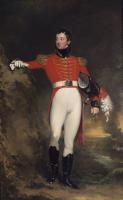
On 26th September 1799 Willoughby Bertie 4th Earl of Abingdon (age 59) died. His son Montagu (age 15) succeeded 5th Earl Abingdon, 9th Baron Norreys of Rycote.
On 26th September 1807 Wharton Emerson aka Amcotts 1st Baronet (age 67) died. His grandson William (age 24) succeeded 2nd Baronet Amcotts of Kettlethopre Park in Lincolnshire.
On 26th September 1832 Fitzwilliam Barrington 10th Baronet (age 77) died at Swainston, Isle of Wight. Baronet Barrington of Barrington Hall extinct.
On 26th September 1837 Arthur Chichester 1st Baron Templemore (age 40) died. His son Harry (age 16) succeeded 2nd Baron Templemore of Templemore in Donegal.
On 26th September 1839 Richard Edgecumbe 2nd Earl of Mount Edgcumbe (age 75) died. His son Ernest (age 42) succeeded 3rd Earl of Mount Edgcumbe, 4th Baron Edgcumbe.
On 26th September 1842 Richard Wellesley 1st Marquess Wellesley (age 82) died at Kingston House Knightsbridge, Kensington. His brother William (age 79) succeeded 3rd Earl Mornington, 3rd Viscount Wellesley of Dangan Castle. Katherine Forbes Countess Mornington (age 81) by marriage Countess Mornington.


On 26th September 1845 John Loftus 2nd Marquess Ely (age 75) died.
On 26th September 1883 Charles Somers-Cocks 3rd Earl Somers (age 64) died. Earl Somers, Viscount Eastnor of Eastor Castle in Herefordshire extinct. He was buried at St John the Baptist Church, Eastnor [Map]. His first cousin once removed Philip (age 68) succeeded 5th Baron Somers.
This is a translation of the 'Memoires of Jacques du Clercq', published in 1823 in two volumes, edited by Frederic, Baron de Reissenberg. In his introduction Reissenberg writes: 'Jacques du Clercq tells us that he was born in 1424, and that he was a licentiate in law and a counsellor to Philip the Good, Duke of Burgundy, in the castellany of Douai, Lille, and Orchies. It appears that he established his residence at Arras. In 1446, he married the daughter of Baldwin de la Lacherie, a gentleman who lived in Lille. We read in the fifth book of his Memoirs that his father, also named Jacques du Clercq, had married a lady of the Le Camelin family, from Compiègne. His ancestors, always attached to the counts of Flanders, had constantly served them, whether in their councils or in their armies.' The Memoires cover a period of nineteen years beginning in in 1448, ending in in 1467. It appears that the author had intended to extend the Memoirs beyond that date; no doubt illness or death prevented him from carrying out this plan. As Reissenberg writes the 'merit of this work lies in the simplicity of its narrative, in its tone of good faith, and in a certain air of frankness which naturally wins the reader’s confidence.' Du Clercq ranges from events of national and international importance, including events of the Wars of the Roses in England, to simple, everyday local events such as marriages, robberies, murders, trials and deaths, including that of his own father in Book 5; one of his last entries.
Available at Amazon in eBook and Paperback format.
On 26th September 1888 Reverend Edgell Wyatt-Edgell Baron Braye (age 87) died. Memorial and window at St Nicholas' Church, Stanford-on-Avon [Map].
Reverend Edgell Wyatt-Edgell Baron Braye: On 6th January 1801 he was born to Edgell Wyatt of Milton Place in Egham in Surrey. On 24th September 1844 he and Henrietta Otway 4th Baroness Braye were married. On 13th May 1879 Maria Otway-Cave died. Her sister Henrietta abeyance terminated 4th Baroness Braye; she died six months later. He by marriage Baron Braye.
On 26th September 1919 Francis Bertie 1st Viscount Bertie Thame (age 75) died. His son Vere (age 40) succeeded 2nd Viscount Bertie Thame, 2nd Baron Bertie of Thame in Oxfordshire.
On 26th September 1922 Charles Robert Spencer 6th Earl Spencer (age 64) died. His son Albert (age 30) succeeded 7th Earl Spencer, 7th Viscount Althorp, 7th Viscount Spencer, 7th Baron Spencer Althorp. Cynthia Elinor Beatrix Hamilton Countess Spencer (age 25) by marriage Countess Spencer.
On 26th September 1925 Gilbert Augustus Clayton-East 7th and 3rd Baronet (age 79) died. His son George (age 53) succeeded 8th Baronet Clayton of Marden Park in Surrey, 4th Baronet Clayton-East of Hall Place in Berkshire.
On 26th September 1931 Elizabeth Demarest (age 39) died. Her daughter Elizabeth Sutherland 24th Countess of Sutherland (age 10) became a ward of her uncle George Sutherland-Leveson-Gower 5th Duke of Sutherland (age 43).

On 26th September 1935 Fiennes Cornwallis 1st Baron Cornwallis (age 71) died. His son Wykeham (age 43) succeeded 2nd Baron Cornwallis of Linton in Kent.
On 26th September 1940 Edward George Chichester 10th Baronet (age 57) died. His son Edward (age 24) succeeded 11th Baronet Chichester of Raleigh in Devon.
On 26th September 1952 George Young 4th Baronet (age 79) died. His son George (age 44) succeeded 5th Baronet Young of Formosa Place in Berkshire. Elisabeth Knatchbull-Hugessen Lady Young (age 37) by marriage Lady Young of Formosa Place in Berkshire.
On 26th September 1957 Richard Tihel Leighton 10th Baronet (age 64) died. His son Michael (age 22) succeeded 11th Baronet Leighton of Wattlesborough.
On 26th September 1966 Lilian Lambton Countess of Home (age 84) died.
On 26th September 1974 George Victor Robert John Innes-Kerr 9th Duke Roxburghe (age 61) died. His son Guy (age 19) succeeded 10th Duke Roxburghe.
Abbot John Whethamstede’s Chronicle of the Abbey of St Albans
Abbot John Whethamstede's Register aka Chronicle of his second term at the Abbey of St Albans, 1451-1461, is a remarkable text that describes his first-hand experience of the beginning of the Wars of the Roses including the First and Second Battles of St Albans, 1455 and 1461, respectively, their cause, and their consequences, not least on the Abbey itself. His text also includes Loveday, Blore Heath, Northampton, the Act of Accord, Wakefield, and Towton, and ends with the Coronation of King Edward IV. In addition to the events of the Wars of the Roses, Abbot John, or his scribes who wrote the Chronicle, include details in the life of the Abbey such as charters, letters, land exchanges, visits by legates, and disputes, which provide a rich insight into the day-to-day life of the Abbey, and the challenges faced by its Abbot.
Available at Amazon in eBook and Paperback format.
On 26th September 1977 Randal McDonnell 8th Earl of Antrim (age 66) died. His son Alexander (age 42) succeeded 9th Earl Antrim 2C, 9th Viscount Dunluce.
On 26th September 2009 John Dyke Acland 16th Baronet (age 70) died the day after he had been involved in a car accident. His son Dominic (age 47) succeeded 17th Baronet Acland of Columb John in Devon.