


Jean de Waurin's Chronicle of England Volume 6 Books 3-6: The Wars of the Roses
Jean de Waurin was a French Chronicler, from the Artois region, who was born around 1400, and died around 1474. Waurin’s Chronicle of England, Volume 6, covering the period 1450 to 1471, from which we have selected and translated Chapters relating to the Wars of the Roses, provides a vivid, original, contemporary description of key events some of which he witnessed first-hand, some of which he was told by the key people involved with whom Waurin had a personal relationship.
Available at Amazon in eBook and Paperback format.
28 Jan is in January.
1069 Murder of Robert de Comines Earl Northumbria
1308 Marriage of King Edward II and Isabella of France
1542 Execution of Catherine Howard and Jane Parker
1547 Death of Henry VIII Accession of Edward VI
1552 Trial and Execution of Edward Seymour Duke of Somerset and his Supporters
1661 Execution of Deceased Regicides
1688 Buckingham-Shrewsbury Duel
On 28th January 814 Charles "Charlemagne aka Great" King of the Franks King Lombardy Holy Roman Emperor (age 71) died. His son Louis (age 36) succeeded King of the Franks.
On 28th January 891 Muhammed ibn Abd Allah Umayyad (age 27) was murdered by his brother al Mutarrif Umayyad.
On 28th January 1069 Robert de Comines Earl Northumbria was burned to death in Durham, County Durham [Map] when a rebel army set fire to the house in which he was staying. All his men were killed. In retaliation King William "Conqueror" I of England (age 41) commenced the Harrying of the North.
Historia Regum by Simeon of Durham. In the third year of his reign, king William sent earl Robert, sur- named Cumin, to the Northumbrians on the north side of the Tyne. But they all united in one feeling not to submit to a foreign lord, and determined either that they would put him to death, or that they all would fall together by the edge of the sword. Agelwin, bishop of Durham, met him at his approach, and forewarned him to beware of the snares laid for him. But he, thinking that no one would be so daring, despised the warning. Entering Durham with a large body of soldiers, he allowed his men to act everywhere in a hostile manner, even slaying some of the yeomen of the church; but he was received by the bishop with all courtesy and honour. But the Northumbrians, marching all night with haste to Durham, at dawn burst the gates with great force, and slew on every side the earl's men, who were taken unawares. The affair was conducted with great ferocity, the soldiers being killed in the houses and the streets. They then proceeded to attack the bishop's dwelling in which the earl had been received; but not being able to withstand the javelins of the defenders, they burnt the house with its inhabitants. So great was the multitude of the slain, that almost all parts of the city were flowing with blood; for of seven hundred men none but one escaped. This slaughter took place on Wednesday, the fifth of the kalends of February [28th January 1069].
The Ecclesiastical History of England and Normandy by Orderic Vitalis. [28th January 1069] In the third year of his reign, King William gave the county of Durham to Robert de Comines, who soon afterwards entered the city, with great confidence, at the head of five hundred men. But the citizens assembled early in the night, and massacred Robert and all his troops, except two, who escaped by flight. The bravest of men were unable to defend themselves, taken at disadvantage, at such an hour, and overwhelmed by numbers.
Chronicum Anglicanum by Ralph Coggeshall. In the year 1069, Robert, surnamed Commines, along with seven hundred of his men, was killed in Durham. Enraged by this, King William laid waste to all of Northumbria.
MLXIX. Robertus, cognomento Cumin, cum septingentis hominibus suis in Dunhelmo occiditur; unde rex Willelmus iratus, totam depopulatus est Northumbriam.
Note 1. Robert Commines was killed on 28th January 1069.
On 28th January 1271 Isabella Barcelona Queen Consort France (age 23) died.
On 28th January 1284 Alexander Dunkeld Prince Scotland (age 20) died at Lindores Abbey, Newburgh. He was buried at Dunfermline Abbey [Map].
On 28th January 1308 King Edward II of England (age 23) and Isabella of France Queen Consort England (age 13) were married at Boulogne sur Mer [Map]. She the daughter of King Philip IV of France (age 39) and Joan Blois I Queen Navarre. He the son of King Edward I of England and Eleanor of Castile Queen Consort England. They were second cousin once removed. She a great x 4 granddaughter of King Henry "Curtmantle" II of England.
Chronicle of Geoffrey le Baker of Swinbroke [-1360]. Immediately after acquiring the paternal crown, he [King Edward II] crossed the sea to reconcile himself with Philip the Fair, King of France, whose disposition had previously been much estranged from him. Between them, the fire of the Holy Spirit kindled such a fervor of charity that King Edward took Isabella,1 daughter of the aforementioned King of France, as his wife. With great celebration among the kings and nobles of both kingdoms, their marital union was solemnized in Boulogne on the 28th January 1308.
Qui statim post adepcionem diadematis paterni transfretavit, conciliaturus sibi animum Philippi le Beals regis Francorum, ab ipso perantea multum aversum; inter quos ignis Sancti Spiritus talem fervorem caritatis succendit, quod rex Edwardus Isabellam, filiam predicti regis Francie, cum magna celebritate regum atque procerum utriusque regni apud Boloniam ritu maritali sibi copulavit V kalendas Februarii.
Note 1. Edward in a letter to the king of France, 30th December, 1307, announced his intention of being in Boulogne on the eve of St. Vincent, 21st January 1308; the marriage to take place on the following Wednesday, 24th January 1308. He did not, however, sail from Dover till the morning of the 22nd. He landed at Boulogne on the 24th, and was married on the 28th.
The Deeds of the Dukes of Normandy
The Gesta Normannorum Ducum [The Deeds of the Dukes of Normandy] is a landmark medieval chronicle tracing the rise and fall of the Norman dynasty from its early roots through the pivotal events surrounding the Norman Conquest of England. Originally penned in Latin by the monk William of Jumièges shortly before 1060 and later expanded at the behest of William the Conqueror, the work chronicles the deeds, politics, battles, and leadership of the Norman dukes, especially William’s own claim to the English throne. The narrative combines earlier historical sources with firsthand information and oral testimony to present an authoritative account of Normandy’s transformation from a Viking settlement into one of medieval Europe’s most powerful realms. William’s history emphasizes the legitimacy, military prowess, and governance of the Norman line, framing their expansion, including the conquest of England, as both divinely sanctioned and noble in purpose. Later chroniclers such as Orderic Vitalis and Robert of Torigni continued the history, extending the coverage into the 12th century, providing broader context on ducal rule and its impact. Today this classic work remains a foundational source for understanding Norman identity, medieval statesmanship, and the historical forces that reshaped England and Western Europe between 800AD and 1100AD.
Available at Amazon in eBook and Paperback format.
Thomas Walsingham [~1422]. In the year of grace 1308, which is the second year from the Conquest of the reign of King Edward, not yet crowned, the second, the king kept Christmas at Wye, a manor of the Abbot of Battle, with a very large household. A few days after Christmas had passed, he crossed over into France to take as his wife Isabella, daughter of the King of France, who was a little over twelve years old. He entrusted the custody of the kingdom to the aforesaid Piers [Gaveston]; for which cause excessive murmuring arose among the magnates of the realm. The marriage in France at Boulogne-sur-Mer [28th January 1308], at which four kings were present, namely, the King of France (age 39), the son of the King of France (age 18), the King of Germany, and the King of Sicily, was solemnly celebrated. Then he returned to the kingdom of England with his wife. The magnates went out to meet their king and his new queen, and all strove to see who could show them greater honour. Among them came Piers himself, whom the king at once admitted into a most special embrace and regarded with the greatest familiarity. The magnates grew envious, but they put off their vengeance for another time.
Note 1. The four kings being King Philip IV of France, his son Louis, King of Navarre, Albert (age 52), King of Germany and Philip IV's brother Charles (age 37), King of Sicily.
Anno gratiæ millesimo trecentesimo octavo, qui est annus regni Regis Edwardi, nondum coronati, a Conquæstu Secundi, secundus, tenuit idem rex Natale apud Wy, manerium Abbatis de Bello, cum familia multa nimis. Paucis post Natale diebus transactis, transfretavit in Franciam, ut Regis Francorum filiam in uxorem duceret, nomine Isabellam, qua paulo plus annis duodecim habuit in ætate. Commisit autem regni custodiam Petro præfato; ob quam causam murmur immodicus inter proceres regni succrevit. Nuptiis in Francia apud Boloniam supra Mare, quibus quatuor Reges interfuerunt, videlicet Rex Franciæ, filius Regis Franciæ, Rex Alemanniæ, et Rex Siciliæ, celebratis solemniter, ad regnum Angliæ revertitur cum uxore. Igitur proceres occurrunt regi suo conjugique novæ; et a cunctis elaboratur, quis propensiorem honorem impendere possit illis. Occurrit inter cæteros ipse Petrus, quem mox Rex in amplexus specialius admittebat, et familiarins respiciebat. Invidebant ergo proceres, sed vindictam in tempus aliud differebant.
 Become a Member via our Buy Me a Coffee page to read more.
Chronicle of Walter of Guisborough. Our king crossed over the sea with his nobles, and at Paris1 he solemnly took her as his wife in the same year of our Lord 1308, on the fifth day before the Kalends of February [28th January 1308], which was a Sunday.
Transfretavit rex noster cum magnatibus suis, et Parisius duxit eam solemniter in uxorem, eodem scilicet anno Domini MCCCVII quinto kalendas Februarii, quæ Dominica dies erat.
Note 1. The Kings marriage was celebrated at Boulogne, as appears by the following extract from a memorandum on the Fine Rolls, Edward II m. 9:
"Memorandum that on the Wednesday next after the feast of the Purification of the Blessed Virgin Mary [7th February 1308], in the first year of the reign of King Edward, son of King Edward, the same king, returning from overseas, namely from Boulogne-sur-Mer, where he had taken Lady Isabella, daughter of the King of France, as his wife, landed at Dover in his barge, at about the ninth hour [around 3 p.m.]."
"Memorandum quod die Mercurii proxima post festum Purificationis beatæ Mariæ Virginis anno regni regis Edwardi filii regis Edwardi primo, idem rex rediens de partibus transmarinis, videlicet de Bononia-supra-mare, ubi dominam Isabellam filiam regis Franciæ duxerat in uxorem, applicuit apud Dovor' in bargia sua, circa horam nonam,"
The location is corroborated by Walsingham's Chronicle of England and also by Geoffrey the Baker.
On 28th January 1312 Joan Capet II Queen Navarre was born to Louis X King France I Navarre (age 22) and Margaret of Burgundy Queen Consort France (age 22). There was some doubt over her paternity since her mother had been embroiled in the Aunay Brothers Affair in which one of the brothers admitted under torture to having been Margaret's lover. Her father, however, stated she was his legitimate daughter on his deathbed. Coefficient of inbreeding 4.42%. She married 18th June 1318 her half first cousin once removed Philip "Noble" III King Navarre, son of Louis I Count Évreux and Margaret Artois Countess Évreux, and had issue.
Chronicle of Walter of Guisborough. In this year, the earl of Salisbury and many nobles of England, on the fifth day before the Kalends of February [28th January 1338], laid siege to the castle of Dunbar; and, the siege lasting for nineteen weeks, they returned to England, having achieved nothing, after truces had been agreed to under certain conditions. This withdrawal and truce greatly displeased the magnates of England and even the gathered multitude, because the siege had been costly to the English, neither honourable nor secure, but useful and welcome to the Scots. In this same year, nearly completed1, namely in the month of March, in the town of Leighton near Huntingdon, six miles distant, a calf was born with two heads and eight feet. Certain galleys and ships, loaded with many armed men, on the eve of the Annunciation of the Blessed Mary [24th March 1338] landed at Portsmouth, burned almost the whole town, except for the parish church and the hospital, and returned unhurt to their ships with the plunder2.
Hoc anno comes Sarum et multi nobiles Angliæ quinto kalendas Februarii castrum de Dunbar obsident, et obsidione XIX septimanis durante, acceptis sub certis conditionibus treugis, nihil proficientes, Angliam redierunt. Quæ quidem dimissio et treuga majoribus Angliæ et etiam multitudini congregatis plurimum displicuit, quia obsidio ipsa fuerat Anglicis dispendiosa nec honorifica nec secura, sed Scotis utilis atque grata. Hoc anno quasi completo, mense scilicet Martii, in villa de Leghton juxta Huntingdoun ad sex milliaria natus est vitulus duo habens capita et VIII pedes. Quædam galeæ et naves plurimis armatis oneratæ, in antevigilia Annunciationis beatæ Mariæ apud Portismutham applicuerunt, villam quasi totaliter, præter ecclesiam parochialem et hospitalem, combusserunt, et illæsi cum spoliis ad naves sunt regressi.
Note 1. At the time the Chronicle was written the Julian Calendar year began on the 25th March, known as 'Lady Day', which commemorates the Annunciation i.e. the day when the Angel Gabriel told the Virgin Mary she would conceive Jesus Christ. In September 1752 England officially adopted the now current Gregorian Calendar.
Note 2. It was reported that the ships came from Normandy. See Walsingham, 136. King Edward, in consideration of the loss sustained by Portsmouth, directed, by letters-patent of the 9th of June, that the tenth which had been granted to him by the late parliament at Westminster for three years, should not be levied on the citizens. Rymer, Fœdera, 2.1042.
Become a Member via our Buy Me a Coffee page to read more.
Chronicle of Walter of Guisborough. The same archbishop also wrote to the chancellor of England in French, in the following form: "John, by divine permission Archbishop of Canterbury, Primate of all England, and Legate of the Apostolic See, to Lord Robert le Bourser, Chancellor of England, greeting and the will to preserve the liberties of Holy Church and the laws of the land unimpaired. The wise man says that when truth is known beforehand and dangers foreseen, many great harms can afterwards be avoided. Therefore we wish you to understand that the tenths of Holy Church for one year, granted most recently by the clergy of our province of Canterbury to our lord the king, are to be paid by the Feast of the Nativity of Saint John the Baptist next to come, at certain fixed dates, together with certain arrears of other tenths still owing. They were granted under certain conditions, and with certain articles conceded to the said clergy by our lord the king and confirmed by his charter. It was further agreed that the said clergy should not, on this occasion, be burdened with any other portion or contribution to be made or even granted to our lord the king. After this, in the Parliament held at Westminster in the Lent last past, there was granted to the king a ninth fleece, a ninth lamb, and a ninth sheaf; but certain modes and conditions were attached, namely, that no prelates nor any others of the aforesaid clergy should be held in any way to contribute to this ninth, except only those who hold by barony and are accustomed to come to Parliament. Furthermore, in regard to the payment of the tenth already granted as aforesaid, prelates and others of the clergy paying the said ninth portion should not in any wise be bound to pay the tenth. Yet certain collectors of the said ninth in our province are attempting to levy it upon prelates and other clergy who do pay the aforesaid tenth, and who hold nothing of the king by barony, nor are bound to come to Parliament, contrary to the aforesaid grant, seeking to exact it by various distraints. Moreover, and even from those who are bound to the payment of this ninth, they are unjustly and against God's law and the said grant burdening ecclesiastical persons by demanding the aforesaid tenth. Wherefore we exhort and require you in the Lord that you permit no religious or ecclesiastical persons to be burdened or vexed otherwise than according to the form and grant aforesaid, and that you in no wise give counsel or consent to anything in prejudice of the said Charter, or in subversion of ecclesiastical privileges and liberties. If any writ, commission, or other order contrary to the form of Magna Carta and to the aforesaid privileges and liberties has been issued from the Chancery up to the present time, you shall, within ten days after the receipt of these letters, cause it, as you are bound, to be revoked and annulled. For it is the will of our lord the king to cherish and to preserve, as we do, the said charter, privileges, and ecclesiastical liberties; nor is it his will, nor should it be, that the clergy be burdened or oppressed beyond their own voluntary grant by any person whatsoever. Such a thing would turn greatly to the prejudice of Holy Church, which we cannot tolerate, and to no small grievance. If, however, you do not, as aforesaid, take care to revoke and annul the aforesaid things, we shall not omit to apply such remedy as Holy Church can permit. And as a spiritual son, faithful and acceptable to God, you are to take care to certify us by your letters within eight days after the receipt of these letters as to what you have done in the premises. May the Holy Spirit, inasmuch as you keep His rights untouched so far as lies in you, deign to save and guard your body and soul. Given at Canterbury, on the twenty-eighth day of January [1341], in the year above written, and in the seventh year of our translation."
Scripsit etiam idem archiepiscopus cancellario Angliæ in Gallico, sub tali forma. "Johannes, permissione divina Cantuariensis archiepiscopus, totius Angliæ primas, et sedis apostolicæ legatus, domino Roberto le Bourser cancellario Angliæ, libertates sanctæ ecclesiæ et terræ leges illibatas conservandi voluntatem. Dicit enim sapiens, quod veritas præcognita ac prævisa pericula non modica evadere facit post futura; ideoque vos intelligere volumus quod decimæ sanctæ ecclesiæ per unum annum per clerum nostræ Cantuariensis provinciæ domino nostro regi ultimo concessæ, citra festum Sancti Johannis Baptistæ proximo futurum certis terminis cum aliis decimis a retro existentibus persolvendæ, sub certis concessæ fuerant conditionibus, certisque articulis a domino nostro rege dicto clero concessis, et per cartam suam confirmatis. Et insuper, quod dictus clerus nulla alia portione seu contributione, domino regi faciendis vel etiam concedendis, illa vice foret oneratus. Post hæc quoque in parliamento apud Westmonasterium in Quadragesima proximo elapsa, congregato, concessa sunt regi nonum vellus, nonus agnus, nona garba; certis tamen modis et conditionibus adjectis, videlicet quod nulli prælati nec etiam aliquis de clero prædicto, ad hujus nonæ contributionem portionis aliquatenus tenerentur, nisi tantum illi qui per baroniam tenerent, et ad parliamentum venire solent. Quodque ad solutionem decimæ, ut præmittitur, concessæ, prælati et cæteri de clero nonam portionem prædictam solventes, nullatenus forent astricti; sed quidam nostræ dictæ provinciæ nonæ portionis collectores, a prælatis et cæteris de clero qui decimam antedictam solvunt, et per baroniam de rege nihil tenent, nec ad parliamentum venire astricti sunt, nonam, ut præmittitur, concessam, levare, et per districtiones varias nituntur exigere. Insuper et ab hiis qui ad solutionem hujus nonæ astringuntur, contra Deum et justitiam ac concessionem sæpedictam viros ecclesiasticos onerando, decimam exigunt memoratam. Quocirca in Domino vos hortamur et requirimus quatenus personas religiosas et ecclesiasticas, nisi secundum formam et concessionem antedictas, onerari vel vexari nullatenus permittatis, nec etiam consilium seu assensum in dictæ Cartæ præjudicium, seu privilegiorum ac libertatum ecclesiasticarum subversionem, præbeatis quoquomodo; si vero breve, commissio, præceptumve aliud contra formam Magnæ Cartæ, privilegia ac libertates antedictas a cancellaria hucusque fuerint emissa infra decem dies post harum receptionem literarum, sicut tenemini, revocari et annullari faciatis; voluntas etenim domini nostri regis cartam præfatam, privilegia ac libertates ecclesiasticas, ut sumus, fovere existit ac conservare; nec est siquidem voluntatis ejus, nec esse debet, quod clerus ultra concessionem suam spontaneam, a quoquam oneratus sit vel gravatus: hoc enim in præjudicium sanctæ ecclesiæ, quod tolerare non possumus, non modicum verteretur et gravamen. Si autem, ut præmittitur, prædicta revocare nequaquam curaveritis nec annullare, remedium quale sancta ecclesia permittere poterit apponere non omittemus. Et quid in præmissis feceritis, velut filius spiritualis, fidelis, ac Deo acceptus infra octo dies post harum receptionem literarum per literas vestras nos certificare curetis. Spiritus Sanctus, sicut justitias suas sibi, quantum in vobis est, servaveritis illibatas, corpus vestrum et animam salvare dignetur et custodire. Datæ Cantuariæ XXVIII die mensis Januarii, anno ut supra, et translationis nostræ septimo."
Become a Member via our Buy Me a Coffee page to read more.
On 28th January 1382 Richard Beauchamp 13th Earl Warwick was born to Thomas Beauchamp 12th Earl Warwick (age 43) and Margaret Ferrers Countess Warwick (age 35) at Salwarpe, Worcestershire. King Richard II of England (age 15) and Archbishop Richard Scrope (age 32) were his godfathers. He married (1) before 5th October 1397 his second cousin once removed Elizabeth Berkeley Countess Warwick, daughter of Thomas Berkeley 10th and 5th Baron Berkeley, Baron Lisle and Margaret Lisle Baroness Berkeley 3rd Baroness Lisle, and had issue (2) before 1425 his third cousin Isabel Despencer Countess Warwick and Worcester, daughter of Thomas Despencer 1st Earl Gloucester and Constance York Countess Gloucester, and had issue.


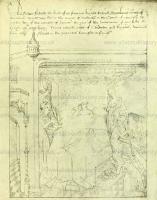
Beauchamp Pageant. [28th January 1382] 1. This Pagent sheweth the birth of the famous knyght Richard Beauchamp Erle of Warrewik which was born in the Maner of Salwarp in the Counte of Worcester the xxviij day of the Moneth of Januar'. the yere of the Incarnacion of our lorde Jhesu Criste mlccclxxxjl whose notable actes of chevalry and knyghtly demenaunce been also shewed in the pagentis hereafter ensuyng.
Note. The picture shows the Earl's mother,1 Margaret, daughter of William Lord Ferrers of Groby, sitting up in bed and looking towards her infant son, who is held, wrapped in swaddling clothes, by a lady of quality, wearing the large "butterfly" headdress. The bed has an ample coverlet, an embroidered tester, and a fringed celure, also embroidered, with the side curtains partly drawn and the end curtains gathered up out of the way. Next the lady with the babe sits a woman with a round cap, stirring some food in a saucepan over the fire.
On the opposite side of the room is a nurse in veiled cap approaching the bed and holding a basin, the contents of which she is stirring with a spoon. At the foot of the bed is another lady kneeling on the tiled floor before an open coffer and examining the spoons and standing cups contained therein, probably the birthday gifts to the new-born babe. On the extreme left is an entry, covered by a sparver, to a passage paved with tiles and lighted by a small window over the entrance.
Note 1. As was then the custom, the lady is not wearing any night-dress.
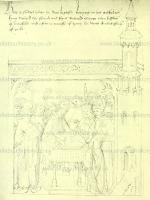
Beauchamp Pageant. [After 28th January 1382] 2. Here is shewed howe he [Richard Beauchamp 13th Earl Warwick] was baptised havyng to his godfadres Kyng Richard the secund and seynt Richard Scrope (age 32) then bisshop of lichefeld and after in processe of tyme. he was Archebisshop of Yorke.
Note. This picture shows the naked babe being dipped, discreetly and warily, into the font of baptism by a bishop vested in rochet, grey amess, cope with jewelled orphrey, and wearing a rich mitre. On the other side of the font stand the sponsors:1 King Richard in his crown and parliament robes with his right hand on the infant's head; the Bishop of Lichfield, mitred, and in gown and hooded tippet; and a lady of quality, the godmother probably, with butterfly headdress and long gown trimmed with ermine. Behind Ithe King stand his swordbearer and a nobleman, and to the left of the officiating bishop is a clerk or canon holding up the manual with the baptismal office, and on the bishop's right a canon, in cassock, surplice, and grey amess, bears the open chrismatory with the vessels of oil and cream for the anointing. Behind the bishop stand two other canons, one of whom holds the bishop's gloves and crosier, and in rear of them is a group of spectators. The font is shown with a six-sided shallow and arcaded bowl, supported by a central and six other round pillars standing on a simple plinth. On the extreme right is a flight of steps up to a vaulted entry into a tall round turret and across the top of the picture is a parapet of pierced quatrefoils.
Note 1. The babe was probably named Richard after the King and the Bishop.
On 28th January 1405 Philip "Good" Valois III Duke Burgundy (age 8) and Michelle Valois Duchess Burgundy (age 10) were married. She the daughter of Charles "Beloved Mad" VI King France (age 36) and Isabeau Wittelsbach Queen Consort France (age 35). He the son of John "Fearless" Valois Duke Burgundy (age 33) and Margaret Wittelsbach Duchess Burgundy (age 42). They were second cousins. He a great x 4 grandson of King Edward I of England. She a great x 5 granddaughter of King Henry III of England.
The Deeds of the Dukes of Normandy
The Gesta Normannorum Ducum [The Deeds of the Dukes of Normandy] is a landmark medieval chronicle tracing the rise and fall of the Norman dynasty from its early roots through the pivotal events surrounding the Norman Conquest of England. Originally penned in Latin by the monk William of Jumièges shortly before 1060 and later expanded at the behest of William the Conqueror, the work chronicles the deeds, politics, battles, and leadership of the Norman dukes, especially William’s own claim to the English throne. The narrative combines earlier historical sources with firsthand information and oral testimony to present an authoritative account of Normandy’s transformation from a Viking settlement into one of medieval Europe’s most powerful realms. William’s history emphasizes the legitimacy, military prowess, and governance of the Norman line, framing their expansion, including the conquest of England, as both divinely sanctioned and noble in purpose. Later chroniclers such as Orderic Vitalis and Robert of Torigni continued the history, extending the coverage into the 12th century, providing broader context on ducal rule and its impact. Today this classic work remains a foundational source for understanding Norman identity, medieval statesmanship, and the historical forces that reshaped England and Western Europe between 800AD and 1100AD.
Available at Amazon in eBook and Paperback format.
On 28th January 1450 William "Jackanapes" de la Pole 1st Duke of Suffolk (age 53) was imprisoned at Tower of London [Map].
On 28th January 1457 King Henry VII of England and Ireland was born to the late Edmund Tudor 1st Earl Richmond and Margaret Beaufort Countess Richmond (age 13) at Pembroke Castle [Map]. He a great x 3 grandson of King Edward III of England. He married 18th January 1486 his third cousin Elizabeth York Queen Consort England, daughter of King Edward IV of England and Elizabeth Woodville Queen Consort England, and had issue.


Historia Regis Henrici Septimi by Bernado Andrea. King Henry the Seventh was born, with Calixtus the Third as Roman pontiff and Henry the Sixth reigning in this realm with the highest favour of virtue and probity, to such a degree that even to the present day that blessed king, on account of the many miracles which God daily shows through his merits, is proclaimed far and wide by all; in the month of January, and on the seventeenth day before the Kalends of February [16th January 1457], indeed on the most auspicious day of the Second Feast Day of Saint Agnes1, and at the hour …
Natus est Henricus Rex Septimus [Calixto Tertio] Romano pontifice et Henrico Sexto regnante in hoc regno summa cum virtutis et probitatis gratia, usque adeo ut in hodiernum usque diem beatus ille rex ob multa quæ indies ejus meritis Deus ostendit miracula ab omnibus longe lateque prædicetur: mense vero Januarii, et Februarii kalend. decimoseptimo, die quidem Sanctæ Agnetis Secundæ faustissima, hora vero ....
Note 1. The Second Feast Day of St Agnes [Sanctæ Agnetis Secundæ] is the 28th of January. Possibly an error by the author, possibly by the transriber. The 'seventeenth day before the Ides of February' is the 28th of January.
Chronicle of John Benet. And the King held Christmas in London at the house of the Bishop of London. And on the fifth day before the Kalends of February (28th January 1461283), a parliament began, in which three barons were created: Lord John Neville was made Lord of Montagu, Lord Anthony, son of Lord Rivers, was made Lord Scales, Lord Humphrey Bourchier was made Lord Cromwell284.
Et Rex tenuit Natale in London in hospicio episcopi Londonensis. Et quinto Kal. Februarii incepit parliamentum in quo facti fuerunt iijes Barones: dominus Johannes Nevylle factus est dominus de Montagew, dominus Antonius filius domini de la Ryverys factus est dominus la Scalys, et dominus Humfredus Bowcer factus est dominus la Crumvelle. Et in crastino Purificacionis beate Marie prorogatum est parliamentum usque quartam diem Maii.
Note 283. 28 January 1461. This session of parliament, which is otherwise referred to only by Bale's Chronicle in S.T.C., p. 153, was surmised by J. C. Wedgwood, History of Parliament, Register, p. 266, n. 2.
Note 284. The dates of these peerages have hitherto been derived from the first writs of summons to parliament which were, in Lord Montague's case 23 May 1461, in Lord Cromwell's 25 July 1461 and in Lord Scales's 22 December 1462 (Complete Peerage, ix, p. 89, iii, p. 554, Xi, p. 507).
On 28th January 1479 Eleanor Trastámara Queen Consort Navarre (age 52) was crowned Queen Consort Navarre.
House of Lords Journal Volume 1 1542. The ninth day of Parliament.
MEMORANDUM, that on Saturday, namely the 28th day of January [1542], the Lords, both Spiritual and Temporal, whose names are written below, were present:
The Most Reverend Father in Christ, the Archbishop of Canterbury, the Archbishop of York, the Bishop of London, the Lord Bishop of Durham, the Lord Bishop of Winchester, the Bishop of Exeter, the Lord Bishop of Lincoln, the Bishop of Bath and Wells, the Lord Bishop of Ely, the Lord Bishop of Chichester, the Bishop of Norwich, the Lord Bishop of St Davids (Menevia), the Bishop of St Asaph, the Lord Bishop of Llandaff, the Bishop of Carlisle, the Lord Bishop of Salisbury, the Bishop of Worcester, the Bishop of Coventry and Lichfield, the Lord Bishop of Hereford, the Lord Bishop of Rochester, the Lord Bishop of Westminster, the Lord Bishop of Gloucester, the Lord Bishop of Peterborough, the Lord Bishop of Chester.
The Lord Audley of Walden, Lord Chancellor, the Duke of Norfolk, Lord High Treasurer of England, the Duke of Suffolk, Lord Great Steward of the King’s Household, the Marquess of Dorset, the Earl of Southampton, Lord Privy Seal, the Earl of Sussex, Lord Great Chamberlain of England, the Earl of Arundel, the Earl of Oxford, the Earl of Westmorland, the Earl of Shrewsbury, the Earl of Derby, the Earl of Worcester, the Earl of Cumberland, the Earl of Rutland, the Earl of Huntingdon, the Earl of Bath, the Earl of Hertford, the Earl of Bridgewater.
The Lord Russell, Lord High Admiral of England, Lord Audley, Lord Zouche, the Lord De La Warr, the Lord Morley, the Lord Dacre, Lord Cobham, Lord Mantravers, the Lord Ferrers, the Lord Poyntz, the Lord Clinton, the Lord Stourton, the Lord Scrope, the Lord Latimer, Lord Grey of Wilton, Lord Mountjoy, Lord Lumley, Lord Monteagle, Lord Sands, the Lord Windsor, the Lord Wentworth, the Lord Burgh, Lord Mordaunt, Lord Saint John, the Lord Parr, the Lord Cromwell.
House to proceed with Caution on the Bill for attainting the late Queen.
Committee named to examine the Queen.
Today the Lord Chancellor declared to the other magnates and peers how great a care it behooves them to exercise, lest by a hasty judgment they proceed with that Bill of Attainder against the Queen and certain others, which has thus far been read only once; but that they should remember that the Queen is by no means a humble or private person, but a distinguished and public one. And therefore her cause must be judged with such sincerity that there be no place for suspicion or for complaint thereafter, nor should any opportunity for purgation be lacking, if by any reasoning or counsel she might be able to mitigate her crime. Accordingly, it seemed to him that it would by no means be without purpose if certain leading men, both from among the Lords and from the Commons, were again delegated to the Queen, partly to rehearse the case, partly to remove womanly timidity; to admonish and exhort her that with a present and composed mind she should say whatever might be able to make her cause the better; and that she should know for certain that the Prince is favorable, the laws equitable; and that those sent to her have been dispatched chiefly for this purpose, that they might report her just purgation, which would be most welcome to a most loving Prince; but if not, then at least that they should bring back to His Majesty some answer, of whatever kind, provided it be true. After this counsel of the Chancellor had been set forth to all, the minds of all agreed so well that immediately, by common consent, they chose the Archbishop of Canterbury, Charles Duke of Suffolk, Lord Great Steward of the Household of the King, William Earl of Southampton, Lord Privy Seal, and the Bishop of Westminster; who, if at that time it should seem good to the Royal Majesty to approve their counsel in this matter, would, after one day or two, go to the Queen, to handle the present business according to their prudence, as so great a matter required to be handled and judged. It was decreed, however, that in the meantime the judgment of the Royal Majesty should be sought.
Nonus dies Parliamenti.
MEMORANDUM, quod die Sabbati, videlicet, 28 die Januarii, Proceres tam Spirituales quam Temporales, quorum nomina subscribuntur, presentes fuerunt:
p. Reverendissimus in Christo Pater Archiepus. Cantuarien. Archiepus. Eboracen. Epus. London. p. Epus. Dunelmen. p. Epus. Winton. Epus. Exon. p. Epus. Lincoln. Epus. Bath. et Wellen. p. Epus. Elien. p. Epus. Cicestren. Epus. Norwicen. p. Epus. Meneven. Epus. Assaven. p. Epus. Landaven. Epus. Carliolen. p. Epus. Sar. Epus. Wigorn. Epus. Coven. et Lich. p. Epus. Hereforden. p. Epus. Roffen. p. Epus. Westm. p. Epus. Gloucestren. p. Epus. Peterburgen. p. Epus. Cestren.
p. Ds. Audeley de Walden, Canc. p. Dux Norff. Magnus Thesaurarius Anglie. p. Dux Suff. Magnus Magister Hospitii Dni. nostri Regis. p. Marchio Dorss. p. Comes Southampton, Ds. Privati Sigilli. p. Comes Sussex, Magnus Camerarius Anglie. Comes Arundell. Comes Oxon. Comes Westmerland. p. Comes Salopp. p. Comes Derbye. Comes Wigorn. Comes Cumbreland. p. Comes Rutland. p. Comes Huntingdon. Comes Bath. p. Comes Hertforde. p. Comes Bridgewater.
p. Ds. Russell, Magnus Admirallus Anglie. Ds. Audeley. Ds. Zouche. p. Ds. Dallawarr. p. Ds. Morley. p. Ds. Dacres. Ds. Cobham. Ds. Mantravers. p. Ds. Ferrers. p. Ds. Poys. p. Ds. Clinton. p. Ds. Stourton. p. Ds. Scrope. p. Ds. Latimer. Ds. Gray de Wilton. Ds. Mountjoy. Ds. Lomeley. Ds. Mountegle. Ds. Sands. p. Ds. Windesore. p. Ds. Wentwoorthe. p. Ds. Burgh. Ds. Mordaunte. Ds. Saint John. p. Ds. Parr. p. Ds. Crumwell.
HODIE Dominus Cancellarius declaravit reliquis Magnatibus et Proceribus, quantam illos curam adhibere deceat, ut ne prepropero Judicio procedatur ad Billam illam de Attinctura Regine, et quorundam aliorum, que unica tantum vice hactenus est lecta; sed meminerint Reginam haudquaquam esse personam humilem aut privatam, sed preclaram et publicam; ideoque ejus Causam cum ea sinceritate esse judicandam, ut neque Suspicioni sit locus aut Querele postliminio, neque Purgationi locus desit, si qua forte Ratione, aut quo Consilio, poterit ipsa Crimen suum elevare: Itaque sibi visum esse, non abs re futurum omnino, si aliqui Primarii Viri, tum ex Magnatibus, tum ex Communibus, ad Reginam denuo delegentur, partim ut Causam repetant, partim ut Muliebrem adiment Timiditatem; moneant atque hortentur ut presente Animo dicat quicquid Causam poterit facere meliorem; certo sciat propitium esse Principem, equabiles Leges; tum ipsos ad se missos hoc nomine potissimum, ut justam illius referant Purgationem, que amantissimo Principi futura sit longe desideratissima; sin minus, tandem ut Responsum qualecunque, dummodo verum, ad suam Majestatem reportent. Istud Cancellarii Consilium, postquam omnibus expositum esset, omnium Animus tam bene cessit, ut e vestigio, communibus Suffragiis, elegerint Archiepiscopum Cantuariensem, Carolum Ducem Suff. Magnum Magstrum Hospitii Domini Regis, Willielmum Comitem South. Dominum Privati Sigilli, et Episcopum Westm. qui, si tum visum erit Regie Majestati eorum Consilium in hac parte approbare, post unum atque alterum diem, ad Reginam se conferrent, presens Negocium tractaturi, pro eorum Prudentia, quemadmodum Res tanta tractari et judicari postulaverit. Decretum est autem, interea temporis, Regie Majestatis Sententiam sciscitari.
Become a Member via our Buy Me a Coffee page to read more.
On 28th January 1547 Henry VIII (age 55) died at Whitehall Palace [Map]. His son Edward (age 9) succeeded VI King of England. Earl Chester merged with the Crown.
Thomas Wendy (age 46) attended the King. He was one of the witnesses to the King's last will and testament, for which he received £100.


Annales of England by John Stow. 28th January 1547. Edward (age 9) the first borne at Hampton court [Map] (by the decease of k. Henry (age 55) his father) began his raigne the 28 of January, and was proclaimed k. of England, France and Ireland, defender of the faith, and of the churches of England and also of Ireland the supreme head immedlatly in earth under God, & on the last day of January, in the yere of Christ after the Church of England 1546 but after the accompt of them that begin the yere at Christmas 1547 being then of the age of nine yéeres. And the same day in the afternoone the saide young king came to the tower of London [Map] from Hertford, and rode into the City at Aldgate, and so along the wall by the crossed Friars [Map] to the Tower hill, & entred at the red bulwarke [Map], where be was received by sir John Gage (age 67) constable of the tower, and the lieutenant on horseback, the Earle of Hertford (age 47) riding before the king, and sir Anthony Browne (age 47) riding after him: and on the bridge next the warde gate, the archbishop of Canterbury (age 57), the lorde Chancellor (age 41), with other great lords of the Councell received him, and so brought him to his chamber of pretence, there they were sworne to his majesty.


Ellis' Letters. [On or after 28th January 1547] Henry Radclyf (age 40), Earl of Sussex, to his Countess (age 26), notifying the death of Henry the Eighth. A. D. 1547.
MS. COTTON. TITUS B. ii. fol 51. Orig.
Madame with most lovyng and hertie commendacions, thies be to signifie unto you that our late Soveraigne Lord the King departed at Westminster uppon Friday last the xxviijti. of this instant Januarie about two of the clock in the mornyng. And the Kings Majestic that nowe is proclaymed King this present last day of the same moneth. And lik as for the departure of th'on wee may lament, so for th^establisshment of thother to all our comforts we may rejoyce. The names of his Executours ar th'archbischop of Canterburie, the Lord Wriothesley lord Chauncelor of Englond, the Lord St. John lord president of the Counsaile and Gret Master, the Lord Russell Lord Privie Seale, the Erie of Hertford lord Great Chamberlein of Englond, the Viscount Lesley lord Admiral, the bisshop of Derham, Mr. Secretarie Paget, Sir Anthonie Denie, Sir Anthonie Browne, Sir William Herbert, The Chief Justice of the Common Place, Bromley another Justice ther, Sir Thomas Baker Chauncelor of the tenthes, Sir Edward North, and divers other aidours to the same, which for lak of tyme I pretermit. The Parliament is clerely dissolved: the Terme and all writs closed. The Court is nowe at the Tower from whtiis the Kings Majestic tomorrow shalbe receyved and conducted to his Hous Derehamplace. His Hyghnes Coronacion shalbe at Shrovetyme.
For my oone matiers hetherto, thorough the gret and diligent busines that my lord Chauncelor hath had, I could espye no tyme mete to the purpoos; but shal nevertheles as sone as oportunitie may serve set forth the same. And for your repaire hether in th'end of this weke I shall send unto you Henry Northey, by whom you shal knowe my determynat pleasur. In the meane tyme I require you to put all soch things in order as shalbe mete for you here.
Thus, good Madame albeit the contents of your Lettres diverslie at length tending to the lak of good wil in me that ought to be in a lovyng husband; the same nevertheles as I think preceding of a good hert might otherwise have bin qualified I wisse to you my owne hert as to my self. From Eliplace in Holborne the last day of January in the first yere of the reigneof our Sqveraigne King Edward the Sixeth.
Your assured lovyng husbond
Henry Sussex. To my wief the Countas of Sussex.
Become a Member via our Buy Me a Coffee page to read more.
Wriothesley's Chronicle [1508-1562]. 28th January 1552. The 28 of January Sir Thomas Arundell (age 50), knight, was arraigned at Westminster, and condempned for fellonie, and had judgment to be hanged.
Henry Machyn's Diary. 28th January 1552. The xxviij day of January was reynyd sir Thomas Arundell (age 50) knyght, and so the qwest cold nott fynd ym tyll the morow after, and so he whent to the Towre agayn, and then the qwest wher shutt up tyll the morow with-owt mett or drynke, or candylle or fyre, and on the morow he cam a-gayne, and the qwest qwytt ym of tresun, and cast hym of felony to be hangyd,-the v king Edward vjth.
On 28th January 1554 the Battle of Hartley was fought at Hartley Sevenoaks, Kent between a rebel force of Wyatt's Rebellion led by Henry Isley (age 54) and a loyal royalist force led by Henry Neville 6th and 4th Baron Abergavenny (age 24) and Robert Southwell (age 48). The rebels were defeated. Rebel Anthony Knyvet (age 37) fought and was captured.

Henry Machyn's Diary. 28th January 1554. The xxviij day of January the Quen('s) (age 37) grace dyd send to master Wyatt (age 33) [and his company the] master of the horsse (age 33) and master Cornwales, to know their intentt; and thay send word that they wold have the Quen and the Towre in kepyng, and odur thynges.
Chronicle of Geoffrey le Baker of Swinbroke
Baker was a secular clerk from Swinbroke, now Swinbrook, an Oxfordshire village two miles east of Burford. His Chronicle describes the events of the period 1303-1356: Gaveston, Bannockburn, Boroughbridge, the murder of King Edward II, the Scottish Wars, Sluys, Crécy, the Black Death, Winchelsea and Poitiers. To quote Herbert Bruce 'it possesses a vigorous and characteristic style, and its value for particular events between 1303 and 1356 has been recognised by its editor and by subsequent writers'. The book provides remarkable detail about the events it describes. Baker's text has been augmented with hundreds of notes, including extracts from other contemporary chronicles, such as the Annales Londonienses, Annales Paulini, Murimuth, Lanercost, Avesbury, Guisborough and Froissart to enrich the reader's understanding. The translation takes as its source the 'Chronicon Galfridi le Baker de Swynebroke' published in 1889, edited by Edward Maunde Thompson.
Available at Amazon in eBook and Paperback format.
On 28th January 1571 Anne Bourchier 7th Baroness Bourchier (age 54) died from a fall from a horse at Benington, Hertfordshire. Her first cousin twice removed Walter (age 29) succeeded 8th Baron Bourchier. Lettice Knollys Countess Essex and Leicester (age 27) by marriage Baroness Bourchier.


Samuel Pepys' Diary. 28th January 1660. Saturday. I went to Mr Downing (age 35) and carried him three characters, and then to my office and wrote another, while Mr. Frost staid telling money. And after I had done it Mr. Hawly came into the office and I left him and carried it to Mr Downing, who then told me that he was resolved to be gone for Holland this morning. So I to my office again, and dispatch my business there, and came with Mr. Hawly to Mr Downing's lodging, and took Mr. Squib from White Hall in a coach thither with me, and there we waited in his chamber a great while, till he came in; and in the mean time, sent all his things to the barge that lay at Charing-Cross Stairs. Then came he in, and took a very civil leave of me, beyond my expectation, for I was afraid that he would have told me something of removing me from my office; but he did not, but that he would do me any service that lay in his power. So I went down and sent a porter to my house for my best fur cap, but he coming too late with it I did not present it to him. Thence I went to Westminster Hall [Map], and bound up my cap at Mrs. Michell's, who was much taken with my cap, and endeavoured to overtake the coach at the Exchange [Map] and to give it him there, but I met with one that told me that he was gone, and so I returned and went to Heaven1, where Luellin and I dined on a breast of mutton all alone, discoursing of the changes that we have seen and the happiness of them that have estates of their own, and so parted, and I went by appointment to my office and paid young Mr. Walton £500; it being very dark he took £300 by content. He gave me half a piece and carried me in his coach to St. Clement's [Map], from whence I went to Mr. Crew's (age 62) and made even with Mr. Andrews, and took in all my notes and gave him one for all. Then to my Lady Wright and gave her Lord's (age 34) letter which he bade me give her privately. So home and then to Will's for a little news, then came home again and wrote to Lord, and so to Whitehall and gave them to the post-boy. Back again home and to bed.
Note 1. A place of entertainment within or adjoining Westminster Hall [Map]. It is called in "Hudibras", "False Heaven, at the end of the Hall". There were two other alehouses near Westminster Hall, called Hell and Purgatory. "Nor break his fast In Heaven and Hell". Ben Jonson's Alchemist, act V. SC. 2.


Become a Member via our Buy Me a Coffee page to read more.
On 28th January 1661 the remains of Oliver Cromwell, Henry Ireton and John Bradshaw were exhumed and mutilated in a posthumous execution.


Samuel Pepys' Diary. 28th January 1661. At the office all the morning; dined at home, and after dinner to Fleet Street, with my sword to Mr. Brigden (lately made Captain of the Auxiliaries) to be refreshed, and with him to an ale-house, where I met Mr. Davenport; and after some talk of Cromwell, Ireton and Bradshaw's bodies being taken out of their graves to-day1, I went to Mr. Crew's (age 63) and thence to the Theatre [Map], where I saw again "The Lost Lady", which do now please me better than before; and here I sitting behind in a dark place, a lady spit backward upon me by a mistake, not seeing me, but after seeing her to be a very pretty lady, I was not troubled at it at all. Thence to Mr. Crew's, and there met Mr. Moore, who came lately to me, and went with me to my father's, and with him to Standing's, whither came to us Dr. Fairbrother, who I took and my father to the Bear and gave a pint of sack and a pint of claret.
Note 1. "The bodies of Oliver Cromwell, Henry Ireton, John Bradshaw, and Thomas Pride, were dug up out of their graves to be hanged at Tyburn [Map], and buried under the gallows. Cromwell's vault having been opened, the people crowded very much to see him".-Rugge's Diurnal.
Diary of John Nicoll. [28th January 1661] The tyme of this Parliament, viz. in Januar 1661, thele odious carcages of Oliver Cromwell, Henry Iretoun, and Johnne Braidfchaw, wer takin out of thair graves, layd upon feverall kairtes, drawn and dragged to Tyborne, pulled out of thair coffynes, and hangit up at the feverall angellis of that tripill trie, quhair thai hang till the fun wes doun; thaireftir thai wer cut doun, thair heidis cuttit of, and thair loathfum carcages caffin in to ane deep hoill under the gallous, and thair heidis put up on poles.
Samuel Pepys' Diary. 28th January 1663. So to dinner and abroad with my wife, carrying her to Unthank's, where she alights, and I to my Lord Sandwich's (age 37), whom I find missing his ague fit to-day, and is pretty well, playing at dice (and by this I see how time and example may alter a man; he being now acquainted with all sorts of pleasures and vanities, which heretofore he never thought of nor loved, nor, it may be, hath allowed) with Ned Pickering (age 45) and his page Laud.
Samuel Pepys' Diary. 28th January 1666. And up again about six (Lord's day), and being dressed in my velvett coate and plain cravatte took a Hackney coach provided ready for me by eight o'clock, and so to my Lord Bruncker's (age 46) with all my papers, and there took his coach with four horses and away toward Hampton Court [Map], having a great deale of good discourse with him, particularly about his coming to lie at the office, when I went further in inviting him to than I intended, having not yet considered whether it will be convenient for me or no to have him here so near us, and then of getting Mr. Evelyn (age 45) or Sir Robert Murray (age 58) into the Navy in the room of Sir Thomas Harvey (age 40).


Samuel Pepys' Diary. 28th January 1666. As we were going further, in comes my Lord Mandeville (age 31), so we were forced to breake off and I away, and to Sir W. Coventry's (age 38) chamber, where he not come in but I find Sir W. Pen (age 44), and he and I to discourse. I find him very much out of humour, so that I do not think matters go very well with him, and I am glad of it. He and I staying till late, and Sir W. Coventry not coming in (being shut up close all the afternoon with the Duke of Albemarle (age 57)), we took boat, and by water to Kingston [Map], and so to our lodgings, where a good supper and merry, only I sleepy, and therefore after supper I slunk away from the rest to bed, and lay very well and slept soundly, my mind being in a great delirium between joy for what the King (age 35) and Duke (age 32) have said to me and Sir W. Coventry, and trouble for my Lord Sandwich's (age 40) concernments, and how hard it will be for me to preserve myself from feeling thereof.


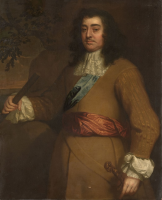
Samuel Pepys' Diary. 28th January 1666. I walked with them quite out of the Court into the fields, and then back to my Lord Sandwich's (age 40) chamber, where I find him very melancholy and not well satisfied, I perceive, with my carriage to Sir G. Carteret (age 56), but I did satisfy him and made him confess to me, that I have a very hard game to play; and told me he was sorry to see it, and the inconveniences which likely may fall upon me with him; but, for all that, I am not much afeard, if I can but keepe out of harm's way in not being found too much concerned in my Lord's or Sir G. Carteret's matters, and that I will not be if I can helpe it. He hath got over his business of the prizes, so far as to have a privy seale passed for all that was in his distribution to the officers, which I am heartily glad of; and, for the rest, he must be answerable for what he is proved to have. But for his pardon for anything else, he thinks it not seasonable to aske it, and not usefull to him; because that will not stop a Parliament's mouth, and for the King (age 35), he is sure enough of him. I did aske him whether he was sure of the interest and friendship of any great Ministers of State and he told me, yes.
Samuel Pepys' Diary. 28th January 1666. The Council being up, out comes the King (age 35), and I kissed his hand, and he grasped me very kindly by the hand. The Duke (age 32) also, I kissed his, and he mighty kind, and Sir W. Coventry (age 38). I found my Lord Sandwich (age 40) there, poor man! I see with a melancholy face, and suffers his beard to grow on his upper lip more than usual. I took him a little aside to know when I should wait on him, and where: he told me, and that it would be best to meet at his lodgings, without being seen to walk together. Which I liked very well; and, Lord! to see in what difficulty I stand, that I dare not walk with Sir W. Coventry, for fear my Lord or Sir G. Carteret (age 56) should see me; nor with either of them, for fear Sir W. Coventry should.
The Deeds of the Dukes of Normandy
The Gesta Normannorum Ducum [The Deeds of the Dukes of Normandy] is a landmark medieval chronicle tracing the rise and fall of the Norman dynasty from its early roots through the pivotal events surrounding the Norman Conquest of England. Originally penned in Latin by the monk William of Jumièges shortly before 1060 and later expanded at the behest of William the Conqueror, the work chronicles the deeds, politics, battles, and leadership of the Norman dukes, especially William’s own claim to the English throne. The narrative combines earlier historical sources with firsthand information and oral testimony to present an authoritative account of Normandy’s transformation from a Viking settlement into one of medieval Europe’s most powerful realms. William’s history emphasizes the legitimacy, military prowess, and governance of the Norman line, framing their expansion, including the conquest of England, as both divinely sanctioned and noble in purpose. Later chroniclers such as Orderic Vitalis and Robert of Torigni continued the history, extending the coverage into the 12th century, providing broader context on ducal rule and its impact. Today this classic work remains a foundational source for understanding Norman identity, medieval statesmanship, and the historical forces that reshaped England and Western Europe between 800AD and 1100AD.
Available at Amazon in eBook and Paperback format.
Samuel Pepys' Diary. 28th January 1668. At noon home to dinner, and after dinner set my wife and girl down at the Exchange [Map], and I to White Hall; and, by and by, the Duke of York (age 34) comes, and we had a little meeting, Anglesey, W. Pen, and I there, and none else: and, among other things, did discourse of the want of discipline in the fleete, which the Duke' of York confessed, and yet said that he, while he was there, did keep it in a good measure, but that it was now lost when he was absent; but he will endeavour to have it again. That he did tell the Prince and Duke of Albemarle (age 59) they would lose all order by making such and such men commanders, which they would, because they were stout men: he told them that it was a reproach to the nation, as if there were no sober men among us, that were stout, to be had. That they did put out some men for cowards that the Duke of York had put in, but little before, for stout men; and would now, were he to go to sea again, entertain them in his own division, to choose: and did put in an idle fellow, Greene, who was hardly thought fit for a boatswain by him: they did put him from being a lieutenant to a captain's place of a second-rate ship; as idle a drunken fellow, he said, as any was in the fleete. That he will now desire the King (age 37) to let him be what he is, that is, Admirall; and he will put in none but those that he hath great reason to think well of; and particularly says, that; though he likes Colonell Legg well, yet his son that was, he knows not how, made a captain after he had been but one voyage at sea, he should go to sea another apprenticeship, before ever he gives him a command. We did tell him of the many defects and disorders among the captains, and I prayed we might do it in writing to him, which he liked; and I am glad of an opportunity of doing it.
On 28th January 1674 Jean Ranc was born. He married 13th June 1715 Marguerite Elisabeth Rigaud.
On 28th January 1678 Philip "Infamous Earl" Herbert 7th Earl Pembroke 4th Earl Montgomery (age 26) was imprisoned at Tower of London [Map] by King Charles II of England Scotland and Ireland (age 47) "for uttering such horrid and blasphemous words, and other actions proved upon oath, as are not fit to be repeated in any Christian assembly". He was released two days later on 30th January 1678.
John Evelyn's Diary. 28th January 1682. Mr. Pepys (age 48), late Secretary to the Admiralty, showed me a large folio containing the whole mechanic part and art of building royal ships and men-of-war, made by Sir Anthony Dean (age 48), being so accurate a piece from the very keel to the lead block, rigging, guns, victualing, manning, and even to every individual pin and nail, in a method so astonishing and curious, with a draught, both geometrical and in perspective, and several sections, that I do not think the world can show the like. I esteem this book as an extraordinary jewel.


John Evelyn's Diary. 28th January 1685. I was invited to my Lord Arundel of Wardour (age 52), (now newly released of his 6 yeares confinement in ye Tower [Map] on suspicion of the Plot call'd Oates's Plot), where after dinner the same Mr. Pordage entertain'd us with his voice, that excellent and stupendous artist Sign' Jo. Baptist playing to it on the harpsichord. My daughter Mary (age 20) being with us, she also sung to the greate satisfaction of both the masters, and a world of people of quality present. She did so also at my Lord Rochester's (age 42) the evening following, where we had the French Boy so fam'd for his singing, and indeede he had a delicate voice, and had ben well taught. I also heard Mrs. Packer (daughter to my old friend) sing before his Ma* and the Duke, privately, that stupendous basse Gosling accompanying her, but hers was so loud as tooke away much of the sweetnesse. Certainly never woman had a stronger or better eare, could she possibly have govern'd it. She would do rarely in a large church among the nunns.


Calendar of State Papers Charles II 28 Jan 1668. 28th January 1688. Whitehall. Warrant for a grant to Francis Earl of Shrewsbury of pardon for killing William Jenkins, and for all duels, assaults, or batteries on George Duke of Buckingham, Sir John Talbot (age 57), Sir Robert Holmes (age 66), or any other, whether indicted or not for the same, with restitution of lands, goods, &. [S.P. Dom., Entry Book 28, f. 12.]


Roger Whitley's Diary. 28th January 1690. Tuesday, went to Lord Delamer (age 38) (with G.Mainwaring (age 47)) then to the Treasurer of Chambers office; spoke with Hall about my warrants; he hath them all together (being 5 & the summe 336:6:6) I went to Lord Shrewsbury's office, spoke with Vernon about the Mayor of Chester's having Pooles Armes; went with G.Mainwaring & Elwyn to London; then to Mosier; then to [fo. 114r] Jan: the Sunne with the spectacle maker; there were 2 Radfords; gave them a bottle of wine; I dined at Pontacks with Mainwaring my sonne (age 39) & 2 Edisbury's; went (with 2 Mainwarings) to the Post office. there was Wildman & his sonne; then to the Sunne Taverne; there were 2 Edisbury's, my sonne, Dashwood, 2 Mainwarings, Hannibal Baskerville, Monteage & another (the 2 last went first) Mainwaring & I left them neare 8, went to Nag's Head; there was Wood, Titus, Harris, Craven, Maxwell, Partridge &c; parted past 9; found Biddolph at home.
On 28th January 1697 John Fenwick 3rd Baronet (age 52) was beheaded for his part in the 1696 Plot to Assassinate King William III. He was buried at St Martin in the Fields Church [Map]. Baronet Fenwick of Fenwick in Northumberland extinct. He was the last person to be executed under an Act of Attainder.
Robert Burdett 3rd Baronet (age 57) had spoken against the attainder in Parliament.

On 28th January 1704 Louis Lorraine was born to Leopold Duke of Lorraine (age 24) and Élisabeth Charlotte Bourbon Duchess Lorraine (age 27). He a great x 3 grandson of King James I of England and Ireland and VI of Scotland. He died aged seven in 1711.

Minutes of the Society of Antiquaries. 28th January 1719. Ordered by the Society that Mr George Vertue (age 35) Print off 100 Exemplar of the Font for a further Dividend to the Subscribers.
After 28th January 1763. Monument to Ann Isted (deceased) at the Church of St Mary Magdalene, Ecton [Map] possibly sculpted Henry Cheere 1st Baronet (age 60).
Ann Isted: On 26th February 1683 she was born to Ambrose Isted and Sarah Feltham. On 28th January 1763 she died unmarried.


On 28th January 1768 Frederick VI King of Denmark and Norway was born to Christian VII King of Denmark and Norway (age 18) and Caroline Matilda Hanover Queen Consort Denmark and Norway (age 16). He a great grandson of King George II of Great Britain and Ireland. Coefficient of inbreeding 6.66%. He married 31st July 1790 his first cousin Marie Sophie Hesse-Kassel Queen Consort Denmark and Norway, daughter of Charles Hesse-Kassel and Louise Oldenburg.
On 28th January 1775 Charlotte Susan Maria Campbell was born to John Campbell 5th Duke Argyll (age 51) and Elizabeth Gunning Duchess Hamilton and Argyll (age 41). She married 14th June 1796 John Campbell 4th of Islay and had issue.


On 27th December 1777 George Irby 3rd Baron Boston was born to Frederick Irby 2nd Baron Boston (age 28) and Christian Methuen. He was baptised on 28th January 1778; King George III of Great Britain and Ireland (age 39) was his godfather. He married 17th October 1801 Rachel Ives Drake Baroness Boston and had issue.


Chronicle of a Bourgeois of Valenciennes
Récits d’un bourgeois de Valenciennes aka The Chronicle of a Bourgeois of Valenciennes is a vivid 14th-century vernacular chronicle written by an anonymous urban chronicler from Valenciennes in the County of Hainaut. It survives in a manuscript that describes local and regional history from about 1253 to 1366, blending chronology, narrative episodes, and eyewitness-style accounts of political, military, and social events in medieval France, Flanders, and the Low Countries. The work begins with a chronological framework of events affecting Valenciennes and its region under rulers such as King Philip VI of France and the shifting allegiances of local nobility. It includes accounts of conflicts, sieges, diplomatic manoeuvres, and the impact of broader struggles like the Hundred Years’ War on urban life in Hainaut. Written from the perspective of a burgher (bourgeois) rather than a monastery or royal court, the chronicle offers a rare lay viewpoint on high politics and warfare, reflecting how merchants, townspeople, and civic institutions experienced the turbulence of the 13th and 14th centuries. Its narrative style combines straightforward reporting of events with moral and civic observations, making it a valuable source for readers interested in medieval urban society, regional politics, and the lived experience of war and governance in pre-modern Europe.
Available at Amazon in eBook and Paperback format.
After 28th January 1791. St Mary's Church, Fawsley [Map]. Monument to Lucius Knightley (deceased) and Charles Knightley sculpted by Richard "The Elder" Westmacott (age 44).
Charles Knightley: On 29th October 1753 he was born to Valentine Knightley. On 28th June 1787 Charles Knightley died.


On 28th January 1813 Jane Austen's (age 37) novel Pride and Prejudice was first published by Thomas Egerton Publisher of Whitehall.

After 28th January 1813. Memorial at St Peter's Church, Tawstock [Map] to Anne Osborn Lady Wrey (deceased).
Anne Osborn Lady Wrey: In 1763 she was born to John Osborn. In January 1793 Bourchier Wrey 7th Baronet and she were married. She by marriage Lady Wrey of Trebitch in Cornwall. On 28th January 1813 she died.
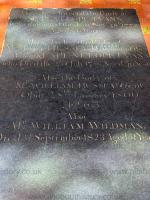
St Albans Cathedral [Map]. Ledger stone of Penelope Evans died 28th November 1778, her daughter Mary Husseydied 2nd July 1789, William Hussey died 28th January 1800 and William Wildman died 3rd September 1823.
On 28th January 1838 Edward Cavendish was born to William Cavendish 7th Duke Devonshire (age 29) and Blanche Georgiana Howard (age 26) at Marylebone. Coefficient of inbreeding 1.65%. He married 3rd August 1865 his first cousin Emma Elizabeth Lascelles, daughter of William Lascelles and Caroline Georgiana Howard, and had issue.


On 28th January 1839 William Beechey (age 85) died.

On 28th January 1842 William Henry Vane 1st Duke Cleveland (age 75) died. He was buried at St Mary's Church, Staindrop [Map]. His son Henry (age 54) succeeded 2nd Duke of Cleveland, 2nd Marquess of Cleveland, 4th Earl Darlington, 4th Viscount Barnard, 6th Baron Barnard, 2nd Baron Raby of Raby Castle in County Durham. Sophia Paulett Duchess of Cleveland (age 56) by marriage Duchess of Cleveland.
After 28th January 1842. Monument to William Henry Vane 1st Duke Cleveland (deceased) in St Mary's Church, Staindrop [Map]. Sculpted by Richard Westmacott (age 66).
The armorial being  Vane Arms quartered with
  Charles Fitzroy 1st Duke Southampton 2nd Duke Cleveland 1662 1730 Arms. His paternal grandmother being Grace Fitzroy Countess Darlington, grand-daughter of King Charles II of England Scotland and Ireland by his mistress Barbara Villiers 1st Duchess of Cleveland hence the Baton Sinister.


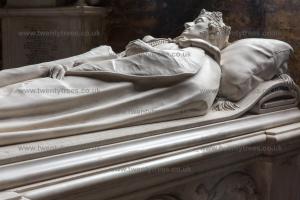


The Diary of George Price Boyce 1853. 28th January 1853. Went to Gabriel Rossetti's (age 24) studio to see his Annunciation picture, which was exhibited at the National Institution the year I was laid up with my hip. He has been painting on it since, and sent it off (to Dublin) whilst I was there. The Virgin one of, if not the most exquisite conception I have yet seen, her head, golden hair and blue eyes (although painted from his sister [Christina Georgina Rossetti (age 22)] who is darkish) full of intense thought and awakened and growing religious awe, almost my ideal of a woman's head, and much like Lizzie Ridley. The white drapery with which she is clad beautifully treated. The Angel standing upright in a long robe unsubstantial and with flames under his feet not so satisfactory. I asked him to get me a cast of Woolner's (age 27) model for a monument to Wordsworth and of his medallion of Carlyle, and commissioned of him a drawing from Dante. Had a long chat with him about Turner, for whose work I was sorry and surprised to find he had not the highest possible admiration.


On 28th January 1859 Frederick John Robinson 1st Earl Ripon (age 76) died. He has a monument at All Saints' Church, Nocton [Map] sculpted by Matthew Noble (age 41). His son George (age 31) succeeded 2nd Earl Ripon, 2nd Viscount Gooderich of Nocton in Lincolnshire. Henrietta Anne Theodosia Vyner Marchioness Ripon (age 25) by marriage Countess Ripon.
Henrietta Anne Theodosia Vyner Marchioness Ripon: On 17th April 1833 she was born to Henry Vyner and Mary Gertude Robinson. On 8th April 1851 George Frederick Samuel Robinson 1st Marquess Ripon and she were married. He the son of Frederick John Robinson 1st Earl Ripon and Sarah Albinia Louisa Hobart. They were first cousin once removed. In 1871 George Frederick Samuel Robinson 1st Marquess Ripon was created 1st Marquess Ripon. She by marriage Marchioness Ripon. On 28th February 1907 Henrietta Anne Theodosia Vyner Marchioness Ripon died.


Chronicle of Walter of Guisborough
A canon regular of the Augustinian Guisborough Priory, Yorkshire, formerly known as The Chronicle of Walter of Hemingburgh, describes the period from 1066 to 1346. Before 1274 the Chronicle is based on other works. Thereafter, the Chronicle is original, and a remarkable source for the events of the time. This book provides a translation of the Chronicle from that date. The Latin source for our translation is the 1849 work edited by Hans Claude Hamilton. Hamilton, in his preface, says: 'In the present work we behold perhaps one of the finest samples of our early chronicles, both as regards the value of the events recorded, and the correctness with which they are detailed; Nor will the pleasing style of composition be lightly passed over by those capable of seeing reflected from it the tokens of a vigorous and cultivated mind, and a favourable specimen of the learning and taste of the age in which it was framed.'
Available at Amazon in eBook and Paperback format.
The Times. 13th February 1867. DEATH OF LORD FEVERSHAM. We regret to announce the death, after a short illness, of Lord Feversham (deceased), which occurred on Monday night at his residence in Great Cumberland Street. The late William Duncombe Baron Feversham, of Dancombe Park, County York, in the Peerage of the United Kingdom, was son of Charles first Lord by his marriage with Lady Charlotte Legge, only daughter of William, second Earl of Dartmouth. He was born on the 14th of January, 1798, so that he was in his 69th year. The deceased nobleman was educted at Eton [Map], and afterwards proceeded to Christ Church, Oxford. He married l8th of December, 1823, Lady Louisa Stewart (age 63), third daughter of George, eighth Earl of Galloway, by whom,who survives his Lordship, he leaves issue the Hon. Wiliam E. Duncombe (age 38), M.P., and Captain the Hon. Cecil Duncombe, of the 1st Life Guards, and three daughters, the Hon Jane, married l1th of April, 1849, to the Hon. Laurence Parsons; the Hon. Gertrude (age 39), married 27th of November 1&19, to Mr. Francis Horatio Fitzroy (age 43); and the Hon. Helen, married 18th of July, 1855, to Mr. William Becket Denison. Previously to his accession to the peerage on the death of his father in July, 1841, he represented Yorkshire in the House of Commons from 1826 to 1830. At the general election in 1831 he was unsuceessful candidate for the coenty, but was returned for the North Riding in the following year, which he continued to represent till 18S1. He voted against the Reforzn Bill of 1832, and was uniformly in favour of agricultural protection. He took great interest in agricultural pursuit, And was a distinguished member of the Royal Agricultural Society, of which he was one of the trustees The deceased noblemna is succeded by his eldest son, the Hon. Wiliam Ernest Duncombe, above mentioned, who was born January 28 1829, and married, August 7, 1851, Mabel Violet (age 33), second daughter of the late Right Hon. Sir James Graham, of Netherby. He was M.P. for East Retford from February, 1852, to 1857 and elected for the North Riding of Yorkshire inI 1859, anA was also returned at the last general election After a sharp contest, being second on the poll. He is Captain of the Yorkshire Yeomianry (Hussars) Cavalry, and Lientenent Colonel of the 2d North Riding like his deceased father, he is a supporter of Lord Derby, but in favour of such a measure of Parliamentary Reforms would give no undue preponderance to any one class, but would ensure to a fair distribution of political privileges.


Become a Member via our Buy Me a Coffee page to read more.
On 28th January 1880 Alfonso Sanz y Martínez de Arizala Bourbon was born illegitimately to Alfonso XII King Spain (age 22) and Elena Armanda Sanz at Madrid [Map]. He married 1922 María Guadalupe.

On 28th January 1883 Maria Georgiana Hedley Dent (age 33) died. Memorial at St Andrew's Church, Bolam [Map].
Maria Georgiana Hedley Dent: On 22nd February 1849 she was born to Commander William Dent Hedley aka Dent and Ellen Mary Kerr.
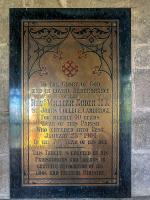
Memorial to Reverend William Auden. For nearly forty years vicar of Saint Michael and All Angels Church, Church Broughton [Map], died 28th January 1904.
The Times. 28th January 1916. MARRIAGE OF LORD GRANBY.
The marriage of the Marquess of Granby (age 29), only son of the Duke (age 63) and Duchess of Rutland (age 59), to Miss Kathleen Tennant (age 21), youngest daughter of Mr. (age 54) and Mrs. Frank Tennant (age 52), of Innes House, took place yesterday at St. Margaret's [Map]. There was a very large attendance, and a number of those present brought young children with them.
The bride, who was given away by her father, wore a Venetian gown of white satin with a gold, brocade train four yards long and a short mantlet of old Venetian family lace; the sleeves were long and close-fitting, and she had a long white net veil with a wreath of orange blossoms. She carried a copy of the marriage service embroidered in seed pearl and coloured silks, worked by her mother after an old design in the British Museum.
Lady Diane Manners (age 24), who was one of the bridesmaids, designed the bridesmaids' gowns in the medieval manner; they were of white chiffon belted in silver worn with flowing veils of blue tulle held by silver bands. Each of the bridesmaids carried a tail branch of almond blossom; the others were Miss Elizabeth Asquith (age 18), Miss Mary Lyttelton, and Miss Violet Warrender. The Hon. Stephen Tennant (age 9), who wore a Romeo suit with a jewelleed belt, was the page. Captain Charles Lindsay, Grenadier Guards, was best man. Canon Sheppard (age 35), Sub-Dean of the Chapels Royal, and the Rev. F. W. Knox, the Duke of Rutland's chaplain, performed the ceremony.
SOME OF THE GOWNS. The Duke of Rutland was among the first to come to the church, and most of the guests were there early. The Prime Minister (age 63) arrived with Mr. (age 35) and Mrs. Bonham-Carter (age 28), and Mr. Balfour with a party which included Mr. and Mrs. William Balfour. The Duchess on Rutland wore gold charmeuse with gold tissue in her hat and a rose pink velvet cloak bordered with fur. The Marchioness of Anglesey (age 32), in white box-cloth, brought her little daughter, Lady Carolinie Paget (age 2), in a little Ermine coat and hat. Mrs. Asquith (age 51), who was with Mrs. Graham Smith (age 56), wore a black charmeuse gown made with a ruched cape and trimmed with chinchilla; her hat was black with emerald feathers.
Mrs. Tennant wore black and white embroidered taffetas; Lady Robert Manners had a long muauve coat trimmed with skunk; and the Countess of Wemyss (age 53) was in black and white. Lady Tree had a pervenche panne long coat made tight-fitting and a plain black sailor hat. The Countess of Drogheda (age 29) wore black and gold, Lady D'Abernon (age 50) grey chinchilla furs with a black coat and skirt, and Lady Arthur Paget a musquash coat bordered with skunk. Mrs. Guy Charteris (age 28) brought her baby, and the Hon. Mrs. George Keppel (age 45), in black and white, was accomapanied by her two daughters, and Mrs. McKenna by her two sons. Mrs. Hwfa Williams and Lady Randolph Churchill (age 62) (who was with Mrs. Churchill (age 30)) both were black velvet.
The Guests. Among those present were:
The Italian Ambassador, the Spanish Ambassador, the Duchess of Buccleuch (age 44), and Lady Margaret Scott, etc.
A small reception was held after the ceremony at Lord (age 56) and Lady Glenconner's (age 45) house in Queen Anne's gate, and the bride and bridegroom subsequently left for Belvoir Castle [Map], where the honeymoon will be spent.
Become a Member via our Buy Me a Coffee page to read more.

After 28th January 1933. Memorial at St Peter's Church, Tawstock [Map] to Edward Castell Wrey (deceased).
Edward Castell Wrey: On 9th February 1875 he was born to Henry Bourchier Toke Wrey 10th Baronet and Marianne Sarah Sherard Lady Wrey. On 11th April 1901 Edward Castell Wrey and Katherine Joan Dene were married. On 28th January 1933 Edward Castell Wrey died.

The Times. 28th January 1937. The Duke Of Norfolk And Miss Strutt.
Princess Alice Countess of Athlone (age 53) and Major-General the Earl of Athlone (age 63), and Prince Arthur of Connaught (age 54) were present yesterday afternoon at the marriage at Brompton Oratory of the Duke of Norfolk, Premier Peer and Hereditary Earl Marshal of England, and the Hon. Lavinia Mary Strutt (age 20), only daughter of Lord Belper (age 53) and the Countess of Rosebery (age 44).
Princess Alice wore a mink coat over a dress of burgundy-red crepe, with a small red hat to match.
The Oratory was decorated with four large stands of flowers, placed at the chancel steps. They were in mixed shades of red and included amaryllis lilies, poinsettia, anthuriums, roses, carnations, and red leaves. While the guests were arriving the organist played Mendelssohn's Allegretto from the Fourth Sonata, Elgar's Allegro Maestoso from the First Sonata, and the prelude and fugue in E flat, and the organ choral "Mortify us by Thy Goodness" by J. S. Bach.
The bride arrived with her father, Lord Belper, and was loudly cheered by the crowd outside the Oratory, who broke through the police cordon. She walked up the nave to Handel's March from the Occasional Oratorio, and was met by Father Talbot and Father John Cuddon. Miss Strutt wore a classically simple dress of silver lame, cut on straight sheath lines with long tight sleeves and a high round roll collar. The skirt just touched the ground and was continued at the back to form a long square train. She wore a girdle of silver cord knotted in front. Her long veil of white tulle fell from a simple coronet of orange-blossom and green leaves, and she carried a sheaf of arum lilies. She was followed by six little pages-Robin Herbert, Timothy Hunloke, Bob McCreery, John Scrope, George Vivian-Smith, and Michael Watt; and by six bridesmaids-Lady Katharine (age 25) and Lady Winefride Howard (age 23) (sisters of the bridegroom), Lady Anne Bridgeman (age 23), the Hon. Pamela Digby (age 16), Miss Gillian Drummond, and Miss Nancy Malcolmnson. The bridegroom's (age 28) racing colours, pale blue and scarlet, were introduced into the dresses and suits of the attendants. The pages were in pale blue satin suits piped with scarlet, and the bridesmaids wore dresses of sky-blue corded crepe, with touches of scarlet at the waistline. They had high rounded necklines with long bell sleeves and their headdresses of red bavardia were massed in front. They carried bouquets of red flowers, including tulips, amaryllis lilies, carnations, and euphorbia. The bridegroom gave them brooches showing his and his bride's initials in rubies and diamonds. The Earl of Eldon (age 37) was best man.
The marriage service was very short and non-choral, as the bride is not a Roman Catholic. After they had plighted their troth Father Ronald Knox gave an address from the centre of the transept. The bride and bridegroom remained kneeling at the chancel steps, facing the altar. They then went in procession to the vestry, where the registrar, Mr. J. P. Bond, conducted the civil ceremony.
Afterwards the bride and bridegroom left for 38, Mayfair (the residence of the Earl of Rosebery (age 55)), where the Countess of Rosebery held a reception. The bride went away for the honeymoon in a dress of black and red shot silk taffeta, under a broadtail coat with a fur cap to match.
Among those present at the Oratory were:
The Earl and Countess of Rosebery.
The Duchess of Norfolk (age 60).
Lady Rachel Howard (age 32).
Lady Belper.
the Hon. Alexander (age 24) and the Hon. Michael Strutt (age 23), the Hon. Mrs. Parry-Evans. Mr. and the Hon. Mrs. Vernon Malcolmsonson, Lord and Lady Aberdare, the Hon. Margaret Strutt, the Hon. Mrs. Frank Hormsby, etc.
Become a Member via our Buy Me a Coffee page to read more.
On 28th January 1944 Arthur Valerian Wellesley 8th Duke Wellington (age 28) and Diana McConnel Duchess of Wellington (age 22) were married at St George's Cathedral Jerusalem [Map]. Before he married he was twice engaged to Rose Mary Primrose Paget (age 24). He the son of Gerald Wellesley 7th Duke Wellington (age 58) and Dorothy Violet Ashton Duchess Wellington (age 54).
The Deeds of the Dukes of Normandy
The Gesta Normannorum Ducum [The Deeds of the Dukes of Normandy] is a landmark medieval chronicle tracing the rise and fall of the Norman dynasty from its early roots through the pivotal events surrounding the Norman Conquest of England. Originally penned in Latin by the monk William of Jumièges shortly before 1060 and later expanded at the behest of William the Conqueror, the work chronicles the deeds, politics, battles, and leadership of the Norman dukes, especially William’s own claim to the English throne. The narrative combines earlier historical sources with firsthand information and oral testimony to present an authoritative account of Normandy’s transformation from a Viking settlement into one of medieval Europe’s most powerful realms. William’s history emphasizes the legitimacy, military prowess, and governance of the Norman line, framing their expansion, including the conquest of England, as both divinely sanctioned and noble in purpose. Later chroniclers such as Orderic Vitalis and Robert of Torigni continued the history, extending the coverage into the 12th century, providing broader context on ducal rule and its impact. Today this classic work remains a foundational source for understanding Norman identity, medieval statesmanship, and the historical forces that reshaped England and Western Europe between 800AD and 1100AD.
Available at Amazon in eBook and Paperback format.
On 28th January 1312 Joan Capet II Queen Navarre was born to Louis X King France I Navarre (age 22) and Margaret of Burgundy Queen Consort France (age 22). There was some doubt over her paternity since her mother had been embroiled in the Aunay Brothers Affair in which one of the brothers admitted under torture to having been Margaret's lover. Her father, however, stated she was his legitimate daughter on his deathbed. Coefficient of inbreeding 4.42%. She married 18th June 1318 her half first cousin once removed Philip "Noble" III King Navarre, son of Louis I Count Évreux and Margaret Artois Countess Évreux, and had issue.
On 28th January 1382 Richard Beauchamp 13th Earl Warwick was born to Thomas Beauchamp 12th Earl Warwick (age 43) and Margaret Ferrers Countess Warwick (age 35) at Salwarpe, Worcestershire. King Richard II of England (age 15) and Archbishop Richard Scrope (age 32) were his godfathers. He married (1) before 5th October 1397 his second cousin once removed Elizabeth Berkeley Countess Warwick, daughter of Thomas Berkeley 10th and 5th Baron Berkeley, Baron Lisle and Margaret Lisle Baroness Berkeley 3rd Baroness Lisle, and had issue (2) before 1425 his third cousin Isabel Despencer Countess Warwick and Worcester, daughter of Thomas Despencer 1st Earl Gloucester and Constance York Countess Gloucester, and had issue.
On 28th January 1457 King Henry VII of England and Ireland was born to the late Edmund Tudor 1st Earl Richmond and Margaret Beaufort Countess Richmond (age 13) at Pembroke Castle [Map]. He a great x 3 grandson of King Edward III of England. He married 18th January 1486 his third cousin Elizabeth York Queen Consort England, daughter of King Edward IV of England and Elizabeth Woodville Queen Consort England, and had issue.
On 28th January 1618 James Ley 3rd Earl Marlborough was born to Henry Ley 2nd Earl of Marlborough (age 22) and Mary Pettie. Coefficient of inbreeding 25.00%.
On 28th January 1621 Richard Verney 19th Baron Latimer 11th Baron Willoughby was born to Greville Verney 15th Baron Latimer 7th Baron Willoughby (age 35) and Catherine Southwell Baroness Latimer and Willoughby Broke (age 28). He married (1) after 29th November 1651 Mary Pretyman Baroness Latimer and Willoughby Broke, daughter of John Pretyman 1st Baronet and Elizabeth Turpin Lady Pretyman, and had issue (2) 1677 Frances Dove Baroness Latimer and Willoughby and had issue.
On 28th January 1659 Samuel Barnardiston 2nd Baronet was born to Nathaniel Barnardiston (age 40).
On 28th January 1674 Jean Ranc was born. He married 13th June 1715 Marguerite Elisabeth Rigaud.
On 28th January 1704 Louis Lorraine was born to Leopold Duke of Lorraine (age 24) and Élisabeth Charlotte Bourbon Duchess Lorraine (age 27). He a great x 3 grandson of King James I of England and Ireland and VI of Scotland. He died aged seven in 1711.
On 28th January 1742 Clotworthy Skeffington 2nd Earl Massereene was born to Clotworthy Skeffington 1st Earl Massereene (age 27) and Anne Eyre Countess Massereene (age 25).
Chronicle of Abbot Ralph of Coggeshall
The Chronicle of Abbot Ralph of Coggeshall (Chronicon Anglicanum) is an indispensable medieval history that brings to life centuries of English and European affairs through the eyes of a learned Cistercian monk. Ralph of Coggeshall, abbot of the Abbey of Coggeshall in Essex in the early 13th century, continued and expanded his community’s chronicle, documenting events from the Norman Conquest of 1066 into the tumultuous reign of King Henry III. Blending eyewitness testimony, careful compilation, and the monastic commitment to record-keeping, this chronicle offers a rare narrative of political intrigue, royal power struggles, and social upheaval in England and beyond. Ralph’s work captures the reigns of pivotal figures such as Richard I and King John, providing invaluable insights into their characters, decisions, and the forces that shaped medieval rule. More than a simple annal, Chronicon Anglicanum conveys the texture of medieval life and governance, making it a rich source for scholars and readers fascinated by English history, monastic authorship, and the shaping of the medieval world.
Available at Amazon in eBook and Paperback format.
On 28th January 1764 George Gordon Lord Haddo was born to George Gordon 3rd Earl Aberdeen (age 41) and Catherine Elizabeth Hanson Couness Aberdeen (age 34). He married 18th June 1782 Charlotte Baird and had issue.
On 28th January 1768 Frederick VI King of Denmark and Norway was born to Christian VII King of Denmark and Norway (age 18) and Caroline Matilda Hanover Queen Consort Denmark and Norway (age 16). He a great grandson of King George II of Great Britain and Ireland. Coefficient of inbreeding 6.66%. He married 31st July 1790 his first cousin Marie Sophie Hesse-Kassel Queen Consort Denmark and Norway, daughter of Charles Hesse-Kassel and Louise Oldenburg.
On 28th January 1773 Charles Turner 2nd Baronet was born to Charles Turner 1st Baronet (age 45) and Mary Shuttleworth Lady Turner and Gascoigne (age 22).
On 28th January 1775 Charlotte Susan Maria Campbell was born to John Campbell 5th Duke Argyll (age 51) and Elizabeth Gunning Duchess Hamilton and Argyll (age 41). She married 14th June 1796 John Campbell 4th of Islay and had issue.
On 27th December 1777 George Irby 3rd Baron Boston was born to Frederick Irby 2nd Baron Boston (age 28) and Christian Methuen. He was baptised on 28th January 1778; King George III of Great Britain and Ireland (age 39) was his godfather. He married 17th October 1801 Rachel Ives Drake Baroness Boston and had issue.

On 28th January 1784 George Hamilton-Gordon 4th Earl Aberdeen was born to George Gordon Lord Haddo (age 20) and Charlotte Baird (age 34) in Edinburgh. He married (1) 28th July 1805 Catherine Elizabeth Hamilton Countess Aberdeen, daughter of John Hamilton 1st Marquess Abercorn and Catherine Moyle Marchioness Abercorn, and had issue (2) 8th July 1815 Harriet Douglas Countess Aberdeen and had issue.
On 28th January 1798 Arthur Marcus Cecil Sandys 3rd Baron of Ombersley was born to Arthur Hill 2nd Marquess Downshire (age 44) and Mary Sandys Marchioness Downshire (age 33).
On 28th January 1801 Frederick Compton Cavendish was born to George Augustus Henry Cavendish 1st Earl Burlington (age 46) and Elizabeth Compton Countess Burlington (age 40). He died aged less than one years old.
Anne Boleyn. Her Life as told by Lancelot de Carle's 1536 Letter.
In 1536, two weeks after the execution of Anne Boleyn, her brother George and four others, Lancelot du Carle, wrote an extraordinary letter that described Anne's life, and her trial and execution, to which he was a witness. This book presents a new translation of that letter, with additional material from other contemporary sources such as Letters, Hall's and Wriothesley's Chronicles, the pamphlets of Wynkyn the Worde, the Memorial of George Constantyne, the Portuguese Letter and the Baga de Secrets, all of which are provided in Appendices.
Available at Amazon in eBook and Paperback format.
On 28th January 1819 Reverend John Molyneux 8th Baronet was born to Captain John Molyneux (age 50).

On 28th January 1823 Mary Matilda Georgiana Howard Baroness Taunton was born to George Howard 6th Earl Carlisle (age 49) and Georgiana Cavendish Countess Carlisle (age 39). She married 1852 Henry Labouchere 1st Baron Taunton.
On 28th January 1829 William Duncombe 1st Earl Feversham was born to William Duncombe 2nd Baron Feversham (age 31) and Louisa Stewart Baroness Feversham Duncombe Park (age 25). He married 7th August 1851 his second cousin Mabel Violet Graham Countess Feversham, daughter of James Graham 2nd Baronet and Frances "Fanny" Callander Lady Graham, and had issue.
On 28th January 1837 Richard Grosvenor 1st Baron Stalbridge was born to Richard Grosvenor 2nd Marquess Westminster (age 42) and Elizabeth Mary Leveson-Gower Marchioness Westminster (age 40). He married (1) 5th November 1874 Beatrice Charlotte Elizabeth Vesey, daughter of Thomas Vesey 3rd Viscount Vesci and Emma Herbert Viscountess Vesci (2) 3rd April 1879 Eleanor Frances Beatrice Hamilton-Stubber and had issue.
On 28th January 1838 Edward Cavendish was born to William Cavendish 7th Duke Devonshire (age 29) and Blanche Georgiana Howard (age 26) at Marylebone. Coefficient of inbreeding 1.65%. He married 3rd August 1865 his first cousin Emma Elizabeth Lascelles, daughter of William Lascelles and Caroline Georgiana Howard, and had issue.
On 28th January 1842 William Barrington was born to William Keppel Barrington 6th Viscount Barrington (age 48) and Jane Elizabeth Liddell Viscountess Barrington (age 37).
On 28th January 1849 John Gage Prendergast 5th Viscount Gort was born to Standish Prendergast Vereker 4th Viscount Gort (age 29) and Caroline Harriet Gage (age 25). He married 28th January 1885 Eleanor Surtees and had issue.
On 28th January 1866 Walter John Trevelyan 8th Baronet was born to Willoughby John Trevelyan (age 26).
On 28th January 1867 Georgina Fleetwood Fuller Lady Hobhouse was born to George Pargiter Fuller (age 34) and Emily Georgina Jane Hicks-Beach (age 21). She married 24th April 1890 Charles Edward Henry Hobhouse 4th Baronet, son of Charles Parry Hobhouse 3rd Baronet and Edith Lucy Turton.
Jean de Waurin's Chronicle of England Volume 6 Books 3-6: The Wars of the Roses
Jean de Waurin was a French Chronicler, from the Artois region, who was born around 1400, and died around 1474. Waurin’s Chronicle of England, Volume 6, covering the period 1450 to 1471, from which we have selected and translated Chapters relating to the Wars of the Roses, provides a vivid, original, contemporary description of key events some of which he witnessed first-hand, some of which he was told by the key people involved with whom Waurin had a personal relationship.
Available at Amazon in eBook and Paperback format.
On 28th January 1877 Harold Dudley Clayton 10th Baronet was born to Fitzroy Talbot Clayton of Fyfield House in Maidenhead (age 42) and Isabel Frances Taylour. He married 1903 his second cousin Leila Cecilia Clayton Lady Clayton and had issue.
On 28th January 1880 Alfonso Sanz y Martínez de Arizala Bourbon was born illegitimately to Alfonso XII King Spain (age 22) and Elena Armanda Sanz at Madrid [Map]. He married 1922 María Guadalupe.
On 28th January 1884 Francis Stonor 5th Baron Camoys was born to Francis Stonor 4th Baron Camoys (age 27).
On 28th January 1885 Geoffrey Hope-Morley 2nd Baron Hollenden was born to Samuel Morley 1st Baron Hollenden (age 39). He married (1) 12th December 1914 Mary Sidney Katharine Almina Gardner, daughter of Herbert Colstoun Gardner 1st Baron Burghclere and Winifred Herbert Baroness Burghclere (2) 6th May 1929 Muriel Ivy Gladstone Baroness Hollenden, daughter of John Evelyn Gladstone 4th Baronet and Gertrude Theresa Miller (3) 7th January 1963 Violet Norris Leverton Baroness Hollenden.
On 28th January 1898 John Page Wood 6th Baronet was born to John Page Wood 5th Baronet (age 37).
On 28th January 1907 Elizabeth Jocelyn was born to Robert Jocelyn 8th Earl Roden (age 23) and Elinor Jessie Parr Countess Roden. She married (1) 3rd August 1927 Gerald Francis Sowerby aka Annesley (2) 31st August 1940 Charles Dudley Ross, son of Arthur John Ross and Una Mary Dawson 25th Baroness de Ros of Helmsley.
On 28th January 1930 Norman Murray Crawford Isham 14th Baronet was born to Lieutenant-Colonel Vere Arthur Richard Isham (age 40).
On 28th January 1940 Ian "Jack" d'Olier Biddulph 11th Baronet was born to Stuart Royden Biddulph 10th Baronet (age 31).
On 28th January 1308 King Edward II of England (age 23) and Isabella of France Queen Consort England (age 13) were married at Boulogne sur Mer [Map]. She the daughter of King Philip IV of France (age 39) and Joan Blois I Queen Navarre. He the son of King Edward I of England and Eleanor of Castile Queen Consort England. They were second cousin once removed. She a great x 4 granddaughter of King Henry "Curtmantle" II of England.
On 28th January 1405 Philip "Good" Valois III Duke Burgundy (age 8) and Michelle Valois Duchess Burgundy (age 10) were married. She the daughter of Charles "Beloved Mad" VI King France (age 36) and Isabeau Wittelsbach Queen Consort France (age 35). He the son of John "Fearless" Valois Duke Burgundy (age 33) and Margaret Wittelsbach Duchess Burgundy (age 42). They were second cousins. He a great x 4 grandson of King Edward I of England. She a great x 5 granddaughter of King Henry III of England.
Chronicle of Walter of Guisborough
A canon regular of the Augustinian Guisborough Priory, Yorkshire, formerly known as The Chronicle of Walter of Hemingburgh, describes the period from 1066 to 1346. Before 1274 the Chronicle is based on other works. Thereafter, the Chronicle is original, and a remarkable source for the events of the time. This book provides a translation of the Chronicle from that date. The Latin source for our translation is the 1849 work edited by Hans Claude Hamilton. Hamilton, in his preface, says: 'In the present work we behold perhaps one of the finest samples of our early chronicles, both as regards the value of the events recorded, and the correctness with which they are detailed; Nor will the pleasing style of composition be lightly passed over by those capable of seeing reflected from it the tokens of a vigorous and cultivated mind, and a favourable specimen of the learning and taste of the age in which it was framed.'
Available at Amazon in eBook and Paperback format.

On 28th January 1800 John Stuart 1st Marquis of the Isle of Bute (age 55) and Frances Coutts Marchioness Bute were married. She by marriage Marchioness of the Isle of Bute. He the son of John Stuart 3rd Earl Bute and Mary Wortley-Montagu Countess Bute.
On 28th January 1869 Reginald Charles Abbot 3rd Baron Colchester (age 27) and Isabella Grace Maude (age 23) were married. She the daughter of Cornwallis Maude 1st Earl Montalt (age 51) and Clementina Elphinstone-Fleming Viscountess Hawarden.
On 28th January 1885 John Gage Prendergast 5th Viscount Gort (age 36) and Eleanor Surtees (age 28) were married.
On 28th January 1914 Richard Legh 3rd Baron Newton (age 25) and Helen Meysey-Thompson Baroness Newton were married.
On 28th January 1916 John Horace Savile 5th Earl Mexborough (age 73) and Anne Belcher were married. She by marriage Countess Mexborough of Lifford in County Donegal. He died four months later. He the son of John Savile 4th Earl Mexborough and Rachel Katherine Walpole.
On 28th January 1944 Arthur Valerian Wellesley 8th Duke Wellington (age 28) and Diana McConnel Duchess of Wellington (age 22) were married at St George's Cathedral Jerusalem [Map]. Before he married he was twice engaged to Rose Mary Primrose Paget (age 24). He the son of Gerald Wellesley 7th Duke Wellington (age 58) and Dorothy Violet Ashton Duchess Wellington (age 54).
On 28th January 1947 Major Evelyn Delves Broughton 12th Baronet (age 31) and Elizabeth Florence Marion Cholmondeley (age 21) were married. They divorced in 1953.
On 28th January 814 Charles "Charlemagne aka Great" King of the Franks King Lombardy Holy Roman Emperor (age 71) died. His son Louis (age 36) succeeded King of the Franks.
On 28th January 1069 Robert de Comines Earl Northumbria was burned to death in Durham, County Durham [Map] when a rebel army set fire to the house in which he was staying. All his men were killed. In retaliation King William "Conqueror" I of England (age 41) commenced the Harrying of the North.
On 28th January 1256 William Gerulfing II Count Holland (age 28) died. His son Floris (age 1) succeeded V Count Holland.
Jean de Waurin's Chronicle of England Volume 6 Books 3-6: The Wars of the Roses
Jean de Waurin was a French Chronicler, from the Artois region, who was born around 1400, and died around 1474. Waurin’s Chronicle of England, Volume 6, covering the period 1450 to 1471, from which we have selected and translated Chapters relating to the Wars of the Roses, provides a vivid, original, contemporary description of key events some of which he witnessed first-hand, some of which he was told by the key people involved with whom Waurin had a personal relationship.
Available at Amazon in eBook and Paperback format.
On 28th January 1271 Isabella Barcelona Queen Consort France (age 23) died.
On 28th January 1284 Alexander Dunkeld Prince Scotland (age 20) died at Lindores Abbey, Newburgh. He was buried at Dunfermline Abbey [Map].
On 28th January 1501 Guy 15th of Laval (age 65) died without issue. Guy 16th de Laval Count succeeded Count Laval.
On 28th January 1501 John Dynham 1st Baron Dynham (age 68) died at Lambeth, Surrey [Map]. He was buried at Greyfriars Church Farringdon Within [Map]. Baron Dinham extinct.

On 28th January 1512 George Fitzhugh 7th Baron Fitzhugh (age 26) died without issue. Baron Fitzhugh abeyant between the descendants of Alice Fitzhugh (age 64) and Anne Parr Countess Pembroke.
On 28th January 1543 Bishop Rowland Lee aka Leigh (age 56) died.
On 28th January 1547 Henry VIII (age 55) died at Whitehall Palace [Map]. His son Edward (age 9) succeeded VI King of England. Earl Chester merged with the Crown.
Thomas Wendy (age 46) attended the King. He was one of the witnesses to the King's last will and testament, for which he received £100.
On 28th January 1571 Anne Bourchier 7th Baroness Bourchier (age 54) died from a fall from a horse at Benington, Hertfordshire. Her first cousin twice removed Walter (age 29) succeeded 8th Baron Bourchier. Lettice Knollys Countess Essex and Leicester (age 27) by marriage Baroness Bourchier.
On 28th January 1654 Richard Graham 1st Baronet (age 71) died. His son George (age 30) succeeded 2nd Baronet Graham of Esk in Cumberland.
Chronicle of Geoffrey le Baker of Swinbroke
Baker was a secular clerk from Swinbroke, now Swinbrook, an Oxfordshire village two miles east of Burford. His Chronicle describes the events of the period 1303-1356: Gaveston, Bannockburn, Boroughbridge, the murder of King Edward II, the Scottish Wars, Sluys, Crécy, the Black Death, Winchelsea and Poitiers. To quote Herbert Bruce 'it possesses a vigorous and characteristic style, and its value for particular events between 1303 and 1356 has been recognised by its editor and by subsequent writers'. The book provides remarkable detail about the events it describes. Baker's text has been augmented with hundreds of notes, including extracts from other contemporary chronicles, such as the Annales Londonienses, Annales Paulini, Murimuth, Lanercost, Avesbury, Guisborough and Froissart to enrich the reader's understanding. The translation takes as its source the 'Chronicon Galfridi le Baker de Swynebroke' published in 1889, edited by Edward Maunde Thompson.
Available at Amazon in eBook and Paperback format.
On 28th January 1676 Susan Longueville 13th Baroness Grey of Ruthyn died. She was buried at the Church of St Peter and St Paul, Easton Maudit [Map]. Her son Charles (age 18) succeeded 14th Baron Grey of Ruthyn.
On 28th January 1697 John Fenwick 3rd Baronet (age 52) was beheaded for his part in the 1696 Plot to Assassinate King William III. He was buried at St Martin in the Fields Church [Map]. Baronet Fenwick of Fenwick in Northumberland extinct. He was the last person to be executed under an Act of Attainder.
Robert Burdett 3rd Baronet (age 57) had spoken against the attainder in Parliament.

On 28th January 1712 Thomas Coventry 3rd Earl Coventry (age 10) died at Eton College [Map]. His uncle Gilbert (age 44) succeeded 4th Earl Coventry, 8th Baron Coventry.
On 28th January 1714 Philip Stanhope 2nd Earl Chesterfield (age 80) died. He was buried at Shelford, Nottinghamshire [Map]. His son Philip (age 40) succeeded 3rd Earl Chesterfield, 3rd Baron Stanhope of Shelford in Nottinghamshire.
On 28th January 1723 James Stuart 2nd Earl Bute (age 27) died. His son John (age 9) succeeded 3rd Earl Bute. Mary Wortley-Montagu Countess Bute (age 4) by marriage Countess Bute.


On 28th January 1776 William Pleydell-Bouverie 1st Earl Radnor (age 50) died. His son Jacob (age 25) succeeded 2nd Earl Radnor, 3rd Viscount Folkestone, 3rd Baron Longford, 5th Baronet Bouverie of St Catherine Cree Church in London.


On 28th January 1790 Thomas Skipwith 4th Baronet (age 55) died without issue. Baronet Skipwith of Newbold Revel in Warwickshire extinct.
On 28th January 1802 John Fitzgibbon 1st Earl of de Clare (age 54) died. His son John (age 9) succeeded 2nd Earl Clare.
On 28th January 1813 Anne Osborn Lady Wrey (age 50) died.
On 28th January 1824 Hugh Bateman 1st Baronet (age 67) died. His grandson Francis succeeded 2nd Baronet Bateman of Hartington Hall in Derbyshire.
Chronicle of a Bourgeois of Valenciennes
Récits d’un bourgeois de Valenciennes aka The Chronicle of a Bourgeois of Valenciennes is a vivid 14th-century vernacular chronicle written by an anonymous urban chronicler from Valenciennes in the County of Hainaut. It survives in a manuscript that describes local and regional history from about 1253 to 1366, blending chronology, narrative episodes, and eyewitness-style accounts of political, military, and social events in medieval France, Flanders, and the Low Countries. The work begins with a chronological framework of events affecting Valenciennes and its region under rulers such as King Philip VI of France and the shifting allegiances of local nobility. It includes accounts of conflicts, sieges, diplomatic manoeuvres, and the impact of broader struggles like the Hundred Years’ War on urban life in Hainaut. Written from the perspective of a burgher (bourgeois) rather than a monastery or royal court, the chronicle offers a rare lay viewpoint on high politics and warfare, reflecting how merchants, townspeople, and civic institutions experienced the turbulence of the 13th and 14th centuries. Its narrative style combines straightforward reporting of events with moral and civic observations, making it a valuable source for readers interested in medieval urban society, regional politics, and the lived experience of war and governance in pre-modern Europe.
Available at Amazon in eBook and Paperback format.
On 28th January 1836 William Scott 1st Baron Stowell (age 90) died. Baron Stowell of Stowell Park in Gloucestershire extinct.
On 28th January 1839 William Beechey (age 85) died.
On 28th January 1842 William Henry Vane 1st Duke Cleveland (age 75) died. He was buried at St Mary's Church, Staindrop [Map]. His son Henry (age 54) succeeded 2nd Duke of Cleveland, 2nd Marquess of Cleveland, 4th Earl Darlington, 4th Viscount Barnard, 6th Baron Barnard, 2nd Baron Raby of Raby Castle in County Durham. Sophia Paulett Duchess of Cleveland (age 56) by marriage Duchess of Cleveland.
On 28th January 1849 Augustus Brydges Henniker 3rd Baronet (age 54) died. His son Bridges (age 13) succeeded 4th Baronet Henniker of Newton Hall in Essex.
On 28th January 1859 Frederick John Robinson 1st Earl Ripon (age 76) died. He has a monument at All Saints' Church, Nocton [Map] sculpted by Matthew Noble (age 41). His son George (age 31) succeeded 2nd Earl Ripon, 2nd Viscount Gooderich of Nocton in Lincolnshire. Henrietta Anne Theodosia Vyner Marchioness Ripon (age 25) by marriage Countess Ripon.
Henrietta Anne Theodosia Vyner Marchioness Ripon: On 17th April 1833 she was born to Henry Vyner and Mary Gertude Robinson. On 8th April 1851 George Frederick Samuel Robinson 1st Marquess Ripon and she were married. He the son of Frederick John Robinson 1st Earl Ripon and Sarah Albinia Louisa Hobart. They were first cousin once removed. In 1871 George Frederick Samuel Robinson 1st Marquess Ripon was created 1st Marquess Ripon. She by marriage Marchioness Ripon. On 28th February 1907 Henrietta Anne Theodosia Vyner Marchioness Ripon died.
On 28th January 1864 Harriet Somerville Countess Erroll died.
On 28th January 1867 John Villiers Shelley 7th Baronet (age 58) died. His brother Frederick (age 57) succeeded 8th Baronet Shelley of Mitchelgrove in Sussex.
On 28th January 1868 Edmund Walker Head 8th Baronet (age 63) died without surviving male issue. Baronet Head of Hermitage in Kent extinct.
Abbot John Whethamstede’s Chronicle of the Abbey of St Albans
Abbot John Whethamstede's Register aka Chronicle of his second term at the Abbey of St Albans, 1451-1461, is a remarkable text that describes his first-hand experience of the beginning of the Wars of the Roses including the First and Second Battles of St Albans, 1455 and 1461, respectively, their cause, and their consequences, not least on the Abbey itself. His text also includes Loveday, Blore Heath, Northampton, the Act of Accord, Wakefield, and Towton, and ends with the Coronation of King Edward IV. In addition to the events of the Wars of the Roses, Abbot John, or his scribes who wrote the Chronicle, include details in the life of the Abbey such as charters, letters, land exchanges, visits by legates, and disputes, which provide a rich insight into the day-to-day life of the Abbey, and the challenges faced by its Abbot.
Available at Amazon in eBook and Paperback format.
On 28th January 1872 Emma Sophie Edgecumbe Countess Brownlow (age 80) died.
On 28th January 1876 Jane Paget Marchioness Conyngham (age 77) died.
On 28th January 1880 John George Brabazon Ponsonby 5th Earl Bessborough (age 70) died. His brother Frederick (age 64) succeeded 6th Earl Bessborough, 7th Viscount Duncannon of Duncannon in Wexford, 7th Baron Bessborough of Bessborough in Kilkenny.
On 28th January 1890 Chandos Stanhope Reade 8th Baronet (age 38) died at Meldreth. His first cousin George (age 44) succeeded 9th Baronet Reade of Barton in Berkshire. Melissa Ray Lady Reade by marriage Lady Reade of Barton in Berkshire.

On 28th January 1928 Lionel Sackville-West 3rd Baron Sackville (age 60) died. His brother Charles (age 57) succeeded 4th Baron Sackville of Knole in Kent.
On 28th January 1937 Mary Susan Cavendish Viscountess Cobham (age 83) died at Hagley Hall, Worcestershire.
On 28th January 1967 Edward Agar 5th Earl Normanton (age 56) died. His son Shaun (age 21) succeeded 6th Earl Normanton.
On 28th January 1975 Philip Brocklehurst 2nd Baronet (age 87) died. His nephew John (age 48) succeeded 3rd Baronet Brocklehurst of Swythamley Park in Staffordshire.
On 28th January 1976 Herbrand Sackville 9th Earl De La Warr (age 75) died. His son William (age 54) succeeded 10th Earl De La Warr, 10th Viscount Cantalupe, 16th Baron De La Warr 5th Baron Buckhurst of Buckhurst in Sussex.
On 28th January 1976 Charles Edward Ponsonby 1st Baronet (age 96) died. His son Ashley (age 54) succeeded 2nd Baronet Ponsonby of Wooton in Oxfordshire. Martha Butler Lady Ponsonby (age 50) by marriage Lady Ponsonby of Wooton in Oxfordshire.
Chronicle of Geoffrey le Baker of Swinbroke
Baker was a secular clerk from Swinbroke, now Swinbrook, an Oxfordshire village two miles east of Burford. His Chronicle describes the events of the period 1303-1356: Gaveston, Bannockburn, Boroughbridge, the murder of King Edward II, the Scottish Wars, Sluys, Crécy, the Black Death, Winchelsea and Poitiers. To quote Herbert Bruce 'it possesses a vigorous and characteristic style, and its value for particular events between 1303 and 1356 has been recognised by its editor and by subsequent writers'. The book provides remarkable detail about the events it describes. Baker's text has been augmented with hundreds of notes, including extracts from other contemporary chronicles, such as the Annales Londonienses, Annales Paulini, Murimuth, Lanercost, Avesbury, Guisborough and Froissart to enrich the reader's understanding. The translation takes as its source the 'Chronicon Galfridi le Baker de Swynebroke' published in 1889, edited by Edward Maunde Thompson.
Available at Amazon in eBook and Paperback format.
On 28th January 2006 Christopher Makins 2nd Baron Sherfield (age 63) died. His brother Dwight (age 54) succeeded 3rd Baron Sherfield-on-Loddon in Southampton.
On 28th January 2011 Geoffrey Washington Trevelyan 5th Baronet (age 90) died. His son Peter (age 62) succeeded 6th Baronet Trevelyan of Wallington.
On 28th January 2016 Francis Arthur Le Marchant 6th Baronet (age 76) died. His first cousin once removed Piers (age 51) succeeded 7th Baronet Le Marchant of Chobham Place in Surrey.