All About History Books on Amazon

Chronicle of Walter of Guisborough

A canon regular of the Augustinian Guisborough Priory, Yorkshire, formerly known as The Chronicle of Walter of Hemingburgh, describes the period from 1066 to 1346. Before 1274 the Chronicle is based on other works. Thereafter, the Chronicle is original, and a remarkable source for the events of the time. This book provides a translation of the Chronicle from that date. The Latin source for our translation is the 1849 work edited by Hans Claude Hamilton. Hamilton, in his preface, says: 'In the present work we behold perhaps one of the finest samples of our early chronicles, both as regards the value of the events recorded, and the correctness with which they are detailed; Nor will the pleasing style of composition be lightly passed over by those capable of seeing reflected from it the tokens of a vigorous and cultivated mind, and a favourable specimen of the learning and taste of the age in which it was framed.'

Available at Amazon in eBook and Paperback format.

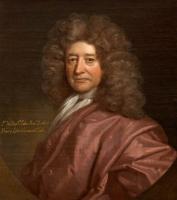
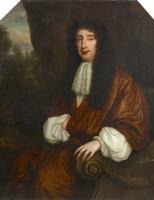
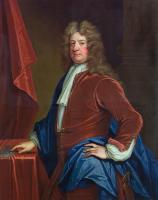
Daniel Finch 2nd Earl Nottingham 7th Earl Winchilsea 1647-1730

Paternal Family Tree: Finch

Maternal Family Tree: Elizabeth Harvey Baroness Finch 1627-1676

On 30th July 1646 [his father] Heneage Finch 1st Earl Nottingham [aged 24] and [his mother] Elizabeth Harvey Baroness Finch [aged 19] were married.

On 2nd July 1647 Daniel Finch 2nd Earl Nottingham 7th Earl Winchilsea was born to Heneage Finch 1st Earl Nottingham [aged 25] and Elizabeth Harvey Baroness Finch [aged 20].

On 16th June 1674 Daniel Finch 2nd Earl Nottingham 7th Earl Winchilsea [aged 26] and Essex Rich Countess Nottingham [aged 22] were married. She the daughter of Robert Rich 3rd Earl Warwick and Anne Cheeke Countess Warwick. He the son of Heneage Finch 1st Earl Nottingham [aged 52] and Elizabeth Harvey Baroness Finch [aged 47].

In 1676 [his mother] Elizabeth Harvey Baroness Finch [aged 49] died.

In 1677 [his daughter] Mary Finch Duchess Roxburghe was born to Daniel Finch 2nd Earl Nottingham 7th Earl Winchilsea [aged 29] and [his wife] Essex Rich Countess Nottingham [aged 25]. She married 1. 2nd April 1695 her fourth cousin William Savile 2nd Marquess Halifax, son of George Savile 1st Marquess Halifax and Dorothy Spencer Lady Savile, and had issue 2. before 1709 John Ker 1st Duke Roxburghe, son of Robert Ker 3rd Earl Roxburghe and Margaret Hay Countess Roxburghe, and had issue.

On 16th May 1678 [his brother] Heneage Finch 1st Earl Aylesford [aged 29] and [his sister-in-law] Elizabeth Banks Countess Aylesford were married. He the son of [his father] Heneage Finch 1st Earl Nottingham [aged 56] and [his mother] Elizabeth Harvey Baroness Finch.

John Evelyn's Diary. 25th June 1679. The new Commissioners of the Admiralty came to visit me, viz, Sir Henry Capell [aged 41], brother to the Earl of Essex [aged 47], Mr. Finch [aged 31], eldest son to the [his father] Lord Chancellor [aged 57], Sir Humphry Winch [aged 57], Sir Thomas Meeres [aged 45], Mr. Hales, with some of the Commissioners of the Navy. I went with them to London.

John Evelyn's Diary. 7th December 1680. On Tuesday, I was again at the trial, when judgment was demanded; and, after my Lord [aged 66] had spoken what he could in denying the fact, the managers answering the objections, the Peers adjourned to their House, and within two hours returned again. There was, in the meantime, this question put to the judges, "whether there being but one witness to any single crime, or act, it could amount to convict a man of treason". They gave an unanimous opinion that in case of treason they all were overt acts for though no man should be condemned by one witness for any one act, yet for several acts to the same intent, it was valid; which was my Lord's case. This being past, and the Peers in their seats again, the Lord Chancellor Finch [aged 33] (this day the Lord High-Steward) removing to the woolsack next his Majesty's [aged 50] state, after summoning the Lieutenant of the Tower to bring forth his prisoner, and proclamation made for silence, demanded of every Peer (who were in all eighty-six) whether William, Lord Viscount Stafford, were guilty of the treason laid to his charge, or not guilty.

Then the Peer spoken to, standing up, and laying his right hand upon his breast, said guilty, or not guilty, upon my honor, and then sat down, the Lord Steward noting their suffrages as they answered upon a paper: when all had done, the number of not guilty being but 31, the guilty 55; and then, after proclamation for silence again, the Lord Steward directing his speech to the prisoner, against whom the ax was turned edgeways and not before, in aggravation of his crime, he being ennobled by the King's father, and since received many favors from his present Majesty: after enlarging on his offense, deploring first his own unhappiness that he who had never condemned any man before should now be necessitated to begin with him, he then pronounced sentence of death by hanging, drawing, and quartering, according to form, with great solemnity and dreadful gravity; and, after a short pause, told the prisoner that he believed the Lords would intercede for the omission of some circumstances of his sentence, beheading only excepted; and then breaking his white staff, the Court was dissolved. My Lord Stafford during all this latter part spoke but little, and only gave their Lordships thanks after the sentence was pronounced; and indeed behaved himself modestly, and as became him.

It was observed that all his own relations of his name and family condemned him, except his nephew, the Earl of Arundel [aged 25], son to the Duke of Norfolk [aged 52]. And it must be acknowledged that the whole trial was carried on with exceeding gravity: so stately and august an appearance I had never seen before; for, besides the innumerable spectators of gentlemen and foreign ministers, who saw and heard all the proceedings, the prisoner had the consciences of all the Commons of England for his accusers, and all the Peers to be his judges and jury. He had likewise the assistance of what counsel he would, to direct him in his plea, who stood by him. And yet I can hardly think that a person of his age and experience should engage men whom he never saw before (and one of them that came to visit him as a stranger at Paris) POINT BLANK to murder the King: God only, who searches hearts, can discover the truth. Lord Stafford was not a man beloved especially of his own family.

Click to read more ...

On 18th December 1682 [his father] Heneage Finch 1st Earl Nottingham [aged 60] died at Great Queen Street Covent Garden. He was buried at Ravenstone, Buckinghamshire. His son Daniel [aged 35] succeeded 2nd Earl Nottingham, 2nd Baron Finch Daventry. [his wife] Essex Rich Countess Nottingham [aged 30] by marriage Countess Nottingham.

On 23rd March 1684 [his wife] Essex Rich Countess Nottingham [aged 32] died in childbirth. She was buried in the Finch family vault at All Saints' Church, Ravenstone [Map].

Before 1685 Daniel Finch 2nd Earl Nottingham 7th Earl Winchilsea [aged 37] was appointed Privy Council.

On 29th December 1685 Daniel Finch 2nd Earl Nottingham 7th Earl Winchilsea [aged 38] and Anne Hatton Countess Nottingham and Winchelsea were married. She being a fourth-cousin once-removed of his first wife Essex Rich Countess Nottingham. She by marriage Countess Nottingham. He the son of Heneage Finch 1st Earl Nottingham and Elizabeth Harvey Baroness Finch.

On 28th February 1687 [his daughter] Essex Finch was born to Daniel Finch 2nd Earl Nottingham 7th Earl Winchilsea [aged 39] and [his wife] Anne Hatton Countess Nottingham and Winchelsea. She married 1703 Roger Mostyn and had issue.

John Evelyn's Diary. 29th October 1688. There was a Council called, to which were summoned the Archbishop of Canterbury [aged 71], the Judges, the Lord Mayor, etc. The Queen Dowager [aged 49], and all the ladies and lords who were present at the Queen Consort's [aged 30] labor, were to give their testimony upon oath of the Prince of Wales's birth, recorded both at the Council Board and at the Chancery a day or two after. This procedure was censured by some as below his Majesty [aged 55] to condescend to, on the talk of the people. It was remarkable that on this occasion the Archbishop, Marquis of Halifax [aged 54], the Earls of Clarendon and Nottingham [aged 41], refused to sit at the Council table among Papists, and their bold telling his Majesty that whatever was done while such sat among them was unlawful and incurred praemunire;-at least, if what I heard be true.

John Evelyn's Diary. 2nd December 1688. Dr. Tenison [aged 52] preached at St. Martin's [Map] on Psalm xxxvi. 5, 6, 7, concerning Providence. I received the blessed Sacrament. Afterward, visited my Lord Godolphin [aged 43], then going with the Marquis of Halifax [aged 55] and Earl of Nottingham [aged 41] as Commissioners to the Prince of Orange [aged 38]; he told me they had little power. Plymouth, Devon [Map] declared for the Prince. Bath, Somerset [Map], York [Map], Hull [Map], Bristol, Gloucestershire [Map], and all the eminent nobility and persons of quality through England, declare for the Protestant religion and laws, and go to meet the Prince, who every day sets forth new Declarations against the Papists. The great favorites at Court, Priests and Jesuits, fly or abscond. Everything, till now concealed, flies abroad in public print, and is cried about the streets. Expectation of the Prince coming to Oxford, Oxfordshire [Map]. The Prince of Wales and great treasure sent privily to Portsmouth, Hampshire [Map], the Earl of Dover [aged 52] being Governor. Address from the Fleet not grateful to his Majesty [aged 55]. The Papists in offices lay down their commissions, and fly. Universal consternation among them; it looks like a revolution.

All About History Books on Amazon

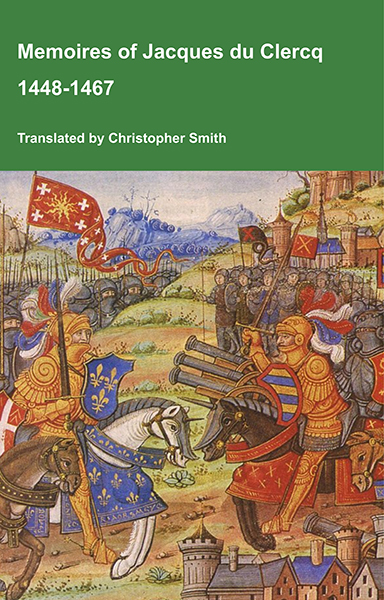
Memoires of Jacques du Clercq

This is a translation of the 'Memoires of Jacques du Clercq', published in 1823 in two volumes, edited by Frederic, Baron de Reissenberg. In his introduction Reissenberg writes: 'Jacques du Clercq tells us that he was born in 1424, and that he was a licentiate in law and a counsellor to Philip the Good, Duke of Burgundy, in the castellany of Douai, Lille, and Orchies. It appears that he established his residence at Arras. In 1446, he married the daughter of Baldwin de la Lacherie, a gentleman who lived in Lille. We read in the fifth book of his Memoirs that his father, also named Jacques du Clercq, had married a lady of the Le Camelin family, from Compiègne. His ancestors, always attached to the counts of Flanders, had constantly served them, whether in their councils or in their armies.' The Memoires cover a period of nineteen years beginning in in 1448, ending in in 1467. It appears that the author had intended to extend the Memoirs beyond that date; no doubt illness or death prevented him from carrying out this plan. As Reissenberg writes the 'merit of this work lies in the simplicity of its narrative, in its tone of good faith, and in a certain air of frankness which naturally wins the reader’s confidence.' Du Clercq ranges from events of national and international importance, including events of the Wars of the Roses in England, to simple, everyday local events such as marriages, robberies, murders, trials and deaths, including that of his own father in Book 5; one of his last entries.

Available at Amazon in eBook and Paperback format.

John Evelyn's Diary. 6th February 1689. There was much contest about the King's [aged 38] abdication, and whether he had vacated the government. The Earl of Nottingham [aged 41] and about twenty Lords, and many Bishops, entered their protests, but the concurrence was great against them.

On 24th May 1689 [his son] Daniel Finch 8th Earl Winchilsea 3rd Earl Nottingham was born to Daniel Finch 2nd Earl Nottingham 7th Earl Winchilsea [aged 41] and [his wife] Anne Hatton Countess Nottingham and Winchelsea. He married 1. before September 1734 Frances Feilding Countess Winchelsea and Nottingham, daughter of Basil Feilding 3rd Earl Desmond 4th Earl Denbigh and Hester Firebrace Countess Desmond and Denbigh 2. after September 1734 Mary Palmer Countess Winchelsea and Nottingham, daughter of Thomas Palmer 4th Baronet, and had issue.

Around 1690 Daniel Finch 2nd Earl Nottingham 7th Earl Winchilsea [aged 42] commissioned the building of Burley-on-the-Hill House as it is known today. Christopher Wren [aged 66] was consulted. The designs of Montague House and Devonshire House [Map] were reviewed.

John Evelyn's Diary. 25th February 1690. I went to Kensington, which King William [aged 39] had bought of Lord Nottingham [aged 42], and altered, but was yet a patched building, but with the garden, however, it is a very sweet villa, having to it the park and a straight new way through this park.

On 18th January 1691 [his son] William Finch was born to Daniel Finch 2nd Earl Nottingham 7th Earl Winchilsea [aged 43] and [his wife] Anne Hatton Countess Nottingham and Winchelsea. He married before 4th November 1752 his fourth cousin twice removed Charlotte Finch nee Fermor, daughter of Thomas Fermor 1st Earl Pomfret and Henriette Louise Jeffreys Countess Pomfret, and had issue.

In 1692 [his son] John Finch was born to Daniel Finch 2nd Earl Nottingham 7th Earl Winchilsea [aged 44] and [his wife] Anne Hatton Countess Nottingham and Winchelsea.

In 1693 [his daughter] Charlotte Finch Duchess Somerset was born to Daniel Finch 2nd Earl Nottingham 7th Earl Winchilsea [aged 45] and [his wife] Anne Hatton Countess Nottingham and Winchelsea. She married 4th February 1725 Charles Seymour 6th Duke of Somerset, son of Charles Seymour 2nd Baron Seymour of Trowbridge and Eizabeth Alington 2nd Baroness Seymour Trowbridge, and had issue.

John Evelyn's Diary. 1st January 1693. Contest in Parliament about a self-denying Act, that no Parliament man should have any office; it wanted only two or three voices to have been carried. The Duke of Norfolk's [aged 37] bill for a divorce thrown out, he having managed it very indiscreetly. The quarrel between Admiral Russell [aged 40] and Lord Nottingham [aged 45] yet undetermined.

Calendar of the State Papers of William and Mary 1693 Febaruary. 11th February 1693. Whitehall. The Earl of Nottingham [aged 45] to the Lord Lieutenant.

For some time there has been a design for settling a colony of French protestants in Ireland. The King has appointed a committee of lords to consider the best ways and means of establishing this, and they have made their report. His Majesty has commanded me to send you the enclosed extract from it, that you may consider what there is proposed and return an answer to the questions in it. Encloswre not entered. [Ibid., p. 447.]

Calendar of the State Papers of William and Mary 1693 Febaruary. 11th February 1693. Whitehall. The Earl of Nottingham [aged 45] to Capt. Greenhill.

The King commands me to acquaint you that he wishes you to give notice to all the privateers of Zealand who go to Plymouth, or near it, that orders are issued for their departure to Zealand. [H. O. Letter Bool: (Secretary's) 2, p. 615.]

Calendar of the State Papers of William and Mary 1693 Febaruary. 11th February 1693. Whitehall. The Earl of Nottingham [aged 45] to the Lord Lieutenant of Ireland.

The King has been moved on behalf of Captain Garret Coahlan (?) and Captain George Darcy for commissions to be captains in one of the two regiments now to be raised in Ireland, and commands me to recommend them to you for that purpose. They were formerly captains in Ireland and Roman eatholics, but I am told are now turned protestants, though they have not yet declared it, and the King thinks it may be for the service to give them those employments that if may be an encouragement to others in that kingdom to come in and concur in the establishment of the protestant interest. By his Majesty's commands I have written to you, recommending Lieut. Colonel Oliver Long to be lieutenant-colonel to Colonel Echlin. [S.P. Ireland, King's Letter Book 1, p. 446.]

All About History Books on Amazon

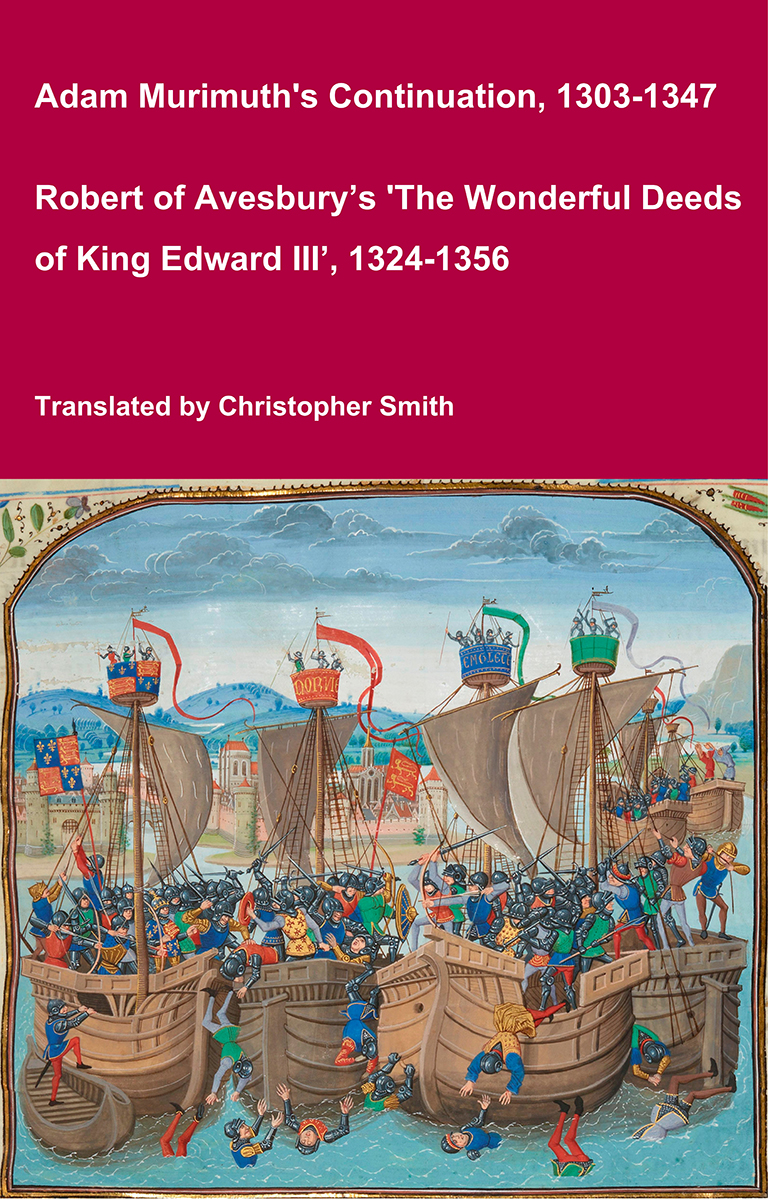
Adam Murimuth's Continuation and Robert of Avesbury’s 'The Wonderful Deeds of King Edward III'

This volume brings together two of the most important contemporary chronicles for the reign of Edward III and the opening phases of the Hundred Years’ War. Written in Latin by English clerical observers, these texts provide a vivid and authoritative window into the political, diplomatic, and military history of fourteenth-century England and its continental ambitions. Adam Murimuth Continuatio's Chronicarum continues an earlier chronicle into the mid-fourteenth century, offering concise but valuable notices on royal policy, foreign relations, and ecclesiastical affairs. Its annalistic structure makes it especially useful for establishing chronology and tracing the development of events year by year. Complementing it, Robert of Avesbury’s De gestis mirabilibus regis Edwardi tertii is a rich documentary chronicle preserving letters, treaties, and official records alongside narrative passages. It is an indispensable source for understanding Edward III’s claim to the French crown, the conduct of war, and the mechanisms of medieval diplomacy. Together, these works offer scholars, students, and enthusiasts a reliable and unembellished account of a transformative period in English and European history. Essential for anyone interested in medieval chronicles, the Hundred Years’ War, or the reign of Edward III.

Available at Amazon in eBook and Paperback format.

John Evelyn's Diary. 12th November 1693. Lord Nottingham [aged 46] resigned as Secretary of State; the Commissioners of the Admiralty ousted, and Russell [aged 40] restored to his office. The season continued very wet, as it had nearly all the summer, if one might call it summer, in which there was no fruit, but corn was very plentiful.

In 1694 [his son] Henry Finch was born to Daniel Finch 2nd Earl Nottingham 7th Earl Winchilsea [aged 46] and [his wife] Anne Hatton Countess Nottingham and Winchelsea.

On 2nd April 1695 [his son-in-law] William Savile 2nd Marquess Halifax [aged 30] and Mary Finch Duchess Roxburghe [aged 18] were married. She by marriage Marchioness Halifax. She the daughter of Daniel Finch 2nd Earl Nottingham 7th Earl Winchilsea [aged 47] and Essex Rich Countess Nottingham. He the son of George Savile 1st Marquess Halifax [aged 61] and Dorothy Spencer Lady Savile. They were fourth cousins.

In 1697 [his son] Edward Finch-Hatton was born to Daniel Finch 2nd Earl Nottingham 7th Earl Winchilsea [aged 49] and [his wife] Anne Hatton Countess Nottingham and Winchelsea. He married 9th September 1746 Elizabeth Palmer, daughter of Thomas Palmer 4th Baronet, and had issue.

In 1700 [his daughter] Cecilia or Isabella Finch was born to Daniel Finch 2nd Earl Nottingham 7th Earl Winchilsea [aged 52] and [his wife] Anne Hatton Countess Nottingham and Winchelsea.

In July 1700 William Legge 1st Earl Dartmouth [aged 27] and [his niece] Anne Finch Countess Dartmouth were married. She the daughter of [his brother] Heneage Finch 1st Earl Aylesford [aged 51] and [his sister-in-law] Elizabeth Banks Countess Aylesford.

In 1701 [his daughter] Mary Finch was born to Daniel Finch 2nd Earl Nottingham 7th Earl Winchilsea [aged 53] and [his wife] Anne Hatton Countess Nottingham and Winchelsea.

In 1703 [his son-in-law] Roger Mostyn [aged 29] and Essex Finch [aged 15] were married. She the daughter of Daniel Finch 2nd Earl Nottingham 7th Earl Winchilsea [aged 55] and Anne Hatton Countess Nottingham and Winchelsea.

In 1704 [his daughter] Elizabeth Finch Countess Mansfield was born to Daniel Finch 2nd Earl Nottingham 7th Earl Winchilsea [aged 56] and [his wife] Anne Hatton Countess Nottingham and Winchelsea. She married 20th September 1738 William Murray 1st Earl Mansfield, son of David Murray 5th Viscount of Stormont and Marjory Scott Viscountess Stormont.

John Evelyn's Diary. 11th March 1705. An exceedingly dry season. Great loss by fire, burning the outhouses and famous stable of the Earl of Nottingham [aged 57], at Burleigh [Rutlandshire], full of rich goods and furniture, by the carelessness of a servant. A little before, the same happened at Lord Pembroke's [aged 49], at Wilton. The old Countess of Northumberland [aged 82], Dowager of Algernon Percy, Admiral of the fleet to King Charles I., died in the 83d year of her age. She was sister to the Earl of Suffolk, and left a great estate, her jointure to descend to the [his future son-in-law] Duke of Somerset [aged 42].

All About History Books on Amazon

The History of William Marshal, Earl of Chepstow and Pembroke, Regent of England. Book 1 of 2, Lines 1-10152.

The History of William Marshal was commissioned by his son shortly after William’s death in 1219 to celebrate the Marshal’s remarkable life; it is an authentic, contemporary voice. The manuscript was discovered in 1861 by French historian Paul Meyer. Meyer published the manuscript in its original Anglo-French in 1891 in two books. This book is a line by line translation of the first of Meyer’s books; lines 1-10152. Book 1 of the History begins in 1139 and ends in 1194. It describes the events of the Anarchy, the role of William’s father John, John’s marriages, William’s childhood, his role as a hostage at the siege of Newbury, his injury and imprisonment in Poitou where he met Eleanor of Aquitaine and his life as a knight errant. It continues with the accusation against him of an improper relationship with Margaret, wife of Henry the Young King, his exile, and return, the death of Henry the Young King, the rebellion of Richard, the future King Richard I, war with France, the death of King Henry II, and the capture of King Richard, and the rebellion of John, the future King John. It ends with the release of King Richard and the death of John Marshal.

Available at Amazon in eBook and Paperback format.

Before 1709 [his son-in-law] John Ker 1st Duke Roxburghe [aged 28] and Mary Finch Duchess Roxburghe [aged 31] were married. She by marriage Duchess Roxburghe. She the daughter of Daniel Finch 2nd Earl Nottingham 7th Earl Winchilsea [aged 61] and Essex Rich Countess Nottingham. He the son of Robert Ker 3rd Earl Roxburghe and Margaret Hay Countess Roxburghe.

Before 6th November 1715 [his nephew] Heneage Finch 2nd Earl Aylesford [aged 32] and Mary Fisher Countess Aylesford [aged 25] were married. He the son of [his brother] Heneage Finch 1st Earl Aylesford [aged 66] and [his sister-in-law] Elizabeth Banks Countess Aylesford.

On 23rd May 1721 [his daughter] Essex Finch [aged 34] died of smallpox.

Avebury by William Stukeley. THERE is still another of these long archdruids' tumuli at Abury, which leads me to describe a kind of ancient monuments which I meet with here, and near Stonehenge and elsewhere; which I take to be houses of the Druids, or their courts of judicature, or both. The principal of them here, is a remarkable thing, upon the Hakpen-hill east of Abury, near a mile, between it and Rockley. That part of the downs thereabouts is called Temple-downs, and the thing is called old Chapel [Map]. Lord Winchelsea [aged 76], Lord [aged 39] and Lady Hertford [aged 24] and myself were curious in observing it, July 6, 1723. 'Tis a large square, intrenched, 110 druid cubits by 130, like a little Roman camp, with one entrance on the south-west side, towards Abury: for it is posited with accuracy, (as all these works are) from north-east to south-west. The situation of the place is high, and has a descent, quite round three of its sides; the verge of the descent inclosing it like a horseshoe. The entrance is on the side next Abury, on the isthmus of the peninsula (as it were,) on the shortest side of the square, the south-west. It is made of a vallum and ditch; beyond that, a row of flat stones set quite round and pretty close to one another, like a wall. Beyond that, another lesser ditch. There are stones too set on each side the entrance. On the north-west side is a large long barrow 50 cubits in length, with two great stone works upon it. One on the end next the great inclosed place, we have been describing: another stonework towards the other end; which seems to have been a semicircular cove, or demi-ellipsis consisting of five great stones; a Stonehenge cell in miniature, but now in ruins. This probably gave the name of old Chapel [Map] to the place; the barrow likewise has been set quite round with great stones.

In the second stone-work, one stone lies flat on the ground, along the middle line of the barrow. On each side a flat stone stands upright, and two flat stones stand upright at right angles, as wings to 'em. Upon them I suppose other stones were piled as a kist-vaen. Here probably lies the body of the interred. The stones are generally very large, about ten feet long.

The whole I take to have been the palace and interment of an arch-druid, and his tribunal or seat of justice. 'Tis posited exactly enough south-east and north-west. The learned Mr. Rowland, who wrote the history of the Isle of Mona, describes just such works as this in that place, and calls them houses of the Druids.

Click to read more ...
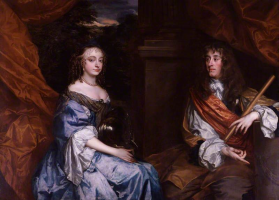
On 4th February 1725 [his son-in-law] Charles Seymour 6th Duke of Somerset [aged 62] and Charlotte Finch Duchess Somerset [aged 32] were married. She by marriage Duchess Somerset. The difference in their ages was 30 years. She the daughter of Daniel Finch 2nd Earl Nottingham 7th Earl Winchilsea [aged 77] and Anne Hatton Countess Nottingham and Winchelsea.

On 9th September 1729 John Finch 6th Earl Winchilsea [aged 46] died. He was buried at Westminster Abbey [Map]. His second cousin Daniel [aged 82] succeeded 7th Earl Winchilsea, 7th Viscount Maidstone, 8th Baronet Finch of Eastwell in Kent. [his wife] Anne Hatton Countess Nottingham and Winchelsea by marriage Countess Winchilsea.

On 1st January 1730 Daniel Finch 2nd Earl Nottingham 7th Earl Winchilsea [aged 82] died. His son Daniel [aged 40] succeeded 8th Earl Winchilsea, 8th Viscount Maidstone, 3rd Earl Nottingham, 3rd Baron Finch Daventry, 9th Baronet Finch of Eastwell in Kent.

In 1743 [his former wife] Anne Hatton Countess Nottingham and Winchelsea died.

[his daughter] Charlotte Finch was born to Daniel Finch 2nd Earl Nottingham 7th Earl Winchilsea and Anne Hatton Countess Nottingham and Winchelsea.

Royal Ancestors of Daniel Finch 2nd Earl Nottingham 7th Earl Winchilsea 1647-1730

Kings Wessex: Great x 19 Grand Son of King Edmund "Ironside" I of England

Kings Gwynedd: Great x 16 Grand Son of Owain "Great" King Gwynedd

Kings Seisyllwg: Great x 22 Grand Son of Hywel "Dda aka Good" King Seisyllwg King Deheubarth

Kings Powys: Great x 17 Grand Son of Maredudd ap Bleddyn King Powys

Kings Godwinson: Great x 20 Grand Son of King Harold II of England

Kings England: Great x 10 Grand Son of King Edward III of England

Kings Scotland: Great x 15 Grand Son of King William I of Scotland

Kings France: Great x 12 Grand Son of King Philip III of France

Kings Duke Aquitaine: Great x 23 Grand Son of Ranulf I Duke Aquitaine

Kings Spain: Great x 15 Grand Son of Alfonso VII King Castile VII King Leon

Royal Descendants of Daniel Finch 2nd Earl Nottingham 7th Earl Winchilsea 1647-1730
Number after indicates the number of unique routes of descent. Descendants of Kings and Queens not included.

Queen Elizabeth II of the United Kingdom [1]

Ancestors of Daniel Finch 2nd Earl Nottingham 7th Earl Winchilsea 1647-1730

Great x 4 Grandfather: Henry Finch

Great x 3 Grandfather: William Finch

Great x 2 Grandfather: Thomas Finch

Great x 1 Grandfather: Moyle Finch 1st Baronet

Great x 4 Grandfather: John Moyle

Great x 3 Grandfather: Thomas Moyle

Great x 4 Grandmother: Anne Darcy

Great x 2 Grandmother: Katherine Moyle

Grandfather: Heneage Finch 8 x Great Grandson of King Edward III of England

Great x 4 Grandfather: John Heneage

Great x 3 Grandfather: Robert Heneage

Great x 2 Grandfather: Thomas Heneage

Great x 3 Grandmother: Lucy Buckton

Great x 1 Grandmother: Elizabeth Heneage 1st Countess Winchelsea 7 x Great Granddaughter of King Edward III of England

Great x 4 Grandfather: Anthony Poyntz 8 x Great Grandson of King Henry III of England

Great x 3 Grandfather: Nicholas Poyntz 6 x Great Grandson of King Edward I of England

Great x 4 Grandmother: Elizabeth Huddersfield 5 x Great Granddaughter of King Edward I of England

Great x 2 Grandmother: Anne Poyntz 6 x Great Granddaughter of King Edward III of England

Great x 4 Grandfather: Thomas Berkeley 5th Baron Berkeley 5 x Great Grandson of King Edward I of England

Great x 3 Grandmother: Joan Berkeley 5 x Great Granddaughter of King Edward III of England

Great x 4 Grandmother: Eleanor Constable Baroness Berkeley 4 x Great Granddaughter of King Edward III of England

Father: Heneage Finch 1st Earl Nottingham 9 x Great Grandson of King Edward III of England

Great x 2 Grandfather: Robert Bell

Great x 1 Grandfather: Edmund Bell

Great x 4 Grandfather: Nicholas Beaupre of Beaupre Hall in Outwell

Great x 3 Grandfather: Edmonde Beaupré of Beaupré Hall Norfolk

Great x 4 Grandmother: Margaret Fotheringay

Great x 2 Grandmother: Dorothie Beaupré

Grandmother: Frances Bell 8 x Great Granddaughter of King Edward III of England

Great x 4 Grandfather: Edmund Knyvet Baron Berners 9 x Great Grandson of King John of England

Great x 3 Grandfather: John Knyvet 5 x Great Grandson of King Edward III of England

Great x 4 Grandmother: Joan Bourchier 3rd Baroness Berners 4 x Great Granddaughter of King Edward III of England

Great x 2 Grandfather: Thomas Knyvet 4th Baron Berners 6 x Great Grandson of King Edward III of England

Great x 1 Grandmother: Muriel Knyvet 7 x Great Granddaughter of King Edward III of England

Great x 4 Grandfather: Henry Vaughan of Tretower Court

Great x 3 Grandfather: Thomas Parry

Great x 2 Grandmother: Muriel Parry

Great x 4 Grandfather: William Reade

Great x 3 Grandmother: Anne Reade

Daniel Finch 2nd Earl Nottingham 7th Earl Winchilsea 10 x Great Grandson of King Edward III of England

Grandfather: Daniel Harvey

Mother: Elizabeth Harvey Baroness Finch