


Norfolk is in East England.
The River Bure rises at Melton Constable, Norfolk [Map] from where it flows past Briston, Norfolk [Map], Thurning, Norfolk [Map] after which it is joined by the River Thurne. Thereafter it flows past Corpusty, Norfolk [Map], ItterIngham, Norfolk [Map], Blickling Hall, Norfolk [Map], where there is a large ornamental lake, Ingworth, Norfolk [Map], Drabblegate, Norfolk [Map], Aylsham, Norfolk [Map], Burgh, Norfolk [Map], Church of St Michael, Oxnead [Map], Buxton, Norfolk [Map], Little Hautbois, Norfolk [Map], Horstead, Norfolk [Map], Belaugh, Norfolk [Map], Wroxham, Norfolk [Map], Horning, Norfolk [Map], Upper Street [Map], Ranworth, Norfolk [Map] after which it is joined by the River Ant after which it passes St Benet's Abbey, Norfolk [Map] then joining the River Bure just after Thurne, Norfolk [Map]. The River Bure then flows under Acle Bridge, Norfolk [Map], past Stokesby, Norfolk [Map], Herringby, Norfolk [Map] to Great Yarmouth, Norfolk [Map] where it joins the River Yare before joining the North Sea.
The River Waveney rises at Redgrave and Lopham Fen, Norfolk [Map] from where it flows past BressIngham, Norfolk [Map], Diss, Norfolk [Map], Scole, Norfolk [Map], Oakley, Norfolk [Map], Hoxne, Norfolk [Map] where it is joined by the Norfolk River Dove, St Margaret's Church, Syleham [Map], Brockdish, Norfolk [Map], Needham, Norfolk [Map], All Saint's Church, Mendham [Map], Homersfield, Norfolk [Map], Flixton, Suffolk [Map], Bungay, Norfolk [Map], Wainford, Norfolk [Map], EllIngham, Norfolk [Map], Geldeston, Norfolk [Map], Beccles, Norfolk [Map], Aldeby, Norfolk [Map] and Burgh St Peter, Norfolk [Map]. Here it continues past Somerleyton, Norfolk [Map] and Saint Olaves, Norfolk [Map] to join the River Yare at Burgh Castle, Norfolk [Map]. After Burgh St Peter, Norfolk [Map] it is also joined by the Oulton Dyke that joins it to the Oulton Broad, Norfolk [Map] that then becomes Lake Lothing, Norfolk [Map] that then becomes Lowestoft Inner Harbour [Map] where it joins the North Sea.
In 1198 Henry Hastings was born to William Hastings [aged 36] and Margery Bigod at Ashill, Norfolk. He married his half second cousin twice removed Ada Dunkeld, daughter of David Dunkeld 8th Earl Huntingdon and Matilda Gernon Countess Huntingdon, and had issue.
Around 1416 Frederick Tilney was born to Philip Tilney [aged 16] at Ashwellthorpe, Norfolk. He married before 1445 Elizabeth Cheney and had issue.
In 1445 Frederick Tilney [aged 29] died at Ashwellthorpe, Norfolk.
On or before 22nd June 1578 Katherine Knyvet was born to Thomas Knyvet 4th Baron Berners [aged 39] and Muriel Parry [aged 30]. On 22nd June 1578 she was baptised at Ashwellthorpe, Norfolk. She married 28th April 1603 her fourth cousin once removed Edmund Paston and had issue.

All Saints Church, Ashwellthorpe is also in Churches in Norfolk.
Effigy of Sir Edmund de Thorpe and Lady. THESE effigies are in Ashwell Thorp church, Norfolk [Map]. We have in the ancestry of Sir Edmund de Thorpe a striking instance of the mutability of surnames in some families until the thirteenth century. William de Norwich lived about the time of the Conquest, and possessed the manor of Thorpe. From him came Roger, whose son Robert was distinguished by the surname of Fitz-Roger; Fitz-Roger's child Hugh, from some local circumstance, took the surname of de Messingham; and his child John assumed the cognomen of Fitz-Robert, in allusion to his grandfather. In the time of Henry the Third, we hnd the heir of John entitled Robert Fitz-John de Thorpe; and in Edmund, his heir, the surname became hxed and inheritable. Sir Edmund, his son by his wife Joan, daughter of Robert Baynard, is represented by the male effigy- Joan, widow of Lord Scales, his second wife, is the subject of the female figure. In 1417 Sir Edmund de Thorpe was associated with John Nevill and John Kempe, LL.D. (afterwards the Cardinal Archbishop, son of Sir Thomas Kempe, of Wye,) to compose all differences between Henry the Fifth and the Duke of Burgundy. He is considered to be the per- son designated by the Chronicles as Lord Thorpe, who in 1418 was killed at the siege of the Castle of Louviers, in Normandy. He was buried in the church of Ashwell Thorp, in the new aisle erected at his expense. The figures of Sir Edmund de Thorpe and his Lady are of alabaster, and are described by Bloomfield in his time as lying under a canopy of wood. The costume of the figures is elegantly and elaborately detailed. The lady lies at the right side of her lord; her hair is confined by a rich fret; the cordon of her mantle is attached by two clasps, apparently formed as eagles with expanded wings. The same ornament appears near the gusset of the armour on the knight's left shoulder. The front of his basinet is engraved with elegant tracery of foliage; and he wears a splendid wreath, studded, we may suppose, with pearls, and enamelled with leaves of laurel. The surcoat bears, quarterly, the arms of Thorpe and Baynard; the three crescents Argent in the Azure held, in the dexter quarter, being for Thorpe. At the lady's feet are two little dogs with collars and bells; at the knight's a greyhound. The joints of the brassarts, cuisses, genouillieres, and greaves of his armour, are ornamentally engraven. Under his head is a beautiful specimen of the helmet of his time: it is covered with a scallopped mantelet, or lambrequin, surmounted by a rich coronet, and has a panache of peacock's feathers. Details. P!ate 11. Upper part of the lady's coiffure. Profile of her head. Portion of the fret. Profile of the knight's head and shoulders. The figure as originally painted and gilt. The helmet. Portion of the basinet and wreath. Portion of the mailles enlarged. The collar of SS enlarged.


In or before 1444 Elizabeth Tilney Countess of Surrey was born to Frederick Tilney [aged 27] and Elizabeth Cheney [aged 21] at Ashwellthorpe Hall. She married (1) 1466 Humphrey Bourchier, son of John Bourchier 1st Baron Berners and Margery Berners Baroness Berners, and had issue (2) 30th September 1472 Thomas Howard 2nd Duke of Norfolk, son of John Howard 1st Duke of Norfolk and Katherine Moleyns, and had issue.
On 26th February 1441 John Radclyffe [aged 61] died at Attleborough, Norfolk.
The River Wensum rises at Whissonsett, Norfolk [Map] from where it flows past Raynham, Norfolk [Map], Doughton, Norfolk [Map], Shereford, Norfolk [Map], Fakenham, Norfolk [Map], Pensthorpe, Norfolk [Map], Great Ryburgh, Norfolk [Map], Sennow Park, Norfolk [Map], Guist, Norfolk [Map], North Elmham, Norfolk [Map], Worthing, Norfolk [Map], Swanton Morley, Norfolk [Map], Mill Street, Norfolk [Map], Lyng, Norfolk [Map], Lenwade, Norfolk [Map], Attlebridge, Norfolk [Map], Ringland, Norfolk [Map], Taverham, Norfolk [Map], Drayton, Norfolk [Map], Costessey, Norfolk [Map] after which it is joined by the River Tud at Hellesdon [Map]. From Hellesdon [Map] it flows through the centre or Norwich, Norfolk [Map], past the Cow Tower, Norwich [Map], Carrow Road Stadium [Map] after which it joins the River Yare.
The River Bure rises at Melton Constable, Norfolk [Map] from where it flows past Briston, Norfolk [Map], Thurning, Norfolk [Map] after which it is joined by the River Thurne. Thereafter it flows past Corpusty, Norfolk [Map], ItterIngham, Norfolk [Map], Blickling Hall, Norfolk [Map], where there is a large ornamental lake, Ingworth, Norfolk [Map], Drabblegate, Norfolk [Map], Aylsham, Norfolk [Map], Burgh, Norfolk [Map], Church of St Michael, Oxnead [Map], Buxton, Norfolk [Map], Little Hautbois, Norfolk [Map], Horstead, Norfolk [Map], Belaugh, Norfolk [Map], Wroxham, Norfolk [Map], Horning, Norfolk [Map], Upper Street [Map], Ranworth, Norfolk [Map] after which it is joined by the River Ant after which it passes St Benet's Abbey, Norfolk [Map] then joining the River Bure just after Thurne, Norfolk [Map]. The River Bure then flows under Acle Bridge, Norfolk [Map], past Stokesby, Norfolk [Map], Herringby, Norfolk [Map] to Great Yarmouth, Norfolk [Map] where it joins the River Yare before joining the North Sea.
Bromholm Priory is also in Priories in England.
The History of William Marshal was commissioned by his son shortly after William’s death in 1219 to celebrate the Marshal’s remarkable life; it is an authentic, contemporary voice. The manuscript was discovered in 1861 by French historian Paul Meyer. Meyer published the manuscript in its original Anglo-French in 1891 in two books. This book is a line by line translation of the first of Meyer’s books; lines 1-10152. Book 1 of the History begins in 1139 and ends in 1194. It describes the events of the Anarchy, the role of William’s father John, John’s marriages, William’s childhood, his role as a hostage at the siege of Newbury, his injury and imprisonment in Poitou where he met Eleanor of Aquitaine and his life as a knight errant. It continues with the accusation against him of an improper relationship with Margaret, wife of Henry the Young King, his exile, and return, the death of Henry the Young King, the rebellion of Richard, the future King Richard I, war with France, the death of King Henry II, and the capture of King Richard, and the rebellion of John, the future King John. It ends with the release of King Richard and the death of John Marshal.
Available at Amazon in eBook and Paperback format.
In 1113 William de Glanville Lord of Bromholm [aged 27] founded Bromholm Priory [Map] for seven or eight Cluniac monks from the Priory of Castle Acre [Map]. It was subordinate to Castle Acre Priory [Map] until 1195 when it was exempted by Pope Celestine III.
In 1167 Bartholomew de Glanville [aged 22] died. His left "the Church of Paston [Map] and its appurtenances, with the lands and the woods there" to the monks at Bromholm Priory [Map].
In 1223 King Henry III of England [aged 15] visited Bromholm Priory [Map] to take the holy waters.
In 1536 Bromholm Priory [Map] was suppressed It eventually came into the possession of the Paston family.
The River Tiffey rises near Wymondham, Norfolk [Map] from where it flows past Carlton Forehoe, Norfolk [Map], Wramplingham, Norfolk [Map] to Barford, Norfolk [Map] after which it joins the River Yare.
The River Yare rises around Thuxton, Norfolk [Map] from where it flows past Coston, Norfolk [Map], Brandon Parva, Norfolk [Map], Barnham Broom, Norfolk [Map] after which it is joined by the River Tiffey before flowing past Marlingford, Norfolk [Map], Bawburgh, Norfolk [Map], Bowthorpe, Norfolk [Map], Colney, Norfolk [Map], Earlham Park [Map], Eaton [Map] to Old Lakenham [Map] after which it is joined by the River Wensum. Thereafter it flows past Thorpe St Andrew, Norfolk [Map], SurlIngham, Norfolk [Map], Brundall, Norfolk [Map], Buckenham, Norfolk [Map], Cantley, Norfolk [Map], Reedham, Norfolk [Map] to Berney Arms, Norfolk [Map] after which it is joined by the River Waveney then flows through Great Yarmouth, Norfolk [Map] where it is joined by the River Bure then meets the North Sea at Gorleston on Sea, Norfolk [Map].
Thomas Lovell was born to Thomas or Ralph Lovell of Barton Bendish Norfolk in Barton Bendish, Norfolk. He married (1) before 1490 Eleanor Ratclyffe (2) before 1492 Isabel Ros, daughter of Thomas Ros 9th Baron Ros Helmsley and Philippa Tiptoft Baroness Ros of Helmsley.
The River Ant rises at Stalham, Norfolk [Map] from where it flows past Barton Turf, Norfolk [Map] forming Barton Broad, Norfolk [Map], under Ludham Bridge, Norfolk [Map] after which it joins the River Bure before it passes St Benet's Abbey, Norfolk [Map].
The River Ant rises at Stalham, Norfolk [Map] from where it flows past Barton Turf, Norfolk [Map] forming Barton Broad, Norfolk [Map], under Ludham Bridge, Norfolk [Map] after which it joins the River Bure before it passes St Benet's Abbey, Norfolk [Map].
The River Yare rises around Thuxton, Norfolk [Map] from where it flows past Coston, Norfolk [Map], Brandon Parva, Norfolk [Map], Barnham Broom, Norfolk [Map] after which it is joined by the River Tiffey before flowing past Marlingford, Norfolk [Map], Bawburgh, Norfolk [Map], Bowthorpe, Norfolk [Map], Colney, Norfolk [Map], Earlham Park [Map], Eaton [Map] to Old Lakenham [Map] after which it is joined by the River Wensum. Thereafter it flows past Thorpe St Andrew, Norfolk [Map], SurlIngham, Norfolk [Map], Brundall, Norfolk [Map], Buckenham, Norfolk [Map], Cantley, Norfolk [Map], Reedham, Norfolk [Map] to Berney Arms, Norfolk [Map] after which it is joined by the River Waveney then flows through Great Yarmouth, Norfolk [Map] where it is joined by the River Bure then meets the North Sea at Gorleston on Sea, Norfolk [Map].
Jean de Waurin's Chronicle of England Volume 6 Books 3-6: The Wars of the Roses
Jean de Waurin was a French Chronicler, from the Artois region, who was born around 1400, and died around 1474. Waurin’s Chronicle of England, Volume 6, covering the period 1450 to 1471, from which we have selected and translated Chapters relating to the Wars of the Roses, provides a vivid, original, contemporary description of key events some of which he witnessed first-hand, some of which he was told by the key people involved with whom Waurin had a personal relationship.
Available at Amazon in eBook and Paperback format.
The River Waveney rises at Redgrave and Lopham Fen, Norfolk [Map] from where it flows past BressIngham, Norfolk [Map], Diss, Norfolk [Map], Scole, Norfolk [Map], Oakley, Norfolk [Map], Hoxne, Norfolk [Map] where it is joined by the Norfolk River Dove, St Margaret's Church, Syleham [Map], Brockdish, Norfolk [Map], Needham, Norfolk [Map], All Saint's Church, Mendham [Map], Homersfield, Norfolk [Map], Flixton, Suffolk [Map], Bungay, Norfolk [Map], Wainford, Norfolk [Map], EllIngham, Norfolk [Map], Geldeston, Norfolk [Map], Beccles, Norfolk [Map], Aldeby, Norfolk [Map] and Burgh St Peter, Norfolk [Map]. Here it continues past Somerleyton, Norfolk [Map] and Saint Olaves, Norfolk [Map] to join the River Yare at Burgh Castle, Norfolk [Map]. After Burgh St Peter, Norfolk [Map] it is also joined by the Oulton Dyke that joins it to the Oulton Broad, Norfolk [Map] that then becomes Lake Lothing, Norfolk [Map] that then becomes Lowestoft Inner Harbour [Map] where it joins the North Sea.
The River Bure rises at Melton Constable, Norfolk [Map] from where it flows past Briston, Norfolk [Map], Thurning, Norfolk [Map] after which it is joined by the River Thurne. Thereafter it flows past Corpusty, Norfolk [Map], ItterIngham, Norfolk [Map], Blickling Hall, Norfolk [Map], where there is a large ornamental lake, Ingworth, Norfolk [Map], Drabblegate, Norfolk [Map], Aylsham, Norfolk [Map], Burgh, Norfolk [Map], Church of St Michael, Oxnead [Map], Buxton, Norfolk [Map], Little Hautbois, Norfolk [Map], Horstead, Norfolk [Map], Belaugh, Norfolk [Map], Wroxham, Norfolk [Map], Horning, Norfolk [Map], Upper Street [Map], Ranworth, Norfolk [Map] after which it is joined by the River Ant after which it passes St Benet's Abbey, Norfolk [Map] then joining the River Bure just after Thurne, Norfolk [Map]. The River Bure then flows under Acle Bridge, Norfolk [Map], past Stokesby, Norfolk [Map], Herringby, Norfolk [Map] to Great Yarmouth, Norfolk [Map] where it joins the River Yare before joining the North Sea.
The River Yare rises around Thuxton, Norfolk [Map] from where it flows past Coston, Norfolk [Map], Brandon Parva, Norfolk [Map], Barnham Broom, Norfolk [Map] after which it is joined by the River Tiffey before flowing past Marlingford, Norfolk [Map], Bawburgh, Norfolk [Map], Bowthorpe, Norfolk [Map], Colney, Norfolk [Map], Earlham Park [Map], Eaton [Map] to Old Lakenham [Map] after which it is joined by the River Wensum. Thereafter it flows past Thorpe St Andrew, Norfolk [Map], SurlIngham, Norfolk [Map], Brundall, Norfolk [Map], Buckenham, Norfolk [Map], Cantley, Norfolk [Map], Reedham, Norfolk [Map] to Berney Arms, Norfolk [Map] after which it is joined by the River Waveney then flows through Great Yarmouth, Norfolk [Map] where it is joined by the River Bure then meets the North Sea at Gorleston on Sea, Norfolk [Map].
On 4th November 1475 William Brandon [aged 19] and Elizabeth Bruyn [aged 30] were married at Bishop's Lynn, Norfolk.
The Little rises near Rickenhall, Suffolk [Map] from where it flows past Cracken Corner, Suffolk [Map]. It also appears to rises near and Redgrave And Lopham Fen [Map]; it isn't clear which is the source of the Little. Thereafter it flows past Blo' Norton, Norfolk [Map], Knettishall, Suffolk [Map], Rushford, Norfolk [Map], Barham, Suffolk [Map], Thetford, Norfolk [Map], where it is joined by the River Thet.
After Thetford the Little Ouse flows past Santon Downham, Suffolk [Map], through Brandon, Suffolk [Map], past Hockwold cum Wilton, Norfolk [Map] to Brandon Creek, Norfolk [Map] where it joins the River Great Ouse.
On 29th May 1661 Butts Bacon 1st Baronet [aged 81] died. He was buried in Blundeston, Norfolk. His son Henry succeeded 2nd Baronet Bacon of Mildenhall in Suffolk.
The River Wissey rises near Bradenham, Norfolk [Map] from where it flows past Holme Hale, Norfolk [Map], North Pickenham, Norfolk [Map], South Pickenham, Norfolk [Map], Great CressIngham, Norfolk [Map], Bodney, Norfolk [Map], Ickburgh, Norfolk [Map], Colverston, Norfolk [Map], Little London, Norfolk [Map], Northwolkd, Norfolk [Map], Stoke Ferry, Norfolk [Map], Wissington, Norfolk [Map] to Hilgay, Norfolk [Map] after which it joins the River Great Ouse.
The River Yare rises around Thuxton, Norfolk [Map] from where it flows past Coston, Norfolk [Map], Brandon Parva, Norfolk [Map], Barnham Broom, Norfolk [Map] after which it is joined by the River Tiffey before flowing past Marlingford, Norfolk [Map], Bawburgh, Norfolk [Map], Bowthorpe, Norfolk [Map], Colney, Norfolk [Map], Earlham Park [Map], Eaton [Map] to Old Lakenham [Map] after which it is joined by the River Wensum. Thereafter it flows past Thorpe St Andrew, Norfolk [Map], SurlIngham, Norfolk [Map], Brundall, Norfolk [Map], Buckenham, Norfolk [Map], Cantley, Norfolk [Map], Reedham, Norfolk [Map] to Berney Arms, Norfolk [Map] after which it is joined by the River Waveney then flows through Great Yarmouth, Norfolk [Map] where it is joined by the River Bure then meets the North Sea at Gorleston on Sea, Norfolk [Map].
Jean de Waurin's Chronicle of England Volume 6 Books 3-6: The Wars of the Roses
Jean de Waurin was a French Chronicler, from the Artois region, who was born around 1400, and died around 1474. Waurin’s Chronicle of England, Volume 6, covering the period 1450 to 1471, from which we have selected and translated Chapters relating to the Wars of the Roses, provides a vivid, original, contemporary description of key events some of which he witnessed first-hand, some of which he was told by the key people involved with whom Waurin had a personal relationship.
Available at Amazon in eBook and Paperback format.
The River Wissey rises near Bradenham, Norfolk [Map] from where it flows past Holme Hale, Norfolk [Map], North Pickenham, Norfolk [Map], South Pickenham, Norfolk [Map], Great CressIngham, Norfolk [Map], Bodney, Norfolk [Map], Ickburgh, Norfolk [Map], Colverston, Norfolk [Map], Little London, Norfolk [Map], Northwolkd, Norfolk [Map], Stoke Ferry, Norfolk [Map], Wissington, Norfolk [Map] to Hilgay, Norfolk [Map] after which it joins the River Great Ouse.
Around 1385 Thomas Crofts was born in Bradsfield, Norfolk.
Old St Mary's Church, Braiseworth is also in Churches in Norfolk.
The Norfolk River Dove rises near Wetheringsett, Norfolk [Map] from where it flows past Thwaite, Norfolk [Map], under Thornton Bridge, Norfolk [Map], past Old St Mary's Church, Braiseworth [Map], Eye, Norfolk [Map] and Hoxne, Norfolk [Map] after which it joins the River Waveney.
The Little rises near Rickenhall, Suffolk [Map] from where it flows past Cracken Corner, Suffolk [Map]. It also appears to rises near and Redgrave And Lopham Fen [Map]; it isn't clear which is the source of the Little. Thereafter it flows past Blo' Norton, Norfolk [Map], Knettishall, Suffolk [Map], Rushford, Norfolk [Map], Barham, Suffolk [Map], Thetford, Norfolk [Map], where it is joined by the River Thet.
After Thetford the Little Ouse flows past Santon Downham, Suffolk [Map], through Brandon, Suffolk [Map], past Hockwold cum Wilton, Norfolk [Map] to Brandon Creek, Norfolk [Map] where it joins the River Great Ouse.
The River Yare rises around Thuxton, Norfolk [Map] from where it flows past Coston, Norfolk [Map], Brandon Parva, Norfolk [Map], Barnham Broom, Norfolk [Map] after which it is joined by the River Tiffey before flowing past Marlingford, Norfolk [Map], Bawburgh, Norfolk [Map], Bowthorpe, Norfolk [Map], Colney, Norfolk [Map], Earlham Park [Map], Eaton [Map] to Old Lakenham [Map] after which it is joined by the River Wensum. Thereafter it flows past Thorpe St Andrew, Norfolk [Map], SurlIngham, Norfolk [Map], Brundall, Norfolk [Map], Buckenham, Norfolk [Map], Cantley, Norfolk [Map], Reedham, Norfolk [Map] to Berney Arms, Norfolk [Map] after which it is joined by the River Waveney then flows through Great Yarmouth, Norfolk [Map] where it is joined by the River Bure then meets the North Sea at Gorleston on Sea, Norfolk [Map].
The River Waveney rises at Redgrave and Lopham Fen, Norfolk [Map] from where it flows past BressIngham, Norfolk [Map], Diss, Norfolk [Map], Scole, Norfolk [Map], Oakley, Norfolk [Map], Hoxne, Norfolk [Map] where it is joined by the Norfolk River Dove, St Margaret's Church, Syleham [Map], Brockdish, Norfolk [Map], Needham, Norfolk [Map], All Saint's Church, Mendham [Map], Homersfield, Norfolk [Map], Flixton, Suffolk [Map], Bungay, Norfolk [Map], Wainford, Norfolk [Map], EllIngham, Norfolk [Map], Geldeston, Norfolk [Map], Beccles, Norfolk [Map], Aldeby, Norfolk [Map] and Burgh St Peter, Norfolk [Map]. Here it continues past Somerleyton, Norfolk [Map] and Saint Olaves, Norfolk [Map] to join the River Yare at Burgh Castle, Norfolk [Map]. After Burgh St Peter, Norfolk [Map] it is also joined by the Oulton Dyke that joins it to the Oulton Broad, Norfolk [Map] that then becomes Lake Lothing, Norfolk [Map] that then becomes Lowestoft Inner Harbour [Map] where it joins the North Sea.
The River Thet rises near Buckenham Castle, Norfolk [Map] from where it flows past Wilby, Norfolk [Map], North End, Norfolk [Map], Snetterton, Norfolk [Map], Larling, Norfolk [Map], East Harling, Norfolk [Map], Bridgeham, Norfolk [Map], Brettenham, Norfolk [Map], Kilverstone, Norfolk [Map] to Thetford, Norfolk [Map] were it joins the Little.
The River Thet rises near Buckenham Castle, Norfolk [Map] from where it flows past Wilby, Norfolk [Map], North End, Norfolk [Map], Snetterton, Norfolk [Map], Larling, Norfolk [Map], East Harling, Norfolk [Map], Bridgeham, Norfolk [Map], Brettenham, Norfolk [Map], Kilverstone, Norfolk [Map] to Thetford, Norfolk [Map] were it joins the Little.
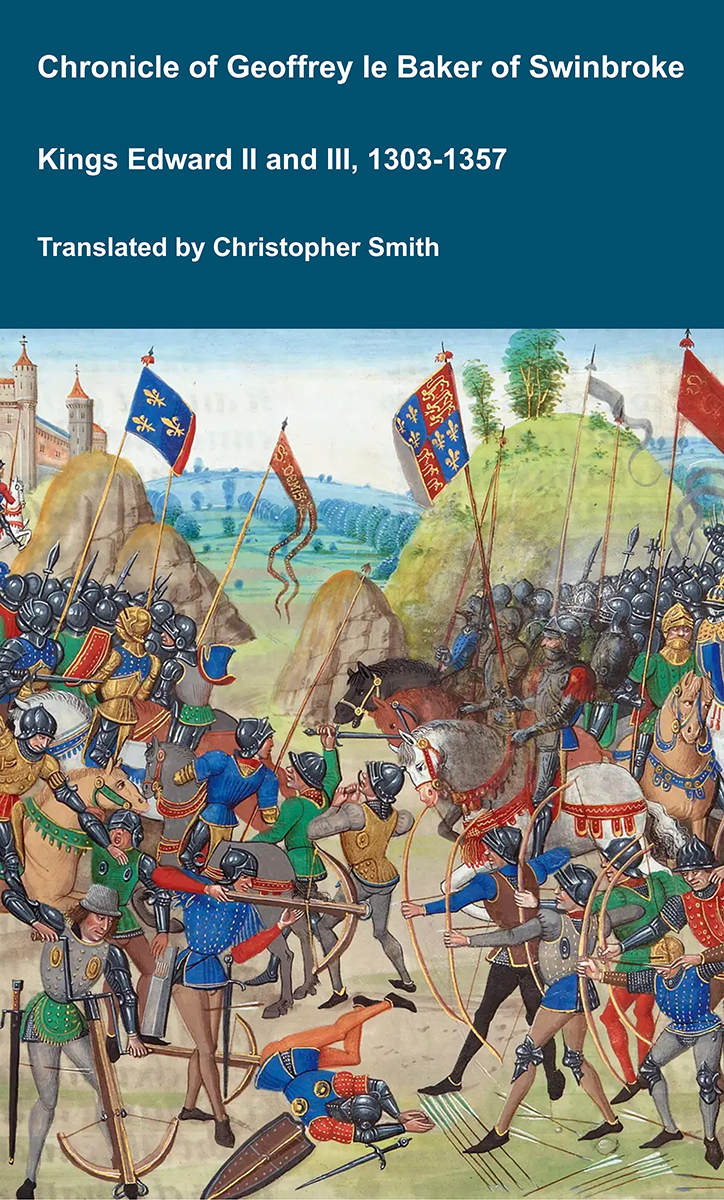
Chronicle of Geoffrey le Baker of Swinbroke
Baker was a secular clerk from Swinbroke, now Swinbrook, an Oxfordshire village two miles east of Burford. His Chronicle describes the events of the period 1303-1356: Gaveston, Bannockburn, Boroughbridge, the murder of King Edward II, the Scottish Wars, Sluys, Crécy, the Black Death, Winchelsea and Poitiers. To quote Herbert Bruce 'it possesses a vigorous and characteristic style, and its value for particular events between 1303 and 1356 has been recognised by its editor and by subsequent writers'. The book provides remarkable detail about the events it describes. Baker's text has been augmented with hundreds of notes, including extracts from other contemporary chronicles, such as the Annales Londonienses, Annales Paulini, Murimuth, Lanercost, Avesbury, Guisborough and Froissart to enrich the reader's understanding. The translation takes as its source the 'Chronicon Galfridi le Baker de Swynebroke' published in 1889, edited by Edward Maunde Thompson.
Available at Amazon in eBook and Paperback format.
The River Bure rises at Melton Constable, Norfolk [Map] from where it flows past Briston, Norfolk [Map], Thurning, Norfolk [Map] after which it is joined by the River Thurne. Thereafter it flows past Corpusty, Norfolk [Map], ItterIngham, Norfolk [Map], Blickling Hall, Norfolk [Map], where there is a large ornamental lake, Ingworth, Norfolk [Map], Drabblegate, Norfolk [Map], Aylsham, Norfolk [Map], Burgh, Norfolk [Map], Church of St Michael, Oxnead [Map], Buxton, Norfolk [Map], Little Hautbois, Norfolk [Map], Horstead, Norfolk [Map], Belaugh, Norfolk [Map], Wroxham, Norfolk [Map], Horning, Norfolk [Map], Upper Street [Map], Ranworth, Norfolk [Map] after which it is joined by the River Ant after which it passes St Benet's Abbey, Norfolk [Map] then joining the River Bure just after Thurne, Norfolk [Map]. The River Bure then flows under Acle Bridge, Norfolk [Map], past Stokesby, Norfolk [Map], Herringby, Norfolk [Map] to Great Yarmouth, Norfolk [Map] where it joins the River Yare before joining the North Sea.
The River Waveney rises at Redgrave and Lopham Fen, Norfolk [Map] from where it flows past BressIngham, Norfolk [Map], Diss, Norfolk [Map], Scole, Norfolk [Map], Oakley, Norfolk [Map], Hoxne, Norfolk [Map] where it is joined by the Norfolk River Dove, St Margaret's Church, Syleham [Map], Brockdish, Norfolk [Map], Needham, Norfolk [Map], All Saint's Church, Mendham [Map], Homersfield, Norfolk [Map], Flixton, Suffolk [Map], Bungay, Norfolk [Map], Wainford, Norfolk [Map], EllIngham, Norfolk [Map], Geldeston, Norfolk [Map], Beccles, Norfolk [Map], Aldeby, Norfolk [Map] and Burgh St Peter, Norfolk [Map]. Here it continues past Somerleyton, Norfolk [Map] and Saint Olaves, Norfolk [Map] to join the River Yare at Burgh Castle, Norfolk [Map]. After Burgh St Peter, Norfolk [Map] it is also joined by the Oulton Dyke that joins it to the Oulton Broad, Norfolk [Map] that then becomes Lake Lothing, Norfolk [Map] that then becomes Lowestoft Inner Harbour [Map] where it joins the North Sea.
On 23rd August 1768 Astley Paston Cooper 1st Baronet was born to Reverend Samuel Cooper [aged 28] and Maria Susanna Bransby [aged 31] at Brooke Hall, Norfolk. He was baptised on 9th September 1768 at St Peter's Church, Brooke [Map].
St Peter's Church, Brooke is also in Churches in Norfolk.
On 23rd August 1768 Astley Paston Cooper 1st Baronet was born to Reverend Samuel Cooper [aged 28] and Maria Susanna Bransby [aged 31] at Brooke Hall, Norfolk. He was baptised on 9th September 1768 at St Peter's Church, Brooke [Map].
The River Yare rises around Thuxton, Norfolk [Map] from where it flows past Coston, Norfolk [Map], Brandon Parva, Norfolk [Map], Barnham Broom, Norfolk [Map] after which it is joined by the River Tiffey before flowing past Marlingford, Norfolk [Map], Bawburgh, Norfolk [Map], Bowthorpe, Norfolk [Map], Colney, Norfolk [Map], Earlham Park [Map], Eaton [Map] to Old Lakenham [Map] after which it is joined by the River Wensum. Thereafter it flows past Thorpe St Andrew, Norfolk [Map], SurlIngham, Norfolk [Map], Brundall, Norfolk [Map], Buckenham, Norfolk [Map], Cantley, Norfolk [Map], Reedham, Norfolk [Map] to Berney Arms, Norfolk [Map] after which it is joined by the River Waveney then flows through Great Yarmouth, Norfolk [Map] where it is joined by the River Bure then meets the North Sea at Gorleston on Sea, Norfolk [Map].
The River Waveney rises at Redgrave and Lopham Fen, Norfolk [Map] from where it flows past BressIngham, Norfolk [Map], Diss, Norfolk [Map], Scole, Norfolk [Map], Oakley, Norfolk [Map], Hoxne, Norfolk [Map] where it is joined by the Norfolk River Dove, St Margaret's Church, Syleham [Map], Brockdish, Norfolk [Map], Needham, Norfolk [Map], All Saint's Church, Mendham [Map], Homersfield, Norfolk [Map], Flixton, Suffolk [Map], Bungay, Norfolk [Map], Wainford, Norfolk [Map], EllIngham, Norfolk [Map], Geldeston, Norfolk [Map], Beccles, Norfolk [Map], Aldeby, Norfolk [Map] and Burgh St Peter, Norfolk [Map]. Here it continues past Somerleyton, Norfolk [Map] and Saint Olaves, Norfolk [Map] to join the River Yare at Burgh Castle, Norfolk [Map]. After Burgh St Peter, Norfolk [Map] it is also joined by the Oulton Dyke that joins it to the Oulton Broad, Norfolk [Map] that then becomes Lake Lothing, Norfolk [Map] that then becomes Lowestoft Inner Harbour [Map] where it joins the North Sea.
Burgh Castle, Norfolk is also in Castles in Norfolk.
The River Waveney rises at Redgrave and Lopham Fen, Norfolk [Map] from where it flows past BressIngham, Norfolk [Map], Diss, Norfolk [Map], Scole, Norfolk [Map], Oakley, Norfolk [Map], Hoxne, Norfolk [Map] where it is joined by the Norfolk River Dove, St Margaret's Church, Syleham [Map], Brockdish, Norfolk [Map], Needham, Norfolk [Map], All Saint's Church, Mendham [Map], Homersfield, Norfolk [Map], Flixton, Suffolk [Map], Bungay, Norfolk [Map], Wainford, Norfolk [Map], EllIngham, Norfolk [Map], Geldeston, Norfolk [Map], Beccles, Norfolk [Map], Aldeby, Norfolk [Map] and Burgh St Peter, Norfolk [Map]. Here it continues past Somerleyton, Norfolk [Map] and Saint Olaves, Norfolk [Map] to join the River Yare at Burgh Castle, Norfolk [Map]. After Burgh St Peter, Norfolk [Map] it is also joined by the Oulton Dyke that joins it to the Oulton Broad, Norfolk [Map] that then becomes Lake Lothing, Norfolk [Map] that then becomes Lowestoft Inner Harbour [Map] where it joins the North Sea.
Burgh Castle Roman Fort, Norfolk is also in Castles in Norfolk.
Burgh Castle Roman Fort, Norfolk [Map] is a Roman shore fort where the River Waveney meets the River Yare. One of nine constructed around 250AD to hold troops as a defence against Saxon raids up the rivers of the east and south coasts of southern Britain.
It was possibly known as Gariannonum, although the single record, the Notitia Dignitatum, a Roman Army "order of battle", may perhaps be referring to the Roman site at Caister-on-Sea [Map].
Abbot John Whethamstede’s Chronicle of the Abbey of St Albans
Abbot John Whethamstede's Register aka Chronicle of his second term at the Abbey of St Albans, 1451-1461, is a remarkable text that describes his first-hand experience of the beginning of the Wars of the Roses including the First and Second Battles of St Albans, 1455 and 1461, respectively, their cause, and their consequences, not least on the Abbey itself. His text also includes Loveday, Blore Heath, Northampton, the Act of Accord, Wakefield, and Towton, and ends with the Coronation of King Edward IV. In addition to the events of the Wars of the Roses, Abbot John, or his scribes who wrote the Chronicle, include details in the life of the Abbey such as charters, letters, land exchanges, visits by legates, and disputes, which provide a rich insight into the day-to-day life of the Abbey, and the challenges faced by its Abbot.
Available at Amazon in eBook and Paperback format.
The River Waveney rises at Redgrave and Lopham Fen, Norfolk [Map] from where it flows past BressIngham, Norfolk [Map], Diss, Norfolk [Map], Scole, Norfolk [Map], Oakley, Norfolk [Map], Hoxne, Norfolk [Map] where it is joined by the Norfolk River Dove, St Margaret's Church, Syleham [Map], Brockdish, Norfolk [Map], Needham, Norfolk [Map], All Saint's Church, Mendham [Map], Homersfield, Norfolk [Map], Flixton, Suffolk [Map], Bungay, Norfolk [Map], Wainford, Norfolk [Map], EllIngham, Norfolk [Map], Geldeston, Norfolk [Map], Beccles, Norfolk [Map], Aldeby, Norfolk [Map] and Burgh St Peter, Norfolk [Map]. Here it continues past Somerleyton, Norfolk [Map] and Saint Olaves, Norfolk [Map] to join the River Yare at Burgh Castle, Norfolk [Map]. After Burgh St Peter, Norfolk [Map] it is also joined by the Oulton Dyke that joins it to the Oulton Broad, Norfolk [Map] that then becomes Lake Lothing, Norfolk [Map] that then becomes Lowestoft Inner Harbour [Map] where it joins the North Sea.
The River Bure rises at Melton Constable, Norfolk [Map] from where it flows past Briston, Norfolk [Map], Thurning, Norfolk [Map] after which it is joined by the River Thurne. Thereafter it flows past Corpusty, Norfolk [Map], ItterIngham, Norfolk [Map], Blickling Hall, Norfolk [Map], where there is a large ornamental lake, Ingworth, Norfolk [Map], Drabblegate, Norfolk [Map], Aylsham, Norfolk [Map], Burgh, Norfolk [Map], Church of St Michael, Oxnead [Map], Buxton, Norfolk [Map], Little Hautbois, Norfolk [Map], Horstead, Norfolk [Map], Belaugh, Norfolk [Map], Wroxham, Norfolk [Map], Horning, Norfolk [Map], Upper Street [Map], Ranworth, Norfolk [Map] after which it is joined by the River Ant after which it passes St Benet's Abbey, Norfolk [Map] then joining the River Bure just after Thurne, Norfolk [Map]. The River Bure then flows under Acle Bridge, Norfolk [Map], past Stokesby, Norfolk [Map], Herringby, Norfolk [Map] to Great Yarmouth, Norfolk [Map] where it joins the River Yare before joining the North Sea.
In 1695 Mary Magdalen Lombard was born to Peter Lombard of Burnham Thorpe in Norfolk at Burnham Thorpe, Norfolk. She married 21st July 1720 Horatio Walpole 1st Baron Walpole and had issue.
The Black Water, Norfolk rises at Wendling, Norfolk [Map] from where it flows past Bushby Common, Norfolk [Map], Dereham, Norfolk [Map], Gressenhall, Norfolk [Map] to Worthing, Norfolk [Map] after which it joins the River Wensum.
The River Bure rises at Melton Constable, Norfolk [Map] from where it flows past Briston, Norfolk [Map], Thurning, Norfolk [Map] after which it is joined by the River Thurne. Thereafter it flows past Corpusty, Norfolk [Map], ItterIngham, Norfolk [Map], Blickling Hall, Norfolk [Map], where there is a large ornamental lake, Ingworth, Norfolk [Map], Drabblegate, Norfolk [Map], Aylsham, Norfolk [Map], Burgh, Norfolk [Map], Church of St Michael, Oxnead [Map], Buxton, Norfolk [Map], Little Hautbois, Norfolk [Map], Horstead, Norfolk [Map], Belaugh, Norfolk [Map], Wroxham, Norfolk [Map], Horning, Norfolk [Map], Upper Street [Map], Ranworth, Norfolk [Map] after which it is joined by the River Ant after which it passes St Benet's Abbey, Norfolk [Map] then joining the River Bure just after Thurne, Norfolk [Map]. The River Bure then flows under Acle Bridge, Norfolk [Map], past Stokesby, Norfolk [Map], Herringby, Norfolk [Map] to Great Yarmouth, Norfolk [Map] where it joins the River Yare before joining the North Sea.
From Combretovium [Map] aka Baylham the Pye Road continues along what is now the A140 through Yaxley, Suffolk [Map] where it makes a slight change in direction, through Dickleburgh, Norfolk [Map], Long Stratton, Norfolk [Map] to Norwich, Norfolk [Map] from where it continues east to Venta Icenorium [Map] aka Caistor St Edmund.
On 5th November 1459 John Fastolf [aged 79] died at Caister, Norfolk [Map]. He was buried at St Benet's Abbey, Norfolk [Map]. William Yelverton [aged 59] was executor. Fastolf's will was disputed by Yelverton and the other executors once it was discovered that John Paston [aged 38] was to inherit the estates. The dispute between Yelverton and Paston was taken up by the Lord Chancellor's office and went on for many years.
Caister Castle, Norfolk is also in Castles in Norfolk.
William of Worcester's Chronicle of England
William of Worcester, born around 1415, and died around 1482 was secretary to John Fastolf, the renowned soldier of the Hundred Years War, during which time he collected documents, letters, and wrote a record of events. Following their return to England in 1440 William was witness to major events. Twice in his chronicle he uses the first person: 1. when writing about the murder of Thomas, 7th Baron Scales, in 1460, he writes '… and I saw him lying naked in the cemetery near the porch of the church of St. Mary Overie in Southwark …' and 2. describing King Edward IV's entry into London in 1461 he writes '… proclaimed that all the people themselves were to recognize and acknowledge Edward as king. I was present and heard this, and immediately went down with them into the city'. William’s Chronicle is rich in detail. It is the source of much information about the Wars of the Roses, including the term 'Diabolical Marriage' to describe the marriage of Queen Elizabeth Woodville’s brother John’s marriage to Katherine, Dowager Duchess of Norfolk, he aged twenty, she sixty-five or more, and the story about a paper crown being placed in mockery on the severed head of Richard, 3rd Duke of York.
Available at Amazon in eBook and Paperback format.
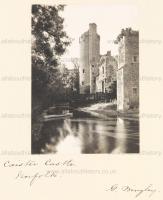
August 1896. Godfrey Bingley [aged 54]. Caister Castle, Norfolk [Map].
On Sunday after the feast of the Conversion of St. Paul, 1453, and proved 8th of April, 1454; Roger Harsick desires to be buried in the chancel of South-acre [Map]; bequeaths to the fraternity of St. Mary at Dunham 6s. 8d. to the churches of Wickmere [Map] and Calthorp, 13s. 4d. to Edmund his brother 5 marks, and to the Lady Margaret Harsyk his sister a legacy.
The River Yare rises around Thuxton, Norfolk [Map] from where it flows past Coston, Norfolk [Map], Brandon Parva, Norfolk [Map], Barnham Broom, Norfolk [Map] after which it is joined by the River Tiffey before flowing past Marlingford, Norfolk [Map], Bawburgh, Norfolk [Map], Bowthorpe, Norfolk [Map], Colney, Norfolk [Map], Earlham Park [Map], Eaton [Map] to Old Lakenham [Map] after which it is joined by the River Wensum. Thereafter it flows past Thorpe St Andrew, Norfolk [Map], SurlIngham, Norfolk [Map], Brundall, Norfolk [Map], Buckenham, Norfolk [Map], Cantley, Norfolk [Map], Reedham, Norfolk [Map] to Berney Arms, Norfolk [Map] after which it is joined by the River Waveney then flows through Great Yarmouth, Norfolk [Map] where it is joined by the River Bure then meets the North Sea at Gorleston on Sea, Norfolk [Map].
The River Tiffey rises near Wymondham, Norfolk [Map] from where it flows past Carlton Forehoe, Norfolk [Map], Wramplingham, Norfolk [Map] to Barford, Norfolk [Map] after which it joins the River Yare.
Castle Acre Priory is also in Castles in Norfolk, Priories in England.
In 1113 William de Glanville Lord of Bromholm [aged 27] founded Bromholm Priory [Map] for seven or eight Cluniac monks from the Priory of Castle Acre [Map]. It was subordinate to Castle Acre Priory [Map] until 1195 when it was exempted by Pope Celestine III.
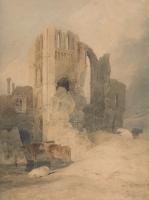
Around 1804. John Sell Cotman [aged 21]. Castle Acre Priory [Map].

Before 1839. John Thirtle [aged 61]. "Castle Acre Priory [Map]".
Eudo Harsick and Alice Watshall were benefactors to the abbey of Castleacre [Map] who gave them lands to repair their mill here, called Witemill, and the pool, with that of Newmill.
Henrici Quinti, Angliæ Regis, Gesta, is a first-hand account of the Agincourt Campaign, and subsequent events to his death in 1422. The author of the first part was a Chaplain in King Henry's retinue who was present from King Henry's departure at Southampton in 1415, at the siege of Harfleur, the battle of Agincourt, and the celebrations on King Henry's return to London. The second part, by another writer, relates the events that took place including the negotiations at Troye, Henry's marriage and his death in 1422.
Available at Amazon in eBook and Paperback format.
Alexander Harsick gaves lands to Castle Acre Priory [Map] called the Sand-Pitts.

In 1542 William Sharington [aged 47] was appointed Constable of Castle Rising.
On 20th August 1698 Oliver le Neve [aged 36] and Henry Hobart 4th Baronet [aged 41] fought a duel at Cawston Heath, Norfolk. Henry Hobart 4th Baronet received a fatal wound; he died the next day.
On 20th August 1698 Henry Hobart 4th Baronet [aged 41] died from wounds he had received in a duel with Oliver le Neve [aged 36] at Cawston Heath, Norfolk. His son John [aged 4] succeeded 5th Baronet Hobart of Intwood in Norfolk.
The River Tud rises near Toftwood, Norfolk [Map] from where it flows past Yaxham, Norfolk [Map], Clippings Green, Norfolk [Map], Hockering, Norfolk [Map], Honingham, Norfolk [Map], Easton, Norfolk [Map],Costessey, Norfolk [Map] after which it joins the River Wensum at Hellesdon [Map].
The River Yare rises around Thuxton, Norfolk [Map] from where it flows past Coston, Norfolk [Map], Brandon Parva, Norfolk [Map], Barnham Broom, Norfolk [Map] after which it is joined by the River Tiffey before flowing past Marlingford, Norfolk [Map], Bawburgh, Norfolk [Map], Bowthorpe, Norfolk [Map], Colney, Norfolk [Map], Earlham Park [Map], Eaton [Map] to Old Lakenham [Map] after which it is joined by the River Wensum. Thereafter it flows past Thorpe St Andrew, Norfolk [Map], SurlIngham, Norfolk [Map], Brundall, Norfolk [Map], Buckenham, Norfolk [Map], Cantley, Norfolk [Map], Reedham, Norfolk [Map] to Berney Arms, Norfolk [Map] after which it is joined by the River Waveney then flows through Great Yarmouth, Norfolk [Map] where it is joined by the River Bure then meets the North Sea at Gorleston on Sea, Norfolk [Map].
The River Wissey rises near Bradenham, Norfolk [Map] from where it flows past Holme Hale, Norfolk [Map], North Pickenham, Norfolk [Map], South Pickenham, Norfolk [Map], Great CressIngham, Norfolk [Map], Bodney, Norfolk [Map], Ickburgh, Norfolk [Map], Colverston, Norfolk [Map], Little London, Norfolk [Map], Northwolkd, Norfolk [Map], Stoke Ferry, Norfolk [Map], Wissington, Norfolk [Map] to Hilgay, Norfolk [Map] after which it joins the River Great Ouse.
The River Bure rises at Melton Constable, Norfolk [Map] from where it flows past Briston, Norfolk [Map], Thurning, Norfolk [Map] after which it is joined by the River Thurne. Thereafter it flows past Corpusty, Norfolk [Map], ItterIngham, Norfolk [Map], Blickling Hall, Norfolk [Map], where there is a large ornamental lake, Ingworth, Norfolk [Map], Drabblegate, Norfolk [Map], Aylsham, Norfolk [Map], Burgh, Norfolk [Map], Church of St Michael, Oxnead [Map], Buxton, Norfolk [Map], Little Hautbois, Norfolk [Map], Horstead, Norfolk [Map], Belaugh, Norfolk [Map], Wroxham, Norfolk [Map], Horning, Norfolk [Map], Upper Street [Map], Ranworth, Norfolk [Map] after which it is joined by the River Ant after which it passes St Benet's Abbey, Norfolk [Map] then joining the River Bure just after Thurne, Norfolk [Map]. The River Bure then flows under Acle Bridge, Norfolk [Map], past Stokesby, Norfolk [Map], Herringby, Norfolk [Map] to Great Yarmouth, Norfolk [Map] where it joins the River Yare before joining the North Sea.
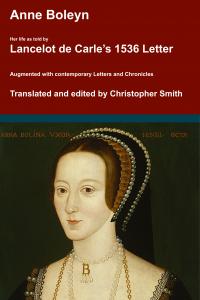
Anne Boleyn. Her Life as told by Lancelot de Carle's 1536 Letter.
In 1536, two weeks after the execution of Anne Boleyn, her brother George and four others, Lancelot du Carle, wrote an extraordinary letter that described Anne's life, and her trial and execution, to which he was a witness. This book presents a new translation of that letter, with additional material from other contemporary sources such as Letters, Hall's and Wriothesley's Chronicles, the pamphlets of Wynkyn the Worde, the Memorial of George Constantyne, the Portuguese Letter and the Baga de Secrets, all of which are provided in Appendices.
Available at Amazon in eBook and Paperback format.
On 4th September 1650 Edmund Pooley died. He was buried at Corpusty Church where there is an inscription "Here lyeth the body of Edmund Pooley, son of Sir Edmund Pooley [aged 31] of Bradley in the County of Suffolk, Kent, Knight, & Dame Hester his Wife. He lived Eleven Monthes, eight Dayes. Died September 4th Anno Domini I650".
On 14th April 1345 Hawise Tiptoft [aged 75] died at Costessey, Norfolk [Map].
The River Wensum rises at Whissonsett, Norfolk [Map] from where it flows past Raynham, Norfolk [Map], Doughton, Norfolk [Map], Shereford, Norfolk [Map], Fakenham, Norfolk [Map], Pensthorpe, Norfolk [Map], Great Ryburgh, Norfolk [Map], Sennow Park, Norfolk [Map], Guist, Norfolk [Map], North Elmham, Norfolk [Map], Worthing, Norfolk [Map], Swanton Morley, Norfolk [Map], Mill Street, Norfolk [Map], Lyng, Norfolk [Map], Lenwade, Norfolk [Map], Attlebridge, Norfolk [Map], Ringland, Norfolk [Map], Taverham, Norfolk [Map], Drayton, Norfolk [Map], Costessey, Norfolk [Map] after which it is joined by the River Tud at Hellesdon [Map]. From Hellesdon [Map] it flows through the centre or Norwich, Norfolk [Map], past the Cow Tower, Norwich [Map], Carrow Road Stadium [Map] after which it joins the River Yare.
The River Tud rises near Toftwood, Norfolk [Map] from where it flows past Yaxham, Norfolk [Map], Clippings Green, Norfolk [Map], Hockering, Norfolk [Map], Honingham, Norfolk [Map], Easton, Norfolk [Map],Costessey, Norfolk [Map] after which it joins the River Wensum at Hellesdon [Map].
In 1884 Henry Valentine Stafford-Jerningham 9th Baron Stafford [aged 82] died at Costessey Park. His nephew Augustus [aged 53] succeeded 10th Baron Stafford, 9th Baronet Jerningham of Cossey.
The River Yare rises around Thuxton, Norfolk [Map] from where it flows past Coston, Norfolk [Map], Brandon Parva, Norfolk [Map], Barnham Broom, Norfolk [Map] after which it is joined by the River Tiffey before flowing past Marlingford, Norfolk [Map], Bawburgh, Norfolk [Map], Bowthorpe, Norfolk [Map], Colney, Norfolk [Map], Earlham Park [Map], Eaton [Map] to Old Lakenham [Map] after which it is joined by the River Wensum. Thereafter it flows past Thorpe St Andrew, Norfolk [Map], SurlIngham, Norfolk [Map], Brundall, Norfolk [Map], Buckenham, Norfolk [Map], Cantley, Norfolk [Map], Reedham, Norfolk [Map] to Berney Arms, Norfolk [Map] after which it is joined by the River Waveney then flows through Great Yarmouth, Norfolk [Map] where it is joined by the River Bure then meets the North Sea at Gorleston on Sea, Norfolk [Map].
In 1531 Henry Mordaunt was born to Robert Mordaunt [aged 36] at Crimston, Norfolk. He married Anne Poley and had issue.
On 16th October 1909 Susan Henrietta Cavendish Viscountess Hampden [aged 63] died at Cromer, Norfolk.
Anne Boleyn. Her Life as told by Lancelot de Carle's 1536 Letter.
In 1536, two weeks after the execution of Anne Boleyn, her brother George and four others, Lancelot du Carle, wrote an extraordinary letter that described Anne's life, and her trial and execution, to which he was a witness. This book presents a new translation of that letter, with additional material from other contemporary sources such as Letters, Hall's and Wriothesley's Chronicles, the pamphlets of Wynkyn the Worde, the Memorial of George Constantyne, the Portuguese Letter and the Baga de Secrets, all of which are provided in Appendices.
Available at Amazon in eBook and Paperback format.
History of the Arrival of Edward IV Part 2. In the yere of grace 1471, aftar the comptinge of the churche of England, the ij. day of Marche, endynge the x. yere4 of the reigne of our soveraign Lord Kynge Edwarde the IV, by the grace of God Kynge of England and of Fraunce, and Lord of Irland, the sayde moaste noble kynge accompanied with ij thowsand Englyshe men5, well chosen, entendynge to passe the sea, and to reentar and recovar his realme of England, at that tyme usurpyd and occupied by Henry, callyd Henry VI.6, by the traytorous meanes of his greate rebell Richard, Erle of Warwicke, and his complices, entered into his shipe, afore the haven of Flisshinge [Map], in Zeland, the sayde ij. of Marche; and forasmoche as aftar he was in the shippe, and the felowshipe also, with all that to them appertayned, the wynd fell and not good for hym, he therefore wold not retorne agayne to the land, but abode in his shipe, and all his felowshipe in lyke wyse, by the space of ix dayes, abydynge good wynde and wether; whiche had the xj. daye of Marche, he made saile, and so did all the shipps that awayted upon hym, takyng theyr cowrse streyght over [towards] the coste of Norfolke, and came before Crowmere, the Tuesdaye, agayne even, the xij. day of Marche; withar the Kynge sent on land Ser Robart Chambarlayne, Syr Gilbert Debenham, Knyghts, and othar, trustinge by them to have some knowledge how the land inward was disposed towards hym, and, specially, the countries there nere adioyninge, as in party so they browght hym knowledge from suche as for that caws wer sent into thos parties,from his trew servaunts and partakars within the land, whiche tolde them, for certayne, that thos parties wer right sore beset by th'Erle of Warwyke, and his adherents, and, in especiall, by th'Erle of Oxenforde7, in such wyse that, of lyklyhood, it might not be for his wele to lande in the contrye; and a great cawse was, for the Duke of Norfolke was had owt of the contrye, and all the gentlemen of whom th'Erle of Warwicke bare any suspicion ware, afore that, sent for by letars of privie seale, and put in warde about London, or els found surety; natheles, the sayd ij Knyghts, and they that came on land with them, had right good chere, and turned agayne to the sea. Whos report herd, the Kynge garte make course towards the north partyes.
Note 4. endynge the x. yere. — The regnal years of Edward IV. were reckoned from the 4th day of March 1461, the day on which he took possession of the throne; (Fabyan, 639;) his tenth year ended therefore on 3rd March 1471.
Note 5. accompanied with ij thowsand Englishmen. — Henry's government at first represented Edward's adherents as consisting wholly of foreigners, (Fœdera, XI, 705.) but afterwards admitted they were partly Englishmen and partly Flemings (Ibid. 706.) The Chroniclres are singularly contradictory. The Croyland Continuator describes them as 1500 Englishmen; (Gale, I. 554;) Fabyan as a small company of Flemings and others not exceeding 1000 in number; (Fabyan, 660;) Polydore Vergil as scarcely 2000 men at arms; (Vergil, 522;) the Chronicler in Leland as 900 Englishmen and 300 Flemings. (Collect. II. 503.)
Note 6. his realme of England at that tyme usurpyd and occupied by Henry, callyd Henry VI. — Henry's brief restoration took place in the month of October 1470; the day is variously stated. There are documents in the Fœdera in Henry's name dated the 9th of October. (XI. 661-664.)
Note 7. in especiall by th'Erle of Oxenforde. — Preparations to resist the meditated return of Edward IV. were made as early as December 1470. On the 21st of that month a Commission was directed to the Marquis Montague, authorising him, in case of necessity, to raise the counties of Nottyngham, York, Northumberland, Cumberland, and Westmerland; (Fœd. 676;) and a Commission of a similar character, but extending all over England, was directed to the Duke of Clarence, the Earl of Warwick, the Earl of Oxford and Sir John Scrope on the 28th of December. (Ibid. 677.) By a writ dated the 2nd January 1471, the Sheriffs and people of the counties of Cambridge, Huntingdon, Norfolk, Suffolk, Essex and Hertford, were directed to be attendant upon the last-mentioned Commissioners. (Ibid. 678.) The exertions of the Earl of Oxford in raising men in the Eastern Counties are manifest from two letters in the Paston Collection. (II. 54, 58.)
 Become a Member via our Buy Me a Coffee page to read more.
In 1766 George Wyndham was born to John Wyndham at Cromer Hall, Norfolk.
On 9th August 1916 Victoria Noel Lady Buxton [aged 77] died at North Lodge.
St Martin's Church, Overstrand is also in Churches in Norfolk.
On 19th February 1845 Thomas Fowell Buxton 1st Baronet [aged 58] died. He was buried at St Martin's Church, Overstrand [Map]. His son Edward [aged 32] succeeded 2nd Baronet Buxton of Belfield in Dorset. Catherine Gurney Lady Buxton [aged 31] by marriage Lady Buxton of Belfield in Dorset.
On 22nd November 1931 Constance Rothschild Baroness Battersea [aged 88] died at The Pleasaunce.
On 14th July 1944 Samuel Hoare 1st Viscount Templewood [aged 64] was created 1st Viscount Templewood of Chelsea in Middlesex. Templewood being the name of his house at Sidestrand.
In 1508 Thomas Wyndham was born to Vice-Admiral Thomas Wyndham [aged 42] and Elizabeth Wentworth Countess Bath [aged 38] at Crownthorpe, Norfolk.
The Black Water, Norfolk rises at Wendling, Norfolk [Map] from where it flows past Bushby Common, Norfolk [Map], Dereham, Norfolk [Map], Gressenhall, Norfolk [Map] to Worthing, Norfolk [Map] after which it joins the River Wensum.
Anne Boleyn. Her Life as told by Lancelot de Carle's 1536 Letter.
In 1536, two weeks after the execution of Anne Boleyn, her brother George and four others, Lancelot du Carle, wrote an extraordinary letter that described Anne's life, and her trial and execution, to which he was a witness. This book presents a new translation of that letter, with additional material from other contemporary sources such as Letters, Hall's and Wriothesley's Chronicles, the pamphlets of Wynkyn the Worde, the Memorial of George Constantyne, the Portuguese Letter and the Baga de Secrets, all of which are provided in Appendices.
Available at Amazon in eBook and Paperback format.
From Combretovium [Map] aka Baylham the Pye Road continues along what is now the A140 through Yaxley, Suffolk [Map] where it makes a slight change in direction, through Dickleburgh, Norfolk [Map], Long Stratton, Norfolk [Map] to Norwich, Norfolk [Map] from where it continues east to Venta Icenorium [Map] aka Caistor St Edmund.
The River Waveney rises at Redgrave and Lopham Fen, Norfolk [Map] from where it flows past BressIngham, Norfolk [Map], Diss, Norfolk [Map], Scole, Norfolk [Map], Oakley, Norfolk [Map], Hoxne, Norfolk [Map] where it is joined by the Norfolk River Dove, St Margaret's Church, Syleham [Map], Brockdish, Norfolk [Map], Needham, Norfolk [Map], All Saint's Church, Mendham [Map], Homersfield, Norfolk [Map], Flixton, Suffolk [Map], Bungay, Norfolk [Map], Wainford, Norfolk [Map], EllIngham, Norfolk [Map], Geldeston, Norfolk [Map], Beccles, Norfolk [Map], Aldeby, Norfolk [Map] and Burgh St Peter, Norfolk [Map]. Here it continues past Somerleyton, Norfolk [Map] and Saint Olaves, Norfolk [Map] to join the River Yare at Burgh Castle, Norfolk [Map]. After Burgh St Peter, Norfolk [Map] it is also joined by the Oulton Dyke that joins it to the Oulton Broad, Norfolk [Map] that then becomes Lake Lothing, Norfolk [Map] that then becomes Lowestoft Inner Harbour [Map] where it joins the North Sea.
On 20th March 1628 John Hobart 3rd Baronet was born to Miles Hobart [aged 32] and Frances Peyton [aged 32] in DitchIngham, Norfolk. He married (1) 1647 his first cousin Philippa Hobart, daughter of John Hobart 2nd Baronet and Frances Egerton Lady Hobart (2) June 1656 Mary Hampden.
In 1480 Robert Coke of Sparham was born to John Thomas Coke of Ryston and Sparham [aged 35] at Dodington, Norfolk.
The River Wensum rises at Whissonsett, Norfolk [Map] from where it flows past Raynham, Norfolk [Map], Doughton, Norfolk [Map], Shereford, Norfolk [Map], Fakenham, Norfolk [Map], Pensthorpe, Norfolk [Map], Great Ryburgh, Norfolk [Map], Sennow Park, Norfolk [Map], Guist, Norfolk [Map], North Elmham, Norfolk [Map], Worthing, Norfolk [Map], Swanton Morley, Norfolk [Map], Mill Street, Norfolk [Map], Lyng, Norfolk [Map], Lenwade, Norfolk [Map], Attlebridge, Norfolk [Map], Ringland, Norfolk [Map], Taverham, Norfolk [Map], Drayton, Norfolk [Map], Costessey, Norfolk [Map] after which it is joined by the River Tud at Hellesdon [Map]. From Hellesdon [Map] it flows through the centre or Norwich, Norfolk [Map], past the Cow Tower, Norwich [Map], Carrow Road Stadium [Map] after which it joins the River Yare.
The River Great Ouse rises near Syresham, Northamptonshire [Map] from where it flows past Biddlesden, Buckinghamshire [Map], Brackley, Northamptonshire [Map], Westbury, Buckinghamshire [Map], Radclive, Buckinghamshire [Map], through the centre of Buckingham, Buckinghamshire [Map], Buckingham, Buckinghamshire [Map] after which it is joined by Padbury Brook.
The River Great Ouse continues past Thornton, Buckinghamshire [Map], Passenham, Northamptonshire [Map], Stony Stratford, Buckinghamshire [Map], around Newport Pagnell, Buckinghamshire [Map], past Gayhurst, Buckinghamshire [Map], Olney, Buckinghamshire [Map], Newton Blossomville, Buckinghamshire [Map], crossing into Bedfordshirem, past Harrold, Bedfordshire [Map], Sharnbrook, Bedfordshire [Map], Milton Ernest, Bedfordshire [Map], through the centre of Bedford, Bedfordshire [Map], under Great Barford Bridge, Bedfordshire [Map], past Tempsford, Bedfordshire [Map], Eaton Socon, Bedfordshire [Map], through St Neots, Bedfordshire [Map], past Offord D'Arcy, Bedfordshire [Map] and Offord Cluny, Bedfordshire [Map], through Godmanchester [Map] and Huntingdon [Map], under St Ives Bridge [Map], Earith [Map] after which it is separates into two.
Thereafter one section is canalised heading north-east to Downham Market, Norfolk [Map].
The other natural section flows past Little Thetford [Map], through Ely [Map], Littleport [Map], past to Downham Market, Norfolk [Map] where it joins the canalised section.
Thereafter to King's Lynn, Norfolk [Map] after which it joins the The Wash.
The River Bure rises at Melton Constable, Norfolk [Map] from where it flows past Briston, Norfolk [Map], Thurning, Norfolk [Map] after which it is joined by the River Thurne. Thereafter it flows past Corpusty, Norfolk [Map], ItterIngham, Norfolk [Map], Blickling Hall, Norfolk [Map], where there is a large ornamental lake, Ingworth, Norfolk [Map], Drabblegate, Norfolk [Map], Aylsham, Norfolk [Map], Burgh, Norfolk [Map], Church of St Michael, Oxnead [Map], Buxton, Norfolk [Map], Little Hautbois, Norfolk [Map], Horstead, Norfolk [Map], Belaugh, Norfolk [Map], Wroxham, Norfolk [Map], Horning, Norfolk [Map], Upper Street [Map], Ranworth, Norfolk [Map] after which it is joined by the River Ant after which it passes St Benet's Abbey, Norfolk [Map] then joining the River Bure just after Thurne, Norfolk [Map]. The River Bure then flows under Acle Bridge, Norfolk [Map], past Stokesby, Norfolk [Map], Herringby, Norfolk [Map] to Great Yarmouth, Norfolk [Map] where it joins the River Yare before joining the North Sea.
The River Wensum rises at Whissonsett, Norfolk [Map] from where it flows past Raynham, Norfolk [Map], Doughton, Norfolk [Map], Shereford, Norfolk [Map], Fakenham, Norfolk [Map], Pensthorpe, Norfolk [Map], Great Ryburgh, Norfolk [Map], Sennow Park, Norfolk [Map], Guist, Norfolk [Map], North Elmham, Norfolk [Map], Worthing, Norfolk [Map], Swanton Morley, Norfolk [Map], Mill Street, Norfolk [Map], Lyng, Norfolk [Map], Lenwade, Norfolk [Map], Attlebridge, Norfolk [Map], Ringland, Norfolk [Map], Taverham, Norfolk [Map], Drayton, Norfolk [Map], Costessey, Norfolk [Map] after which it is joined by the River Tud at Hellesdon [Map]. From Hellesdon [Map] it flows through the centre or Norwich, Norfolk [Map], past the Cow Tower, Norwich [Map], Carrow Road Stadium [Map] after which it joins the River Yare.
In 1309 a charter of free-warren in South Acre, Norfolk, and in Dunham Magna, was granted to John de Harsyck, and Christian his wife.
On Sunday after the feast of the Conversion of St. Paul, 1453, and proved 8th of April, 1454; Roger Harsick desires to be buried in the chancel of South-acre [Map]; bequeaths to the fraternity of St. Mary at Dunham 6s. 8d. to the churches of Wickmere [Map] and Calthorp, 13s. 4d. to Edmund his brother 5 marks, and to the Lady Margaret Harsyk his sister a legacy.
Eudo Harsick was lord of Dunham Magna and East Lexham.
Chronicle of Abbot Ralph of Coggeshall
The Chronicle of Abbot Ralph of Coggeshall (Chronicon Anglicanum) is an indispensable medieval history that brings to life centuries of English and European affairs through the eyes of a learned Cistercian monk. Ralph of Coggeshall, abbot of the Abbey of Coggeshall in Essex in the early 13th century, continued and expanded his community’s chronicle, documenting events from the Norman Conquest of 1066 into the tumultuous reign of King Henry III. Blending eyewitness testimony, careful compilation, and the monastic commitment to record-keeping, this chronicle offers a rare narrative of political intrigue, royal power struggles, and social upheaval in England and beyond. Ralph’s work captures the reigns of pivotal figures such as Richard I and King John, providing invaluable insights into their characters, decisions, and the forces that shaped medieval rule. More than a simple annal, Chronicon Anglicanum conveys the texture of medieval life and governance, making it a rich source for scholars and readers fascinated by English history, monastic authorship, and the shaping of the medieval world.
Available at Amazon in eBook and Paperback format.
Eudo Harsick gave lands in those towns to the Hospital of hospital of St. Mary Magdalen by Lynn, with a fold course for 250 sheep at Dunham Magna, and his lady also gave land and a fold course for 250 sheep at East Lexham, which the said hospital enjoys at this day.
Richard Dorward and Joan Harsick were married. She inherited the manor of Dunham Magna.
After her father's death in 654 Saint Wihtburh Wuffingas decided to build a convent at East Dereham. A traditional story relates that while she was building the convent, she had nothing but dry bread to give to the workmen. She prayed to the Virgin Mary and was told to send her maids to a local well each morning. There they found two wild does which were gentle enough to be milked; they provided nutritious drink for the workers. This allowed the workers to be fed.
In 798 Saint Wihtburh's remains were dug up and found not to have decayed. This was considered a miracle and her remains were re-interred in the church which she had built in East Dereham. The church became a place of pilgrimage, with people visiting Wihtburh's tomb.

1527 Hans Holbein The Younger [aged 30]. Known as "Lady with a Squirrel and a Starling". The subject is believed to be Anne Ashby wife of Francis Lovell [aged 19]. The starling is probably intended as a rhyming pun of East Harling, Norfolk [Map], where the family had recently inherited the estate of East Harling Hall. Squirrels nibbling on nuts feature on the heraldry of the Lovell family: the windows of the Church of St Peter and St Paul, East Harling [Map] include two of the family's arms in stained glass, each showing six red squirrels. The commission may commemorate the birth of a son to the couple in the spring of 1526, but it also showed off their new status as wealthy landowners.
Anne Ashby: she was born to George Ashby of Harefield. Before 1539 Francis Lovell and she were married. In 1539 she died.
Francis Lovell: Before 1508 he was born to Gregory Lovell of Barton Bendish. In 1552 he died.
The River Thet rises near Buckenham Castle, Norfolk [Map] from where it flows past Wilby, Norfolk [Map], North End, Norfolk [Map], Snetterton, Norfolk [Map], Larling, Norfolk [Map], East Harling, Norfolk [Map], Bridgeham, Norfolk [Map], Brettenham, Norfolk [Map], Kilverstone, Norfolk [Map] to Thetford, Norfolk [Map] were it joins the Little.
Church of St Peter and St Paul, East Harling is also in Churches in Norfolk.
On 9th September 1435 Robert Harling died. He was buried in Church of St Peter and St Paul, East Harling [Map].
1527 Hans Holbein The Younger [aged 30]. Known as "Lady with a Squirrel and a Starling". The subject is believed to be Anne Ashby wife of Francis Lovell [aged 19]. The starling is probably intended as a rhyming pun of East Harling, Norfolk [Map], where the family had recently inherited the estate of East Harling Hall. Squirrels nibbling on nuts feature on the heraldry of the Lovell family: the windows of the Church of St Peter and St Paul, East Harling [Map] include two of the family's arms in stained glass, each showing six red squirrels. The commission may commemorate the birth of a son to the couple in the spring of 1526, but it also showed off their new status as wealthy landowners.
Anne Ashby: she was born to George Ashby of Harefield. Before 1539 Francis Lovell and she were married. In 1539 she died.
Francis Lovell: Before 1508 he was born to Gregory Lovell of Barton Bendish. In 1552 he died.
The Deeds of the Dukes of Normandy
The Gesta Normannorum Ducum [The Deeds of the Dukes of Normandy] is a landmark medieval chronicle tracing the rise and fall of the Norman dynasty from its early roots through the pivotal events surrounding the Norman Conquest of England. Originally penned in Latin by the monk William of Jumièges shortly before 1060 and later expanded at the behest of William the Conqueror, the work chronicles the deeds, politics, battles, and leadership of the Norman dukes, especially William’s own claim to the English throne. The narrative combines earlier historical sources with firsthand information and oral testimony to present an authoritative account of Normandy’s transformation from a Viking settlement into one of medieval Europe’s most powerful realms. William’s history emphasizes the legitimacy, military prowess, and governance of the Norman line, framing their expansion, including the conquest of England, as both divinely sanctioned and noble in purpose. Later chroniclers such as Orderic Vitalis and Robert of Torigni continued the history, extending the coverage into the 12th century, providing broader context on ducal rule and its impact. Today this classic work remains a foundational source for understanding Norman identity, medieval statesmanship, and the historical forces that reshaped England and Western Europe between 800AD and 1100AD.
Available at Amazon in eBook and Paperback format.
1527 Hans Holbein The Younger [aged 30]. Known as "Lady with a Squirrel and a Starling". The subject is believed to be Anne Ashby wife of Francis Lovell [aged 19]. The starling is probably intended as a rhyming pun of East Harling, Norfolk [Map], where the family had recently inherited the estate of East Harling Hall. Squirrels nibbling on nuts feature on the heraldry of the Lovell family: the windows of the Church of St Peter and St Paul, East Harling [Map] include two of the family's arms in stained glass, each showing six red squirrels. The commission may commemorate the birth of a son to the couple in the spring of 1526, but it also showed off their new status as wealthy landowners.
Anne Ashby: she was born to George Ashby of Harefield. Before 1539 Francis Lovell and she were married. In 1539 she died.
Francis Lovell: Before 1508 he was born to Gregory Lovell of Barton Bendish. In 1552 he died.
Eudo Harsick was lord of Dunham Magna and East Lexham.
Eudo Harsick gave lands in those towns to the Hospital of hospital of St. Mary Magdalen by Lynn, with a fold course for 250 sheep at Dunham Magna, and his lady also gave land and a fold course for 250 sheep at East Lexham, which the said hospital enjoys at this day.
The River Tud rises near Toftwood, Norfolk [Map] from where it flows past Yaxham, Norfolk [Map], Clippings Green, Norfolk [Map], Hockering, Norfolk [Map], Honingham, Norfolk [Map], Easton, Norfolk [Map],Costessey, Norfolk [Map] after which it joins the River Wensum at Hellesdon [Map].
On 4th December 1409 William Willoughby 5th Baron Willoughby [aged 39] died at Edgefield, Norfolk. He was buried at St James' Church, Spilsby [Map]. His son Robert [aged 24] succeeded 6th Baron Willoughby de Eresby.
The River Waveney rises at Redgrave and Lopham Fen, Norfolk [Map] from where it flows past BressIngham, Norfolk [Map], Diss, Norfolk [Map], Scole, Norfolk [Map], Oakley, Norfolk [Map], Hoxne, Norfolk [Map] where it is joined by the Norfolk River Dove, St Margaret's Church, Syleham [Map], Brockdish, Norfolk [Map], Needham, Norfolk [Map], All Saint's Church, Mendham [Map], Homersfield, Norfolk [Map], Flixton, Suffolk [Map], Bungay, Norfolk [Map], Wainford, Norfolk [Map], EllIngham, Norfolk [Map], Geldeston, Norfolk [Map], Beccles, Norfolk [Map], Aldeby, Norfolk [Map] and Burgh St Peter, Norfolk [Map]. Here it continues past Somerleyton, Norfolk [Map] and Saint Olaves, Norfolk [Map] to join the River Yare at Burgh Castle, Norfolk [Map]. After Burgh St Peter, Norfolk [Map] it is also joined by the Oulton Dyke that joins it to the Oulton Broad, Norfolk [Map] that then becomes Lake Lothing, Norfolk [Map] that then becomes Lowestoft Inner Harbour [Map] where it joins the North Sea.
On 29th July 1347 Hugh Hastings [aged 37] died at Elsing, Norfolk.
Around 1355 Margaret Hastings was born to Hugh Hastings [aged 19] and Margaret Everingham [aged 24] at Elsing, Norfolk. She married (1) John Russell and had issue (2) John Wingfield and had issue.
Chronicle of Abbot Ralph of Coggeshall
The Chronicle of Abbot Ralph of Coggeshall (Chronicon Anglicanum) is an indispensable medieval history that brings to life centuries of English and European affairs through the eyes of a learned Cistercian monk. Ralph of Coggeshall, abbot of the Abbey of Coggeshall in Essex in the early 13th century, continued and expanded his community’s chronicle, documenting events from the Norman Conquest of 1066 into the tumultuous reign of King Henry III. Blending eyewitness testimony, careful compilation, and the monastic commitment to record-keeping, this chronicle offers a rare narrative of political intrigue, royal power struggles, and social upheaval in England and beyond. Ralph’s work captures the reigns of pivotal figures such as Richard I and King John, providing invaluable insights into their characters, decisions, and the forces that shaped medieval rule. More than a simple annal, Chronicon Anglicanum conveys the texture of medieval life and governance, making it a rich source for scholars and readers fascinated by English history, monastic authorship, and the shaping of the medieval world.
Available at Amazon in eBook and Paperback format.
On 6th January 1412 John Hastings 9th Baron Hastings was born to Edward Hastings 8th Baron Hastings [aged 29] and Muriel Dynham Baroness Hastings at Elsing, Norfolk. He a great x 4 grandson of King Edward I of England. He married before 1437 his second cousin once removed Anne Morley Baroness Hastings, daughter of Thomas Morley 6th Baron Marshal 5th Baron Morley and Isabel Pole Baroness Marshal and Morley, and had issue.
On 9th April 1477 John Hastings 9th Baron Hastings [aged 65] died at Elsing, Norfolk. His son Hugh [aged 40] de jure 10th Baron Hastings. Anne Gascoigne Baroness Hastings [aged 41] by marriage Baroness Hastings.
In 1529 Anne Hastings was born to Hugh Hastings 14th Baron Hastings [aged 24] and Katherine le Strange Baroness Hastings [aged 30] at Elsing, Norfolk. She married before 1540 her fifth cousin once removed William Browne and had issue.
Around 1330 Robert Erpingham was born to Robert Erpingham [aged 35] at Erpingham, Norfolk.
Around 1355 Thomas Erpingham was born to Thomas Erpingham of Erpingham in Norfolk in Erpingham, Norfolk.
In 1360 Juliana Erpingham was born to Robert Erpingham [aged 30] at Erpingham, Norfolk. She married William Phelip and had issue.
On 1st August 1370 Robert Erpingham [aged 40] died at Erpingham, Norfolk.
Around 1404 William Phelip [aged 51] died at Erpingham, Norfolk.
Jean de Waurin's Chronicle of England Volume 6 Books 3-6: The Wars of the Roses
Jean de Waurin was a French Chronicler, from the Artois region, who was born around 1400, and died around 1474. Waurin’s Chronicle of England, Volume 6, covering the period 1450 to 1471, from which we have selected and translated Chapters relating to the Wars of the Roses, provides a vivid, original, contemporary description of key events some of which he witnessed first-hand, some of which he was told by the key people involved with whom Waurin had a personal relationship.
Available at Amazon in eBook and Paperback format.
On 21st April 1853 Kenneth Hagar Kemp 12th Baronet was born to Reverend Nunn Robert Pretyman Kemp of Erpingham in Norfolk [aged 39] and Mary Harriet Hagar at Erpingham, Norfolk.
The Norfolk River Dove rises near Wetheringsett, Norfolk [Map] from where it flows past Thwaite, Norfolk [Map], under Thornton Bridge, Norfolk [Map], past Old St Mary's Church, Braiseworth [Map], Eye, Norfolk [Map] and Hoxne, Norfolk [Map] after which it joins the River Waveney.
The River Wensum rises at Whissonsett, Norfolk [Map] from where it flows past Raynham, Norfolk [Map], Doughton, Norfolk [Map], Shereford, Norfolk [Map], Fakenham, Norfolk [Map], Pensthorpe, Norfolk [Map], Great Ryburgh, Norfolk [Map], Sennow Park, Norfolk [Map], Guist, Norfolk [Map], North Elmham, Norfolk [Map], Worthing, Norfolk [Map], Swanton Morley, Norfolk [Map], Mill Street, Norfolk [Map], Lyng, Norfolk [Map], Lenwade, Norfolk [Map], Attlebridge, Norfolk [Map], Ringland, Norfolk [Map], Taverham, Norfolk [Map], Drayton, Norfolk [Map], Costessey, Norfolk [Map] after which it is joined by the River Tud at Hellesdon [Map]. From Hellesdon [Map] it flows through the centre or Norwich, Norfolk [Map], past the Cow Tower, Norwich [Map], Carrow Road Stadium [Map] after which it joins the River Yare.
Around 1499 Edmund Wyndham was born to Vice-Admiral Thomas Wyndham [aged 33] and Eleanor Scrope [aged 29] at Felbrigg, Norfolk. He married Susan Townshend and had issue.
On 23rd July 1569 Edmund Wyndham [aged 70] died at Felbrigg, Norfolk.

On 11th January 1805 Maria Augusta Windham Countess Listowel was born to Vice Admiral William Lukin Windham [aged 36] and Anne Sara Thellusson [aged 30] at Felbrigg Hall, Norfolk. She married (1) before 5th February 1830 George Thomas Wyndham of Cromer Hall Norfolk and had issue (2) 23rd July 1831 William Hare 2nd Earl Listowel and had issue.

1833. William Edward West [aged 45]. Portrait of Cecilia Anne Windham [aged 29]. Felbrigg Hall, Norfolk.
Cecilia Anne Windham: On 16th February 1803 she was born to Vice Admiral William Lukin Windham and Anne Sara Thellusson. In 1825 Henry Baring and she were married. The difference in their ages was 26 years. On 21st October 1874 she died.
1833. William Edward West [aged 45]. Portrait of Anne Sara Thellusson [aged 58]. Felbrigg Hall, Norfolk.
Anne Sara Thellusson: On 19th October 1774 she was born to Pierre Thellusson. Before 16th February 1803 Vice Admiral William Lukin Windham and she were married. On 4th January 1849 Anne Sara Thellusson died at Felbrigg Hall, Norfolk.
On 4th January 1849 Anne Sara Thellusson [aged 74] died at Felbrigg Hall, Norfolk.
Holy Innocents Church, Foulsham is also in Churches in Norfolk.
Vesta Monumenta. 1724. Plate 1.15: Engraving of the Tomb of Robart Colles. Late fifteenth or early sixteenth-century chest tomb of Robart Colles in the Holy Innocents Church, Foulsham [Map]. Paneled sides around which runs the inscription "Robart Colles Cecili his vif." Engraving by George Vertue [aged 40] after Edmund Prideaux [aged 30]. 204 x 328 mm.


On 3rd February 1704 Robert Bacon 5th Baronet [deceased] was buried in All Saints Church, Garboldisham.
In 1444 John Paston was born to John Paston [aged 22] and Margaret Mautby at Geldeston, Norfolk [Map]. He married before 1478 Margery Brewes and had issue.
The River Waveney rises at Redgrave and Lopham Fen, Norfolk [Map] from where it flows past BressIngham, Norfolk [Map], Diss, Norfolk [Map], Scole, Norfolk [Map], Oakley, Norfolk [Map], Hoxne, Norfolk [Map] where it is joined by the Norfolk River Dove, St Margaret's Church, Syleham [Map], Brockdish, Norfolk [Map], Needham, Norfolk [Map], All Saint's Church, Mendham [Map], Homersfield, Norfolk [Map], Flixton, Suffolk [Map], Bungay, Norfolk [Map], Wainford, Norfolk [Map], EllIngham, Norfolk [Map], Geldeston, Norfolk [Map], Beccles, Norfolk [Map], Aldeby, Norfolk [Map] and Burgh St Peter, Norfolk [Map]. Here it continues past Somerleyton, Norfolk [Map] and Saint Olaves, Norfolk [Map] to join the River Yare at Burgh Castle, Norfolk [Map]. After Burgh St Peter, Norfolk [Map] it is also joined by the Oulton Dyke that joins it to the Oulton Broad, Norfolk [Map] that then becomes Lake Lothing, Norfolk [Map] that then becomes Lowestoft Inner Harbour [Map] where it joins the North Sea.
Jean de Waurin's Chronicle of England Volume 6 Books 3-6: The Wars of the Roses
Jean de Waurin was a French Chronicler, from the Artois region, who was born around 1400, and died around 1474. Waurin’s Chronicle of England, Volume 6, covering the period 1450 to 1471, from which we have selected and translated Chapters relating to the Wars of the Roses, provides a vivid, original, contemporary description of key events some of which he witnessed first-hand, some of which he was told by the key people involved with whom Waurin had a personal relationship.
Available at Amazon in eBook and Paperback format.
On 29th May 1874 William Robert Kemp 10th Baronet [aged 82] died at Gissing Hall. His brother Thomas [aged 80] succeeded 11th Baronet Kemp of Gissing in Norfolk but died around two months later.
On 29th July 1705 Mary Sone Lady Kemp died at Ubbeston, Suffolk. She was buried at St Mary's Church, Gissing.
On 26th September 1710 Robert Kemp 2nd Baronet [aged 82] died. He was buried at St Mary's Church, Gissing. His son Robert [aged 43] succeeded 3rd Baronet Kemp of Gissing in Norfolk. Martha Blackwell Lady Kemp by marriage Lady Kemp of Gissing in Norfolk.
On 15th February 1752 Robert Kemp 4th Baronet [aged 52] died unmarried. He was buried at St Mary's Church, Gissing. His brother John [aged 51] succeeded 5th Baronet Kemp of Gissing in Norfolk.
In 1816 William Robert Kemp 10th Baronet [aged 24] was appointed Rector of St Mary's Church, Gissing which office he held until his death in 1874.
On 19th September 1914 Keomi aka Keytumas Gray [aged 73] died at Gorleston on Sea, Norfolk [Map]. She was buried at the Old Cemetery, Gorleston on Sea [Map].
Photos by Adam from Find a Grave.


The River Yare rises around Thuxton, Norfolk [Map] from where it flows past Coston, Norfolk [Map], Brandon Parva, Norfolk [Map], Barnham Broom, Norfolk [Map] after which it is joined by the River Tiffey before flowing past Marlingford, Norfolk [Map], Bawburgh, Norfolk [Map], Bowthorpe, Norfolk [Map], Colney, Norfolk [Map], Earlham Park [Map], Eaton [Map] to Old Lakenham [Map] after which it is joined by the River Wensum. Thereafter it flows past Thorpe St Andrew, Norfolk [Map], SurlIngham, Norfolk [Map], Brundall, Norfolk [Map], Buckenham, Norfolk [Map], Cantley, Norfolk [Map], Reedham, Norfolk [Map] to Berney Arms, Norfolk [Map] after which it is joined by the River Waveney then flows through Great Yarmouth, Norfolk [Map] where it is joined by the River Bure then meets the North Sea at Gorleston on Sea, Norfolk [Map].
On 19th September 1914 Keomi aka Keytumas Gray [aged 73] died at Gorleston on Sea, Norfolk [Map]. She was buried at the Old Cemetery, Gorleston on Sea [Map].
Photos by Adam from Find a Grave.
Chronicle of Geoffrey le Baker of Swinbroke
Baker was a secular clerk from Swinbroke, now Swinbrook, an Oxfordshire village two miles east of Burford. His Chronicle describes the events of the period 1303-1356: Gaveston, Bannockburn, Boroughbridge, the murder of King Edward II, the Scottish Wars, Sluys, Crécy, the Black Death, Winchelsea and Poitiers. To quote Herbert Bruce 'it possesses a vigorous and characteristic style, and its value for particular events between 1303 and 1356 has been recognised by its editor and by subsequent writers'. The book provides remarkable detail about the events it describes. Baker's text has been augmented with hundreds of notes, including extracts from other contemporary chronicles, such as the Annales Londonienses, Annales Paulini, Murimuth, Lanercost, Avesbury, Guisborough and Froissart to enrich the reader's understanding. The translation takes as its source the 'Chronicon Galfridi le Baker de Swynebroke' published in 1889, edited by Edward Maunde Thompson.
Available at Amazon in eBook and Paperback format.
On 16th June 1925 Charles Stewart Bonnett [aged 72] died. He was buried at the Old Cemetery, Gorleston on Sea [Map].
On 21st August 1629 Dorothy Hopton [aged 59] died. She was buried at Great CressIngham, Norfolk [Map].
The River Wissey rises near Bradenham, Norfolk [Map] from where it flows past Holme Hale, Norfolk [Map], North Pickenham, Norfolk [Map], South Pickenham, Norfolk [Map], Great CressIngham, Norfolk [Map], Bodney, Norfolk [Map], Ickburgh, Norfolk [Map], Colverston, Norfolk [Map], Little London, Norfolk [Map], Northwolkd, Norfolk [Map], Stoke Ferry, Norfolk [Map], Wissington, Norfolk [Map] to Hilgay, Norfolk [Map] after which it joins the River Great Ouse.
In 1486 Margaret Vernon died at Great Moulton, Norfolk.
The River Wensum rises at Whissonsett, Norfolk [Map] from where it flows past Raynham, Norfolk [Map], Doughton, Norfolk [Map], Shereford, Norfolk [Map], Fakenham, Norfolk [Map], Pensthorpe, Norfolk [Map], Great Ryburgh, Norfolk [Map], Sennow Park, Norfolk [Map], Guist, Norfolk [Map], North Elmham, Norfolk [Map], Worthing, Norfolk [Map], Swanton Morley, Norfolk [Map], Mill Street, Norfolk [Map], Lyng, Norfolk [Map], Lenwade, Norfolk [Map], Attlebridge, Norfolk [Map], Ringland, Norfolk [Map], Taverham, Norfolk [Map], Drayton, Norfolk [Map], Costessey, Norfolk [Map] after which it is joined by the River Tud at Hellesdon [Map]. From Hellesdon [Map] it flows through the centre or Norwich, Norfolk [Map], past the Cow Tower, Norwich [Map], Carrow Road Stadium [Map] after which it joins the River Yare.
Before 25th March 1381, the date his will was proved, Nicholas Wychingham [aged 53] died. He was buried in the fourth aisle at St Mary's Church, Great Witchingham which church he had commissioned.
On 18th February 1696 Anne Gawdy [aged 40] died. She was buried at St Mary's Church, Great Witchingham.
On 8th November 1707 Elizabeth Sheffield [aged 29] died. She was buried on 12th November 1707 at St Mary's Church, Great Witchingham.
Chronicle of Geoffrey le Baker of Swinbroke
Baker was a secular clerk from Swinbroke, now Swinbrook, an Oxfordshire village two miles east of Burford. His Chronicle describes the events of the period 1303-1356: Gaveston, Bannockburn, Boroughbridge, the murder of King Edward II, the Scottish Wars, Sluys, Crécy, the Black Death, Winchelsea and Poitiers. To quote Herbert Bruce 'it possesses a vigorous and characteristic style, and its value for particular events between 1303 and 1356 has been recognised by its editor and by subsequent writers'. The book provides remarkable detail about the events it describes. Baker's text has been augmented with hundreds of notes, including extracts from other contemporary chronicles, such as the Annales Londonienses, Annales Paulini, Murimuth, Lanercost, Avesbury, Guisborough and Froissart to enrich the reader's understanding. The translation takes as its source the 'Chronicon Galfridi le Baker de Swynebroke' published in 1889, edited by Edward Maunde Thompson.
Available at Amazon in eBook and Paperback format.
On 23rd November 1711 Oliver le Neve [aged 49] died. He was buried at St Mary's Church, Great Witchingham where his three surviving daughters commissioned a memorial which has the inscription: "Under the earth near this stone lyeth the dust of Oliver le Neve Esq late of this parish one of the Justices of the Peace and Captain of a Foot Company of the Militia of this County Second son of Frances le Neve gentleman Citizen and Draper of London and of Avice his wife daughter of Peter Wright and sister and heir of Peter Wright of London Merchant he died on the 23rd day of November Anno Domino 1711 and was buried on the 26th of the same month leaving behind him by his first wife Anne only ye daughter of Sir John Gaudy of West Herling in this County Baronet (who lyeth by his side) three daughters and co-heirs Isabella Anne and Henrietta Le Neve who caused this Memorial to be set up As also what remains of Elizabeth his second wife daughter and co-heir expectant of Robert Sheffield of Kensington in Middlesex Esq grandson of Edmund Earl of Mulgrave long since deceased she died suddenly on the 8th day of November 1707 without child and was buried here on the 12th day of the same month. Tam Math quam Mercurio [As much a man of war as commerce]"
In October 1242 Margaret Say 6th Baroness Burford [aged 60] died at Gressenhall, Norfolk [Map].
In 1336 Hugh Hastings was born to Hugh Hastings [aged 26] and Margery Foliot [aged 24] at Gressenhall, Norfolk [Map]. He married Margaret Everingham, daughter of Adam Everingham 2nd Baron Everingham of Laxton, and had issue.
The Black Water, Norfolk rises at Wendling, Norfolk [Map] from where it flows past Bushby Common, Norfolk [Map], Dereham, Norfolk [Map], Gressenhall, Norfolk [Map] to Worthing, Norfolk [Map] after which it joins the River Wensum.
Blomefield's Norfolk Volume 9 Gressenhale. After 18th December 1724. St Mary's Church, Gressenall.
Sir Nicholas Lestrange [deceased], baronet, son of Sir Nicholas Lestrange and Dame Mary his wife, born on the 2d of December, 1661, married to Anna, daughter of Sir Thomas Woodhouse and Dame Ann his wife on the 2d day of December, 1686, died at Gressenhall on the 2dth day of December, 1724.
On a marble monument of white marble in the chancel, Lestrange impaling Woodhouse.
Dame Ann, relict of Sir Nicholas L'estrange, baronet, only daughter of Sir Thomas Woodhouse of Kimberley, knight, and of Dame Ann, 2d daughter and coheiress of Sir William Airmine, of Osgodby in Lincolnshire, born the 2d of February 1688, dy'd at Gressenhall the 10th of Apr. 1727, and lyes interr'd by her late husband; she was a lady of the most extensive charity, whose memory will long outlast this monument.
In 1351 Robert Cavendish [aged 31] died at Grimston Hall, Norfolk.
In 1572 William Cavendish [aged 37] died at Grimston Hall, Norfolk.
The River Wensum rises at Whissonsett, Norfolk [Map] from where it flows past Raynham, Norfolk [Map], Doughton, Norfolk [Map], Shereford, Norfolk [Map], Fakenham, Norfolk [Map], Pensthorpe, Norfolk [Map], Great Ryburgh, Norfolk [Map], Sennow Park, Norfolk [Map], Guist, Norfolk [Map], North Elmham, Norfolk [Map], Worthing, Norfolk [Map], Swanton Morley, Norfolk [Map], Mill Street, Norfolk [Map], Lyng, Norfolk [Map], Lenwade, Norfolk [Map], Attlebridge, Norfolk [Map], Ringland, Norfolk [Map], Taverham, Norfolk [Map], Drayton, Norfolk [Map], Costessey, Norfolk [Map] after which it is joined by the River Tud at Hellesdon [Map]. From Hellesdon [Map] it flows through the centre or Norwich, Norfolk [Map], past the Cow Tower, Norwich [Map], Carrow Road Stadium [Map] after which it joins the River Yare.
The Deeds of the Dukes of Normandy
The Gesta Normannorum Ducum [The Deeds of the Dukes of Normandy] is a landmark medieval chronicle tracing the rise and fall of the Norman dynasty from its early roots through the pivotal events surrounding the Norman Conquest of England. Originally penned in Latin by the monk William of Jumièges shortly before 1060 and later expanded at the behest of William the Conqueror, the work chronicles the deeds, politics, battles, and leadership of the Norman dukes, especially William’s own claim to the English throne. The narrative combines earlier historical sources with firsthand information and oral testimony to present an authoritative account of Normandy’s transformation from a Viking settlement into one of medieval Europe’s most powerful realms. William’s history emphasizes the legitimacy, military prowess, and governance of the Norman line, framing their expansion, including the conquest of England, as both divinely sanctioned and noble in purpose. Later chroniclers such as Orderic Vitalis and Robert of Torigni continued the history, extending the coverage into the 12th century, providing broader context on ducal rule and its impact. Today this classic work remains a foundational source for understanding Norman identity, medieval statesmanship, and the historical forces that reshaped England and Western Europe between 800AD and 1100AD.
Available at Amazon in eBook and Paperback format.
On 12th June 1862 Judith Harbord was born to Charles Harbord 5th Baron Suffield [aged 32] and Cecilia Annetta Baring Baroness Suffield [aged 28] at Gunton, Norfolk.
On 31st December 1864 Winifred Harbord was born to Charles Harbord 5th Baron Suffield [aged 34] and Cecilia Annetta Baring Baroness Suffield [aged 30] at Gunton, Norfolk. She married 20th July 1889 Colonel Geoffrey Carr Glyn and had issue.
On 7th January 1868 Eleanor Harbord Lady Musgrave was born to Charles Harbord 5th Baron Suffield [aged 38] and Cecilia Annetta Baring Baroness Suffield [aged 34] at Gunton, Norfolk. She married before 1896 Richard George Musgrave 12th Baronet, son of Richard Courtenay Musgrave 11th Baronet and Adora Frances Olga Wells Lady Musgrave and Baroness Brougham, and had issue.
In 1660 Butts Bacon 1st Baronet [aged 80] was living in Heringfleet, Norfolk.
The River Bure rises at Melton Constable, Norfolk [Map] from where it flows past Briston, Norfolk [Map], Thurning, Norfolk [Map] after which it is joined by the River Thurne. Thereafter it flows past Corpusty, Norfolk [Map], ItterIngham, Norfolk [Map], Blickling Hall, Norfolk [Map], where there is a large ornamental lake, Ingworth, Norfolk [Map], Drabblegate, Norfolk [Map], Aylsham, Norfolk [Map], Burgh, Norfolk [Map], Church of St Michael, Oxnead [Map], Buxton, Norfolk [Map], Little Hautbois, Norfolk [Map], Horstead, Norfolk [Map], Belaugh, Norfolk [Map], Wroxham, Norfolk [Map], Horning, Norfolk [Map], Upper Street [Map], Ranworth, Norfolk [Map] after which it is joined by the River Ant after which it passes St Benet's Abbey, Norfolk [Map] then joining the River Bure just after Thurne, Norfolk [Map]. The River Bure then flows under Acle Bridge, Norfolk [Map], past Stokesby, Norfolk [Map], Herringby, Norfolk [Map] to Great Yarmouth, Norfolk [Map] where it joins the River Yare before joining the North Sea.
The River Wissey rises near Bradenham, Norfolk [Map] from where it flows past Holme Hale, Norfolk [Map], North Pickenham, Norfolk [Map], South Pickenham, Norfolk [Map], Great CressIngham, Norfolk [Map], Bodney, Norfolk [Map], Ickburgh, Norfolk [Map], Colverston, Norfolk [Map], Little London, Norfolk [Map], Northwolkd, Norfolk [Map], Stoke Ferry, Norfolk [Map], Wissington, Norfolk [Map] to Hilgay, Norfolk [Map] after which it joins the River Great Ouse.
Around 1136 Robert Cheney was born to Bartholomew de Creke Cheney [aged 27] at Hillington, Norfolk.
Around 1683 Martin Folkes [aged 42] and Dorothy Hovell were married by which marriage Hillington, Norfolk came into the ffolkes family.
Around 1201 Michael Belet was presented with the living of Hinclesham, Norfolk.
Around 1214 William Marshal was born to John Marshal [aged 29] and Aline Rye at Hingham, Norfolk. He married (1) Petronilla Ortiaco (2) in or before 1257 Elizabeth Ferrers, daughter of William Ferrers 5th Earl of Derby and Margaret Quincy Countess Derby, and had issue.
Abbot John Whethamstede’s Chronicle of the Abbey of St Albans
Abbot John Whethamstede's Register aka Chronicle of his second term at the Abbey of St Albans, 1451-1461, is a remarkable text that describes his first-hand experience of the beginning of the Wars of the Roses including the First and Second Battles of St Albans, 1455 and 1461, respectively, their cause, and their consequences, not least on the Abbey itself. His text also includes Loveday, Blore Heath, Northampton, the Act of Accord, Wakefield, and Towton, and ends with the Coronation of King Edward IV. In addition to the events of the Wars of the Roses, Abbot John, or his scribes who wrote the Chronicle, include details in the life of the Abbey such as charters, letters, land exchanges, visits by legates, and disputes, which provide a rich insight into the day-to-day life of the Abbey, and the challenges faced by its Abbot.
Available at Amazon in eBook and Paperback format.
Around 1257 John Marshal was born to William Marshal [aged 43] and Elizabeth Ferrers [aged 17] at Hingham, Norfolk. He married before 24th September 1277 Hawise Unknown and had issue.
In 1393 Thomas Morley 6th Baron Marshal 5th Baron Morley was born to Robert Morley [aged 18] and Isabel Molines at HIngham, Norfolk. He married before 5th February 1403 his fourth cousin twice removed Isabel Pole Baroness Marshal and Morley, daughter of Michael de la Pole 2nd Earl Suffolk and Katherine Stafford Countess Suffolk, and had issue.
Around 1445 William Grey was born to William Grey at HIngham, Norfolk.
On 8th February 1608 Arthur Coke [aged 21] and Elizabeth Waldegrave were married at Hitcham, Norfolk as recorded in the papers of the Winthrop Family Folio 36: "The viijth of Feb. beinge Shrovetuesday the L Cokes seconde soonne maryed the daughter and heire of Sir George Waldegrave at Hiccham". The Hitcham Register gives 09 Feb as the date of the marriage.
The River Tud rises near Toftwood, Norfolk [Map] from where it flows past Yaxham, Norfolk [Map], Clippings Green, Norfolk [Map], Hockering, Norfolk [Map], Honingham, Norfolk [Map], Easton, Norfolk [Map],Costessey, Norfolk [Map] after which it joins the River Wensum at Hellesdon [Map].
The Little rises near Rickenhall, Suffolk [Map] from where it flows past Cracken Corner, Suffolk [Map]. It also appears to rises near and Redgrave And Lopham Fen [Map]; it isn't clear which is the source of the Little. Thereafter it flows past Blo' Norton, Norfolk [Map], Knettishall, Suffolk [Map], Rushford, Norfolk [Map], Barham, Suffolk [Map], Thetford, Norfolk [Map], where it is joined by the River Thet.
After Thetford the Little Ouse flows past Santon Downham, Suffolk [Map], through Brandon, Suffolk [Map], past Hockwold cum Wilton, Norfolk [Map] to Brandon Creek, Norfolk [Map] where it joins the River Great Ouse.
On 14th March 1581 Thomas Hoverton Warner was born at Hoe, Norfolk.
On 15th November 1561 Robert Coke [aged 48] died at Holburn, Norfolk. He was buried at Mileham, Norfolk.
William of Worcester's Chronicle of England
William of Worcester, born around 1415, and died around 1482 was secretary to John Fastolf, the renowned soldier of the Hundred Years War, during which time he collected documents, letters, and wrote a record of events. Following their return to England in 1440 William was witness to major events. Twice in his chronicle he uses the first person: 1. when writing about the murder of Thomas, 7th Baron Scales, in 1460, he writes '… and I saw him lying naked in the cemetery near the porch of the church of St. Mary Overie in Southwark …' and 2. describing King Edward IV's entry into London in 1461 he writes '… proclaimed that all the people themselves were to recognize and acknowledge Edward as king. I was present and heard this, and immediately went down with them into the city'. William’s Chronicle is rich in detail. It is the source of much information about the Wars of the Roses, including the term 'Diabolical Marriage' to describe the marriage of Queen Elizabeth Woodville’s brother John’s marriage to Katherine, Dowager Duchess of Norfolk, he aged twenty, she sixty-five or more, and the story about a paper crown being placed in mockery on the severed head of Richard, 3rd Duke of York.
Available at Amazon in eBook and Paperback format.
On 22nd October 1712 James Hamilton 8th Earl Abercorn was born to James Hamilton 7th Earl Abercorn [aged 26] and Anne Plumer Countess Abercorn [aged 22] in Queen Street, St George the Martyr.
On 10th July 1137 Payn Fitzjohn [aged 51] died at Holkham, Norfolk.
On 2nd May 1874 Henry Strutt 2nd Baron Belper [aged 33] and Margaret Coke Baroness Belper [aged 22] were married at Holkham, Norfolk. She the daughter of Thomas Coke 2nd Earl of Leicester [aged 51] and Juliana Whitbread Countess Leicester.
Around 1250. St Withburga's Church, Holkham [Map]. The tower circa 13th Century. The rest of the church extensively rebuilt in 1767. It is now located in the grounds of Holkham Hall, Norfolk. It was built on a mound which may pre-date the church and may represent high ground near to the coast which is now further from the church as a consequence of land reclamation. The church is uniquely dedicated to Saint Wihtburh Wuffingas.


On 25th January 1779 Anne Margaret Coke Viscountess Anson was born to Thomas Coke 1st Earl of Leicester [aged 24] and Jane Dutton [aged 25] at Holkham Hall, Norfolk. She married 15th September 1794 Thomas Anson 1st Viscount Anson and had issue.


On 3rd April 1807 Jane Digby was born to Admiral Henry Digby [aged 37] and Jane Elizabeth Coke [aged 29] at Holkham Hall, Norfolk.
On 23rd March 1821 Anne Dutton [aged 78] died at Holkham Hall, Norfolk.
The River Wissey rises near Bradenham, Norfolk [Map] from where it flows past Holme Hale, Norfolk [Map], North Pickenham, Norfolk [Map], South Pickenham, Norfolk [Map], Great CressIngham, Norfolk [Map], Bodney, Norfolk [Map], Ickburgh, Norfolk [Map], Colverston, Norfolk [Map], Little London, Norfolk [Map], Northwolkd, Norfolk [Map], Stoke Ferry, Norfolk [Map], Wissington, Norfolk [Map] to Hilgay, Norfolk [Map] after which it joins the River Great Ouse.
St Benet's Abbey, Norfolk is also in Abbeys in England.
Henrici Quinti, Angliæ Regis, Gesta, is a first-hand account of the Agincourt Campaign, and subsequent events to his death in 1422. The author of the first part was a Chaplain in King Henry's retinue who was present from King Henry's departure at Southampton in 1415, at the siege of Harfleur, the battle of Agincourt, and the celebrations on King Henry's return to London. The second part, by another writer, relates the events that took place including the negotiations at Troye, Henry's marriage and his death in 1422.
Available at Amazon in eBook and Paperback format.
On 25th August 1446 Millicent Tiptoft [aged 78] died. She was buried at St Benet's Abbey, Norfolk [Map].
On 5th November 1459 John Fastolf [aged 79] died at Caister, Norfolk [Map]. He was buried at St Benet's Abbey, Norfolk [Map]. William Yelverton [aged 59] was executor. Fastolf's will was disputed by Yelverton and the other executors once it was discovered that John Paston [aged 38] was to inherit the estates. The dispute between Yelverton and Paston was taken up by the Lord Chancellor's office and went on for many years.

Minutes of the Society of Antiquaries. 11th November 1718. Mr Le Neve President [aged 57] exhibited to the Society a drawing of of the West View of the Abbey Gates of St Bennetts in the Holme [Map] in Norfolk, another view of the East side of the same, a view of the Gatehouse of the Lord Scales Palace at Middleton.
Vesta Monumenta. 1724.Plates 1.13 and 1.14: Engravings of St. Benet's Abbey Gatehouse [Map] (1 of 2) by George Vertue [aged 40] after John Kirkpatrick and Edmund Prideaux [aged 30]. 205 x 389 mm and 206 x 318 mm. Published by the Society of Antiquaries of London in 1724.


Before 1839. John Thirtle [aged 61]. "St Benet's Abbey [Map], Great Yarmouth, Norfolk".
The River Bure rises at Melton Constable, Norfolk [Map] from where it flows past Briston, Norfolk [Map], Thurning, Norfolk [Map] after which it is joined by the River Thurne. Thereafter it flows past Corpusty, Norfolk [Map], ItterIngham, Norfolk [Map], Blickling Hall, Norfolk [Map], where there is a large ornamental lake, Ingworth, Norfolk [Map], Drabblegate, Norfolk [Map], Aylsham, Norfolk [Map], Burgh, Norfolk [Map], Church of St Michael, Oxnead [Map], Buxton, Norfolk [Map], Little Hautbois, Norfolk [Map], Horstead, Norfolk [Map], Belaugh, Norfolk [Map], Wroxham, Norfolk [Map], Horning, Norfolk [Map], Upper Street [Map], Ranworth, Norfolk [Map] after which it is joined by the River Ant after which it passes St Benet's Abbey, Norfolk [Map] then joining the River Bure just after Thurne, Norfolk [Map]. The River Bure then flows under Acle Bridge, Norfolk [Map], past Stokesby, Norfolk [Map], Herringby, Norfolk [Map] to Great Yarmouth, Norfolk [Map] where it joins the River Yare before joining the North Sea.
The River Ant rises at Stalham, Norfolk [Map] from where it flows past Barton Turf, Norfolk [Map] forming Barton Broad, Norfolk [Map], under Ludham Bridge, Norfolk [Map] after which it joins the River Bure before it passes St Benet's Abbey, Norfolk [Map].
Around 1485 Richard Gresham was born to John Gresham at Holt, Norfolk. He married Audrey Lynne and had issue.
Chronicle of Abbot Ralph of Coggeshall
The Chronicle of Abbot Ralph of Coggeshall (Chronicon Anglicanum) is an indispensable medieval history that brings to life centuries of English and European affairs through the eyes of a learned Cistercian monk. Ralph of Coggeshall, abbot of the Abbey of Coggeshall in Essex in the early 13th century, continued and expanded his community’s chronicle, documenting events from the Norman Conquest of 1066 into the tumultuous reign of King Henry III. Blending eyewitness testimony, careful compilation, and the monastic commitment to record-keeping, this chronicle offers a rare narrative of political intrigue, royal power struggles, and social upheaval in England and beyond. Ralph’s work captures the reigns of pivotal figures such as Richard I and King John, providing invaluable insights into their characters, decisions, and the forces that shaped medieval rule. More than a simple annal, Chronicon Anglicanum conveys the texture of medieval life and governance, making it a rich source for scholars and readers fascinated by English history, monastic authorship, and the shaping of the medieval world.
Available at Amazon in eBook and Paperback format.
In 1495 John Gresham was born to John Gresham at Holt, Norfolk. He married (1) 1521 Mary Ipswell and had issue (2) 15th July 1553 Katherine Sampson.
In 1555 John Gresham [aged 60] founded at Gresham's School, Holt.
On or before 16th June 1605 Katherine Parr was born to Christopher Parr. She was baptised at Kelling, Holt on 16th June 1605. She married 28th September 1623 John Myngs Shoemaker and had issue.
The River Waveney rises at Redgrave and Lopham Fen, Norfolk [Map] from where it flows past BressIngham, Norfolk [Map], Diss, Norfolk [Map], Scole, Norfolk [Map], Oakley, Norfolk [Map], Hoxne, Norfolk [Map] where it is joined by the Norfolk River Dove, St Margaret's Church, Syleham [Map], Brockdish, Norfolk [Map], Needham, Norfolk [Map], All Saint's Church, Mendham [Map], Homersfield, Norfolk [Map], Flixton, Suffolk [Map], Bungay, Norfolk [Map], Wainford, Norfolk [Map], EllIngham, Norfolk [Map], Geldeston, Norfolk [Map], Beccles, Norfolk [Map], Aldeby, Norfolk [Map] and Burgh St Peter, Norfolk [Map]. Here it continues past Somerleyton, Norfolk [Map] and Saint Olaves, Norfolk [Map] to join the River Yare at Burgh Castle, Norfolk [Map]. After Burgh St Peter, Norfolk [Map] it is also joined by the Oulton Dyke that joins it to the Oulton Broad, Norfolk [Map] that then becomes Lake Lothing, Norfolk [Map] that then becomes Lowestoft Inner Harbour [Map] where it joins the North Sea.
The River Tud rises near Toftwood, Norfolk [Map] from where it flows past Yaxham, Norfolk [Map], Clippings Green, Norfolk [Map], Hockering, Norfolk [Map], Honingham, Norfolk [Map], Easton, Norfolk [Map],Costessey, Norfolk [Map] after which it joins the River Wensum at Hellesdon [Map].
The River Bure rises at Melton Constable, Norfolk [Map] from where it flows past Briston, Norfolk [Map], Thurning, Norfolk [Map] after which it is joined by the River Thurne. Thereafter it flows past Corpusty, Norfolk [Map], ItterIngham, Norfolk [Map], Blickling Hall, Norfolk [Map], where there is a large ornamental lake, Ingworth, Norfolk [Map], Drabblegate, Norfolk [Map], Aylsham, Norfolk [Map], Burgh, Norfolk [Map], Church of St Michael, Oxnead [Map], Buxton, Norfolk [Map], Little Hautbois, Norfolk [Map], Horstead, Norfolk [Map], Belaugh, Norfolk [Map], Wroxham, Norfolk [Map], Horning, Norfolk [Map], Upper Street [Map], Ranworth, Norfolk [Map] after which it is joined by the River Ant after which it passes St Benet's Abbey, Norfolk [Map] then joining the River Bure just after Thurne, Norfolk [Map]. The River Bure then flows under Acle Bridge, Norfolk [Map], past Stokesby, Norfolk [Map], Herringby, Norfolk [Map] to Great Yarmouth, Norfolk [Map] where it joins the River Yare before joining the North Sea.
The River Bure rises at Melton Constable, Norfolk [Map] from where it flows past Briston, Norfolk [Map], Thurning, Norfolk [Map] after which it is joined by the River Thurne. Thereafter it flows past Corpusty, Norfolk [Map], ItterIngham, Norfolk [Map], Blickling Hall, Norfolk [Map], where there is a large ornamental lake, Ingworth, Norfolk [Map], Drabblegate, Norfolk [Map], Aylsham, Norfolk [Map], Burgh, Norfolk [Map], Church of St Michael, Oxnead [Map], Buxton, Norfolk [Map], Little Hautbois, Norfolk [Map], Horstead, Norfolk [Map], Belaugh, Norfolk [Map], Wroxham, Norfolk [Map], Horning, Norfolk [Map], Upper Street [Map], Ranworth, Norfolk [Map] after which it is joined by the River Ant after which it passes St Benet's Abbey, Norfolk [Map] then joining the River Bure just after Thurne, Norfolk [Map]. The River Bure then flows under Acle Bridge, Norfolk [Map], past Stokesby, Norfolk [Map], Herringby, Norfolk [Map] to Great Yarmouth, Norfolk [Map] where it joins the River Yare before joining the North Sea.
On 26th August 1676 Robert Walpole 1st Earl Orford was born to Colonel Robert Walpole [aged 25] at Houghton, Norfolk. He married (1) 1700 Catherine Shorter and had issue (2) 3rd March 1738 Maria Skerritt and had issue.


In 1672 Susan Walpole was born to Colonel Robert Walpole [aged 21] at Houghton Hall, Norfolk. She married in or before 1743 Anthony Hamond of South Wotton in Norfolk and had issue.
On 8th June 1673 Mary Walpole was born to Colonel Robert Walpole [aged 22] at Houghton Hall, Norfolk. She married April 1689 Charles Turner 1st Baronet and had issue.
Chronicle of Geoffrey le Baker of Swinbroke
Baker was a secular clerk from Swinbroke, now Swinbrook, an Oxfordshire village two miles east of Burford. His Chronicle describes the events of the period 1303-1356: Gaveston, Bannockburn, Boroughbridge, the murder of King Edward II, the Scottish Wars, Sluys, Crécy, the Black Death, Winchelsea and Poitiers. To quote Herbert Bruce 'it possesses a vigorous and characteristic style, and its value for particular events between 1303 and 1356 has been recognised by its editor and by subsequent writers'. The book provides remarkable detail about the events it describes. Baker's text has been augmented with hundreds of notes, including extracts from other contemporary chronicles, such as the Annales Londonienses, Annales Paulini, Murimuth, Lanercost, Avesbury, Guisborough and Froissart to enrich the reader's understanding. The translation takes as its source the 'Chronicon Galfridi le Baker de Swynebroke' published in 1889, edited by Edward Maunde Thompson.
Available at Amazon in eBook and Paperback format.

On 18th September 1686 Dorothy Walpole Viscountess Townsend was born to Colonel Robert Walpole [aged 35] at Houghton Hall, Norfolk. She married before 25th July 1713 Charles Townshend 2nd Viscount Townsend, son of Horatio Townshend 1st Viscount Townsend and Mary Ashe Viscountess Townshend, and had issue.
On or before 23rd June 1624 Susan Barkham [aged 22] died. On 9th November 1622 she was buried in St Martin's Church, Houghton Hall.
On 16th January 1501 Anthony Denny was born to Edmund Denny [aged 44] and Mary Troutbeck [aged 13] at Howe, Norfolk. He married 1525 Joan Champernowne and had issue.
In 1505 Martha Denny was born to Edmund Denny [aged 48] and Mary Troutbeck [aged 17] at Howe, Norfolk. She married in or before 1537 her sixth cousin Wymond Carew and had issue.
Around 1512 William Walsingham and Joyce Denny [aged 5] were married at Howe, Norfolk.
The River Waveney rises at Redgrave and Lopham Fen, Norfolk [Map] from where it flows past BressIngham, Norfolk [Map], Diss, Norfolk [Map], Scole, Norfolk [Map], Oakley, Norfolk [Map], Hoxne, Norfolk [Map] where it is joined by the Norfolk River Dove, St Margaret's Church, Syleham [Map], Brockdish, Norfolk [Map], Needham, Norfolk [Map], All Saint's Church, Mendham [Map], Homersfield, Norfolk [Map], Flixton, Suffolk [Map], Bungay, Norfolk [Map], Wainford, Norfolk [Map], EllIngham, Norfolk [Map], Geldeston, Norfolk [Map], Beccles, Norfolk [Map], Aldeby, Norfolk [Map] and Burgh St Peter, Norfolk [Map]. Here it continues past Somerleyton, Norfolk [Map] and Saint Olaves, Norfolk [Map] to join the River Yare at Burgh Castle, Norfolk [Map]. After Burgh St Peter, Norfolk [Map] it is also joined by the Oulton Dyke that joins it to the Oulton Broad, Norfolk [Map] that then becomes Lake Lothing, Norfolk [Map] that then becomes Lowestoft Inner Harbour [Map] where it joins the North Sea.
The Norfolk River Dove rises near Wetheringsett, Norfolk [Map] from where it flows past Thwaite, Norfolk [Map], under Thornton Bridge, Norfolk [Map], past Old St Mary's Church, Braiseworth [Map], Eye, Norfolk [Map] and Hoxne, Norfolk [Map] after which it joins the River Waveney.
The River Wissey rises near Bradenham, Norfolk [Map] from where it flows past Holme Hale, Norfolk [Map], North Pickenham, Norfolk [Map], South Pickenham, Norfolk [Map], Great CressIngham, Norfolk [Map], Bodney, Norfolk [Map], Ickburgh, Norfolk [Map], Colverston, Norfolk [Map], Little London, Norfolk [Map], Northwolkd, Norfolk [Map], Stoke Ferry, Norfolk [Map], Wissington, Norfolk [Map] to Hilgay, Norfolk [Map] after which it joins the River Great Ouse.
William of Worcester's Chronicle of England
William of Worcester, born around 1415, and died around 1482 was secretary to John Fastolf, the renowned soldier of the Hundred Years War, during which time he collected documents, letters, and wrote a record of events. Following their return to England in 1440 William was witness to major events. Twice in his chronicle he uses the first person: 1. when writing about the murder of Thomas, 7th Baron Scales, in 1460, he writes '… and I saw him lying naked in the cemetery near the porch of the church of St. Mary Overie in Southwark …' and 2. describing King Edward IV's entry into London in 1461 he writes '… proclaimed that all the people themselves were to recognize and acknowledge Edward as king. I was present and heard this, and immediately went down with them into the city'. William’s Chronicle is rich in detail. It is the source of much information about the Wars of the Roses, including the term 'Diabolical Marriage' to describe the marriage of Queen Elizabeth Woodville’s brother John’s marriage to Katherine, Dowager Duchess of Norfolk, he aged twenty, she sixty-five or more, and the story about a paper crown being placed in mockery on the severed head of Richard, 3rd Duke of York.
Available at Amazon in eBook and Paperback format.
On 1st June 1306 Alan Fitzalan of Bedale [aged 68] was killed by Payn le Keu in self-defence in Ingham, Norfolk.
On , probably, 29th January 1344 Oliver Ightham died at Ingham, Norfolk. He was buried at Holy Trinity Church, Ightham where his tomb is extant. Its inscription reads "Mounsier Oliver de Ingham gist icy et Dame Elizabeth sa compagne que luy Dieux de les almes eit mercy [Sir Oliver Ingham lies here and Dame Elizabeth his wife; may God have mercy on their souls].
On 23rd June 1357 Miles Stapleton was born to Miles Stapleton [aged 37] at Ingham, Norfolk.
Around 1379 Bryan Stapleton was born to Miles Stapleton [aged 21] at Ingham, Norfolk. He married Cecily Bardolf Baroness Marshal and Morley, daughter of Thomas Bardolf 2nd Baron Bardolf and Agnes Grandison Baroness Bardolf.
Around 1410 Miles Stapleton of Ightham in Norfolk was born to Bryan Stapleton [aged 31] at Ingham, Norfolk. He married (1) before 1438 Elizabeth Felbrigge (2) 1438 Katherine de la Pole and had issue.
On , probably, 29th January 1344 Oliver Ightham died at Ingham, Norfolk. He was buried at Holy Trinity Church, Ightham where his tomb is extant. Its inscription reads "Mounsier Oliver de Ingham gist icy et Dame Elizabeth sa compagne que luy Dieux de les almes eit mercy [Sir Oliver Ingham lies here and Dame Elizabeth his wife; may God have mercy on their souls].
Effigy of Sir Oliver de Ightham. Oliver Ightham.
This effigy is placed under an arch on the north side of the church of Ingham in Norfolk. Oliver was the son and heir of Sir John Ingham, whose ancestors were seated at Ingham as early as the middle of the twelfth century.
The first historical notice that we End of Sir Oliver Ingham is that in the year 1325, the nineteenth of the reign of Edward the Second, he was by the heir apparent, as Duke of Aquitaine, constituted Seneschal of Guienne. He is characterized at this period as a young, lusty, and valiant soldier. He collected an army of mercenary troops, Spaniards, Arragonese, and Gascons, invaded the territory of Angenois, retained contrary to treaty by the French king, and reduced it to the dominion of the English. He was one of those persons to whom, in the early part of the following reign, the king's writ was directed to apprehend Mortimer Earl of Marche.

Effigy of Sir Miles Stapleton and his Lady. ONE of those engraved plates familiarly termed brasses. It is on the floor of the chancel of Ingham church, Norfolk, and commemorates Sir Miles Stapleton, Knight of the Garter, and his wife, Joan, daughter of Sir Oliver Ingham, and widow of Lord Strange, of Knockyn. He died on Wednesday before the feast of St. Nicholas, 38 Edward III. (December 4,1364.) The lady, perhaps from courtesy as a coheiress, is placed on the knight's right hand. An elegant crocketed gothic canopy and pinnacles surmount the figures. These have suffered some mutilation. Into the verge of the stone has been inserted a fillet of brass, with this inscription:
Priez pour les almes de Monseur Miles de Stapleton, et Dame Johanne, sa femme, fille de Monseur Oliver de Ingham, fondours de ceste maison; qe dieu de jour almes eit pitie.
[Pray for the alms of Sir Miles of Stapleton, and Dame Johanne, his wife, daughter of Sir Oliver of Ingham, founders of this house; may god of day almes have mercy]
That portion printed in the black letter alone now remains, the rest is supplied from Bloomfield.
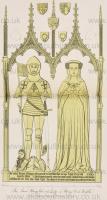
Engravings of Sepulchral Brasses Volume 1. Sir Bryan and Lady Stapleton, at Ingham, 1438.
Blomefield's Norf, ix. 321. Gough's Sepulch. Monum. i. 119.
Sir Bryan, son of the late-mentioned Sir Miles and Ela Stapleton, was, according to Blomefield, born in 1378. In the registers of the Order of the Garter, given by Anstis, in his second volume, I find a Sir Bryan Stapleton, one of the knights of that order, from the seventh to the fourteenth of Richard II but what relation he bore to the knight of the same name, at Ingham, I do not know. The latter married Cecilia, daughter of Lord William Bardolf, whom he survived two years. In their effigies, which, till within twenty years, lay on the north side of the chancel, there is nothing remarkable, excepting that the knight is the first who has steel flaps to his cuirass instead of mail tasses,1 and his lady has the beginning of the mitre head-dress. The care too which has perpetuated the memory of the knight has perpetuated that of his dog also, whose name, Yai, is recorded on the monument. Above the canopy was Stapleton impaling Ufford; Lord Bardolf, Azure, three cinquefoils pierced or, impaling Barry of six, a bend over all, Lord Ponyngs, perhaps; and Stapleton impaling Bardolf.
The the inscription the date of his death, 1438, is lost.
Note 1. The tasses were never of mail, but sometimes what was termed a petticoat of mail was at a later period attached to the lowest tace. These are indeed the tuiles in their incipient state, and as there are four hinges, it seems probable that the artist forgot to put the dividing line between them.—S.R.M.
Note 2. Drawn by John Sell Cotman [aged 33] in 1816.
Bryan Stapleton: Bryan Stapleton and Cecily Bardolf Baroness Marshal and Morley were married. Around 1379 he was born to Miles Stapleton at Ingham, Norfolk. On 7th August 1438 Bryan Stapleton died.
Become a Member via our Buy Me a Coffee page to read more.
The River Bure rises at Melton Constable, Norfolk [Map] from where it flows past Briston, Norfolk [Map], Thurning, Norfolk [Map] after which it is joined by the River Thurne. Thereafter it flows past Corpusty, Norfolk [Map], ItterIngham, Norfolk [Map], Blickling Hall, Norfolk [Map], where there is a large ornamental lake, Ingworth, Norfolk [Map], Drabblegate, Norfolk [Map], Aylsham, Norfolk [Map], Burgh, Norfolk [Map], Church of St Michael, Oxnead [Map], Buxton, Norfolk [Map], Little Hautbois, Norfolk [Map], Horstead, Norfolk [Map], Belaugh, Norfolk [Map], Wroxham, Norfolk [Map], Horning, Norfolk [Map], Upper Street [Map], Ranworth, Norfolk [Map] after which it is joined by the River Ant after which it passes St Benet's Abbey, Norfolk [Map] then joining the River Bure just after Thurne, Norfolk [Map]. The River Bure then flows under Acle Bridge, Norfolk [Map], past Stokesby, Norfolk [Map], Herringby, Norfolk [Map] to Great Yarmouth, Norfolk [Map] where it joins the River Yare before joining the North Sea.
The River Bure rises at Melton Constable, Norfolk [Map] from where it flows past Briston, Norfolk [Map], Thurning, Norfolk [Map] after which it is joined by the River Thurne. Thereafter it flows past Corpusty, Norfolk [Map], ItterIngham, Norfolk [Map], Blickling Hall, Norfolk [Map], where there is a large ornamental lake, Ingworth, Norfolk [Map], Drabblegate, Norfolk [Map], Aylsham, Norfolk [Map], Burgh, Norfolk [Map], Church of St Michael, Oxnead [Map], Buxton, Norfolk [Map], Little Hautbois, Norfolk [Map], Horstead, Norfolk [Map], Belaugh, Norfolk [Map], Wroxham, Norfolk [Map], Horning, Norfolk [Map], Upper Street [Map], Ranworth, Norfolk [Map] after which it is joined by the River Ant after which it passes St Benet's Abbey, Norfolk [Map] then joining the River Bure just after Thurne, Norfolk [Map]. The River Bure then flows under Acle Bridge, Norfolk [Map], past Stokesby, Norfolk [Map], Herringby, Norfolk [Map] to Great Yarmouth, Norfolk [Map] where it joins the River Yare before joining the North Sea.
The History of William Marshal was commissioned by his son shortly after William’s death in 1219 to celebrate the Marshal’s remarkable life; it is an authentic, contemporary voice. The manuscript was discovered in 1861 by French historian Paul Meyer. Meyer published the manuscript in its original Anglo-French in 1891 in two books. This book is a line by line translation of the first of Meyer’s books; lines 1-10152. Book 1 of the History begins in 1139 and ends in 1194. It describes the events of the Anarchy, the role of William’s father John, John’s marriages, William’s childhood, his role as a hostage at the siege of Newbury, his injury and imprisonment in Poitou where he met Eleanor of Aquitaine and his life as a knight errant. It continues with the accusation against him of an improper relationship with Margaret, wife of Henry the Young King, his exile, and return, the death of Henry the Young King, the rebellion of Richard, the future King Richard I, war with France, the death of King Henry II, and the capture of King Richard, and the rebellion of John, the future King John. It ends with the release of King Richard and the death of John Marshal.
Available at Amazon in eBook and Paperback format.
On 25th August 1554 Thomas Howard 3rd Duke of Norfolk [aged 81] died at Kenninghall, Norfolk. He was buried at Church of St Michael the Archangel, Framlingham [Map]. His grandson Thomas [aged 18] succeeded 4th Duke Norfolk, 3rd Earl Surrey.


In September 1554 Henry Berkeley 7th Baron Berkeley [aged 19] and Katherine Howard Baroness Berkeley [aged 16] were married at Kenninghall, Norfolk. She by marriage Baroness Berkeley. They were fourth cousin once removed.
On 10th March 1536 Thomas Howard 4th Duke of Norfolk was born to Henry Howard Earl of Surrey [aged 20] and Frances Vere Countess of Surrey [aged 19] at Kenninghall Palace, Norfolk [Map]. He married (1) 1556 his second cousin once removed Mary Fitzalan Duchess Norfolk, daughter of Henry Fitzalan 12th or 19th Earl of Arundel and Katherine Grey, and had issue (2) 1558 his fourth cousin Margaret Audley Duchess Norfolk, daughter of Thomas Audley 1st Baron Audley Walden and Elizabeth Grey Baroness Audley, and had issue (3) 1567 Elizabeth Leybourne Duchess Norfolk.




Chronicle of Queen Jane and Two Years of Queen Mary 1553. 6th July 1553. KING EDWARD [aged 15] died at Greenwich, on the 6th July 1553, "towards night."a The event was kept perfectly secret during the next day;b but measures were taken to occupy and fortify the Tower of London [Map].c On "the 8. of July the lord maior of London was sent for to the court then at Greenwich, to bring with him sixe aldermen, as many merchants of the staple, and as many merchant adventurers, unto whom by the Councell was secretly declared the death of king Edward, and also how hee did ordaine for the succession of the Crowne by his letters pattents, to the which they were sworne, and charged to keep it secret."d
Note a. Letter of the council to sir Philip Hoby [aged 48], ambassador with the emperor, printed in Strype's Memorials, 1721, ii. 430. It was not written until the 8th of the month, and is silent regarding the successor to the throne. Mary [aged 37], in her letter to the lords of the council, dated from Kenynghall [Map] on the 9th of July (printed in Foxe's Actes and Monuments), also states that she had learned from some advertisement that the king her brother had died on Thursday (the 6th) at night last past.
Note b. Northumberland's [aged 49] intention was to keep the death of the king a secret, until he should have obtained possession of the person of the lady Mary, who had been summoned to visit her brother, and was at no further distance from London than the royal manor of Hunsdon in Hertfordshire. But there were not wanting about the court those who from attachment to Mary, or from self-interest, ventured to incur the hazard of conveying to her this momentous intelligence; whereupon she immediately took alarm, and rode off towards the eastern coast, from which she might have escaped to the continent, had such a step become necessary. Many writers assert that it was the earl of Arundel [aged 41] who made a private communication to her. I have not found any contemporary authority for this statement; but sir Nicholas Throckmorton [aged 38], in his poetical autobiography (MS. Cole, vol xl. p. 272, verses 111, 112, 113, 114), claims the credit of having been the officious person. He had been a favourite servant of king Edward; and on his royal master's death,
"Mourning, from Greenwich I didd strayt departe
To London, to an house which bore our name.
My bretheren guessed by my heavie hearte
The King was dead, and I confess'd the same:
The hushing of his death I didd unfolde,
Their meaninge to proclaime queene Jane I tolde.
And, though I lik'd not the religion
Which all her life queene Marye hadd profest,
Yett in my mind that wicked motion
Right heires for to displace I did detest.
Causeless to proffer any injurie,
I meant it not, but sought for remedie.
Wherefore from four of us the newes was sent,
How that her brother hee was dead and gone;
In post her goldsmith then from London went,
By whome the message was dispatcht anon.
Shee asked,' If wee knewe it certainlie?'
Whoe said,' Sir Nicholas knew it verilie.'
The author bred the errand's greate mistrust:
Shee fear'd a traine to leade her to a trapp.
Shee saide,' If Robert had beene there shee durst
Have gag'd her life, and hazarded the happ.'
Her letters made, shee knewe not what to doe:
Shee sent them oute, butt nott subscrib'd thereto."
By "Robert" the lady Mary meant sir Robert Throckmorton, one of the four brothers.
Note c. See the Diary of Henry Machyn, p. 35. for 07 July 1553.
Note d. It appears most probable that this was the first intimation which the citizens had received of the existence of the letters patent: and that it was on this occasion that, being "sworn to them," they affixed their signatures, although the document had been previously executed on the 21st of June. No fewer than thirty-two signatures follow that of the lord mayor, but the parties were perhaps not all citizens, and from the arrangement of their names in the existing transcript (mentioned in the following note b ) it would be difficult to distinguish which were the aldermen, which the merchants of the staple, and which the merchant adventurers.
Become a Member via our Buy Me a Coffee page to read more.
Chronicle of Queen Jane and Two Years of Queen Mary 1553. 12th July 1553. The 12. of July word was brought to the Councell, being then at the Tower [Map] with the lady Jane [aged 17], that the lady Mary was at Keninghall castle [Map] in Norfolk, and with her the earle of Bath [aged 54], sir Thomas Wharton [aged 33] sonne to the lord Wharton [aged 58], sir John Mordaunt [aged 45] sonne to the lord Mordaunt [aged 73], sir William Drury [aged 3],a sir John Shelton [aged 50], sir Henry Bedingfield [aged 44], master Henry Jerningham [aged 41], master John Sulierde, master Richard Freston, master sergeant Morgan, master Clement Higham of Lincolnes inne, and divers others; and also that the earle of Sussex and master Henry Ratcliffe his sonne were comming towards her: whereupon by speedy councell it was there concluded, that the duke of Suffolk, with certaine other noblemen, should goe towards the lady Mary, to fetch her up to London. This was first determined; but by night of the same day the said voyage of the duke of Suffolke was cleane dissolved by the speciall meanes of the lady Jane his daughter, who, taking the matter heavily, with weeping teares made request to the whole councell that her father might tarry at home in her company: whereupon the councell perswaded with the duke of Northumberland to take that voyage upon him, saying that no man was so fit therefor, because that he had atchieved the victory in Norfolke once already,b and was therefore so feared, that none durst once lift up their weapon against him: besides that, he was the best man of warre in the realme; as well for the ordering of his campes and souldiers both in battell and in their tents, as also by experience, knowledge, and wisedome, he could animate his army with witty perswasions, and also pacific and alay his enemies pride with his stout courage, or else to disswade them if nede were from their enterprise. "Well (quoth the duke then) since ye thinke it good, I and mine will goe, not doubting of your fidelity to the quenes majestie, which I leave in your custodie." So that night hee sent for both lords, knights, and other that should goe with him, and caused all things to be prepared accordingly. Then went the councell in to the lady Jane and told her of their conclusion, who humbly thanked the duke for reserving her father at home, and beseeched him to use his diligence, whereto he answered that hee would doe what in him lay.
Note a. Sir William Drury, for his services "at Framlingham," received, by patent dated the 1st Nov. following, an annuity of 100 marks: see it printed in Rymer's Foedera, xv. 352. A like annuity of 200 marks was granted on the 14th Nov. to Thomas West lord la Warre for his services against the duke (ibid. p. 352); one of 100. on the 4th Dec. to sir Richard Southwell (ibid. p. 355); and one of 501. on the 10th Feb. to Francis Purefay for his services at Framlingham (ibid. p. 365). Probably many others, unnoticed by Rymer, are recorded on the Patent Rolls.
Note b. In the suppression of Kett's rebellion.


Become a Member via our Buy Me a Coffee page to read more.

Around 1550 Abigail Heveningham was born to Anthony Heveningham [aged 49] and Mary Shelton [aged 40] at Ketteringham, Norfolk. Coefficient of inbreeding 3.13%. She married (1) in or before 1574 her fifth cousin once removed George Digby and had issue (2) after April 1587 Edward Cordell.
In 1630 Arthur Heveningham [aged 85] died at Ketteringham, Norfolk.
On 9th March 1869 John Peter Boileau 1st Baronet [aged 74] died. He was buried in the family vault at St Peter's Church, Ketteringham. His son Francis [aged 38] succeeded 2nd Baronet Boileau of Tacolneston Hall in Norfolk. Lucy Henrietta Nugent Lady Boileau by marriage Lady Boileau of Tacolneston Hall in Norfolk.
The River Thet rises near Buckenham Castle, Norfolk [Map] from where it flows past Wilby, Norfolk [Map], North End, Norfolk [Map], Snetterton, Norfolk [Map], Larling, Norfolk [Map], East Harling, Norfolk [Map], Bridgeham, Norfolk [Map], Brettenham, Norfolk [Map], Kilverstone, Norfolk [Map] to Thetford, Norfolk [Map] were it joins the Little.
On 6th May 1919 Lieutenant Philip Wodehouse [aged 32] died whilst on active service. He was buried at St Peter's Church, Kimberley in the Wodehouse family vault.
On 8th January 1810 Reverend William Chester [aged 34] and Elizabeth Wilson [aged 17] were married at Kirkby Cane, Norfolk.
Jean de Waurin's Chronicle of England Volume 6 Books 3-6: The Wars of the Roses
Jean de Waurin was a French Chronicler, from the Artois region, who was born around 1400, and died around 1474. Waurin’s Chronicle of England, Volume 6, covering the period 1450 to 1471, from which we have selected and translated Chapters relating to the Wars of the Roses, provides a vivid, original, contemporary description of key events some of which he witnessed first-hand, some of which he was told by the key people involved with whom Waurin had a personal relationship.
Available at Amazon in eBook and Paperback format.
The London Gazette 27156. Whitehall, January 22, 1900. The Queen [aged 80] has been pleased to direct Letters Patent to be passed under the Great Seal of the United Kingdom of Great Britain and Ireland, granting the dignity of a Baron of the said United Kingdom unto the Right Honourable Sir John Lubbock [aged 65], of Lamas [Map], in the county of Norfolk, High Elms [Map], in the county of Kent, and Avebury [Map], in the county of Wilts, Bart, and the heirs male of his body lawfully begotten, by the name, style, and title of Baron Avebury, of Avebury, in the county of Wilts. [Alice Lane Fox-Pitt Baroness Avebury [aged 38] by marriage Baroness Avebury of Avebury in Wiltshire.]


Langley Abbey is also in Abbeys in England.
Langley Abbey [Map] was a Premonstratensian Abbey founded in 1195.
On 20th September 1369 Eve Clavering [aged 64] died. She was buried at Langley Abbey [Map] with her four husbands.
The River Thet rises near Buckenham Castle, Norfolk [Map] from where it flows past Wilby, Norfolk [Map], North End, Norfolk [Map], Snetterton, Norfolk [Map], Larling, Norfolk [Map], East Harling, Norfolk [Map], Bridgeham, Norfolk [Map], Brettenham, Norfolk [Map], Kilverstone, Norfolk [Map] to Thetford, Norfolk [Map] were it joins the Little.
On 15th October 1519 Thomas Sharington of Cranworth in Norfolk made his will in which he left Swathing's Manor, Fransham to his eldest son William Sharington [aged 24].
After 15th October 1519 William Sharington [aged 24] inherited Swathing's Manor, Fransham from his father.
In 1532 William Sharington [aged 37] sold Swathing's Manor, Fransham.
The River Wensum rises at Whissonsett, Norfolk [Map] from where it flows past Raynham, Norfolk [Map], Doughton, Norfolk [Map], Shereford, Norfolk [Map], Fakenham, Norfolk [Map], Pensthorpe, Norfolk [Map], Great Ryburgh, Norfolk [Map], Sennow Park, Norfolk [Map], Guist, Norfolk [Map], North Elmham, Norfolk [Map], Worthing, Norfolk [Map], Swanton Morley, Norfolk [Map], Mill Street, Norfolk [Map], Lyng, Norfolk [Map], Lenwade, Norfolk [Map], Attlebridge, Norfolk [Map], Ringland, Norfolk [Map], Taverham, Norfolk [Map], Drayton, Norfolk [Map], Costessey, Norfolk [Map] after which it is joined by the River Tud at Hellesdon [Map]. From Hellesdon [Map] it flows through the centre or Norwich, Norfolk [Map], past the Cow Tower, Norwich [Map], Carrow Road Stadium [Map] after which it joins the River Yare.
The Deeds of the Dukes of Normandy
The Gesta Normannorum Ducum [The Deeds of the Dukes of Normandy] is a landmark medieval chronicle tracing the rise and fall of the Norman dynasty from its early roots through the pivotal events surrounding the Norman Conquest of England. Originally penned in Latin by the monk William of Jumièges shortly before 1060 and later expanded at the behest of William the Conqueror, the work chronicles the deeds, politics, battles, and leadership of the Norman dukes, especially William’s own claim to the English throne. The narrative combines earlier historical sources with firsthand information and oral testimony to present an authoritative account of Normandy’s transformation from a Viking settlement into one of medieval Europe’s most powerful realms. William’s history emphasizes the legitimacy, military prowess, and governance of the Norman line, framing their expansion, including the conquest of England, as both divinely sanctioned and noble in purpose. Later chroniclers such as Orderic Vitalis and Robert of Torigni continued the history, extending the coverage into the 12th century, providing broader context on ducal rule and its impact. Today this classic work remains a foundational source for understanding Norman identity, medieval statesmanship, and the historical forces that reshaped England and Western Europe between 800AD and 1100AD.
Available at Amazon in eBook and Paperback format.
Around 1276 Robert Strange [aged 44] died at Litcham, Norfolk.
The River Bure rises at Melton Constable, Norfolk [Map] from where it flows past Briston, Norfolk [Map], Thurning, Norfolk [Map] after which it is joined by the River Thurne. Thereafter it flows past Corpusty, Norfolk [Map], ItterIngham, Norfolk [Map], Blickling Hall, Norfolk [Map], where there is a large ornamental lake, Ingworth, Norfolk [Map], Drabblegate, Norfolk [Map], Aylsham, Norfolk [Map], Burgh, Norfolk [Map], Church of St Michael, Oxnead [Map], Buxton, Norfolk [Map], Little Hautbois, Norfolk [Map], Horstead, Norfolk [Map], Belaugh, Norfolk [Map], Wroxham, Norfolk [Map], Horning, Norfolk [Map], Upper Street [Map], Ranworth, Norfolk [Map] after which it is joined by the River Ant after which it passes St Benet's Abbey, Norfolk [Map] then joining the River Bure just after Thurne, Norfolk [Map]. The River Bure then flows under Acle Bridge, Norfolk [Map], past Stokesby, Norfolk [Map], Herringby, Norfolk [Map] to Great Yarmouth, Norfolk [Map] where it joins the River Yare before joining the North Sea.
The River Wissey rises near Bradenham, Norfolk [Map] from where it flows past Holme Hale, Norfolk [Map], North Pickenham, Norfolk [Map], South Pickenham, Norfolk [Map], Great CressIngham, Norfolk [Map], Bodney, Norfolk [Map], Ickburgh, Norfolk [Map], Colverston, Norfolk [Map], Little London, Norfolk [Map], Northwolkd, Norfolk [Map], Stoke Ferry, Norfolk [Map], Wissington, Norfolk [Map] to Hilgay, Norfolk [Map] after which it joins the River Great Ouse.
St Protase and St Gervase Church, Little Plumstead is also in Churches in Norfolk.
On 7th November 1565 Edward Warner [aged 54] died. He was buried at St Protase and St Gervase Church, Little Plumstead [Map] where his marble grave-stone has the inscription:
Sir Edward Warner, Knight, now resteth here
Who lived to full 50 years and fower
His wifes also by armes you see appeare
What needeth then with words to blaze them o're
His virtues rare, would not be letten passe
Ne yet so worthy state in silence synke
But who dares wright his golden gifts in brasse
Or blot his fame with rude and silly inke
In somme therefore, let this be sayd for all
With God and man he liveth and ever shall
Obijt. 7°. die Nov. Ao. Domi. 1565.
Become a Member via our Buy Me a Coffee page to read more.
On 16th July 1581 Audrey Hare [aged 40] died. She was buried at St Protase and St Gervase Church, Little Plumstead [Map] where her grave has the inscription:
Audrey daughter of William Hare [aged 70],
His only heir by law, and right,
Of Thomas Hobart, a wife very rare,
And then to Sir Edward Warner, Knight.
And last to William Blenerhasset [aged 61],
Three cozens Germans, by God so assigned,
Where - - - - - - and lovely marriage was met,
To live all in one, a rare thing to find.
Full ty's to them, a wife most true,
To these a most good and loveing mother;
But by Hobart only her issue grew,
The eldest Miles, and Henry his brother.
She loved God's word, and lived likewise,
She gave to the poore, and welcomed the rich.
She exchanged this life July 16, 1581.
Lo here, you ladies, you widows, and wives,
A glass for your geer, your selfs to behold,
Seek here a sample, and guide for your lifes,
Far passing beauty, and borders of gold.
Become a Member via our Buy Me a Coffee page to read more.
On 24th September 1592 William Hare [aged 81] died. She was buried at St Protase and St Gervase Church, Little Plumstead [Map].
In 1585 Thomas Sydney died at Little Walsingham, Norfolk.
On or before 18th November 1680 Edmund Bacon 6th Baronet was born to Robert Bacon 5th Baronet [aged 28]. He was baptised on 18th November 1680 at Little Walsingham, Norfolk. He married 27th November 1712 Mary Kemp Lady Bacon, daughter of Robert Kemp 3rd Baronet and Letitia King, and had issue.

1831. William James Müller [aged 18]. Font at St Mary's and All Saints Church, Little Walsingham.
From Combretovium [Map] aka Baylham the Pye Road continues along what is now the A140 through Yaxley, Suffolk [Map] where it makes a slight change in direction, through Dickleburgh, Norfolk [Map], Long Stratton, Norfolk [Map] to Norwich, Norfolk [Map] from where it continues east to Venta Icenorium [Map] aka Caistor St Edmund.
Close Rolls Richard II 1396 1399 V6. 14th June 1399. Westminster Palace [Map]. To the keepers, farmers, occupiers or receivers of the manor of Lopham co. Norffolk for the time being. Order every year to pay to Roger Bliklynge his raiment or 13s. 4d. for it, and 3d. a day, and to pay him the arrears since 5 February 8 Richard II, on which date the king confirmed letters patent whereby Margaret late duchess of Norffolk, by name of Margaret Countess of Norffolk, granted to the said Roger for life the office of keeper of the park, warren and game to the said manor pertaining, raiment once a year at Christmas of the suit of her esquires or 13s. 4d., and 3d. a day of the agistments of the park at the feast of St. Peter in autumn.
Chronicle of Walter of Guisborough
A canon regular of the Augustinian Guisborough Priory, Yorkshire, formerly known as The Chronicle of Walter of Hemingburgh, describes the period from 1066 to 1346. Before 1274 the Chronicle is based on other works. Thereafter, the Chronicle is original, and a remarkable source for the events of the time. This book provides a translation of the Chronicle from that date. The Latin source for our translation is the 1849 work edited by Hans Claude Hamilton. Hamilton, in his preface, says: 'In the present work we behold perhaps one of the finest samples of our early chronicles, both as regards the value of the events recorded, and the correctness with which they are detailed; Nor will the pleasing style of composition be lightly passed over by those capable of seeing reflected from it the tokens of a vigorous and cultivated mind, and a favourable specimen of the learning and taste of the age in which it was framed.'
Available at Amazon in eBook and Paperback format.
The River Ant rises at Stalham, Norfolk [Map] from where it flows past Barton Turf, Norfolk [Map] forming Barton Broad, Norfolk [Map], under Ludham Bridge, Norfolk [Map] after which it joins the River Bure before it passes St Benet's Abbey, Norfolk [Map].
The River Wensum rises at Whissonsett, Norfolk [Map] from where it flows past Raynham, Norfolk [Map], Doughton, Norfolk [Map], Shereford, Norfolk [Map], Fakenham, Norfolk [Map], Pensthorpe, Norfolk [Map], Great Ryburgh, Norfolk [Map], Sennow Park, Norfolk [Map], Guist, Norfolk [Map], North Elmham, Norfolk [Map], Worthing, Norfolk [Map], Swanton Morley, Norfolk [Map], Mill Street, Norfolk [Map], Lyng, Norfolk [Map], Lenwade, Norfolk [Map], Attlebridge, Norfolk [Map], Ringland, Norfolk [Map], Taverham, Norfolk [Map], Drayton, Norfolk [Map], Costessey, Norfolk [Map] after which it is joined by the River Tud at Hellesdon [Map]. From Hellesdon [Map] it flows through the centre or Norwich, Norfolk [Map], past the Cow Tower, Norwich [Map], Carrow Road Stadium [Map] after which it joins the River Yare.
The River Yare rises around Thuxton, Norfolk [Map] from where it flows past Coston, Norfolk [Map], Brandon Parva, Norfolk [Map], Barnham Broom, Norfolk [Map] after which it is joined by the River Tiffey before flowing past Marlingford, Norfolk [Map], Bawburgh, Norfolk [Map], Bowthorpe, Norfolk [Map], Colney, Norfolk [Map], Earlham Park [Map], Eaton [Map] to Old Lakenham [Map] after which it is joined by the River Wensum. Thereafter it flows past Thorpe St Andrew, Norfolk [Map], SurlIngham, Norfolk [Map], Brundall, Norfolk [Map], Buckenham, Norfolk [Map], Cantley, Norfolk [Map], Reedham, Norfolk [Map] to Berney Arms, Norfolk [Map] after which it is joined by the River Waveney then flows through Great Yarmouth, Norfolk [Map] where it is joined by the River Bure then meets the North Sea at Gorleston on Sea, Norfolk [Map].
In 1435 Alice Catherine Astley was born to John Astley [aged 26] in Melton Constable, Norfolk [Map].
Around 1438 Thomas Astley was born to John Astley [aged 29] in Melton Constable, Norfolk [Map].
Around 1469 Thomas Astley was born to Thomas Astley [aged 31] in Melton Constable, Norfolk [Map].
Around 8th April 1475 John Astley [aged 66] died in Melton Constable, Norfolk [Map].
Around 1504 John Astley of Melton Constable was born to Thomas Astley [aged 35] in Melton Constable, Norfolk [Map].
The River Bure rises at Melton Constable, Norfolk [Map] from where it flows past Briston, Norfolk [Map], Thurning, Norfolk [Map] after which it is joined by the River Thurne. Thereafter it flows past Corpusty, Norfolk [Map], ItterIngham, Norfolk [Map], Blickling Hall, Norfolk [Map], where there is a large ornamental lake, Ingworth, Norfolk [Map], Drabblegate, Norfolk [Map], Aylsham, Norfolk [Map], Burgh, Norfolk [Map], Church of St Michael, Oxnead [Map], Buxton, Norfolk [Map], Little Hautbois, Norfolk [Map], Horstead, Norfolk [Map], Belaugh, Norfolk [Map], Wroxham, Norfolk [Map], Horning, Norfolk [Map], Upper Street [Map], Ranworth, Norfolk [Map] after which it is joined by the River Ant after which it passes St Benet's Abbey, Norfolk [Map] then joining the River Bure just after Thurne, Norfolk [Map]. The River Bure then flows under Acle Bridge, Norfolk [Map], past Stokesby, Norfolk [Map], Herringby, Norfolk [Map] to Great Yarmouth, Norfolk [Map] where it joins the River Yare before joining the North Sea.
Anne Boleyn. Her Life as told by Lancelot de Carle's 1536 Letter.
In 1536, two weeks after the execution of Anne Boleyn, her brother George and four others, Lancelot du Carle, wrote an extraordinary letter that described Anne's life, and her trial and execution, to which he was a witness. This book presents a new translation of that letter, with additional material from other contemporary sources such as Letters, Hall's and Wriothesley's Chronicles, the pamphlets of Wynkyn the Worde, the Memorial of George Constantyne, the Portuguese Letter and the Baga de Secrets, all of which are provided in Appendices.
Available at Amazon in eBook and Paperback format.
On 4th April 1857 George Manners Astley 20th Baron Hastings was born to Delaval Loftus Astley 18th Baron Hastings [aged 32] and Frances Diana Manners-Sutton Baroness Hastings at Melton Constable Hall, Norfolk. He married 17th April 1880 Elizabeth Evelyn Harbord Baroness Hastings, daughter of Charles Harbord 5th Baron Suffield and Cecilia Annetta Baring Baroness Suffield, and had issue.
St Peter's Church, Melton Constable is also in Churches in Norfolk.
On 27th March 1802 Edward Astley 4th Baronet [aged 72] died. He was buried at St Peter's Church, Melton Constable [Map]. His son Jacob [aged 45] succeeded 5th Baronet Astley of Hill Morton. Hester Browne Lady Astley [aged 34] by marriage Lady Astley of Hill Morton.


All Saint's Church, Mendham is also in Churches in Norfolk.
The River Waveney rises at Redgrave and Lopham Fen, Norfolk [Map] from where it flows past BressIngham, Norfolk [Map], Diss, Norfolk [Map], Scole, Norfolk [Map], Oakley, Norfolk [Map], Hoxne, Norfolk [Map] where it is joined by the Norfolk River Dove, St Margaret's Church, Syleham [Map], Brockdish, Norfolk [Map], Needham, Norfolk [Map], All Saint's Church, Mendham [Map], Homersfield, Norfolk [Map], Flixton, Suffolk [Map], Bungay, Norfolk [Map], Wainford, Norfolk [Map], EllIngham, Norfolk [Map], Geldeston, Norfolk [Map], Beccles, Norfolk [Map], Aldeby, Norfolk [Map] and Burgh St Peter, Norfolk [Map]. Here it continues past Somerleyton, Norfolk [Map] and Saint Olaves, Norfolk [Map] to join the River Yare at Burgh Castle, Norfolk [Map]. After Burgh St Peter, Norfolk [Map] it is also joined by the Oulton Dyke that joins it to the Oulton Broad, Norfolk [Map] that then becomes Lake Lothing, Norfolk [Map] that then becomes Lowestoft Inner Harbour [Map] where it joins the North Sea.
On 3rd July 1665 James Grey [aged 47] died at Merton, Norfolk.
On 8th September 1839 Thomas Grey 4th Baron Walsingham [aged 61] died at Merton, Norfolk. His son Thomas [aged 35] succeeded 5th Baron Walsingham of Walsingham in Norfolk.
On 18th May 1845 Elizabeth North Baroness Walsingham [aged 68] died. She was buried at Merton, Norfolk.
On 31st December 1870 Thomas Grey 5th Baron Walsingham [aged 66] committed suicide at Merton, Norfolk. His son Thomas [aged 27] succeeded 6th Baron Walsingham of Walsingham in Norfolk.
In 1515 George Grey 10th Baron Grey of Wilton died. He was buried at the St Peter's Church, Merton. His brother Thomas [aged 18] succeeded 11th Baron Grey of Wilton.
On 15th October 1517 Thomas Grey 11th Baron Grey of Wilton [aged 20] died of sweating sickness. He was buried at the St Peter's Church, Merton. His brother Richard [aged 10] succeeded 12th Baron Grey of Wilton.
Henrici Quinti, Angliæ Regis, Gesta, is a first-hand account of the Agincourt Campaign, and subsequent events to his death in 1422. The author of the first part was a Chaplain in King Henry's retinue who was present from King Henry's departure at Southampton in 1415, at the siege of Harfleur, the battle of Agincourt, and the celebrations on King Henry's return to London. The second part, by another writer, relates the events that took place including the negotiations at Troye, Henry's marriage and his death in 1422.
Available at Amazon in eBook and Paperback format.
In 1455 the gatehouse at Middleton Towers was built for Thomas Scales 7th Baron Scales [aged 58]. The building was conceived as a courtyard house similar to Oxborough Hall, but there is no evidence that it was ever completed.
In 1513 Robert Coke was born to Robert Coke of Sparham [aged 33] at Mileham, Norfolk. He married 1543 Winifred Knightley and had issue.
Around 1515 Anne Coke was born to Robert Coke of Sparham [aged 35] at Mileham, Norfolk. She married before 25th December 1557 Richard Freston.
On 15th November 1561 Robert Coke [aged 48] died at Holburn, Norfolk. He was buried at Mileham, Norfolk.
The River Wensum rises at Whissonsett, Norfolk [Map] from where it flows past Raynham, Norfolk [Map], Doughton, Norfolk [Map], Shereford, Norfolk [Map], Fakenham, Norfolk [Map], Pensthorpe, Norfolk [Map], Great Ryburgh, Norfolk [Map], Sennow Park, Norfolk [Map], Guist, Norfolk [Map], North Elmham, Norfolk [Map], Worthing, Norfolk [Map], Swanton Morley, Norfolk [Map], Mill Street, Norfolk [Map], Lyng, Norfolk [Map], Lenwade, Norfolk [Map], Attlebridge, Norfolk [Map], Ringland, Norfolk [Map], Taverham, Norfolk [Map], Drayton, Norfolk [Map], Costessey, Norfolk [Map] after which it is joined by the River Tud at Hellesdon [Map]. From Hellesdon [Map] it flows through the centre or Norwich, Norfolk [Map], past the Cow Tower, Norwich [Map], Carrow Road Stadium [Map] after which it joins the River Yare.
Around 1300 Hawise Marshal 3rd Baroness Marshal was born to William Marshal 1st Baron Marshal [aged 22] and Christiana Fitzwalter Baroness Marshal [aged 25] at Hockering, Mitford. She a great x 3 granddaughter of King Henry "Curtmantle" II of England. She married in or before 1319 Robert Morley Baron Marshal, 2nd Baron Morley, son of William Morley 1st Baron Morley and Isabel Mohaut Baroness Morley, and had issue.
On 6th December 1315 Christiana Fitzwalter Baroness Marshal [aged 40] died at Hockering, Mitford.
Around 1294 John St Leger of Offley was born at Litcham, Mitford.
Chronicle of Walter of Guisborough
A canon regular of the Augustinian Guisborough Priory, Yorkshire, formerly known as The Chronicle of Walter of Hemingburgh, describes the period from 1066 to 1346. Before 1274 the Chronicle is based on other works. Thereafter, the Chronicle is original, and a remarkable source for the events of the time. This book provides a translation of the Chronicle from that date. The Latin source for our translation is the 1849 work edited by Hans Claude Hamilton. Hamilton, in his preface, says: 'In the present work we behold perhaps one of the finest samples of our early chronicles, both as regards the value of the events recorded, and the correctness with which they are detailed; Nor will the pleasing style of composition be lightly passed over by those capable of seeing reflected from it the tokens of a vigorous and cultivated mind, and a favourable specimen of the learning and taste of the age in which it was framed.'
Available at Amazon in eBook and Paperback format.
Around 1319 Thomas Hoo was born at Litcham, Mitford.
In 1335 William Hoo was born to Thomas Hoo [aged 16] and Isabel St Leger [aged 14] at Litcham, Mitford.
Around 1370 Thomas Hoo was born to William Hoo [aged 35] at Litcham, Mitford. He married (1) Elizabeth Echingham (2) Eleanor Felton and had issue.
On 11th August 1865 Edward Scott 5th Baronet [aged 23] and Emilie Packe Lady Scott were married at St Mary's Church, Mitford.
On 30th November 1288 Gerard Lisle [aged 40] died at Mundford, Norfolk.
On 30th October 1699 Amy Goodwin was born to John Goodwin [aged 26] at Narborough Hall. She married Edmund Harwick and had issue.
The River Waveney rises at Redgrave and Lopham Fen, Norfolk [Map] from where it flows past BressIngham, Norfolk [Map], Diss, Norfolk [Map], Scole, Norfolk [Map], Oakley, Norfolk [Map], Hoxne, Norfolk [Map] where it is joined by the Norfolk River Dove, St Margaret's Church, Syleham [Map], Brockdish, Norfolk [Map], Needham, Norfolk [Map], All Saint's Church, Mendham [Map], Homersfield, Norfolk [Map], Flixton, Suffolk [Map], Bungay, Norfolk [Map], Wainford, Norfolk [Map], EllIngham, Norfolk [Map], Geldeston, Norfolk [Map], Beccles, Norfolk [Map], Aldeby, Norfolk [Map] and Burgh St Peter, Norfolk [Map]. Here it continues past Somerleyton, Norfolk [Map] and Saint Olaves, Norfolk [Map] to join the River Yare at Burgh Castle, Norfolk [Map]. After Burgh St Peter, Norfolk [Map] it is also joined by the Oulton Dyke that joins it to the Oulton Broad, Norfolk [Map] that then becomes Lake Lothing, Norfolk [Map] that then becomes Lowestoft Inner Harbour [Map] where it joins the North Sea.
Around 1109 Bartholomew de Creke Cheney was born to Ralph Cheney [aged 40] at North Creke, Norfolk.
Chronicle of a Bourgeois of Valenciennes
Récits d’un bourgeois de Valenciennes aka The Chronicle of a Bourgeois of Valenciennes is a vivid 14th-century vernacular chronicle written by an anonymous urban chronicler from Valenciennes in the County of Hainaut. It survives in a manuscript that describes local and regional history from about 1253 to 1366, blending chronology, narrative episodes, and eyewitness-style accounts of political, military, and social events in medieval France, Flanders, and the Low Countries. The work begins with a chronological framework of events affecting Valenciennes and its region under rulers such as King Philip VI of France and the shifting allegiances of local nobility. It includes accounts of conflicts, sieges, diplomatic manoeuvres, and the impact of broader struggles like the Hundred Years’ War on urban life in Hainaut. Written from the perspective of a burgher (bourgeois) rather than a monastery or royal court, the chronicle offers a rare lay viewpoint on high politics and warfare, reflecting how merchants, townspeople, and civic institutions experienced the turbulence of the 13th and 14th centuries. Its narrative style combines straightforward reporting of events with moral and civic observations, making it a valuable source for readers interested in medieval urban society, regional politics, and the lived experience of war and governance in pre-modern Europe.
Available at Amazon in eBook and Paperback format.
In 1163 Robert Cheney was born to Robert Cheney [aged 27] at North Creke, Norfolk.
In 1190 Robert Cheney [aged 54] died at North Creke, Norfolk.
In or after 672 Bishop Bedwinus was consecrated the first Bishop of Elmham after its creation following the division of the Bishop of Dunwich aka East Anglia.
Before 824 Bishop Humbertus was consecrated Bishop of Elmham.
In 1043 Archbishop Stigand was appointed Bishop of Elmham.
In 1047 Bishop Æthelmaer was consecrated Bishop of Elmham.
In 1070 Herfast Bishop Chancellor was consecrated Bishop of Elmham.
Flowers of History. After 4th April 1070. Moreover, the whole Anglican Church held a great council in Easter week, at Winchester, Hampshire [Map], by the management of the king, where many of the things which concerned the kingdom were changed. At that council too, Stigand, archbishop of Canterbury, was ignominiously degraded, and his brother, Aylmer, bishop of East Anglia, and many other bishops and abbots were deposed at the same time. Aegelwin, bishop of Durham, alone, of all the prelates of England, seeing the unjust oppression of his brethren, and sympathizing with them, and feeling zeal for God, went of his own accord into banishment from England, wishing to entangle the oppressors in the knot of excommunication. Stigand was succeeded by Lanfranc [aged 65], a monk, a man of elegant learning, and adorned with many and various other accomplishments, who, among other magnificent works, composed a treatise on the Sacrament of the Altar, confirming the Catholic Faith. Aylmer was succeeded by Arfast, the king's chaplain; and he transferred the seat of his diocese to Thetford.
On 10th February 1581 Lionel Tollemache 1st Baronet [aged 18] and Katherine Cromwell [aged 19] were married at North Elmham, Norfolk [Map].
The River Wensum rises at Whissonsett, Norfolk [Map] from where it flows past Raynham, Norfolk [Map], Doughton, Norfolk [Map], Shereford, Norfolk [Map], Fakenham, Norfolk [Map], Pensthorpe, Norfolk [Map], Great Ryburgh, Norfolk [Map], Sennow Park, Norfolk [Map], Guist, Norfolk [Map], North Elmham, Norfolk [Map], Worthing, Norfolk [Map], Swanton Morley, Norfolk [Map], Mill Street, Norfolk [Map], Lyng, Norfolk [Map], Lenwade, Norfolk [Map], Attlebridge, Norfolk [Map], Ringland, Norfolk [Map], Taverham, Norfolk [Map], Drayton, Norfolk [Map], Costessey, Norfolk [Map] after which it is joined by the River Tud at Hellesdon [Map]. From Hellesdon [Map] it flows through the centre or Norwich, Norfolk [Map], past the Cow Tower, Norwich [Map], Carrow Road Stadium [Map] after which it joins the River Yare.
Henrici Quinti, Angliæ Regis, Gesta, is a first-hand account of the Agincourt Campaign, and subsequent events to his death in 1422. The author of the first part was a Chaplain in King Henry's retinue who was present from King Henry's departure at Southampton in 1415, at the siege of Harfleur, the battle of Agincourt, and the celebrations on King Henry's return to London. The second part, by another writer, relates the events that took place including the negotiations at Troye, Henry's marriage and his death in 1422.
Available at Amazon in eBook and Paperback format.
The River Thet rises near Buckenham Castle, Norfolk [Map] from where it flows past Wilby, Norfolk [Map], North End, Norfolk [Map], Snetterton, Norfolk [Map], Larling, Norfolk [Map], East Harling, Norfolk [Map], Bridgeham, Norfolk [Map], Brettenham, Norfolk [Map], Kilverstone, Norfolk [Map] to Thetford, Norfolk [Map] were it joins the Little.
The River Wissey rises near Bradenham, Norfolk [Map] from where it flows past Holme Hale, Norfolk [Map], North Pickenham, Norfolk [Map], South Pickenham, Norfolk [Map], Great CressIngham, Norfolk [Map], Bodney, Norfolk [Map], Ickburgh, Norfolk [Map], Colverston, Norfolk [Map], Little London, Norfolk [Map], Northwolkd, Norfolk [Map], Stoke Ferry, Norfolk [Map], Wissington, Norfolk [Map] to Hilgay, Norfolk [Map] after which it joins the River Great Ouse.
On 25th June 1381 Bishop Henry Despencer [aged 40] brought the Peasant's Revolt to an end at North Walsham, Norfolk at the Battle of North Walsham.
On or before 17th January 1701 Reverend William Lubbock was born to John Lubbock [aged 32] and Elizabeth Webster. He was baptised on 17th January 1701 at North Walsham, Norfolk. He married 26th October 1742 Elizabeth Cooper and had issue.
On 20th April 1754 Reverend William Lubbock [aged 53] died at North Walsham, Norfolk.
The River Wissey rises near Bradenham, Norfolk [Map] from where it flows past Holme Hale, Norfolk [Map], North Pickenham, Norfolk [Map], South Pickenham, Norfolk [Map], Great CressIngham, Norfolk [Map], Bodney, Norfolk [Map], Ickburgh, Norfolk [Map], Colverston, Norfolk [Map], Little London, Norfolk [Map], Northwolkd, Norfolk [Map], Stoke Ferry, Norfolk [Map], Wissington, Norfolk [Map] to Hilgay, Norfolk [Map] after which it joins the River Great Ouse.
The River Waveney rises at Redgrave and Lopham Fen, Norfolk [Map] from where it flows past BressIngham, Norfolk [Map], Diss, Norfolk [Map], Scole, Norfolk [Map], Oakley, Norfolk [Map], Hoxne, Norfolk [Map] where it is joined by the Norfolk River Dove, St Margaret's Church, Syleham [Map], Brockdish, Norfolk [Map], Needham, Norfolk [Map], All Saint's Church, Mendham [Map], Homersfield, Norfolk [Map], Flixton, Suffolk [Map], Bungay, Norfolk [Map], Wainford, Norfolk [Map], EllIngham, Norfolk [Map], Geldeston, Norfolk [Map], Beccles, Norfolk [Map], Aldeby, Norfolk [Map] and Burgh St Peter, Norfolk [Map]. Here it continues past Somerleyton, Norfolk [Map] and Saint Olaves, Norfolk [Map] to join the River Yare at Burgh Castle, Norfolk [Map]. After Burgh St Peter, Norfolk [Map] it is also joined by the Oulton Dyke that joins it to the Oulton Broad, Norfolk [Map] that then becomes Lake Lothing, Norfolk [Map] that then becomes Lowestoft Inner Harbour [Map] where it joins the North Sea.
On 10th August 1529 Robert Clere [aged 83] died at Ormesby St Margaret, Norfolk. He was buried at St Andrew's Church, Blickling [Map] where his inscription reads "Orate pro anima Roberti Clere Militis, qui obiit decimo die Mensis Augusti, Anno Domini Millessimo Quingentissimo Uices simo Nono, cuius anime propicietur Deus Amen." i.e. "Pray for the soul of Robert Clere Militis, who died on the tenth day of the month of August, in the year of the Lord one thousand five hundred and twenty-nine, may God rest his soul, Amen."
St Margaret's Church, Ormesby St Margaret is also in Churches in Norfolk.
On 23rd January 1506 Anne Hopton [aged 51] died. She was buried at St Margaret's Church, Ormesby St Margaret [Map] where her inscription reads "Orate pro anima Domine Anne Clere, nuper Uroris Domini Roberti Clere Militis, de Ormesby, que obiit xxiii die Mensis Januarii, Anno Domini Mcccccv, cuius anime propicietur Deus." i.e. "Pray for the soul of Lady Anne Clere, late of the Honorable Lord Robert Clere Militis, of Ormesby, who died on the 23rd day of the month of January, in the year of the Lord Mccccv, may God have mercy on his soul."
The History of William Marshal was commissioned by his son shortly after William’s death in 1219 to celebrate the Marshal’s remarkable life; it is an authentic, contemporary voice. The manuscript was discovered in 1861 by French historian Paul Meyer. Meyer published the manuscript in its original Anglo-French in 1891 in two books. This book is a line by line translation of the first of Meyer’s books; lines 1-10152. Book 1 of the History begins in 1139 and ends in 1194. It describes the events of the Anarchy, the role of William’s father John, John’s marriages, William’s childhood, his role as a hostage at the siege of Newbury, his injury and imprisonment in Poitou where he met Eleanor of Aquitaine and his life as a knight errant. It continues with the accusation against him of an improper relationship with Margaret, wife of Henry the Young King, his exile, and return, the death of Henry the Young King, the rebellion of Richard, the future King Richard I, war with France, the death of King Henry II, and the capture of King Richard, and the rebellion of John, the future King John. It ends with the release of King Richard and the death of John Marshal.
Available at Amazon in eBook and Paperback format.
On 1st November 1538 Alice Boleyn [aged 51] died. She was buried at St Margaret's Church, Ormesby St Margaret [Map] wher her inscription reads "Orate pro anima Domine Alicie Clere, nuper Uxoris Robertt Clere Militis, filie Willielmo Boleyn Militis, que obiit io de Mensis Novemb' Anno Domini Mvcxxxviii cuius anime propicietur Deus." i.e. "Pray for the soul of Sir Alice Clere, late wife of Robert Clere Militis, daughter of William Boleyn Militis, who died on the month of November in the year of the Lord Mvcxxxviii whose soul may God have mercy on him."
The River Waveney rises at Redgrave and Lopham Fen, Norfolk [Map] from where it flows past BressIngham, Norfolk [Map], Diss, Norfolk [Map], Scole, Norfolk [Map], Oakley, Norfolk [Map], Hoxne, Norfolk [Map] where it is joined by the Norfolk River Dove, St Margaret's Church, Syleham [Map], Brockdish, Norfolk [Map], Needham, Norfolk [Map], All Saint's Church, Mendham [Map], Homersfield, Norfolk [Map], Flixton, Suffolk [Map], Bungay, Norfolk [Map], Wainford, Norfolk [Map], EllIngham, Norfolk [Map], Geldeston, Norfolk [Map], Beccles, Norfolk [Map], Aldeby, Norfolk [Map] and Burgh St Peter, Norfolk [Map]. Here it continues past Somerleyton, Norfolk [Map] and Saint Olaves, Norfolk [Map] to join the River Yare at Burgh Castle, Norfolk [Map]. After Burgh St Peter, Norfolk [Map] it is also joined by the Oulton Dyke that joins it to the Oulton Broad, Norfolk [Map] that then becomes Lake Lothing, Norfolk [Map] that then becomes Lowestoft Inner Harbour [Map] where it joins the North Sea.
Around 1370 Joan Clopton was born to William Clopton [aged 43] and Ivetta Grey [aged 30] at Paston, Norfolk. She married 1378 John Cavendish and had issue.
On 22nd September 1554 William Paston [aged 75] died in Paston, Norfolk.
In 1611 Edmund Paston [aged 26] and Katherine Knyvet [aged 32] moved into Paston Hall on the death of his grandfather Christopher Paston [aged 53].
On 3rd March 1896 Commander Richard Herbert Mack was born to Major Philip Paston Mack [aged 42] at Paston Hall. He married 7th February 1938 Dorothy Grosvenor.
The River Wensum rises at Whissonsett, Norfolk [Map] from where it flows past Raynham, Norfolk [Map], Doughton, Norfolk [Map], Shereford, Norfolk [Map], Fakenham, Norfolk [Map], Pensthorpe, Norfolk [Map], Great Ryburgh, Norfolk [Map], Sennow Park, Norfolk [Map], Guist, Norfolk [Map], North Elmham, Norfolk [Map], Worthing, Norfolk [Map], Swanton Morley, Norfolk [Map], Mill Street, Norfolk [Map], Lyng, Norfolk [Map], Lenwade, Norfolk [Map], Attlebridge, Norfolk [Map], Ringland, Norfolk [Map], Taverham, Norfolk [Map], Drayton, Norfolk [Map], Costessey, Norfolk [Map] after which it is joined by the River Tud at Hellesdon [Map]. From Hellesdon [Map] it flows through the centre or Norwich, Norfolk [Map], past the Cow Tower, Norwich [Map], Carrow Road Stadium [Map] after which it joins the River Yare.
In 1631 Thomas Wyndham [aged 56] died at Pentney, Norfolk.
The History of William Marshal was commissioned by his son shortly after William’s death in 1219 to celebrate the Marshal’s remarkable life; it is an authentic, contemporary voice. The manuscript was discovered in 1861 by French historian Paul Meyer. Meyer published the manuscript in its original Anglo-French in 1891 in two books. This book is a line by line translation of the first of Meyer’s books; lines 1-10152. Book 1 of the History begins in 1139 and ends in 1194. It describes the events of the Anarchy, the role of William’s father John, John’s marriages, William’s childhood, his role as a hostage at the siege of Newbury, his injury and imprisonment in Poitou where he met Eleanor of Aquitaine and his life as a knight errant. It continues with the accusation against him of an improper relationship with Margaret, wife of Henry the Young King, his exile, and return, the death of Henry the Young King, the rebellion of Richard, the future King Richard I, war with France, the death of King Henry II, and the capture of King Richard, and the rebellion of John, the future King John. It ends with the release of King Richard and the death of John Marshal.
Available at Amazon in eBook and Paperback format.
The River Thurne rises at West Somerton [Map] from where it flows past Potter Heigham, Norfolk [Map] and Thurne, Norfolk [Map] after which it joins the River Bure.
In 1745 Dean Edward Townshend [aged 25] became Rector of St Mary's Church, Pulham St Mary.

On 12th April 1942 Arnold Keppel 8th Earl Albermarle [aged 83] died at Quidenham, Norfolk. His son Walter [aged 60] succeeded 9th Earl Albermarle, 9th Viscount Bury in Lancashire, 9th Baron Ashford of Ashford in Kent. Diana Grove Countess of Albermarle [aged 32] by marriage Countess Albermarle.
The River Bure rises at Melton Constable, Norfolk [Map] from where it flows past Briston, Norfolk [Map], Thurning, Norfolk [Map] after which it is joined by the River Thurne. Thereafter it flows past Corpusty, Norfolk [Map], ItterIngham, Norfolk [Map], Blickling Hall, Norfolk [Map], where there is a large ornamental lake, Ingworth, Norfolk [Map], Drabblegate, Norfolk [Map], Aylsham, Norfolk [Map], Burgh, Norfolk [Map], Church of St Michael, Oxnead [Map], Buxton, Norfolk [Map], Little Hautbois, Norfolk [Map], Horstead, Norfolk [Map], Belaugh, Norfolk [Map], Wroxham, Norfolk [Map], Horning, Norfolk [Map], Upper Street [Map], Ranworth, Norfolk [Map] after which it is joined by the River Ant after which it passes St Benet's Abbey, Norfolk [Map] then joining the River Bure just after Thurne, Norfolk [Map]. The River Bure then flows under Acle Bridge, Norfolk [Map], past Stokesby, Norfolk [Map], Herringby, Norfolk [Map] to Great Yarmouth, Norfolk [Map] where it joins the River Yare before joining the North Sea.
Around 1478 Roger Townshend was born to Roger Townshend [aged 53] and Eleanor Lunsford at Raynham, Norfolk [Map]. He married 1500 Anne de Brewse aka Braose and had issue.
Around 1504 Susan Townshend was born to Roger Townshend [aged 26] and Anne de Brewse aka Braose [aged 29] at Raynham, Norfolk [Map]. She married Edmund Wyndham and had issue.
On 25th November 1551 Roger Townshend [aged 73] died at Raynham, Norfolk [Map].
On 24th February 1733 Thomas Townshend 1st Viscount Sydney was born to Thomas Townshend [aged 31] and Albinia Selwyn at Raynham, Norfolk [Map]. He married 19th May 1789 his sixth cousin Elizabeth Powys Viscountess Sydney and had issue.
The River Wensum rises at Whissonsett, Norfolk [Map] from where it flows past Raynham, Norfolk [Map], Doughton, Norfolk [Map], Shereford, Norfolk [Map], Fakenham, Norfolk [Map], Pensthorpe, Norfolk [Map], Great Ryburgh, Norfolk [Map], Sennow Park, Norfolk [Map], Guist, Norfolk [Map], North Elmham, Norfolk [Map], Worthing, Norfolk [Map], Swanton Morley, Norfolk [Map], Mill Street, Norfolk [Map], Lyng, Norfolk [Map], Lenwade, Norfolk [Map], Attlebridge, Norfolk [Map], Ringland, Norfolk [Map], Taverham, Norfolk [Map], Drayton, Norfolk [Map], Costessey, Norfolk [Map] after which it is joined by the River Tud at Hellesdon [Map]. From Hellesdon [Map] it flows through the centre or Norwich, Norfolk [Map], past the Cow Tower, Norwich [Map], Carrow Road Stadium [Map] after which it joins the River Yare.
In 1752 General William Loftus was born to Captain Henry Loftus [aged 25] and Diana Bullock at Raynham Hall, Norfolk. He was baptised at Christ Church Cathedral, Dublin [Map]. He married (1) 18th February 1778 Margaret King and had issue (2) 7th May 1790 Elizabeth Townshend, daughter of George Townshend 1st Marquess Townshend and Charlotte Compton 16th Baroness Ferrers Chartley 7th Baroness Compton, and had issue.
Chronicle of a Bourgeois of Valenciennes
Récits d’un bourgeois de Valenciennes aka The Chronicle of a Bourgeois of Valenciennes is a vivid 14th-century vernacular chronicle written by an anonymous urban chronicler from Valenciennes in the County of Hainaut. It survives in a manuscript that describes local and regional history from about 1253 to 1366, blending chronology, narrative episodes, and eyewitness-style accounts of political, military, and social events in medieval France, Flanders, and the Low Countries. The work begins with a chronological framework of events affecting Valenciennes and its region under rulers such as King Philip VI of France and the shifting allegiances of local nobility. It includes accounts of conflicts, sieges, diplomatic manoeuvres, and the impact of broader struggles like the Hundred Years’ War on urban life in Hainaut. Written from the perspective of a burgher (bourgeois) rather than a monastery or royal court, the chronicle offers a rare lay viewpoint on high politics and warfare, reflecting how merchants, townspeople, and civic institutions experienced the turbulence of the 13th and 14th centuries. Its narrative style combines straightforward reporting of events with moral and civic observations, making it a valuable source for readers interested in medieval urban society, regional politics, and the lived experience of war and governance in pre-modern Europe.
Available at Amazon in eBook and Paperback format.
On 15th July 1831 General William Loftus [aged 79] died at his home at Wimpole Street, Marylebone. He was buried in the Townshend family vault Raynham Hall, Norfolk on 23rd July 1831.
On 10th September 1863 John Townshend 4th Marquess Townshend [aged 65] died at Raynham Hall, Norfolk. He was buried at the Church of All Saints, Hertford. His son John [aged 32] succeeded 5th Marquess Townshend, 8th Viscount Townsend, 8th Baron Townshend of Lynn Regis in Norfolk, 10th Baronet Townshend.
On 21st March 1866 Charlotte Elizabeth Loftus died. She was buried in the Townshend family vault at Raynham Hall, Norfolk.
The River Waveney rises at Redgrave and Lopham Fen, Norfolk [Map] from where it flows past BressIngham, Norfolk [Map], Diss, Norfolk [Map], Scole, Norfolk [Map], Oakley, Norfolk [Map], Hoxne, Norfolk [Map] where it is joined by the Norfolk River Dove, St Margaret's Church, Syleham [Map], Brockdish, Norfolk [Map], Needham, Norfolk [Map], All Saint's Church, Mendham [Map], Homersfield, Norfolk [Map], Flixton, Suffolk [Map], Bungay, Norfolk [Map], Wainford, Norfolk [Map], EllIngham, Norfolk [Map], Geldeston, Norfolk [Map], Beccles, Norfolk [Map], Aldeby, Norfolk [Map] and Burgh St Peter, Norfolk [Map]. Here it continues past Somerleyton, Norfolk [Map] and Saint Olaves, Norfolk [Map] to join the River Yare at Burgh Castle, Norfolk [Map]. After Burgh St Peter, Norfolk [Map] it is also joined by the Oulton Dyke that joins it to the Oulton Broad, Norfolk [Map] that then becomes Lake Lothing, Norfolk [Map] that then becomes Lowestoft Inner Harbour [Map] where it joins the North Sea.
The River Yare rises around Thuxton, Norfolk [Map] from where it flows past Coston, Norfolk [Map], Brandon Parva, Norfolk [Map], Barnham Broom, Norfolk [Map] after which it is joined by the River Tiffey before flowing past Marlingford, Norfolk [Map], Bawburgh, Norfolk [Map], Bowthorpe, Norfolk [Map], Colney, Norfolk [Map], Earlham Park [Map], Eaton [Map] to Old Lakenham [Map] after which it is joined by the River Wensum. Thereafter it flows past Thorpe St Andrew, Norfolk [Map], SurlIngham, Norfolk [Map], Brundall, Norfolk [Map], Buckenham, Norfolk [Map], Cantley, Norfolk [Map], Reedham, Norfolk [Map] to Berney Arms, Norfolk [Map] after which it is joined by the River Waveney then flows through Great Yarmouth, Norfolk [Map] where it is joined by the River Bure then meets the North Sea at Gorleston on Sea, Norfolk [Map].
In 1422 Thomas Boleyn [aged 22] was appointed Rector of Reepham, Norfolk which post he held until 1429.
In 1438 Thomas Boleyn [aged 38] was appointed Rector of Hackford next Reepham, Norfolk by Edmund Beaufort 1st or 2nd Duke of Somerset [aged 32].
On 2nd March 1638 William Spring [aged 49] died at Ridenhall, Norfolk.
Abbot John Whethamstede’s Chronicle of the Abbey of St Albans
Abbot John Whethamstede's Register aka Chronicle of his second term at the Abbey of St Albans, 1451-1461, is a remarkable text that describes his first-hand experience of the beginning of the Wars of the Roses including the First and Second Battles of St Albans, 1455 and 1461, respectively, their cause, and their consequences, not least on the Abbey itself. His text also includes Loveday, Blore Heath, Northampton, the Act of Accord, Wakefield, and Towton, and ends with the Coronation of King Edward IV. In addition to the events of the Wars of the Roses, Abbot John, or his scribes who wrote the Chronicle, include details in the life of the Abbey such as charters, letters, land exchanges, visits by legates, and disputes, which provide a rich insight into the day-to-day life of the Abbey, and the challenges faced by its Abbot.
Available at Amazon in eBook and Paperback format.
The River Wensum rises at Whissonsett, Norfolk [Map] from where it flows past Raynham, Norfolk [Map], Doughton, Norfolk [Map], Shereford, Norfolk [Map], Fakenham, Norfolk [Map], Pensthorpe, Norfolk [Map], Great Ryburgh, Norfolk [Map], Sennow Park, Norfolk [Map], Guist, Norfolk [Map], North Elmham, Norfolk [Map], Worthing, Norfolk [Map], Swanton Morley, Norfolk [Map], Mill Street, Norfolk [Map], Lyng, Norfolk [Map], Lenwade, Norfolk [Map], Attlebridge, Norfolk [Map], Ringland, Norfolk [Map], Taverham, Norfolk [Map], Drayton, Norfolk [Map], Costessey, Norfolk [Map] after which it is joined by the River Tud at Hellesdon [Map]. From Hellesdon [Map] it flows through the centre or Norwich, Norfolk [Map], past the Cow Tower, Norwich [Map], Carrow Road Stadium [Map] after which it joins the River Yare.
Around 1070 Roger Cheney was born to Ralph Cheney [aged 26] at Rudham, Norfolk.
Around 1086 Ralph Cheney [aged 42] died at Rudham, Norfolk.
Around 1097 Robert Cheney was born to Ralph Cheney [aged 28] at Rudham, Norfolk.
The Little rises near Rickenhall, Suffolk [Map] from where it flows past Cracken Corner, Suffolk [Map]. It also appears to rises near and Redgrave And Lopham Fen [Map]; it isn't clear which is the source of the Little. Thereafter it flows past Blo' Norton, Norfolk [Map], Knettishall, Suffolk [Map], Rushford, Norfolk [Map], Barham, Suffolk [Map], Thetford, Norfolk [Map], where it is joined by the River Thet.
After Thetford the Little Ouse flows past Santon Downham, Suffolk [Map], through Brandon, Suffolk [Map], past Hockwold cum Wilton, Norfolk [Map] to Brandon Creek, Norfolk [Map] where it joins the River Great Ouse.
Around December 1655 Robert Bacon 3rd Baronet [aged 85] died. He was buried in Ryburgh, Norfolk. His grandson Edmund [aged 22] succeeded 4th Baronet Bacon of Redgrave in Suffolk. Susan Alington Lady Bacon [aged 50] by marriage Lady Bacon of Redgrave in Suffolk.
The River Waveney rises at Redgrave and Lopham Fen, Norfolk [Map] from where it flows past BressIngham, Norfolk [Map], Diss, Norfolk [Map], Scole, Norfolk [Map], Oakley, Norfolk [Map], Hoxne, Norfolk [Map] where it is joined by the Norfolk River Dove, St Margaret's Church, Syleham [Map], Brockdish, Norfolk [Map], Needham, Norfolk [Map], All Saint's Church, Mendham [Map], Homersfield, Norfolk [Map], Flixton, Suffolk [Map], Bungay, Norfolk [Map], Wainford, Norfolk [Map], EllIngham, Norfolk [Map], Geldeston, Norfolk [Map], Beccles, Norfolk [Map], Aldeby, Norfolk [Map] and Burgh St Peter, Norfolk [Map]. Here it continues past Somerleyton, Norfolk [Map] and Saint Olaves, Norfolk [Map] to join the River Yare at Burgh Castle, Norfolk [Map]. After Burgh St Peter, Norfolk [Map] it is also joined by the Oulton Dyke that joins it to the Oulton Broad, Norfolk [Map] that then becomes Lake Lothing, Norfolk [Map] that then becomes Lowestoft Inner Harbour [Map] where it joins the North Sea.

On or before 22nd November 1625 Vice-Admiral Christopher Myngs was born to John Myngs Shoemaker and Katherine Parr [aged 20] at Manor House, Salthouse. Salthouse certain, Manor House probable. He was baptised at St Nicholas Church, Salthouse on 22nd November 1625. He married 1657 Rebecca m Myngs.
On or before 22nd November 1625 Vice-Admiral Christopher Myngs was born to John Myngs Shoemaker and Katherine Parr [aged 20] at Manor House, Salthouse. Salthouse certain, Manor House probable. He was baptised at St Nicholas Church, Salthouse on 22nd November 1625. He married 1657 Rebecca m Myngs.
Chronicle of Geoffrey le Baker of Swinbroke
Baker was a secular clerk from Swinbroke, now Swinbrook, an Oxfordshire village two miles east of Burford. His Chronicle describes the events of the period 1303-1356: Gaveston, Bannockburn, Boroughbridge, the murder of King Edward II, the Scottish Wars, Sluys, Crécy, the Black Death, Winchelsea and Poitiers. To quote Herbert Bruce 'it possesses a vigorous and characteristic style, and its value for particular events between 1303 and 1356 has been recognised by its editor and by subsequent writers'. The book provides remarkable detail about the events it describes. Baker's text has been augmented with hundreds of notes, including extracts from other contemporary chronicles, such as the Annales Londonienses, Annales Paulini, Murimuth, Lanercost, Avesbury, Guisborough and Froissart to enrich the reader's understanding. The translation takes as its source the 'Chronicon Galfridi le Baker de Swynebroke' published in 1889, edited by Edward Maunde Thompson.
Available at Amazon in eBook and Paperback format.
On 20th June 1825 Edward Repps Jodrell 3rd Baronet was born to Richard Paul Jodrell 2nd Baronet [aged 43] and Amelia Caroline Morison King [aged 35] at Saxthorpe, Norfolk.
Amelia Vertue Jodrell was born to Richard Paul Jodrell 2nd Baronet and Amelia Caroline Morison King at Saxthorpe, Norfolk.
The River Waveney rises at Redgrave and Lopham Fen, Norfolk [Map] from where it flows past BressIngham, Norfolk [Map], Diss, Norfolk [Map], Scole, Norfolk [Map], Oakley, Norfolk [Map], Hoxne, Norfolk [Map] where it is joined by the Norfolk River Dove, St Margaret's Church, Syleham [Map], Brockdish, Norfolk [Map], Needham, Norfolk [Map], All Saint's Church, Mendham [Map], Homersfield, Norfolk [Map], Flixton, Suffolk [Map], Bungay, Norfolk [Map], Wainford, Norfolk [Map], EllIngham, Norfolk [Map], Geldeston, Norfolk [Map], Beccles, Norfolk [Map], Aldeby, Norfolk [Map] and Burgh St Peter, Norfolk [Map]. Here it continues past Somerleyton, Norfolk [Map] and Saint Olaves, Norfolk [Map] to join the River Yare at Burgh Castle, Norfolk [Map]. After Burgh St Peter, Norfolk [Map] it is also joined by the Oulton Dyke that joins it to the Oulton Broad, Norfolk [Map] that then becomes Lake Lothing, Norfolk [Map] that then becomes Lowestoft Inner Harbour [Map] where it joins the North Sea.
On 29th August 1605 Hamon le Strange was baptised at Sedgeford, Norfolk.
In 1295 William Calthorpe was born at Seething, Norfolk.
Around 1338 Isabel Lovell [aged 28] died at Seething, Norfolk.
Around 1360 William Calthorpe [aged 65] died at Seething, Norfolk.
The River Wensum rises at Whissonsett, Norfolk [Map] from where it flows past Raynham, Norfolk [Map], Doughton, Norfolk [Map], Shereford, Norfolk [Map], Fakenham, Norfolk [Map], Pensthorpe, Norfolk [Map], Great Ryburgh, Norfolk [Map], Sennow Park, Norfolk [Map], Guist, Norfolk [Map], North Elmham, Norfolk [Map], Worthing, Norfolk [Map], Swanton Morley, Norfolk [Map], Mill Street, Norfolk [Map], Lyng, Norfolk [Map], Lenwade, Norfolk [Map], Attlebridge, Norfolk [Map], Ringland, Norfolk [Map], Taverham, Norfolk [Map], Drayton, Norfolk [Map], Costessey, Norfolk [Map] after which it is joined by the River Tud at Hellesdon [Map]. From Hellesdon [Map] it flows through the centre or Norwich, Norfolk [Map], past the Cow Tower, Norwich [Map], Carrow Road Stadium [Map] after which it joins the River Yare.
William of Worcester's Chronicle of England
William of Worcester, born around 1415, and died around 1482 was secretary to John Fastolf, the renowned soldier of the Hundred Years War, during which time he collected documents, letters, and wrote a record of events. Following their return to England in 1440 William was witness to major events. Twice in his chronicle he uses the first person: 1. when writing about the murder of Thomas, 7th Baron Scales, in 1460, he writes '… and I saw him lying naked in the cemetery near the porch of the church of St. Mary Overie in Southwark …' and 2. describing King Edward IV's entry into London in 1461 he writes '… proclaimed that all the people themselves were to recognize and acknowledge Edward as king. I was present and heard this, and immediately went down with them into the city'. William’s Chronicle is rich in detail. It is the source of much information about the Wars of the Roses, including the term 'Diabolical Marriage' to describe the marriage of Queen Elizabeth Woodville’s brother John’s marriage to Katherine, Dowager Duchess of Norfolk, he aged twenty, she sixty-five or more, and the story about a paper crown being placed in mockery on the severed head of Richard, 3rd Duke of York.
Available at Amazon in eBook and Paperback format.
The River Wensum rises at Whissonsett, Norfolk [Map] from where it flows past Raynham, Norfolk [Map], Doughton, Norfolk [Map], Shereford, Norfolk [Map], Fakenham, Norfolk [Map], Pensthorpe, Norfolk [Map], Great Ryburgh, Norfolk [Map], Sennow Park, Norfolk [Map], Guist, Norfolk [Map], North Elmham, Norfolk [Map], Worthing, Norfolk [Map], Swanton Morley, Norfolk [Map], Mill Street, Norfolk [Map], Lyng, Norfolk [Map], Lenwade, Norfolk [Map], Attlebridge, Norfolk [Map], Ringland, Norfolk [Map], Taverham, Norfolk [Map], Drayton, Norfolk [Map], Costessey, Norfolk [Map] after which it is joined by the River Tud at Hellesdon [Map]. From Hellesdon [Map] it flows through the centre or Norwich, Norfolk [Map], past the Cow Tower, Norwich [Map], Carrow Road Stadium [Map] after which it joins the River Yare.
On 25th February 1540 Henry Howard 1st Earl of Northampton was born to Henry Howard Earl of Surrey [aged 24] and Frances Vere Countess of Surrey [aged 23] at Shotesham, Norfolk.

St Mary's Church, Shotesham is also in Churches in Norfolk.
On 6th March 1616 Henry D'Oyley [aged 30] died. He was buried at St Mary's Church, Shotesham [Map].
In September 1638 Edmund Doyly [aged 26] died. He was buried at St Mary's Church, Shotesham [Map] where his inscription reads "Here lieth buried the Body of Edmund Doyly Esq. Son and Heir of Sir Henry Doyly, Knt who was married unto Bridget Daughter of John Coke [aged 48] of Holkham in the County of Norfolk Esq. he departed this life in September 1638.".
The River Thet rises near Buckenham Castle, Norfolk [Map] from where it flows past Wilby, Norfolk [Map], North End, Norfolk [Map], Snetterton, Norfolk [Map], Larling, Norfolk [Map], East Harling, Norfolk [Map], Bridgeham, Norfolk [Map], Brettenham, Norfolk [Map], Kilverstone, Norfolk [Map] to Thetford, Norfolk [Map] were it joins the Little.
St Mary's Church, Snettisham is also in Churches in Norfolk.
St Mary's Church, Snettisham [Map]. North transept classical monument to Wymond Carey. Recumbent alabaster effigy under cofferred arch with two columns, strapwork cartouche above, original iron railings to base.
South transept with vaults and mausoleum of Styleman family of Snettisham Old Hall and Hunstanton Hall; monuments from 1680 to 1803, on 1807 signed Richard Cooke.
On 3rd April 1612 Wymond Carey [aged 75] died. He was buried at St Mary's Church, Snettisham [Map].
On 29th August 2024 a memorial service was held at St Mary's Church, Snettisham [Map] for Robert Fellowes 1st Baron Fellowes [deceased].
The service was attended by Prince William [aged 42] and Prince Harry [aged 39].
Chronicle of a Bourgeois of Valenciennes
Récits d’un bourgeois de Valenciennes aka The Chronicle of a Bourgeois of Valenciennes is a vivid 14th-century vernacular chronicle written by an anonymous urban chronicler from Valenciennes in the County of Hainaut. It survives in a manuscript that describes local and regional history from about 1253 to 1366, blending chronology, narrative episodes, and eyewitness-style accounts of political, military, and social events in medieval France, Flanders, and the Low Countries. The work begins with a chronological framework of events affecting Valenciennes and its region under rulers such as King Philip VI of France and the shifting allegiances of local nobility. It includes accounts of conflicts, sieges, diplomatic manoeuvres, and the impact of broader struggles like the Hundred Years’ War on urban life in Hainaut. Written from the perspective of a burgher (bourgeois) rather than a monastery or royal court, the chronicle offers a rare lay viewpoint on high politics and warfare, reflecting how merchants, townspeople, and civic institutions experienced the turbulence of the 13th and 14th centuries. Its narrative style combines straightforward reporting of events with moral and civic observations, making it a valuable source for readers interested in medieval urban society, regional politics, and the lived experience of war and governance in pre-modern Europe.
Available at Amazon in eBook and Paperback format.
On or before 22nd February 1693 Edmund Prideaux was born to Humphrey Prideaux [aged 44] and Bridget Bokenham. He was christened at Soham Tony, Norfolk on 22nd February 1693 He married 17th April 1717 Hannah Wrench and had issue.
The River Waveney rises at Redgrave and Lopham Fen, Norfolk [Map] from where it flows past BressIngham, Norfolk [Map], Diss, Norfolk [Map], Scole, Norfolk [Map], Oakley, Norfolk [Map], Hoxne, Norfolk [Map] where it is joined by the Norfolk River Dove, St Margaret's Church, Syleham [Map], Brockdish, Norfolk [Map], Needham, Norfolk [Map], All Saint's Church, Mendham [Map], Homersfield, Norfolk [Map], Flixton, Suffolk [Map], Bungay, Norfolk [Map], Wainford, Norfolk [Map], EllIngham, Norfolk [Map], Geldeston, Norfolk [Map], Beccles, Norfolk [Map], Aldeby, Norfolk [Map] and Burgh St Peter, Norfolk [Map]. Here it continues past Somerleyton, Norfolk [Map] and Saint Olaves, Norfolk [Map] to join the River Yare at Burgh Castle, Norfolk [Map]. After Burgh St Peter, Norfolk [Map] it is also joined by the Oulton Dyke that joins it to the Oulton Broad, Norfolk [Map] that then becomes Lake Lothing, Norfolk [Map] that then becomes Lowestoft Inner Harbour [Map] where it joins the North Sea.
The River Thurne rises at West Somerton [Map] from where it flows past Potter Heigham, Norfolk [Map] and Thurne, Norfolk [Map] after which it joins the River Bure.
On 21st August 1575 Barbara Pepys was born to Fermor aka Jerome Pepys [aged 27] in South Creake Norfolk. Christened 24th August 1575. She married 24th February 1601 Richard Norton of South Creake in Norfolk and had issue.
The River Wissey rises near Bradenham, Norfolk [Map] from where it flows past Holme Hale, Norfolk [Map], North Pickenham, Norfolk [Map], South Pickenham, Norfolk [Map], Great CressIngham, Norfolk [Map], Bodney, Norfolk [Map], Ickburgh, Norfolk [Map], Colverston, Norfolk [Map], Little London, Norfolk [Map], Northwolkd, Norfolk [Map], Stoke Ferry, Norfolk [Map], Wissington, Norfolk [Map] to Hilgay, Norfolk [Map] after which it joins the River Great Ouse.
The River Ant rises at Stalham, Norfolk [Map] from where it flows past Barton Turf, Norfolk [Map] forming Barton Broad, Norfolk [Map], under Ludham Bridge, Norfolk [Map] after which it joins the River Bure before it passes St Benet's Abbey, Norfolk [Map].
In 1384 John Harsick III made his will on the Wednesday after the decollation of St. John Baptist. He bequeaths several legacies to the Lady Catharine his wife, his eldest son John, and to his son Eudo Harsick, the manor of Stanhow in Norfolk for life, remainder to his son Brian.
Calendar of State Papers James I Addenda. 4th June 1614. 61. Will of Sir Nathaniel Bacon [aged 68], knt., of Stiffkey, co. Norfolk, noted as published, but not read, 4 June 1614, in presence of Charles le Gros and seven others named. I desire to be buried in Stiffkey church [Map], where my former wife was interred, and where I wish my present wife to be, under or near the tomb I have caused to be provided, which the workmen have now in hand. Being indebted to my son-in-law, Owen Smyth, in regard of my receipts of the profits of his lands during his minority, if I should die without directing how such debt should be answered, I might be subject to just rebuke; so, that my wife and daughters may be the better assured, I devise my lands as follows: -.
I give to my executors all my lands in Stiff key, Langham, Morston, and other towns adjoining, from my death until the Michaelmas twelve month after, they paying to my daughter Lady Ann Townshend [aged 41], £350 a year, with remainder to her and her heirs, provided that Roger Townshead [aged 18], my grandchild, be not put from her. For default of such issue, the remainder to my second daughter Baroness Knyvet [aged 39] and her heirs; remainder to my third daughter Lady Winifred Gawdy [aged 36] and her heirs; remainder to my own heirs. The 100 marks a year paid by me to my daughter Townshend is to be continued with the £350 a year, and time is to be allowed to my executors to dispose of the cattle and other stock for payment thereof. My daughter Knyvet and my daughter Gawdy, with her husband [aged 37], are to perfect the entail of the aforesaid manors and lands to my daughter Townshend, by giving up such right as is by law cast upon them. I give to my wife [aged 44] for life the manor of Hemesby, with the impropriations, &c.; remainder to my heirs male, and for default thereof, to my daughter Lady Elizabeth Knyvet and her heirs, with further remainders in a conveyance already made by me.
I give my manor of Stanford, with my lease of the impropriation, to my daughters Ladies Knyvet and Winifred Gawdy, for their better maintenance during the life of my wife, they yielding 201. a year of the profits of the manor to Nathaniel Knyvet, my grandchild; 101. a year to Martin Man, and £5 a year to William Sanders for life; and after my wife's death, when Hemesby manor comes to my daughter Knyvet, then to my daughter Lady Gawdy and Sir Robert Gawdy, and her heirs, with the remainders mentioned in the conveyance aforesaid. The aforesaid annuities, with £5 more which I purpose to give to other servants, to be paid by my said two daughters out of Stanford manor, during the life of my wife; and after her death, one half by my daughter Knyvet, out of Hemesby manor. I give my manor of Eccles, with all the lands occupied therewith, to my wife for life, in augmentation of her jointure; remainder to my own heirs.
To my grandchild Roger Townshend and his heirs, my house in Norwich, which I am to have after my sister Mansfield's [aged 79] death, with the copyhold woods, meadow, &c.
To my wife for life the manor of Irmingland, with reversion to my daughter Knyvet for life, remainder to my grandson Thomas Knyvet, on condition that my said daughter pays, within two years after my wife's death, 2,000^. to my daughters Townshend and Gawdy; if not paid, the reversion of the said manor to go to my heirs. I know my house and lands in Irmingland, &c. are assured to my wife if she survives me, yet I direct as I have done, hoping that she will be either moved or compelled to make good my will, as it was never intended that the house and land should go otherwise than to my wife, and after her death to her eldest son, for satisfying such money as I was to pay him, for the profits of his lands received by me, and I trusted my wife with that and more, to give her eldest son content if he had outlived me.
Besides, I have given my wife £400 a year more than I assured her before marriage, to content her and not to deprive me in disposing of the inheritance. I have also conveyed to her son Owen Smyth, 100 naarks a yeajc in Eccles, which is to come to him if I do not otherwise dispose of it, although he has unkindly provoked me, and they wronged him who advised him thereto, but I hope that God may turn the heart of my wife not to wrong me. I desire the husbands of my daughters to make good these assurances; if they are contentious, a quarrel may be picked, but I hope that God will bless them with better spirits, and that they will be contented seeing the portion they have had in my lifetime, and will receive by my death is great to every one of them, though not in a like greatness; God will bless them best who most desire peace.
The lease of my manor of Mithwould is to be sold for payment of debts. I give to Mr. Percival, minister of Stiffkey £5, with the right of enjoying his pasture close at 20s. a year, so long as he resides in Stiff key. To the poor of StifFkey £10, to be distributed by my executors at their discretion. To my daughter. Lady Townshend, the piece of plate called the heirloom, to go with Stiffkey House, according to my father's gift, if I have no son. To my godson Nathaniel Bacon [aged 20], son of my brother Edward [aged 65], £10 To my wife the coach which my son Owen Smyth gave her, and two of my best coach horses at her choice; also the bedstead, with the furniture of tester, curtains, covering and chair, in my best chamber, but not the hangings; and two pillow beers given to me and hereby my mother Hopton.
I appoint my three daughters executors, and my brother Edward supervisor, or failing him, Mr. Jermy and Gwyn, lawyers. My wife's great pearl chain, which cost me £200, is to be sold for payment of debts, as also the border of diamonds and rubies; if she will give for the pearl and border what they cost me, she is to have them. I give the jewel of diamonds which was my first wife's to my present one for life, with remainder to my daughter Townshend. I give to all my three daughters the jewel of unicorn's horn, according to their mother's direction, that each one may challenge the use thereof when needs require, and my wife may have the use thereof when she needs, but my daughter Townshend is to have the custody thereof for life.
To my supervisor a ring, valued at 20 marks, upon which the following is to be engraved: "Vindicta Domino." To Mr. Gwyn and Mr. Jermy 40s. each. To John Norsforth, for diligent service in my sickness, 10s. a year for life, payable out of Stanford manor during my wife's life, and afterwards out of Stanford and Hemesby; a like annuity to old John Harrison. To my son-in-law. Sir Robert Gawdy, one of my best geldings. To Barnaby Banyard, 20s. a year, payable out of Stanford and Henesby. I desire that my brother and supervisor see my evidences sorted and distributed between my wife and daughters, as appertains; and where two have interest, the originals to remain with that person to whom the present interest and possession is due. I advise my executors to retain the services of Martin Man for a time, as he knows my debts and estates.
To the poor of Langham 40s.; the poor of Morston 40s.; and to the poor of Wells, Blakeney, Wiveton, Warham, and Cley, 20s.; to be distributed by my executors within a year.
I leave my funeral solemnities to the discretion of my executors, &c., but the charge is to be small, and my debts considered.
To Ann Townshend, Elizabeth Knyvet and Dorothy Gawdy a piece of gilt plate each, value £10, with the following sentence engraved upon it, "Vindicta Domino," as a gift in remembrance of their grandfather. The household to be retained together for one month after my decease, at the charge of my executors. To each of my servants who have served two years, half a year's wages. To my wife and three daughters all my English printed and written books; the French law books to my grandson Roger Townshend, and the Latin to my grandson Henry Gawdy; but no books to be given to my grandson Thomas Knyvet, as he is like to be stored otherwise.
To Jane Morton a piece of gilt plate, value £5, with the inscription before mentioned, and rings, value 20s. a piece, with the same inscription, to my eldest brother and his wife; my brother Edward Bacon and his wife; my sisters Periam and Mansell; my brother Sir Francis Bacon; my mother and brother Hopton; Sir Henry Gawdy; my nephew Sir Edmund Bacon, and his brother Nathaniel; my brother Sir Thomas Knyvet and his wife; Sir Christopher Heydon; my brother Mansell [aged 41]; Mr. Bedingfield of Wighton; Mr. Fotherby; Capt. Russell; my cousin Thomas Gurney; Mr. Peapes; Mr. Clarke of Lynn; my son Owen Smyth and Lady Sydney; Sir Charles Cornwallis, and my nephew Grey. My debts to my son Owen Smyth being such, my children, and others, must hold me excused, though I give no greater legacies. 1 give also to my wife all the goods which were hers before I married her, and also all her jewels, except those directed to be sold; the remainder of my effects and stock to be sold, and the proceeds applied in liquidating my debts and legacies; the balance, if any, between my executors.
Become a Member via our Buy Me a Coffee page to read more.
In 1250 John Bigod was born to Hugh Bigod Justicar [aged 39] and Joan Stuteville [aged 34] at Stockton, Norfolk. He married Isabel Bigod and had issue.
In 1300 Roger Bigod was born to John Bigod [aged 50] and Isabel Bigod [aged 46] at Stockton, Norfolk.
Chronicle of Geoffrey le Baker of Swinbroke
Baker was a secular clerk from Swinbroke, now Swinbrook, an Oxfordshire village two miles east of Burford. His Chronicle describes the events of the period 1303-1356: Gaveston, Bannockburn, Boroughbridge, the murder of King Edward II, the Scottish Wars, Sluys, Crécy, the Black Death, Winchelsea and Poitiers. To quote Herbert Bruce 'it possesses a vigorous and characteristic style, and its value for particular events between 1303 and 1356 has been recognised by its editor and by subsequent writers'. The book provides remarkable detail about the events it describes. Baker's text has been augmented with hundreds of notes, including extracts from other contemporary chronicles, such as the Annales Londonienses, Annales Paulini, Murimuth, Lanercost, Avesbury, Guisborough and Froissart to enrich the reader's understanding. The translation takes as its source the 'Chronicon Galfridi le Baker de Swynebroke' published in 1889, edited by Edward Maunde Thompson.
Available at Amazon in eBook and Paperback format.
The River Wissey rises near Bradenham, Norfolk [Map] from where it flows past Holme Hale, Norfolk [Map], North Pickenham, Norfolk [Map], South Pickenham, Norfolk [Map], Great CressIngham, Norfolk [Map], Bodney, Norfolk [Map], Ickburgh, Norfolk [Map], Colverston, Norfolk [Map], Little London, Norfolk [Map], Northwolkd, Norfolk [Map], Stoke Ferry, Norfolk [Map], Wissington, Norfolk [Map] to Hilgay, Norfolk [Map] after which it joins the River Great Ouse.
The River Bure rises at Melton Constable, Norfolk [Map] from where it flows past Briston, Norfolk [Map], Thurning, Norfolk [Map] after which it is joined by the River Thurne. Thereafter it flows past Corpusty, Norfolk [Map], ItterIngham, Norfolk [Map], Blickling Hall, Norfolk [Map], where there is a large ornamental lake, Ingworth, Norfolk [Map], Drabblegate, Norfolk [Map], Aylsham, Norfolk [Map], Burgh, Norfolk [Map], Church of St Michael, Oxnead [Map], Buxton, Norfolk [Map], Little Hautbois, Norfolk [Map], Horstead, Norfolk [Map], Belaugh, Norfolk [Map], Wroxham, Norfolk [Map], Horning, Norfolk [Map], Upper Street [Map], Ranworth, Norfolk [Map] after which it is joined by the River Ant after which it passes St Benet's Abbey, Norfolk [Map] then joining the River Bure just after Thurne, Norfolk [Map]. The River Bure then flows under Acle Bridge, Norfolk [Map], past Stokesby, Norfolk [Map], Herringby, Norfolk [Map] to Great Yarmouth, Norfolk [Map] where it joins the River Yare before joining the North Sea.
The River Yare rises around Thuxton, Norfolk [Map] from where it flows past Coston, Norfolk [Map], Brandon Parva, Norfolk [Map], Barnham Broom, Norfolk [Map] after which it is joined by the River Tiffey before flowing past Marlingford, Norfolk [Map], Bawburgh, Norfolk [Map], Bowthorpe, Norfolk [Map], Colney, Norfolk [Map], Earlham Park [Map], Eaton [Map] to Old Lakenham [Map] after which it is joined by the River Wensum. Thereafter it flows past Thorpe St Andrew, Norfolk [Map], SurlIngham, Norfolk [Map], Brundall, Norfolk [Map], Buckenham, Norfolk [Map], Cantley, Norfolk [Map], Reedham, Norfolk [Map] to Berney Arms, Norfolk [Map] after which it is joined by the River Waveney then flows through Great Yarmouth, Norfolk [Map] where it is joined by the River Bure then meets the North Sea at Gorleston on Sea, Norfolk [Map].
On 28th January 1226 William Hastings [aged 64] died at Swaffham, Norfolk.
On 25th April 1857 Mary Rothes Tyssen-Amherst 2nd Baroness Amherst was born to William Tyssen-Amherst 1st Baron Amherst [aged 22] at Didlington Hall, Swaffham. She married 2nd September 1885 William Cecil, son of William Alleyne Cecil 3rd Marquess Exeter, and had issue.
The River Wensum rises at Whissonsett, Norfolk [Map] from where it flows past Raynham, Norfolk [Map], Doughton, Norfolk [Map], Shereford, Norfolk [Map], Fakenham, Norfolk [Map], Pensthorpe, Norfolk [Map], Great Ryburgh, Norfolk [Map], Sennow Park, Norfolk [Map], Guist, Norfolk [Map], North Elmham, Norfolk [Map], Worthing, Norfolk [Map], Swanton Morley, Norfolk [Map], Mill Street, Norfolk [Map], Lyng, Norfolk [Map], Lenwade, Norfolk [Map], Attlebridge, Norfolk [Map], Ringland, Norfolk [Map], Taverham, Norfolk [Map], Drayton, Norfolk [Map], Costessey, Norfolk [Map] after which it is joined by the River Tud at Hellesdon [Map]. From Hellesdon [Map] it flows through the centre or Norwich, Norfolk [Map], past the Cow Tower, Norwich [Map], Carrow Road Stadium [Map] after which it joins the River Yare.
St Margaret's Church, Syleham is also in Churches in Norfolk.
The River Waveney rises at Redgrave and Lopham Fen, Norfolk [Map] from where it flows past BressIngham, Norfolk [Map], Diss, Norfolk [Map], Scole, Norfolk [Map], Oakley, Norfolk [Map], Hoxne, Norfolk [Map] where it is joined by the Norfolk River Dove, St Margaret's Church, Syleham [Map], Brockdish, Norfolk [Map], Needham, Norfolk [Map], All Saint's Church, Mendham [Map], Homersfield, Norfolk [Map], Flixton, Suffolk [Map], Bungay, Norfolk [Map], Wainford, Norfolk [Map], EllIngham, Norfolk [Map], Geldeston, Norfolk [Map], Beccles, Norfolk [Map], Aldeby, Norfolk [Map] and Burgh St Peter, Norfolk [Map]. Here it continues past Somerleyton, Norfolk [Map] and Saint Olaves, Norfolk [Map] to join the River Yare at Burgh Castle, Norfolk [Map]. After Burgh St Peter, Norfolk [Map] it is also joined by the Oulton Dyke that joins it to the Oulton Broad, Norfolk [Map] that then becomes Lake Lothing, Norfolk [Map] that then becomes Lowestoft Inner Harbour [Map] where it joins the North Sea.
On 24th December 1806 Samuel Hoare [aged 23] and Louisa Gurney [aged 22] were married at the Tasburgh Meeting House [Map]. They were second cousins.
On 24th March 1113 Humphrey "Bearded" Bohun [aged 73] died in Tatterford, Norfolk.
All Saints and St Andrew's Church, Norfolk is also in Churches in Norfolk.
Chronicle of Geoffrey le Baker of Swinbroke
Baker was a secular clerk from Swinbroke, now Swinbrook, an Oxfordshire village two miles east of Burford. His Chronicle describes the events of the period 1303-1356: Gaveston, Bannockburn, Boroughbridge, the murder of King Edward II, the Scottish Wars, Sluys, Crécy, the Black Death, Winchelsea and Poitiers. To quote Herbert Bruce 'it possesses a vigorous and characteristic style, and its value for particular events between 1303 and 1356 has been recognised by its editor and by subsequent writers'. The book provides remarkable detail about the events it describes. Baker's text has been augmented with hundreds of notes, including extracts from other contemporary chronicles, such as the Annales Londonienses, Annales Paulini, Murimuth, Lanercost, Avesbury, Guisborough and Froissart to enrich the reader's understanding. The translation takes as its source the 'Chronicon Galfridi le Baker de Swynebroke' published in 1889, edited by Edward Maunde Thompson.
Available at Amazon in eBook and Paperback format.
Around 15th December 1663 Edward Pepys [aged 46] died. He was buried at All Saints and St Andrew's Church, Norfolk [Map].
The River Wensum rises at Whissonsett, Norfolk [Map] from where it flows past Raynham, Norfolk [Map], Doughton, Norfolk [Map], Shereford, Norfolk [Map], Fakenham, Norfolk [Map], Pensthorpe, Norfolk [Map], Great Ryburgh, Norfolk [Map], Sennow Park, Norfolk [Map], Guist, Norfolk [Map], North Elmham, Norfolk [Map], Worthing, Norfolk [Map], Swanton Morley, Norfolk [Map], Mill Street, Norfolk [Map], Lyng, Norfolk [Map], Lenwade, Norfolk [Map], Attlebridge, Norfolk [Map], Ringland, Norfolk [Map], Taverham, Norfolk [Map], Drayton, Norfolk [Map], Costessey, Norfolk [Map] after which it is joined by the River Tud at Hellesdon [Map]. From Hellesdon [Map] it flows through the centre or Norwich, Norfolk [Map], past the Cow Tower, Norwich [Map], Carrow Road Stadium [Map] after which it joins the River Yare.
On 22nd June 1801 John Francis [aged 20] and Mary Evetts [aged 21] were married at Thornham, Norfolk.
The Norfolk River Dove rises near Wetheringsett, Norfolk [Map] from where it flows past Thwaite, Norfolk [Map], under Thornton Bridge, Norfolk [Map], past Old St Mary's Church, Braiseworth [Map], Eye, Norfolk [Map] and Hoxne, Norfolk [Map] after which it joins the River Waveney.

2nd April 1871. Census. Thorpe St Andrew, Norfolk [Map].
Keomi aka Keytumas Gray [aged 30]. Aged 28.
The River Yare rises around Thuxton, Norfolk [Map] from where it flows past Coston, Norfolk [Map], Brandon Parva, Norfolk [Map], Barnham Broom, Norfolk [Map] after which it is joined by the River Tiffey before flowing past Marlingford, Norfolk [Map], Bawburgh, Norfolk [Map], Bowthorpe, Norfolk [Map], Colney, Norfolk [Map], Earlham Park [Map], Eaton [Map] to Old Lakenham [Map] after which it is joined by the River Wensum. Thereafter it flows past Thorpe St Andrew, Norfolk [Map], SurlIngham, Norfolk [Map], Brundall, Norfolk [Map], Buckenham, Norfolk [Map], Cantley, Norfolk [Map], Reedham, Norfolk [Map] to Berney Arms, Norfolk [Map] after which it is joined by the River Waveney then flows through Great Yarmouth, Norfolk [Map] where it is joined by the River Bure then meets the North Sea at Gorleston on Sea, Norfolk [Map].
The River Bure rises at Melton Constable, Norfolk [Map] from where it flows past Briston, Norfolk [Map], Thurning, Norfolk [Map] after which it is joined by the River Thurne. Thereafter it flows past Corpusty, Norfolk [Map], ItterIngham, Norfolk [Map], Blickling Hall, Norfolk [Map], where there is a large ornamental lake, Ingworth, Norfolk [Map], Drabblegate, Norfolk [Map], Aylsham, Norfolk [Map], Burgh, Norfolk [Map], Church of St Michael, Oxnead [Map], Buxton, Norfolk [Map], Little Hautbois, Norfolk [Map], Horstead, Norfolk [Map], Belaugh, Norfolk [Map], Wroxham, Norfolk [Map], Horning, Norfolk [Map], Upper Street [Map], Ranworth, Norfolk [Map] after which it is joined by the River Ant after which it passes St Benet's Abbey, Norfolk [Map] then joining the River Bure just after Thurne, Norfolk [Map]. The River Bure then flows under Acle Bridge, Norfolk [Map], past Stokesby, Norfolk [Map], Herringby, Norfolk [Map] to Great Yarmouth, Norfolk [Map] where it joins the River Yare before joining the North Sea.
The River Thurne rises at West Somerton [Map] from where it flows past Potter Heigham, Norfolk [Map] and Thurne, Norfolk [Map] after which it joins the River Bure.
The River Bure rises at Melton Constable, Norfolk [Map] from where it flows past Briston, Norfolk [Map], Thurning, Norfolk [Map] after which it is joined by the River Thurne. Thereafter it flows past Corpusty, Norfolk [Map], ItterIngham, Norfolk [Map], Blickling Hall, Norfolk [Map], where there is a large ornamental lake, Ingworth, Norfolk [Map], Drabblegate, Norfolk [Map], Aylsham, Norfolk [Map], Burgh, Norfolk [Map], Church of St Michael, Oxnead [Map], Buxton, Norfolk [Map], Little Hautbois, Norfolk [Map], Horstead, Norfolk [Map], Belaugh, Norfolk [Map], Wroxham, Norfolk [Map], Horning, Norfolk [Map], Upper Street [Map], Ranworth, Norfolk [Map] after which it is joined by the River Ant after which it passes St Benet's Abbey, Norfolk [Map] then joining the River Bure just after Thurne, Norfolk [Map]. The River Bure then flows under Acle Bridge, Norfolk [Map], past Stokesby, Norfolk [Map], Herringby, Norfolk [Map] to Great Yarmouth, Norfolk [Map] where it joins the River Yare before joining the North Sea.
The River Yare rises around Thuxton, Norfolk [Map] from where it flows past Coston, Norfolk [Map], Brandon Parva, Norfolk [Map], Barnham Broom, Norfolk [Map] after which it is joined by the River Tiffey before flowing past Marlingford, Norfolk [Map], Bawburgh, Norfolk [Map], Bowthorpe, Norfolk [Map], Colney, Norfolk [Map], Earlham Park [Map], Eaton [Map] to Old Lakenham [Map] after which it is joined by the River Wensum. Thereafter it flows past Thorpe St Andrew, Norfolk [Map], SurlIngham, Norfolk [Map], Brundall, Norfolk [Map], Buckenham, Norfolk [Map], Cantley, Norfolk [Map], Reedham, Norfolk [Map] to Berney Arms, Norfolk [Map] after which it is joined by the River Waveney then flows through Great Yarmouth, Norfolk [Map] where it is joined by the River Bure then meets the North Sea at Gorleston on Sea, Norfolk [Map].
Abbot John Whethamstede’s Chronicle of the Abbey of St Albans
Abbot John Whethamstede's Register aka Chronicle of his second term at the Abbey of St Albans, 1451-1461, is a remarkable text that describes his first-hand experience of the beginning of the Wars of the Roses including the First and Second Battles of St Albans, 1455 and 1461, respectively, their cause, and their consequences, not least on the Abbey itself. His text also includes Loveday, Blore Heath, Northampton, the Act of Accord, Wakefield, and Towton, and ends with the Coronation of King Edward IV. In addition to the events of the Wars of the Roses, Abbot John, or his scribes who wrote the Chronicle, include details in the life of the Abbey such as charters, letters, land exchanges, visits by legates, and disputes, which provide a rich insight into the day-to-day life of the Abbey, and the challenges faced by its Abbot.
Available at Amazon in eBook and Paperback format.
The Norfolk River Dove rises near Wetheringsett, Norfolk [Map] from where it flows past Thwaite, Norfolk [Map], under Thornton Bridge, Norfolk [Map], past Old St Mary's Church, Braiseworth [Map], Eye, Norfolk [Map] and Hoxne, Norfolk [Map] after which it joins the River Waveney.

On 16th January 1569 Winifred Knightley [aged 39] died at Titteshall, Norfolk. She was buried at the Church of St Mary the Virgin, Tittleshall [Map].
Winifred Knightley: Around 1530 she was born to William Knightley at Norwich, Norfolk [Map]. In 1543 Robert Coke and she were married.
The River Tud rises near Toftwood, Norfolk [Map] from where it flows past Yaxham, Norfolk [Map], Clippings Green, Norfolk [Map], Hockering, Norfolk [Map], Honingham, Norfolk [Map], Easton, Norfolk [Map],Costessey, Norfolk [Map] after which it joins the River Wensum at Hellesdon [Map].
The River Bure rises at Melton Constable, Norfolk [Map] from where it flows past Briston, Norfolk [Map], Thurning, Norfolk [Map] after which it is joined by the River Thurne. Thereafter it flows past Corpusty, Norfolk [Map], ItterIngham, Norfolk [Map], Blickling Hall, Norfolk [Map], where there is a large ornamental lake, Ingworth, Norfolk [Map], Drabblegate, Norfolk [Map], Aylsham, Norfolk [Map], Burgh, Norfolk [Map], Church of St Michael, Oxnead [Map], Buxton, Norfolk [Map], Little Hautbois, Norfolk [Map], Horstead, Norfolk [Map], Belaugh, Norfolk [Map], Wroxham, Norfolk [Map], Horning, Norfolk [Map], Upper Street [Map], Ranworth, Norfolk [Map] after which it is joined by the River Ant after which it passes St Benet's Abbey, Norfolk [Map] then joining the River Bure just after Thurne, Norfolk [Map]. The River Bure then flows under Acle Bridge, Norfolk [Map], past Stokesby, Norfolk [Map], Herringby, Norfolk [Map] to Great Yarmouth, Norfolk [Map] where it joins the River Yare before joining the North Sea.
The River Waveney rises at Redgrave and Lopham Fen, Norfolk [Map] from where it flows past BressIngham, Norfolk [Map], Diss, Norfolk [Map], Scole, Norfolk [Map], Oakley, Norfolk [Map], Hoxne, Norfolk [Map] where it is joined by the Norfolk River Dove, St Margaret's Church, Syleham [Map], Brockdish, Norfolk [Map], Needham, Norfolk [Map], All Saint's Church, Mendham [Map], Homersfield, Norfolk [Map], Flixton, Suffolk [Map], Bungay, Norfolk [Map], Wainford, Norfolk [Map], EllIngham, Norfolk [Map], Geldeston, Norfolk [Map], Beccles, Norfolk [Map], Aldeby, Norfolk [Map] and Burgh St Peter, Norfolk [Map]. Here it continues past Somerleyton, Norfolk [Map] and Saint Olaves, Norfolk [Map] to join the River Yare at Burgh Castle, Norfolk [Map]. After Burgh St Peter, Norfolk [Map] it is also joined by the Oulton Dyke that joins it to the Oulton Broad, Norfolk [Map] that then becomes Lake Lothing, Norfolk [Map] that then becomes Lowestoft Inner Harbour [Map] where it joins the North Sea.
On 10th July 1157 Eustace Fitzjohn 4th Baron Halton [aged 69] died at Saxlingham WalsIngham, Norfolk. His son Richard [aged 37] succeeded 5th Baron Halton.
Walsingham Priory is also in Priories in England.
Walsingham Priory [Map] was an Augustinian Canons Regular Monastery founded in 1101.
On 2nd February 1628 Robert Kemp 2nd Baronet was born to Robert Kemp 1st Baronet and Jane Browne Lady Kemp at Walsingham Priory [Map]. He married (1) 15th July 1650 Mary Kerridge Lady Kemp (2) 20th November 1657 Mary Sone Lady Kemp and had issue.
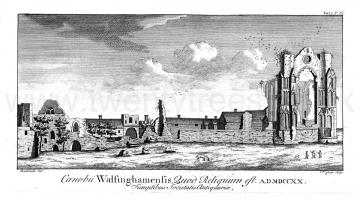
Vesta Monumenta. Plate 1.6: Engraving of the Ruins of Walsingham Abbey [Map].
Plate 1.6 of Vetusta Monumenta depicts the ruins of Walsingham Abbey in Norfolk, including some remains which are no longer standing. This topographical print is the earliest example of a more popular approach in Vetusta Monumenta, reflecting a taste for landscapes with ruins. Engraving by Gerard Vandergucht after J. Badslade. 135 x 257 mm. Published by the Society of Antiquaries of London in 1720. Current location: Little Walsingham, Norfolk, UK.
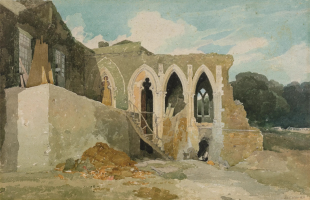
1811. John Sell Cotman [aged 28]. Part of the Refectory of Walsingham Abbey [Map], Norfolk.

Before 1839. John Thirtle [aged 61]. "Walsingham Priory [Map]".
Jean de Waurin's Chronicle of England Volume 6 Books 3-6: The Wars of the Roses
Jean de Waurin was a French Chronicler, from the Artois region, who was born around 1400, and died around 1474. Waurin’s Chronicle of England, Volume 6, covering the period 1450 to 1471, from which we have selected and translated Chapters relating to the Wars of the Roses, provides a vivid, original, contemporary description of key events some of which he witnessed first-hand, some of which he was told by the key people involved with whom Waurin had a personal relationship.
Available at Amazon in eBook and Paperback format.
On 5th April 1369 Bartholomew "The Younger" Burghesh 2nd Baron Burghesh [aged 41] died. He was buried at Lady Chapel Walsingham Priory. His daughter Elizabeth [aged 27] succeeded 3rd Baroness Burghesh.
The Black Water, Norfolk rises at Wendling, Norfolk [Map] from where it flows past Bushby Common, Norfolk [Map], Dereham, Norfolk [Map], Gressenhall, Norfolk [Map] to Worthing, Norfolk [Map] after which it joins the River Wensum.
The Norfolk River Dove rises near Wetheringsett, Norfolk [Map] from where it flows past Thwaite, Norfolk [Map], under Thornton Bridge, Norfolk [Map], past Old St Mary's Church, Braiseworth [Map], Eye, Norfolk [Map] and Hoxne, Norfolk [Map] after which it joins the River Waveney.
The River Wensum rises at Whissonsett, Norfolk [Map] from where it flows past Raynham, Norfolk [Map], Doughton, Norfolk [Map], Shereford, Norfolk [Map], Fakenham, Norfolk [Map], Pensthorpe, Norfolk [Map], Great Ryburgh, Norfolk [Map], Sennow Park, Norfolk [Map], Guist, Norfolk [Map], North Elmham, Norfolk [Map], Worthing, Norfolk [Map], Swanton Morley, Norfolk [Map], Mill Street, Norfolk [Map], Lyng, Norfolk [Map], Lenwade, Norfolk [Map], Attlebridge, Norfolk [Map], Ringland, Norfolk [Map], Taverham, Norfolk [Map], Drayton, Norfolk [Map], Costessey, Norfolk [Map] after which it is joined by the River Tud at Hellesdon [Map]. From Hellesdon [Map] it flows through the centre or Norwich, Norfolk [Map], past the Cow Tower, Norwich [Map], Carrow Road Stadium [Map] after which it joins the River Yare.
On 31st August 1373 John Stafford [aged 71] died at Wickham, Norfolk.

On 5th February 1757 Horatio Walpole 1st Baron Walpole [aged 78] died at Wickmere, Norfolk. His son Horatio [aged 33] succeeded 2nd Baron Walpole of Wollerton.
Around 1366 John Howard was born to Robert Howard [aged 35] and Margaret Scales [aged 30] at Wiggenhall, Norfolk. He a great x 3 grandson of King John of England. He married (1) 1380 Margaret Unknown and had issue (2) before June 1397 Alice Tendring and had issue.
Around 1367 Robert Howard was born to Robert Howard [aged 36] and Margaret Scales [aged 31] at Wiggenhall, Norfolk. He a great x 3 grandson of King John of England.
In 1371 Catherine Howard was born to Robert Howard [aged 40] and Margaret Scales [aged 35] at Wiggenhall, Norfolk. She a great x 3 granddaughter of King John of England.
In 1373 Edmund Howard was born to Robert Howard [aged 42] and Margaret Scales [aged 37] at Wiggenhall, Norfolk. He a great x 3 grandson of King John of England.
Around 1375 Margaret Howard was born to Robert Howard [aged 44] and Margaret Scales [aged 39] at Wiggenhall, Norfolk. She a great x 3 granddaughter of King John of England. She married (1) her half third cousin Constantine Clifton (2) her half fourth cousin Gilbert Talbot.
Around 1380 John Howard was born to John Howard [aged 14] and Margaret Unknown at Wiggenhall, Norfolk. He a great x 4 grandson of King John of England. He married Joan Walton and had issue.
Around 1410 Elizabeth Howard Countess of Oxford was born to John Howard [aged 30] and Joan Walton [aged 17] at Wiggenhall, Norfolk. She married 1425 John de Vere 12th Earl of Oxford, son of Richard de Vere 11th Earl of Oxford and Alice Sergeaux Countess Oxford, and had issue.
On 13th December 1410 John Howard [aged 30] died at Wiggenhall, Norfolk.
The River Thet rises near Buckenham Castle, Norfolk [Map] from where it flows past Wilby, Norfolk [Map], North End, Norfolk [Map], Snetterton, Norfolk [Map], Larling, Norfolk [Map], East Harling, Norfolk [Map], Bridgeham, Norfolk [Map], Brettenham, Norfolk [Map], Kilverstone, Norfolk [Map] to Thetford, Norfolk [Map] were it joins the Little.
Around 1506 Robert Southwell was born to Francis Southwell [aged 30] and Dorothy Tendering [aged 21] at Windham Manor, Norfolk. He married 1st May 1536 Margaret Neville and had issue.
On 11th January 1564 Richard Southwell [aged 61] died at Windham Manor, Norfolk. He was buried in the north side of the chancel of St Nicholas' Church, Woodrising [Map]. His will of 24 Jul 1561, to which he had added a codicil on the day of his death, was proved on 22 June by Norfolk, Thomas Cornwallis and Thomas aka Francis Gawdy [aged 36]. He bequeathed over 10,000 sheep to members of his family and left his personal armour to his 'cousin and friend' Henry Bedingfield [aged 55] and other armour to the young 4th Duke of Norfolk [aged 27], whom he named an executor

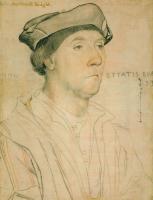


The River Wissey rises near Bradenham, Norfolk [Map] from where it flows past Holme Hale, Norfolk [Map], North Pickenham, Norfolk [Map], South Pickenham, Norfolk [Map], Great CressIngham, Norfolk [Map], Bodney, Norfolk [Map], Ickburgh, Norfolk [Map], Colverston, Norfolk [Map], Little London, Norfolk [Map], Northwolkd, Norfolk [Map], Stoke Ferry, Norfolk [Map], Wissington, Norfolk [Map] to Hilgay, Norfolk [Map] after which it joins the River Great Ouse.
Around 1429 Richard Southwell was born to Robert Southwell [aged 37] at Woodrising, Norfolk.
Chronicle of Walter of Guisborough
A canon regular of the Augustinian Guisborough Priory, Yorkshire, formerly known as The Chronicle of Walter of Hemingburgh, describes the period from 1066 to 1346. Before 1274 the Chronicle is based on other works. Thereafter, the Chronicle is original, and a remarkable source for the events of the time. This book provides a translation of the Chronicle from that date. The Latin source for our translation is the 1849 work edited by Hans Claude Hamilton. Hamilton, in his preface, says: 'In the present work we behold perhaps one of the finest samples of our early chronicles, both as regards the value of the events recorded, and the correctness with which they are detailed; Nor will the pleasing style of composition be lightly passed over by those capable of seeing reflected from it the tokens of a vigorous and cultivated mind, and a favourable specimen of the learning and taste of the age in which it was framed.'
Available at Amazon in eBook and Paperback format.
In 1476 Francis Southwell was born to Richard Southwell [aged 47] at Woodrising, Norfolk. He married in or before 1503 Dorothy Tendering and had issue.
Around 1545 Mary Southwell was born illegitimately to Richard Southwell [aged 42] and Mary Darcy [aged 21] at Woodrising, Norfolk.
In 1567 Thomas Southwell [aged 29] died at Woodrising, Norfolk.
In 1569 Robert Southwell was born to Thomas Southwell at Woodrising, Norfolk. He married Elizabeth Howard Countess Carrick, daughter of Charles Howard 1st Earl Nottingham and Katherine Carey Countess Nottingham, and had issue.
On 12th October 1598 Robert Southwell [aged 29] died at Woodrising, Norfolk. He was buried at Woodrising, Norfolk.
In 1622 Mary Southwell [aged 77] died at Woodrising, Norfolk.
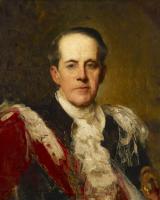
On 8th June 1873 Henry Cadogan 4th Earl Cadogan [aged 61] died at Woodrising, Norfolk. His son George [aged 33] succeeded 5th Earl Cadogan, 5th Viscount Chelsea, 7th Baron Cadogan. Beatrix Jane Craven Countess Cadogan [aged 28] by marriage Countess Cadogan.
St Nicholas' Church, Woodrising is also in Churches in Norfolk.
On 11th January 1564 Richard Southwell [aged 61] died at Windham Manor, Norfolk. He was buried in the north side of the chancel of St Nicholas' Church, Woodrising [Map]. His will of 24 Jul 1561, to which he had added a codicil on the day of his death, was proved on 22 June by Norfolk, Thomas Cornwallis and Thomas aka Francis Gawdy [aged 36]. He bequeathed over 10,000 sheep to members of his family and left his personal armour to his 'cousin and friend' Henry Bedingfield [aged 55] and other armour to the young 4th Duke of Norfolk [aged 27], whom he named an executor
On or before 15th May 1676, the date he was baptised at All Saints Church, Woodton, Reverend Maurice Sucking was born.
Chronicle of a Bourgeois of Valenciennes
Récits d’un bourgeois de Valenciennes aka The Chronicle of a Bourgeois of Valenciennes is a vivid 14th-century vernacular chronicle written by an anonymous urban chronicler from Valenciennes in the County of Hainaut. It survives in a manuscript that describes local and regional history from about 1253 to 1366, blending chronology, narrative episodes, and eyewitness-style accounts of political, military, and social events in medieval France, Flanders, and the Low Countries. The work begins with a chronological framework of events affecting Valenciennes and its region under rulers such as King Philip VI of France and the shifting allegiances of local nobility. It includes accounts of conflicts, sieges, diplomatic manoeuvres, and the impact of broader struggles like the Hundred Years’ War on urban life in Hainaut. Written from the perspective of a burgher (bourgeois) rather than a monastery or royal court, the chronicle offers a rare lay viewpoint on high politics and warfare, reflecting how merchants, townspeople, and civic institutions experienced the turbulence of the 13th and 14th centuries. Its narrative style combines straightforward reporting of events with moral and civic observations, making it a valuable source for readers interested in medieval urban society, regional politics, and the lived experience of war and governance in pre-modern Europe.
Available at Amazon in eBook and Paperback format.
The River Wensum rises at Whissonsett, Norfolk [Map] from where it flows past Raynham, Norfolk [Map], Doughton, Norfolk [Map], Shereford, Norfolk [Map], Fakenham, Norfolk [Map], Pensthorpe, Norfolk [Map], Great Ryburgh, Norfolk [Map], Sennow Park, Norfolk [Map], Guist, Norfolk [Map], North Elmham, Norfolk [Map], Worthing, Norfolk [Map], Swanton Morley, Norfolk [Map], Mill Street, Norfolk [Map], Lyng, Norfolk [Map], Lenwade, Norfolk [Map], Attlebridge, Norfolk [Map], Ringland, Norfolk [Map], Taverham, Norfolk [Map], Drayton, Norfolk [Map], Costessey, Norfolk [Map] after which it is joined by the River Tud at Hellesdon [Map]. From Hellesdon [Map] it flows through the centre or Norwich, Norfolk [Map], past the Cow Tower, Norwich [Map], Carrow Road Stadium [Map] after which it joins the River Yare.
The Black Water, Norfolk rises at Wendling, Norfolk [Map] from where it flows past Bushby Common, Norfolk [Map], Dereham, Norfolk [Map], Gressenhall, Norfolk [Map] to Worthing, Norfolk [Map] after which it joins the River Wensum.
The River Tiffey rises near Wymondham, Norfolk [Map] from where it flows past Carlton Forehoe, Norfolk [Map], Wramplingham, Norfolk [Map] to Barford, Norfolk [Map] after which it joins the River Yare.
The River Bure rises at Melton Constable, Norfolk [Map] from where it flows past Briston, Norfolk [Map], Thurning, Norfolk [Map] after which it is joined by the River Thurne. Thereafter it flows past Corpusty, Norfolk [Map], ItterIngham, Norfolk [Map], Blickling Hall, Norfolk [Map], where there is a large ornamental lake, Ingworth, Norfolk [Map], Drabblegate, Norfolk [Map], Aylsham, Norfolk [Map], Burgh, Norfolk [Map], Church of St Michael, Oxnead [Map], Buxton, Norfolk [Map], Little Hautbois, Norfolk [Map], Horstead, Norfolk [Map], Belaugh, Norfolk [Map], Wroxham, Norfolk [Map], Horning, Norfolk [Map], Upper Street [Map], Ranworth, Norfolk [Map] after which it is joined by the River Ant after which it passes St Benet's Abbey, Norfolk [Map] then joining the River Bure just after Thurne, Norfolk [Map]. The River Bure then flows under Acle Bridge, Norfolk [Map], past Stokesby, Norfolk [Map], Herringby, Norfolk [Map] to Great Yarmouth, Norfolk [Map] where it joins the River Yare before joining the North Sea.
The River Tud rises near Toftwood, Norfolk [Map] from where it flows past Yaxham, Norfolk [Map], Clippings Green, Norfolk [Map], Hockering, Norfolk [Map], Honingham, Norfolk [Map], Easton, Norfolk [Map],Costessey, Norfolk [Map] after which it joins the River Wensum at Hellesdon [Map].
