

The History of William Marshal was commissioned by his son shortly after William’s death in 1219 to celebrate the Marshal’s remarkable life; it is an authentic, contemporary voice. The manuscript was discovered in 1861 by French historian Paul Meyer. Meyer published the manuscript in its original Anglo-French in 1891 in two books. This book is a line by line translation of the first of Meyer’s books; lines 1-10152. Book 1 of the History begins in 1139 and ends in 1194. It describes the events of the Anarchy, the role of William’s father John, John’s marriages, William’s childhood, his role as a hostage at the siege of Newbury, his injury and imprisonment in Poitou where he met Eleanor of Aquitaine and his life as a knight errant. It continues with the accusation against him of an improper relationship with Margaret, wife of Henry the Young King, his exile, and return, the death of Henry the Young King, the rebellion of Richard, the future King Richard I, war with France, the death of King Henry II, and the capture of King Richard, and the rebellion of John, the future King John. It ends with the release of King Richard and the death of John Marshal.
Available at Amazon in eBook and Paperback format.
01 Aug is in August.
30BC Death of Antony and Cleopatra
1503 Margaret Tudor's Journey to Scotland
1517 Sweating Sickness Outbreak
Cassius Dio Roman History Book 51 Chapter 15. 1st August 30BC. 4. Antony, having hoped, killed himself. Cleopatra, insatiable in her desires for Aphrodite (love) and wealth, driven by great ambition for honor and fame and by bold contempt, acquired the throne of Egypt through love and hoped to obtain that of Rome through it. But she failed in this, and she lost the former as well. She conquered two of the greatest Roman men for herself, but through the third, she destroyed herself.
4. ἐλπίσας αὐτὸς ἑαυτὸν ἀπέκτεινε. Κλεοπάτρα δὲ ἄπληστος μὲν Ἀφροδίτης ἄπληστος δὲ χρημάτων γενομένη, καὶ πολλῇ μὲν φιλοτιμίᾳ φιλοδόξῳ πολλῇ δὲ καὶ περιφρονήσει θρασείᾳ χρησαμένη, τήν τε βασιλείαν τὴν τῶν Αἰγυπτίων ὑπ᾽ ἔρωτος ἐκτήσατο, καὶ τὴν τῶν Ῥωμαίων λήψεσθαι δι᾽ αὐτοῦ ἐλπίσασα ταύτης τε ἐσφάλη καὶ ἐκείνην προσαπώλεσε, δύο τε ἀνδρῶν Ῥωμαίων τῶν καθ᾽ ἑαυτὴν μεγίστων κατεκράτησε, καὶ διὰ τὸν τρίτον ἑαυτὴν κατεχρήσατο.
On 1st August 30BC Mark Antony 83BC 30BC (age 53) stabbed himself with his sword in the mistaken belief that Cleopatra had already done so. When he found out that Cleopatra was still alive, his friends brought him to Cleopatra's monument in which she was hiding, and he died in her arms.
Anglo-Saxon Chronicle. 625. This year Paulinus was invested bishop of the Northumbrians, by Archbishop Justus, on the twelfth day before the calends of August.
On 1st August 939 Hugh Maine II Count Maine (age 19), Alan "Twisted Beard" Poher II Duke Brittany (age 39) and Judicael Berengar Penthièvre I Count Rennes defeated the Viking army at Battle of Trans la Foret in Trans-la-Foret freeing Brittany of Viking occupation and leading to the establishment of the Duchy of Brittany.
Anglo-Saxon Chronicle. 1017. This year King Knute (age 22) took to the whole government of England, and divided it into four parts: Wessex for himself, East-Anglia for Thurkyll, Mercia for Edric, Northumbria for Eric. This year also was Earldorman Eadric Streona slain at London, and Norman, son of Alderman Leofwin, and Ethelward, son of Ethelmar the Great, and Britric, son of Elfege of Devonshire. King Knute also banished Edwy etheling (age 26), whom he afterwards ordered to be slain, and Edwy, king of the churls; and before the calends of August the king gave an order to fetch him the widow (age 32) of the other king, Ethelred, the daughter of Richard (age 53), to wife.
Charter S1011 King Edward to Westminster Abbey. 1st August 1045. London. King Edward to Westminster Abbey, Second Charter; confirmation of privileges. For the English translation of this charter see: Latin Original
In the name of the holy and indivisible Trinity. I, Edward, by the grace of God, King of the English, to future kings after me, bishops, abbots, earls, sheriffs, and all Christians whatsoever, greetings. Since the desire of pious will and the intention of praiseworthy devotion must always be supported by royal efforts, it is necessary to apply the care of vigilance, so that what has been ordained for the peace of religious life may not be neglected by indifference or disturbed by any presumption. Just as it was necessary to define what reason demanded, so what has been defined must not be violated. Therefore, let all present and future people know that our most faithful abbot Wlnothus and the monks of the monastery of the thrice-blessed prince of the apostles Peter, our special patron, have humbly approached our serenity, requesting that just as the ancient and glorious kings of the English, Edgar, Edward, Æthelred, Edmund, Cnut, and the others who, until our time, fortified the same Westminster of the aforementioned holy apostle against the persuasion of the wicked by the sanctions of their decrees, and had them fully confirmed by the consensus and authority of the bishops and apostolic letters at the royal request, so we, following the will of our God in all things and faithfully imitating those our predecessors in this, should add our own to that monastery, or rather confirm it with our sanction.
And because in these our days there had been a certain contention between Bishop Robert and the clergy of London and the abbot and monks of the aforementioned monastery, with the bishop and clergy wishing to usurp certain customs and provisions in the aforementioned monastery of Saint Peter against the laws and decrees mentioned above, and the abbot and monks defending against them with the authority of the privileges pronounced by the kings and apostolic letters, especially by Saint Dunstan, who had previously been bishop of London and later archbishop of Canterbury, this matter was debated and resolved before the bishops and nobles of our kingdom and in our presence. In the end, favoring justice, we lent the strength of our agreement to the definitive decision. Therefore, following the advice of our faithful and palace officials and considering it beneficial for the present and future for the church itself and those dwelling in it or pertaining to it, we decree by this page of our command that the decrees of the kings who were before us, as well as the privilege of Saint Dunstan and the privileges of the English bishops granted to the monastery of the holy and illustrious apostle Peter, be observed in perpetuity.
And so that the brothers there may be able to serve Almighty God without any disturbance or molestation from the bishop of London or his clerics, and to pray more earnestly for us and the stability of our kingdom, we entirely forbid their general access to the monastery and the holding of common sessions by them, so that a wrongful custom does not arise there at any time in the aforementioned monastery, as has been established in its privileges, and may remain inviolate in perpetuity.
However, if anyone should think against this page of our command and authority, whoever he may be, of whatever name and honor, age and power, rank and order, and should wish to infringe it in any great or small way, let him not achieve what he desires, and let him be compelled to add twelve pounds of the purest gold to the treasury of our house, and moreover, let him be held guilty of high treason and be regarded as profane by all unless he makes sufficient amendment.
Therefore, to ensure that this decree issued by us may obtain fuller authority, we have strengthened it with the sign placed beneath our hand, and we have entrusted it to our faithful present to be confirmed and further ordered it to be assigned with the seal of our image.
I, Edward, by the grace of Christ, King of the English, also with the seal of the holy cross + sign this privilege, so that if anyone violates it, may he be condemned to eternal perdition by Him who was crucified for us.
I, Ælfgyfa Imma, mother of the same king, gave my assent.
I, Eadgytha, the same king's cousin, agreed to the same royal donation.
I, Eadsinus, Archbishop of the Church of Canterbury, confirmed this donation.
I, Ælfric, Archbishop of the Church of York, strengthened this piety.
I, Ælfwin, bishop, agreed and signed.
I, Brihtwold, bishop, agreed and signed.
I, Lyving, bishop, agreed and signed.
I, Æthelstan, bishop, agreed and signed.
I, Eadnoth, bishop, agreed and signed.
I, Ægelric, bishop, agreed and signed.
I, Duduco, bishop, agreed and signed.
I, Grymcillus, bishop, agreed and signed.
I, Ælfwin, abbot, agreed and signed.
I, Æthelward, abbot, agreed and signed.
I, Siward, abbot, agreed and signed.
I, Ælfstan, abbot, agreed and signed.
I, Godwin, earl.
I, Leofric, earl.
I, Siward, earl.
I, Sweyn, earl.
I, Osgod, minister.
I, Ordgar, minister.
I, Odda, minister.
I, Ælfstan, minister.
I, Ordulf, minister.
Wulfwius, chancellor of royal dignity, read and sealed it. Given on the Kalends of August, in the fifth year of the reign of the most serene and glorious King Edward of the English, in the year of our Lord 1045, in the twelfth indiction, with the concurrence of the seventh and eighteenth epacts. Done at the royal palace in London, happily in God's name. Amen.
History of the Dukes of Normandy by William of Jumieges. The venerable Theodoric, after he had governed the monastery of Saint-Evroul for nearly eight years, on account of certain disturbances raised against him by Lord Robert of Grandmesnil, who was then prior, returned the care of souls to Archbishop Maurilius and Bishop Hugh. Having therefore been absolved by them, as a son of peace, he resolved to go to Jerusalem. when he had come to the island of Cyprus with a certain bishop, a pilgrim of venerable life, to a church of Saint Nicholas, he fell prostrate on the ground before the altar and prayed there for a long time; and there, while at prayer, on the Kalends of August [1st August 1058], he rendered his blessed spirit to God. The islanders, recognizing the holiness of such a pilgrim, buried his body in the church. Through his merits, moreover, many miracles of healing were divinely shown among the sick.
Venerabilis autem Theodoricus, postquam coenobium Sancti Ebrulfi fere 8 annis rexit, pro quibusdam tumultibus sibi excitatis a domno Roberto de Grentemais nilio, qui tunc prior orat, Mauritio archiepiscopo et Hugoni episcopo curam animarum reddidit. Absolutus itaque ab eis, utpote filius pacis, ire Hierusalem decrevit. Qui dum in Cyprum insulam cum quodam C venerabilis vitæ peregrino episcopo ad quamdam ecclesiam sancti Nicolai venisset, humi prostratus coram altari diutius oravit, ibique in oratione Kal. Augusti beatum Deo spiritum reddidit. Insulani vero, comperta sanctitate talis peregrini, corpus ejus in ecclesia sepelier nt. Cujus meritis in ægrotis multa sanitatum miracula divinitus ostensa sunt.
On 1st August 1137 Louis VI King of the Franks (age 55) died of dysentery. His son Louis (age 17) succeeded VII King of the Franks. Eleanor of Aquitaine Queen Consort Franks and England (age 15) by marriage Queen Consort Franks.
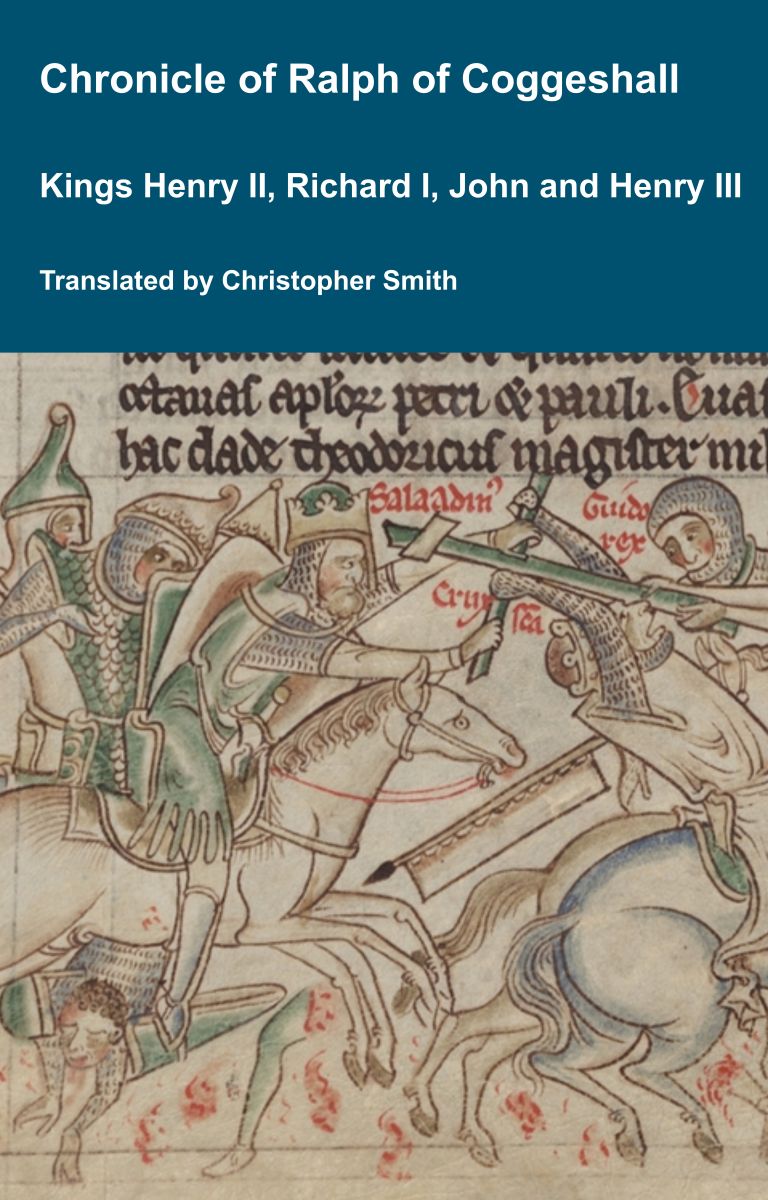 Chronicum Anglicanum by Ralph Coggeshall. Meanwhile, word was brought to the army which the king had left at Acre that the king at Jaffa was surrounded on every side by the enemy, and that he could by no means escape unless aid came to him from heaven. Then there arose grief and lamentation among all; one voice of wailing was heard. Fear and trembling seized them all, and all began to think of flight. Yet brave knights gathered together from every side, and the army held counsel to see whether some means of rescue might perchance be brought to the king. So with one accord they set out for Caesarea, but there they halted for fear of the enemy, not daring to go farther. But while they lingered there, news came of the king's unexpected victory; and at this report they were filled with immense joy, and praises of thanksgiving were rendered to Him who is the Deliverer of all. This battle took place in the days of the Dog-star, namely on the feast of Saint Peter in Chains [1st August 1192].
Interea nunciatur exercitui quem apud Ptolomaidam rex reliquerat, apud Jopen regem ab inimicis undique conclusum, nec aliquo pacto posse evadere, nisi cœlitus ei subveniatur. Tunc moeror et luctus omnium, vox una plagentium; timor ac tremor occupat omnes, fugam omnes meditantur. Conveniunt tamen undique strenui milites, simul colloquitur exercitus, si forte aliquod ereptionis subsidium regi conferre esset possibile. Cæsaream itaque unanimiter proficiscuntur, sed ibidem præ timore hostium substiterunt, ulterius progredi non audentes. Eis autem ibidem subsistentibus, nunciata est inopinata regis victoria, ex qua relatione immensa lætitia perfusi, laudum præconia ereptori omnium persolvuntur. In diebus autem canicularibus, (scilicet, ad Vincula S. Petri) hæc belli congressio facta est.
On 1st August 1202 King John of England (age 35) defeated the army of his nephew Prince Arthur 3rd Duke Brittany (age 15) and Hugh X of Lusignan V Count La Marche (age 19) which was besieging John's mother Eleanor of Aquitaine Queen Consort Franks and England (age 80) at Mirebeau Castle. King John of England took Arthur Plantagenet 3rd Duke Brittany 1187-1203's army by surprise capturing most. Prince Arthur 3rd Duke Brittany and, probably, his sister Eleanor "Fair Maid of Britanny" 4th Countess of Richmond (age 18), both of whom arguably had better claims to the throne than King John of England were captured.
Prince Arthur 3rd Duke Brittany was imprisoned by William de Braose 4th Baron Bramber (age 58) at Falaise Castle [Map].
Flowers of History by Roger of Wendover 1202. Of a glorious victory gained by king John at Mirabeau.
The queen being placed in this predicament, sent messengers with orders to use all speed, to the king, who was then in Normandy, earnestly beseeching him by his filial affection to come to her assistance; on receipt of this intelligence, the king hastily set out with a strong force, and travelling night and day, he accomplished the long distance quicker than is to be believed, and arrived at Mirabeau. When the French and the people of Poictou learned that the king was on his way, they went out with a pompous array to meet him, and give him battle; but when they met each other in battle order, and had engaged, the king bravely withstood their turbulent attacks, and at length put them to flight, pursuing them so quickly with his cavalry, that he entered the castle at the same time as the fugitives. Then a most severe conflict took place [1st August 1202] inside the walls of the castle, but was soon determined by the laudable valour of the English; in the conflict there two hundred French knights were taken prisoners, and all the nobles in Poictou and Anjou, together with Arthur himself, so that not one out of the whole number escaped who could return and tell the misfortune to the rest of their countrymen. Having therefore, secured his prisoners in fetters and shackles, and placed them in cars, a new and unusual mode of conveyance, the king sent some of them to Normandy, and some to England, to be imprisoned in strong castles, whence there would be no fear of their escape; but Arthur was kept at Falaise under close custody.
William of Worcester's Chronicle of England
William of Worcester, born around 1415, and died around 1482 was secretary to John Fastolf, the renowned soldier of the Hundred Years War, during which time he collected documents, letters, and wrote a record of events. Following their return to England in 1440 William was witness to major events. Twice in his chronicle he uses the first person: 1. when writing about the murder of Thomas, 7th Baron Scales, in 1460, he writes '… and I saw him lying naked in the cemetery near the porch of the church of St. Mary Overie in Southwark …' and 2. describing King Edward IV's entry into London in 1461 he writes '… proclaimed that all the people themselves were to recognize and acknowledge Edward as king. I was present and heard this, and immediately went down with them into the city'. William’s Chronicle is rich in detail. It is the source of much information about the Wars of the Roses, including the term 'Diabolical Marriage' to describe the marriage of Queen Elizabeth Woodville’s brother John’s marriage to Katherine, Dowager Duchess of Norfolk, he aged twenty, she sixty-five or more, and the story about a paper crown being placed in mockery on the severed head of Richard, 3rd Duke of York.
Available at Amazon in eBook and Paperback format.
Les Grandes Chroniques de France. 1st August 1202. When Arthur, Count of Brittany, had parted from the king [John], not many days passed before he entered too boldly and with too few men into King John's territory. Because of this, it happened that King John, who likely knew of his movements in advance, came upon him suddenly with a large number of armed men. He attacked him and defeated him. There Arthur, Count of Brittany, was captured, along with Hugh le Brun (age 19), Geoffrey de Lusignan (age 52),1 and many other knights.
Quant Artus, li cuens de Bretaigne, se fu du roi partiz, poi passèrent de jors après que il entra trop hardiement et à trop poi de gent en la terre le roi Jehan, de quoi il avint que li rois Jehans, qui bien savoit par aventure tôt son errement, vint seur lui soudainement a grant multitude de gent armée; à lui se combat i et le descoiifi. Là fu pris li cuens Artus, Hues li Bruns, Giffroiz de Lesegniem et maint autre chevalier.
Note 1. Geoffrey Lusignan, lord of Vouvant and Mervent, son of Hugh VIII known as 'le Brun', lord of Lusignan. It was at Mirebeau (Vienne, district of Poitiers, chief town of the canton) that they were captured along with Arthur of Brittany, on August 1st, 1202 (see Matthew of Paris, Chronica Majora, vol. II, p. 478, and
Ralph of Coggeshall, Chronicon Anglicanum, p. 137).
Annals of Margam. 1st August 1202. King John (age 35) took his nephew Arthur (age 15) in chains at the castle of Mirabel on the feast of Saint Peter, and with Geoffrey de Lusignan1, Hugo the Brown2 and Andream de Chavenny, and Hugh III, viscount of Chastelleraud3, and Reymundnm de Troarde, and Savaricum de Maulyon, and Hugonem de Banchai, and all his other enemies of Poitou, who were around 200 soldiers and more. Of which 22 he killed the noblest and bravest men in arms by starvation in the castle of Corfe [Map]; so that not one of them escaped.
Rex Johannes apud castrum Mirabel cepit Arthurum nepotem suum in festum Sancti Petri ad vincula, et cum eo Galfridum de Lizanan1 et Hugonem de Brun2, et Andream de Chavenny, et vice-comitem de castro Haraldi3, et Reymundnm de Troarde, et Savaricum de Maulyon, et Hugonem de Banchai, et omnes alios inimicos suos Pictaviæ, qui ibi erant circiter cc. milites et plures. Ex quibus xxii. nobilissimos et strenuissimos in armis fame interfecit in castello de Corf [Map]; ita quod nec unus ex illis evasit.
Note 1. Geoffrey de Lusignan (age 52).
Note 2. Hugh de Lusignan (age 19), surnamed le Brun, count de la Marche.
Note 3. Hugh III, viscount of Chastelleraud.
Chronicum Anglicanum by Ralph Coggeshall. Of the capture of Arthur and the others at Mirabeau.
Arthur, count of Brittany, having been armed with knightly weapons by King Phili, whose young daughter he had been betrothed to, now being sixteen years of age, at the urging of certain reckless advisors, rebelled against his uncle King John. Following unsound and hasty counsel, he set out with Hugh de Lusignan, Geoffrey de Lusignan, and two hundred and fifty knights, and laid siege to the castle of Mirabeau under an unlucky omen. There Queen Eleanor, Arthur's grandmother, was residing with her household. The queen, fearing capture, sent word to her son the king to bring swift aid to the besieged. The king at once marched with part of his army to that castle1. The enemy had already entered the town and blocked up all the gates save one, and in confidence of their great number of gallant knights and men-at-arms, they awaited the king's coming without fear. But King John, arriving, forced his way into the town after a fierce struggle, and by God's will at once took captive all his enemies who had gathered there. For he captured there his nephew Arthur, Count Hugh, Geoffrey de Lusignan, and two hundred and fifty valiant knights and fifty-two more, besides many other brave retainers. Thus he delivered his mother with her attendants from the siege. This triumph of valour he immediately took care to announce to the English barons by letters, of which the following is the text:
De captione Arturi et cæterorum apud Mirabel.
Arturus autem comes Britanniæ, militaribus armis a rege Philippo decoratus, cujus filiam parvulam affidaverat, ipse jam sexdecim annorum ætatem habens, ad quorumdam importunam suggestionem contra avunculum suum regem Johannem rebellavit, sinistroque et nimis concito usus consilio, profectus est cum Hugone Brun et Gaufrido de Lezinant, et cum ducentis militibus et quinquaginta, atque castellum de Mirabel sinistro omine obsederunt, in quo regina Alienor, avia Arturi, cum suis hospitabatur. Regina vero, capi metuens, mandavit regi filio suo ut opem ferret quantocius obsessis. Rex autem illico cum parte exercitus sui ad castellum illud profectus est. Hostes autem castrum intraverant, et omnes portas terrari fecerant, excepta una sola, et secure regis adventum præstolabantur, in multitudine probissimorum militum et servorum confidentes. Rex vero adveniens cum gravi pugnæ conflictu urbem intravit, et omnes inimicos suos qui ibidem confluxerant, Deo volente, statim comprehendit. Cepit enim ibi Arturum nepotem suum, et comitem Hugonem, et Galfridum de Lezinant, et ducentos strenuos milites et quinquaginta-duos, exceptis aliis probissimis servientibus; sicque matrem suam cum sibi adhærentibus ab obsidentibus liberavit. Hunc autem virtutis triumphum illico baronibus Anglicanis mandare per literas curavit, quarum iste tenor est.
Note 1. The Battle of Mirebeau was fought on 1st August 1202. Roger of Wendover: "The queen being placed in this predicament, sent messengers with orders to use all speed, to the king, who was then in Normandy, earnestly beseeching him by his filial affection to come to her assistance; on receipt of this intelligence, the king hastily set out with a strong force, and travelling night and day, he accomplished the long distance quicker than is to be believed, and arrived at Mirabeau. When the French and the people of Poitou learned that the king was on his way, they went out with a pompous array to meet him, and give him battle; but when they met each other in battle order, and had engaged, the king bravely withstood their turbulent attacks, and at length put them to flight, pursuing them so quickly with his cavalry, that he entered the castle at the same time as the fugitives. Then a most severe conflict took place inside the walls of the castle, but was soon determined by the laudable valour of the English; in the conflict there two hundred French knights were taken prisoners, and all the nobles in Poictou and Anjou, together with Arthur himself, so that not one out of the whole number escaped who could return and tell the misfortune to the rest of their countrymen. Having therefore, secured his prisoners in fetters and shackles, and placed them in cars, a new and unusual mode of conveyance, the king sent some of them to Normandy, and some to England, to be imprisoned in strong castles, whence there would be no fear of their escape; but Arthur was kept at Falaise under close custody."
History of the Dukes of Normandy: "Those who were keeping watch, when they saw them coming, began to cry out: 'To arms! To arms!' and the Poitevins ran to arm themselves. Geoffrey of Lusignan was sitting at table, he was a very valiant knight who had done many feats of arms both this side of the sea and beyond, and he was waiting for a dish of pigeons. When he heard the news that a great force was approaching, and there was fear it might be King John's men, he would have done well to rise from his meal and arm himself; but he swore by God's head that he would not rise before he had eaten his pigeons. Because of that delay, they took so long that the king's men entered the streets on every side. Hugh le Brun and Raoul of Issoudun, his brothers, who held the County of Eu through his wife, and Andrew of Chauvigny, who also held the lands of Châteauroux through his wife, and many great barons armed themselves and mounted their horses and ran to the gates. But William des Roches came so swiftly that he entered through the gate before the Poitevins could close it. As he came riding in, Hugh le Brun was struck down with his horse in the middle of the street. Then the king's men entered on every side through the gates, and the king himself came in; and with the first blow he struck, he cut off the hand of a knight fully armed, with his sword. Great indeed was the battle all through the town. What more shall I tell you? All the Poitevins were utterly defeated, and Arthur was taken, and all the Poitevins with him, not one of the great men escaped. When the king had done his deed, he returned toward Rouen, taking with him all his prisoners, save only Andrew of Chauvigny, whom he let go on his word of honor. And when the King of France heard these tidings at the siege of Arques, where he then was, he abandoned the siege and drew back. King John, when he came to Rouen, put his nephew Arthur in prison in the tower, where he died."
William the Breton: "When Arthur, Count of Brittany, had parted from the king [John], not many days passed before he entered too boldly and with too few men into King John's territory. Because of this, it happened that King John, who likely knew of his movements in advance, came upon him suddenly with a large number of armed men. He attacked him and defeated him. There Arthur, Count of Brittany, was captured, along with Hugh le Brun (age 19), Geoffrey de Lusignan (age 52), and many other knights."
A History of the Dukes of Normandy by Francisque Michal. [1st August 1202] As he came riding in, Hugh le Brun was struck down with his horse in the middle of the street. Then the king's men entered on every side through the gates, and the king himself came in; and with the first blow he struck, he cut off the hand of a knight fully armed, with his sword. Great indeed was the battle all through the town. What more shall I tell you? All the Poitevins were utterly defeated, and Arthur was taken, and all the Poitevins with him, not one of the great men escaped. When the king had done his deed, he returned toward Rouen, taking with him all his prisoners, save only Andrew of Chauvigny, whom he let go on his word of honor. And when the King of France heard these tidings at the siege of Arques, where he then was, he abandoned the siege and drew back. King John, when he came to Rouen, put his nephew Arthur in prison in the tower, where he died.
Si porta en son venir Huon le Brun o son cheval à tierre en mi la rue. Lors entrèrent de toutes pars li roial ès portes , et li rois meismes i entra; et au premier cop que il feri, caupa-il le puing i chevalier tout armé de s'espée. Moult fu grans la mellée tout aval la ville. Que vous diroie-je plus? tout furent desconfi li Poitevin, et Artus fu pris et tout li Poitevin; onques uns seus des haus homes n'en eschapa. Quant li rois ot fait son fait, il s'en repaira vers Ruem; si enmena toz ses prisons, fors seulement Andriu de Chavegny: celui en lassa-il aler sour sa fiance. Et quant li rois de France sot ces novieles au siège d'Arches, ù il estolt, il lassa le siège, si se traist arrière. Li rois Jehans, quant il fu veims à Ruem, il mist Artu son neveu en prison en la tour, ù il moru.
Chronica Majora by Matthew Paris. 1st August 1202. The queen, being in dire straits, sent messengers with great haste to the king, who at that time was in Normandy, earnestly pleading and imploring him by the bond of filial piety to come to the aid of his desolate mother. Upon hearing this, the king hastened with a strong force, traveling day and night with such speed over a long distance that he arrived at the castle of Mirebeau sooner than could have been imagined. When the French and the Poitevins learned of his arrival, they came out pompously to meet the king in battle. But when the battle lines were drawn up on both sides and the armies clashed, the king, manfully resisting their haughty efforts, put them all to flight. He pursued them with such swiftness on horseback that he entered the castle together with the fleeing enemy. There followed a very fierce battle within the bounds of that same castle, but thanks to the praiseworthy strength of the English, it was soon brought to an end. For in that conflict two hundred knights from the kingdom of France were captured, and with Arthur himself, all the nobles of Poitou and Anjou, so that not a single foot soldier escaped to return and report the defeat to others. The captives were then bound in shackles and iron manacles, and placed in carts drawn by two horses, a new and unusual method of transport. The king sent some of them into Normandy, and others into England, so that they might be confined in stronger castles and held without fear of escape. Arthur himself remained under close watch at Falaise.
Regina vero in arcto posita nuncios ad regem, qui tunc temporis in Normannia erat, sub celeritate direxit, rogans obnixius et obtestans, ut pietatis optentu matri succurreret desolatæ. Quo audito, rex cum festinatione in manu potenti die noctuque spatium prætervolans itineris longioris, citius quam credi fas est ad Mirebellum castrum pervenit. Quod cum Francigenæ cum Pictavensibus cognovissent, exierunt obviam regi, pomposo congressu cum ipso pugnaturi. Sed cum dispositis aciebus hinc inde concurrissent, rex, superbis eorum conatibus viriliter resistens, omnes in fugam coegit, atque tam pernici equorum cursu fugientibus institit inimicis, ut una cum illis castellum intraret. Factus est autem infra præfati ambitum castri conflictus durissimus, sed virtute Anglorum laudabili in brevi finitus. Nam in illo conflictu capti sunt ducenti milites de regno Francorum, et cum ipso Arthuro omnes nobiles Pictavenses et Andegavenses, ita quod nec unus pes ex omnibus evasit, qui posset redire et casum aliis indicare. Ligatos! igitur captivos in compedibus et manicis ferreis, vehiculisque bigarnm impositos, novo genere equitandi et inusitato, rex partim transmisit in Normanniam, partim in Angliam, ut castris fortioribus detrusi absque metu evasionis servarentur. Arthurus vero apud Falesiam sub custodia vigilanti remansit.
Chronicum Anglicanum by Ralph Coggeshall. John, by the grace of God King of England, Lord of Ireland, etc., to all his barons, greeting. Know that by God's grace we are safe and sound, and that the grace of God has worked wondrously with us. For on the Tuesday before the feast of St Peter in Chains, when we were before Le Mans, we received word that our lady mother was besieged at Mirabeau. As swiftly as we could, we hastened there, so that we arrived on the feast of St Peter in Chains [1st August 1202]. And there we captured our nephew Arthur, whom William de Braose delivered into our hands, and Geoffrey de Lusignan, and Hugh de Lusignan, and Andrew de Chauvigny, and the viscount of Châtellerault, and Aimery of Thouars, and Savaric de Mauléon, and Hugh de Bauge, and all the other Poitevin enemies who were there, about two hundred knights and more, so that not a single footman escaped. Therefore give thanks to God, and rejoice in our success.
Johannes, Dei gratia rex Angliæ, dominus Hiberniæ etc., omnibus baronibus suis, salutem. Sciatis nos gratia Dei sanos esse et incolumes, et gratiam Dei nobiscum mirabiliter operasse. Die enim Martis ante ad Vincula Sancti Petri, cum fuissemus ante Cinomanas, accepimus dominam matrem nostram apud Mirabel fore obsessam, et quantum potuimus illuc properavimus, ita quod illuc venimus ad festum beati Petri ad Vincula, et ibi cepimus Arturum nepotem nostrum, quem Willelmus de Braosa nobis reddidit, et Gaufridum de Lucinan, et Hugonem Brunum, et Andream de Caveni, et vicecomitem de Castro-Eraldi, et Reimundum Tuarz, et Savarium de Mauleun, et Hugonem Baugii, et omnes alios inimicos nostros Pictavenses qui illic erant, circa ducentos milites et plures, ita quod non unus solus pes evasit. Ideo Deo gratias referatis, et successibus nostris gaudeatis.
Flowers of History by Roger of Wendover 1233. How the marshal was warned of treachery against him.
The earls and barons in grand knightly array proceeded to London on the 1st of August to the appointed conference, and amongst the rest was Richard earl marshal (age 42), who took up his abode with his sister (age 32), the wife of Richard the king's brother (age 24); she then asked him the reason of his journey, to which he replied, that he had come to attend the conference. She then said to him, "Know, my dear brother, that your enemies are plotting to take you prisoner, and they will give you up to the king and the bishop of Winchester, in order that they may serve you the same as they did the earl of Kent (age 63)." The marshal would hardly believe these words of his sister's, until she showed by evident proofs the manner of his capture, and by whom he would be taken. He then began to believe her, and when night came on he took the road, and did not draw rein till he arrived in Wales. There came to the conference the earls of Chester (age 26) and Lincoln (age 41), the earl of Ferrers, and earl Richard the king's brother, with some other earls and several barons, but nothing was done there on account of the absence of the earl marshal and Gilbert Bassett (age 45), and some other nobles who did not make their appearance; on which the king, by the advice of Peter bishop of Winchester, and Stephen Seagrave, sent letters to all the nobles of the kingdom who owed him knight's service, inviting them to come, provided with horses and arms, to Gloucester, on Sunday before the Assumption of the blessed virgin Mary. Richard Marshal and some others however, who were confederated, refused to come at the time appointed, and the king, treating them as traitors, burnt their villages, destroyed their parks and warrens, and besieged their castles. The nobles who were confederated with one another, it was said, were the earl marshal, Gilbert Bassett and his brothers, all distinguished soldiers, Richard Siward, a man trained to arms from his youth, Walter de Clifford, a chosen knight, and many others who joined their cause; all of these the king, without any trial in his court by their peers, ordered to be declared banished and proscribed men, and gave their lands to his Poictevin servants, ordering their persons to be seized wherever they were found in the kingdom.
Chronicle of William Rishanger. Simon, however, the Earl of Leicester, always having the King in his company, returned from South Wales and, on the feast of Saint Peter in Chains [1st August 1265], came to the manor of the Bishop of Worcester, which is called Kempsey [Map], and there remained on the following day. But Edward, having returned from Kenilworth, came to Worcester, which is only three miles from the aforementioned manor. Upon learning of his arrival, Simon, with the King, departed in the dusk of that very night and stopped, by fatal chance, in the town called Evesham.
Simon autem, Comes Leycestriæ, semper habens Regem in sua comitiva, de Australi Wallia reversus, in festo Sancti Petri ad Vincula venit ad manerium Leicester. Wygorniensis Episcopi, quod Kemeseya dicitur, et ibidem in crastino morabatur. Edwardus vero de with the Kenelwurthe rediit Wygorniam, quæ a prædicto manerio distat milliariis tantum tribus. Cujus adventu, cognito, Simon, cum Rege, in ipso noctis crepusculo discedens, in oppido quod "Evesham" dicitur, fato arrives at substitit infelici.
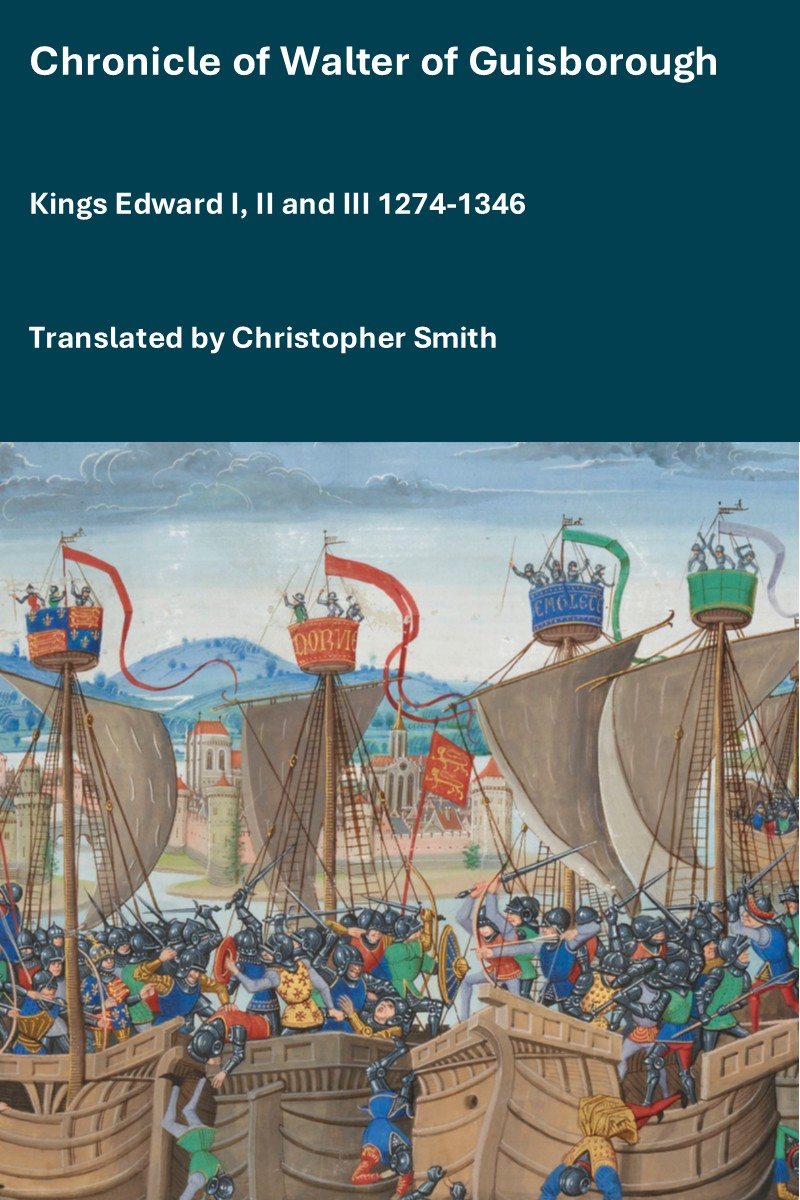 Chronicle of Walter of Guisborough. Upon hearing these things, the king immediately sent five hundred armed knights and twenty thousand foot soldiers into Gascony, under the command of Lord John de St. John, who had formerly served as seneschal of that land, along with Lord John of Brittany and the most valiant knight William Latimer. After all preparations necessary for such an expedition had been completed at Portsmouth, they set out to sea around the Feast of St. Peter in Chains [1st August 1294]. However, due to contrary winds, the fleet was scattered along the coasts of Cornwall. They regrouped again at Plymouth around the Feast of St. Denis [9th October 1294], hoisted sail once more, and after enduring many and various perils of storms, finally landed in Gascony near the Feast of Saints Simon and Jude [28th October 1294], at Castillon, which lies on the banks of the River Garonne. The lord of that town submitted himself to them and to the King of England, received them with great joy, and treated them kindly. From there they marched to Macau, and the citizens surrendered on the Eve of All Saints [31st October 1294]. On the following day, the whole fleet anchored before Bourg-sur-Gironde [Mons Albani]. The townspeople wished to surrender, but they feared the Picards who were stationed in the town's garrison. When the Picards saw that the townspeople intended to surrender, they sallied out from the castle and slew many. The citizens sent messengers to the English reporting what had happened and begging for help. The English quickly came to their aid and drove the royal [French] troops back into the castle. The townspeople then surrendered. In the morning, when our men prepared to storm the castle, the Picards asked for a three-day truce so that they could send a messenger to Bordeaux. They promised to surrender without delay if no help arrived. So a boy was sent, and the Constable of Bordeaux and the Marshal of France replied that they could not come so quickly, but ordered the Picards to defend themselves and resist manfully, especially as they had supplies and all necessities to last six months. Upon hearing this, the Picards surrendered immediately, on condition that their lives, limbs, horses, and arms be spared, and they departed in peace. Eight days later, our forces returned to the town of Blaye, which lies two leagues from Bourg. The garrison there sought a similar truce and obtained it; but as no help came, they surrendered and left. Our troops found a large amount of provisions in both the town and the castle, including around 2,500 barrels of wine.
Hiis auditis mox ipse rex quingentos armatos et viginti millia peditum misit in Vasconiam cum domino Johanne de Sancto Johanne, qui ejusdem terræ olim senescallus extiterat, et cum domino Johanne de Britannia, et illo milite strenuissimo Willelmo Latymer; qui apud Portesmew omnibus ad expeditionem tantam necessariis præparatis, posuerunt se in mari circa festum beati Petri ad Vincula, et irruente vento contrario dispersæ sunt naves per partes Cornubiæ; iterumque recollectæ apud Plumeuthe circa festum beati Dionysii ventis vela iterato laxabant, et post multa variaque tempestatum discrimina tandem circa festum Apostolorum Symonis et Judæ, applicuerunt in Vasconiam apud Chastellon, quæ situatur in littore fluminis Gerundæ; deditque se eis et regi Angliæ dominus urbis illius, et eos cum lætitia magna suscepit, et benigne tractavit. Profectique sunt inde usque ad Makant et dederunt se cives in vigilia Omnium Sanctorum, et in crastino anchoraverunt cum tota classe ante Burgum super mare qui antiquitus dicebatur Mons Albani; cives autem se dare volebant, sed timebant Picardos qui erant in præsidio civitatis; cumque vidissent Picardi quod se dare vellent, exierunt a castro et plurimos peremerunt. Miseruntque cives ad Anglos nunciantes hæc et eorum auxilium exposcentes, qui confestim in eorum auxilium ascenderunt, et retraxerunt se regales in castrum, et cives se dederunt; mane autem facto cum nostri in castrum irruere voluissent, petierunt Picardi inducias triduales, ut misso nuncio Burdegalim si in eorum non venirent auxilium se statim redderent absque dubio. Misso igitur puero remandavit eis constabularius de Burdews et marescallus Franciæ quod ita festinanter venire non poterant, immo se defenderent et viriliter resisterent, præcipue cum haberent victualia et cætera quæque necessaria, pro tempore semestri; quo audito statim dederunt se, salvis sibi vita et membris, equis et armis, et abierunt in pace. Post dies octo reversi sunt nostri ad urbem de Blaynes, quæ distat a Burgo per duas leucas, et similes quasi treugas petierunt castrenses et habuerunt, sed nullo veniente auxilio dederunt se et abierunt, inveneruntque nostri victualia multa in urbe et in castro et dolia vini circiter MMD.
Chronicle of Walter of Guisborough. Meanwhile, the king of France, having hired many ships, from Marseilles, Genoa, and wherever else he could, sent a great force of his army to sea, so that at one point more than 300 large ships could be seen, awaiting the signal they had been given. But when they had waited a long time and saw no signal, they sent, by their own decision, five selected galleys to scout the land. One of them, however, hastily landed at Hythe near the port of Romney. Seeing this, the English who had been appointed as guards there pretended to flee, and following the counsel of their leader, they withdrew so as to lure the enemy more eagerly onto land. So, as the English appeared to flee, the others pursued them. But when the English suddenly turned to face them, the French also turned and fled, and all of them, namely, 240 men, were killed, and their ship was burned. When the remaining four galleys saw this, they withdrew to the main fleet. For though they could be seen by our men, our sailors did not dare to engage them, fearing their great numbers. Around the feast of Saint Peter in Chains [1st August 1295], a large part of the same fleet landed on the western side of Dover, where no one had suspected a landing due to the abundance of stones and the steep cliffs. About 15,000 of their strongest warriors disembarked and plundered Dover from the first hour until nearly evening, setting much of it ablaze.
And when at their arrival (the French) all the people had fled and scattered, crying out and wailing, the local inhabitants regrouped, and the knights who had charge of the sea gathered as well. So it happened that, on that very day around the eleventh hour, they boldly attacked the enemy. About 5,000 were slain, and the rest were scattered in various directions. Some fled into the grain fields and were later cut down by the locals; the others who could, fled by ship. But thirty of the bravest men took refuge within the enclosure of the abbey, fighting fiercely until evening, such that our besieging forces could do them no harm. When, in the evening, our men became less vigilant and many returned home, those thirty also slipped away, escaping in two small boats. At daybreak, when this was discovered, two large ships gave chase; hoisting sail, they overtook the boats in open water and sank them with all aboard. During the initial invasion of the town of Dover, thirteen of our men and one monk were killed. This monk, while his fellow brothers took shelter in the church's bell tower, remained in the church of God, occupied in prayer before the very altar, where he was slaughtered. Thus was he offered to God as a morning sacrifice.
Rex autem Franciæ, conductis interim navibus multis de Marsilio scilicet et de Gene et undecunque poterat, magnum robur exercitus misit in mare, ita quod aliquando viderentur plusquam CCC naves magnæ signum expectantes quod acceperant; cumque mansissent diu nec signum vidissent, miserunt ex consilio proprio V galeas electas ut terram explorarent; at una earum ris festinans applicuit apud Hydam juxta portum de Rumenai; quod videntes Anglici, qui ibidem fuerant custodes deputati, simulabant fugam, et ex consilio ducis eorundem retraxerunt se ut ferventius hostes ad terram allicerent; illis itaque fugientibus insequuntur alii, sed facies convertentibus mox et ipsi terga verterunt, et cæsi sunt omnes scilicet CCXL viri, et navis eorum combusta est: quod videntes aliæ quatuor retraxerunt se usque ad magnam classem, poterant enim videri a nostris, nec tamen cum eis audebant congredi marinarii nostri, timentes multitudinem magnam. Circa festum beati Petri ad Vincula magna pars ejusdem classis applicuit apud Doverniam ex parte occidentali, ubi nulla fuerat applicandi suspicio præ multitudine lapidum et rupis excelsæ, egressique sunt bellatores fortissimi circiter XV millia hominum, et spoliaverunt Doverniam ab hora prima usque fere vesperam, incendentes eam igni pro magna parte.
Cumque in ingressu eorum fugissent omnes et dispersi fuissent conclamantes et ejulantes, conglobati sunt incolæ et concurrebant milites qui they are decuram maris habebant, ita quod eodem die hora quasi undecima hostes aggressi sunt animose, cæsisque quasi V millibus reliquos in partes diviserunt; quidam enim fugerunt in segetes qui postea cædebantur ab incolis, et cæteri qui poterant navigio fugerunt; triginta autem viri fortissimi receperunt se infra clausum abbatiæ, strenuissime pugnantes usque in vesperum, ita quod nihil eis nocere poterant nostri obsidentes. Cumque in vesperis nostri remissius agerent, et multi reverterentur ad propria, ipsi quoque dilapsi sunt, cum duabus scaphis fugientes; quo mane cognito, insecutæ sunt eos duæ magnæ naves, quæ vela levantes in altum scaphas cum hostibus submerserunt. In ipso autem introitu hostium in villa de Dover, ceciderunt ex nostris XIII viri et unus monachus; hic quidem monachus, cæteris suis fratribus in campanili ecclesiæ se receptantibus, cum orationi vacaret in ecclesia Dei coram ipso altari trucidatus est, et obtulerunt eum Deo sacrificium matutinum.
Chronicle of Walter of Guisborough. And since the king had not yet returned from Wales at the time of the cardinals' arrival, having just concluded a war there, the king gave orders that the cardinals be treated with honour and remain in London until the Feast of Saint Peter in Chains [1st August 1296], awaiting his return. By that date, the king, having pacified Wales, appeared, along with all the magnates, both clerical and lay, who had been especially summoned for this occasion. The cardinals were received with honour and immense joy. When silence had been established, each of the cardinals spoke about peace and introduced many considerations in favour of it. Finally, concluding their speeches, they earnestly asked the king, as a zealous lover of peace and a faithful Catholic son, that he, as a most pious prince and child of peace, would be willing to incline his heart toward the good of peace. The response given to them on behalf of the king was that, after careful deliberation, he would answer their requests and questions on the third day. The theme of one of the cardinals' sermons was: "Give peace, O Lord, in our days"; the other chose: "May the Lord open your heart to His law and commandments, and bring peace." On the third day, the council was convened, and Friar William de Hotham preached in Latin, as the cardinals had done. His theme was: "I will hear what the Lord God will speak in me, for He will speak peace to His people." He emphasized that our king, as a true son of obedience and a lover of peace, was prepared to hear the apostolic commands as though spoken from Heaven and issued divinely. When the sermon was finished, by the king's command, the entire preceding account was read in French, namely, how the war had arisen between the two kings, and how it had continued until that day, so that those who acted as peace mediators and promoters might see and understand which of the kings held justice in the matter, or who was supporting injustice.
Chronicle of Walter of Guisborough. In the year of our Lord 1297, the king, steadfast in his plan to cross to the continent, ordered that all those who owed him military service, and anyone who held £20 worth of land in England (a standard baronial threshold), were to assemble in London on the feast of St. Peter in Chains [1st August 1297]1, fully prepared with horses and arms, ready to cross the sea without delay or excuse. When they gathered, and many saw the king firm in his purpose, some of the magnates said to him: "It is not wise, O King, nor good to cross the sea in this state, unless you are first reconciled with your spiritual father, the Archbishop of Canterbury, and with your barons. Only then will you be truly seen as counted among the bosom of Holy Mother Church." The king, realizing the justice and reason of this, called for the Archbishop of Canterbury, who was nearby. Setting aside all rancour, he received the archbishop back into special favour2, even augmenting his previous standing. Trusting in the archbishop's goodness and loyalty, the king entrusted to him the care of his son Edward [the future Edward II] and the governance of England, jointly with Sir Reginald de Grey, before the entire people. He ordered that all the archbishop's possessions, even down to the last farthing, be restored. Thus, by God's favour, the archbishop who had been cast out and had faced persecution for the honour of God was restored with dignity. All the magnates present then swore fealty to Prince Edward at the king's command, and with raised hands, he was loudly proclaimed by the people as the true heir and future lord of the realm. The king also explained and excused himself for the taxes and forced requisitions he had exacted from the people, saying he could not pursue his campaigns without their generous support, especially since he acted not for himself alone but for the entire realm, as their protector and defender. He asked the people for their forgiveness and prayers, and while some prayed for him openly, others cursed him in secret. The Earls of Hereford and Norfolk Earl Marshal], who had withdrawn from royal service and refused to obey the king's commands, were stripped of their hereditary offices, which were then given to others more willing to serve. The two earls, angered by this, especially because they claimed to be defending not only their own rights but those of the whole commonwealth, said to the king's mediators: "It is not just our cause, but that of the entire realm that is being trampled, because of unjust oppressions, forced tallages (taxes), and seizures, especially because the king is acting contrary to the liberties of the Magna Carta." Seeing the king immovable in his will, and unwilling to struggle indefinitely under such uncertainty, they sent messengers to him, requesting that he remedy the articles listed below, both for themselves and the people. They added that if the king would confirm the Charter of Liberties and amend those grievances, they would be ready to follow him into life or death.
Anno Domini MCCXCVII rex, in suo proposito in permanens, præcepit ut omnes qui servitium sibi debebant, et omnes alii qui viginti libratas terræ a quocunque tenerent infra regnum Angliæ, essent Londoniis in festo beati Petri ad Vincula, parati cum equis et armis ad transfretandum cum eo absque dilatione qualibet vel excusatione. Cumque venissent ibidem, multique viderent regem in incepto proposito permanere, dixerunt ei magnatum quidam, "Non expedit, O rex, nec bonum est sic transfretare, nisi, primo reconciliato patre tuo spirituali Cantuariensi archiepiscopo et magnatibus tuis, inveniaris et ipse in sinu matris ecclesiæ numeratus." At ille in se reversus, et videns hoc justum esse et rationi consonum, mox accersito Cantuariensi archiepiscopo, qui præsens aderat, et omni rancoure deposito, ipsum cum suis in specialitatem recepit pristinam et majorem adauxit, confidens enim de bonitate ipsius et constantia curam et custodiam Edwardi filii sui et totius terræ Angliæ, adjuncto sibi domino Reginaldo de Gray, coram omni populo commisit, præcepitque ut omnia sibi restituerentur, etiam usque ad ultimum quadrantem. Sicque, favente Deo, cum honore reductus est, qui mortem non metuens pro honore Dei certavit ad mortem, omnesque magnates qui ibi aderant, ipso regis filio, ex præcepto patris, fidelitatem faciebant, et ab omni populo levatis Edward. dextris verus conclamabatur hæres, futurus dominus, et regni successor. Excusavit etiam se rex de exactionibus et prisis quas a populo susceperat, dicens se incepta prosequi non posse nisi eorum subveniret larga manus, præcipue cum non suam tantum immo totius populi ageret causam, tanquam protector eorum et defensor. Rogavitque populum, accepta licentia, ut omnia condonarentur ei, et orarent pro eo. Et orabant quidam publice, alii autem maledicebant in occulto. Prædicti vero comites Herefordensis et marescallus a rege se subtrahentes, cum votis ipsius non parerent ab eorum officiis absoluti sunt, deditque rex eorum officia aliis quibusdam qui ministrarent ei. Quod ipsi grave ferentes, præcipue cum non tantum propriam sed etiam totius communitatis causam agerent, dicentes mediatoribus pacis, qui inter ipsos et regem equitabant, quod non solum ipsi sed tota communitas terræ gravata erat, et ultra modum, de injustis vexationibus, talliagiis, et prisis, et maxime quod non secundum libertates Magnæ Cartæ ducerentur; cumque regis animum viderent immobilem, et diutius sub incerto ventum verberare nolentes, missis ad regem nunciis, rogaverunt eum ut subscriptos articulos pro se et pro populo emendare juberet, adjicientes quod si Cartam Libertatum confirmare vellet et articulos corrigere, parati erant omnes eum sequi in vitam vel in mortem.
Note 1. This date is supported by Walsingham, but according to the writ entered on the Rot. Claus. 25 Edward I m. 14, d. they were summoned to be ready at London on Sunday next after the Octaves of St. John the Baptist, 7th July.
Note 2. The writ commanding the restoration of the archbishop's lay fees is dated at Westminster on the 11th of July 1297, and, shortly after, the King wrote to the sheriffs to protect and defend the clergy in general from all injury and molestation.
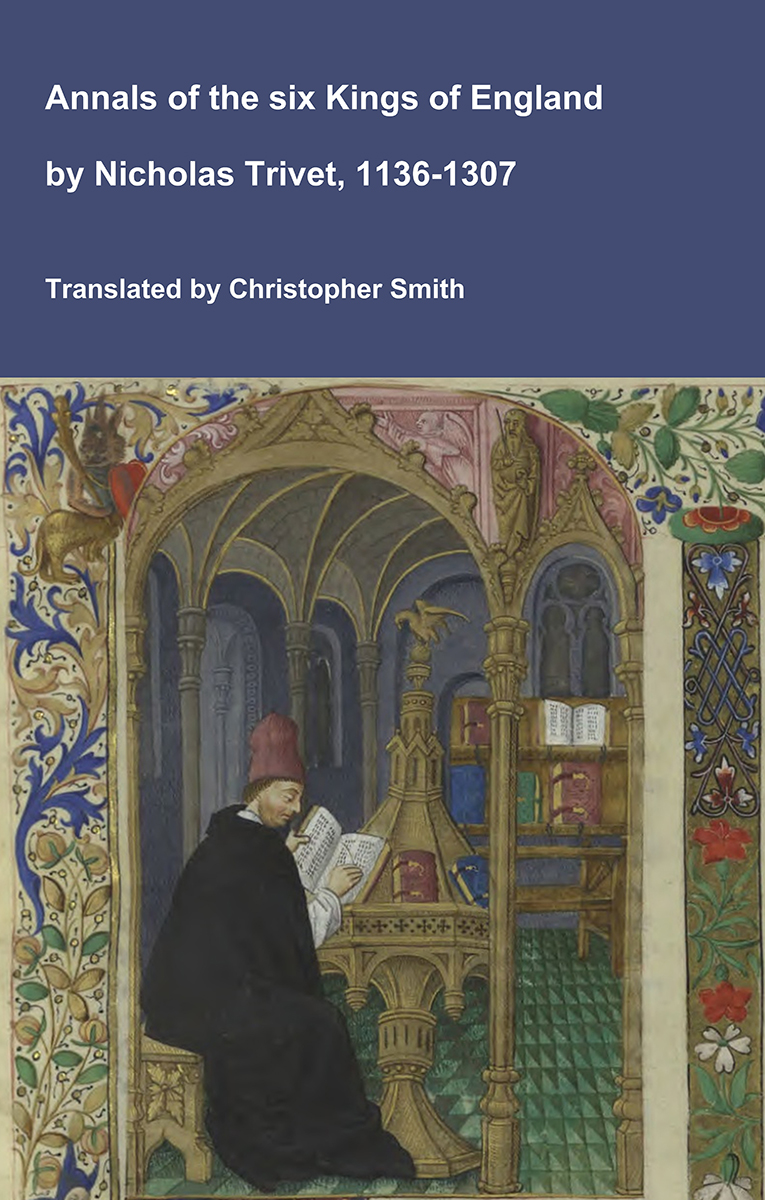
Annals of the six Kings of England by Nicholas Trivet
Translation of the Annals of the Six Kings of England by that traces the rise and rule of the Angevin aka Plantagenet dynasty from the mid-12th to early 14th century. Written by the Dominican scholar Nicholas Trivet, the work offers a vivid account of English history from the reign of King Stephen through to the death of King Edward I, blending political narrative with moral reflection. Covering the reigns of six monarchs—from Stephen to Edward I—the chronicle explores royal authority, rebellion, war, and the shifting balance between crown, church, and nobility. Trivet provides detailed insight into defining moments such as baronial conflicts, Anglo-French rivalry, and the consolidation of royal power under Edward I, whose reign he describes with particular immediacy. The Annals combines careful year-by-year reporting with thoughtful interpretation, presenting history not merely as a sequence of events but as a moral and political lesson. Ideal for readers interested in medieval history, kingship, and the origins of the English state, this chronicle remains a valuable and accessible window into the turbulent world of the Plantagenet kings.
Available at Amazon in eBook and Paperback format.
Chronicle of Walter of Guisborough. Meanwhile, the time drew near for the bishop to undertake the promised journey, and he began to appease the lord king more than usual, promising and assuring that he would do justice and provide good and faithful ministers; and his liberty was restored to him. At that same time, around the [1st August 1303], the aforesaid Prior Richard returned from the curia, and was received with joy by his brethren of Durham in the third year of his expulsion.1 The lord bishop then set his steps towards the Roman curia, but not, however, as he had promised, because Pope Boniface, mentioned above, had died. Pope Benedict having succeeded him, the lord bishop sought to be granted, for the purpose of carrying out the aforesaid business of the Holy Land, the tithes of the English Church, and also of Scotland and Ireland, for three continuous years. But he was mocked, and again poured out the very bowels of his wealth. He only managed to obtain that the Archbishop of Canterbury (age 58) and the Bishops of Winchester and Lincoln should come in person to visit the chapter of Durham and make salutary corrections, both in head and in members. For the Bishop of Durham did not wish to conduct the visitation himself, because Pope Boniface had restricted him by issuing a special constitution on the matter (which begins Ad Audientiam), providing that the Bishops of Durham should not henceforth make a visitation except with only one religious [companion], and one cleric, and one notary. The bishop then returned to England, and in that same year Pope Benedict died; and thus, with the death of the one giving the mandate, the mandate itself expired. Afterwards, the aforesaid prior laid many complaints before the king's ears, and they could not be reconciled until the king's parliament at London, in Lent of the fourth year following.
Interim appropinquavit tempus episcopi, ut promissum iter arriperet, et incepit plus solito placare dominum regem, promisitque et assecuravit justitiam facere, et ministros præstare bonos et fideles, et restituta est ei libertas sua. Eodem tempore circa festum beati Petri ad Vincula, prædictus prior Ricardus reversus est de curia, et a fratribus suis Dunolmensibus cum gaudio susceptus est in anno tertio ejectionis suæ; et dominus episcopus ad Romanam curiam direxit gressus suos, non tamen ut promiserat, quia obierat Bonifacius papa prædictus. Succedente vero eidem papa Benedicto, dominus episcopus pro exequendo prædicto negotio Terræ Sanctæ decimas Anglicanæ ecclesiæ, Scotia et Hiberniæ, per tres annos continuos concedi sibi petiit. Sed irrisus est, effuditque iterato viscera pecuniæ suæ. Et solummodo impetravit, quod Cantuariensis archiepiscopus, Wintoniensis et Lincolniensis episcopi personaliter venirent et visitarent capitulum Dunolmense, et correctiones salubres facerent, tam in capite quam in membris. Noluit enim Dunolmensis episcopus visitare per se, eo quod dominus papa Bonifacius limitaverat eum, faciendo super hoc constitutionem specialem, (quæ "Ad Audientiam" incipit,) quod Dunolmenses episcopi non visitabunt de cætero, nisi cum uno religioso tantum, et uno clerico, et uno tabellione. Reversusque est episcopus in Angliam, et in eodem anno mortuus est ille papa Benedictus: et sic mortuo mandatore, expiravit mandatum. Deposuitque subsequenter prædictus prior ad aures regis querelas multas, nec concordari poterant usque ad parliamentum regis Londoniis, in Quadragesima anni quarti subsequentis.
Note 1. Godwin says the Prior of Durham died on his return home before reaching England.
Chronicle of Walter of Guisborough. Seeing that they could make no progress there, the Scots, having lost many men, returned to their own lands1. At that same time2 there came messengers from Edward [Bruce], sent by Lord Edward de Brus to Lord Robert his brother, who was then in Ireland seeking to subjugate that island for himself. He reported that unless help could quickly be obtained, he would lose himself, his men, and his treasure. In response, Robert gathered thirty thousand of the strongest fighting men from Scotland and sent them into Ireland in support, counsel, and aid of his brother. Lord Aymer de Valence, Earl of Pembroke, was then sent from the side of the King of England to guard the Scottish March. Gathering an army, he rode peacefully through the whole land of Tynedale, and coming into Northumberland, laid waste all the land, destroying every kind of crop. But entering into Scotland and finding only a few Scots, he took to flight, thus giving boldness to the enemy. These same Scots pursued him as far as Comrech, and having killed many of the English, returned with honour to their own land, our men having fled in the most shameful fashion, and, alas! many being slain.
Videntes autem Scoti quod ibi proficere non valerent, ad partes proprias, amissis multis hominibus, redierunt. Illo eodem tempore venerunt Edward nuncii per dominum Edwardum de Brus missi tempts the subjugation domino Roberto fratri suo in Hibernia existentem, qui insulam illam sibi voluit subjugare, quod nisi remedium possit citius obtineri, se ipsum amitteret, suos homines insuper et thesaurum; qui collectis triginta mille pugnatoribus de Scotia fortissimis, ad partes Hiberniæ destinavit, in fratris sui subsidium, consilium, et favorem. Missus est ergo dominus Emericus The Earl of de Valencia de Pembruc a latere regis Angliæ, ravages ut marchiam Scotia custodiret, qui collecto exercitu totam terram de Tyndalle pacifice equitavit, et veniens ad partes Northumbriæ totam terram in quolibet blado vastavit. Atque but is forced terram Scotia ingrediens propter paucos Scotos, fugam iniit, audaciam tribuens inimicis; qui scilicet Scoti secuti eum usque Comrech," et multis de Anglis interfectis, Scoti cum honore ad propria redierunt, nostris vilissime fugatis, et multis, proh dolor! interfectis.
Note 1. The siege was raised on the 1st of August, 1315. Chronicle Lanercost, 232, ed. 1839
Note 2. Bruce's departure into Ireland to the assistance of his brother, is properly placed by the Chronicle of Lanercost (p. 233).
On the 4th of January, 1317, King Edward issued his writs, summoning the nobles who held lands in Ireland to be at Haverford by the Feast of the Purification (February 2), ready to attend Lord Roger Mortimer, of Wigmore, in his expedition against the Scots.
Chronicle of Henry Knighton. [1st August 1323] In the year of grace 1323, Lord Roger de Mortimer escaped from the Tower of London with the help of a certain Gerard de Alspaye, who was under the authority of Lord Stephen de Segrave, Mortimer's jailer, as mentioned above. He fled to France, where he remained with many others who had also fled from the face of King Edward, out of fear of the king and the Despensers, who were ravenous to be filled with the lands and possessions of others.
Anno gratiæ MCCCXXIII dominus Rogerus de Mortuo mari evasit de turri Londoniensi per auxilium ecujusdam Girardi de Alspaye qui sub domino Stephano de Segrave custodiam ejus habuit ut supra, et fugit in Franciam, ibique moram traxit cum multis aliis qui fugerant a facie regis Edwardi præ timore regis et Dispensatorum qui esuriebant alienis terris et possessionibus saturari.
Chronicles of Trokelowe and Blaneforde. [1st August 1323] In the year of our Lord 1323, on the feast of Saint Peter in Chains (ad Vincula), the noble lord, Sir Roger de Mortimer, Lord of Wigmore, confined in the highest and most secure part of the Tower of London—along with his uncle, Sir Roger, and other nobles of the realm, who, having returned from the conflict between the King and the Barons mentioned above, had submitted themselves to the King's mercy—was held in a manner less civil than befitted their station. From the depths of his heart and by the utmost ingenuity of his mind, he devised a clandestine escape, one unheard of and unimaginable for ages past.
Anno Domini millesimo trecentesimo vicesimo quarto, in festo Sancti Petri quod dicitur "Ad Vincula," nobilis vir, Dominus Rogerus de Mortuo Mari, Dominus de Wigemor, in eminentiori et arctiori loco Turris Londoniarum, cum Domino Rogero, avunculo suo, et cum ceteris regni nobilibus, qui a conflictu inter Regem et Barones supra memorato redeuntes gratie Regis se submiserant, minus civiliter quam decuit, detentus et detrusus, a sæculis inaudibilem et inexcogitabilem, ex profundissimo cordis ingenio, suam ordinavit clandestinam liberationem.
Chronicles of Trokelowe and Blaneforde. [1st August 1323] For in the stillness of the night during that same feast (of Saint Peter in Chains), when both the guards of the Tower and many others had fallen into deep sleep and rest — having been given a certain harmful drink — Roger [Mortimer] (age 36) did not escape through the door of his chamber, which had been secured with many locks and bars, but rather through another way. By breaking through a wall, he entered the royal palace kitchen attached to the Tower. From the top of this building, he climbed down into one of the Tower's guard posts. Then, using ropes ingeniously fashioned like a ladder, which had been procured for him by a certain friend and secretly brought to him beforehand, he descended with considerable fear to another guard post. And, just as Saint Peter, imprisoned under Nero, passed the first and second guards with the help of an angel, so too did he—though with great difficulty—finally reach the Thames. There, he found a small, fragile boat, into which he entered with his helper and two other members of his inner circle. With God's help, they swiftly crossed the river. They then hurried with all speed toward the sea, carefully avoiding public roads throughout their journey, and did not rest until, united in purpose, they reached a certain port. In that place, where they were known to no one, they found a ship—prepared for them and waiting for some time near the port. With all haste, they boarded the vessel and, aided by a favorable wind granted by God, they swiftly arrived in the realms of France.
Nam intempestæ noctis silentio dictæ festivitatis, tarn custodibus castri quam cæteris multis, per quendam pestiferum potum eis ministratum, nocturno quieti ac sopori deditis, repentine, noii per ostium cameræ suæ, quod multis seris et repagulis fuerat obseratum, sed aliunde, per ruptionem muri, venit in coquina palatio Regis annexa; per cujus sunimitatem exiens, ad unam oastri devenit eustodiam; deinde per cordas, ad modum scalæ ingeniose compositas, per quenidam amicum suum pro visas, et sibi secrete prius allatas, ad aliam castri eustodiam cum non modico timore per venit. Et, sicut Beatus Petrus, in vinculis Neronis detentus, Angelo ducente, primam et secundam transivit custodiam, cum maxima difficultate tandem venit ad aquam Tamisiæ; ibi quamdam fragilem cymbam reperiens, quam, cum adjutore suo, et aliis duobus de consilio suo, intravit, et dictam aquam, Deo volente, concito transmearunt. Et cum omni festinatione ad mare properantes, publicas stratas semper in itinere devitarunt; nec cessare voluerunt, donec ad quemdam portum unanimes pervenirent. Quo vero in loco, ab omnibus ignoti, navem, aliquandiu eos ibidem expectantem, prope portum promptam ibidem reperientes; quam cum omni festinatione intraverunt, et, prosperam auram eis Deo ministrante, ad Gallicana regna concito pervenerunt.
Annales Paulini. And in the same year, on the night following the feast of Saint Peter in Chains (1st August 1323), Lord Roger de Mortimer (age 36) escaped from the Tower of London and crossed the Thames to the mills of John de Gisors. Nearby, at the abbot's houses, seven horses had been prepared, and Lord Roger, with seven others, began his journey toward the sea. There, he found a boat arranged in advance by certain individuals, as will be made clear below.
An inquest held at Portsmouth before John de Weston and others on Tuesday, the feast of Saint Lawrence (August 10th), in the 17th year of the king's reign, by the oath of John Bacun and others, who stated that on the day after the feast of Saint Peter in Chains, Thomas Lessorte, a boatman from the Isle of Wight, took his boat to Barelorde, as Alice of Southampton had told him to do, having herself been directed by Ralph de Boktone, a London merchant. At that place, he was to find men whom he would carry in the said boat. When he arrived with the boat, he found seven men, who entered his vessel. When they reached the open sea near Noteleshere, they saw a ship which Ralph de Boktone had arranged for them from Normandy. Immediately, they forced the boatman by threat to take them to the Norman ship, and they boarded it. From this, it was suspected that they were felons of the king who had escaped from the Tower of London. The seven men had left their horses in the yard at Baselehorde, which Alice then left to graze in pasture until the return of the said Ralph.
Et eodem anno, nocte sequenti festun Sancti Petri ad Vincula, dominus Rogerus de Mortuomari evasit de twrri Londoniensi et transivit ultra Tamissiam usque ad molendinas J. de Gisors, et deprope in domibus abbatis fuerunt vii. equi parati, in quibus dominus Rogerus um vii persona iter suum arripuit versus mare, et ibi invenit batellum ex prælocutione quorundam, prout inferius patebit.
Inquisitio facta apud Portesmuth coram J. de West' et ceteris, die Martis in festo Sancti Laurentii anno regni regis xvii, per sacramentum J. Bacun et aliorum, et qui dicunt quod in crastino Sancti Petri ad Vincula, Thomas Lessorte batellarius de insula Vecta duxit batellum suum apud Barelorde, sicut Alicia de Borhamtone ei dixit quod faceret, sicut ipsa ducts fuit per Radulfum de Boktone mercatorem Londoniensem, et apud prædictum locum deberet invenire homines quos duceret in prædictam inenlam. Qui cum ibi venisset cum batello, invenit ibi vii homines qui intraverunt batellum suum, et, cum venisset super mare versus Noteleshere, viderunt quandam navem quan Radulfus de Bohtone eis prædictus providit de Normannia; et statim coegerunt batellariom vi ad ducendum eos ad dictam navem de Normannia, et intraverunt eam; per quod æstimavit quod fuerunt felones domini regis qui evaserunt de turri Londoniarum. Qui vii equos dimiserunt super aream apud Baselehorde, quos equos dicta Alicia dimisit in pastura usque ad adventum dicti Radulfi.
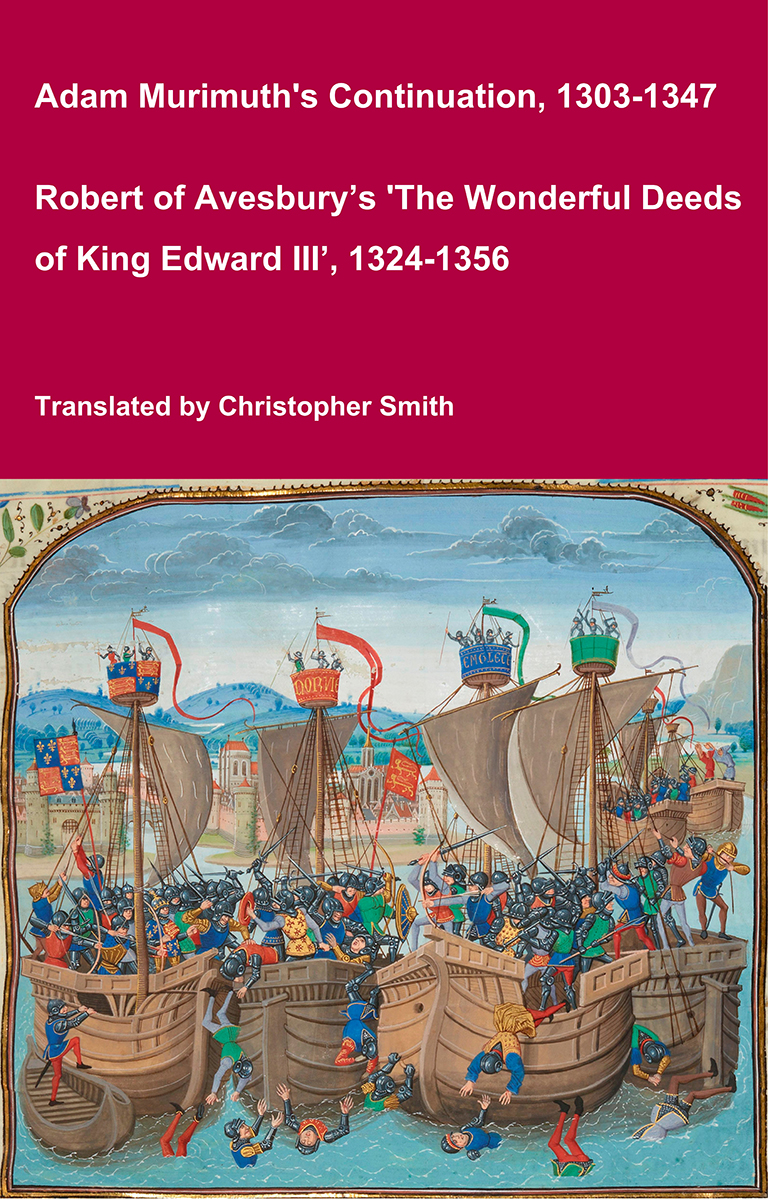 Adam Murimuth Continuation. 1st August 1323. In this year, around the feast of St. Peter in Chains (August 1st), the envoys of Charles, King of France, namely Lord Beuville and Lord Andrew of Florence, came to the King of England at Pickering to summon and warn him to come within a set time to do his homage to Charles, the new King of France, for the Duchy of Aquitaine. And although Hugh Despenser the Younger and Robert de Baldock had persuaded the envoys not to disclose to the King the true reason for their coming, nonetheless, upon their departure, they warned him—seemingly as advice—that he should go, as it had been enjoined upon them to both summon and warn him. Upon this warning or summons, the said Lord Andrew of Florence, who was a notary, made a public instrument. By virtue of this document, the King of France initiated legal proceedings against the King of England and caused many lands in Gascony to be seized, as will appear below, all as a penalty for the contumacy (willful disobedience) of the King of England, who had been misled by evil counselors into believing that the aforementioned summons or warning did not legally bind him.
1st August 1323. Hoc anno, circa gulam Augusti, venerunt ad regem Angliæ, apud Pykeringe, nuncii regis Franciæ Karoli, videlicet dominus Beoville et dominus Andreas de Florencia, ad citandum et monendum eum quod veniret infra certum tempus ad faciendum homagium suum ipsi Karolo, novo regi Franciæ, pro ducatu Aquitaniæ; et licet Hugo Dispensator filius et Robertus de Baldock procurassent ipsos nuncios quod ipei non notificarent regi illam causam sui adventus, ipsi tamen in recessu suo monuerunt eum, quasi consulendo, quod ipse veniret, sicut fuit eis injunctum quod facerent et monerent. Super qua monitione give citatione dictus dominus Andreas de Florencia, qui fuit notarius, fecit publicum instrumentum, virtute cujus rex Franciæ fecit processum contra regem Angliæ et terras multas Vasconiæ seysiri, sicut inferius apparebit, et totum in pœnam contumaciæ regis Angliæ, qui fuit informatus per malos consiliarios quod ipsum præfata citatio seu monitio non artabat.
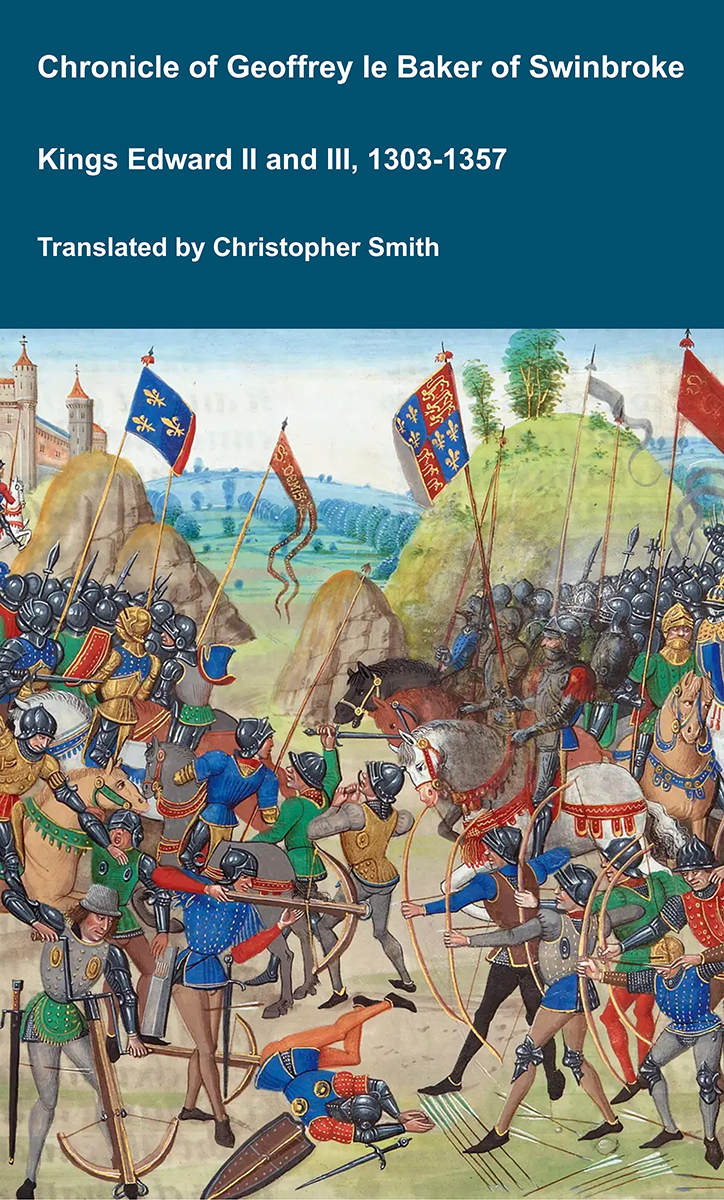 Chronicle of Geoffrey le Baker of Swinbroke [-1360]. Afterwards, around the feast of Saint Peter in Chains1 [1st August 1340], French pirates, aided by the Spaniards, launched a sudden assault on the Isle of Wight and made an unexpected incursion. Sir Peter Russel, a knight, with local men confronted them and forcefully drove them out, killing many of them; however, the knight himself was mortally wounded and died. The pirates then moved toward Devon and burned the bishop's town of Teignmouth. Afterward, they turned toward Plymouth, but they did no harm to the town's defences; instead, they burned certain manors in the countryside and took a knight captive, whom they led away wherever they wished.
Postea, circa festum sancti Petri ad Vincula, pirate Gallici cum adiutorio Hispanorum insultum dederunt in insulam Vecte et subito intrarunt. Quibus dominus Petrus Russel, miles, cum popularibus obviavit et ipsos potenter expulit, pluribus eorum interfectis; set miles ibidem letaliter wlneratus exspiravit. Pirate vero ad partes Devonie se transtulerunt, et villam de Teygnemuthe episcopi combusserunt. Deinde versus Plummutham migrarunt, set ville defence nil nocuerunt; immo quedam maneria campestria combusserunt, et quemdam militem captum duxerunt quo volebant.
Note 1. This PARAgraph occurs only in certain MSS. of Murimuth. The captain of the Isle of Wight was Theobald, not sir Peter, Russell.
Murimuth 109.
Adam Murimuth Continuation. Also, around the feast of Saint Peter in Chains [1st August 1340], pirates from France, with the aid of Spaniards, launched an assault on the Isle of Wight, and suddenly forced their way in. Sir Peter Russel, knight, met them with a number of local commoners and drove them off, but the knight himself was killed in the fighting. The pirates then moved into Devon, where they burned the town of Teignmouth, which belonged to the bishop of Exeter, and afterward proceeded toward Sutton and Plymouth. They did no harm to the town of Sutton, but they burned some rural manors and captured a knight, referred to here as Sir J., whom they carried off with them wherever they pleased.
Item, circa festum sancti Petri ad vincula, venerunt pirate Franciæ [om. M.], cum adjutorio Hispanorum, et insultum dederunt apud Insulam Vectam et subito intraverunt. Quibus dominus Petrus Russel, miles, cum quibusdam popularibus obviavit etexpulit ipsos; sed ipse miles fuit occisus ibidem. Ipsi autem pirate se ad partes Devoniæ transtulerant, et villam de Tynegmuthe episcopi Exoniensis combusserunt, et versus Suttonam et Plummouthe se transtulerunt; sed ville de Suttona nihil omnino nocuerunt, sed quedam maneria campestria combusserunt,et quendam militem dominum J. ceperunt et secum quo voluerunt abduxerunt.
Calendar of Papal Letters 1344. 1st August 1344. 522. 2 Kal. Aug. Villeneuve by Avignon. (f. 215d.)
Confirmation, with expemplification, at the request of Richard de Baskervile, knight, and Isabella his wife, of the diocese of Hereford, of the letters issued by Clement VI. 2 Non. June, anno 3, ruling, in the case of John, earl of Warenne (age 58), and Joan de Barro (age 48), that dispensation for the marriage of persons related in the fourth degree of kindred shall hold good if they are related in the fourth and third degrees.
Letters. 1st August 1394. Letter XXVI. Annabella Queen of Scotland (age 44) to King Richard II (age 27).
To the most high and mighty prince Richard, by the grace of God king of England, our very dear cousin, Annabella, by the selfsame grace queen of Scotland sends health and greeting.
We give you hearty and entire thanks for your loving letters presented to as by oar well-beloved Donglas, herald-at-arms, from which we have learned to our great pleasure and comfort your good health and estate. And, dearest cousin, as touching the marriage-treaty to be made between some nearly allied to you by blood and some children of the king my lord and of us, be pleased to know that it is agreeable to the king (age 57) my said lord and to us, as he has signified to you by these letters. And in especial, that, although the said treaty could not be held on the third day of July last past for certain and reasonable causes contained in your letters sent to the king my aforesaid lord, you consented that the treaty should in like manner take place another day, namely, the first day of October next coming, which is agreeable to the king my aforesaid lord and to us; and we thank you heartily aud with good will, and affectionately pray you that you will continue the said treaty, and have the said day kept, for it is the will of my said lord the king and of us that as far as in us lies the said day should be kept without fail. And, dearest cousin, we affectionately require and entreat you that your highness will not be displeased that we have not sooner written to you; for we were lying in childbed of a male infant named James, of whom we are now well and graciously delivered, thanks to God and our Lady. And also, because, at the coming of your letters, the king my said lord was far away in the isles of his kingdom, we did not receive these letters sent to us on this matter till the last day of July last past. Most high and puissant prince, may the Holy Ghost ever keep you! Given under our signet, at the abbey of Dumfermline [Map], the first day of August.


William of Worcester's Chronicle of England
William of Worcester, born around 1415, and died around 1482 was secretary to John Fastolf, the renowned soldier of the Hundred Years War, during which time he collected documents, letters, and wrote a record of events. Following their return to England in 1440 William was witness to major events. Twice in his chronicle he uses the first person: 1. when writing about the murder of Thomas, 7th Baron Scales, in 1460, he writes '… and I saw him lying naked in the cemetery near the porch of the church of St. Mary Overie in Southwark …' and 2. describing King Edward IV's entry into London in 1461 he writes '… proclaimed that all the people themselves were to recognize and acknowledge Edward as king. I was present and heard this, and immediately went down with them into the city'. William’s Chronicle is rich in detail. It is the source of much information about the Wars of the Roses, including the term 'Diabolical Marriage' to describe the marriage of Queen Elizabeth Woodville’s brother John’s marriage to Katherine, Dowager Duchess of Norfolk, he aged twenty, she sixty-five or more, and the story about a paper crown being placed in mockery on the severed head of Richard, 3rd Duke of York.
Available at Amazon in eBook and Paperback format.
On 1st August 1402 Edmund of Langley 1st Duke of York (age 61) died at King's Langley, Hertfordshire [Map]. His son Edward (age 29) succeeded 2nd Duke York, 2nd Earl Cambridge and inherited his estates which included Conisbrough Castle [Map]. Philippa Mohun Duchess York (age 35) by marriage Duchess York.
Patent Rolls. 1st August 1462. Westminster Palace [Map]. Grant to the king's uncle William Neville (age 57), Earl of Kent and lord of Fauconberg, and the heirs male of his body of the manors and lordships of Crukerne, Misterton, Glopton, Kyngeston by Yevulchestre, Somerton Erleghy Batheneston and Shekerwike, co. Somerset, Northam, Londay, Slapton, Torrybrian, Clyfton Dertmouth Hardenesse, Norton Daunde by Dertmouth, Aylesbeare and Whympell, co. Devon, and Shevyok, Antony, Portloo, Landulp, Trelowia, Northill, Landrian, Legh Durant, Oldlawitta, Penpol, Elerky and Lanyhorn, co. Cornwall, the boroughs of Crofthull and Portpigham, co. Cornwall, the lordships and manors of Ebryngton, Yeverne Courteney, Maperton, Ramsam, Wroxhale, Childefrome, Tolre Porcorum, Pountknoll, Valet, Clevecombo, Swere, Netherkentcombe and Hasilbeare, co. Dorset, the castle and lordship of Warder, co. Wilts, the lordships and manors of Chellesfelde, Esthall, Faukehnm, Ayssh and Wylmyngtou, co. Kent, and Maunsfelde, Lyndeby and Clypston in Shirwode, co. Nottingham, tho castle and lordships of Horeston and Balsover, co. Derby, the lordships and manor's of Whitle and Warpesden alias Warpelesden, co. Surrey, the manors of Bondeby, co. Lincoln, and Westle, co. Suffolk, all manors, messuages, lands, rents and services late of Antony Nuthill of Holdernesse in the county of York, all burgages, messuages, lands, rents and services late of Thomas Tresham (age 42), knight, in the town, suburb and fields of Norhampton, the manor of Wavenden, co. Buckingham, and all other lands, rents and services in those places, with all timber and lead, late of the said Thomas Tresham in the town of Norhampton, with advowsons, knights' fees, frandchises, liberties, hundreds, courts leet, views of frank-pledge, fairs, markets, warrens, fisheries, wreck of sea, chattels of felons and fugitives and all other profits, in the king's hands by reason of an act of Parliament at Westminster, 4 November, and all the issues of the same from the first day of the reign. And if he die without male heir of his body the king grants the said lordships and manors of Crukeme, Aylesbcare, Whympell, Torribrian, Ebryngton, Yeverne Courtenay, Shevyok, Antony, Portloo, Landulp, Trelowia, Northll, Landryan, Legh Durant, Oldlawitta, Penpoll, Elerky, Norton, Croftholl, Porpighan and Lavyhome with advowsons and knight's fees to George Neville, Bishop of Exeter (age 30), John Markham, knight, chief Justice of the Bench, Robert Danby, knight, chief justice of the Common Bench, Thomas Witham (age 42), chancellor of the Exchequer, Thomas Cooke, citizen and alderman of London, Robert Ingleton, John Payntour and Thomas Graveson for twelve years from his death.
On 1st August 1474 Humphrey Pole was born to John de la Pole 2nd Duke of Suffolk (age 31) and Elizabeth York Duchess Suffolk (age 30). He a great x 3 grandson of King Edward III of England.
Collectanea by John Leland [1502-1552]. The First Day of August [1st August 1503] the Qwene departed fro Barwick for to go to Lambertoukerke in varrey fair Company, and well appoynted.
First, of the said Archbyschops and Bischops, th Erles of Surrey (age 60) and of Northumberlaund (age 25), the Lord Dacres, the Lord Scroop and hys Son, the Lord Gray, the Lord Latemer, the Lord Chamberlain, Maister Polle, and other Nobles and Knyghts. The young Gentylmen wer well apoynted at thelr Devises, and ther was soumuch of Cloth of Gold, as of other ryche Rayments. Their Horsys frysks in Harnays of the Selfe: And apon thos Orfavery, sum others had Campanes gylt, the others Campanes of Sylver. Gambads at Plasur, that it was a fayr Thyng for to se.
The sayd Erle of Northumberlaund was varey well mounted, hys Horse rychly appoynted, hys Harnays of Gold in Brodeux, hymselse in a Jakette betten of Gold, well wrought In Goldsmith Werke, and Brodery, and in a Cloke of Porple borded of Cloth of Gold, Hys Hensmen appoynted as before mentioned. Incontinently before hym rode the Maister of his Horse, conveying the sam thre Hensmen arayd in Jaketts ali of Orsavery and Brodery, and ther Harnays of their Horsys in such wys of Orfavery and Brodery, full of small Bells that maid a grett Noyse. After thos cam a Gentylman ledyng in hys Haund a Corser covered to the Grownde of a varey rych Trapure betten of Gold of Orsavery and Brodery in Orannge. And ichon of the sam a gren Tre in the Manere of a Pyne, and maid the said Lord Pannades, and they weyited. varey honestly.
After cam the said Qwene varey rychly arayde and enorned with Gold and precyous Stones, setting in hyr Lytere rychly apoynted. Her Fotemen alwayes ny to hyr well apoynted. Hyr Pallefrey folowynge after hyr well apoynted, led by Syre Thomas Worteley (age 70), Maister of hyr Horse. After hyr, Ladyes and Gentylmen varey nobly and richly apoynted, and monted apon fayre Pallefreys, and their Harnays ryche in Appareyll.
After cam hyr Char rychly apoynted, fournysched of Ladyes and Gentyhvomen well apoynted, and after that, sum other Gentyhvomen on Horsebak honourably apoynted.
The sayd Cappitayne of Barrwyk, and my Lady hys Wyffe, acompayned of many Gentylmen and Gentyhvomen rychly arayd, and clothed of a Liveray, went with the said Qwene to Edenburghe.
Before the said Qwene war by Ordre, Johannes and hys Company, and Henry Glascebery and hys Company, the Trompetts, Officers of Armes, and Sergeants of Masse, so that at the Departyng owt of the said Barrwyk, and at hyr Bedward at Lambertoukerke, it was a joy for to see and here.
In such Stat and Aray the said Qwene cam out of Barrwyk. Ichon by Ordre, the Lordes and Nobles three and thre togeder, to the said Lambertonkerke, and the Company behind well apoynted and in fayr Aray, that it was estimed that ther war of the Parte of the said Qwene XVIIJ C. or two M. Horsys ali well apoynted.
On 1st August 1503 Margaret Tudor Queen Scotland (age 13) crossed the border into Scotland at Berwick-upon-Tweed, Northumberland [Map].
Collectanea by John Leland [1502-1552]. [1st August 1503] At the Comyng ny to Lambertonkerke, ther was for to receyve hyr of the Parte of the Kinge of Scotts, the Ryght Reverend Father in God my Lord the Archbischop of Glasco, and the Counte, both well acompayned with many Lordes, Knyghts, Gentylmen, and Squyers, honestly apoynted, with Jaketts alonly of Velvet, of Damaske, and of Charolett, and war ali a Foot in Ordre, with grett Multitude of People apoynted, and mounted after the Manere of the Countre, of Jakets. Sum had theyr Armes armed apon theyr Jackeis. My Lord the Bischop of Morrey strongly did his Devor at the Semlynge of the two Partes. And ther war fyve Trompets or Claryons of the said Kinge, that blew at the Comming of the said Qwene. The wiche Mellodye was good to here and to se.
Before the said Scottysmen passed the Lords, Knyghts, and Gentlemen, makynge Gambaudes to the grett Gowre. And when the Qwene was come, the said Byschop of Morrey (age 38), the said Archbishop, and the said Counte avaunced toward hyr, and they knellyng downe to the Grownde, mayd the Receyvinge. Ther war in Presence, th Arch Bischop of York (age 54), the Bischop of Durham, and th Erle of Surrey (age 60). After thys, sche was brought to the Pavyllon ordonned for Recreacyon, and ny to that sam, sche was helped downe, and kyssed of the sayd Lordes, and by them she was brought to the Pavyllon, wher no body entred, except the Lordes and Ladyes: And within the sam was a Lady of the Countie clothed with Scarlatte, with Gentylwomen apoynted after ther Gyse, who had brought sum new Fruytts.
Ny to that sam Pavyllon war other thre. The one for the Pannetry, the tother for the Boutry, the tother for the Kytchin; and ther ichon delibered hymfelse to make good Chere and Drynk. For ther was Plante of Bred and Wyne, that ichon was countente.
After the Receyvynge doon, ichon putte hymfelse ageyn in Ordre, and the Qwene monted on Horsebak. The said Lord of Northumberlaun (age 25) maid his Devor at the Departynge, of Gambads and Lepps, as did likewise the Lord Scrop the Father, and many others that retorned ageyn, in takynge ther Congie. And of the Compame abydynge, the Qwene was conveyed to hyr Lodgynge at Fast Castell [Map], wher she was welcomd by the Lord of the said Place, and of the Ladie, Suster of the said Byschop of Morrey.
The Company was lodged in the Abbay of Codyngham [Map], and in the Towne, wher was ordonned Mett and Drynke for them, and also Liveray for ther Horsys, of Hay and Otts, ychon to hys Quantyte.
The Nomber of the Scotts at the Mettynge of the said Qwene war by Estimacyon a thousand Personnes, wherof ther myght be V C. Horsys of the thousand, of grett Prece and well apoynted. And of the Company passynge thorough with hyr to the Reyme of Scotland, war in Nombre betwixt V and VI C. well horsed and apoynted.
On 1st August 1504 Dorothea Oldenburg was born to King Frederick I of Denmark (age 32) and Anna of Brandenburg (age 16). She married 1526 her half first cousin once removed Albert "The Elder" Hohenzollern I Duke Prussia, son of Frederick Hohenzollern I Margrave Brandenburg-Ansbach and Sophia Jagiellon Margravine of Brandenburg-Ansbach, and had issue.
1st August 1510. St Michael's Church, Chenies [Map]. Brass of Anne de Semarc (age 77), holding her heart, inscribed "Here lies Dame Anne Phelip, Widow, once wife of David Phelip, knight, lady of Thoro in the County of Northampton and Isenhampstead Cheyne in the County of Buckingham, who died the first day of August in the year of our Lord 1510 on whose soul may God have mercy Amen".


Annales of England by John Stow. About the feast of Lammas [1st August 1517] began the sweating sicknes, of the which many men died suddenly in the beginning thereof, and this plague continued till Michaelmas [29 September], many died thereof in the court, as the Lord Clinton, the Lord Grey of Wilton (age 20), and many other knights and gentlemen, by reason of which contagious sickness, Michaelmas terme was adjorned. After this, to wit, in the winter was a greate death of pestilence, almost over all Englande in every town more or less, wherefore the King kept himself with small company about him, willing to have no resort to the court for fear of infection.
The Love Letters of Henry VIII to Anne Boleyn. Letter 14. Henry VIII (age 37) to Anne Boleyn (age 27).
Mine own sweetheart, this shall be to advertise you of the great elengeness that I find here since your departing ; for, I ensure you methinketh the time longer since your departing now last, than I was wont to do a whole fortnight. I think your kindness and my fervency of love causeth it ; for, otherwise, I would not have thought it possible that for so little a while it should have grieved me. But now that I am coming towards you, methinketh my pains behalf removed ; and also I am right well comforted in so much that my book maketh substantially for my matter; in looking whereof I have spent above four hours this day, which causeth me now to write the shorter letter to you at this time, because of some pain in my head; wishing myself (especially an evening) in my sweetheart's arms, whose pretty dukkys (breasts) I trust shortly to kiss.
Written by the hand of him that was, is, and shall be yours by his own will,
H.R.
Note. The date of this letter is presumed to be early August 1528.


On 1st August 1549 the rebels defeated a royal army led by William Parr 1st Marquess Northampton (age 37).
Henry Machyn's Diary. 1st August 1557. The first day of August was the nones [nuns] of Syon [Map] was closyd in by my lorde bysshope of London (age 57) and my lord abbott of Westmynster (age 42), and serten of the consell, and serten frers of that order, of shepe coler as the shepe bereth; and thay had as grett a charge of ther leyfvyng [living], and never to goo forth as longe as they do lyffe, but ever ...
Note. P. 145. Inclosing of the nuns of Syon. This royal foundation was one of the few that queen Mary was able to reinstate. Of this transaction see Aungier's History of Syon Monastery, 8vo. 1840, p. 96.

On 1st August 1559 Archbishop Matthew Parker (age 54) was elected Archbishop of Canterbury. He was helped by his friend Nicholas Bacon (age 48).
On 1st August 1584 Emanuel Scrope 1st Earl of Sunderland was born to Thomas Scrope 10th Baron Scrope of Bolton (age 17) and Philadelphia Carey Baroness Scrope Bolton. He was baptised at St Dunstan's Church, Hunsdon on the 26th August 1584 with Queen Elizabeth I of England and Ireland (age 50) as his Godmother.




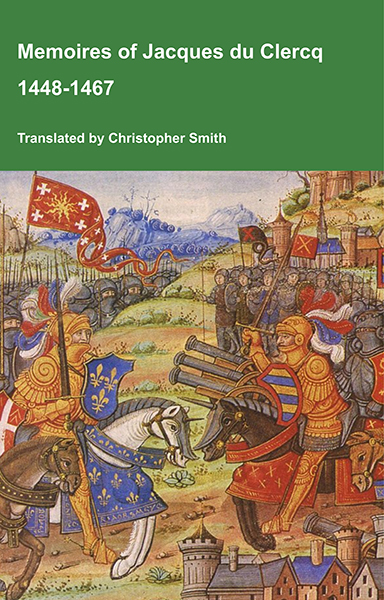
This is a translation of the 'Memoires of Jacques du Clercq', published in 1823 in two volumes, edited by Frederic, Baron de Reissenberg. In his introduction Reissenberg writes: 'Jacques du Clercq tells us that he was born in 1424, and that he was a licentiate in law and a counsellor to Philip the Good, Duke of Burgundy, in the castellany of Douai, Lille, and Orchies. It appears that he established his residence at Arras. In 1446, he married the daughter of Baldwin de la Lacherie, a gentleman who lived in Lille. We read in the fifth book of his Memoirs that his father, also named Jacques du Clercq, had married a lady of the Le Camelin family, from Compiègne. His ancestors, always attached to the counts of Flanders, had constantly served them, whether in their councils or in their armies.' The Memoires cover a period of nineteen years beginning in in 1448, ending in in 1467. It appears that the author had intended to extend the Memoirs beyond that date; no doubt illness or death prevented him from carrying out this plan. As Reissenberg writes the 'merit of this work lies in the simplicity of its narrative, in its tone of good faith, and in a certain air of frankness which naturally wins the reader’s confidence.' Du Clercq ranges from events of national and international importance, including events of the Wars of the Roses in England, to simple, everyday local events such as marriages, robberies, murders, trials and deaths, including that of his own father in Book 5; one of his last entries.
Available at Amazon in eBook and Paperback format.

Tudor Tracts Chapter 20. On Tuesday, being the 1st of August [1587], in the morning, about eight of the clock, the Chief Mourner, being [Bridget Russell (age 61)] the Countess of Bedford [now the Widow of her third husband], was attended upon by all the Lords and Ladies; and brought into the Presence Chamber within the Bishop's Palace: which [Chamber], all over, was hanged with black cloth.
She was, by the Queen's Majesty's Gentlemen Ushers, placed somewhat under a Cloth of Estate [canopy] of purple velvet: where, having given to the [Gentlemen representing, on this occasion, the] Great Officers, their Staffs of Office (viz. to the Lord Steward; Lord Chamberlain; the Treasurer, and Comptroller [of the Household]), she took her way into the Great Hall.
The Mourners came out of the Bishop's Palace; being set in order by the Heralds thus:
First 100 Releevants; poor old women, for the most part widows: in black cloth gowns, with an ell of white Holland over their heads; which they had for their labour, and nine shillings apiece in money. These divided themselves in the body of the Church; and stood half on the one side, and half on the other: and there stood during the whole Solemnity.
At the Church door, the Singing Men and Quiristers met the Mourners with a Psalm; and led them the way into the Chancel, continuing singing, with the Organ, until the Sermon began.
Then followed two Yeomen, viz.: the Sheriff [of Northamptonshire]^ Bailiff and the Bailiff of Peterborough; with black staves.
And after them [100 poor men, in] Mourning Coats.
Then Sir George Savile (age 37), in a Mourning gown, carrying the great Standard: viz. a Cross on a Field azure; the Streamer, a Unicorn argent in a Field of guiles; a Posy written, In my defence, God me defend!
Then followed Mourning Cloaks, two by two, a great number: whereof the first were the late Queen's Officers.
And after them, Mourning Gowns.
On 1st August 1587 Mary Queen of Scots was buried at Peterborough Cathedral [Map]. Bishop William Wickham (age 48) preached.


Tudor Tracts Chapter 20. 1st August 1587. The Scottish Queen's Burial at Paterborough, upon Tuesday, being Lammas Day [1st August] 1587.
London. Printed by A. J. [Abel Jeffes] for Edward Venge; and are to be sold at his shop without Bishops Gate.
Tudor Tracts Chapter 20. The Scottish Queen's Burial at Peterborough [Map], upon Tuesday, being Lammas Day [1st August], 1587.
Her body was brought in a coach, about 100 attending thereon, from Fotheringhay Castle, upon Sunday [30th July 1587], at night [Richard Howland (age 46)] the Bishop of Peterborough, [Richard Fletcher (age 42)] the Dean [of Peterborough], the Prebends, and the rest [of the Chapter] met the same at the Bridge; being not far from the town: and so conveyed it to the Bishop's Palace, and from thence upon Tuesday being Lammas Day, [it] was carried to the Church, where she was buried1 on the south side of the Hearse by torchlight.
The Hearse [or Catafalque] was made field-bed wise; the valance of black velvet, with a gold fringe; [and] the top of the imperial covered with baize. About it, were set ten Posies [of the Motto of the Arms of Scotland], In my defence, God me defend! with ten Scutcheons great and little; and, at the top, a double one with a crown imperial thereupon. The Supporters [were] Unicorns, with 100 pennons or little flags. It was impaled with baize; and in it [were] fourteen stools, with black velvet cushions.
Upon the pillars supporting the imperial of the Hearse, the which were all covered with velvet, were fixed Scutcheons: bearing either [the] Red Lion alone; or else parted with the Arms of France, or with the arms of the Lord Lenox.
The Church and Chancel were hanged with baize and Scutcheons, as at other funerals.
Note 1. There is a Memorial entered on the wall of the Cathedral of Peterborough, for one [named Robert Scarlet] who, being Sexton thereof, interred two Queens therein (Katharine Dowager and Mary of Scotland); more than fifty years interceding betwixt their several sepultures. This vivacious Sexton also buried two generations; or the people in that place twice over. Thus having built many houses (so I find graves frequently called domus aternales) for others: some, as it was fitting, performed this last office unto him. [He died on 2nd July 1594, set 98.] Thomas Fuller, Worthies, &c., ii. 293., Ed. 1662.
Archaeologia Volume 1 Section 55. LX. A Remembrance of the Order and Manner of the Burial of Mary Queen of Scotts.
The Letter Books of Amias Paulet Keeper of Mary Queen of Scots Published 1874 Marys Execution. The household of the late Queen were not allowed to depart as soon as Poulet (age 54) expected. They were detained at Fotheringay [Map], from motives of policy, till the 3rd of August, when the funeral of their mistress having been at last performed, they were set free. Some of them were taken to Peterborough [Map] to accompany the corpse and to be present at the funeral ceremonies on the 1st of August. Amongst them, in the order of the procession, it is surprising to find Mary's chaplain, "Monsieur du Préau, chaplain, in a long cloak, carrying a silver cross in hand.1." The account of the funeral from which this is taken, written by one of the late Queen's household, takes care to mention that when they reached the choir of Peterborough Minster, and the choristers began "to sing in their manner in the English language2," they all, with the exception of Andrew Melville and Barbara Mowbray, left the church and walked in the cloisters till the service was finished. "If the English," he says, "and especially the King of the heralds ... were in extreme anger, the more joyful and content were the Catholics".
Poulet left for London, and as long as Mary's servants were detained at Fotheringay [Map], he seems to have retained jurisdiction over them. It was to him, therefore, that Melville and Bourgoin applied in March for leave to sell their horses and to write into France respecting the bequests made to them by the Queen of Scots; and to him that Darrell forwarded in June "the petition of the whole household and servants of the late Queen of Scotland remaining at Fotheringay," begging to be released from their prison and to be allowed to leave the country.
Note 1. Monsieur du Preau, aumosnier, en long manteau, portant une croix d'Argent en main.
Note 2. a chanter a leur fagon en langage Anglois.
Note 3. Si les Anglois," he says, "et principalement le Roy des heraux ... estoit en extreme cholere, d'autant estoient joieux et contents les Catholiques
Archaeologia Volume 1 Section 55. On Tuesday, being the first of August [1587], in the morning, about eight of the clock, the chief mourner, being the Countess of Bedford (age 61), was attended upon by all the lords and ladies, and brought into the prefence chambre within the bifhop's palace, which all over was hanged with black cloath; me was by the queens majefties gentlemen uihers placed fomewhat under a cloth of eftate of purple velvet, where, having given to the great officers their ftaves of office, viz. to the lord lleward, lord chamberlayne, the treafurer, and comptroller, me took her way into the great hall, where the corps flood; and the heralds having marmalled the feveral companies, they made their proceedings as followeth.
Two conductors in black, with black staves.
Poor women mourners to the number of 100. 2 and 2.
Two yeomen harvengers.
The standard of Scotland borne by Sir George Savill, knight.
Gentlemen in clokes to the number of 50, being attendants on the lords and ladies.
Six grooms of the chamber, viz. Mr ... Eaton, Mr .... Bykye, Mr .... Ceavaval, Mr Flynr, Mr .... Charlton, Mr .... Lylle.
Three gentlemen sfewers to the queen's majesty, Mr. Horseman, Mr. Fynes, and Mr. Martin.
Gentlemen in gownes, Mr. Worme, Mr. Holland, Mr. Crewste, Mr. Watson, Mr. Allington, Mr. Barrel, and Mr. Fescue.
Scots in clokes, 17 in number.
A Scottish prieft.
Mr. Fortescue, master of the wardrobe to the queens majestie.
The bishop of Peterborough.
The bishop of Lincoln.
The great banner, borne by Sir Andrew Nowell, knight.
The comptroller, Mr. Melvin.
The treasurer, Sir Edward Montague. The lord Chamberlayne, was Lord Dudley.
The lord steward, was Lord St. John of Basing.
Two ushers.
Atchievements of honor born by heralds. The healme and crest borne by Portcullis, target, borne by York, sword, borne by Rouge Dragon. coat, borne by Somerset.
Clarencieux king of arms, with a gentleman usher, Mr. Conyngsbye.
The corps born by esquires in clokes. Mr. Francis Fortescue. Mr. William Fortescue. Mr. Thomas Stafford. Mr. Nicholas Smith. Mr. Nicholas Hyde. Mr .... Howlands, the bishop's brother. Eight bannerolles, borne by esquires:
King Robert impaling Drummond, By Mr. WilliamFittz Williams.
King James the 1st impaling Beaufort, Mr. Griffin of Dingley.
Guelders, Mr. Robert Wingfield.
King James 3d impaling Denmark, Mr. Bevill.
King James 4th impaling the arms of Henry 7th of England, Mr Lynne.
King James £th impaling Guys, Mr John Wingfield
King of France impaling the arms of Mary queen of Scotland, Mr SPencer
Lord Darnley impaling the arms! of Mary queen of Scotland, Mr. John Fortefcue Aywood.
The canopy, being of black velvet fringed with gold, borne by four knights, viz. Sir Thomas Manners, Sir George Hastings, Sir James Harrington, Sir Richard Knightly.
Assistants to the body, Four barons which bore up the corners of the pall of velvet. The Lord Mordant. The Lord Willoughby of Parham. The Lord Compton. Sir Thomas Cecill.
Mr. Garter, with the gentleman umer, Mr. Brakenbnry.
The Countesse of Bedford, supported by the Earls of Rutland (age 36), and Lincolne (age 46), her train borne up by the Lady St. John of Basting, and assisted by Mr. John Manners, vice chamberlain.
The Countesse of Rutland (age 34), Countesse of Lincolne. The Lady Talbot, Lady Mary Savell. The Lady Mordant, the Lady St. John of Bletshoe. The Lady Manners, the Lady Cecill. The Lady Montague, the Lady Nowell. Mrs. AHngton, Mrs. Curle.
Two ushers.
Eight Scottish gentlewomen.
The gentlewomen of Countess's and Baroness's, according to their degrees, all in Black.
Servants in black coates. The Countess of Bedford, 10. Countesse of Rutland, 8. Countesse of Lincoln, 8. Lady St. John of Basing, 5. All lords and ladyes, 5. All knights and their wives 4, All equires, 1.
On 1st August 1603 John Townshend (age 35) was killed in a duel on horseback with Matthew Browne (age 40) at Hounslow Heath [Map].
Matthew Browne died the following day.
On 1st August 1632 Isabella Rich (age 39) died. Monument at St Andrew's Church, Kimbolton [Map].
Isabella Rich: John Smythe and she were married. She the daughter of Robert Rich 1st Earl Warwick and Penelope Devereux Countess Devonshire. They were fifth cousin once removed. Around 1593 she was born to Robert Rich 1st Earl Warwick and Penelope Devereux Countess Devonshire.


John Evelyn's Diary. 1st August 1649. The next day, came to welcome me at dinner the Lord High Treasurer Cottington (age 70), Sir Edward Hyde, Chancellor (age 40), Sir Edward Nicholas, Secretary of State, Sir George Carteret, Governor of Jersey (age 39), and Dr. Earle (age 48), having now been absent from my wife (age 14) above a year and a half.


John Evelyn's Diary. 1st August 1652. Came old Jerome Lennier, of Greenwich, a man skilled in painting and music, and another rare musician, called Mell. I went to see his collection of pictures, especially those of Julio Romano, which surely had been the King's (age 22), and an Egyptian figure, etc. There were also excellent things of Polydore, Guido, Raphael, and Tintoretto. Lennier had been a domestic of Queen Elizabeth, and showed me her head, an intaglio in a rare sardonyx, cut by a famous Italian, which he assured me was exceedingly like her.
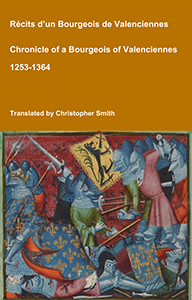
Chronicle of a Bourgeois of Valenciennes
Récits d’un bourgeois de Valenciennes aka The Chronicle of a Bourgeois of Valenciennes is a vivid 14th-century vernacular chronicle written by an anonymous urban chronicler from Valenciennes in the County of Hainaut. It survives in a manuscript that describes local and regional history from about 1253 to 1366, blending chronology, narrative episodes, and eyewitness-style accounts of political, military, and social events in medieval France, Flanders, and the Low Countries. The work begins with a chronological framework of events affecting Valenciennes and its region under rulers such as King Philip VI of France and the shifting allegiances of local nobility. It includes accounts of conflicts, sieges, diplomatic manoeuvres, and the impact of broader struggles like the Hundred Years’ War on urban life in Hainaut. Written from the perspective of a burgher (bourgeois) rather than a monastery or royal court, the chronicle offers a rare lay viewpoint on high politics and warfare, reflecting how merchants, townspeople, and civic institutions experienced the turbulence of the 13th and 14th centuries. Its narrative style combines straightforward reporting of events with moral and civic observations, making it a valuable source for readers interested in medieval urban society, regional politics, and the lived experience of war and governance in pre-modern Europe.
Available at Amazon in eBook and Paperback format.
John Evelyn's Diary. 1st August 1655. I went to Dorking, Surrey [Map], to see Mr. Charles Howard's (age 26) amphitheater, garden, or solitary recess, being fifteen acres environed by a hill. He showed us divers rare plants, caves, and an elaboratory.
John Evelyn's Diary. 1st August 1662. Mr. H. Howard (age 34), his brothers Charles (age 32), Edward (age 25), Bernard (age 21), Philip (age 33), now the Queen's (age 23) Almoner (all brothers of the Duke of Norfolk, still in Italy), came with a great train, and dined with me; Mr. H. Howard leaving with me his eldest and youngest sons, Henry (age 7) and Thomas (age 5), for three or four days, my son, John (age 7), having been sometime bred up in their father's house.


Samuel Pepys' Diary. 1st August 1664. Thence to my Chancellor's (age 55), and thence with Mr. Coventry (age 36), who appointed to meet me there, and with him to the Attorney General, and there with Sir Ph. Warwicke (age 54) consulted of a new commission to be had through the Broad Seale to enable us to make this contract for Tangier [Map] victualling.

Samuel Pepys' Diary. 1st August 1664. So to the Coffee-house, and there all the house full of the victory Generall Soushe (age 55)1 (who is a Frenchman, a soldier of fortune, commanding part of the German army) hath had against the Turke; killing 4,000 men, and taking most extraordinary spoil.
Note 1. General Soushe was Louis Ratuit, Comte de Souches. The battle was fought at Lewenz (or Leva), in Hungary. B.
Samuel Pepys' Diary. 1st August 1666. And I to Mrs. Martin's, but she abroad, so I sauntered to or again to the Abbey, and then to the parish church, fearfull of being seen to do so, and so after the parish church was ended, I to the Swan [Map] and there dined upon a rabbit, and after dinner to Mrs. Martin's, and there find Mrs. Burroughs, and by and by comes a pretty widow, one Mrs. Eastwood, and one Mrs. Fenton, a maid; and here merry kissing and looking on their breasts, and all the innocent pleasure in the world. But, Lord! to see the dissembling of this widow, how upon the singing of a certain jigg by Doll, Mrs. Martin's sister, she seemed to be sick and fainted and God knows what, because the jigg, which her husband (who died this last sickness) loved. But by and by I made her as merry as is possible, and towzed and tumbled her as I pleased, and then carried her and her sober pretty kinswoman Mrs. Fenton home to their lodgings in the new market of my Lord Treasurer's (age 59), and there left them. Mightily pleased with this afternoon's mirth, but in great pain to ride in a coach with them, for fear of being seen.
John Evelyn's Diary. 1st August 1666. I went to Dr. Keffler (age 71), who married the daughter of the famous chemist, Drebbell, inventor of the bodied scarlet. I went to see his iron ovens, made portable (formerly) for the Prince of Orange's (age 15) army: supped at the Rhenish Wine-House with divers Scots gentlemen.


Samuel Pepys' Diary. 1st August 1667. At noon my wife and I dined at Sir W. Pen's (age 46), only with Mrs. Turner (age 44) and her husband (age 54), on a damned venison pasty, that stunk like a devil. However, I did not know it till dinner was done. We had nothing but only this, and a leg of mutton, and a pullet or two. Mrs. Markham was here, with her great belly. I was very merry, and after dinner, upon a motion of the women, I was got to go to the play with them-the first I have seen since before the Dutch coming upon our coast, and so to the King's house, to see "The Custome of the Country". The house mighty empty-more than ever I saw it-and an ill play. After the play, we into the house, and spoke with Knipp, who went abroad with us by coach to the Neat Houses in the way to Chelsy; and there, in a box in a tree, we sat and sang, and talked and eat; my wife out of humour, as she always is, when this woman is by. So, after it was dark, we home. Set Knepp down at home, who told us the story how Nell is gone from the King's house, and is kept by my Lord Buckhurst (age 24).
Calendar of State Papers Charles II Oct 1667. October 1667. 102. Proposals by Sir Thomas Strickland (age 45) to the Navy Comrs., to build three third-rate frigates in Foudray Pill, to be completed by 1 Aug. 1671, upon a similar contract to that of Mr. Baylie, of Bristol. [Adm. Paper.] Enclosing,.
102. i. Edward Tyldesley to Sam. Pepys (age 34). Robt. Withers (age 49) and the writer have viewed Foudray Pill, where they proposed to build ships for the King's service. Sends a draft sketch thereof, leaving the rest of the business to be transacted by his partners, Sir Thomas Strickland and Mr. Withers. Has such timber as all England cannot show. Lodge in the Forest of Meirscough, 1st October 1667.
102. ii. Sketch of Walney Island, the pill, bar, &c., in coloured chalks.


On 1st August 1671 John Coke (age 35) died. Grave slab at St Withburga's Church, Holkham [Map].
John Coke: On or before 8th September 1635 he was born to John Coke and Meriall Wheatley. He was baptised on 8th September 1835. Around 1664 Andrew Fountaine became acquainted with John Coke who he apparently saved from drowning. The pair subsequently travelled to the Continent together. Thereafter Andrew Fountaine became steward to John Coke and is reported to have extracted large sums of money from the estate. In 1694 Andrew Fountaine reached a final settlement with the Coke family over the leases given to him by John Coke; all leases and income to be surrendered by Andrew Fountaine in exchange for £10,000. A year later Andrew Fountaine purchased Narford Hall.
John Evelyn's Diary. 1st August 1672. I was at the betrothal of Lord Arlington's (age 54) only daughter (age 4) (a sweet child if ever there was any to the Duke of Grafton (age 8), the King's (age 42) natural son by the Duchess of Cleveland (age 31); the Archbishop of Canterbury (age 74) officiating, the King and the grandees being present. I had a favour given me by my Lady; but took no great joy at the thing for many reasons.
On 1st August 1672 Henry Fitzroy 1st Duke Grafton (age 8) and Isabella Bennet Duchess Grafton (age 4) were married. She the daughter of Henry Bennet 1st Earl Arlington (age 54) and Elisabeth Nassau Beverweert Countess Arlington (age 38). He the illegitmate son of King Charles II of England Scotland and Ireland (age 42) and Barbara Villiers 1st Duchess of Cleveland (age 31). They were half sixth cousins.
He was created 1st Earl Euston, 1st Viscount Ipswich, 1st Baron Sudbury. Isabella Bennet Duchess Grafton by marriage Countess Euston.


Annals of the six Kings of England by Nicholas Trivet
Translation of the Annals of the Six Kings of England by that traces the rise and rule of the Angevin aka Plantagenet dynasty from the mid-12th to early 14th century. Written by the Dominican scholar Nicholas Trivet, the work offers a vivid account of English history from the reign of King Stephen through to the death of King Edward I, blending political narrative with moral reflection. Covering the reigns of six monarchs—from Stephen to Edward I—the chronicle explores royal authority, rebellion, war, and the shifting balance between crown, church, and nobility. Trivet provides detailed insight into defining moments such as baronial conflicts, Anglo-French rivalry, and the consolidation of royal power under Edward I, whose reign he describes with particular immediacy. The Annals combines careful year-by-year reporting with thoughtful interpretation, presenting history not merely as a sequence of events but as a moral and political lesson. Ideal for readers interested in medieval history, kingship, and the origins of the English state, this chronicle remains a valuable and accessible window into the turbulent world of the Plantagenet kings.
Available at Amazon in eBook and Paperback format.
John Evelyn's Diary. 1st August 1676. In the afternoon, after prayers at St. James's Chapel, was christened a daughter of Dr. Leake's (age 34), the Duke's (age 42) Chaplain: godmothers were Lady Mary (age 14), daughter of the Duke of York, and the Duchess of Monmouth (age 25): godfather, the Earl of Bath (age 47).


John Evelyn's Diary. 1st August 1682. To the Bishop of London (age 50) at Fulham [Map], to review the additions which Mr. Marshall (age 62) had made to his curious book of flowers in miniature, and collection of insects.
John Evelyn's Diary. 1st August 1683. Came to see me Mr. Flamsted (age 36), the famous astronomer, from his Observatory at Greenwich, to draw the meridian from my pendule, etc.
John Evelyn's Diary. 1st August 1690. The Duke of Grafton (age 26) came to visit me, going to his ship at the mouth of the river, in his way to Ireland (where he was slain).

John Evelyn's Diary. 1st August 1693. Lord Capel (age 55), Sir Cyril Wyche (age 61), and Mr. Duncomb, made Lord Justices in Ireland; Lord Sydney (age 52) recalled, and made Master of the Ordnance.
John Evelyn's Diary. 1st August 1699. I drank the Shooters' Hill waters. At Deptford, Kent [Map], they had been building a pretty new church. The Bishop of St. David's (age 62) [Watson] deprived for simony. The city of Moscow burnt by the throwing of squibs.

On 1st August 1704 Admiral George Rooke (age 54) attacked Gibraltar both by sea and by land (commanded by Prince George of Hesse Darmstadt (age 35)). After the three days of fighting the Spanish surrendered.
On 1st August 1708 Charles Habsburg Spain VI Holy Roman Emperor (age 22) and Elisabeth of Brunswick-Wolfenbüttel Holy Roman Empress (age 16) were married. He the son of Leopold Habsburg Spain I Holy Roman Emperor and Eleonore Magdalene of Neuburg (age 53).

On 1st August 1712 George Brudenell aka Montagu 1st Duke Montagu was baptised at St Giles' in the Fields Church [Map].
On 1st August 1714 Queen Anne of England Scotland and Ireland (age 49) died at Kensington Palace. Her second cousin George (age 54) succeeded I King Great Britain and Ireland.


On 1st August 1756 Mary Isabella Somerset Duchess Rutland was born to Charles Noel Somerset 4th Duke Beaufort (age 46) and Elizabeth Berkeley Duchess Beaufort (age 43). She married 26th December 1775 her half fourth cousin Charles Manners 4th Duke Rutland and had issue.
On 1st August 1759 John Waldegrave 3rd Earl Waldegrave (age 41) fought at Minden Ravensberg during the Battle of Minden: Anglo-Hanoverian Alliance.
On 1st August 1759 William Middleton 5th Baronet (age 21) was severely injured at the Battle of Minden.
George Sackville aka Germain 1st Viscount Sackville (age 43) was ordered several times to advance the British cavalry to complete the victory but refused to do so since Sackville was estranged from Lord Granby (age 38), the force commander, and withheld permission for Granby to "gain glory" through an attack. For this action, he was cashiered and sent home. Sackville refused to accept responsibility for refusing to obey orders. Back in England, he demanded a court martial, and made it a large enough issue that he obtained his demand in 1760. The court found him guilty, and imposed one of the strangest and strongest verdicts ever rendered against a general officer. The court's verdict not only upheld his discharge, but ruled that he was "...unfit to serve His Majesty in any military Capacity whatever", then ordered that their verdict be read to and entered in the orderly book of every regiment in the army. The king had his name struck from the Privy Council rolls.


On 1st August 1767 Charles Howard 11th Duke of Norfolk (age 21) and Marion Coppinger were married. He the son of Charles Howard 10th Duke of Norfolk (age 46) and Catherine Brockholes Duchess Norfolk (age 49).


This is a translation of the 'Memoires of Jacques du Clercq', published in 1823 in two volumes, edited by Frederic, Baron de Reissenberg. In his introduction Reissenberg writes: 'Jacques du Clercq tells us that he was born in 1424, and that he was a licentiate in law and a counsellor to Philip the Good, Duke of Burgundy, in the castellany of Douai, Lille, and Orchies. It appears that he established his residence at Arras. In 1446, he married the daughter of Baldwin de la Lacherie, a gentleman who lived in Lille. We read in the fifth book of his Memoirs that his father, also named Jacques du Clercq, had married a lady of the Le Camelin family, from Compiègne. His ancestors, always attached to the counts of Flanders, had constantly served them, whether in their councils or in their armies.' The Memoires cover a period of nineteen years beginning in in 1448, ending in in 1467. It appears that the author had intended to extend the Memoirs beyond that date; no doubt illness or death prevented him from carrying out this plan. As Reissenberg writes the 'merit of this work lies in the simplicity of its narrative, in its tone of good faith, and in a certain air of frankness which naturally wins the reader’s confidence.' Du Clercq ranges from events of national and international importance, including events of the Wars of the Roses in England, to simple, everyday local events such as marriages, robberies, murders, trials and deaths, including that of his own father in Book 5; one of his last entries.
Available at Amazon in eBook and Paperback format.

Archaeologia Volume 15 Section XI Page 126. 1st August 1803. Description of the opening of Golden Barrow aka Upton Lovell 2e [Map] by William Cunnington (age 49).

Archaeologia Volume 15 Section XI Page 128. William Cunnington, Archaeologia, Vol. 15, p.122-26
August 1st, Heytesbury 1803.
The tumulus [Golden Barrow aka Upton Lovell 2e [Map]] opened last Thursday in Upton Lovel parish, is situated a few yards north of the river Wily. It is of a pyramidical form, the base length 58 feet by 38 feet wide [g] and 22 feet in the slope, and stands from east to west. The northside of the barrow is extremely neat, the fouth side is much mutilated. On making a section lengthways on the barrow, at about two feet deep we found in a very shallow cist, human burnt bones piled in a little heap; and at the distance of a foot a considerable quantity of ashes [h] which contained small fragments of human bones; above, and at two feet distant from the bones were found the following articles of pure gold, which are neatly wrought, and highly burnished, viz. about thirteen gold beads made in the form of a drum, having two ends to screw off and perforated in the sides; [i] 2ndly, a thin plate of the same metal 2.25 inches by 5.25 inches; this is very neatly ornamented, as you will see by the annexed drawing: [k] 3dly, a beautiful Bulla (as I conjecture) of a conical form; [l] the inside of this is a solid cone of wood, the gold -which completely covered it is very thin; at the base are two holes for a thread or wire by which it was suspended; near the above were found four articles, viz. two of each, that appeared once to have covered the ends of slaves. [m] Among the gold ornaments lay several flat pieces of amber, the eighth of an inch in thickness, and about an inch wide; there were all perforated lengthways, but were sadly broken in getting out. What is very extraordinary, there were also nearly one thousand amber beads of different sizes. Close to the pile of ashes we found a very small urn, a lance-head of brass, and a pin of the same metal. The urn is of a very extraordinary form, appearing exactly as though it had been stuck all over with small black grapes. In this barrow, contrary to the usual method of interment on the Downs, which are on or in the native soil, we found the cist nearly on the top; and this deviation was probably occasioned from the wetness of the foil, being near the river, or it might have been the manner of interring their great chieftains. From the vail quantity of beads, it might be conjectured that a female had been interred here, but it is well known that our British chiefs wore pearls, beads, etc. On some of the coins of Conobeline we fee beads or pearls on the head. We find in other respects similar method of interment to what we find in many other barrows; the small urn, lance-head of brass, brass pin, etc. are common. From the profusion of valuable ornaments, for valuable they must have been at the period of their interment, we might rationally conclude this barrow to have been the sepulchre of some great chief; in all probability a chief of the Belgic Britons.
I am. Sir,
Your most humble Servant,
William Cunnington.
A. B. Lambert, Esq. Boyton House .
Note g. The length on the top 21 fe
Note h. A circumstance very common.
Note i. See fig. 5.
Note k. You see only a part of this plate: the whole length was about six inches; the pieces broken off had holes in the corners, perhaps used as a bread plate.
Note l. See fig. 1; the bafe of this is neatly ornamented
Note m. See fig. 2, 3.
On 1st August 1813 Henry Vane-Tempest 2nd Baronet (age 42) died of apoplexy. Baronet Vane of Long Newton in County Durham extinct. Memorial and vault at St Mary's Church, Long Newton [Map] sculpted by Richard Westmacott (age 38).


On 1st August 1821 Augusta Mary Minna Catherine Lyons Duchess Norfolk was born to Edmund Lyons 1st Baron Lyons (age 30) at Torquay, Devon. She married 19th June 1839 Henry Granville Fitzalan 14th Duke of Norfolk, son of Henry Charles Howard 13th Duke of Norfolk and Charlotte Sophia Leveson-Gower Duchess Norfolk, and had issue.
On 1st August 1821 at 10:25 p.m Caroline of Brunswick Queen Consort England (age 53) died at Brandenburgh House, Hammersmith. She was buried at Brunswick Cathedral [Map].


After 1st August 1821. St Andrew's Church, Blickling [Map]. Memorial to William Assheton Harbord 2nd Baron Suffield (deceased) erected by his widow Caroline Hobart Baroness Suffield.
On 1st August 1824 Maria Alexandrovna Hesse Darmstadt was born to Louis Hesse Darmstadt II Grand Duke (age 46) and Princess Wilhelmine Baden (age 35). Coefficient of inbreeding 7.03%. She married 16th April 1841 her second cousin once removed Tsar Alexander II of Russia, son of Tsar Nicholas I of Russia and Charlotte Hohenzollern, and had issue.
Ten Years' Digging. On the 1st of August we examined three more tumuli, in the same neighbourhood, all of which had most unfortunately been mutilated. The first had been encroached upon by a stone quarry, and we were told that a pitcher had been found in it some years before. By removing the loose stones and earth down to the rock, we found some bits of hard Romano-British pottery, which alone had resisted the attacks of the quarry men.
The second was in the next field but one, and appears to have been nearly all removed, though, from occupying a rocky protuberance, it looked tolerably perfect. About the middle we found the humerus of a human subject, near which was a grit sharpening stone and a cow's tooth.
The third barrow in the same field was half removed, it afforded a few animal bones, part of a sharpening stone, some pieces of ancient earthenware, but no human remains.

Diary of a Dean by Merewether. 1st August 1849. Aug. 1st. The next day was to witness the assemblage of the neighbourhood to inspect Silbury; and this very picturesque event I have already described in the former paper. Our party occupied the morning, till the time of repairing to Silbury, in visiting the barrows lying near Beckhampton, between the Calne and Devizes roads. In some of these, very curious urns and remains had been discovered, some of which I shall describe hereafter; but most appeared to have been disturbed. One high up on the hill in the northern direction was examined, but without success. It would be an indication of ungrateful disrespect —for it could not he forgetfulness —were I to omit, though briefly, to record the employment of the evening of this day, and the route we took; albeit it were well to start somewhat earlier than we did, specially if so splendid a moon as conducted us home might not be reckoned upon. But then, as we had been very fully occupied during the day, some regard was needful to he had toward such discoveries as we might be able to make at the Archæological Hotel, calculated to recruit our exhausted strength, which being satisfactorily accomplished, we proceeded with a very docile pair of horses and driver, both desiderata in such an expedition, first to Oldbury Castle [Map], a splendid position, overlooking the rich vale of Caine, Chippenham, Christian Malford, and Malmsbury, and bearing in its entrenchments the characteristics of Roman occupation, enlarged possibly at some time on the south-west side, but very possibly having been previously a British position, and even subsequently occupied by later warriors. I possess an iron spear-head, and one of those curious circular stones with a hole in the centre, found here. Thence we cut across the down towards the Roman road, the Via Badonica leading from Cunetio [Map] to Aquæ-solis [Map], and which, on arriving at Silbury Hill, which it would otherwise have cut at one-third of its base, deflects its course. We cannot boast that any of the dii deœque minors much less Diana herself, Bivia, Trivia, or whatever she might here have been called of old, were very propitious to us; though, in truth, she made ample amende by her bright guidance, when it was subsequently so much needed. The devotees of Ceres had strangely cut up this ancient road; so that, to traverse it with its full complement was not so easy a matter, either to the wheels of our vehicle, to the poor animals who had to draw it, or, indeed, to its occupants; to say nothing of the conductor. So that we traced the ancient way on foot, and were ready, not unneeded, to replace in its vertical position our tottering and almost subverted equipage, at a spot where the descent to Calston below would have been facile enough per saltum, or per volutationem, for the road in this part runs on the very edge of the abrupt and steep precipice of the hill. After some time spent in these corrective and directive pursuits, having fairly landed the really patient driver on the turf, to seek in advance the summit of the hill, we again became viatores in the strict sense of the word, and in its cognate road, until we reached its junction with the famous Wansdyke, the high vallum of which, in most places from 30 to 40 ft. high, is here and for a considerable distance cut down to fill up the foss and form the road. From this point our explorations were by moonlight, bright as day; we had every reason to be grateful for the propitious aid; by it we traced the some what sinuous range of the Wansdyke; I marked, after thirty years' absence, a barrow almost on its bank, which I had meis manibus excavated some 7 or 8 ft. in depth, finding one solitary glass bead (N), which I still possess. The Wansdyke, ere it makes its turn to the right by Shepherd's shore, forms, without any apparent reason, two right angles; and its trench at this point is very deep, and its vallum marvellously high and steep. From hence we were reluctantly obliged, having succeeded in finding our equipage, to return towards Silbury. Some of our party (and one was a lady, precious as an Archmologist and deserving of all our consideration, as well as her excellent brother) had to return the same night to Marlborough. The plain over which we travelled possesses some earthworks worthy of inspection, especially one enclosing, with an approaching avenue to it, some curious barrows. Towards the right Wansdyke boldly ascends the downs to Tan Hill; some say St. Ann's, others the Hill of Tanaris. The whole of this range is replete with exceeding interest, and Madlv should I be the conductor once more of the whole Archæological Institute amidst its varied treasures.
On 1st August 1857 Charles Turner (age 82) died.

On 1st August 1869 Bishop Walter Kerr Hamilton (age 60) died. Monument in Salisbury Cathedral [Map].
Bishop Walter Kerr Hamilton: On 16th November 1808 he was born to Archdeacon Anthony Hamilton. In 1832 Bishop Walter Kerr Hamilton was elected to a Fellowship of Merton College, Oxford University. In 1833 he was appointed Deacon. In 1854 Bishop Walter Kerr Hamilton was elected Bishop of Salisbury.
Chronicle of Abbot Ralph of Coggeshall
The Chronicle of Abbot Ralph of Coggeshall (Chronicon Anglicanum) is an indispensable medieval history that brings to life centuries of English and European affairs through the eyes of a learned Cistercian monk. Ralph of Coggeshall, abbot of the Abbey of Coggeshall in Essex in the early 13th century, continued and expanded his community’s chronicle, documenting events from the Norman Conquest of 1066 into the tumultuous reign of King Henry III. Blending eyewitness testimony, careful compilation, and the monastic commitment to record-keeping, this chronicle offers a rare narrative of political intrigue, royal power struggles, and social upheaval in England and beyond. Ralph’s work captures the reigns of pivotal figures such as Richard I and King John, providing invaluable insights into their characters, decisions, and the forces that shaped medieval rule. More than a simple annal, Chronicon Anglicanum conveys the texture of medieval life and governance, making it a rich source for scholars and readers fascinated by English history, monastic authorship, and the shaping of the medieval world.
Available at Amazon in eBook and Paperback format.
The Times. 1st August 1892. The marriage of Mr. Victor Cavendish (age 24), MP, eldest son of the late Lord Edward Cavendish, and nephew and heir presumptive of tho Duke of Devonshire (age 59), to Lady Evelyn Fitzmaurice (age 21), eldest daughter of the Marquis of Lansdowne (age 47), Viceroy of India, took place on Saturday afternoon in St. Margaret's Church, Westminster [Map]. The church was tastefully decorated with flowers. A large crowd assembled outside the church long before half-past 2, the hour fixed for the ceremony, but admittance could only be obtained by those favoured with invitations or tickets. Shortly before 2 o'clock, Mr. Victor Cavendish entered by the east door, secompanied by his brother, Mr. Richard Cavendish (age 21), who dlscharged the duties of best man, and took up his position at the chancel steps. Meanwhile the bridesmaids, eight in number, assembled inside the entrance. They were Miss Blanche Egerton (age 21), eldest daughter of the Hon. Francis (age 67) and Lady Louisa Egerton (age 57), cousin of the bridegroom; Lady Francis Spencer Churchill (age 21) eldest daughter of the Marchioness of Blandford, Lady Maud Anson (age 23), daughter of the Earl of Lichfield, Lady Katherine Scott (age 17), daughter of the Duke of Buccleuch (age 60); Lady Gladys Hamilton (age 12), daughter of the Duke of Abercorn (age 53), Miss Muriel Herbert, second cousin of the bride; Lady Dorothy Osborne (age 3), daughter of the Marquis of Carmarthen (age 29); and Miss Margery Digby, daughter of Colonel and Lady Emily Digby (age 37), cousin of the bride.
They were attired alike in dresses of white satin veiled with lisse, the bodices being arranged with fichus having small frills at the edge, and tied in large bows in front, and wore Gainsborough hats trimmed with white feathers and pale pink roses. Each carried a shower bouquet of pink roses and wore a diamond snake brooch, the Cavendish crest, a present from the bridegroom. Master Harry Strettfeild, son of Colonel and Lady Florence Streatfeild (age 32), acted as psge, and wore a costume of white velvet, and a diamond scarf-pin, the bridegroom's gift.
The bride, who arrived punctually at half-past 2, was met at the entrance by the clergy and choir, and a procession being formed, advanced up the aisle, the choristers singing "The voice that breathed o'er Eden" to a setting by Barnby. The Bishop of London, uncle of the bride-groom, performed the nuptial rite, and was assisted in the service by the Rev. John Duncan, M.A., Vicar of CaIne, Wilts, and chaplain to the Marquis of Lansdowne, the Rev. C. Gore and the Rev. H. Rounsell. The music used throughout the service was by Barnby, and included "Jlesn, lover of my soul," from the Hymnary, and "For all the Saints who from their labours rest." The bride, who, in the absence of the Viceroy, was given away by her brother, the Earl of Kerry, wore a dress of rich white satin duchesse trimmed with beautiful Brussels point lace; the skirt being plainly made, and having a very narrow trimming round the hem. Her tulle veil fell from a wreath of orange flowers and her ornaments included a diamond necklace and a pearl necklace, the gift of her father, thee diamond stars, given by Lady Edward Cavendish, and a fine diamond bracelet, presented to her by the Viceregal Staff in India. At the conclusion of the ceremony the bridal party proceeded to the vestry and signed the registers, the attestors being the Marchioness of Lansdowne (age 42), the Duke of Devonshire, the Duke of Abercorn, Lady Edward Cavendish, and the Dowager Maarchioness of Lansdowne, during which the organist plaved the March from St. Polycarp.
The bride, and bridegroom left the church Mendelssohn's Wedding March was played, acd the hells of St. Margaret's rang out a merry peal. The reception was held at ffampden-houlse, lent for the occasion by the Duke and Duchess of Abercorn. In the Lawrence Room was stationed Herr Wurms's White Vienna Band, and refreshments were served in the dining room, the long buffet being profusely decorated with choice white flowers admirably arranged in a number of large silver bowls. Among the company present were the Duke of Devonshire, the Duke and Duchess (age 55) of Bucceuch, the Duke and Duchess of Abercorn, the Duchess Dowager of Abercorn, the Duchess of Leeds and the Ladies Godolphin Osborne, the Dowager Maarchioness of Lansdowne, Lady Edward Cavendish, Lady Frederick Cavendish, the Countess of Kerry, Lord Charles Fitzmaurice, Lord and Lady Edmond Fitzmaurice, the Marchioness of Salisbury and Lady Gwrendolen Cecil, the Marchioness of Blandford and the Ladies Spencer Churchill, the Marquis of Headtort, the Dowager Marchioness of Waterford, the Marchioness of Waterford, the Countess of Normanton and Lady Mary Agar, the Countess of Mayo and Lady Florence Bourke, the Earlof Ava. theEarl and Countess of Morley, and Lady Katherine Parker the Earl and Countess of Minto and the Ladies Elliot Countess Percy and the Ladies Percy, Earl Winterton Countess Spencer, the Earl and Countess of St Germans and Mliss Lascelles, the Earl of Camperdown, Viscount Cross, Viscountess Galway, Viscountess Hampden and the Hon. Miss Brand, Lord Robert Cecil, Lady Alexandra Hamilton, Lady Gladys Hamilton, Lord John Hamnilton, Lord Henry Fitzgerald, LadyHelen Feruson,Lady Li ian Yorkeand Miss Pelly, Lady Rovelstokc and the HIon. M£i5S Baring, Lady George Hamlton, Lady lantage, Lord Frederick Hamilton, the Ladies Egerton, Lord and Lady Alexander Russcll, Lady Constance Scott, Lady Harris, Lady Louisa Blagelis, Lady Beatrix Herbert and Miss Uuriel Herbert, Lady Mauriel Boyle, Lady Lyttelton, Lady Fanny Marjoribanks, Lady Olliffe and Mlliss Olliffe, Lady Abercromby, Lady Claud Hamilton, Lady William Osborne Elphinstone, the Hon. Lady Yoley, the Hon. Charles Gore, Mr. and Mrs. Childers, 1r. Chaplin, the Hon. bliss Roberts and Miss Pryde, Hon. Percy Wyndham and Miss Pamela KWyndham and the.on. MIary lVyndham, the Hon. Thomas Egerton, thec Hon. C. Anson, the Hon. Mrs. Assheton 6?urzon, the Hon. Lionel Holland, the Hon. Alexander Hood, Mlajor the Hon Montagu and M1rs. COrzon, the Hon. Mrs. Agar Ellis, Mr. and Lady Louise Loder, Lady Sybil Beauclerk, Sir James Ramsden, Sir George Baden-Powell Sir Thomas and Lady Brooks, Sir Andrew Scobie, Sir. Henry and Miss James, General Sir Hugh and Lady Gough, Sir Donald Wallace, Colonel and Lady Emily Digby, MIr. and Lady Helena Heneasge, Sir George and Lady Young, General Arthur Ellis, Ilrs. Grenfell, BMrs. Temple, Mr. Hercert, MIrs. Reginald Brett, Miss Chandos Pole, Mr. IV. H. Grenfell, Mrs. Arthur Barclay, Admiral and Mrs. F. Robinson, Mr. Leveson-Gower, Mr. G. Leveson-Gower, Mr. and Mrs. Albert Grey, Mr. Reginald Loder, Mr. Leeson, Colonel Ian and MN rs. Haamilton, Mr. James Cavendish, Mr. and Mrs. Baillie Hamilton, Mr. and Mirs. P. Ponsonby, Mrs. Francis Gore, and many others. Later in the afternoon Mr. and Lady Evelyn Cavendish left for Bowood-park, Lord Lansdowne's seat in Wiltshire, for the honeymoon. Lady Evelyn Cavendish travelled in a dress of ptle blue radzimir, trimmed with white embroidered lisse, with lar-e revers of white moire antique, and wore a large black hat.
The Queen (age 73) presented the bride with an Indian shawl, and the bridegroom with a bronze statuette of herself, with the inscription, "Presented to Victor Cavendish by Victoria, R.I., 1892." The Empress Eugenie gave the bride a ruby and diamond watch bracelet, and Princess Christian presented the bridegroom with 12 volumes of Tennyson's poems, bound in white calf. The other presents to the bride included, from the bridegroom, a superb diamond tiara, an antique chatelaine watch set in diamonds, and a sapphire and diamond bracelet; from the Marchioness of Lansdowne, a diamond necklace and a pearl necklace; the Duke and Duchess of Buecleuch, a diamond and pearl necklace; the Duke of Devonshire, a three-stringed pearl necklace the Ducchess of 'Abercorm, pair of gold links with tucquoise in centre; the Duke of Abercorn, silver and tortoiseshell box; the Dowager Duchess of Abercorn, gold and enamel filagree tulip watch, gold bracelet with motto, and four silver-gilt shell dishes; the Duke of Westminster, a necklace of brilliantts, pink topazes, beryls, and white enamel olira leaves; the MIa-quis of Lansdowne's staff diamond heart bracelet; the Duke and Duchess of St. Albans, pair of amber heart-shaped links with diamond centres; the Duke and Duchess of Bedford, diamond and carbuncle horseshoe brooch: the Dowager M1archioness of Lansdowne, diamond and sapphire thistle brooch the Earl of Mlount Edgeumbe, diamond and sapphire bangle; the Earl of Durham, diamond and sapphire brooch, the Marquis de Lavalette, ring with large pearl in centre and iamonds; La Marquise de Lavalette, diamond flowver brooch; the Earl and Countess of Powis, silver ink-stand and candlesticks; the Earl of Kerry and Lord Charles Fitzmaurice, silver tea service in case; Earl and Countess Winterton, fluted silver bowl; Countess Russell, silver fan-shaped box; the Earl of Rosebery 2 pair of silver candlesticks; the MIarquis of Tullibardine, pair of tortoiseshell and silver opera-glasses the Countess of Lichfield, pair of carved rosewood book shelves; the Countess of Kerry, pair of silver candlesticks; the Marquis of Hamilton, two silver pepper-boxes in case; the Duke of Athole, silver and tortoiseshell inkstand and tray with letter clip; Countess Granville, fitted luncheon basket;fhe MIarquis of Bath, tortoiseshell and silver photo frame Earl and Countess Fitzwilliam, silver-gilt box; the Dowager Marchioness of Waterford, leather dressing-case with silver-gilt fittings; the Earl and Countess of Ilchester, painted lace fan; the Earl of Dalkeith. lace fanD; tnc Eiarl of Northbrook, act of enamelled trays; the Marchioness of Headfort, six fruit knives with malachite handles; the Earl of Ava, crystal seal with diamond-beaded snake entwined; Countess Spencer, pair of large Mintonvases; the MIarchioness ot Blandfora, a framed engraving; Louise, Duchess of Manchester, carriage-basket with clock, &c. the Countess of Minto, Louis XVI. clock; Earl and Coun tess of Wharneliffe, large copper jardiniere on iron stand; Earl and Countess Cowrper, Louis XV clock,; Lord Wolverton silver and copper card-case and memo-book; Lord and Lady Strathrnore. heart-shaped mirror in silver frame; Lord aBnd Lady P.oay, silver trinket tray on stand; Viscount Turnour, silver shell tray; Lady Claud AnSOn, silver tray; Lord and Lady Edmunud Fitzmaurice, pearl and diamond brooch; Viscountess Cranborne ann Lady Esther Gore, gold curb bracelet with crimson enamel heart; Lord and Lady Mount Stephen,. a sable travelling rug; Lady Edward S*vs;di'eA4d tars viacoant Valetort, diamond bracelet: l; dy Robert Cecil and Lady Anne Lambton, pair of gold and malachite links; the Ladies Churchill, silver-mounted heart-shaped tortoise-shell tray; Lady Suffolk, diamond and pearl brooch; Lord Frederick Hamilton, enamel miniature locket set with pearls; Lord Henry Scott, silver tea-caddy the Earl of Caraperdown, silver box; Lord Alington, three-fold screen; Dowager Baroness Ashburton and Mliss Digby, screen; Lord and Lady Roberts, Indian silver bowl; Lady Amnpthill,:gilt carriage clock; Baroness Leconfield, rosewood specimen table; Lord and Baroness Willoughby de Eresby, tortoiseshell and silver tea-caddy; Viscount and Viscountess Cross, hammered silver tray; Lady Abercromby, gold box with enamelled cross and pearl in centre; Lord Revelstoke Savres chin-: vase; Baroness Revelstoke, gold-mounted torto.iseshell paper knife; Lord Rowton, silver-gilt vase; Lady Wantage, Louis XV. clock; Viscount and Viscountess Newport, pair of agate trays; Lord and Lady Ernest Hamilton,two Crorwn Derby ink-pots and tua7; Earl and Countes5 oEf Morley, pair of silver-gilt mounted claret jugs; Lady Beatrice Fitzmaurice, chased silver teapot; Baroness Carrington, silver hot-milk jug-; archioness of Carmarthen, ostrich feather fan; Mrs. 3ontefiore, inlaid cabinet table vith marble top; Hon C Lambton, small silver dish; Mrs. Temple, sil-er bell; Mr Thomas Baring, gold necklace with onys Dendant set. in diamonds; 3r. John Baring, gold curb bracelet with moonstone heart surmonnted with rubies and diamonds; Hon. Miss Baring, diamond and enamel heart brooch; Mrs. Sackville West, gold ball hatpin set with diamonds. Mrs. Grace, silver inkstand and tray; Sir Tatton and Lady Sykes,massive silver-framed:mirror.; Sir Alerander Iackenzie, gold safety-pin brooch set with pearls and diamonds; Captain and Mrs. Cecil Cavendish, silver-mounted pin-cushion; Hon. Mrs Wyndharn, silver buckle Mrr and Lady Fanny hlarioribanks, piece of Indian plate; Mr. and hMrs. W. Grenfell, copper and brass standard lamp; General Brackenbury, large silver-mounted:scent bottle, Mr. and Lady Louise Loder, silver inkstand and tray; MIr. Cyril Flower, large Venetian glass bowl hlr. and Irs. Childers, Dresden china tdte-&-tetc tea service Lord Lansdowne's WViltshire tenants, diamond bracelet. The bridegroom's presents included --From the Duchess of Westminster, tortoiseshell blotting case inlaid with gold; the Marquis and Marchioness of Lansdowne, sl1ver salver; the Marquis of Blandford, silver-gilt card case; the Earl of Chesterfield, silver flask; Mr. R. Cavendish, Eervice of plate in walnut case; the Dowager Marchioness of Lansdowne, large diamond scarf-pin; the Dowrager Duchess of Abercorn, silver cofee pot; the Duke and Duchess of Leeds, gold and bloodstone seal,; the Marquis and Marchioness of Stafford, tortoiseshell and silver calendar frame Lady Frederick Cavendish, 24 volumes of George Eliot's works; the Countess of Bectivo, crystal and gold bos; the Marchioness of Salisbury, pair of tall silver salt cellars and spoons in case; Louise, Duchess of Manchester, silver milk jug; the Marquis of Granby, silver-mounted walking stick; Viscount 'Wolmer, silver-mounted hunting crop; Viscount and Viscountes6 Portman, half-a-dozen silver-gilt dessert spoons in a case; Earl of Arran, gold and nearl Albert chain; Lord and Lady Burton and Hon. ellie Bass, antique silver box; Baroness Taunton, pair of silver candlesticks; Lord Ampthill, massive silver-mounted inkstand; Lord and Lady Henry Bentinek, silver hot milk jug; Sir Thomas asd Baroness Brooke, pair of antique b-rass ornaments; Lord and Lady Herschell, silver-mounted blotter; Hon. W. and Mrs. Cavendish, silver-mounted hock jug; Sir H. and Lady Mleysey Thompson, silver-gilt match box and tray; Hon. A. Lyttelton, silver-mounted riding whip; Hon E. Cavendish, silver grenade cigar lighter; Lord Vernon, silver.tobacco box; Lord and Baroness Chesham, gold and enamel pencil-case Lord and Baroness Penrhyn, four silver salt cellars and spoons; Viscount and Viscountess Hampden, silver coffee-pot; the Earl and Countess of St. toermans, pair of vases; the Countess of Leicester, silver and tortoiseshell scimitar paper cutter; Sir George Baden Powell, silver-mounted ebony stick; Sir Henry James, set of pearl studs; Colonel J. C. Cavendish, silver inkstand; Viscount St. Cyres, silver-mounted walking-stick; Lord and Lady Belper, silver inkstand; Ron. J. Mansfield, silver match-box; Hon. F. Leveson-Gower, two engravings; Earl Spencer, silver sandwich box and flask in casel; Mr and Lady Harriet Cavendish, a silver-mounted driving whip.

On 1st August 1893 Alexander I King Greece was born to Constantine I King Greece (age 24) and Sophia Hohenzollern Queen Consort Greece (age 23). He a great grandson of Queen Victoria of the United Kingdom. He married Aspasia Manos Queen Consort Greece.

On 1st August 1895 Reverend Edward Royds (deceased) was buried in the Churchyard of St Oswald's Church, Brereton [Map].
On 1st August 1914 John Charles William Fitzroy 9th Duke Grafton was born to William Henry Alfred Fitzroy (age 30) and Auriol Margaretta Brougham.

On 1st August 1915 Nicholas Mosley (age 33) died. He had been wounded in France on the 20th of April 1915 while serving as Adjutant to the 5th Sherwood Foresters. Memorial at St Mary's Church, Rolleston on Dove [Map].
Nicholas Mosley: On 28th July 1882 he was born to Tonman Mosley 1st Baron Anslow and Hilda Rose Montgomerie Baroness Anslow.
On 1st August 1917 Captain Louis Edwin William Egerton (age 36) was killed in action near Pilkem, France nearly two years after his brother Lieutenant-Colonel Arthur George Edward Egerton had been killed. He was buried at the Canada Farm Cemetery, CWGC Cemetery/Memorial, West-Vlaanderen, Belgium. He was a Captain in the Royal Buckinghamshire Hussars attached to the X1V Corps Heavy Artillery. His Estate amounted to £7032 12s 5d, administration with will granted to his widow.
The London Gazette 33417. Foreign Office, August 1, 1928. The King has been graciously pleased to appoint:—
The Right Honourable Earl Granville (age 56), G.C.V.O., K.C.M.G., to be His Majesty's Ambassador Extraordinary and Plenipotentiary to His Majesty the King of the Belgians, and to be also His Majesty's Envoy Extraordinary and Minister Plenipotentiary to Her Royal Highness the Grand Duchess of Luxemburg; and
The Right Honourable Sir Horace George Montagu Rumbold (age 59), Bart., G.C.M.G., M.V.O., to be His Majesty's Ambassador Extraordinary and Plenipotentiary to the German Reich
On 1st August 1963 Olivia Rose Mildred Fitzroy was born to Hugh Denis Charles Fitzroy 11th Duke Grafton (age 44) and Ann Fortune Smith Duchess Grafton (age 43).
On 1st August 1969 Martin Lindsay 1st Baronet (age 63) and Loelia Ponsonby (age 67) were married. She the former wife of the Duke of Westminster.


On 1st August 2001, Lammas Day, the Ancient Society of College Youths rang the Bells of St Oswald's Church, Brereton [Map] on the occasion of the anniversary of the Medieval Fair held on Brereton Green for three hundred years.
Abbot John Whethamstede’s Chronicle of the Abbey of St Albans
Abbot John Whethamstede's Register aka Chronicle of his second term at the Abbey of St Albans, 1451-1461, is a remarkable text that describes his first-hand experience of the beginning of the Wars of the Roses including the First and Second Battles of St Albans, 1455 and 1461, respectively, their cause, and their consequences, not least on the Abbey itself. His text also includes Loveday, Blore Heath, Northampton, the Act of Accord, Wakefield, and Towton, and ends with the Coronation of King Edward IV. In addition to the events of the Wars of the Roses, Abbot John, or his scribes who wrote the Chronicle, include details in the life of the Abbey such as charters, letters, land exchanges, visits by legates, and disputes, which provide a rich insight into the day-to-day life of the Abbey, and the challenges faced by its Abbot.
Available at Amazon in eBook and Paperback format.
On 1st August 1365 John Mowbray 1st Earl Nottingham was born to John Mowbray 4th Baron Mowbray Baron Segrave (age 25) and Elizabeth Segrave 5th Baroness Segrave Baroness Mowbray (age 26). He a great x 2 grandson of King Edward I of England.
On 1st August 1381 Richard Strange 3rd Baron Dunster 7th Baron Strange Knockin was born to John Strange 6th Baron Strange Knockin (age 30) and Maud Mohun Baroness Strange Knockin (age 24). He married before 18th March 1434 his fourth cousin once removed Elizabeth Cobham Baroness Strange and Mohun, daughter of Reginald Cobham 3rd Baron Cobham and Eleanor Culpepper Baroness Cobham Sternborough, and had issue.
On 1st August 1385 John Fitzalan 6th or 13th Earl of Arundel was born to John Fitzalan Baron Maltravers 2nd Baron Arundel (age 20) and Elizabeth Despencer Baroness Zouche, Harringworth, Maltravers and Arundel. He married before 1407 his second cousin twice removed Eleanor Berkeley Countess Arundel and had issue.
On 1st August 1474 Humphrey Pole was born to John de la Pole 2nd Duke of Suffolk (age 31) and Elizabeth York Duchess Suffolk (age 30). He a great x 3 grandson of King Edward III of England.
On 1st August 1504 Dorothea Oldenburg was born to King Frederick I of Denmark (age 32) and Anna of Brandenburg (age 16). She married 1526 her half first cousin once removed Albert "The Elder" Hohenzollern I Duke Prussia, son of Frederick Hohenzollern I Margrave Brandenburg-Ansbach and Sophia Jagiellon Margravine of Brandenburg-Ansbach, and had issue.
On 1st August 1572 Anne Lennard was born to Samson Lennard Baron Dacre Gilsland (age 28) and Margaret Fiennes 11th Baroness Dacre of Gilsland (age 31) at Chevening, Sevenoaks. She married Herbert Morley.
On 1st August 1584 Emanuel Scrope 1st Earl of Sunderland was born to Thomas Scrope 10th Baron Scrope of Bolton (age 17) and Philadelphia Carey Baroness Scrope Bolton. He was baptised at St Dunstan's Church, Hunsdon on the 26th August 1584 with Queen Elizabeth I of England and Ireland (age 50) as his Godmother.
On 1st August 1588 William Sherard 1st Baron Sherard was born to Francis Sherard and Anne Moore at Stapleford, Leicestershire [Map]. He married before 1621 Abigail Cave Baroness Sherard and had issue.
On 1st August 1591 Lionel Tollemache 2nd Baronet was born to Lionel Tollemache 1st Baronet (age 28) and Katherine Cromwell (age 29). He married 1620 Elizabeth Stanhope Lady Talmash, daughter of John Stanhope 1st Baron Stanhope and Margaret Macwilliams Baroness Stanhope, and had issue.
On 1st August 1606 Roger Boyle was born to Richard Boyle 1st Earl Cork (age 39) and Catherine Fenton Countess Cork (age 21) at Youghal, Cork. He died aged nine in 1615.
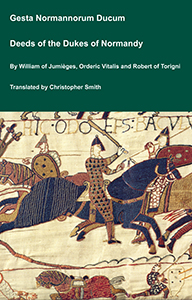
The Deeds of the Dukes of Normandy
The Gesta Normannorum Ducum [The Deeds of the Dukes of Normandy] is a landmark medieval chronicle tracing the rise and fall of the Norman dynasty from its early roots through the pivotal events surrounding the Norman Conquest of England. Originally penned in Latin by the monk William of Jumièges shortly before 1060 and later expanded at the behest of William the Conqueror, the work chronicles the deeds, politics, battles, and leadership of the Norman dukes, especially William’s own claim to the English throne. The narrative combines earlier historical sources with firsthand information and oral testimony to present an authoritative account of Normandy’s transformation from a Viking settlement into one of medieval Europe’s most powerful realms. William’s history emphasizes the legitimacy, military prowess, and governance of the Norman line, framing their expansion, including the conquest of England, as both divinely sanctioned and noble in purpose. Later chroniclers such as Orderic Vitalis and Robert of Torigni continued the history, extending the coverage into the 12th century, providing broader context on ducal rule and its impact. Today this classic work remains a foundational source for understanding Norman identity, medieval statesmanship, and the historical forces that reshaped England and Western Europe between 800AD and 1100AD.
Available at Amazon in eBook and Paperback format.
On 1st August 1614 Henry Drummond was born to John Drummond 2nd Earl Perth (age 26) and Jean Ker Countess Perth. He died aged eight in 1622.

On 1st August 1630 Thomas Clifford 1st Baron Clifford Chudleigh was born to Hugh Clifford of Ugbrooke (age 27) and Mary Chudleigh at Ugbrooke House Chudleigh, Devon. He married before 1655 Elizabeth Martin Baroness Clifford and had issue.
On 1st August 1687 Robert Furnese 2nd Baronet was born to Henry Furnese 1st Baronet (age 29) and Anne Brough. He married (1) Anne Shirley, daughter of Robert Shirley 1st Earl Ferrers and Selina Finch Countess Ferrers (2) October 1708 Anne Balam and had issue.
On 1st August 1696 William Douglas 2nd Earl March was born to William Douglas 1st Earl March (age 26) and Jean Hay Countess March. He married in or before 1724 his second cousin Anne Hamilton 2nd Countess Ruglen, daughter of John Hamilton 1st Earl Ruglen 3rd Earl Selkirk and Elizabeth Hutchinson Countess Ruglen, and had issue.
On 1st August 1730 Frederick Augustus Hervey 4th Earl Bristol was born to John Hervey 2nd Baron Hervey (age 33) and Mary Lepell Baroness Hervey (age 30). He married before 1753 his half fourth cousin once removed Elizabeth Davers Countess Bristol, daughter of Jermyn Davers 4th Baronet and Margaretta Green, and had issue.


On 1st August 1730 Henrietta Pelham Baroness Bergavenny was born to Thomas "Turk" Pelham (age 25). She married 5th February 1753 George Neville 1st Earl Abergavenny, son of William Neville 1st Baron Abergavenny and Katherine Tatton Baroness Abergavenny, and had issue.
On 1st August 1736 George Harcourt 2nd Earl Harcourt was born to Simon Harcourt 1st Earl Harcourt (age 22) and Rebecca Samborne Le Bass. He married 26th September 1765 his first cousin Elizabeth Venables-Vernon Countess Harcourt, daughter of George Venables-Vernon 1st Baron Vernon and Martha Harcourt Baroness Vernon of Kinderton.
On 1st August 1740 Sarah Bradshaw 1st Baroness Waterpark was born. She married 1757 Henry Cavendish 2nd Baronet, son of Henry Cavendish 1st Baronet and Anne Pyne, and had issue.
On 1st August 1744 Anne Seymour-Conway Countess Drogheda was born to Francis Seymour-Conway 1st Marquess Hertford (age 26) and Isabella Fitzroy Countess Hertford (age 17). She a great x 2 granddaughter of King Charles II of England Scotland and Ireland. She married 15th February 1766 Charles Moore 1st Marquess Drogheda, son of Edward Moore 5th Earl Drogheda and Sarah Ponsonby, and had issue.


On 1st August 1745 Richard Fitzwilliam 7th Viscount Fitzwilliam was born to Richard Fitzwilliam 6th Viscount Fitzwilliam (age 34) and Catherine Decker.
The Deeds of the Dukes of Normandy
The Gesta Normannorum Ducum [The Deeds of the Dukes of Normandy] is a landmark medieval chronicle tracing the rise and fall of the Norman dynasty from its early roots through the pivotal events surrounding the Norman Conquest of England. Originally penned in Latin by the monk William of Jumièges shortly before 1060 and later expanded at the behest of William the Conqueror, the work chronicles the deeds, politics, battles, and leadership of the Norman dukes, especially William’s own claim to the English throne. The narrative combines earlier historical sources with firsthand information and oral testimony to present an authoritative account of Normandy’s transformation from a Viking settlement into one of medieval Europe’s most powerful realms. William’s history emphasizes the legitimacy, military prowess, and governance of the Norman line, framing their expansion, including the conquest of England, as both divinely sanctioned and noble in purpose. Later chroniclers such as Orderic Vitalis and Robert of Torigni continued the history, extending the coverage into the 12th century, providing broader context on ducal rule and its impact. Today this classic work remains a foundational source for understanding Norman identity, medieval statesmanship, and the historical forces that reshaped England and Western Europe between 800AD and 1100AD.
Available at Amazon in eBook and Paperback format.
On 1st August 1756 Mary Isabella Somerset Duchess Rutland was born to Charles Noel Somerset 4th Duke Beaufort (age 46) and Elizabeth Berkeley Duchess Beaufort (age 43). She married 26th December 1775 her half fourth cousin Charles Manners 4th Duke Rutland and had issue.

On 1st August 1759 Robert Herbert Butler 3rd Earl Lanesborough was born to Brinsley Butler 2nd Earl Lanesborough (age 31) and Jane Rochfort Countess Lanesborough (age 21). He married before 1761 Elizabeth La Touche and had issue.
On 1st August 1762 Henriette St John was born to Frederick St John 3rd Viscount St John 2nd Viscount Bolingbroke (age 29) and Diana Spencer Viscountess St John and Bolingbroke (age 28).
On 1st August 1776 Robert Nassau Sutton was born to Richard Sutton 1st Baronet (age 43) and Anne Williams Baroness Sutton. He married 20th May 1812 his half fourth cousin once removed Mary Georgiana Manners-Sutton and had issue.
On 1st August 1776 Archibald Acheson 2nd Earl Gosford was born to Arthur Acheson 1st Earl Gosford (age 31) and Millicent Pole Countess Gosford (age 26) at Market Hill He married before 20th August 1806 Mary Sparrow Countess Gosford and had issue.
On 1st August 1784 Admiral George Elliot was born to Gilbert Elliot 1st Earl Minto (age 33) and Anna-Maria Amyand Countess Minto (age 32).
On 1st August 1797 General William Thomas Knollys was born to William Knollys 8th Earl Banbury (age 34). He married 1830 Elizabeth St Aubyn, daughter of John St Aubyn 5th Baronet, and had issue.
On 1st August 1806 Edward Crofton 2nd Baron Crofton was born to Edward Crofton 3rd Baronet (age 27) and Charlotte Stewart Lady Crofton (age 29). He married 19th October 1833 Georgina Paget Lady Crofton, daughter of Henry William Paget 1st Marquess Anglesey and Caroline Elizabeth Villiers Duchess Argyll, and had issue.
On 1st August 1821 Augusta Mary Minna Catherine Lyons Duchess Norfolk was born to Edmund Lyons 1st Baron Lyons (age 30) at Torquay, Devon. She married 19th June 1839 Henry Granville Fitzalan 14th Duke of Norfolk, son of Henry Charles Howard 13th Duke of Norfolk and Charlotte Sophia Leveson-Gower Duchess Norfolk, and had issue.
On 1st August 1822 Mylles Cave-Browne-Cave 11th Baronet was born to John Robert Cave-Browne-Cave 10th Baronet (age 24).
On 1st August 1824 Maria Alexandrovna Hesse Darmstadt was born to Louis Hesse Darmstadt II Grand Duke (age 46) and Princess Wilhelmine Baden (age 35). Coefficient of inbreeding 7.03%. She married 16th April 1841 her second cousin once removed Tsar Alexander II of Russia, son of Tsar Nicholas I of Russia and Charlotte Hohenzollern, and had issue.
The Deeds of the Dukes of Normandy
The Gesta Normannorum Ducum [The Deeds of the Dukes of Normandy] is a landmark medieval chronicle tracing the rise and fall of the Norman dynasty from its early roots through the pivotal events surrounding the Norman Conquest of England. Originally penned in Latin by the monk William of Jumièges shortly before 1060 and later expanded at the behest of William the Conqueror, the work chronicles the deeds, politics, battles, and leadership of the Norman dukes, especially William’s own claim to the English throne. The narrative combines earlier historical sources with firsthand information and oral testimony to present an authoritative account of Normandy’s transformation from a Viking settlement into one of medieval Europe’s most powerful realms. William’s history emphasizes the legitimacy, military prowess, and governance of the Norman line, framing their expansion, including the conquest of England, as both divinely sanctioned and noble in purpose. Later chroniclers such as Orderic Vitalis and Robert of Torigni continued the history, extending the coverage into the 12th century, providing broader context on ducal rule and its impact. Today this classic work remains a foundational source for understanding Norman identity, medieval statesmanship, and the historical forces that reshaped England and Western Europe between 800AD and 1100AD.
Available at Amazon in eBook and Paperback format.
On 1st August 1829 Charles Edward Cooke was born to William Bryan Cooke 8th Baronet (age 47) and Isabella Cecilia Middleton Lady Cooke. Coefficient of inbreeding 3.12%. He married 13th August 1874 Mary Louisa Stewart, daughter of Randolph Stewart 9th Earl Galloway and Harriet Blanche Somerset Countess Galloway.

On 1st August 1833 William Victor Leopold Horatio Anson was born to Thomas William Anson 1st Earl Lichfield (age 37) and Louisa Barbara Catherine Phillips Countess Lichfield (age 33).
On 1st August 1852 William Reginald Duncombe was born to William Duncombe 1st Earl Feversham (age 23) and Mabel Violet Graham Countess Feversham (age 19). Coefficient of inbreeding 1.57%. He married 23rd December 1876 Muriel Frances Louisa Chetwynd-Talbot, daughter of Charles Chetwynd-Talbot 19th Earl of Shrewsbury 4th Earl Talbot and Anna Theresa Cockerell Countess Shrewsbury and Waterford, and had issue.
On 1st August 1857 Rowland Winn 2nd Baron St Oswald was born to Rowland Winn 1st Baron St Oswald (age 37) and Harriet Dumaresq Baroness St Owsald. He married 1892 Mabel Susan Forbes Baroness Winn and had issue.
On 1st August 1857 Henry Charles Hardinge 3rd Viscount Hardinge was born to Charles Stewart Hardinge 2nd Viscount Hardinge (age 34) and Lavinia Bingham Viscountess Hardinge (age 21). He married 8th July 1891 Mary Frances Neville Marchioness Abergavenny and had issue.
On 1st August 1862 Daniel Harry Lascelles was born to Henry Thynne Lascelles 4th Earl Harewood (age 38) and Diana Smyth Countess Harewood (age 24).
On 1st August 1893 Alexander I King Greece was born to Constantine I King Greece (age 24) and Sophia Hohenzollern Queen Consort Greece (age 23). He a great grandson of Queen Victoria of the United Kingdom. He married Aspasia Manos Queen Consort Greece.
On 1st August 1894 Mona Stapleton 11th Baroness Beaumont and Baroness Howard was born to Miles Stapleton 10th Baron Beaumont (age 44). She married 5th September 1914 Bernard Fitzalan Howard 3rd Baron Howard, son of Francis Edward Fitzalan Howard 2nd Baron Howard and Clara Louisa Greenwood Baroness Howard, and had issue.
On 1st August 1894 Edward Digby 11th and 5th Baron Digby was born to Edward Henry Trafalgar Digby 10th and 4th Baron Digby (age 47). He married 1919 Constance Pamela Alice Bruce, daughter of Henry Bruce 2nd Baron Aberdare and Constance Mary Beckett Baroness Aberdare, and had issue.
On 1st August 1896 Elizabeth Valetta Montagu-Stuart-Wortley Countess Abingdon was born to Major-General Edward Montagu-Stuart-Wortley (age 39) and Violet Guthrie (age 10). She married 1928 her half fourth cousin once removed Montagu Henry Edmund Cecil Towneley Bertie 8th Earl of Abingdon 13th Earl Lindsey.
On 1st August 1896 Seymour Egerton 6th Earl Wilton was born to Arthur George Egerton 5th Earl Wilton (age 33) and Mariota Thellusson Countess Wilton (age 23).
On 1st August 1905 Reginald Manningham-Buller 1st Viscount Dilhorne was born to Mervyn Manningham-Buller 3rd Baronet (age 29) and Lilah Constance Cavendish (age 21). He married 1930 his half third cousin twice removed Mary Lillian Lindsay, daughter of David Lindsay 27th Earl of Crawford 10th Earl Balcarres and Constance Lilian Pelly Countess Crawford and Balcarres, and had issue.
Annals of the six Kings of England by Nicholas Trivet
Translation of the Annals of the Six Kings of England by that traces the rise and rule of the Angevin aka Plantagenet dynasty from the mid-12th to early 14th century. Written by the Dominican scholar Nicholas Trivet, the work offers a vivid account of English history from the reign of King Stephen through to the death of King Edward I, blending political narrative with moral reflection. Covering the reigns of six monarchs—from Stephen to Edward I—the chronicle explores royal authority, rebellion, war, and the shifting balance between crown, church, and nobility. Trivet provides detailed insight into defining moments such as baronial conflicts, Anglo-French rivalry, and the consolidation of royal power under Edward I, whose reign he describes with particular immediacy. The Annals combines careful year-by-year reporting with thoughtful interpretation, presenting history not merely as a sequence of events but as a moral and political lesson. Ideal for readers interested in medieval history, kingship, and the origins of the English state, this chronicle remains a valuable and accessible window into the turbulent world of the Plantagenet kings.
Available at Amazon in eBook and Paperback format.
On 1st August 1910 Archie Primrose was born to Albert Archibald Primrose 6th Earl Rosebery 2nd Earl Midlothian (age 28) and Dorothy Grosvenor (age 19). He a great x 3 grandson of King William IV of the United Kingdom.
On 1st August 1913 Magdalen Mary Charlotte Fraser Countess Eldon was born to Simon Fraser 14th Lord Lovat (age 41) and Laura Lister (age 21). She married 10th April 1934 John Scott 4th Earl Eldon and had issue.
On 1st August 1914 John Charles William Fitzroy 9th Duke Grafton was born to William Henry Alfred Fitzroy (age 30) and Auriol Margaretta Brougham.
On 1st August 1941 Major Victor Ronald Seely was born to Victor Basil John Seely 4th Baronet (age 41).
On 1st August 1963 Olivia Rose Mildred Fitzroy was born to Hugh Denis Charles Fitzroy 11th Duke Grafton (age 44) and Ann Fortune Smith Duchess Grafton (age 43).
On 1st August 1971 George William Eustace Boteler Irby 11th Baron Boston was born to Timothy George Frank Boteler Irby 10th Baron Boston (age 32).
On 1st August 1235 Gilbert Marshal 4th Earl Pembroke (age 38) and Marjorie Dunkeld Countess Pembroke (age 35) were married at Berwick-upon-Tweed, Northumberland [Map]. She by marriage Countess Pembroke. She the daughter of King William I of Scotland and Ermengarde Beaumont Sarthe Queen Consort Scotland. He the son of William Marshal 1st Earl Pembroke and Isabel Clare Countess Pembroke. They were half second cousin once removed. She a great x 2 granddaughter of King Henry I "Beauclerc" England.
On 1st August 1548 John de Vere 16th Earl of Oxford (age 32) and Margery Golding Countess of Oxford (age 22) were married at Belchamp St Paul, Essex. She by marriage Countess of Oxford. He the son of John de Vere 15th Earl of Oxford and Elizabeth Trussell Countess of Oxford.
On 1st August 1615 John Tracy 2nd Viscount Tracy (age 22) and Bridget Lyttelton were married.
On 1st August 1644 Henry Grey 10th Earl Kent (age 49) and Amabel Benn Countess Kent (age 36) were married. She by marriage Countess Kent. He the son of Anthony Grey 9th Earl Kent and Magdelane Purefoy Countess Kent (age 72).
On 1st August 1672 Henry Fitzroy 1st Duke Grafton (age 8) and Isabella Bennet Duchess Grafton (age 4) were married. She the daughter of Henry Bennet 1st Earl Arlington (age 54) and Elisabeth Nassau Beverweert Countess Arlington (age 38). He the illegitmate son of King Charles II of England Scotland and Ireland (age 42) and Barbara Villiers 1st Duchess of Cleveland (age 31). They were half sixth cousins.
He was created 1st Earl Euston, 1st Viscount Ipswich, 1st Baron Sudbury. Isabella Bennet Duchess Grafton by marriage Countess Euston.
On 1st August 1708 Charles Habsburg Spain VI Holy Roman Emperor (age 22) and Elisabeth of Brunswick-Wolfenbüttel Holy Roman Empress (age 16) were married. He the son of Leopold Habsburg Spain I Holy Roman Emperor and Eleonore Magdalene of Neuburg (age 53).
On 1st August 1754 William Anne Capell 4th Earl Essex (age 21) and Frances Hanbury Williams Countess Essex were married. She by marriage Countess Essex. He the son of William Capell 3rd Earl Essex and Elizabeth Russell Countess Essex (age 43). They were half sixth cousins.

On 1st August 1766 Thomas Broughton 6th Baronet (age 21) and Mary Wicker Lady Boughton were married. She by marriage Lady Broughton of Broughton in Staffordshire.
Chronicle of Abbot Ralph of Coggeshall
The Chronicle of Abbot Ralph of Coggeshall (Chronicon Anglicanum) is an indispensable medieval history that brings to life centuries of English and European affairs through the eyes of a learned Cistercian monk. Ralph of Coggeshall, abbot of the Abbey of Coggeshall in Essex in the early 13th century, continued and expanded his community’s chronicle, documenting events from the Norman Conquest of 1066 into the tumultuous reign of King Henry III. Blending eyewitness testimony, careful compilation, and the monastic commitment to record-keeping, this chronicle offers a rare narrative of political intrigue, royal power struggles, and social upheaval in England and beyond. Ralph’s work captures the reigns of pivotal figures such as Richard I and King John, providing invaluable insights into their characters, decisions, and the forces that shaped medieval rule. More than a simple annal, Chronicon Anglicanum conveys the texture of medieval life and governance, making it a rich source for scholars and readers fascinated by English history, monastic authorship, and the shaping of the medieval world.
Available at Amazon in eBook and Paperback format.
On 1st August 1767 Charles Howard 11th Duke of Norfolk (age 21) and Marion Coppinger were married. He the son of Charles Howard 10th Duke of Norfolk (age 46) and Catherine Brockholes Duchess Norfolk (age 49).
On 1st August 1797 Thomas Pilkington 7th Baronet (age 23) and Elizabeth Anne Tufnel Lady Pilkington were married. She by marriage Lady Pilkington of Stanley in Yorkshire.
On 1st August 1804 George Richard St John 4th Viscount St John 3rd Viscount Bolingbroke (age 43) and Isabella Charlotte Hompesch Baroness von Hompesch (age 28) were married at Trinity Church, New York.
On 1st August 1825 Charles Stourton 19th Baron Stourton (age 23) and Mary Lucy Clifford Baroness Stourton (age 25) were married. They were fifth cousins. She a great x 3 granddaughter of King Charles II of England Scotland and Ireland.
On 1st August 1826 George Brooke-Pechell 4th Baronet (age 37) and Katharine Anabella Bisshop Lady Brooke-Pechell (age 34) were married at Parham Park, Sussex.
On 1st August 1827 James Doughty-Tichborne 10th Baronet (age 43) and Henriette Felicite Seymour Lady Tichborne (age 24) were married at St George's Church, Hanover Square.
On 1st August 1831 George Augustus Francis Rawdon-Hastings 2nd Marquess Hastings (age 23) and Barbara Yelverton Marchioness Hastings (age 21) were married. He the son of Francis Rawdon-Hastings 1st Marquess Hastings and Flora Mure-Campbell Marchioness of Hastings (age 51).
On 1st August 1835 John Skeffington 10th Viscount Massereene, 3rd Viscount Ferrard (age 22) and Olivia Grady Viscountess Massereene were married. She by marriage Viscountess Massereene. They had four sons and four daughters.
On 1st August 1863 Henry Winston Barron 1st Baronet (age 67) and Augusta Anne Somerset Lady Barron (age 39) were married at St George's Church, Hanover Square. She by marriage Lady Barron of Glenanna and Barroncourt in County Waterford. The difference in their ages was 28 years.
On 1st August 1891 Charles Noel Carnegie 10th Earl of Southesk (age 37) and Ethel Mary Elizabeth Bannerman Countess Southesk (age 23) were married. He the son of James Carnegie 9th Earl Southesk (age 63) and Catherine Hamilton Noel. They were sixth cousins.
On 1st August 1903 George Vivian 4th Baron Vivian (age 25) and Barbara Cicely Fanning Baroness Vivian were married. She by marriage Baroness Vivian of Glynn and Truro in Cornwall.
The Deeds of the Dukes of Normandy
The Gesta Normannorum Ducum [The Deeds of the Dukes of Normandy] is a landmark medieval chronicle tracing the rise and fall of the Norman dynasty from its early roots through the pivotal events surrounding the Norman Conquest of England. Originally penned in Latin by the monk William of Jumièges shortly before 1060 and later expanded at the behest of William the Conqueror, the work chronicles the deeds, politics, battles, and leadership of the Norman dukes, especially William’s own claim to the English throne. The narrative combines earlier historical sources with firsthand information and oral testimony to present an authoritative account of Normandy’s transformation from a Viking settlement into one of medieval Europe’s most powerful realms. William’s history emphasizes the legitimacy, military prowess, and governance of the Norman line, framing their expansion, including the conquest of England, as both divinely sanctioned and noble in purpose. Later chroniclers such as Orderic Vitalis and Robert of Torigni continued the history, extending the coverage into the 12th century, providing broader context on ducal rule and its impact. Today this classic work remains a foundational source for understanding Norman identity, medieval statesmanship, and the historical forces that reshaped England and Western Europe between 800AD and 1100AD.
Available at Amazon in eBook and Paperback format.
On 1st August 1969 Martin Lindsay 1st Baronet (age 63) and Loelia Ponsonby (age 67) were married. She the former wife of the Duke of Westminster.
On 1st August 1137 Louis VI King of the Franks (age 55) died of dysentery. His son Louis (age 17) succeeded VII King of the Franks. Eleanor of Aquitaine Queen Consort Franks and England (age 15) by marriage Queen Consort Franks.
On 1st August 1190 Floris Gerulfing III Count Holland (age 49) died at Antioch.
On 1st August 1402 Edmund of Langley 1st Duke of York (age 61) died at King's Langley, Hertfordshire [Map]. His son Edward (age 29) succeeded 2nd Duke York, 2nd Earl Cambridge and inherited his estates which included Conisbrough Castle [Map]. Philippa Mohun Duchess York (age 35) by marriage Duchess York.
On 1st August 1418 John Hende died.
On 1st August 1418 Richard Grey 1st or 4th Baron Grey of Codnor (age 47) died. His son John (age 22) succeeded 2nd or 5th Baron Grey of Codnor.
On 1st August 1455 Eleanor Berkeley Countess Arundel (age 73) died.
On 1st August 1474 Walter Blount 1st Baron Mountjoy (age 58) died. His grandson Edward (age 10) succeeded 2nd Baron Mountjoy.
On 1st August 1476 Henry Fiennes 3rd Baron Saye and Sele (age 30) died at Broughton Castle, Oxfordshire. His son Richard (age 5) succeeded 4th Baron Saye and Sele.
On 1st August 1507 Elizabeth Burgh Baroness Fitzhugh died.
The History of William Marshal was commissioned by his son shortly after William’s death in 1219 to celebrate the Marshal’s remarkable life; it is an authentic, contemporary voice. The manuscript was discovered in 1861 by French historian Paul Meyer. Meyer published the manuscript in its original Anglo-French in 1891 in two books. This book is a line by line translation of the first of Meyer’s books; lines 1-10152. Book 1 of the History begins in 1139 and ends in 1194. It describes the events of the Anarchy, the role of William’s father John, John’s marriages, William’s childhood, his role as a hostage at the siege of Newbury, his injury and imprisonment in Poitou where he met Eleanor of Aquitaine and his life as a knight errant. It continues with the accusation against him of an improper relationship with Margaret, wife of Henry the Young King, his exile, and return, the death of Henry the Young King, the rebellion of Richard, the future King Richard I, war with France, the death of King Henry II, and the capture of King Richard, and the rebellion of John, the future King John. It ends with the release of King Richard and the death of John Marshal.
Available at Amazon in eBook and Paperback format.
On 1st August 1510 Anne de Semarc (age 77) died. Her grand-daughter Anne Sapcote Countess Bedford (age 31) inherited Chenies Manor House, Buckinghamshire [Map].
On 1st August 1597 Henry Fitzgerald 12th Earl of Kildare (age 35) died. His brother William succeeded 13th Earl Kildare.
On 1st August 1683 Richard Corbet 2nd Baronet (age 43) died. His son Uvedale (age 15) succeeded 3rd Baronet Corbet of Leighton in Montgomeryshire.
On 1st August 1695 Elizabeth Willoughby Countess Ranelagh (age 62) died.
On 1st August 1702 William Courtenay 5th Earl Devon (age 73) died. His grandson William (age 26) de jure 6th Earl Devon.
On 1st August 1712 Hugh Willoughby 12th Baron Willoughby of Parham (age 72) died. His nephew Edward succeeded 13th Baron Willoughby Parham.
On 1st August 1714 Queen Anne of England Scotland and Ireland (age 49) died at Kensington Palace. Her second cousin George (age 54) succeeded I King Great Britain and Ireland.
On 1st August 1721 Barbara Slingsby Countess Pembroke and Montgomery (age 53) died.
On 1st August 1745 John Chudleigh 6th Baronet died. Baronet Chudleigh of Ashton in Devon extinct.
On 1st August 1749 Henry Hare 3rd Baron Coleraine (age 56) died. Baron Coleraine extinct. He left his Tottenham estates to his illegitimate daughter Henrietta Rosa Peregrina (age 3) but as a consequence of her being a alien the estates escheated to the Crown.

On 1st August 1755 Robert Grosvenor 6th Baronet (age 60) died. His son Richard (age 24) succeeded 7th Baronet Grosvenor of Eaton in Cheshire.
On 1st August 1779 Charles Mordaunt 4th Earl Peterborough 2nd Earl Monmouth (age 71) died. His son Charles (age 21) succeeded 5th Earl Peterborough, 3rd Earl Monmouth, 10th Baron Mordaunt, 4th Viscount Mordaunt of Avalon, 4th Baron Mordaunt of Reigate.
On 1st August 1783 Edward Devereux 12th Viscount Hereford (age 43) died. His brother George (age 39) succeeded 13th Viscount Hereford, 10th Baronet Devereux of Castle Bromwich. Marianna Devereux Viscountess Hereford by marriage Viscountess Hereford.
Henrici Quinti, Angliæ Regis, Gesta, is a first-hand account of the Agincourt Campaign, and subsequent events to his death in 1422. The author of the first part was a Chaplain in King Henry's retinue who was present from King Henry's departure at Southampton in 1415, at the siege of Harfleur, the battle of Agincourt, and the celebrations on King Henry's return to London. The second part, by another writer, relates the events that took place including the negotiations at Troye, Henry's marriage and his death in 1422.
Available at Amazon in eBook and Paperback format.
On 1st August 1808 Diana Spencer Viscountess St John and Bolingbroke (age 74) died.
On 1st August 1813 Henry Vane-Tempest 2nd Baronet (age 42) died of apoplexy. Baronet Vane of Long Newton in County Durham extinct. Memorial and vault at St Mary's Church, Long Newton [Map] sculpted by Richard Westmacott (age 38).
On 1st August 1814 Anne Barbara Whitworth Lady Russell died.
On 1st August 1821 William Assheton Harbord 2nd Baron Suffield (age 54) died. His brother Edward (age 39) succeeded 3rd Baron Suffield, 4th Baronet Harbord of Suffield in Norfolk. Georgiana Venables-Vernon Baroness Suffield (age 35) by marriage Baroness Suffield.
On 1st August 1821 at 10:25 p.m Caroline of Brunswick Queen Consort England (age 53) died at Brandenburgh House, Hammersmith. She was buried at Brunswick Cathedral [Map].
On 1st August 1827 Alice Lucy Whitefoord Baroness Vernon (age 60) died at Sudbury, Derbyshire [Map].
On 1st August 1836 Mary Sandys Marchioness Downshire (age 72) died.
On 1st August 1857 Charles Turner (age 82) died.
On 1st August 1868 Richard Boyle 4th Earl Shannon (age 59) died. His son Henry (age 34) succeeded 5th Earl Shannon.
On 1st August 1869 Bishop Walter Kerr Hamilton (age 60) died. Monument in Salisbury Cathedral [Map].
Bishop Walter Kerr Hamilton: On 16th November 1808 he was born to Archdeacon Anthony Hamilton. In 1832 Bishop Walter Kerr Hamilton was elected to a Fellowship of Merton College, Oxford University. In 1833 he was appointed Deacon. In 1854 Bishop Walter Kerr Hamilton was elected Bishop of Salisbury.
On 1st August 1887 Hugh Cholmondeley 2nd Baron Delamere (age 75) died. His son Hugh (age 17) succeeded 3rd Baron Delamere of Vale Royal in Cheshire. Florence Ann Cole Baroness Delamere (age 9) by marriage Baroness Delamere of Vale Royal in Cheshire.
On 1st August 1898 William David Murray 4th and 3rd Earl Mansfield (age 92) died. His grandson William (age 38) succeeded 5th Earl Mansfield in Middlesex, 4th Earl Mansfield in Nottinghamshire, 10th Viscount Stormont.
On 1st August 1929 Edith Caroline Sophia Scott Viscountess Monck (age 73) died.
The History of William Marshal was commissioned by his son shortly after William’s death in 1219 to celebrate the Marshal’s remarkable life; it is an authentic, contemporary voice. The manuscript was discovered in 1861 by French historian Paul Meyer. Meyer published the manuscript in its original Anglo-French in 1891 in two books. This book is a line by line translation of the first of Meyer’s books; lines 1-10152. Book 1 of the History begins in 1139 and ends in 1194. It describes the events of the Anarchy, the role of William’s father John, John’s marriages, William’s childhood, his role as a hostage at the siege of Newbury, his injury and imprisonment in Poitou where he met Eleanor of Aquitaine and his life as a knight errant. It continues with the accusation against him of an improper relationship with Margaret, wife of Henry the Young King, his exile, and return, the death of Henry the Young King, the rebellion of Richard, the future King Richard I, war with France, the death of King Henry II, and the capture of King Richard, and the rebellion of John, the future King John. It ends with the release of King Richard and the death of John Marshal.
Available at Amazon in eBook and Paperback format.
On 1st August 1978 Fergus Frederick Graham 5th Baronet (age 85) died. His son Charles (age 59) succeeded 6th Baronet Graham of Netherby in Cumberland.