

Jean de Waurin's Chronicle of England Volume 6 Books 3-6: The Wars of the Roses
Jean de Waurin was a French Chronicler, from the Artois region, who was born around 1400, and died around 1474. Waurin’s Chronicle of England, Volume 6, covering the period 1450 to 1471, from which we have selected and translated Chapters relating to the Wars of the Roses, provides a vivid, original, contemporary description of key events some of which he witnessed first-hand, some of which he was told by the key people involved with whom Waurin had a personal relationship.
Available at Amazon in eBook and Paperback format.
04 Mar is in March.
1194 Release of King Richard I
1461 Proclamation of Edward IV as King
1661 Charles II Continues to Reward those who Supported His Restoration
On 4th March 1188 Blanche Ivrea Queen Consort France was born to Alfonso VIII King Castile (age 32) and Eleanor Plantagenet Queen Consort Castile (age 26). She a granddaughter of King Henry "Curtmantle" II of England. She married 23rd May 1200 her third cousin King Louis VIII of France, son of King Philip II of France and Isabelle Flanders Queen Consort France, and had issue.
On 4th March 1194 King Richard "Lionheart" I of England (age 36) and his mother Eleanor of Aquitaine Queen Consort Franks and England (age 72) sailed from Antwerp [Map]. The royal admiral, Stephen of Turnham, who was commanding in person, had to employ experienced pilots to take her through the coastal islets and out into the estuary of the Scheldt. It was a long crossing, perhaps deliberately so, to avoid ambush. The Trenchemer was escorted by a large cog from the Cinque port of Rye [Map].
On 4th March 1238 Joan Plantagenet Queen of Scotland (age 27) died at Havering atte Bower, Essex [Map]. She was buried at Tarrant Abbey, Dorset [Map].
 Chronicle of Walter of Guisborough. In the same year died Sir Robert de Brus (age 60) the fifth, soon after Easter [4th March 1304], while he was on the road towards Annandale, and he was buried in the monastery of Holm [Map].1 In the same year died John, Earl of Warenne (age 73), an old man, and was buried at Lewes after Christmas. In the same year died that valiant knight Sir William Latimer (age 61), on the vigil of Saint Nicholas [5th December 1304], who had exercised his knighthood in many lands, and he was buried at Empingham.2
Eodem anno obiit dominus Robertus de Brus quintus, cito post Pascha, cum esset in via versus Vallem Anandiæ, sepultusque est in monasterio de Holme. Eodem anno obiit comes de Warenna Johannes, homo senex, sepultusque est apud Lews post Natale Domini. Eodem anno obiit strenuus ille miles dominus Willelmus Latimer in vigilia Sancti Nicholai, qui suam militiam in multis terris exercuerat, sepultusque est apud Hempingham.
Note 1. Holme Cultram Abbey, Cumberland [Map].
Note 2. Empingham, Rutlandshire.
On 4th March 1371 Joan Évreux Queen Consort France (age 61) died.
Rymer's Fœdera Volume 3. For Katherine Swynford (age 26), concerning confirmation.
The King, to all to whom, etc., greeting. Know that, of our special grace, we do accept, approve, ratify, and confirm by these presents the estate which our beloved Katherine de Swynford holds for the term of her life in the manors of Gringley [on-the-Hill] and Wheatley,1 with their appurtenances, by the gift and grant of our dearest son John, King of Castile and León, Duke of Lancaster;
Who held the same manors, together with other lands, by our gift to him and to his heirs of his body issuing, in exchange, under a certain form, for the county of Richmond.
And this we do notwithstanding the aforesaid exchange, or anything therein contained, from which any benefit or profit might in any way accrue to us or to our heirs, or by reason that, for lack of heir of the body of our said son issuing, the aforesaid manors ought to revert to us and our heirs, or that, if he should die leaving an heir within age, we or our heirs would have the wardship of the said manors.
In witness whereof, etc. Witness the King, at Sheen, the 4th day of March [1377]. By writ of privy seal.
Pro Katerina Swynford, de confirmatione.
Rex, omnibus ad quos, &c. salutem. Sciatis quod, de gratiâ nostrâ speciali, statum quem dilecta nobis Katerina de Swynford habet pro termino vitæ suæ, in maneriis de Gryngeley et Wheteley, cum pertinentiis, ex dono et concessione carissimi filii nostri Johannis Regis Castellæ et Legionis, ducis Lancastriæ;
Qui eadem maneria, unà cum aliis terris, tenuit, ex dono nostro, sibi et hæredibus suis, de corpore suo exeuntibus, in escambium, sub certâ formâ, pro comitatu Richemondiæ;
Acceptamus, approbamus, ratificamus, et confirmamus per præsentes, non obstante supradicto escambio, vel aliquo in eodem contento, unde commodum seu proficuum nobis aut hæredibus nostris aliqualiter evenire posset, seu eo quod, pro defectu hæredis de corpore dicti filii nostri exeuntis, maneria prædicta ad nos et hæredes nostros reverti debuissent, vel quod, si ipse obierit, hærede suo infra ætatem existente, nos aut hæredes nostri haberemus custodiam maneriorum supradictorum.
In cujus, &c. Teste Rege, apud Shene, iv. die Martii. Per breve de privato sigillo.
Note 1. Gringley-on-the-Hill and Wheatley are both in Nottinghamshire, three miles apart, half-way between Retford and Gainsborough.
Patent Rolls. 4th March 1381. Westminster. Pardon, at the supplication of the king's kinswoman, the countess of Norfolk, to John Sparwe of Suthfeld, co. Norfolk, her tenant, for the death of Thomas Kyng of Banyngham, killed on Saturday after St. Barnabas, 50 Edward III. By p.s.
On 4th March 1394 Henry "The Navigator" Aviz was born to King John I of Portugal (age 42) and Philippa of Lancaster Queen Consort Portugal (age 33). He a great grandson of King Edward III of England.
On 4th March 1461 King Edward IV of England (age 18) declared himself King of England. William Hastings 1st Baron Hastings (age 30) was present.
On 4th March 1496 Sigismund Habsburg 4th Duke Austria (age 68) died at Innsbruck.
On 4th March 1522, Shrove Tuesday, at Cardinal Wolsey's York Place, a pageant known as Chateau Vert was performed. Believed to be the first public appearance of Anne Bolyen (age 21) since her return from the French Court, and the first time King Henry VIII (age 30) had seen her since her childhood. The pageant was part of the Shrovetide celebrations which began on 1st March 1522 and which also celebrated the negotiations between Charles V, Holy Roman Emperor, and King Henry VIII for a joint attack on France, which were to be sealed by the marriage of Charles V (age 22) and Princess Mary (age 6), Henry's daughter.
On 4th March 1526 Henry Carey 1st Baron Hunsdon was born to William Carey (age 26) and Mary Boleyn (age 27). There is speculation among historians that his father may actually have been Henry VIII (age 34) who was known to have had an affair with Mary Boleyn although the precise dates are unknown. He married 21st May 1545 Anne Morgan Baroness Hunsdon and had issue.
Henry Machyn's Diary. 4th March 1558. The iiij day of Marche a' for-non my lade Elsabeth('s) (age 24) grace toke her horss and red to her plasse at, with mony lordes, knyghtes, and lades, and gentyllwomen, with a goodly compene of horsse.
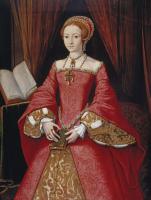


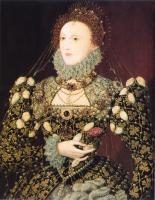
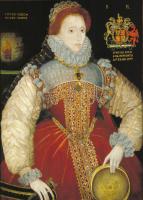


On 4th March 1605 Maximilian Colt (age 30) signed an agreement with the lord treasurer, Sir Robert Cecil (age 41), to carve a monument above the grave of Queen Elizabeth I of England and Ireland in the King Henry VII Chapel, Westminster Abbey [Map] for 600l. The work was completed at the end of 1606.
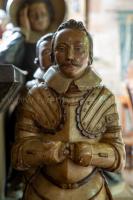
In 4th March 1606 Edward Fitton (age 58) died. On 5th February 1627 Alice Holcroft (age 66) died. Monument at Church of St James, Gawsworth [Map]. The monument originally stood against the east wall, away from the north wall, with the kneeling figures of the children at each corner. Sir Edward's effigy is lost and there is no record when it was last in situ at Gawsworth. Note the remodelled head of the second son, Richard.
Alice Holcroft: In 1540 she was born to John Holcroft. In or before 1572 Edward Fitton and she were married.


Adam Murimuth's Continuation and Robert of Avesbury’s 'The Wonderful Deeds of King Edward III'
This volume brings together two of the most important contemporary chronicles for the reign of Edward III and the opening phases of the Hundred Years’ War. Written in Latin by English clerical observers, these texts provide a vivid and authoritative window into the political, diplomatic, and military history of fourteenth-century England and its continental ambitions. Adam Murimuth Continuatio's Chronicarum continues an earlier chronicle into the mid-fourteenth century, offering concise but valuable notices on royal policy, foreign relations, and ecclesiastical affairs. Its annalistic structure makes it especially useful for establishing chronology and tracing the development of events year by year. Complementing it, Robert of Avesbury’s De gestis mirabilibus regis Edwardi tertii is a rich documentary chronicle preserving letters, treaties, and official records alongside narrative passages. It is an indispensable source for understanding Edward III’s claim to the French crown, the conduct of war, and the mechanisms of medieval diplomacy. Together, these works offer scholars, students, and enthusiasts a reliable and unembellished account of a transformative period in English and European history. Essential for anyone interested in medieval chronicles, the Hundred Years’ War, or the reign of Edward III.
Available at Amazon in eBook and Paperback format.
On or before 4th March 1611, the date he was baptised at St Andrew's Church, Holborn [Map], William Dobson was born.
Diary of Anne Clifford. 4th March 1619. The 4th my Lord Sheffield (age 53) was married at Westminster in St. Margaret's Church [Map] to one Anne Erwin, daughter of her [sic] Wilkam Erwin a Scottish man, which was held a very mean match, an undiscreet on part of him.

Samuel Pepys' Diary. 4th March 1660. Lord's day. Before I went to church I sang Orpheus' Hymn to my viall. After that to Mr. Gunning's (age 46), an excellent sermon upon charity. Then to my mother to dinner, where my wife and the maid were come. After dinner we three to Mr. Messum's where we met Mons. L'Impertinent, who got us a seat and told me a ridiculous story how that last week he had caused a simple citizen to spend; £80 in entertainments of him and some friends of his upon pretence of some service that he would do him in his suit after a widow. Then to my mother again, and after supper she and I talked very high about religion, I in defence of the religion I was born in. Then home.
In early 1661 King Charles II of England Scotland and Ireland (age 30) rewarded of further tranche of those who supported his Restoration...
On 2nd January 1661 Henry Bedingfield 1st Baronet (age 46) was created 1st Baronet Bedingfield of Oxburgh in Norfolk.
On 10th January 1661 Andrew Rutherford 1st Earl Teviot was created 1st Baron Rutherford with special remainder to his heirs and assignees whatsoever, and that under what provisions, restrictions, and conditions the said Lord Rutherford should think fit.
On 23rd January 1661 John Cole 1st Baronet (age 41) was created Baronet Cole of Newland.
On 23rd February 1661 Edward Smythe 1st Baronet (age 41) was created 1st Baronet Smythe.
On 4th March 1661 Compton Reade 1st Baronet (age 36) was created 1st Baronet Reade of Barton in Berkshire. Mary Cornwall Lady Reade (age 31) by marriage Lady Reade of Barton in Berkshire.
On 10th March 1661 Brian Broughton 1st Baronet (age 42) was created 1st Baronet Broughton of Broughton in Staffordshire.
On 20th March 1661 Thomas Rich 1st Baronet (age 60) was created 1st Baronet Rich of Sonning in Berkshire.
On 29th March 1661 Robert Cholmondeley 1st Viscount Cholmondeley (age 21) was created 1st Viscount Cholmondeley of Kells in County Meath.
On 30th March 1661 James Butler 1st Duke Ormonde (age 50) was created 1st Duke Ormonde by King Charles II of England Scotland and Ireland. Elizabeth Preston Duchess Ormonde (age 45) by marriage Duchess Ormonde.
On 30th March 1661 John Fettiplace 1st Baronet (age 35) was created 1st Baronet Fettiplace of Childrey in Berkshire. Anne Wenman Lady Fettiplace (age 31) by marriage Lady Fettiplace of Childrey in Berkshire.
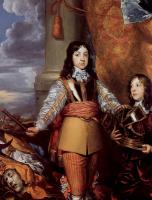


John Evelyn's Diary. 4th March 1664. Came to dine with me the Earl of Lauderdale (age 47), his Majesty's (age 33) great favorite, and Secretary of Scotland; the Earl of Teviot (age 38); my Lord Viscount Brouncker (age 53), President of the Royal Society; Dr. Wilkins (age 50), Dean of Ripon; Sir Robert Murray (age 56), and Mr. Hooke (age 28), Curator to the Society.


Samuel Pepys' Diary. 4th March 1664. Up, my eye being pretty well, and then by coach to my Lord Sandwich (age 38), with whom I spoke, walking a good while with him in his garden, which and the house is very fine, talking of my Lord Peterborough's (age 42) accounts, wherein he is concerned both for the foolery as also inconvenience which may happen upon my Lord Peterborough's ill-stating of his matters, so as to have his gaine discovered unnecessarily. We did talk long and freely that I hope the worst is past and all will be well. There were several people by trying a new-fashion gun1 brought my Lord this morning, to shoot off often, one after another, without trouble or danger, very pretty.
Note 1. Many attempts to produce a satisfactory revolver were made in former centuries, but it was not till the present one that Colt's revolver was invented. On February 18th, 1661, Edward, Marquis of Worcester (age 58), obtained Letters Patent for "an invencon to make certeyne guns or pistolls which in the tenth parte of one minute of an houre may, with a flaske contrived to that purpose, be re-charged the fourth part of one turne of the barrell which remaines still fixt, fastening it as forceably and effectually as a dozen thrids of any scrue, which in the ordinary and usual way require as many turnes". On March 3rd, 1664, Abraham Hill obtained Letters Patent for a "gun or pistoll for small shott, carrying seaven or eight charges of the same in the stocke of the gun"..


Samuel Pepys' Diary. 4th March 1664. At Woolwich, Kent [Map] discoursed with him and Mr. Pett (age 53) about iron worke and other businesses, and then walked home, and at Greenwich, Kent [Map] did observe the foundation laying of a very great house for the King (age 33), which will cost a great deale of money1.
Note 1. Building by John Webb; now a part of Greenwich, Kent [Map] Hospital. Evelyn wrote in his Diary, October 19th, 1661: "I went to London to visite my Lord of Bristol (age 51), having been with Sir John Denham (age 49) (his Mates surveyor) to consult with him about the placing of his palace at Greenwich, Kent [Map], which I would have had built between the river and the Queene's (age 54) house, so as a large cutt should have let in ye Thames like a bay; but Sir John was for setting it in piles at the very brink of the water, which I did not assent to and so came away, knowing Sir John to be a better poet than architect, tho' he had Mr. Webb (Inigo Jones's man) to assist him".


Samuel Pepys' Diary. 4th March 1664. So home to dinner, and my uncle Wight (age 62) coming in he along with my wife and I by coach, and setting him down by the way going to Mr. Maes we two to my Lord Sandwich's (age 38) to visit my Lady, with whom I left my wife discoursing, and I to White Hall, and there being met by the Duke of Yorke (age 30), he called me to him and discoursed a pretty while with me about the new ship's dispatch building at Woolwich, Kent [Map], and talking of the charge did say that he finds always the best the most cheape, instancing in French guns, which in France you may buy for 4 pistoles, as good to look to as others of 16, but not the service. I never had so much discourse with the Duke before, and till now did ever fear to meet him. He found me and Mr. Prin (age 64) together talking of the Chest money, which we are to blame not to look after.
Samuel Pepys' Diary. 4th March 1667. Up, and with Sir J. Minnes (age 68) and Sir W. Batten (age 66) by barge to Deptford, Kent [Map] by eight in the morning, where to the King's yard a little to look after business there, and then to a private storehouse to look upon some cordage of Sir W. Batten's, and there being a hole formerly made for a drain for tarr to run into, wherein the barrel stood still, full of stinking water, Sir W. Batten did fall with one leg into it, which might have been very bad to him by breaking a leg or other hurt, but, thanks be to God, he only sprained his foot a little. So after his shifting his stockings at a strong water shop close by, we took barge again, and so to Woolwich, Kent [Map], where our business was chiefly to look upon the ballast wharfe there, which is offered us for the King's use to hire, but we do not think it worth the laying out much money upon, unless we could buy the fee-simple of it, which cannot be sold us, so we wholly flung it off: So to the Dockyard, and there staid a while talking about business of the yard, and thence to the Rope-yard [Map], and so to the White Hart [Map] and there dined, and Captain Cocke (age 50) with us, whom we found at the Rope-yard [Map], and very merry at dinner, and many pretty tales of Sir J. Minnes, which I have entered in my tale book. But by this time Sir W. Batten was come to be in much pain in his foot, so as he was forced to be carried down in a chair to the barge again, and so away to Deptford, Kent [Map], and there I a little in the yard, and then to Bagwell's (age 30), where I find his wife washing, and also I did 'hazer tout que je voudrais con' [Note. have all that I wanted with] her, and then sent for her husband, and discoursed of his going to Harwich, Essex [Map] this week to his charge of the new ship building there, which I have got him, and so away, walked to Redriffe [Map], and there took boat and away home, and upon Tower Hill [Map], near the ticket office, meeting with my old acquaintance Mr. Chaplin (age 40), the cheesemonger, and there fell to talk of news, and he tells me that for certain the King of France (age 28) is denied passage with his army through Flanders, and that he hears that the Dutch do stand upon high terms with us, and will have a promise of not being obliged to strike the flag to us before they will treat with us, and other high things, which I am ashamed of and do hope will never be yielded to. That they do make all imaginable preparations, but that he believes they will be in mighty want of men; that the King of France do court us mightily. He tells me too that our Lord-Treasurer is going to lay down, and that Lord Arlington (age 49) is to be Lord Treasurer, but I believe nothing of it, for he is not yet of estate visible enough to have the charge I suppose upon him.


Samuel Pepys' Diary. 4th March 1669. Up, and a while at the office, but thinking to have Mr. Povy's (age 55) business to-day at the Committee for Tangier, I left the Board and away to White Hall, where in the first court I did meet Sir Jeremy Smith, who did tell me that Sir W. Coventry (age 41) was just now sent to the Tower, about the business of his challenging the Duke of Buckingham (age 41), and so was also Harry Saville (age 27) to the Gate-house; which, as [he is] a gentleman, and of the Duke of York's (age 35) bedchamber, I heard afterwards that the Duke of York is mightily incensed at, and do appear very high to the King (age 38) that he might not be sent thither, but to the Tower [Map], this being done only in contempt to him. This news of Sir W. Coventry did strike me to the heart, and with reason, for by this and my Lord of Ormond's (age 58) business, I do doubt that the Duke of Buckingham will be so flushed, that he will not stop at any thing, but be forced to do any thing now, as thinking it not safe to end here; and, Sir W. Coventry being gone, the King will have never a good counsellor, nor the Duke of York any sure friend to stick to him; nor any good man will be left to advise what is good. This, therefore, do heartily trouble me as any thing that ever I heard. So up into the House, and met with several people; but the Committee did not meet; and the whole House I find full of this business of Sir W. Coventry's, and most men very sensible of the cause and effects of it. So, meeting with my Lord Bellassis (age 54), he told me the particulars of this matter; that it arises about a quarrel which Sir W. Coventry had with the Duke of Buckingham about a design between the Duke and Sir Robert Howard, to bring him into a play at the King's house, which W. Coventry not enduring, did by H. Saville send a letter to the Duke of Buckingham, that he had a desire to speak with him. Upon which, the Duke of Buckingham did bid Holmes (age 47), his champion ever since my Lord Shrewsbury's business1, go to him to know the business; but H. Saville would not tell it to any but himself, and therefore did go presently to the Duke of Buckingham, and told him that his uncle Coventry was a person of honour, and was sensible of his Grace's liberty taken of abusing him, and that he had a desire of satisfaction, and would fight with him. But that here they were interrupted by my Lord Chamberlain's (age 67) coming in, who was commanded to go to bid the Duke of Buckingham to come to the King, Holmes having discovered it. He told me that the King did last night, at the Council, ask the Duke of Buckingham, upon his honour, whether he had received any challenge from W. Coventry? which he confessed that he had; and then the King asking W. Coventry, he told him that he did not owne what the Duke of Buckingham had said, though it was not fit for him to give him a direct contradiction. But, being by the King put upon declaring, upon his honour, the matter, he answered that he had understood that many hard questions had upon this business been moved to some lawyers, and that therefore he was unwilling to declare any thing that might, from his own mouth, render him obnoxious to his Majesty's displeasure, and, therefore, prayed to be excused: which the King did think fit to interpret to be a confession, and so gave warrant that night for his commitment to the Tower. Being very much troubled at this, I away by coach homewards, and directly to the Tower, where I find him in one Mr. Bennet's house, son to Major Bayly, one of the Officers of the Ordnance, in the Bricke Tower [Map]2 where I find him busy with my Lord Halifax (age 35) and his brother (age 50); so I would not stay to interrupt them, but only to give him comfort, and offer my service to him, which he kindly and cheerfully received, only owning his being troubled for the King his master's displeasure, which, I suppose, is the ordinary form and will of persons in this condition. And so I parted, with great content, that I had so earlily seen him there; and so going out, did meet Sir Jer. Smith going to meet me, who had newly been with Sir W. Coventry. And so he and I by water to Redriffe [Map], and so walked to Deptford, Kent [Map], where I have not been, I think, these twelve months: and there to the Treasurer's house, where the Duke of York is, and his Duchess (age 31); and there we find them at dinner in the great room, unhung; and there was with them my Lady Duchess of Monmouth, the Countess of Falmouth (age 24), Castlemayne (age 28), Henrietta Hide (age 23) (my Lady Hinchingbroke's (age 24) sister), and my Lady Peterborough (age 47). And after dinner Sir Jer. Smith and I were invited down to dinner with some of the Maids of Honour, namely, Mrs. Ogle (age 17), Blake (age 16), and Howard (age 18), which did me good to have the honour to dine with, and look on; and the Mother of the Maids, and Mrs. Howard (age 43), the mother of the Maid of Honour of that name, and the Duke's housekeeper here. Here was also Monsieur Blancfort (age 28), Sir Richard Powell, Colonel Villers (age 48), Sir Jonathan Trelawny (age 46), and others. And here drank most excellent, and great variety, and plenty of wines, more than I have drank, at once, these seven years, but yet did me no great hurt. Having dined and very merry, and understanding by Blancfort how angry the Duke of York was, about their offering to send Saville to the Gate-house, among the rogues; and then, observing how this company, both the ladies and all, are of a gang, and did drink a health to the union of the two brothers, and talking of others as their enemies, they parted, and so we up; and there I did find the Duke of York and Duchess, with all the great ladies, sitting upon a carpet, on the ground, there being no chairs, playing at "I love my love with an A, because he is so and so: and I hate him with an A, because of this and that:" and some of them, but particularly the Duchess herself, and my Baroness Castlemayne, were very witty. This done, they took barge, and I with Sir J. Smith to Captain Cox's; and there to talk, and left them and other company to drink; while I slunk out to Bagwell's; and there saw her, and her mother, and our late maid Nell, who cried for joy to see me, but I had no time for pleasure then nor could stay, but after drinking I back to the yard, having a month's mind para have had a bout with Nell, which I believe I could have had, and may another time.
Note 1. Charles II wrote to his sister (age 24) (Henrietta, Duchess of Orléans), on March 7th, 1669: "I am not sorry that Sir Will. Coventry has given me this good occasion by sending my Lord of Buckingham a challenge to turne him out of the Councill. I do intend to turn him allso out of the Treasury. The truth of it is, he has been a troublesome man in both places and I am well rid of him" (Julia Cartwright's "Madame", 1894, p. 283).
Note 2. The Brick Tower [Map] stands on the northern wall, a little to the west of Martin tower, with which it communicates by a secret passage. It was the residence of the Master of the Ordnance, and Raleigh was lodged here for a time.
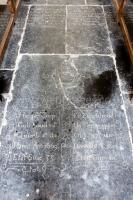
After 4th March 1669. Church of St Mary, Hillington [Map]. Grave slabs to William Hovell of Hillington (deceased) and Ethelreda Lilly (age 34).
William Hovell of Hillington: Before 04 Mar 1669 William Hovell of Hillington and Ethelreda Lilly were married. Around 1636 he was born to Richard Hovell and Dorothy Chicheley. On 4th March 1669 William Hovell of Hillington died.
Ethelreda Lilly: Around 1635 she was born to Thomas Lilly of South Lynn. On 7th December 1683 she died.
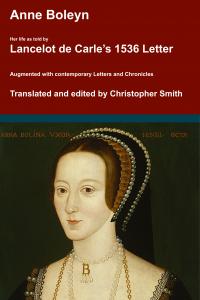
Anne Boleyn. Her Life as told by Lancelot de Carle's 1536 Letter.
In 1536, two weeks after the execution of Anne Boleyn, her brother George and four others, Lancelot du Carle, wrote an extraordinary letter that described Anne's life, and her trial and execution, to which he was a witness. This book presents a new translation of that letter, with additional material from other contemporary sources such as Letters, Hall's and Wriothesley's Chronicles, the pamphlets of Wynkyn the Worde, the Memorial of George Constantyne, the Portuguese Letter and the Baga de Secrets, all of which are provided in Appendices.
Available at Amazon in eBook and Paperback format.
On 4th March 1675 John Flamsteed (age 28) was appointed The King's Astronomical Observator with an allowance of £100 a year.

On 4th March 1698 Lee Warner died. Monument in Rochester Cathedral [Map].
Lee Warner: he was born to Archdeacon John Lee.

Minutes of the Society of Antiquaries. 4th March 1719. Ordered by the Society that the Treasurer pay Mr Vertue (age 35) 2s [this may be Guineas?] in full for Engraving Ulphus's Horn.
Letters of Horace Walpole. 4th March 1749. Strawberry Hill. To Horace Mann 1st Baronet (age 42).
I have been so shut up in the House of Commons for this last fortnight or three weeks, that I have not had time to write you a line: we have not had such a session since the famous beginning of last Parliament. I am come hither for a day or two of rest and air, and find the additional pleasure of great beauty in my improvements: I could talk to you through the whole sheet, and with much more satisfaction, upon this head; but I shall postpone my own amusement to yours, for I am sure you want much more to know what has been doing in Parliament than at Strawberry Hill. You will conclude that we have been fighting over the peace; but we have not. It is laid before Parliament, but will not be taken up; the Opposition foresee that a vote of approbation would pass, and therefore will not begin upon it, as they wish to reserve it for censure in the next reign-or perhaps the next reign does not care to censure now what he must hereafter maintain-and the ministry do not seem to think their treaty so perfect as not to be liable to blame, should it come to be canvassed. We have been then upon several other matters: but first I should tell you, that from the utmost tranquillity and impotence of a minority, there is at once started up so formidable an Opposition as to divide 137 against 203.(1) The minority is headed by the Prince, who has continued opposing, though very unsuccessfully, ever since the removal of Lord Granville (age 58), and the desertion of the patriots. He stayed till the Pelhams had brought off every man of parts in his train, and then began to form his party. Lord Granville has never come into it, for fear of breaking with the King; and seems now to be patching up again with his old enemies. If Lord Bath has dealt with the Prince, it has been underhand. His ministry has had at the head of it poor Lord Baltimore (age 49), a very good-natured, weak, honest man; and Dr. Lee, a civilian, who was of Lord Granville's admiralty, and is still much attached to him. He is a grave man, and a good speaker, but of no very bright parts, and, from his way of life and profession, much ignorant of, and unfit for, a ministry. You will wonder what new resources the Prince has discovered-why, he has found them all in Lord Egmont (age 38), whom you have heard of under the name of Lord Perceval; but his father, an Irish Earl, is lately dead. As he is likely to make a very considerable figure in our history, I shall give you a more particular account of him. He has always earnestly studied our history and constitution and antiquities, with very ambitious views; and practised speaking early in the Irish Parliament. Indeed, this turn is his whole fund, for though he is between thirty and forty, he knows nothing of the world, and is always unpleasantly dragging the conversation to political dissertations. When very young, as he has told me himself, he dabbled in writing Craftsmen and penny-papers; but the first event that made him known, was his carrying the Westminster election at the end of my father's ministry,-which he amply described in the history of his own family, a genealogical work called "The History of the House of Yvery,"(2) a work which cost him three thousand pounds, as the heralds informed Mr. Chute and me, when we went to their office on your business; and which was so ridiculous, that he has since tried to suppress all the copies. It concluded with the description of the Westminster election, in these or some such words, "And here let us leave this young nobleman struggling for the dying liberties of his country!" When the change in the ministry happened, and Lord Bath was so abused by the remnant of the patriots, Lord Egmont published his celebrated pamphlet, called "Faction Detected," a work which the Pitts and Lytteltons have never forgiven him; and which, though he continued voting and sometimes speaking with the Pelhams, made him quite unpopular during all the last Parliament. When the new elections approached, he stood on his own bottom at Weobly in Herefordshire; but his election being contested, be applied for Mr. Pelham's support, who carried it for him in the House of Commons. This will always be a material blot in his life; for he had no sooner secured his seat, than he openly attached himself to the Prince, and has since been made a lord of his bedchamber. At the opening of this session, he published an extreme good pamphlet, which has made infinite noise, called "An Examination of the Principles and Conduct of the two Brothers," (the Pelhams,) and as Dr. Lee has been laid up with the gout, Egmont has taken the lead in the Opposition, and has made as great a figure as perhaps was ever made in so short a time. He is very bold and resolved, master of vast knowledge, and speaks at once with fire and method. His words are not picked and chosen like Pitt's, but his language is useful, clear, and strong. He has already by his parts and resolution mastered his great unpopularity, so far as to be heard with the utmost attention, though I believe nobody had ever more various difficulties to combat. All the old corps hate him on my father and Mr. Pelham's (age 54) account; the new part of the ministry on their own. The Tories have not quite forgiven his having left them in the last Parliament: besides that, they are now governed by one Prowse, a cold, plausible fellow. and a great well-wisher to Mr. Pelham. Lord Strange (age 33),(3) a busy Lord of a party by himself, yet voting generally with the Tories, continually clashes with Lord Egmont; and besides all this, there is a faction in the Prince's family, headed by Nugent, who are for moderate measures.
(1) Upon the last clause of the Mutiny-bill, an amendment to render half pay officers subject to the act, only in case of actual war, insurrection, rebellion, or invasion, was rejected by 203 to 137.-E.
(2) Compiled principally for Lord Egmont by Anderson, the genealogist. It was printed, but not published, in 1742. "Some," says Boswell, in his Life of Johnson, "have affected to laugh at the History of the House of Very: it would be well if many others would transmit their pedigrees to posterity, with the same accuracy and generous zeal with which the noble Lord who compiled that work has honoured and perpetuated his ancestry. Family histories, like, the imagines majorum of the ancients, excite to virtue." Vol. viii. p. 188.-E.
(3) James, Lord Strange, eldest son of Edward Stanley, eleventh Earl of Derby (age 59). In 1762 he was made Chancellor of the Duchy of Lancaster, and died during his father's life-time, in 1771. He always called himself Lord Strange; though the title, which was a barony in fee, had in fact descended to the Duke of Atholl, as heir general of James, seventh Earl of Derby. D.


On 4th March 1756 Henry Raeburn was born.
On 4th March 1758 Frederick Saxe Coburg Gotha was born to Ernest Frederick Saxe Coburg Saalfeld Duke Saxe Coburg Saalfeld (age 33) and Sophia Antonia Brunswick-Wolfenbüttel Duchess Saxe Coburg Saalfeld (age 34) at Coburg. He died aged less than one years old.
On 4th March 1778 Thomas Hesketh 1st Baronet (age 51) died. His brother Robert (age 48) succeeded 2nd Baronet Hesketh of Rufford in Lancashire. Memorial at St Mary The Virgin Church, Rufford [Map].
Thomas Hesketh 1st Baronet: In 1727 he was born to Thomas Hesketh. In 1761 Thomas Hesketh 1st Baronet was created 1st Baronet Hesketh of Rufford in Lancashire.
Robert Hesketh 2nd Baronet: On 23rd April 1729 he was born to Thomas Hesketh. On 30th December 1796 Robert Hesketh 2nd Baronet died. His grandson Thomas succeeded 3rd Baronet Hesketh of Rufford in Lancashire.
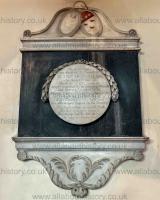

On 4th March 1799 William Beauclerk 8th Duke St Albans (age 32) and Maria Janetta Nelthorpe Duchess St Albans were married. He the son of Aubrey Beauclerk 5th Duke St Albans (age 58) and Catherine Ponsonby Duchess St Albans.
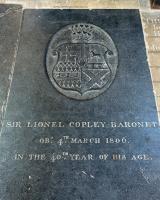
On 4th March 1806 Lionel Copley 2nd Baronet (age 39) died unmarried and without issue. He ws buried at St Mary's Church, Sprotbrough [Map]. His brother Joseph (age 36) succeeded 3rd Baronet Copley Sprotborough.
Lionel Copley 2nd Baronet: Around 1767 he was born to Joseph Moyle aka Copley 1st Baronet and Mary Buller Lady Copley. On 16th April 1781 Joseph Moyle aka Copley 1st Baronet died. His son Lionel succeeded 2nd Baronet Copley Sprotborough.
Joseph Copley 3rd Baronet: On 10th May 1769 he was born to Joseph Moyle aka Copley 1st Baronet and Mary Buller Lady Copley. On 4th March 1792 John Hamilton 1st Marquess Abercorn and Cecil Hamilton were married. She by marriage Marchioness Abercorn. They were divorced in April 1799. She married the Joseph Copley 3rd Baronet the following month; he being the brother of the Marquess' first wife Catherine Moyle Marchioness Abercorn. They were first cousins. On 23rd May 1799 Joseph Copley 3rd Baronet and Cecil Hamilton Marchioness Abercorn were married. She by marriage Lady Copley Sprotborough. He was the younger brother of her first husband's [John Hamilton 1st Marquess Abercorn] first wife Catherine Moyle Marchioness Abercorn.
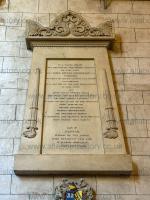
St Albans Cathedral [Map]. Memorial to John Payler Nicholson, Head Master of the Free Grammar School in St Albans. died 9th May 1817, and his wife Hannah, died 4th March 1844.
On 4th March 1846 Lieutenant John Lambert (age 24) died from wounds received at the Battle of Sabraon.
On 4th March 1855 Antoine Héraclius Agénor 9th Duc de Gramont (age 65) died. His son Agénor (age 35) succeeded 10th Duke Gramont.
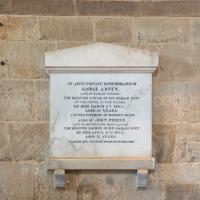
After 4th March 1864. St Peter and St Paul's Church, Rock [Map]. Memorial to George Adney of Harley Towers.
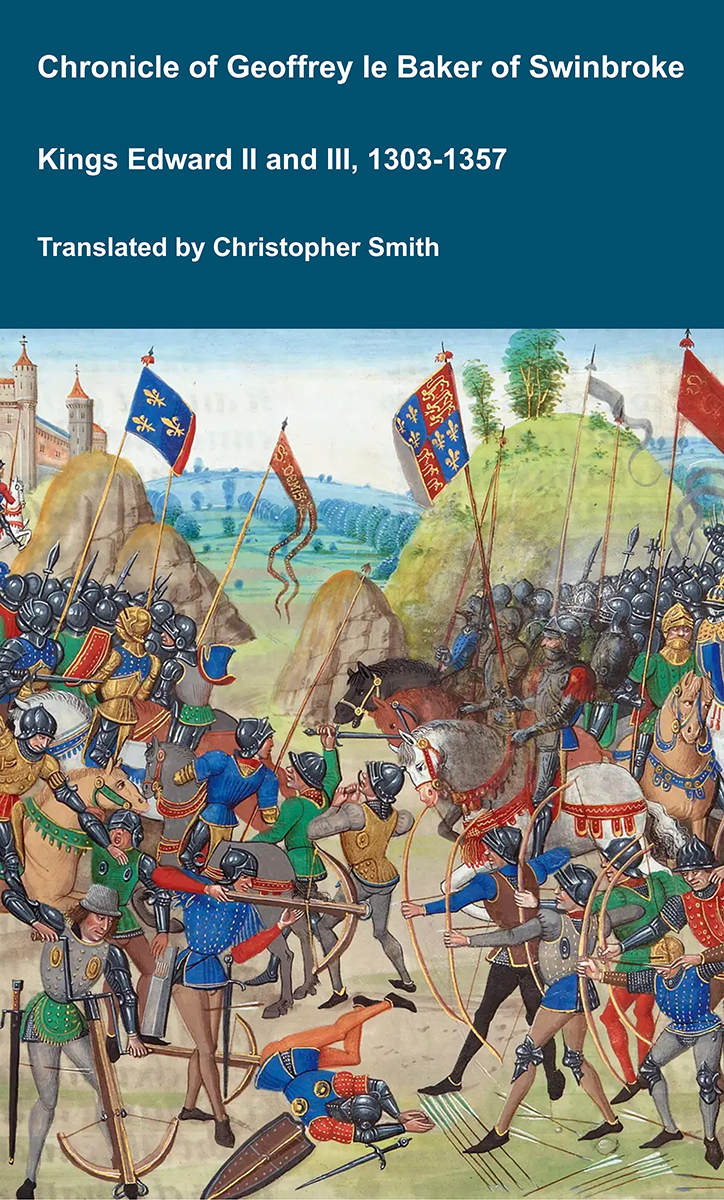
Chronicle of Geoffrey le Baker of Swinbroke
Baker was a secular clerk from Swinbroke, now Swinbrook, an Oxfordshire village two miles east of Burford. His Chronicle describes the events of the period 1303-1356: Gaveston, Bannockburn, Boroughbridge, the murder of King Edward II, the Scottish Wars, Sluys, Crécy, the Black Death, Winchelsea and Poitiers. To quote Herbert Bruce 'it possesses a vigorous and characteristic style, and its value for particular events between 1303 and 1356 has been recognised by its editor and by subsequent writers'. The book provides remarkable detail about the events it describes. Baker's text has been augmented with hundreds of notes, including extracts from other contemporary chronicles, such as the Annales Londonienses, Annales Paulini, Murimuth, Lanercost, Avesbury, Guisborough and Froissart to enrich the reader's understanding. The translation takes as its source the 'Chronicon Galfridi le Baker de Swynebroke' published in 1889, edited by Edward Maunde Thompson.
Available at Amazon in eBook and Paperback format.
On 4th March 1866 Henry Lygon 5th Earl Beauchamp (age 37) died of tuberculosis. His brother Frederick (age 35) succeeded 6th Earl Beauchamp, 6th Viscount Elmley of Worcestershire, 6th Baron Beauchamp Powick in Worcestershire.
On 4th March 1880 Thyra Glücksburg was born to Frederick VIII King of Denmark (age 36) and Louise of Sweden Queen Consort Denmark (age 28). She a great x 4 granddaughter of King George II of Great Britain and Ireland.
On 4th March 1887 Gustav Glücksburg was born to Frederick VIII King of Denmark (age 43) and Louise of Sweden Queen Consort Denmark (age 35). He a great x 4 grandson of King George II of Great Britain and Ireland.
On 4th March 1898 George Gammon Adams (age 76) died. He was buried in family vault in Staines Cemetery.
On 4th March 1903 Alfred Bruce "Bosie" Douglas (age 32) and Olive Eleanor Custance (age 29) were married at St George's Church, Hanover Square in the presence of her sister Edith Fox-Pitt (age 29) and Cecil Hayes.
Alfred Bruce "Bosie" Douglas: On 22nd October 1870 he was born to John Sholto Douglas 9th Marquess Queensberry. On 20th March 1945 Alfred Bruce "Bosie" Douglas died.
Olive Eleanor Custance: On 7th February 1874 she was born to Frederick Hambleton Custance at 12 John Street Mayfair. On 12th February 1944 Olive Eleanor Custance died.
Edith Douglas: In 1874 she was born to John Sholto Douglas 9th Marquess Queensberry. In 1899 St George Lane Fox-Pitt and she were married. He the son of Augustus Henry Fox Pitt-Rivers and Alice Margaret Stanley. In 1963 Edith Douglas died.


On 4th March 1904 Mary Theresa Montagu-Douglas-Scott was born to John Scott 7th Duke Buccleuch 9th Duke Queensberry (age 39) and Margaret Alice "Molly" Bridgeman Duchess Buccleuch Duchess Queensbury (age 32). She married (1) 1929 her second cousin David George Brownlow-Cecil 6th Marquess Exeter, son of William Cecil 5th Marquess Exeter and Myra Rowena Sibell Orde-Powlett Marchioness of Exeter, and had issue.
On 4th March 1924 Fanny Entwhistle aka Eaton (age 88) died at Acton. She was buried at Margravine Road Cemetery, Hammersmith.
On 4th March 1188 Blanche Ivrea Queen Consort France was born to Alfonso VIII King Castile (age 32) and Eleanor Plantagenet Queen Consort Castile (age 26). She a granddaughter of King Henry "Curtmantle" II of England. She married 23rd May 1200 her third cousin King Louis VIII of France, son of King Philip II of France and Isabelle Flanders Queen Consort France, and had issue.
On 4th March 1394 Henry "The Navigator" Aviz was born to King John I of Portugal (age 42) and Philippa of Lancaster Queen Consort Portugal (age 33). He a great grandson of King Edward III of England.
On 4th March 1484 George Margrave of Brandenburg-Ansbach was born to Frederick Hohenzollern I Margrave Brandenburg-Ansbach (age 23) and Sophia Jagiellon Margravine of Brandenburg-Ansbach (age 19).
On 4th March 1526 Henry Carey 1st Baron Hunsdon was born to William Carey (age 26) and Mary Boleyn (age 27). There is speculation among historians that his father may actually have been Henry VIII (age 34) who was known to have had an affair with Mary Boleyn although the precise dates are unknown. He married 21st May 1545 Anne Morgan Baroness Hunsdon and had issue.

On 4th March 1613 Dutton Gerard 3rd Baron Gerard was born to Gilbert Gerard 2nd Baron Gerard and Eleanor Dutton (age 16). He married (1) after 18th May 1625 Mary Fane Baroness Gerard, daughter of Francis Fane 1st Earl of Westmoreland and Mary Mildmay Countess of Westmoreland, and had issue (2) 21st August 1636 Elisabeth O'Brien Baroness Gerard, daughter of Henry O'Brien 5th Earl Thomond and Mary Brereton Countess Thomond, and had issue.
The History of William Marshal was commissioned by his son shortly after William’s death in 1219 to celebrate the Marshal’s remarkable life; it is an authentic, contemporary voice. The manuscript was discovered in 1861 by French historian Paul Meyer. Meyer published the manuscript in its original Anglo-French in 1891 in two books. This book is a line by line translation of the first of Meyer’s books; lines 1-10152. Book 1 of the History begins in 1139 and ends in 1194. It describes the events of the Anarchy, the role of William’s father John, John’s marriages, William’s childhood, his role as a hostage at the siege of Newbury, his injury and imprisonment in Poitou where he met Eleanor of Aquitaine and his life as a knight errant. It continues with the accusation against him of an improper relationship with Margaret, wife of Henry the Young King, his exile, and return, the death of Henry the Young King, the rebellion of Richard, the future King Richard I, war with France, the death of King Henry II, and the capture of King Richard, and the rebellion of John, the future King John. It ends with the release of King Richard and the death of John Marshal.
Available at Amazon in eBook and Paperback format.

On 4th March 1651 John Somers 1st Baron Somers was born to John Somers.
On 4th March 1705 Catherine Stewart was born to Charles Stewart 4th Earl Traquair (age 46) and Mary Maxwell Countess Traquair (age 34). Coefficient of inbreeding 1.83%. She married 27th June 1731 her first cousin William Maxwell 6th Earl Nithsdale, son of William Maxwell 5th Earl Nithsale and Winifred Herbert Countess Nithsdale, and had issue.
On 4th March 1715 James Waldegrave 2nd Earl Waldegrave was born to James Waldegrave 1st Earl Waldegrave (age 31) and Mary Webb (age 20). He a great grandson of King James II of England Scotland and Ireland. He married 15th May 1759 Maria Walpole Duchess Gloucester and Edinburgh and had issue.
On 4th March 1728 Brinsley Butler 2nd Earl Lanesborough was born to Humphrey Butler 1st Earl Lanesborough. He married 22nd June 1754 Jane Rochfort Countess Lanesborough, daughter of Robert Rochfort 1st Earl of Belvedere and Mary Molesworth, and had issue.
On 4th March 1746 William Boothby 7th Baronet was born to Brooke Boothby 5th Baronet (age 35) and Phoebe Hollins Lady Boothby (age 29).
On 4th March 1750 Jacob Pleydell-Bouverie 2nd Earl Radnor was born to William Pleydell-Bouverie 1st Earl Radnor (age 25) and Harriet Pleydell at Westminster [Map]. He married 24th January 1777 Anne Duncombe Countess Radnor, daughter of Anthony Duncombe 1st Baron Feversham and Anne Hales Baroness Feversham Downton, and had issue.


On 4th March 1755 Henry Edward Fox was born to Henry Fox 1st Baron Holland (age 49) and Caroline Lennox 1st Baroness Holland (age 31). He a great x 2 grandson of King Charles II of England Scotland and Ireland. He married 14th November 1786 Marianne Clayton and had issue.
On 4th March 1756 Henry Raeburn was born.
On 4th March 1758 Frederick Saxe Coburg Gotha was born to Ernest Frederick Saxe Coburg Saalfeld Duke Saxe Coburg Saalfeld (age 33) and Sophia Antonia Brunswick-Wolfenbüttel Duchess Saxe Coburg Saalfeld (age 34) at Coburg. He died aged less than one years old.

On 4th March 1761 Henry Gage 3rd Viscount Gage was born to General Thomas Gage (age 41) in Montreal.
The History of William Marshal was commissioned by his son shortly after William’s death in 1219 to celebrate the Marshal’s remarkable life; it is an authentic, contemporary voice. The manuscript was discovered in 1861 by French historian Paul Meyer. Meyer published the manuscript in its original Anglo-French in 1891 in two books. This book is a line by line translation of the first of Meyer’s books; lines 1-10152. Book 1 of the History begins in 1139 and ends in 1194. It describes the events of the Anarchy, the role of William’s father John, John’s marriages, William’s childhood, his role as a hostage at the siege of Newbury, his injury and imprisonment in Poitou where he met Eleanor of Aquitaine and his life as a knight errant. It continues with the accusation against him of an improper relationship with Margaret, wife of Henry the Young King, his exile, and return, the death of Henry the Young King, the rebellion of Richard, the future King Richard I, war with France, the death of King Henry II, and the capture of King Richard, and the rebellion of John, the future King John. It ends with the release of King Richard and the death of John Marshal.
Available at Amazon in eBook and Paperback format.
On 4th March 1763 James Everard Arundell 9th Baron Arundel was born to James Everard Arundell (age 42) and Ann Wyndham. He married before 3rd November 1785 his first cousin once removed Mary Christina Arundell Baroness Arundel Wardour, daughter of Henry Arundell 8th Baron Arundel and Mary Conquest Baroness Arundel Wardour, and had issue.

On 4th March 1776 Mary Elizabeth Ponsonby Countess Grey was born to William Ponsonby 1st Baron Ponsonby of Imokilly in County Cork (age 31) and Louisa Molesworth Countess Fitzwilliam (age 27) in Whitehaven, Cumberland. She married 18th November 1794 Charles Grey 2nd Earl Grey, son of Charles Grey 1st Earl Grey and Elizabeth Grey Countess Grey, and had issue.
On 4th March 1778 Henry Edward Bunbury 7th Baronet was born to Henry William Bunbury (age 27) and Catherine Horneck (age 28). He married (1) 4th April 1807 Louisa Amelia Fox and had issue (2) 22nd September 1830 Emily Louisa Augusta Napier Lady Bunbury, daughter of Colonel George Napier and Sarah Lennox Lady Bunbury.

On 4th March 1785 Sarah Sophia Fane Countess Jersey was born to John Fane 10th Earl of Westmoreland (age 25) and Sarah Anne Child Countess of Westmoreland (age 20). She married 23rd May 1804 George Child-Villiers 5th Earl Jersey, son of George Bussy Villiers 4th Earl Jersey and Frances Twysden, and had issue.
On 4th March 1798 John Robert Cave-Browne-Cave 10th Baronet was born to William Cave-Browne-Cave 9th Baronet (age 33) and Louisa Wilmot Lady Cave (age 27).
On 4th March 1810 Emily Paget Countess Sydney was born illegitimately to Henry William Paget 1st Marquess Anglesey (age 41) and Charlotte Cadogan Marchioness Anglesey (age 28). If her birthdate is correct then she was born before her parents married on 19th December 1810? She married 4th August 1832 John Robert Townshend 1st Earl Sydney, son of John Townshend 2nd Viscount Sydney and Caroline Elizabeth Letitia Clements Viscountess Sydney.


On 4th March 1831 Edward Green 1st Baronet was born. He married 1859 Mary Lycett Lady Green and had issue.
On 4th March 1857 Henry Haughton Reynolds-Moreton was born to Henry Reynolds-Moreton 3rd Earl of Ducie (age 29) and Julia Langston Countess Ducie (age 27). Coefficient of inbreeding 6.25%. He married 18th December 1888 Ada Margarette Smith.
On 4th March 1872 Granville Leveson-Gower 3rd Earl Granville was born to Granville Leveson-Gower 2nd Earl Granville (age 56) and Sophia Castila Rosamund Campbell Countess Granville (age 24). He married 27th September 1900 Nina Ayesha Baring.


On 4th March 1875 Eva Mary FitzHardinge Milman 16th Baroness Berkeley was born to Major-General Gustavus Hamilton Lockwood Milman and Louisa Mary Berkeley 15th Baroness Berkeley (age 34). She married 5th August 1903 Colonel Frank Wigram Foley and had issue.
On 4th March 1880 Thyra Glücksburg was born to Frederick VIII King of Denmark (age 36) and Louise of Sweden Queen Consort Denmark (age 28). She a great x 4 granddaughter of King George II of Great Britain and Ireland.
On 4th March 1887 Gustav Glücksburg was born to Frederick VIII King of Denmark (age 43) and Louise of Sweden Queen Consort Denmark (age 35). He a great x 4 grandson of King George II of Great Britain and Ireland.
Abbot John Whethamstede’s Chronicle of the Abbey of St Albans
Abbot John Whethamstede's Register aka Chronicle of his second term at the Abbey of St Albans, 1451-1461, is a remarkable text that describes his first-hand experience of the beginning of the Wars of the Roses including the First and Second Battles of St Albans, 1455 and 1461, respectively, their cause, and their consequences, not least on the Abbey itself. His text also includes Loveday, Blore Heath, Northampton, the Act of Accord, Wakefield, and Towton, and ends with the Coronation of King Edward IV. In addition to the events of the Wars of the Roses, Abbot John, or his scribes who wrote the Chronicle, include details in the life of the Abbey such as charters, letters, land exchanges, visits by legates, and disputes, which provide a rich insight into the day-to-day life of the Abbey, and the challenges faced by its Abbot.
Available at Amazon in eBook and Paperback format.

On 4th March 1892 Wykeham Cornwallis 2nd Baron Cornwallis was born to Fiennes Cornwallis 1st Baron Cornwallis (age 27) and Mabel Leigh Baroness Cornwallis. He married 30th January 1917 Cecily Etha Mary Walker, daughter of James Heron Walker 3rd Baronet, and had issue.
On 4th March 1897 Charles Michael Wentworth Noel-Hill 9th Baron Berwick was born to Charles Noel-Hill (age 49).
On 4th March 1902 John Pole-Carew 12th Baronet was born to Lieutenant-General Reginald Pole-Carew (age 52) and Beatrice Butler (age 25). He was educated at Eton College [Map] and the Royal Military College, Sandhurst. He married 12th June 1928 his fifth cousin once removed Cynthia Mary Burns Lady Pole and had issue.


On 4th March 1904 Mary Theresa Montagu-Douglas-Scott was born to John Scott 7th Duke Buccleuch 9th Duke Queensberry (age 39) and Margaret Alice "Molly" Bridgeman Duchess Buccleuch Duchess Queensbury (age 32). She married (1) 1929 her second cousin David George Brownlow-Cecil 6th Marquess Exeter, son of William Cecil 5th Marquess Exeter and Myra Rowena Sibell Orde-Powlett Marchioness of Exeter, and had issue.
On 4th March 1905 Ralph Regnault Millais 5th Baronet was born to Geoffrey William Millais 4th Baronet (age 41).
On 4th March 1906 Anthony Vivian 5th Baron Vivian was born to George Vivian 4th Baron Vivian (age 28) and Barbara Cicely Fanning Baroness Vivian. He married 8th March 1930 Victoria Oliphant Baroness Vivian and had issue.

On 4th March 1911 Charles Greville 7th Earl of Warwick was born to Leopold Guy Greville 6th Earl Warwick 6th Earl Brooke (age 28) and Elfrida Marjorie Eden Countess Warwick and Brooke (age 24). He married (1) 11th July 1933 his half second cousin Rosa Bingham Countess Warwich and Brooke and had issue.
On 4th March 1928 Moorea Hastings was born to Francis Hastings 16th Earl Huntingdon (age 27) and Cristina Casati Stampa di Soncino Countess Huntingdon (age 27). She married (1) 22nd June 1957 Woodrow Lyle Wyatt Baron Wyatt of Weeford (2) 11th January 1967 Brinsley Graham Black.
On 4th March 1939 Richard Fleming Grey 6th Earl Grey was born to Albert Harry George Campbell Grey (age 26).
On 4th March 1960 Godfrey John Bewicke-Copley 7th Baron Cromwell was born to David Godfrey Bewicke-Copley 6th Baron Cromwell (age 30).
On 4th March 1468 Archibald "Bell the Cat" Douglas 5th Earl Angus (age 19) and Elizabeth Boyd Countess Angus were married. She by marriage Countess Angus. He the son of George Douglas 4th Earl Angus and Isabella Sibbald Countess Angus.
On 4th March 1619 Edmund Sheffield 1st Earl Mulgrave (age 53) and Mariana Irwin Countess Mulgrave were married at St Margaret's Church, Westminster [Map]. She by marriage Baroness Sheffield of Butterwick in Lincolnshire.
Annals of the six Kings of England by Nicholas Trivet
Translation of the Annals of the Six Kings of England by that traces the rise and rule of the Angevin aka Plantagenet dynasty from the mid-12th to early 14th century. Written by the Dominican scholar Nicholas Trivet, the work offers a vivid account of English history from the reign of King Stephen through to the death of King Edward I, blending political narrative with moral reflection. Covering the reigns of six monarchs—from Stephen to Edward I—the chronicle explores royal authority, rebellion, war, and the shifting balance between crown, church, and nobility. Trivet provides detailed insight into defining moments such as baronial conflicts, Anglo-French rivalry, and the consolidation of royal power under Edward I, whose reign he describes with particular immediacy. The Annals combines careful year-by-year reporting with thoughtful interpretation, presenting history not merely as a sequence of events but as a moral and political lesson. Ideal for readers interested in medieval history, kingship, and the origins of the English state, this chronicle remains a valuable and accessible window into the turbulent world of the Plantagenet kings.
Available at Amazon in eBook and Paperback format.
On 4th March 1639 William Cavendish 3rd Earl Devonshire (age 21) and Elizabeth Cecil Countess Devonshire (age 20) were married. She by marriage Countess Devonshire. She the daughter of William Cecil 2nd Earl Salisbury (age 47) and Catherine Howard Countess Salisbury (age 49). He the son of William Cavendish 2nd Earl Devonshire and Christian Bruce Countess Devonshire.


On 4th March 1667 Edward Griffin 1st Baron Griffin (age 16) and Essex Howard Baroness Griffin were married. She the daughter of James Howard 3rd Earl Suffolk (age 48) and Susannah Rich Countess Suffolk.
On 4th March 1728 John Wray 12th Baronet (age 38) and Frances Norcliffe Lady Wray (age 27) were married at Ripon, North Yorkshire [Map].
On 4th March 1792 John Hamilton 1st Marquess Abercorn (age 35) and Cecil Hamilton (age 21) were married. She by marriage Marchioness Abercorn. They were divorced in April 1799. She married the Joseph Copley 3rd Baronet (age 22) the following month; he being the brother of the Marquess' first wife Catherine Moyle Marchioness Abercorn. They were first cousins.
On 4th March 1799 William Beauclerk 8th Duke St Albans (age 32) and Maria Janetta Nelthorpe Duchess St Albans were married. He the son of Aubrey Beauclerk 5th Duke St Albans (age 58) and Catherine Ponsonby Duchess St Albans.
On 4th March 1816 Howe Browne 2nd Marquess of Sligo (age 27) and Hester Catherine Burgh (age 16) were married. The couple had 14 children between 1817 and 1839. She the daughter of John Thomas Burgh 13th Earl Clanricarde. He the son of John Denis Browne 1st Marquess of Sligo and Louisa Catharine Howe (age 48).
On 4th March 1862 Frederick William John Hervey 3rd Marquess of Bristol (age 27) and Geraldine Anson Marchioness of Bristol (age 28) were married. He the son of Frederick Hervey 2nd Marquess of Bristol (age 61) and Katherine Isabella Manners. They were second cousins.


On 4th March 1890 Herbert Colstoun Gardner 1st Baron Burghclere (age 43) and Winifred Herbert Baroness Burghclere (age 26) were married. She the daughter of Henry Howard Molyneux Herbert 4th Earl Carnarvon (age 58) and Evelyn Stanhope Countess Carnarvon.
On 4th March 1953 Weetman John Pearson 3rd Viscount Cowdray (age 43) and Elizabeth Mather-Jackson Viscountess Cowdray were married. She by marriage Viscountess Cowdray of Cowdray in Sussex.
On 4th March 1188 Humbert Savoy III Count Savoy (age 54) died. His son Thomas (age 10) succeeded I Count Savoy.
On 4th March 1238 Joan Plantagenet Queen of Scotland (age 27) died at Havering atte Bower, Essex [Map]. She was buried at Tarrant Abbey, Dorset [Map].
Annals of the six Kings of England by Nicholas Trivet
Translation of the Annals of the Six Kings of England by that traces the rise and rule of the Angevin aka Plantagenet dynasty from the mid-12th to early 14th century. Written by the Dominican scholar Nicholas Trivet, the work offers a vivid account of English history from the reign of King Stephen through to the death of King Edward I, blending political narrative with moral reflection. Covering the reigns of six monarchs—from Stephen to Edward I—the chronicle explores royal authority, rebellion, war, and the shifting balance between crown, church, and nobility. Trivet provides detailed insight into defining moments such as baronial conflicts, Anglo-French rivalry, and the consolidation of royal power under Edward I, whose reign he describes with particular immediacy. The Annals combines careful year-by-year reporting with thoughtful interpretation, presenting history not merely as a sequence of events but as a moral and political lesson. Ideal for readers interested in medieval history, kingship, and the origins of the English state, this chronicle remains a valuable and accessible window into the turbulent world of the Plantagenet kings.
Available at Amazon in eBook and Paperback format.
On 4th March 1371 Joan Évreux Queen Consort France (age 61) died.
On 4th March 1496 Sigismund Habsburg 4th Duke Austria (age 68) died at Innsbruck.
On 4th March 1653 James Stewart 4th Earl of Moray (age 42) died. His son Alexander (age 18) succeeded 5th Earl Moray.
On 4th March 1703 George Gordon 15th Earl Sutherland (age 69) died. His son John (age 42) succeeded 16th Earl Sutherland.
On 4th March 1729 Mary Trotman Lady Turner (age 57) died. Her curious eptitaph may refers to her having suffered from Meigs's syndrome: "In 67 months, she was tap'd [tapped] 66 times, Had taken away 240 gallons of water, without ever repining at her case, or ever fearing the operation."
On 4th March 1739 John Shaw 3rd Baronet (age 52) died. He was buried on 13th March 1739 at the Church of Holy Trinity, Eltham. His son John (age 10) succeeded 4th Baronet Shaw of Eltham in Kent.
On 4th March 1770 William Robinson 4th Baronet (age 57) died. His brother Norton (age 55) succeeded 5th Baronet Robinson of Newby in Yorkshire.
On 4th March 1778 Thomas Hesketh 1st Baronet (age 51) died. His brother Robert (age 48) succeeded 2nd Baronet Hesketh of Rufford in Lancashire. Memorial at St Mary The Virgin Church, Rufford [Map].
Thomas Hesketh 1st Baronet: In 1727 he was born to Thomas Hesketh. In 1761 Thomas Hesketh 1st Baronet was created 1st Baronet Hesketh of Rufford in Lancashire.
Robert Hesketh 2nd Baronet: On 23rd April 1729 he was born to Thomas Hesketh. On 30th December 1796 Robert Hesketh 2nd Baronet died. His grandson Thomas succeeded 3rd Baronet Hesketh of Rufford in Lancashire.
On 4th March 1799 William Anne Capell 4th Earl Essex (age 66) died at St James's Palace [Map]. His son George (age 41) succeeded 5th Earl Essex, 6th Baron Capell Hadham. Sarah Bazett Countess Essex (age 39) by marriage Countess Essex.

On 4th March 1806 Lionel Copley 2nd Baronet (age 39) died unmarried and without issue. He ws buried at St Mary's Church, Sprotbrough [Map]. His brother Joseph (age 36) succeeded 3rd Baronet Copley Sprotborough.
Lionel Copley 2nd Baronet: Around 1767 he was born to Joseph Moyle aka Copley 1st Baronet and Mary Buller Lady Copley. On 16th April 1781 Joseph Moyle aka Copley 1st Baronet died. His son Lionel succeeded 2nd Baronet Copley Sprotborough.
Joseph Copley 3rd Baronet: On 10th May 1769 he was born to Joseph Moyle aka Copley 1st Baronet and Mary Buller Lady Copley. On 4th March 1792 John Hamilton 1st Marquess Abercorn and Cecil Hamilton were married. She by marriage Marchioness Abercorn. They were divorced in April 1799. She married the Joseph Copley 3rd Baronet the following month; he being the brother of the Marquess' first wife Catherine Moyle Marchioness Abercorn. They were first cousins. On 23rd May 1799 Joseph Copley 3rd Baronet and Cecil Hamilton Marchioness Abercorn were married. She by marriage Lady Copley Sprotborough. He was the younger brother of her first husband's [John Hamilton 1st Marquess Abercorn] first wife Catherine Moyle Marchioness Abercorn.
On 4th March 1807 John Evans 5th Baron Carbery (age 69) died. His first cousin once removed John (age 41) succeeded 6th Baron Carbery. Catherine Charlotte Gore Baroness Carbery (age 40) by marriage Baroness Carbery.
On 4th March 1814 Beaumont Hotham 2nd Baron Hotham (age 76) died. His grandson Beaumont (age 19) succeeded 3rd Baron Hotham of South Dalton in Yorkshire, 13th Baronet Hotham of Scorborough in Yorkshire.
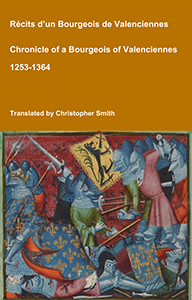
Chronicle of a Bourgeois of Valenciennes
Récits d’un bourgeois de Valenciennes aka The Chronicle of a Bourgeois of Valenciennes is a vivid 14th-century vernacular chronicle written by an anonymous urban chronicler from Valenciennes in the County of Hainaut. It survives in a manuscript that describes local and regional history from about 1253 to 1366, blending chronology, narrative episodes, and eyewitness-style accounts of political, military, and social events in medieval France, Flanders, and the Low Countries. The work begins with a chronological framework of events affecting Valenciennes and its region under rulers such as King Philip VI of France and the shifting allegiances of local nobility. It includes accounts of conflicts, sieges, diplomatic manoeuvres, and the impact of broader struggles like the Hundred Years’ War on urban life in Hainaut. Written from the perspective of a burgher (bourgeois) rather than a monastery or royal court, the chronicle offers a rare lay viewpoint on high politics and warfare, reflecting how merchants, townspeople, and civic institutions experienced the turbulence of the 13th and 14th centuries. Its narrative style combines straightforward reporting of events with moral and civic observations, making it a valuable source for readers interested in medieval urban society, regional politics, and the lived experience of war and governance in pre-modern Europe.
Available at Amazon in eBook and Paperback format.
On 4th March 1829 George Barrington 5th Viscount Barrington (age 67) died. His son William (age 35) succeeded 6th Viscount Barrington of Ardglass in County Down. Jane Elizabeth Liddell Viscountess Barrington (age 24) by marriage Viscountess Barrington of Ardglass in County Down.
On 26th February 1848 Edward Moor (age 77) died at the home of his son-in-law William Page Wood 1st Baron Hatherley (age 46) in London. He was buried at St Mary's Church, Great Bealings [Map] on 4th March 1848.
On 4th March 1851 Philip Sidney 1st Baron De Lisle and Dudley (age 50) died. His son Philip (age 23) succeeded 2nd Baron De Lisle and Dudley, 3rd Baronet Shelley-Sidney of Penshurst Place in Kent.
On 4th March 1855 Antoine Héraclius Agénor 9th Duc de Gramont (age 65) died. His son Agénor (age 35) succeeded 10th Duke Gramont.
On 4th March 1862 George Dashwood 5th Baronet (age 72) died. His brother John (age 70) succeeded 6th Baronet Dashwood of West Wycombe in Buckinghamshire.
On 4th March 1866 Henry Lygon 5th Earl Beauchamp (age 37) died of tuberculosis. His brother Frederick (age 35) succeeded 6th Earl Beauchamp, 6th Viscount Elmley of Worcestershire, 6th Baron Beauchamp Powick in Worcestershire.
On 4th March 1868 Major-General Henry Floyd 2nd Baronet (age 74) died. His son John (age 44) succeeded 3rd Baronet Floyd of Chearsley Hill in Buckinghamshire.

On 4th March 1868 Archibald Primrose 4th Earl Rosebery (age 84) died. His grandson Archibald (age 20) succeeded 5th Earl Rosebery.
On 4th March 1872 William Lowther 2nd Earl Lonsdale (age 84) died. His nephew Henry (age 53) succeeded 3rd Earl Lonsdale, 4th Viscount Lowther, 4th Baron Lowther.
On 4th March 1877 Harriet CarewCountess St Germans died.
On 4th March 1889 Maria Frances Stanley-Massey-Stanley Lady Williams (age 78) died.
The History of William Marshal was commissioned by his son shortly after William’s death in 1219 to celebrate the Marshal’s remarkable life; it is an authentic, contemporary voice. The manuscript was discovered in 1861 by French historian Paul Meyer. Meyer published the manuscript in its original Anglo-French in 1891 in two books. This book is a line by line translation of the first of Meyer’s books; lines 1-10152. Book 1 of the History begins in 1139 and ends in 1194. It describes the events of the Anarchy, the role of William’s father John, John’s marriages, William’s childhood, his role as a hostage at the siege of Newbury, his injury and imprisonment in Poitou where he met Eleanor of Aquitaine and his life as a knight errant. It continues with the accusation against him of an improper relationship with Margaret, wife of Henry the Young King, his exile, and return, the death of Henry the Young King, the rebellion of Richard, the future King Richard I, war with France, the death of King Henry II, and the capture of King Richard, and the rebellion of John, the future King John. It ends with the release of King Richard and the death of John Marshal.
Available at Amazon in eBook and Paperback format.
On 4th March 1894 Dudley Marjoribanks 1st Baron Tweedmouth (age 73) died. His son Edward (age 44) succeeded 2nd Baron Tweedmouth of Edington in Berwickshire.
On 4th March 1898 George Gammon Adams (age 76) died. He was buried in family vault in Staines Cemetery.
On 4th March 1904 Diana Smyth Countess Harewood (age 66) died.
On 4th March 1920 Constance Hamlyn-Fane Baroness Manners (age 58) died at Bideford, Devon.
On 4th March 1924 Fanny Entwhistle aka Eaton (age 88) died at Acton. She was buried at Margravine Road Cemetery, Hammersmith.
On 4th March 1931 Francis Salwey Winnington 5th Baronet (age 81) died. His grandson Francis (age 24) succeeded 6th Baronet Winnington of Stanford Court in Worcestershire.
On 4th March 1933 Katherine Georgina Louisa Thynne Countess Cromer (age 67) died.
On 4th March 1934 Charles Kemeys-Tynte 8th Baron Wharton (age 57) died. His son John (age 26) succeeded 9th Baron Wharton.
On 4th March 1941 Edward Arthur Lycett Green 3rd Baronet (age 54) died. His son Edward (age 30) succeeded 4th Baronet Green of Wakefield in Yorkshire and of Ken Hill in Norfolk.

On 4th March 1945 Aldred Beresford Lumley 10th Earl Scarborough (age 87) died. His nephew Roger (age 48) succeeded 11th Earl of Scarborough, 12th Viscount Lumley, 11th Baron Lumley. Katherine Isobel McEwen Countess Scarborough (age 45) by marriage Countess of Scarborough.
On 4th March 1952 Lyonel Felix Carteret Eugene Tollemache 4th Baronet (age 98) died. His son Cecil (age 66) succeeded 5th Baronet Tollemache of Hanby Hall in Lincolnshire.
Adam Murimuth's Continuation and Robert of Avesbury’s 'The Wonderful Deeds of King Edward III'
This volume brings together two of the most important contemporary chronicles for the reign of Edward III and the opening phases of the Hundred Years’ War. Written in Latin by English clerical observers, these texts provide a vivid and authoritative window into the political, diplomatic, and military history of fourteenth-century England and its continental ambitions. Adam Murimuth Continuatio's Chronicarum continues an earlier chronicle into the mid-fourteenth century, offering concise but valuable notices on royal policy, foreign relations, and ecclesiastical affairs. Its annalistic structure makes it especially useful for establishing chronology and tracing the development of events year by year. Complementing it, Robert of Avesbury’s De gestis mirabilibus regis Edwardi tertii is a rich documentary chronicle preserving letters, treaties, and official records alongside narrative passages. It is an indispensable source for understanding Edward III’s claim to the French crown, the conduct of war, and the mechanisms of medieval diplomacy. Together, these works offer scholars, students, and enthusiasts a reliable and unembellished account of a transformative period in English and European history. Essential for anyone interested in medieval chronicles, the Hundred Years’ War, or the reign of Edward III.
Available at Amazon in eBook and Paperback format.
On 4th March 1993 Jeffery Amherst 5th Earl Amherst (age 96) died. Earl Amherst, Baron Amherst of Montreal in Kent extinct.
On 4th March 1995 Quentin John le Fleming 12th Baronet (age 45) died. His son David (age 19) succeeded 13th Baronet Fleming of Rydal in Cumbria.