

The History of William Marshal was commissioned by his son shortly after William’s death in 1219 to celebrate the Marshal’s remarkable life; it is an authentic, contemporary voice. The manuscript was discovered in 1861 by French historian Paul Meyer. Meyer published the manuscript in its original Anglo-French in 1891 in two books. This book is a line by line translation of the first of Meyer’s books; lines 1-10152. Book 1 of the History begins in 1139 and ends in 1194. It describes the events of the Anarchy, the role of William’s father John, John’s marriages, William’s childhood, his role as a hostage at the siege of Newbury, his injury and imprisonment in Poitou where he met Eleanor of Aquitaine and his life as a knight errant. It continues with the accusation against him of an improper relationship with Margaret, wife of Henry the Young King, his exile, and return, the death of Henry the Young King, the rebellion of Richard, the future King Richard I, war with France, the death of King Henry II, and the capture of King Richard, and the rebellion of John, the future King John. It ends with the release of King Richard and the death of John Marshal.
Available at Amazon in eBook and Paperback format.
07 Jul is in July.
1220 Translation of Thomas a Becket
1333 Trial and Execution of Mortimer and his Faction
1399 Henry IV lands at Ravenspur
1528 Sweating Sickness Outbreak
1551 Sweating Sickness Outbreak
On 7th July 1220 the remains of Archbishop Thomas Becket were translated from the crypt of Canterbury Cathedral [Map] to an elaborate shrine in the newly-constructed apse at the east end of the cathedral. King Henry III of England (age 12) was in attendance, together with the political and religious great and good, and a new liturgical office was composed for the occasion.
 Chronicle of Walter of Guisborough. In the year of our Lord 1299, on the feast of the Translation of Blessed Thomas the Martyr [7th July 1299], there came to the king at Canterbury messengers sent by the lord pope: namely, the Bishop of Vincenza and certain other learned and distinguished persons. This bishop, a man very learned and eloquent, declared before the king himself and all the people, as he had earlier done in France, so now also in England, the ordinance issued by the pope between the kings of France and England. Among other things, he said that the lord pope had ordained, for the honour of God, the exaltation of His holy Church, and so that all subjects might enjoy longed-for peace, that the King of England should solemnly take as his wife the sister of the King of France, and that this would happen in the month of August. And so that some might not say this was impermissible, on the grounds that they were related by blood, the bishop responded that the pope had extinguished all such consanguinity by papal dispensation, for the sake of peace and by his certain knowledge. He added that the king's son, whom the pope had appointed lord of the kingdom of Scotland in perpetuity, for himself and his heirs, should, when he reached marriageable age, likewise take to wife the daughter of the King of France. He then, on the pope's behalf, asked the king to release John Balliol, the former king of Scotland, into the custody of the pope and his special envoy, namely the Bishop of Cambrai, and that this should be done not in England, but overseas.1 And so it was done.2 He further added, on behalf of the pope, requesting that the king be willing to grant and bestow upon John Balliol's son the lands which his father had held in England. But this matter was delayed, since from then on messengers frequently travelled between the kings and their kingdoms, and all matters related to such a great solemnity were being prepared with great expense.
Anno Domini MCCXCIX in festo Translationis beati Thomæ martyris, venerunt ad regem Cantuariæ nuncii a domino papa missi, episcopus scilicet Vincianus et alii quidam literati et personæ solemnes; qui scilicet episcopus, homo valde literatus et eloquens, coram ipso rege et omni populo, sicut prius in Francia sic et modo in Anglia, ordinationem domini papæ inter ipsos reges Franciæ scilicet et Angliæ dudum editam, declaravit, dicens inter cætera: Quod ad honorem Dei, et ad exaltationem ecclesiæ suæ sanctæ, et ut omnes subditi optata pace fruerentur, ordinaverat dominus papa sic quod rex Anglorum sororem regis Francorum solemniter duceret in uxorem, et hoc in Augusto. Et ne dicerent aliqui hoc forte non esse permittibile, eo quod se linea consanguinitatis contingebant, respondit, hoc ex dispensatione domini papæ qui omnem inter eos consanguinitatem extinxerat pro bono pacis et ex certa scientia processisse: adjecitque, quod filius regis, quem ipse papa dominum regni Scotorum perpetuis temporibus constituerat, pro se scilicet et hæredibus suis in perpetuum, filiam regis Francorum, cum ad annos pervenerit nubiles, similiter accipiat in uxorem. Rogavitque regem, ex parte domini He requests papæ, ut Johannem Balliolum, quondam regem Scotia, custodiæ ipsius domini papæ et nuncio quem ad hoc specialiter ordinaverat, episcopo scilicet de Cawmbrey, liberaret, et hoc non in Anglia, sed in partibus transmarinis duceretur et liberaretur ei; quod et factum est. Adjunxitque ex parte papæ, rogans ut filio dicti Johannis Ballioli dignaretur ipse dominus rex dare et concedere terras quas tenuerat pater ejus in Anglia. Sed prolongatum est hoc, discurrebant enim extunc inter reges et regna soward, lemnes nuncii, et quæ ad tantam solemnitatem pertinebant sumptuosissime parabantur.
Note 1. On the arrival of the Scottish prisoner at Dover, his luggage underwent a strict scrutiny by the royal officers, who discovered a large sum of money, a coronet, a considerable quantity of plate, and the seal of Scotland, which they seized and brought back to King Edward; all of which the King reserved for his own use excepting the money, which he returned to Baliol. The coronet he afterwards offered up at the shrine of St. Thomas the Martyr.
Note 2. Baliol was delivered to the papal legate, Renald Bishop of Vicenza, at Whitsand in France, by Robert de Burghersh, Constable of Dover Castle, on Saturday, the 18th of July, under the condition that the pope should only give direction as to his person and the estates which he held in England, as King Edward might have done had the prisoner been personally with himself. Prynne's Records, 3.797.
 Chronicle of Geoffrey le Baker of Swinbroke [-1360]. In the following year, that is, 1304, Benedict XI succeeded the aforementioned Boniface [VIII] as Pope. He was a Lombard by birth, elected in Rome on the 22nd of October 1303 and crowned on the following Sunday. He had previously been a member of the Order of Preachers [Dominicans], later becoming Cardinal of Ostia, and ultimately the Father of Fathers. He excommunicated and publicly denounced all those who had consented to the capture of his predecessor. Later, on the 7th July 1304, he passed away.
Anno sequenti, scilicet Christi MCCCIIIJ, Bonefacio predicto successit Benedictus papa XJ nacione Lumbardus, qui XJ kalendas Novembris Rome fuit electus et die Dominica sequenti coronatus. Iste prius fuit de ordine Predicatorum et postea cardinalis Hostiensis finaliterque pater patrum, qui excommunicavit et excommunicatos denunciavit omnes qui capcioni predecessoris sui consenserunt, et postea, nonis Iulii, diem clausit extremum.
Chronicle of Walter of Guisborough. In the same year Pope Benedict XI died, in the month of July [7th July 1304]. The papal see was vacant for some time because of dissension among the cardinals, for there were eighteen of them, and they divided their votes equally. At length, after a long period of confinement in the conclave, they elected as pope, in the following year [1305], the Archbishop of Bordeaux,1 who received the papal crown at Lyons that same year, on the Sunday next after the feast of Saint Martin, many of his cardinals being present there for that occasion. But on that very day, when he was being led on horseback to the church of Saint Martin after being crowned, a stone wall beside the road, upon which many had climbed to see him, collapsed, crushing many beneath it. Among the dead was the Count of Brittany (age 65)2; Charles3, the king of France's brother, was injured. The pope remained in Bordeaux for a long time and created there nearly eighteen new cardinals, because some of the older cardinals had returned to Rome; he continually excused himself, saying he could not come. When Roman nobles sent envoys to him and then sent them again, the pope always gave the same excuse for not coming; and because he refused to go to his own see, they judged him unworthy to enjoy the patrimony of Peter. Nevertheless, he lived off money extorted from bishops confirmed at the curia. For example, from William, Archbishop of York, confirmed there, besides the great expenses he had freely made, he took within the first year nine thousand five hundred marks of silver. And the archbishop, returning so impoverished, within that same first year received from his religious subjects and rectors, first under the name of a "gift for goodwill and favour," and second under the name of a "loan", an immense sum of money. The pope also sent his envoy, named Testa, into England with papal bulls reserving to himself the "primi fructus4" [first fruit] of all churches falling vacant at any time and in any manner within the kingdoms of England, Scotland, Wales, and Ireland, and likewise the first year's income of all abbeys and priories vacant in the same period. Because of this, the lord king, together with his magnates in his parliament at Carlisle, opposed him, saying that it was not reasonable that from monasteries founded by his own ancestors or by the magnates of the land in honour of God's service, and for the maintenance of certain alms and hospitality, the pope should thus exact the primi fructus, thereby letting the worship of God and the work of hospitality perish. And so the pope changed his plan as regarded abbeys; but having granted to the king from the English churches a two-year tithe, he still obtained the primi fructus of churches, as said above.
Eodem anno obiit papa Benedictus XI mense Julii, vacavitque sedes propter dissensionem cardinalium, erant enim octodecim, et æqualiter diviserunt vota sua; tandem vero post longam carceris inclusionem, elegerunt in papam in anno Clement V scquenti archiepiscopum Burdegalensem, qui diadema suscepit apud Lugdunum in eodem anno, scilicet MCCCV, die Dominica proxima post festum Sancti Martini, præsentibus multis cardinalibus Sunday, suis, qui ob eandem causam ibidem venerant. Eodem autem die, cum ad ecclesiam beati Martini Fatal accisic diadematus in equo duceretur, corruit quidam coronation. murus lapideus a latere viæ, super quem multi ascenderant ut viderent eum, et oppressit multos, inter quos mortuus est comes Britanniæ, et Carolus frater regis Franciæ læsus est. Mansitque papa Burdegalis longo tempore, et creavit ibi novos cardinales quasi XVIII, pro eo quod quidam ex antiquis cardinalibus reversi fuerant Romam, ipso se semper excusante quod venire non poterat. Missisque a Romanis principibus He removes nunciis et remissis, semper excusavit se papa de the pontifi non veniendo. Et quia ad propriam sedem venire Rome. contempsit, censuerunt eum indignum Petri patrimonio frui; vixitque sic de pecunia extorta a confirmatis episcopis in curia. Quoniam ab archiepiscopo Eborum Willelmo, ibidem confirmato, præter expensas quas ibi largissime fecerat, infra primum suum annum habuit novies mille marcas argenti et quingentas, et ipse sic pauper reversus, infra eundem annum primum habuit a subditis suis religiosis et rectoribus, primo nomine curialitatis et gratiæ, et secundo nomine mutui, immensam pecuniæ summam. Misitque papa nuncium suum in Angliam nomine Testa cum bullis suis, in quibus reservavit sibi primos fructus primi anni omnium ecclesiarum vacantium quocunque tempore vel modo infra regna Angliæ, Scotia, Walliæ et Hiberniæ, et fructus similiter omnium abbatiarum et prioratuum vacantium eodem tempore: propter quod opposuit se dominus rex cum magnatibus suis in parliamento suo apud Carliolum, dicens, non esse rationi consonum, quod a monasteriis, a prædecessoribus suis vel a magnatibus terræ fundatis in honore servitii Dei, certæ eleemosinæ et hospitalitatis sustinendæ, papa sic primos fructus exigeret, et cultus Dei et hospitalitas deperirent. Et sic mutavit papa propositum quantum ad abbatias; sed concessa domino regi ab ecclesiis Anglicanis decima biennali, obtinuit primos fructus ecclesiarum, ut prædictum est.
Note 1. Clement V. (Bertrand de Goth, Archbishop of Bordeaux) was elected Pope by the influence of Philip le Bel, at Pérouse, on Tuesday, June 15, 1305, and crowned at Lyons on Sunday, November the 14th following.
Note 2. Jean Capet, Duke of Brittany, 1239-1305.
Note 3. Charles, Duke of Valois, 1270-1325 (age 34).
Note 4. These first-fruits continued to form part of the papal revenue until the time of Henry VIII.
On 7th July 1307 King Edward I of England (age 68) died at Burgh by Sands [Map] whilst on his way north to Scotland. His son Edward (age 23) succeeded II King of England. Earl Chester merged with the Crown.
Edward had gathered around him Thomas Plantagenet 2nd Earl of Leicester, 2nd Earl Lancaster, Earl of Salisbury and Lincoln (age 29), Guy Beauchamp 10th Earl Warwick (age 35), Aymer de Valence 2nd Earl Pembroke (age 32) and Robert Clifford 1st Baron Clifford (age 33) and charged them with looking after his son in particular ensuring Piers Gaveston 1st Earl Cornwall (age 23) didn't return from exile.
Chronicle of Geoffrey le Baker of Swinbroke [-1360]. Finally, around the Nativity of the Blessed Virgin, the king returned to Scotland with a large military force, where, throughout the entire following winter and summer, he successfully arranged many matters as he wished. However, overtaken by death after enduring immense labours, he left his tasks to his successors. Indeed, on the Feast of the Translation of St. Thomas the Martyr [7th July 1307], in the 69th year of his age, the 35th year from the death of his father, the 33rd from his coronation, and the year 1307 from the Incarnation of Jesus Christ, he departed from this life. His body was buried at Westminster on the 28th of October,1 where it awaits resurrection and eternal reign.
Demum, circa Nativitatem beate Virginis, Scociam repeciit rex cum milicia copiosa, ubi per totam hiemem et estatem sequentes prospere disponens multa que voluit, labores gravissimos morte prereptus suis posteris reliquit; nempe in festo Translacionis sancti Thome martyris, anno etatis sue LXIX, regni vero sui a morte patris 35, et a coronacione sui XXXIIJ, et ab incarnacione Iesu Christi MCCCVIJ, ab hac luce migravit; cuius corpus apud Westmonasterium XXVIIJ die Octobris sepultum exspectat resurreccionem et regnum sempiternum.
Note 1. Edward's body was buried at Westminster on the 27th rather than the 28th of October 1307.
 Adam Murimuth Continuation. In the year of our Lord 1306 [7th July 1307], in the first year of Pope Clement V, and in the thirty-fourth and final year of the reign of the said King Edward, reckoned from the feast of Saint Michael, the lord king of England with his forces advanced to the Scottish March. He remained there throughout the whole winter at Lanercost and nearby, where, on the feast of the Translation of Saint Thomas the Martyr, he departed from this life, in the sixty-ninth year of his age and the thirty-fifth of his reign. This Edward was vigorous in arms throughout his entire life and in every station, as is clearly shown in the preceding chronicles: in that he recovered all of England from the hand of Simon de Montfort, the earls, and the barons who adhered to the said Simon, who had even imprisoned his father, King Henry, and himself, as is recorded above in the chronicles; likewise, he recovered all of Wales from the hand of Llywelyn and his brother David; likewise, Aquitaine from the hand of the king of France; and he repeatedly subdued Scotland to himself, as the preceding deeds testify. But when Scotland had been treacherously seized by Robert the Bruce, as described in the previous chapter, he, lying there among his army on his deathbed, out of the greatness of his spirit, commanded and ordered that his body not be buried, but that it be carried with the army until the whole of Scotland had been finally conquered. But this command could not be carried out. Rather, his body was brought into England and buried at Westminster in the following year, around the feast of Saint Andrew, on the 28th day of October. Of him, a certain versifier wrote thus:
"While you flourished, O king, and your great power prevailed,
Deceit lay hidden, great peace reigned, and honor ruled."
Obiit rex Edwardus. P. de Gaverstone reconciliatur. Dominus W. de Langeton, episcopus Coventriensis, incarceratur.
John of Fordun's Chronicle. 123. Death of King Edward I, King of England
The same year died Edward I, king of England, on the 5th of April [Note 7th July 1307], at Burgh-upon-Sands [Map]. This king stirred up war as soon as he had become a knight, and lashed the English with awful scourgings; he troubled the whole world by his wickedness, and roused it by his cruelty; by his wiles, he hindered the passage to the Holy Land; he invaded Wales; he treacherously subdued unto him the Scots and their kingdom; John of Balliol, the king thereof, and his son, he cast into prison; he overthrew churches, fettered prelates, and to some he put an end in filthy dungeons; he slew the people, and committed other misdeeds without end. He was succeeded by his son Edward ii., who was betrothed to Elizabeth, daughter of Philip, king of France.
Scalaronica. [7th July 1307]. The aforesaid King Edward of England (age 68) had remained at this same time exceedingly ill at Lanercost, whence he moved for change of air and to await his army which he had summoned to re-enter Scotland. Thus he arrived at Burgh-on-sands,1 and died there in the month of July, in the year of grace 1307, whence he was carried and was solemnly interred at Westminster beside his ancestors after he had reigned 34 years 7 months and 11 days, and in the year of his age 68 years and 20 days.
Note 1. Burch sure le Sabloun.
Chronicle of Walter of Guisborough. When, therefore, the malice of the new king [Robert the Bruce] became known, our king sent word to the magnates of the land that they should come to him at Carlisle, ready for battle, on the fifteenth day after the feast of Saint John the Baptist. Meanwhile, because the king was afflicted with a severe dysentery, and none could speak with him except his chamberlains, it was proclaimed among the people that the king was dead. When he learned of this, the king ordered that all be made ready for his march into Scotland, and he moved his camp from Carlisle on the third day of the month of July, about two miles distant; it was a Monday. On Tuesday he rode about another two miles; and on Wednesday he rested. On Thursday he came to Burgh-by-Sands, and there planned to remain on the following day. It was his custom to lie in bed almost every day until the ninth hour [around 3 p.m.]. But on Friday, when he was raised up by his attendants so that he might eat, he expired in their hands. The king, therefore, departed from this world on the feast of the Translation of Saint Thomas the Archbishop and Martyr [7th July 1307]. His followers concealed the king's death until his son and the magnates of the realm could arrive, and many were imprisoned for having spread word of the king's death. When the prince, his son, and the other magnates came, they arranged for the king's body to be taken in honour by his treasurer, the Bishop of Chester1, together with his whole household, to the southern parts, to remain in the church of the canons at Waltham until a decision had been made regarding the land of Scotland, so that they might have leisure to attend to his burial. And so it was done. The new king [King Edward II] remained, and received the homages and oaths of fealty of the magnates, and by their counsel set out as far as Roxburgh, where he received the homages and oaths of fealty of many of the magnates of the kingdom of Scotland. He appointed wardens2 in Scotland, and returned.
Cognita itaque malitia novi regis, misit rex noster magnatibus terræ ut sibi venirent Carliolum parati ad proelium in quindenam beati Johannis Baptistæ. Interim quia vexabatur rex dissenteria gravi, nec poterant ei loqui nisi cubicularii sui, prædicatum est in populo quia mortuus est rex. Quo cognito, jussit rex omnia præparari ut moveret in Scotiam, movitque castra sua a Carliolo tertio die mensis Julii quasi duobus milliariis, et erat dies Lunæ; die vero Martis equitavit quasi duo milliaria; et quarta feria requievit; die autem Jovis venit apud Burch-super-Sandes, et ibi disposuit in crastino permanere; erantque sibi modus et consuetudo singulis quasi diebus in lecto jacere usque ad horam nonam; die vero Veneris cum elevaretur a suis ut comederet, inter manus eorum expiravit. Translatusque est rex ex hoc mundo die translationis Sancti Thomæ archiepiscopi et martyris. Celaveruntque sui mortem regis quousque veniret filius ejus et magnates terræ, et incarcerabantur multi qui mortem regis prædicaverant. Cumque venisset princeps filius ejus et cæteri magnates, ordinaverunt de corpore regis, quod per thesaurarium suum episcopum Cestriæ et totam familiam suam honorifice duceretur ad partes australes, maneretque in ecclesia religiosorum de Waltham donec ordinaretur certum de terra Scotiæ, et vacaret eis intendere sepulturæ; factumque est ita. Remansitque novus rex, et cepit homagia et fidelitates magnatum, et de eorum consilio profectus est usque Rokesburch, et ibi cepit homagia et fidelitates multorum magnatum regni Scotiæ; ordinavitque custodes in Scotia, et reversus est.
Note 1. Walter de Langton, Bishop of Lichfield and Coventry. The prelates of this see were often styled Bishop of Chester by the ancient writers, until the erection of the latter place into a bishopric by Henry VIII.
Note 2. The King appointed Aylmer de Valence guardian and lieutenant of Scotland by letters patent dated at Tinwald, August 30. Rymer, Fœdera, 2.4.
He shortly after resigned his commission, which was then conferred on John, Earl of Richmond, by writ of Privy Seal, bearing date September 13. Rymer, Fœdera, 2.6.
 Annals of Six Kings of England by Nicholas Trivet [1258-1328]. After whose departure, the king began to suffer from dysentery; nevertheless, he set out [from Carlisle] on the fifth day before the Nones of July, proceeding toward Scotland by short stages. On the day before the Nones of July he reached Burgh-by-Sands, where, as his illness worsened, on the following day, that is, Friday [7th July 1307], he bade farewell to this present life and completed his days in goodness and his years in glory. He made a will, in which he bequeathed his heart to the Holy Land, along with stipends for one hundred knights to serve for a year in the service of the cross of Christ. He reigned for thirty-four years, seven months, and twenty-one days, and completed sixty-eight years and twenty days of age."
Post cujus discessum cœpit rex vexan dysenteria; movit tamen nihilominus [de Karleolo] quinto nonas Julii, parvis dietis versus Scotiam proficiscens. Pridie nonas Julii venit usque Burgum super Sande, ubi invalescente infirmitate, die crastina, scilicet feria sexta, præsenti vitæ valefaciens, dies suos in bono et annos suos in gloria consummavit. [Testamentum condidit, in quo cor suum Terræ Sanctæ legavit, cum stipendiis centum militum, qui per anni spatium militarent in obsequiam crucis Christi.] Regnavit autem annis triginta quatuor, mensibus septem, diebus viginti uno; complevitque ætatis suæ annos sexaginta octo et dies viginti.
Life of Edward II by a Monk of Malmesbury. Edward the First, after the Conquest, in the 35th year of his reign, on the Feast of the Translation of Saint Thomas [7th July 1307], paid the debt of nature. His son, Edward the Second, then assumed the kingdom, a young man of strong body, about twenty-three years of age. He did not fulfill the plans of his father, but changed course in his counsel.
Edwardus post conquæstum primus, anno regni sui xxxv in die Translationis Sancti Thomæ nature debitum solvens, suscepit regnum filius ejus Edwardus secundus, juvenis et fortis robore, statis sue annum agens circiter vicesimum tertium.
Before 7th July 1333 Thomas Gurney died whilst returning from Spain to be examined about the death of King Edward II.

On 7th July 1399 Edmund of Langley 1st Duke of York (age 58) appointed William Scrope 1st Earl Wiltshire (age 49), Henry Green (age 52) and John Bussy to protect Kent against invasion by Henry Bolingbroke Earl of Derby (age 32).
Henrici Quinti, Angliæ Regis, Gesta, is a first-hand account of the Agincourt Campaign, and subsequent events to his death in 1422. The author of the first part was a Chaplain in King Henry's retinue who was present from King Henry's departure at Southampton in 1415, at the siege of Harfleur, the battle of Agincourt, and the celebrations on King Henry's return to London. The second part, by another writer, relates the events that took place including the negotiations at Troye, Henry's marriage and his death in 1422.
Available at Amazon in eBook and Paperback format.
After 7th July 1399 Henry Bolingbroke Earl of Derby (age 32) landed at Ravenspur [Map] with Thomas Rempston.
William Ros 6th Baron Ros Helmsley (age 29) joined Henry Bolingbroke Earl of Derby with a large retinue.
On 7th July 1447 William of York was born to Richard Plantagenet 3rd Duke of York (age 35) and Cecily "Rose of Raby" Neville Duchess York (age 32). He died young. He a great x 2 grandson of King Edward III of England. Coefficient of inbreeding 2.42%.
On 7th July 1448 Marie Bourbon Duchess Anjou (age 20) died in childbirth.
On 7th July 1452 Eleanor Cobham Duchess of Gloucester (age 52) died at Beaumaris Castle [Map].
Chronicle of Robert Fabyan [-1512]. [7th July 1453] In this yere also1, as affermyth the Freshe Cronycle, this mysery & vnkyndnesse thus reygriynge in Englonde, the lorde Talbot than beyng in interficuur Normādy, & in defendynge of ye kynges garysons, was beset with Frenshe men at a place named Castyliyon, and tnere strongelye assaylyd, where, after longe and cruell fyght, he with his sone, and to the noumber of. xl. men of name, and viii.C. of other Englysshe soudyours, were myserably slayen, and many moo taken prysoners.
Note 1. The Chronicler here appears to have confused their dates. The battle of Castillion took place in July 1453.
A Brief Latin Chronicle. [7th July 1453] For their recovery, the noble warrior Earl of Shropshire (age 70) along with his son, Lord Lisle (age 27), and others, were sent, who valiantly reclaimed them. But, which I report with sorrow, rashly or heedlessly engaging in a conflict with the French [Battle of Castillon], they were killed there, and the French reacquired all that was there, and thus still hold it peacefully.
Ad cujus recuperacionem missus est nobilis ille belliger Comes Salopie cum filio suo, domino de Lyel, et aliis, qui viriliter eam recuperaverunt. Sed, quod dolenter refero, incaute seu capitose se dantes cuidam conflictui cum Franciugenis, ibi interfecti sunt, et readquisierunt Francigene omnia que illic erantl, et sic adhuc pacifice detinent.
Letters and Papers Foreign and Domestic Henry VIII 1528. 7th July 1528. R. O. St. P. I. 310. 4476. Dr. Bell To Wolsey.
In consequence of the notice from Cooksey, under-sheriff of Worcestershire, of the state of the shire, left destitute by Compton's (deceased) death, the King desires you will direct a commission to Sir Edward Feres (or Ferrers), of Warwickshire, "for the finishing of this present year," unless you know of any more suitable person. He will make a further arrangement at your next repairing here. He desires you, by virtue of your legatine prerogative, to bestow the vicarage of Thaxted on his chaplain, Mr. Wilson, and the prebend in the college of Tamworth on his chaplain, Dr. Dyngle, vacant by resignation of his chaplain, Mr. Stapulles, for whose preferment he thanks you; and that the small benefice held by Forest, servant to the duke of Richmond, named Covyngton, in Huntingdonshire, be also given to Dyngle. He wishes the high stewardship of Salisbury to be given to his servant, Sir Edward Baynton. He desires the rest of Compton's offices to be stayed; among others, the office of Furnesse, which he intends for Mr. Treasurer (Fitzwilliam) and Mr. Chancellor of the Duchy (More), as joint patentees. He orders me to tell you that himself, the Queen, and all others here are well, and the plague so far ceased that none have had the sweat these three days, except Mr. Butt. He is very desirous for your health, and that you will put aside all fear and phantasies, make as merry as you can, put apart all cares for the time, and commit all to God. Though he commends your virtuous and religious disposition, yet he ofttimes wishes your Grace's heart were as good as his is. He desires to have an answer to my former letter to you, concerning the election at Wilton. Tittenhanger [Map], St. Thomas's Day.
Letters and Papers Foreign and Domestic Henry VIII 1528. 7th July 1528. Love Letters XIII. 4477. Henry VIII to Anne Boleyn.
Since her last, Walter Welshe, Master Browne, Thomas Care, Yrion of Brearton, John Coke the potecary, are fallen of the sweat in this house, and, thank God, have all recovered, so the plague has not yet quite ceased here. The rest of us are well, and I hope will pass it. As for the matter of Wylton, my Lord Cardinal has had the nuns before him, and examined them in presence of Master Bell, who assures me that she whom we would have had abbess has confessed herself to have had two children by two different priests, and has since been kept, not long ago, by a servant of Lord Broke that was. Wherefore I would not, for all the gold in the world, cloak your conscience nor mine to make her ruler of a house which is of so ungodly demeanour; nor I trust you would not that neither for brother nor sister I should so distayne mine honor or conscience. And as touching the prioress or dame Ellenor's eldest sister, though there is not any evident case proved against them, and the prioress is so old that of many years she could not be as she was named, yet notwithstanding, to do you pleasure, I have done that nother of them shall have it, but that some other good and well-disposed woman shall have it, whereby the house shall be the better reformed, whereof I ensure you it hath much need, and God much the better served. As touching your abode at Hever [Map], do therein as best shall like you, for you know best what air doth best with you; but I would it were come thereto, if it pleased God, that nother of us need care for that, for I ensure you I think it long. Suche (Zouch) is fallen sick of the sweat, and therefore I send you this bearer because I think you long to hear tidings from us, as we do in likewise from you.
Note. The full content of this letter may be found in the The Love Letters of Henry VIII to Anne Boleyn.
Letters and Papers Foreign and Domestic Henry VIII 1528. 7th July 1528. Otho, C. X. 218. 4480. B. M. Burnet, I. 104. 4480. Anne Boleyn (age 27) to Wolsey.
In most humble wise that my poor heart can think, I thank your Grace for your kind letter and rich present, which I shall never be able to deserve without your help; "of the which I have hitherto had so great plenty that all the days of my life I am most bound, of all creatures, next the King's grace, to love and serve your Grace." I beseech you never to doubt that I shall ever vary from this thought while breath is in my body. As to your Grace's trouble with the sweat, I thank God those that I desired and prayed for have escaped,—namely, the King and you. I much desire the coming of the Legate, and, if it be God's pleasure, I pray Him to bring this matter shortly to a good end, when I trust partly to recompense your pains.


On 7th July 1528 Anna Habsburg Spain Duchess Bavaria was born to Ferdinand I Holy Roman Emperor (age 25) and Anne Jagiellon (age 24). She married 4th July 1546 her second cousin once removed Albert V Wittelsbach V Duke Bavaria, son of William Wittelsbach IV Duke Bavaria and Marie Jakobaea Baden Duchess Bavaria, and had issue.


On 7th July 1530 John Albret was born to King Henry II of Navarre (age 27) and Marguerite Valois Orléans Queen Consort Navarre (age 38). He died aged less than one years old.
In June 1548 a French army took the town of Haddington [Map] from the English.
On 7th July 1548 a Scottish Parliament held at a nunnery near the town of Haddington [Map] agreed to marry Mary Queen of Scots (age 5) to the Dauphin of France (age 4).


Henry Machyn's Diary. The vij day of July begane a nuw swet in London, and ... ded my lord Crumwell (deceased) in Leseter-shyre, and was bered [with a stand]ard, a baner of armes, and cote, elmett, sword, targett, and sc [ochyons, and] harold; and the sam tyme ded my lord Powes (deceased), and the x day [at W]ollwyche, sir John Lutterell (age 32), knyght, a nobull captayne.
Note. Death of lord Cromwell. Gregory lord Cromwell died on the 4th of July 1551, and was buried at Laund in Leicestershire: his mural monument there is engraved in Nichols's History of that County, vol. iii. pl. xlv.
Note. Death of lord Powis. Edward third lord Grey of Powis. The funeral of his widow, a daughter of Charles Brandon, duke of Suffolk, occurs in p. 163.
Note. Sir John Luttrell, of Dunster castle, co. Somerset, knighted at the taking of Leith in 1547, and made a knight banneret soon after, at the taking of Yester. Just before his death he had been divorced from his wife, for Strype notices "A Commission to sir William Petre, secretary, sir Richard Read, &c. upon due proof of the manifest adultery of the lady Mary Luttrel, to separate and divorce her from sir John Luttrel her husband. Dated in June, 1551." (Memorials, Book ii. chap. 29.) She was the daughter of sir John Griffith, K.B. and was remarried to James Godolphin, of Cornwall.
Henry Machyn's Diary. 7th July 1553. [The same day there came to the Tower the lord Treasurer, the earl of Shrewsbury (age 53), and the lord Admiral, with others; and there they discharged sir James Croft (age 35) of the] constabullshype of the Towre, and ther thay put [in the said lord] Admerall, and toke ys othe and charge of the Towre, and [the morrow] after he convayd in-to all plasys of the Towre and ... grett gunnes, as the Whyt Towre on hee.
On 7th July 1556 John Danyell of Messing and Henry Peckham (age 30) were hanged and beheaded. They were buried at All Hallows by the Tower Church [Map].
Henry Machyn's Diary. 7th July 1556. The vij day of July was hangyd on the galaus on Towre-hylle [Map] for tresun a-gaynst the quen, on master Hare Peckham (age 30), and the thodur master John Daneell, and after cutt downe and heded, and ther hedes cared unto Londune bryge and ther sett up, and ther bodys bered at Allalows-barkyng [Map].
Note. P. 109. Execution of Peckham and Daniel. "The 8. of July, Henry Peckham, son to sir Edmond Peckham, and John Daniel, were hanged and headed on Tower-hill, for being of counsell with them that should have robbed the queenes treasure of her exchequer, and their bodies buried in Barking church." Stowe's Chronicle.—Daniel's name remains cut on the wall of his prison, "John Daniel, 1556." See Bayley's History of the Tower of London, p. 207.
Henry Machyn's Diary. 7th July 1559. The vij day of July, was sant Thomas of Cantebere day, my good lord of Wynchastur doctur Whytt (age 49) came owt of the Towre [Map], with the leyftenantt ser Edward Warner (age 48), by vj [6] in mornyng, and so to my lord keper of the brod selle, and from thens unto master Whyt, John, [possibly Thomas] altherman, and ther he lys.
On 7th July 1602 Friedrich Wilhelm Wettin I Duke Saxe Weimar (age 40) died at Weimar. His son Friedrich (age 3) succeeded Duke Saxe Altenburg.

On 7th July 1606 William Larkin (age 24) became a Freeman of Worshipful Company of Stainers under the patronage of Arabella Stewart (age 31) and Edward Seymour 1st Earl Hertford (age 67).
On 7th July 1606 William Larkin (age 24) became a freeman of the Worshipful Company of Stainers.
On 7th July 1649 Maria Leopoldine Habsburg Spain Queen Consort Bohemia (age 17) died.
In July 1660 King Charles II of England Scotland and Ireland (age 30) rewarded those who supported his Restoration...
2nd. Maurice Berkeley 3rd Viscount Fitzhardinge (age 32) was created 1st Baronet Berkeley of Bruton in Somerset. Anne Lee Viscountess Fitzhardinge (age 37) by marriage Lady Berkeley of Bruton in Somerset.
4th. Thomas Myddelton 1st Baronet (age 35) was created 1st Baronet Myddelton of Chirk Castle.
6th. Varney Noel 1st Baronet was created 1st Baronet Noel.
7th. George Monck 1st Duke Albemarle (age 51) was created 1st Duke Albemarle, 1st Earl Torrington in Devon. Anne Clarges Duchess Albermarle (age 41) by marriage Duchess Albemarle.
12th. Robert Hales 1st Baronet (age 50) was created 1st Baronet Hales of Beakesbourne in Kent.
12th. Edward Montagu 1st Earl Sandwich (age 34) was created 1st Earl Sandwich. Jemima Crew Countess Sandwich (age 35) by marriage Countess Sandwich.
14th. Elizabeth Feilding Countess Guildford was created 1st Countess Guildford by King Charles II of England Scotland and Ireland. The peerage for life.
18th. Samuel Morland 1st Baronet (age 35) was created 1st Baronet Morland of Sulhamstead Banister. Susanne de Milleville Lady Morland by marriage Lady Morland of Sulhamstead Banister.
23rd. Henry Vernon 1st Baronet (age 55) was created 1st Baronet Vernon of Hodnet in Shropshire.
23rd. John Aubrey 1st Baronet (age 54) was created 1st Baronet Aubrey of Llantrithyd in Glamorganshire.
Samuel Pepys' Diary. 7th July 1663. Thence walked alone, only part of the way Deane (age 29) walked with me, complaining of many abuses in the Yard, to Greenwich, Kent [Map], and so by water to Deptford, where I found Mr. Coventry (age 35), and with him up and down all the stores, to the great trouble of the officers, and by his help I am resolved to fall hard to work again, as I used to do. So thence he and I by water talking of many things, and I see he puts his trust most upon me in the Navy, and talks, as there is reason, slightly of the two old knights, and I should be glad by any drudgery to see the King's stores and service looked to as they ought, but I fear I shall never understand half the miscarriages and tricks that the King (age 33) suffers by. He tells me what Mr. Pett (age 52) did to-day, that my Lord Bristoll (age 50) told the King that he will impeach the Chancellor (age 54) of High Treason: but I find that my Lord Bristoll hath undone himself already in every body's opinion, and now he endeavours to raise dust to put out other men's eyes, as well as his own; but I hope it will not take, in consideration merely that it is hard for a Prince to spare an experienced old officer, be he never so corrupt; though I hope this man is not so, as some report him to be. He tells me that Don John (age 34) is yet alive, and not killed, as was said, in the great victory against the Spaniards in Portugall of late. So home, and late at my office.


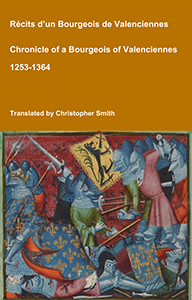
Chronicle of a Bourgeois of Valenciennes
Récits d’un bourgeois de Valenciennes aka The Chronicle of a Bourgeois of Valenciennes is a vivid 14th-century vernacular chronicle written by an anonymous urban chronicler from Valenciennes in the County of Hainaut. It survives in a manuscript that describes local and regional history from about 1253 to 1366, blending chronology, narrative episodes, and eyewitness-style accounts of political, military, and social events in medieval France, Flanders, and the Low Countries. The work begins with a chronological framework of events affecting Valenciennes and its region under rulers such as King Philip VI of France and the shifting allegiances of local nobility. It includes accounts of conflicts, sieges, diplomatic manoeuvres, and the impact of broader struggles like the Hundred Years’ War on urban life in Hainaut. Written from the perspective of a burgher (bourgeois) rather than a monastery or royal court, the chronicle offers a rare lay viewpoint on high politics and warfare, reflecting how merchants, townspeople, and civic institutions experienced the turbulence of the 13th and 14th centuries. Its narrative style combines straightforward reporting of events with moral and civic observations, making it a valuable source for readers interested in medieval urban society, regional politics, and the lived experience of war and governance in pre-modern Europe.
Available at Amazon in eBook and Paperback format.
John Evelyn's Diary. 7th July 1665. To London, to Sir William Coventry (age 37); and so to Sion [Map], where his Majesty (age 35) sat at Council during the contagion: when business was over, I viewed that seat belonging to the Earl of Northumberland, built out of an old nunnery, of stone, and fair enough, but more celebrated for the garden than it deserves; yet there is excellent wall-fruit, and a pretty fountain; nothing else extraordinary.
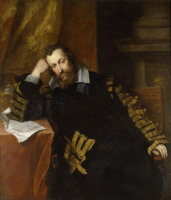
Samuel Pepys' Diary. 7th July 1667. Lord's Day. Up, and to my chamber, there to settle some papers, and thither comes Mr. Moore to me and talked till church time of the news of the times about the peace and the bad consequences of it if it be not improved to good purpose of fitting ourselves for another war. He tells me he heard that the discontented Parliament-men are fearful that the next sitting the King (age 37) will put for a general excise, by which to raise him money, and then to fling off the Parliament, and raise a land-army and keep them all down like slaves; and it is gotten among them, that Bab. May (age 39), the Privy-purse, hath been heard to say that £300 a-year is enough for any country gentleman; which makes them mad, and they do talk of 6 or £800,000 gone into the Privy-purse this war, when in King James's time it arose but to £5,000, and in King Charles's but £10,000 in a year. He tells me that a goldsmith in town told him that, being with some plate with my Baroness Castlemayne (age 26) lately, she directed her woman (the great beauty), "Wilson", says she, "make a note for this, and for that, to the Privy-purse for money". He tells me a little more of the baseness of the courses taken at Court in the case of Mr. Moyer, who is at liberty, and is to give £500 for his liberty; but now the great ones are divided, who shall have the money, the Duke of Albemarle (age 58) on one hand, and another Lord on the other; and that it is fain to be decided by having the person's name put into the King's warrant for his liberty, at whose intercession the King shall own that he is set at liberty; which is a most lamentable thing, that we do professedly own that we do these things, not for right and justice sake, but only to gratify this or that person about the King. God forgive us all!


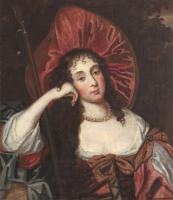


On 7th July 1702 Henry Somerset 2nd Duke Beaufort (age 18) and Mary Sackville 2nd Duchess Beaufort (age 13) were married. She by marriage Duchess Beaufort. She the daughter of Charles Sackville 6th Earl Dorset 1st Earl Middlesex (age 59) and Mary Compton Countess Dorset and Middlesex. They were fourth cousins.
On 7th July 1730 George Brudenell aka Montagu 1st Duke Montagu (age 17) and Mary Montagu Duchess of Montagu (age 19) were married. She the daughter of John Montagu 2nd Duke Montagu (age 40) and Mary Churchill Duchess of Montagu (age 40). He the son of George Brudenell 3rd Earl Cardigan (age 44) and Elizabeth Bruce 3rd Countess Cardigan (age 41). They were fourth cousin once removed.


On 7th July 1745 Christian Oldenburg was born to Frederick V King of Denmark and Norway (age 22) and Louise Hanover Queen Consort Denmark and Norway (age 20). He a grandson of King George II of Great Britain and Ireland. He died aged one in 1747.
On 7th July 1754 Frances Thynne Duchess Somerset (age 55) died.

On 7th July 1763 Henry Somerset 5th Duke Beaufort (age 18) graduated from Oriel College, Oxford University witha Doctor of Civil degree.
On 7th July 1767 Jules 1st Duke of Polignac (age 21) and Yolande Martine Gabrielle Polastron Duchess Gramont (age 17) were married.

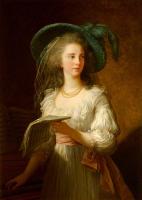
On 7th July 1769 James Hamilton 7th Duke Hamilton 4th Duke Brandon (age 14) died at Hamilton Palace, Hamilton. His brother Douglas (age 12) succeeded 8th Duke Hamilton, 5th Duke Brandon of Suffolk, 4th Marquess Douglas, 5th Baron Dutton of Cheshire.

On 7th July 1770 Amelia Watts (age 19) died from childbirth one month after the birth of her son Robert Jenkinson 2nd Earl Liverpool .
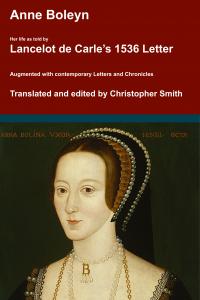
Anne Boleyn. Her Life as told by Lancelot de Carle's 1536 Letter.
In 1536, two weeks after the execution of Anne Boleyn, her brother George and four others, Lancelot du Carle, wrote an extraordinary letter that described Anne's life, and her trial and execution, to which he was a witness. This book presents a new translation of that letter, with additional material from other contemporary sources such as Letters, Hall's and Wriothesley's Chronicles, the pamphlets of Wynkyn the Worde, the Memorial of George Constantyne, the Portuguese Letter and the Baga de Secrets, all of which are provided in Appendices.
Available at Amazon in eBook and Paperback format.
On 7th July 1771 Louise Auguste Oldenburg Duchess Schleswig Holstein Sonderburg Augustenburg was born to Christian VII King of Denmark and Norway (age 22) and Caroline Matilda Hanover Queen Consort Denmark and Norway (age 19). She a great granddaughter of King George II of Great Britain and Ireland. Coefficient of inbreeding 6.66%. She married 1786 Frederick Christian Oldenburg II Duke Schleswig Holstein Sonderburg Augustenburg, son of Frederick Christian Oldenburg I Duke Schleswig Holstein Sonderburg Augustenburg and Charlotte Amalie Wilhelmine Unknown Duchess Schleswig Holstein Sonderburg Augustenburg, and had issue.
On 7th July 1800 Captain John Granville (age 21) died of rapid consumption at Hot Wells, Bristol. He was buried at St Peter's Church, Ellastone on 19th July 1800. His nephew Court D'Ewes aka Granville (age 21) inherited Calwich Abbey, Staffordshire [Map] and changed his surname from D'Ewes to Granville.
Underneath this Stone In the Family Vault Lies Interred the Body of John Granville, only son of John and Harriett Granville of Calwich and late Captain in the Staffordshire Regiment of Militia who was suddenly cut off in the Prime of his Life, to the inexpressible Grief of his Parents and Sorrow of All who knew him July the 7th 1800 in the 21st Year of his Age. In the same vault are deposited the remains of their infant daughter. Also the remains of the above named Harriet Joan Granville Died at Calwich 25th March 1825, aged 71.
Captain John Granville: Around 1779 he was born to Reverend John D'Ewes aka Granville and Harriet de la Bere.
Court D'Ewes aka Granville: In 1779 he was born to Bernard D'Ewes. In 1848 Court D'Ewes aka Granville died.


After 7th July 1827. St Deiniol & St Marcella Church, Marchwiel [Map]. Monument to John Edgworth. Sculpted by Wright and Harrison.


Ten Years' Digging. On the same day, we excavated Mayfield Low, a flat barrow, eighteen yards diameter, composed of sand and pebbles, in which a stone cist, containing an urn, had been discovered some years previously. We made numerous cuttings without much success, finding only a few pieces of an urn and some burnt bones near thee astern edge.
Ten Years' Digging. On the 7th of July, we opened a barrow [Near Hill Barrow [Map]] on the Near Hill, Swinscoe, thirteen yards diameter, with a basin-like depression in the middle, five yards over and three feet deep. Having sunk to the depth of five feet from the basin, through earth and stone, a skeleton was found, the lower part of which only was undisturbed, the head and upper portion having apparently been long removed. Their fragments, with small pieces of burnt bone, Samian ware, and a piece of iron of no great antiquity, were found throughout the cutting from the surface downwards. The femur of the skeleton, wanting the joint at the knee, measures 18½ inches, and must have been near two inches longer.

Ten Years' Digging. On the 7th of July we opened the first of a line of three small tumuli, occupying the summits of hills between the Buxton and Ashbourne road and the village of Church Sterndale. The field in which it is placed is called "Top of the Hurst". The mound, about 12 yards across, and not more than a foot high, consisted of earth, tempered in that part immediately above the grave, which was so far sunk into the rock as to render its floor rather more than two feet below the turf. It was cut nearly east to west, and contained a skeleton extended at length, with the head to the latter point; the lower bones were fairly preserved, but of the upper parts there were but few remains, the enamel crowns of the teeth being in the best condition. At the left hip was a small iron knife, 4 inches long; and where the right shoulder had been was an assemblage of curious articles, the most important of which was a small bronze box, or canister, with a lid to slide on, measuring altogether 2 inches high and the same in diameter. When found it was much crushed, but still retained inside remains of thread, and bore on the outside impressions of linen cloth. Close to it were two bronze pins or broken needles, and a mass of corroded iron, some of which has been wire chainwork connected with a small bronze ornament with five perforations, plated with silver and engraved with a cable pattern, near which were two iron implements of larger size, the whole comprising the girdle and chatelaine with appendages, of a Saxon lady. Many pieces of hazel stick were found in contact with these relics, which were probably the remains of a basket in which they were placed at the funeral All the iron shows impressions of woven fabrics, three varieties being distinguishable, namely, coarse and fine linen, and coarse flannel or woollen cloth. The box is very faintly ornamented by lozenges, produced by the intersection of oblique lines scratched in the metal and may be compared with one found at Stand Low [Map] in 1845 (see Vestiges, p. 75).
Between 7th July 1852 and 31 Jul 1852 Robert Windsor-Clive (age 28) was elected MP Ludlow.

On 7th July 1883 Prince Eitel Friedrich Hohenzollern was born to Wilhelm Hohenzollern (age 24) and Empress Auguste Viktoria Oldenburg (age 24). He a great grandson of Queen Victoria of the United Kingdom. He married his third cousin Sophia Charlotte Oldenburg.
On 2nd July 1914 John Benjamin Stone (age 76) died at his home, The Grange, Erdington. His wife Jane Parker (age 65) died three days later on 5th July 1914. They were buried together on 7th July 1914 at Holy Trinity Church, Sutton Coldfield [Map].

On 7th July 1935 Oliver Russell 2nd Baron Ampthill (age 66) died of pneumonia. His son John (age 38) succeeded 3rd Baron Ampthill of Ampthill in Bedfordshire. Christabel Hulme Hart Baroness Ampthill by marriage Baroness Ampthill of Ampthill in Bedfordshire.
On 7th July 1447 William of York was born to Richard Plantagenet 3rd Duke of York (age 35) and Cecily "Rose of Raby" Neville Duchess York (age 32). He died young. He a great x 2 grandson of King Edward III of England. Coefficient of inbreeding 2.42%.
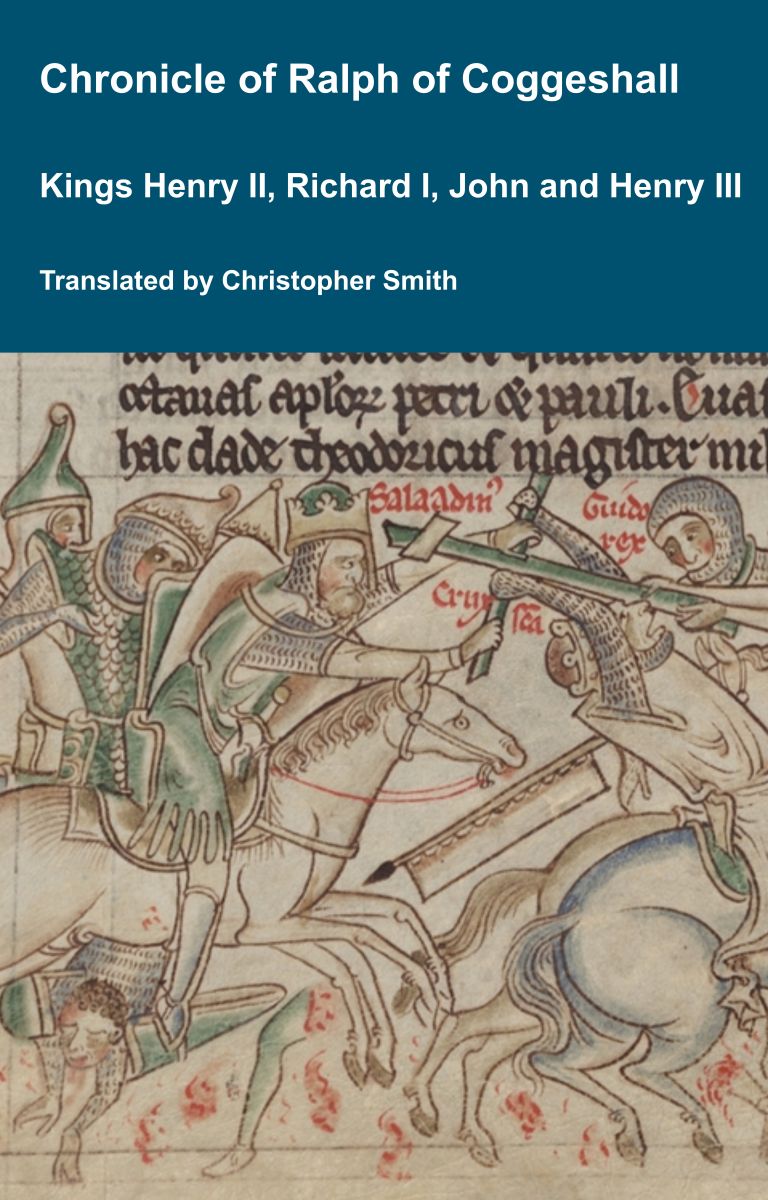
Chronicle of Abbot Ralph of Coggeshall
The Chronicle of Abbot Ralph of Coggeshall (Chronicon Anglicanum) is an indispensable medieval history that brings to life centuries of English and European affairs through the eyes of a learned Cistercian monk. Ralph of Coggeshall, abbot of the Abbey of Coggeshall in Essex in the early 13th century, continued and expanded his community’s chronicle, documenting events from the Norman Conquest of 1066 into the tumultuous reign of King Henry III. Blending eyewitness testimony, careful compilation, and the monastic commitment to record-keeping, this chronicle offers a rare narrative of political intrigue, royal power struggles, and social upheaval in England and beyond. Ralph’s work captures the reigns of pivotal figures such as Richard I and King John, providing invaluable insights into their characters, decisions, and the forces that shaped medieval rule. More than a simple annal, Chronicon Anglicanum conveys the texture of medieval life and governance, making it a rich source for scholars and readers fascinated by English history, monastic authorship, and the shaping of the medieval world.
Available at Amazon in eBook and Paperback format.
On 7th July 1487 John Erskine 17th Earl of Mar was born to Robert Erskine 4th Lord Erskine 16th Earl of Mar. He married before 1528 his fifth cousin Margaret Campbell Countess Mar, daughter of Archibald Campbell 2nd Earl Argyll and Elizabeth Stewart Countess Argyll, and had issue.
On 7th July 1528 Anna Habsburg Spain Duchess Bavaria was born to Ferdinand I Holy Roman Emperor (age 25) and Anne Jagiellon (age 24). She married 4th July 1546 her second cousin once removed Albert V Wittelsbach V Duke Bavaria, son of William Wittelsbach IV Duke Bavaria and Marie Jakobaea Baden Duchess Bavaria, and had issue.
On 7th July 1530 John Albret was born to King Henry II of Navarre (age 27) and Marguerite Valois Orléans Queen Consort Navarre (age 38). He died aged less than one years old.

On 7th July 1560 Margaret Russell Countess Cumberland was born to Francis Russell 2nd Earl Bedford (age 33) and Margaret St John Countess Bedford (age 27). She married 1577 her third cousin George Clifford 3rd Earl of Cumberland, son of Henry Clifford 2nd Earl of Cumberland and Anne Dacre Countess Cumberland, and had issue.
On 7th July 1585 Thomas Howard 14th or 21st Earl of Arundel 4th Earl of Surrey 1st Earl Norfolk was born to Philip Howard 13th or 20th Earl of Arundel (age 28) and Anne Dacre Countess Arundel (age 28) at Finchingfield, Essex. He married before 1607 his third cousin Alethea Talbot Countess Arundel, Surrey and Norfolk, daughter of Gilbert Talbot 7th Earl of Shrewsbury and Mary Cavendish Countess Shrewsbury and Waterford, and had issue.



On 7th July 1628 Thomas Clifton 1st Baronet was born to Thomas Clifton (age 22). He married 1664 Bridget Hussey, daughter of Edward Hussey 1st Baronet and Elizabeth Anton, and had issue.
On 7th July 1692 Edward Montagu Viscount Hinchingbrooke was born to Edward Montagu 3rd Earl Sandwich (age 22) and Elizabeth Wilmot Countess Sandwich (age 17). He married 12th April 1707 his fourth cousin once removed Elizabeth Popham Viscountess Hinchingbrooke and had issue.


On 7th July 1719 William Grey 1st Baron Walsingham was born to Thomas Grey (age 38).
On 7th July 1728 Henry Yelverton 3rd Earl of Sussex was born to Talbot Yelverton 1st Earl of Sussex (age 38) and Lucy Pelham Countess Sussex.

On 7th July 1729 Margaret Hill Countess Harborough was born to Thomas Hill aka Harwood (age 36). Her mother is uncertain; either Anne Powys (age 24) or Susan Maria Noel (age 9). She married 21st March 1761 Bennet Sherard 3rd Earl Harborough, son of Philip Sherard 2nd Earl Harborough and Anne Pedley Countess Harborough.
Abbot John Whethamstede’s Chronicle of the Abbey of St Albans
Abbot John Whethamstede's Register aka Chronicle of his second term at the Abbey of St Albans, 1451-1461, is a remarkable text that describes his first-hand experience of the beginning of the Wars of the Roses including the First and Second Battles of St Albans, 1455 and 1461, respectively, their cause, and their consequences, not least on the Abbey itself. His text also includes Loveday, Blore Heath, Northampton, the Act of Accord, Wakefield, and Towton, and ends with the Coronation of King Edward IV. In addition to the events of the Wars of the Roses, Abbot John, or his scribes who wrote the Chronicle, include details in the life of the Abbey such as charters, letters, land exchanges, visits by legates, and disputes, which provide a rich insight into the day-to-day life of the Abbey, and the challenges faced by its Abbot.
Available at Amazon in eBook and Paperback format.
On 7th July 1745 Christian Oldenburg was born to Frederick V King of Denmark and Norway (age 22) and Louise Hanover Queen Consort Denmark and Norway (age 20). He a grandson of King George II of Great Britain and Ireland. He died aged one in 1747.
On 7th July 1755 George Edward Henry Arthur Herbert 2nd Earl Powis was born to Henry Herbert 1st Earl Powis (age 52) and Barbara Herbert Countess Powis (age 20) at Finchley. He a great x 3 grandson of King James II of England Scotland and Ireland.


On 7th July 1771 Louise Auguste Oldenburg Duchess Schleswig Holstein Sonderburg Augustenburg was born to Christian VII King of Denmark and Norway (age 22) and Caroline Matilda Hanover Queen Consort Denmark and Norway (age 19). She a great granddaughter of King George II of Great Britain and Ireland. Coefficient of inbreeding 6.66%. She married 1786 Frederick Christian Oldenburg II Duke Schleswig Holstein Sonderburg Augustenburg, son of Frederick Christian Oldenburg I Duke Schleswig Holstein Sonderburg Augustenburg and Charlotte Amalie Wilhelmine Unknown Duchess Schleswig Holstein Sonderburg Augustenburg, and had issue.
On 7th July 1786 Thomas Bolton aka Nelson 2nd Earl Nelson was born to Thomas Bolton of Wells Norfolk and Susannah Nelson (age 31).
On 7th July 1787 Reverend Henry Dryden 3rd Baronet was born to John Turner aka Dryden 1st Baronet (age 34) and Elizabeth Dryden (age 33).
On 7th July 1797 Captain Edward St John-Mildmay was born to Henry Paulet St John-Mildmay 3rd Baronet (age 32) and Jane Mildmay Lady St-John Mildmay (age 32).

On 7th July 1805 Frederick William Robert Stewart 4th Marquess Londonderry was born to Charles William Vane 3rd Marquess Londonderry (age 27) and Catherine Bligh (age 30).
On 7th July 1828 Henry Warrender Fitzmaurice was born to Thomas Fitzmaurice 5th Earl Orkney (age 24) and Isabella Irby Countess Orkney (age 21).
On 7th July 1835 Lionel Milborne-Swinnerton-Pilkington 11th Baronet was born to William Pilkington 8th Baronet (age 59). He married 3rd February 1857 Isabella Elizabeth Georgiana Kinleside Lady Milborne-Swinnerton-Pilkington and had issue.
On 7th July 1837 Susan Catherine Mary Murray Countess Southesk was born to Alexander Murray 6th Earl Dunmore (age 33) and Catherine Herbert Countess Dunmore (age 22). She married 1860 James Carnegie 9th Earl Southesk, son of James Carnegie 5th Baronet, and had issue.
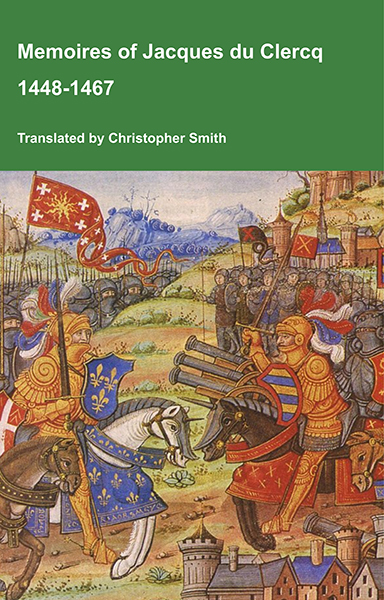
This is a translation of the 'Memoires of Jacques du Clercq', published in 1823 in two volumes, edited by Frederic, Baron de Reissenberg. In his introduction Reissenberg writes: 'Jacques du Clercq tells us that he was born in 1424, and that he was a licentiate in law and a counsellor to Philip the Good, Duke of Burgundy, in the castellany of Douai, Lille, and Orchies. It appears that he established his residence at Arras. In 1446, he married the daughter of Baldwin de la Lacherie, a gentleman who lived in Lille. We read in the fifth book of his Memoirs that his father, also named Jacques du Clercq, had married a lady of the Le Camelin family, from Compiègne. His ancestors, always attached to the counts of Flanders, had constantly served them, whether in their councils or in their armies.' The Memoires cover a period of nineteen years beginning in in 1448, ending in in 1467. It appears that the author had intended to extend the Memoirs beyond that date; no doubt illness or death prevented him from carrying out this plan. As Reissenberg writes the 'merit of this work lies in the simplicity of its narrative, in its tone of good faith, and in a certain air of frankness which naturally wins the reader’s confidence.' Du Clercq ranges from events of national and international importance, including events of the Wars of the Roses in England, to simple, everyday local events such as marriages, robberies, murders, trials and deaths, including that of his own father in Book 5; one of his last entries.
Available at Amazon in eBook and Paperback format.
On 7th July 1840 Theodora Grosvenor was born to Richard Grosvenor 2nd Marquess Westminster (age 45) and Elizabeth Mary Leveson-Gower Marchioness Westminster (age 43). She married 8th March 1877 Thomas Merthyr Guest, son of John Josiah Guest 1st Baronet and Charlotte Elizabeth Bertie.
On 7th July 1849 Lieutenant-Colonel Lionel Hervey-Bathurst aka Paston-Cooper was born to Frederick Hervey-Bathurst 3rd Baronet (age 42) and Clare Emily Brooke. He married 29th January 1885 Mary Ethel Paston Cooper, daughter of Astley Paston Paston-Cooper 3rd Baronet.
On 7th July 1851 Lionel Philip Payne-Gallwey was born to William Payne-Gallwey 2nd Baronet (age 43) and Emily Anne Frankland-Russell Lady Frankland (age 29). He married 2nd November 1881 Caroline Lucille Lynch and had issue.
On 7th July 1853 Admiral Richard Poore 4th Baronet was born to Edward Poore 3rd Baronet (age 27).
On 7th July 1859 Charles Hilton Seely 2nd Baronet was born to Charles Seely 1st Baronet (age 25).
On 7th July 1869 Gwendoline Edwardes was born to William Edwardes 4th and 1st Baron Kensington (age 34) and Grace Elizabeth Johnstone-Douglas Baroness Kensington. She married 27th April 1899 her second cousin once removed Captain William Stirling-Home-Drummond-Moray.

On 7th July 1870 Charles Reginald Lindley Wood was born to Charles Lindley Wood 2nd Viscount Halifax (age 31) and Agnes Elizabeth Courtenay Viscountess Halifax (age 32).
On 7th July 1883 Prince Eitel Friedrich Hohenzollern was born to Wilhelm Hohenzollern (age 24) and Empress Auguste Viktoria Oldenburg (age 24). He a great grandson of Queen Victoria of the United Kingdom. He married his third cousin Sophia Charlotte Oldenburg.
On 7th July 1889 Burton Robert Williams 6th Baronet was born to William Robert Williams 3rd Baronet (age 29).
On 7th July 1889 John Edwards 3rd Baronet was born to Henry Coster Lea Edwards 2nd Baronet (age 49) and Laura Selina Clark Lady Edwards.
Annals of the six Kings of England by Nicholas Trivet
Translation of the Annals of the Six Kings of England by that traces the rise and rule of the Angevin aka Plantagenet dynasty from the mid-12th to early 14th century. Written by the Dominican scholar Nicholas Trivet, the work offers a vivid account of English history from the reign of King Stephen through to the death of King Edward I, blending political narrative with moral reflection. Covering the reigns of six monarchs—from Stephen to Edward I—the chronicle explores royal authority, rebellion, war, and the shifting balance between crown, church, and nobility. Trivet provides detailed insight into defining moments such as baronial conflicts, Anglo-French rivalry, and the consolidation of royal power under Edward I, whose reign he describes with particular immediacy. The Annals combines careful year-by-year reporting with thoughtful interpretation, presenting history not merely as a sequence of events but as a moral and political lesson. Ideal for readers interested in medieval history, kingship, and the origins of the English state, this chronicle remains a valuable and accessible window into the turbulent world of the Plantagenet kings.
Available at Amazon in eBook and Paperback format.
On 7th July 1894 Robert Shirley 12th Earl Ferrers was born to Walter Shirley 11th Earl Ferrers (age 30) and Mary Jane Moon Countess Ferrers.
On 7th July 1911 Michael George Motley Stracey 8th Baronet was born to Edward Paulet Stracey 7th Baronet (age 40) and Mary Elizabeth Brinsley Sheridan Lady Stracey (age 39).
On 7th July 1912 Raymond Alexander Baring was born to Godfrey Baring 1st Baronet (age 41).
On 7th July 1918 Major Richard John Wrottesley 5th Baron Wrottesley was born to Walter Bennet Wrottesley (age 40).
On 7th July 1930 William Murray 8th and 7th Earl Mansfield was born to Mungo Murray 7th and 6th Earl of Mansfield (age 29).
On 7th July 1945 Michael Andrew Foster Jude Kerr 13th Marquess Lothian was born to Peter Francis Walter Kerr 12th Marquess Lothian (age 22). He married 7th June 1975 Theresa Jane Fitzalan Marchioness Lothian, daughter of Bernard Fitzalan 16th Duke of Norfolk and Lavinia Mary Strutt Duchess Norfolk.

On 7th July 1648 Henry Howard (age 28) and Elizabeth Spencer Baroness Craven (age 31) were married. He the son of Thomas Howard 1st Earl Berkshire (age 60) and Elizabeth Cecil Countess Berkshire (age 52). They were fourth cousins.
On 7th July 1670 Henry Booth 1st Earl Warrington (age 18) and Mary Langham Countess Warrington (age 18) were married at St Helen's Church, Bishopsgate.


On 7th July 1702 Henry Somerset 2nd Duke Beaufort (age 18) and Mary Sackville 2nd Duchess Beaufort (age 13) were married. She by marriage Duchess Beaufort. She the daughter of Charles Sackville 6th Earl Dorset 1st Earl Middlesex (age 59) and Mary Compton Countess Dorset and Middlesex. They were fourth cousins.
On 7th July 1718 Edward des Bouverie 2nd Baronet (age 28) and Mary Smyth Lady Bouverie were married. She by marriage Lady Bouverie of St Catherine Cree Church in London.
Annals of the six Kings of England by Nicholas Trivet
Translation of the Annals of the Six Kings of England by that traces the rise and rule of the Angevin aka Plantagenet dynasty from the mid-12th to early 14th century. Written by the Dominican scholar Nicholas Trivet, the work offers a vivid account of English history from the reign of King Stephen through to the death of King Edward I, blending political narrative with moral reflection. Covering the reigns of six monarchs—from Stephen to Edward I—the chronicle explores royal authority, rebellion, war, and the shifting balance between crown, church, and nobility. Trivet provides detailed insight into defining moments such as baronial conflicts, Anglo-French rivalry, and the consolidation of royal power under Edward I, whose reign he describes with particular immediacy. The Annals combines careful year-by-year reporting with thoughtful interpretation, presenting history not merely as a sequence of events but as a moral and political lesson. Ideal for readers interested in medieval history, kingship, and the origins of the English state, this chronicle remains a valuable and accessible window into the turbulent world of the Plantagenet kings.
Available at Amazon in eBook and Paperback format.
On 7th July 1730 George Brudenell aka Montagu 1st Duke Montagu (age 17) and Mary Montagu Duchess of Montagu (age 19) were married. She the daughter of John Montagu 2nd Duke Montagu (age 40) and Mary Churchill Duchess of Montagu (age 40). He the son of George Brudenell 3rd Earl Cardigan (age 44) and Elizabeth Bruce 3rd Countess Cardigan (age 41). They were fourth cousin once removed.
On 7th July 1767 Jules 1st Duke of Polignac (age 21) and Yolande Martine Gabrielle Polastron Duchess Gramont (age 17) were married.
On 7th July 1768 Willoughby Bertie 4th Earl of Abingdon (age 28) and Charlotte Warren were married. He the son of Willoughby Bertie 3rd Earl of Abingdon and Anna Maria Collins Countess Abingdon.
On 7th July 1777 Valentine Browne 1st Earl of Kenmare (age 23) and Charlotte Dillon (age 21) were married.
On 7th July 1787 John Whalley aka Whalley-Gardiner 1st Baronet (age 44) and Martha Newcombe were married.
On 7th July 1787 John Ramsden 4th Baronet (age 31) and Louise Ingram Lady Ramsden (age 21) were married. She by marriage Lady Ramsden of Byram in Yorkshire.
On 7th July 1809 Arscott Ourry Molesworth 7th Baronet (age 20) and Mary Brown were married. She by marriage Lady Molesworth of Pencarrow in Cornwall.
On 7th July 1853 Sholto Douglas 18th Earl Morton (age 35) and Alice Anne Lambton Countess Morton (age 22) were married. She the daughter of John "Radical Jack" Lambton 1st Earl Durham and Louisa Elizabeth Grey Countess Durham. He the son of George Sholto Douglas 17th Earl Morton (age 63).
On 7th July 1887 Admiral William Alison Dyke Acland 2nd Baronet (age 39) and Emily Anna Smith Lady Acland (age 28) were married.
On 7th July 1932 William James Harris 6th Earl Malmesbury (age 24) and Diana Claudia Carleton Countess of Malmesbury (age 20) were married. He the son of James Edward Harris 5th Earl Malmesbury (age 59) and Dorothy Gough-Calthorpe Countess of Malmesbury (age 46).
Chronicle of a Bourgeois of Valenciennes
Récits d’un bourgeois de Valenciennes aka The Chronicle of a Bourgeois of Valenciennes is a vivid 14th-century vernacular chronicle written by an anonymous urban chronicler from Valenciennes in the County of Hainaut. It survives in a manuscript that describes local and regional history from about 1253 to 1366, blending chronology, narrative episodes, and eyewitness-style accounts of political, military, and social events in medieval France, Flanders, and the Low Countries. The work begins with a chronological framework of events affecting Valenciennes and its region under rulers such as King Philip VI of France and the shifting allegiances of local nobility. It includes accounts of conflicts, sieges, diplomatic manoeuvres, and the impact of broader struggles like the Hundred Years’ War on urban life in Hainaut. Written from the perspective of a burgher (bourgeois) rather than a monastery or royal court, the chronicle offers a rare lay viewpoint on high politics and warfare, reflecting how merchants, townspeople, and civic institutions experienced the turbulence of the 13th and 14th centuries. Its narrative style combines straightforward reporting of events with moral and civic observations, making it a valuable source for readers interested in medieval urban society, regional politics, and the lived experience of war and governance in pre-modern Europe.
Available at Amazon in eBook and Paperback format.
On 7th July 1954 Edward Astley 22nd Baron Hastings (age 42) and Catherine Hinton Baroness Hastings (age 34) were married.
On 7th July 1307 King Edward I of England (age 68) died at Burgh by Sands [Map] whilst on his way north to Scotland. His son Edward (age 23) succeeded II King of England. Earl Chester merged with the Crown.
Edward had gathered around him Thomas Plantagenet 2nd Earl of Leicester, 2nd Earl Lancaster, Earl of Salisbury and Lincoln (age 29), Guy Beauchamp 10th Earl Warwick (age 35), Aymer de Valence 2nd Earl Pembroke (age 32) and Robert Clifford 1st Baron Clifford (age 33) and charged them with looking after his son in particular ensuring Piers Gaveston 1st Earl Cornwall (age 23) didn't return from exile.
On 7th July 1329 Richard Fitzgerald 3rd Earl of Kildare (age 12) died. His brother Maurice (age 11) succeeded 4th Earl Kildare.
On 7th July 1349 Joan Plantagenet Baroness Mowbray (age 37) died in Yorkshire.
On 7th July 1448 Marie Bourbon Duchess Anjou (age 20) died in childbirth.
On 7th July 1452 Eleanor Cobham Duchess of Gloucester (age 52) died at Beaumaris Castle [Map].
On 7th July 1602 Friedrich Wilhelm Wettin I Duke Saxe Weimar (age 40) died at Weimar. His son Friedrich (age 3) succeeded Duke Saxe Altenburg.
On 7th July 1607 Penelope Devereux Countess Devonshire (age 44) died.
On 7th July 1649 Maria Leopoldine Habsburg Spain Queen Consort Bohemia (age 17) died.

On 7th July 1713 Bishop Henry Compton (age 81) died. He was buried at All Saints Church, Fulham.
On 7th July 1721 Tristram Dillington 5th Baronet (age 43) died unmarried. Baronet Dillington of Knighton, Isle of Wight in Hampshire extinct.

On 7th July 1731 Jemima Grey Countess Ashburham (age 32) died.

On 7th July 1739 Philip Astley 2nd Baronet (age 71) died. His son Jacob (age 47) succeeded 3rd Baronet Astley of Hill Morton.

On 7th July 1743 Jocelyn Sidney 7th Earl of Leicester (age 61) died. Earl of Leicester and Viscount Lisle extinct. His will left everything to his illegitimate daughter Anne Sidney (age 14) but was successfully contested by cousins.
Chronicle of a Bourgeois of Valenciennes
Récits d’un bourgeois de Valenciennes aka The Chronicle of a Bourgeois of Valenciennes is a vivid 14th-century vernacular chronicle written by an anonymous urban chronicler from Valenciennes in the County of Hainaut. It survives in a manuscript that describes local and regional history from about 1253 to 1366, blending chronology, narrative episodes, and eyewitness-style accounts of political, military, and social events in medieval France, Flanders, and the Low Countries. The work begins with a chronological framework of events affecting Valenciennes and its region under rulers such as King Philip VI of France and the shifting allegiances of local nobility. It includes accounts of conflicts, sieges, diplomatic manoeuvres, and the impact of broader struggles like the Hundred Years’ War on urban life in Hainaut. Written from the perspective of a burgher (bourgeois) rather than a monastery or royal court, the chronicle offers a rare lay viewpoint on high politics and warfare, reflecting how merchants, townspeople, and civic institutions experienced the turbulence of the 13th and 14th centuries. Its narrative style combines straightforward reporting of events with moral and civic observations, making it a valuable source for readers interested in medieval urban society, regional politics, and the lived experience of war and governance in pre-modern Europe.
Available at Amazon in eBook and Paperback format.
On 7th July 1754 Frances Thynne Duchess Somerset (age 55) died.
On 7th July 1764 William Pulteney 1st Earl Bath (age 80) died. Earl Bath extinct. His estates were inherited by Frances Pulteney (age 49) nad her husband William Johnstone aka Pulteney 5th Baronet (age 34).
On 7th July 1769 James Hamilton 7th Duke Hamilton 4th Duke Brandon (age 14) died at Hamilton Palace, Hamilton. His brother Douglas (age 12) succeeded 8th Duke Hamilton, 5th Duke Brandon of Suffolk, 4th Marquess Douglas, 5th Baron Dutton of Cheshire.
On 7th July 1770 Amelia Watts (age 19) died from childbirth one month after the birth of her son Robert Jenkinson 2nd Earl Liverpool .
On 7th July 1772 Anne Clayton Lady Blackwell died.
On 25th June 1780 Thomas Gerard 8th Baronet (age 57) died. He was buried at St Oswald's Church, Winwick [Map] on 7th July 1780. His brother Robert (age 55) succeeded 9th Baronet Gerard of Bryn in Lancashire. Catherine Anderton Lady Gerard (age 38) by marriage Lady Gerard of Bryn in Lancashire.
On 7th July 1802 Charles Cockayne 5th Viscount Cullen (age 91) died.

On 7th July 1829 Frances Molesworth Marchioness Camden (age 73) died at Bayham Abbey, Tunbridge Wells [Map].
On 7th July 1830 Harriet Townsend Lady Skipwith (age 51) died.
On 7th July 1831 John Hayford Thorold 10th Baronet (age 58) died. His son John (age 15) succeeded 11th Baronet Thorold of Marston in Lincolnshire.
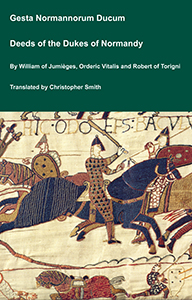
The Deeds of the Dukes of Normandy
The Gesta Normannorum Ducum [The Deeds of the Dukes of Normandy] is a landmark medieval chronicle tracing the rise and fall of the Norman dynasty from its early roots through the pivotal events surrounding the Norman Conquest of England. Originally penned in Latin by the monk William of Jumièges shortly before 1060 and later expanded at the behest of William the Conqueror, the work chronicles the deeds, politics, battles, and leadership of the Norman dukes, especially William’s own claim to the English throne. The narrative combines earlier historical sources with firsthand information and oral testimony to present an authoritative account of Normandy’s transformation from a Viking settlement into one of medieval Europe’s most powerful realms. William’s history emphasizes the legitimacy, military prowess, and governance of the Norman line, framing their expansion, including the conquest of England, as both divinely sanctioned and noble in purpose. Later chroniclers such as Orderic Vitalis and Robert of Torigni continued the history, extending the coverage into the 12th century, providing broader context on ducal rule and its impact. Today this classic work remains a foundational source for understanding Norman identity, medieval statesmanship, and the historical forces that reshaped England and Western Europe between 800AD and 1100AD.
Available at Amazon in eBook and Paperback format.
On 7th July 1840 Bishop John Jenkinson (age 58) died. He was buried at Worcester Cathedral [Map].
On 7th July 1847 Grenville Temple 10th Baronet (age 47) died. His son Grenville (age 17) succeeded 11th Baronet Temple of Stowe.
On 7th July 1894 Henry Ainslie Hoare 5th Baronet (age 70) died. His first cousin Henry (age 28) succeeded 6th Baronet Hoare of Barn Elms in Surrey.


On 2nd July 1914 John Benjamin Stone (age 76) died at his home, The Grange, Erdington. His wife Jane Parker (age 65) died three days later on 5th July 1914. They were buried together on 7th July 1914 at Holy Trinity Church, Sutton Coldfield [Map].
On 7th July 1921 or 1922 William Nelson 1st Baronet (age 69) died. His son James (age 38) succeeded 2nd Baronet Nelson of Acton Park.
On 7th July 1934 Walter Annesley 7th Earl Annesley (age 73) died. His son Beresford (age 40) succeeded 8th Earl Annesley of Castlewellan in County Down, 9th Viscount Glerawly of County Fermanagh, 9th Baron Annesley of Castle Wellan in County Down.
On 7th July 1935 Oliver Russell 2nd Baron Ampthill (age 66) died of pneumonia. His son John (age 38) succeeded 3rd Baron Ampthill of Ampthill in Bedfordshire. Christabel Hulme Hart Baroness Ampthill by marriage Baroness Ampthill of Ampthill in Bedfordshire.
On 7th July 1942 Richard Henry Williams-Bulkeley 12th Baronet (age 79) died. His grandson Richard (age 30) succeeded 13th Baronet Bulkeley-Williams of Penrhyn in Caernarfonshire.
On 7th July 1955 Ethel Mary Bouverie-Pusey Baroness Braye died.
On 7th July 2001 Edward Horace Fiennes-Clinton 18th Earl of Lincoln (age 88) died. His grandson Robert (age 29) succeeded 19th Earl Lincoln.
On 7th July 2005 Christopher Henry Pease 2nd Baron Wardington (age 81) died. His brother William (age 79) succeeded 3rd Baron Wardington of Alnmouth in Northumberland. Elizabeth Jane Ormsby-Gore Baroness Wardington (age 75) by marriage Baroness Wardington of Alnmouth in Northumberland.