

Adam Murimuth's Continuation and Robert of Avesbury’s 'The Wonderful Deeds of King Edward III'
This volume brings together two of the most important contemporary chronicles for the reign of Edward III and the opening phases of the Hundred Years’ War. Written in Latin by English clerical observers, these texts provide a vivid and authoritative window into the political, diplomatic, and military history of fourteenth-century England and its continental ambitions. Adam Murimuth Continuatio's Chronicarum continues an earlier chronicle into the mid-fourteenth century, offering concise but valuable notices on royal policy, foreign relations, and ecclesiastical affairs. Its annalistic structure makes it especially useful for establishing chronology and tracing the development of events year by year. Complementing it, Robert of Avesbury’s De gestis mirabilibus regis Edwardi tertii is a rich documentary chronicle preserving letters, treaties, and official records alongside narrative passages. It is an indispensable source for understanding Edward III’s claim to the French crown, the conduct of war, and the mechanisms of medieval diplomacy. Together, these works offer scholars, students, and enthusiasts a reliable and unembellished account of a transformative period in English and European history. Essential for anyone interested in medieval chronicles, the Hundred Years’ War, or the reign of Edward III.
Available at Amazon in eBook and Paperback format.
11 Dec is in December.
1290 Death of Queen Eleanor of Castile
1441 Catherine Howard Tyburn Executions
1474 Death of King Henry IV of Castile
On 11th December 1183 Archbishop Walter de Coutances was enthroned Bishop of Lincoln.
Chronica Majora by Matthew Paris. 10th February 1236. About the same time, for two months and more, namely, in January, February, and part of March, such deluges of rain fell as had never been seen before in the memory of any one. About the feast of St. Scholastica, when the moon was new, the sea became so swollen by the river torrents which fell into it, that all the rivers, especially those which fell into the sea, rendered the fords impassable, overflowing their banks, hiding the bridges from sight, carrying away mills and dams, and overwhelming the cultivated lands, crops, meadows, and marshes. Amongst other unusual occurrences, the River Thames overflowed its usual bounds, and entered the grand palace at Westminster [Map], where it spread and covered the whole area, so that small boats could float there, and people went to their apartments on horseback. The water also forcing its way into the cellars could with difficulty be drained off. The signs of this storm which preceded it, then gave proofs of their threats; for on the day of St. Damasus, thunder was heard, and on the Friday next after the conception of St. Mary, a spurious sun was seen by the side of the true sun.
On 11th December 1282 an English force including John Giffard 1st Baron Giffard Brimpsfield (age 50), Gruffydd ap Gwenwynwyn Mathrafal Prince Powys Wenwynwyn (age 71) and Owen de la Pole Mathrafal 1st Lord Powis (age 25) defeated a Welsh force at Builth Wells [Map] during the Battle of Orewin Bridge. The Welsh leader Llywelyn "Last" Aberffraw (age 49) was killed effectively bringing to an end the independence of Wales. His brother Dafydd (age 44) succeeded Prince of Wales.
The Breviary of Britayne. [11th December 1282] Untill that the prince him selfe, beyng forsaken by many of his owne men: was by the men of Buelt betrayed, not far from the river Vaga, or wye, whether he came with a very few souldiers. And by one Adam Francton, whiche faught under the conduct of Helias walwin: far from the residew of his owne power beynge accompapnied with one only Page, and unarmed, with certain other noble men of that country, tolde ye same before to his enemies: was there slayne most dishonorably.
The History of Cambria. [11th December 1282] Then some of his men seeing their enemies come downe from the hill, kept the bridge called Pont Orewyn, & defended the passage manfullie, till one be declared to the Englishment where a ford was a little beneath, through which they sent a number of their men with Helias Walwyn, who suddenlie fell upon them that defended the bridge in their backs, and put them to flight. The princes esquire told the Prince (as he stood secretly abding the comming of such as promised to meete him in a little grove) that he heard great noise and crie at the bridge: and the prince asked whether his men had taben the bridge, and he said, yes. Then (said the Prince) I passe not if all the power of England were upon the other side. But suddenlie behold, the horssemen about the grove, and as he would have escaped to his men, they pursued him so hard that one Adam Francton ranne him thorough with a staffe being unarmed, and knew him not, and hiss men being but a few stood and fought boldlie, ever looking for their prince, till the Englishmen by force of archers mirt with the horssement wannte the hill and put them to flight. And as they returned, Francton went to spoiie him whome he bad slaine, and when he saw his face, he knew him verie well, and stroke off his head, and sent it to the King at the Abbie of Conwey, who received it with great joy, and caused it to be set London.
French Chronicle of London. In this year was Leulyn, Prince of Wales, taken and beheaded [11th December 1282], and his1 head sent to the Tower of London; and Sir Edward2, son of King Edward, was then born, upon Saint Mark's Day [25 April].
Note 1. It was carried through Chepe to the sound of trumpets, and crowned with a silver coronet; after which it was fixed on the pillory there, and then conveyed to the Tower, crowned with ivy.
Note 2. A mistake. King Edward II of England was born of 25th April 1284.
Letters of Archbishop John Peckham 361. But the aforesaid Llewelyn1, prince of Wales, having spurned all the offers and forms of peace previously set forth, invaded in hostile manner the land of the lord king of England, laying it waste with fire and plunder, and moreover drawing the men of that land to himself and severing them from the good estate of the king’s peace. Yet this prince, within that same month, was the first of his army to be slain with a shameful death, by the household of lord Edmund de Mortimer, son of lord Roger de Mortimer; and all his army was either slain or put to flight in the parts of Montgomery on the Friday next before the feast of Saint Lucy, that is, the third Ides of December [11th December 1282], in the year of the Lord 1282, the tenth indiction, with Dominical Letter D then current.
Lewelinus autem princeps Walliæ prædictus, spretis omnibus oblationibus et pacis formis præscriptis, invasit hostiliter terram domini regis Angliæ, destruendo eam incendio et rapina, necnon homines terræ illius ad se trahendo et a bonitate pacis regiæ separando. Qui tamen princeps infra mensem illum ignominiosa morte primus de exercitu suo occisus est per familiam domini Eadmundi de Mortui Mari, filii domini Rogeri de Mortuo Mari, et totus exercitus suus vel occisus vel in fugam conversus, in partibus Montisgomoriæ die Veneris proxima ante festum Sanctæ Luciæ, videlicet iii. idus Decembris sub anno Domini millesimo CC. LXXXIL, indictione decima, litera Dominicali D. currente.
Note 1. The following words are appended here in the margin of A. : "Lewelinus fuit princeps Walliæ." i.e. "Llywelyn was Prince of Wales".
 Chronicle of Walter of Guisborough. Around the next feast of Saint Nicholas1, Llywelyn descended from the mountains with only one squire, wishing to cautiously observe whether the inhabitants of the valleys remained loyal to him as before. He left his entire army on the ridge of the mountain above the river called Wye. His men took possession of the bridge of Orewin, and many Welsh remained there on his side, while on the other side were many royal troops. The king himself was that same day stationed at Rhuddlan [Map]. As the royal forces, whose leaders were Sir John Giffard and the young Sir Roger de Mortimer, saw the Welsh at the bridge and the large army on the ridge above, they discussed among themselves what ought to be done. One of them, named Elias Walwyn, replied, If we remain here, we can neither advance nor cross. But there is a certain ford not far from here and unknown to the Welsh, where we can cross, though with difficulty. Let brave men follow me, and we shall strike the Welsh from behind, those who are now at the bridge. Then the way across the bridge will be opened for the rest of our army, and from there we shall be able to press forward against the remaining enemies.
And so he did, and he crossed the ford that was unknown to others, from which the place took its name that it bears to this day, and it was called Hiliswath. After the Welsh who were stationed at the bridge were struck down, the way was opened for the rest of our army to pass through freely. When the sound of battle reached the ears of Llywelyn himself, who was hiding nearby in a barn at Thaulweyr, he said, "Are not my Welshmen holding the bridge at Orewin?" They replied to him, "Indeed, they are." And he said, "Even if all England were on the other side, I would not fear them." But as the noise of the fighting grew louder and his army on the heights began to panic when they saw the English forces approaching, Llywelyn hastened to slip away secretly with his page, for he feared for his life when he learned what had happened. He was spotted by one of our men, Stephen of Frankton, though he did not know who he was. Stephen followed him with a few others and, finding him fleeing and lightly armed, pierced him with a lance, and then quickly withdrew and returned to our army. The Welsh troops stood in their formations on the mountain ridge, waiting for their prince and lord, but in vain. As our forces advanced up the hill, the Welsh shot many arrows and bolts, and there was a brief skirmish with our archers, who were positioned among the cavalry. Many of the Welsh fell, because they had bravely held their ground in hope of their leader's return. At last, our cavalry reached the summit of the hill above them. After some were cut down, the rest were turned to swift flight. When our men returned victorious, the above-mentioned Stephen went back to see who the two individuals were whom he had struck down. Upon seeing Llywelyn's face and recognizing him, they cut off his head and brought it with joy to our king. The king then ordered it to be sent to London. A silver crown was placed upon it as a sign of his former princely title, and it was carried on a lance through the middle of Westcheap, London, by a mounted man, accompanied by a large crowd of citizens and much ceremony. Eventually, it was placed on a high turret of the royal tower, where it remained for a long time to be seen by all who passed by.
Circa vero sequens festum beati Nicolai descendit ipse Leulinus cum solo armigero de montibus, ut cautius exploraret si habitatores convallium in fide sua manerent ut prius, reliquitque totum suum exercitum in supercilio montis super aquam quæ vocatur Waye et præoccupaverunt sui pontem Grewyn, manseruntque ibi ex parte sua Wallenses plurimi et ex parte altera regales multi; rex vero eodem die apud Rotheland erat in præsidio. Dumque regales nostri, quorum duces exercitus erant dominus Johannes Giffard et dominus Rogerus de Mortimer juvenis, viderent Wallenses ad pontem et exercitum grandem in supercilio montis, loquerenturque mutuo quid esset faciendum, respondit unus cui nomen Hilias Wallayn, Si manserimus hic nec proficere nec transire poterimus, sed est vadum quoddam non longe distans et a Wallensibus incognitum, ubi transire poterimus, cum difficultate tamen; sequantur ergo me viri fortes, et percutiemus a tergo Wallenses qui modo sunt ad pontem, et sic patebit ingressus per pontem reliquo exercitui nostro, poterimusque extunc plane procedere contra reliquos hostes.
Fecitque sic et transivit vadum aliis incognitum, unde et nomen sortitum est usque in præsentem diem et vocatum est Hiliswath: percussisque Wallensibus qui erant ad pontem, liberum fecit introitum reliquo exercitui nostro. Cumque clamor ascenderet etiam ad aures ipsius Leulini qui ibi prope in grangio Thaulweyr latitabat, ait ipse Leulinus, Nonne Wallenses mei sunt ad pontem Grewyn? dicunt ei, Utique sunt. Et ait, Etiamsi tota Anglia esset in parte altera non timerem eos. Ingravescente tandem clamore et tumultuante ejus exercitu in excelsis dum exercitum Anglorum viderent properantem, festinavit ipse Leulinus cum puero suo latenter ascendere, timuit enim sibi cognito prædicto casu. Cumque videretur a quodam ex nostris, Stephano scilicet de Stephen de Franketone, nec tamen cognosceretur quis esset, secutus est eum idem Stephanus cum paucis et ipsum fugientem et leviter armatum lancea perforavit, et confestim abiit, et reversus est ad exercitum nostrum. Steterunt itaque Wallenses per turmas suas in supercilio montis expectantes principem et dominum suum, sed incassum: et ascendentibus nostris, sagittas et telas multas direxerunt, factaque concertatione aliqua per sagittarios nostros qui inter equestres innixi erant corruerunt multi, eo quod animose steterunt expectantes dominum suum: tandem vero equestres nostri ascenderunt in montem super eos, et cæsis aliquibus reliquos in velocem fugam converterunt. Revertentibus ergo nostris obtenta victoria, prædictus Stephanus perrexit ut videret quinam essent illi duo quos percusserat, et visa facie Leulini et cognita, amputaverunt caput suum, et ad regem nostrum cum gaudio detulerunt. Rex vero illud mitti jussit Londoniis, et sic apposita serta argentea in signum principis per medium Westchepe Londoniis in lancea per equestrem delatum est cum magno comitatu civium et apparatu, et super turrim excelsam turris regiæ tandem cum lancea repositum est ut a transeuntibus universis longo tempore videretur.
Note 1. The Feast Day of St Nicholas is the 6th of December. The battle of Orewin Bridge took place on 11th December 1282.
Annals of Oseney by Thomas Wykes. [11th December 1282] When he had died, lord Edmund, his first-born and heir, together with his brother—very likely, as may indeed be reasonably believed, in order to please the king’s mind—laid an ambush for the said Llewelyn. Llewelyn, who had come down from the mountains of Snowdonia to do I know not what, and was roaming the lower regions with a few adherents, was noticed in his descent by scouts; and Edmund, surrounded by no small or ignoble company, came upon him more unexpectedly than was believed, and killed him and his companions who were unable to flee, by the sword. The head also of the prince, whom he recognized among the slain, he cut off and sent to the lord king. By God’s disposition this memorable triumph of the killing of Llewelyn happened about the feast of Saint Thomas the Apostle before Christmas. The king, indeed rejoicing in the triumph, decreed that the head itself should be taken to London and set upon the Tower of London on a spear as a sign of so great a victory.
Quo defuncto dominus Edmundus, ejus primogenitus et hæres, una cum fratre suo, forte, ut sane credi poterit, ut regis animum complacaret, dicto Lewelino machinatus est insidias; cui nescio quid acturo descendenti de montibus Snowdoniæ et partes inferiores cum paucis sibi cohærentibus pervaganti, notato per exploratores ejus descensu, non modica nec ignobili comitiva stipatus, inopinatius quam credebatur occurrit, ipsumque et complices suos qui fugere non poterant, interfecit in ore gladii. Caput quoque principis, quem inter interfectos recognovit, amputatum domino regi transmisit. Contigit Deo disponente memorabilis iste triumphus interfectionis Lewelini circa festum Sancti Thomæ Apostoli ante Natale. Rex nimirum glorians de triumpho caput ipsum decrevit Londonias deportandum, et super Turrim Londoniarum super hastili in signum victoriæ tam celebris affigendum.
Letters of Archbishop John Peckham 371. [After 11th December 1282]. To Maud Lungespeye (age 48).
Friar John, by the permission of God, archbishop of Canterbury, primate of all England, to the lady of great worth, Maud Lungespeye, greeting, and the blessing of Jesus Christ. My lady, your prayer agrees with pity and reason. But know that Llewellyn, who was prince of Wales, cannot be absolved unless he showed signs of repentance at his death to amend and leave his follies. Therefore if this is certain that he was repentant at his death, and ready as far as was in his power to make amends1 to Holy Church, and this is proved before us, we will do what is right about it, for otherwise, without doing wrong, he cannot be absolved. Therefore we approve that you and his other friends should labour about this, that some of those who were at his death should come in time before us and show the signs aforesaid, for in any other manner we can do nothing.
Note 1. La asez.
On 11th December 1290 Eleanor of Castile Queen Consort England (deceased) body rested at Dunstable Priory [Map]. See Annals of Dunstable.
On 11th December 1327 Simon Mepeham was elected Archbishop of Canterbury.
Letters and Papers Foreign and Domestic Henry VIII 1541. 11th December 1441. Chapuys to Charles V. Spanish Calendar, VI.i., No. 213.
Wrote, on the 3rd, of the condemnation of Colpeper and Durem, who were both executed, the former, at his own request, by decapitation, the latter by a more cruel death. Not to leave the Tower empty, no sooner had these left for the place of execution than the old duchess of Norfolk, second wife of the father of the present Duke, was conveyed to it, along with the wife of lord William, who himself returned from France but eight days ago, and was also lodged in the Tower the day before yesterday. It would seem also that his said mother and wife and a sister [Lady Bridgewater] of his, who is detained in the house of Secretary Vrisley, have been arrested on account of a servant of lord William who was taken on St. Andrew's Eve, who said that his master and the said ladies knew of the Queen's unchastity before she attained the King's favour. No other cause of their imprisonment is pointed to. The duke of Norfolk, before his half-brother's return, had left for his estates in Norfolk; it is supposed not of his own free will, but sent on some pretence to be away from the Privy Council while matters were discussed affecting his own relations. On the 5th, M. de Morvillier arrived here on his way to Scotland, sent by the king of France, and also, as he himself gives out, on business of M. de Guise. He remained here till yesterday, the 10th, in the afternoon, waiting for his passports, which the resident French ambassador has obtained for him, without either himself or the other ambassador having seen the King or Privy Councillors about it. Is informed by the ambassador's secretary that Morvillier would have gone to Scotland by sea but for unfavourable winds and rough weather, and that he and the ambassador had been devising excuses for fear the King should refuse him a passport. One pretence was that Morvillier was going to condole with king James on the death of his mother. The ambassador's man sent Chapuys word that for two whole days after his arrival Morvillier had not left his room, showing that he did not wish it to be known that he was in England, since many must have seen him the last time the bp. of Tarbes, lately deceased in Spain, was here. The secretary, Chapuys's confidant, had been with him some time, and tried to find out what his mission was, but could get little out of him. The only person he spoke about was the duke of Cleves, whose wit, dexterity, and power he extolled beyond measure. He also sang the praises of the duke of Saxony, saying he was the sincere friend of the King, his master, ready to do his will in all matters, and that he had lately sent to Madame d'Alebret, whom these Frenchmen call queen of Navarre, the portraits of his wife and family.
On 11th December 1471 Isabella Aviz Duchess Burgundy (age 74) died.
On 11th December 1474 Henry IV King Castile (age 49) died. His half sister Isabella (age 23) succeeded Queen Castile.


Letters and Papers Foreign and Domestic Henry VIII 1519. 11 Dec. Calig. D. VII. 164. B. M. 549. Sir Thomas Boleyn (age 42) to [Wolsey].
Wrote his last on the 5th. Marynix has been dispatched this day for England, with an account of Pace's oration; scilt., that as the empire was won by Almains they should choose one of their own nation; if none such could be found, one of that lineage; and if it came to a question, Charles in preference to Francis. If the Cardinal wishes it, Marynix shall be recalled from England in two or three months, and La Basty sent in his place. Mons. de Seint Blancy, the chief of finance, has ordered John Cavalcant to England to pay the Cardinal by La Bastye 14,006 crowns and 18 so[us] Tournois, for the English merchants. The Queen mother is desirous that the interview should take place in April or May next, as the Queen expects to be delivered at the end of July. The Admiral has given Marynix a list of hostages in exchange. The King and the court had gone to Cognac. They will keep their Christmas at Lochys or Chastellarault. Blois, 11 Dec. Signature burnt off.
Mutilated, pp. 2.

Chronicle of Edward Hall [1496-1548]. 11th December 1539. The xi. day of December at the Turnepyke on thyssyde Gravelyng was the Lady Anne of Cleve (age 24) received by the lorde Lysle Deputie of the toune of Calice and with the Speres and horsemen belongyng to the retinue there, all being fresh and warlike apparelled, and so marching toward Calice a myle and more from the toune met her Grace the Erie of Southampton great Admirall of England, and apparelled in a coate of purple velvet cut on cloth of golde and tyed with great aglettes and treifoiles of golde, to the nomber of iiii. C. and baudrickwise he ware a chayne, at the whiche did hange a whistle of gold set with ryche stones of a greate value. And in his company xxx. gentlemen of the kynges houshold very rychely apparelled with great and massy chaynes, and in especial syr Frauncis Bryan and sir Thomas Seymers chaynes were of greate valure and straunge fassion. Beside this, the Lorde Admirall had a great nomber of gentelmen in blew velvet and crimosyn sattyn and his yomen in damask of the same colours, and the Maryners of his ship in sattyn of Bridges, both coates and sloppes of the same colours, whiche Lorde Admirall with low obeysaunce welcomed her, and so brought her into Calyce by the lanterne gate, where the Shippes laye in the Haven gar ny shed with their banners, pencelles and flagges, plesauntly to beholde. And at her entry was shot suche a peale of gonnes, that all the retinew much marveiled at it. And at her entery into the toune, the Mayer of the toune presented her with an C. marke in golde. And before the Staple hall stode Merchauntes of the Staple wel aparelled, which likewise presented her with an C. sovereynes of golde in a ryche pursse, whiche hertely thanked them, and so she rode to the kynges place called the Checker, and there she lay xv. dayes for lacke of prosperous wynde. Duryng whiche tyme goodly justes and costly bankettes were made to her for her solace and recreacion.
Jean de Waurin's Chronicle of England Volume 6 Books 3-6: The Wars of the Roses
Jean de Waurin was a French Chronicler, from the Artois region, who was born around 1400, and died around 1474. Waurin’s Chronicle of England, Volume 6, covering the period 1450 to 1471, from which we have selected and translated Chapters relating to the Wars of the Roses, provides a vivid, original, contemporary description of key events some of which he witnessed first-hand, some of which he was told by the key people involved with whom Waurin had a personal relationship.
Available at Amazon in eBook and Paperback format.
Holinshed's Chronicle [1525-1582]. 11th December 1539. The eleuenth daie of December at the turne pike on this side Graueling, was the ladie Anne of Cleue (age 24) receiued by the lord deputie (age 75) of the towne of Calis, and with the speares and horssemen belonging to the retinue there. When she came within little more than a mile of the towne of Calis, she was met by the erle of Southampton (age 49) high admerall of England, who had in his companie thirtie gentlemen of the kings houshold, as sir Francis Brian (age 49), sir Thomas Seimer (age 31), and others, beside a great number of gentlemen of his owne retinue clad in blue veluet, and crimsin satin, and his yeomen in damaske of the same colours. The mariners of his ship were apparelled in satin of Bridges, cotes & slops of the same colour. The lord admerall brought hir into Calis by Lanterne gate. There was such a peale of ordinance shot off at hir entrie, as was maruellous to the hearers. The maior presented hir with an hundred markes in gold, the merchants of the staple with an hundred souereignes of gold in a rich purse. She was lodged in the kings place called the Checker, and there she laie fifteene daies for want of prosperous wind.

On 11th December 1581 Maria Habsburg Spain Duchess Cleves (age 50) died.
Complete Collection of State Trials and Proceedings for High Treason Volume 2. [11th December 1603] The two priests that led the way to the execution, were very bloodily handled; for they were both cut down alive; and Clarke, to whom more favour was intended, had the worse luck; for he both strove to help himself, and spake after he was cut down. They died boldly both; and Watson (as he would have it seem) willing: wishing he had more lives to spend, and one to lose, for every man he had by his treachery drawn into this treason. Clarke stood somewhat upon his justification, and thought he had hard measure: but imputed it to his function, and therefore thought his death meritorious, as a kind of martyrdom. Their quarters were set on Winchester gates, and their heads on the first Tower of the castle. Brooke (deceased) was beheaded in the castle-yard, on Monday last; and to double his grief, had St. Croftes in his sight, from the scaffold, which drove him first to discontent. There was no greater assembly than I have seen at ordinary executions; nor no man of quality more than the lord of Arundel and young Somerset; only the bishop of Chichester who was sent from the court two days before, to prepare him to his end, could not get loose from him; but, by Brooke's earnest entreaty was fain to accompany him to the scaffold, and serve for his ghostly father. He died constantly (and, seeming, religiously); spake not much; but what he said was well and assured. He did somewhat extenuate his offences, both in the treasons, and the course of his life; naming these rather errors than capital crimes; and his former faults, sins; but not so heinous as they were traduced; which he referred to the God of truth and time to discover; and so left it, as if somewhat lay yet hid, which would one day appear for his justification.
On 11th December 1661 Roger Palmer 1st Earl Castlemaine (age 27) was created 1st Earl Castlemaine, 1st Baron Limerick by King Charles II of England Scotland and Ireland (age 31) in gratitude for allowing his wife Barbara Villiers 1st Duchess of Cleveland (age 21) to become the King's mistress. Barbara Villiers 1st Duchess of Cleveland by marriage Countess Castlemaine. The title was to descend only to children of Barbara, which in effect, constrained it to her children with Charles. See Diary of Samuel Pepys, 7th December 1661.
Samuel Pepys' Diary. 11th December 1662. At noon he dined with me, and we sat all the afternoon together, discoursing of ways to get money, which I am now giving myself wholly up to, and in the evening he went away and I to my office, concluding all matters concerning our great letter so long in doing to my Lord Treasurer (age 55), till almost one in the morning, and then home with my mind much eased, and so to bed.
Samuel Pepys' Diary. 11th December 1666. Thence, having promised to write every month to her, we home, and I to my office, while my wife to get things together for supper. Dispatching my business at the office. Anon come our guests, old Mr. Batelier, and his son and daughter, Mercer, which was all our company. We had a good venison pasty and other good cheer, and as merry as in so good, innocent, and understanding company I could be. He is much troubled that wines, laden by him in France before the late proclamation was out, cannot now be brought into England, which is so much to his and other merchants' loss. We sat long at supper and then to talk, and so late parted and so to bed. This day the Poll Bill was to be passed, and great endeavours used to take away the Proviso.
Samuel Pepys' Diary. 11th December 1667. Thence home to dinner, and would have had Harris (age 33) home with me, but it was too late for him to get to the playhouse after it, and so home to dinner, and spent the afternoon talking with my wife and people at home till the evening, and then comes Sir W. Warren to talk about some business of his and mine: and he, I find, would have me not to think that the Parliament, in the mind they are in, and having so many good offices in their view to dispose of, will leave any of the King's officers in, but will rout all, though I am likely to escape as well as any, if any can escape; and I think he is in the right, and I do look for it accordingly. Then we fell to discourse of my little vessel, "The Maybolt", and he thinks that it will be best for me to employ her for a voyage to Newcastle [Map] for coles, they being now dear, and the voyage not long, nor dangerous yet; and I think I shall go near to do so. Then, talking of his business, I away to the office, where very busy, and thither comes Sir W. Pen (age 46), and he and I walked together in the garden, and there told me what passed to-day with him in the Committee, by my Lord Sandwich's (age 42) breaking bulk of the prizes; and he do seem to me that he hath left it pretty well understood by them, he saying that what my Lord did was done at the desire, and with the advice, of the chief officers of the fleete, and that it was no more than admirals heretofore have done in like cases, which, if it be true that he said it, is very well, and did please me well. He being gone, I to my office again and there late, and so weary home.


On 11th December 1683 Thomas Howard 8th Duke of Norfolk was born to Thomas Howard (age 26) and Mary Elizabeth Savile (age 20). He was raised as a Catholic at the court in exile in France (where his mother was governess to the prince of Wales). His Catholicism was used as a lever by his childless uncle, Henry Howard 7th Duke of Norfolk (age 28), to secure support for his divorce bill which, he argued, would enable him to remarry and provide instead a protestant heir to his dukedom. Norfolk's untimely death meant that he was succeeded by his Catholic nephew after all. He married 26th May 1709 Maria Shireburn Duchess Norfolk, daughter of Nicholas Shireburn 1st Baronet.
On 11th December 1686 Louis "Le Grand Condé" Bourbon Condé II Prince Condé (age 65) died. His son Henri (age 43) succeeded Prince Condé.
On 11th December 1709 Louise Élisabeth Bourbon Queen Consort Spain was born to Philippe Bourbon II Duke Orléans (age 35) and Françoise Marie Bourbon Duchess Orléans (age 32). She a great x 3 granddaughter of King James I of England and Ireland and VI of Scotland. Coefficient of inbreeding 7.39%. She married 20th January 1722 her half first cousin once removed Louis I King Spain, son of Philippe V King Spain and Maria Luisa Savoy.


On 11th December 1718 Charles XII King of Sweden (age 36) was killed whilst in the trenches around Fredriksten which his army was besieging. He was struck in the head by a projectile and killed. The shot struck the left side of his skull and exited from the right. It isn't clear who fired the shot. His sister Ulrika (age 30) succeeded Queen Sweden. She effectively usurped her nephew Charles Frederick Duke of Holstein Gottorp (age 18) whose parents were both dead.


On 11th December 1743 Frederick V King of Denmark and Norway (age 20) and Louise Hanover Queen Consort Denmark and Norway (age 18) were married. She by marriage Queen Consort Denmark and Norway. She the daughter of King George II of Great Britain and Ireland (age 60) and Caroline Hohenzollern Queen Consort England. He the son of Christian VI King of Denmark and Norway (age 44). They were third cousin once removed.
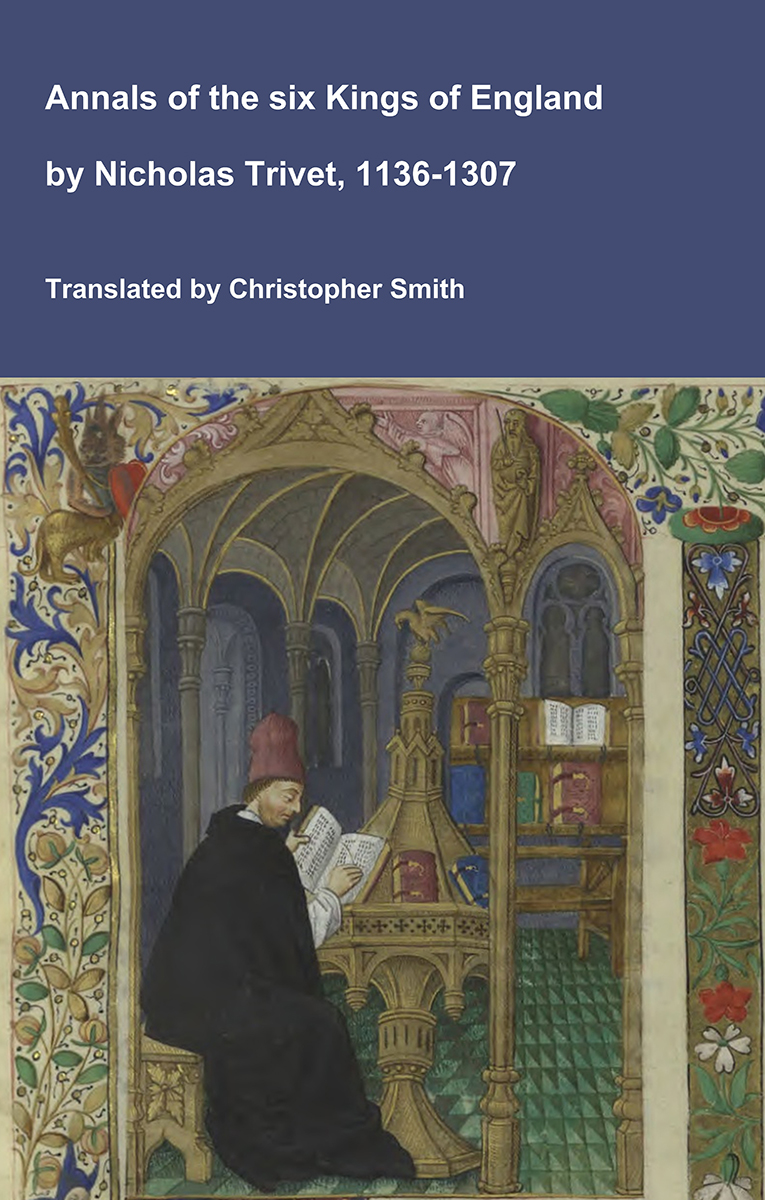
Annals of the six Kings of England by Nicholas Trivet
Translation of the Annals of the Six Kings of England by that traces the rise and rule of the Angevin aka Plantagenet dynasty from the mid-12th to early 14th century. Written by the Dominican scholar Nicholas Trivet, the work offers a vivid account of English history from the reign of King Stephen through to the death of King Edward I, blending political narrative with moral reflection. Covering the reigns of six monarchs—from Stephen to Edward I—the chronicle explores royal authority, rebellion, war, and the shifting balance between crown, church, and nobility. Trivet provides detailed insight into defining moments such as baronial conflicts, Anglo-French rivalry, and the consolidation of royal power under Edward I, whose reign he describes with particular immediacy. The Annals combines careful year-by-year reporting with thoughtful interpretation, presenting history not merely as a sequence of events but as a moral and political lesson. Ideal for readers interested in medieval history, kingship, and the origins of the English state, this chronicle remains a valuable and accessible window into the turbulent world of the Plantagenet kings.
Available at Amazon in eBook and Paperback format.
Letters of Horace Walpole. [11th December 1780] I believe, Sir, that I may have been over-candid to Hogarth, and fail his spirit and youth and talent may have hurried him into more real caricatures than I specified . yet he certainly restrained his bent that way pretty early. Charteris403 I have seen; but though Some years older than you, Sir, I cannot say I have at all a perfect idea of him: nor did I ever hear the curious anecdote you tell me of the banker and my father. I was much better acquainted with bishop Blackbourne. He lived within two doors of my father in Downing Street, and took much notice of me when I was near man. It is not to be ungrateful and asperse him, but to amuse you, if I give you some account of him from what I remember404. He was perfectly a fine gentleman to the last, to eighty-four; his favourite author was Waller, whom he frequently quoted. In point of decorum, he was not quite so exact as you have been told, Sir. I often dined with him, his mistress, Mrs. Conwys, sat at the head of the table, and Hayter405, his natural son by another woman, and very like him, at the bottom, as chaplain: he was afterwards Bishop of London. I have heard, but do not affirm it, that Mrs. Blackbourne, before she died, complained of Mrs. Conwys being brought under the same roof. To his clergy he was, I have heard, very imperious. One story I recollect, which showed how much he was a man of this world: and which the Queen herself repeated to my father. On the King's last journey to Hanover, before Lady Yarmouth came over, the Archbishop being With her Majesty, said to her, "Madam, I have been with your minister Walpole, and he tells me that you are a wise woman, and do not mind your husband's having a mistress." He was a little hurt at not being raised to Canterbury on Wake's death, and said to my father, "You did not think on me: but it is true, I am too old, I am too old." Perhaps, Sir, these are gossiping stories, but at least they hurt nobody now.
Note 403. The notorious Colonel Francis Charteris, to whom Hogarth has accorded a conspicuous place in the first plate of his Harlot's Progress. Pope describes him as "a man infamous for all manner of vices," and thus introduces him into his third Moral Essay:
"Riches in effect,
No grace of Heaven, or token of th' Elect;
Given to the fool, the mad, the vain, the evil,
To Ward, to Waters, Chartres, and the devil!"
He died in Scotland, in 1731, at the age of sixty-two. The populace, at his funeral, raised a great riot, almost tore the body out of the coffin, and cast dead dogs, etc. into the grave along with it.-E.
Note 404. See the note to vol. i. p. 314, letter 101.-E.
Note 405. For a refutation of Walpole's assertion, that Bishop Hayter was a natural son of bishop Blackbourn's, see vol. ii. p. 100, letter 39.-E.
On 11th December 1780 Duchess Anna Sophie Of Saxe-Coburg-Saalfeld (age 80) died.

On or before 11th December 1785, the date he was baptised, Joseph Gott was born to Unamed Gott at Calverley. His parentage appears subject to some confusion being described by some sources as the son of Benjamin Gott (age 23), some as his second cousin; we have adopted the former relationship.
Archaeologia Volume 7 Section XIX. A further account of some Druidical Remains [Carl Wark [Map]] in Derbyshire. By Hayman Rooke (age 62), Esq. Read December 11th, 1785.


On 11th December 1813 George Gordon 5th Duke Gordon (age 43) and Elizabeth Brodie Duchess Gordon (age 19) were married. She brought £100,000 to the marriage and inherited more then £100,000 when her father died. The difference in their ages was 24 years. He the son of Alexander Gordon 4th Duke Gordon (age 70).


On 11th December 1814 Susan Gordon Countess of Westmoreland (age 62) died. Memorial in the Church of St Leonard, Apethorpe [Map].
Susan Gordon Countess of Westmoreland: In 1752 she was born to Cosmo George Gordon 3rd Duke Gordon and Catherine Gordon Duchess Gordon. On 28th May 1767 John Fane 9th Earl of Westmoreland and she were married. The difference in their ages was 23 years. She the daughter of Cosmo George Gordon 3rd Duke Gordon and Catherine Gordon Duchess Gordon. He the son of Thomas Fane 8th Earl of Westmoreland and Elizabeth Swymmer Countess Westmoreland.
Vestiges of the Antiquities of Derbyshire. In December, 1827, a barrow was discovered upon the Cross Flatts, Middleton, by labourers digging holes for a plantation; on the 11th of that month it was thoroughly investigated, and was found to contain a skeleton, apparently that of a young person, deposited at full length in a natural cist in the rock, about two feet in depth; the head lay in an easterly direction; the weapons of this person consisted of an iron knife the blade five inches long with a portion of its wooden handle still remaining, and a piece of roughly chipped flint, probably a spear-head; a natural piece of stone of a remarkable form was also discovered near the body; rats' bones were apparent, though in smaller quantity than usual. A similar iron knife and part of a stone celt were found in the subsequent year within 9 few yards of this barrow; they had most probably been thrown out and overlooked at the time it was opened, or disturbed by the planters.
On 11th December 1830 John Adams Acton was born in Acton.
Greville Memoirs. 11th December 1831. In the evening.—Called on Lord Bathurst (age 69) in the morning; met him going out, and stopped to talk to him. He knew of the meeting in Downing Street; that Lords Harrowby, Wharncliffe (age 55), and Chandos were to meet the Chancellor and Lords Althorp and Grey; that Chandos had gone to Brighton, ostensibly to talk to the King about the West Indies, but had taken the opportunity to throw in something on the topic of Reform; that the King desired him to speak to Palmerston, and allowed him to say that he did so by his orders. (The King, it seems, knows nothing of what is going on, for he reads no newspapers and the Household tell him nothing.) Accordingly Chandos did speak to Palmerston, and the result was a note to him, begging these three would meet the three Ministers above mentioned. Lady Harrowby (age 59) told me that they went. Brougham did not arrive till the conference was nearly over. There was an abundant interchange of civilities, but nothing concluded, the Ministers declining every proposition that Lord Harrowby made to them, though Lord Grey owned that they did not ask for anything which involved an abandonment of the principle of the Bill. They are, then, not a bit nearer an accommodation than they were before.
The London Gazette 19805. Whitehall, December 11, 1839.
The Queen has been pleased to direct letters patent to be passed under the Great Seal, granting the dignities of Baron and Earl of the United Kingdom of Great Britain and Ireland unto the Right Honourable George Lord Auckland (age 55), G. C. B. and the heirs male of his body lawfully begotten, by the names, styles, and titles of Baron Eden, of Norwood, in the county of Surrey, and Earl of Auckland.
The Queen has also been pleased to direct letters patent to be passed under the Great Seal, granting the dignity of' a Baron of the United Kingdom, of Great Britain and Ireland unto Lieutenant-General Sir John 'Keane (age 58), GCB. and the heirs male of his body, lawfully begotten, by the name, style, and title of Baron Keane, of Ghuznee, in Afghanistan, and of Cappoquin, hi the county of Waterford.

On 11th December 1850 Mary Victoria Douglas Hamilton was born to William Alexander Archibald Hamilton 11th Duke Hamilton 8th Duke Brandon (age 39). She married 21st September 1869 Albert Grimaldi.
Jean de Waurin's Chronicle of England Volume 6 Books 3-6: The Wars of the Roses
Jean de Waurin was a French Chronicler, from the Artois region, who was born around 1400, and died around 1474. Waurin’s Chronicle of England, Volume 6, covering the period 1450 to 1471, from which we have selected and translated Chapters relating to the Wars of the Roses, provides a vivid, original, contemporary description of key events some of which he witnessed first-hand, some of which he was told by the key people involved with whom Waurin had a personal relationship.
Available at Amazon in eBook and Paperback format.
On 11th December 1889 Cedric Lockwood Morris 9th Baronet was born to George Lockwood Morris 8th Baronet (age 30).
On 11th December 1899 Augustus Paulet 15th Marquess of Winchester (age 41) was killed in action at Magersfontein, South Africa in a battle where the defending Boer force defeated the advancing British forces. His brother Henry (age 37) succeeded 16th Marquess Winchester, 16th Earl Wiltshire, 16th Baron St John.
On 11th December 1917 Walter Mills (age 23) died of gas poisoning. He was buried at Gorre British & Indian Cemetery, Nr Bethune, Pas-De-Calais, France.
On 11th December 1933 Emile Wauters (age 87) died.

On 11th December 1936 the former King Edward VIII (age 42) made a BBC radio broadcast from Windsor Castle having abdicated the previous day: "At long last I am able to say a few words of my own. I have never wanted to withhold anything, but until now it has not been constitutionally possible for me to speak. A few hours ago I discharged my last duty as King and Emperor, and now that I have been succeeded by my brother, The Duke of York, my first words must be to declare my allegiance to him. This I do with all my heart. You all know the reasons which have impelled me to renounce the Throne. But I want you to understand that in making up my mind I did not forget the country or the Empire which as Prince of Wales, and lately as King, I have for twenty-five years tried to serve. But you must believe me when I tell you that I have found it impossible to carry the heavy burden of responsibility and to discharge my duties as King as I would wish to do without the help and support of the woman I love. And I want you to know that the decision I have made has been mine and mine alone. This was a thing I had to judge entirely for myself. The other person most nearly concerned has tried up to the last to persuade me to take a different course. I have made this, the most serious decision of my life, only upon the single thought of what would in the end be best for all. This decision has been made less difficult to me by the sure knowledge that my brother, with his long training in the public affairs of this country and with his fine qualities, will be able to take my place forthwith, without interruption or injury to the life and progress of the Empire. And he has one matchless blessing, enjoyed by so many of you and not bestowed on me - a happy home with his wife and children. During these hard days I have been comforted by Her Majesty my mother and by my family. The Ministers of the Crown, and in particular Mr. Baldwin, the Prime Minister, have always treated me with full consideration. There has never been any constitutional difference between me and them and between me and Parliament. Bred in the constitutional tradition by my father, I should never have allowed any such issue to arise. Ever since I was Prince of Wales, and later on when I occupied the Throne, I have been treated with the greatest kindness by all classes of the people, wherever I have lived or journeyed throughout the Empire. For that I am very grateful. I now quit altogether public affairs, and I lay down my burden. It may be some time before I return to my native land, but I shall always follow the fortunes of the British race and Empire with profound interest, and if at any time in the future I can be found of service to His Majesty in a private station I shall not fail. And now we all have a new King. I wish him, and you, his people, happiness and prosperity with all my heart. God bless you all. God Save The King."

On 11th December 1936 King Edward VIII of the United Kingdom (age 42) abdicated VIII King of the United Kingdom. King George VI of the United Kingdom (age 40) succeeded VI King of the United Kingdom. Duke York merged with the Crown.
On 11th December 1941 Arthur Charles Wellesley 5th Duke Wellington (age 65) died. His son Henry (age 29) succeeded 6th Duke Wellington, 10th Earl Mornington, 10th Viscount Wellesley of Dangan Castle, 6th Viscount Wellington of Talavera.
On 11th December 1962 Alexander Montagu 13th Duke of Manchester was born to Angus Montagu 12th Duke of Manchester (age 24).
On 11th December 1980 Viktoria Luise Hohenzollern Duchess Brunswick (age 88) died.
On 11th December 1565 William Brooke was born to William Brooke 10th Baron Cobham (age 38) and Frances Newton Baroness Cobham (age 26).
On 11th December 1593 William Armine 1st Baronet was born to William Armyn of Osgodby South Kesteven Lincolnshire (age 32) and Martha Eure. He married (1) 14th December 1619 Elizabeth Hicks Lady Armine and had issue (2) 28th August 1628 his sixth cousin Mary Talbot.
Chronicle of Walter of Guisborough
A canon regular of the Augustinian Guisborough Priory, Yorkshire, formerly known as The Chronicle of Walter of Hemingburgh, describes the period from 1066 to 1346. Before 1274 the Chronicle is based on other works. Thereafter, the Chronicle is original, and a remarkable source for the events of the time. This book provides a translation of the Chronicle from that date. The Latin source for our translation is the 1849 work edited by Hans Claude Hamilton. Hamilton, in his preface, says: 'In the present work we behold perhaps one of the finest samples of our early chronicles, both as regards the value of the events recorded, and the correctness with which they are detailed; Nor will the pleasing style of composition be lightly passed over by those capable of seeing reflected from it the tokens of a vigorous and cultivated mind, and a favourable specimen of the learning and taste of the age in which it was framed.'
Available at Amazon in eBook and Paperback format.
On 11th December 1635 William Twysden 3rd Baronet was born to Roger Twysden 2nd Baronet (age 38) and Isabella Saunders (age 30).
On 11th December 1683 Thomas Howard 8th Duke of Norfolk was born to Thomas Howard (age 26) and Mary Elizabeth Savile (age 20). He was raised as a Catholic at the court in exile in France (where his mother was governess to the prince of Wales). His Catholicism was used as a lever by his childless uncle, Henry Howard 7th Duke of Norfolk (age 28), to secure support for his divorce bill which, he argued, would enable him to remarry and provide instead a protestant heir to his dukedom. Norfolk's untimely death meant that he was succeeded by his Catholic nephew after all. He married 26th May 1709 Maria Shireburn Duchess Norfolk, daughter of Nicholas Shireburn 1st Baronet.
On 11th December 1709 Louise Élisabeth Bourbon Queen Consort Spain was born to Philippe Bourbon II Duke Orléans (age 35) and Françoise Marie Bourbon Duchess Orléans (age 32). She a great x 3 granddaughter of King James I of England and Ireland and VI of Scotland. Coefficient of inbreeding 7.39%. She married 20th January 1722 her half first cousin once removed Louis I King Spain, son of Philippe V King Spain and Maria Luisa Savoy.
On 11th December 1740 Peyton Skipwith 7th Baronet was born to William Skipwith 6th Baronet (age 32) at Blandford, Prince George County. He married (1) 1764 Anne Miller Lady Skipwith and had issue (2) 25th September 1788 Jean Miller Lady Skipwith.
On 11th December 1764 John Gladstone 1st Baronet was born to Thomas Gladstones (age 32). He married 20th April 1800 Anne MacKenzie Robertson and had issue.
On 11th December 1796 Richard William Penn Curzon Howe 1st Earl Howe was born to Penn Curzon (age 39) and Sophia Howe 2nd Baroness Howe. He married (1) 19th March 1820 Harriet Georgiana Brudenell Countess Howe, daughter of Robert Brudenell 6th Earl Cardigan and Penelope Cooke Countess Cardigan, and had issue (2) 9th October 1845 Anne Gore Countess Howe and had issue.
On 11th December 1799 Bishop George Spencer was born to William Robert Spencer (age 30) and Susan Jenison. He a great x 3 grandson of King Charles II of England Scotland and Ireland. He married 1823 Harriet Theodora Hobhouse, daughter of Benjamin Hobhouse 1st Baronet and Amelia Parry.
On 11th December 1807 Reverend Ernest Adolphus Waller was born to Jonathan Wathen Phipps aka Waller 1st Baronet (age 38) and Elizabeth Slack (age 33). Coefficient of inbreeding 3.12%.
On 11th December 1808 Thomas Henry Foley 4th Baron Foley was born to Thomas Foley 3rd Baron Foley (age 27) and Cecilia Olivia Geraldine Fitzgerald Baroness Foley (age 22). He married 16th July 1849 his half fifth cousin once removed Mary Charlotte Fitzalan Baroness Foley, daughter of Henry Charles Howard 13th Duke of Norfolk and Charlotte Sophia Leveson-Gower Duchess Norfolk, and had issue.
On 11th December 1811 George William Denys 2nd Baronet was born to George Denys 1st Baronet (age 23) and Elizabeth Lind.
On 11th December 1830 John Adams Acton was born in Acton.
On 11th December 1850 Mary Victoria Douglas Hamilton was born to William Alexander Archibald Hamilton 11th Duke Hamilton 8th Duke Brandon (age 39). She married 21st September 1869 Albert Grimaldi.
Chronicle of a Bourgeois of Valenciennes
Récits d’un bourgeois de Valenciennes aka The Chronicle of a Bourgeois of Valenciennes is a vivid 14th-century vernacular chronicle written by an anonymous urban chronicler from Valenciennes in the County of Hainaut. It survives in a manuscript that describes local and regional history from about 1253 to 1366, blending chronology, narrative episodes, and eyewitness-style accounts of political, military, and social events in medieval France, Flanders, and the Low Countries. The work begins with a chronological framework of events affecting Valenciennes and its region under rulers such as King Philip VI of France and the shifting allegiances of local nobility. It includes accounts of conflicts, sieges, diplomatic manoeuvres, and the impact of broader struggles like the Hundred Years’ War on urban life in Hainaut. Written from the perspective of a burgher (bourgeois) rather than a monastery or royal court, the chronicle offers a rare lay viewpoint on high politics and warfare, reflecting how merchants, townspeople, and civic institutions experienced the turbulence of the 13th and 14th centuries. Its narrative style combines straightforward reporting of events with moral and civic observations, making it a valuable source for readers interested in medieval urban society, regional politics, and the lived experience of war and governance in pre-modern Europe.
Available at Amazon in eBook and Paperback format.
On 11th December 1855 Edmund Charles Simeon 5th Baronet was born to John Simeon 3rd Baronet (age 40) and Jane Maria Baker Lady Simeon (age 36). Coefficient of inbreeding 6.25%.
On 11th December 1861 Gerald Arthur Arundell 15th Baron Arundel was born to Theodore Arundell and Louise Hussey. He married 9th March 1906 Ivy Florence Mary Segrave Baroness Arundel Wardour and had issue.
On 11th December 1889 Cedric Lockwood Morris 9th Baronet was born to George Lockwood Morris 8th Baronet (age 30).
On 11th December 1899 William Randle Starkey 2nd Baronet was born to Captain John Ralph Starkey 1st Baronet (age 40).
On 11th December 1903 Walter Raymond Burrell 8th Baronet was born to Merrik Raymond Burrell 7th Baronet (age 26).
On 11th December 1910 Diana Mary Fynola Egerton Lady Fletcher was born to Lieutenant-Colonel Arthur George Edward Egerton (age 31) and Nora Mary Fynvola Mackinnon (age 30). She married 1939 John Aubrey-Fletcher 7th Baronet, son of Henry Aubrey-Fletcher 6th Baronet and Mary Augusta Chilton Lady Fletcher, and had issue.
On 11th December 1912 Arthur Mountifort Longfield Ponsonby 11th Earl Bessborough was born to Cyril Myles Ponsonby (age 31).
On 11th December 1935 Nicholas Vivian 6th Baron Vivian was born to Anthony Vivian 5th Baron Vivian (age 29) and Victoria Oliphant Baroness Vivian (age 28).
On 11th December 1945 Ian Walter Farquhar was born to Peter Farquhar 6th Baronet (age 41).
On 11th December 1962 Alexander Montagu 13th Duke of Manchester was born to Angus Montagu 12th Duke of Manchester (age 24).
On 11th December 1523 Landgrave Philip I of Hesse (age 19) and Christine of Saxony (age 17) were married. He the son of William II Landgrave of Hesse. They were third cousins.
On 11th December 1654 Henry Tichborne 3rd Baronet (age 30) and Mary Adundell Lady Tichborne (age 27) were married. They were third cousin once removed.
Chronicle of Walter of Guisborough
A canon regular of the Augustinian Guisborough Priory, Yorkshire, formerly known as The Chronicle of Walter of Hemingburgh, describes the period from 1066 to 1346. Before 1274 the Chronicle is based on other works. Thereafter, the Chronicle is original, and a remarkable source for the events of the time. This book provides a translation of the Chronicle from that date. The Latin source for our translation is the 1849 work edited by Hans Claude Hamilton. Hamilton, in his preface, says: 'In the present work we behold perhaps one of the finest samples of our early chronicles, both as regards the value of the events recorded, and the correctness with which they are detailed; Nor will the pleasing style of composition be lightly passed over by those capable of seeing reflected from it the tokens of a vigorous and cultivated mind, and a favourable specimen of the learning and taste of the age in which it was framed.'
Available at Amazon in eBook and Paperback format.
On 11th December 1664 Henry Barnewall 2nd Viscount Barnewall and Mary Nugent Viscountess Barnewall (age 16) were married. They were second cousin twice removed.
On 11th December 1688 William Coryton 3rd Baronet (age 38) and Susanna Littleton were married at Lee, Kent. He subsequently remarried the widow of Thomas Williams of London.
On 11th December 1743 Frederick V King of Denmark and Norway (age 20) and Louise Hanover Queen Consort Denmark and Norway (age 18) were married. She by marriage Queen Consort Denmark and Norway. She the daughter of King George II of Great Britain and Ireland (age 60) and Caroline Hohenzollern Queen Consort England. He the son of Christian VI King of Denmark and Norway (age 44). They were third cousin once removed.
On 11th December 1752 Robert Jocelyn 1st Earl Roden (age 21) and Anne Hamilton Countess Roden (age 22) were married. She the daughter of James Hamilton 1st Earl Clanbrassil (age 58) and Harriet Bentinck Countess Clanbrassil (age 47).
On 11th December 1813 George Gordon 5th Duke Gordon (age 43) and Elizabeth Brodie Duchess Gordon (age 19) were married. She brought £100,000 to the marriage and inherited more then £100,000 when her father died. The difference in their ages was 24 years. He the son of Alexander Gordon 4th Duke Gordon (age 70).
On 11th December 1845 Francis Crossley 1st Baronet (age 28) and Martha Eliza Brinton were married.
On 11th December 1909 John Francis Grey Gilliat (age 27) and Lilian Florence Chetwynd Marchioness of Anglesey (age 33) were married. She the daughter of George Chetwynd 4th Baronet (age 60) and Florence Cecilia Paget Marchioness Hastings.


On 04 Dec 1139, according to the Anglo-Saxon Chronicle, or 11th December 1139, according to Monumental Effigies of Great Britiain, Bishop Roger of Salisbury died.
On 11th December 1282 an English force including John Giffard 1st Baron Giffard Brimpsfield (age 50), Gruffydd ap Gwenwynwyn Mathrafal Prince Powys Wenwynwyn (age 71) and Owen de la Pole Mathrafal 1st Lord Powis (age 25) defeated a Welsh force at Builth Wells [Map] during the Battle of Orewin Bridge. The Welsh leader Llywelyn "Last" Aberffraw (age 49) was killed effectively bringing to an end the independence of Wales. His brother Dafydd (age 44) succeeded Prince of Wales.
On 11th December 1357 Thomas Bardolf 2nd Baron Bardolf (age 75) died. His son John (age 43) succeeded 3rd Baron Bardolf of Wormegay in Norfolk.
On 11th December 1443 John Cornwall 1st Baron Fanhope 1st Baron Milbroke (age 79) died at Ampthill Castle, Bedfordshire [Map]. He was buried at Blackfriars Priory, Ludgate. Baron Fanhope, Baron Milbroke extinct.
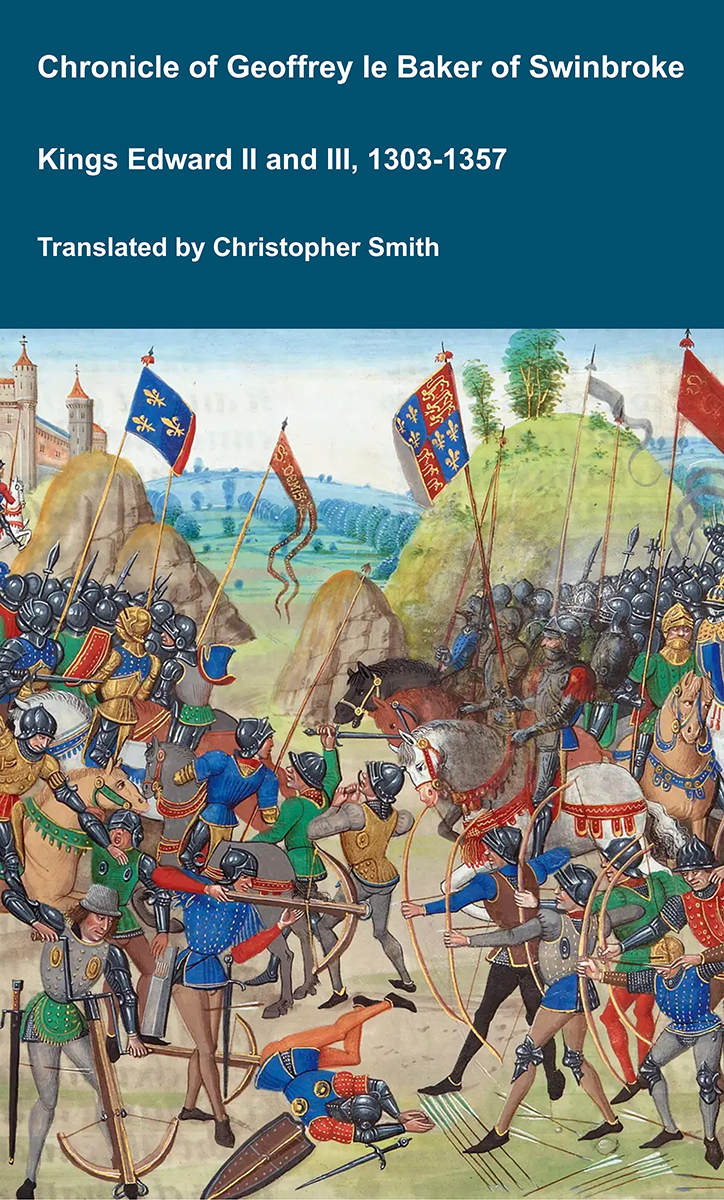
Chronicle of Geoffrey le Baker of Swinbroke
Baker was a secular clerk from Swinbroke, now Swinbrook, an Oxfordshire village two miles east of Burford. His Chronicle describes the events of the period 1303-1356: Gaveston, Bannockburn, Boroughbridge, the murder of King Edward II, the Scottish Wars, Sluys, Crécy, the Black Death, Winchelsea and Poitiers. To quote Herbert Bruce 'it possesses a vigorous and characteristic style, and its value for particular events between 1303 and 1356 has been recognised by its editor and by subsequent writers'. The book provides remarkable detail about the events it describes. Baker's text has been augmented with hundreds of notes, including extracts from other contemporary chronicles, such as the Annales Londonienses, Annales Paulini, Murimuth, Lanercost, Avesbury, Guisborough and Froissart to enrich the reader's understanding. The translation takes as its source the 'Chronicon Galfridi le Baker de Swynebroke' published in 1889, edited by Edward Maunde Thompson.
Available at Amazon in eBook and Paperback format.
On 11th December 1471 Isabella Aviz Duchess Burgundy (age 74) died.
On 11th December 1474 Henry IV King Castile (age 49) died. His half sister Isabella (age 23) succeeded Queen Castile.
On 11th December 1490 Joan Fauconberg Countess Kent (age 84) died. Baron Fauconberg abeyant between her daughters and their descendants.
On 11th December 1581 Maria Habsburg Spain Duchess Cleves (age 50) died.
On 11th December 1643 Henry Clifford 5th Earl of Cumberland (age 52) died. Earl of Cumberland extinct. His daughter Elizabeth (age 30) succeeded 2nd Baroness Clifford.
Anne Clifford Countess Dorset and Pembroke (age 53) regained the estates she had been legally entitled to since her father died in 1605.


On 11th December 1669 Philip Herbert 5th Earl Pembroke 2nd Earl Montgomery (age 48) died. His son William (age 28) succeeded 6th Earl Pembroke, 3rd Earl Montgomery.
On 11th December 1675 Hugh Myddelton 3rd Baronet (age 42) died. His son Hugh (age 22) succeeded 4th Baronet Myddelton of Ruthin in Denbighshire.
On 11th December 1683 George Lane 1st Viscount Lanesborough (age 63) died. His son James (age 34) succeeded 2nd Viscount Lanesborough.
On 11th December 1686 Louis "Le Grand Condé" Bourbon Condé II Prince Condé (age 65) died. His son Henri (age 43) succeeded Prince Condé.
On 11th December 1718 Charles XII King of Sweden (age 36) was killed whilst in the trenches around Fredriksten which his army was besieging. He was struck in the head by a projectile and killed. The shot struck the left side of his skull and exited from the right. It isn't clear who fired the shot. His sister Ulrika (age 30) succeeded Queen Sweden. She effectively usurped her nephew Charles Frederick Duke of Holstein Gottorp (age 18) whose parents were both dead.

On 11th December 1718 John Germain 1st Baronet (age 68) died. Baronet Germain of Westminster extinct. His wife survived him until 1769 when she left his and her etates to George Sackville aka Germain 1st Viscount Sackville (age 2) who adopted the surname Germain.
On 11th December 1721 John Shaw 2nd Baronet (age 61) died. He was buried at the Church of Holy Trinity, Eltham on 21st December 1721. His son John (age 34) succeeded 3rd Baronet Shaw of Eltham in Kent. Anna Maria Barnardiston Lady Shaw (age 24) by marriage Lady Shaw of Eltham in Kent.
On 11th December 1739 Francis Stuart 7th Earl of Moray (age 56) died. His son James (age 31) succeeded 8th Earl Moray.
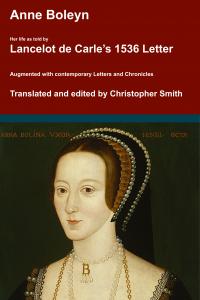
Anne Boleyn. Her Life as told by Lancelot de Carle's 1536 Letter.
In 1536, two weeks after the execution of Anne Boleyn, her brother George and four others, Lancelot du Carle, wrote an extraordinary letter that described Anne's life, and her trial and execution, to which he was a witness. This book presents a new translation of that letter, with additional material from other contemporary sources such as Letters, Hall's and Wriothesley's Chronicles, the pamphlets of Wynkyn the Worde, the Memorial of George Constantyne, the Portuguese Letter and the Baga de Secrets, all of which are provided in Appendices.
Available at Amazon in eBook and Paperback format.
On 11th December 1768 John Playters 5th Baronet (age 88) died. His grandson John (age 26) succeeded 6th Baronet Playters of Sotterley in Suffolk.
On 11th December 1771 James Lumley 4th Baronet (age 74) died unmarried. Baronet Lumley of Bardfield Magna in Essex extinct.
On 11th December 1772 William Trelawny 6th Baronet (age 50) died. His son Harry (age 16) succeeded 7th Baronet Trelawny of Trelawny in Cornwall.
On 11th December 1779 Harriet Powell aka Lamb Lady Seaforth died.
On 11th December 1780 Duchess Anna Sophie Of Saxe-Coburg-Saalfeld (age 80) died.

On 11th December 1781 Francis Dashwood 11th Baron Despencer (age 73) died without legitimate issue. Baron Despencer abeyant between his sister, Rachel Dashwood (age 75), and the descendants of his aunt, Catherine Fane. When his sister died without issue in 1788 the barony was called out of abeyance in favour of Thomas Stapleton 12th Baron Despencer (age 15), the only surviving descendant of his aunt. His half brother John (age 65) succeeded 3rd Baronet Dashwood of West Wycombe in Buckinghamshire.
On 11th December 1786 Thomas Villiers 1st Earl Clarendon (age 77) died. His son Thomas (age 32) succeeded 2nd Earl Clarendon, 2nd Baron Hyde of Hindon in Wiltshire 1756.
On 11th December 1814 Susan Gordon Countess of Westmoreland (age 62) died. Memorial in the Church of St Leonard, Apethorpe [Map].
Susan Gordon Countess of Westmoreland: In 1752 she was born to Cosmo George Gordon 3rd Duke Gordon and Catherine Gordon Duchess Gordon. On 28th May 1767 John Fane 9th Earl of Westmoreland and she were married. The difference in their ages was 23 years. She the daughter of Cosmo George Gordon 3rd Duke Gordon and Catherine Gordon Duchess Gordon. He the son of Thomas Fane 8th Earl of Westmoreland and Elizabeth Swymmer Countess Westmoreland.
On 11th December 1816 Richard Howard 4th Earl of Effingham (age 68) died. Earl of Effingham extinct. His third cousin Kenneth (age 49) succeeded 11th Baron Howard of Effingham.
On 3rd December 1820 Mary Berwick Lady Lechmere died. She was buried at St Mary's Church, Hanley Castle [Map] on 11th December 1820.
Abbot John Whethamstede’s Chronicle of the Abbey of St Albans
Abbot John Whethamstede's Register aka Chronicle of his second term at the Abbey of St Albans, 1451-1461, is a remarkable text that describes his first-hand experience of the beginning of the Wars of the Roses including the First and Second Battles of St Albans, 1455 and 1461, respectively, their cause, and their consequences, not least on the Abbey itself. His text also includes Loveday, Blore Heath, Northampton, the Act of Accord, Wakefield, and Towton, and ends with the Coronation of King Edward IV. In addition to the events of the Wars of the Roses, Abbot John, or his scribes who wrote the Chronicle, include details in the life of the Abbey such as charters, letters, land exchanges, visits by legates, and disputes, which provide a rich insight into the day-to-day life of the Abbey, and the challenges faced by its Abbot.
Available at Amazon in eBook and Paperback format.
On 11th December 1821 Martin ffolkes 1st Baronet (age 72) died. His son William (age 35) succeeded 2nd Baronet ffolkes of Hillington Hall in Norfolk.
On 11th December 1824 George Richard St John 4th Viscount St John 3rd Viscount Bolingbroke (age 63) died at Pisa. His son Henry (age 38) succeeded 5th Viscount St John, 4th Viscount Bolingbroke, 8th Baronet St John Lydiard Tregoze in Wiltshire. Maria St John-Mildmay Viscountess Bolingbroke and St John (age 34) by marriage Viscountess St John, Viscountess Bolingbroke.
On 11th December 1882 Thomas Watson 1st Baronet (age 90) died. His son Arthur (age 52) succeeded 2nd Baronet Watson of Henrietta Street, Cavendish Square, Middlesex. Rosamund Rushworth Lady Watson by marriage Lady Watson of Henrietta Street, Cavendish Square, Middlesex.
On 11th December 1888 Broderick Hartwell 2nd Baronet (age 75) died. His son Francis (age 52) succeeded 3rd Baronet Hartwell of Dale Hall in Essex.

On 11th December 1898 William Jenner 1st Baronet (age 83) died. His son Walter (age 38) succeeded 2nd Baronet Jenner of Harley Street.
On 11th December 1899 Augustus Paulet 15th Marquess of Winchester (age 41) was killed in action at Magersfontein, South Africa in a battle where the defending Boer force defeated the advancing British forces. His brother Henry (age 37) succeeded 16th Marquess Winchester, 16th Earl Wiltshire, 16th Baron St John.
On 11th December 1900 Henry Ryder 4th Earl of Harrowby (age 64) died at sea on his yacht Miranda at Algiers. His son John (age 36) succeeded 5th Earl of Harrowby, 6th Baron Harrowby of Harrowby in Lincolnshire.
On 11th December 1922 Charles John Monson Shaw 8th Baronet (age 62) died. His son John (age 27) succeeded 9th Baronet Shaw of Eltham in Kent. Elizabeth Mary Theodora Hughes Lady Shaw (age 26) by marriage Lady Shaw of Eltham in Kent.
On 11th December 1933 Emile Wauters (age 87) died.
On 11th December 1941 Arthur Charles Wellesley 5th Duke Wellington (age 65) died. His son Henry (age 29) succeeded 6th Duke Wellington, 10th Earl Mornington, 10th Viscount Wellesley of Dangan Castle, 6th Viscount Wellington of Talavera.
Chronicle of a Bourgeois of Valenciennes
Récits d’un bourgeois de Valenciennes aka The Chronicle of a Bourgeois of Valenciennes is a vivid 14th-century vernacular chronicle written by an anonymous urban chronicler from Valenciennes in the County of Hainaut. It survives in a manuscript that describes local and regional history from about 1253 to 1366, blending chronology, narrative episodes, and eyewitness-style accounts of political, military, and social events in medieval France, Flanders, and the Low Countries. The work begins with a chronological framework of events affecting Valenciennes and its region under rulers such as King Philip VI of France and the shifting allegiances of local nobility. It includes accounts of conflicts, sieges, diplomatic manoeuvres, and the impact of broader struggles like the Hundred Years’ War on urban life in Hainaut. Written from the perspective of a burgher (bourgeois) rather than a monastery or royal court, the chronicle offers a rare lay viewpoint on high politics and warfare, reflecting how merchants, townspeople, and civic institutions experienced the turbulence of the 13th and 14th centuries. Its narrative style combines straightforward reporting of events with moral and civic observations, making it a valuable source for readers interested in medieval urban society, regional politics, and the lived experience of war and governance in pre-modern Europe.
Available at Amazon in eBook and Paperback format.
On 11th December 1944 Lieutenant-Colonel William Orde-Powlett 5th Baron Bolton (age 75) died. His son Nigel (age 44) succeeded 6th Baron Bolton of Bolton in Yorkshire.
On 11th December 1947 George Lane-Fox 1st Baron Bingley (age 76) died. Baron Bingley of Bramham in Yorkshire extinct.
On 11th December 1951 Christopher Addison 1st Viscount Addison (age 83) died. His son Christopher (age 47) succeeded 2nd Viscount Addison of Stallingborough in Lincolnshire, 2nd Baron Addison of Stallingborough in Lincolnshire. Brigit Williams Viscountess Addison by marriage Viscountess Addison of Stallingborough in Lincolnshire.

On 11th December 1974 Mary Beatrice Thynne Baroness Nunburnholme (age 71) died.
On 11th December 1980 Viktoria Luise Hohenzollern Duchess Brunswick (age 88) died.
On 11th December 1994 Robert Frederick-Strickland-Constable 11th Baronet (age 91) died. His son Frederic (age 50) succeeded 12th Baronet Strickland-Constable of Boynton in Yorkshire.
On 11th December 2015 Christopher Patrick Parnell 8th Baron Congleton (age 85) died. His son John (age 56) succeeded 9th Baron Congleton of Congleton in Cheshire, 12th Baronet Parnell of Rathleague Queen's County.