


Text this colour links to Pages. Text this colour links to Family Trees. Text this colour are links that disabled for Guests.
Place the mouse over images to see a larger image. Click on paintings to see the painter's Biography Page.
Mouse over links for a preview. Move the mouse off the painting or link to close the popup.
Abbot John Whethamstede’s Chronicle of the Abbey of St Albans
Abbot John Whethamstede's Register aka Chronicle of his second term at the Abbey of St Albans, 1451-1461, is a remarkable text that describes his first-hand experience of the beginning of the Wars of the Roses including the First and Second Battles of St Albans, 1455 and 1461, respectively, their cause, and their consequences, not least on the Abbey itself. His text also includes Loveday, Blore Heath, Northampton, the Act of Accord, Wakefield, and Towton, and ends with the Coronation of King Edward IV. In addition to the events of the Wars of the Roses, Abbot John, or his scribes who wrote the Chronicle, include details in the life of the Abbey such as charters, letters, land exchanges, visits by legates, and disputes, which provide a rich insight into the day-to-day life of the Abbey, and the challenges faced by its Abbot.
Available at Amazon in eBook and Paperback format.
18 May is in May.
1152 Marriage of Henry II and Eleanor of Aquitaine
1425 Purge of the Albany Stewarts
1533 Coronation of Anne Boleyn
1561 Creation of Garter Knights
1568 Mary Queen of Scots escapes to England
1661 Creation of Baronets and Peerages by Charles II Post Coronation
On 18th May 978 Frederick Ardennes I Duke Lower Lorraine (age 66) died. His son Thierry (age 13) succeeded I Duke Lower Lorraine.
On 18th May 1152 Whit Sunday King Henry "Curtmantle" II of England (age 19) and Eleanor of Aquitaine Queen Consort Franks and England (age 30) were married at Poitiers Cathedral [Map]. They were more closely related than Eleanor and her previous husband Louis VII King of the Franks (age 32). The marriage would bring the Kingdom of England, and the Duchies of Normandy and Aquitaine under the control of King Henry "Curtmantle" II of England. She the daughter of William "Saint" Poitiers X Duke Aquitaine and Aenor Chatellerault Duchess Aquitaine. He the son of Geoffrey Plantagenet Duke Normandy and Empress Matilda (age 50). They were half third cousins. He a grandson of King Henry I "Beauclerc" England.
Flowers of History by Roger of Wendover 1152. 18th May 1152. Henry duke of Normandy married queen Eleanor, divorced the year before from king Louis, by which marriage, in addition to his duchy of Normandy and county of Anjou, he acquired the duchy of Aquitaiiie and county of Poictou. When king Louis heard of this, he was greatly incensed against duke Henry, for he had two daughters already by the aforesaid Eleanor, who would be disinherited if she should bear a son by any other husband.
Annals of Waverley. 18th May 1152. In the same year, around Pentecost, Henry, Duke of Normandy, married Eleanor, Countess of Poitou, whom King Louis had shortly before dismissed due to consanguinity. When King Louis heard of this, he was deeply angered at the duke. He had two daughters by Eleanor and did not want her to bear sons by another, lest his daughters be disinherited by Eleanor's new offspring ...
Eodem anno circa Pentecosten Henricus dux Normannorum duxit Alienor comitissam Pictavensem, quam paulo ante rex Ludowicus propter consanguinitatem dimiserat. Quo audito rex Ludovicus commotus est contra eundem ducem. Habebat autem duas filias de ca, et non volebat ut aliquo ilia filios exciperet, unde prjjedictas filial exhæredarentur ...
Images of Histories by Ralph Diceto. 18th May 1152. Henry took as his wife Eleanor, the widow of the King of France. Aquitaine abounds in the wealth of all things.
Henricus relictam regis Francorum Alienor duxit uxorem. Aquitannia rerum affluit opulentiis.
Chronicum Anglicanum by Ralph Coggeshall. Without delay, Henry, Duke of Normandy, took Eleanor as his wife1, along with the County of Aquitaine.
... quam sine mora Henricus dux Normanniæ accepit in uxorem cum comitatu Aquitaniæ.
Note 1. King Henry and Eleanor of Aquitaine were married on the 18th May 1152; they were half-third cousins. Despite her earlier marriage to Louis having been annulled on the basis of consanguinity Henry and Eleanor were more closely related than Louis and Eleanor.
Chronica Majora by Matthew Paris. 18th May 1152. In the year of our Lord 1152, Henry, Duke of Normandy, took as his wife Eleanor, formerly Queen of the Franks, whom King Louis had dismissed the previous year on account of consanguinity and the aforementioned reasons. Thus, Henry became Duke of Aquitaine and Count of Poitou, who had already been Duke of Normandy and Count of Anjou.
Anno Domini MCLI. Dux Normannorum Henricus duxit Alienor quondam [Francorum] reginam, quam Lodowicus rex anno præterito propter consanguinitatem et propter prætactas causas dimiserat, et sic factus est dux Aquitanniæ et comes Pictaviæ, qui prius fuerat dux Normannorum et consul Andegavorum.
On 18th May 1281 Agnes Habsburg was born to Albert Habsburg I Duke Austria (age 25) and Elizabeth Carinthia Duchess Austria.
Rymer's Fœdera Volume 1. Bull of Pope Clement V, to announce that Robert the Bruce is excommunicated for the death of John Comyn.
Clement, bishop, servant of the servants of God, to his venerable brothers, the Archbishop of York and the Bishop of Carlisle, greeting and apostolic blessing. It has come to our hearing, on trustworthy report, that Robert, Earl of Carrick, together with certain of his followers in this matter, came with an armed force to the church of the Friars Minor at Dumfries, in the diocese of Glasgow, and there unlawfully violated the immunity of that church, committing sacrilege therein by homicide, in violation of the privileges granted to the said friars by the Apostolic See, to the peril of his soul and the scandal of many. For this, it is said, he has incurred the sentence of excommunication. Since, if these matters are founded in truth, we neither wish nor ought to pass them over in silence, we command you by these apostolic letters: if it is established to you that the said earl, and others adhering to him in this matter, have incurred the sentence of excommunication for the aforesaid acts or any of them, you are to publicly declare, in your churches, before the people, with bells rung and candles lit, that the said earl by name, and the others adhering to him in this matter, are excommunicated. And you are to ensure that this be announced through the kingdoms of England and Scotland, and the lands and parts of Ireland and Wales, and in other places as you see fit, and that they be strictly shunned by all until the earl and the aforesaid adherents have made proper satisfaction in these matters and have merited to obtain the due benefit of absolution. Moreover, all supporters, followers, and harborers of the said earl, unless, after the warning has been given, they cease to favor, follow, or harbor him, you are likewise to bind with the chain of excommunication, publicly declaring them excommunicated in the same way, and causing it to be announced in all places where you judge it expedient. And you are to place their lands, castles, and towns under ecclesiastical interdict, and cause this to be strictly observed by our authority, until they cease to follow or harbor the said earl, and have obtained the benefit of absolution according to our good pleasure and commands. Given at Bordeaux, on the fifteenth day before the Kalends of June [18th May 1306], in the first year of our pontificate.
Bulla Clementis V Pape, ad denunciandum Robertum de Brus excommunicatum pro morte J. Comyn.
Clemens episcopus, servus servorum Dei, venerabilibus fratribus, archiepiscopo Eboracensi, & episcopo Karleolensi, salutem & apostolicam benedictionem. Ad audientiam nostram fidedignâ relatione pervenit, quod Robertus comes de Carrue, cum nonnullis suis, in hâc parte sequacibus, ad ecclesiam loci fratrum Minorum de Dunfres, Glasguen' dioc' manu accedens armatâ, ipsius immunitatem ecclesiæ temerè violavit; in eâ sacrilegium per homicidium committendo, contra indulta privilegiorum, eisdem fratribus à sede apostolicâ concessorum, in animæ suæ periculum, & scandalum plurimorum; propter quod excommunicationis sententiam asseritur incurrisse. Cum itaque præmissa, si veritate nitantur, nolumus, sicuti nec debemus, sub dissimulatione transire, fraternitati vestre per apostolica scripta mandamus, quatinus, si vobis constiterit dictum comitem & alios, in hâc parte: adhærentes eidem, propter præmissa, vel eorum aliquod, excommunicationis sententiam incurrisse, ipsum comitem nominatim, aliosque, in hâc parte adhærentes eidem, in ecclesiis vestris, coram populo, campanis pulsatis, ac candelis accensis, tamdiu excommunicatos denuntietis, & per Angliæ & Scotiæ regna, & Hiberniæ & Walliæ terras & partes, & alia loca, de quibus videritis, nunciari faciatis, & ab omnibus arctius evitari, donec comes, & adherentes præfati, super hiis satisfecerint competenter, & absolutionis debitæ beneficium meruerint obtinere. Necnon omnes fautores, sequaces & receptatores ipsius comitis (nisi, monitione premissâ, dicto comiti favere, ipsumque sequi & receptare desisterint) excommunicationis vinculo innodantes, eos simuli modo tamdiu excommunicatos publicè nuncietis, & faciatis per omnia loca, de quibus expedire videritis, etiam nunciari: Ac terras, castra, & villas eorum supponentes ecclesiastico interdicto, ipsumque auctoritate nostri facientes inviolabiliter observari, donec eundem comitem sequi & receptare destiterint, ac super hiis, nostris parentes beneplacitis & mandatis, absolutionis beneficium obtinuerint. Dat' Burdegal', XV kal' Junii, pontificatils nostri anno primo.
 Become a Member via our Buy Me a Coffee page to read more.
Chronicle of Walter of Guisborough. In that same Lent, the lord king of England held his parliament at Carlisle, and there made certain statutes, and gave orders concerning the chapter of the Cistercian order and other overseas matters, and the keeping of their seal, as is fully set forth in those statutes themselves. There came also, with great pomp, the Cardinal of Spain, sent by the lord pope to arrange the marriage of the son of the king of England with the daughter of the king of France, in fulfilment of the arrangement made by the late pope of good memory, Boniface, who, as said before, had made a definite settlement on this matter. After a speech and long discussion on the good of peace, at the end he and the other bishops present put on their vestments; candles were lit, bells were rung, and they solemnly excommunicated Robert de Brus with his supporters, as a perjured man and an unjust disturber of the common peace and quiet1. On the following day, after a sermon by the archbishop of York, a reply was given to the cardinal in the canons' church at Carlisle, in the presence of the king, who confirmed the reply, that the king was ready on his part to carry out all of the arrangement made by that good shepherd, father, and pope Boniface, provided that the king of France on his part would likewise fulfil it. And the cardinal said that he would do so fully and completely. The king said: "He has not yet fully restored to me the land of Gascony, as the aforesaid pope ordered; for I still lack the castle of Mauléon, which is a very strong and nearly impregnable castle. Let him return that, and I will carry out everything." To this the cardinal replied: "My lord, the king of France is already in seisin of that castle; for he has satisfied the knight who held it with a great sum of money already paid, and is ready to return it to you shortly." The king answered, "We wish to deliberate on this a little." The king then ordered that the cardinal should remain near him until, by messengers sent by the cardinal himself, the king should be assured about that castle. The cardinal remained there for two months, and was greatly honoured; but when he received the reply that the lord of that castle was unwilling to return it to the king of France, he was embarrassed at having made a promise in the matter, and, having obtained leave, he returned to the southern parts. The king ordered him to remain in London until he had other orders, and there he stayed until after the king's death. At his first coming into England, by the pope's grant, he had for his expenses from every chapter in all England, Ireland, and Scotland, twelve marks of silver; yet he was unwilling to do even so much for them as to give quittance letters to those who paid.
In eadem Quadragesima tenuit dominus rex Angliæ parliamentum suum apud Carliolum, fecitque ibi statuta quædam, et ordinavit de capitulo ordinis Cistercientium et aliorum transmarinorum, et de custodia sigilli eorundem, sicut in ipsis statutis plene patet. Venitque ibi cum England to magno apparatu cardinalis Hispaniæ, missus a domino papa pro maritagio filii regis Angliæ cum filia regis Franciæ adimplendo, secundum ordinationem bonæ memoriæ quondam papæ Bonifacii, qui super hoc, secundum quod prædictum est, certum ordinaverat. Factoque sermone et longo tractatu super bonum pacis, in fine revestivit se et cæteri episcopi qui aderant. Accensisque candelis et pulsatis campanis, terribiliter excommunicaverunt dominum Robertum de Brus cum fautoribus suis, tanquam hominem perjurum et perturbatorem injustum communis pacis et quietis. Sequenti vero die facto sermone a domino archiepiscopo Eborum, responsum est cardinali in ecclesia canonicorum Carlioli, præsente domino rege et responsum authorizante, quod paratus erat dominus rex ex parte sua perficere omnem illam ordinationem, quam fecerat ille bonus pastor pater et papa Bonifacius; dum tamen dominus rex Franciæ ex parte sua illam vellet similiter complere. Et ait cardinalis, quod bene vellet et plene. Et dixit rex, "Nondum mihi plene restituit terram Wasconiæ, prout ordinaverat papa prædictus; defecit enim mihi castrum de Mawlyon, id est de Malo-leone, quod est castrum fortissimum et quasi inexpugnabile: reddat illud, et omnia perficiam." Et cardinalis ad hæc: "Domine mi, jam in seisina illius castri est dominus rex Franciæ: satisfecit enim militi qui illud tenuerat, pro magna summa pecuniæ jam soluta, et paratus est illud vobis reddere in brevi." Et ait rex," Volumus deliberare super hoc permodicum." Ordinavitque dominus rex, quod juxta eum maneret cardinalis, quousque missis nunciis per ipsum cardinalem certificaretur dominus rex de ipso castro. Mansitque ibi duobus mensibus, et honoratus est valde: cumque accepisset responsum quod dominus illius castri noluit illud reddere regi Franciæ, verecundatus est in sermone promissi, et accepta licentia reversus est ad partes australes; jussitque rex quod Londoniis remaneret quousque haberet aliud in mandatis, mansitque usque post obitum regis; habuitque ex concessione domini papæ in primo adventu suo in Angliam pro suis expensis a singulis capitulis totius Angliæ, Hiberniæ et Scotiæ, duodecim marcas argenti. Nec pro eis tantum facere voluit quod solventibus fierent literæ adquietantiales.
Note 1. The sentence of excommunication pronounced against Bruce was in obedience to a bull of Pope Clement, bearing date the 18th May 1306, and directed to the Archbishop of York and the Bishop of Carlisle, on account of the violation of the privilege of sanctuary by the murder of Comyn in the church of the Minorites. Rymer, Fœdera, 1.987.
Become a Member via our Buy Me a Coffee page to read more.
Chronicle of Geoffrey le Baker of Swinbroke [-1360]. In the year of Christ 1309, and the third year of his reign, the King, in order to soothe the resentment of the envious and to silence the murmurs of detractors, sent Piers Gaveston to Ireland1 with a strong force against the rebellious Irish, assigning him stipends from the royal treasury, to be received at the exchequer there. And indeed, he achieved some successes, yet they would ultimately lead to his downfall, for his exaltation only hastened his ruin. However, fortune did not long continue its favour, for before a full year had passed, he returned from Ireland and was warmly welcomed by the King. Against him, hatred was now no longer concealed, but openly expressed through harsh words and signs of hostility. Those who opposed him believed that they were performing a service to God and to the state by removing this foreigner who, by his success and favour, had eclipsed the native nobility, whether by taking his life or exiling him from the kingdom. Thus, the King, in order to protect him from the power of the barons, placed him in Bamburgh Castle [Map], claiming that he did so to appease the nobles. Yet even this did not prevent both the King himself, most pious as he was, from suffering insults and accusations at their hands.
Anno Christi MCCCIX et ipsius regis IIJ rex, ut deliniret animos invidencium atque sedaret murmur detrahencium, Petrum ipsum transmisit in Hiberniam cum valida manu contra Ybernicos rebelles, assignans stipendium de regis erario ad scakarium ibidem recipiendum; et quedam prospere, set contra ruinam sui, exaltatus congessit. Set non diu fortuna vultus continuavit illaritatem, nondum enim plene revoluto eodem anno rediit de Hibernia ad regis contubernium gratanter acceptus. Contra quem non iam secreta set odia manifesta verbis et signis atrocibus expressa pullularunt arbitrancium se obsequium patrare Deo et reipupplice prodesse, si Petrum alienigenam, gloriam indigenarum sua prosperitate eclipsantem, vita vel regni incolatu privarent. Unde rex, ut ipsum a satrapum potestate preservaret, posuit ipsum in castro de Bamborgh, asserens hoc factum ut satrapis placeret; set nec evasit, quin contumelias et errores ipse rex piissimus passus est ab eis.
Note 1. Gaveston was banished a second time by decree of parliament in the spring of 1308. The publication of banishment issued 18th May 1308. Rymer's Fœdera 2.44.
He sailed from Bristol on the 28th June, having been appointed regent of Ireland on the 16th of the month. Rymer's Fœdera 2.51. Vita Edward II, 167-169.
He returned to England early in July 1309; served in the campaign against the Scots in 1310-11; and was placed for security in Bamburgh, when Edward returned to the south in July 1311.
Chronicle of Walter of Guisborough. On the Sunday next before Lady Day [21st March 1333], Archibald Douglas entered the English border with three thousand men, burning the district of Gilsland for sixteen leagues in length and six in breadth, and returned to Scotland with a great booty and captives without resistance. Sir Anthony Lucy, a noble knight, and William of Lochmaben, with eight hundred men, one night entered Scotland for twenty miles, and on their return burned, slew, and seized a very great prey of livestock. William Douglas came against them with a great multitude, but was defeated and taken prisoner together with William Barde and a hundred others. Sir Humphrey de Bosco, Sir Humphrey de Gardino, and Sir William of Carlisle, with one hundred and sixty men-at-arms, perished by the sword. The King of England came with a large force to the siege of Berwick on the ninth day before the Kalends of May [23rd April 1333], Edward Balliol acting as a paid ally to lend aid; and on the fifteenth day before the Kalends of June [18th May 1333] the town of Berwick was fiercely assaulted both by sea and by land. During the strong attack, a sudden and terrible fire broke out within the town, whereupon the defenders, dismayed and confused, not knowing what to do, sought and obtained from the kings mercy, grace, and a truce until the morrow, making certain sworn promises to surrender the town and castle, promises which they afterwards did not keep.
Die Dominica proxima ante Annunciationem Dominicam, Archebaudus Douglas Angliæ marchiam cum tribus millibus intravit, pagum de Gilleslond per XVI leucas in longum et sex in latum combussit, cum præda magna et captivis in Scotiam sine resistentia remeavit. Anthonius de Lusci nobilis miles et Willelmus de Lacu-Mabonis cum DCCC hominibus nocte quadam per XX milliaria Scotiam ingressi sunt, et in redeundo combusserunt, occiderunt, et maximam animalium prædam ceperunt; quibus Willelmus Douglas cum magna multitudine occurrit, sed devictus est et captus una cum Willelmo Barde et centum aliis. Humfridus de Bosco, Humfridus de Gardino, milites, Willelmus de Carliolo cum CLX. valentibus, gladio perierunt. Rex Angliæ cum militia magna ad obsidionem Berwici venit nono kalendas Maii, Edwardus de Baliolo tanquam stipendiarius auxilium præbiturus, unde et quinto-decimo kalendas Junii tam per mare quam per terram villa Berwici fortiter fuit expugnata. Durante autem insultu valido supervenit subito horribile incendium intra villam, unde animo consternati qui inclusi sunt et conturbati et quid agerent ignorantes, gratiam regum, misericordiam, et treugas in crastinum, factis certis promissionibus de villa et castro reddendis, juramento firmatis, postea tamen non observatis, petierunt et obtinuerunt.
Become a Member via our Buy Me a Coffee page to read more.
Jean de Waurin's Chronicle of England Volume 6 Books 3-6: The Wars of the Roses
Jean de Waurin was a French Chronicler, from the Artois region, who was born around 1400, and died around 1474. Waurin’s Chronicle of England, Volume 6, covering the period 1450 to 1471, from which we have selected and translated Chapters relating to the Wars of the Roses, provides a vivid, original, contemporary description of key events some of which he witnessed first-hand, some of which he was told by the key people involved with whom Waurin had a personal relationship.
Available at Amazon in eBook and Paperback format.
On 18th May 1410 Rupert King Germany (age 58) died. His son John (age 27) succeeded Count Palatine Neumarkt. His son Stephen (age 24) succeeded Count Palatine of Zweibrücken, Count Palatine Simmern
Before 18th May 1425 Murdoch Stewart 2nd Duke Albany (age 63) and his younger son Alexander Stewart were arrested and confined in St Andrew's Castle then moved to Caerlaverock Castle [Map]. His wife was arrested at the family's home of Doune Castle and imprisoned at Tantallon Castle.
Murdoch's son James "Fat aka Seamas Mòr" Stewart led the men of Lennox and Argyll in open rebellion against the crown. He attacked and burned the burgh of Dumbarton with much loss of life.
On 18th May 1425 Murdoch Stewart 2nd Duke Albany (age 63), his two sons Walter Stewart (age 25) and Alexander Stewart, and Duncan Lennox 8th Earl Lennox (age 80) were tried at Stirling Castle [Map] in the presence of King James I of Scotland (age 30).
The jury which condemned them was composed of 21 knights and peers, including Albany's half-uncle Walter Stewart 1st Earl Atholl 3rd Earl Caithness (age 65), first cousin Alexander Stewart 1st Earl of Mar (age 50), first cousins once-removed Archibald Douglas 2nd Duke Touraine (age 35), and Alexander, Earl of Ross and Lord of the Isles.
On 18th May 1452 the Battle of Brechin was fought between supporters of King James II of Scotland (age 21) and his rellious nobility including the Black Douglases. Alexander Gordon 1st Earl Huntley defeated the rebels led by Alexander Lindsay 4th Earl Crawford (age 29) on behalf on the King. John Lindsay (age 29), and the brothers William Gordon and Henry Gordon, were killed.
On 18th May 1464 Robert Hungerford 3rd Baron Hungerford 1st Baron Moleyns (age 33) was executed at Newcastle upon Tyne, Northumberland [Map] having been captured at the Battle of Hexham. He was buried at the Hungerford Chapel at Salisbury Cathedral [Map]. His daughter Mary Hungerford Baroness Hastings, 4th Baroness Hungerford, 5th Baroness Botreaux and 2nd Baroness Moleyns became the ward of William Hastings 1st Baron Hastings (age 33) whose son Edward Hastings 2nd Baron Hastings Baron Botreaux, Hungerford and Moleyns she subsequently married.
A Brief Latin Chronicle. At Middleham [Map], on the 18th day of the month of May [1464], were beheaded Lord Philip Wentworth, William Pennington, Warde of Topcliffe, Oliver Wentworth, William Spilar, Thomas Hunt, and the footman of King Henry.
Apud Medelham xviij die mensis Maii decapitati sunt dominus Philippus Wentworth, Willelmus Penyngton, Warde de Topcliff, Oliverus Wentworth, Willelmus Spilar, Thomas Hunt, le foteman regis Henrici.
Chronicle of Gregory [1400-1467]. 18th May 1564. Ande the xviij day of May he let to be smyte of at Mydlam [Map] the hedys of thes men that her namys folowyn here in wrytynge: Syr Phylippe Wentworthe, knyght, Wyllam Penyngton, Warde of Copclyffe1, Olyver Wentworthe, Wylliam Spyller, John Senyer, of Yorke, Thomas Hunte, foote man.
Note 1. Should read Topcliffe.
On 18th May 1475 Afonso Aviz was born to John II King Portugal (age 20) and Eleanor Viseu Queen Consort Portugal (age 17). Coefficient of inbreeding 13.18%. He married 1490 his second cousin Isabella Trastámara Queen Consort Portugal, daughter of Ferdinand II King Aragon and Isabella Queen Castile.
On 18th May 1497 Catherine Woodville Duchess Buckingham and Bedford (age 39) died.
On 18th May 1514 King Francis I of France (age 19) and Claude Valois Orléans Queen Consort France (age 14) were married. She by marriage Queen Consort of France. She the daughter of Louis XII King France (age 51) and Anne of Brittany Queen Consort France (age 37). He the son of Charles Valois Orléans Count Angoulême and Louise of Savoy Countess Angoulême (age 37). They were second cousins.


Annales of England by John Stow. 18th May 1517. The 18 of May, Margaret Queene of Scots departed trom London towards Scotland, richly appointed and prepared of all things necessary for her estate through the kings great liberality. She entered into Scotland the 13 of June and wwas received at Berwick by Archibald Douglas Earl of Angus her husband. In the moneth of June there were with the king divers Ambassadors from foreign parts. In honour of whom, and for their solace, he prepared costly jousts, be himself and twelve other, taking upon them to joust with the Duke of Suffolke (age 33), and twelve of his partakers. There were broken between the parties on both sides five hundred and eight spears.
Jean de Waurin's Chronicle of England Volume 6 Books 3-6: The Wars of the Roses
Jean de Waurin was a French Chronicler, from the Artois region, who was born around 1400, and died around 1474. Waurin’s Chronicle of England, Volume 6, covering the period 1450 to 1471, from which we have selected and translated Chapters relating to the Wars of the Roses, provides a vivid, original, contemporary description of key events some of which he witnessed first-hand, some of which he was told by the key people involved with whom Waurin had a personal relationship.
Available at Amazon in eBook and Paperback format.
Archives of Venice. May 18. [1527] Sanuto Diaries, v. xlv. p. 193. 112. Marc' Antonio Venier to the Doge and Signory.
Viscount Rochford, late Sir Thomas Boleyn (age 50), and Sir Anthony Browne (age 27), brother of the Treasurer of his Majesty's Chamber ("fradello dil Thesorier dilla Camera dil Re")1 are gone to France as ambassadors from the King, and an embargo has been laid on all the ships in the Thames for the conveyance of Cardinal Wolsey, who is going to confer with the most Christian King.
Note 1. Sir Wiston Browne obtained the reversion of the Treasurership of Calais by patent, 4th April, 4 Henry VIII. (See Mr. Brewer's Calendar, vol. 2, part 2, No. 3527.)
Letters and Papers Foreign and Domestic Henry VIII 1533. 18th May 1533. 508. The Londoners wish to make all the inhabitants contribute to the costs of the coronation, which will be a charge to them of about 5,000 ducats, of which 3,000 are for a present to the Lady (age 32), and the rest for the ceremonial. Formerly there was no opposition to the said contribution; now they compel even foreigners to contribute; but I hear they will have the decency in this case to exempt the Spaniards. The Easterlings, as being subjects of your Majesty, would like to be excused, but the great privileges they enjoy here prevent them from objecting. London, 18 May 1533.
Hol., Fr., pp. 6. From a modern copy.


Letters and Papers Foreign and Domestic Henry VIII 1533. 18th May 1533. 508. Tomorrow the duke of Norfolk's (age 60) horses and some of his company will leave this. He himself will follow in six days, to be at Nice at the beginning of July. As for news, the Pope's agent, who was here about the convocation of the Council, was referred from the court of France to this court for an answer to this charge, and the English have sent him back to the said court, remitting everything to the will of the French king. The King's Council say that the Pope is only trifling in this matter, and has no more wish for a Council than they have. The Pope's agent has been very well received with a present of 300 cr. They made court some days to the Nuncio to give the people to understand the intelligence they had with the Pope. They had the Nuncio here resident for this and other matters quite at their command, and he has done very poor service in the Queen's affair. Nothing is known yet to have been done by the French ambassador, who has gone to Scotland for the peace. Since he left here, he has received many letters from his own court; which, I suspect, is owing to the urgency of the English, who desire peace very much. There have been here, for eight days, two young Frenchmen, who, the day before yesterday, returning from court, where one was made a knight, came to visit me with the French ambassador. They are sent hither by the grand master and admiral of France to be installed in the Chapel of the Order of the Garter at Windsor, in the name of those lords.
Letters and Papers Foreign and Domestic Henry VIII 1533. 18th May 1533. Vienna Archives. 508. Chapuys (age 43) to Charles V.
Although the King's Council had promised me an answer to my letters within three days, they delayed to call me for more than six. On Tuesday last the duke of Norfolk (age 60) and others invited me to dinner, which I thought it right to decline under the circumstances, especially not to increase the suspicion that your Majesty has consented to this detestable proceeding. After dinner I went to them; and there, for innumerable reasons, they wished to persuade me that I ought not to interfere with the jurisdiction of the archbishop of Canterbury, both on account of their late law, and also for the insufficiency of my power, against which they raised several objections. Having fully replied to them on these matters, they, instead of answering me, begged me to consider the little good, and, on the other hand, the danger, that would arise from what it was proposed to do. I showed them again the utility of it, and the necessity which compelled me to proceed according to my charge; and both on this and on the other matters we had a long conversation, of which it is needless to report the tenth part, as all the points depended one upon another.
Letters and Papers. 18 May 1536. Vienna Archives. 901. Chapuys (age 46) to Antoine Perrenot.
As I hear that letters from England are opened at Calais, you will have more trouble in deciphering several things which but for this might be written clear. I have no news to add to what I write to His Majesty, except to tell you something of the quality of the King's new lady [Jane Seymour (age 27)], which the Emperor and Granvelle would perhaps like to hear. She is sister of one Edward Semel (age 36), "qua este a sa majesty," of middle stature and no great beauty, so fair that one would call her rather pale than otherwise. She is over twenty-five years old. I leave you to judge whether, being English and having long frequented the Court, "si elle ne tiendroit pas a conscience de navoir pourveu et prevenu de savoir que cest de faire noces1." Perhaps this King will only be too glad to be so far relieved from trouble. Also, according to the account given of him by the Concubine (age 35), he has neither vigour nor virtue; and besides he may make a condition in the marriage that she be a virgin, and when he has a mind to divorce her he will find enough of witnesses. The said Semel [Jane Seymour] is not a woman of great wit, but she may have good understanding (un bel enigm, qu. engin?). It is said she inclines to be proud and haughty. She bears great love and reverence to the Princess. I know not if honors will make her change hereafter. The news you wrote on the 22nd ult. touching Haurain2 and the Sophi are very good, and I pray God your wish may be accomplished towards those who are in grief. London, 18 May 1536.Fr., from a modern copy, pp. 2.
Note 1. if she would not be aware of not having provided and warned to know that it is to make a wedding
Note 2. Ibrahim Pacha?


Become a Member via our Buy Me a Coffee page to read more.

Ellis' Letters. Sir William Kingston (age 60) to Lord Cromwell (age 51), apparently May 18th 1536
[MS. COTTON. OTHO c. x. foL 223. Orig.]
Syr thys shalbe to advertyse you I have resayved your Lett' wherin yo ...aa have strangerys conveyed yowt of the Towre and so thay be by the ... of Richard Gressum (age 51), & Will-m Loke, & Wythepoll, bot the umbrb of stra ... not xxx. and not mony; Hothe and the inbassit'of the emperor had a ... ther and honestly put yowt. Sr yf we have not anowrec serten ... d be knowen in London, I thynke hee wilbe bot few and I thynk ...f humburg ware bes: for I suppose she wyll declare hyr self to b ... h woman for all men bot for the Kyng at the or of hyr dei ... mornyngk she sent for me that I myght be with hyr at ... asshe reysayved the gud lord to the in tent I shuld here hy ... towchyng hyr innosensy alway to be clere & in the writy ... she sent for me, and at my commyng she sayd M. Kyngston I he ... l not dy affore none, & I am very sory ther fore; for I thowth ... be dede ... d past my payne. I told hyr it shuld be now payne it w ... m hard say the executr was very gud and I have a lyt ... rn hand abowt it lawyng hartely.
I have sen also wemen executed and atp they have bene in gre ... ige. Thys Lady hasse meche joy and plesur in dethe ... newaly with hyr and hasse bene syns ij of the co ... the effect of hony thyng that ys here at t ... well.
Your ....
Willm Ky
To Mastr. Secretory.
Note a. f. you would have. b. number. c. an hour. d. as it may be. L. Herb. e. here. f. a reasonable. g. L. Herb. h. be a. L. Herb. i. death. k. for this morning. L. Herb. l. I heard say I shall not. L. Herb. m. was so sotell. Herb. n. a lyttel neck and put her hand. Herb. p. that,
The names of those who were called Anne Boleyn's accusers have occurred in the preceding Letters.
The close of her catastrophe shall be detailed in the words of Burnet:
"A little before noon, being the 19th. of May, she was brought to the Scaffold, where she made a short speech to a great company that came to look on the last scene of this fatal Tragedy: the chief of whom were the Dukes of Suffolk (age 52) and Richmond (age 16), the Lord Chancellor, and Secretary Cromwell, with the Lord Mayor, the Sheriffs, and Aldermen of London. She said she was come to die, as she was judged by the Law; she would accuse none, nor say any thing of the ground upon which she was judged. She prayed heartily for the King; and called him a most merciful and gentle Prince, and that he had been always to her a good, gentle, sovereign lord: and if any would meddle with her cause, she required them to judge the best. And so she took her leave of them and of the world; and heartily desired they would pray for her. After she had been some time in her devotions, being her last words 'to Christ I commend my Soul,' her head was cut off by the hangman of Calais, who was brought over as more expert at beheading than any in England: her eyes and lips were observed to move after her head was cut off, as Spelman writes; but her body was thrown into a common chest of elm tree, that was made to put arrows in, and was buried in the chapel within the Tower [Map] before twelve o'clock.
"Her brother (deceased) with the other four did also suffer. None of them were quartered, but they were all beheaded, except Smeton, who was hanged. It was generally said, that he was corrupted into that confession, and had his life promised him; but it was not fit to let him live to tell tales. Norris had been much in the King's favour, and an offer was made him of his life, if he would confess his guilt, and accuse the Queen. But he generously rejected that unhandsome proposition, and said that in his consciiaice he thought her innocent of these things laid to her charge; but whether she was or not, he would not accuse her of any thing, and he would die a thousand times rather than ruin an innocent person."a
On the day of the execution, Henry the Eighth put on white for mourning, as though he would have said, "I am innocent of this deed:" and the next day was married to Jane Seymour (age 27).
The good Melanchton, whose visit to England was prevented by the afflicting news of the Queen's execution, has elegantly expressed his opinion of her innocence, in a letter to Joachim Camerarius, dated on the fifth of the ides of June 1536:
"Anglicas profectionis cura prorsus liberatus sum. Postquam enim tarn tragic! casus in Anglia acciderunt, magna consiliorum mutatio secuta est. Posterior Regina, Magis Accusata quam Convicta Adulterii, ultimo supplicio affecta est. Quam mirabiles sunt rerum vices, mi Joachime, quantam Dei iram omnibus hominibus denunciant, in quantas calamitates etiam ex summo fastigio potentissimi homines hoc tempore decidunt Haec cum cogito, etiam nobis aerumnas nostras et nostra pericula asquiore animo ferenda esse dispute."b
To some it has been a cause of surprize, that Anne Boleyn should have passed an encomium upon Henry the Eighth at her death. Indeed it is remarkable that at almost every execution hi that sanguinary period, the praise of the Sovereign was pronounced by those who fell upon the scaffold. It seems to have been so directed by the Government. Tyndale, from whose "Practice of Prelates" we have already made an extract respecting the disclosure of Confessions, has another passage upon this point, too important not to be given here:
"When any Great Man is put to death, how his Confessore entreateth him; and what penance is enjoyned him concerning what he shall say when he cometh unto the place of execution. I coude gesse at a practyse that might make mennes eares glowe."e
In Anne Boleyn's case, however, it may be in part ascribed to anxiety for the safety of her daughter.
Anne Boleyn's execution was a fatal precedent for succeeding times. Henry having beheaded one Queen, proceeded fearlessly to the beheading of another. Elizabeth familiarized the application of the axe to royalty one step farther; for she beheaded a foreign Queen who had taken shelter in her dominions. Half a Century later, and the people beheaded their Sovereign.
Note a. Burnet, Hist. Reform, vol. i. p. 205.
Note b. Melancht. Epist. 8 Lips. 1569.
Note c. Pract. of Prelates, 12" Marborch, 1530.
Become a Member via our Buy Me a Coffee page to read more.
Letters and Papers. Has just received the Emperor's letters of the 18th ult., with enclosures, which he will use as instructed. Will immediately report how the King takes everything. Has heard that the King, before the said bailiff's arrival, took in very good part the Emperor's proposal. So Briant (age 46) told Mrs. Semel [Jane Seymour (age 27)] and other ladies on the day the King sent to inform her of the putain's condemnation; and though Brian is French in his leanings, he does not forbear to praise your Majesty in these matters, and to abuse and laugh at the French, who had made a foolish and shameful reply about the combat between your Majesty and the king of France. Cannot write more fully about the King's inclination to negotiate. Cromwell puts him continually in hope, especially by what has happened to the Concubine. Will understand matters better when he has spoken with the King, which he will do as soon as he can. Must not omit to mention that although the King at Easter pressed him strongly for the four articles in writing, he has since praised Chapuys for his refusal and for his further diplomacy; and Cromwell, the same day, admitted to him that the request for those articles in writing was not justified by any suspicion. On Chapuys asking what could have turned the King so suddenly from the intention he had so persistently declared to Chapuys, Cromwell could give no other reason except that the King had taken some suspicion of himself by reason of the letters your Majesty had written to him.
Diary of Edward VI. 18th May 1550. The French king (age 31) came to Bolein [Boulogne] to visit the pieces lately delivred to him, and to apoint an ordre and stay in thinges there; wich done, he departid.


On 18th May 1554 William Thomas was hanged, beheaded, and quartered.
Henry Machyn's Diary. 18th May 1561. The xviij day of May was sant Gorge fest keptt at Wyndsor [Map], and ther was stallyd ther the yerle of Shrowsbere (age 33) and my lord of Hunsdon (age 35), and the yerle of Arundell (age 49) was the quens deputte, and the way my lord Monteguw (age 32) and my lord Pagett (age 55), and so they came to cherche; and after matens done, they whent a prosessyon rond about the cherche, so done the mydes and so rond a-bowt, and a X almes-knyghtes in red kyrtylles, and a-loft a robe of purpull cloth syd with a crosse of sant Gorge, and after the verger, and then the clarkes and prestes a xxiiij syngyng the Englys prossessyon in chopes [copes] xxxiiij, and sum of them in gray ames [amices] and in calabur, and then cam my lord of Hunsdun, and after my lord Montyguw, and after the yerle of Shrowsbere, and after my lord Pagett, and after the yerle of Arundell, all they in their robes, and master Garter (age 51) and master Norres (age 51) and master dene in cremesun saten robes, with red crosses on ther shuldurs, and after rod up to the castylle to dener.


The following day, 18th May 1568 Mary Queen of Scots (age 25) was escorted to Carlisle Castle [Map].
On 18th May 1598 Cardinal Philipp Wilhelm Wittelsbach (age 21) died.
Diary of Anne Clifford. 18th May 1616. Upon the 18th being Saturday in the morning my Lord (age 27) and I having much talk about these businesses, we agreed that Mr Marsh should go presently down to my Mother and that by him I should write a letter to persuade her to give over her jointure presently to my Lord and that he would give her yearly as much as it was worth.
This day my Lord went from Knole to London.1
Note 1. N.B—my Lord was at London when my mother died but he went to Lewes before he heard of her death.
Upon the 20th went my Child to W. Horsley with Mary Neville and Mr Bathurst from London. Mary Hicken was with her, for still she lain in bed with Lady Margaret.
Upon the 24th being Friday between the hours of 6 and 9 at night died my dear Mother at Broome [Map] in the same chamber where my Father was born, 13 years and 2 months after the death of Queen Elizabeth and 10 years and 7 months after the death of my Father, I being 26 years old and 5 months and the Child 2 years old wanting a month.
At this great meeting at Lewes my Lord Compton (Note: afterwards 1st Earl of Northampton), my Lord Merdaunt (Note: married Lord Compton's sister), Tom Neville, John Herbert and all that Crew with Wat. Raleigh (age 62), Jack Laurie, and a multitude of such company were there.
There was much Bull Baiting, Bowling, Cards and Dice, with suchlike sports to entertain the time.


Become a Member via our Buy Me a Coffee page to read more.
Chronicle of Abbot Ralph of Coggeshall
The Chronicle of Abbot Ralph of Coggeshall (Chronicon Anglicanum) is an indispensable medieval history that brings to life centuries of English and European affairs through the eyes of a learned Cistercian monk. Ralph of Coggeshall, abbot of the Abbey of Coggeshall in Essex in the early 13th century, continued and expanded his community’s chronicle, documenting events from the Norman Conquest of 1066 into the tumultuous reign of King Henry III. Blending eyewitness testimony, careful compilation, and the monastic commitment to record-keeping, this chronicle offers a rare narrative of political intrigue, royal power struggles, and social upheaval in England and beyond. Ralph’s work captures the reigns of pivotal figures such as Richard I and King John, providing invaluable insights into their characters, decisions, and the forces that shaped medieval rule. More than a simple annal, Chronicon Anglicanum conveys the texture of medieval life and governance, making it a rich source for scholars and readers fascinated by English history, monastic authorship, and the shaping of the medieval world.
Available at Amazon in eBook and Paperback format.
On 18th May 1623 George Villiers 1st Duke of Buckingham (age 30) was created 1st Duke of Buckingham by King James I of England and Ireland and VI of Scotland (age 56) for being his favourite; what favourite means is open to debate. Katherine Manners Duchess Buckingham (age 21) by marriage Duchess of Buckingham.
In May 1661 King Charles II of England Scotland and Ireland (age 30) created new Baronetcies and Peerages...
10th May 1661 William Smyth 1st Baronet (age 45) was created 1st Baronet Smyth of Redcliff in Buckinghamshire.
16th May 1661 Hugh Smyth 1st Baronet (age 29) was created 1st Baronet Smyth of Ashton Court in Somerset. Anne Ashburnham Lady Smyth (age 23) by marriage Lady Smyth of Ashton Court in Somerset.
18th May 1661 Robert Jenkinson 1st Baronet (age 40) was created 1st Baronet Jenkinson of Walcot in Oxfordshire and of Hawkesbury in Gloucestershire.
20th May 1661 William Glynne 1st Baronet (age 23) was created 1st Baronet Glynne of Bicester aka Bisseter in Oxfordshire.
23rd May 1661 Henry Ingram 1st Viscount Irvine (age 21) was created 1st Viscount Irvine.
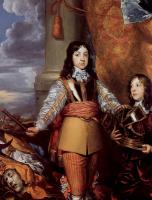


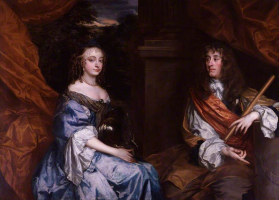
Samuel Pepys' Diary. 18th May 1663. Up and after taking leave of Sir W. Batten (age 62), who is gone this day towards Portsmouth, Hampshire [Map] (to little purpose, God knows) upon his survey, I home and spent the morning at dancing; at noon Creed dined with us and Deane (age 29) of Woolwich, and so after dinner came Mr. Howe, who however had enough for his dinner, and so, having done, by coach to Westminster, she to Mrs. Clerke and I to St. James's, where the Duke being gone down by water to-day with the King (age 32) I went thence to my Lord Sandwich's (age 37) lodgings, where Mr. Howe and I walked a while, and going towards Whitehall through the garden Dr. Clerk and Creed called me across the bowling green, and so I went thither and after a stay went up to Mrs. Clerke who was dressing herself to go abroad with my wife.


Samuel Pepys' Diary. 18th May 1663. Thence for an hour Creed and I walked to White Hall, and into the Park, seeing the Queen (age 24) and Maids of Honour passing through the house going to the Park. But above all, Mrs. Stuart (age 15) is a fine woman, and they say now a common mistress to the King (age 32)1, as my Baroness Castlemaine's (age 22) is; which is a great pity.
Note 1. The King said to 'la belle' Stuart, who resisted all his importunities, that he hoped he should live to see her "ugly and willing" (Lord Dartmouth's note to Burnet's "Own Time", vol. i., p. 436, ed. 1823).


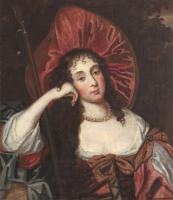


Samuel Pepys' Diary. 18th May 1665. Up, and with Sir J. Minnes (age 66) to the Duke of Albemarle (age 56), where we did much business, and I with good content to myself; among other things we did examine Nixon and Stanesby, about their late running from two Dutchmen1 for which they are committed to a vessel to carry them to the fleete to be tried. A most fowle unhandsome thing as ever was heard, for plain cowardice on Nixon's part.
Note 1. Captain Edward Nixon, of the "Elizabeth", and Captain John Stanesby, of the "Eagle". John Lanyon wrote to the Navy Commissioners from Plymouth, Devon [Map], May 16th: "Understands from the seamen that the conduct of Captains Nixon and Stanesby in their late engagement with two Dutch capers was very foul; the night they left the Dutch, no lights were put out as formerly, and though in sight of them in the morning, they still kept on their way; the Eagle lay by some time, and both the enemy's ships plied on her, but finding the Elizabeth nearly out of sight she also made sail; it is true the wind and sea were high, but there were no sufficient reasons for such endeavours to get from them". (Calendar of State Papers, Domestic, 1664-65, p. 367). Both captains were tried; Nixon was condemned to be shot but Stanesby was cleared, and Charnock asserts that he was commander the "Happy Return" in 1672.


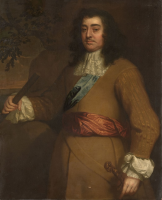
Samuel Pepys' Diary. 18th May 1665. Thence with the Duke of Albemarle (age 56) in his coach to my Lord Treasurer (age 58), and there was before the King (age 34) (who ever now calls me by my name) and Chancellor (age 56), and many other great Lords, discoursing about insuring of some of the King's goods, wherein the King accepted of my motion that we should; and so away, well pleased.
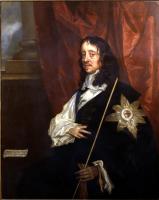


Samuel Pepys' Diary. 18th May 1666. At noon had them and carried them home, and there dined with great content with my people, and within and at the office all the afternoon and night, and so home to settle some papers there, and so to bed, being not very well, having eaten too much lobster at noon at dinner with Mr. Hollyard (age 57), he coming in and commending it so much.
Samuel Pepys' Diary. 18th May 1668. Thence to my tailor's, and there did find Mercer come with Mrs. Horsfield and Gayet according to my desire, and there I took them up, it being almost twelve o'clock, or a little more, and carried them to the King's playhouse, where the doors were not then open; but presently they did open; and we in, and find many people already come in, by private ways, into the pit, it being the first day of Sir Charles Sidly's (age 29) new play, so long expected, "The Mullberry Guarden", of whom, being so reputed a wit, all the world do expect great matters. I having sat here awhile, and eat nothing to-day, did slip out, getting a boy to keep my place; and to the Rose Tavern, and there got half a breast of mutton, off of the spit, and dined all alone. And so to the play again, where the King (age 37) and Queen (age 29), by and by, come, and all the Court; and the house infinitely full. But the play, when it come, though there was, here and there, a pretty saying, and that not very many neither, yet the whole of the play had nothing extraordinary in it, at all, neither of language nor design; insomuch that the King I did not see laugh, nor pleased the whole play from the beginning to the end, nor the company; insomuch that I have not been less pleased at a new play in my life, I think. And which made it the worse was, that there never was worse musick played-that is, worse things composed, which made me and Captain Rolt (age 39), who happened to sit near me, mad. So away thence, very little satisfied with the play, but pleased with my company. I carried them to Kensington, to the Grotto, and there we sang, to my great content, only vexed, in going in, to see a son of Sir Heneage Finch's (age 40) beating of a poor little dog to death, letting it lie in so much pain that made me mad to see it, till, by and by, the servants of the house chiding of their young master, one of them come with a thong, and killed the dog outright presently.
John Evelyn's Diary. 18th May 1688. King (age 54) enjoining the ministers to read his Declaration for giving liberty of conscience (as it was styled) in all churches of England, this evening, six Bishops, Bath and Wells (age 50), Peterborough (age 60), Ely (age 50), Chichester (age 64), St. Asaph (age 60), and Bristol (age 38), in the name of all the rest of the Bishops, came to his Majesty to petition him, that he would not impose the reading of it to the several congregations within their dioceses; not that they were averse to the publishing it for want of due tenderness toward dissenters, in relation to whom they should be willing to come to such a temper as should be thought fit, when that matter might be considered and settled in Parliament and Convocation; but that, the Declaration being founded on such a dispensing power as might at pleasure set aside all laws ecclesiastical and civil, it appeared to them illegal, as it had done to the Parliament in 1661 and 1672, and that it was a point of such consequence, that they could not so far make themselve parties to it, as the reading of it in church in time of divine service amounted to.
The King was so far incensed at this address, that he with threatening expressions commanded them to obey him in reading it at their perils, and so dismissed them.


Chronicle of Walter of Guisborough
A canon regular of the Augustinian Guisborough Priory, Yorkshire, formerly known as The Chronicle of Walter of Hemingburgh, describes the period from 1066 to 1346. Before 1274 the Chronicle is based on other works. Thereafter, the Chronicle is original, and a remarkable source for the events of the time. This book provides a translation of the Chronicle from that date. The Latin source for our translation is the 1849 work edited by Hans Claude Hamilton. Hamilton, in his preface, says: 'In the present work we behold perhaps one of the finest samples of our early chronicles, both as regards the value of the events recorded, and the correctness with which they are detailed; Nor will the pleasing style of composition be lightly passed over by those capable of seeing reflected from it the tokens of a vigorous and cultivated mind, and a favourable specimen of the learning and taste of the age in which it was framed.'
Available at Amazon in eBook and Paperback format.
On 18th May 1692 Elias Ashmole (age 74) died. He was buried at St Mary at Lambeth Church, Surrey [Map].


On 18th May 1701 Charles Lennox 2nd Duke Richmond was born to Charles Lennox 1st Duke Richmond (age 28) and Anne Brudenell Duchess Richmond (age 30). He a grandson of King Charles II of England Scotland and Ireland. He married 4th December 1719 Sarah Cadogan Duchess Richmond, daughter of William Cadogan 1st Earl Cadogan and Margaret Cecilia Munter Countess Cadogan, and had issue.
On 18th May 1721 Johann Adolf Saxe Coburg Altenburg was born to Frederick Saxe Coburg Altenburg II Duke Saxe Gotha Altenburg (age 44) and Magdalena Augusta Anhalt-Zerbst Duchess Saxe Gotha Altenburg at Gotha.
On 18th May 1774 William Fitzroy 3rd Duke Cleveland 2nd Duke Southampton (age 76) died. Duke Cleveland, Duke Southampton, Earl of Southampton, Earl Chichester, Baron Nonsuch and Baron Newbury extinct.
On 18th May 1776 Charles Henry Mordaunt 5th Earl Peterborough 3rd Earl Monmouth (age 18) was educated at Christ Church College, Oxford University.
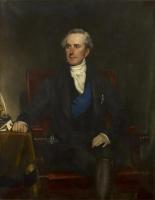
On 18th May 1795 Thomas Pelham-Clinton 3rd Duke Newcastle-under-Lyne (age 42) died at Sunninghill, Berkshire. His son Henry (age 10) succeeded 4th Duke Newcastle under Lyme, 11th Earl Lincoln.

On 11th May 1812 Spencer Perceval (age 49) was assassinated at House of Commons. Robert Jenkinson 2nd Earl Liverpool (age 41) was appointed Prime Minister.
At 5:15 pm, on the evening of 11 May 1812, Perceval was on his way to attend the inquiry into the Orders in Council. As he entered the lobby of the House of Commons, a man stepped forward, drew a pistol and shot him in the chest. The assassin, John Bellingham, was a merchant who believed he had been unjustly imprisoned in Russia and was entitled to compensation from the government, but all his petitions had been rejected.
Perceval left a widow and twelve children aged between three and twenty. Parliament voted to settle £50,000 on Perceval's children, with additional annuities for his widow and eldest son.
On 18th May 1812 John Bellingham was hanged at Newgate Prison, London [Map]. René Martin Pillet says...
This unfortunate man had presented several memorials, and had repeatedly demanded audience, but they had given him no answer. Driven to despair, he presented himself at the door of the house of commons, waited for the prime minister, Mr. Percival, and shot him. He was seized, confessed the crime, was tried, condemned to be hung, and executed a few days after. At the time of execution an immense crowd filled the public square, and these expressions were heard on every side: Farewell poor man, you owe satisfaction to the offended laws of your country, but God bless you! you have rendered an important service to your country, you have tdugllt ministers that they should do justice, and grant audience when it is asked of them.
A subscription was opened for the widow and children, and a handsome sum was raised. Their fortune was ten times greater than they could ever have expected in any other situation.
Become a Member via our Buy Me a Coffee page to read more.
Vestiges of the Antiquities of Derbyshire. On the 18th of May, 1825, was opened a tumulus in the immediate neighbourhood of that situate on Kenslowe Farm, previously described. The one in question did not prove so interesting as the former one, as it merely contained a few fragments of the skull and other bones of a human skeleton, and two iron knives, about six inches in length, and one and a half in width at the broadest parts, with a fragment of the wooden shaft adhering to one of them; the grain of the wood is similar to that of ash, which it most probably was. Two smaller bits of iron were found, which, together with the knives, were much oxydized. The burial-place, or cist, appeared to be a natural depression in the rock, and contained a great deal of charcoal. It is to be observed, that the contents of this barrow, with respect to the metallic weapons and the absence of small animal bones, differ from all the others before opened at Middleton.
Derbyshire Archaeological Journal Volume 30 1908 Page 155. Account of the opening of some sepulchral tumuli in the neighbourhood of Arbow-low Co. Derby - read before the Literary and Philosophical Society of Sheffield, June 3rd 18251.
May 18th 1825. On opening a tumulus on the hill called Kenslow2, we met with a few remnants of the skull and other bones of a human skeleton deposited in a cist cut out of the solid rock, accompanied by a spear-head of Iron, and another small instrument of iron whose use we could not ascertain. The metal of which these were composed, was very much corroded. In the socket of the spear head the remains of wood were still visible; from the oxidation of the iron, it had become petrified, and as hard as the metal itself.
On the same ridge3 of hill, and not far distant, a very fine barrow was opened in 1825, an account of which I havealready presented to the Society in my essay on Arborlow.
A second barrow opened on this same day and situate close to the Roman Road which crosses this part of the country from Buxton to Little Chester, presented nothing on being opened but a mass of burnt bones, ashes, and charcoal, without either urn or interments of any description4.
Note 1. The portion of the paper "On Druidism", p. 157, relating to Derbyshire.
Note 2. Vestiges, p. 33
Note 3. lbid., p. 28.
Note 4. lbid., p. 33. Subsequently re-excavated by Mr. T. Bateman, 1844.
Become a Member via our Buy Me a Coffee page to read more.
Vestiges of the Antiquities of Derbyshire. On the 30th of July, 1844, was re-examined a barrow [Map] upon the Oldham Farm, Middleton, which was unsuccessfully opened by Mr. William Bateman, on the 18th of May, 1825, nor was this second investigation much more interesting, as the barrow proved in most respects the same as the one on Ringham Lowe [Map], which is within half a mile of the one in question. There were the remains of a large fire visible in the centre of this mound, upon the level of the undisturbed soil, where were also some pieces of sandstone and some quartz pebbles, neither of which are to be found in the neighbourhood. The only articles of human origin were several pieces of kneaded clay, partially hardened by the fire, and a broken piece of coarse pottery of very hard texture.
Chronicle of Walter of Guisborough
A canon regular of the Augustinian Guisborough Priory, Yorkshire, formerly known as The Chronicle of Walter of Hemingburgh, describes the period from 1066 to 1346. Before 1274 the Chronicle is based on other works. Thereafter, the Chronicle is original, and a remarkable source for the events of the time. This book provides a translation of the Chronicle from that date. The Latin source for our translation is the 1849 work edited by Hans Claude Hamilton. Hamilton, in his preface, says: 'In the present work we behold perhaps one of the finest samples of our early chronicles, both as regards the value of the events recorded, and the correctness with which they are detailed; Nor will the pleasing style of composition be lightly passed over by those capable of seeing reflected from it the tokens of a vigorous and cultivated mind, and a favourable specimen of the learning and taste of the age in which it was framed.'
Available at Amazon in eBook and Paperback format.
Ten Years' Digging. On the 18th of May, we commenced by opening a barrow [Probably Ecton Barrow 1 [Map]] on a hill near the celebrated Ecton Mine, called Hanging Bank. The tumulus is about 20 yards diameter, 4 feet high, and concave in the centre like a bowl. In the middle was found a deposit of calcined human bones, with those of the water-rat in abundance, close to which lay part of the skeleton of an adult, the other part of which had been removed as recorded by Plot, in his History of Staffordshire, 1686 folio, page 330.- "In digging open a Lowe on Ecton Hill, near Warslow, in this county, there were found mens' bones, as I was told, of an extraordinary size, which were preserved for some time, by one Rev. Mr. Hamilton, Vicar of Alstonefield". The burnt bones had also been disturbed at the same time. Both interments lay on the natural surface, unprotected by any cist; the calcined bones were accompanied by a large bone pin, upwards of 5 inches long, two spear points, and two arrow heads of flint, all of which had passed through the fire. A piece of stag's horn was found in another part of the mound.
Ten Years' Digging. On the 18th of May we opened a barrow at Thorswood, near Stanton, which we had discovered in returning from that opened on the 6th of September, 1848. The diameter of the present one in 13 yards, with an elevation of 5 feet, presenting an unmutilated appearance. On digging down in the centre the rock was found at the depth of 3 feet, as the tumulus had been raised on a natural prominence and had been previously rifled. A few pieces of an urn, with the usual chevron pattern, were found about a foot below the turf; lower down were some pieces of bDue, and at the natural level, in the centre of the barrow, were black ashes and charcoal, with a few pieces of calcined bone and flint. There were also some large stones about the same place, one measuring 3 feet each way, which had no doubt formed a cist for the protection of the urn and calcined bones before the barrow was disturbed. We afterwards examined a circular rise in the nezt field, but found nothing.

On 9th November 1865 Henry George Cavendish (age 29) died. On 18th May 1891 Edward Cavendish (age 27) died. They were buried in the Cavendish Plot, St Peter's Church, Edensor [Map].
Henry George Cavendish: On 24th May 1836 he was born to George Henry Cavendish and Louisa Lascelles.
Edward Cavendish: On 28th January 1838 he was born to William Cavendish 7th Duke Devonshire and Blanche Georgiana Howard at Marylebone. Coefficient of inbreeding 1.65%. On 3rd August 1865 Edward Cavendish and Emma Elizabeth Lascelles were married. He the son of William Cavendish 7th Duke Devonshire and Blanche Georgiana Howard. They were first cousins.
On 18th May 1872 Bertrand Russell 3rd Earl Russell was born to John Russell (age 29) and Katherine Louisa Stanley (age 28).

On 18th May 1880 Captain William Seton Dent of Shortflatt Tower (age 39) died. Memorial window at St Andrew's Church, Bolam [Map].
Captain William Seton Dent of Shortflatt Tower: On 16th April 1841 he was born to Commander William Dent Hedley aka Dent and Ellen Mary Kerr.
On 18th May 1885 Alphonse de Neuville (age 49) died.

On 18th May 1891 Edward Cavendish (age 53) died. Monument to Edward Cavendish in Cartmel Priory, Lancashire [Map].

On 18th May 1901 Catherine Lucy Wilhelmina Stanhope Duchess of Cleveland (age 81) died. In her will she left £5000 to William Henry George Poulett (age 31), son of the dis-inherited eldest son of William Henry Paulett 6th Earl Paulett.
On 18th May 1910 Claude Champion de Crespigny (age 36) committed suicide. He was found dead by the roadside at King's Cliffe in Northamptonshire. The physician and coroner concluded that a temporary madness may have been caused by influenza and repeated heavy falls whilst playing polo.
In 18th May 1923 Margaret Whigham (age 10) arrived at Southampton with her father George Hay Whigham and mother Helen Mann Hannay on the ship Majestie, of the White Star Line, from New York.


Chronicle of Walter of Guisborough
A canon regular of the Augustinian Guisborough Priory, Yorkshire, formerly known as The Chronicle of Walter of Hemingburgh, describes the period from 1066 to 1346. Before 1274 the Chronicle is based on other works. Thereafter, the Chronicle is original, and a remarkable source for the events of the time. This book provides a translation of the Chronicle from that date. The Latin source for our translation is the 1849 work edited by Hans Claude Hamilton. Hamilton, in his preface, says: 'In the present work we behold perhaps one of the finest samples of our early chronicles, both as regards the value of the events recorded, and the correctness with which they are detailed; Nor will the pleasing style of composition be lightly passed over by those capable of seeing reflected from it the tokens of a vigorous and cultivated mind, and a favourable specimen of the learning and taste of the age in which it was framed.'
Available at Amazon in eBook and Paperback format.

On 18th May 1924 Major-General Sir Charles Vere Ferrers Townshend (age 63) died. Memorial in the Church of St Mary, East Raynham [Map].
Major-General Sir Charles Vere Ferrers Townshend: On 21st February 1861 he was born to Charles Thornton Townshend at Great Union Street.

Memorials to the Mack family at St Margaret's Church, Paston [Map].
On 18th May 1933 Hugh Paston Mack died.
On 23rd December 1917 Lieutenant Commander Ralph Michael Mack (age 34) was killed in action when his destoyer Tornado was mined.
On 29th April 1943 Rear-Admiral Philip John Mack (age 50) died in a plane crash.
Hugh Paston Mack: On 22nd March 1828 he was born to John Mack of Paston Hall.
Lieutenant Commander Ralph Michael Mack: On 11th October 1883 he was born to Hugh Paston Mack.
Rear-Admiral Philip John Mack: On 6th October 1892 he was born to Major Philip Paston Mack. On 15th September 1905 Rear-Admiral Philip John Mack joined the Royal Navy as a naval cadet at the Osborne and Britannia Royal Naval Colleges. On 9th August 1910 Rear-Admiral Philip John Mack was posted to the battlecruiser Indomitable as a midshipman, transferring to the cruiser Amethyst on 15th July 1913 having been promoted to sub-lieutenant on 15th June 1913.
Become a Member via our Buy Me a Coffee page to read more.
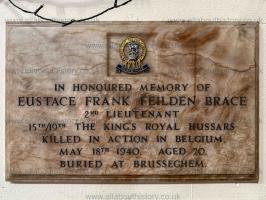
St Werburgh's Church, Hanbury [Map]. In memory of Eustace Frank Feilden Brace, killed in actoin 18th May 1940, aged twenty. He was buried at the Adegem Canadian War Cemetery, Maldegem, Arrondissement Eeklo, East Flanders, Belgium. He was sent out on a reconnaissance patrol south west from Wolvendaal (Vijlst) along Nieuwelaan. The 15/19 Hussars war diaries report the intent was to establish contact with the 5th Belgium Division who were supposed to be on the northern flank of the 15th/19th Hussars. While proceeding south west on Nieuwelaan 5th Troop came into contact with a German reconnaissance group heading north in the opposite direction near the small Sint Annakapel chapel. The German reconnaissance group consisted of several Sdkfz 234 armoured cars and motorcycles with side cars. Upon coming under fire 2nd Lt Brace had turned left off Nieuwelaan on to Vollickstraat toward Meyskens Farm. Brace then turned right after passing Meyskens farm house into an orchard and adjacent field. While the German armoured cars engaged the rest of 5th Troop on Nieuwelaan a German motorcycle and side car turn on to Vollickstraat in pursuit. It entered a field just south of Myskens farm house and moved parallel to Brace's carrier. Brace then passed through the orchard and attempted to enter an open adjacent field by traversing a small ditch. He failed to negotiate the ditch and came under MG fire from the motorcycle and side car. Brace and his crew were shot up. Brace although mortally wounded managed to abandon his carrier and make his way to a nearby tree where he collapsed. The Meyskens family recalls he asked for water and was bleeding from the lower body and that blood ran down the track for some metres. The rest of 5th Troop was shot up by the German Sdkfz 232s and according to 15/19 war diaries only one wounded survivor, Corporal Payne, managed to escape and report back. The Germans then arrived with a motor bike and side car and lifted Brace onto it. The bike was maneuvered steadily across the field on to Vollickstraat and toward Sint Annakapel. Brace died on route to Sint Annakapel.
Become a Member via our Buy Me a Coffee page to read more.
On 18th May 1228 William de de Clare was born to Gilbert Clare 5th Earl Gloucester 4th Earl Hertford (age 48) and Isabel Marshal Countess Cornwall, Gloucester and Hertford (age 27). He a great x 3 grandson of King Henry I "Beauclerc" England.
On 18th May 1281 Agnes Habsburg was born to Albert Habsburg I Duke Austria (age 25) and Elizabeth Carinthia Duchess Austria.
On 18th May 1282 John Strange 2nd Baron Strange Knockin was born to John Strange 1st Baron Strange Knockin (age 29) and Maud Eiville Baroness Strange Knockin at Ellesmere, Shropshire. He married in or before 1298 Isolde Chaworth Baroness Strange Knockin and had issue.
On 18th May 1475 Afonso Aviz was born to John II King Portugal (age 20) and Eleanor Viseu Queen Consort Portugal (age 17). Coefficient of inbreeding 13.18%. He married 1490 his second cousin Isabella Trastámara Queen Consort Portugal, daughter of Ferdinand II King Aragon and Isabella Queen Castile.
On 18th May 1686 Julia Blacket Lady Calverley was born to William Blackett 1st Baronet (age 28) and Julia Conyers. She married 7th January 1707 Walter Calverly 1st Baronet and had issue.


Abbot John Whethamstede’s Chronicle of the Abbey of St Albans
Abbot John Whethamstede's Register aka Chronicle of his second term at the Abbey of St Albans, 1451-1461, is a remarkable text that describes his first-hand experience of the beginning of the Wars of the Roses including the First and Second Battles of St Albans, 1455 and 1461, respectively, their cause, and their consequences, not least on the Abbey itself. His text also includes Loveday, Blore Heath, Northampton, the Act of Accord, Wakefield, and Towton, and ends with the Coronation of King Edward IV. In addition to the events of the Wars of the Roses, Abbot John, or his scribes who wrote the Chronicle, include details in the life of the Abbey such as charters, letters, land exchanges, visits by legates, and disputes, which provide a rich insight into the day-to-day life of the Abbey, and the challenges faced by its Abbot.
Available at Amazon in eBook and Paperback format.
On 18th May 1692 Bishop Joseph Butler was born in Wantage, Berkshire.
On 18th May 1701 Charles Lennox 2nd Duke Richmond was born to Charles Lennox 1st Duke Richmond (age 28) and Anne Brudenell Duchess Richmond (age 30). He a grandson of King Charles II of England Scotland and Ireland. He married 4th December 1719 Sarah Cadogan Duchess Richmond, daughter of William Cadogan 1st Earl Cadogan and Margaret Cecilia Munter Countess Cadogan, and had issue.
On 16th May 1704 Reginald Graham 4th Baronet was born to Reginald Graham 2nd Baronet (age 33) and Hester Bellingham Lady Graham (age 31). He was baptised on 18th May 1704. He married 5th June 1728 his second cousin once removed Jacoba Catherina Graham and had issue.
On 18th May 1721 Johann Adolf Saxe Coburg Altenburg was born to Frederick Saxe Coburg Altenburg II Duke Saxe Gotha Altenburg (age 44) and Magdalena Augusta Anhalt-Zerbst Duchess Saxe Gotha Altenburg at Gotha.
On 18th May 1726 Archibald Montgomerie 11th Earl Eglinton was born to Alexander Montgomerie 9th Earl Eglinton (age 66) and Susanna Kennedy Countess Winton (age 36). He married (1) 30th March 1772 Jean aka Jane Lindsay Countess Eglinton, daughter of George Lindsay Crawford 21st Earl Crawford 5th Earl Lindsay (2) 9th August 1783 Frances Twysden, daughter of William Twysden 6th Baronet, and had issue.


On 14th May 1733 Elizabeth Letitia Winn was born to Rowland Winn 4th Baronet (age 27) and Susanna Henshaw Lady Winn (age 23). On 18th May 1733 she was baptised at St Anne's Church, Soho [Map]. She married 25th November 1751 George Strickland 5th Baronet, son of William Strickland 4th Baronet and Catherine Sambrooke Lady Strickland.

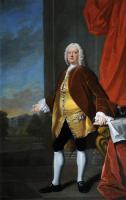
On 18th May 1759 Charles Gounter Legge was born to William Legge 2nd Earl Dartmouth (age 27) and Frances Catherine Gounter Nicoll Countess Dartmouth (age 26).


On 18th May 1760 Elizabeth Murray was born to David Murray 2nd Earl Mansfield (age 32) and Henrietta Frederica von Bünau at Warsaw. She married 10th December 1785 George Finch-Hatton and had issue.
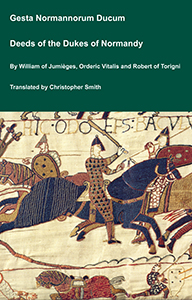
The Deeds of the Dukes of Normandy
The Gesta Normannorum Ducum [The Deeds of the Dukes of Normandy] is a landmark medieval chronicle tracing the rise and fall of the Norman dynasty from its early roots through the pivotal events surrounding the Norman Conquest of England. Originally penned in Latin by the monk William of Jumièges shortly before 1060 and later expanded at the behest of William the Conqueror, the work chronicles the deeds, politics, battles, and leadership of the Norman dukes, especially William’s own claim to the English throne. The narrative combines earlier historical sources with firsthand information and oral testimony to present an authoritative account of Normandy’s transformation from a Viking settlement into one of medieval Europe’s most powerful realms. William’s history emphasizes the legitimacy, military prowess, and governance of the Norman line, framing their expansion, including the conquest of England, as both divinely sanctioned and noble in purpose. Later chroniclers such as Orderic Vitalis and Robert of Torigni continued the history, extending the coverage into the 12th century, providing broader context on ducal rule and its impact. Today this classic work remains a foundational source for understanding Norman identity, medieval statesmanship, and the historical forces that reshaped England and Western Europe between 800AD and 1100AD.
Available at Amazon in eBook and Paperback format.
On 18th May 1783 Thomas Robert Salusbury 2nd Baronet was born to Robert Salusbury 1st Baronet (age 26) and Catherine Vanne of Llanwern. He married 1st October 1833 his first cousin Elizabeth Mary Salusbury.
On 18th May 1788 Howe Browne 2nd Marquess of Sligo was born to John Denis Browne 1st Marquess of Sligo (age 31) and Louisa Catharine Howe (age 20). He married 4th March 1816 Hester Catherine Burgh, daughter of John Thomas Burgh 13th Earl Clanricarde, and had issue.
On 18th May 1807 Frederick Henry Fletcher-Vane was born to Frederick Vane-Fletcher 2nd Baronet (age 47) and Hannah Bowerbank (age 34).
On 18th May 1813 Major Edward Heathcote Smith was born to John Wyldbore Smith 2nd Baronet (age 42) and Elizabeth Anne Marriot Lady Smith (age 46)

On 18th May 1846 Emily Georgiana Craven was born to William Craven 2nd Earl Craven (age 36) and Emily Mary Grimston Countess Craven (age 30). She married 6th August 1868 Victor William Bates Van De Weyer.
On 18th May 1852 Agnes Cecil Emmeline Duff was born to James Duff 5th Earl Fife (age 37) and Agnes Georgiana Elizabeth Hay Countess Fife (age 23). She a great granddaughter of King William IV of the United Kingdom. She married (1) 4th October 1871 George Robert Hay, son of George Hay-Drummond 12th Earl Kinnoull and Emily Blanche Charlotte Somerset Countess Kinnoul (2) 4th July 1882 Alfred Cooper.
On 18th May 1870 Charles Strathavon Heathcote-Willoughby-Drummond was born to Gilbert Henry Heathcote Drummond Willoughby 1st Earl Ancaster (age 39) and Evelyn Elizabeth Gordon Countess Ancaster (age 24). He married 9th January 1907 Muriel Agnes Stuart Erskine, daughter of Shipley Gordon Stuart Erskine 14th Earl Buchan, and had issue.
On 18th May 1872 Bertrand Russell 3rd Earl Russell was born to John Russell (age 29) and Katherine Louisa Stanley (age 28).
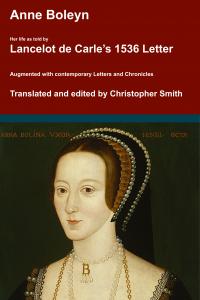
Anne Boleyn. Her Life as told by Lancelot de Carle's 1536 Letter.
In 1536, two weeks after the execution of Anne Boleyn, her brother George and four others, Lancelot du Carle, wrote an extraordinary letter that described Anne's life, and her trial and execution, to which he was a witness. This book presents a new translation of that letter, with additional material from other contemporary sources such as Letters, Hall's and Wriothesley's Chronicles, the pamphlets of Wynkyn the Worde, the Memorial of George Constantyne, the Portuguese Letter and the Baga de Secrets, all of which are provided in Appendices.
Available at Amazon in eBook and Paperback format.
On 18th May 1874 Kenelm Charles Pepys 4th Earl of Cottenham was born to William John Pepys 3rd Earl of Cottenham (age 48) and Theodesia Selina Dallas Countess Cottenham (age 29). He married (1) 29th November 1899 Rose Neville Countess Cottentham, daughter of William Neville 1st Marquess Abergavenny and Caroline Vanden Bempte Johnston Marchioness Abergavenny, and had issue (2) 16th August 1916 Patricia Burke Countess Cottenham.
On 18th May 1876 Henry Sheppard Hart Cavendish 6th Baron Waterpark was born to Captain William Thomas Cavendish (age 32).
On 18th May 1887 Richard Wyndham-Quin 6th Earl of Dunraven and Mount-Earl was born to Windham Wyndham-Quin 5th Earl of Dunraven and Mount Earl (age 30). He married (1) 20th October 1915 Helen Lindsay Swire (2) 7th March 1934 Nancy Yuille Countess of Dunraven and Mount-Earl and had issue.
On 18th May 1888 William Acland 3rd Baronet was born to Admiral William Alison Dyke Acland 2nd Baronet (age 40) and Emily Anna Smith Lady Acland (age 29). He married 26th April 1916 Emily Barclay Baroness Acland.
On 18th May 1899 Dorothy Hastings Marchioness Cambridge was born to Osmond William Toome Westenra Hastings (age 25). She married 10th April 1923 George Cambridge 2nd Marquess Cambridge, son of Adolphus Cambridge Duke Teck and Margaret Evelyn Grosvenor Duchess Teck, and had issue.
On 18th May 1900 Victor Basil John Seely 4th Baronet was born to Charles Hilton Seely 2nd Baronet (age 40). He married (1) 22nd September 1922 Sybil Helen Gibbons Lady Shiffner and had issue (2) 16th January 1931 Patience Kemp, daughter of George Kemp 1st Baron Rochdale and Beatrice Mary Egerton Baroness Rochdale.
On 18th May 1903 Stephen de Yarburgh-Bateson 5th Baron Deramore was born to George Yarburgh-Bateson 4th Baron Deramore (age 32) and Muriel Katharine Duncombe (age 23).
On 18th May 1922 Antony Gibbs 3rd Baron Hunsdon 5th Baron Aldenham was born to Walter Gibbs 2nd Baron Hunsdon 4th Baron Aldenham (age 33) and Beatrix Elinor Paul Baroness Aldenham and Hunsdon (age 31). He married 16th July 1947 Mary Elizabeth Tyser Baroness Hunsdon and Aldenham and had issue.
On 18th May 1957 Henry FitzRoy St John 9th Viscount St John 8th Viscount Bolingbroke was born to Kenneth Oliver Musgrave St John 7th Viscount Bolingbroke 8th Viscount St John (age 30).
Jean de Waurin's Chronicle of England Volume 6 Books 3-6: The Wars of the Roses
Jean de Waurin was a French Chronicler, from the Artois region, who was born around 1400, and died around 1474. Waurin’s Chronicle of England, Volume 6, covering the period 1450 to 1471, from which we have selected and translated Chapters relating to the Wars of the Roses, provides a vivid, original, contemporary description of key events some of which he witnessed first-hand, some of which he was told by the key people involved with whom Waurin had a personal relationship.
Available at Amazon in eBook and Paperback format.
On 18th May 1973 Richard Lumley 13th Earl of Scarbrough was born to Richard Lumley 12th Earl of Scarbrough (age 40) and Elizabeth Anne Ramsay Countess Scarborough (age 31).
On 18th May 1978 William Herbert 18th Earl of Pembroke, 15th Earl of Montgomery was born to Henry Herbert 17th Earl of Pembroke, 14th Earl of Montgomery (age 38).
On 18th May 1152 Whit Sunday King Henry "Curtmantle" II of England (age 19) and Eleanor of Aquitaine Queen Consort Franks and England (age 30) were married at Poitiers Cathedral [Map]. They were more closely related than Eleanor and her previous husband Louis VII King of the Franks (age 32). The marriage would bring the Kingdom of England, and the Duchies of Normandy and Aquitaine under the control of King Henry "Curtmantle" II of England. She the daughter of William "Saint" Poitiers X Duke Aquitaine and Aenor Chatellerault Duchess Aquitaine. He the son of Geoffrey Plantagenet Duke Normandy and Empress Matilda (age 50). They were half third cousins. He a grandson of King Henry I "Beauclerc" England.
On 18th May 1514 King Francis I of France (age 19) and Claude Valois Orléans Queen Consort France (age 14) were married. She by marriage Queen Consort of France. She the daughter of Louis XII King France (age 51) and Anne of Brittany Queen Consort France (age 37). He the son of Charles Valois Orléans Count Angoulême and Louise of Savoy Countess Angoulême (age 37). They were second cousins.
On 18th May 1644 Richard Fanshawe 1st Baronet (age 35) and Anne Harrison Lady Fanshawe (age 19) were married in Wolvercot, Oxfordshire.


On 18th May 1686 Thomas Mansel 1st Baron Mansel (age 18) and Martha Millington Baroness Mansel were married.
On 18th May 1752 Nigel Gresley 6th Baronet (age 25) and Elizabeth Wynn Lady Gresley were married.
On 18th May 1830 Richard Henry Rycroft 3rd Baronet (age 36) and Charlotte Ann Josephine Tennant Lady Rycroft were married at St Nicholas' Church, Brighton. She by marriage Lady Rycroft of Calton in Yorkshire.

On 18th May 1841 William Heathcote 5th Baronet (age 40) and Selina Shirley Lady Heathcote were married. She by marriage Lady Heathcote of Hursley in Hampshire.

On 18th May 1933 Edward Partington 3rd Baron Doverdale (age 29) and Audrey Ailsa Pointing were married.
The Deeds of the Dukes of Normandy
The Gesta Normannorum Ducum [The Deeds of the Dukes of Normandy] is a landmark medieval chronicle tracing the rise and fall of the Norman dynasty from its early roots through the pivotal events surrounding the Norman Conquest of England. Originally penned in Latin by the monk William of Jumièges shortly before 1060 and later expanded at the behest of William the Conqueror, the work chronicles the deeds, politics, battles, and leadership of the Norman dukes, especially William’s own claim to the English throne. The narrative combines earlier historical sources with firsthand information and oral testimony to present an authoritative account of Normandy’s transformation from a Viking settlement into one of medieval Europe’s most powerful realms. William’s history emphasizes the legitimacy, military prowess, and governance of the Norman line, framing their expansion, including the conquest of England, as both divinely sanctioned and noble in purpose. Later chroniclers such as Orderic Vitalis and Robert of Torigni continued the history, extending the coverage into the 12th century, providing broader context on ducal rule and its impact. Today this classic work remains a foundational source for understanding Norman identity, medieval statesmanship, and the historical forces that reshaped England and Western Europe between 800AD and 1100AD.
Available at Amazon in eBook and Paperback format.
On 18th May 1948 David William Anthony Blyth Macpherson 2nd Baron Strathcarron (age 24) and Diana Hawtrey Deane Baroness Strathcarron (age 25) were married. She by marriage Baroness Strathcarron of Banchor in Invernessshire. Both second marriages.
On 18th May 978 Frederick Ardennes I Duke Lower Lorraine (age 66) died. His son Thierry (age 13) succeeded I Duke Lower Lorraine.
On 18th May 1365 Geoffrey Cornwall 3rd Baron Burford (age 29) died at Burford, Shropshire [Map]. His son Bryan (age 10) succeeded 4th Baron Burford of Burford in Shropshire.
On 18th May 1368 Henry Percy 11th and 3rd Baron Percy (age 47) died at Alnwick Castle, Northumberland [Map]. He was buried at Alnwick Abbey, Northumberland [Map]. His son Henry (age 26) succeeded 4th Baron Percy of Alnwick, 12th Baron Percy of Topcliffe. Margaret Neville (age 39) by marriage Baroness Percy of Alnwick.


On 18th May 1409 Bartholomew Bourchier 3rd Baron Bourchier died. His daughter Elizabeth (age 10) succeeded 4th Baroness Bourchier.
On 18th May 1410 Rupert King Germany (age 58) died. His son John (age 27) succeeded Count Palatine Neumarkt. His son Stephen (age 24) succeeded Count Palatine of Zweibrücken, Count Palatine Simmern
On 18th May 1445 William Ferrers 5th Baron Ferrers of Groby (age 73) died at Woodham Ferrers, Essex. His granddaughter Elizabeth (age 26) succeeded 6th Baroness Ferrers of Groby. Edward Grey Baron Ferrers of Groby (age 30) by marriage Baron Ferrers of Groby.
On 18th May 1452 the Battle of Brechin was fought between supporters of King James II of Scotland (age 21) and his rellious nobility including the Black Douglases. Alexander Gordon 1st Earl Huntley defeated the rebels led by Alexander Lindsay 4th Earl Crawford (age 29) on behalf on the King. John Lindsay (age 29), and the brothers William Gordon and Henry Gordon, were killed.
On 18th May 1464 Robert Hungerford 3rd Baron Hungerford 1st Baron Moleyns (age 33) was executed at Newcastle upon Tyne, Northumberland [Map] having been captured at the Battle of Hexham. He was buried at the Hungerford Chapel at Salisbury Cathedral [Map]. His daughter Mary Hungerford Baroness Hastings, 4th Baroness Hungerford, 5th Baroness Botreaux and 2nd Baroness Moleyns became the ward of William Hastings 1st Baron Hastings (age 33) whose son Edward Hastings 2nd Baron Hastings Baron Botreaux, Hungerford and Moleyns she subsequently married.
On 18th May 1497 Catherine Woodville Duchess Buckingham and Bedford (age 39) died.
On 18th May 1598 Cardinal Philipp Wilhelm Wittelsbach (age 21) died.
The History of William Marshal was commissioned by his son shortly after William’s death in 1219 to celebrate the Marshal’s remarkable life; it is an authentic, contemporary voice. The manuscript was discovered in 1861 by French historian Paul Meyer. Meyer published the manuscript in its original Anglo-French in 1891 in two books. This book is a line by line translation of the first of Meyer’s books; lines 1-10152. Book 1 of the History begins in 1139 and ends in 1194. It describes the events of the Anarchy, the role of William’s father John, John’s marriages, William’s childhood, his role as a hostage at the siege of Newbury, his injury and imprisonment in Poitou where he met Eleanor of Aquitaine and his life as a knight errant. It continues with the accusation against him of an improper relationship with Margaret, wife of Henry the Young King, his exile, and return, the death of Henry the Young King, the rebellion of Richard, the future King Richard I, war with France, the death of King Henry II, and the capture of King Richard, and the rebellion of John, the future King John. It ends with the release of King Richard and the death of John Marshal.
Available at Amazon in eBook and Paperback format.
On 18th May 1638 Thomas Playters 1st Baronet (age 72) died. He was buried at St Margaret's Church, Sotterley where he has a monument with the inscription "Here is buried the body of the most distinguished man Thomas Playter knight and baronet, a man of integrity of life, pleasantness of manner, charity of soul, most reverent in probity, the patron of this church, most meritorious to be made immortal in the eternal memory of men, who when he had lived for 73 years, fell peacefully asleep in Christ on the 18th day of May in the year of Our Lord 1638. He had two wives, the first was Anne, eldest daughter of William Swan of Southfleet in the county of Kent, knight, who bore him two sons and two daughters and departed this life on the 14th day of October in the year of the eternal king 1594. The second was Anne (age 74) only daughter of Anthony Browne of Elsing in the county of Norfolk, knight, who bore him eight sons and ten daughters (she survives him and is active in life among mortals). She rests here at one with her husband in the sure hope of future resurrection to life eternal." His son William (age 44) succeeded 2nd Baronet Playters of Sotterley in Suffolk albeit he died a few weeks later.
On 18th May 1692 Elias Ashmole (age 74) died. He was buried at St Mary at Lambeth Church, Surrey [Map].
On 18th May 1726 James Clavering 4th Baronet (age 17) died. His uncle Francis (age 52) succeeded 5th Baronet Clavering of Axwell in County Durham.

On 18th May 1738 Bishop Thomas Green (age 80) died.
On 18th May 1761 Mary Howe Lady Smith (age 35) died.
On 18th May 1763 Anne Somerset Countess Northampton (age 22) died in Naples [Map].


On 18th May 1765 Henrietta Greville Lady Long (age 81) died.
On 18th May 1774 William Fitzroy 3rd Duke Cleveland 2nd Duke Southampton (age 76) died. Duke Cleveland, Duke Southampton, Earl of Southampton, Earl Chichester, Baron Nonsuch and Baron Newbury extinct.
On 18th May 1795 Thomas Pelham-Clinton 3rd Duke Newcastle-under-Lyne (age 42) died at Sunninghill, Berkshire. His son Henry (age 10) succeeded 4th Duke Newcastle under Lyme, 11th Earl Lincoln.
On 18th May 1811 James Grant 5th Earl Seafield (age 72) died.
On 11th May 1812 Spencer Perceval (age 49) was assassinated at House of Commons. Robert Jenkinson 2nd Earl Liverpool (age 41) was appointed Prime Minister.
At 5:15 pm, on the evening of 11 May 1812, Perceval was on his way to attend the inquiry into the Orders in Council. As he entered the lobby of the House of Commons, a man stepped forward, drew a pistol and shot him in the chest. The assassin, John Bellingham, was a merchant who believed he had been unjustly imprisoned in Russia and was entitled to compensation from the government, but all his petitions had been rejected.
Perceval left a widow and twelve children aged between three and twenty. Parliament voted to settle £50,000 on Perceval's children, with additional annuities for his widow and eldest son.
On 18th May 1812 John Bellingham was hanged at Newgate Prison, London [Map]. René Martin Pillet says...
This unfortunate man had presented several memorials, and had repeatedly demanded audience, but they had given him no answer. Driven to despair, he presented himself at the door of the house of commons, waited for the prime minister, Mr. Percival, and shot him. He was seized, confessed the crime, was tried, condemned to be hung, and executed a few days after. At the time of execution an immense crowd filled the public square, and these expressions were heard on every side: Farewell poor man, you owe satisfaction to the offended laws of your country, but God bless you! you have rendered an important service to your country, you have tdugllt ministers that they should do justice, and grant audience when it is asked of them.
A subscription was opened for the widow and children, and a handsome sum was raised. Their fortune was ten times greater than they could ever have expected in any other situation.

On 18th May 1812 Edward Littleton 4th Baronet (age 85) died without issue. Baronet Littleton of Pillaton Hall extinct. His estates were inherited by his great-nephew Edward John Walhouse aka Littleton 1st Baron Hatherton (age 21) who took the surname Littleton.
Chronicle of Abbot Ralph of Coggeshall
The Chronicle of Abbot Ralph of Coggeshall (Chronicon Anglicanum) is an indispensable medieval history that brings to life centuries of English and European affairs through the eyes of a learned Cistercian monk. Ralph of Coggeshall, abbot of the Abbey of Coggeshall in Essex in the early 13th century, continued and expanded his community’s chronicle, documenting events from the Norman Conquest of 1066 into the tumultuous reign of King Henry III. Blending eyewitness testimony, careful compilation, and the monastic commitment to record-keeping, this chronicle offers a rare narrative of political intrigue, royal power struggles, and social upheaval in England and beyond. Ralph’s work captures the reigns of pivotal figures such as Richard I and King John, providing invaluable insights into their characters, decisions, and the forces that shaped medieval rule. More than a simple annal, Chronicon Anglicanum conveys the texture of medieval life and governance, making it a rich source for scholars and readers fascinated by English history, monastic authorship, and the shaping of the medieval world.
Available at Amazon in eBook and Paperback format.
On 18th May 1831 John Vaughan 3rd Earl Lisburne (age 62) died. Ernest Vaughan 4th Earl of Lisburne succeeded 4th Earl Lisburne, 5th Viscount Lisburne.
On 18th May 1838 James Wandesford Butler 1st Marquess Ormonde (age 60) died. His son John (age 29) succeeded 2nd Marquess Ormonde, 20th Earl Ormonde, 14th Earl Ossory, 2nd Baron Ormonde of Llanthony in Monmouthshire.
On 18th May 1845 Elizabeth North Baroness Walsingham (age 68) died. She was buried at Merton, Norfolk.
On 18th May 1885 Alphonse de Neuville (age 49) died.
On 18th May 1896 Charles Leicester 9th Baronet died. Baronet Byrne of Timogue in Queen's County extinct.
On 18th May 1897 Charles Philip "Champagne Charlie" Yorke 5th Earl of Hardwicke (age 61) died. His son Albert (age 30) succeeded 6th Earl Hardwicke, 6th Viscount Royston.
On 18th May 1901 Catherine Lucy Wilhelmina Stanhope Duchess of Cleveland (age 81) died. In her will she left £5000 to William Henry George Poulett (age 31), son of the dis-inherited eldest son of William Henry Paulett 6th Earl Paulett.
On 18th May 1912 Richard Grosvenor 1st Baron Stalbridge (age 75) died. His son Hugh (age 32) succeeded 2nd Baron Stalbridge of Stalbridge in Dorset.
Henrici Quinti, Angliæ Regis, Gesta, is a first-hand account of the Agincourt Campaign, and subsequent events to his death in 1422. The author of the first part was a Chaplain in King Henry's retinue who was present from King Henry's departure at Southampton in 1415, at the siege of Harfleur, the battle of Agincourt, and the celebrations on King Henry's return to London. The second part, by another writer, relates the events that took place including the negotiations at Troye, Henry's marriage and his death in 1422.
Available at Amazon in eBook and Paperback format.
On 18th May 1913 St Aubyn Hender Molesworth-St Aubyn 12th Baronet (age 79) died. His son Hugh (age 48) succeeded 13th Baronet Molesworth of Pencarrow in Cornwall. Emma Sybil Wake Lady Morice (age 48) by marriage Lady Molesworth of Pencarrow in Cornwall.
On 18th May 1941 Henry Edward Paston-Bedingfeld 8th Baronet (age 80) died. His son Edmund (age 25) succeeded 9th Baronet Paston-Bedingfield of Oxburgh in Norfolk.
On 18th May 1947 Edmund Bernard Fitzalan Howard 1st Viscount Fitzalan Derwent Derby (age 91) died. His son Henry (age 63) succeeded 2nd Viscount Fitzalan Derwent Derby.
On 18th May 1948 Sybil Fellowes Marchioness of Ormonde (age 59) died.
On 18th May 1962 William Francis Cornewall 7th Baronet (age 90) died. Baronet Amyand aka Cornewall of Moccas Court in Herefordshire extinct.
On 18th May 1981 Anne Cavendish Countess Sandwich (age 71) died.
On 18th May 2012 Robin Chetwynd 9th Baronet (age 70) died. His son Peter (age 38) succeeded 10th Baronet Chetwynd of Brocton Hall in Staffordshire.