


19 May is in May.
On 19th May 988 Archbishop Dunstan (age 79) died. In the morning Mass was celebrated in his presence, then he received Extreme Unction and the Viaticum, and died. His final words were "He hath made a remembrance of his wonderful works, being a merciful and gracious Lord: He hath given food to them that fear Him.".
On 19th May 1051 Henry I King of the Franks (age 43) and Anne of Kiev Queen Consort Francia (age 21) were married at Reims Cathedral, Reims. She by marriage Queen Consort of France. The difference in their ages was 21 years. He the son of Robert "Pious" II King of the Franks and Constance Arles Queen Consort France.
On 19th May 1100 Judith Welf Holy Roman Empress was born to Henry "Black" Welf IX Duke Bavaria (age 25) and Wulfhilde of Saxony Duchess Bavaria (age 28). She married Frederick "One Eyed" Hohenstaufen I Holy Roman Emperor and had issue.
 History of the Dukes of Normandy by William of Jumieges. When Geoffrey Martel (age 34), the firstborn son of the aforesaid Fulk (age 63), a man of great worth, was treacherously slain1, another son of his succeeded him, Fulk (age 17) by name, born of another wife, Bertrade (age 36), sister of Amaury, Count of Évreux (age 35). This Fulk, after marrying the daughter2 of Count Elias of Maine together with her county, begot by her two sons, Geoffrey Martel, of whom we have said a little above, and Elias, and as many daughters. One of these daughters [Matilda3] was married to William, son of King Henry of England; and after William's death, she took the religious habit at Fontevraud. The other [Sibylla] married Thierry, Count of Flanders. After his wife's death, Thierry4 went to Jerusalem and, having married the daughter of Baldwin II, the recently deceased king, became the third King of Jerusalem. For when the city of Jerusalem was taken by the Christians, the first to rule there was Duke Godfrey, brother of Eustace, Count of Boulogne. Yet out of reverence for our Redeemer, who in that city had worn the Crown of Thorns for us sinners, he never wished to be adorned with a royal diadem. Upon his death, his brother Baldwin became the first king there; and after him succeeded another Baldwin, nephew of the former. To this Baldwin, as we have said, Fulk, Count of Anjou, was joined by marrying his daughter.
Occiso autem per traditionem Gaufrido Martello, viro magnæ probitatis, primogenito filio prædicti Fulconis comitis Andegavorum, successit alter filius suus Fulco nomine, natus ex alia conjuge nomine Bertha sorore videlicet Almarici, comitis Ebroicensis. Hic, postquam accepit filiam comitis Heliæ Cenomannorum, cum ipsius comitatu, et genuit ex ea duos filios, Gaufridum scilicet Martellum, de quo jam pauca superius diximus, et Heliam et totidem filias, quarum una nupsit Willelmo filio Henrici regis Anglorum, quo mortuo apud Fontem Ebraudi sumpsit habitum religionis; altera Terrico comiti Flandrensium; mortua uxore sua perrexit Hierusalem et accepta filia secundi Balduini regis noviter defuncti, factus est tertius rex Hierosolymitanorum. Siquidem capta urbe Hierosolima a Christianis, primus præfuit illi dux Godefridus frater Eustachii comitis Boloniæ. Hic tamen ad reverentiam nostri Redemptoris, qui in illa urbe Coronam spineam pro nobis peccatoribus gesserat, nunquam voluit regio diademate insigniri. Quo mortuo, Balduinus frater ejus factus est ibi primus rex, cui successit alter Balduinus nepos prioris. Et illi, ut diximus, accepta ejus, filia Fulco comes Andegavorum.
Note 1. Geoffrey Martel, IV Count of Anjou, was killed at the castle of Candé on 19th May 1106. Chronica de Gestis Consulum Andegavorum, Page 104: "In the following year, Martel was slain at the castle of Candé through the plots of his own men and of his stepmother, with his father, as they say, consenting. It seems incredible to me that a father would have consented to the killing of so great a son, since he was already exceedingly old, and the son, if length of life had been granted to him, would have recovered whatever had been lost. For he was laying claim to the castle of Laon against King Philip, and to the county of Saintonge against William of Poitiers. Out of fear of him, William built two new towers at Poitiers, one at the entrance of the city and the other near the palace."
Note 2. Ermengarde of Maine Countess of Anjou, died 1126, daughter of Elias I Count of Maine.
Note 3. Matilda of Anjou, 1111-1154, daughter of Fulk Rechin and Ermengarde, married William Adelin (age 2), son of King Henry I and Matilda, in 1119.
Note 4. It was Fulk the Younger, after the death of his wife Ermengarde of Maine Countess of Anjou in 1126, set out for Jerusalem at the invitation of Baldwin II King Jerusalem (age 31) with the express purpose of marrying Melisende Queen of Jerusalem (age 1), daughter of Baldwin, by whom he became King of Jerusalem jure uxoris i.e. by right of his wife.
 Become a Member via our Buy Me a Coffee page to read more.
Chroniques des Comtes dAnjou. In the following year1, Martel (age 34) was slain at the castle of Candé through the plots of his own men and of his stepmother (age 36), with his father (age 63), as they say, consenting. It seems incredible to me that a father would have consented to the killing of so great a son, since he was already exceedingly old, and the son, if length of life had been granted to him, would have recovered whatever had been lost. For he was laying claim to the castle of Laon against King Philip, and to the county of Saintonge against William of Poitiers. Out of fear of him, William built two new towers at Poitiers, one at the entrance of the city and the other near the palace.
Sequente anno Martellus insidiis suorum et noverce, pâtre ut ferunt consentiente, Cande Castro occisus esl. Incredibile mihi videtur patrem in nece tanti filii consensisse, cum et nimium senex esset et filius, si longinquitas vite sibi concederetur, quicquid amiserat recuperasset. Nam et Landonense castrum Philipo regi calumpniabat et Guilermo Pictavensi Santonicum consulatum. Qui timore ejus duas turres novas Pictavis constituit, unam in urbis ingressu et aliam prope aulam.
Note Geoffrey Martel was kille on 19th May 1106.
Images of Histories by Ralph Diceto. Mercardier,1 surrounded by the nefarious bands of the Brabançons, sent the bishop of Beauvais, William de Merlo, and many others who had been lawfully captured in war and bound with the harshest chains, to Rouen on the fourteenth day before the Kalends of June [19th May 1197].
Marchadeus, nephariis Brebantinorum vallatus catervis, episcopum Belvacensem, Willelmum de Merlou, multosque cum eis jure belli captos et durissimis constrictos in vinculis, transmisit Rothomagum XIIII kalendas Junii.
Note 1. Mercardier, a leader of a group of Brabançon mercenaries in the service of King Richard I.
Chronicle of Roger de Hoveden. In the same year, John, earl of Mortaigne, the king's brother, and Mercardier, the leader of the infamous tribe of the Brabanters, on the fourteenth day before the calends of June [19th May 1197], being the second day of the week, made an excursion before the city of Beauvais; and while they were intent on the capture of booty, Philip, bishop of Beauvais, and William de Merlo, together with his son and many knights and armed people, came forth from the city, being themselves in arms; but they were very quickly worsted in the combat, and the said bishop of Beauvais, and William de Merlo and his son, and several knights were taken prisoners, and of the common people the greater part was slain. On the same day, after this capture, the earl John and Marchades proceeded to Milli, the castle of the said bishop of Beauvais, and took it by assault, and levelled it with the ground: and then, gloriously triumphing, they returned to Normandy, and delivered to the king of England the bishop of Beauvais, and Walter de Merlo and his son, and many others who had been taken prisoners.
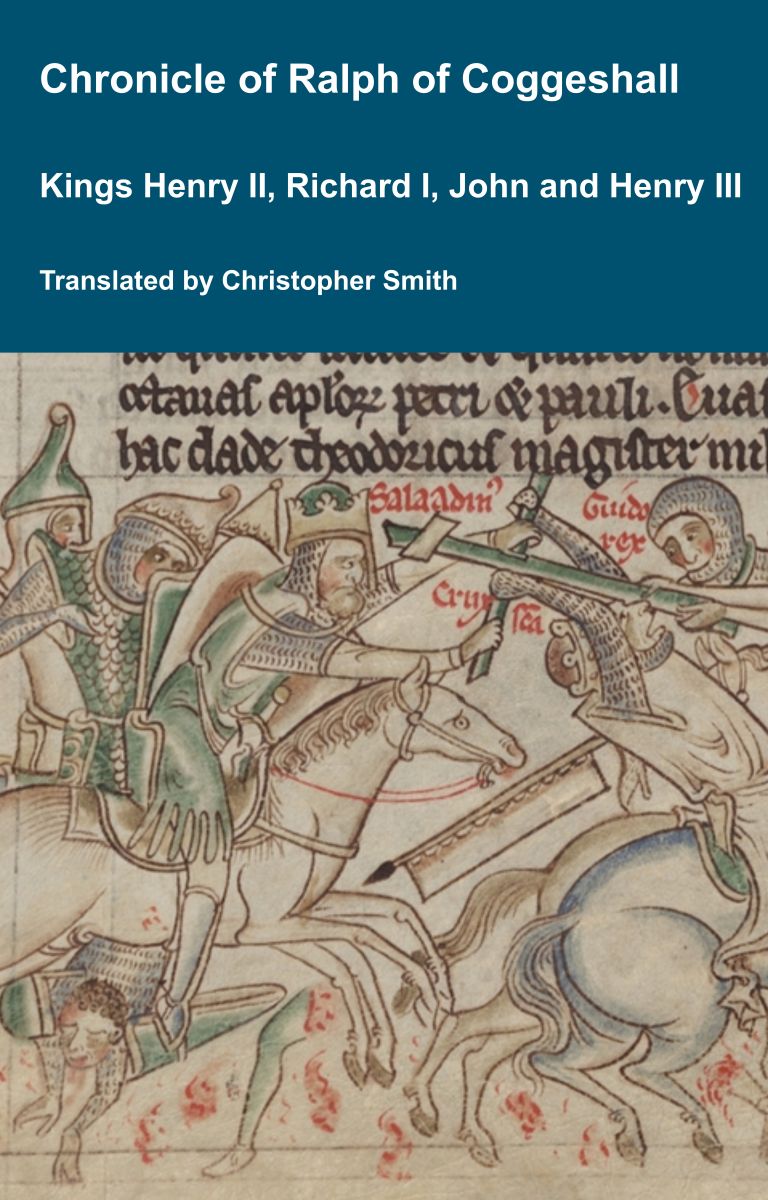 Chronicum Anglicanum by Ralph Coggeshall. The relentless discord which had long since arisen between the king of England and the king of France could in no way be ended by any treaty of peace, nor appeased by any conference held between them; rather, each army laid waste the provinces with sword and fire, gave itself over to plundering, and utterly destroyed cities, castles, and churches, so that the land, left without inhabitants and emptied of cultivators, in many places seemed to present the appearance of a wilderness. Nor was such impiety lacking the punishment of divine vengeance, which scourged the lands of both princes most dreadfully with famine, pestilence, and excessive unseasonableness of weather, for seven years. Yet in the parts of Gaul the calamity of famine seemed the greater. But in all these things their wrath was not turned away, and their hands were still stretched out to plunder and to kill. Nevertheless, though the battles of both armies were alike, the cause of battle seemed unlike: for whereas the king of France, partly by deceit and the treachery of certain men, and partly by sudden invasion when none defended them, had unjustly seized and occupied lands, the king of England, returning from captivity, strove to recover them and to wrest them by force from the hands of the violent invader. Wherefore, in almost every conflict, more favourable fortune smiled upon him, and he joyfully carried off the longed-for trophy of victory. For from the time that he returned free from the emperor, not only did he recover the castles that had been taken away (except Gisors and a few others), but by storming and besieging he also subdued to himself far more castles than he had lost. Moreover, the bishop of Beauvais1, who, having forsaken the warfare of the heavenly King, had wholly given himself over to the warfare of the earthly king, and appeared more hostile than the rest, and also Lord William de Merlo, while they were riding incautiously, were captured by King Richard's household troops, and were consigned to prison custody.
Inexorabilis discordia jampridem inter regem Angliæ et regem Galliæ exorta, nequaquam potuit ullo pacis fœdere terminari, aut aliquo colloquio inter eos habito sedari; quin utriusque exercitus provincias ferro et flammis devastaret, rapinis indulgeret, urbes, castella, ecclesiasque solo tenus everteret; in tantum ut terra absque habitatore relicta, et cultoribus evacuata, solitudinis speciem multis in locis præferre videretur. Nec defuit tantæ impietati divinæ ultionis animadversio, quæ utriusque principis terras fame, peste, ex nimia aeris intemperie, per septem annos dirissime flagellaret. In Gallicanis tamen partibus major famis calamitas esse videbatur. Sed in omnibus his non est aversus furor eorum, sed adhuc manus eorum extentæ ad rapiendum et interficiendum. Verumtamen in utriusque exercitus simili pugna, dissimilis pugnæ causa geri videbatur, cum terras, quas rex Francorum partim dolo et quorumdam proditione subjugaverat, partim subitanea invasione, nemine defendente, injuste præoccupaverat, rex Anglorum de captivitate regrediens nitebatur auferre, et de manibus violenti invasoris violenter extorquere; unde et in omni fere decertatione sua prosperior ei fortuna arridebat, et optatum decertationis trophæum lætus reportabat. Ex quo enim liber ab imperatore rediit, non solum ablata castella (absque Gisortio et quibusdam aliis,) recuperavit, verum etiam et multo plura quam amiserat castella assultu et obsidione sibi subegit. Episcopum insuper Belvacensem, qui, relicta cœlestis Regis militia, terreni regis militiæ se omnimodis tradiderat, et infestior cæteris apparebat, necnon et dominum Willelmum de Merlo, incautius obequitantes, familia regis Ricardi comprehendit, quos custodiæ carcerali mancipavit.
Note 1. Ralph de Decito: "Mercardier, surrounded by the nefarious bands of the Brabançons, sent the bishop of Beauvais, William de Merlo, and many others who had been lawfully captured in war and bound with the harshest chains, to Rouen on the fourteenth day before the Kalends of June [19th May 1197]." Mercardier was a leader of a group of Brabançon mercenaries in the service of King Richard I.
Roger de Hoveden: "In the same year, John, earl of Mortaigne, the king's brother, and Mercardier, the leader of the infamous tribe of the Brabanters, on the fourteenth day before the calends of June [19th May 1197], being the second day of the week, made an excursion before the city of Beauvais; and while they were intent on the capture of booty, Philip, bishop of Beauvais, and William de Merlo, together with his son and many knights and armed people, came forth from the city, being themselves in arms; but they were very quickly worsted in the combat, and the said bishop of Beauvais, and William de Merlo and his son, and several knights were taken prisoners, and of the common people the greater part was slain. On the same day, after this capture, the earl John and Marchades proceeded to Milli, the castle of the said bishop of Beauvais, and took it by assault, and levelled it with the ground: and then, gloriously triumphing, they returned to Normandy, and delivered to the king of England the bishop of Beauvais, and Walter de Merlo and his son, and many others who had been taken prisoners."
Chronicle of a Bourgeois of Valenciennes
Récits d’un bourgeois de Valenciennes aka The Chronicle of a Bourgeois of Valenciennes is a vivid 14th-century vernacular chronicle written by an anonymous urban chronicler from Valenciennes in the County of Hainaut. It survives in a manuscript that describes local and regional history from about 1253 to 1366, blending chronology, narrative episodes, and eyewitness-style accounts of political, military, and social events in medieval France, Flanders, and the Low Countries. The work begins with a chronological framework of events affecting Valenciennes and its region under rulers such as King Philip VI of France and the shifting allegiances of local nobility. It includes accounts of conflicts, sieges, diplomatic manoeuvres, and the impact of broader struggles like the Hundred Years’ War on urban life in Hainaut. Written from the perspective of a burgher (bourgeois) rather than a monastery or royal court, the chronicle offers a rare lay viewpoint on high politics and warfare, reflecting how merchants, townspeople, and civic institutions experienced the turbulence of the 13th and 14th centuries. Its narrative style combines straightforward reporting of events with moral and civic observations, making it a valuable source for readers interested in medieval urban society, regional politics, and the lived experience of war and governance in pre-modern Europe.
Available at Amazon in eBook and Paperback format.
 Chronicle of Walter of Guisborough. In the same year, namely 1292, on the last day of February, the bishop of Carlisle, Ralph1 of good memory, formerly our prior at Guisborough, died and was buried in the same church at Carlisle. Then, on the following feast of Saint Dunstan the Archbishop [19th May 1292], the entire city of Carlisle was horribly consumed and burned in a great fire, including the whole abbey and all the houses of the Friars Minor and the churches. Only the Dominican Friars were saved, and even then with great difficulty. For the fire broke out at night, and because a strong wind was blowing, there was nothing that could resist it. Now the cause of that wicked disaster was this: one of the townsmen had a depraved son, and because he hated him, he sold the houses he owned to a stranger. The son, angered by this, publicly threatened that the buyer would never peacefully enjoy his inheritance. And because the fire began almost suddenly in those very houses at dusk, the son was seized, drawn, and hanged.
Eodem anno scilicet MCCXCII ultimo die Februarii obiit bonæ memoriæ Radulphus Carleolensis episcopus, quondam prior noster Gisburniæ, et in eadem Carleolensi ecclesia sepultus. In sequenti vero festo Sancti Dunstani archiepiscopi tota civitas Carleolensis horribili incendio concremata est et combusta, cum tota abbatia et universis domibus Fratrum Minorum et ecclesiis, solique Prædicatores salvati sunt, sed cum difficultate maxima; nocte enim evenit ignis, et irruente vento maximo non erat quod resistere posset. Contigit autem sic casus ille nefandus: erat unus ex civibus habens filium sceleratum, et quia habebat eum exosum vendidit extraneo domos quas habebat: indignatusque filius minabatur publice dicens quod emptor ille nunquam gauderet pacifice hæreditate sua: et quia in crepusculo noctis in eisdem domibus ignis quasi subito initium assumpsit, captus est ille filius, tractus, et suspensus.
Note 1. Ralph de Ireton, Prior of Gisborough, elected Bishop of Carlisle December, 1278, on the refusal of William de Rotherfeld, Dean of York, to accept that dignity, and consecrated by the Bishop of Tusculum, now Frescati, 1280.
On 19th May 1312 Piers Gaveston 1st Earl Cornwall (age 28) surrendered to Aymer de Valence 2nd Earl Pembroke (age 37), John Warenne 7th Earl of Surrey (age 25), Henry Percy 9th and 1st Baron Percy (age 39) and Piers Gaveston 1st Earl Cornwall who were besieging the castle. The terms of the surrender were that Pembroke, Warenne and Percy would take Gaveston to York, where the barons would negotiate with the king.
On 19th May 1319 Louis I Count Évreux (age 43) died. His son Philip (age 13) succeeded Count Évreux.
On 19th May 1322 Charles IV King France I King Navarre (age 27) and Blanche of Burgundy Queen Consort France (age 25) marriage annulled as a consequence of her adultery. In 1313 Isabella of France Queen Consort England (age 27) gave gifts of coin-purses to her sisters-in-law Blanche of Burgundy Queen Consort France and Margaret of Burgundy Queen Consort France. The coin-purses were subsequently seen by Isabella to be in the possession of the Norman knights Gautier and Philippe d'Aunay. When Isabella visited her father King Philip IV of France again in 1314 she informed him she suspected the two sisters to be having affairs with the two knights. The two knights were arrested, confessed to adultery under torture, and were executed. The two women were sentenced to life imprisonment at Château Gaillard [Map]. Margaret's husband Louis X King France I Navarre became King in Nov 1314 whilst she was in prison; she became Queen of France by marriage. Somewhat conveniently she died five months later. Blanche of Burgundy Queen Consort France remained in prison until her husband Charles IV King France I King Navarre became King in 1322 at which time he had their marriage annulled.
On 19th May 1353 Elizabeth Habsburg Duchess Lorraine died.
In May 1359 King Edward III of England (age 46) and his son Edward "Black Prince" (age 28) took part in a tournament in London. For the amusement of the citizens both Edwards and their friends dressed as the mayor and aldermen of London. The tournament possibly in celebration of the two Royal marriages of his children John of Gaunt 1st Duke Lancaster (age 19) and Margaret Plantagenet Countess of Pembroke (age 12) on 19th May 1359.
On 19th May 1359, or thereabouts, a double-royal wedding celebration took place at Reading Abbey, Berkshire [Map] whereby two children of King Edward III of England (age 46) were married:
John of Gaunt 1st Duke Lancaster (age 19) and Blanche Duchess of Lancaster (age 17) were married. She by marriage Countess Richmond. She the daughter of Henry of Grosmont 1st Duke Lancaster (age 49) and Isabel Beaumont Duchess Lancaster (age 39). He the son of King Edward III of England and Philippa of Hainaut Queen Consort England (age 48). They were half second cousin once removed. She a great x 2 granddaughter of King Henry III of England.
John Hastings 2nd Earl Pembroke (age 11) and Margaret Plantagenet Countess of Pembroke (age 12) were married. At the time John Hastings 2nd Earl Pembroke was a ward of King Edward III of England who would enjoy the benefit of the substantial revenue of the Earldom of Pembroke until John came of age nine years later in 1368. She died two or so years later probably of plague. She the daughter of King Edward III of England and Philippa of Hainaut Queen Consort England. He the son of Laurence Hastings 1st Earl Pembroke and Agnes Mortimer Countess of Pembroke (age 42). They were half fourth cousins. He a great x 5 grandson of King John of England.
Archaeologia Volume 22 Section XVI. The same yere, the day before St. Ives day, there began a great fire in the courte of a kepar of the brew house of the convent of Seint Albons a little before mattins, in which were consumed 8 horses, which were wont specially to labour in the cart; and not longe after, to witt, the xv calends of June [19th May 1377], in the towne of Seint Albon, many houses were burnt, to the great losse of many men.
On 19th May 1396 King John I of Aragon (age 45) died. His brother Martin (age 39) succeeded I King Aragon.
Life Charles VI by a Monk of St Denis [~1420]. [19th May 1396]. Indeed, trustworthy men reported the fate of the king, that, while he was riding through the countryside, it happened by chance that those accompanying his retinue found a hare lying in the woods, which was being pursued by the cries of all. However, the king [King John I of Aragon (age 45)], in order to chase the hare, began to urge his horse toward that direction; but as he pressed hard on the course and hastened without thinking, the horse was driven headlong, and falling to the ground, threw the king down headfirst and mortally wounded him. At this event, all who were riding and those who were following, terrified by the harshness of the incident, turned back, and the courtiers attempted to offer help to the fallen one. But before he could be carried to the nearer village, he expired in their hands. And because the lord patriarch had not yet left the kingdom, he was recalled by the queen of Aragon (age 31), performed the royal funeral rites, and delivered the royal body to ecclesiastical burial. Thus, with matters duly completed, the messengers returning to the king of France around the middle of October reported the responses of the kings, asserting that, because the king of Aragon had died without an heir, a great war was already arising between the Duke of Montblanc (age 39) and another for the dignity of the sceptre to be obtained1.
Referebant equidem fide digni casum regis, quod, cum per patriam equitaret, accidit casu, ut qui preibant ejus comittatum, leporem in silvis jacentem reperierunt, quem fugientem persequutus est clamor universorum. Rex autem, ut leporem insectaretur, equum ad illas cepit urgere partes; sed cum cursui vehementer instaret, et inconsulte festinaret, equus in preceps agitur, corruensque in terram regem dedit precipitem et letaliter vulneratum. Ad hunc casum universus, qui preibat et qui sequebatur, facti acerbitate perterritus conversus est comitatus, et aulici jacenti opem ferre conati sunt. Sed antequam ad villam viciniorem deferretur, inter manus eorum expiravit. Et quia dominus patriarcha nundum regnum exierat, a regina Arragonie revocatus, regias persolvit exequias, et corpus regium tradidit ecclesiastice sepulture. Sic rebus rite peractis, nuncii ad regem Francie circa medium octobris redeuntes, responsiones regum retulerunt, asserentes quod, quia rex Arragonie sine herede obierat, jam inter ducem Montis Albi et alterum guerra oriebatur maxima pro dignitate sceptrigera obtinenda.
Note 1. John I, having died on May 19, 1596, Matthew, Count of Foix, his son-in-law, claimed the succession to the throne of Aragon; but the States awarded it to the infant, Duke of Montblanc and brother of the late king, who was then in Sicily.
Become a Member via our Buy Me a Coffee page to read more.
On 19th May 1426, Whitsunday, King Henry VI of England and II of France (age 4) was knighted by his uncles John Lancaster 1st Duke Bedford (age 36) and Humphrey Lancaster 1st Duke Gloucester (age 35) at Leicester, Leicestershire [Map]. Henry then went on to knight Ralph Longford (age 25), Thomas Courtenay 5th or 13th Earl Devon (age 12) and Robert Wingfield (age 23).
On 19th May 1440 Charles "Bold" Valois Duke Burgundy (age 6) and Catherine Valois (age 11) were married. She the daughter of Charles "Victorious" VII King France (age 37) and Marie Valois Anjou Queen Consort France (age 35). He the son of Philip "Good" Valois III Duke Burgundy (age 43) and Isabella Aviz Duchess Burgundy (age 43). They were third cousins. He a great x 2 grandson of King Edward III of England.
On 19th May 1450 Unamed Stewart was born to King James II of Scotland (age 19) and Mary of Guelders Queen Consort Scotland (age 16). He died the same day. He a great x 3 grandson of King Edward III of England.
On 19th May 1474 Isabella Este was born to Ercole Este I Duke Ferrara (age 42). She married Francesco Gonzaga II Marquess of Mantua, son of Frederico Gonzaga Marquess Mantua and Margaret Wittelsbach, and had issue.
On 19th May 1480 Archbishop Lawrence Booth (age 60) died. He was buried at Southwell Minster [Map].
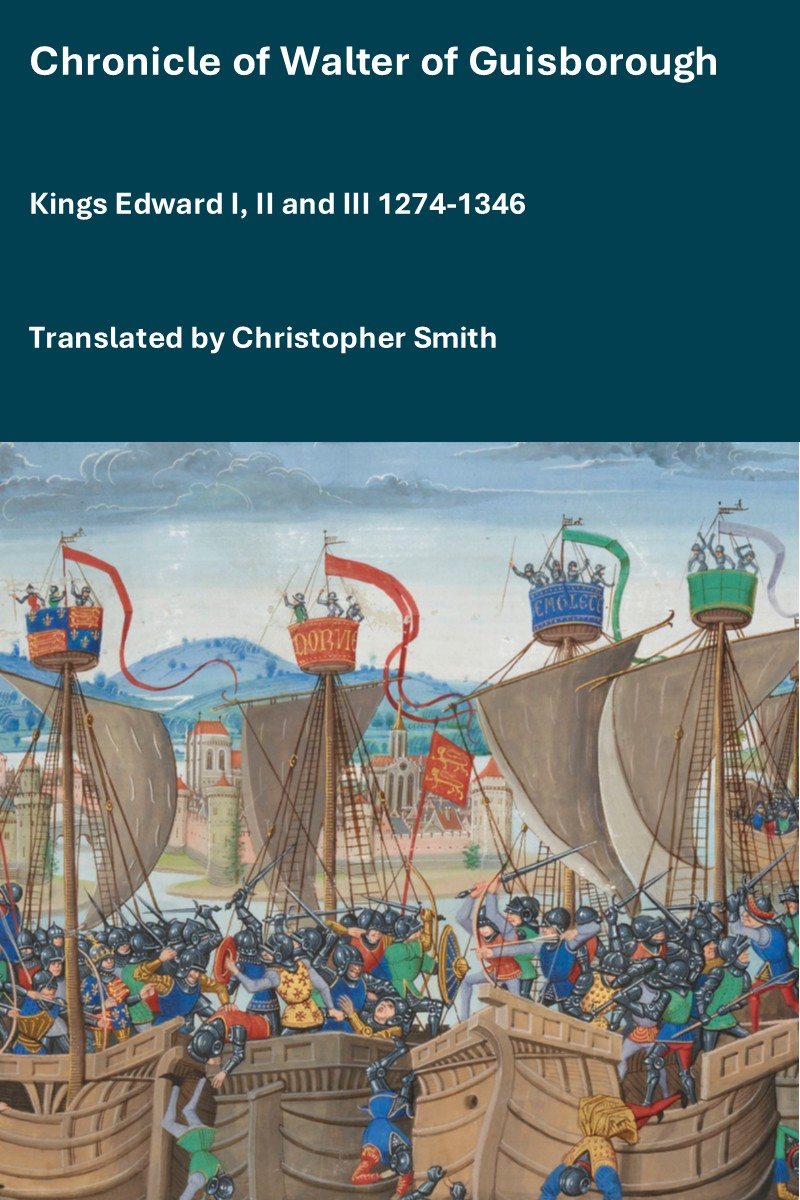
Chronicle of Walter of Guisborough
A canon regular of the Augustinian Guisborough Priory, Yorkshire, formerly known as The Chronicle of Walter of Hemingburgh, describes the period from 1066 to 1346. Before 1274 the Chronicle is based on other works. Thereafter, the Chronicle is original, and a remarkable source for the events of the time. This book provides a translation of the Chronicle from that date. The Latin source for our translation is the 1849 work edited by Hans Claude Hamilton. Hamilton, in his preface, says: 'In the present work we behold perhaps one of the finest samples of our early chronicles, both as regards the value of the events recorded, and the correctness with which they are detailed; Nor will the pleasing style of composition be lightly passed over by those capable of seeing reflected from it the tokens of a vigorous and cultivated mind, and a favourable specimen of the learning and taste of the age in which it was framed.'
Available at Amazon in eBook and Paperback format.
On 19th May 1492 Anne Albret was born to Jean III King Navarre (age 23) and Catherine Grailly I Queen Navarre (age 24).
On 19th May 1499 Arthur Prince of Wales (age 12) and Catherine of Aragon (age 13) were married by proxy at Tickenhill Manor, Bewdley [Map]. Roderigo de Puebla stood in for Catherine. The service was performed by John Arundel Bishop of Lichfield and Coventry.


On 19th May 1536 Queen Anne Boleyn of England (age 35) was beheaded at Tower Green, Tower of London [Map]. Unusually a sword was used. Her execution was witnessed by Charles Brandon 1st Duke of Suffolk (age 52), Catherine Carey (age 12) and Henry Fitzroy 1st Duke Richmond and Somerset (age 16). Marquess Pembroke extinct.
She was buried at St Peter ad Vincula Church, Tower of London [Map]. There is myth that her corpse was subsequently removed for burial at the Boleyn family church Church of St Peter and St Paul, Salle [Map] as described in Agnes Strickland's 1852 Lives of the Queens of England Volume 4. Page 212.


Life of Anne Boleyn by Lancelot du Carle. Hall's Chronicle describes the execution: 'But the Queen (age 35) was with a sword beheaded within the Tower. And these following were the words that she spoke the day of her death which was the nineteenth day of May, 1536: "Good Christen people, I am come hither to die, for according to the law, and by the law I am judged to die, and therefore I will speak nothing against it. I am come hither to accuse no man, nor to speak anything of that, whereof I am accused and condemned to die, but I pray God save the King and send him long to reign over you, for a gentler nor a more merciful prince was there never: and to me he was ever a good, a gentle and Sovereign Lord. And if any person will meddle of my cause, I require them to judge the best. And thus I take my leave of the world and of you all, and I heartily desire you all to pray for me. O Lord have mercy on me, to God I commend my soul. And then she kneeled down saying: To Christ I commend my soul, Jesu receive my soul diverse times, till that her head was stricken of with the sword. And on the Ascencion day following, the King wore white for mourning."'
| Le jour suivant, Et quand le capitaine | The next day when the captain |
| Dire lui vint que l'heure estoit prochaine | came to tell her the time was near |
| Et qu'il estoit temps que si disposast | and that it was time to prepare herself |
| Elle luy dist que lui mesmes advisast | she told him that she herself advised him |
| De s'aquitter de sa charge et vouloir | to discharge his duty and desire |
| Car des long temps Dieu a voulu pourveoir | because for a long time God has wanted to provide |
| A lui donner courage et fermeté | her courage and steadfastness |
| Pour resister a plus grand cruaulté | to resist greater cruelty. |
| Ainsi s'en va au lieu de son suplice | So, she went to the place of her punishment |
| Pour obeyr au vouloir de justice | to obey the will of justice |
| Tousjours monstrant un visage constant | always showing a constant face |
| Comme le monde en rien ne regretant | not regretting anything in the world |
| Car sa couleur, et sa face estoit telle | for her complexion and face were such |
| Que ne fut oncques de tout veuë si belle | never before was a sight so beautiful. |
| Par grand douleur que de ses yeulx rendoit | despite the great sadness that her eyes showed. |
| En soubzriant le peuple regardoit | As she sighed, the people looked at her, |
| Auquel soubdain qu'elle fut arrive | and when suddenly she arrived |
| Sur l'eschaffault d'une grace privée | at the scaffold with a private grace |
| Sans s'effrayer a sa voix addressee | without being frightened, in a strained voice she addressed them |
| Que toutesfois trouve un peu pressée | which, however, she found difficult |
| De la foiblesse en elle dominant | from the weakness dominating her. |
| Mais peu a peu sa force reprenant | But little by little, she regained her strength |
| Et asseurant sa debile façon | and asserting her feeble manner |
| Feist de sa voix sortir de piteux son. | she made a pitiful sound with her voice: |
| O mes amis, amis et plus que freres | O my friends, friends and more than brothers, |
| Puis qu'avec vous je ne puis estre guieres | since I cannot be with you much longer |
| Et que fini est le cours de mes parens | and the course of my life among my family has ended. |
| Je vous suppli que ne soyez desplaisans | I beg you not to be unpleasant |
| Et me vueillez pardonner de bon coeur | and please forgive me with all your heart |
| Si je n'ay point usé de la doulceur | if I did not use kindness |
| Envers vous tous selon que je debvois | to all of you as I should have |
| Veu le pouvoir, et moyen qu'en avois, | considering the power and means that I had. |
| Et vous prie tous que par fraternité | And pray all of you out of fraternity |
| De chrestienne, et vraye charité | Christian, and true charity |
| Me departez vos prieres devotes | share your devout prayers with me |
| Envers Jesus, affin que par les notes | towards Jesus, only by the notes |
| De mes pechez n'en soit point maculée | of my sins my soul will not be stained |
| Mon ame apres que m'en seray allée. | by my sins after I am gone. |
| De vous narrer pourquoy je suis ici | To tell you why I am here |
| Ne serviroit pour vous, ne moy aussi | would not be serve for you, or me either |
| Parquoy me taiz, mais le juge du monde | therefore, I remain silent, but the judge of the world |
| En qui justice et verité abunde | in whom justice and truth abound |
| Congnoist le tout, lequel d'affection | knows everything, without prejudice, |
| Je prie qu'il vuelle avoir compassion | I pray that He has compassion |
| De ceulx qui m'ont a ceste mort jugée | for those who judged me to die |
| Et quand d'ici je seray deslogée | and when from here I am departed |
| Souviennne vous que je vous recommande | remember that I recommend to you |
| Vostre bon Roy, en qui j'ay veu si grande | your good King, in whom I have seen such great |
| Humanité et comble de tous biens | humanity and an abundance of all blessings, |
| Craincte envers Dieu, amour envers les siens | fear of God, love of his own, |
| Et grans vertuz lesquelles je referee | and great virtues, of which I bear witness, |
| Qu'estes heureux, si Dieu le vous conserve | you are fortunate if God preserves him. |
| Priez doncq Dieu que longuement le tienne | So pray to God that He may for a long time |
| Avec vous, et aussi que m'advienne | be with you, and also, that on me |
| Sa grace pour me tirer avec luy | his grace pulls me to him |
| Et recepvoir mon ame ce jourdhuy | and receives my soul this day. |
| Ce fut la fin de sa foible parole | This was the end of her feeble speech |
| Qui toutesfoys le peuple ainsi console | which nevertheless consoled the people |
| Fort desollé de veoir la paouvre Royne | greatly saddened to see the poor Royne |
| En tel estat meneé en ceste peine | led into so much pain |
| Car n'est aulcun qui n'ait ferme sperance | for there is no one who does not have firm hope |
| Que ne sera son esprit en souffrance | that her spirit will not suffer |
| Veu sa grand Foy et patience saige | given her great Faith and wise patience |
| Qui surmontoit de femme le couraige: | that overcame the courage of a woman. |
| Ce neantmoins, qui la veult regarder | Nevertheless, whoever looked at her |
| Par grand pitié ne se sçauroit garder | cannot help but feel pity |
| De se douloir, et tant plus que croissoit | at her suffering, and the more grew |
| Son ferme cæur, tant plus amoindrissoit | her steadfast heart, all the more diminished |
| Aux assistans, qui ne pouvoyent tenir | in those present, who could not hold back |
| Les pleurs, que bien elle a sceu contenir. | the tears, which she was able to contain. |
| Quand la Royne eut elle mesme bessé | When the Queen herself had lowered |
| Son blanc collet, et chapperon laisse | her white collar and hood, left |
| Pour ne donner au coup empeschement | to not hinder or obstruct the blow |
| Se vint jecter a genoulx humblement | she knelt down humbly |
| En prononçant ceste voix plusieurs foys | and uttering these words several times, |
| Christ, je te prie mon esperit reçoys: | Christ, I pray to you, receive my spirit. |
| O grand pitié l'une des damoyselles | O great pity, one of the maids |
| L'ectans sans fin larmes continuelles | The endless flow of continuous tears |
| Vint au davant pour faire le service | came forward to do the service |
| De son dernier et pitoyable office | of her last and pitiful office |
| Et son visaige a d'ung linge voilê | and her face was veiled with a cloth. |
| Le maistre alors luy mesme desolé | The executioner himself then sorry |
| Et perturbé de l'exécution | and disturbed by the execution |
| Se contraignant pour satisfaction | gathering himself for completion |
| Le dernier coup d'une espée visa | aimed the final blow of a sword |
| Dessus son col, que soubdain divisa | at her neck, which suddenly divided. |
Become a Member via our Buy Me a Coffee page to read more.
Letters and Papers. 19 May. R. O. 915. Henry VIII. and Jane Seymour.
Dispensation by Cranmer (age 46) to Henry VIII (age 44) and Jane Seymour (age 27), to marry, although in the third and third1 degrees of affinity, without publication of banns. Lamehithe, 19 May 1536.
Parchment, p. 1. Signed: "T. Cantuarien."
Note 1. Sic. "Tertio et tertio affinitatis gradibus."
Note 2. "Third degree of affinity" may refer to second cousins. Jane Seymour and Anne Boleyn were half-second-cousins. The repeating of the term "tertio" may be oncluding both Anne and Mary Boleyn; Henry taking a belt and braces approach to any challenges of the legitimacy of any future issue.


Letters and Papers. 19 May [1536]. Vienna Archives. Chapuys (age 46) to Granvelle.
Refers him for the news to his letter to the Emperor. Hopes to make amends for his present brevity by writing to him the history of the conduct of this English Messalina or Agrippina during her imprisonment. The woman who has her in charge will not conceal anything from Chapuys. She has already sent to tell him some news, among others that the said Messalina could not imagine that anyone but Chapuys had got her in disgrace with the King, for ever since he came to Court the King has regarded her with an evil eye. It is well for Chapuys she did not escape, because with her humanity she would have given him to the dogs to eat. There are still two English gentlemen1 detained on her account, and it is suspected that there will be many more, because the King has said he believed that more than 100 had to do with her. You never saw prince nor man who made greater show of his horns or bore them more pleasantly. I leave you to imagine the cause.
Owing to my illness, and to await the last act of the story, besides that George must have informed you what was to follow, I have not hastened to write sooner. London, 18 May 1536.
Yesterday the archbishop of Canterbury declared by sentence that the Concubine's daughter was the bastard of Mr. Norris (deceased), and not the King's daughter. This already removes an obstacle in the way of the Princess, who, I hope, whatever difficulty the King has made hitherto, will be declared true heiress of the kingdom, not as born of lawful marriage, but as legitimate propter bonam fidem parentum. Others tell me that the said Archbishop had pronounced the marriage of the King and Concubine (age 35) invalid on account of the King having had connection with her sister (age 37), and that, as both parties knew of this, the good faith of the parents cannot make the said bastard legitimate. Although the matter is not much to be relied on, many think that most of the new bishops "ont davoir leur Sainct Marten," because, having persuaded the Concubine that she had no need to confess, she grew more audacious in vice; and, moreover, they persuaded her that according to the said sect it was lawful to seek aid elsewhere, even from her own relations, when her husband was not capable of satisfying her. The Concubine, before her marriage with the King, said, to increase his love, that there was a prophecy that about this time a Queen of England would be burnt, but, to please the King, she did not care. After her marriage she boasted that the previous events mentioned in the prophecy had already been accomplished, and yet she was not condemned. But they might well have said to her, as was said to Cæsar, "the Ides have come, but not gone." Has no doubt that if the Emperor intends to negociate with the English he will send some one to give greater weight to the affair, according to the letters of his Majesty; and if the said personage could negociate before the conclusion of Parliament, it would be very advantageous both for the interests of the Princess and for the rest. If he come about St. John's Day, he will probably assist at the new marriage and coronation, in which the King intends to do wonders. He has already given orders to build a vessel like the "Busentaure de Venice," to carry the lady from Greenwich hither. London, 19 May. Fr., from a modern copy, pp. 3.
Note 1. The mutilations in the original are supplied from Burnet. Compare also Herbert, who abridges.
Become a Member via our Buy Me a Coffee page to read more.
Wriothesley's Chronicle [1508-1562]. 19th May 1554. The xixth of May, beinge Saterday and the eeven of the feast of the Holie Trinitie, Ladye Elizabeth (age 20) was had out of the Tower [Map] and went thorowe London Bridge in her barge at 3 of the clock in the afternoone, lyeinge at Richmond [Map] that night; and from thence conveyed to Woodstock [Map], Mr. Benyfield (age 45)b, Lorde Williams of Tame, and Sir Leonard Chamberlayne, waytinge on her, with iic horsemen, there to remayne at the Queenes pleasure.
Note b. Sir Henry Bedingfield, the recently appointed Constable of the Tower.
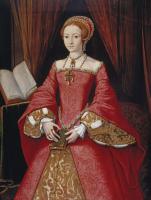


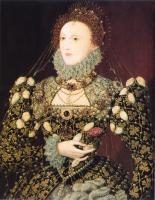
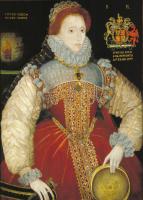


Henry Machyn's Diary. 19th May 1560. The xix day of May dyd pryche at Powlles [cross] [Map] my lord byshope of Ele, docthur Kokes (age 67), sum-tyme dene of Westmynster, and ther was browth hym word that one had fond a (blank) of money, and any man cold or cane tell what money yt was, lett cum, and they shall have yt.


On 19th May 1591 Elizabeth Manners 15th Baroness Ros of Helmsley (age 16) died in childbirth at Tower Street, All Hallows [Map]. Her son William (age 1) succeeded 16th Baron Ros Helmsley.
On 19th May 1648 Colonel William Legge was imprisoned at Arundel Castle [Map] for having supported King Charles I of England, Scotland and Ireland (age 47) in his escape from Hampton Court Palace, Richmond [Map].


John Evelyn's Diary. 19th May 1659. Came to dine with me my Lord Galloway (age 49) and his son, a Scotch Lord and learned: also my brother (age 41) and his lady, Lord Berkeley and his lady, Mrs. Shirley, and the famous singer, Mrs. Knight, and other friends.
On 19th May 1663 Sophie Elisabeth Saxe Gotha was born to Ernest "The Pious" Saxe Gotha I Duke Saxe Gotha (age 61) and Elisabeth Sophie Saxe Altenburg Duchess Saxe Gotha (age 43) at Gotha. Coefficient of inbreeding 3.17%. She died aged less than one years old.
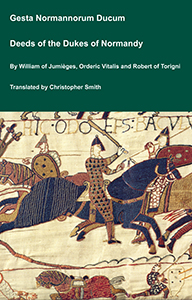
The Deeds of the Dukes of Normandy
The Gesta Normannorum Ducum [The Deeds of the Dukes of Normandy] is a landmark medieval chronicle tracing the rise and fall of the Norman dynasty from its early roots through the pivotal events surrounding the Norman Conquest of England. Originally penned in Latin by the monk William of Jumièges shortly before 1060 and later expanded at the behest of William the Conqueror, the work chronicles the deeds, politics, battles, and leadership of the Norman dukes, especially William’s own claim to the English throne. The narrative combines earlier historical sources with firsthand information and oral testimony to present an authoritative account of Normandy’s transformation from a Viking settlement into one of medieval Europe’s most powerful realms. William’s history emphasizes the legitimacy, military prowess, and governance of the Norman line, framing their expansion, including the conquest of England, as both divinely sanctioned and noble in purpose. Later chroniclers such as Orderic Vitalis and Robert of Torigni continued the history, extending the coverage into the 12th century, providing broader context on ducal rule and its impact. Today this classic work remains a foundational source for understanding Norman identity, medieval statesmanship, and the historical forces that reshaped England and Western Europe between 800AD and 1100AD.
Available at Amazon in eBook and Paperback format.
Samuel Pepys' Diary. 19th May 1663. Thence home and being 10 o'clock was forced to land beyond the Custom House, and so walked home and to my office, and having dispatched my great letters by the post to my father, of which I keep copies to show by me and for my future understanding, I went home to supper and bed, being late. The most observables in the making of money which I observed to-day, is the steps of their doing it.
Note 1. Before they do anything they assay the bullion, which is done, if it be gold, by taking an equal weight of that and of silver, of each a small weight, which they reckon to be six ounces or half a pound troy; this they wrap up in within lead. If it be silver, they put such a quantity of that alone and wrap it up in lead, and then putting them into little earthen cupps made of stuff like tobacco pipes, and put them into a burning hot furnace, where, after a while, the whole body is melted, and at last the lead in both is sunk into the body of the cupp, which carries away all the copper or dross with it, and left the pure gold and silver embodyed together, of that which hath both been put into the cupp together, and the silver alone in these where it was put alone in the leaden case. And to part the silver and the gold in the first experiment, they put the mixed body into a glass of aqua-fortis, which separates them by spitting out the silver into such small parts that you cannot tell what it becomes, but turns into the very water and leaves the gold at the bottom clear of itself, with the silver wholly spit out, and yet the gold in the form that it was doubled together in when it was a mixed body of gold and silver, which is a great mystery; and after all this is done to get the silver together out of the water is as strange. But the nature of the assay is thus: the piece of gold that goes into the furnace twelve ounces, if it comes out again eleven ounces, and the piece of silver which goes in twelve and comes out again eleven and two pennyweight, are just of the alloy of the standard of England. If it comes out, either of them, either the gold above eleven, as very fine will sometimes within very little of what it went in, or the silver above eleven and two pennyweight, as that also will sometimes come out eleven and ten penny weight or more, they are so much above the goodness of the standard, and so they know what proportion of worse gold and silver to put to such a quantity of the bullion to bring it to the exact standard. And on the contrary, [if] it comes out lighter, then such a weight is beneath the standard, and so requires such a proportion of fine metal to be put to the bullion to bring it to the standard, and this is the difference of good and bad, better and worse than the standard, and also the difference of standards, that of Seville being the best and that of Mexico worst, and I think they said none but Seville is better than ours.
Note 2. They melt it into long plates, which, if the mould do take ayre, then the plate is not of an equal heaviness in every part of it, as it often falls out.
Note 3. They draw these plates between rollers to bring them to an even thickness all along and every plate of the same thickness, and it is very strange how the drawing it twice easily between the rollers will make it as hot as fire, yet cannot touch it.
Note 4. They bring it to another pair of rollers, which they call adjusting it, which bring it to a greater exactness in its thickness than the first could be.
Note 5. They cut them into round pieces, which they do with the greatest ease, speed, and exactness in the world.
Note 6. They weigh these, and where they find any to be too heavy they file them, which they call sizeing them; or light, they lay them by, which is very seldom, but they are of a most exact weight, but however, in the melting, all parts by some accident not being close alike, now and then a difference will be, and, this filing being done, there shall not be any imaginable difference almost between the weight of forty of these against another forty chosen by chance out of all their heaps.
Note 7. These round pieces having been cut out of the plates, which in passing the rollers are bent, they are sometimes a little crooked or swelling out or sinking in, and therefore they have a way of clapping 100 or 2 together into an engine, which with a screw presses them so hard that they come out as flat as is possible.
Note 8. They blanch them.
Note 9. They mark the letters on the edges, which is kept as the great secret by Blondeau, who was not in the way, and so I did not speak with him to-day1.
Note 1. Professor W. C. Roberts-Austen, C.B., F.R.S., chemist to the Royal Mint, refers to Pepys's Diary and to Blondeau's machine in his Cantor Lectures on "Alloys used for Coinage", printed in the "journal of the Society of Arts" (vol. xxxii.). He writes, "The hammer was still retained for coining in the Mint in the Tower of London, but the question of the adoption of the screw-press by the Moneyers appears to have been revived in 1649, when the Council of State had it represented to them that the coins of the Government might be more perfectly and beautifully done, and made equal to any coins in Europe. It was proposed to send to France for Peter Blondeau, who had invented and improved a machine and method for making all coins 'with the most beautiful polish and equality on the edge, or with any proper inscription or graining.' He came on the 3rd of September, and although a Committee of the Mint reported in favour of his method of coining, the Company of Moneyers, who appear to have boasted of the success of their predecessors in opposing the introduction of the mill and screw-press in Queen (age 24) Elizabeth's reign, prevented the introduction of the machinery, and consequently he did not produce pattern pieces until 1653.... It is certain that Blondeau did not invent, but only improved the method of coining by the screw-press, and I believe his improvements related chiefly to a method for 'rounding the pieces before they are sized, and in making the edges of the moneys with letters and graining,' which he undertook to reveal to the King (age 32). Special stress is laid on the engines wherewith the rims were marked, 'which might be kept secret among few men.' I cannot find that there is any record in the Paris mint of Blondeau's employment there, and the only reference to his invention in the Mint records of this country refers to the 'collars,' or perforated discs of metal surrounding the 'blank' while it was struck into a coin. There is, however, in the British Museum a MS. believed to be in Blondeau's hand, in which he claims his process, 'as a new invention, to make a handsome coyne, than can be found in all the world besides, viz., that shall not only be stamped on both flat sides, but shall even be marked with letters on the thickness of the brim.' The letters were raised. The press Blondeau used was, I believe, the ordinary screw-press, and I suppose that the presses drawn in Akerman's well-known plate of the coining-room of the Mint in the Tower, published in 1803 'Microcosm of London,' vol. ii., p. 202, if not actually the same machines, were similar to those erected in 1661-62 by Sir William Parkhurst and Sir Anthony St. Leger, wardens of the Mint, at a cost of £1400, Professor Roberts-Austen shows that Benvenuto Cellini used a similar press to that attributed to Blondeau, and he gives an illustration of this in his lecture (p. 810). In a letter to the editor the Professor writes: "Pepys's account of the operations of coining, and especially of assaying gold and silver, is very interesting and singularly accurate considering that he could not have had technical knowledge of the subject"..
Note 10. They mill them, that is, put on the marks on both sides at once with great exactness and speed, and then the money is perfect. The mill is after this manner: one of the dyes, which has one side of the piece cut, is fastened to a thing fixed below, and the other dye (and they tell me a payre of dyes will last the marking of £10,000 before it be worn out, they and all other their tools being made of hardened steel, and the Dutchman who makes them is an admirable artist, and has so much by the pound for every pound that is coyned to find a constant supply of dyes) to an engine above, which is moveable by a screw, which is pulled by men; and then a piece being clapped by one sitting below between the two dyes, when they meet the impression is set, and then the man with his finger strikes off the piece and claps another in, and then the other men they pull again and that is marked, and then another and another with great speed. They say that this way is more charge to the King than the old way, but it is neater, freer from clipping or counterfeiting, the putting of the words upon the edges being not to be done (though counterfeited) without an engine of the charge and noise that no counterfeit will be at or venture upon, and it employs as many men as the old and speedier. They now coyne between £16 and £24,000 in a week. At dinner they did discourse very finely to us of the probability that there is a vast deal of money hid in the land, from this:-that in King Charles's time there was near ten millions of money coyned, besides what was then in being of King James's and Queene (age 53) Elizabeth's, of which there is a good deal at this day in being. Next, that there was but £750,000 coyned of the Harp and Crosse money2, and of this there was £500,000 brought in upon its being called in. And from very good arguments they find that there cannot be less of it in Ireland and Scotland than £100,000; so that there is but £150,000 missing; and of that, suppose that there should be not above 650,000 still remaining, either melted down, hid, or lost, or hoarded up in England, there will then be but £100,000 left to be thought to have been transported. Now, if £750,000 in twelve years' time lost but a £100,000 in danger of being transported, then within thirty-five years' time will have lost but £3,888,880 and odd pounds; and as there is £650,000 remaining after twelve years' time in England, so after thirty-five years' time, which was within this two years, there ought in proportion to have been resting £6,111,120 or thereabouts, beside King James's and Queen Elizabeth's money. Now that most of this must be hid is evident, as they reckon, because of the dearth of money immediately upon the calling-in of the State's money, which was £500,000 that came in; and yet there was not any money to be had in this City, which they say to their own observation and knowledge was so. And therefore, though I can say nothing in it myself, I do not dispute it.
Note 2. The Commonwealth coins (stamped with the cross and harp, and the inscription, "The Commonwealth of England") were called in by proclamation, September, 1660, and when brought to the Mint an equal amount of lawful money was allowed for them, weight for weight, deducting only for the coinage (Ruding's "Annals of the Coinage", 18 19, vol. iii., p. 293). The harp was taken out of the naval flags in May, 1660.


Become a Member via our Buy Me a Coffee page to read more.

Samuel Pepys' Diary. 19th May 1664. Up, and it being very rayny weather, which makes it cooler than it was, by coach to Charing Cross with Sir W. Pen (age 43), who is going to Portsmouth, Hampshire [Map] this day, and left him going to St. James's to take leave of the Duke (age 30), and I to White Hall to a Committee of Tangier; where God forgive how our Report of my Lord Peterborough's (age 42) accounts was read over and agreed to by the Lords, without one of them understanding it! And had it been what it would, it had gone: and, besides, not one thing touching the King's profit in it minded or hit upon.
On 19th May 1664 Élisabeth Bourbon Vendôme (age 49) died.
Samuel Pepys' Diary. 19th May 1665. So parted, vexed at the first and amazed at this business of my Lord Arlington's (age 47).


Samuel Pepys' Diary. 19th May 1665. Up, and to White Hall, where the Committee for Tangier met, and there, though the case as to the merit of it was most plain and most of the company favourable to our business, yet it was with much ado that I got the business not carried fully against us, but put off to another day, my Lord Arlington (age 47) being the great man in it, and I was sorry to be found arguing so greatly against him. The business I believe will in the end be carried against us, and the whole business fall; I must therefore endeavour the most I can to get money another way. It vexed me to see Creed so hot against it, but I cannot much blame him, having never declared to him my being concerned in it. But that that troubles me most is my Lord Arlington calls to me privately and asks me whether I had ever said to any body that I desired to leave this employment, having not time to look after it. I told him, No, for that the thing being settled it will not require much time to look after it. He told me then he would do me right to the King (age 34), for he had been told so, which I desired him to do, and by and by he called me to him again and asked me whether I had no friend about the Duke, asking me (I making a stand) whether Mr. Coventry (age 37) was not my friend. I told him I had received many friendships from him. He then advised me to procure that the Duke would in his next letter write to him to continue me in my place and remove any obstruction; which I told him I would, and thanked him.

Samuel Pepys' Diary. 19th May 1665. Being come home, I much troubled out again by coach (for company taking Sir W. Warren with me), intending to have spoke to my Lord Arlington (age 47) to have known the bottom of it, but missed him, and afterwards discoursing the thing as a confidant to Sir W. Warren, he did give me several good hints and principles not to do anything suddenly, but consult my pillow upon that and every great thing of my life, before I resolve anything in it.
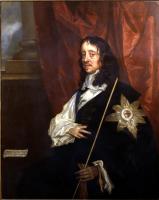
Samuel Pepys' Diary. 19th May 1667. After church to White Hall, and there find Sir G. Carteret (age 57) just set down to dinner, and I dined with them, as I intended, and good company, the best people and family in the world I think. Here was great talk of the good end that my Lord Treasurer (deceased) made; closing his owne eyes and setting his mouth, and bidding adieu with the greatest content and freedom in the world; and is said to die with the cleanest hands that ever any Lord Treasurer did.
Samuel Pepys' Diary. 19th May 1667. After dinner Sir G. Carteret (age 57) and I alone, and there, among other discourse, he did declare that he would be content to part with his place of Treasurer of the Navy upon good terms. I did propose my Lord Bellasses (age 52) as a man likely to buy it, which he listened to, and I did fully concur and promote his design of parting with it, for though I would have my father live, I would not have him die Treasurer of the Navy, because of the accounts which must be uncleared at his death, besides many other circumstances making it advisable for him to let it go. He tells me that he fears all will come to naught in the nation soon if the King (age 36) do not mind his business, which he do not seem likely to do. He says that the Treasury will be managed for a while by a Commission, whereof he thinks my Chancellor (age 58) for the honour of it, and my Lord Ashly (age 45), and the two Secretaries will be, and some others he knows not.


Samuel Pepys' Diary. 19th May 1668. Thence W. Coventry (age 40) and I in the Matted Gallery, and there he did talk very well to me about the way to save the credit of the officers of the Navy, and their places too, by making use of this interval of Parliament to be found to be mending of matters in the Navy, and that nothing but this will do it, and gives an instance in themselves of the Treasury, whereof himself and Sir John Duncombe (age 45) all the world knows have enemies, and my Lord Ashly (age 46) a man obnoxious to most, and Sir Thomas Clifford (age 37) one that as a man suddenly rising and a creature of my Lord Arlington's (age 50) hath enemies enough (none of them being otherwise but the Duke of Albemarle (age 59)), yet with all this fault they hear nothing of the business of the Treasury, but all well spoken of there. He is for the removal of Sir John Minnes (age 69), thinking that thereby the world will see a greater change in the hands than now they do; and I will endeavour it, and endeavour to do some good in the office also.

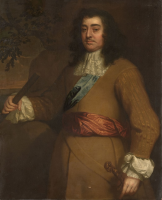


Samuel Pepys' Diary. 19th May 1668. Up, and called on Mr. Pierce, who tells me that after all this ado Ward is come to town, and hath appeared to the Commissioners of Accounts and given such answers as he thinks will do every body right, and let the world see that their great expectations and jealousies have been vain in this matter of the prizes. The Commissioners were mighty inquisitive whether he was not instructed by letters or otherwise from hence from my Lord Sandwich's (age 42) friends what to say and do, and particularly from me, which he did wholly deny, as it was true, I not knowing the man that I know of. He tells me also that, for certain, Mr. Vaughan (age 64) is made Lord Chief justice, which I am glad of. He tells me, too; that since my Lord of Ormond's (age 57) coming over, the King (age 37) begins to be mightily reclaimed, and sups every night with great pleasure with the Queene (age 58): and yet, it seems, he is mighty hot upon the Duchess of Richmond (age 20); insomuch that, upon Sunday was se'nnight, at night, after he had ordered his Guards and coach to be ready to carry him to the Park, he did, on a sudden, take a pair of oars or sculler, and all alone, or but one with him, go to Somersett House [Map], and there, the garden-door not being open, himself clamber over the walls to make a visit to her, which is a horrid shame. He gone, I to the office, where we sat all the morning, Sir W. Pen (age 47) sick of the gout comes not out.
Chronicle of a Bourgeois of Valenciennes
Récits d’un bourgeois de Valenciennes aka The Chronicle of a Bourgeois of Valenciennes is a vivid 14th-century vernacular chronicle written by an anonymous urban chronicler from Valenciennes in the County of Hainaut. It survives in a manuscript that describes local and regional history from about 1253 to 1366, blending chronology, narrative episodes, and eyewitness-style accounts of political, military, and social events in medieval France, Flanders, and the Low Countries. The work begins with a chronological framework of events affecting Valenciennes and its region under rulers such as King Philip VI of France and the shifting allegiances of local nobility. It includes accounts of conflicts, sieges, diplomatic manoeuvres, and the impact of broader struggles like the Hundred Years’ War on urban life in Hainaut. Written from the perspective of a burgher (bourgeois) rather than a monastery or royal court, the chronicle offers a rare lay viewpoint on high politics and warfare, reflecting how merchants, townspeople, and civic institutions experienced the turbulence of the 13th and 14th centuries. Its narrative style combines straightforward reporting of events with moral and civic observations, making it a valuable source for readers interested in medieval urban society, regional politics, and the lived experience of war and governance in pre-modern Europe.
Available at Amazon in eBook and Paperback format.
Samuel Pepys' Diary. 19th May 1669. With my coach to St. James's; and there finding the Duke of York (age 35) gone to muster his men, in Hyde Park, I alone with my boy thither, and there saw more, walking out of my coach as other gentlemen did, of a soldier's trade, than ever I did in my life: the men being mighty fine, and their Commanders, particularly the Duke of Monmouth (age 20); but me-thought their trade but very easy as to the mustering of their men, and the men but indifferently ready to perform what was commanded, in the handling of their arms. Here the news was first talked of Harry Killigrew's (age 32) being wounded in nine places last night, by footmen, in the highway, going from the Park in a Hackney-coach towards Hammersmith, to his house at Turnham Greene: they being supposed to be my Lady Shrewsbury's (age 27) men, she being by, in her coach with six horses; upon an old grudge of his saying openly that he had lain with her.


Samuel Pepys' Diary. 19th May 1669. By and by the Duke of York (age 35) comes, and readily took me to his closet, and received my petition, and discoursed about my eyes, and pitied me, and with much kindness did give me his consent to be absent, and approved of my proposition to go into Holland to observe things there, of the Navy; but would first ask the King's leave, which he anon did, and did tell me that the King (age 38) would be a good master to me, these were his words, about my eyes, and do like of my going into Holland, but do advise that nobody should know of my going thither, but pretend that I did go into the country somewhere, which I liked well. Glad of this, I home, and thence took out my wife, and to Mr. Holliard's (age 60) about a swelling in her cheek, but he not at home, and so round by Islington [Map] and eat and drink, and so home, and after supper to bed. In discourse this afternoon, the Duke of York did tell me that he was the most amazed at one thing just now, that ever he was in his life, which was, that the Duke of Buckingham (age 41) did just now come into the Queen's (age 30) bed-chamber, where the King was, and much mixed company, and among others, Tom Killigrew (age 57), the father of Harry (age 32), who was last night wounded so as to be in danger of death, and his man is quite dead; and [Buckingham] there in discourse did say that he had spoke with some one that was by (which all the world must know that it must be his whore, my Lady Shrewsbury (age 27)), who says that they did not mean to hurt, but beat him, and that he did run first at them with his sword; so that he do hereby clearly discover that he knows who did it, and is of conspiracy with them, being of known conspiracy with her, which the Duke of York did seem to be pleased with, and said it might, perhaps, cost him his life in the House of Lords; and I find was mightily pleased with it, saying it was the most impudent thing, as well as the most foolish, that ever he knew man do in all his life.


Become a Member via our Buy Me a Coffee page to read more.
On 19th May 1676 John Greenhill (age 32) died. He had been returning home somewhat less than sober from an evening in the Vine Tavern when he fell into a ditch in Long Acre. He was carried to his lodgings in Lincoln's Inn Fields but didn't recover. He was buried in St Giles in the Fields.
After 19th May 1711. St Helen's Church, Tarporley [Map]. Monument to John Crewe of Utkinton (deceased).
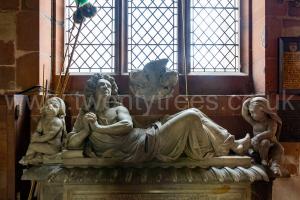
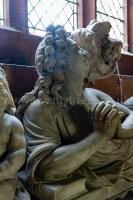
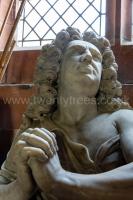
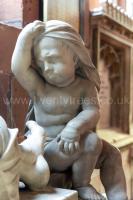
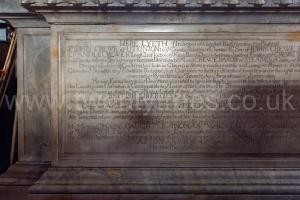


On 19th May 1719 Edward Rich 7th Earl Warwick 4th Earl Holland (age 21) was appointed Gentlemen of the Bedchamber to King George I (age 58).
On 19th May 1744 Charlotte Mecklenburg Strelitz Queen Consort England was born to Charles Louis Frederick Duke of Mecklenburg (age 36) and Princess Elisabeth Albertine of Saxe-Hildburghausen (age 30). She married 8th September 1761 her third cousin King George III of Great Britain and Ireland, son of Frederick Louis Hanover Prince of Wales and Augusta Saxe Coburg Altenburg, and had issue.


On 19th May 1755 Elizabeth Nightingale died from childbirth ten days after giving birth to her only child Wilmot Vaughan 2nd Earl Lisburne.

On 19th May 1782 John Donne died. Memorial in Church of St Mary, Bruton [Map].
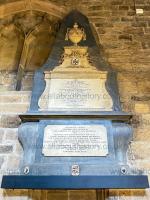
On 19th May 1783 Edward Collingwood of Byker and Dissington (age 81) died. The date given on his monument at Cathedral Church St Nicholas, Newcastle upon Tyne [Map] "die maii none decimon a.d. 1783" which may refer to April 28th.
Edward Collingwood of Byker and Dissington: In 1673 Admiral Ralph Delaval sold Dissington Hall, Ponteland [Map] to Edward Collingwood of Byker and Dissington. Around 1702 he was born to Edward Collingwood. On 29th May 1731 Edward Collingwood of Byker and Dissington and Mary Roddam were married at All Saints Church, Newcastle upon Tyne [Map].
On 19th May 1794 Carlos Miguel Fitz James Stuart 12th Duke Veragua 7th Duke Berwick 14th Duke Alba was born to Jacobo Fitz James Stuart 10th Duke Veragua 5th Duke Berwick (deceased) and María Teresa Fernández Silva Duchess Veragua Duchess Berwick (age 22) at Madrid [Map]. He a great x 4 grandson of King James II of England Scotland and Ireland. He married 1819 Rosalía Ventimiglia Duchess Veragua Duchess Berwick Duchess Alba and had issue.
On 19th May 1798 William Byron 5th Baron Byron (age 75) was killed in action by cannon fire whilst fighting in Corsica. His great nephew George (age 10) succeeded 6th Baron Byron of Rochdale in Lancashire.


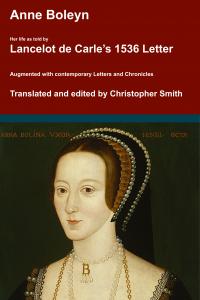
Anne Boleyn. Her Life as told by Lancelot de Carle's 1536 Letter.
In 1536, two weeks after the execution of Anne Boleyn, her brother George and four others, Lancelot du Carle, wrote an extraordinary letter that described Anne's life, and her trial and execution, to which he was a witness. This book presents a new translation of that letter, with additional material from other contemporary sources such as Letters, Hall's and Wriothesley's Chronicles, the pamphlets of Wynkyn the Worde, the Memorial of George Constantyne, the Portuguese Letter and the Baga de Secrets, all of which are provided in Appendices.
Available at Amazon in eBook and Paperback format.

On 19th May 1801 George Legge 3rd Earl Dartmouth (age 45) was appointed President of the Board of Control
Derbyshire Archaeological Journal Volume 30 1908 Page 155. May 19th 1825. We opened a barrow composed principally of stone situated on the top of Cronkstone Hill1. It is on a farm belonging to the Duke of Devonshire, called Cronkstone Grange, in the Parish of Hartington, and is about three miles N.W. of Arborlow, which can be distinctly seen from it. We have discovered the remains of a human skeleton, deposited in a cist, formed of Stones, widely piled together, and about 4 feet in length. The body could not, of course, have been laid straight, but was doubled up with the knees towards the chin and breast, and reclined on the right side. This mode of interment is not very unusual in the Derbyshire barrows, and is supposed to be of the most remote antiquity. Under the head of the skeleton was placed the part of the horn of what I imagine to be the red-deer, and apparently must have been of large dimentions. It measures 9¼ inches round the base or root.
I have before noticed in my essay on Arbor-low that it was not uncommon to bury the horns of Deer with human bodies in these sepulchral tumuli. There was the usual accompaniment of rats' bones in this barrow, which I conceive, from analogous examples, should be referred to a very early date among the ancient Britons.
The top of Cronkston hill2, which is of great elevation is surrounded by a vallum and rampart of earth and stones, of no great height, ranging about 100 yards on every side of the barrow, and apparently intended solely to enclose and protect it. On the East side of the Hill is an amphitheatre, which has been formed by the excavation of the earth from the sides of the hill in a semi-elliptic form. There is a low bench of turf running quite round the amphitheatre, which has clearly been used as a seat for the principal spectators. It is about 15 or 16 yards across, and to the eastward, which is the side open, a space of the same width, and perhaps 100 yds. in length has been carefully levelled, and may perhaps have served as a cursus. This place is very similar to the semi-circular cove of earth mentioned by Stukeley, in his 2nd Itinerary as existing at Staden Low, near Buxton, and which he, with great probability, imagined to have been used for shows. Whether these remains at Cronkstone have served as a place of common amusement for the inhabitants of this district, or have been used for games instituted in memory of, and to the honour of the warrior or hunter buried in this barrow, whose remains we have deterred, must, of course, be quite conjectural."
Samuel Mitchell Junior (age 22).
Note 1. Vestiges, p. 125.
Become a Member via our Buy Me a Coffee page to read more.
Vestiges of the Antiquities of Derbyshire. On May 19, 1825, an examination of a barrow on the apex of Cronkstone Hill [Map], led to the discovery of a cist, measuring about four feet square, constructed of large stones, which contained a perfect human skeleton, lying on its right side; at the left side of the head, lay the lower part of the horn of a large deer, which measured eleven inches in length, and nine and a quarter in circumference.
Vestiges of the Antiquities of Derbyshire. 19th May 1828. In making a plantation north of Kenslow Wood, near Middleton-by-Yolgrave, on the 19th of May, 1828, the labourers discovered a natural cleft in the rock, which in some places rises to the surface of the ground, containing a quantity of human bones, and the remains of rats and other animals, amongst which was a large tooth of some carnivorous animal. On the supposition that this cleft might have been used as a ready-made cist for sepulchral purposes, it was fully investigated in April, 1844, without the effect of clearing up the mystery in which the deposit of the human bones is enveloped, no arrow-head of flint or fragment of urn being found to decide the question; there were merely found more bones, both human and otherwise: the former indicate the person to have been a female, and amongst the latter was the skull of either a wolf or a large dog. Though there is a doubt whether these remains were accidentally or designedly placed in the situation wherein they were discovered, there is none of their very great antiquity, for which reason their discovery has been considered worthy of record.
On 19th May 1838 Richard Colt Hoare 2nd Baronet (age 79) died. He was buried at St Peter's Church, Stourton. His half brother Henry (age 76) succeeded 3rd Baronet Hoare of Barn Elms in Surrey.


On 19th May 1847 Henry Adelbert Wellington Fitzroy 9th Duke Beaufort was born to Henry Charles Fitzroy Somerset 8th Duke Beaufort (age 23) and Georgiana Charlotte Curzon Howe Duchess Beaufort (age 22). He married 9th October 1895 Louise Emily Harford 9th Duchess Beaufort and had issue.
Ten Years' Digging. On the 19th of May, we opened the third [Musden Third Barrow [Map]] of the group of barrows upon Musden Hill, which is a fine regularly shaped mound eighteen yards diameter, and five feet high, composed of nothing but stiff clayey earth. The natural soil was touched at the depth of four feet, and was changed to a red colour by fire, the traces of which, in the form of charcoal, strewed the surface for a considerable length. A round hole had been sunk about a foot through the upper stratuna of rock, near the centre of the barrow, which was filled with small stones and clay; a few burnt bones and some pieces of burnt flint, one of them part of a large instrument, were found about this part of the mound, but no interment was discovered although extensive trenches were made. There is little doubt of an interment by cremation being yet in some part of the barrow, which is one of the same class as those near Longnor, opened in 1848.
On 19th May 1860 Edward Hamilton Seymour 16th Duke of Somerset was born to Francis Payne Seymour (age 44) and Jane Margaret Dallas. He married 28th July 1881 Rowena Wall Duchess Somerset and had issue.
The Diary of George Price Boyce 1865. 19th May 1865. Dined with Rossetti (age 37) and Fanny (age 30) and Howell at Chelsea. Settled to take för 50 eleven selected pencil studies of heads, R. in addition giving me one of a new model he has got to sit.
On 19th May 1935 Thomas Edward Lawrence "Lawrence of Arabia" (age 46) died in a motorcycle accident.
On 19th May 1973 Alice Roberts was born.
Anne Boleyn. Her Life as told by Lancelot de Carle's 1536 Letter.
In 1536, two weeks after the execution of Anne Boleyn, her brother George and four others, Lancelot du Carle, wrote an extraordinary letter that described Anne's life, and her trial and execution, to which he was a witness. This book presents a new translation of that letter, with additional material from other contemporary sources such as Letters, Hall's and Wriothesley's Chronicles, the pamphlets of Wynkyn the Worde, the Memorial of George Constantyne, the Portuguese Letter and the Baga de Secrets, all of which are provided in Appendices.
Available at Amazon in eBook and Paperback format.
On 19th May 1100 Judith Welf Holy Roman Empress was born to Henry "Black" Welf IX Duke Bavaria (age 25) and Wulfhilde of Saxony Duchess Bavaria (age 28). She married Frederick "One Eyed" Hohenstaufen I Holy Roman Emperor and had issue.
On 19th May 1329 William Ros 3rd Baron Ros Helmsley was born to William Ros 2nd Baron Ros Helmsley (age 44) and Margery Badlesmere Baroness Ros of Helmsley (age 20). He married his fourth cousin once removed Margaret Neville, daughter of Ralph Neville 2nd Baron Neville of Raby and Alice Audley Baroness Greystoke and Neville.
On 19th May 1400 John Stourton 1st Baron Stourton was born to William Stourton (age 27) at Witham Friary, Somerset [Map].
On 19th May 1450 Unamed Stewart was born to King James II of Scotland (age 19) and Mary of Guelders Queen Consort Scotland (age 16). He died the same day. He a great x 3 grandson of King Edward III of England.
On 19th May 1474 Isabella Este was born to Ercole Este I Duke Ferrara (age 42). She married Francesco Gonzaga II Marquess of Mantua, son of Frederico Gonzaga Marquess Mantua and Margaret Wittelsbach, and had issue.
On 19th May 1492 Anne Albret was born to Jean III King Navarre (age 23) and Catherine Grailly I Queen Navarre (age 24).
On 19th May 1639 Charles Weston 3rd Earl of Portland was born to Jerome Weston 2nd Earl of Portland (age 33) and Frances Stewart Countess Portland (age 22). He was christened the same day at St Margaret's Church, Westminster [Map].
On 19th May 1663 Sophie Elisabeth Saxe Gotha was born to Ernest "The Pious" Saxe Gotha I Duke Saxe Gotha (age 61) and Elisabeth Sophie Saxe Altenburg Duchess Saxe Gotha (age 43) at Gotha. Coefficient of inbreeding 3.17%. She died aged less than one years old.
On 19th May 1710 Charles Tynte 5th Baronet was born to John Tynte 2nd Baronet and Jane Kemeys Lady Tynte (age 25). He married 9th March 1738 Anne Busby Lady Tynte.
On 19th May 1724 Augustus John Hervey 3rd Earl Bristol was born to John Hervey 2nd Baron Hervey (age 27) and Mary Lepell Baroness Hervey (age 24). He married 4th August 1744 Elizabeth Chudleigh Duchess Kingston upon Hull.


On 19th May 1738 James Grant 5th Earl Seafield was born to Ludovic Grant 7th Baronet (age 31) and Margaret Ogilvy.
On 19th May 1744 Charlotte Mecklenburg Strelitz Queen Consort England was born to Charles Louis Frederick Duke of Mecklenburg (age 36) and Princess Elisabeth Albertine of Saxe-Hildburghausen (age 30). She married 8th September 1761 her third cousin King George III of Great Britain and Ireland, son of Frederick Louis Hanover Prince of Wales and Augusta Saxe Coburg Altenburg, and had issue.
On 19th May 1752 Lambton Loraine was born to Charles Loraine 3rd Baronet (age 49) and Dorothy Myloyt. He married 19th October 1776 Isabella Allgood.
The History of William Marshal was commissioned by his son shortly after William’s death in 1219 to celebrate the Marshal’s remarkable life; it is an authentic, contemporary voice. The manuscript was discovered in 1861 by French historian Paul Meyer. Meyer published the manuscript in its original Anglo-French in 1891 in two books. This book is a line by line translation of the first of Meyer’s books; lines 1-10152. Book 1 of the History begins in 1139 and ends in 1194. It describes the events of the Anarchy, the role of William’s father John, John’s marriages, William’s childhood, his role as a hostage at the siege of Newbury, his injury and imprisonment in Poitou where he met Eleanor of Aquitaine and his life as a knight errant. It continues with the accusation against him of an improper relationship with Margaret, wife of Henry the Young King, his exile, and return, the death of Henry the Young King, the rebellion of Richard, the future King Richard I, war with France, the death of King Henry II, and the capture of King Richard, and the rebellion of John, the future King John. It ends with the release of King Richard and the death of John Marshal.
Available at Amazon in eBook and Paperback format.

On 19th May 1766 William Manners aka Tollemache 1st Baronet was born to John Manners (age 35) and Louisa Tollemache 7th Countess Dysart (age 20). He married 12th January 1790 Catherine Rebecca Gray Lady Manners and had issue.

On 19th May 1767 Lieutenant-General Sir George Prévost 1st Baronet was born.
On 19th May 1767 Richard Le Poer Trench 2nd Earl Clancarty was born to William Trench 1st Earl of Clancarty (age 25). He married 6th February 1796 Henrietta Margaret Staples Countess Clancarty and had issue.
On 19th May 1770 John Wyldbore Smith 2nd Baronet was born to John Smith 1st Baronet (age 26) and Elizabeth Curtis Lady Smith. He married 13th May 1797 Elizabeth Anne Marriot Lady Smith and had issue.

On 19th May 1791 George Finch-Hatton 5th Earl Nottingham 10th Earl Winchilsea was born to George Finch-Hatton (age 43) and Elizabeth Murray (age 31) at Kirby Hall, Gretton. He married (1) 26th July 1814 his sixth cousin Georgiana Charlotte Graham Countess Nottingham Winchelsea, daughter of James Graham 3rd Duke Montrose and Caroline Maria Montagu Duchess Montrose, and had issue (2) 15th February 1837 his third cousin twice removed Emily Georgiana Bagot Countess Winchilsea Nottingham (3) 17th October 1849 Fanny Margaretta Rice Countess Nottingham Winchilsea and had issue.
On 19th May 1794 Carlos Miguel Fitz James Stuart 12th Duke Veragua 7th Duke Berwick 14th Duke Alba was born to Jacobo Fitz James Stuart 10th Duke Veragua 5th Duke Berwick (deceased) and María Teresa Fernández Silva Duchess Veragua Duchess Berwick (age 22) at Madrid [Map]. He a great x 4 grandson of King James II of England Scotland and Ireland. He married 1819 Rosalía Ventimiglia Duchess Veragua Duchess Berwick Duchess Alba and had issue.
On 19th May 1798 Dudley Ryder 2nd Earl of Harrowby was born to Dudley Ryder 1st Earl of Harrowby (age 35) and Susanna Leveson-Gower Countess Harrowby Lincolnshire (age 25). He married 1823 his third cousin Frances Stuart Countess Harrowby Lincolnshire, daughter of John Stuart 1st Marquis of the Isle of Bute and Frances Coutts Marchioness Bute, and had issue.
On 19th May 1812 Edwin Wyndham-Quin 3rd Earl of Dunraven and Mount Earl was born to Windham Quin 2nd Earl Dunraven and Mount-Earl (age 29) and Caroline Wyndham Countess Dunraven and Mount Earl.


On 19th May 1812 Charlotte Elizabeth Bertie was born to Albermarle Bertie 9th Earl Lindsey (age 67) and Charlotte Layard Countess Lindsey (age 32). She married 29th July 1833 John Josiah Guest 1st Baronet and had issue.
On 19th May 1824 William Fitz-Clarence 2nd Earl Munster was born to George Fitz-Clarence 1st Earl Munster (age 30) and Mary Wyndham Countess Munster (age 31). He a grandson of King William IV of the United Kingdom. He married 17th April 1855 his first cousin Wilhelmina Kennedy-Erskine, daughter of John Kennedy-Erskine and Augusta Fitz-Clarence, and had issue.
On 19th May 1844 Horace Farquhar 1st Earl Farquhar was born to Walter Townsend-Farquhar 2nd Baronet (age 34) and Erica Catherine Mackay.
On 19th May 1847 Henry Adelbert Wellington Fitzroy 9th Duke Beaufort was born to Henry Charles Fitzroy Somerset 8th Duke Beaufort (age 23) and Georgiana Charlotte Curzon Howe Duchess Beaufort (age 22). He married 9th October 1895 Louise Emily Harford 9th Duchess Beaufort and had issue.
Chronicle of a Bourgeois of Valenciennes
Récits d’un bourgeois de Valenciennes aka The Chronicle of a Bourgeois of Valenciennes is a vivid 14th-century vernacular chronicle written by an anonymous urban chronicler from Valenciennes in the County of Hainaut. It survives in a manuscript that describes local and regional history from about 1253 to 1366, blending chronology, narrative episodes, and eyewitness-style accounts of political, military, and social events in medieval France, Flanders, and the Low Countries. The work begins with a chronological framework of events affecting Valenciennes and its region under rulers such as King Philip VI of France and the shifting allegiances of local nobility. It includes accounts of conflicts, sieges, diplomatic manoeuvres, and the impact of broader struggles like the Hundred Years’ War on urban life in Hainaut. Written from the perspective of a burgher (bourgeois) rather than a monastery or royal court, the chronicle offers a rare lay viewpoint on high politics and warfare, reflecting how merchants, townspeople, and civic institutions experienced the turbulence of the 13th and 14th centuries. Its narrative style combines straightforward reporting of events with moral and civic observations, making it a valuable source for readers interested in medieval urban society, regional politics, and the lived experience of war and governance in pre-modern Europe.
Available at Amazon in eBook and Paperback format.
On 19th May 1860 Edward Hamilton Seymour 16th Duke of Somerset was born to Francis Payne Seymour (age 44) and Jane Margaret Dallas. He married 28th July 1881 Rowena Wall Duchess Somerset and had issue.
On 19th May 1877 Guy Greville Wilson was born to Charles Henry Wilson 1st Baron Nunburnholme (age 44) and Florence Jane Helen Wellesley Baroness Nunburnholme (age 24). He married (1) 23rd June 1904 Isabel Innes-Kerr, daughter of James Henry Robert Innes-Kerr 7th Duke Roxburghe and Anne Emily Spencer-Churchill Duchess Roxburghe (2) 22nd May 1911 Avery Buxton and had issue.


On 19th May 1877 Major George Henry Edwardes was born to William Edwardes 4th and 1st Baron Kensington (age 42) and Grace Elizabeth Johnstone-Douglas Baroness Kensington. He married 28th April 1903 Olive Kerr.

On 19th May 1879 Waldorf Astor 2nd Viscount Astor was born to William Waldorf Astor 1st Viscount Astor (age 31) and Mary Dahlgren Paul (age 21). He married 3rd May 1906 Nancy Witcher Langhorne Viscountess Astor and had issue.
On 19th May 1883 George Cholmondeley 5th Marquess Cholmondeley was born to George Cholmondeley 4th Marquess Cholmondeley (age 24) and Winifred Kingscote Marchioness Cholmondeley. He married 6th August 1913 Sybil Sassoon Marchioness Cholmondeley, daughter of Edward Albert Sassoon 2nd Baronet and Aline Caroline de Rothschild, and had issue.
On 19th May 1889 Edward Herbert 5th Earl of Powis was born to Colonel Edward William Herbert.
On 19th May 1939 Henry Herbert 17th Earl of Pembroke, 14th Earl of Montgomery was born to Sidney Herbert 16th Earl of Pembroke, 13th Earl of Montgomery (age 33) and Mary Dorothea Hope Countess Pembroke and Montgomery. He married (1) 20th January 1966 Clare Pelly Countess of Pembroke and Montgomery (2) 1988 Miranda Kendall Oram Countess Pembroke and Montgomery.
On 19th May 1952 John Herbert 8th Earl of Powis was born to George Herbert 7th Earl of Powis (age 27) and Katharine Odeyne de Grey Countess Powis (age 24).
On 19th May 1973 Alice Roberts was born.
On 19th May 1051 Henry I King of the Franks (age 43) and Anne of Kiev Queen Consort Francia (age 21) were married at Reims Cathedral, Reims. She by marriage Queen Consort of France. The difference in their ages was 21 years. He the son of Robert "Pious" II King of the Franks and Constance Arles Queen Consort France.
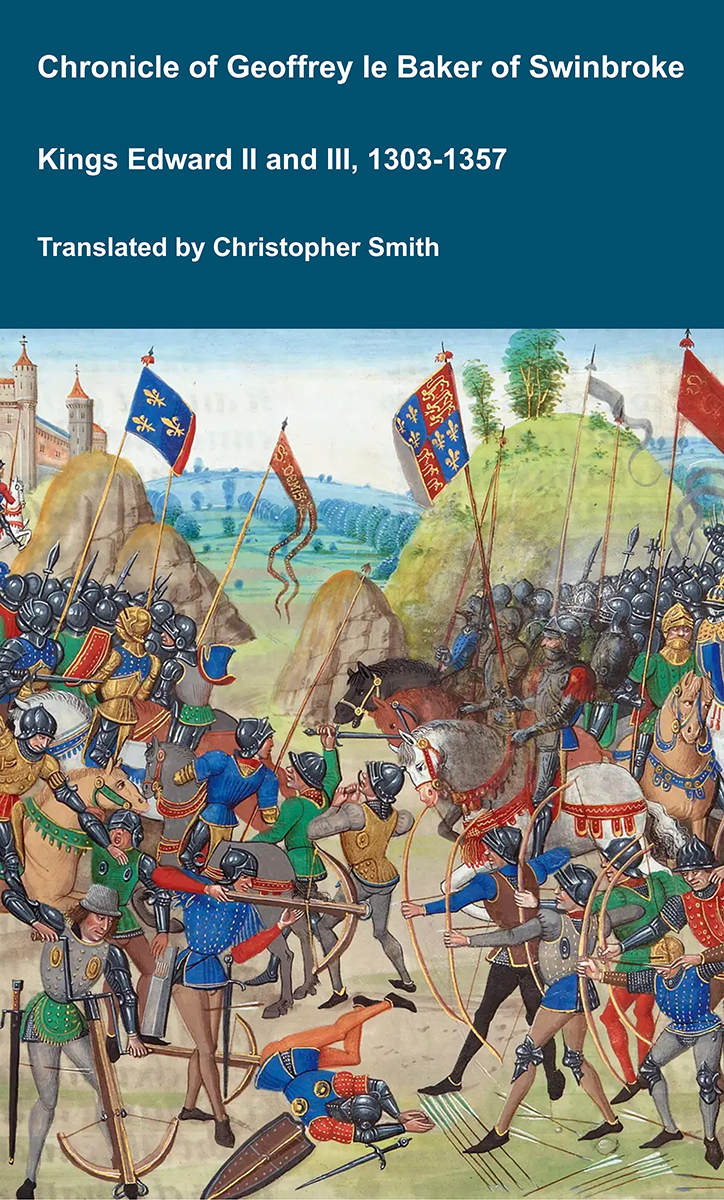
Chronicle of Geoffrey le Baker of Swinbroke
Baker was a secular clerk from Swinbroke, now Swinbrook, an Oxfordshire village two miles east of Burford. His Chronicle describes the events of the period 1303-1356: Gaveston, Bannockburn, Boroughbridge, the murder of King Edward II, the Scottish Wars, Sluys, Crécy, the Black Death, Winchelsea and Poitiers. To quote Herbert Bruce 'it possesses a vigorous and characteristic style, and its value for particular events between 1303 and 1356 has been recognised by its editor and by subsequent writers'. The book provides remarkable detail about the events it describes. Baker's text has been augmented with hundreds of notes, including extracts from other contemporary chronicles, such as the Annales Londonienses, Annales Paulini, Murimuth, Lanercost, Avesbury, Guisborough and Froissart to enrich the reader's understanding. The translation takes as its source the 'Chronicon Galfridi le Baker de Swynebroke' published in 1889, edited by Edward Maunde Thompson.
Available at Amazon in eBook and Paperback format.
On 19th May 1305 William of Avesnes I Count Hainaut III Count Avesnes III Count Holland II Count Zeeland (age 19) and Joan Valois Countess Zeeland Holland Avesnes and Hainaut (age 11) were married. She by marriage Countess Zeeland, Countess Holland, Countess Avesnes, Countess Hainault. She the daughter of Charles Valois I Count Valois (age 35) and Margaret Capet Countess Valois. He the son of John of Avesnes II Count Hainaut II Count Holland and Philippa Luxemburg Countess Hainaut and Holland (age 53). They were fourth cousin once removed. He a great x 4 grandson of King Stephen I England. She a great x 4 granddaughter of King Henry "Curtmantle" II of England.
On 19th May 1322 Charles IV King France I King Navarre (age 27) and Blanche of Burgundy Queen Consort France (age 25) marriage annulled as a consequence of her adultery. In 1313 Isabella of France Queen Consort England (age 27) gave gifts of coin-purses to her sisters-in-law Blanche of Burgundy Queen Consort France and Margaret of Burgundy Queen Consort France. The coin-purses were subsequently seen by Isabella to be in the possession of the Norman knights Gautier and Philippe d'Aunay. When Isabella visited her father King Philip IV of France again in 1314 she informed him she suspected the two sisters to be having affairs with the two knights. The two knights were arrested, confessed to adultery under torture, and were executed. The two women were sentenced to life imprisonment at Château Gaillard [Map]. Margaret's husband Louis X King France I Navarre became King in Nov 1314 whilst she was in prison; she became Queen of France by marriage. Somewhat conveniently she died five months later. Blanche of Burgundy Queen Consort France remained in prison until her husband Charles IV King France I King Navarre became King in 1322 at which time he had their marriage annulled.
On 19th May 1359, or thereabouts, a double-royal wedding celebration took place at Reading Abbey, Berkshire [Map] whereby two children of King Edward III of England (age 46) were married:
John of Gaunt 1st Duke Lancaster (age 19) and Blanche Duchess of Lancaster (age 17) were married. She by marriage Countess Richmond. She the daughter of Henry of Grosmont 1st Duke Lancaster (age 49) and Isabel Beaumont Duchess Lancaster (age 39). He the son of King Edward III of England and Philippa of Hainaut Queen Consort England (age 48). They were half second cousin once removed. She a great x 2 granddaughter of King Henry III of England.
John Hastings 2nd Earl Pembroke (age 11) and Margaret Plantagenet Countess of Pembroke (age 12) were married. At the time John Hastings 2nd Earl Pembroke was a ward of King Edward III of England who would enjoy the benefit of the substantial revenue of the Earldom of Pembroke until John came of age nine years later in 1368. She died two or so years later probably of plague. She the daughter of King Edward III of England and Philippa of Hainaut Queen Consort England. He the son of Laurence Hastings 1st Earl Pembroke and Agnes Mortimer Countess of Pembroke (age 42). They were half fourth cousins. He a great x 5 grandson of King John of England.
On 19th May 1440 Charles "Bold" Valois Duke Burgundy (age 6) and Catherine Valois (age 11) were married. She the daughter of Charles "Victorious" VII King France (age 37) and Marie Valois Anjou Queen Consort France (age 35). He the son of Philip "Good" Valois III Duke Burgundy (age 43) and Isabella Aviz Duchess Burgundy (age 43). They were third cousins. He a great x 2 grandson of King Edward III of England.
On 19th May 1581 Robert Stewart 1st Earl Lennox 1st Earl March (age 59) and Elizabeth Stewart Countess Arran Countess Lennox and March (age 32) were divorced.
On 19th May 1597 Charles Howard 2nd Earl Nottingham (age 17) and Charity White were married. He the son of Charles Howard 1st Earl Nottingham (age 61) and Katherine Carey Countess Nottingham (age 47).
On 19th May 1653 Arthur Capell 1st Earl Essex (age 21) and Elizabeth Percy Countess Essex (age 17) were married. She the daughter of Algernon Percy 10th Earl of Northumberland (age 50) and Anne Cecil. They were fourth cousin once removed.
On 19th May 1658 Henry Marwood 2nd Baronet (age 23) and Margaret Darcy were married. She the daughter of Conyers Darcy 1st Earl Holderness (age 59) and Grace Rokeby.
On 19th May 1768 Noel Hill 1st Baron Berwick (age 23) and Anna Vernon (age 20) were married at St George's Church, Hanover Square.
On 19th May 1773 George Townshend 1st Marquess Townshend (age 49) and Anne Montgomery Marchioness Townshend (age 21) were married. The difference in their ages was 27 years.


On 19th May 1789 Thomas Townshend 1st Viscount Sydney (age 56) and Elizabeth Powys Viscountess Sydney (age 53) were married. They were sixth cousins.

On 19th May 1798 Francis Charles Seymour-Conway 3rd Marquess Hertford (age 21) and Maria "Mie Mie" Seymour-Conway Marchioness of Hertford (age 26) were married. She the illegitmate daughter of William Douglas 4th Duke Queensberry (age 73). He the son of Francis Ingram Seymour-Conway 2nd Marquess Hertford (age 55) and Isabella Anne Ingram Marchioness Hertford (age 38).
William of Worcester's Chronicle of England
William of Worcester, born around 1415, and died around 1482 was secretary to John Fastolf, the renowned soldier of the Hundred Years War, during which time he collected documents, letters, and wrote a record of events. Following their return to England in 1440 William was witness to major events. Twice in his chronicle he uses the first person: 1. when writing about the murder of Thomas, 7th Baron Scales, in 1460, he writes '… and I saw him lying naked in the cemetery near the porch of the church of St. Mary Overie in Southwark …' and 2. describing King Edward IV's entry into London in 1461 he writes '… proclaimed that all the people themselves were to recognize and acknowledge Edward as king. I was present and heard this, and immediately went down with them into the city'. William’s Chronicle is rich in detail. It is the source of much information about the Wars of the Roses, including the term 'Diabolical Marriage' to describe the marriage of Queen Elizabeth Woodville’s brother John’s marriage to Katherine, Dowager Duchess of Norfolk, he aged twenty, she sixty-five or more, and the story about a paper crown being placed in mockery on the severed head of Richard, 3rd Duke of York.
Available at Amazon in eBook and Paperback format.
On 19th May 1810 William Langham 8th Baronet (age 39) and Augusta Priscilla Irby Lady Langham were married. She by marriage Lady Langham of Cottesbrooke in Northamptonshire.
On 19th May 1810 James Murray 1st Baron Glenlyon (age 27) and Emily Frances Percy Baroness Goldolphin Helston (age 22) were married at St Martin in the Fields Church [Map]. She the daughter of Hugh Percy 2nd Duke Northumberland (age 67) and Frances Julia Burrell Duchess Northumberland (age 57). He the son of John Murray 4th Duke Atholl (age 54).
On 19th May 1819 John Tyssen Tyrell 2nd Baronet (age 23) and Elizabeth Ann Pilkington were married. They had two sons and three daughters.
On 19th May 1849 Francis George Spencer 2nd Baron Churchill (age 47) and Jane Conyngham Baroness Churchill (age 22) were married. The difference in their ages was 24 years. She the daughter of Francis Nathaniel Conyngham 2nd Marquess Conyngham (age 51) and Jane Paget Marchioness Conyngham (age 50). They were fourth cousin once removed. He a great x 4 grandson of King Charles II of England Scotland and Ireland.
On 19th May 1881 Coplestone Richard Bampfylde 3rd Baron Poltimore (age 21) and Margaret Harriet Beaumont Baroness Poltimore were married.
On 19th May 988 Archbishop Dunstan (age 79) died. In the morning Mass was celebrated in his presence, then he received Extreme Unction and the Viaticum, and died. His final words were "He hath made a remembrance of his wonderful works, being a merciful and gracious Lord: He hath given food to them that fear Him.".
On 19th May 1319 Louis I Count Évreux (age 43) died. His son Philip (age 13) succeeded Count Évreux.
On 19th May 1343 John Beauchamp 2nd Baron Beauchamp Somerset (age 36) died. His son John (age 13) succeeded 3rd Baron Beauchamp Somerset.
On 19th May 1353 Elizabeth Habsburg Duchess Lorraine died.
On 19th May 1396 King John I of Aragon (age 45) died. His brother Martin (age 39) succeeded I King Aragon.
On 19th May 1480 Archbishop Lawrence Booth (age 60) died. He was buried at Southwell Minster [Map].
Jean de Waurin's Chronicle of England Volume 6 Books 3-6: The Wars of the Roses
Jean de Waurin was a French Chronicler, from the Artois region, who was born around 1400, and died around 1474. Waurin’s Chronicle of England, Volume 6, covering the period 1450 to 1471, from which we have selected and translated Chapters relating to the Wars of the Roses, provides a vivid, original, contemporary description of key events some of which he witnessed first-hand, some of which he was told by the key people involved with whom Waurin had a personal relationship.
Available at Amazon in eBook and Paperback format.
On 19th May 1527 Henry Percy 5th Earl of Northumberland (age 49) died. His son Henry (age 25) succeeded 6th Earl of Northumberland, 9th Baron Percy of Alnwick, 17th Baron Percy of Topcliffe, 8th Baron Poynings. Mary Talbot Countess Northumberland by marriage Countess of Northumberland.
On 19th May 1536 Queen Anne Boleyn of England (age 35) was beheaded at Tower Green, Tower of London [Map]. Unusually a sword was used. Her execution was witnessed by Charles Brandon 1st Duke of Suffolk (age 52), Catherine Carey (age 12) and Henry Fitzroy 1st Duke Richmond and Somerset (age 16). Marquess Pembroke extinct.
She was buried at St Peter ad Vincula Church, Tower of London [Map]. There is myth that her corpse was subsequently removed for burial at the Boleyn family church Church of St Peter and St Paul, Salle [Map] as described in Agnes Strickland's 1852 Lives of the Queens of England Volume 4. Page 212.
On 19th May 1591 Elizabeth Manners 15th Baroness Ros of Helmsley (age 16) died in childbirth at Tower Street, All Hallows [Map]. Her son William (age 1) succeeded 16th Baron Ros Helmsley.
On 19th May 1643 Thomas Arundell 2nd Baron Arundel (age 57) died. He was buried at St John's Church, Tisbury. His son Henry (age 35) succeeded 3rd Baron Arundel of Wardour in Wiltshire.

On 19th May 1649 Susannah Rich Countess Suffolk (age 21) died.
On 19th May 1664 Élisabeth Bourbon Vendôme (age 49) died.
On 19th May 1671 John Scudamore 1st Viscount Scudamore (age 70) died. His grandson John (age 21) succeeded 2nd Viscount Scudamore.
On 19th May 1671 Frances Montagu Countess Rutland (age 57) died at Bottesford, Leicestershire.
On 19th May 1676 John Greenhill (age 32) died. He had been returning home somewhat less than sober from an evening in the Vine Tavern when he fell into a ditch in Long Acre. He was carried to his lodgings in Lincoln's Inn Fields but didn't recover. He was buried in St Giles in the Fields.
On 19th May 1698 Vere Fane 5th Earl of Westmoreland (age 19) died. His brother Thomas (age 16) succeeded 6th Earl of Westmoreland, 9th Baron Despencer, 13th Baron Abergavenny, 11th Baron Abergavenny, 6th Baron Burghesh in Suffolk.
On 19th May 1712 Henry Fletcher 3rd Baronet (age 51) died unmarried and without issue having converted to a monk and lived at the English monastery of Douai in France where he was buried. Baronet Fletcher of Hutton le Forest in Cumberland extinct.
On 19th May 1715 Charles Montagu 1st Earl Halifax (age 54) died. Earl Halifax extinct. His nephew George (age 31) succeeded 2nd Baron Halifax.


On 19th May 1717 William des Bouverie 1st Baronet (age 60) died. He was buried at St Katharine Cree Church. His son Edward (age 27) succeeded 2nd Baronet Bouverie of St Catherine Cree Church in London.
On 19th May 1718 Mary Berkeley Countess Tankerville died.
Henrici Quinti, Angliæ Regis, Gesta, is a first-hand account of the Agincourt Campaign, and subsequent events to his death in 1422. The author of the first part was a Chaplain in King Henry's retinue who was present from King Henry's departure at Southampton in 1415, at the siege of Harfleur, the battle of Agincourt, and the celebrations on King Henry's return to London. The second part, by another writer, relates the events that took place including the negotiations at Troye, Henry's marriage and his death in 1422.
Available at Amazon in eBook and Paperback format.
On 19th May 1721 Robert Haselrigge 6th Baronet (age 53) died. His son Arthur (age 13) succeeded 7th Baronet Haselrigge of Noseley Hall in Leicestershire.
On 19th May 1755 Elizabeth Nightingale died from childbirth ten days after giving birth to her only child Wilmot Vaughan 2nd Earl Lisburne.
On 19th May 1785 Robert Rich 5th Baronet (age 68) died without male issue. His brother George (age 56) succeeded 6th Baronet Rich of London.
On 19th May 1793 John Chetwynd-Talbot 1st Earl Talbot (age 44) died at Fairford, Gloucestershire [Map]. His son Charles (age 16) succeeded 2nd Earl Talbot, 2nd Viscount Ingestre, 4th Baron Talbot of Hensol in Glamorganshire.


On 19th May 1794 Thomas Hamilton 7th Earl Haddington (age 73) died. His son Charles (age 40) succeeded 8th Earl Haddington.
On 19th May 1798 William Byron 5th Baron Byron (age 75) was killed in action by cannon fire whilst fighting in Corsica. His great nephew George (age 10) succeeded 6th Baron Byron of Rochdale in Lancashire.
On 19th May 1806 Michael le Fleming 4th Baronet (age 57) died. He was buried at St Oswald's Church, Grasmere where he and his wife's memorial reads "To the memory of Sir Michael Le Fleming, fourth Baronet, M,P., of Ryall Hall, Westmorland, born 10th December 1748, died 19th May 1806, also of his wife Lady Diana (age 56) only child of Thomas Howard, 14th Earl of Suffolk & Berkshire, who died 20th June 1816, and of their only child Ann Frederica Elizabeth, relict of Sir Daniel Fleming (age 21) fifth Baronet, died at Rydal Hall 5th April 1861 aged 77."
Daniel Fleming 5th Baronet succeeded 5th Baronet Fleming of Rydal in Cumbria.
On 19th May 1810 Charles Townshend 1st Baron Bayning (age 80) died. His son Charles (age 24) succeeded 2nd Baron Bayning of Foxley in Berkshire.
On 19th May 1820 Dorothy Smelt Lady Thirkleby (age 70) died.
On 19th May 1825 Ralph Milbanke aka Noel 6th Baronet (age 77) died. His nephew John (age 49) succeeded 7th Baronet Milbanke of Halnaby in Yorkshire.
Chronicle of a Bourgeois of Valenciennes
Récits d’un bourgeois de Valenciennes aka The Chronicle of a Bourgeois of Valenciennes is a vivid 14th-century vernacular chronicle written by an anonymous urban chronicler from Valenciennes in the County of Hainaut. It survives in a manuscript that describes local and regional history from about 1253 to 1366, blending chronology, narrative episodes, and eyewitness-style accounts of political, military, and social events in medieval France, Flanders, and the Low Countries. The work begins with a chronological framework of events affecting Valenciennes and its region under rulers such as King Philip VI of France and the shifting allegiances of local nobility. It includes accounts of conflicts, sieges, diplomatic manoeuvres, and the impact of broader struggles like the Hundred Years’ War on urban life in Hainaut. Written from the perspective of a burgher (bourgeois) rather than a monastery or royal court, the chronicle offers a rare lay viewpoint on high politics and warfare, reflecting how merchants, townspeople, and civic institutions experienced the turbulence of the 13th and 14th centuries. Its narrative style combines straightforward reporting of events with moral and civic observations, making it a valuable source for readers interested in medieval urban society, regional politics, and the lived experience of war and governance in pre-modern Europe.
Available at Amazon in eBook and Paperback format.
On 24th May 1825 John Grey Egerton 8th Baronet (age 58) died without issue. He had had a carriage accident at Epsom Races on 19th May 1825. His brother Philip (age 57) succeeded 9th Baronet Egerton and Oulton. Rebecca Du Pre Lady Egerton (age 45) by marriage Lady Egerton and Oulton.
On 19th May 1829 General George Harris 1st Baron Harris (age 83) died. His son William (age 47) succeeded 2nd Baron Harris of Seringapatam and Mysore and of Belmont in Kent.
On 19th May 1838 Richard Colt Hoare 2nd Baronet (age 79) died. He was buried at St Peter's Church, Stourton. His half brother Henry (age 76) succeeded 3rd Baronet Hoare of Barn Elms in Surrey.
On 19th May 1844 Elizabeth Fane Lady Lowther (age 74) died.
On 19th May 1861 Henry Cockayne-Cust (age 80) died.


On 19th May 1865 Charles Henry Maynard 3rd Viscount Maynard (age 79) died. Viscount Maynard of Easton Lodge in Essex, Baron Maynard of Much Easton in Essex, Baronet Maynard of Walthamstow in Essex extinct.
On 19th May 1868 Benjamin Lee Guiness 1st Baronet (age 69) died. His son Arthur (age 27) succeeded 2nd Baronet Guinness of Ashford in Country Galway.
On 19th May 1873 Caroline Leeke Countess Abergavenny died at Birling, Kent [Map].
On 19th May 1874 John George Reeve de la Pole 8th Baronet (age 66) died. His brother William (age 57) succeeded 9th Baronet Pole of Shute House in Devon.
On 19th May 1891 George Turbervill Glyn 5th Baronet (age 50) died. His brother Gervas (age 28) succeeded 6th Baronet Glyn of Ewell in Surrey.
Chronicle of a Bourgeois of Valenciennes
Récits d’un bourgeois de Valenciennes aka The Chronicle of a Bourgeois of Valenciennes is a vivid 14th-century vernacular chronicle written by an anonymous urban chronicler from Valenciennes in the County of Hainaut. It survives in a manuscript that describes local and regional history from about 1253 to 1366, blending chronology, narrative episodes, and eyewitness-style accounts of political, military, and social events in medieval France, Flanders, and the Low Countries. The work begins with a chronological framework of events affecting Valenciennes and its region under rulers such as King Philip VI of France and the shifting allegiances of local nobility. It includes accounts of conflicts, sieges, diplomatic manoeuvres, and the impact of broader struggles like the Hundred Years’ War on urban life in Hainaut. Written from the perspective of a burgher (bourgeois) rather than a monastery or royal court, the chronicle offers a rare lay viewpoint on high politics and warfare, reflecting how merchants, townspeople, and civic institutions experienced the turbulence of the 13th and 14th centuries. Its narrative style combines straightforward reporting of events with moral and civic observations, making it a valuable source for readers interested in medieval urban society, regional politics, and the lived experience of war and governance in pre-modern Europe.
Available at Amazon in eBook and Paperback format.
On 19th May 1899 Edward Harris 4th Earl Malmesbury (age 57) died. His son James (age 26) succeeded 5th Earl Malmesbury, 5th Viscount Fitz-Harris of Hurn Court in Hampshire, 5th Baron Malmesbury.
On 19th May 1910 Henry Aubrey-Fletcher 4th Baronet (age 74) died without issue. His brother Lancelot (age 64) succeeded 5th Baronet Fletcher of Clea Hall in Cumberland. He changed his surname under Royal Licence to Henry Aubrey-Fletcher to reflect his inheritance from the Aubrey estate. Emily Harriet Wade Lady Fletcher by marriage Lady Fletcher of Clea Hall in Cumberland.
On 19th May 1923 Arthur William Hill-Trevor 2nd Baron Trevor (age 70) died. His half brother Charles (age 59) succeeded 3rd Baron Trevor of Brynkinalt in Denbighshire.
On 19th May 1957 Hilda Mary Dundas Baroness Southampton (age 84) died.