

The History of William Marshal was commissioned by his son shortly after William’s death in 1219 to celebrate the Marshal’s remarkable life; it is an authentic, contemporary voice. The manuscript was discovered in 1861 by French historian Paul Meyer. Meyer published the manuscript in its original Anglo-French in 1891 in two books. This book is a line by line translation of the first of Meyer’s books; lines 1-10152. Book 1 of the History begins in 1139 and ends in 1194. It describes the events of the Anarchy, the role of William’s father John, John’s marriages, William’s childhood, his role as a hostage at the siege of Newbury, his injury and imprisonment in Poitou where he met Eleanor of Aquitaine and his life as a knight errant. It continues with the accusation against him of an improper relationship with Margaret, wife of Henry the Young King, his exile, and return, the death of Henry the Young King, the rebellion of Richard, the future King Richard I, war with France, the death of King Henry II, and the capture of King Richard, and the rebellion of John, the future King John. It ends with the release of King Richard and the death of John Marshal.
Available at Amazon in eBook and Paperback format.
22 Sep is in September.
On 22nd September 1272 King Edward I of England (age 33) and Eleanor of Castile Queen Consort England (age 31) left Acre [Map] for Sicily [Map] where he spent the winter convalescing. Whilst there he learned of the death of his father King Henry III of England (age 64), his uncle Richard of Cornwall 1st Earl Cornwall and his eldest son John Plantagenet.
 Chronicle of Walter of Guisborough. David (age 45), fleeing from the scene of his brother's death, hid in the woods and marshes for nearly a year. At last, he was captured on the eve of the feast of Saint Maurice [22nd September 1283] and brought to the king. In a parliament held at Shrewsbury after the feast of Saint Michael, he was judged as a deceiver, traitor, thief, and murderer. He was drawn, hanged, and then quartered1, and his four limbs were sent to four parts of England as a perpetual reminder of the event. His head was taken to London, and placed alongside the head of his brother Llywelyn, both erected high on the royal tower. In the same year, during the Welsh war, the king was granted a thirtieth tax from the common people and a twentieth from the clergy, by way of assistance.
David autem, a prædicta cæde as fugiens, in moris et mariscis latitabat fere per annum, tandem vero captus in vigilia Sancti Mauritii ad regem adductus est, et in parliamento de Solopesbire, quod tenuit rex post festum Sancti Michaelis, tanquam seductor et proditor furque et homicida judicatus, tractus est et suspensus, et postea membratim divisus, et quatuor ejus membra in quatuor partes Angliæ missa sunt in memoriam rei perpetue. Caput autem ejus Londoniis delatum est, et cum capite fratris sui Leulini in sublime erectum in turri regia. Eodem anno, durante guerra Walliæ, dabatur regi tricesima a communi populo et vicesima a clero, auxilii nomine.
Note 1. David was executed on 3rd October 1283.
 Chronicle of Geoffrey le Baker of Swinbroke [-1360]. In the year 1322, upon the death of Philip [3rd January], son of Philip, King of the French, his brother Charles, having attained the crown of the fraternal kingdom, sent to England Lord Andrew of Florence1 and another knight to summon the King [of England] to present himself before the new King of the French and to do homage for the Duchy of Aquitaine and his other lands held within the kingdom of the said French king. And although Hugh Despenser and Robert de Baldock,2 by their influence and persuasion, had sufficiently instructed the minds of the aforementioned envoys, as they thought, that they should not notify the King of the true cause of their coming, nevertheless, upon their departure, they advised him, as if in counsel, that he should present himself to the new king to do homage. Upon this warning or summons, the said Lord Andrew of Florence, who was notary to Charles, secretly and without the knowledge of the council of the King of England, made a public instrument. By virtue of this document, the King of France, proceeding legally against the King [of England], had several lands from the Duchy of Gascony and the County of Ponthieu seized for his own use, the King of England believing, as he had been informed, that the said summons was not legally valid. This seizure on behalf of the reigning Charles was carried out by his uncle, Charles of Valois, a man who held a deep hatred for the English. With a great army, under the pretence of an assigned legation and claiming disobedience and failure of homage by the King of England as Duke of Aquitaine, he seized the County of Ponthieu and all of Agenais for the benefit of his nephew, the French king. Finally, advancing to the town of Réole, he found it defended by Edmund of Woodstock, the King of England's brother and Earl of Kent. A truce was eventually agreed upon between them,3 to last for as long as peace negotiations could be conducted between the kings. The town was surrendered, and both parties returned to their own territories.
Anno MCCCXXIJ, Philippo filio Philippi, rege Francorum, universe carnis viam ingresso, germanus suus Karolus, regni fraterni adeptus I diadema, misit in Angliam dominum Andream de Florencia et alium quemdam militem ad citandum regem ut se presentaret novo regi Gallorum et faceret homagium pro ducatu Aquitannie et aliis suis terris in predicti regis regno, et, licet Hugo de Spenser et Robertus de Baldok precibus et meritis predictorum nunciorum mentes informassent suffi cienter, ut ipsi putabant, quod causam sui adventus non notificarent regi, tamen in suo recessu monuerunt ipsum, quasi consulendo, quod homagium facturus tunc regi se presentaret. Super qua monicione seu citacione dictus dominus Andreas de Florencia, qui Karolo fuit notarius, concilio regis Anglorum hoc ignorante, fecit pupplicum instrumentum, cuius virtute rex Francie, contra regem facto processu, terras nonnullas de ducatu Vasconie et comitatum Pontivie in suas utilitates fecerat seysiri, rege Anglie putante, sicut fuit informatus, predictam citacionem non valuisse de iure. Prefatam seisinam ex parte Karoli regnantis cepit eius patruus Karolus de Valoys, vir habens Anglicos maxime odiosos, qui cum magno exercitu, fungens affectata legacione, pretensis regis Anglie, ut ducis Aquitannie, inobediencia et homagio non facto, comitatum Pontivie et totam Agennam in utile dominium regis nepotis sui seisivit. Tandem progrediens ad villam de Regula, invenit eam defensam per Edmundum de Wodestoke, germanum regis Anglie et comitem Cancie; inter quos finaliter initis treugis, duraturis per tempus quo posset de pace inter reges tractari, reddita quoque villa, utraque pars ad propria remeavit.
Note 1. Andrieu de Florence, dean of Furnes. 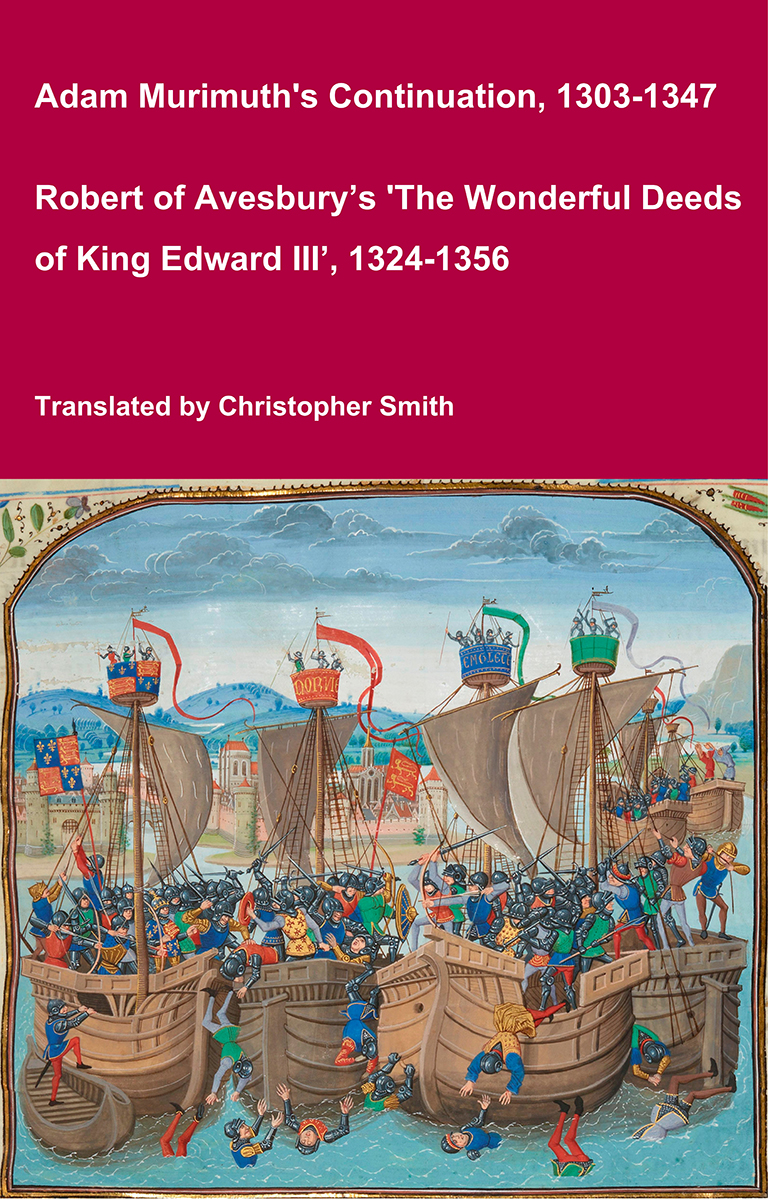 Murimuth 39.
Note 2. Robert Baldock became archdeacon of Middlesex in 1314, keeper of the privy seal in 1320, and chancellor 20th August 1323. He died 28th May 1327.
Note 3. 22nd September 1324.
Chronicle of Geoffrey le Baker of Swinbroke [-1360]. At the aforesaid castle, Lord Edward was at first received and treated humanely and kindly by the lord of the manor, Thomas de Berkeley. But after the receipt of the fatal letter, the designated tormentors of Edward began to exercise the authority over the castle that had been committed to them. Thomas de Berkeley was immediately forbidden to have any familiar contact with Edward. He not only obeyed, but did so with regret and shame, for he was not permitted to do what he wished, what previously had been his lawful right. At last, with sighs, he bid farewell to Lord Edward and withdrew to his other estates. Then began Edward's final persecution, continued until his death. First, he was confined in the most secure of rooms, where for many days he was tormented nearly to the point of suffocation by the stench of rotting corpses placed in a cellar below. This unbearable stench was the worst torment he ever endured. One day, the servant of God, crying out from the window to carpenters working outside, lamented this punishment. When the tyrants saw that even this foulness could not bring death to so strong a man, they acted. On the night of 22nd September [1327], they surprised him in bed. Pressing down upon him with great cushions and heavy weights, more than fifteen strong men, they smothered and suffocated him. Then, taking a red-hot iron, as used by plumbers, they inserted it through a copper or brass tube into his secret parts, burning his intestines and destroying his internal organs, all to ensure that no external wound would be found on the royal body, where wounds are usually sought, so that the tormentors would not be forced to answer for manifest injury, nor suffer punishment for it.
Thus was the most valiant knight overwhelmed, letting out a cry, heard both inside and outside the castle, so loud and clear that all recognized it as the voice of one suffering a violent death. That final cry of the dying man stirred many people of Berkeley and even some within the castle, as they themselves later attested, to compassion and to prayer for the holy soul departing this life. So he whom the world hated, and who, like his master Jesus Christ, was first hated by the world, was at last received, Christ having first been rejected by the kingdom of the Jews, and then Edward, his disciple, stripped of the kingdom of the English, into the glory of the kingdom of angels. The glorious and good end of Edward brought about the persecution of his traitorous ministers, namely Thomas de Gurney and John de Maltravers,1 by Isabella and the Bishop of Hereford, so that they might appear to have had innocent hands and pure intentions. Accordingly, the murderers were outlawed and, as previously stated, driven into exile. Thomas de Gurney, a fugitive, fled secretly to Marseille, where, after being recognized within three years, he was captured and brought back toward England to receive the punishment he deserved. But he was beheaded at sea, lest he should accuse powerful magnates, great prelates, and many others in the kingdom of having advised or consented to his crime. The other, Maltravers, wandered in the lands of the Germans, long hidden and doing penance.
Ad castrum prenominatum ductus dominus Edwardus per dominum feodi Thomam de Berkeleye fuerat humaniter et benigne receptus et tractatus, set, post recepcionem epistole, predicti exercuerunt tortores Edwardi illis commissam potestatem de tutela castri. Tubetur protinus Thomas de Berkeleye nullam cum Edwardo habere familiaritatem, cuius non solum penitens, set verecundus quod sibi fuit denegatum facere quod vellet et quod antea de iure liceret, domino Edwardo finaliter cum suspiriis salutato, ad alia sua loca transmigravit. Tunc incepit Edwardi consummativa persecucio, adusque sui mortem continuata. Primo nempe reclusum in camera tutissima per exalacionem cadaverum in subcellario positorum ipsum torserunt per multos dies pene usque ad suffocacionem. Unde fetorem illum intollerabilem fuisse penam maximam quam unquam sustinuit ad fenestram camere una dierum carpentariis ad extra laborantibus servus Dei deplanxit. Videntes tiranni quod viro strenuissimo non posset per fetorem mors prevalere, nocte, decima kalendas Octobris, in lecto cubantem subito preocupatum, cum pulvinaribus magnis atque gravi mole amplius quam quindecim robustorum ipsum oppressum et subfocatum, cum ferro plumbarii incense ignito trans tubam ductilem ad egestionis partes secretas applicatam membra spiritalia post intestinas combusserunt, caventes ne, wlnere in regio corpore ubi solent wlnera requiri per aliquem iusticie amicum reperto, sui tortores de lesione manifesta respondere atque pro illa penam subire forent coacti.
Taliter obruitur miles strenuissimus, emisso clamore, audientibus infra castrum et extra satis noto quod esset violentam mortem pacientis. Clamor ille expirantis multos de Berkeleya et quosdam de castro, ut ipsi asseruerunt, ad compassionem et oraciones pro sancta anima migrante evigilavit. Sic quem mundus odivit, suumque magistrum Iesum Christum prius odio habuit, primo preceptorem de regno Iudeorum reprobatum, deinde discipulum regno Anglorum spoliatum recepit celsitudo regni angelorum. Gloriose atque bone finis Edwardi proditorios ministros, scilicet Thomam de Corneye et Iohannem de Maltravers, persecucio Isabelle et episcopi Herefordensis, ut proinde viderentur manus innoxias et mentes habuisse, utlagiavit, et, ut tactum est, ad exilium abegit. Ille de Corney Marsiliam fugitivus clanculo post infra triennium cognitus, captus, et versus Angliam reductus, penam pro demeritis recepturus, in mari fuerat decapitatus, ne forte magnates et magnos prelatos et quamplures alios de regno sibi suum nefas monuisse et in illud sibi assensum prebuisse accusasset. Alter vero, Maltravers, partibus Teutonicorum agens penitenciam diu latitavit.
Note 1. In the parliament held at the close of the year 1330, sir Thomas Gournay (or Gurney) and William Ocle were condemned as the actual murderers of Edward II, and a price was put upon their heads, as both had fled. Thomas, lord Berkeley, to whom, in association with sir John Maltravers, the custody of Edward was entrusted, was also proceeded against, but defended himself on the plea that he was detained by illness at his manor of Bradley when the murder took place. He was tried before a jury of knights, and acquitted of participation in the murder, but held guilty of deputing his trust to unworthy persons. Sir John Maltravers was likewise condemned in this parliament; not, however, for the murder of Edward, but for his share in bringing about the death of the earl of Kent. He also had fled. Twenty years afterwards he prayed for the reversal of his attainder, and ultimately received pardon. Ocle disappears; and there can be little doubt that he died abroad. The fate of Gournay has been traced in a valuable paper contributed by Mr. Hunter to Archaeologia, volume xxvii. He was not arrested at Marseilles, as stated by Baker, following Murimuth [see below], but, in the first instance, at Burgos in Spain. News of his arrest reached England in the middle of the year 1331, and the king's messenger, Egidius de Ispannia, was despatched to take over the custody of the prisoner. The messenger was, however, kept dancing attendance on the king of Spain, who, perhaps from sheer dilatoriness, delayed the surrender. Meanwhile Gournay escaped. But at the close of the following year he was again arrested in Naples, news of his capture reaching England in January 1333. A Yorkshire knight, sir William de Thweng, was sent out to Naples and received custody of the prisoner. After sundry adventures he reached Bayonne; but there Gournay, whose health had given way, died. The body was probably embalmed, as Thweng's compotus contains items of sums expended for two preparations. Thweng brought it by sea to the king at Berwick, where he arrived on the 7th July 1333. It is now impossible to say what led Murimuth (and, after him, Baker,) to assert that Gournay was beheaded at sea. It is not, however, improbable that the body was gibbeted (there are no charges for interment in Thweng's compotus), and the traitor's punishment of beheading may actually have been inflicted on the dead body.
With regard to the charge against the bishop of Hereford, whatever hand he may have had in instigating the crime, he can hardly have been directly concerned in the murder, as he was abroad at the time.
Murimuth 54, in the earlier edition of his chronicle, names Marseilles as the place of Gournay's arrest (in one MS. it is added: 'ad procurationem cujusdam dominæ de Anglia' i.e. 'at the instigation of a certain lady of England'); in the later edition this is altered to 'in partibus transmarinis' i.e. 'in the parts beyond the sea'.
Adam Murimuth Continuation. Afterwards, on the 22nd of September in the year of Our Lord 1327, Edward, the king of England (deceased), died in Berkeley Castle, where, as previously mentioned, he had been imprisoned or detained against his will. Although many abbots, priors, knights, and burgesses from Bristol and Gloucester were called to see his body intact and they superficially observed it, it was commonly said that, by the order of Lords John Mautravers (age 37) and Thomas de Gurney, he was killed by stealth. Because of this, those two and some others fled. However, Lord Thomas de Gurney was later known for three years and was captured overseas and sent back to England to receive the punishment for his crimes; but while at sea, he was beheaded under a pretext, lest he accuse the magnates, great prelates, and others in England of complicity and connivance in the king's death. As for Lord John Mautravers, he fled to Germany and other places, where he remained, and he still remains there as of the date of this writing.
Postea, X kalendas Octobris, anno Domini etc. XXVII, fuit mortuus Edwardus rex Angliæ in castro de Berkeleye, in quo, ut præmittitur, fuit carceri mancipatus seu detentus invitus.Et licet multi abbates, priores, milites, burgenses de Bristollia et Gloucestria ad videndum corpus suum integrum fuissent vocati, et tale superficialiter conspexissent, dictum tamen fuit vulgariter quod per ordinationem dominorum J[ohannis] Mautravers et T[homs] de Gorneye fuit per cautelam occisus. Propter quod ipsi duo et quidam alii fugerunt. Sed dominus T[homas] de Gorney fuit postea per triennium notus, et captus in partibus transmarinis, et remissus versus Angliam, pœnam pro demeritis recepturus; sed in mari fuit decapitatus, sub quodam colore, ne forte magnates et magnos prælatos et alios de Anglia de consensu et conniventia mortis regiæ accusaret. Sed dominus J[ohannes] Mautravers se transtulit in Alemanniam et alia loca; et ibi mansit, et usque ad datam prasentium adhue manet.
Annales Paulini. At the appointed time of the tournament, the king, earls, barons, and all the chivalry of the realm gathered in London. And on Sunday, that is, on the morrow of Saint Matthew the Apostle [22nd September 1331], the said William, who was captain of the solemnity, together with the king and other chosen knights, all splendidly adorned and masked in the likeness of Tartars, made their appearance. There came with them many noble and beautiful ladies of the realm, all dressed in gowns of red velvet and white cameline cloaks. Each knight led at his right side a lady, holding her by a silver chain. The king, for his part, had at his side his sister Lady Eleanor, a most beautiful young woman. All of them, both knights and ladies, came at vespers, riding two by two through the middle of Cheapside, preceded by more than sixty squires dressed in matching livery. Behind them followed their destriers, richly adorned. And so, with trumpets and many other kinds of musical instruments, they returned to their lodgings.
Statuto vero tempore hastiludii, rex, comites et barones, cun totius regni militia convenerunt Londoniis; et, die Dominica, videlicet in crastino Sancti Mathæi apostoli, prædictus Willelmus, qui erat capitaneus illius sollempnitatis, una cum rege et aliis militibus electis, omnes splendido apparatu vestiti et ad similitudinem Tartarorum larvati; venerunt etiam cum eis et tot dominæ de nobilioribus et pulcrioribus regni, quæ omnes indutæ fuerunt tunicis de rubeo velveto et capis de camelino albo; et habebat unusquisque miles a dextris unam dominam cum cathena argentea eam ducendo. Rex vero habebat a latere suo dominam Elianorem sororem suam, puellam pulcherrimam. Hii omnes, tam milites quam dominæ, venerunt hora vesperarum, equitantes bini et bini per medium Chepe, præcedentibus armigeris plusquam lxA in una secta vestitis; et sequebantur eorum dextrarii pulcro apparatu cooperti, et sic cum tubis et aliis diversis instrumentorum generibus ad hospitia sua diverterunt.
On 22nd September 1345 Henry Plantagenet 3rd Earl of Leicester 3rd Earl Lancaster (age 64) died at Leicester Castle [Map]. His son Henry (age 35) succeeded 4th Earl of Leicester, 4th Earl Lancaster.
After 22nd September 1345 Henry Plantagenet 3rd Earl of Leicester 3rd Earl Lancaster (deceased) was buried at Church of the Annunciation of our Lady of the Newark [Map], or possibly the Hospital Chapel, at a ceremony attended by King Edward III of England (age 32) and his wife Philippa of Hainaut Queen Consort England (age 31). His son Henry of Grosmont 1st Duke Lancaster (age 35) subsequently had his remains moved to St Mary de Castro Leicester, Leicestershire [Map].
On 22nd September 1399 Thomas Mowbray 1st Duke of Norfolk (age 31) died of plague in Venice [Map] whilst in exile. He was buried at St Mark's Cathedral, Venice [Map]. Duke Norfolk forfeit. His son Thomas (age 14) succeeded 4th Earl Norfolk, 2nd Earl Nottingham, 7th Baron Mowbray, 8th Baron Segrave and Earl Marshal.
On 22nd September 1405 Barnim Griffins 6th Duke Pomerania (age 40) died of plague. His son Barnim succeeded 7th Duke Pomerania.
On 22nd September 1417 Anne Auvergne Duchess Bourbon (age 59) died.
On 22nd September 1428 Edward "The Philosopher" I King Portugal (age 36) and Eleanor Trastámara Queen Consort Portugal were married. She by marriage Queen Consort Portugal. She the daughter of Ferdinand I King Aragon and Eleanor of Alberquerque Queen Consort Aragon (age 54). He the son of King John I of Portugal (age 76) and Philippa of Lancaster Queen Consort Portugal. They were first cousin once removed. He a great grandson of King Edward III of England.
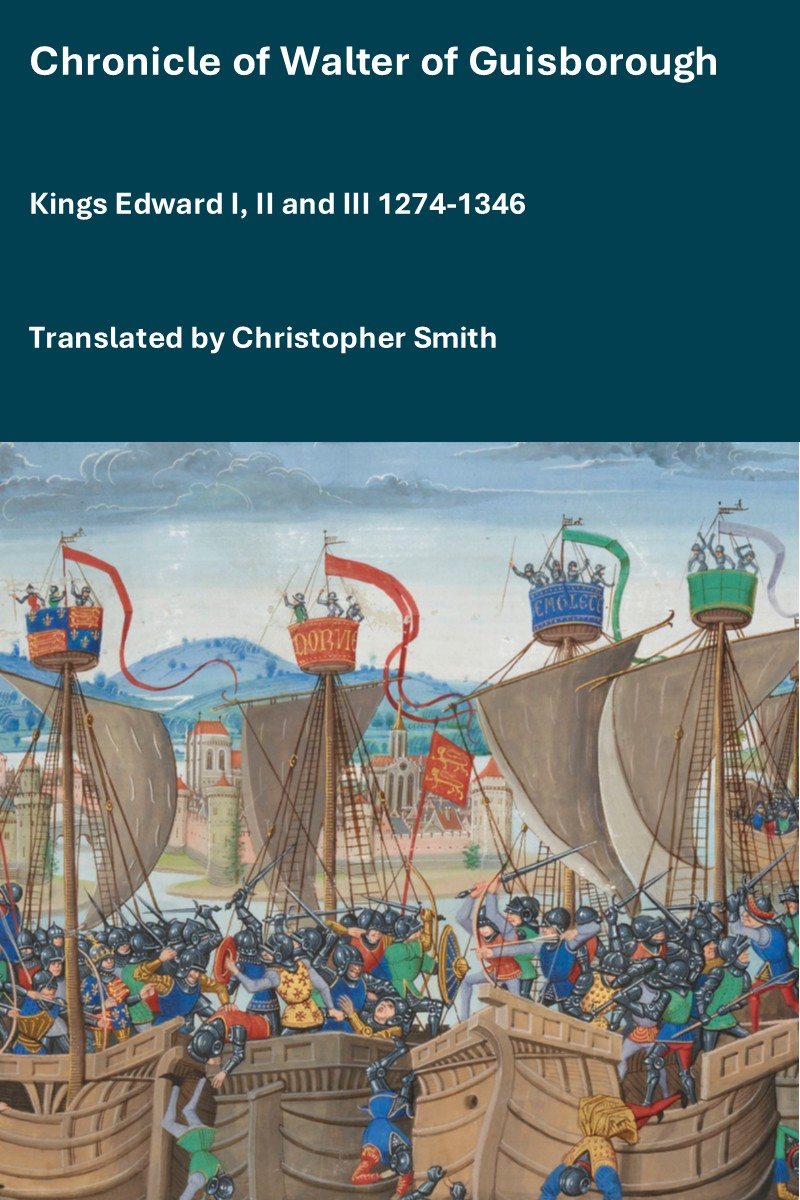
Chronicle of Walter of Guisborough
A canon regular of the Augustinian Guisborough Priory, Yorkshire, formerly known as The Chronicle of Walter of Hemingburgh, describes the period from 1066 to 1346. Before 1274 the Chronicle is based on other works. Thereafter, the Chronicle is original, and a remarkable source for the events of the time. This book provides a translation of the Chronicle from that date. The Latin source for our translation is the 1849 work edited by Hans Claude Hamilton. Hamilton, in his preface, says: 'In the present work we behold perhaps one of the finest samples of our early chronicles, both as regards the value of the events recorded, and the correctness with which they are detailed; Nor will the pleasing style of composition be lightly passed over by those capable of seeing reflected from it the tokens of a vigorous and cultivated mind, and a favourable specimen of the learning and taste of the age in which it was framed.'
Available at Amazon in eBook and Paperback format.
On 22nd September 1450 Barnim Griffins 7th Duke Pomerania died. His uncle Wartislaw succeeded 8th Duke Pomerania.
On 22nd September 1471 Lancastrian Thomas "Bastard of Fauconberg" Neville (age 42) was beheaded at Middleham Castle [Map]. See Paston Letters Volume 5 782.
Chronicles of London Vitellius A XVI. 22nd September 1497. And vpon the ffriday John Heyron, Mercer, which before tyme had fledde the Citie of London for dette, and one Skelton wt one Asteldy, a Scryvainer, which iij persones wer the moost worthy of his [Perkin Warbreck (age 23)] Counseill, came vnto Bewdely [Map], a Sayntwary beside Southampton; and there Registred theym self. And in this while one James a Rover, which had gadered in his cumpanye to the numbre of vj or vij C. Rebelles, Sechyng the forsaid Perkyn to haue assisted hym, mette wt the Provost of Peryn, and brought hym vnto Taunton aforsaid; and there in the Market place slewe hym pytuously, in such wise that he was dismembred and kutte in many and sundry peces. The cause as it was said was for that he was one of the Occasioners of the Rebellyng of the Cornysshe men; for he was one of the commyssioners in that Cuntre and gadered, as they said, more money than came vnto the kynges vse. But what so euer the cause was, foule and piteously was he murderid; vpon whose Soule and all Cristen Jhesu haue mercy! Amen!
Calendar of State Papers of Milan 1513. 22nd September 1513. Have sent a message full of comfort to the schismatic king, thus:
The King of Scots, of all men the most perfidious, has been killed in fair fight by the Earl of Surrey, who attacked the king's own camp in a certain forest called Bermuiwood in England, all the nobility of Scotland being slain with the king. In the conflict 10,000 Scots were slain, and as many more in the flight. The battle was fought on the 9th of this month. All the ordnance of the Scots, their tents and the rest of their baggage were taken, the course of the whole business being as follows:
On the eve of St. Bartholomew the false and perjured King of Scots invaded England, and took the castle of Norham, not without shame to certain persons, razing it to the ground. He then led his army towards Berwick, burning the villages in every direction. The Earl of Surrey, Lord Dacres, Earl Latimer (Comes Latavier), Scrope (Scopre), and other great personages of those parts had not yet mustered, but each made such haste that on the 7th of September the Earl of Surrey summoned and challenged the aforesaid perjured King of Scots to give battle on the following Friday. Such was the reliance placed by that king on his French and Scottish commanders, that he thought all England together would not dare to oppose him; but the Earl of Surrey kept his engagement and promise. Lord Howard, the admiral, having heard that the King of Scots most boastfully proclaimed that he had long sought him by land and sea, as one who from fear always fled and avoided battle, quitted the royal fleet, left a deputy in command, forthwith landed and sent a message to the perjured King of Scots that he would lead the van of the army, not on horseback, but on foot, lest he should be supposed a craven and a runaway. He moreover warned the King of Scots not to take him alive, as he had determined not to capture any Scot, however noble he might be, even were it the king himself, but to kill him; promises which were fulfilled.
Accordingly on the appointed day the army attacked the Scots, whose forces were assembled on the summit of an hill, at the distance of a mile from its base, the hill being so strengthened and defended by ordnance that the assailants were obliged to wade through a certain marshy pass, leaving the guns in the rear.
The army of the Scots formed five lines in square battalions, representing the figure of a spear head; all being equidistant from the English army, which was divided into two lines with two wings. In spite of the Scottish artillery, which inflicted little or no damage, Lord Howard marched to the foot of the hill where he halted a short time, until the other wing of the rearguard had joined the last of his lines.
Thereupon the Scots came down the hill in very good order after the German fashion, with iron spears in masses. The Earl of Huntly, the Earl of Airlie and the Earl of Crauford broke upon Lord Howard. This force all perished, including the earls.
The perjured King of Scots attacked the Earl of Surrey, at whose side Lord Darcy's son was following; near him Lord Maxwell, a Scot, with Lord Herries, his brother, were killed, and practically all the rest of the Scottish nobles, the list of whose names had not yet been received. In these two engagements no prisoners were made, no quarter given. The Earl of Hauewes and the Earl of Argyle, with a very great force attacked Sir Edward Stanley, who slew the greater part of them. Lord Edmund Howard, who led his brother's right wing, was assailed by the Chamberlain of Scotland. He was thrice felled by the Chamberlain to the disgrace of his soldiers, who were cowards, but Lord Dacres succoured him with fifty horse. The Chamberlain of Scotland alone got home alive, although like the rest he lost all his men.
After the performance of these feats the entire army of the Scots took to flight. The rout began at noon and lasted until night. The English halbardiers decided the whole affair, so that in this battle the bows and ordnance were of little use. Only one English gentleman, an obscure knight, fell; the rest of the killed did not amount to four hundred.
Of the Scots upwards of 10,000 men were captured and slain in flight, and as many were killed on the battle field.
At the time of this engagement Lord Lovel was at Nottingham with 15,000 men, on his march towards Scotland, the queen being already forty miles beyond London with 40,000.
The Scots numbered in reality 60,000 men, though there were said to be 80,000. The English were 40,000, though reported to be only 30,000; and this is the end of James, late King of Scots, of all mankind the falsest.

On 22nd September 1515 Anne of Cleves was born to John La Marck III Duke Cleves (age 24) and Maria Jülich Berg Duchess Cleves at Dusseldorf. She married 6th January 1540 her fifth cousin once removed King Henry VIII of England and Ireland, son of King Henry VII of England and Ireland and Elizabeth York Queen Consort England.
On 22nd September 1523 Cardinal Charles Bourbon was born to Charles Bourbon Duke Vendôme (age 34) and Françoise Valois Countess Vendôme (age 33).
Henry Machyn's Diary. 22nd September 1551. The xxij day of September was the monyth['s mind of the] ij dukkes of Suffoke [Henry Brandon 2nd Duke of Suffolk and Charles Brandon 3rd Duke of Suffolk] in Chambryge-shyre, with [ij] standards, ij baners grett of armes and large, and banars rolles of dyver armes, with ij elmets, ij [swords, ij] targetts crownyd, ij cotes of armes, ij crests, and [ten dozen] of schochyons crounyd; and yt was grett pete of [their] dethe, and yt had plesyd God, of so nobull a stok they wher, for ther ys no more left of them.


Henry Machyn's Diary. 22nd September 1561. The xxij day of September the Quen('s) (age 28) grace cam from Enfeld [Map] unto Sant James beyond Charyng crosse, and from Ellyngtun [Map] unto Sant James was heges and dyches was cutt done the next way, and ther was a-boyff x M. pepull for to se her grace, butt yt was nyght or her grace cam over beyond Sent Gylles in the feld by Colman('s?) hege.




On 22nd September 1576 Cardinal Philipp Wilhelm Wittelsbach was born to William Wittelsbach V Duke Bavaria (age 27) and Renata Lorraine Duchess Bavaria (age 32). Coefficient of inbreeding 2.86%.

On 22nd September 1586 Robert Sidney 1st Earl of Leicester (age 22) fought at the Battle of Zutphen. William Russell 1st Baron Russell (age 26) distinguished himself being noted for maintaining an effective fighting force in difficult circumstances.
On 22nd September 1601 Anne of Austria Spain Queen Consort France was born to Philip III King Spain (age 23) and Margaret of Austria Queen Consort Spain (age 16). Coefficient of inbreeding 10.92%. She married 1615 her second cousin Louis XIII King France, son of Henry IV King France and Marie de Medici Queen Consort France, and had issue.


On 22nd September 1611 Alphonse Maurice Habsburg Spain was born to Philip III King Spain (age 33) and Margaret of Austria Queen Consort Spain (age 26). Coefficient of inbreeding 10.92%. He died aged less than one years old.
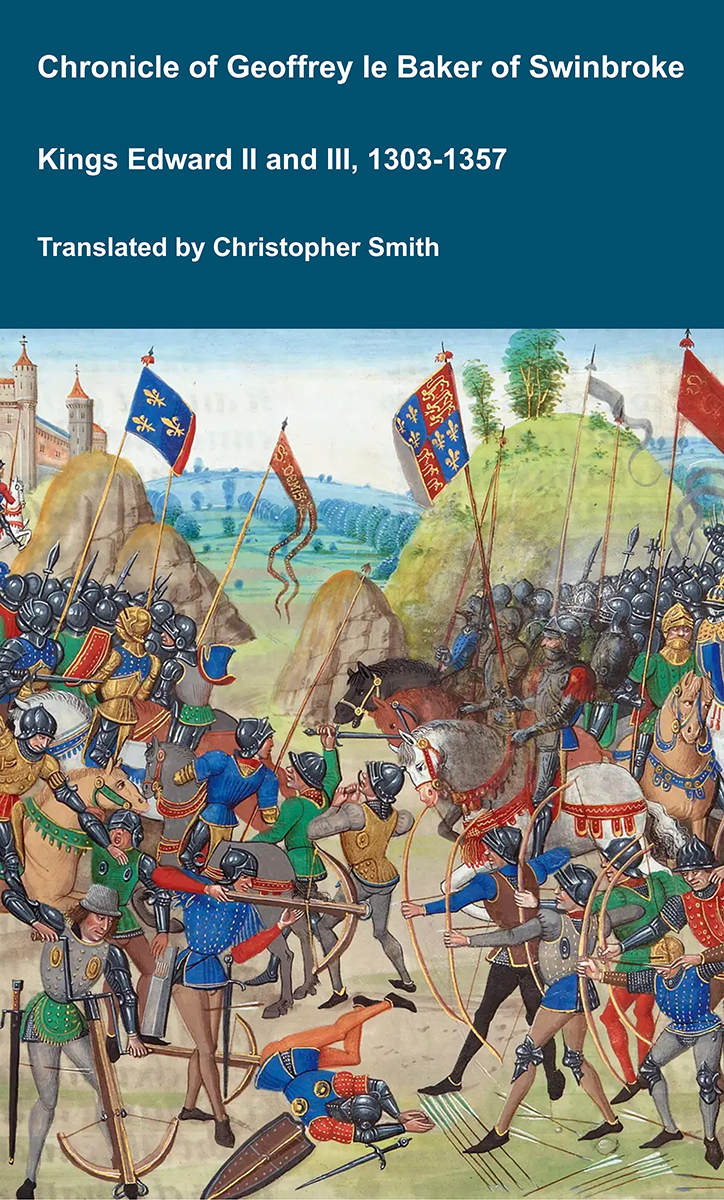
Chronicle of Geoffrey le Baker of Swinbroke
Baker was a secular clerk from Swinbroke, now Swinbrook, an Oxfordshire village two miles east of Burford. His Chronicle describes the events of the period 1303-1356: Gaveston, Bannockburn, Boroughbridge, the murder of King Edward II, the Scottish Wars, Sluys, Crécy, the Black Death, Winchelsea and Poitiers. To quote Herbert Bruce 'it possesses a vigorous and characteristic style, and its value for particular events between 1303 and 1356 has been recognised by its editor and by subsequent writers'. The book provides remarkable detail about the events it describes. Baker's text has been augmented with hundreds of notes, including extracts from other contemporary chronicles, such as the Annales Londonienses, Annales Paulini, Murimuth, Lanercost, Avesbury, Guisborough and Froissart to enrich the reader's understanding. The translation takes as its source the 'Chronicon Galfridi le Baker de Swynebroke' published in 1889, edited by Edward Maunde Thompson.
Available at Amazon in eBook and Paperback format.
On 22nd September 1617 Charles Louis Palatinate Simmern was born to Frederick Palatinate Simmern V Elector Palatine Rhine (age 21) and Princess Elizabeth Stewart Queen Bohemia (age 21) at Heidelburg. He a grandson of King James I of England and Ireland and VI of Scotland. He married (1) 22nd February 1650 Charlotte Hesse-Kassel, daughter of Landgrave William V of Hesse-Kassel, and had issue (2) 6th January 1658 Maria Susanne Luise von Degenfeld and had issue.



On 22nd September 1637 Charles Gonzaga I Duke Mantua (age 57) died.
John Evelyn's Diary. 22nd September 1641. I went again to Rotterdam to receive a pass which I expected from Brussels [Map], securing me through Brabant and Flanders, designing to go into England through those countries. The Cardinal Infante (age 32), brother to the king of Spain (age 36), was then governor. By this pass, having obtained another from the Prince of Orange, upon the 24th of September I departed through Dort; but met with very bad tempestuous weather, being several times driven back, and obliged to lie at anchor off Keele, other vessels lying there waiting better weather. The 25th and 26th we made other essays; but were again repulsed to the harbour, where lay sixty vessels waiting to sail. But, on the 27th we, impatient of the time and inhospitableness of the place, sailed again with a contrary and impetuous wind and a terrible sea, in great jeopardy; for we had much ado to keep ourselves above water, the billows breaking desperately on our vessel: we were driven into Willemstad, North Brabant, a place garrisoned by the English, where the Governor of had a fair house. The works, and especially the counterscarp, are curiously hedged with quick, and planted with a stately row of limes on the rampart. The church is of a round structure, with a cupola, and the town belongs entirely to the Prince of Orange, as does that of Breda [Map], and some other places.


Samuel Pepys' Diary. 22nd September 1660. This morning I called up my boy, and found him a pretty, well-looked boy, and one that I think will please me. I went this morning by land to Westminster along with Luellin, who came to my house this morning to get me to go with him to Capt. Allen (age 48) to speak with him for his brother to go with him to Constantinople, but could not find him. We walked on to Fleet street, where at Mr. Standing's in Salsbury Court we drank our morning draft and had a pickled herring. Among other discourse here he told me how the pretty woman that I always loved at the beginning of Cheapside that sells child's coats was served by the Lady Bennett (a famous strumpet), who by counterfeiting to fall into a swoon upon the sight of her in her shop, became acquainted with her, and at last got her ends of her to lie with a gentleman that had hired her to procure this poor soul for him. To Westminster to my Lord's, and there in the house of office vomited up all my breakfast, my stomach being ill all this day by reason of the last night's debauch. Here I sent to Mr. Bowyer's for my chest and put up my books and sent them home. I staid here all day in my Lord's chamber and upon the leads gazing upon Diana, who looked out of a window upon me. At last I went out to Mr. Harper's, and she standing over the way at the gate, I went over to her and appointed to meet to-morrow in the afternoon at my Lord's. Here I bought a hanging jack. From thence by coach home by the way at the New Exchange1 I bought a pair of short black stockings, to wear over a pair of silk ones for mourning; and here I met with The. Turner (age 8) and Joyce, buying of things to go into mourning too for the Duke (deceased), (which is now the mode of all the ladies in town), where I wrote some letters by the post to Hinchinbroke to let them know that this day Mr. Edw. Pickering (age 42) is come from my Lord, and says that he left him well in Holland, and that he will be here within three or four days. To-day not well of my last night's drinking yet. I had the boy up to-night for his sister to teach him to put me to bed, and I heard him read, which he did pretty well.
Note 1. In the Strand; built, under the auspices of James I., in 1608, out of the stables of Durham House, the site of the present Adelphi. The New Exchange stood where Coutts's banking-house now is. "It was built somewhat on the model of the Royal Exchange, with cellars beneath, a walk above, and rows of shops over that, filled chiefly with milliners, sempstresses, and the like". It was also called "Britain's Burse". "He has a lodging in the Strand... to watch when ladies are gone to the china houses, or to the Exchange, that he may meet them by chance and give them presents, some two or three hundred pounds worth of toys, to be laughed at"-Ben Jonson, The Silent Woman, act i. sc. 1.


Samuel Pepys' Diary. 22nd September 1663. This day the King (age 33) and Queen (age 24) are to come to Oxford, Oxfordshire [Map]. I hear my Baroness Castlemaine (age 22) is for certain gone to Oxford, Oxfordshire [Map] to meet him, having lain within here at home this week or two, supposed to have miscarried; but for certain is as great in favour as heretofore;1 at least Mrs. Sarah at my Lord's, who hears all from their own family, do say so.
Note 1. According to Collins, Henry Fitzroy, Baroness Castlemaine's second son by Charles II, was born on September 20th, 1663. He was the first Duke of Grafton. B.


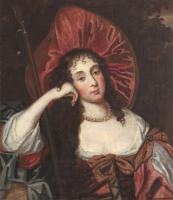


Samuel Pepys' Diary. 22nd September 1665. Thence away by water, and I walked with my Lord Bruncker (age 45) home, and there at dinner comes a letter from my Lord Sandwich (age 40) to tell me that he would this day be at Woolwich, Kent [Map], and desired me to meet him. Which fearing might have lain in Sir J. Minnes' (age 66) pocket a while, he sending it me, did give my Lord Bruncker, his mistress, and I occasion to talk of him as the most unfit man for business in the world.


Samuel Pepys' Diary. 22nd September 1665. Among other discourse concerning long life, Sir J. Minnes (age 66) saying that his great-grandfather was alive in Edward the Vth's time; my Lord Sandwich (age 40) did tell us how few there have been of his family since King Harry the VIIIth; that is to say, the then Chiefe Justice, and his son the Lord Montagu, who was father to Sir Sidney1, who was his father. And yet, what is more wonderfull, he did assure us from the mouth of my Lord Montagu himself, that in King James's time ([when he] had a mind to get the King (age 35) to cut off the entayle of some land which was given in Harry the VIIIth's time to the family, with the remainder in the Crowne); he did answer the King in showing how unlikely it was that ever it could revert to the Crown, but that it would be a present convenience to him; and did show that at that time there were 4,000 persons derived from the very body of the Chiefe Justice. It seems the number of daughters in the family having been very great, and they too had most of them many children, and grandchildren, and great-grandchildren. This he tells as a most known and certain truth.
Note 1. These are the words in the MS., and not "his son and the Lord Montagu", as in some former editions. Pepys seems to have written Lord Montagu by mistake for Sir Edward Montagu.
Samuel Pepys' Diary. 22nd September 1665. Though at last afterwards I found that he was not in this faulty, but hereby I have got a clear evidence of my Lord Bruncker's (age 45) opinion of him. My Lord Bruncker presently ordered his coach to be ready and we to Woolwich, Kent [Map], and my Lord Sandwich (age 40) not being come, we took a boat and about a mile off met him in his Catch, and boarded him, and come up with him; and, after making a little halt at my house, which I ordered, to have my wife see him, we all together by coach to Mr. Boreman's, where Sir J. Minnes (age 66) did receive him very handsomely, and there he is to lie; and Sir J. Minnes did give him on the sudden, a very handsome supper and brave discourse, my Lord Bruncker, and Captain Cocke (age 48), and Captain Herbert being there, with myself. Here my Lord did witness great respect to me, and very kind expressions, and by other occasions, from one thing to another did take notice how I was overjoyed at first to see the King's letter to his Lordship, and told them how I did kiss it, and that, whatever he was, I did always love the King (age 35). This my Lord Bruncker did take such notice [of] as that he could not forbear kissing me before my Lord, professing his finding occasion every day more and more to love me, and Captain Cocke has since of himself taken notice of that speech of my Lord then concerning me, and may be of good use to me.
Samuel Pepys' Diary. 22nd September 1667. Lord's Day. At my chamber all the morning making up some accounts, to my great content. At noon comes Mr. Sheres, whom I find a good, ingenious man, but do talk a little too much of his travels. He left my Lord Sandwich (age 42) well, but in pain to be at home for want of money, which comes very hardly. Most of the afternoon talking of Spain, and informing him against his return how things are here, and so spent most of the afternoon, and then he parted, and then to my chamber busy till my eyes were almost blind with writing and reading, and I was fain to get the boy to come and write for me, and then to supper, and Pelling come to me at supper, and then to sing a Psalm with him, and so parted and to bed, after my wife had read some thing to me (to save my eyes) in a good book.
John Evelyn's Diary. 22nd September 1671. During my stay here with Lord Arlington (age 53), near a fortnight, his Majesty (age 41) came almost every second day with the Duke (age 37), who commonly returned to Newmarket, Suffolk, but the King often lay here, during which time I had twice the honor to sit at dinner with him, with all freedom. It was universally reported that the fair lady -- [Note. Probably Louise Kéroualle 1st Duchess Portsmouth (age 22)], was bedded one of these nights, and the stocking flung, after the manner of a married bride; I acknowledge she was for the most part in her undress all day, and that there was fondness and toying with that young wanton; nay, it was said, I was at the former ceremony; but it is utterly false; I neither saw nor heard of any such thing while I was there, though I had been in her chamber, and all over that apartment late enough, and was myself observing all passages with much curiosity. However, it was with confidence believed she was first made a Miss, as they called these unhappy creatures, with solemnity at this time.
John Evelyn's Diary. 22nd September 1671. On Sunday, a young Cambridge divine preached an excellent sermon in the chapel, the King (age 41) and the Duke of York (age 37) being present.
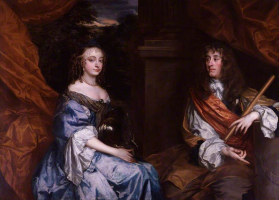


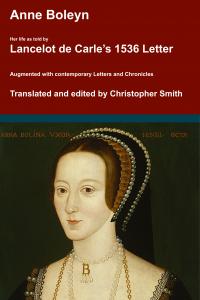
Anne Boleyn. Her Life as told by Lancelot de Carle's 1536 Letter.
In 1536, two weeks after the execution of Anne Boleyn, her brother George and four others, Lancelot du Carle, wrote an extraordinary letter that described Anne's life, and her trial and execution, to which he was a witness. This book presents a new translation of that letter, with additional material from other contemporary sources such as Letters, Hall's and Wriothesley's Chronicles, the pamphlets of Wynkyn the Worde, the Memorial of George Constantyne, the Portuguese Letter and the Baga de Secrets, all of which are provided in Appendices.
Available at Amazon in eBook and Paperback format.
John Evelyn's Diary. 22nd September 1671. This over, I went that night with Mr. Treasurer (age 41) to Euston, a palace of Lord Arlington's (age 53), where we found Monsieur Colbert (age 46) (the French Ambassador), and the famous new French Maid of Honor, Mademoiselle Querouaille (age 22), now coming to be in great favour with the King (age 41). Here was also the Countess of Sunderland (age 25), and several lords and ladies, who lodged in the house.
John Evelyn's Diary. 22nd September 1671. Lord Sunderland (age 30) was now nominated Ambassador to Spain.
John Evelyn's Diary. 22nd September 1686. The Danes retire from Hamburg, the Protestant Princes appearing for their succor, and the Emperor sending his minatories to the King of Denmark (age 14), and also requiring the restoration of the Duke of Saxe Gotha. Thus it pleased God to defeat the French designs, which were evidently to kindle a new war.
On 22nd September 1691 Amelie Auguste Oldenburg was born to Frederick Louis Oldenburg I Duke Schleswig-Holstein-Sonderburg-Beck (age 38) and Louise Charlotte Oldenburg Duchess Schleswig-Holstein-Sonderburg-Beck (age 33). Coefficient of inbreeding 7.82%. She died aged one in 1693.
On 22nd September 1701 father and son, John Granville 1st Earl Bath (deceased) and Charles Granville 2nd Earl Bath (deceased) were buried at St James the Great Church, Kilkhampton [Map].
On 22nd September 1725 Joseph Duplessis was born.
On 22nd September 1761 King George III of Great Britain and Ireland (age 23) was crowned III King Great Britain and Ireland at Westminster Abbey [Map].
Charles Compton 7th Earl of Northampton (age 24) was the Bearer of the Ivory Rod with the Dove.
William Talbot 1st Earl Talbot (age 51) was appointed Lord High Steward.
Francis Hastings 10th Earl Huntingdon (age 32) was the bearer of the Sword of State although the actual Sword of State couldn't be found and the Lord Mayor's Pearl Sword was substituted.


On 22nd September 1768 George William Campbell 6th Duke Argyll was born to John Campbell 5th Duke Argyll (age 45) and Elizabeth Gunning Duchess Hamilton and Argyll (age 34). He married 19th December 1810 Caroline Elizabeth Villiers Duchess Argyll, daughter of George Bussy Villiers 4th Earl Jersey and Frances Twysden.


On 22nd September 1773 Evelyn Pierrepont 2nd Duke Kingston upon Hull (age 62) died without issue at Holme Pierrepoint Hall, Nottinghamshire. He was buried at the Church of St Edmund, Holme Pierrepoint [Map]. Duke Kingston upon Hull and Marquess Dorchester, Earl Kingston upon Hull, Viscount Newark, Baron Pierrepont of Holme Pierrepoint extinct. He left all his wealth and property to his wife Elizabeth Chudleigh Duchess Kingston upon Hull (age 52) on the condition she remain a widow.

After 22nd September 1773. Church of St Edmund, Holme Pierrepoint [Map]. Monument to Evelyn Pierrepont 2nd Duke Kingston upon Hull (deceased). Probably sculpted by John Flaxman (age 18).
On 22nd September 1780 Prince Alfred Hanover was born to King George III of Great Britain and Ireland (age 42) and Charlotte Mecklenburg Strelitz Queen Consort England (age 36). He died aged one in 1782.


On 22nd September 1789 the second Kew Bridge [Map] was opened by King George III of Great Britain and Ireland (age 51).
The History of William Marshal was commissioned by his son shortly after William’s death in 1219 to celebrate the Marshal’s remarkable life; it is an authentic, contemporary voice. The manuscript was discovered in 1861 by French historian Paul Meyer. Meyer published the manuscript in its original Anglo-French in 1891 in two books. This book is a line by line translation of the first of Meyer’s books; lines 1-10152. Book 1 of the History begins in 1139 and ends in 1194. It describes the events of the Anarchy, the role of William’s father John, John’s marriages, William’s childhood, his role as a hostage at the siege of Newbury, his injury and imprisonment in Poitou where he met Eleanor of Aquitaine and his life as a knight errant. It continues with the accusation against him of an improper relationship with Margaret, wife of Henry the Young King, his exile, and return, the death of Henry the Young King, the rebellion of Richard, the future King Richard I, war with France, the death of King Henry II, and the capture of King Richard, and the rebellion of John, the future King John. It ends with the release of King Richard and the death of John Marshal.
Available at Amazon in eBook and Paperback format.
After 22nd September 1802. Monument to Mary Davies in St Giles' Church, Wrexham [Map] sculpted by Peter Mathias Van Gelder (age 60).
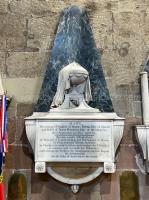
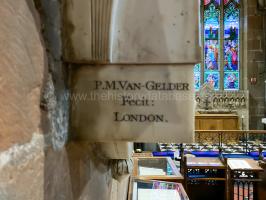
Greville Memoirs. 22nd September 1831. There was a dinner at Apsley House yesterday; the Cabinet of Opposition, to discuss matters before having a general meeting. At this dinner there were sixteen or seventeen present, all the leading anti-Reformers of the Peers. They agreed to oppose the second reading. Dudley, who was there, told me it was tragedy first and farce afterwards; for Eldon and Kenyon, who had dined with the Duke of Cumberland, came in after dinner. Chairs were placed for them on each side of the Duke, and after he had explained to them what they had been discussing, and what had been agreed upon, Kenyon made a long speech on the first reading of the Bill, in which it was soon apparent that he was very drunk, for he talked exceeding nonsense, wandered from one topic to another, and repeated the same things over and over again. When he had done Eldon made a speech on the second reading, and appeared to be equally drunk, only, Lord Bathurst (age 69) told me, Kenyon in his drunkenness talked nonsense, but Eldon sense. Dudley said it was not that they were as drunk as lords and gentlemen sometimes are, but they were drunk like porters. Lyndhurst was not there, though invited. He dined at Holland House. It is pretty clear, however, that he will vote for the second reading, for his wife is determined he shall. I saw her yesterday, and she is full of pique and resentment against the Opposition and the Duke, half real and half pretended, and chatters away about Lyndhurst's not being their cat's paw, and that if they choose to abandon him, they must not expect him to sacrifice himself for them. The pretexts she takes are, that they would not go to the House of Lords on Tuesday and support him against Brougham on the Bankruptcy Bill, and that the Duke of Wellington wrote to her and desired her to influence her husband in the matter of Reform. The first is a joke, the second there might be a little in, for vanity is always uppermost, but they have both some motive of interest, which they will pursue in whatever way they best can. The excuse they make is that they want to conceal their strength from the Government, and accordingly the Duke of Wellington has not yet entered any of his proxies. The truth is that I am by no means sure now that it is safe or prudent to oppose the second reading; and though I think it very doubtful if any practicable alteration will be made in Committee, it will be better to take that chance, and the chance of an accommodation and compromise between the two parties and the two Houses, than to attack it in front. It is clear that Government are resolved to carry the Bill, and equally clear that no means they can adopt would be unpopular. They are averse to making more Peers if they can help it, and would rather go quietly on, without any fresh changes, and I believe they are conscientiously persuaded that this Bill is the least democratical Bill it is possible to get the country to accept, and that if offered in time this one will be accepted. I had heard before that the country is not enamoured of this Bill, but I fear that it is true that they are only indifferent to the Conservative clauses of it (if I may so term them), and for that reason it may be doubtful whether there would not be such a clamour raised in the event of the rejection of this Bill as would compel the Ministers to make a new one, more objectionable than the old. If its passing clearly appears to be inevitable, why, the sooner it is done the better, for at least one immense object will be gained in putting an end to agitation, and restoring the country to good-humour, and it is desirable that the House of Lords should stand as well with the people as it can. It is better, as Burke says, 'to do early, and from foresight, that which we may be obliged to do from necessity at last.' I am not more delighted with Reform than I have ever been, but it is the part of prudence to take into consideration the present and the future, and not to harp upon the past. It matters not how the country has been worked up to its present state, if a calm observation convinces us that the spirit that has been raised cannot be allayed, and that is very clear to me.
Greville Memoirs. 22nd September 1831. The night before last Croker and Macaulay made two fine speeches on Reform; the former spoke for two hours and a half, and in a way he had never done before. Macaulay was very brilliant. There was a meeting at Lord Ebrington's (age 78) yesterday, called by him, Lyttelton Lawley, and of members of the House of Commons only, and they (without coming to any resolution) were all agreed to prevail on the Government not to resign in the event of the Reform Bill being rejected in the House of Lords. I have no doubt, therefore, in spite of what Lord Grey said, and the other circumstances I have mentioned above, that they will not resign, and I doubt whether there will be any occasion for it.
Thomas Bateman 1846. On the 22d of September, 1846, was opened a very large barrow upon Hind Lowe, near Sterndale, which was entirely composed of a tenacious soil, similar to those opened at Bassett Wood [Map] and Newton Grange [Map] in 1845. An excavation was made in the centre to the depth of seven feet, where the natural soil became apparent, without meeting with any interment; one rude arrow-head of flint occurred about three feet from the summit of the tumulus.
Ten Years' Digging. September 22nd, we opened a barrow near Cotton [Map], called the Round Knoll, of the diameter of eighteen yards and five feet high, composed of clay, with a few sand stones, near the natural level. A kiln for burning lime had been made at the end, but as it did not seem to extend to the centre we made it the base of operations by cutting a trench to the centre of the mound, on a level with the bottom of the kiln. The rest of the barrow seemed never to have been disturbed, yet we discovered nothing but charcoal and rats' bones, which lay near the bottom of the kiln, which no doubt occupied the place where the interment had been deposited. On the same day we partially opened another mound nearer to Cotton, less than the last, and not more than eighteen inches high. We cut down in the middle, between two large stones placed on edge, which at first appeared to form a cist, but which we soon found had been converted into a limekiln by some utilitarian occupier of the land.

On 22nd September 1851 Antoine Alfred Agénor de Gramont 11th Duc de Gramont was born to Agénor 10th Duc de Gramont (age 32). He married (1) 10th December 1878 Marguerite de Rothschild Duchess Gramont and had issue (2) 3rd August 1907 Princess Maria Ruspoli.
Ten Years' Digging. On the 22nd of September, we opened a barrow near King Sterndale, called High Low [Map], which being situated in a rough plantation, was incapable of measurement; it did not appear, however, to have been very large even at first, and had evidently been reduced in size since. We excavated a good deal of the centre, which we found about three feet higher than the natural surface, upon which was a considerable quantity of charcoal, but found that the whole had been turned over and plundered, so that nothing but fragments were seen. From them it was clear that two interments had taken place in the mound, the traces of the most ancient being manifest in part of a large coarse urn, a calcined flint, and probably the charcoal; those of the more recent were the bones of an adult skeleton, which had been accompanied by a drinking-cup, and many broken bones of animals, including stags' horns, some of the latter having been tooled or sawed. Bones of the water rat were plentifully distributed amongst the stones in the more open part of the tumulus.
Another mound, in a field close by, had been so thoroughly destroyed that we did not think it worth the trouble of examination.

On 22nd September 1859 Mary Emma Campbell was born to George Douglas Campbell 8th Duke Argyll (age 36) and Elizabeth Georgiana Leveson-Gower Duchess Argyll.
On 22nd September 1892 George Leveson-Gower 3rd Duke Sutherland (age 63) died. His son Cromartie (age 41) succeeded 4th Duke Sutherland, 5th Marquess Stafford, 22nd Earl Sutherland, 6th Earl Gower, 7th Baron Gower, 11th Baronet Gower of Stittenham in Yorkshire. Millicent Fanny St Clair-Erskine Duchess of Sutherland (age 24) by marriage Duchess Sutherland.


The London Gazette 26328. Whitehall, September 22, 1892. THE Queen has been pleased, by letters Patent under the Great Seal of the United Kingdom of Great Britain and Ireland, dated the 22nd August, 1892, to grant the dignities of an Earl and a Marquess of the said United Kingdom unto the Right Honourable Lawrence, Earl of Zetland (age 48), and the heirs male of his body lawfully begotten, by the names, styles, and titles of Earl of Ronaldshay, in the county of Orkney and Zetland, and Marquess of Zetland. [Lilian Selina Elizabeth Lumley Marchioness Zetland (age 40) by marriage Marchioness Zetland.]
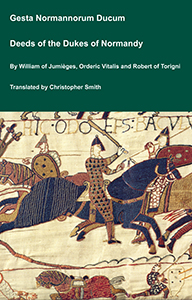
The Deeds of the Dukes of Normandy
The Gesta Normannorum Ducum [The Deeds of the Dukes of Normandy] is a landmark medieval chronicle tracing the rise and fall of the Norman dynasty from its early roots through the pivotal events surrounding the Norman Conquest of England. Originally penned in Latin by the monk William of Jumièges shortly before 1060 and later expanded at the behest of William the Conqueror, the work chronicles the deeds, politics, battles, and leadership of the Norman dukes, especially William’s own claim to the English throne. The narrative combines earlier historical sources with firsthand information and oral testimony to present an authoritative account of Normandy’s transformation from a Viking settlement into one of medieval Europe’s most powerful realms. William’s history emphasizes the legitimacy, military prowess, and governance of the Norman line, framing their expansion, including the conquest of England, as both divinely sanctioned and noble in purpose. Later chroniclers such as Orderic Vitalis and Robert of Torigni continued the history, extending the coverage into the 12th century, providing broader context on ducal rule and its impact. Today this classic work remains a foundational source for understanding Norman identity, medieval statesmanship, and the historical forces that reshaped England and Western Europe between 800AD and 1100AD.
Available at Amazon in eBook and Paperback format.
Archaeologia Cambrensis Series 6 Volume 15 1905 Stonehenge. 22nd September 1915. Sale of Stonehenge. — Great public interest was shown in the sale by auction at Salisbury yesterday [September 21st] of the Amesbury Abbey estate, including Stonehenge. Sir Howard Frank, of Messrs. Knight, Frank and Rutley, conducted the sale, and explained that the estate came into the market in consequence of the deaths of Sir Edmund Antrobus and of his only son [Edmund Antrobus], who was killed in action last October. The estate, which has many historical associations, comprises 6,420 acres, and has an estimated rental of £5,359. It was first submitted as a whole, but as no purchaser was forthcoming it was offered in lots, of which Amesbury Abbey and grounds formed the first. This was unsold. Farms and buildings in the town of Amesbury, however, sold at good prices, and most of the property changed hands. When Stonehenge was put up for sale Sir Howard Frank asked for an opening bid of £5,000. A bid for that amount was made at once, quickly followed by an advance of £100, and £6,000 was readied within a minute. Then there was a lull. The auctioneer said the price was a poor one for Stonehenge, which could not be valued, but if there were no further offers he would accept it. Bidding recommenced and mounted to £6,600, at which the property fell to a local landowner, Mr. C. H. E. Chubb (age 39), of Bemerton Lodge, Salisbury. After the sale Mr. Chubb said that when he went into the sale room he had no intention whatever of buying the monument. "While I was there," he added, I thought a Salisbury man ought to buy it, and that is how it was done." Asked if he had any plans for the future of Stonehenge, Mr. Chubb said that, while he intended to preserve the monument, he would do nothing for some little time, as he had to consider the position. — Times, September 22nd, 1915.
Profits Of Stonehenge. — -Mr. Chubb, the new owner of Stonehenge, will not be given legal possession for some months. Meanwhile he has formulated no plan for the future, except that he is determined to take every step to see that the stones are preserved as heretofore.
The opinion expressed locally is that Mr. Chubb has made an excellent bargain, quite apart from the historic interest attaching to Stonehenge. As the purchase price was £6,600, and the net receipts from fees paid by visitors to the enclosure average £360 per annum, the transaction, regarded in a cold commercial light, represents an investment of over 5 per cent.Times, September 23rd, 1915.
Stonehenge: Its Recent Sale And Price.- The following letter appeared in "The Times of October 6th, 1915:— Sir, — The sale by auction a few days ago of Stonehenge for the comparatively small sum of £6600 will, I think, cause regret in many quarters that the opportunity was lost of vesting this most important national monument in some public body, and of restoring to the public the access to it, free of charge, which had been enjoyed for countless centuries. It will be recollected that fourteen years ago litigation was undertaken with this object. The claim was made that two well-worn ways leading up to, and through, the outer circle of stones were obstructed by the inclosure, which was erected partly with the object of guarding the stones, but mainly for the purpose of enforcing a charge of admission of Is. a head. Those of us who were engaged in this attempt were worsted in the suit and were heavily mulcted in costs. It was not generally known, however, and could not be stated at the hearing of the suit, that at an early stage of the proceedings we offered to purchase the monument and a few acres of Down land surrounding it for the sum of £10,000, with the purpose of placing the monument under the full protection of the Ancient Monuments Act. The effect of this would be that the Government would be charged with the duty and cost of guarding and preserving the stones, and that access of the public to them would be secured, free of charge, for ever. The then owner of the property did not object to a sale, but he said that his price was £50,000. For this sum he had already offered the monument to the Government, and when it was rejected, on the ground that it was altogether exorbitant, he threatened to sell the stones to an American millionaire, who would ship them across the Atlantic. The then Chancellor of the Exchequer, to whom the offer and threat were verbally made, very properly replied that if an attempt was made to remove the monument he would send a regiment from the camp on Salisbury Plain to prevent it. In spite of this rebuff, the excessive price was insisted upon, with the result that the suit was proceeded with. Since then the admission fees have been maintained, and I am informed that the visitors to Stonehenge have been only one-fourth in number of what they used to be. The net produce from the charge for admission has averaged the last three years £320, after deducting the cost of guarding and preserving it. The fees for admission during the last half-year have been greatly reduced in consequence of the war.
"When, a few weeks ago, the intended sale of the monument was announced, I would gladly have made an effort to raise a sum for its purchase, with the object of undoing the wrong which had been done in 1901. But I found that, in view of the many claims arising out of the war, it was impossible to raise by subscription even the moderate sum which appeared to be the full commercial value of the monument, based on the admission fees.
"There remained, however, the possibility that the monument might be purchased by some public body, such as the National Trust, who would maintain the charge for admission to it until more favourable times, when it would be possible to reduce or abolish that charge. In this view, the National Trust, at my suggestion, entered into a correspondence with Messrs. Knight, Frank and Rutley, the agents for the sale of the Amesbury estate. The society had no funds at its immediate disposal for such a purpose, but among its generous supporters there would probably have been found those who would advance the purchase-money on loan on the security of the admission fees. It was necessary, however, before applying to any such friends, to know the price demanded for the monument. The society was informed by the agents that the owner could not name a price, but was prepared to entertain any offer from the National Trust above the sum of £10,000 — a price evidently based upon the offer made for it fourteen years ago. The society replied to this that, after careful consideration, they had come to the conclusion that the minimum price named by the owner was altogether excessive, particularly in view of the exceptional conditions consequent on the war, and that they were unable to make an offer of that amount or above it.
"The reply of the agents to this, on September 17th, was 'that the vendor, who is a tenant for life of the property, would not be justified in selling Stonehenge previous to the auction except at a price which was considered by us (Messrs. Knight, Frank and Rutley) to be high.' They added — 'The reserve at the auction, however, is a low one, in our view, and is thousands of pounds below the amount mentioned in our previous letter,' namely, £10,000. They suggested that the National Trust should be represented at the auction. It was thus practically admitted that the price named by the owner in the previous letter was, in the opinion of the experienced agents who advised him, too high by some thousands. The letter was received by the National Trust on Saturday, September 18th, three days before the sale by auction. It was impossible, in this short interval, to make arrangements for finding the possible purchase-money. The society, therefore, was not represented at the auction, and made no bid. The monument was bought for S6600 by a gentleman resident in the neighbourhood, who has stated that he has bought it as an investment, but with the full intention of doing his best to preserve it a promise which I doubt not he will fulfil. Not the less, however, it is to be regretted that the monument has not become the property of some public body, with the prospect of the reduction or remission of the entrance fees. I may be permitted also to point out that the price obtained at the auction, while it confirms the opinion of the agents who conducted the sale, is also striking proof that the sum offered for the monument in 1901 was most generous, and such as, in the interest of the entailed estate and of the public, should have been accepted.
I am yours faithfully,
Eversley.
Abbotsworthy House, Winchester,
October 1st.


On 22nd September 1916 Edward Wyndham Tennant (age 19) was killed in action at the Battle of the Somme. Sculpted by Allan Gairdner Wyon (age 34). Salisbury Cathedral [Map].
Edward Wyndham Tennant: On 1st July 1897 he was born to Edward Tennant 1st Baron Glenconner and Pamela Wyndham Viscountess Grey.


On 22nd September 1920 Herbert James Draper (age 56) died.
On 22nd September 1373 Thomas Despencer 1st Earl Gloucester was born to Edward Despencer 1st Baron Despencer, Baron Burghesh (age 38) and Elizabeth Burghesh 3rd Baron Burghesh (age 31). He a great x 3 grandson of King Edward I of England. He married before 7th November 1379 his third cousin once removed Constance York Countess Gloucester, daughter of Edmund of Langley 1st Duke of York and Isabella of Castile Duchess York, and had issue.
On 22nd September 1515 Anne of Cleves was born to John La Marck III Duke Cleves (age 24) and Maria Jülich Berg Duchess Cleves at Dusseldorf. She married 6th January 1540 her fifth cousin once removed King Henry VIII of England and Ireland, son of King Henry VII of England and Ireland and Elizabeth York Queen Consort England.
On 22nd September 1523 Cardinal Charles Bourbon was born to Charles Bourbon Duke Vendôme (age 34) and Françoise Valois Countess Vendôme (age 33).
On 22nd September 1576 Cardinal Philipp Wilhelm Wittelsbach was born to William Wittelsbach V Duke Bavaria (age 27) and Renata Lorraine Duchess Bavaria (age 32). Coefficient of inbreeding 2.86%.
On 22nd September 1601 Anne of Austria Spain Queen Consort France was born to Philip III King Spain (age 23) and Margaret of Austria Queen Consort Spain (age 16). Coefficient of inbreeding 10.92%. She married 1615 her second cousin Louis XIII King France, son of Henry IV King France and Marie de Medici Queen Consort France, and had issue.
On 22nd September 1606 Arthur Chichester was born to Arthur Chichester 1st Baron Chichester (age 43) and Lettice Perrot Baroness Chichester (age 46). He died aged less than one years old.
On 22nd September 1611 Alphonse Maurice Habsburg Spain was born to Philip III King Spain (age 33) and Margaret of Austria Queen Consort Spain (age 26). Coefficient of inbreeding 10.92%. He died aged less than one years old.
On 22nd September 1617 Charles Louis Palatinate Simmern was born to Frederick Palatinate Simmern V Elector Palatine Rhine (age 21) and Princess Elizabeth Stewart Queen Bohemia (age 21) at Heidelburg. He a grandson of King James I of England and Ireland and VI of Scotland. He married (1) 22nd February 1650 Charlotte Hesse-Kassel, daughter of Landgrave William V of Hesse-Kassel, and had issue (2) 6th January 1658 Maria Susanne Luise von Degenfeld and had issue.
On 22nd September 1691 Amelie Auguste Oldenburg was born to Frederick Louis Oldenburg I Duke Schleswig-Holstein-Sonderburg-Beck (age 38) and Louise Charlotte Oldenburg Duchess Schleswig-Holstein-Sonderburg-Beck (age 33). Coefficient of inbreeding 7.82%. She died aged one in 1693.
On 22nd September 1694 Philip Stanhope 4th Earl Chesterfield was born to Philip Stanhope 3rd Earl Chesterfield (age 21) and Elizabeth Savile (age 17). He married 5th September 1733 Petronilla Melusine Schulenburg Countess Chesterfield, daughter of King George I and Melusine Schulenburg 1st Duchess Munster 1st Duchess Kendal.


Chronicle of Geoffrey le Baker of Swinbroke
Baker was a secular clerk from Swinbroke, now Swinbrook, an Oxfordshire village two miles east of Burford. His Chronicle describes the events of the period 1303-1356: Gaveston, Bannockburn, Boroughbridge, the murder of King Edward II, the Scottish Wars, Sluys, Crécy, the Black Death, Winchelsea and Poitiers. To quote Herbert Bruce 'it possesses a vigorous and characteristic style, and its value for particular events between 1303 and 1356 has been recognised by its editor and by subsequent writers'. The book provides remarkable detail about the events it describes. Baker's text has been augmented with hundreds of notes, including extracts from other contemporary chronicles, such as the Annales Londonienses, Annales Paulini, Murimuth, Lanercost, Avesbury, Guisborough and Froissart to enrich the reader's understanding. The translation takes as its source the 'Chronicon Galfridi le Baker de Swynebroke' published in 1889, edited by Edward Maunde Thompson.
Available at Amazon in eBook and Paperback format.
On 22nd September 1725 Joseph Duplessis was born.
On 22nd September 1735 Charles Bingham 1st Earl Lucan was born to John Bingham 5th Baronet (age 45) and Anne Vesey Lady Bingham (age 36). He married before 1762 Margaret Smith Countess Lucan and had issue.
On 22nd September 1744 John Thomas Burgh 13th Earl Clanricarde was born to John Smith Burgh 11th Earl Clanricarde (age 23) and Hester Amelia Vincent Countess Clanricarde.
On 22nd September 1753 George Lumley-Saunderson 5th Earl Scarborough was born to Richard Lumley-Saunderson 4th Earl Scarborough (age 28) and Barbara Savile Countess Scarborough.
On 22nd September 1768 George William Campbell 6th Duke Argyll was born to John Campbell 5th Duke Argyll (age 45) and Elizabeth Gunning Duchess Hamilton and Argyll (age 34). He married 19th December 1810 Caroline Elizabeth Villiers Duchess Argyll, daughter of George Bussy Villiers 4th Earl Jersey and Frances Twysden.
On 22nd September 1780 Prince Alfred Hanover was born to King George III of Great Britain and Ireland (age 42) and Charlotte Mecklenburg Strelitz Queen Consort England (age 36). He died aged one in 1782.
On 22nd September 1799 Mary Lucy Clifford Baroness Stourton was born to Charles Clifford Clifford 6th Baron Clifford Chudleigh (age 40) and Eleanor Mary Arundell Baroness Clifford Chudleigh (age 33). She a great x 3 granddaughter of King Charles II of England Scotland and Ireland. Coefficient of inbreeding 1.56%. She married 1st August 1825 her fifth cousin Charles Stourton 19th Baron Stourton, son of William Joseph Stourton 18th Baron Stourton, and had issue.
On 22nd September 1801 William Hare 2nd Earl Listowel was born to Richard Lysaght Hare (age 28) and Catherine Dillon. He married 23rd July 1831 Maria Augusta Windham Countess Listowel and had issue.
On 22nd September 1807 Stephen Glynne 9th Baronet was born to Stephen Richard Glynne 8th Baronet (age 27) and Mary Griffin.
On 22nd September 1820 Mortimer Sackville-West 1st Baron Sackville was born to George Sackville-West 5th Earl De La Warr (age 28) and Elizabeth Sackville Countess De La Warr (age 25).
On 22nd September 1827 William Henry Paulett 6th Earl Paulett was born to George Paulett (age 41) and Catherine Sophia Dallas (age 38). He married (1) 23rd June 1849 Elizabeth Lavinia Newman Countess Poulett and had issue (2) 20th September 1871 Emma Sophia Johnson Countess Poulett (3) 1st March 1879 Rosa Melville Countess Poulett and had issue.
Chronicle of Walter of Guisborough
A canon regular of the Augustinian Guisborough Priory, Yorkshire, formerly known as The Chronicle of Walter of Hemingburgh, describes the period from 1066 to 1346. Before 1274 the Chronicle is based on other works. Thereafter, the Chronicle is original, and a remarkable source for the events of the time. This book provides a translation of the Chronicle from that date. The Latin source for our translation is the 1849 work edited by Hans Claude Hamilton. Hamilton, in his preface, says: 'In the present work we behold perhaps one of the finest samples of our early chronicles, both as regards the value of the events recorded, and the correctness with which they are detailed; Nor will the pleasing style of composition be lightly passed over by those capable of seeing reflected from it the tokens of a vigorous and cultivated mind, and a favourable specimen of the learning and taste of the age in which it was framed.'
Available at Amazon in eBook and Paperback format.

On 22nd September 1829 Octavia Grosvenor was born to Richard Grosvenor 2nd Marquess Westminster (age 34) and Elizabeth Mary Leveson-Gower Marchioness Westminster (age 32).

On 22nd September 1837 Anne King-Noel 15th Baroness Wentworth was born to William King Noel 1st Earl Lovelace (age 32) and Augusta Ada Byron Countess Lovelace (age 21). She married (1) 1869 Wilfrid Scawen Blunt and had issue.

On 22nd September 1838 Walter John Pelham 4th Earl Chichester was born to Henry Pelham 3rd Earl Chichester (age 34) and Mary Brudenell Countess Chichester (age 32). He married 1861 his sixth cousin Elizabeth Mary Bligh Countess Chichester.
On 22nd September 1851 Lieutenant-Colonel John Henry Trollope 2nd Baron Kesteven was born to John Trollope 1st Baron Kesteven (age 51) and Julia Maria Sheffield. He married 25th March 1914 Amy Myddelton Peacock.
On 22nd September 1851 Antoine Alfred Agénor de Gramont 11th Duc de Gramont was born to Agénor 10th Duc de Gramont (age 32). He married (1) 10th December 1878 Marguerite de Rothschild Duchess Gramont and had issue (2) 3rd August 1907 Princess Maria Ruspoli.
On 22nd September 1859 Mary Emma Campbell was born to George Douglas Campbell 8th Duke Argyll (age 36) and Elizabeth Georgiana Leveson-Gower Duchess Argyll.
On 22nd September 1867 Granville Eliot 7th Earl of St Germans was born to Charles George Cornwallis Eliot (age 27) and Constance Rhiannon Guest (age 22).
On 22nd September 1868 Augustus Debonnaire John Monson 9th Baron Monson was born to Debonnaire John Monson 8th Baron Monson (age 38) and Augusta Louisa Caroline Ellis Baroness Monson (age 26).
On 22nd September 1881 Leonard Pius Vavasour 4th Baronet was born to William Vavasour 3rd Baronet (age 34).
On 22nd September 1882 Captain Maurice Baldwin Raymond Blackwood was born to Francis Blackwood 4th Baronet (age 43).
On 22nd September 1884 Patrick Bowes-Lyon 15th Earl Strathmore and Kinghorne was born to Claude Bowes-Lyon 14th Earl Strathmore and Kinghorne (age 29) and Cecilia Nina Cavendish-Bentinck Countess of Strathmore and Kinghorne (age 22) at St Paul's Walden Bury, Hertfordshire. He married 21st November 1908 his fourth cousin once removed Dorothy Beatrix Godolphin Osborne, daughter of George Godolphin Osborne 10th Duke Leeds and Katherine Frances Lambton Duchess Leeds, and had issue.


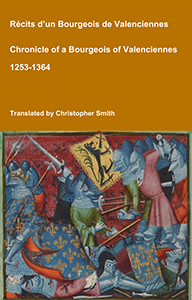
Chronicle of a Bourgeois of Valenciennes
Récits d’un bourgeois de Valenciennes aka The Chronicle of a Bourgeois of Valenciennes is a vivid 14th-century vernacular chronicle written by an anonymous urban chronicler from Valenciennes in the County of Hainaut. It survives in a manuscript that describes local and regional history from about 1253 to 1366, blending chronology, narrative episodes, and eyewitness-style accounts of political, military, and social events in medieval France, Flanders, and the Low Countries. The work begins with a chronological framework of events affecting Valenciennes and its region under rulers such as King Philip VI of France and the shifting allegiances of local nobility. It includes accounts of conflicts, sieges, diplomatic manoeuvres, and the impact of broader struggles like the Hundred Years’ War on urban life in Hainaut. Written from the perspective of a burgher (bourgeois) rather than a monastery or royal court, the chronicle offers a rare lay viewpoint on high politics and warfare, reflecting how merchants, townspeople, and civic institutions experienced the turbulence of the 13th and 14th centuries. Its narrative style combines straightforward reporting of events with moral and civic observations, making it a valuable source for readers interested in medieval urban society, regional politics, and the lived experience of war and governance in pre-modern Europe.
Available at Amazon in eBook and Paperback format.
On 22nd September 1899 Helen Moira Eaton Lady Dashwood was born. She married 20th December 1922 John Lindsay Dashwood 10th Baronet, son of Robert John Dashwood 9th Baronet, and had issue.


On 22nd September 1901 James Willoughby Bertie was born to Montagu Arthur Bertie 7th Earl of Abingdon (age 65) and Gwendoline Mary Dormer (age 36). He married 12th June 1928 his third cousin once removed Jean Crichton-Stuart, daughter of John Crichton-Stuart 4th Marquis of the Isle of Bute.
On 22nd September 1913 Sylvia Gwendoline Eva Maitland was born to Ian Maitland 15th Earl of Lauderdale (age 22). She married 3rd June 1937 William Francis Carew 6th Baron Carew.
On 22nd September 1920 Nathaniel Fiennes 15th or 21st Baron Saye and Sele was born to Ivo Twisleton-Wykeham-Fiennes 14th or 20th Baron Saye and Sele (age 34).
On 22nd September 1933 Edward Francis North 9th Earl Guildford was born to Francis George North (age 31) and Joan Louise North Burrell (age 31).
On 22nd September 1938 Susan Diana Wood was born to Charles Ingram Courtenay Wood 2nd Earl Halifax (age 25) and Ruth Alice Hannah Mary Primrose Countess Halifax (age 22).
On 22nd September 1428 Edward "The Philosopher" I King Portugal (age 36) and Eleanor Trastámara Queen Consort Portugal were married. She by marriage Queen Consort Portugal. She the daughter of Ferdinand I King Aragon and Eleanor of Alberquerque Queen Consort Aragon (age 54). He the son of King John I of Portugal (age 76) and Philippa of Lancaster Queen Consort Portugal. They were first cousin once removed. He a great grandson of King Edward III of England.

On 22nd September 1726 John Dryden 7th Baronet and Elizabeth Rooper Lady Dryden were married. She by marriage Lady Dryden of Canons Ashby in Northamptonshire.
On 22nd September 1742 Charles Bennet 3rd Earl Tankerville (age 26) and Alice Astley Countess Tankerville (age 25) were married. He the son of Charles Bennet 2nd Earl Tankerville (age 44) and Camilla Colville Countess Tankerville (age 45).
On 22nd September 1743 St George Gore 5th Baronet (age 21) and Anne aka Alice Burton Lady Gore (age 19) were married. She by marriage Lady Gore of Magherabegg in County Donegal.
On 22nd September 1796 Thomas Gage 6th Baronet (age 44) and Charlotte Campbell Lady Gage (age 27) were married. She by marriage Lady Gage of Hengrave in Suffolk.

On 22nd September 1822 Robert Jenkinson 2nd Earl Liverpool (age 52) and Mary Chester Countess of Liverpool (age 45) were married. She by marriage Countess Liverpool. He the son of Charles Jenkinson 1st Earl Liverpool and Amelia Watts.
On 22nd September 1829 Henry Benedict Arundell 11th Baron Arundel (age 24) and Frances Catherine Tichborne Baroness Arundel were married.
Jean de Waurin's Chronicle of England Volume 6 Books 3-6: The Wars of the Roses
Jean de Waurin was a French Chronicler, from the Artois region, who was born around 1400, and died around 1474. Waurin’s Chronicle of England, Volume 6, covering the period 1450 to 1471, from which we have selected and translated Chapters relating to the Wars of the Roses, provides a vivid, original, contemporary description of key events some of which he witnessed first-hand, some of which he was told by the key people involved with whom Waurin had a personal relationship.
Available at Amazon in eBook and Paperback format.
On 22nd September 1830 Henry Edward Bunbury 7th Baronet (age 52) and Emily Louisa Augusta Napier Lady Bunbury (age 47) were married. She by marriage Lady Bunbury of Bunbury in Oxfordshire and Stanney Hall in Cheshire.
On 22nd September 1846 Edward Plunkett 16th Baron Dunsany (age 37) and Anne Constance Dutton Baroness Dunsany (age 30) were married.
On 22nd September 1880 James Roche 3rd Baron Fermoy (age 29) and Frances Ellen Work Lady Fermoy (age 22) were married at Christ Church New York. They separated in 1886.
On 22nd September 1922 Victor Basil John Seely 4th Baronet (age 22) and Sybil Helen Gibbons Lady Shiffner (age 24) were married.

On 22nd September 1923 Josslyn Victor Hay 22nd Earl of Erroll (age 22) and Myra Idina Sackville Countess of Erroll (age 30) were married. She the daughter of Gilbert Sackville 8th Earl De La Warr and Muriel Agnes Brassey Countess De La Warr. He the son of Victor Hay 21st Earl of Erroll (age 46).
On 22nd September 1345 Henry Plantagenet 3rd Earl of Leicester 3rd Earl Lancaster (age 64) died at Leicester Castle [Map]. His son Henry (age 35) succeeded 4th Earl of Leicester, 4th Earl Lancaster.
On 22nd September 1399 Thomas Mowbray 1st Duke of Norfolk (age 31) died of plague in Venice [Map] whilst in exile. He was buried at St Mark's Cathedral, Venice [Map]. Duke Norfolk forfeit. His son Thomas (age 14) succeeded 4th Earl Norfolk, 2nd Earl Nottingham, 7th Baron Mowbray, 8th Baron Segrave and Earl Marshal.
On 22nd September 1405 Barnim Griffins 6th Duke Pomerania (age 40) died of plague. His son Barnim succeeded 7th Duke Pomerania.
On 22nd September 1417 Anne Auvergne Duchess Bourbon (age 59) died.
On 22nd September 1450 Barnim Griffins 7th Duke Pomerania died. His uncle Wartislaw succeeded 8th Duke Pomerania.
On 22nd September 1492 Bishop Peter Courtenay died.
Chronicle of Geoffrey le Baker of Swinbroke
Baker was a secular clerk from Swinbroke, now Swinbrook, an Oxfordshire village two miles east of Burford. His Chronicle describes the events of the period 1303-1356: Gaveston, Bannockburn, Boroughbridge, the murder of King Edward II, the Scottish Wars, Sluys, Crécy, the Black Death, Winchelsea and Poitiers. To quote Herbert Bruce 'it possesses a vigorous and characteristic style, and its value for particular events between 1303 and 1356 has been recognised by its editor and by subsequent writers'. The book provides remarkable detail about the events it describes. Baker's text has been augmented with hundreds of notes, including extracts from other contemporary chronicles, such as the Annales Londonienses, Annales Paulini, Murimuth, Lanercost, Avesbury, Guisborough and Froissart to enrich the reader's understanding. The translation takes as its source the 'Chronicon Galfridi le Baker de Swynebroke' published in 1889, edited by Edward Maunde Thompson.
Available at Amazon in eBook and Paperback format.
On 22nd September 1531 Louise of Savoy Countess Angoulême (age 55) died.
On 22nd September 1557 Bishop Robert Parfew aka Warton died.
On 22nd September 1559 Dorothy Neville Baroness Cobham (age 34) died.
On 22nd September 1576 Walter Devereux 1st Earl Essex (age 35) died. His son Robert (age 10) succeeded 2nd Earl Essex, 3rd Viscount Hereford, 12th Baron Ferrers of Chartley, 9th Baron Bourchier.


On 22nd September 1602 Anne Stanley Baroness Stourton (age 60) died.
On 22nd September 1618 Anne Spencer Countess Dorset died.

On 22nd September 1629 Robert Radclyffe 5th Earl of Sussex (age 56) died at Clerkenwell [Map]. His first cousin once removed Edward (age 70) succeeded 6th Earl of Sussex, 6th Viscount Fitzwalter. His half first cousin Henry (age 44) de jure 15th Baron Fitzwalter.
On 22nd September 1637 Charles Gonzaga I Duke Mantua (age 57) died.
On 22nd September 1670 Elizabeth Bourchier Countess Denbigh (age 44) died.

On 22nd September 1695 George Carteret 1st Baron Carteret (age 28) died. His son John (age 5) succeeded 2nd Baron Carteret of Hawnes, 3rd Baronet Carteret of Metesches in Jersey.
Jean de Waurin's Chronicle of England Volume 6 Books 3-6: The Wars of the Roses
Jean de Waurin was a French Chronicler, from the Artois region, who was born around 1400, and died around 1474. Waurin’s Chronicle of England, Volume 6, covering the period 1450 to 1471, from which we have selected and translated Chapters relating to the Wars of the Roses, provides a vivid, original, contemporary description of key events some of which he witnessed first-hand, some of which he was told by the key people involved with whom Waurin had a personal relationship.
Available at Amazon in eBook and Paperback format.
On 22nd September 1756 John Hobart 1st Earl Buckinghamshire (age 62) died. His son John (age 33) succeeded 2nd Earl Buckinghamshire, 2nd Baron Hobart, 6th Baronet Hobart of Intwood in Norfolk. Mary Anne Drury Countess Buckinghamshire (age 16) by marriage Countess Buckinghamshire.


On 22nd September 1759 Mary Maxwell Countess Traquair (age 88) died.
On 22nd September 1773 Evelyn Pierrepont 2nd Duke Kingston upon Hull (age 62) died without issue at Holme Pierrepoint Hall, Nottinghamshire. He was buried at the Church of St Edmund, Holme Pierrepoint [Map]. Duke Kingston upon Hull and Marquess Dorchester, Earl Kingston upon Hull, Viscount Newark, Baron Pierrepont of Holme Pierrepoint extinct. He left all his wealth and property to his wife Elizabeth Chudleigh Duchess Kingston upon Hull (age 52) on the condition she remain a widow.
On 22nd September 1816 Robert Gunning 1st Baronet (age 85) died. His son George (age 53) succeeded 2nd Baronet Gunning of Eltham in Kent.
On 22nd September 1826 Thomas Lister 1st Baron Ribblesdale (age 74) died. His son Thomas (age 36) succeeded 2nd Baron Ribblesdale of Gisburne Park in the West Riding of Yorkshire.
On 22nd September 1828 or 4th October 1828 Thomas Whichcote 5th Baronet (age 65) died. He was buried at St Denys' Church, Aswarby. His son Thomas (age 41) succeeded 6th Baronet Whichcote of the Inner Temple in the City of London. Sophia Sherard Lady Whichcote (age 32) by marriage Lady Whichcote of the Inner Temple in the City of London.
On 22nd September 1838 Henry Oxenden 7th Baronet (age 82) died. His son Henry (age 43) succeeded 8th Baronet Oxenden of Dene in Kent.

On 22nd September 1840 Louisa Tollemache 7th Countess Dysart (age 95) died without issue. Her grandson Lionel (age 45) succeeded 8th Earl Dysart. Maria Elizabeth Toone Countess Dysart by marriage Countess Dysart.
On 22nd September 1845 Bishop George Henry Law (age 84) died.
On 22nd September 1861 George Dashwood 4th Baronet (age 75) died. His son Henry (age 44) succeeded 5th Baronet Dashwood of Kirtlington Park in Oxfordshire.
Chronicle of Walter of Guisborough
A canon regular of the Augustinian Guisborough Priory, Yorkshire, formerly known as The Chronicle of Walter of Hemingburgh, describes the period from 1066 to 1346. Before 1274 the Chronicle is based on other works. Thereafter, the Chronicle is original, and a remarkable source for the events of the time. This book provides a translation of the Chronicle from that date. The Latin source for our translation is the 1849 work edited by Hans Claude Hamilton. Hamilton, in his preface, says: 'In the present work we behold perhaps one of the finest samples of our early chronicles, both as regards the value of the events recorded, and the correctness with which they are detailed; Nor will the pleasing style of composition be lightly passed over by those capable of seeing reflected from it the tokens of a vigorous and cultivated mind, and a favourable specimen of the learning and taste of the age in which it was framed.'
Available at Amazon in eBook and Paperback format.
On 22nd September 1862 Robert Henry Gunning 3rd Baronet (age 66) died. His brother Henry (age 64) succeeded 4th Baronet Gunning of Eltham in Kent.
On 22nd September 1880 Robert Edward Wilmot 4th Baronet (age 71) died. His brother George (age 55) succeeded 5th Baronet Wilmot of Osmaston in Derbyshire.
On 22nd September 1882 Edward Manningham-Buller 1st Baronet (age 82) died. His son Morton (age 57) succeeded 2nd Baronet Manningham-Buller of Dilhorne in Staffordshire.
On 22nd September 1882 Emma Mary Fitzpatrick Baroness Lyveden (age 74) died.
On 22nd September 1882 Charles Stuart Abbott 3rd Baron Tenterden (age 47) died at Nelson House, Lynmouth. His son Charles (age 16) succeeded 4th Baron Tenterden of Hendon in Middlesex.
On 22nd September 1892 George Leveson-Gower 3rd Duke Sutherland (age 63) died. His son Cromartie (age 41) succeeded 4th Duke Sutherland, 5th Marquess Stafford, 22nd Earl Sutherland, 6th Earl Gower, 7th Baron Gower, 11th Baronet Gower of Stittenham in Yorkshire. Millicent Fanny St Clair-Erskine Duchess of Sutherland (age 24) by marriage Duchess Sutherland.
On 22nd September 1908 Carnegie Jervis 5th Viscount St Vincent (age 53) died. His brother Ronald (age 48) succeeded 6th Viscount St Vincent of Meaford in Staffordshire.
On 22nd September 1912 Edward Crofton 3rd Baron Crofton (age 77) died. His nephew Arthur (age 46) succeeded 4th Baron Crofton, 5th Baronet Crofton of The Mote in Roscommon.
On 22nd September 1916 Edward Wyndham Tennant (age 19) was killed in action at the Battle of the Somme. Sculpted by Allan Gairdner Wyon (age 34). Salisbury Cathedral [Map].
Edward Wyndham Tennant: On 1st July 1897 he was born to Edward Tennant 1st Baron Glenconner and Pamela Wyndham Viscountess Grey.
On 22nd September 1920 Herbert James Draper (age 56) died.
On 22nd September 1934 Cecil Herbert Edward Chubb 1st Baronet (age 58) died at his home Rothwell Dene, Bournemouth. He was buried at Devizes Road Cemetery, Salisbury. His son John (age 30) succeeded 2nd Baronet Chubb of Stonehenge in Wiltshire.
Jean de Waurin's Chronicle of England Volume 6 Books 3-6: The Wars of the Roses
Jean de Waurin was a French Chronicler, from the Artois region, who was born around 1400, and died around 1474. Waurin’s Chronicle of England, Volume 6, covering the period 1450 to 1471, from which we have selected and translated Chapters relating to the Wars of the Roses, provides a vivid, original, contemporary description of key events some of which he witnessed first-hand, some of which he was told by the key people involved with whom Waurin had a personal relationship.
Available at Amazon in eBook and Paperback format.
On 22nd September 1944 Alice Holford Countess Grey died.
On 22nd September 1959 Grace Ridley Countess Selborne (age 70) died.
On 22nd September 1987 Henry Herbert 6th Earl Carnarvon (age 88) died. His son Henry (age 63) succeeded 7th Earl Carnarvon, 7th Baron Porchester of Highclere in Hampshire. Jean Margaret Wallop Countess of Carnarvon (age 52) by marriage Countess Carnarvon.