

Chronicle of a Bourgeois of Valenciennes
Récits d’un bourgeois de Valenciennes aka The Chronicle of a Bourgeois of Valenciennes is a vivid 14th-century vernacular chronicle written by an anonymous urban chronicler from Valenciennes in the County of Hainaut. It survives in a manuscript that describes local and regional history from about 1253 to 1366, blending chronology, narrative episodes, and eyewitness-style accounts of political, military, and social events in medieval France, Flanders, and the Low Countries. The work begins with a chronological framework of events affecting Valenciennes and its region under rulers such as King Philip VI of France and the shifting allegiances of local nobility. It includes accounts of conflicts, sieges, diplomatic manoeuvres, and the impact of broader struggles like the Hundred Years’ War on urban life in Hainaut. Written from the perspective of a burgher (bourgeois) rather than a monastery or royal court, the chronicle offers a rare lay viewpoint on high politics and warfare, reflecting how merchants, townspeople, and civic institutions experienced the turbulence of the 13th and 14th centuries. Its narrative style combines straightforward reporting of events with moral and civic observations, making it a valuable source for readers interested in medieval urban society, regional politics, and the lived experience of war and governance in pre-modern Europe.
Available at Amazon in eBook and Paperback format.
05 Jul is in July.
1346 Commencement of the Crécy Campaign
1483 Richard III Rewards his Supporters
1528 Sweating Sickness Outbreak
Rymer's Fœdera Volume 1. A rebuking Bull of Pope Martin IV, concerning the money collected for the aid of the Holy Land, and deposited in holy places, but seized by the King.
Martin, bishop, servant of the servants of God, to his dearest son in Christ … the illustrious King of England, greeting and apostolic blessing. While the greatness of royal prudence, which, not without praise of renown, measuring the outcomes of things, is accustomed not to proceed inconsiderately in its actions, was long beheld by the gaze of our consideration; while the zeal of highest devotion, in which your royal highness has always shone toward the Roman Church, your mother, was brought before the sight of our mind; rightly indeed we hoped, firmly stored in the archive of our heart, that you would so prudently regulate your deeds, so discreetly direct the pursuits of your enterprises, so wisely walk in all your ways, that from thence no occasion of disturbance might arise to the same Church: that, having avoided every sting of reproach, you might be rendered more acceptable in the sight of the eternal King's Son, by whom you reign, with the abundance of merits; that with us and with the aforesaid Church, which bears you in the bowels of charity, you might appear ever more and more gracious; and that among the peoples of the nations you might be held more splendid in the brightness of your fame. But, if it be permitted to speak the truth, if it be lawful to utter what is true: you, long since, by too much indulging the unworthy affections of your heart, and by less prudently preferring the arbitrariness of will before the judgment of reason, have greatly detracted from the titles of royal praise, which you ought with watchful care to preserve. You did not attend nor consider how cruel he is found to be who neglects the loss of reputation. For lately, not only by rumours spread abroad from afar, but also by truthful report, we have, to our wonder, heard and, disturbed, understood, that, setting aside the praiseworthy manner of royal moderation, you, stretching forth your hands to unlawful things, caused the money of the tithe in your kingdom, granted by the providence of the Council of Lyons for the succour of the Holy Land, and which, by collectors appointed from the Apostolic See, had been deposited in sacred and safe places, preserved under faithful and constant custody, [you caused it] to be entirely removed from those places, the seals and locks by which they were secured having been violently broken, of your own motion (not to say rashly), the keepers of that money resisting and unwilling, and to be carried off to a certain place at the pleasure of your will, not without great offence of the Divine Majesty, and with much contempt of the said See, and with grievous loss to the same Land [the Holy Land]. But did it by chance belong to royal majesty, without the license of the aforesaid See, to do this? Did it befit its honor? Was it expedient to its dignity? Although, indeed, you have thought it should be cloaked beneath certain excuses or reasons, expressed in letters directed to us upon this matter, which, under the judgment of right reason, are not undeservedly adjudged frivolous. Surely it would have happened more cautiously if the diligence of your circumspection had altogether abstained from such things, if through you no proceeding had been made toward them. For what example, think you, in such a deed have you transmitted to the other Catholic kings, you, a Catholic king, and begotten of a Catholic king? What great, what abundant matter do you believe you have given to your rivals for speaking against you? How many, and how great tongues have you sharpened to the derogation of your name? And how much scandal and disturbance have you brought into the hearts of the faithful, who aspire to the liberation of the aforesaid Land, while those same faithful behold that you, who once for her sake, sparing neither costs nor toils, not shrinking from burdens, earnestly fulfilled the duty of a strong champion, who expended your very presence therein, compassionating her grievous distresses and continual oppressions, have now been seen to have done such things, have now been marveled at to have perpetrated such deeds? "But oh that, if only!, those whose counsel you use had shown with diligent care to your royal senses how great an error, and how grave a disgrace, almost necessarily followed from the aforesaid actions; for we do not doubt that, if your royal discretion had more attentively considered the effect of so unlawful a removal, you would not in any way have extended the desire of your mind thereto. Since, therefore, our fervent intention is directed to the liberation of that land [the Holy Land] from the hands of the cruel enemy, and because for this we wish its subsidy not diminished but rather increased, nor are we willing, as indeed we ought not, to endure so great a detriment to that land with equanimity, we do admonish, beseech, and earnestly exhort your royal highness that (diligently pondering how much in this matter you have offended your Creator, in whose cause this business is carried on; how greatly you have disturbed the aforesaid Church; and how deeply you have wounded your own reputation) you cause that same money, removed by the command of your order from the places in which it was stored, to be restored and replaced there in full integrity, every difficulty being set aside, and notwithstanding the excuses or reasons above expressed which we altogether judge frivolous. You must further abstain from like acts in future, and neither you nor any other through you shall bring molestation, harassment, or disturbance upon ecclesiastical or any other persons in whose custody that money was deposited, or might hereafter be deposited by apostolic authority for the benefit of the aforesaid land. And you shall employ such diligence and zeal in this matter that the speed of due restitution may redeem the audacity of the unlawful removal, and that the favor of the aforesaid See, which we gladly extend to devoted sons, may deservedly be increased toward you. Nor do we wish you to be unaware that, however sincerely we pursue your person with affection, and however willingly we defer to your royal honor, nevertheless we cannot suffer (for one must not defer to man more than to God) to refrain from applying another remedy herein, if need shall arise. Given at Orvieto, on the third nones of July [5th July 1283], in the third year of our pontificate. Under leaden seal, on hempen cord.
Bulla Martini IV Papæ objurgatoria, super pecunid in subsidium Terræ Sanctæ collectâ, & in sacris locis depositá, per Regem occupatá.
Martinus episcopus, servus servorum Dei, carissimo in Christo.... Regi Angliæ illustri, salutem & apostolicam benedictionem. Dum regalis prudentiæ magnitudo, quæ, non sine laudum præconio, rerum exitus metiens, in suis actibus non inconsultè procedere consuevit, nostræ dudum considerationis intuitu lustrabatur: dum summæ devotionis zelus, quo erga Romanam ecclesiam matrem tuam regia semper celsitudo resplenduit, mentis propria subiciebat aspectui; dignè, utique sperabamus, nostri pectoris archivo recondita firma credulitas permanebat, ut sic prudenter tua limitares opera, sic tuorum processuum studia discretè dirigeres, sic sapienter incederes in omnibus viis tuis, ut nullius exindè turbationis materiam eidem ecclesiæ contingeret exoriri: ut reprehensionis cujuslibet vitatis aculeis apud Regis æterni Filium, per quem regnas, meritorum cumulo reddereris acceptior; penes nos & prædictam ecclesiam, quæ te gerit in visceribus caritatis, magis ac magis gratiosus occurreres; & apud gentium populos famæ claritate splendidior habereris. Sed, si vera fateri liceat, si fas sit exprimi veritatem, tu pridem, indignis tui cordis affectibus nimis favens, & voluntatis arbitrium minus providè præferens judicio rationis, laudis regiæ titulis, curâ tibi vigili conservandis, quamplurimum derogâsti; non attendens neque considerans quam crudelis fore dinoscitur, qui negligit dampnum famæ. Nuper etenim, non solum, divulgatis è longinquo rumoribus, sed etiam assertione veridicâ, mirantes accepimus, & intelleximus perturbati, quod, laudabili temperantiæ regiæ more postposito, extendens ad illicita manus tuas, pecuniam decimæ in regno tuo, per Lugdunen' concilii providentiam Terræ Sanctæ concessa subsidio, quæ per collectores, à sede apostolicâ deputatos, in sacris tutisque locis deposita sub fidâ jugique custodiâ servabatur; de locis ipsis sigillis serisque violenter effractis, quibus loca eadem firmabantur, motu proprio, ne dicamus temerario, pecuniæ præfatæ custodibus renitentibus & invitis, totaliter amoveri & ad certum locum, pro tuæ libito voluntatis, non absque magnâ divinæ majestatis offensâ, multoque dictæ sedis contemptu, ac ejusdem terræ gravi dispendio, asportari fecisti. Sed numquid hoc, prædictæ sedis non interveniente licentiâ, regiæ magnitudini licuit? Numquid ejus decuit honestatem? Numquid expedivit honori, quamquam id quarumdam excusationum, sive rationum velamine, quas intuis, super hoc nobis directis, expressas litteris non immeritò frivolas recti judicii censura dijudicat, duxeris palliandum? Profecto agi cautiùs contigisset, si tuæ circumspectionis industria prorsus à talibus abstinuisset, si per te ad ea processus habitus non fuisset. Nam quod exemplum ad cæteros Reges catholicos tu, Rex catholicus, & de Rege catholico procreatus, in tali putas actione transmiseris? Quam grandem quoque, quam uberem, credis in hoc, contra te materiam æmulis dederis obloquendi? Quot & quantas, in tui derogationem nominis, linguas acueris? Quantumve scandali & turbationis intuleris fidelium cordibus, ad liberationem aspirantium dictæ terræ, dum fideles ipsi te, qui dudum pro eâ, non parcens sumptibus laborum, onera non abhorrens, exercuisti sollicitus athletæ fortis officium, qui tuam inibi præsentiam impendisti, ejus pregravibus, quibus indesinenter affligitur, compassus angustiis & pressuris, talia peregisse conspiciunt, talia perpetrâsse mirantur? At utinam! sensibus regiis eorum, quorum consilio uteris, studiosâ solertiâ demonstrâsset, quantus error, quamque gravis ex præmissis infamia quasi necessariò sequebantur; non enim venit nobis in dubium quod, si hujusmodi tam illicita asportationis effectum discretio regia diligentius attendisset, ad eam non extendisses ullatenus desiderium mentis tuæ. Cum igitur ad liberandum de hostis immanis manibus terram ipsam fervens nostra dirigatur intentio, & propterea illius non minui, sed potius augmentari subsidium cupiamus; nec velimus, sicuti nec debemus, tantum ejusdem terræ præjudicium æquanimiter tolerare; serenitatem regiam monemus, rogamus, & hortamur attentè quatinus (sedulâ meditatione recogitans quantum in hâc parte tuum offenderis Creatorem, cujus in hoc negotium agitur, quantum predictam perturbâris ecclesiam, quantùmve leseris famam tuam) pecuniam ipsam in locis, de quibus extitit, imperio tuæ jussionis, ammotâ, facias, sublatâ difficultate quâlibet, excusationibus seu rationibus non obstantibus supradictis (quas omninò frivolas reputamus) cum integritate restitui seu reponi; ulterius à similibus abstinendo; ac etiam ecclesiasticas, & alias quascumque personas, penes quas dicta pecunia est deposita, vel eam deponi contigerit per apostolicam sedem, pro terræ memoratæ commodis disponendam, per te, vel alium, seu alios nullis impetendo molestiis, nullis vexationibus perturbando; illam in hoc efficaciam & sollicitudinem impensurus, ut debitæ restitutionis celeritas asportationis indebitæ ausum redimat, & sedis prefatæ gratia, quam libenter ad filios devotos extendimus, circa te non immeritò augeatur. Nec latere te volumus quod, quantumcumque personam tuam sinceris affectibus prosequamur, regioque libenter deferamus honori, nequaquam pati poterimus (cum non sit deferendum homini, plusquam Deo) quin super hoc, si opus extiterit, aliud remedium apponamus. Dat' apud Urbem Veterem, tertio non' Julii, pontificatûs nostri anno tertio. Plumbeo sigillo sub filo canabeo.
 Chronicle of Walter of Guisborough. To all1, etc., John, by the grace of God. Let it be known to all of you that we, etc., as stated above. We grant to the same persons, all of them, or any three, or even any two of them, general, full, and unrestricted power to bind us, our son, and the inhabitants of our kingdom; and to swear on our soul, on the soul of our son, and on the souls of the inhabitants of our kingdom; and to do and accomplish all and everything, etc. Given on the day above mentioned.
Universis etc. Johannes, Dei gratia, Noverit universitas vestra quod nos etc. supra. Dantes eisdem omnibus, tribus, duobus ex ipsis, generalem et liberam ac plenariam potestatem obligandi nos, et filium nostrum, et ipsos incolas; ac jurandi in animam nostram, filii nostri, et regni nostri incolarum, necnon omnia et singula faciendi et perficiendi, etc. Datum die quo supra.
Note 1. This abstract is all that is given in Guisborough's MSS. The complete form of the instrument, which follows, is taken from the contemporary copy in the Treasury of the Receipt of the Exchequer: "To all who shall see these present letters, John, by the grace of God, King of Scotland, greeting in the Lord. Let it be known to all of you that we do, by these presents, make, appoint, and ordain our beloved and faithful servants, the venerable fathers William, Bishop of St Andrews, and Matthew, Bishop of Dunkeld, together with the knights John de Soules and Ingram de Umfraville, as our attorneys, procurators, and special envoys to negotiate, arrange, carry out, and conclude all and every matter whatsoever that may concern us, our firstborn son Edward (heir to our kingdom), and the inhabitants of our kingdom, in any way and in any place within the kingdom of France, with any persons, ecclesiastical or secular, of whatever rank or status they may be. We grant to the same persons, all four, or any three, or even any two of them, general, free, and full power to bind us, our said son, our kingdom, and its inhabitants; and to swear on our soul, the soul of our son, and on the souls of the inhabitants of our kingdom; and to do and accomplish all and everything necessary or appropriate for the aforesaid negotiations, arrangements, and affairs; and to perform all and any acts which we, our son, and the inhabitants of our kingdom could do if we were personally present, even if such acts would require a special mandate. We consider, and shall continue to consider, valid and binding whatever shall be done, transacted, or procured by the said four, three, or two of them concerning the aforesaid matters or any part thereof. In witness whereof, we have caused our seal to be affixed to these present letters. Given at Stirling, on the third day before the Nones of July [5th July 1295], in the year of our Lord 1295, and the third year of our reign. In testimony of all these things, we have caused our seal to be affixed to these present letters. Done at Paris on the twenty-third day of the month of October, in the year of our Lord 1295."
Universis prasentes litteras inspecturis Johannes, Dei gratia Scotia rex, salutem in Domino. Noverit universitas vestra quod nos facimus, constituimus, et ordinamus per prasentes, dilectos et fideles nostros, venerabiles patres Willelmum Sancti Andreæ, et Mathæum Dunkeldensem episcopos, ac Johannem de Soule, et Ingeramum de Umfranvyl milites, attornatos nostros, procuratores, et nuncios speciales, ad tractandum, ordinandum, faciendum, et perficiendum omnia et singula negotia, nos, Edwardum filium nostrum primogenitum et haeredem regni nostri, et incolas regni nostri, qualitercunque tangentia et ubicunque in regno Franciæ, cum quibuscunque personis, ecclesiasticis et secularibus, cujuscumque conditionis existant aut status. Dantes eisdem omnibus, tribus, aut duobus ex ipsis, generalem et liberam ac plenariam potestatem obligandi nos, et filium nostrum prædictum, regnum nostrum, et ipsius incolas; ac jurandi in animam nostram, filii nostri, et regni nostri incolarum; necnon omnia et singula faciendi et perficiendi, quæ ad prædictos tractatus et ordinationes et negotia necessaria fuerint vel opportuna; et alia etiam et singula faciendi et perficiendi, quæ nos, filius noster, et incolæ regni nostri, facere possemus si præsentes essemus, etiamsi mandatum exigant speciale. Ratum et gratum habentes et habituri quicquid per dictos quatuor, tres, vel duos eorumdem, actum, gestum, procuratumve fuerit in præmissis et quolibet præmissorum. In cujus rei testimonium præsentibus litteris sigillum nostrum fecimus apponi. Datum apud Strivelyn, tertio nonas Julii, anno Domini millesimo ducentesimo nonagesimo quinto, regni vero nostri tertio. In quorum omnium testimonium præsentibus litteris nostrum fecimus apponi sigillum. Actum Parisiis die vicesima tertia mensis Octobris, anno Domini MCCXCV.
Chronicle of Walter of Guisborough. To his most excellent prince and lord, and, if it pleases him, his friend, Lord Philip, by the grace of God, illustrious King of the French, John, by the same grace King of Scotland, sends greeting in the Lord. Let your royal highness know that we hereby make, appoint, and ordain, by these presents, our beloved and faithful servants, the venerable fathers William, Bishop of St Andrews, and Matthew, Bishop of Dunkeld, and the knights John de Soules and Ingram de Umfraville, as our attorneys, procurators, and special envoys, to negotiate with you, if it pleases you, concerning the betrothal and marriage to be contracted between your most serene niece or kinswoman and our firstborn son and heir, Edward. We grant to them full, free, and complete authority, with a special mandate, to contract, establish, and conclude the said betrothal and marriage, so far as the nature of such a contract permits it to be arranged and completed between parties who are absent, through procurators or envoys specially appointed for this purpose. We likewise empower them to do all and everything else that pertains to these contracts or agreements, or that in any way might pertain to them, and without which the said contracts or agreements could not properly be concluded. We consider, and shall consider as valid and binding, whatever these our procurators and envoys, all of them, or three of them, or even two of them, shall decide to do concerning the aforesaid matters or any part thereof. In witness whereof, we have caused our seal to be affixed to these present letters. Given at Stirling, on the third day before the Nones of July [5th July 1295], in the year of our Lord 1295, and in the third year of our reign.
Excellentissimo principi domino suo et amico, si placet, domino Philippo, Dei gratia regi Francourum illustri, Johannes, eadem gratia Scotiæ rex, salutem in Domino. Noverit vestra regia celsitudo quod nos facimus, constituimus, et ordinamus per præsentes, dilectos et fideles nostros, venerabiles patres Willelmum Sancti Andreæ, et Mathæum Dunkeldensem episcopos, ac Johannem de Soule, et Ingeramum de Umfranvyl milites, attornatos, procuratores, et nuncios nostros speciales, ad tractandum vobiscum, si placet, super sponsalibus et matrimonio contrahendis cum serenissima domicella nepte vestra seu consanguinea et Edwardo filio nostro primogenito et hærede. Dantes eisdem generalem et liberams ac plenariam potestatem, et mandatum speciale, sponsalia et matrimonium prædicta contrahendi, faciendi, et perficiendi, quatenus natura contractus hujusmodi sponsalia et matrimonium inter absentes contrahi permittit et perfici, per procuratores seu nuncios ad hoc specialiter constitutos; et omnia alia et singula faciendi quæ ad dictos contractus seu conventiones pertinent, seu quocunque modo poterunt pertinere, et sine quibus dicti contractus seu conventiones rite nequiverint expediri. Ratum et firmum habentes et habituri quicquid dicti procuratores et nuncii nostri, omnes, vel tres, aut duo ipsorum, in præmissis vel aliquo præmissorum duxerint faciendum. In cujus rei testimonium præsentibus litteris sigillum nostrum fecimus apponi. Datum apud Strivelyn, tertio nonas Julii, anno Domini millesimo ducentesimo nonagesimo quinto, regni vero nostri tertio.
On 5th July 1321 Joan of the Tower Queen Consort Scotland was born to King Edward II of England (age 37) and Isabella of France Queen Consort England (age 26) at the Tower of London [Map]. Coefficient of inbreeding 2.17%. She married 17th July 1328 King David II of Scotland, son of King Robert the Bruce I of Scotland and Elizabeth Burgh Queen Consort Scotland.
On 5th July 1324 Charles IV King France I King Navarre (age 30) and Joan Évreux Queen Consort France (age 14) were married. She by marriage Queen Consort of France. She the daughter of Louis I Count Évreux and Margaret Artois Countess Évreux. He the son of King Philip IV of France and Joan Blois I Queen Navarre. They were half first cousins. He a great x 4 grandson of King Henry "Curtmantle" II of England. She a great x 2 granddaughter of King Henry III of England.
 Chronicle of Geoffrey le Baker of Swinbroke [-1360]. Afterwards, the lord king hastened his passage into Normandy,1 where his fleet was awaiting him at Portsmouth and Porchester. Thus, accompanied by the earls of Northampton, Arundel, Warwick, and the lord of Harcourt, as well as the earls of Huntingdon, Oxford, and Suffolk, the bishop of Durham, and Sir William de Kyllesby, a cleric, each of whom brought with him a large force of armed men and archers, the king remained at the aforementioned ports from the calends of June [1st June] until the fifth day of July, awaiting a wind, slow but favourable. At last, with a fleet of a thousand ships, pinnaces, and transports, they began to sail in remarkable fashion. The royal council was kept secret: indeed, even the shipmasters, having left port, did not know where the fleet was to be directed, but were ordered to follow the admiral. However, on that same day, the king sent messengers from his own ship to the other vessels, already far from shore, instructing their captains to follow the admiral and steer toward the port of Hogue in Normandy.
Postea dominus rex suum passagium in Neustriam properavit, ipsum apud Portusmutham et Porcestriam navigio expectante. Igitur cum comitibus Norhamptonie, Arundelie, Warwykie, et domino de Harecourt, Huntyndonie, Oxenfordie, et Suffolchie, et episcopo Dunelmensi, et domino Willelmo de Kyllesby, clerico, quorum quilibet copiosam massam armatorum atque sagittariorum secum deduxit, dominus rex ad predictos portus a kalendis Iunii usque ad quintum diem mensis Iulii ventum tardum set prosperum expectavit. Tandem cum mille navibus, spinaciis, atque cariariis inceperunt velificare mirabiliter. Secretum tenebatur tunc concilium regale; magistri nempe navium adhuc de portu amoti nescierunt quo deberent naves dirigere, set iussi sequebantur amirallum. Attamen eodem die rex de sua nave emisit nuncios ad cetera vasa, iam longe ab litore distancia, precipiens eorum rectoribus ut sequerentur amirallum, ad portum de Hoggis in Normannia naves directuri.
Note 1. Stow Annales 377.
On 5th July 1375 Charles Valois Archbishop of Lyons (age 38) died. His brother Peter (age 35) succeeded II Count Alençon. Marie Chamaillart Countess Alençon by marriage Countess Alençon.
On 5th July 1411 Thomas Beaufort 1st Duke Exeter (age 34) was created 1st Earl Dorset. Margaret Neville Countess Dorest (age 27) by marriage Countess Dorset.
Chronicle of Gregory [1400-1467]. 5th July 1450. And uppon the morowe the Sonday at hyghe mas tyme a lette to be heddyd a man of Hampton, a squyer, the whyche was namyd Thomas Mayne. And that same evyn Londyn dyd a rysse and cam out uppon them at x [of] a the belle, beyng that tyme her captaynys the goode olde lorde Schalys (age 53) and Mathewe Goughe. Ande from that tyme unto the morowe viij of belle they were ever fyghtynge uppon London Brygge [Map], ande many a man was slayne and caste in Temys, harnys, body, and alle; and monge the presse was slayne Mathewe Goughe and John Sutton aldyrman. And the same nyght, a-non aftyr mydnyght, the Captayneof Kentte dyde fyre the draught brygge of London; and be-fore that tyme he breke bothe Kyngys Bynche [Map] ande the Marchelsy [Map], and lete out alle the presoners that were yn them.

On 5th July 1483 John Howard 1st Duke of Norfolk (age 58) was created 1st Duke Norfolk by King Richard III of England (age 30). Margaret Chedworth Duchess Norfolk (age 47) by marriage Duchess Norfolk.
His son Thomas Howard 2nd Duke of Norfolk (age 40) was created 1st Earl Surrey. Elizabeth Tilney Countess of Surrey (age 39) by marriage Countess Surrey.
William Berkeley (age 57) was created 1st Earl Nottingham.
John Howard 1st Duke of Norfolk and William Berkeley 1st Marquess Berkeley were heirs to the vast Mowbray estates that had been inherited by Anne Mowbray 8th Countess Norfolk who had been married to Richard of Shrewsbury 1st Duke of York (age 9). Richard of Shrewsbury's father King Edward IV of England had legislated that in the event of Anne's death his son Richard would continue to benefit from the inheritance; she died in 1481.
Francis Lovell 1st Viscount Lovell (age 27) was created 1st Viscount Lovell. Anne Fitzhugh Viscountess Lovell by marriage Viscountess Lovell. [Note. Some sources place his created on 01 Jan 1483 although the source for that is unknown.]
On 5th July 1487 Francis Lorraine was born to René Lorraine II Duke Lorraine Duke of Bar (age 36) and Philippa Egmont Duchess of Bar Duchess Lorraine (age 20). He died aged less than one years old.
On 5th July 1522 Margaret Habsburg Spain was born illegitimately to Charles V Holy Roman Emperor (age 22) and Johanna Maria van der Gheynst.


Letters and Papers Foreign and Domestic Henry VIII 1528. 5th July 1528. R. O. St. P. I. 308. 4467. Hennege To Wolsey.
When the King was advertised this morning that you intended to visit him, he begged you to defer your coming till the times are more propitious. He is glad to be so nigh to you, and is well contented with the air and site of this your place. He wishes general processions to be made through the realm for good weather and for the plague. Tittenhanger [Map], Sunday. Signed. Add. Endd.
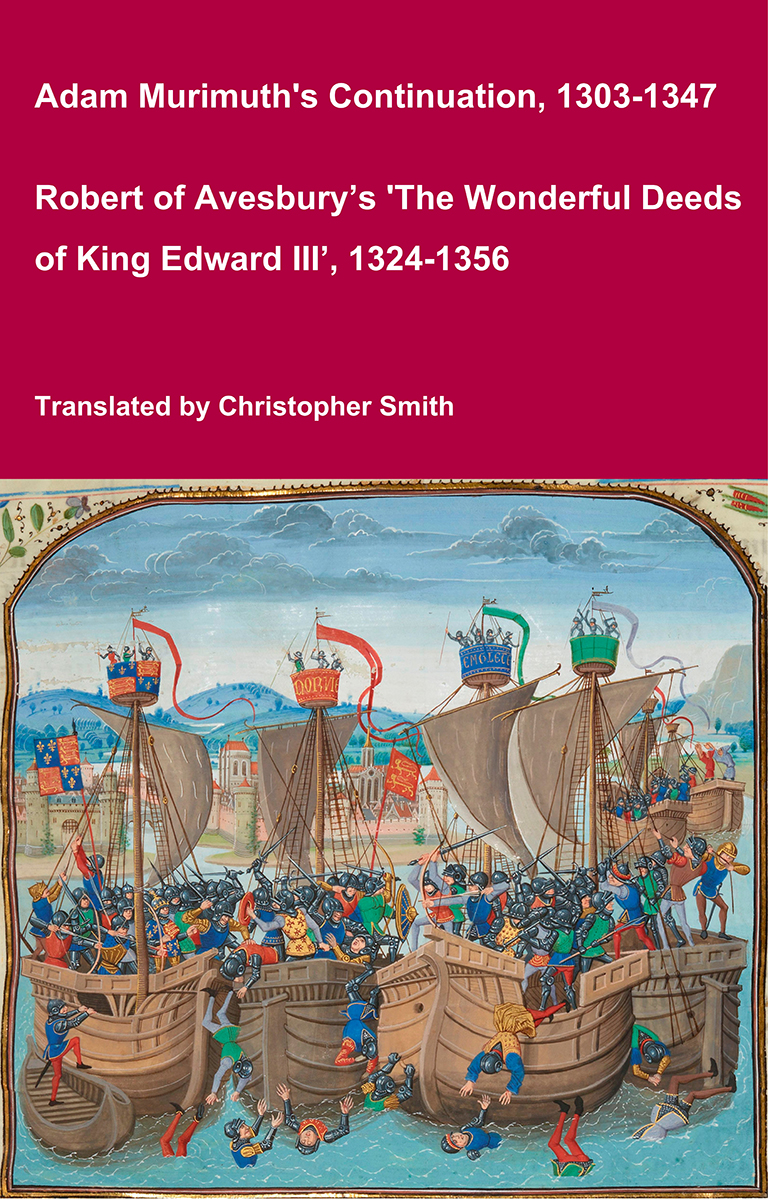
Adam Murimuth's Continuation and Robert of Avesbury’s 'The Wonderful Deeds of King Edward III'
This volume brings together two of the most important contemporary chronicles for the reign of Edward III and the opening phases of the Hundred Years’ War. Written in Latin by English clerical observers, these texts provide a vivid and authoritative window into the political, diplomatic, and military history of fourteenth-century England and its continental ambitions. Adam Murimuth Continuatio's Chronicarum continues an earlier chronicle into the mid-fourteenth century, offering concise but valuable notices on royal policy, foreign relations, and ecclesiastical affairs. Its annalistic structure makes it especially useful for establishing chronology and tracing the development of events year by year. Complementing it, Robert of Avesbury’s De gestis mirabilibus regis Edwardi tertii is a rich documentary chronicle preserving letters, treaties, and official records alongside narrative passages. It is an indispensable source for understanding Edward III’s claim to the French crown, the conduct of war, and the mechanisms of medieval diplomacy. Together, these works offer scholars, students, and enthusiasts a reliable and unembellished account of a transformative period in English and European history. Essential for anyone interested in medieval chronicles, the Hundred Years’ War, or the reign of Edward III.
Available at Amazon in eBook and Paperback format.
On 5th July 1554 Elisabeth of Austria Queen Consort France was born to Maximilian Habsburg Spain II Holy Roman Emperor (age 26) and Maria of Spain Holy Roman Empress (age 26). Coefficient of inbreeding 10.03%. She married 26th November 1570 her fourth cousin Charles IX King France, son of King Henry II of France and Catherine Medici Queen Consort France, and had issue.


Henry Machyn's Diary. 5th July 1557. [The v day of July the King (age 30) took shipping at Dover, Kent [Map]] towarde Callys [Map], on hys jornay [toward Flanders].


Henry Machyn's Diary. 5th July 1559. The v day of July was deposyd of ther byshopeprykes the archebyshope of Yorke doctur Heth (age 58), and the bysshope of Ely docthur Thurlbe (age 53), at my lord treysorer('s) (age 76) plasse at Frers Augustyne.
On 5th July 1631 Edmund Waller (age 25) and Anne Banks were married in defiance of orders of the Privy Council of England and the Court of Aldermen of the City of London whose ward she was. Her father had left her £8000 when he died a year earlier. The Aldermen made a complaint to the Star Chamber, seeking that for the offence of marrying Anne without the court's permission the whole of the Banks fortune should be forfeited to the City of London, but they were denied such an outcome by a pardon from King Charles (age 30), who took a more tolerant view of the matter. Waller was then summoned to appear before the Court of Aldermen in December 1631, when he agreed to make a jointure of £1,000 a year to his wife, also giving her the power to spend £2,000 of her inheritance, and the Court accepted this proposal but fined him 500 marks.


On 5th July 1643 the Battle of Lansdowne was an inconclusive battle between a Royalist army commanded by Ralph Hopton 1st Baron Hopton (age 47) and a Parliamentary Army commanded by William Waller (age 46) at Lansdown Hill, Bath. The two commanders being old friends.
Edward Leke was killed.
Bevil Grenville (age 48) was killed at the at the head of the Cornish infantry as it reached the top of Lansdown Hill. He received a blow to the head with a pole-axe and was taken to the rectory at nearby Cold Ashton, Gloucestershire where he died.
On 5th July 1648 Michael Stanhope (age 24) was killed at Willoughby-on-the-Wolds, Nottinghamshire [Map] during the Battle of Willoughby Field.
Samuel Pepys' Diary. 5th July 1660. This morning my brother Tom (age 26) brought me my jackanapes coat with silver buttons. It rained this morning, which makes us fear that the glory of this great day will be lost; the King and Parliament being to be entertained by the City to-day with great pomp1. Mr. Hater' was with me to-day, and I agreed with him to be my clerk2. Being at White Hall, I saw the King, the Dukes, and all their attendants go forth in the rain to the City, and it bedraggled many a fine suit of clothes. I was forced to walk all the morning in White Hall, not knowing how to get out because of the rain. Met with Mr. Cooling, my Lord Chamberlain's (age 58) secretary, who took me to dinner among the gentlemen waiters, and after dinner into the wine-cellar. He told me how he had a project for all us Secretaries to join together, and get money by bringing all business into our hands. Thence to the Admiralty, where Mr. Blackburne and I (it beginning to hold up) went and walked an hour or two in the Park, he giving of me light in many things in my way in this office that I go about. And in the evening I got my present of plate carried to Mr. Coventry's (age 32). At my Lord's at night comes Dr. Petty to me, to tell me that Barlow had come to town, and other things, which put me into a despair, and I went to bed very sad.
Note 1. His Majesty, the two Dukes, the House of Lords, and the House of Commons, and the Privy Council, dined at the Guildhall. Every Hall appeared with their colours and streamers to attend His Majesty; the Masters in gold chains. Twelve pageants in the streets between Temple Bar and Guildhall. Forty brace of bucks were that day spent in the City of London. Rugge's Diurnal. B.
Note 2. Thomas Hayter. He remained with Pepys for some time; and by his assistance was made Petty Purveyor of Petty Missions. He succeeded Pepys as Clerk of the Acts in 1673, and in 1679 he was Secretary of the Admiralty, and Comptroller of the Navy from 1680 to 1682.


Samuel Pepys' Diary. 5th July 1665. And so to White Hall to Sir G. Carteret (age 55), who is come this day from Chatham, Kent [Map], and mighty glad he is to see me, and begun to talk of our great business of the match, which goes on as fast as possible, but for convenience we took water and over to his coach to Lambeth, by which we went to Deptford, Kent [Map], all the way talking, first, how matters are quite concluded with all possible content between my Lord and him and signed and sealed, so that my Lady Sandwich (age 40) is to come thither to-morrow or next day, and the young lady is sent for, and all likely to be ended between them in a very little while, with mighty joy on both sides, and the King (age 35), Duke (age 31), Chancellor (age 56), and all mightily pleased.


Samuel Pepys' Diary. 5th July 1665. Thence to newes, wherein I find that Sir G. Carteret (age 55) do now take all my Lord Sandwich's (age 39) business to heart, and makes it the same with his owne. He tells me how at Chatham, Kent [Map] it was proposed to my Lord Sandwich to be joined with the Prince (age 45) in the command of the fleete, which he was most willing to; but when it come to the Prince, he was quite against it; saying, there could be no government, but that it would be better to have two fleetes, and neither under the command of the other, which he would not agree to. So the King (age 35) was not pleased; but, without any unkindnesse, did order the fleete to be ordered as above, as to the Admirals and commands: so the Prince is come up; and Sir G. Carteret, I remember, had this word thence, that, says he, by this means, though the King told him that it would be but for this expedition, yet I believe we shall keepe him out for altogether. He tells me how my Lord was much troubled at Sir W. Pen's (age 44) being ordered forth (as it seems he is, to go to Solebay [Map], and with the best fleete he can, to go forth), and no notice taken of my Lord Sandwich going after him, and having the command over him. But after some discourse Mr. Coventry (age 37) did satisfy, as he says, my Lord, so as they parted friends both in that point and upon the other wherein I know my Lord was troubled, and which Mr. Coventry did speak to him of first thinking that my Lord might justly take offence at, his not being mentioned in the relation of the fight in the news book, and did clear all to my Lord how little he was concerned in it, and therewith my Lord also satisfied, which I am mightily glad of, because I should take it a very great misfortune to me to have them two to differ above all the persons in the world.


Samuel Pepys' Diary. 5th July 1665. So to the office, where all the morning till noon, and so to the 'Change [Map], and thence home to dinner. In the afternoon I abroad to St. James's, and there with Mr. Coventry (age 37) a good while, and understand how matters are ordered in the fleete: that is, my Lord Sandwich (age 39) goes Admiral; under him Sir G. Ascue (age 49), and Sir T. Teddiman; Vice-Admiral, Sir W. Pen (age 44); and under him Sir W. Barkeley (age 26), and Sir Jos. Jordan: Reere-Admiral, Sir Thomas Allen (age 32); and under him Sir Christopher Mings (age 39)1, and Captain Harman (age 40). We talked in general of business of the Navy, among others how he had lately spoken to Sir G. Carteret (age 55), and professed great resolution of friendship with him and reconciliation, and resolves to make it good as well as he can, though it troubles him, he tells me, that something will come before him wherein he must give him offence, but I do find upon the whole that Mr. Coventry do not listen to these complaints of money with the readiness and resolvedness to remedy that he used to do, and I think if he begins to draw in it is high time for me to do so too.
Note 1. The son of a shoemaker, bred to the sea-service; he rose to the rank of an admiral, and was killed in the fight with the Dutch, June, 1666. B. See post June 10th, 1666.

Samuel Pepys' Diary. 5th July 1667. Up, and to the office, where Sir W. Batten (age 66), Sir W. Pen (age 46), Sir T. Harvy (age 42) and I met upon Mr. Gawden's accounts, and was at it all the morning. This morning Sir G. Carteret (age 57) did come to us, and walked in the garden. It was to talk with me about some thing of my Lord Sandwich's (age 41), but here he told us that the great seale is passed to my Lord Annesly [Anglesey] (age 52) for Treasurer of the Navy: so that now he do no more belong to us: and I confess, for his sake, I am glad of it, and do believe the other will have little content in it.

Samuel Pepys' Diary. 5th July 1668. Lord's Day. About four in the morning took four pills of Dr. Turberville's (age 56) prescribing, for my eyes, and they wrought pretty well most of the morning, and I did get my wife to spend the morning reading of Wilkins's (age 54) Reall Character.
Abbot John Whethamstede’s Chronicle of the Abbey of St Albans
Abbot John Whethamstede's Register aka Chronicle of his second term at the Abbey of St Albans, 1451-1461, is a remarkable text that describes his first-hand experience of the beginning of the Wars of the Roses including the First and Second Battles of St Albans, 1455 and 1461, respectively, their cause, and their consequences, not least on the Abbey itself. His text also includes Loveday, Blore Heath, Northampton, the Act of Accord, Wakefield, and Towton, and ends with the Coronation of King Edward IV. In addition to the events of the Wars of the Roses, Abbot John, or his scribes who wrote the Chronicle, include details in the life of the Abbey such as charters, letters, land exchanges, visits by legates, and disputes, which provide a rich insight into the day-to-day life of the Abbey, and the challenges faced by its Abbot.
Available at Amazon in eBook and Paperback format.
On 5th July 1714 Robert Shirley (age 21) died of smallpox. Monument in Holy Trinity Church Staunton Harold, Leicestershire [Map]. Elbow Reclining Figure. Powdered Wig. Heeled Shoes. Possibly by John Michael Rysbrack (age 20).
Robert Shirley: On 28th December 1692 he was born to Robert Shirley and Anne Ferrers.


On 5th July 1715 Algernon Seymour 7th Duke of Somerset (age 30) and Frances Thynne Duchess Somerset (age 16) were married. He the son of Charles Seymour 6th Duke of Somerset (age 52) and Elizabeth Percy Duchess Somerset (age 48). They were third cousin once removed.


Stonehenge by William Stukeley. The year following, in order to prosecute this inquiry, by my Lord's order, I begun upon a barrow north of Stonehenge, in that group south of the cursus. 'Tis one of the double barrows there: and the more easterly, and lower of the two: likewise somewhat lefs. It was reasonable to believe, this was the sepulture of a man and his wife: and that the lesser was the female: and so it prov'd, at lead: a daughter. We made a large cut on the top from east to weft. After the turf taken off, we came to the layer of chalk, as before, then fine garden mould. About three foot below the surface, a layer of flints, humouring the convexity of the barrow. These flints are gather'd from the surface of the downs in some places, especially where it has been plow'd. This being about a foot thick, rested on a layer of soft mould another foot: in which was inclos'd an urn full of bones. This urn was of unbak'd clay, of a dark reddish colour: crumbled into pieces. It had been rudely wrought with small mouldings round the verge, and other circular channels on the outside, with several indentures between, made with a pointed tool, as depicted in Plate XXXII. where I have drawn all the sorts of things found in this barrow. The bones had been burnt, and crowded all together in a little heap, not so much as a hat crown would contain. The collar bone, and one fide of the underjaw are grav'd in their true magnitude. It appears to have been a girl of about 14 years old, by their bulk and the great quantity of female ornaments mix'd with the bones, all which we gather'd. Beads of all sorts, and in great number, of glass of divers colours, mold yellow, one blak. Many single, many in long pieces notch'd between, so as to resemble a string of beads, and these were generally of a blue colour. There were many of amber, of all shapes and sizes, flat squares, long squares, round, oblong, little and great. Likewise many of earth, of different shapes, magnitude and colour, some little and white, many large and flattish like a button, others like a pully. But all had holes to run a firing thro', either thro' their diameter, or fides. Many of the button fort seem to have been cover'd with metal, there being a rim work'd in them, wherein to turn the edge of the covering. One of these was cover'd with a thin film of pure gold. These were the young lady's ornaments. And had all undergone the fire: so that what would easily consume fell to pieces as soon as handled. Much of the amber burnt half thro'. This person was a heroin, for we found the head of her javelin in brass. At bottom are two holes for the pins that fastened it to the staff. Besides, there was a sharp bodkin, round at one end, square at the other, where it went into a handle. I still preserve whatever is permanent of these trinkets. But we recompos'd the ashes of the illustrious desunct:, and cover'd them with earth. Leaving visible marks at top, of the barrow having been open'd, to dissuade any other from again disturbing them: and this was our practice in all the rest.
Table XXXII. Female Celtic ornaments found in a barrow north of Stonehenge which I opened 5th July 1723 among burnt bones, all drawn as big as the Life.
On 5th July 1732 George Brudenell 3rd Earl Cardigan (age 46) died. His son George (age 19) succeeded 4th Earl Cardigan, 4th Baron Brudenell of Stonton in Leicestershire. Mary Montagu Duchess of Montagu (age 21) by marriage Countess Cardigan.


On 5th July 1765 Charles Powlett 5th Duke Bolton (age 47) committed suicide at Grosvenor Square, Belgravia shooting himself in the head with a pistol. His brother Harry (age 44) succeeded 6th Duke Bolton, 11th Marquess Winchester, 11th Earl Wiltshire, 11th Baron St John. Katherine Lowther Duchess of Bolton (age 29) by marriage Duchess Bolton.
Letters of Horace Walpole. Arlington Street, Jul 12, 1765.
If you knew with what difficulty and pain I write to you you would allow my dear sir that I have some zeal for your satisfaction I have been extremely ill for these last sixteen days with the gout all over me in head stomach and both feet but as it never budged from the latter it soon attracted all the venom from the upper parts Oh it is a venomous devil I have lain upon a couch for two days but I question whether I shall be so alert to day as I have had a great deal of pain in the night and little sleep Still I must write to you as it is both for your satisfaction and my own and as this is the first moment that I have enjoyed the liberty of the post for these three years We e may say what we will I may launch out and even you need not be discreet when our letters pass through Mr Conway's office He has already himself told you in form that he is your principal and I repeat how glad of it I am for your sake as well as for all others I told him last night that I believed the Duke of York had obtained the promise of a red riband for you and begged that promise at least of the late odious ministers might be fulfilled and that none of our new aspirants might be thrust in before you He readily with kind expressions towards you promised me his interest.
kind expressions towards you promised me his interest Well at last the four tyrants are gone undone by their own insolence and unpitied Their arrogance to the King and proscriptions of every body but their own crew forced his Majesty to try any thing rather than submit to such task masters Mr Pitt who was ready and willing to have assumed the burden was disappointed by the treachery of Lord Temple who has reconciled and leagued himself with his brother George In this distress the Duke of Čumberland has persuaded the Opposition to accept and form a ministry Without Mr Pitt they were unwilling but pressed and encouraged by Mr Pitt and fearing the crown should be reduced to worse shifts rather than again bend to the yoke they have submitted and every thing promises fairer than could be expected The Duke of Bedford, Grenville and the two secretaries are already dismissed and their places filled by Lord Winchelsea Lord Rockingham and Mr Dowdswell as First Commissioners of the Admiralty and Treasury and Chancellor of the Exchequer the Duke of Grafton and Mr Conway The list of ins and outs will be much more considerable by degrees though not rapidly nor executed with the merciless hand of late years for the present system is composed of men as much more virtuous in that respect as in every other than their predecessors Nobody has resigned yet but those immediately connected with the fallen as Lord Gower Lord Thomond and Lord Weymouth and who would not have been suffered to stay if they had desired it.
The crown of Ireland is offered to Lord Heriford All this sets my family in an illustrious light enough yet it does not dazzle me My wishes and intentions are just the same as they were Moderation privacy and quiet sum up all my future views and having seen my friends landed my little cock boat shall waft me to Strawberry as soon as I am able to get into it The gout they tell me is to ensure me a length of years and health but as I fear I must now and then renew the patent at the original expense I am not much flattered by so dear an annuity You may judge of my sensations when I tell you I reckon the greatest miracle ever performed was that of bidding the cripple take up his bed and walk I could as soon do the former as the latter .
Since I began to write I hear that this morning have kissed hands Lord Ashburnham (age 40) for the Great Wardrobe in room of Lord Despencer, Lord Besborough and Lord Grantham Postmasters in the places of Lord Hyde and Lord Trevor Lord Villierst as Vicechamberlain instead of old Will Finch who believe has a pension and Lord Scarborough who succeeds Lord Thomond in the Cofferer's office You will say that all this is strongly tinctured with peerage it is true but the House of Commons will have its dole though not yet as folks do not like a re election depending for six months.
The Duke of Bolton (age 47) the other morning nobody knows why or wherefore except that there is a good deal of madness in the blood sat himself down upon the floor in his dressing room and shot him self through the head. What is more remarkable is that it is the same house and same chamber in which Lord Scarborough performed the same exploit I do not believe that shooting one's self through the head is catching or that any contagion lies in a wainscot that makes one pull a suicide trigger but very possibly the idea might revert and operate on the brain of a splenetic man I am glad he had not a blue garter but a red one as the more plenty the sooner one gets to Florence.
This is a long epistle in my condition Pray unseal and decypher your lips now the tower has no longer the least air of the Bastille. Halifax, Sandwich (age 46) and General Warrants are sent to the devil though I believe Sandwich will contrive to return like Belphegor even though he should be obliged to marry his own wife (age 48) again but he can never get rid of the smell of brimstone Adieu.


On 5th July 1786 Charles Alfred Stothard was born to Thomas Stothard (age 30) and Rebecca Watkins. He married February 1818 Anna Eliza Kempe.

On 2nd November 1791 Charles Yorke (age 29) died. On 5th July 1795 Mary York (age 24) died. Both buried at St Andrew's Church, Wimpole [Map].
Charles Yorke: Before 5th May 1762 Bishop James Yorke and Mary Maddox were married. Some sources describe the date as 29 Jun 1762 which is inconsistent with the date of birth of their first child Charles Yorke, 5th May 1762, as described on his gravestone at St Andrew's Church, Wimpole [Map]. She the daughter of Bishop Isaac Maddox. He the son of Philip Yorke 1st Earl of Hardwicke and Margaret Cocks Countess Hardwicke. On 5th May 1762 he was born to Bishop James Yorke and Mary Maddox.
Mary York: On 11th October 1767 she was born to Bishop James Yorke and Mary Maddox.
On 5th July 1793 Alexander Roslin (age 74) died.
On 5th July 1795 Henry William Paget 1st Marquess Anglesey (age 27) and Caroline Elizabeth Villiers Duchess Argyll (age 20) were married. She the daughter of George Bussy Villiers 4th Earl Jersey (age 60) and Frances Twysden (age 42). He the son of Henry Bayly-Paget 1st Earl Uxbridge (age 51) and Jane Champagné Countess Uxbridge (age 53).


Chronicle of Geoffrey le Baker of Swinbroke
Baker was a secular clerk from Swinbroke, now Swinbrook, an Oxfordshire village two miles east of Burford. His Chronicle describes the events of the period 1303-1356: Gaveston, Bannockburn, Boroughbridge, the murder of King Edward II, the Scottish Wars, Sluys, Crécy, the Black Death, Winchelsea and Poitiers. To quote Herbert Bruce 'it possesses a vigorous and characteristic style, and its value for particular events between 1303 and 1356 has been recognised by its editor and by subsequent writers'. The book provides remarkable detail about the events it describes. Baker's text has been augmented with hundreds of notes, including extracts from other contemporary chronicles, such as the Annales Londonienses, Annales Paulini, Murimuth, Lanercost, Avesbury, Guisborough and Froissart to enrich the reader's understanding. The translation takes as its source the 'Chronicon Galfridi le Baker de Swynebroke' published in 1889, edited by Edward Maunde Thompson.
Available at Amazon in eBook and Paperback format.

On 5th July 1831 John William Montagu 7th Earl Sandwich (age 19) played for the Cambridge University cricket team against Cambridge Town; he scored two runs.
On 5th July 1839 Flora Elizabeth Rawdon-Hastings (age 33) died. She had suffered a swelling in her abdomen. She refused an examination. Rumours were spread, by among others the future Queen Victoria (age 20), that she was pregnant. When Lady Flora did finally consent to an examination she was found to an advanced cancerous liver tumour, and had only months left to live. The future Queen Victoria visited Lady Flora on 27th June 1839 eight days before her death.


Vestiges of the Antiquities of Derbyshire. In a plantation on the summit of Minninglowe Hill [Map] are two tumuli of large size, one being near fifteen feet high from the level of the ground. In the centre and in four places in the area of the circle are large cists, or, as they now appear from the soil being removed from them, large cromlechs, exactly of the same construction as that well-known druidical structure "Kit's-Coty-House [Map]" near Maidstone, Kent. They are formed of the large limestones of the country and have all had covers of the same only two of which now remain in their places. The other tumulus is of smaller dimensions and contains but one cist which is in the centre; it is situated about thirty yards distance from the larger one. The soil in the interior of the cists of the large barrow was removed down to the surface of the rock on the 5th of July 1843 when it was found that all the interments had been before removed, with the exception of one which was a skeleton laid at full length on the outside of the cist, unaccompanied by any weapons or ornaments. In the cell near which this body lay were found fragments of five urns, some animal bones, and six third brass Roman coins, namely, one of Claudius Gothicus, two of Constantine the Great, two of Constantine Junior, and one of Valentinian. An attempt to penetrate the substance of the mound was then made, which from want of time proved ineffectual. A few human teeth and a third brass coin of Constantine were the only relics found in this part of the excavation; but a far more interesting discovery was made of the manner in which this huge tumulus was built, a wall being found to encircle it in a manner precisely similar to the walls built round some of the Etruscan tumuli discovered in the south of Italy. In one part of this wall, which was exposed by the excavation, a gallery formed of stones set up edgeways, with others across the top of them, was found to have its commencement. This was not explored, owing to the roofing-stones having fallen in some places. There is a striking analogy between this tumulus and the great barrow at New Grange [Map], in Ireland, described by Dr. Ledwich, of which a more complete investigation of Minning Lowe would probably furnish additional proof. The following day was selected to be the time for extending the researches of the smaller barrow, the cist of which, as well as those of the larger one, was found to have been previously rifled of its treasures, a few human teeth being the only traces of the interment at this time found. Continuing the cutting through the entire mound, a simple deposit of burnt human bones was found, near one side, which had not been before disturbed.
Thomas Bateman 1845. On the 5th of July, 1845, a large barrow [Map] [Newton Grange Barrow [Map]], about nine feet in height and forty yards in diameter, was examined; it is situated in a field called Gorsey Close, at Newton Grange, near Tissington, and is a conspicuous object on the left hand side of the road from Buxton to Ashbourne. The tumulus was found to consist of a mass of solid earthy without any admixture of stones and in this respect it closely resembled one opened at Bassett Wood [Map] on the 26th of June. The excavation was continued without success until the surface of the natural soil appeared nothing being discovered, save a few bits of oxydized iron of indefinite form, which were picked up about a yard below the surface of the tumulus. Notwithstanding this discouraging termination to the day's labour, the curious and entirely novel manner in which the barrow was constructed repaid the trouble of opening it. To the height of about four feet from the bottom the soil was interspersed with alternate layers of moss and grass, both of which in a great measure retained their original colour and texture; the number of these alternations was twelve, and upon the lowest one, which was upon the undisturbed surface of the ground, were many pieces of wood, hazlesticks still retaining their glossy bark, fungi, and "mirabile dictu" beetles, whose elytræ still shone with the metallic lustre usual to these insects. The proofs of ancient occupation were also found upon this level; these were several rude instruments of flint, one small piece of a coarse urn, and several pieces of charcoal; the imperishability of which was, in this case, rivalled by substances of the most fragile and evanescent nature.
Ten Years' Digging. July 5th [1848], began upon the first barrow on Musden Low [Map], near Calton, originally about twenty-seven yards diameter, but mutilated at one side. We made two excavations intersecting each other about the former centre of the mound, and reached the natural surface at the depth of about four feet from the summit, where lay a skeleton completely embedded in rats' bones. It is singular that this body, which had been buried in an entire state, had been partially blackened by the action of a fire kindled close by, for the purpose of burning another corpse, whose ashes were deposited near the same place; some of the rats' bones were charred in the same way, thus proving that a very long time had elapsed between the two interments, as the rats must have resorted for many generations to the place before any considerable quantity of their remains could have accumulated previous to their becoming blackened by the fire. Several pieces of fused lead had been gathered up with the deposit of burnt bones. Some pretty good instruments of calcined flint, and pieces of three urns, ranging apparently from the Celtic to the Romano-British period, were found in indeterminate positions.
Ten Years' Digging. On the 5th July, a barrow called Round Low [Map], near Harborough Rocks [Map], on Hopton Moor, was opened; but, owing to the labours of former excavators, we met with but little success, all the middle of the barrow having been removed. Yet sufficient traces of the original interment remained to determine its character. The deposit appears to have consisted of calcined bones, accompanied by a few inferior flints, enclosed within a coarse urn.
Ten Years' Digging. On the 5th of July we resumed the examination of the barrow at Nether Low [Map], and found at the west side about five yards from the centre, four interments, three of which were placed in angle of a shallow depression in the rock, of irregular form. The most important of these was the skeleton of a middle aged man, lying contracted in the western angle, having beneath the head, and in contact with the skull, a beautiful leaf-shaped dagger of white flint, 4½ inches long, with the narrower half curiously serrated. A few inches from this unique weapon, was a plain but neat spear head of white flint. In a joint of the rock at a right angle with this interment, was a slender skeleton, probably of a female in the prime of life, accompanied by a prism-shaped piece of white flint, a piece of hematite, a boar's tusk, and a large globular bead of jet; the last found close to the neck.
The third skeleton was that of a much younger subject, and lay on the rock a little nearer the centre; it was not provided with implements, but between it and the others was a single piece of a calcined human skull. They were all about 4 feet from the top of the barrow.
Another skeleton was discovered about two feet from the surface, in a cist covered by a large flat stone and constructed across the joint of rock occupied by the female skeleton; it was accompanied by stags' horns of large size, and an arrow point of grey flint; and appeared to be the body of a person 17 or 18 years old.
In another cutting, near the outside, we found the remains of an infant, and a very neat instrument of white flint of uncertain use.
Ten Years' Digging. On July the 5th [1849] we made an ineffectual attempt to open a barrow at Waterings, near Calton Moor House [Map], 25 yards diameter and four feet high, composed of very compact earth, which was rendered more difficult of removal by being traversed in all directions by the roots of about a dozen large sycamores growing on the mound. We found only some pieces of flint, traces of fire, and an iron ox-shoe, which, though comparatively modern, was found eighteen inches from the surface. We perceived, in one part of the rock, a depression at least two feet lower than the natural surface, which would probably have led to the interment had it been possible to follow it up, but the trees prevented this being done. On the same day, we made two small cuttings in the first of the Musdin barrows, previously opened by us on the 5 th of July, 1848. Near the edge we found a small cist, formed of four flat stones, reinforced by an outer range of others, all set on edge, and covered over by two larger slabs: around were rats' bones innumerable, and within was a deposit of calcined bones, accompanied by two flint instruments, also burnt, one of which is a very neatly chipped lance, made of rather unusual shape, three inches long, made from a large flake, smooth on one surface from being struck from a block, and laboriously chipped to a convex shape on the other. This is a type always found well finished, as in the specimen found in Ribden Low [Map], which is one of the most beautiful flints we have seen. The usual fragments of bone, &c., were found in the other cutting but no interment.
On 5th July 1853 Charles Mengin was born in Paris, France, and was educated by Gecker and Alexandre Cabanel. Mengin first exhibited at the Paris Salon in 1876.
Ten Years' Digging. On the 5th of July, we opened another cist on the south side of the wall, which will be seen from the plan to cross the mound at Ringham Low [Map]. This (No. 4 on the Plan) when emptied, exhibited a fine and perfect specimen of primeval architecture, measuring in: Length 9ft, Width at east end 5ft 6in, Ditto at west end 2ft 6in, Depth 4ft. Six stones only were used in its structure, no pavement having been laid down. We left it in the same perfect state as we found it, having discovered only a few human bones, and a roughly chipped block of hard stone, which were embedded without order in a layer of stiff clay, immediately above the natural rock on which, the chamber was based; and a little charcoal at a higher level near the west end.
All the enclosures have been made by large slabs of limestone from the immediate vicinity, set on edge in narrow channels cut in the natural soil to the required shape of the chamber, and then secured in their respective positions by small stones firmly wedged between their sides and the solid earth. The tumulus in which they are distributed is composed of a vast accumulation of stones of all sizes, and is of irregular shape, as will be seen from the plan; its size may be stated as about 50 yards by 30, and its average height 4 feet.


On 5th July 1878 Alexandra De Vere Beauclerk was born to William Amelius Aubrey Beauclerk 10th Duke St Albans (age 38) and Grace Bernal Duchess St Albans (age 30).
William of Worcester's Chronicle of England
William of Worcester, born around 1415, and died around 1482 was secretary to John Fastolf, the renowned soldier of the Hundred Years War, during which time he collected documents, letters, and wrote a record of events. Following their return to England in 1440 William was witness to major events. Twice in his chronicle he uses the first person: 1. when writing about the murder of Thomas, 7th Baron Scales, in 1460, he writes '… and I saw him lying naked in the cemetery near the porch of the church of St. Mary Overie in Southwark …' and 2. describing King Edward IV's entry into London in 1461 he writes '… proclaimed that all the people themselves were to recognize and acknowledge Edward as king. I was present and heard this, and immediately went down with them into the city'. William’s Chronicle is rich in detail. It is the source of much information about the Wars of the Roses, including the term 'Diabolical Marriage' to describe the marriage of Queen Elizabeth Woodville’s brother John’s marriage to Katherine, Dowager Duchess of Norfolk, he aged twenty, she sixty-five or more, and the story about a paper crown being placed in mockery on the severed head of Richard, 3rd Duke of York.
Available at Amazon in eBook and Paperback format.
On 5th July 1883 John Winston Spencer-Churchill 7th Duke of Marlborough (age 61) died. His son George (age 39) succeeded 8th Duke Marlborough, 8th Marquess of Blandford, 8th Earl of Marlborough, 8th Baron Churchill of Sandridge in Hertfordshire, 10th Earl of Sunderland, 12th Baron Spencer Wormleighton. Albertha Frances Anne Hamilton Duchess of Marlborough (age 36) by marriage Duchess Marlborough.
Letters of James McNeill Whistler 1863. Upton & Britton, Solicitors. 51, Lincoln's Inn Fields, London, W. C.
5th July 1889.
Sir,
As you have taken no notice of our last letter to you of the 31st May last we beg to inform you that unless we hear from you by Wednesday next that you are prepared to come to some amicable arrangement with our Client Sir Henry Meux (age 33) regarding the unfinished Portrait of Lady Meux (age 37) [Probably Portrait of Lady Meux in Furs] for which you have been paid our instructions are to commence legal proceedings against you without further Notice.
Yours faithfully.
Upton & Britton
Mr. J. Mc. Whistler (age 54)
13. Tite Street, Chelsea.


On 5th July 1912 Eustace Broke Loraine (age 32) died in a plane crash at Airmans's Corner [Map]. The first Royal Flying Corps officer to be killed in an aircraft crash while flying on duty. A cross was erected at the site but has since been relocated to the Stonehenge Vistors Centre.
Newcastle Evening Chronicle, 6 July 1912: "Aviation Tragedy. How the Accident Occurred. The inquest was held at Bulford Camp Hospital, Salisbury Plain, yesterday evening on Capt Eustace Brooke Loraine, 33, and Staff-Sergt. Wilson, 29, victims of the Army aeroplane accident. Capt. Loraine was in the Grenadier Guards, and Wilson in the Royal Engineers, and both were attached to the Flying Corps. A verdict of accidental death was returned."
On 2nd July 1914 John Benjamin Stone (age 76) died at his home, The Grange, Erdington. His wife Jane Parker (age 65) died three days later on 5th July 1914. They were buried together on 7th July 1914 at Holy Trinity Church, Sutton Coldfield [Map].
"The Response" aka Northumberland Fusiliers War Memorial, Newcastle upon Tyne [Map] Sculpted by William Goscombe John (age 63). The memorial was inauguratred on the 5th of July, 1923, by the Prince of Wales (age 29).
A portrayal of the spirit of 1914 with which Great Britain entered WWI. The memorial was given by ship-owner and MP Sir George Renwick to commemorate the raising of the B. Coy. 9th Battalion and the 16th, 18th and 19th Service Battalions Northumberland Fusiliers.


On 5th July 1940 Arthur Stockdale Cope (age 82) died.
On 5th July 1943 Anna Alma-Tadema (age 76) died unmarried.


On 5th July 1950 David Fitzroy 11th Duke Beaufort (age 22) and Caroline Jane Thynne 11th Duchess Beaufort (age 22) were married. She the daughter of Henry Frederick Thynne 6th Marquess of Bath (age 45) and Daphne Vivian Marchioness Bath (age 45).
On 5th July 1958 Daniel Garber (age 78) died at Lumberville, Pennsylvania.
On 5th July 1321 Joan of the Tower Queen Consort Scotland was born to King Edward II of England (age 37) and Isabella of France Queen Consort England (age 26) at the Tower of London [Map]. Coefficient of inbreeding 2.17%. She married 17th July 1328 King David II of Scotland, son of King Robert the Bruce I of Scotland and Elizabeth Burgh Queen Consort Scotland.
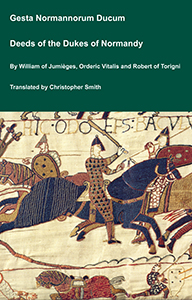
The Deeds of the Dukes of Normandy
The Gesta Normannorum Ducum [The Deeds of the Dukes of Normandy] is a landmark medieval chronicle tracing the rise and fall of the Norman dynasty from its early roots through the pivotal events surrounding the Norman Conquest of England. Originally penned in Latin by the monk William of Jumièges shortly before 1060 and later expanded at the behest of William the Conqueror, the work chronicles the deeds, politics, battles, and leadership of the Norman dukes, especially William’s own claim to the English throne. The narrative combines earlier historical sources with firsthand information and oral testimony to present an authoritative account of Normandy’s transformation from a Viking settlement into one of medieval Europe’s most powerful realms. William’s history emphasizes the legitimacy, military prowess, and governance of the Norman line, framing their expansion, including the conquest of England, as both divinely sanctioned and noble in purpose. Later chroniclers such as Orderic Vitalis and Robert of Torigni continued the history, extending the coverage into the 12th century, providing broader context on ducal rule and its impact. Today this classic work remains a foundational source for understanding Norman identity, medieval statesmanship, and the historical forces that reshaped England and Western Europe between 800AD and 1100AD.
Available at Amazon in eBook and Paperback format.
On 5th July 1487 Francis Lorraine was born to René Lorraine II Duke Lorraine Duke of Bar (age 36) and Philippa Egmont Duchess of Bar Duchess Lorraine (age 20). He died aged less than one years old.
On 5th July 1522 Margaret Habsburg Spain was born illegitimately to Charles V Holy Roman Emperor (age 22) and Johanna Maria van der Gheynst.
On 5th July 1554 Elisabeth of Austria Queen Consort France was born to Maximilian Habsburg Spain II Holy Roman Emperor (age 26) and Maria of Spain Holy Roman Empress (age 26). Coefficient of inbreeding 10.03%. She married 26th November 1570 her fourth cousin Charles IX King France, son of King Henry II of France and Catherine Medici Queen Consort France, and had issue.
On 5th July 1602 Judith Honywood Lady Pelham was born to Robert Honywood (age 27) and Alice Barnham (age 21). She married 7th December 1637 Thomas Pelham 2nd Baronet, son of Thomas Pelham 1st Baronet and Mary Walsingham Baroness Pelham Laughton.
On 5th July 1640 Willoughby Aston 2nd Baronet was born to Thomas Aston 1st Baronet (age 39) and Anne Willoughby Lady Aston (age 26). He married before 17th January 1665 his half fourth cousin once removed Mary Offley and had issue.


On 5th July 1682 Thomas Palmer 4th Baronet was born to Herbert Palmer (age 53).

On 5th July 1718 Francis Seymour-Conway 1st Marquess Hertford was born to Francis Seymour-Conway 1st Baron Conway (age 39) and Charlotte Shorter (age 35) at Chelsea. He married 29th May 1741 his fifth cousin once removed Isabella Fitzroy Countess Hertford, daughter of Charles Fitzroy 2nd Duke Grafton and Henrietta Somerset Duchess Grafton, and had issue.
On 5th July 1730 Edward Digby 6th Baron Digby was born to Edward Digby (age 37) and Charlotte Fox (age 24).
On 5th July 1743 Jean Gray Countess Moray was born to John Gray 11th Lord Gray (age 27). She married 28th June 1763 Francis Stuart 9th Earl of Moray, son of James Stuart 8th Earl of Moray and Grace Lockhart Countess Aboyne, and had issue.
On 5th July 1753 Charles Hamilton 8th Earl Haddington was born to Thomas Hamilton 7th Earl Haddington (age 32) and Mary Lloyd Countess Rothes. He married 30th April 1779 his second cousin once removed Sophia Hope, daughter of John Hope 2nd Earl Hopetoun and Anne Ogilvy Countess Hopetoun, and had issue.
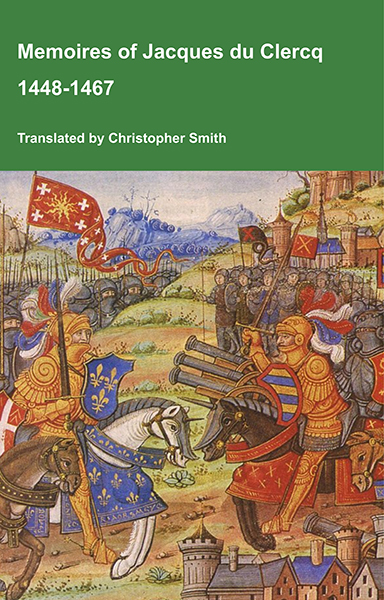
This is a translation of the 'Memoires of Jacques du Clercq', published in 1823 in two volumes, edited by Frederic, Baron de Reissenberg. In his introduction Reissenberg writes: 'Jacques du Clercq tells us that he was born in 1424, and that he was a licentiate in law and a counsellor to Philip the Good, Duke of Burgundy, in the castellany of Douai, Lille, and Orchies. It appears that he established his residence at Arras. In 1446, he married the daughter of Baldwin de la Lacherie, a gentleman who lived in Lille. We read in the fifth book of his Memoirs that his father, also named Jacques du Clercq, had married a lady of the Le Camelin family, from Compiègne. His ancestors, always attached to the counts of Flanders, had constantly served them, whether in their councils or in their armies.' The Memoires cover a period of nineteen years beginning in in 1448, ending in in 1467. It appears that the author had intended to extend the Memoirs beyond that date; no doubt illness or death prevented him from carrying out this plan. As Reissenberg writes the 'merit of this work lies in the simplicity of its narrative, in its tone of good faith, and in a certain air of frankness which naturally wins the reader’s confidence.' Du Clercq ranges from events of national and international importance, including events of the Wars of the Roses in England, to simple, everyday local events such as marriages, robberies, murders, trials and deaths, including that of his own father in Book 5; one of his last entries.
Available at Amazon in eBook and Paperback format.
On 5th July 1764 Thomas Hislop 1st Baronet was born. He married 1822 Emma Elliott of Madras Lady Hislop and had issue.
On 5th July 1765 Robert Wilmot 3rd Baronet was born to Robert Mead Wilmot 2nd Baronet (age 33) and Mary Woolett (age 30).

On 5th July 1774 Charles Herbert was born to Henry Herbert 1st Earl Carnarvon (age 32) and Elizabeth Alicia Maria Wyndham Countess Carnarvon (age 21). He married 9th July 1806 Bridget Augusta Byng, daughter of John Byng 5th Viscount Torrington and Bridget Forrest Viscountess Byng, and had issue.
On 5th July 1783 John Paulett 5th Earl Paulett was born to John Paulett 4th Earl Paulett (age 27) and Sophia Pocock Countess Paulett. He married after 5th July 1783 Charlotte Fanny Portman Countess Paulett and had issue.
On 5th July 1786 Charles Alfred Stothard was born to Thomas Stothard (age 30) and Rebecca Watkins. He married February 1818 Anna Eliza Kempe.
On 5th July 1791 George Bishopp 9th Baronet was born to Edward Bishopp and Jane Atkinson. He married 17th May 1820 Catherine Elizabeth Sproule and had issue.
On 5th July 1793 Alexander Hood 2nd Baronet was born to Alexander Hood (age 35). He married before 20th April 1819 Amelia Anne Bateman Lady Hood, daughter of Hugh Bateman 1st Baronet, and had issue.
On 5th July 1832 Sophia Mary MacNab of Dundurn Castle was born to Colonel Allan Napier MacNab 1st Baronet (age 34) and Mary Elizabeth Stuart (age 20). She married 15th November 1855 William Keppel 7th Earl Albermarle, son of George Thomas Keppel 6th Earl Albermarle, and had issue.
On 5th July 1832 Elizabeth Egerton Baroness Ros of Helmsley was born to Thomas Grosvenor 2nd Earl Wilton (age 32) and Mary Smith-Stanley Countess Wilton (age 31). She married 12th October 1853 Dudley Fitzgerald De Ros 23rd Baron Ros Helmsley, son of William Fitzgerald De Ros 22nd Baron Ros Helmsley and Georgiana Lennox Baroness Ros of Helmsley, and had issue.
On 5th July 1843 Bishop Mandell Crichton was born at Carlisle, Cumberland [Map].
On 5th July 1851 Francis Horace Pierrepont Cecil was born to William Alleyne Cecil 3rd Marquess Exeter (age 26) and and Georgina Sophia Pakenham Marchioness Exeter (age 23). He married 14th October 1874 Edith Brooks and had issue.
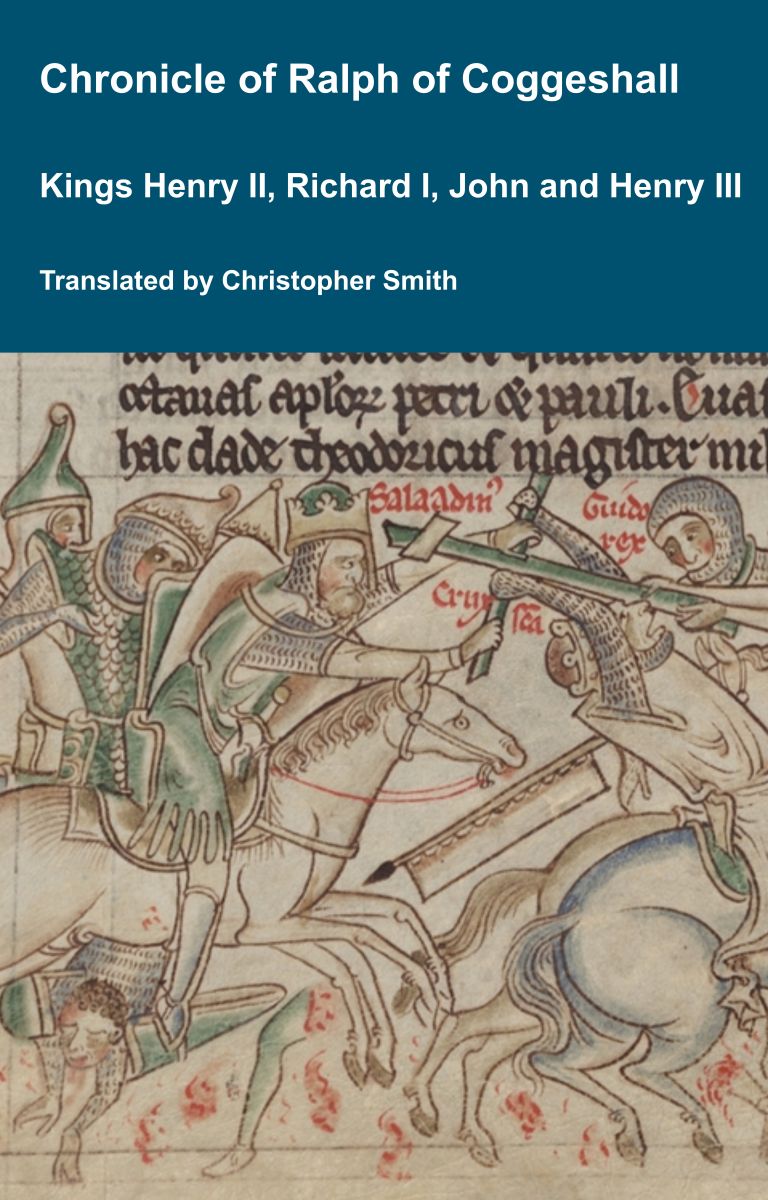
Chronicle of Abbot Ralph of Coggeshall
The Chronicle of Abbot Ralph of Coggeshall (Chronicon Anglicanum) is an indispensable medieval history that brings to life centuries of English and European affairs through the eyes of a learned Cistercian monk. Ralph of Coggeshall, abbot of the Abbey of Coggeshall in Essex in the early 13th century, continued and expanded his community’s chronicle, documenting events from the Norman Conquest of 1066 into the tumultuous reign of King Henry III. Blending eyewitness testimony, careful compilation, and the monastic commitment to record-keeping, this chronicle offers a rare narrative of political intrigue, royal power struggles, and social upheaval in England and beyond. Ralph’s work captures the reigns of pivotal figures such as Richard I and King John, providing invaluable insights into their characters, decisions, and the forces that shaped medieval rule. More than a simple annal, Chronicon Anglicanum conveys the texture of medieval life and governance, making it a rich source for scholars and readers fascinated by English history, monastic authorship, and the shaping of the medieval world.
Available at Amazon in eBook and Paperback format.
On 5th July 1853 Charles Mengin was born in Paris, France, and was educated by Gecker and Alexandre Cabanel. Mengin first exhibited at the Paris Salon in 1876.
On 5th July 1856 Hedworth Lambton aka Meux was born to George Frederick D'Arcy Lambton 2nd Earl Durham (age 27) and Beatrix Frances Hamilton Countess Durham (age 21). He married 18th April 1910 his fifth cousin once removed Mildred Cecilia Sturt Lady Montagu, daughter of Henry Gerard Sturt 1st Baron Alington and Augusta Bingham Baroness Alington.
On 5th July 1863 Francis Richard Bingham was born to Charles George Bingham 4th Earl Lucan (age 33) and Cecilia Catherine Gordon-Lennox Countess Lucan (age 25).
On 5th July 1864 Lieutenant-Colonel Frank Seely of Ramsdale Park in Nottinghamshire was born to Charles Seely 1st Baronet (age 30).
On 5th July 1869 Francis Burdett 8th Baronet was born to Francis Burdett 7th Baronet (age 56).
On 5th July 1871 Edward Paulet Stracey 7th Baronet was born to Edward Henry Gervase Stracey 6th Baronet (age 32) and Mary Gertrude des Voeux Lady Stracey. He married 17th December 1902 Mary Elizabeth Brinsley Sheridan Lady Stracey and had issue.
On 5th July 1878 Alexandra De Vere Beauclerk was born to William Amelius Aubrey Beauclerk 10th Duke St Albans (age 38) and Grace Bernal Duchess St Albans (age 30).
On 5th July 1882 Maud Lygon was born to Frederick Lygon 6th Earl Beauchamp (age 51) and Emily Annora Charlotte Pierrepont Countess Beauchamp (age 29). She married 17th October 1909 Samuel Hoare 1st Viscount Templewood, son of Samuel Hoare 1st Baronet and Katherine Louisa Hart Davis.
On 5th July 1890 Isabel "Nellie" Larnach Marchioness Abergavenny was born to James Walker Larnach and Isabel Lettice Theodosia Boyle (age 31). She married 30th March 1909 Guy Larnach Neville 4th Marquess Abergavenny and had issue.
On 5th July 1893 Emma Margery Thynne Marchioness Northampton was born to Thomas Henry Thynne 5th Marquess of Bath (age 30) and Violet Caroline Mordaunt Marchioness Bath (age 24). She married (1) 15th October 1921 her second cousin once removed William Bingham Compton 6th Marquess Northampton, son of William George Spencer Scott Compton 5th Marquess Northampton and Mary Florence Baring Marchioness Northampton.
On 5th July 1910 Arthur Gore 8th Earl of Arran was born to Arthur Gore 6th Earl of Arran (age 41) and Maud Jacqueline Marie Beauclerk van Kattendyke Countess of Arran. He married in or before 1938 Fiona Colquhoun Countess of Arran, daughter of Iain Colquhoun 7th Baronet and Geraldine Bryde Dinah Tennant Lady Colquhoun, and had issue.
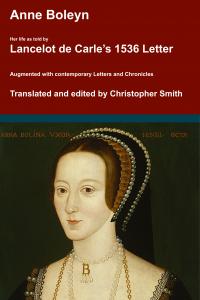
Anne Boleyn. Her Life as told by Lancelot de Carle's 1536 Letter.
In 1536, two weeks after the execution of Anne Boleyn, her brother George and four others, Lancelot du Carle, wrote an extraordinary letter that described Anne's life, and her trial and execution, to which he was a witness. This book presents a new translation of that letter, with additional material from other contemporary sources such as Letters, Hall's and Wriothesley's Chronicles, the pamphlets of Wynkyn the Worde, the Memorial of George Constantyne, the Portuguese Letter and the Baga de Secrets, all of which are provided in Appendices.
Available at Amazon in eBook and Paperback format.
On 5th July 1913 Ralph Stonor 6th Baron Camoys was born to Francis Stonor 5th Baron Camoys (age 29).
On 5th July 1920 Diana Mary Pelham 15th Baroness Conyers 9th Fauconberg was born to Sackville Pelham 5th Earl of Yarborough (age 31).
On 5th July 1941 Michael Harris 9th Baron Harris was born to Antony Harris (age 26).
On 5th July 1946 Richard Alexander Grosvenor was born to Robert Grosvenor 5th Baron Ebury (age 32) and Denise Margaret Yarde-Buller (age 30). He married 24th October 1970 Gabriela Speckert and had issue.
On 5th July 1989 Robin Chevallier Hoskyns 18th Baronet was born to Edwyn Wren Hoskyns 17th Baronet (age 33).
On 5th July 1999 John Brydges Rodney 11th Baron Rodney was born to George Brydges Rodney 10th Baron Rodney (age 46).
On 5th July 1324 Charles IV King France I King Navarre (age 30) and Joan Évreux Queen Consort France (age 14) were married. She by marriage Queen Consort of France. She the daughter of Louis I Count Évreux and Margaret Artois Countess Évreux. He the son of King Philip IV of France and Joan Blois I Queen Navarre. They were half first cousins. He a great x 4 grandson of King Henry "Curtmantle" II of England. She a great x 2 granddaughter of King Henry III of England.
On 5th July 1631 Edmund Waller (age 25) and Anne Banks were married in defiance of orders of the Privy Council of England and the Court of Aldermen of the City of London whose ward she was. Her father had left her £8000 when he died a year earlier. The Aldermen made a complaint to the Star Chamber, seeking that for the offence of marrying Anne without the court's permission the whole of the Banks fortune should be forfeited to the City of London, but they were denied such an outcome by a pardon from King Charles (age 30), who took a more tolerant view of the matter. Waller was then summoned to appear before the Court of Aldermen in December 1631, when he agreed to make a jointure of £1,000 a year to his wife, also giving her the power to spend £2,000 of her inheritance, and the Court accepted this proposal but fined him 500 marks.
On 5th July 1635 Richard Boyle 2nd Earl Cork 1st Earl Burlington (age 22) and Elizabeth Clifford Countess Burlington (age 21) were married at Skipton Castle [Map]. She by marriage Countess Burlington. She the daughter of Henry Clifford 5th Earl of Cumberland (age 44) and Frances Cecil Countess Cumberland (age 42). He the son of Richard Boyle 1st Earl Cork (age 68) and Catherine Fenton Countess Cork.


On 5th July 1681 John Carew 3rd Baronet (age 45) and Mary Morice Lady Carew (age 10) were married. She by marriage Lady Carew of Antony in Cornwall. The difference in their ages was 35 years.


Chronicle of Geoffrey le Baker of Swinbroke
Baker was a secular clerk from Swinbroke, now Swinbrook, an Oxfordshire village two miles east of Burford. His Chronicle describes the events of the period 1303-1356: Gaveston, Bannockburn, Boroughbridge, the murder of King Edward II, the Scottish Wars, Sluys, Crécy, the Black Death, Winchelsea and Poitiers. To quote Herbert Bruce 'it possesses a vigorous and characteristic style, and its value for particular events between 1303 and 1356 has been recognised by its editor and by subsequent writers'. The book provides remarkable detail about the events it describes. Baker's text has been augmented with hundreds of notes, including extracts from other contemporary chronicles, such as the Annales Londonienses, Annales Paulini, Murimuth, Lanercost, Avesbury, Guisborough and Froissart to enrich the reader's understanding. The translation takes as its source the 'Chronicon Galfridi le Baker de Swynebroke' published in 1889, edited by Edward Maunde Thompson.
Available at Amazon in eBook and Paperback format.
On 5th July 1688 William Glynne 2nd Baronet (age 25) and Mary Evelyn Lady Bicester aka Bisseter (age 12) were married.
On 5th July 1715 Algernon Seymour 7th Duke of Somerset (age 30) and Frances Thynne Duchess Somerset (age 16) were married. He the son of Charles Seymour 6th Duke of Somerset (age 52) and Elizabeth Percy Duchess Somerset (age 48). They were third cousin once removed.

On 5th July 1739 William Ponsonby 2nd Earl Bessborough (age 35) and Caroline Cavendish Countess Bessborough (age 20) were married. His younger brother John Ponsonby (age 26) would marry her younger sister Elizabeth Cavendish (age 13) four years later. She the daughter of William Cavendish 3rd Duke Devonshire (age 40) and Catherine Hoskins Duchess Devonshire (age 40). He the son of Brabazon Ponsonby 1st Earl Bessborough (age 60) and Sarah Margetson.
On 5th July 1771 Henry Herbert 1st Earl Carnarvon (age 29) and Elizabeth Alicia Maria Wyndham Countess Carnarvon (age 18) were married. She the daughter of Charles Wyndham 2nd Earl Egremont and Alicia Carpenter Countess Egremont (age 45).

On 5th July 1794 Henry Conyngham 1st Marquess Conyngham (age 27) and Elizabeth Denison Marchioness Conyngham (age 25) were married.
On 5th July 1795 Henry William Paget 1st Marquess Anglesey (age 27) and Caroline Elizabeth Villiers Duchess Argyll (age 20) were married. She the daughter of George Bussy Villiers 4th Earl Jersey (age 60) and Frances Twysden (age 42). He the son of Henry Bayly-Paget 1st Earl Uxbridge (age 51) and Jane Champagné Countess Uxbridge (age 53).
On 5th July 1823 Henry Lascelles 3rd Earl Harewood (age 26) and Louisa Thynne Countess Harewood (age 22) were married. She the daughter of Thomas Thynne 2nd Marquess of Bath (age 58) and Isabella Elizabeth Byng Marchioness Bath (age 49). He the son of Henry Lascelles 2nd Earl Harewood (age 55) and Henrietta Sebright Countess Harewood.
On 5th July 1859 Charles Compton 3rd Marquess Northampton (age 43) and Theodosia Harriett Elizabeth Vyner (age 25) were married. She by marriage Marchioness Northampton. He the son of Spencer Compton 2nd Marquess Northampton and Margaret Douglas-Maclean-Clephane Marchioness Northampton.
On 5th July 1869 Charles Augustus Stanhope 8th Earl Harrington (age 25) and Eva Elizabeth Carrington Countess Harrington (age 22) were married. He the son of Charles Stanhope 7th Earl of Harrington (age 59).
On 5th July 1898 John Michael Fleetwood Fuller 1st Baronet (age 33) and Norah Jacintha Phipps Lady Fuller (age 19) were married.
Chronicle of Walter of Guisborough
A canon regular of the Augustinian Guisborough Priory, Yorkshire, formerly known as The Chronicle of Walter of Hemingburgh, describes the period from 1066 to 1346. Before 1274 the Chronicle is based on other works. Thereafter, the Chronicle is original, and a remarkable source for the events of the time. This book provides a translation of the Chronicle from that date. The Latin source for our translation is the 1849 work edited by Hans Claude Hamilton. Hamilton, in his preface, says: 'In the present work we behold perhaps one of the finest samples of our early chronicles, both as regards the value of the events recorded, and the correctness with which they are detailed; Nor will the pleasing style of composition be lightly passed over by those capable of seeing reflected from it the tokens of a vigorous and cultivated mind, and a favourable specimen of the learning and taste of the age in which it was framed.'
Available at Amazon in eBook and Paperback format.
On 5th July 1899 Frederick Des Voeux 7th Baronet (age 42) and Hylda Henrietta Brooke Lady Des Voeux (age 20) were married. The difference in their ages was 21 years.
On 5th July 1905 Robert Strutt 4th Baron Rayleigh (age 29) and Mary Hilda Clements (age 30) were married. She the daughter of Robert Bermingham Clements 4th Earl of Leitrim and Winifred Coke Countess of Leitrim (age 54). They were fifth cousin once removed. He a great x 5 grandson of King Charles II of England Scotland and Ireland.
On 5th July 1937 Edward Agar 5th Earl Normanton (age 27) and Barbara Mary Frankland (age 31) were married. He the son of Sidney James Agar 4th Earl Normanton and Amy Frederica Alice Byng Countess Normanton.
On 5th July 1950 David Fitzroy 11th Duke Beaufort (age 22) and Caroline Jane Thynne 11th Duchess Beaufort (age 22) were married. She the daughter of Henry Frederick Thynne 6th Marquess of Bath (age 45) and Daphne Vivian Marchioness Bath (age 45).
On 5th July 1375 Charles Valois Archbishop of Lyons (age 38) died. His brother Peter (age 35) succeeded II Count Alençon. Marie Chamaillart Countess Alençon by marriage Countess Alençon.
On 5th July 1613 John Murray 1st Earl Tullibardine died. His son William (age 39) succeeded 2nd Earl Tullibardine. Dorothea Stewart Countess Tullibardine by marriage Countess Tullibardine.
On 5th July 1635 John Darcy 3rd Baron Darcy Aston (age 63) died. Baron Darcy of Aston extinct.
On 5th July 1643 the Battle of Lansdowne was an inconclusive battle between a Royalist army commanded by Ralph Hopton 1st Baron Hopton (age 47) and a Parliamentary Army commanded by William Waller (age 46) at Lansdown Hill, Bath. The two commanders being old friends.
Edward Leke was killed.
Bevil Grenville (age 48) was killed at the at the head of the Cornish infantry as it reached the top of Lansdown Hill. He received a blow to the head with a pole-axe and was taken to the rectory at nearby Cold Ashton, Gloucestershire where he died.
On 5th July 1695 Henry North 2nd Baronet (age 60) died unmarried. Baronet North of Mildenhall in Suffolk extinct. His nephew Thomas Hanmer 4th Baronet (age 17), son of his sister Peregrina North, inherited his estates.
On 5th July 1714 Robert Shirley (age 21) died of smallpox. Monument in Holy Trinity Church Staunton Harold, Leicestershire [Map]. Elbow Reclining Figure. Powdered Wig. Heeled Shoes. Possibly by John Michael Rysbrack (age 20).
Robert Shirley: On 28th December 1692 he was born to Robert Shirley and Anne Ferrers.
On 5th July 1714 Henry Bingham 3rd Baronet (age 60) died. His half brother George succeeded 4th Baronet Bingham of Castlebar in County Mayo.
Chronicle of Walter of Guisborough
A canon regular of the Augustinian Guisborough Priory, Yorkshire, formerly known as The Chronicle of Walter of Hemingburgh, describes the period from 1066 to 1346. Before 1274 the Chronicle is based on other works. Thereafter, the Chronicle is original, and a remarkable source for the events of the time. This book provides a translation of the Chronicle from that date. The Latin source for our translation is the 1849 work edited by Hans Claude Hamilton. Hamilton, in his preface, says: 'In the present work we behold perhaps one of the finest samples of our early chronicles, both as regards the value of the events recorded, and the correctness with which they are detailed; Nor will the pleasing style of composition be lightly passed over by those capable of seeing reflected from it the tokens of a vigorous and cultivated mind, and a favourable specimen of the learning and taste of the age in which it was framed.'
Available at Amazon in eBook and Paperback format.
On 5th July 1732 George Brudenell 3rd Earl Cardigan (age 46) died. His son George (age 19) succeeded 4th Earl Cardigan, 4th Baron Brudenell of Stonton in Leicestershire. Mary Montagu Duchess of Montagu (age 21) by marriage Countess Cardigan.
On 5th July 1734 Anne Preston Baroness Clifford died.
On 5th July 1765 Charles Powlett 5th Duke Bolton (age 47) committed suicide at Grosvenor Square, Belgravia shooting himself in the head with a pistol. His brother Harry (age 44) succeeded 6th Duke Bolton, 11th Marquess Winchester, 11th Earl Wiltshire, 11th Baron St John. Katherine Lowther Duchess of Bolton (age 29) by marriage Duchess Bolton.
On 5th July 1767 James Stuart 8th Earl of Moray (age 59) died. His son Francis (age 30) succeeded 9th Earl Moray. Jean Gray Countess Moray (age 24) by marriage Countess Moray.

On 5th July 1785 Charles Colyear 2nd Earl Portmore (age 84) died. His son William (age 40) succeeded 3rd Earl Portmore. Mary Leslie Countess Portmore (age 31) by marriage Countess Portmore.

On 5th July 1786 Robert Henley 2nd Earl Northington (age 39) died unmarried. He was buried at St John the Evangelist Church, Winchester. Earl Northington extinct.
On 5th July 1786 Richard Nelson aka Rycroft Baronet 1st Baronet (age 50) died. His son Nelson (age 25) succeeded 2nd Baronet Rycroft of Calton in Yorkshire.
On 5th July 1793 Alexander Roslin (age 74) died.
On 5th July 1795 Philip Musgrave 6th Baronet (age 84) died. His son John (age 38) succeeded 7th Baronet Musgrave of Hartley Castle in Westmoreland.
On 5th July 1839 Flora Elizabeth Rawdon-Hastings (age 33) died. She had suffered a swelling in her abdomen. She refused an examination. Rumours were spread, by among others the future Queen Victoria (age 20), that she was pregnant. When Lady Flora did finally consent to an examination she was found to an advanced cancerous liver tumour, and had only months left to live. The future Queen Victoria visited Lady Flora on 27th June 1839 eight days before her death.
On 5th July 1840 Charles George Perceval 1st and 2nd Baron Arden (age 83) died at St James's Palace [Map]. His son George (age 46) succeeded 3rd Baron Arden of Lohort Castle in County Cork, 2nd Baron Arden of Arden in Warwickshire.
On 5th July 1866 Henry Thomas Petty-Fitzmaurice 4th Marquess Lansdowne (age 50) died. His son Henry (age 21) succeeded 5th Marquess Lansdowne, 6th Earl Shelburne in County Wexford, 6th Earl Kerry.


Henrici Quinti, Angliæ Regis, Gesta, is a first-hand account of the Agincourt Campaign, and subsequent events to his death in 1422. The author of the first part was a Chaplain in King Henry's retinue who was present from King Henry's departure at Southampton in 1415, at the siege of Harfleur, the battle of Agincourt, and the celebrations on King Henry's return to London. The second part, by another writer, relates the events that took place including the negotiations at Troye, Henry's marriage and his death in 1422.
Available at Amazon in eBook and Paperback format.
On 5th July 1871 Joseph Thaddeus Dormer 11th Baron Dormer (age 81) died. His son John (age 41) succeeded 12th Baron Dormer of Wyng in Buckinghamshire, 12th Baronet Dormer of Wyng in Buckinghamshire.
On 5th July 1883 John Winston Spencer-Churchill 7th Duke of Marlborough (age 61) died. His son George (age 39) succeeded 8th Duke Marlborough, 8th Marquess of Blandford, 8th Earl of Marlborough, 8th Baron Churchill of Sandridge in Hertfordshire, 10th Earl of Sunderland, 12th Baron Spencer Wormleighton. Albertha Frances Anne Hamilton Duchess of Marlborough (age 36) by marriage Duchess Marlborough.
On 5th July 1886 Elizabeth Joanna Weyland Countess Verulam (age 61) died.
On 5th July 1911 Emma Mure Lady Ribblesdale (age 78) died.
On 2nd July 1914 John Benjamin Stone (age 76) died at his home, The Grange, Erdington. His wife Jane Parker (age 65) died three days later on 5th July 1914. They were buried together on 7th July 1914 at Holy Trinity Church, Sutton Coldfield [Map].
On 5th July 1935 Alice Sophia Cunningham Lady Acland (age 86) died.
On 5th July 1940 Arthur Stockdale Cope (age 82) died.
On 5th July 1943 William Hugh Clifford 10th Baron Clifford of Chudleigh (age 84) died. His son Charles (age 56) succeeded 11th Baron Clifford of Chudleigh in Devon.
On 5th July 1943 Anna Alma-Tadema (age 76) died unmarried.
On 5th July 1957 Charles Hepburn-Stuart-Forbes-Trefusis 21st Baron Clinton (age 94) died. Baron Clinton abeyant between his daughters Harriet Hepburn-Stuart-Forbes-Trefusis (age 69) and Fenella Hepburn-Stuart-Forbes-Trefusis (age 67). The abeyance was terminated when Gerard Nevile Mark Fane-Trefusis 22nd Baron Clinton (age 23), grandson of Harriet Hepburn-Stuart-Forbes-Trefusis, succeeded as 22nd Baron Clinton.
On 5th July 1958 Daniel Garber (age 78) died at Lumberville, Pennsylvania.
On 5th July 1971 Frank Thomas le Fleming 10th Baronet (age 82) died. His son William (age 49) succeeded 11th Baronet Fleming of Rydal in Cumbria.
On 5th July 1976 Arthur Baldwin 3rd Earl Baldwin of Bewdley (age 72) died. His son Edward (age 38) succeeded 4th Earl Baldwin of Bewdley in Shropshire.
Chronicle of a Bourgeois of Valenciennes
Récits d’un bourgeois de Valenciennes aka The Chronicle of a Bourgeois of Valenciennes is a vivid 14th-century vernacular chronicle written by an anonymous urban chronicler from Valenciennes in the County of Hainaut. It survives in a manuscript that describes local and regional history from about 1253 to 1366, blending chronology, narrative episodes, and eyewitness-style accounts of political, military, and social events in medieval France, Flanders, and the Low Countries. The work begins with a chronological framework of events affecting Valenciennes and its region under rulers such as King Philip VI of France and the shifting allegiances of local nobility. It includes accounts of conflicts, sieges, diplomatic manoeuvres, and the impact of broader struggles like the Hundred Years’ War on urban life in Hainaut. Written from the perspective of a burgher (bourgeois) rather than a monastery or royal court, the chronicle offers a rare lay viewpoint on high politics and warfare, reflecting how merchants, townspeople, and civic institutions experienced the turbulence of the 13th and 14th centuries. Its narrative style combines straightforward reporting of events with moral and civic observations, making it a valuable source for readers interested in medieval urban society, regional politics, and the lived experience of war and governance in pre-modern Europe.
Available at Amazon in eBook and Paperback format.
On 5th July 1978 Charles Arthur Cooke 11th Baronet (age 72) died. His son David (age 43) succeeded 12th Baronet Cooke of Wheatley Hall in Yorkshire.
On 5th July 1986 Elizabeth Mary Theodora Hughes Lady Shaw (age 90) died.
On 5th July 2010 Kenneth Oliver Musgrave St John 7th Viscount Bolingbroke 8th Viscount St John (age 83) died. His son Henry (age 53) succeeded 9th Viscount St John, 8th Viscount Bolingbroke, 12th Baronet St John Lydiard Tregoze in Wiltshire.
On 5th July 2022 John Simon Stracey 9th Baronet (age 83) died. Baronet Stracey of Rackheath in Norfolk extinct.