


Chronicle of Abbot Ralph of Coggeshall
The Chronicle of Abbot Ralph of Coggeshall (Chronicon Anglicanum) is an indispensable medieval history that brings to life centuries of English and European affairs through the eyes of a learned Cistercian monk. Ralph of Coggeshall, abbot of the Abbey of Coggeshall in Essex in the early 13th century, continued and expanded his community’s chronicle, documenting events from the Norman Conquest of 1066 into the tumultuous reign of King Henry III. Blending eyewitness testimony, careful compilation, and the monastic commitment to record-keeping, this chronicle offers a rare narrative of political intrigue, royal power struggles, and social upheaval in England and beyond. Ralph’s work captures the reigns of pivotal figures such as Richard I and King John, providing invaluable insights into their characters, decisions, and the forces that shaped medieval rule. More than a simple annal, Chronicon Anglicanum conveys the texture of medieval life and governance, making it a rich source for scholars and readers fascinated by English history, monastic authorship, and the shaping of the medieval world.
Available at Amazon in eBook and Paperback format.
20 May is in May.
1533 Coronation of Anne Boleyn
1536 Betrothal of Henry VIII and Jane Seymour
1661 Creation of Baronets and Peerages by Charles II Post Coronation
On 20th May 685 Bridei III Picts (age 57) defeated the Northumbrian army at the Battle of Dun Nechtain.
King Ecgfrith of Northumbria (age 40) was killed at Dunnichen, Angus. His half brother Aldfrith succeeded King Northumbria.
Anglo-Saxon Chronicle. 685. This year King Everth (age 40) commanded Cuthbert (age 51) to be consecrated a bishop; and Archbishop Theodore (age 83), on the first day of Easter, consecrated him at York Bishop of Hexham; for Trumbert had been deprived of that see. The same year Everth was slain by the north sea, and a large army with him, on the thirteenth day before the calends of June. He continued king fifteen winters; and his brother Elfrith succeeded him in the government. Everth was the son of Oswy. Oswy of Ethelferth, Ethelferth of Ethelric, Ethelric of Ida, Ida of Eoppa. About this time Ceadwall (age 26) began to struggle for a kingdom. Ceadwall was the son of Kenbert, Kenbert of Chad (age 95), Chad of Cutha, Cutha of Ceawlin, Ceawlin of Cynric, Cynric of Cerdic. Mull, who was afterwards consigned to the flames in Kent, was the brother of Ceadwall. The same year died Lothhere, King of Kent; and John was consecrated Bishop of Hexham, where he remained till Wilferth was restored, when John was translated to York on the death of Bishop Bosa. Wilferth his priest was afterwards consecrated Bishop of York, and John retired to his monastery [Map]21 in the woods of Delta. This year there was in Britain a bloody rain, and milk and butter were turned to blood.
Note 21. Beverley-minster, in Yorkshire [Map].
Anglo-Saxon Chronicle. 794. This year Offa, King of Mercia, commanded that King Ethelbert should be beheaded;
On 20th May 794 Æthelberht II King East Anglia was beheaded on the orders of King Offa of Mercia.
On 20th May 1217 William Marshal 1st Earl Pembroke (age 71) and Ranulf de Blondeville Gernon 6th Earl Chester 1st Earl Lincoln (age 47) fought at Lincoln, Lincolnshire [Map] during the Second Battle of Lincoln.
Rebels William Mowbray 6th Baron Thirsk (age 44) and William Ros (age 17) were captured. William de Albini (age 66) fought for the rebels. Thomas Chateaudun I Count Perche (age 22) died fighting for the rebels.
Bishop Peter de Roches led a division of the royal army and earned some distinction by his valour.
Annals of Tewkesbury. [20th May 1217] While barons were besieging Lincoln Castle, the Marshal was sent as a legate with a strong army. They went there and, breaking in, clashed with the barons. The Count of Perche1 was killed, and about forty barons and Frenchmen were captured, along with about three hundred knights and more. The number of servants is unknown, and the city was given over to plunder2 on the feast of St. Athelbert, the Saturday of Pentecost.
Baronibus obsidentibus castrum Lincolniæ, legatus est Marescallus et robur exercitus; iverunt illuc, et irrumpentes congressi sunt cum baronibus; et occiso comite de Pertico, capti sunt barones et Franci, de magnatibus circiter xl., de militibus ccc. et eo amplius; de servientibus ignoratur numerus, et civitas data est in direptionem die Sancti Athelberti, sabbato Pentecostes.
Note 1. Thomas, Count of Perche. Son of Geoffrey III, Count of Perche.
Note 2. Euphemistically known as "Lincoln's Fair".
Chronicum Anglicanum by Ralph Coggeshall. In the year of grace 1217, Louis crossed back from England to seek greater aid; and meanwhile many nobles who had adhered to him were brought back to the king's allegiance through the persuasion of the legate and the bishops. When Louis returned, he again besieged Dover, but in vain. For the barons and knights who favoured him, as they went with a great army to Lincoln, plundering much along the way, were captured at Lincoln1 on the vigil of the Holy Trinity, which that year fell on the 20th of May, and they were led away captive by the king's men, who remained steadfastly loyal to John, and were heavily ransomed. The Count of Perche too was killed there with many others. This capture was directed by the legate Guala, together with the earls and with Falkes [de Bréauté]. When Louis heard of this misfortune, he abandoned the siege of Dover and came to London, awaiting in vain aid from overseas. At length the chief barons of France, along with a certain Eustace, once a monk, having prepared a great fleet, namely, sixty ships, set out to come to England to aid Louis, with a multitude of armed men. But lord Hubert de Burgh, constable of Dover and justiciar of the king, went out to meet them at sea with a host of armed men and ships from the Cinque Ports, and Eustace, the leader of the rest, was slain, he being the first to join battle with his ship; and all who were in that ship were captured, some drowned. Thus the Lord smote the heads of His enemies who came to scatter the English people; and many others were captured with their ships, and brought back as prisoners; and upon some of those fleeing the Lord brought back the waters of the sea, and they sank like lead in the mighty waters. And so Almighty God, not fighting with numbers, shattered the strength of the enemy, and His right hand was glorified in His people.
Anno gratiæ MCCXVII, Lodowicus transfretavit ab Anglia pro majori succursu; et interim multi nobiles qui ei adhæserant, conversi sunt ad fidelitatem regis per suggestionem legati et episcoporum. Reversus autem Lodowicus, iterum obsedit Dovere, sed frustra. Nam barones et milites qui ei favebant, cum magno exercitu Lincolniam adeuntes, et in itinere multa rapientes, capti sunt apud Lincolniam in vigilia Sanctæ Trinitatis, quæ tunc temporis evenit xiii. kalendas Junii, et ducti sunt captivi a regalibus qui firmiter Johanni adhæserant, ac graviter redempti. Comes etiamn de Pertico ibidem cum pluribus interfectus est. Huic captioni præfuit Guale legatus, cum comitibus et Falcone. Quod infortunium audiens Lodowicus, recessit ab obsidione de Dovere, et venit Londoniam, succursum transmarinum frustra exspectans. Tandem majores Franciæ barones, cum quodam Eustachio quondam monacho, patrato maximo navigio, scilicet LX navibus, iter aggrediuntur veniendi in Angliam in succursum Lodowici, cum multitudine armatorum. Sed dominus Hubertus de Burch, constabularius Dovere et justitiarius regis, cum multitudine armatorum et navium de Quinque-portubus, processit eis obviam in mari, et interfectus est Eustachius ductor cæterorum, qui primus cum sua navi congressus est, atque omnes capti sunt qui in navi illa fuerunt, partim submersi. Atque ita Dominus percussit capita inimicorum suorum venientium ad dispergendum gentem Anglicanam, et capti sunt plures cum cæteris navibus, et captivi adducti; et reduxit Dominus super quosdam eorum diffugientes aquas maris, et submersi sunt quasi plumbum in aquis vehementibus. Et sic Deus Omnipotens, non in multitudine dimicans, hostium contrivit fortitudinem, et dextera sua glorificata est in populo suo.
Note 1. The Second Battle of Lincoln, euphemistically known as "Lincoln's Fair". Annals of Tewkesbury: "While barons were besieging Lincoln Castle, the Marshal was sent as a legate with a strong army. They went there and, breaking in, clashed with the barons. The Count of Perche was killed, and about forty barons and Frenchmen were captured, along with about three hundred knights and more. The number of servants is unknown, and the city was given over to plunder on the feast of St. Athelbert, the Saturday of Pentecost."
 Chronicle of Walter of Guisborough. In the year of our Lord 1281, on the 20th of May, Pope Nicholas III died. He was succeeded by Martin of Tours1, who was consecrated on the 21st of February. In the same year, on October 6th, Saint Hugh, formerly Bishop of Lincoln, was translated (i.e. his relics were ceremonially moved), and at that time Oliver (age 62) was consecrated as bishop of the same church. He succeeded Bishop Richard of Gravesend2. That same year, on July 30th, a great part of the town of St. Botolph's [Boston, Lincolnshire] was destroyed by fire. Also in that year, a Round Table was held in great splendour at Warwick. In the previous year, namely 1280, the king issued the Statute of Mortmain3, which was prejudicial to religious houses and to Holy Church.
Anno Domini MCCLXXXI XIII kalendas Junii obiit papa Nicolaus III; cui successit Martinus Thuronensis, VIIII kalendas Martii consecratus. Eodem anno II nonas Octobris translatus est Sanctus Hugo quondam Lincolniensis episcopus, et consecratus est tunc Oliverus episcopus ejusdem ecclesiæ, qui successit Ricardo de Graveshend episcopo. Eodem anno III fire, kalendas Augusti combusta fuit magna pars Sancti Botulphi. Eodem anno tabula rotunda held at tenebatur sumptuose apud Warewyk. Anno præcedenti scilicet MCCLXXX fecit rex statutum de Manu mortua, præjudiciale religiosis et ecclesiæ sanctæ.
Note 1. Pope Martin IV, i.e. Simon de Brie, Cardinal of St. Cecilia, was elected Saturday, 22nd February 1281, consecrated and crowned Sunday the 23rd March following.
Note 2. Richard Gravesend, Dean of Lincoln, nominated the 24th August 1258, and died 18th December 1279. He was succeeded by Oliver Sutton, Dean of Lincoln, elected to the bishopric 1st March 1280.
Note 3. This statute was witnessed by the King on the 14th or 15th of November, 1279. Its original title was Statutum de viris religiosis. Mag. Rot. Stat. in Turr. Lond. m. 47. Statutes of the Realm, 1.51.
 Become a Member via our Buy Me a Coffee page to read more.
 Chronicle of Geoffrey le Baker of Swinbroke [-1360]. In this year,1 after peace was restored between the Kings of England and France, Gascony was returned to the English, having been unjustly occupied by the French for a long time.
Hoc anno, inter reges Anglie et Francie pace reformata, reddita est Anglicis Vasconia, que diucius iniuste extitit a Gallis ocupata.
Note 1. Henry Lacy 4th Earl Lincoln, Earl Salisbury (age 52) announced that he had received restitution of the duchy of Aquitaine on 20th May 1303.
On 20th May 1315 Bonne Luxemburg Queen Consort France was born to King John I of Bohemia (age 18) and Queen Elizabeth of Bohemia (age 23). She married 28th July 1332 her fourth cousin once removed King John "The Good" II of France, son of King Philip "Fortunate" VI of France and Joan "Lame" Burgundy Queen Consort France, and had issue.
Jean de Waurin's Chronicle of England Volume 6 Books 3-6: The Wars of the Roses
Jean de Waurin was a French Chronicler, from the Artois region, who was born around 1400, and died around 1474. Waurin’s Chronicle of England, Volume 6, covering the period 1450 to 1471, from which we have selected and translated Chapters relating to the Wars of the Roses, provides a vivid, original, contemporary description of key events some of which he witnessed first-hand, some of which he was told by the key people involved with whom Waurin had a personal relationship.
Available at Amazon in eBook and Paperback format.
Rymer's Fœdera Volume 2. To the King of Castile, concerning the arrest of Thomas de Gournay.
To the magnificent prince, Lord Alfonso, by the grace of God King of Castile, León, Toledo, Galicia, Seville, Córdoba, Murcia, Jaén, and the Algarve, and Lord of the County of Molina, his dearest kinsman, Edward, by the same grace, King of England, Lord of Ireland, and Duke of Aquitaine, sends greeting, and wishes for prosperity and happy success according to your desires. From the report of certain of our faithful subjects, we have learned that Thomas de Gourney, knight, who has been and still is accused of treason against the person of the late Lord Edward, lately King of England, our father, of glorious memory, and of conspiracy in his death, and who, to escape justice on that account, fled our kingdom secretly, has been arrested in the city of Burgos, within your dominion, by your order, and is held in prison there; for this, we render to your magnificence such thanks as we can, offering ourselves in all opportunities prepared to do whatever may please you. And because such audacity in so great a crime ought not to be left unpunished, we request and earnestly entreat your highness to order that the said Thomas be delivered to our beloved and faithful John de Hausted, our Seneschal of Gascony, or to those whom he shall appoint for this purpose, to be brought to us, as we have instructed the same Seneschal to do; for we are ready and will be, in the like or a greater case, to please you in all respects according to your good pleasure. Given at Havering-atte-Bower, the 20th day of May [1331].
Ad Regem Castellæ, super arestatione Thomæ de Gournay.
Magnifico principi, domino Alfonso, Dei gratiâ, Castellæ, Legionis, Toleti, Galiciæ, Sibiliæ, Cordubiæ, Murciæ, Jehennæ, atque Algarbiæ Regi, ac comitatûs Molinæ domino, consanguineo suo carissimo, Edwardus, eâdem gratiæ, Rex Angliæ, dominus Hiberniæ, & des Aquitaniæ, salutem, &, ad vota, successus prosperos & felices. Ex quorumdam fidelium nostrorum relatibus ad nostrum pervenit auditum, qualiter Thomas de Gourney miles, qui de seditione contra personam celebris memoriæ, domini E. nuper Regis Angliæ, patris nostri, & conspiratione in morte ejus, diffumatus extitit, & existit, & qui eo pretextu judicium fugiens, clandestinè exiit regnum nostrum, apud civitatem de Burgh, infra dominium vestrum, arestatus, & carcerali custodiæ mancipatus, extitit de mandato vestro, & sub carcerali custodiâ adhuc detinetur; dé gno magnificentiæ vestre grates & gratias referimus quas sufficimus & valemus, ad ea, quæ vobis placitura fuerint, offerentes nos in cunctis oportunitatibus præparatos. Et quia tantæ iniquitatis audaciam relinqui non decet impunitatam, serenitatem vestram rogamus, & requirimus cum effectu, quatenùs eundem Thomam, dilecto & fideli nostro, Johanni de Haustede, senescallo nostro Vasconiæ, vel illis, quos ad hoc deputaverit, jubere velitis liberari, ducendum ad nos prout eidem senescallo duximus injungendum; parati enim sumus, & erimus, in consimili casu & majori, vestris in omnibus beneplas citis complacere. Data apud Haveryng atte Boure, XX die Maii.
Become a Member via our Buy Me a Coffee page to read more.
On 20th May 1339 a French fleet raided Plymouth, Devon [Map].
Chronicle of Geoffrey le Baker of Swinbroke [-1360]. Likewise, they showed themselves many times against the Isle of Thanet and Dover and against Folkestone, but in those places they committed little harm, except against poor fishermen. Then, in the ports of Cornwall and Devon, they committed many crimes against fishermen, and set fire to whatever ships they found isolated. At last, in the week of Pentecost [20th May 1339], they suddenly entered the port of Plymouth, setting fire to certain large ships and a large part of the town. Lord Hugh de Courtenay,1 Earl of Devon, a knight of eighty years, confronted them with other knights of that county. After some commoners, unarmed, had fallen under the quarrels of the pirates' crossbows, the knights finally engaged the pirates at close quarters, slew many on land, and drove the rest back to their ships. Many, unable to reach their vessels, were drowned by the sea, up to five hundred, according to those who were present at the time.
Item, contra insulam Tanatis et Doveriam et contra Folkston multocies se ostenderunt, set in illis locis multa mala non fecere, nisi adversus pauperes piscatores. Deinde in portubus Cornubie et Devonie multa mala contra piscatores commisere, et naves quas invenerunt solitarias incendebant; et tandem in ebdomada Pentecosten portum de Plummouthe subito ingréssi, naves quasdam magnas et magnam ville partem ignibus vastabant. Quibus dedit obviam dominus Hugo de Courtenay, comes Devonie, miles octogenarius, cum aliis militibus illius comitatus. Isti, post perdicionem quorumdam popularium qui dearmati quarellis balistariorum occubuerunt, demum piratas cominus aggredientes, multos super aridam mactaverunt, reliquis ad navigia ventilatis, et multos navigio non valentes appropiare mare submersit, ad numerum quingentorum, secundum estimacionem tunc presencium ibidem.
Note 1. Hugh Courtenay 1st or 9th Earl Devon (age 62). His age is here a little exaggerated. He was born in 1275/6, became 5th baron Courtenay in 1291, was summoned to parliament 5th February 1299, was created earl of Devon 22nd February 1335, and died before January 1341. As chief commissioner of array for counties. Cornwall, Devon, Somerset, and Dorset, he would take command of the forces which repelled the French attack. See Doyle, Baronage, 1.574.
Other details of the engagement are given in Harley MS. 1729, which was used by Hearne for his Anon. History of Edwardi III. See  Murimuth 90.
On 20th May 1349 Archbishop John de Ufford died of plague.
Chronicle of Gregory [1400-1467]. 20th May 1420. Ande in that year, the xx day of May, the year of our lord M1CCCC xx, the kyng (age 33) come unto Troys, in Chaunpeyne, and there he was worthely ressayvyde of alle the lordys spyrytualle and temporalle that were there whithe the King of Fraince. And on the morne the Kyng (age 51) and Quene of Fraunce (age 50), and Dame Katerynne (age 18), and the Duke of Burgayne, mette to gedyr in Synt Petrys chyrche [Map] in Troys; whiche metyng was in the body of the chyrche. Ande thenne they went upe to the hyghe auter, and there were the artyculys of the pes redde, and the othys made on aythyr partye.
On or after 20th May 1474 John VI Duke of Mecklenburg (deceased) died of plague.
On 20th May 1475 Alice Chaucer Duchess Suffolk (age 71) died. She was buried at St Mary's Church, Ewelme [Map].
After 20th May 1475. St Mary's Church, Ewelme [Map]. Monument to Alice Chaucer Duchess Suffolk (deceased). Wrist Garter. The effigy was, apparently, viewed to determine how a lady should wear the garter at the re-commencement of Lady of the Garter appointments in 1901 after a gap of several hundred years. A particularly fine Cadaver Underneath the chest on which Alice's effigy lies. Full-length in a shroud. Chest with Angels with Rounded Wings holding Shields.
Detail of the South Side of the Monument to Alice Chaucer Duchess Suffolk.
1  Roet Arms impaled
  Chaucer Modern Arms. Alice's paternal grandparents.
2  De La Pole Arms impaled
  Stafford Arms. Her third husbands parents Michael de la Pole 2nd Earl Suffolk and Katherine Stafford Countess Suffolk.
3  Montacute and Monthermer Arms impaled Francis? Possibly Alice's second husband's parents John Montagu 3rd Earl Salisbury and Maud Francis Countess of Salisbury.
4 De La Pole Arms quartered Chaucer Modern Arms.
5 Roet Arms quartered Chaucer Modern Arms.
8 De La Pole Arms impaled  England Henry IV Arms signifying Alice's son John's marriage to Elizabeth of York sister of King Edward IV of England.
Detail of the North Side of the monument to Alice Chaucer Duchess Suffolk. Arms from left to right ...
1 De La Pole Arms quartered Chaucer Modern Arms impaled Unknown.
2 De La Pole Arms impaled Chaucer Modern Arms. Her third husband William "Jackanapes" de la Pole 1st Duke of Suffolk.
3 De La Pole Arms quarted Chaucer Modern Arms. Alice's son John de la Pole 2nd Duke of Suffolk by her second husband William "Jackanapes" de la Pole 1st Duke of Suffolk.
5 Montacute and Monthermer Arms quartering impaled Chaucer. Alice's second husband Thomas Montagu 1st Count Perche 4th Earl Salisbury.
6 Roet Arms. Alice's paternal grandmother Philippa Roet.
7 England Henry IV Arms impaling Roet Arms probably signifying John of Gaunt 1st Duke Lancaster and Katherine Swynford aka Roet Duchess Lancaster, Katherine being the sister of Alice's paternal grandmother Philippa Roet who married Geoffrey Chaucer.
8 Roet Arms impaling Chaucer Modern Arms. Her paternal grandparents Geoffrey Chaucer and Philippa Roet.
Philippa Roet: Around 1346 she was born to Giles "Payne" Roet. Before 1367 Geoffrey Chaucer and she were married at St Mary de Castro Leicester, Leicestershire [Map]. Excerpta Historica Page 152. Philippa, his eldest daughter, is stated to have been the maid of honour to Philippa Queen of Edward the Third who by the name of "Philippa Pycard" obtained a grant of one hundred shillings per annum on the 20th January 1370, and married Geoffrey Chaucer, to whom, in consequence, it is supposed, of this connexion, the Duke of Lancaster granted the Castle of Dodington. Of John of Gaunt's connexion with Chaucer, however, no proof has been found; and the circumstance of the lady assigned to him for his wife being styled "Philippa Pycard," instead of Roelt, renders the assertion, that she was the sister of the Duchess of Lancaster, extremely doubtful. Around 1387 Philippa Roet died.


Become a Member via our Buy Me a Coffee page to read more.
Close Rolls Edward IV Edward V Richard III 1476-1485. 20th May 1483 King Richard III of England (age 30). Westminster Palace [Map]. Grant for life to the king's servant William Hastings (age 52), knight, of the office of master and worker of the king's moneys and keeper of the exchange within the Tower of London [Map], the realm of England and the town of Calais according to the form of certain indentures, receiving the accustomed fees. By p.s.
Close Rolls Edward IV Edward V Richard III 1476-1485. 20th May 1483 King Richard III of England (age 30). Westminster Palace [Map]. Grant to the king's kinsman Henry Duke of Buckingham (age 28), of the supervision and power of array of the king's subjects in the counties of Salop, Hereford, Somerset, Dorset and Wilts. By p.s.
Chronicle of Edward Hall [1496-1548]. 20th May 1533. On Friday at dinner served the King all such as were appointed by his highness to be Knights of the Bath, which after dinner were brought to their chambers, and that night were bathed and shriven according to the old usage of England, and the next day in the morning the King dubbed them according to the ceremonies thereto belonging whose names ensueth.
The Marques Dorset.
The Earl of Darby.
The Lord Clifford.
The Lord Fitzwater.
The Lord Hastings.
The Lord Mounteagle.
Sir John Mordaunt.
The Lord Vaux.
Sir Henry Parker.
Sir William Windsor.
Sir Francis Weston.
Sir Thomas Arundel.
Sir John Hulstone.
Sir Thomas Poynings.
Sir Henry Saville.
Sir George Fitzwilliam.
Sir John Tindall.
Sir Thomas Jermey.
Become a Member via our Buy Me a Coffee page to read more.
On 20th May 1536 Henry VIII (age 44) and Queen Jane Seymour (age 27) were betrothed the day after Anne Boleyn had been beheaded.


Letters and Papers. 20th May 1536. Vienna Archives. 926. Chapuys (age 46) to Granvelle.
Wrote yesterday very fully to the Emperor and Granvelle. Has just been informed, the bearer of this having already mounted, that Mrs. Semel [Jane Seymour (age 27)] came secretly by river this morning to the King's lodging, and that the promise and betrothal (desponsacion) was made at 9 o'clock. The King means it to be kept secret till Whitsuntide; but everybody begins already to murmur by suspicion, and several affirm that long before the death of the other (deceased) there was some arrangement which sounds ill in the ears of the people; who will certainly be displeased at what has been told me, if it be true, viz., that yesterday the King, immediately on receiving news of the decapitation of the putain entered his barge and went to the said Semel, whom he has lodged a mile from him, in a house by the river. Cannot write to the Emperor for the haste of the courier, but will send particulars to him shortly. London, 20 May 1536.Fr., from a modern copy, p. 1.


On 20th May 1551 Elisabeth Hohenzollern was born to Albert "The Elder" Hohenzollern I Duke Prussia (age 61) and Anna Maria Guelph Duchess Prussia (age 19).
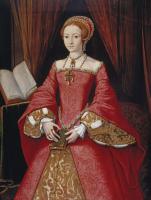
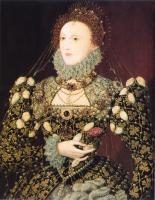
Henry Machyn's Diary. 20th May 1554. The xx day of May my lade Elsabeth (age 20) the quen('s) (age 38) syster cam owt of the Towre, and toke her barge at Towre warfe [Map], and so to Rychemond [Map], and from thens unto Wyndsor [Map], and so to Wodstoke [Map].




Henry Machyn's Diary. 20th May 1560. The xx day of May was send to the Towre [Map] master Fecknam (age 45), docthur Wattsun (age 45) latt byshope of Lynkolne, and docthur Colle (age 60) latt dene of Powlles, and docthur Chadsay; and at nyght abowtt viij of the cloke was send to the Flett [Map] docthur Score (age 50), and master Fecknam the last abbot of Westmynster, to Towre [Map].
The Deeds of the Dukes of Normandy
The Gesta Normannorum Ducum [The Deeds of the Dukes of Normandy] is a landmark medieval chronicle tracing the rise and fall of the Norman dynasty from its early roots through the pivotal events surrounding the Norman Conquest of England. Originally penned in Latin by the monk William of Jumièges shortly before 1060 and later expanded at the behest of William the Conqueror, the work chronicles the deeds, politics, battles, and leadership of the Norman dukes, especially William’s own claim to the English throne. The narrative combines earlier historical sources with firsthand information and oral testimony to present an authoritative account of Normandy’s transformation from a Viking settlement into one of medieval Europe’s most powerful realms. William’s history emphasizes the legitimacy, military prowess, and governance of the Norman line, framing their expansion, including the conquest of England, as both divinely sanctioned and noble in purpose. Later chroniclers such as Orderic Vitalis and Robert of Torigni continued the history, extending the coverage into the 12th century, providing broader context on ducal rule and its impact. Today this classic work remains a foundational source for understanding Norman identity, medieval statesmanship, and the historical forces that reshaped England and Western Europe between 800AD and 1100AD.
Available at Amazon in eBook and Paperback format.
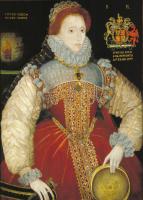
On 20th May 1560 Bishop William Alley (age 50) was elected Bishop of Exeter on the recommendation of Queen Elizabeth I of England and Ireland (age 26). Henry Machyn in his diary of 02 Apr 1560 refers to Bishop William Alley as being 'bishop elect of Exeter'.
On 20th May 1561 John Eyre died. On 15th December 1558 Margaret Blennerhasset died. They were buried in All Saints Church, Narborough [Map]. Brass. The inscription on the brass says "Here do lye John Eyer Esquire late Receyvor Generale to Elizabeth the Quenes Majestie, in the counties of Norf., Suff., Cantabridge, and Huntyngton, and one of the Masters of her High Court of Chancerye and Margaret his wyfe, one of the daughters of Sir Thomas Blenerhaiset of Frens Knight late Wyfe of John, Spelman Esquire, son and heyre apparent of Sir John Spelman, Knyght." Armorials top left and middle Quartered  Eyre Arms and
  Townshend Arms with a crescent difference, top right Quartered Eyre Arms and Townshend Arms impaled with 1&6
  Blennerhassett Arms, 2, Argent, three Escutcheons Sable: LOWDHAM 3 Gules a Pall reversed Ermine: KELVEDON or KELDON 4 Azure a Lion rampant Argent crowned Or: ORTON: 5 Azure a Fess between three Fleurs-de-lis Or: SKELTON.
John Eyre: After 27th December 1545 he and Margaret Blennerhasset were married. Her second husband.
Margaret Blennerhasset: she was born to Thomas Blennerhassett of Frens. Before 27th December 1545 John Spelman of and she were married.


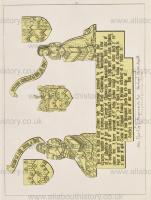
Engravings of Sepulchral Brasses Volume 1. Plate LXXII. John Eyer, Esq. And Wife, at Narburgh [Map], 1561.
Blomefield's Norf. vi, 159.
Another civilian in armour, and another mural monument, in its general features much resembling the last. On the desk, covered with a cloth, having a gold fringe, lie his gauntlets beside his prayer-book. Between them is Eyer quartering Townsend, and behind her the same shield impales Blenerhasset and his quarterings, described in p. 35. This John Eyer was a great purchaser of religious houses that were dissolved by Henry VIII. and bought of that king four monasteries at Lynn. He was possessed also of Bury Abbey, and died without issue.
On 20th May 1576 Robert "The Elder" Peake (age 25) became a Freeman of the Worshipful Company of Goldsmiths.
Diary of Anne Clifford. 18th May 1616. Upon the 18th being Saturday in the morning my Lord (age 27) and I having much talk about these businesses, we agreed that Mr Marsh should go presently down to my Mother and that by him I should write a letter to persuade her to give over her jointure presently to my Lord and that he would give her yearly as much as it was worth.
This day my Lord went from Knole to London.1
Note 1. N.B—my Lord was at London when my mother died but he went to Lewes before he heard of her death.
Upon the 20th went my Child to W. Horsley with Mary Neville and Mr Bathurst from London. Mary Hicken was with her, for still she lain in bed with Lady Margaret.
Upon the 24th being Friday between the hours of 6 and 9 at night died my dear Mother at Broome [Map] in the same chamber where my Father was born, 13 years and 2 months after the death of Queen Elizabeth and 10 years and 7 months after the death of my Father, I being 26 years old and 5 months and the Child 2 years old wanting a month.
At this great meeting at Lewes my Lord Compton (Note: afterwards 1st Earl of Northampton), my Lord Merdaunt (Note: married Lord Compton's sister), Tom Neville, John Herbert and all that Crew with Wat. Raleigh (age 62), Jack Laurie, and a multitude of such company were there.
There was much Bull Baiting, Bowling, Cards and Dice, with suchlike sports to entertain the time.


Become a Member via our Buy Me a Coffee page to read more.
Diary of Anne Clifford. 20th May 1616. Upon the 2oth being Monday I dispatch'd Mr Marsh with letters to my Mother about the business aforesaid. I sent them unsealed because my Lord (age 27) might see them.
My Brother Compton (age 32)1 and his wife kept the house at West Horsley and my Brother Beauchamp (age 30) and my sister his wife sojourned with them so as the Child was with both her aunts.
Note 1. Sir Henry Compton of Brambletye House (3rd son of Henry, 1st Lord Compton) married Lady Cecily Sackville daughter of Robert Earl of Dorset.
In May 1661 King Charles II of England Scotland and Ireland (age 30) created new Baronetcies and Peerages...
10th May 1661 William Smyth 1st Baronet (age 45) was created 1st Baronet Smyth of Redcliff in Buckinghamshire.
16th May 1661 Hugh Smyth 1st Baronet (age 29) was created 1st Baronet Smyth of Ashton Court in Somerset. Anne Ashburnham Lady Smyth (age 23) by marriage Lady Smyth of Ashton Court in Somerset.
18th May 1661 Robert Jenkinson 1st Baronet (age 40) was created 1st Baronet Jenkinson of Walcot in Oxfordshire and of Hawkesbury in Gloucestershire.
20th May 1661 William Glynne 1st Baronet (age 23) was created 1st Baronet Glynne of Bicester aka Bisseter in Oxfordshire.
23rd May 1661 Henry Ingram 1st Viscount Irvine (age 21) was created 1st Viscount Irvine.
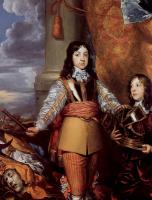


Samuel Pepys' Diary. 20th May 1662. Sir W. Pen (age 41) and I did a little business at the office, and so home again. Then comes Dean Fuller (age 54) after we had dined, but I got something for him, and very merry we were for an hour or two, and I am most pleased with his company and goodness. At last parted, and my wife and I by coach to the Opera, and there saw the 2nd part of "The Siege of Rhodes", but it is not so well done as when Roxalana (age 20) was there, who, it is said, is now owned by my Lord of Oxford (age 35)1.
Note 1. For note on Mrs. Davenport, who was deceived by a pretended marriage with the Earl of Oxford, see ante. Lord Oxford's first wife died in 1659. He married, in 1672, his second wife, Diana Kirke, of whom nothing more need be said than that she bore an inappropriate Christian name.


Minutes of the Royal Society. 11th June 1662. 82. Royal Society Meeting Minutes.
Sir Robert Moray (age 54) President.
Dr Petty's (age 51) brother (age 42) showed the Society a draft of the pleasure boat he is to make for the King (age 32).
Lord Berkeley of Berkely (age 13) presented the Society with a Bird of Paradise having two feet.
Dr Goddard brought in a moth with feathered wings.
Mr Evelyn (age 41) presentd the Society with a book called 'The History of Chalcogrphij'.
Mr Ball to be asked to produce his 'Magnetick Instruments',
Mr Boyle1 presented the Society with a book of the 'Weight and Spring of Air'; and also with a glass tube filled with Minium, wherewith the experiment of filtering was made.
The Amanuensis to enquire about the depth of the water under the arches of London Bridge.
Mr Croone (age 28) to write to Dr Power about the trial of heat and cold in deep caves.
The Amanuensis to bespeak the long glass tube for the Torricellian Experiment.
Note 1. Not clear which Mr Boyle this is since Richard Boyle was elected 20th May 1663 and Robert Boyle (age 36) on 22nd April 1663.


Become a Member via our Buy Me a Coffee page to read more.
On 20th May 1663 Philip Packer (age 44) was appointed Fellow of the Royal Society.
Samuel Pepys' Diary. 20th May 1664. Up and to my office, whither by and by comes Mr. Cholmely (age 31), and staying till the rest of the company come he told me how Mr. Edward Montagu (age 29) is turned out of the Court, not [to] return again. His fault, I perceive, was his pride, and most of all his affecting to seem great with the Queene (age 54) and it seems indeed had more of her eare than any body else, and would be with her talking alone two or three hours together; insomuch that the Lords about the King (age 33), when he would be jesting with them about their wives, would tell the King that he must have a care of his wife too, for she hath now the gallant: and they say the King himself did once ask Montagu how his mistress (meaning the Queene) did. He grew so proud, and despised every body, besides suffering nobody, he or she, to get or do any thing about the Queene, that they all laboured to do him a good turn. They also say that he did give some affront to the Duke of Monmouth (age 15), which the King himself did speak to him of. But strange it is that this man should, from the greatest negligence in the world, come to be the miracle of attendance, so as to take all offices from everybody, either men or women, about the Queene. Insomuch that he was observed as a miracle, but that which is the worst, that which in a wise manner performed [would] turn to his greatest advantage, was by being so observed employed to his greatest wrong, the world concluding that there must be something more than ordinary to cause him to do this. So he is gone, nobody pitying but laughing at him; and he pretends only that he is gone to his father, that is sick in the country.


Samuel Pepys' Diary. 20th May 1666. Lord's Day. With my wife to church in the morning. At noon dined mighty nobly, ourselves alone. After dinner my wife and Mercer by coach to Greenwich, Kent [Map], to be gossip to Mrs. Daniel's child. I out to Westminster, and straight to Mrs. Martin's, and there did what I would with her, she staying at home all the day for me; and not being well pleased with her over free and loose company, I away to Westminster Abbey [Map], and there fell in discourse with Mr. Blagrave, whom I find a sober politique man, that gets money and increase of places, and thence by coach home, and thence by water after I had discoursed awhile with Mr. Yeabsly, whom I met and took up in my coach with me, and who hath this day presented my Lord Ashly (age 44) with £100 to bespeak his friendship to him in his accounts now before us; and my Lord hath received it, and so I believe is as bad, as to bribes, as what the world says of him.


The History of William Marshal was commissioned by his son shortly after William’s death in 1219 to celebrate the Marshal’s remarkable life; it is an authentic, contemporary voice. The manuscript was discovered in 1861 by French historian Paul Meyer. Meyer published the manuscript in its original Anglo-French in 1891 in two books. This book is a line by line translation of the first of Meyer’s books; lines 1-10152. Book 1 of the History begins in 1139 and ends in 1194. It describes the events of the Anarchy, the role of William’s father John, John’s marriages, William’s childhood, his role as a hostage at the siege of Newbury, his injury and imprisonment in Poitou where he met Eleanor of Aquitaine and his life as a knight errant. It continues with the accusation against him of an improper relationship with Margaret, wife of Henry the Young King, his exile, and return, the death of Henry the Young King, the rebellion of Richard, the future King Richard I, war with France, the death of King Henry II, and the capture of King Richard, and the rebellion of John, the future King John. It ends with the release of King Richard and the death of John Marshal.
Available at Amazon in eBook and Paperback format.
Samuel Pepys' Diary. 20th May 1667. Up betimes, and comes my flagelette master to set me a new tune, which I played presently, and shall in a month do as much as I desire at it. He being gone, I to several businesses in my chamber, and then by coach to the Commissioners of Excise, and so to Westminster Hall [Map], and there spoke with several persons I had to do with. Here among other news, I hear that the Commissioners for the Treasury were named by the King (age 36) yesterday; but who they are nobody could tell: but the persons are the Chancellor (age 58), the two Secretaries, Lord Ashly (age 45), and others say Sir W. Coventry (age 39) and Sir John Duncomb (age 44), but all conclude the Duke of Albemarle (age 58); but reports do differ, but will be known in a day or two.


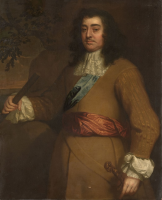

Samuel Pepys' Diary. 20th May 1668. Thence walked to the King's playhouse, and saw "The Mulberry Garden" again, and cannot be reconciled to it, but only to find here and there an independent sentence of wit, and that is all. Here met with Creed; and took him to Hales's (age 68), and there saw the beginnings of Harris's (age 34) head which he draws for me, which I do not yet like. So he and I down to the New Exchange, and there cheapened ribbands for my wife, and so down to the Whey house and drank some and eat some curds, which did by and by make my belly ake mightily. So he and I to White Hall, and walked over the Park to the Mulberry-Garden [Map]1, where I never was before; and find it a very silly place, worse than Spring-garden, and but little company, and those a rascally, whoring, roguing sort of people, only a wilderness here, that is somewhat pretty, but rude. Did not stay to drink, but walked an hour and so away to Charing Cross [Map], and there took coach and away home, in my way going into Bishopsgate Street, to bespeak places for myself and boy to go to Cambridge in the coach this week, and so to Brampton [Map], to see my wife. So home, and to supper and to bed.
Note 1. On the site of the present Buckingham Palace and gardens. Originally a garden [Map] of mulberry trees, planted by James I in 1609 with the intention of cultivating the manufacture of English silks.
On 20th May 1694 Robert Spencer 1st Viscount Teviot (age 65) committed suicide. Viscount Teviot extinct.
On 20th May 1713 Bishop Thomas Sprat (age 78) died of apoplexy at the Bishop's Palace, Bromley. He was buried in the south side of the Chapel of St Nicholas, Westminster Abbey [Map].

Stonehenge by William Stukeley. Table II. Prospect of the Roman Road & Wansdyke just above Caston May 20 1724. This demonstrates that Wansdyke was made before the Roman Road. [Note. Stukeley would have been stood here [Map] to record this view. Note the gibbet on top of Furze Knoll [Map]. On the left Cherhill aka Oldbury Hill Fort [Map].]
On 20th May 1726 Francis Cotes was born to Robert Cotes.
On 20th May 1726 Ulrike Amelie Wilhelmine Oldenburg was born to Peter August Oldenburg I Duke Schleswig-Holstein-Sonderburg-Beck (age 28) and Sophie of Hesse-Philippsthal Duchess Schleswig-Holstein-Sonderburg-Beck (age 31). She died aged less than one years old.
On 20th May 1780 Charles Cavendish-Bentinck was born to William Cavendish-Bentinck 3rd Duke Portland (age 42) and Dorothy Cavendish 3rd Duchess Portland (age 29). He married (1) 21st September 1808 Georgiana Augusta Frederica Seymour (2) 16th July 1816 Anne Wellesley Lady Abdy, daughter of Richard Wellesley 1st Marquess Wellesley and Hyacinthe Gabrielle Roland Marchioness Wellesley, and had issue.
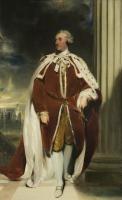


On 20th May 1810 Algernon George Percy 6th Duke Northumberland was born to George Percy 5th Duke Northumberland (age 31) and Louisa Harcourt Stuart-Wortley-Mackenzie (age 28). He married 1845 Louisa Drummond Duchess Northumberland and had issue.
On 20th May 1821 Amalia Elisabeth Hesse Darmstadt was born to Louis Hesse Darmstadt II Grand Duke (age 43) and Princess Wilhelmine Baden (age 32). Coefficient of inbreeding 7.03%. She died aged five in 1826.
Adam Murimuth's Continuation and Robert of Avesbury’s 'The Wonderful Deeds of King Edward III'
This volume brings together two of the most important contemporary chronicles for the reign of Edward III and the opening phases of the Hundred Years’ War. Written in Latin by English clerical observers, these texts provide a vivid and authoritative window into the political, diplomatic, and military history of fourteenth-century England and its continental ambitions. Adam Murimuth Continuatio's Chronicarum continues an earlier chronicle into the mid-fourteenth century, offering concise but valuable notices on royal policy, foreign relations, and ecclesiastical affairs. Its annalistic structure makes it especially useful for establishing chronology and tracing the development of events year by year. Complementing it, Robert of Avesbury’s De gestis mirabilibus regis Edwardi tertii is a rich documentary chronicle preserving letters, treaties, and official records alongside narrative passages. It is an indispensable source for understanding Edward III’s claim to the French crown, the conduct of war, and the mechanisms of medieval diplomacy. Together, these works offer scholars, students, and enthusiasts a reliable and unembellished account of a transformative period in English and European history. Essential for anyone interested in medieval chronicles, the Hundred Years’ War, or the reign of Edward III.
Available at Amazon in eBook and Paperback format.

Derbyshire Archaeological Journal Volume 30 1908 Page 155. May 20th, 1825. With somewhat better success we opened a tumulus not far from the village of Middleton, and on the low ground near the river Bradford1. The country people knew it by the name of Larks low [Map]. About the centre of the mound we discovered a cist formed of large stones set edgeways at the sides and ends with similar ones serving for a cover. It contained the decayed fragments of a human skeleton. On the Eastem side of the barrow, after removing a flat stone we discovered an earthern lamp2 (Fig. 1 in annexed plate) which I should consider Roman, and which was placed on the top of a large urn full of burnt bones and ashes. The urn being composed of clay, which had only been baked in the sun, fell into small pieces on the slightest touch, so that no part of it could be preserved. Fig. 3 presents the manner in which it was ornamented by zig-zag scratches, and from a segment of the circle measured on the spot it appears to have been 7 inches diameter on the rim and 4¼ inches diameter at bottom. Its general shape seemed to be like Fig. 4.3 - The lamp which had been well baked, and is in great preservation was 3¾ inches diameter and 2 inches high. Fragments of human bones, along with the teeth and bones of horses and other animals (among which the water rat was, as usual, conspicuous,) were scattered throughout the mount.
A copper pin, Fig 2.4. rather more than 2 inches in length, which had previously served as a fastening for the dress, was also found.
These barrows are situate in this manor of Middleton by Youlgreave, belonging to Thomas Bateman Esquire5, and were opened under the superintendence of Mr W Bateman and myself. - l am decidedly of opinion that they are all Roman or Romanized British6.
Note 1. lbid., p. 33.
Note 2. A so-called "Incense cup."
Note 3. This is hardly likely to be a correct restoration of the cinerary urn.
Note 4. Not copper, but bronze, Evidently an awl, not a pin.
Note 5. Father of William Bateman.
Note 6. This, of course, is a wrong surmise. They are all of the Bronze Age.
Become a Member via our Buy Me a Coffee page to read more.
Vestiges of the Antiquities of Derbyshire. The only barrow yet discovered in a low situation in the neighbourhood of Middleton is placed in a meadow called Larks Lowe [Map], and near the rivulet called the Bradford; this tumulus was opened on the 20th of May 1825 when the cist was found to be constructed of large flat stones placed edge-ways with similar ones serving for the cover; it contained the decayed fragments of a human skeleton. On the eastern side of the barrow was found an urn of coarse earthy full of calcined bones and dry mould, the top protected by a flat piece of lime-stone, upon which was placed a small, shallow, earthen vessel very firmly baked, (of the kind denominated by Sir Richard Hoare (age 66) "incense cups"), a pin of bronze, two and a quarter inches long; several animal teeth and bones, amongst them a horse's tooth, a circular pebble, and a stone of peculiar shape; the large urn was of so friable a nature, that it probably had no other baking than what it received in the funeral fire, from this cause it was found impracticable to preserve it entire. June 19, 1826, it was thought advisable to reopen the very interesting barrow [Map] on Garratt Piece, Middleton, which was opened by Dr. Pegge in 1788, and described in the Archæologia, vol. ix, page 189; in it were found animal bones, one of which was calcined; a portion of the lower branch of an antler of the red deer, six inches in length, which had been tooled at the root by a sharp instrument; also some rats' bones. (See a subsequent examination of this barrow.)


On 20th May 1832 John William Montagu 7th Earl Sandwich (age 20) played for the Cambridge University cricket team against Cambridge Town; he scored two runs.

On 20th May 1846 Eleanor Forster (age 74) died. Memorial at the Chapel of St John the Evangelist, Bolton [Map].
Eleanor Forster: On or before 23rd July 1771, the date she was baptised, she was born to Matthew Forster and Jane Brown. Before 23rd June 1805 William Burrell and she were married.
Ten Years' Digging. May 20th [1848], opened a barrow about 30 yards diameter, on Arbor Hill [Arbor Hill Barrow [Map]], near Throwley Hall. Proceeding towards the middle from the south side, through very compact earth, to ihe depth of from three to four feet, in which were bits of charcoal and chippings of flint, we found the ground on the right hand side of the cutting, about the centre of the tumulus, to be more open and stony, and intermixed with rats' bones: following these indications, a cist was soon discovered, constructed of flat slabs of limestone, six of which placed edgeways in a rectangular form served for the basement, whilst above them the sides of the structure were continued by a neat wall, terminating with large flat stones which covered all in. On removing a portion of the wall, the contents, consisting of burnt human bones, amongst which was a flint arrow point, were found covered with fine earth which had penetrated in the course of ages. Adjoining the eastern end of this cist was erected a smaller one, composed of three flat and two rounded stones, so securely covered over that no earth had penetrated through the joints; this also contained burnt bones. The ground on the west side of the trench appearing loose also, we directed our attention that way, and found two more interments of a different character, namely: - two entire skeletons which lay in a contracted position very near to each other; one of them, a young person, had a slender arrow head of flint. A few more human bones and an iron spike about 3 inches long which had been inserted into wood, were found in another part of the tumulus.
On 20th May 1850 James Collinson (age 25) resigned from Pre-Raphaelite Brotherhood being opposed to the Brotherhood bringing the Christian religion into disrepute when Millais' Christ in the House of his Parents was accused of being blasphemous.
On 20th May 1892 Moira Godolphin Osborne was born to George Godolphin Osborne 10th Duke Leeds (age 29) and Katherine Frances Lambton Duchess Leeds (age 29). She married 30th January 1920 her fourth cousin Oliver Lyttelton 1st Viscount Chandos and had issue.
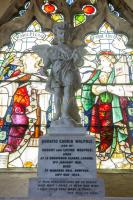
On 20th May 1893 Horatio Corbin Walpole (age 2) died. Monument in Church of St Andrew, Wickmere [Map].
Horatio Corbin Walpole: On 9th January 1891 he was born to Robert Walpole 5th Earl Orford.
The London Gazette 27435. 20th May 1902. IMPERIAL YEOMANRY
Royal 1st Devon, The undermentioned Second Lieutenants to be Lieutenants:—
W. C. Barnes. Dated 3rd May, 1902.
E. R., Viscount Boringdon (age 25). Dated 3rd May. 1902.
The current Kew Bridge [Map] was opened on 20th May 1903 by King Edward VII (age 61) and Queen Alexandra (age 58).


William of Worcester's Chronicle of England
William of Worcester, born around 1415, and died around 1482 was secretary to John Fastolf, the renowned soldier of the Hundred Years War, during which time he collected documents, letters, and wrote a record of events. Following their return to England in 1440 William was witness to major events. Twice in his chronicle he uses the first person: 1. when writing about the murder of Thomas, 7th Baron Scales, in 1460, he writes '… and I saw him lying naked in the cemetery near the porch of the church of St. Mary Overie in Southwark …' and 2. describing King Edward IV's entry into London in 1461 he writes '… proclaimed that all the people themselves were to recognize and acknowledge Edward as king. I was present and heard this, and immediately went down with them into the city'. William’s Chronicle is rich in detail. It is the source of much information about the Wars of the Roses, including the term 'Diabolical Marriage' to describe the marriage of Queen Elizabeth Woodville’s brother John’s marriage to Katherine, Dowager Duchess of Norfolk, he aged twenty, she sixty-five or more, and the story about a paper crown being placed in mockery on the severed head of Richard, 3rd Duke of York.
Available at Amazon in eBook and Paperback format.
On 20th May 1910 King Edward VII of the United Kingdom (deceased) was buried at St George's Chapel, Windsor Castle [Map].
On 20th May 1912 George William Hanover (age 31) died in a car accident. Somewhat ironically he was driving to the funeral of his maternal uncle Frederick VIII King of Denmark (deceased) when he skidded on a newly laid road surface. He and his valet Karl Grebe were killed in the accident. There is a monument at the site.
From the web:
Probably overtired, the car raced into loose gravel rock at 90 kilometers per hour, came off the road to the right, knocked down three trees and drilled into the earth with a destroyed front axle. Prince Georg Wilhelm and his valet Grebe – Karl Grebe – died instantly. The chauffeur sitting in the back survived slightly injured. The dead were laid out in the church of Nackel and brought a little later with military honors to Friesack station.
At the station, the coffins were loaded into the carriage to the songs of the Friesacker men's choir, which brought the crown prince to the funeral in Gmunden, Austria. The Friesacker stationmaster, Joachim Gahl, it is said, received a letter from Austria including two cufflinks decorated with diamonds and the initials "GW" thanks to his duty. Hanover's royal family thanked the villagers because they had shown themselves so compassionate. Monetary donations were made to the church, the warrior federation and the virgin association. In the church, a plaque commemorates the laying out and that the congregation sang before the transfer of the dead.
On 20th May 1917 Valentine Fleming (age 35) was killed in action by German shellfire at Gillemont Farm, near Épehy, Somme, France. His squadron had been called to an exposed post in the British Expeditionary Force's frontline opposite the Hindenburg line, north of St. Quentin. During the early morning of 20th May, the Germans opened a heavy bombardment and Valentine was hit by a shell and killed instantly. News of the tragedy reached the family mere days before Ian's ninth birthday.
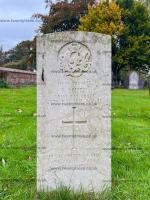
After 20th May 1918. St Mary's Church, Rolleston on Dove [Map]. Grave of Private B Smith, Army Pay Corps.
He was killed in the last Zeppelin raid in London on 20th May 1918, aged 38. This was not the Zeppelin dirigible which immediately springs to mind, but Rfa 501's R VI Staaken 'giant' heavy bombers which carried out 11 raids on Great Britain between 28th September 1917 and 20th May 1918. Before the war, he was the manager of the Pearl Assurance Company in Pinxton. He was married to Mary, née Ault.
Wiltshire Archaeological Magazine 1930 V45 Pages 300-335. Mr. W.J. Osmond, the owner and occupier of the land, having given permission, although the field was already planted with sugar beet, excavations were begun on May 20th, 1930, and continued for five weeks, four men being employed all the time, and for three weeks five men.
On 20th May 1315 Bonne Luxemburg Queen Consort France was born to King John I of Bohemia (age 18) and Queen Elizabeth of Bohemia (age 23). She married 28th July 1332 her fourth cousin once removed King John "The Good" II of France, son of King Philip "Fortunate" VI of France and Joan "Lame" Burgundy Queen Consort France, and had issue.
On 20th May 1364 Henry "Hotspur" Percy was born to Henry Percy 1st Earl of Northumberland (age 22) and Margaret Neville (age 35) at Alnwick Castle, Northumberland [Map]. He a great x 3 grandson of King Henry III of England. He married before 1393 his second cousin once removed Elizabeth Mortimer Baroness Camoys, daughter of Edmund Mortimer 3rd Earl March, Earl of Ulster and Philippa Plantagenet Countess March 2nd Countess Ulster, and had issue.


On 20th May 1443 John Strange 8th Baron Strange Knockin 4th Baron Mohun Dunster was born to Richard Strange 3rd Baron Dunster 7th Baron Strange Knockin (age 61) and Elizabeth Cobham Baroness Strange and Mohun (age 24). He married 27th March 1450 his sixth cousin Jacquetta Woodville Baroness Strange and Mohun, daughter of Richard Woodville 1st Earl Rivers and Jacquetta of Luxemburg Duchess Bedford, and had issue.
On 20th May 1551 Elisabeth Hohenzollern was born to Albert "The Elder" Hohenzollern I Duke Prussia (age 61) and Anna Maria Guelph Duchess Prussia (age 19).
On 20th May 1572 Bishop John Davenant was born.

On 20th May 1714 Henry Bathurst 2nd Earl Bathurst was born to Allen Bathurst 1st Earl Bathurst (age 29) and Catherine Apsley Countess Bathurst Sussex. Coefficient of inbreeding 6.25%. He married (1) 1754 Anne James (2) 1759 Tryphena Scawen Countess Bathurst Sussex and had issue.
Henrici Quinti, Angliæ Regis, Gesta, is a first-hand account of the Agincourt Campaign, and subsequent events to his death in 1422. The author of the first part was a Chaplain in King Henry's retinue who was present from King Henry's departure at Southampton in 1415, at the siege of Harfleur, the battle of Agincourt, and the celebrations on King Henry's return to London. The second part, by another writer, relates the events that took place including the negotiations at Troye, Henry's marriage and his death in 1422.
Available at Amazon in eBook and Paperback format.
On 20th May 1726 John Browne 1st Baron Kilmaine was born to John Browne 5th Baronet (age 40).
On 20th May 1726 Ulrike Amelie Wilhelmine Oldenburg was born to Peter August Oldenburg I Duke Schleswig-Holstein-Sonderburg-Beck (age 28) and Sophie of Hesse-Philippsthal Duchess Schleswig-Holstein-Sonderburg-Beck (age 31). She died aged less than one years old.
On 20th May 1726 Francis Cotes was born to Robert Cotes.
On 20th May 1753 John Monson 3rd Baron Monson was born to John Monson 2nd Baron Monson (age 25). He married Elizabeth Capell, daughter of William Anne Capell 4th Earl Essex and Frances Hanbury Williams Countess Essex, and had issue.

On 20th May 1763 William Wellesley aka Wellesley-Pole 3rd Earl Mornington was born to Garrett Wellesley 1st Earl Mornington (age 27) and Anne Hill Countess Mornington (age 20). His great uncle William Pole of Ballyfin in Ireland (age 50) was his godfather. He married 1784 Katherine Forbes Countess Mornington and had issue.
On 20th May 1773 Helena Moore Countess Kingston was born to Stephen Moore 1st Earl Mount Cashell (age 42) and Helena Rawdon Countess Mount Cashell. She married 5th May 1794 her fifth cousin George King 3rd Earl Kingston, son of Robert King 2nd Earl Kingston and Caroline Fitzgerald, and had issue.
On 20th May 1780 Charles Cavendish-Bentinck was born to William Cavendish-Bentinck 3rd Duke Portland (age 42) and Dorothy Cavendish 3rd Duchess Portland (age 29). He married (1) 21st September 1808 Georgiana Augusta Frederica Seymour (2) 16th July 1816 Anne Wellesley Lady Abdy, daughter of Richard Wellesley 1st Marquess Wellesley and Hyacinthe Gabrielle Roland Marchioness Wellesley, and had issue.
On 20th May 1784 William Fellowes Wallop was born to John Wallop 2nd Earl Portsmouth (age 41) and Urania Fellowes (age 42). He died aged six in 1790.
On 20th May 1788 George Denys 1st Baronet was born to Peter Denys (age 28) and Charlotte Fermor (age 22). He married (1) 5th December 1809 Elizabeth Lind and had issue (2) 20th May 1835 Catherine Elizabeth Perceval.
On 20th May 1800 Francis Baring 3rd Baron Ashburton was born to Alexander Baring 1st Baron Ashburton (age 25) and Ann Louisa Bingham Baroness Ashburton (age 18) at Philadelphia, Pennsylvania. He married 1832 Claire Hortense Maret Baroness Ashburton and had issue.
Henrici Quinti, Angliæ Regis, Gesta, is a first-hand account of the Agincourt Campaign, and subsequent events to his death in 1422. The author of the first part was a Chaplain in King Henry's retinue who was present from King Henry's departure at Southampton in 1415, at the siege of Harfleur, the battle of Agincourt, and the celebrations on King Henry's return to London. The second part, by another writer, relates the events that took place including the negotiations at Troye, Henry's marriage and his death in 1422.
Available at Amazon in eBook and Paperback format.
On 20th May 1808 Frances Bacon was born to Edmund Bacon 10th and 9th Baronet (age 28) and Mary Anne Elizabeth Bacon (age 30). Coefficient of inbreeding 3.12%. She married (1) 28th May 1833 Henry Walpole Neville (2) 29th October 1840 her second cousin Colonel Hambleton Francis Custance and had issue.
On 20th May 1808 Admiral Edward Harris was born to James Edward Harris 2nd Earl Malmesbury (age 29) and Harriet Susan Dashwood (age 25).
On 20th May 1810 Algernon George Percy 6th Duke Northumberland was born to George Percy 5th Duke Northumberland (age 31) and Louisa Harcourt Stuart-Wortley-Mackenzie (age 28). He married 1845 Louisa Drummond Duchess Northumberland and had issue.
On 20th May 1810 Barbara Yelverton Marchioness Hastings was born to Henry Gould Yelverton 19th Baron Grey Ruthyn (age 29). She married 1st August 1831 George Augustus Francis Rawdon-Hastings 2nd Marquess Hastings, son of Francis Rawdon-Hastings 1st Marquess Hastings and Flora Mure-Campbell Marchioness of Hastings, and had issue.
On 20th May 1821 Amalia Elisabeth Hesse Darmstadt was born to Louis Hesse Darmstadt II Grand Duke (age 43) and Princess Wilhelmine Baden (age 32). Coefficient of inbreeding 7.03%. She died aged five in 1826.
On 20th May 1824 Montagu Francis Finch Osborn was born to John Osborn 5th Baronet (age 51) and Frederica Louisa Davers.
On 20th May 1830 John Blencowe Robinson 8th Baronet was born to George Robinson 7th Baronet (age 32) and Emma Blencowe Lady Robinson (age 27).
On 20th May 1835 Richard Harington 11th Baronet was born to Reverend Richard Harington (age 35).
On 20th May 1840 Henry Strutt 2nd Baron Belper was born to Edward Strutt 1st Baron Belper (age 38) and Amelia Harriet Otter Baroness Belper (age 23) at St Helen's House King Street, Derby [Map]. He married 2nd May 1874 Margaret Coke Baroness Belper, daughter of Thomas Coke 2nd Earl of Leicester and Juliana Whitbread Countess Leicester, and had issue.
On 20th May 1872 Ileene Frances Cairne Hastings was born to Francis Power Plantagenet Hastings 14th Earl Huntingdon (age 30) and Mary Anne Westenra Countess Huntingdon (age 24).
Chronicle of Walter of Guisborough
A canon regular of the Augustinian Guisborough Priory, Yorkshire, formerly known as The Chronicle of Walter of Hemingburgh, describes the period from 1066 to 1346. Before 1274 the Chronicle is based on other works. Thereafter, the Chronicle is original, and a remarkable source for the events of the time. This book provides a translation of the Chronicle from that date. The Latin source for our translation is the 1849 work edited by Hans Claude Hamilton. Hamilton, in his preface, says: 'In the present work we behold perhaps one of the finest samples of our early chronicles, both as regards the value of the events recorded, and the correctness with which they are detailed; Nor will the pleasing style of composition be lightly passed over by those capable of seeing reflected from it the tokens of a vigorous and cultivated mind, and a favourable specimen of the learning and taste of the age in which it was framed.'
Available at Amazon in eBook and Paperback format.
On 20th May 1875 Montrose Stuart Graham 11th Baronet was born to Robert James Graham 10th Baronet (age 29).
On 20th May 1884 Helen Cynthia Crewe Milnes was born to Robert Offley Ashburton Crewe Milnes 1st Marquess of Crewe (age 26) and Sibyl Marcia Graham Baroness Houghton (age 26).

On 20th May 1886 John Jacob Astor 1st Baron Astor was born to William Waldorf Astor 1st Viscount Astor (age 38) and Mary Dahlgren Paul (age 28). He married 28th August 1916 Violet Mary Elliot-Murray-Kynynmound Baroness Astor, daughter of Gilbert Elliot-Murray-Kynynmound 4th Earl Minto and Mary Caroline Grey Countess Minto, and had issue.
On 20th May 1892 Moira Godolphin Osborne was born to George Godolphin Osborne 10th Duke Leeds (age 29) and Katherine Frances Lambton Duchess Leeds (age 29). She married 30th January 1920 her fourth cousin Oliver Lyttelton 1st Viscount Chandos and had issue.
On 20th May 1892 John Evans 10th Baron Carbery was born to Algernon George Evans 9th Baron Carbery (age 23).
On 20th May 1907 David John Smith was born to Frederick Smith 2nd Viscount Hambleden (age 38) and Esther Georgiana Caroline Gore Viscountess Hambleden (age 37). He married 22nd July 1931 his half fifth cousin once removed Helen Pleydell-Bouverie, daughter of Jacob Pleydell-Bouverie 6th Earl Radnor and Julian Eleanor Adelaide Balfour.
On 20th May 1914 Evelyn Diana Noel Lady Lethbridge was born to Francis Arthur Gerard Noel (age 33). She married 13th April 1946 Hector Wroth Lethbridge 6th Baronet, son of Wroth Periam Christopher Lethbridge 5th Baronet, and had issue.
On 20th May 1916 Francis George Blackwood 10th Baron Dufferin and Clandeboye was born to Captain Maurice Baldwin Raymond Blackwood (age 33).

On 20th May 1917 Rosamund Boughton was born to Major John Delves Broughton 11th Baronet (age 33) and Vera Edyth Griffith-Boscawen Lady Boughton (age 23). She married 10th October 1938 Christopher Fraser 15th Lord Lovat.

On 20th May 1918 William David Ormsby-Gore 5th Baron Harlech was born to George Arthur Ormsby-Gore 4th Baron Harlech (age 33) and Beatrice Edith Mildred Gascoyne-Cecil Baroness Harlech (age 26). He married 9th February 1940 Sylvia Thomas Baroness Harlech and had issue.
On 20th May 1930 Filmer Courtenay William Honywood 11th Baronet was born to William Wynne Honywood 10th Baronet (age 39).
On 20th May 1937 Benjamin Guinness 3rd Earl of Iveagh was born to Arthur Guinness (age 25).
Chronicle of Walter of Guisborough
A canon regular of the Augustinian Guisborough Priory, Yorkshire, formerly known as The Chronicle of Walter of Hemingburgh, describes the period from 1066 to 1346. Before 1274 the Chronicle is based on other works. Thereafter, the Chronicle is original, and a remarkable source for the events of the time. This book provides a translation of the Chronicle from that date. The Latin source for our translation is the 1849 work edited by Hans Claude Hamilton. Hamilton, in his preface, says: 'In the present work we behold perhaps one of the finest samples of our early chronicles, both as regards the value of the events recorded, and the correctness with which they are detailed; Nor will the pleasing style of composition be lightly passed over by those capable of seeing reflected from it the tokens of a vigorous and cultivated mind, and a favourable specimen of the learning and taste of the age in which it was framed.'
Available at Amazon in eBook and Paperback format.
On 20th May 1964 Charles Spencer 9th Earl Spencer was born to John Spencer 8th Earl Spencer (age 40) and Frances Ruth Roche Countess Spencer (age 28).
On 20th May 1455 George Gordon 2nd Earl Huntley and Elizabeth Dunbar were married. She the daughter of John Dunbar 1st Earl of Moray and Marjorie Stewart Countess Moray. He the son of Alexander Gordon 1st Earl Huntley and Elizabeth Crichton Countess Huntley (age 45).
On 20th May 1567 Henry Paget 2nd Baron Paget Beaudasert (age 28) and Catherine Knyvet Baroness Geneville Beaudasert (age 24) were married. She by marriage Baroness Paget Beaudasert.
On 20th May 1630 Peter Temple 2nd Baronet (age 38) and Christian Leveson (age 18) were married. The difference in their ages was 20 years.
On 20th May 1714 James Waldegrave 1st Earl Waldegrave (age 30) and Mary Webb (age 19) were married. He the son of Henry Waldegrave 1st Baron Waldegrave and Henrietta Fitzjames Countess Newcastle (age 47). They were fourth cousins. He a grandson of King James II of England Scotland and Ireland.
On 20th May 1716 John Wallop 1st Earl Portsmouth (age 26) and Bridget Bennet Viscountess Lymington (age 19) were married. They had six sons and four daughters. She the daughter of Charles Bennet 1st Earl Tankerville (age 42) and Mary Grey Baroness Ossulston.
On 20th May 1732 William Neville 1st Baron Abergavenny (age 37) and Rebecca Herbert Baroness Abergavenny were married. She by marriage Baroness Abergavenny. She the daughter of Thomas Herbert 8th Earl Pembroke 5th Earl Montgomery (age 76) and Margaret Sawyer Countess Pembroke and Montgomery.
On 20th May 1736 Gervase Disney (age 26) and Mary Thorpe 14th Baroness Cobham (age 19) were married.
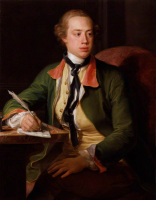
On 20th May 1756 Frederick North 2nd Earl Guildford (age 24) and Anne Speke Countess Guilford (age 16) were married. He the son of Francis North 1st Earl Guildford (age 52) and Lucy Montagu Baroness Guildford.

On 20th May 1771 Charles Egleton aka Kent 1st Baronet (age 28) and Mary Wordsworth Lady Kent (age 20) were married.

On 20th May 1772 Charles Cocks 1st Baron Somers (age 46) and Anne Pole (age 20) were married. The difference in their ages was 26 years.
On 20th May 1776 Francis Ingram Seymour-Conway 2nd Marquess Hertford (age 33) and Isabella Anne Ingram Marchioness Hertford (age 16) were married. He the son of Francis Seymour-Conway 1st Marquess Hertford (age 57) and Isabella Fitzroy Countess Hertford (age 49). They were sixth cousins. He a great x 2 grandson of King Charles II of England Scotland and Ireland.


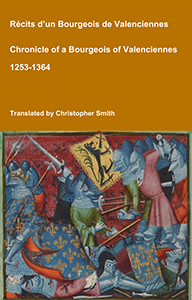
Chronicle of a Bourgeois of Valenciennes
Récits d’un bourgeois de Valenciennes aka The Chronicle of a Bourgeois of Valenciennes is a vivid 14th-century vernacular chronicle written by an anonymous urban chronicler from Valenciennes in the County of Hainaut. It survives in a manuscript that describes local and regional history from about 1253 to 1366, blending chronology, narrative episodes, and eyewitness-style accounts of political, military, and social events in medieval France, Flanders, and the Low Countries. The work begins with a chronological framework of events affecting Valenciennes and its region under rulers such as King Philip VI of France and the shifting allegiances of local nobility. It includes accounts of conflicts, sieges, diplomatic manoeuvres, and the impact of broader struggles like the Hundred Years’ War on urban life in Hainaut. Written from the perspective of a burgher (bourgeois) rather than a monastery or royal court, the chronicle offers a rare lay viewpoint on high politics and warfare, reflecting how merchants, townspeople, and civic institutions experienced the turbulence of the 13th and 14th centuries. Its narrative style combines straightforward reporting of events with moral and civic observations, making it a valuable source for readers interested in medieval urban society, regional politics, and the lived experience of war and governance in pre-modern Europe.
Available at Amazon in eBook and Paperback format.

On 20th May 1782 John Fane 10th Earl of Westmoreland (age 22) and Sarah Anne Child Countess of Westmoreland (age 17) were married at Gretna Green. She by marriage Countess of Westmoreland. He the son of John Fane 9th Earl of Westmoreland and Augusta Bertie.
On 20th May 1812 William Beauchamp-Proctor 3rd Baronet (age 30) and Anne Gregory Lady Beauchamp-Proctor (age 20) were married. They had three sons and four daughters.
On 20th May 1816 Francis Bond Head 1st Baronet (age 23) and Julia Valenza Somerville Lady Head (age 23) were married.
On 20th May 1835 George Denys 1st Baronet (age 47) and Catherine Elizabeth Perceval were married.
On 20th May 1871 George Robert Osborn 6th Baronet (age 57) and Mary Elizabeth Sitwell (age 49) were married.
On 20th May 1924 William Arthington Worsley 4th Baronet (age 34) and Joyce Morgan Brunner Lady Worsley (age 29) were married at St Margaret's Church, Westminster [Map].
On 20th May 685 Bridei III Picts (age 57) defeated the Northumbrian army at the Battle of Dun Nechtain.
King Ecgfrith of Northumbria (age 40) was killed at Dunnichen, Angus. His half brother Aldfrith succeeded King Northumbria.
On 20th May 794 Æthelberht II King East Anglia was beheaded on the orders of King Offa of Mercia.
On 20th May 1217 William Marshal 1st Earl Pembroke (age 71) and Ranulf de Blondeville Gernon 6th Earl Chester 1st Earl Lincoln (age 47) fought at Lincoln, Lincolnshire [Map] during the Second Battle of Lincoln.
Rebels William Mowbray 6th Baron Thirsk (age 44) and William Ros (age 17) were captured. William de Albini (age 66) fought for the rebels. Thomas Chateaudun I Count Perche (age 22) died fighting for the rebels.
Bishop Peter de Roches led a division of the royal army and earned some distinction by his valour.
On 20th May 1310 John Moels 1st Baron Moels (age 41) died. His son Nicholas (age 20) succeeded 2nd Baron Moels.
On 20th May 1344 Robert Clifford 3rd Baron Clifford (age 38) died. His son Robert (age 15) succeeded 4th Baron de Clifford.
On 20th May 1349 Archbishop John de Ufford died of plague.
On 20th May 1449 Álvaro Vaz Almada 1st Count Avranches (age 59) died.
Chronicle of Geoffrey le Baker of Swinbroke
Baker was a secular clerk from Swinbroke, now Swinbrook, an Oxfordshire village two miles east of Burford. His Chronicle describes the events of the period 1303-1356: Gaveston, Bannockburn, Boroughbridge, the murder of King Edward II, the Scottish Wars, Sluys, Crécy, the Black Death, Winchelsea and Poitiers. To quote Herbert Bruce 'it possesses a vigorous and characteristic style, and its value for particular events between 1303 and 1356 has been recognised by its editor and by subsequent writers'. The book provides remarkable detail about the events it describes. Baker's text has been augmented with hundreds of notes, including extracts from other contemporary chronicles, such as the Annales Londonienses, Annales Paulini, Murimuth, Lanercost, Avesbury, Guisborough and Froissart to enrich the reader's understanding. The translation takes as its source the 'Chronicon Galfridi le Baker de Swynebroke' published in 1889, edited by Edward Maunde Thompson.
Available at Amazon in eBook and Paperback format.
On 20th May 1475 Alice Chaucer Duchess Suffolk (age 71) died. She was buried at St Mary's Church, Ewelme [Map].
On 20th May 1510 Richard Lumley 3rd Baron Lumley (age 33) died. His son John (age 18) succeeded 4th Baron Lumley.
On 20th May 1571 Richard Butler 1st Viscount Mountgarret (age 71) died. His son Edmund (age 9) succeeded 2nd Viscount Mountgarret.
On 20th May 1694 Robert Spencer 1st Viscount Teviot (age 65) committed suicide. Viscount Teviot extinct.
On 20th May 1713 Bishop Thomas Sprat (age 78) died of apoplexy at the Bishop's Palace, Bromley. He was buried in the south side of the Chapel of St Nicholas, Westminster Abbey [Map].

On 20th May 1723 Robert Davers 3rd Baronet (age 39) died. His brother Jermyn (age 37) succeeded 4th Baronet Davers of Rougham in Suffolk.
On 20th May 1728 Reginald Graham 2nd Baronet (age 57) died. His son Bellingham (age 26) succeeded 3rd Baronet Graham of Norton Conyers in Yorkshire.
On 20th May 1734 William Vane 1st Viscount Vane (age 52) died at Fairlawne, Shipbourne. His son William (age 20) succeeded 2nd Viscount Vane.
On 20th May 1737 Elizabeth Hall Lady Buckworth died. She was buried at St Peter le Poer Church, Broad Street on 27th May 1737.
On 20th May 1768 Elizabeth Sloane Baroness Cadogan (age 73) died.
On 20th May 1781 Bernard Ward 1st Viscount Bangor (age 61) died. His son Nicholas (age 30) succeeded 2nd Viscount Bangor of Castleward in County Downe.

On 20th May 1807 Richard Boyle 2nd Earl Shannon (age 80) died.
On 20th May 1812 Mary Heathcote Countess Macclesfield died.
The Deeds of the Dukes of Normandy
The Gesta Normannorum Ducum [The Deeds of the Dukes of Normandy] is a landmark medieval chronicle tracing the rise and fall of the Norman dynasty from its early roots through the pivotal events surrounding the Norman Conquest of England. Originally penned in Latin by the monk William of Jumièges shortly before 1060 and later expanded at the behest of William the Conqueror, the work chronicles the deeds, politics, battles, and leadership of the Norman dukes, especially William’s own claim to the English throne. The narrative combines earlier historical sources with firsthand information and oral testimony to present an authoritative account of Normandy’s transformation from a Viking settlement into one of medieval Europe’s most powerful realms. William’s history emphasizes the legitimacy, military prowess, and governance of the Norman line, framing their expansion, including the conquest of England, as both divinely sanctioned and noble in purpose. Later chroniclers such as Orderic Vitalis and Robert of Torigni continued the history, extending the coverage into the 12th century, providing broader context on ducal rule and its impact. Today this classic work remains a foundational source for understanding Norman identity, medieval statesmanship, and the historical forces that reshaped England and Western Europe between 800AD and 1100AD.
Available at Amazon in eBook and Paperback format.
On 20th May 1827 James Stewart 7th Baronet (age 71) died.
On 20th May 1829 William Mansel 10th Baronet (age 63) died. His son John (age 22) succeeded 11th Baronet Mansel of Muddlescombe.
On 20th May 1851 Margaretta Elizabeth Wilson Baroness Arden (age 83) died.
On 20th May 1854 Catherine Fortescue Countess Portsmouth (age 67) died.
On 20th May 1870 Norman Macdonald Lockhart 4th Baronet (age 25) died. His brother Simon (age 21) succeeded 5th Baronet Lockhart of Less and Carwath.
On 20th May 1885 Francis Power Plantagenet Hastings 14th Earl Huntingdon (age 43) died. His son Warner (age 16) succeeded 15th Earl Huntingdon.
On 20th May 1900 Frederick Hervey-Bathurst 4th Baronet (age 67) died. His son Frederick (age 30) succeeded 5th Baronet Hervey-Bathurst of Lainston in Hampshire.
On 20th May 1912 George William Hanover (age 31) died in a car accident. Somewhat ironically he was driving to the funeral of his maternal uncle Frederick VIII King of Denmark (deceased) when he skidded on a newly laid road surface. He and his valet Karl Grebe were killed in the accident. There is a monument at the site.
From the web:
Probably overtired, the car raced into loose gravel rock at 90 kilometers per hour, came off the road to the right, knocked down three trees and drilled into the earth with a destroyed front axle. Prince Georg Wilhelm and his valet Grebe – Karl Grebe – died instantly. The chauffeur sitting in the back survived slightly injured. The dead were laid out in the church of Nackel and brought a little later with military honors to Friesack station.
At the station, the coffins were loaded into the carriage to the songs of the Friesacker men's choir, which brought the crown prince to the funeral in Gmunden, Austria. The Friesacker stationmaster, Joachim Gahl, it is said, received a letter from Austria including two cufflinks decorated with diamonds and the initials "GW" thanks to his duty. Hanover's royal family thanked the villagers because they had shown themselves so compassionate. Monetary donations were made to the church, the warrior federation and the virgin association. In the church, a plaque commemorates the laying out and that the congregation sang before the transfer of the dead.
On 20th May 1914 Katherine Somerset Baroness Ormathwaite (age 79) died.
On 20th May 1915 George Herbert Farrar 1st Baronet (age 55) died. Baronet Farrar of Chicheley Hall extinct.
Anne Boleyn. Her Life as told by Lancelot de Carle's 1536 Letter.
In 1536, two weeks after the execution of Anne Boleyn, her brother George and four others, Lancelot du Carle, wrote an extraordinary letter that described Anne's life, and her trial and execution, to which he was a witness. This book presents a new translation of that letter, with additional material from other contemporary sources such as Letters, Hall's and Wriothesley's Chronicles, the pamphlets of Wynkyn the Worde, the Memorial of George Constantyne, the Portuguese Letter and the Baga de Secrets, all of which are provided in Appendices.
Available at Amazon in eBook and Paperback format.
On 20th May 1947 George Puxley Duntze 5th Baronet (age 73) died. His son George (age 33) succeeded 6th Baronet Duntze of Tiverton in Devon.
On 20th May 1956 Algernon Strutt 3rd Baron Belper (age 73) died. His son Alexander (age 44) succeeded 4th Baron Belper.
On 20th May 1984 Richard Duke Coleridge 4th Baron Coleridge (age 78) died. His son William (age 46) succeeded 5th Baron Coleridge of Ottery St Mary in Devon.
On 20th May 1985 George Edwin Douglas Duntze 6th Baronet (age 71) died. There were successors to the Baronetcy but none appear to have claimed their succession. Baronet Duntze of Tiverton in Devon is, therefore, not on the Official Roll of the Baronetage, with the baronetcy considered dormant since 1985.