

Chronicle of Walter of Guisborough
A canon regular of the Augustinian Guisborough Priory, Yorkshire, formerly known as The Chronicle of Walter of Hemingburgh, describes the period from 1066 to 1346. Before 1274 the Chronicle is based on other works. Thereafter, the Chronicle is original, and a remarkable source for the events of the time. This book provides a translation of the Chronicle from that date. The Latin source for our translation is the 1849 work edited by Hans Claude Hamilton. Hamilton, in his preface, says: 'In the present work we behold perhaps one of the finest samples of our early chronicles, both as regards the value of the events recorded, and the correctness with which they are detailed; Nor will the pleasing style of composition be lightly passed over by those capable of seeing reflected from it the tokens of a vigorous and cultivated mind, and a favourable specimen of the learning and taste of the age in which it was framed.'
Available at Amazon in eBook and Paperback format.
29 Jan is in January.
1121 Marriage of King Henry I and Adeliza of Louvain
1536 Funeral of Catherine of Aragon
1536 Death of Catherine of Aragon
History of the Dukes of Normandy by William of Jumieges. And when they asked him to say what seemed best to him in this matter, he continued: "From the time of King Clotaire, son of Clovis, the first of the kings of Gaul to be baptised by Saint Remigius, Archbishop of Reims, Saint-Evroul, born at Bayeux among the nobles and famed for royal lineage and wealth, shone forth. For love of God he despised the pomp of the world and became a monk, and after some time, with three monks, departed into the wilderness. There he thought to hide himself from men and to fight more strongly against the devil with God's help. While he prayed fervently on bended knees that God would show him a fitting place to dwell, an angel sent from God appeared and led him to Ouche. This aforesaid servant of God, in the reign of Chilperic and Sigibert, sons of Chlothar, founded a monastery there, and he frightened away the bandits who dwelt in the forest with salutary threats and exhortations, and turned them from brigandage, making them either monks or farmers. There for the love of God he endured great poverty with patience, and gathered together a distinguished multitude of faithful monks. There he raised two dead men in the name of the Lord, and worked many other miracles, too numerous to enumerate. Finally, in the year of the Lord's Incarnation 596, at the age of 80, in the time when the apostolic see was held by Gregory, the great teacher and apostle of the English nation, the blessed Evroul departed this world on the fourth day before the Kalends of January [29th January 596], and received from the Lord in heaven the reward of his labours. But after nearly three hundred years, in the reign of Charles the Simple, son of Louis, called the Do-nothing, our Maker wished to punish the sins of His people, which had increased among those living in these parts. By His permission, Hastein, the son of perdition, came into Neustria, and burned Rouen1 and many other cities. He also destroyed many monasteries of the holy fathers, namely that of Saint Philibert of Jumièges, Saint Wandregesilius of Fontenelle, Saint-Evroul at Ouche, Saint Martin of Tours which is called the Great Monastery, and many others of monks, clerks, and nuns. Some of these were afterward restored by good princes, but others still lie in desolation. Perhaps this long discourse wearies you; yet if you receive it kindly, I believe it will be useful for you, my dear nephews. Now, however, what I am pondering in my mind I shall briefly lay open to your expectation. At Ouche, with God’s help, let us restore the monastery of Saint-Evroul, and there gather faithful monks who will fight against the devil. Let us hand over to them all our churches and tithes, and let us, together with our brothers, sons, and nephews, serve them until death. For we ought not to rule over them, but to serve them, so that by their prayers we may deserve to be helped, and one day be made blessed in the delight of paradise."
Cumque ipsum rogarent ut quid sibi visum fuerit super hac re proferret, dixit: a Tempore Clotarii regis Francorum, filii Clodovei, qui primus in regibus Gallorum baptizatus est a beato Remigio archiepiscopo Remorum, sanctus Ebrulfus Bajocis natus inter proceres regio fulsit stemmate nobilitatis et census. Hic pro amore Dei sæculi pompam contemnens, monachus factus est, et post aliquantum temporis cum tribus monachis in eremum profectus est. Ibi quippe putabat se posse homines latere et cum diabolo per auxilium Dei fortius pugnare. Qui dum flexis genibus Deum devote obsecraret, ut aptum mansionis locum sibi monstraret, angelus a Deo missus ei adfuit, eumque Uticum perduxit. Præfatus autem servus Dei, regnantibus Chilperico et Sigiberto Clotarii filiis, illic coenobium condidit et latrones, qui silvam incolebant, utilibus minis et exhortationibus terruit eosque relictis latrociniis aut monachos, aut agricolas fecit. Ibi pro amore Dei magnam paupertatem patienter toleravit et insignem fidelium monachorum multitudinem aggregavit. Ibi duos mortuos in nomine Domini resuscitavit, et mulla alia quæ enumerare perlongum est, miracula perpetravit.
Denique anno ab Incarnatione Domini 596, ætatis vero suæ 80, residente in sede apostolica Gregorio summo doctore et Anglorum apostolo, beatus Ebrulfus IV Kal. Januarii ex hoc mundo migravit et mercedem laborum suorum in cœlestibus a Domino recepit. Deinde post annos fere trecentos, tempore Caroli Simplicis filii Ludovici, cognomine Nihil fecit, Conditornoster, multiplicata plebis suæ in his partibus consistentis crimina punire voluit. Ejus igitur permissu Hastingus, perditionis filius, in Neustriam venit, et Rothomagum (al., Belvacum) aliasque civitates igne combussit. Plura quoque destruxit cœnobia sanctorum Patrum, scilicet Philiberti apud Gemmeticum, Wandregesili apud Fontinellam, Ebrulfi apud Uticum et sancti Martini Turonis, quod dicitur Majus Monasterium et alia multa monachorum, clericorum atque sanctimonialium. Quædam eorum a bonis principibus postmodum restaurata sunt, nonnulla vero adhuc in solitudine degunt. Fortasse vobis fastidio est hæc nostra tam prolixa locutio, quam si suscipitis benigno animo, commodam vobis fore, o chari nepotes, æstimo. Nunc autem quod mente revolvo, exspectationi vestræ breviter propalabo. Apud Uticum Sancti Ebrulfi cœnobium, juvante Deo, restauremus et fideles monachos contrazabulum dimicaturos illic aggregemus omnes ecclesias decimasque nostras illis tradamus et nos cum fratribus et filiis et nepotibus nostris usque ad mortem illis serviamus. Non enim debemus illis dominari, sed famulari; ut eorum precibus mereamur adjuvari, et in amœnitate paradisi quandoque beari."
Note 1. The manuscript has 'al., Belvacum' i.e. 'alternatively Beauvais'.
Chronicle of Henry of Huntingdon 1121. King Henry spent Christmas at Bramton, with Theobald, coimt de Blois. After that he married1 at Windsor, Alice, daughter of the Duke of Louvain, on account of her beauty. At Easter he was at Berkeley; and at Whitsuntide, he and the new queen wore their crowns at London. In the summer, he led an army into Wales, and the Welsh came humbly to meet him, and agreed to all which his royal pleasure required. At Christmas, such a violent wind as has scarcely ever been known not only blew down houses, but towers built with masonry.
An elegy written in praise of the queen's beauty:
"Why, royal Alice, does the Muse
To aid my song of thee refuse?
What if thy radiant charms amaze.
And we, in awe and silence, gaze!
"Not dazzl'd by thy diadem.
And many a sparkling precious gem.
We veil our sight in mute surprise,
But 'neath the lustre of thy eyes.
"All aids of ornament are scorn'd,
When charms are brightest unadorn'd;
But nature stamped her choicest grace
On thy fair form and beaming face.
"Though poor my lay, yet still I crave
You'll reckon me your humblest slave."
Note 1. The date of the marriage 24th January 1121 or 29th January 1121.
The Ecclesiastical History of England and Normandy by Orderic Vitalis. KING Henry, having lost his wife and his son, resolved after consulting his council, to contract another marriage, and having selected Adelaide, the beautiful daughter of the duke of Louvain, the marriage1 was celebrated with the Christian rites, the king wearing the ensigns of royalty; and the queen was crowned by the ministrations of the priesthood.2 She adorned the court and kingdom for fifteen years, but though richly endowed in other respects, to this day3 she has borne the king no child.
Note 1. The date of the marriage 24th January 1121 or 29th January 1121.
Note 2. The marriage was celebrated at Windsor, which being in the diocese of Salisbury, the bishop of that see was on the point of giving the nuptial benediction, and had already put on his pontifical robes, when the archbishop, Ralph d'Escures, who was supposed to be prevented from travelling by a paralytic affection, made his appearance, and gave directions to the bishop of Worcester to proceed with the ceremony, instead of the bishop of the diocese.
Note 3. This passage must have been written before the death of Henry I.
Anglo-Saxon Chronicle. [29th January 1121] This year was the King Henry (age 53) at Christmas at Bramton, and afterwards, before Candlemas, at Windsor was given him to wife Athelis (age 18); soon afterwards consecrated queen, who was daughter of the Duke of Louvain (age 61).
Chronicon ex Chronicis by Florence and John of Worcester. On the fourth of the calends of February [29th January 1121] the maiden (age 18) already mentioned as selected for queen was married to the king (age 53) by William, bishop of Winchester, at the command of Ralph, archbishop of Canterbury; and on the following day, the third of the calends of February (30th January), she was consecrated and crowned as queen by the archbishop in person.
Note. Some sources say 24th January 1121.
On 29th January 1201 Madog Mathrafal Prince Powys Fadog founded Valle Crucis Abbey, Denbighshire.
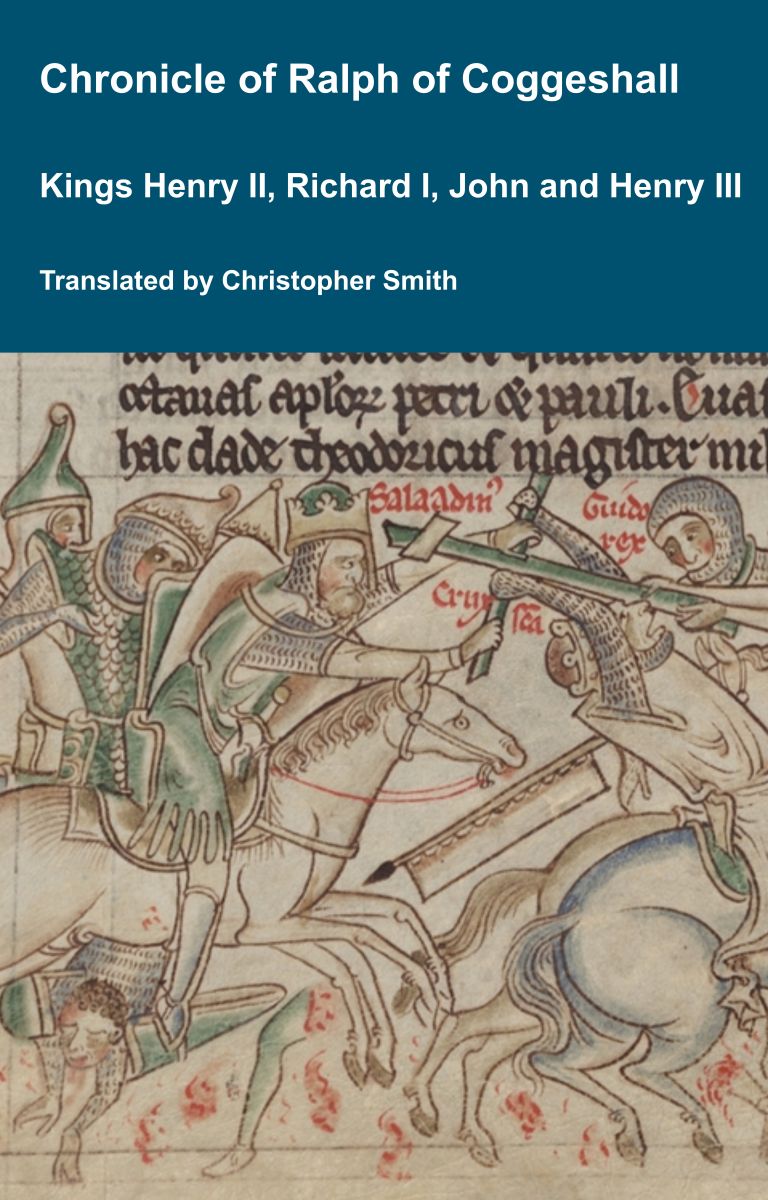 Chronicum Anglicanum by Ralph Coggeshall. On the Saturday [9th January 1216] next after Epiphany, the earl of Winchester and the other earls returned to London from overseas, bringing with them forty-one ships laden with knights and men-at-arms. On the Friday [29th January] before the Feast of the Purification of Blessed Mary, the aforesaid Savaric, with his companions, besieged the castle of Colchester; but when they heard that the barons of London were hurrying to the relief of the castle, on the Wednesday [3rd February] after the Purification of Blessed Mary they withdrew toward St Edmund's.
Sabbato proximo post Epiphaniam, redierunt Londonias a transmarinis comes Wintoniensis et cæteri comites, ducentes secum XLI naves militibus et servientibus onustas. Die Veneris ante Purificationem Beatæ Mariæ, Savaricus supradictus, cum sociis suis, obsederunt castellum Colecestriæ; sed, audito quod barones Londoniæ festinarent ad succursum castelli, die Mercurii post Purificationem Beatæ Mariæ, versus Sanctum-Edmundum recesserunt.
Scalaronica. At this same time Robert de Brus (age 31), Earl of Carrick, who retained a strong following through kinsmanship and alliance, always hoping for the establishment of his claim of succession to the realm of Scotland, on the 4th of the kalends of February [29th January 1306] in the year of grace 1306 sent his two brothers, Thomas and Neil, from Lochmaben to Dalswinton to John Comyn, begging that he would meet him [Robert] at Dumfries [Map] at the [church of the] Minorite Friars, so that they might have a conversation. Now he had plotted with his two brothers aforesaid that they should kill the said John Comyn on the way. But they were received in such a friendly manner by the said John Comyn that they could not bring themselves to do him any harm, but agreed between themselves that their brother himself might do his best. The said John Comyn, suspecting no ill, set out with the two brothers of the said Robert de Brus in order to speak with him [Robert] at Dumfries, went to the Friars [Church] where he found the said Robert, who came to meet him and led him to the high altar. The two brothers of the said Robert told him secretly — 'Sir,' they said, 'he gave us such a fair reception, and with such generous gifts, and won upon us so much by his frankness, that we could by no means do him an injury.' — 'See!' quoth he, 'you are right lazy: let me settle with him.'
On 29th January 1393 the Bal de Ardents (aka Ball of the Burning Men or Ball of the Wild Men) was a masquerade ball held at the Hôtel Saint Pol, Paris [Map] by Charles "Beloved Mad" VI King France (age 24) who performed with five members of the French nobility. The performers were dressed as wild men of the woods; four were killed when their costumes caught fire.
Charles "Beloved Mad" VI King France was rescued by his aunt Joan II Countess of Auvergne Duchess Berry (age 15) who smothered him in her dress.
Sieur de Nantouillet jumped into an open vat of wine and remained there until the flames were extinguished.
Count de Joigny died. Yvain de Foix, son of Gaston Fébus, Count of Foix, and Aimery Poitiers, son of the Count of Valentinois died after two days. Huguet de Guisay died after three days.
Life Charles VI by a Monk of St Denis [~1420]. [29th January 1393] For while they were thus intent upon unlawful revels, when a certain person, perhaps unaware of the danger and paying no heed to the peril, cast a spark of flame upon one of the dancers, immediately, at the very first movement, as they whirled about one another in their dancing, all their combustible garments were suddenly set ablaze, as it were in the twinkling of an eye. From that moment onward, without doubt, whoever might have observed the raging flames stretching upward toward the roof amid their frantic and unfeigned running; whoever might have heard the uninterrupted cries raised in bristling terror; whoever might have seen the pitch dripping and melted by fire upon the bodies of those wretches, would have judged that no stage-play, no feigned spectacle, but true and most dreadful calamity was being enacted. Some were consumed entirely by the fire; others, scorched and half-burnt, were carried away scarcely alive; others again, though rescued by chance or by the compassion of bystanders, bore the marks of that punishment for the remainder of their lives. Thus did the wanton licence of a moment end in horror, grief, and lasting shame.
While the young lords were thinking of nothing but their amusement, one of the bystanders, no doubt without foreseeing the harm he might cause, threw a spark of flame upon one of those taking part in the masquerade. Immediately the dancers’ inflammable garments all caught fire in the twinkling of an eye. One would have needed a heart of stone to hear, without shuddering, the dreadful cries uttered by those wretches; for the flames penetrated even to their innermost parts, and no one, unless he had a heart of rock, could have heard or seen this without tears. For nearly half an hour the fiery burning endured upon them. And when they strove to drive it off by tearing apart, as best they could, the combustible coverings in which they were wrapped, the fire left their hands dried up and burned. It likewise penetrated the lower parts of their bodies and inward as far as the navel, so that their genitals, together with the virile members, fell off in fragments, soaking the pavement with blood.
Nam sic illicitis intenti, dum quidam, forsan minime sequens discrimen attendens, flamme scintillam in quemdam choreancium injecisset, subito ad primum motum, dum saltando se volvunt mutuo, omnium vestes combustibiles subito et quasi iu ictu oculi accense sunt. Abhinc procul dubio si quis ex eorum discursu rabido et non ficto flammas voraces ad tectum usque tendere attendisset, si quis horrissonis vocibus continuatos clamores, si quis picem distillantem et igne liquefactam corporum qui ont la sottise de croire que c’est le comble du déshonneur pour une femme de se remarier, et en pareille circonstance ils se livrent à toutes sortes de licences, se déguisent avec des masques et des travestissements, et font essuyer mille avanies aux deux époux. C'estun usage ridicule et contraire à toutes les lois de la décence et de l'honnéteté. Cependant, entraîné par les conseils de quelques jeunes seigneurs de sa cour, le roi, - qui se laissait aller trop facilement à son goût pour les plaisirs, voulut se donner ce divertissement; il prit avec lui cinq d'entre eux, et voici ce qu'ils firent. Ils se vétirent de la tête aux pieds d'habits de lin, sur lesquels on avait collé des étoupes avec de la poix. Ensuite ils se masquérent, entrèrent dans la salle sous cet affreux déguisement qui les rendait méconnaissables, et se mirent à courir de tous côtés en faisant des gestes obscénes, en poussant d'horribles cris et en imitant les hurlements des loups. Leurs mouvements ne furent pas moins inconvenants que leurs cris; ils dansérent la sarrasine avec une sorte de frénésie vraiment diabolique. L'ennemi du genre humain leur avait sans doute tendu ce piége pour les perdre, et la France aurait été affligée d'un malheur irréparable, d'une honte éternelle, si l'ange gardien du roi et la Providence qui veillait sur lui ne l'eussent en ce moment tenu à quelque distance de ses compagnons.
Pendant que les jeunes seigneurs ne songeaient qu'à se divertir, un des assistants, sans prévoir sans doute le mal qu'il pouvait faire, jeta une flamméche sur un de ceux qui faisaient partie de la mascarade. Aussitôt les vétements inflammables des danseurs s'embrasérent tous en un clin d'oeil. Il eût fallu avoir un cœur de roche pour entendre sans frémir les cris affreux que poussérent alors ces malheureux, usque ad interiora penetrare, nisi cor saxeum habuisset, non sine lacrimis hoc audisset vel vidisset. Per dimidiam fere horam ardor igneus in eis perduravit. Quem cum pellere niterentur, cremabilia, quibus tegebantur, pro posse dilaniando, manus eorum aridas reddidit et combustas. Inferiores quoque partes, et usque ad umbilicum introrsum sic penetravit, quod genitalia cum virgis virilibus frustratim cadencia sanguine madefacerent pavimentum.
Froissart Book 4 Chapter 53. [29th January 1393] At this moment, a most unfortunate accident befel the others, through the youthful gaiety of the duke of Orleans, who, if he had foreseen the mischief he was about to cause, it is to be presumed would not, for any consideration, have so acted. He was very inquisitive in examining them, to find out who they were; and, as the five were dancing, he took one of the torches from his servants, and, holding it too near their dresses, let them on fire. Flax, you know, is instantly in a blase, and the pitch, with which the cloth had been covered to fasten the flax, added to the impossibility of extinguishing it. They wore likewise chained together, and their cries were dreadful; for, the fire was so strong, scarcely any dared approach. Some knights indeed did their utmost to disengage them, but the pitch burnt their hands very severely; and they suffered a long time afterward from it.
One of the five, Nantouillet, recollected that the buttery was near, broke the chain, and flying thither, flung himself into a large tub of water which was there for washing dishes and plates. This saved him, or he would have been burnt to death like the others: but he was withal some time very ill. When the queen heard the cause of the cries, she was alarmed lest the king should be hurt, for he had told her he would be one of the six, and in her fright fainted and fell down: her ladies and knights hastened to her assistance; and the confusion was so great, no one knew what to do. The duchess of Berry saved the king by throwing the train of her robe over him, and detaining, him, for he wanted to quit her. "Where are you going," said she: "do you not see your companions are in a blaze? who are you? for it is not now a time to keep it a secret." He then named himself, saying, "I am the king." "Ah, my lord," replied the duchess, "put on quickly another dress, and show yourself to the queen, for she is very much distressed about you."
The king on this left the room, and, having thrown aside his mummery, dressed himself as fast as he could, and returned to the queen, who had been much comforted by the duchess of Berry. When the king had quitted her, she went to the queen and said, Madam, do not be alarmed, for the king: you will shortly see him, for I have been talking with him." As she said this, the king appeared, and the queen trembled for joy: she was carried by her knights to her chamber, where the king attended and comforted her. The bastard of Foix, when on fire, cried aloud, "Save the king, save the king!" who indeed was saved in the manner I have related. It was the providence of God that inspired him to leave bis companions and converse with the ladies, for, had he remained with them, he must inevitably have been burnt to death.
On 29th January 1451 John Aviz was born to Alfonso "The African" V King Portugal (age 19) and Isabella Aviz Queen Consort Portugal (age 19). He a great x 3 grandson of King Edward III of England. Coefficient of inbreeding 7.45%. He died aged less than one years old.
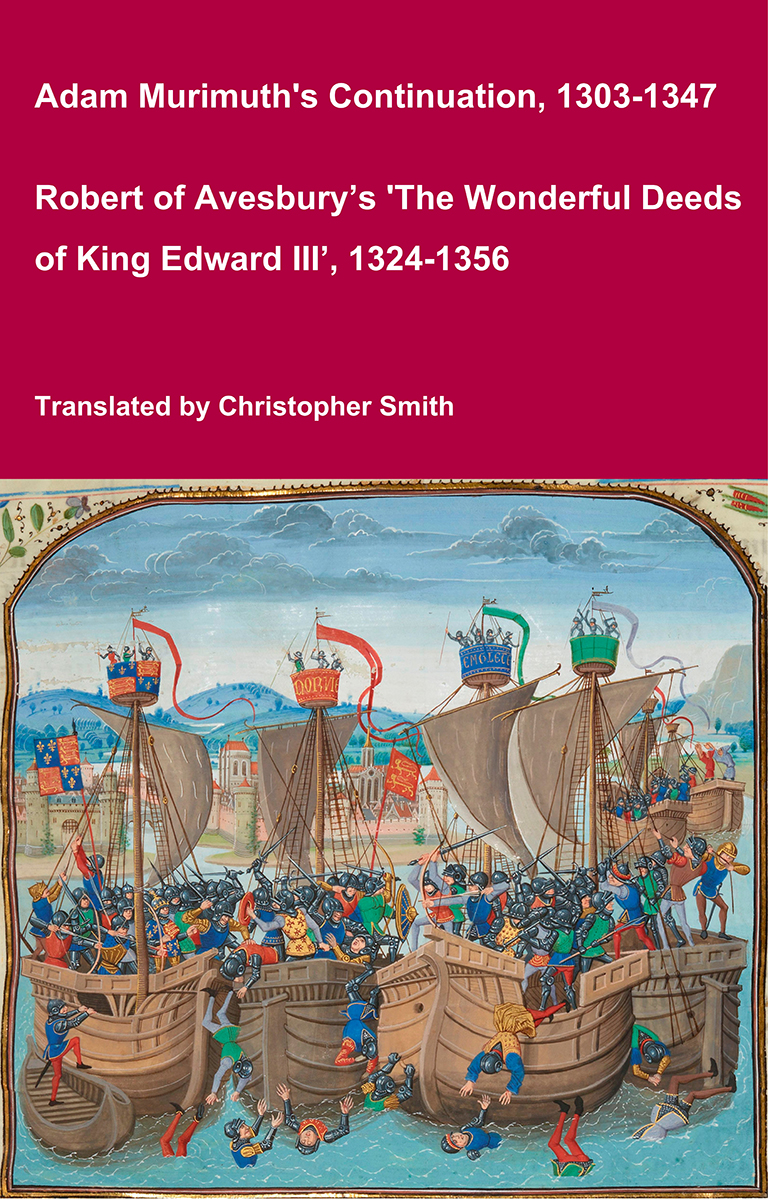
Adam Murimuth's Continuation and Robert of Avesbury’s 'The Wonderful Deeds of King Edward III'
This volume brings together two of the most important contemporary chronicles for the reign of Edward III and the opening phases of the Hundred Years’ War. Written in Latin by English clerical observers, these texts provide a vivid and authoritative window into the political, diplomatic, and military history of fourteenth-century England and its continental ambitions. Adam Murimuth Continuatio's Chronicarum continues an earlier chronicle into the mid-fourteenth century, offering concise but valuable notices on royal policy, foreign relations, and ecclesiastical affairs. Its annalistic structure makes it especially useful for establishing chronology and tracing the development of events year by year. Complementing it, Robert of Avesbury’s De gestis mirabilibus regis Edwardi tertii is a rich documentary chronicle preserving letters, treaties, and official records alongside narrative passages. It is an indispensable source for understanding Edward III’s claim to the French crown, the conduct of war, and the mechanisms of medieval diplomacy. Together, these works offer scholars, students, and enthusiasts a reliable and unembellished account of a transformative period in English and European history. Essential for anyone interested in medieval chronicles, the Hundred Years’ War, or the reign of Edward III.
Available at Amazon in eBook and Paperback format.
On 29th January 1465 Louis Savoy I Count Savoy (age 51) died. His son Amadeus (age 29) succeeded IX Duke Savoy.
Patent Rolls. 29th January 1466. Mandate to the escheator in the county of Somerset for the restitution of the temporalities of the Bishopric of Bath and Wells to Master Robert Styllyngton (age 46), whom the pope has appointed bishop in the place of Thomas, late bishop, deceased, and who has renounced everything prejudicial to the king and his crown. [Foedera.] By p.s. The like to the escheators in the following counties:- Middlesex. Oxford and Berks. Gloucester. Southampton. Writ de intendendo in pursuance to the tenants.
On 29th January 1536 Catherine of Aragon (deceased) was buried at Peterborough Cathedral [Map] at a service for a Princess rather than Queen.
Bishop John Hilsey preached, alleging that, in the hour of death, she had acknowledged that she had never been Queen of England.
Eleanor Brandon Countess Cumberland (age 17) was Chief Mourner. Henry VIII (age 44) refused their daughter Mary (age 19) permission to attend. On the same day Queen Anne Boleyn of England (age 35) miscarried a child.
William Harvey (age 26) attended; the only officer of arms to do so.
It isn't clear whether a monument was ever provided for her grave. If so, it was likely destroyed during the damage to Peterborough Cathedral during the English Civil War.
Spanish Chronicle Chapter 25. [29th January 1536]. How the blessed lady (deceased) was buried1
Note 1. A very minute account of the obsequies is written by Chapuys. The last wish of the Queen was disregarded, and she was buried at Peterborough, the body resting at Santry Abbey one night on the way. The body of the martyred Queen was consigned to the grave on 27th January, 1536. (Vienna Archives, Gairdner.)
Wriothesley's Chronicle [1508-1562]. 29th January 1536. She was buried at Peterborowe [Map]c the 29th daie of Januarie, being Saturdaie.
Note c. In the Abbey Church, which Henry VIII afterwards converted into a Cathedral. The circular letter addressed by the King to many persons of quality, requiring their attendance in the conveyance of the corpse from Kimbolton to Peterborough, will be found in MS. Harleian. 540, fol 52b.
Letters and Papers. 10th February 1536. Vienna Archives. 282. Chapuys (age 46) to Charles V.
Wrote on the 29th ult. The same day the Queen (deceased) was buried, and besides the ladies whom I mentioned, there were present four bishops and as many abbots, but no other man of mark except the comptroller of the King's Household. The place where she is buried in the church is far removed from the high altar, and much less honorable than that of certain bishops buried there; and even if they had not taken her for princess dowager as they have done in death and life, but only as simple baroness, they could not have given her a less honorable place, as I am told by men acquainted with those matters. Such are the great miracles and incredible magnificence which they gave me to understand they would put forth in honour of her memory as due alike to her great virtues and to her kindred. Possibly they will repair the fault by making a becoming monument in some suitable place.
Letters and Papers. Vienna Archives. 284. Death and Burial of Katharine of Arragon.
The good Queen (deceased) died in a few days, of God knows what illness, on Friday, 7 Jan. 1536. Next day her body was taken into the Privy Chamber and placed under the canopy of State (sous le dhoussier et drapt destat), where it rested seven days, without any other solemnity than four flambeaux continually burning. During this time a leaden coffin was prepared, in which the body was enclosed on Saturday, the 15th, and borne to the chapel. The vigils of the dead were said the same day, and next day one mass and no more, without any other light than six torches of rosin. On Sunday, the 16th, the body was removed again into the Privy Chamber, where it remained till Saturday following. Meanwhile an "estalage," which we call a chapelle ardente, was arranged, with 56 wax candles in all, and the house hung with two breadths of the lesser frieze of the country. On Saturday, the 22nd, it was again brought to the chapel, and remained until the masses of Thursday following, during which time solemn masses were said in the manner of the country, at which there assisted by turns as principals the Duchess of Suffolk (age 16), the Countess of Worcester (age 34), the young Countess of Oxford (age 39), the Countess of Surrey (age 19), and Baronesses Howard (age 21), Willoughby (age 24), Bray, and Gascon (sic).
25th January 1536. On Tuesday1 following, as they were beginning mass, four banners of crimson taffeta were brought, two of which bore the arms of the Queen, one those of England, with three "lambeaulx blancs," which they say are of Prince Arthur; the fourth had the two, viz., of Spain and England, together. There were also four great golden [standards]. On one was painted the Trinity, on the second Our Lady, on the third St. Katharine, and on the fourth St. George; and by the side of these representations the said arms were depicted in the above order; and in like manner the said arms were simply, and without gilding (? dourance), painted and set over all the house, and above them a simple crown, distinguished from that of the kingdom which is closed. On Wednesday after the robes of the Queen's 10 ladies were completed, who had not till then made any mourning, except with kerchiefs on their heads and old robes. This day, at dinner, the countess of Surrey held state, who at the vigils after dinner was chief mourner. On Thursday, after mass, which was no less solemn than the vigils of the day before, the body was carried from the chapel and put on a waggon, to be conveyed not to one of the convents of the Observant Friars, as the Queen had desired before her death, but at the pleasure of the King, her husband, to the Benedictine Abbey of Peterborough, and they departed in the following order:—First, 16 priests or clergymen in surplices went on horseback, without saying a word, having a gilded laten cross borne before them; after them several gentlemen, of whom there were only two of the house, "et le demeurant estoient tous emprouvez," and after them followed the maître d'hotel and chamberlain, with their rods of office in their hands; and, to keep them in order, went by their sides 9 or 10 heralds, with mourning hoods and wearing their coats of arms; after them followed 50 servants of the aforesaid gentlemen, bearing torches and "bâtons allumés," which lasted but a short time, and in the middle of them was drawn a waggon, upon which the body was drawn by six horses all covered with black cloth to the ground. The said waggon was covered with black velvet, in the midst of which was a great silver cross; and within, as one looked upon the corpse, was stretched a cloth of gold frieze with a cross of crimson velvet, and before and behind the said waggon stood two gentlemen ushers with mourning hoods looking into the waggon, round which the said four banners were carried by four heralds and the standards with the representations by four gentlemen. Then followed seven ladies, as chief mourners, upon hackneys, that of the first being harnessed with black velvet and the others with black cloth. After which ladies followed the waggon of the Queen's gentlemen; and after them, on hackneys, came nine ladies, wives of knights. Then followed the waggon of the Queen's chambermaids; then her maids to the number of 36, and in their wake followed certain servants on horseback.
In this order the royal corpse was conducted for nine miles of the country, i.e., three French leagues, as far as the abbey of Sautry [Map], where the abbot and his monks received it and placed it under a canopy in the choir of the church, under an "estalage" prepared for it, which contained 408 candles, which burned during the vigils that day and next day at mass. Next day a solemn mass was chanted in the said abbey of Sautry [Map], by the Bishop of Ely, during which in the middle of the church 48 torches of rosin were carried by as many poor men, with mourning hoods and garments. After mass the body was borne in the same order to the abbey of Peterborough, where at the door of the church it was honourably received by the bishops of Lincoln, Ely, and Rochester, the Abbot of the place, and the abbots of Ramsey, Crolain (Crowland), Tournan (Thorney), Walden and Thaem (Tame), who, wearing their mitres and hoods, accompanied it in procession till it was placed under the chapelle ardente which was prepared for it there, upon eight pillars of beautiful fashion and roundness, upon which were placed about 1,000 candles, both little and middle-sized, and round about the said chapel 18 banners waved, of which one bore the arms of the Emperor, a second those of England, with those of the King's mother, prince Arthur, the Queen of Portugal, sister of the deceased, Spain, Arragon, and Sicily, and those of Spain and England with three "lambeaulx," those of John of Gaunt, duke of Lancaster, who married the daughter of Peter the Cruel, viz., "le joux des beufz," the bundle of Abbot of arrows, the pomegranate (granade), the lion and the greyhound. Likewise there were a great number of little pennons, in which were portrayed the devices of king Ferdinand, father of the deceased, and of herself; and round about the said chapel, in great gold letters was written, as the device of the said good lady, "Humble et loyale." Solemn vigils were said that day, and on the morrow the three masses by three bishops: the first by the Bishop of Rochester, with the Abbot of Thame as deacon, and the Abbot of Walden as sub-deacon; the second by the Bishop of Ely, with the Abbot of Tournay (Thorney) as deacon, and the Abbot of Peterborough as sub-deacon; the third by the Bishop of Lincoln (age 63), with the Bishop of Llandaff as deacon, and that of Ely as sub-deacon; the other bishops and abbots aforesaid assisting at the said masses in their pontificals, so the ceremony was very sumptuous. The chief mourner was lady Eleanor (age 17), daughter of the Duke of Suffolk (age 52) and the French Queen, and niece of King Henry, widower now of the said good Queen. She was conducted to the offering by the Comptroller and Mr. Gust (Gostwick), new receiver of the moneys the King takes from the Church. Immediately after the offering was completed the Bishop of Rochester preached the same as all the preachers of England for two years have not ceased to preach, viz., against the power of the Pope, whom they call Bishop of Rome, and against the marriage of the said good Queen and the King, alleging against all truth that in the hour of death she acknowledged she had not been Queen of England. I say against all truth, because at that hour she ordered a writing to be made in her name addressed to the King as her husband, and to the ambassador of the Emperor, her nephew, which she signed with these words—Katharine, Queen of England—commending her ladies and servants to the favour of the said ambassador. At the end of the mass all the mourning ladies offered in the hands of the heralds each three ells in three pieces of cloth of gold which were upon the body, and of this "accoutrements" will be made for the chapel where the annual service will be performed for her. After the mass the body was buried in a grave at the lowest step of the high altar, over which they put a simple black cloth. In this manner was celebrated the funeral of her who for 27 years has been true Queen of England, whose holy soul, as every one must believe, is in eternal rest, after worldly misery borne by her with such patience that there is little need to pray God for her; to whom, nevertheless, we ought incessantly to address prayers for the weal (salut) of her living image whom she has left to us, the most virtuous Princess her daughter, that He may comfort her in her great and infinite adversities, and give her a husband to his pleasure, &c. Fr., from a modern copy, pp. 6.
Note 1. This would be Tuesday, 1 Feb., if the chronology were strict; but the latest Tuesday that can be intended is 25 Jan.


Letters and Papers. 29th January 1536. Vienna Archives. 199. Chapuys (age 46) to Charles V.
Some days ago I was informed from various quarters, which I did not think very good authorities, that notwithstanding the joy shown by the concubine (age 35) at the news of the good Queen's death, for which she had given a handsome present to the messenger, she had frequently wept, fearing that they might do with her as with the good Queen. This morning I have heard from the lady (age 33) mentioned in my letters of the 5th November1, and from her husband (age 40), that they were informed by one of the principal persons at Court that this King had said to some one in great confidence, and as it were in confession, that he had made this marriage, seduced by witchcraft, and for this reason he considered it null; and that this was evident because God did not permit them to have any male issue, and that he believed that he might take another wife, which he gave to understand that he had some wish to do. The thing is very difficult for me to believe, although it comes from a good source. I will watch to see if there are any indications of its probability. Yet I have not forborne to give some little hint of it by a third hand to the Princess' gouvernante (age 60), so as to warn her to treat the Princess a little better; and I have advised the latter to be as familiar as possible with her gouvernante so as to make her feel that when the Princess comes to her estate she will not regard her with disfavor.
Note 1. The Marchioness of Exeter. See Vol. IX., No. 776.


Letters and Papers. 29th January 1536. Vienna Archives. 200. Chapuys (age 46) to Granvelle.
Cannot thank him sufficiently for his kindness, which quite overwhelms him As he writes to the Emperor, thinks the enterprise extremely difficult and almost impossible; yet persons who understand matters better than himself think it would not be difficult, for the whole people cries after the Emperor. Many suspect that if the Queen died by poison it was Gregory di Casale who sent it by a kinsman, of Modena, named Gorron, who came hither in haste, and by what he told me the night before he returned, he had come to obtain letters in behalf of the Prothonotary Casale. He said the King and Cromwell would speak to me about it, but they have not done so. Those who suspect this say the said Gregory must have earned somehow the 8 ducats a day the King gave him, and to get a slow poison which should leave no trace, they had sent for him (lavoyent envoye querre la), which Chapuys cannot easily believe, as there would be too great danger of its being made known. London, 29 Jan. 1535.
Calendar of State Papers of Spain. 29th January 1536. Wien, Rep. P. C., Fasc. 229, No. 6. Eustace Chapuys (age 46) to the Emperor.
On the 21st inst. I wrote to Your Majesty at full length of events in this country. Since then my man has returned [from those parts], and verbally communicated a portion of what has been decided by the queen [of Hungary], regent of Flanders, as well as by Mr. de Roeulx, respecting the enterprise and transport [of troops] in contemplation. The rest I am to hear from the lips of the messenger, whom the said Mr. de Roeulx is shortly to send me. But to tell Your Majesty the plain truth, I am very much afraid that the season and opportunity for such an undertaking have already passed away, nay are lost for some time to come, inasmuch as there is now a talk of removing [the Princess] from the house where she is staying, and where the necessary preparations for her flight had already been made, to another not so well suited for the undertaking. Indeed, had it not been because they are waiting for the good Queen's burial, they would already have had her daughter removed elsewhere. For this reason, and in order to obviate the said difficulty, I had previously asked for the Queen the very same house where they now intend taking the Princess and although there was then very little hope of their granting my application, and hardly any chance of my being able to carry out Your Majesty's views with regard to the Princess' flight, yet I would have done my best, as I am still doing, to look out for the means of her escape. Indeed, I have this very morning sent for one of the men who is concerned in the plot; he has secretly called at this embassy, and after some talk with him, we have come to the conclusion that the undertaking is waxing daily more and more arduous, owing to my people not being allowed now to frequent the house as formerly. Could matters be delayed for some time, I fancy that there might surely be a better opportunity for the removal of the Princess and other persons in the house to a more convenient spot for our plans, as sooner or later the change of residence must take place.
The Princess' governess having lately informed her niece, the Royal mistress, that the former disregarded entirely the offers made to her in her name, and would rather suffer a hundred deaths than change her opinion, or do anything against her honour and conscience, the concubine (age 35) addressed a letter, or rather defamatory libel, to the governess, at which the Princess has been laughing ever since. I failed not at the time to inform Your Majesty of the fantastic plan formed [for the Princess' escape], namely, to represent her as desirous of entering a convent in order to attain a state of perfection there, and not be accused of lightness or despair, since her father, the King, was actually expelling from their convents both friars and nuns who had before that time entered into religion. The Princess approved of the stratagem, and is ready to carry it out, adding that she herself will say and do whatever may be considered most fit for the success of our enterprise. I will not fail to inform Your Majesty of what may turn out.
I heard some days ago from various quarters, though I must say none sufficiently reliable, that the King's concubine, though she showed great joy at the news of the good Queen's death, and gave a good present to the messenger who brought her the intelligence, had, nevertheless, cried and lamented, herself on the occasion, fearing lest she herself might be brought to the same end as her. And this very morning, some one coming from the lady mentioned in my letter of the 21st of November ultimo, and also from her husband, has stated that both had heard from the lips of one of the principal courtiers that this King had said to one of them in great secrecy, and as if in confession, that he had been seduced and forced into this second marriage by means of sortileges and charms, and that, owing to that, he held it as nul. God (he said) had well shown his displeasure at it by denying him male children. He, therefore, considered that he could take a third wife, which he said he wished much to do.
I must say that this intelligence, though coming from sufficiently authentic quarters, seems to me almost incredible. I will consider what appearance or sign of truth there may be in the report, and look out for the means of letting the governess (age 60) — who, as I said before, is the concubine's aunt—have a hint of it through a third person, that she may take in future better care of the Princess, and treat her well. My intermediary agent on this occasion has been instructed by me to treat the said governess in the most friendly terms possible, and assure her that, should the Princess recover her state, she will experience no displeasure at her hands, but, on the contrary, shall be favored and rewarded. This much have I thought of promising her in the Princess' name in order to guard against possible events.
Both the physician and apothecary of the late Queen (as I lately informed Your Majesty) have been to visit the Princess who, thanks to God, is now in good health. They have spent two days at the house, not that she herself required their attendance and advice, but because she wanted, as I informed Your Majesty, to hear from them the particulars of the illness and death of the Queen, her mother. It is, however, a wonder to me that the King, after giving the said physician and apothecary permission, at my request, to go to——and visit the Princess, should have scarcely allowed them to speak to her in private, no more than my own servants, who went thither at the same time. Not one of them has had permission to see the Princess in her apartments, and yet she seems to be taking good revenge on her guardians just now, for she hardly ceases writing to me, having now greater opportunity than ever she had, inasmuch as on account of her mourning she remains mostly in her rooms alone.
Calendar of State Papers of Spain. On the same day that the Queen (deceased) was buried this King's concubine (age 35) miscarried of a child, who had the appearance of a nude about three months and a half old, at which miscarriage the King (age 44) has certainly shown great disappointment and sorrow. The concubine herself has since attempted to throw all the blame on the duke of Norfolk (age 63), whom she hates, pretending that her mishap was entirely owing to the shock she received when, six days before, he (the Duke) came to announce to her the King's fall from his horse. But the King knows very well that it was not that, for his accident was announced to her in a manner not to create alarm; besides which, when she heard of it, she seemed quite indifferent to it. Upon the whole, the general opinion is that the concubine's miscarriage was entirely owing to defective constitution, and her utter inability to bear male children; whilst others imagine that the fear of the King treating her as he treated his late Queen, — which is not unlikely, considering his behaviour towards a damsel of the Court, named Miss Seymour (age 27), to whom he has latterly made very valuable presents — is the oral cause of it all. The Princess' governess, her daughters, and a niece of hers, have greatly mourned over the concubines miscarriage, never ceasing to interrogate one of the Princess' most familiar maids in waiting on the subject, and asking whether their mistress had been informed of Anne's miscarriage, for if she had, as was most likely, they still would not for the world that she knew the rest of the affair and its causes, thereby intending to say that there was fear of the King's taking another wife.


Annales of England by John Stow. 29th January 1536. The twentie nine of Januarie, Queene Anne (age 35) was delivered of a man Childe before her time, which was borne deade.
Wriothesley's Chronicle [1508-1562]. 29th January 1536. This yeare also, three daies before Candlemasd, Queene Anne (age 35) was brought a bedd and delivered of a man chield, as it was said, afore her tyme, for she said that she had reckoned herself at that tyme but fiftene weekes gonne with chield; it was said she tooke a fright, for the King ranne that time at the ring and had a fall from his horse, but he had no hurt; and she tooke such a fright withall that it caused her to fall in travailee, and so was delivered afore her full tyme, which was a great discompfort to all this realme.f
Note d. As Candlemas Day is the 2nd of February, our Author must have calculated three full days, exclusive of the 29th January, 1536.
Note e. Another account is that her miscarriage was occasioned by the shock which she received upon discovering that Henry VIII had transferred his affections to Jane Seymour (age 27).
Note f. Her miscarriage was thought to have made an ill impression on the King's mind, who from thence concluded that this marriage was displeasing to God. Burnet, i. p. 196.
Letters and Papers. 29th January 1536. Vienna Archives. 282. Chapuys (age 46) to Charles V.
On the day of the interment the Concubine (age 35) had an abortion which seemed to be a male child which she had not borne 3½ months, at which the King has shown great distress. The said concubine wished to lay the blame on the Duke of Norfolk (age 63), whom she hates, saying he frightened her by bringing the news of the fall the King had six days before. But it is well known that is not the cause, for it was told her in a way that she should not be alarmed or attach much importance to it. Some think it was owing to her own incapacity to bear children, others to a fear that the King would treat her like the late Queen, especially considering the treatment shown to a lady of the Court, named Mistress Semel [Jane Seymour (age 27)], to whom, as many say, he has lately made great presents. The Princess's gouvernante (age 60), her daughters, and a niece, have been in great sorrow for the said abortion, and have been continually questioning a lady who is very intimate with the Princess whether the said Princess did not know the said news of the abortion, and that she might know that, but they would not for the world that she knew the rest, meaning that there was some fear the King might take another wife.
The History of the Reformation Volume 1 Book III. [29th January 1536.] This was the last public good act of this unfortunate queen (age 35); who, the nearer she drew to her end, grew more full of good works. She had distributed in the last nine months of her life between fourteen and fifteen thousand pounds to the poor, and was designing great and public good things. And by all appearance, if she had lived, the money that was raised by the suppression of religious houses had been better employed than it was. In January, she brought forth a dead son. This was thought to have made ill impressions on the king; and that, as he concluded from the death of his sons by the former queen, that the marriage was displeasing to God; so he might, upon this misfortune, begin to make the like judgment of this marriage. Sure enough the popish party were earnestly set against the queen, looking on her as a great supporter of heresy. And at that time Fox (age 40), then bishop of Hereford, was in Germany, at Smalcald, treating a league with the protestant princes, who [?]sisted much, on the Ausburg Confession. There were many conferences between Fox and doctor [?]arnes, and some others, with the Lutheran divines, for accommodating the differences between them; and the thing was in a good forwardness: all which was imputed to the queen. Gardiner was then ambassador in France, and wrote earnestly to the king, to dissuade him from entering into any religious league with these princes; for that would alienate all the world from him, and dispose his own subjects to rebel. The king thought the German princes and divines should have submitted all things to his judgment; and had such an opinion of his own learning, and was so puffed up with the flattering raises that he daily heard, that he grew impatient of any opposition, and thought that his dictates should pass for oracles. And because the Germans would not receive them so, his mind was alienated from them.
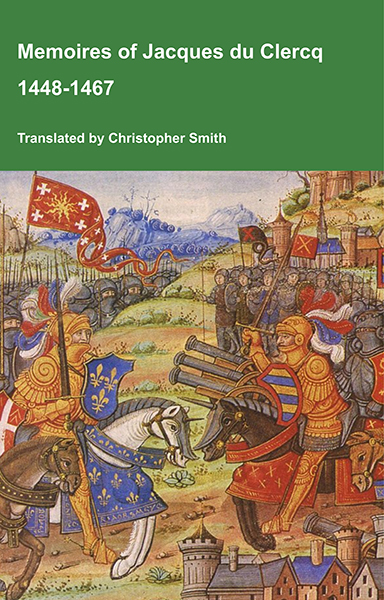
This is a translation of the 'Memoires of Jacques du Clercq', published in 1823 in two volumes, edited by Frederic, Baron de Reissenberg. In his introduction Reissenberg writes: 'Jacques du Clercq tells us that he was born in 1424, and that he was a licentiate in law and a counsellor to Philip the Good, Duke of Burgundy, in the castellany of Douai, Lille, and Orchies. It appears that he established his residence at Arras. In 1446, he married the daughter of Baldwin de la Lacherie, a gentleman who lived in Lille. We read in the fifth book of his Memoirs that his father, also named Jacques du Clercq, had married a lady of the Le Camelin family, from Compiègne. His ancestors, always attached to the counts of Flanders, had constantly served them, whether in their councils or in their armies.' The Memoires cover a period of nineteen years beginning in in 1448, ending in in 1467. It appears that the author had intended to extend the Memoirs beyond that date; no doubt illness or death prevented him from carrying out this plan. As Reissenberg writes the 'merit of this work lies in the simplicity of its narrative, in its tone of good faith, and in a certain air of frankness which naturally wins the reader’s confidence.' Du Clercq ranges from events of national and international importance, including events of the Wars of the Roses in England, to simple, everyday local events such as marriages, robberies, murders, trials and deaths, including that of his own father in Book 5; one of his last entries.
Available at Amazon in eBook and Paperback format.
Life of Anne Boleyn by Lancelot du Carle. On the same day as Queen Catherine's burial, the 29th of January 1536, Queen Anne Boleyn (age 35) miscarried a male child of around three months.
| Quand le Royne eut la nouvella entendué | When the Queen heard the news |
| Peu s'en failloit que ne cheut estandué | she nearly fainted from distress, |
| Morte d'ennui tant que fort offense | dying of sorrow, greatly afflicted, |
| Son ventre plein et le fruict advança | her belly full, the child advanced |
| Et enfanta une beau filz avant terme | and a beautiful son before the due date |
| Qui nasquit mort dont versa mainte larme | who was born dead, causing many tears to flow. |
Chronicle of Edward Hall [1496-1548]. Feb 15361. And in February following was Queen Anne (age 35) brought a bed of a child before her time, which was borne dead.
Note. Hall has the date wrong here - the miscarriage occurred on the 29th of January, the same day as Catherine of Aragon's funeral.
On 29th January 1541 Thomas Howard 3rd Duke of Norfolk (age 68) was appointed Lieutenant-General North of the Trent.

Henry Machyn's Diary. 29th January 1554. The xxix day of January master Wyatt (age 33), master Harper, master Rudston (age 39), master Knevett (age 37), and the commons, commyng [marched to] Blake-heth [Map], and so forward toward London with [a great] army commyng.
On 29th January 1601 Louise Lorraine Queen Consort France (age 47) died at the Château de Moulins.
On 29th January 1608 Frederick I Duke Württemberg (age 50) died.
On 29th January 1622 Francis Norreys 1st Earl Berkshire (age 42) shot himself with a crossbow at Rycote, Oxfordshire [Map]; probably deliberately.
On 31st January 1622 he died. He was buried at Dorchester Abbey, Oxfordshire [Map]. His daughter Elizabeth (age 19) succeeded 3rd Baroness Norreys of Rycote. Earl Berkshire and Viscount Thame extinct.
On 29th January 1649 King Charles I of England, Scotland and Ireland (age 48) fifty-seven commissioners signed King Charle's Death Warrant at Westminster Hall [Map]. Two further names were added subsequently.
14 Major-General William Goffe
21 Admiral Richard Deane
42 John Jones
45 Major General Charles Fleetwood
55 John Downes
57 Thomas Scot
58 John Carew
The commissioners who sat at the trial but did not sign the Death Warrant included:
William Monson 1st Viscount Monson (age 50)
James Harington 3rd Baronet (age 41)
The Captain of the Guard was Daniel Axtell (age 27). The guards included Francis Hacker, Matthew Tomlinson (age 31).
The Solicitor-General was John Cook (age 41).


On 29th January 1649. In Echard's England (vol. ii, p. 639, edit. 1718) it is stated that early in the rebellion King Charles I of England, Scotland and Ireland (age 48) confided to Elizabeth Cole Lady Wheler, his former laundres, a casket, which she restored to him the night before his execution.
John Evelyn's Diary. 29th January 1651. Dr. Duncan preached on 8 Matt. v. 34, showing the mischief of covetousness. My Lord Marquis of Ormonde (age 40) and Inchiquin (age 37), come newly out of Ireland, were this day at chapel.


Samuel Pepys' Diary. 29th January 1660. Sunday. In the morning I went to Mr. Gunning's (age 46), where he made an excellent sermon upon the 2d of the Galatians, about the difference that fell between St. Paul and St. Peter (the feast day of St. Paul being a day or two ago), whereby he did prove, that, contrary to the doctrine of the Roman Church, St. Paul did never own any dependance, or that he was inferior to St. Peter, but that they were equal, only one a particular charge of preaching to the Jews, and the other to the Gentiles. Here I met with Mr. Moore, and went home with him to dinner to Mr. Crew's (age 62), where Mr. Spurrier being in town did dine with us. From thence I went home and spent the afternoon in casting up my accounts, and do find myself to be worth £40 and more, which I did not think, but am afraid that I have forgot something.
Samuel Pepys' Diary. 29th January 1664. Up, and after shaving myself (wherein twice now, one after another, I have cut myself much, but I think it is from the bluntness of the razor) there came Deane (age 30) to me and staid with me a while talking about masts, wherein he prepared me in several things against Mr. Wood, and also about Sir W. Petty's (age 40) boat, which he says must needs prove a folly, though I do not think so unless it be that the King (age 33) will not have it encouraged.
This is a translation of the 'Memoires of Jacques du Clercq', published in 1823 in two volumes, edited by Frederic, Baron de Reissenberg. In his introduction Reissenberg writes: 'Jacques du Clercq tells us that he was born in 1424, and that he was a licentiate in law and a counsellor to Philip the Good, Duke of Burgundy, in the castellany of Douai, Lille, and Orchies. It appears that he established his residence at Arras. In 1446, he married the daughter of Baldwin de la Lacherie, a gentleman who lived in Lille. We read in the fifth book of his Memoirs that his father, also named Jacques du Clercq, had married a lady of the Le Camelin family, from Compiègne. His ancestors, always attached to the counts of Flanders, had constantly served them, whether in their councils or in their armies.' The Memoires cover a period of nineteen years beginning in in 1448, ending in in 1467. It appears that the author had intended to extend the Memoirs beyond that date; no doubt illness or death prevented him from carrying out this plan. As Reissenberg writes the 'merit of this work lies in the simplicity of its narrative, in its tone of good faith, and in a certain air of frankness which naturally wins the reader’s confidence.' Du Clercq ranges from events of national and international importance, including events of the Wars of the Roses in England, to simple, everyday local events such as marriages, robberies, murders, trials and deaths, including that of his own father in Book 5; one of his last entries.
Available at Amazon in eBook and Paperback format.
Samuel Pepys' Diary. 29th January 1664. After dinner I broke up and with my wife home, and thence to the Fleece in Cornhill [Map], by appointment, to meet my Lord Marlborough (age 46), a serious and worthy gentleman, who, after doing our business, about the company, he and they began to talk of the state of the Dutch in India, which is like to be in a little time without any controll; for we are lost there, and the Portuguese as bad.
John Evelyn's Diary. 29th January 1666. I went to wait on his Majesty (age 35), now returned from Oxford, Oxfordshire [Map] to Hampton-Court [Map], where the Duke of Albemarle (age 57) presented me to him; he ran toward me, and in a most gracious manner gave me his hand to kiss, with many thanks for my care and faithfulness in his service in a time of such great danger, when everybody fled their employments; he told me he was much obliged to me, and said he was several times concerned for me, and the peril I underwent, and did receive my service most acceptably (though in truth I did but do my duty, and O that I had performed it as I ought!). After this, his Majesty was pleased to talk with me alone, near an hour, of several particulars of my employment, and ordered me to attend him again on the Thursday following at Whitehall [Map]. Then the Duke came toward me, and embraced me with much kindness, telling me if he had thought my danger would have been so great, he would not have suffered his Majesty to employ me in that station. Then came to salute me my Lord of St. Albans (age 60), Lord Arlington (age 48), Sir William Coventry (age 38), and several great persons; after which, I got home, not being very well in health.



John Evelyn's Diary. 29th January 1666. The Court was now in deep mourning for the French Queen-Mother (deceased).


Samuel Pepys' Diary. 29th January 1666. Up, and to Court by coach, where to Council before the Duke of Yorke (age 32), the Duke of Albemarle (age 57) with us, and after Sir W. Coventry (age 38) had gone over his notes that he had provided with the Duke of Albemarle, I went over all mine with good successe, only I fear I did once offend the Duke of Albemarle, but I was much joyed to find the Duke of Yorke so much contending for my discourse about the pursers against Sir W. Pen (age 44), who opposes it like a foole; my Lord Sandwich (age 40) come in in the middle of the business, and, poor man, very melancholy, methought, and said little at all, or to the business, and sat at the lower end, just as he come, no roome being made for him, only I did give him my stoole, and another was reached me.


Samuel Pepys' Diary. 29th January 1666. He set me down at Mr. Gawden's, where nobody yet come home, I having left him and his sons and Creed at Court, so I took a book and into the gardens, and there walked and read till darke with great pleasure, and then in and in comes Osborne, and he and I to talk of Mr. Jaggard, who comes from London, and great hopes there is of a decrease this week also of the plague. Anon comes in Creed, and after that Mr. Gawden and his sons, and then they bringing in three ladies, who were in the house, but I do not know them, his daughter and two nieces, daughters of Dr. Whistler's, with whom and Creed mighty sport at supper, the ladies very pretty and mirthfull. I perceive they know Creed's gut and stomach as well as I, and made as much mirthe as I with it at supper.
Samuel Pepys' Diary. 29th January 1666. Thither I went with Mr. Evelyn (age 45) (whom I met) in his coach going that way, but finding my company gone, but my Lord Bruncker (age 46) left his coach for me; so Mr. Evelyn and I into my Lord's coach, and rode together with excellent discourse till we come to Clapham, Surrey, talking of the vanity and vices of the Court, which makes it a most contemptible thing; and indeed in all his discourse I find him a most worthy person. Particularly he entertained me with discourse of an Infirmary, which he hath projected for the sick and wounded seamen against the next year, which I mightily approve of; and will endeavour to promote it, being a worthy thing, and of use, and will save money.


Samuel Pepys' Diary. 29th January 1666. So to Sir W. Coventry's (age 38) to dinner with him, whom I took occasion to thanke for his favour and good thoughts of what little service I did, desiring he would do the last act of friendship in telling me of my faults also. He told me he would be sure he would do that also, if there were any occasion for it. So that as much as it is possible under so great a fall of my Lord Sandwich's (age 40), and difference between them, I may conclude that I am thoroughly right with Sir W. Coventry. I dined with him with a great deale of company, and much merry discourse. I was called away before dinner ended to go to my company who dined at our lodgings.
Samuel Pepys' Diary. 29th January 1667. At noon home to dinner, and then to the office, where all the afternoon expecting Mr. Gawden to come for some money I am to pay him, but he comes not, which makes me think he is considering whether it be necessary to make the present he hath promised, it being possible this alteration in the Controller's duty may make my place in the Victualling unnecessary, so that I am a little troubled at it. Busy till late at night at the office, and Sir W. Batten (age 66) come to me, and tells me that there is newes upon the Exchange [Map] to-day, that my Lord Sandwich's (age 41) coach and the French Embassador's at Madrid, meeting and contending for the way, they shot my Lord's postilion and another man dead; and that we have killed 25 of theirs, and that my Lord is well. How true this is I cannot tell, there being no newes of it at all at Court, as I am told late by one come thence, so that I hope it is not so.
Samuel Pepys' Diary. 29th January 1668. Up betimes, and by coach to Sir W. Coventry (age 40), whom I found in his chamber, and there stayed an hour and talked with him about several things of the Navy, and our want of money, which they indeed do supply us with a little, but in no degree likely to enable us to go on with the King's service. He is at a stand where to have more, and is in mighty pain for it, declaring that he believes there never was a kingdom so governed as this was in the time of the late Chancellor (age 58) and the Treasurer, nobody minding or understanding any thing how things went or what the King (age 37) had in his Treasury, or was to have, nothing in the world of it minded. He tells me that there are still people desirous to overthrow him; he resolving to stick at nothing nor no person that stands in his way against bringing the King out of debt, be it to retrench any man's place or profit, and that he cares not, for rather than be employed under the King, and have the King continue in this condition of indigence, he desires to be put out from among them, thinking it no honour to be a minister in such a government. He tells me he hath no friends in the whole Court but my Lord Keeper and Sir John Duncomb. He tells me they have reduced the charges of Ireland above £70,000 a-year, and thereby cut off good profits from my Lord Lieutenant; which will make a new enemy, but he cares not. He tells me that Townsend, of the Wardrobe, is the eeriest knave and bufflehead that ever he saw in his life, and wonders how my Lord Sandwich (age 42) come to trust such a fellow, and that now Reames and----are put in to be overseers there, and do great things, and have already saved a great deal of money in the King's liverys, and buy linnen so cheap, that he will have them buy the next cloth he hath, for shirts. But then this is with ready money, which answers all. He do not approve of my letter I drew and the office signed yesterday to the Commissioners of Accounts, saying that it is a little too submissive, and grants a little too much and too soon our bad managements, though we lay on want of money, yet that it will be time enough to plead it when they object it. Which was the opinion of my Lord Anglesey (age 53) also; so I was ready to alter it, and did so presently, going from him home, and there transcribed it fresh as he would have it, and got it signed, and to White Hall presently and shewed it him, and so home, and there to dinner, and after dinner all the afternoon and till 12 o'clock at night with Mr. Gibson at home upon my Tangier accounts, and did end them fit to be given the last of them to the Auditor to-morrow, to my great content. This evening come Betty Turner (age 15) and the two Mercers, and W. Batelier, and they had fiddlers, and danced, and kept a quarter1, which pleased me, though it disturbed me; but I could not be with them at all. Mr. Gibson lay at my house all night, it was so late.
Note 1. A term for making a noise or disturbance.


John Evelyn's Diary. 29th January 1683. Supped at Sir Joseph Williamson's (age 49), where was a select company of our Society, Sir William Petty (age 59), Dr. Gale (age 48) (that learned schoolmaster of St. Paul's), Dr. Whistler, Mr. Hill, etc. The conversation was philosophical and cheerful, on divers considerable questions proposed; as of the hereditary succession of the Roman Emperors; the Pica mentioned in the preface to our Common Prayer, which signifies only the Greek Kalendarium. These were mixed with lighter subjects.
John Evelyn's Diary. 29th January 1689. The votes of the House of Commons being carried up by Mr. Hampden (age 36), their chairman, to the Lords, I got a station by the Prince's (age 55) lodgings at the door of the lobby to the House, and heard much of the debate, which lasted very long. Lord Derby (age 34) was in the chair (for the House was resolved into a grand committee of the whole House); after all had spoken, it came to the question, which was carried by three voices against a Regency, which 51 were for, 54 against; the minority alleging the danger of dethroning Kings, and scrupling many passages and expressions in the vote of the Commons, too long to set down particularly. Some were for sending to his Majesty with conditions: others that the King could do no wrong, and that the maladministration was chargeable on his ministers. There were not more than eight or nine bishops, and but two against the Regency; the archbishop (age 71) was absent, and the clergy now began to change their note, both in pulpit and discourse, on their old passive obedience, so as people began to talk of the bishops being cast out of the House. In short, things tended to dissatisfaction on both sides; add to this, the morose temper of the Prince of Orange (age 38), who showed little countenance to the noblemen and others, who expected a more gracious and cheerful reception when they made their court. The English army also was not so in order, and firm to his interest, nor so weakened but that it might give interruption. Ireland was in an ill posture as well as Scotland. Nothing was yet done toward a settlement. God of his infinite mercy compose these things, that we may be at last a Nation and a Church under some fixed and sober establishment!
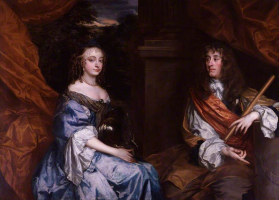


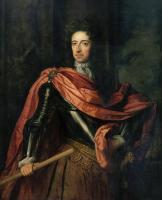

On 29th January 1706 Charles Sackville 6th Earl Dorset 1st Earl Middlesex (age 63) died at Bath, Somerset [Map]. His son Lionel (age 18) succeeded 7th Earl Dorset, 2nd Earl Middlesex, 7th Baron Buckhurst, 2nd Baron Cranfield of Cranfield in Middlesex.
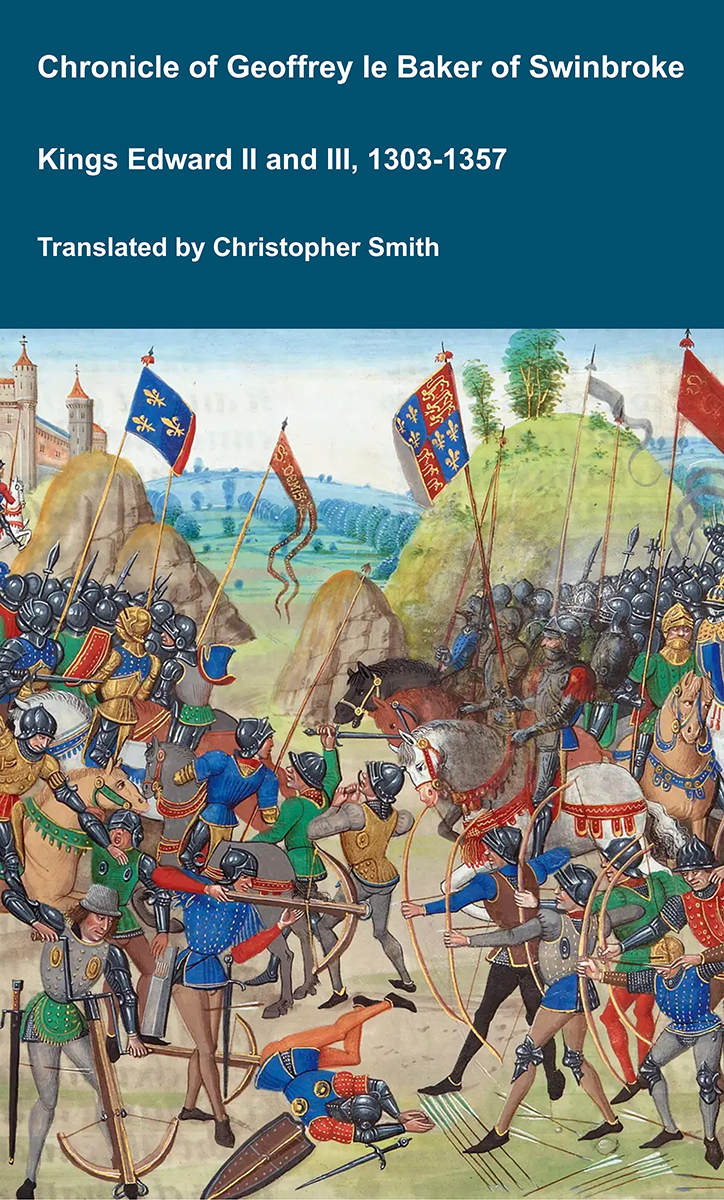
Chronicle of Geoffrey le Baker of Swinbroke
Baker was a secular clerk from Swinbroke, now Swinbrook, an Oxfordshire village two miles east of Burford. His Chronicle describes the events of the period 1303-1356: Gaveston, Bannockburn, Boroughbridge, the murder of King Edward II, the Scottish Wars, Sluys, Crécy, the Black Death, Winchelsea and Poitiers. To quote Herbert Bruce 'it possesses a vigorous and characteristic style, and its value for particular events between 1303 and 1356 has been recognised by its editor and by subsequent writers'. The book provides remarkable detail about the events it describes. Baker's text has been augmented with hundreds of notes, including extracts from other contemporary chronicles, such as the Annales Londonienses, Annales Paulini, Murimuth, Lanercost, Avesbury, Guisborough and Froissart to enrich the reader's understanding. The translation takes as its source the 'Chronicon Galfridi le Baker de Swynebroke' published in 1889, edited by Edward Maunde Thompson.
Available at Amazon in eBook and Paperback format.
On 29th January 1740 Richard Lumley 2nd Earl Scarborough (age 53) committed suicide by shooting himself through the roof of the mouth possibly as a result of his having told the Dowager Duchess of Manchester (age 34), who he had intended to marry the following day, a state secret which she then shared with her grandmother Sarah Jennings Duchess of Marlborough (age 79) who shared it with William Pulteney 1st Earl Bath (age 55) who shared it with everyone else. His brother Thomas (age 49) succeeded 3rd Earl of Scarborough, 4th Viscount Lumley, 3rd Baron Lumley. Frances Hamilton Countess Scarborough by marriage Countess of Scarborough. He left his estates to his youngest brother James Lumley (age 34).
On 4th February 1740 Richard Lumley 2nd Earl Scarborough was buried at the Grosvenor Chapel, Mayfair.


On 29th January 1749 Christian VII King of Denmark and Norway was born to Frederick V King of Denmark and Norway (age 25) and Louise Hanover Queen Consort Denmark and Norway (age 24). He a grandson of King George II of Great Britain and Ireland. He married 8th November 1766 his first cousin Caroline Matilda Hanover Queen Consort Denmark and Norway, daughter of Frederick Louis Hanover Prince of Wales and Augusta Saxe Coburg Altenburg, and had issue.
On 29th January 1751 Francis Osborne 5th Duke Leeds was born to Thomas Osborne 4th Duke Leeds (age 37) and Mary Godolphin Duchess Leeds. He married (1) 29th November 1773 Amelia Darcy 12th Baroness Darcy 9th Baroness Conyers, daughter of Robert Darcy 4th Earl Holderness, and had issue (2) 1788 Catherine Anguish Duchess Leeds.

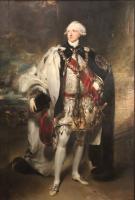

On 29th January 1756 Augustus Henry Fitzroy 3rd Duke Grafton (age 20) and Anne Liddell Duchess Grafton (age 19) were married.


On 29th January 1794 George Fitz-Clarence 1st Earl Munster was born illegitimately to King William IV of the United Kingdom (age 28) and Dorothea Bland aka "Mrs Jordan" (age 32). He married 18th October 1819 Mary Wyndham Countess Munster, daughter of George O'Brien Wyndham 3rd Earl Egremont and Elizabeth Ilive Countess Egremont, and had issue.


On 29th January 1801 Horatia Nelson was born illegitimately to Horatio Nelson 1st Viscount Nelson (age 42) and Amy Lyon aka Emma Hart Lady Hamilton (age 35).


On 29th January 1817 George Spencer 4th Duke of Marlborough (age 78) died. His son George (age 50) succeeded 5th Duke Marlborough, 5th Marquess of Blandford, 5th Earl of Marlborough, 5th Baron Churchill of Sandridge in Hertfordshire, 7th Earl of Sunderland, 9th Baron Spencer Wormleighton. Susan Stewart Duchess of Marlborough (age 49) by marriage Duchess Marlborough.


The Times. 1st February 1817. On Thursday at his seat at Blenheim, George Spencer, Duke of Marlborough, Marquis of Blandford (deceased), &c. His Grace was born the 26th January, 1739. He was found dead in his bed at 7 o'clock in the morning. He had for some time been in a very infirm state, though he had experienced very little severe indisposition. By his death there became vacant a blue riband of the Order of the Garter, the Lord Lieutenancy of Oxfordshire, the Rangership of Whichwood forest, and the High Stewardship of Oxford and Woodstock.
On 29th January 1820 King George III of Great Britain and Ireland (age 81) died at Windsor Castle [Map]. His reign the third longest after Victoria and Elizabeth II. His son George (age 57) succeeded IV King Great Britain and Ireland. Caroline of Brunswick Queen Consort England (age 51) by marriage Queen Consort England.
On 29th January 1825 María Francisca "Paca" Palafox Duchess Veragua Duchess Berwick Duchess Alba was born to Cipriano de Palafox 8th Count of Montijo (age 40) at Granada. She married 14th February 1838 Jacopo Fitz James Stuart 15th Duke Alba 13th Duke Veragua 8th Duke Berwick, son of Carlos Miguel Fitz James Stuart 12th Duke Veragua 7th Duke Berwick 14th Duke Alba and Rosalía Ventimiglia Duchess Veragua Duchess Berwick Duchess Alba.
Greville Memoirs. 29th January 1832. There were two divisions on Thursday night last—in the House of Lords on the Belgian question, and in the House of Commons on the Russian Loan. Harrowby, Wharncliffe (age 55), and Haddington stayed away; Lyndhurst voted. Only two bishops, Durham and Killaloe. Ministers had a majority of thirty-seven, for Aberdeen and the Duke persisted in bringing on the question and dividing upon it. The former spoke nearly three hours, and far better than ever he had done before; the Duke was prosy. In the other House the Government had not a shadow of a case; their law officers, Home and Denman, displayed an ignorance and stupidity which were quite ludicrous, and nothing saved them from defeat but a good speech at the end from Palmerston, and their remonstrances to their friends that unless they carried it they must resign. Not a soul defends them, and they are particularly blamed for their folly in not coming to Parliament at once, by which they might have avoided the scrape.1 They had only a majority of twenty-four. They were equally disgusted with both these divisions, both plainly showing that they have little power (independently of the Reform question) in either House. To be sure the case in the House of Commons was a wretched one, but in the House of Lords there was nothing to justify a vote of censure on Government, to which Aberdeen's motion was tantamount. But while they had a majority which was respectable enough to make it impossible to propose making Peers on that account, it was so small that they see clearly what they have to expect hereafter from such a House of Lords, and accordingly their adherents have thrown off the mask. Sefton called on me the day after, and said it was ridiculous to go on in this way, that the Tories had had possession of the Government so many years, and the power of making so many Peers, that no Whig or other Ministry could stand without a fresh creation to redress the balance.
Note 1. For a more particular account of the question of the Russo-Dutch Loan, see infra [February 4, 1832], p. 244. It has since been universally admitted that the conduct of the Government was wise and honourable, and that the separation of Holland and Belgium did not exonerate Great Britain from a financial engagement to foreign Powers.
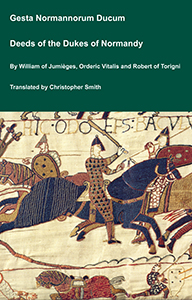
The Deeds of the Dukes of Normandy
The Gesta Normannorum Ducum [The Deeds of the Dukes of Normandy] is a landmark medieval chronicle tracing the rise and fall of the Norman dynasty from its early roots through the pivotal events surrounding the Norman Conquest of England. Originally penned in Latin by the monk William of Jumièges shortly before 1060 and later expanded at the behest of William the Conqueror, the work chronicles the deeds, politics, battles, and leadership of the Norman dukes, especially William’s own claim to the English throne. The narrative combines earlier historical sources with firsthand information and oral testimony to present an authoritative account of Normandy’s transformation from a Viking settlement into one of medieval Europe’s most powerful realms. William’s history emphasizes the legitimacy, military prowess, and governance of the Norman line, framing their expansion, including the conquest of England, as both divinely sanctioned and noble in purpose. Later chroniclers such as Orderic Vitalis and Robert of Torigni continued the history, extending the coverage into the 12th century, providing broader context on ducal rule and its impact. Today this classic work remains a foundational source for understanding Norman identity, medieval statesmanship, and the historical forces that reshaped England and Western Europe between 800AD and 1100AD.
Available at Amazon in eBook and Paperback format.
On 29th January 1839 Elizabeth Sutherland Duchess Sutherland 19th Countess Sutherland (age 73) died. Her son George (age 52) succeeded 20th Earl Sutherland.


On 29th January 1844 Ernest Saxe Coburg Gotha I Duke Saxe Coburg Gotha (age 60) died. His son Ernest (age 25) succeeded II Duke Saxe Coburg Gotha. Princess Alexandrine of Baden (age 23) by marriage Duchess Saxe Coburg Gotha.
Ten Years' Digging. On an eminence near Calton, called the Cop, is a barrow about 20 yards diameter, and now two feet high, but probably lowered by the plough, which we opened on the 29th of January and 3rd of February; and which furnished an example of the careful interment of part of the head of an ox, a deposit we have found in a few instances before. (Vestiges, pp. 82-85-86, and Steep Low [Map], Sept. 1848). The outside of the mound was of stiff red earth, which was replaced by stones as the centre was neared, where we found the first interment, consisting of calcined bones simply placed on a flat stone, about a foot below the surface. About a foot lower, two flat stones appeared, covering a small quadrangular cist 2 feet 6 inches square, and 2 feet deep; three of its sides formed of stones placed on edge, the fourth neatly walled up to the same height, and having the floor roughly paved with small stones. It contained the skeleton of a young person about twelve or fourteen years of age, in good preservation, accompanied by two flints that had been wrought into form, with others more rude. Near this cist was another of circular shape, formed by stones placed on end, which appeared to have been disturbed; it contained the remnants of another skeleton, and a round flint. Proceeding a short distance further towards the edge of the mound, we came to a small cist, constructed by four flat stones, inclined together at the top, so as to protect the contents without a horizontal covering; within was the right half of the upper jaw of an ox, wanting the teeth, and a rude pieoe of flint which may be imagined to be an arrow-head. Near the surface, in the middle of the mound, was a heap of fine charcoal, in which was a piece of coarse pottery, and during the excavation we found tines and other parts of stags' horns. This, the fifth instance, of the intentional burial of the whole or part of the head of the ox, goes far to prove the existence of some peculiar superstition or rite, of which no notice has reached modern times.
On 29th January 1853 Fanny Octavia Louise Spencer-Churchill was born to John Winston Spencer-Churchill 7th Duke of Marlborough (age 30) and Frances Anne Emily Vane Duchess of Marlborough (age 30). She married 9th June 1873 Edward Marjoribanks 2nd Baron Tweedmouth, son of Dudley Marjoribanks 1st Baron Tweedmouth and Isabella Hogg, and had issue.
On 29th January 1858 Leon Joseph Chavalliaud was born in 47 Chativesle Street Rheims.

On 29th January 1887 August Wilhelm Hohenzollern was born to Wilhelm Hohenzollern (age 28) and Empress Auguste Viktoria Oldenburg (age 28). He a great grandson of Queen Victoria of the United Kingdom. He married his first cousin Alexandra Viktoria Auguste Leopoldine Glücksburg, daughter of Friedrich Ferdinand Glücksburg Duke Schleswig Holstein Sonderburg Glücksburg and Victoria Friederike Oldenburg Duchess Schleswig Holstein Sonderburg Glücksburg, and had issue.
On 29th January 1906 King Christian IX of Denmark (age 87) died. His son Frederick (age 62) succeeded VIII King of Denmark. Louise of Sweden Queen Consort Denmark (age 54) by marriage Queen Consort Denmark.
On 29th January 1912 Bridget Poulet was born to William John Lydston Poulett 7th Earl Poulett (age 28) and Sylvia Storey Countess Poulett (age 22).


On 29th January 1912 Alexander Duff 1st Duke Fife (age 62) died. His daughter Princess (age 20) succeeded 2nd Duchess Fife.

On 26th January 1914 Jane Morris nee Burden (age 74) died at 5 Brock Street, Bath. On 29th January 1914 she was buried at St George's Church, Kelmscott [Map] in the same grave as her husband William Morris. Her body was driven in a 'motor' from Bath to the manor house just before the service. Her coffin was 17th century style and in oak with brass furniture and a simple inscription of her name and date of death, and was carried into the church by six village men. The church was well attended by the villagers as well as familiar names from the world of art and literature including Marie Stillman (age 69) whose wreath was noted in the papers. The hymn 'Now the labourer's task is o'er' was sung and the organist played the Dead March as the coffin was carried out to where William was already buried.
On 29th January 1991 Hugh Grosvenor 7th Duke of Westminster was born to Gerald Cavendish Grosvenor 6th Duke Westminster (age 39) and Natalia Phillips Duchess of Westminster (age 31). King Charles III (age 42) was godfather. He married 7th June 2024 Olivia Henson.
The Deeds of the Dukes of Normandy
The Gesta Normannorum Ducum [The Deeds of the Dukes of Normandy] is a landmark medieval chronicle tracing the rise and fall of the Norman dynasty from its early roots through the pivotal events surrounding the Norman Conquest of England. Originally penned in Latin by the monk William of Jumièges shortly before 1060 and later expanded at the behest of William the Conqueror, the work chronicles the deeds, politics, battles, and leadership of the Norman dukes, especially William’s own claim to the English throne. The narrative combines earlier historical sources with firsthand information and oral testimony to present an authoritative account of Normandy’s transformation from a Viking settlement into one of medieval Europe’s most powerful realms. William’s history emphasizes the legitimacy, military prowess, and governance of the Norman line, framing their expansion, including the conquest of England, as both divinely sanctioned and noble in purpose. Later chroniclers such as Orderic Vitalis and Robert of Torigni continued the history, extending the coverage into the 12th century, providing broader context on ducal rule and its impact. Today this classic work remains a foundational source for understanding Norman identity, medieval statesmanship, and the historical forces that reshaped England and Western Europe between 800AD and 1100AD.
Available at Amazon in eBook and Paperback format.
On 29th January 1330 John Beauchamp 3rd Baron Beauchamp Somerset was born to John Beauchamp 2nd Baron Beauchamp Somerset (age 23) and Margaret St John Baroness Beauchamp Somerset (age 26) at Stoke sub Hambdon, Somerset. He married in or before 8th October 1361 his fourth cousin once removed Alice Beauchamp Baroness Beauchamp Somerset, daughter of Thomas Beauchamp 11th Earl Warwick and Katherine Mortimer Countess Warwick.
On 29th January 1451 John Aviz was born to Alfonso "The African" V King Portugal (age 19) and Isabella Aviz Queen Consort Portugal (age 19). He a great x 3 grandson of King Edward III of England. Coefficient of inbreeding 7.45%. He died aged less than one years old.
On 29th January 1688 Richard Wenman 5th Viscount Wenman was born to Richard Wenman 4th Viscount Wenman (age 31) and Catherine Chamberlayne Countess Abingdon (age 20).

On 29th January 1693 Henry Herbert 6th Earl Montgomery 9th Earl Pembroke was born to Thomas Herbert 8th Earl Pembroke 5th Earl Montgomery (age 37) and Margaret Sawyer Countess Pembroke and Montgomery. He married 28th August 1733 his half sixth cousin Mary Fitzwilliam Countess Pembroke and Montgomery, daughter of Richard Fitzwilliam 5th Viscount Fitzwilliam and Frances Shelley Viscountess Fitzwilliam, and had issue.
On 29th January 1708 Benjamin Kemp 7th Baronet was born to Robert Kemp 3rd Baronet (age 40) and Elizabeth Brand.
On 29th January 1717 Jeffrey Amherst 1st Baron Amherst was born to Jeffrey Amherst (age 40). He married (1) 1753 Jane Dalison (2) after 1765 Mary Cary Baroness Amherst.

On 29th January 1745 Penistone Lamb 1st Viscount Melbourne was born to Matthew Lamb 1st Baronet (age 40) and Charlotte Coke (age 26). He married 13th April 1769 Elizabeth Milbanke Viscountess Melbourne, daughter of Ralph Milbanke 5th Baronet, and had issue.
On 29th January 1749 Christian VII King of Denmark and Norway was born to Frederick V King of Denmark and Norway (age 25) and Louise Hanover Queen Consort Denmark and Norway (age 24). He a grandson of King George II of Great Britain and Ireland. He married 8th November 1766 his first cousin Caroline Matilda Hanover Queen Consort Denmark and Norway, daughter of Frederick Louis Hanover Prince of Wales and Augusta Saxe Coburg Altenburg, and had issue.
On 29th January 1751 Francis Osborne 5th Duke Leeds was born to Thomas Osborne 4th Duke Leeds (age 37) and Mary Godolphin Duchess Leeds. He married (1) 29th November 1773 Amelia Darcy 12th Baroness Darcy 9th Baroness Conyers, daughter of Robert Darcy 4th Earl Holderness, and had issue (2) 1788 Catherine Anguish Duchess Leeds.

On 29th January 1756 Richard Hely-Hutchinson 1st Earl of Donoughmore was born to John Hely-Hutchinson (age 32) and Christiana Nixon 1st Baroness Donoughmore (age 23).
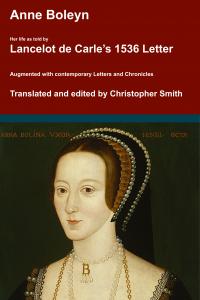
Anne Boleyn. Her Life as told by Lancelot de Carle's 1536 Letter.
In 1536, two weeks after the execution of Anne Boleyn, her brother George and four others, Lancelot du Carle, wrote an extraordinary letter that described Anne's life, and her trial and execution, to which he was a witness. This book presents a new translation of that letter, with additional material from other contemporary sources such as Letters, Hall's and Wriothesley's Chronicles, the pamphlets of Wynkyn the Worde, the Memorial of George Constantyne, the Portuguese Letter and the Baga de Secrets, all of which are provided in Appendices.
Available at Amazon in eBook and Paperback format.
On 29th January 1783 Rachel Ives Drake Baroness Boston was born. She married 17th October 1801 George Irby 3rd Baron Boston, son of Frederick Irby 2nd Baron Boston and Christian Methuen, and had issue.
On 29th January 1784 Bishop Hugh Percy was born to Algernon Percy 1st Earl Beverley (age 34) and Isabella Susan Burrell Countess Beverley (age 33). He married before September 1831 his half fifth cousin Mary Manners Sutton, daughter of Archbishop Charles Manners-Sutton and Mary Thoroton, and had issue.
On 29th January 1787 Edmund Beckett aka Denison 4th Baronet was born to John Beckett 1st Baronet (age 43) and Mary Wilson Lady Beckett (age 38). He married 14th December 1814 Maria Beverley Lady Beckett and had issue.
On 29th January 1794 George Fitz-Clarence 1st Earl Munster was born illegitimately to King William IV of the United Kingdom (age 28) and Dorothea Bland aka "Mrs Jordan" (age 32). He married 18th October 1819 Mary Wyndham Countess Munster, daughter of George O'Brien Wyndham 3rd Earl Egremont and Elizabeth Ilive Countess Egremont, and had issue.
On 29th January 1798 Patrick Bellew 1st Baron Bellew was born to Edward Bellew 6th Baronet (age 38). He married 19th January 1829 Anna Fermina de Mendoza Baroness bellew and had issue.
On 29th January 1801 Horatia Nelson was born illegitimately to Horatio Nelson 1st Viscount Nelson (age 42) and Amy Lyon aka Emma Hart Lady Hamilton (age 35).
On 29th January 1809 Reverend Brooke William Boothby 9th Baronet was born to William Boothby 8th Baronet (age 26) and Frances Jenkinson Lady Boothby. He married before 13th November 1856 his first cousin Martha Serena Boothby and had issue.
On 29th January 1809 Robert Edward Wilmot 4th Baronet was born to Robert John Wilmot 3rd Baronet (age 24).
On 29th January 1810 Alan Legge Gardner 3rd Baron Gardner was born to Alan Hyde Gardner 2nd Baron Gardner (age 39) and Charlotte Elizabeth Smith Baroness Gardner. He married (1) 1835 Frances Margaret Hughes Baroness Gardner (2) December 1848 Julia Sarah Hayfield Fortescue Baroness Gardner.
On 29th January 1810 William Edmonstone 4th Baronet was born to Charles Edmonstone 2nd Baronet (age 46) and Louisa Hotham October (age 31). He married 13th July 1841 Mary Elizabeth Parsons and had issue.
On 29th January 1822 Frederick James Baker was born to Frederick Baker 2nd Baronet (age 49) and Harriet Simeon Lady Baker.
William of Worcester's Chronicle of England
William of Worcester, born around 1415, and died around 1482 was secretary to John Fastolf, the renowned soldier of the Hundred Years War, during which time he collected documents, letters, and wrote a record of events. Following their return to England in 1440 William was witness to major events. Twice in his chronicle he uses the first person: 1. when writing about the murder of Thomas, 7th Baron Scales, in 1460, he writes '… and I saw him lying naked in the cemetery near the porch of the church of St. Mary Overie in Southwark …' and 2. describing King Edward IV's entry into London in 1461 he writes '… proclaimed that all the people themselves were to recognize and acknowledge Edward as king. I was present and heard this, and immediately went down with them into the city'. William’s Chronicle is rich in detail. It is the source of much information about the Wars of the Roses, including the term 'Diabolical Marriage' to describe the marriage of Queen Elizabeth Woodville’s brother John’s marriage to Katherine, Dowager Duchess of Norfolk, he aged twenty, she sixty-five or more, and the story about a paper crown being placed in mockery on the severed head of Richard, 3rd Duke of York.
Available at Amazon in eBook and Paperback format.
On 29th January 1822 Charlotte Elizabeth Petre was born to William Henry Francis Petre 11th Baron Petre (age 29) and Frances Charlotte Bedingfield (age 25). She married 23rd May 1849 her first cousin Charles Edward Petre.
On 29th January 1825 María Francisca "Paca" Palafox Duchess Veragua Duchess Berwick Duchess Alba was born to Cipriano de Palafox 8th Count of Montijo (age 40) at Granada. She married 14th February 1838 Jacopo Fitz James Stuart 15th Duke Alba 13th Duke Veragua 8th Duke Berwick, son of Carlos Miguel Fitz James Stuart 12th Duke Veragua 7th Duke Berwick 14th Duke Alba and Rosalía Ventimiglia Duchess Veragua Duchess Berwick Duchess Alba.
On 29th January 1826 William Hay 10th Marquess of Tweeddale was born to George Hay 8th Marquess Tweedale (age 38) and Susan Montagu Marchioness Tweddale (age 25).
On 29th January 1826 Agnes Louisa Petre Baroness Clifford was born to William Henry Francis Petre 11th Baron Petre (age 33) and Emma Agnes Howard (age 22). She married in or before 1851 her fourth cousin Charles Hugh Clifford 8th Baron Clifford Chudleigh, son of Charles Clifford 7th Baron Clifford Chudleigh.
On 29th January 1838 Major Loftus Lewis Astley Cooper was born to Astley Paston Cooper 2nd Baronet (age 40) and Elizabeth Harriet Rickford Lady Cooper (age 35).

On 29th January 1847 John William Maule Ramsay 13th Earl Dalhousie was born. He married 1877 Ida Louise Bennet Countess Dalhousie, daughter of Charles Bennet 6th Earl Tankerville and Olivia Montagu Countess Tankerville, and had issue.

On 29th January 1852 Frederick Oliver Robinson 2nd Marquess Ripon was born to George Frederick Samuel Robinson 1st Marquess Ripon (age 24) and Henrietta Anne Theodosia Vyner Marchioness Ripon (age 18). Coefficient of inbreeding 3.23%. He married 1885 Constance Gwladys Herbert Marchioness Ripon, daughter of Sidney Herbert 1st Baron Herbert Lea.
On 29th January 1853 Fanny Octavia Louise Spencer-Churchill was born to John Winston Spencer-Churchill 7th Duke of Marlborough (age 30) and Frances Anne Emily Vane Duchess of Marlborough (age 30). She married 9th June 1873 Edward Marjoribanks 2nd Baron Tweedmouth, son of Dudley Marjoribanks 1st Baron Tweedmouth and Isabella Hogg, and had issue.
On 29th January 1858 Leon Joseph Chavalliaud was born in 47 Chativesle Street Rheims.
On 29th January 1859 George Lockwood Morris 8th Baronet was born to George Byng Morris (age 42).
On 29th January 1860 Field Marshal William Robertson 1st Baronet was born to Thomas Charles Robertson and Ann Dexter Beet.
William of Worcester's Chronicle of England
William of Worcester, born around 1415, and died around 1482 was secretary to John Fastolf, the renowned soldier of the Hundred Years War, during which time he collected documents, letters, and wrote a record of events. Following their return to England in 1440 William was witness to major events. Twice in his chronicle he uses the first person: 1. when writing about the murder of Thomas, 7th Baron Scales, in 1460, he writes '… and I saw him lying naked in the cemetery near the porch of the church of St. Mary Overie in Southwark …' and 2. describing King Edward IV's entry into London in 1461 he writes '… proclaimed that all the people themselves were to recognize and acknowledge Edward as king. I was present and heard this, and immediately went down with them into the city'. William’s Chronicle is rich in detail. It is the source of much information about the Wars of the Roses, including the term 'Diabolical Marriage' to describe the marriage of Queen Elizabeth Woodville’s brother John’s marriage to Katherine, Dowager Duchess of Norfolk, he aged twenty, she sixty-five or more, and the story about a paper crown being placed in mockery on the severed head of Richard, 3rd Duke of York.
Available at Amazon in eBook and Paperback format.
On 29th January 1864 Evan Edward Charteris was born to Francis Richard Charteris 10th Earl of Wemyss (age 45) and Anne Frederica Anson Countess Wemyss (age 40). He married 9th August 1930 Dorothy Margaret Browne, daughter of Valentine Charles Browne 5th Earl of Kenmare and Elizabeth Baring Countess Kenmare.
On 29th January 1869 Thomas Brand 3rd Viscount Hampden was born to Henry Brand 2nd Viscount Hampden (age 27) and Susan Henrietta Cavendish Viscountess Hampden (age 22). He married 29th April 1899 his third cousin once removed Katharine Mary Montagu-Douglas-Scott, daughter of William Scott 6th Duke Buccleuch 8th Duke Queensberry and Louisa Jane Hamilton Duchess Buccleuch and Queensbury, and had issue.
On 29th January 1885 Commander Frederick Neville Eardley-Wilmot was born to William Assheton Eardley-Wilmot 3rd Baronet (age 43).
On 29th January 1887 August Wilhelm Hohenzollern was born to Wilhelm Hohenzollern (age 28) and Empress Auguste Viktoria Oldenburg (age 28). He a great grandson of Queen Victoria of the United Kingdom. He married his first cousin Alexandra Viktoria Auguste Leopoldine Glücksburg, daughter of Friedrich Ferdinand Glücksburg Duke Schleswig Holstein Sonderburg Glücksburg and Victoria Friederike Oldenburg Duchess Schleswig Holstein Sonderburg Glücksburg, and had issue.
On 29th January 1912 Bridget Poulet was born to William John Lydston Poulett 7th Earl Poulett (age 28) and Sylvia Storey Countess Poulett (age 22).
On 29th January 1932 Robin Neville 10th Baron Braybrooke was born to Henry Seymour Neville 9th Baron Braybrooke (age 34).
On 29th January 1951 Frederick Richard Penn Curzon 7th Earl Howe was born to Commander Chambré George William Penn Curzon (age 52).
On 29th January 1991 Hugh Grosvenor 7th Duke of Westminster was born to Gerald Cavendish Grosvenor 6th Duke Westminster (age 39) and Natalia Phillips Duchess of Westminster (age 31). King Charles III (age 42) was godfather. He married 7th June 2024 Olivia Henson.
On 29th January 1254 Hugh XII of Lusignan VII Count of La Marche III Count Angoulême (age 19) and Jeanne Fougères Countess Lusignan Countess La Marche and Angoulême were married. She by marriage Seigneur of Lusignan, Countess La Marche, Countess Angoulême. He the son of Hugh XI of Lusignan VI Count of La Marche II Count Angoulême and Yolande Capet Countess Lusignan, La Marche and Angoulême (age 35).
On 29th January 1666 Seymour Shirley 5th Baronet (age 19) and Diana Bruce were married. She by marriage Lady Shirley of Staunton Harold in Leicestershire. She the daughter of Robert Bruce 2nd Earl Elgin 1st Earl Ailesbury (age 39) and Diana Grey Countess Elgin and Ailesbury (age 36). They were sixth cousins.
On 29th January 1667 John Wilmot 2nd Earl Rochester (age 19) and Elizabeth Malet Countess Rochester (age 16) were married at Knightsbridge Chapel. She by marriage Countess Rochester. They having eloped and married against her families wishes. Two years previously he had abducted her for which he spent three weeks in prison. Her father being dead it isn't clear whose ward she was. He the son of Henry Wilmot 1st Earl Rochester and Anne St John Countess Rochester (age 52).


On 29th January 1702 James Grant 6th Baronet (age 22) and Anne Colquhoun were married.
On 29th January 1756 Augustus Henry Fitzroy 3rd Duke Grafton (age 20) and Anne Liddell Duchess Grafton (age 19) were married.
Chronicle of Geoffrey le Baker of Swinbroke
Baker was a secular clerk from Swinbroke, now Swinbrook, an Oxfordshire village two miles east of Burford. His Chronicle describes the events of the period 1303-1356: Gaveston, Bannockburn, Boroughbridge, the murder of King Edward II, the Scottish Wars, Sluys, Crécy, the Black Death, Winchelsea and Poitiers. To quote Herbert Bruce 'it possesses a vigorous and characteristic style, and its value for particular events between 1303 and 1356 has been recognised by its editor and by subsequent writers'. The book provides remarkable detail about the events it describes. Baker's text has been augmented with hundreds of notes, including extracts from other contemporary chronicles, such as the Annales Londonienses, Annales Paulini, Murimuth, Lanercost, Avesbury, Guisborough and Froissart to enrich the reader's understanding. The translation takes as its source the 'Chronicon Galfridi le Baker de Swynebroke' published in 1889, edited by Edward Maunde Thompson.
Available at Amazon in eBook and Paperback format.
On 29th January 1778 Edmund Bacon 9th and 8th Baronet (age 28) and Anne Proctor Lady Bacon (age 29) were married. She by marriage Lady Bacon of Mildenhall in Suffolk, Lady Bacon of Redgrave in Suffolk
On 29th January 1789 Christopher Willoughby 1st Baronet (age 40) and Martha Evans Lady Willoughby (age 21) were married.
On 29th January 1790 Edward Jervis Ricketts aka Jervis 2nd Viscount St Vincent (age 22) and Mary Cassandra Twisleton (age 15) were married.
On 29th January 1805 William Boothby 8th Baronet (age 22) and Frances Jenkinson Lady Boothby were married.
On 29th January 1822 Thomas Taylour 2nd Marquess of Headfort (age 34) and Olivia Stevenson were married. He the son of Thomas Taylour 1st Marquess of Headfort (age 64) and Mary Quin Marchioness of Headfort.
On 29th January 1850 Charles Bennet 6th Earl Tankerville (age 40) and Olivia Montagu Countess Tankerville (age 19) were married at Kimbolton Castle [Map]. The difference in their ages was 20 years. She the daughter of George Montagu 6th Duke Manchester (age 50) and Millicent Sparrow Duchess Manchester. He the son of Charles Augustus Bennet 5th Earl Tankerville (age 73) and Corisande Armandine Sophie Léonie Hélène Gramont Countess Tankerville (age 67).
On 29th January 1852 Cornwallis Ricketts 2nd Baronet (age 49) and Caroline Augusta Pelham-Clinton (age 42) were married. She the daughter of Henry Pelham-Clinton 4th Duke Newcastle-under-Lyne and Georgiana Elizabeth Mundy Duchess Newcastle under Lyne.
On 29th January 1919 Michael Knatchbull 5th Baron Brabourne (age 23) and Doreen Browne Baroness Brabourne (age 22) were married at St Peter's Church, Eaton Square. She by marriage Baroness Bradbourne.
On 29th January 1970 Edward Foljambe 5th Earl of Liverpool (age 25) and Juliana Noel Countess Liverpool (age 21) were married. She by marriage Countess Liverpool. She the daughter of Anthony Gerard Edward Noel 5th Earl of Gainsborough (age 46) and Mary Stourton Countess Gainsborough (age 44). They were sixth cousins. She a great x 4 granddaughter of King William IV of the United Kingdom.
On 29th January 1291 Joan Chatillon I Countess Blois (age 38) died.
The Deeds of the Dukes of Normandy
The Gesta Normannorum Ducum [The Deeds of the Dukes of Normandy] is a landmark medieval chronicle tracing the rise and fall of the Norman dynasty from its early roots through the pivotal events surrounding the Norman Conquest of England. Originally penned in Latin by the monk William of Jumièges shortly before 1060 and later expanded at the behest of William the Conqueror, the work chronicles the deeds, politics, battles, and leadership of the Norman dukes, especially William’s own claim to the English throne. The narrative combines earlier historical sources with firsthand information and oral testimony to present an authoritative account of Normandy’s transformation from a Viking settlement into one of medieval Europe’s most powerful realms. William’s history emphasizes the legitimacy, military prowess, and governance of the Norman line, framing their expansion, including the conquest of England, as both divinely sanctioned and noble in purpose. Later chroniclers such as Orderic Vitalis and Robert of Torigni continued the history, extending the coverage into the 12th century, providing broader context on ducal rule and its impact. Today this classic work remains a foundational source for understanding Norman identity, medieval statesmanship, and the historical forces that reshaped England and Western Europe between 800AD and 1100AD.
Available at Amazon in eBook and Paperback format.
On 29th January 1386 William Bardolf 4th Baron Bardolf (age 36) died. His son Thomas (age 16) succeeded 5th Baron Bardolf of Wormegay in Norfolk. Avice Cromwell Baroness Bardolf (age 16) by marriage Baroness Bardolf of Wormegay in Norfolk.
On 29th January 1465 Louis Savoy I Count Savoy (age 51) died. His son Amadeus (age 29) succeeded IX Duke Savoy.
On 29th January 1487 Margaret Ferrers Baroness Beauchamp Powick (age 74) died. She was buried at Worcester Cathedral [Map].
On 29th January 1508 Elizabeth Fitzhugh Baroness Vaux Harrowden died.
On 29th January 1601 Louise Lorraine Queen Consort France (age 47) died at the Château de Moulins.
On 29th January 1608 Frederick I Duke Württemberg (age 50) died.
On 29th January 1622 Francis Norreys 1st Earl Berkshire (age 42) shot himself with a crossbow at Rycote, Oxfordshire [Map]; probably deliberately.
On 31st January 1622 he died. He was buried at Dorchester Abbey, Oxfordshire [Map]. His daughter Elizabeth (age 19) succeeded 3rd Baroness Norreys of Rycote. Earl Berkshire and Viscount Thame extinct.

On 29th January 1663 Bishop Robert Sanderson (age 75) died.
On 29th January 1663 Bishop Robert Saunderson (age 76) died.
On 29th January 1706 Charles Sackville 6th Earl Dorset 1st Earl Middlesex (age 63) died at Bath, Somerset [Map]. His son Lionel (age 18) succeeded 7th Earl Dorset, 2nd Earl Middlesex, 7th Baron Buckhurst, 2nd Baron Cranfield of Cranfield in Middlesex.
Chronicle of a Bourgeois of Valenciennes
Récits d’un bourgeois de Valenciennes aka The Chronicle of a Bourgeois of Valenciennes is a vivid 14th-century vernacular chronicle written by an anonymous urban chronicler from Valenciennes in the County of Hainaut. It survives in a manuscript that describes local and regional history from about 1253 to 1366, blending chronology, narrative episodes, and eyewitness-style accounts of political, military, and social events in medieval France, Flanders, and the Low Countries. The work begins with a chronological framework of events affecting Valenciennes and its region under rulers such as King Philip VI of France and the shifting allegiances of local nobility. It includes accounts of conflicts, sieges, diplomatic manoeuvres, and the impact of broader struggles like the Hundred Years’ War on urban life in Hainaut. Written from the perspective of a burgher (bourgeois) rather than a monastery or royal court, the chronicle offers a rare lay viewpoint on high politics and warfare, reflecting how merchants, townspeople, and civic institutions experienced the turbulence of the 13th and 14th centuries. Its narrative style combines straightforward reporting of events with moral and civic observations, making it a valuable source for readers interested in medieval urban society, regional politics, and the lived experience of war and governance in pre-modern Europe.
Available at Amazon in eBook and Paperback format.
On 29th January 1715 Charles Barrington 5th Baronet (age 44) died. His first cousin John (age 42) succeeded 6th Baronet Barrington of Barrington Hall. Susan Draper Lady Barrington (age 41) by marriage Lady Barrington of Barrington Hall.
On 29th January 1733 Henry Godolphin (age 84) died at Windsor, Berkshire [Map]. He was buried at Eton College Chapel [Map].
On 29th January 1736 George Granville 1st Baron Lansdowne (age 69) died. He was buried at St Clement Danes Church, Westminster [Map]. His wife Mary Villiers Baroness Lansdowne had died twelve days before. Baron Lansdowne of Bideford in Devon extinct.
On 29th January 1737 George Hamilton 1st Earl Orkney (age 70) died. His daughter Anne succeeded 2nd Countess Orkney.
On 29th January 1740 Richard Lumley 2nd Earl Scarborough (age 53) committed suicide by shooting himself through the roof of the mouth possibly as a result of his having told the Dowager Duchess of Manchester (age 34), who he had intended to marry the following day, a state secret which she then shared with her grandmother Sarah Jennings Duchess of Marlborough (age 79) who shared it with William Pulteney 1st Earl Bath (age 55) who shared it with everyone else. His brother Thomas (age 49) succeeded 3rd Earl of Scarborough, 4th Viscount Lumley, 3rd Baron Lumley. Frances Hamilton Countess Scarborough by marriage Countess of Scarborough. He left his estates to his youngest brother James Lumley (age 34).
On 4th February 1740 Richard Lumley 2nd Earl Scarborough was buried at the Grosvenor Chapel, Mayfair.
On 29th January 1744 Thomas Mansel 2nd Baron Mansel (age 25) died. His uncle Christopher (age 24) succeeded 3rd Baron Mansel of Margam, 7th Baronet Mansel of Margam.
On 29th January 1806 Eleanor Foote (age 35) died.
On 29th January 1808 Henry Gage 3rd Viscount Gage (age 46) died. His son Henry (age 16) succeeded 4th Viscount Gage of Castle Island in County Kerry, 4th Baron Gage of Castlebar in County Mayo, 3rd Baron Gage of Highmeadow, 11th Baronet Gage of Firley in Sussex.
On 29th January 1812 John Knightley 1st Baronet (age 65) died. His nephew Charles (age 30) succeeded 2nd Baronet Knightley of Fawsley.

On 29th January 1816 Elizabeth Laura Waldegrave Countess Waldegrave (age 55) died.
On 29th January 1817 George Spencer 4th Duke of Marlborough (age 78) died. His son George (age 50) succeeded 5th Duke Marlborough, 5th Marquess of Blandford, 5th Earl of Marlborough, 5th Baron Churchill of Sandridge in Hertfordshire, 7th Earl of Sunderland, 9th Baron Spencer Wormleighton. Susan Stewart Duchess of Marlborough (age 49) by marriage Duchess Marlborough.
The History of William Marshal was commissioned by his son shortly after William’s death in 1219 to celebrate the Marshal’s remarkable life; it is an authentic, contemporary voice. The manuscript was discovered in 1861 by French historian Paul Meyer. Meyer published the manuscript in its original Anglo-French in 1891 in two books. This book is a line by line translation of the first of Meyer’s books; lines 1-10152. Book 1 of the History begins in 1139 and ends in 1194. It describes the events of the Anarchy, the role of William’s father John, John’s marriages, William’s childhood, his role as a hostage at the siege of Newbury, his injury and imprisonment in Poitou where he met Eleanor of Aquitaine and his life as a knight errant. It continues with the accusation against him of an improper relationship with Margaret, wife of Henry the Young King, his exile, and return, the death of Henry the Young King, the rebellion of Richard, the future King Richard I, war with France, the death of King Henry II, and the capture of King Richard, and the rebellion of John, the future King John. It ends with the release of King Richard and the death of John Marshal.
Available at Amazon in eBook and Paperback format.
On 29th January 1818 Claude Champion de Crespgny 1st Baronet (age 83) died. His son William (age 53) succeeded 2nd Baronet Champion de Crespigny of Champion Lodge in Surrey. Sarah Windsor Lady Champion de Crespigny (age 55) by marriage Lady Champion de Crespigny of Champion Lodge in Surrey.
On 29th January 1819 Henry Tempest 4th Baronet (age 66) died without issue. Baronet Tempest of Tong in Yorkshire extinct.
On 29th January 1819 Isabella Stanhope Countess Sefton (age 71) died.
On 29th January 1820 King George III of Great Britain and Ireland (age 81) died at Windsor Castle [Map]. His reign the third longest after Victoria and Elizabeth II. His son George (age 57) succeeded IV King Great Britain and Ireland. Caroline of Brunswick Queen Consort England (age 51) by marriage Queen Consort England.


On 29th January 1835 Margaret King Baroness Monthermer (age 62) died.
On 29th January 1839 Elizabeth Sutherland Duchess Sutherland 19th Countess Sutherland (age 73) died. Her son George (age 52) succeeded 20th Earl Sutherland.
On 29th January 1844 Ernest Saxe Coburg Gotha I Duke Saxe Coburg Gotha (age 60) died. His son Ernest (age 25) succeeded II Duke Saxe Coburg Gotha. Princess Alexandrine of Baden (age 23) by marriage Duchess Saxe Coburg Gotha.

On 29th January 1853 Frederick Lamb 3rd Viscount Melbourne (age 70) died without issue. Viscount Melbourne of Kilmore in County Cavan, Baron Beauvale of Beauvale in Nottinghamshire and Baronet Lamb of Brocket Hall in Hertfordshire extinct. Melbourne Hall, Derbyshire [Map] was inherited by his sister Emily Lamb Countess Cowper (age 65).
On 29th January 1861 Francis North 6th Earl Guildford (age 88) died. His grandson Dudley (age 9) succeeded 7th Earl Guildford, 9th Baron Guildford.
On 29th January 1865 Maria Clara Murray Lady Lechmere died.
On 29th January 1882 Thomas Wathen Phipps Waller 2nd Baronet (age 76) died. His son George (age 44) succeeded 3rd Baronet Waller of Braywick Lodge in Berkshire. Beatrice Katherine Frances Tower Lady Waller (age 36) by marriage Lady Waller of Braywick Lodge in Berkshire.
On 29th January 1905 Catherine Cox Countess Stamford and Warrington died at Bradgate House.
On 29th January 1906 King Christian IX of Denmark (age 87) died. His son Frederick (age 62) succeeded VIII King of Denmark. Louise of Sweden Queen Consort Denmark (age 54) by marriage Queen Consort Denmark.
On 29th January 1912 Alexander Duff 1st Duke Fife (age 62) died. His daughter Princess (age 20) succeeded 2nd Duchess Fife.

On 29th January 1914 Henry Holland 1st Viscount Knutsford (age 88) died. His son Sydney (age 58) succeeded 2nd Viscount Knutsford of Knutsford in Cheshire, 2nd Baron Knutsford of Knutsford in Cheshire, 3rd Baronet Holland of Sandlebridge. Mary Ashburnham Viscountess Knutsford (age 54) by marriage Viscountess Knutsford of Knutsford in Cheshire.
William of Worcester's Chronicle of England
William of Worcester, born around 1415, and died around 1482 was secretary to John Fastolf, the renowned soldier of the Hundred Years War, during which time he collected documents, letters, and wrote a record of events. Following their return to England in 1440 William was witness to major events. Twice in his chronicle he uses the first person: 1. when writing about the murder of Thomas, 7th Baron Scales, in 1460, he writes '… and I saw him lying naked in the cemetery near the porch of the church of St. Mary Overie in Southwark …' and 2. describing King Edward IV's entry into London in 1461 he writes '… proclaimed that all the people themselves were to recognize and acknowledge Edward as king. I was present and heard this, and immediately went down with them into the city'. William’s Chronicle is rich in detail. It is the source of much information about the Wars of the Roses, including the term 'Diabolical Marriage' to describe the marriage of Queen Elizabeth Woodville’s brother John’s marriage to Katherine, Dowager Duchess of Norfolk, he aged twenty, she sixty-five or more, and the story about a paper crown being placed in mockery on the severed head of Richard, 3rd Duke of York.
Available at Amazon in eBook and Paperback format.

On 29th January 1917 Evelyn Baring 1st Earl Cromer (age 75) died. His son Rowland (age 39) succeeded 2nd Earl Cromer, 2nd Viscount Errington Hexham Northumberland. Ruby Florence Mary Elliot-Murray-Kynynmound Countess Cromer (age 30) by marriage Countess Cromer.
On 29th January 1950 Charles Gunning 7th Baronet (age 90) died. His second cousin once removed Robert (age 48) succeeded 8th Baronet Gunning of Eltham in Kent.
On 29th January 1962 Alexander Murray 8th Earl of Dunmore (age 90) died. He was cremated at Golders Green Cemetery. His grandson John (age 22) succeeded 9th Earl Dunmore, 5th Baron Dunmore of Dunmore in the Forest of Athole in Perthshire.
On 29th January 1964 Edward Digby 11th and 5th Baron Digby (age 69) died. His son Edward (age 39) succeeded 12th Baron Digby of Geashill in County Offaly, 6th Baron Digby of Sherbourne in Dorset.
On 29th January 1970 Thelma Morgan Viscountess Furness (age 65) died.
On 29th January 1976 Gyles Isham 12th Baronet (age 72) died without issue. His third cousin once removed Ian (age 52) succeeded 13th Baronet Isham of Lamport in Northamptonshire.
On 29th January 1982 Richard Bellingham Graham 10th Baronet (age 69) died. His son James (age 41) succeeded 11th Baronet Graham of Norton Conyers in Yorkshire.
On 29th January 1984 Ronald Horace Brooke-Pechell 9th Baronet (age 65) died. Baronet Brooke-Pechell of Paglesham in Essex extinct.
On 29th January 1987 Eva Isabel Countess Rosebery (age 94) died and Constance Mary Beckett Baroness Aberdare.
On 29th January 1992 Michael Hicks-Beach 2nd Earl St Aldwyn (age 79) died. His son Michael (age 42) succeeded 3rd Earl St Aldwyn of Coln St Aldwyn in Gloucestershire, 11th Baronet Hicks-Beach of Beverston in Gloucestershire.