All About History Books on Amazon
Annals of Kings Richard II and Henry IV 1393-1406
The Annals of Kings Richard II and Henry IV offers a vivid contemporary account of one of the most turbulent periods in late medieval England. Covering the reigns of Richard II and Henry IV, the chronicle records royal ceremonies, political conflict, rebellion, war, taxation, religious controversy, executions, popular unrest and remarkable portents. Its pages include a detailed description of Richard II’s coronation, the fall and deposition of the king, Henry IV’s seizure of the throne, the Percy rebellion, the execution of Archbishop Richard Scrope, the campaigns of Owain Glyndŵr, and England’s relations with Scotland, France, Portugal and Scandinavia. Alongside affairs of state, the annalist preserves reports of miracles, eclipses, prophecies, supernatural events and the experiences of ordinary townspeople, clergy, soldiers and travellers. Written from a monastic perspective, the work combines political observation with moral judgement, presenting victories and disasters as evidence of divine favour or punishment. At once a historical record and a reflection of medieval belief, the Annals provides an invaluable window into the challenges, ceremonies and conflicts of England at the turn of the fifteenth century.
Available at Amazon in eBook and Paperback format.
28th May is in May.
1265 Prince Edward's Escape from Hereford
1327 Execution of the Despencers
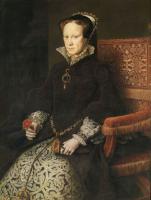
1445 Coronation of Queen Margaret of Anjou
27 May 1541 Execution of Margaret Pole
1550 Visit of the French Ambassadors
On 28th May 812 William Poitiers Duke Toulouse [aged 57] died.
On 28th May 1023 Archbishop Wulfstan died.
On 28th May 1187 Urraca Ivrea Queen Consort Portugal was born to Alfonso VIII King Castile [aged 31] and Eleanor Plantagenet Queen Consort Castile [aged 25]. She a granddaughter of King Henry "Curtmantle" II of England. She married 1206 her second cousin once removed Alfonso "Fat" II King Portugal, son of Sancho "Populator" I King Portugal and Dulce Barcelona Queen Consort Portugal, and had issue.
On 28th May 1262 King Philip III of France [aged 17] and Isabella Barcelona Queen Consort France [aged 14] were married. She the daughter of James I King Aragon [aged 54] and Violant Árpád Queen Consort Aragon. He the son of King Louis IX of France [aged 48] and Margaret Provence Queen Consort France [aged 41]. They were second cousin once removed. He a great x 2 grandson of King Henry "Curtmantle" II of England.
On 28th May 1265 King Edward I of England [aged 25], with the help of Roger Leybourne [aged 50], escaped from Hereford [Map] whilst on a hunting trip. He had been held there as a hostage following the Battle of Lewes as a condition of the Mise of Lewes (the now lost peace treaty).
Annals Londonienses. At that time, the lord Simon went with the lord king and Edward to Hereford, intending to accomplish his purpose through the assistance of the Welsh and the strength of his own army. While they were celebrating Pentecost there, on the fifth day of the week, namely, on the seventh day of May1, the lord Edward, pretending that he wished to observe the speed of his coursers, relied upon a cunning plan, mounted the best of them and, bidding farewell to the companions appointed to guard him, rode at great speed to Wigmore Castle. There he found the Earl of Gloucester with his army, and they resolved, together with Roger de Mortimer, to act with one mind, binding themselves by oath. When this became known, Robert Walerand, Warin de Bassingbourn and many other members of the lord Edward's household, who meanwhile had not laid aside their arms, although previously bound by oath to the lord Simon, gathered armed from every direction around the lord Edward. Within a short time, the lord Edward subjected to his power the county of Chester, which had been occupied by the lord Simon, as has been said, together with the castles of Bridgnorth, Worcester and Gloucester.
Adivit tunc temporis dominus Simon una cum domino rege et Edwardo apud Hereforde, ut per opem Wallensium, necnon per potentiam exercitus proprii, propositum suum consummaret. Celebrantibus ergo illis ibidem festum Pentccostes, feria v videlicet, vii die Maii, dominus Edwardus dextrariorum suorum cursum fingens se velle videre, callido fretus consilio, meliorem ascendit, et, valedicens sociis custodiæ suæ deputatis, cursu velociori ad castrum de Wegemor pervenit; ubi comitem Gloverniæ cum exercitu suo invenit et Rogero de Mortuomari unanimi consilio per sacramentum uti statuerunt. Quo audito Robertus Walfraund, Warinus de Basingbourne, ceterique plures domini Edwardi familiares, qui tempore medio arma non distulerunt, per sacramentum domino Simoni prius astricti, ad dominum Edwardum undique cum armis confluxerunt, et in brevi dominus Edwardus comitatum Cestriæ, a domino Simone, ut prædictum est, occupatum, nec non castra de Bruges, Wygorniæ et Gloverniæ, potentiæ suæ subjugavit.
Note 1. In 1265 Pentecost was on 24th May. The date inconsistent with the Rymer's Fœdera 1.455-456: "The same Edward, on Thursday in the week of Pentecost [28th May 1265], at about the evening hour, suddenly and unexpectedly withdrew from the company of knights whom he had taken with him to ride outside Hereford, accompanied by two knights and four squires who were privy to his purpose, disregarding our counsel and that of our aforesaid magnates and faithful men."
Annals of Dunstable. At the fourth county court of Bedford, in the week of Pentecost [28th May 1284] in the aforesaid year, the said Christiana came and pursued her appeal, etc. They, when called a fourth time, did not come. But John, Walter, and John were mainprised by R, W, and S; and therefore a day was given to the aforesaid Christiana from that day to one month hence.
Ad quartum comitatum Bedefordiæ in septimana Pentecostes, anno prædicto, dicta Cristiana venit, et secuta fuit appellum, etc. Qui quarto interrogati non venerunt. Sed Johannes, Walterus, Johannes manucapti fuerunt per R. W. S., et ideo datus est dies prædictæ Cristianæ a die isto usque in unum mensem.
Annales Paulini. In the same year, on the fifth day before the Kalends of June [28th May 1309], a great tournament was held at Stepney, with Sir Giles d'Argentan [aged 29], who was called the 'King of the Green Wood', coming with his companions on one side against all challengers.
Eodem anno, V kalendas Junii, fuit magnum hastiludium apud Stebbenhethe, domino at Stepney. apud Stebenhethe. Egidio de Argentein, qui dicebatur rex de viridi bosco, cum suis sociis veniente ex parte una contra omnes venientes.
Adam Murimuth Continuation. Afterwards at Hereford Hugh Despenser the younger, without being allowed to answer, was condemned to death. He was drawn, hanged, beheaded, and divided into four parts [on 24th November 1326]; his head was sent to London Bridge and the four quarters to four different parts of England. Simon of Reading was also drawn and hanged. Robert Baldock, after suffering many insults, was delivered into the custody of the bishop of Hereford, where he remained until about the following feast of the Purification [2nd February]. Then the bishop had him taken to London. There the Londoners, with the bishop's connivance, seized him from the bishop's custody, imprisoned him in Newgate, and treated him so cruelly that he later died [on 28th May 1327] under torture around the feast of the Ascension.
Postea vero, apud Herefordiam, dominus Hugo Dispenser filius sine responsione fuit morti adjudicatus, tractus, suspensus, decollatus, ek in quatuor partes divisus; cujus caput fuit missum ad pontem Londoniarum, et quatuor quarteria ad quatuor partes Angliæ. Fuit etiam Simon de Redynges tractus et suspensus. Sed Robertus de Baldok, post multas contumelias, fuit carceri episcopi Herefordiensis liberatus, ubi mansit usque ad festum Purificationis tune proximum vel circiter; et tunc episcopus Herefordiensis fecit eum duci Londonias ad eum. Ubi Londonienses ipsum de custodia episcopi conniventis rapuerunt, et apud Newgate eum incarceraverunt et inhumaniter tractaverunt adeo quod postmodum, circa festum Ascensionis Domini, obiit in tormentis.
Annales Paulini. In the same year, on the 28th May 1327, Master Robert de Baldock, canon of St Paul's Church, Archdeacon of Middlesex, and formerly Chancellor to Lord King Edward, died in the prison of Newgate, in great hardship and chains, in extreme filth and misery. From the prison, on the vigil of Pentecost, that is on the 30th May 1327, he was brought to St Paul's Church in London. The canons and other ministers of the said church, showing all honour and solemnity appropriate to a fellow canon, buried him in the canons' cemetery.
Eodem anno v kalendas Junii, magister Robertus de Baldok, canonicus in ecclesia Sancti Pauli, archidiaconus Middelsexiæ et aliquando cancellarius domini regis Edwardi, in carcere de Neugate in magna angaria et vinculis, in nimio squalore et miseria obiit, et de carcere ad ecclesiam Sancti Pauli Londoniensis delatus, in vigilia Penthecostes, videlicet iiio kalendas Junii, canonici et ceteri ministri ecclesiæ prædictæ, omni honore et sollempnitate quibus decebat concanonico exhibito, in cimiterio canonicorum sepulturæ tradiderunt.
All About History Books on Amazon
William of Worcester's Chronicle of England
William of Worcester, born around 1415, and died around 1482 was secretary to John Fastolf, the renowned soldier of the Hundred Years War, during which time he collected documents, letters, and wrote a record of events. Following their return to England in 1440 William was witness to major events. Twice in his chronicle he uses the first person: 1. when writing about the murder of Thomas, 7th Baron Scales, in 1460, he writes '… and I saw him lying naked in the cemetery near the porch of the church of St. Mary Overie in Southwark …' and 2. describing King Edward IV's entry into London in 1461 he writes '… proclaimed that all the people themselves were to recognize and acknowledge Edward as king. I was present and heard this, and immediately went down with them into the city'. William’s Chronicle is rich in detail. It is the source of much information about the Wars of the Roses, including the term 'Diabolical Marriage' to describe the marriage of Queen Elizabeth Woodville’s brother John’s marriage to Katherine, Dowager Duchess of Norfolk, he aged twenty, she sixty-five or more, and the story about a paper crown being placed in mockery on the severed head of Richard, 3rd Duke of York.
Available at Amazon in eBook and Paperback format.
Walsingham Chronica Majora. [28th May 1327] Robert de Baldock, after enduring many humiliations, was released to the custody of the Bishop of Hereford, where he remained until the Feast of the Purification of the Blessed Virgin Mary. Then the Bishop of Hereford had him brought to London... But the Londoners, having gathered together, seized him from the bishop's custody (it was believed with the bishop's consent), and imprisoned him in Newgate, where they treated him with such inhumanity that he later died in torment, around the time of the Feast of the Ascension.
Robertus de Baldok, post multas contumelias, fuit carceri Episcopi Herefordiæ liberatus, ubi mansit usque ad Festum Purificationis Beatæ Mariæ; et tunc Episcopus Herefordensis fecit enm duci Londonias ad eundem.... Londonienses vero conglomerati ipsum de custodia Episcopi, (ut putabatur, consentientis), rapuerunt et apud Newgate incarceraverunt, ef inhumaniter tractaverunt; adeo quod postmodum circa festum Ascensionis Domini obiit in tormentis.
Chronicle of Geoffrey le Baker of Swinbroke. Master Robert de Baldock,1 after enduring many humiliations, was handed over to the bishop of Hereford's prison, where he lived a most miserable life until the next feast of the Purification. At that time, the Bishop of Hereford, architect of all this evil, had him brought to London. Once there, the Londoners, with the bishop's tacit approval, seized him and threw him into Newgate prison [Map], seeking cause to accuse him of treason, that they might have him drawn, hanged, and numbered among the dead. But after many investigations, they found no stain of treason or other felony in him. Nevertheless, they treated him so inhumanely that he died from torment not long after Easter [28th May 1327] of the same year.2
Set magister Robertus de Baldok, post multas contumelias, carceri episcopi Herefordensis fuit mancipatus, ubi nimis dolorosam egit vitam usque ad proximum sequens festum Purificacionis. Tunc siquidem episcopus Herefordensis, omnis huius mali architector, fecit ipsum ad se Londonias adduci; quo deductum Londonienses, non sine dissimulante consensu episcopi, rapuerunt et apud Neugate incarceraverunt, querentes occasionem contra ipsum, tamquam proditorem, ut possent distractum suspensumque mortuis adnumerare; set tandem, post multas inquisiciones in ipso non invenientes maculam prodicionis nec alius felonie, ita inhumaniter ipsum tractaverunt, quod eodem anno cito post Pasca obiit in tormentis.
Note 1. Annales Paulini 334.
Scriptores 10.2763: Among the charges which were brought against Orleton in 1334, he states the first to be: "That I ordered and sacrilegiously dared to lay rash and violent hands upon Master Robert de Baldock, and caused him to be seized against his will in the month of November, in the year of our Lord 1326, in the city of Hereford." His answer is: "I state and affirm that Lord Robert de Baldock, in the month of November, as a public enemy of the king and the realm, and guilty of the crime of lèse-majesté, was captured together with the late Lord Hugh Despenser by the peers of the realm, and was brought to Hereford. There, before a secular judge, together with the said Hugh, he was convicted by the peers of the realm according to law. I, then Bishop of Hereford, claimed him as an ecclesiastical person under the liberties of the Church, and according to custom he was handed over to me and committed to ecclesiastical custody, where he remained until the provincial council held in London in the month of January. At that council, convened by order of the lord king and his mother, the queen, and especially at the urging and initiative of the venerable father Lord John, then Bishop of Winchester and Treasurer of England, now elected Archbishop of Canterbury, along with many of the leading nobles of the land, I caused the aforesaid Robert to be brought up and, in good faith and without deceit, received him into my episcopal residence and kept him under diligent guard, until he might be conveniently presented before the said council, to receive, by its sentence and judgment, what he had deserved for his misdeeds, so public and notorious that they could not be concealed by any evasion. And although it was not credible that, with the king, prelates, earls, and other great men of the realm then gathered and present in London for the administration of justice in Parliament, within whose sacred company no one could or should rightly fear harm, anyone should suffer violence or coercion, yet through the power of certain armed men, and against the will of the guards I had assigned him, the said Robert was seized by the citizens of London and kept imprisoned until death, lest, as they claimed, being regarded as a public enemy of the realm, he might be freed through the intervention of certain of his friends and household then present in the city of London, by plea, or bribery, or gifts and promises of reward."
Note 2. The Annales Paulini 320 St Mary Mounthaw or Mounthaut was a parish church originally built as a chapel for the house of the Norfolk Mounthaunt family, from Norfolk in Old Fish Street Hill in Queenhithe Ward of the City of London. It was destroyed in the Great Fire of London in 1666 and not rebuilt. In around 1234 the house and the patronage of the church were bought by Ralph de Maydenstone, Bishop of Hereford after which it remained in the ownership of the Hereford See.
Rymer's Fœdera Volume 2. Concerning the aforesaid Thomas, to be delivered to the mayor of Bayonne.
To the sheriffs [or aldermen/judges] of Bayonne, concerning the aforesaid examination.
The King, to the noble man, Sir John de Leynham, knight, chamberlain of the lord King of Spain, his dearest friend, greeting and the sincere affection of love.
By your freely given letters of friendship, directed to us, we have clearly learned that Thomas de Gournay, knight, who has been defamed of sedition against the person of the lord Edward, late King of England of celebrated memory, our father, and of conspiracy in his death, and who, on that account, fled judgment and secretly departed our realm, has been arrested by you within the kingdom of Spain and is held under prison custody. For this we give you special thanks, asking that you will order the said Thomas to be brought under safe and secure custody as far as our city of Bayonne, there to be delivered to the mayor, jurats, and good men of the said city, to whom we have commanded that they receive the same Thomas from you, to be further conveyed to us, as our beloved valet Egidius of Spain will more fully explain to them on our behalf.
Given at the town of Bury St Edmunds, the 28th day of May [1331].
To the mayor, etc., of Bayonne, concerning the receiving of the aforesaid Thomas from the aforesaid John.
Given as above. [28th day of May 1331]
De præfato Thoma, majori Baiona liberando.
Ad scabinos de Burgo, super præfatá examinatione.
Rex, nobili viro, domino Johanni de Leynham militi, domini Regis Ispanniæ camerario, amico suo carissimo, salutem, & sincera dilectionis affectum.
Per literas amicitiæ vestræ gratuitas, nobis directas, concepimus evidenter quod Thomas de Gournay, miles, qui de seditione contra personam celebris memoriæ, domini E. nuper Regis Angliæ, patris nostri, & in conspiratione in mortem ejusdem diffamatus, eâ occasione judicium diffugiens, clandestinè regnum nostrum exiit;
Per vos infra regnum Ispanniæ arestatus, & sub carcerali custodia detentus existit, de quo vobis grates referimus speciales, rogantes quatinus dictum Thomam sub salvâ & securâ custodiâ usque civitatem nostram Baioniæ duci præcipere velitis, majori, juratis, & probis hominibus, civitatis prædictæ ibidem liberandum, quibus mandaverimus quod ipsum Thomam à vobis recipiant, ulterius ad nos, prout dilectus vallettus noster Egidius de Ispanniâ, eis plenius exponet, ex parte nostrâ deducendum.
Data apud villam de Sancto Edmundo, xxviii. die Maii.
Ad majorem, &c. Baiona, de præfato Thoma à prædicto Johanne recipiendo.
Dat' ut supra.
Rymer's Fœdera Volume 2. To the King of Castile, concerning the arrest of Thomas de Gournay.
To the magnificent prince, Lord Alfonso, by the grace of God King of Castile, León, Toledo, Galicia, Seville, Córdoba, Murcia, Jaén, and the Algarve, and Lord of the County of Molina, his dearest kinsman, Edward, by the same grace, King of England, Lord of Ireland, and Duke of Aquitaine, sends greeting, and wishes for prosperous and happy successes according to your desires. Recently, from the report of certain of our faithful subjects, we learned that Thomas de Gourney, knight, who has been accused of sedition against the person of the late Lord Edward, lately King of England, our father, of celebrated memory, and of conspiracy in his death, and who, on that account, fled from justice and secretly left our kingdom, was arrested in the city of Burgos within your dominion, and was placed under arrest by your order. For this, we return our particular thanks to your magnificence. We had earlier asked your highness that you order the said Thomas to be delivered to our beloved and faithful John de Hausted, our Seneschal of Gascony, or to those he might appoint, to bring him to us, as we had instructed that Seneschal to do. And because we wish to be fully informed concerning certain matters touching this business, we have judged it proper to make repeated request to your royal excellence that you order the aforesaid Thomas to be examined by the magistrates, aldermen, and consuls of the aforesaid city, or by others whom you wish to appoint for this purpose, in the presence of our beloved sergeant-at-arms Bernard Pelegrym, whom we send to you for this reason. The said Thomas should be questioned on what he may be willing to disclose concerning the aforementioned sedition and conspiracy, and also about the consent, instigation, or procurement thereof, and by whom, and in what way and manner. His confession is to be taken down in writing by a public notary and delivered under the common seal of the aforesaid city to our said sergeant, to be brought to us as quickly as possible. For we are ready and will be, in all occasions, to gratify your wishes in every way in our power. Given at the town of Bury St Edmunds, the 28th day of May [1331].
Ad Regem Castellæ, super arestatione Thomæ de Gournay.
Magnifico principi, domino Alfonso, Dei gratiâ, Castellæ, Legionis, Toleti, Galiciæ, Sibiliæ, Cordubiæ, Murciæ, Jehennæ, atque Algarbiæ Regi, ac comitatûs Molinæ domino, consanguineo suo carissimo, Edwardus, eâdem gratiæ, Rex Angliæ, dominus Hiberniæ, & des Aquitaniæ, salutem, &, ad vota, successus prosperos & fœlices. Cum nuper, ex quorumdam fidellum nostrorum relatibus, intelligentes quod Thomas de Gourney miles, de seditione contra personam celebris memoriæ, domini E. nuper Regis Angliæ, patris nostri, & conspiratione in morte ejusdem diffamatus, & eo prætextu judicium fugiens & clandestinè exiens regnum nostrum, apud civitatem de Burgh, infra dominium vestrum, arestatus, & carcerali custodiæ, de mandato vestro, extitit mancipatus, de quo magnificentie vestræ grates & gratias referimus speciales, serenitatem vestram rogaverimus cum oe quatenùs eundem Thomam, dilecto & fideli nostro Johanni de Haustede, senescallo nostro Vasconie, vel illis quos ad hoc deputaret, jubere velletis liberari, ducendum ad nos, prout eidem senescallo duximus injungendum: Et quia, super aliquibus dictum negotium tangentibus, cupimus plenils informari, vestram regiam excellentiam, iteratis precibus duximus requirendum, quatenis prefatum Thomam, per magistros, scabinos, & consules civitatis predict, seu alios, quos ad hoe volueritis deputari, in presentid dilecti servientis nostri ad arma, Bernardi Pelegrym, quem ad vos ex hac causd transmittimus, jubere velitis examinari, & confessionem ejusdem Thome de hiis, que coram eis detegere voluerit super seditione & conspiratione memoratis, necnon de assensu, instigatione, seu procuratione, super hoc factis, & per quos, & qualiter, & quo modo, audiri, confessionemque hojusmodi in seriptis sub manu public redigl, & eam sub sigillo communi civitatis predict prefato servienti nostro liberari, ad nos cum celeritate ull poterit deferendam; parati enim sumus & erimus vestris penes nos Qesidori in cunctis oportunitatibus complacere. Data apud villam de Sancto Edmundo, xxviii. die Maii.
Chronicle of Jean le Bel Volume 2. When Sir Philip of Navarre heard that his brother the king had been taken in this way, and feared that the King of France might have him put to death, as he had done to the Count of Guînes, he seized all the castles which they had in the county of Évreux and elsewhere, and placed strong garrisons and a great many men-at-arms in them everywhere. He defied King John of France1 and sent word to him that, if he had the King of Navarre, his brother, put to death, he would never have peace with him. Nor should he expect to have the county of Évreux or the kingdom of Navarre, whatever wrongdoing he might wish to lay upon his brother, as he had done against the noble Count of Guînes and against Sir Olivier de Clisson, out of covetousness to have their inheritance. For he would not have it; rather, Philip would be Count of Évreux and King of Navarre, if his brother died. So he at once began to make war on the kingdom, burning, ravaging, and killing people between Chartres and Paris. King John was greatly angered by this, and likewise had war made against him in the county of Évreux, and had it burnt and laid waste in the same way. Half the city of Évreux was burnt2.
Quant messire Philippe de Navarre entendi que son frere le roy estoit ainsy pris, et se doubtoit que le roy de France ne le fist morir, ainsy qu'il avoit fait le conte de Ghynes, il saisy tous les chasteaulx qu'ilz avoient en la conté de Evreux et aultre part, et y mist grosses garnisons et grand foison de gens d'armes par tout, et deffya le roy Jehan de France, et luy manda que s'il faisoit le roy de Navarre, son frere, mettre à mort, que jamais n'avroit paix à luy et que il ne contendist pas avoir la conté d'Evreux ne le royaume de Navarre, pour mellait qu'il voulsist mettre sus son frere, ainsy que fait avoit sur le gentil conte de Ghynes et sur messire Olivier de Clichon, par convoitise d'avoir leur heritage, car il ne l'avroit pas, ains il seroit conte d'Evreux et roy de Navarre, se son frere moroit. Si commencha tantost à guerrier le royaume, ardoir et exillier et tuer gens entre Chartres et Paris. Le roy Jehan en eut grand despit; si fist guerrier pareillement contre luy en la conté de Evreux et ardre et gaster mesmement; la moitié de la cité de Evreux fut arse.
Note 1. Philip of Navarre defied John the Good by letters dated at Cherbourg on 28th May 1356, after having summoned him three times to release his brother. Lettenhove's Froissart publishes these letters, together with those of several squires who joined their defiance to Philip’s.
1. Philippe de Navarre défia Jean le Bon par lettres datées de Cherbourg le 28 mai 1356, après l'avoir sommé par trois fois de délivrer son frère. Kervyn de Lettenhove, dans son édition de Froissart, 1. V, p. 521 à 523, publie ces lettres et celles de plusieurs écuyers qui joignent leur défi à celui de Philippe.
Note 2. Évreux fell into the hands of the Count of Tancarville and Arnoul d’Audrehem before 9th June 1356.
2. Évreux tomba entre les mains du comte de Tancarville et d'Arnoul d'Audrehem avant le 9 juin 1356. (E. Molinier, Etude sur la vie d'Arnoul d'Audrehem, p. 66.) Voy. aussi Froissart, éd. Luce, t. IV, p. zxvim, n. 1.
On 28th May 1357 Alfonso "Brave" IV King Portugal [aged 66] died. His son Peter [aged 37] succeeded I King Portugal.
On 28th May 1363 John Harrington 2nd Baron Harington [aged 35] died at Gleaston Castle [Map]. His son Robert [aged 7] succeeded 3rd Baron Harington. Given his young age Robert Harrington 3rd Baron Harington became a ward of King Edward III of England [aged 50] who granted his wardship to his daughter Isabella Countess Bedford and Soissons [aged 30] and her husband Enguerrand de Coucy 1st Earl Bedford 1st Count Soissons [aged 23].
On 28th May 1371 John "Fearless" Valois Duke Burgundy was born to Philip "Bold" Valois II Duke Burgundy [aged 29] and Margaret Dampierre Duchess Burgundy [aged 23]. He a great x 3 grandson of King Edward I of England. Coefficient of inbreeding 1.62%. He married his third cousin Margaret Wittelsbach Duchess Burgundy, daughter of Albert Wittelsbach I Duke Lower Bavaria and Margaret of Silesia Duchesa Lowwer Bavaria, and had issue.
Westminster Chronicle. In this year, around the Purification of the Blessed Mary [2nd February 1381], a great part of Rochester Bridge was broken apart. There had indeed been immense ice, which afterwards, dissolved by warmer air, broke the bridge by the mass of its pieces pressing upon it. The Lord Latimer1, leaving his temporal life, bade farewell to the world. He, indeed, having been invited to a meal by Sir Robert Hales [aged 56], and wishing to dismount from his horse, was suddenly seized by paralysis, lost his speech, and found death [on 28th May 1381].
ISTO anno circa Purificationem beatæ Mariæ dirupta fuit magna pars pontis Roucestre ; fuerat quidem glacies immensa quæ postmodum tepido aere resoluta mole suarum partium ponti incumbentium pontem confregit. Dominus de Latymer vitam relinquens temporalem mundo valefecit; hic denique per dominum Robertum Halys invitatus ad epulas de equo volens descendere subita paralysi raptus sermonem perdidit et mortem invenit.
Note 1. William [aged 50], 1330-1381, 4th Baron Latimer, Knight Garter. Fought at the battles of Sluys, Crécy and Auray. Married Elizabeth [aged 61], daughter of Edmund Fitzalan, Earl of Arundel. They had one daughter, Elizabeth [aged 24], who succeeded as Baroness Latimer, and who married 1. John Neville, Baron Raby, and 2. Robert, Baron Willoughby.
Westminster Chronicle. Also, on the 28th day of May, the English Earl of Nottingham [aged 22] and the Scottish Earl of Moray [aged 48], armed and on horseback, charged against one another six times with very sharp lances; and because in these encounters the Earl of Nottingham bore himself more nobly than the Earl of Moray, praise was awarded to him. In like manner, Lord Peter Courtenay [aged 44], mounted and armed, charged with his cutting lance against a certain knight of Scotland, sufficiently vigorous and valiant, and carried off the laurel. When this had been done, the lord king prohibited such tournaments from being held in his realm, and for certain reasons forbade them entirely.
Item xxviii die Maii comes Notyngham Anglicus et comes de Morryf Scoticus in equis concurrebant armati sexies cum lanceis valde acutis et quia in his comes Notyngham magis egregie se habebat quam comes de Morrif laus sibi fuerat attributa, Consimili modo dominus Petrus de Courteneye eques et armatus cum sua secabili lancea concurrebat versus quendam militem de Scotia satis strenuum ac valentem et lauream reportavit. Quo facto dominus rex prohibuit talia hastiludia fieri in suo regno ac certis de causis penitus interdixit.
All About History Books on Amazon
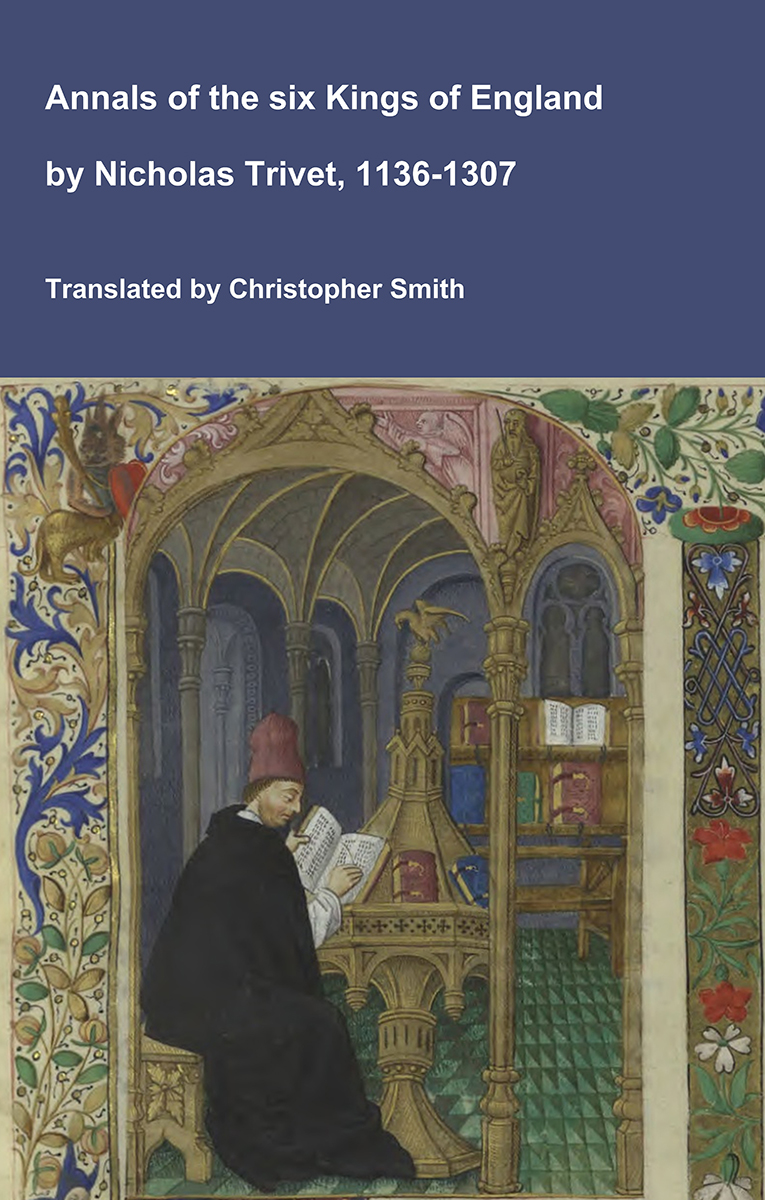
Annals of the six Kings of England by Nicholas Trivet
Translation of the Annals of the Six Kings of England by that traces the rise and rule of the Angevin aka Plantagenet dynasty from the mid-12th to early 14th century. Written by the Dominican scholar Nicholas Trivet, the work offers a vivid account of English history from the reign of King Stephen through to the death of King Edward I, blending political narrative with moral reflection. Covering the reigns of six monarchs—from Stephen to Edward I—the chronicle explores royal authority, rebellion, war, and the shifting balance between crown, church, and nobility. Trivet provides detailed insight into defining moments such as baronial conflicts, Anglo-French rivalry, and the consolidation of royal power under Edward I, whose reign he describes with particular immediacy. The Annals combines careful year-by-year reporting with thoughtful interpretation, presenting history not merely as a sequence of events but as a moral and political lesson. Ideal for readers interested in medieval history, kingship, and the origins of the English state, this chronicle remains a valuable and accessible window into the turbulent world of the Plantagenet kings.
Available at Amazon in eBook and Paperback format.
Deeds of King Henry V [1413-1421]. And around the mysteries of the Lord's Ascension [28th May 1416] came into England the aforesaid illustrious prince, Duke William of Holland1, with about eight hundred men: who was soon joined to the most firm royal council for such a hoped-for peace, under so many most illustrious negotiators, and with God's help, to be fully restored.
Note 1. William of Bavaria, Count of Ostrevant, K.G., succeeded his father, Albert, as Count or Sovereign of Holland, Hainault, and Zealand in 1404. The Counts of Holland of this family were Dukes of Bavaria by birth. The duke arrived in the Orwell, 28th May, 1416, under the title of the Duke of Holland. His escort, according to Hardyng, consisted of sixty ships. The bishop's palace, Ely Place, Holborn, was assigned for his reception. [Chron. of London.] The duke's only daughter, Jacqueline, eloped at an early age from her second husband the Duke of Brabant, and having obtained a dispensation from the pseudo-pope Benedict XIII, married Humphrey Duke of Gloucester, and apparently with Henry's sanction, for she received from him a monthly allowance of £100 whilst in England. [Pell Issue Rolls, 6th Nov. 9 Hen. V] The sudden death of the Duke of Holland shortly after his return home, gave room to a suspicion that he had been poisoned by the Orleans' party. His duchess was sister to the Duke of Burgundy.
On 28th May 1427 Eric Brunswick Grubenhagen 1st Duke Brunswick Grubenhagen [aged 44] died.
On 28th May 1444 the Treaty of Tours was concluded. The terms included the marriage of King Henry VI of England and II of France [aged 22] and Margaret of Anjou [aged 14] in return for which England ceded the strategically important French County of Maine to France; she brought no dowry. The Treaty was negotiated by William de la Pole Duke of Suffolk [aged 47]. The cessation of Maine subsequently came as something of surprise to Edmund Beaufort Earl Somerset [aged 38] who was its Governor. He, Somerset, was offered the Governorship of Normandy instead leading to a further rift between Somerset and Richard Duke of York [aged 32] who had already been offered Normandy. These seeds of the Wars of the Roses were falling on fertile ground.
Chronicle of Gregory. 28th May 1445. And a-pon the morowe, the Satyrday, she was brought thoroughe London syttyng in a lytter by twyne ij [2] goode and nobylle stedys i-trappyd with whyte satton, and sche was conveyyde unto Westemyster. And apon the morowe the Sonday was the coronacyon, and ij [2] dayes aftyr there was grette revylle of justys of pes in the sayntewery at Westemyster, &c.
Memoires Jacques du Clercq. In the said year, on the 16th day of the said month of May [1451], after the surrender of Montguyon, the Count of Dunois went to lay siege before one of the gates of the town of Blaye; and there joined him Messire Pierre de Beauvoir, Sieur de la Bessière, lieutenant of the Count of Maine and commander of his men-at-arms, and Geoffroy de Saint-Volin, who had in their companies eight lances furnished with archers and guisarmiers. There they found Messire Jacques de Chabannes, grand master of the household of the King of France, and Joachim Rohault, who, with their companies, took position on the side toward the castle and lodged at the Maladrerie, having with them two hundred lances with archers and guisarmiers, together with two thousand free archers. There arrived by sea a great number of ships, whose chief and commander was Jehan le Bouchier, general of France, in which ships were great numbers of men-at-arms and missile troops, and abundant provisions to supply the host. As these ships approached the siege, they found before the gate of the town five large well-armed boats, which had come from Bordeaux to provision the town of Blaye. These they attacked so vigorously and valiantly that the French ships put the English to flight, of whom there were many killed and wounded; and they were forced to cut their anchors to escape, and the French pursued them as far as the gates of Bordeaux, then returned with their ships to the port of Blaye, so that no aid or provisions might enter the said town, which was thus besieged by sea and by land on all sides. Two or three days after this, the Count of Ponthieu1 arrived before the said town with one hundred lances and three hundred crossbowmen, and took up position at the siege of the Count of Dunois. During this siege, great acts of valour were performed, and approaches were made by mines, ditches, and trenches, and the town was heavily battered by great engines, bombards, and cannons, so that the walls were broken down in many places within the town. To defend it were the most valiant men of the duchy of Guyenne, holding the party of the King of England. And about the 28th day of the month of May, a little before sunset, at the hour when the watch is sounded, certain archers of the company of Jehan de Meaux, called the Sieur de la Mangonnière, captain of the free archers of Touraine, and the men of Pierre de Louvain, mounted upon the wall of the town; then the assault began on all sides, so that the town was taken. In this taking there were of the English, both dead and wounded, about two hundred; and the mayor and deputy mayor of Bordeaux withdrew in great haste into the castle of the town. With them the French lords advanced to approach the castle; but when those within the castle saw that they were being pressed and that they could have no aid by sea or land, they made terms with the French and surrendered the castle into the obedience of Charles VII, King of France; and the mayor and deputy mayor of Bordeaux withdrew to Bordeaux, their lives and goods safe.
Oudit an, le xvje jour dudit mois de may, après la rendition de Montguyon, le comte de Dunois alla mectre le siege debvant l'une des portes de la ville de Blaye, et se joignirent avecq lui messire Pierre de Bauvoir, St de la Bessiere, lieutenant du comte du Maines, et gouverneur de ses gensdarmes, et Geoffroy de St Volin, lesquels avoient en leurs compagnies viij lanches, furnies d'archiers et guisarmiers, et la trouverent messire Jacques de Chabanne, grand maitre d'hostel du roy de Franche, et Joachim Rohault, lesquels, avecq leurs compagnies, se meirent du costel de devers le chasteau, et se meirent et logerent a la Maladrie, et avoient avecq eulx deux cens lanches, les archiers et guisarmiers, avecq deux mille de francqs archiers, et la arriva par mer grande foison de navires, dont estoit chief et gouverneur Jehan le Bouchier, general de Franche, esquels navires avoit grandes multitudes de gens d'armes et de traicts, et grande foison de vivres pour avitailler l'ost; lesquels navires, en approchant le siege, trouverent devant la porte d'icelle ville cinq gros basteaux bien armés, lesquels estoient venus de Bourdeaulx pour avitailler la ville de Blaye, lesquels ils assaillirent tellement et si valliamment, que les navires des Franchois meirent en fuite les Anglois, desquels il y olt plusieurs morts et navrez, et leur convint desancrer leurs basteaux pour eulx enffuire, et les chasserent les Franchois jusqu'aulx portes de Bourdeaulx, puis s'en retournerent avecq leurs navires au port de Blaye, adfin que secours ne vivres ne peuissent entrer dedans ladite ville, et ainsy fust assiegée par mer et par terre de toutes parts. Deux ou trois jours après ce faict, arriva devant ladite ville le comte de Ponthieu, a tout cens lanches et trois cens arbalestriers, et se logea au siege du comte de Dunois. Durant icelluy siege feurent faictes des grandes valliances et approchements de mines, de fossés et trencquis, et fust la ville fort battue de gros engins, bombardes et canons, tellement que les murailles feurent abbatues en plusieurs lieux dedans icelle ville. Pour la deffendre estoient les plus valliants gens de la duchié de Guienne, tenant le party du roy d'Angleterre; et environ le xxviij jour du mois de may, environ ung peu debvant soleil couchant, a l'heure que sonne le guet, aulcuns archiers de la compagnie de Jehan de Meause, nommé le S de la Mangonnerre, capitaine des francqs archiers de Tourraine, et les gens de Pierre de Louvain monterent sur la muraille de la ville; lors commencha l'assault de toutes parts, tellement, que la ville fust prinse; a laquelle prinse y olt des Anglois, que morts que navrez, deux cens ou environ, et se retraierent en grande haste le maire et le soubmaire de Bourdeaulx dedans le chastel de la ville, avecq eulx les seigneurs franchois approcherent aulcuns le chastel; mais quant ceulx du chastel veirent qu'ils approchoient et qu'ils ne pooient avoir secours par mer ne par terre, ils prindrent traictié avecq les Franchois et rendirent le chastel en l'obeissance du roy de Franche, Charles vije de ce nom, et se retirerent les maire et soubmaire de Bourdeaulx, audit Bourdeaulx, leurs vies et bagues saulves.
Note 1. The author mistakes Ponthieu for Penthièvre.
A Brief Latin Chronicle. At York, on the 28th day of the month of May [1464], John Elderbek, Richard Cawerne, John Rosell, and Robert Conqueror were beheaded. In the meantime, that squire Treilboz was also captured and beheaded.
Apud Eboracum XXVIIJ die mensis Maii decapitati sunt Johannes Elderbek, Ricardus Cawerne, Johannes Rosell, Robertus Conquerore. Interim etiam captus est ille armiger Treilboz et decapitatus.
On 28th May 1533 Thomas Howard 3rd Duke of Norfolk [aged 60] was appointed Earl Marshal.
Chronicle of Greyfriars. 28th May 1541. Item the 28th day of May was the Countess of Salisbury [deceased] behedyd within the tower.
Diary of Edward VI. 28th May 1550. The same went to see Hampton court [Map], where thei did hunt4, and the same night retourne to Durasme place.
Note 4. "Wednesday, they were conveyed by me, the marquess of Northampton [aged 38], to Hampton court, where they dined, hunted, and that night returned." (Ibid.)
Henry Machyn's Diary. 28th May 1557. [The xxviij day of May Thomas Stafford [aged 24] was beheaded on Tower hill [Map], by nine of the clock, master Wode being his] gostly father; and after ther wher iij more [drawn from the To] wre, and thrugh London unto Tyburne [Map], and ther [they were] hangyd and quartered; and the morow after was master [Stafford] quartered, and hangyd on a care, and so to Nuwgatt to [boil.]
On 28th May 1557 Thomas Stafford [aged 24] was beheaded at Tower Hill [Map].
Henry Machyn's Diary. 28th May 1557. The xxvij day of May, the wyche was the Assensyon day, the Kynges [aged 30] and the Quen('s) [aged 41] grace rod unto Westmynster with all the lords and knyghtes and gentyllmen, and ther graces whent a prossessyon abowt the clowster, and so thay hard masse.
Note. P. 137. Celebration of Ascension day. On this occasion in the preceding year (1556) the church wardens of St. Margaret's Westminster made the following payments: "Item, payde for breade, wyne, ale, and beere, upon th'Ascension evyn and day, agaynst my lord abbot and his covent cam in procession, and for strewyng erbes the same day, vijs. jd."
On 28th May 1562 Johann Wilhelm de la Marck Duke Cleves was born to William de la Marck Duke of Jülich Cleves Berg [aged 45] and Maria Habsburg Spain Duchess Cleves [aged 31].
John Evelyn's Diary. 24th May 1641, I returned to Wotton; and, on the 28th of June, I went to London with my sister Jane, and the day after sat to one Vanderborcht for my picture in oil, at Arundel House [Map], whose servant that excellent painter was, brought out of Germany when the Earl returned from Vienna (whither he was sent Ambassador-extraordinary, with great pomp and charge, though without any effect, through the artifice of the Jesuited Spaniard, who governed all in that conjuncture). With Vanderborcht, the painter, he brought over Winceslaus Hollar, the sculptor, who engraved not only this unhappy Deputy's trial in Westminster Hall, but his decapitation; as he did several other historical things, then relating to the accidents happening during the Rebellion in England, with great skill, besides many cities, towns, and landscapes, not only of this nation, but of foreign parts, and divers portraits of famous persons then in being; and things designed from the best pieces of the rare paintings and masters of which the Earl of Arundel was possessor, purchased and collected in his travels with incredible expense; so as, though Hollar's were but etched in aqua-fortis, I account the collection to be the most authentic and useful extant. Hollar was the son of a gentleman near Prague, in Bohemia, and my very good friend, perverted at last by the Jesuits at Antwerp to change his religion; a very honest, simple, well-meaning man, who at last came over again into England, where he died. We have the whole history of the King's [aged 40] reign, from his trial in Westminster-hall and before, to the restoration of King Charles II, represented in several sculptures, with that also of Archbishop Laud [aged 67], by this indefatigable artist, besides innumerable sculptures in the works of Dugdale, Ashmole, and other historical and useful works. I am the more particular upon this for the fruit of that collection, which I wish I had entire.
On 28th May 1651 Henry Grey 10th Earl Kent [aged 56] died. Monument made in 1658 at the De Grey Mausoleum, St John the Baptist Church, Flitton [Map]. His son Anthony [aged 5] succeeded 11th Earl Kent.


John Evelyn's Diary. 28th May 1656. The Earl of Southampton [aged 49] (since Treasurer) and Mr. Spencer [aged 27], brother to the Earl of Sunderland, came to see my garden.
All About History Books on Amazon
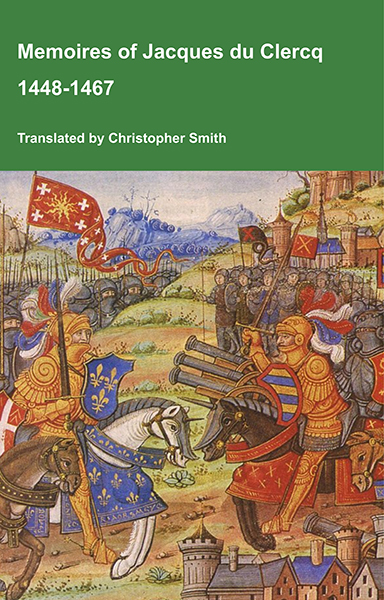
This is a translation of the 'Memoires of Jacques du Clercq', published in 1823 in two volumes, edited by Frederic, Baron de Reissenberg. In his introduction Reissenberg writes: 'Jacques du Clercq tells us that he was born in 1424, and that he was a licentiate in law and a counsellor to Philip the Good, Duke of Burgundy, in the castellany of Douai, Lille, and Orchies. It appears that he established his residence at Arras. In 1446, he married the daughter of Baldwin de la Lacherie, a gentleman who lived in Lille. We read in the fifth book of his Memoirs that his father, also named Jacques du Clercq, had married a lady of the Le Camelin family, from Compiègne. His ancestors, always attached to the counts of Flanders, had constantly served them, whether in their councils or in their armies.' The Memoires cover a period of nineteen years beginning in in 1448, ending in in 1467. It appears that the author had intended to extend the Memoirs beyond that date; no doubt illness or death prevented him from carrying out this plan. As Reissenberg writes the 'merit of this work lies in the simplicity of its narrative, in its tone of good faith, and in a certain air of frankness which naturally wins the reader’s confidence.' Du Clercq ranges from events of national and international importance, including events of the Wars of the Roses in England, to simple, everyday local events such as marriages, robberies, murders, trials and deaths, including that of his own father in Book 5; one of his last entries.
Available at Amazon in eBook and Paperback format.
John Evelyn's Diary. 28th May 1656. Came to visit me the old Marquis of Argyle [aged 49] (since executed), Lord Lothian, and some other Scotch noblemen, all strangers to me. Note, the Marquis took the turtle-doves in the aviary for owls.
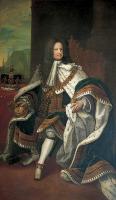
On 28th May 1660 King George I was born to Ernest Augustus Hanover Elector Brunswick-Lüneburg [aged 30] and Electress Sophia Palatinate Simmern [aged 29]. He a great grandson of King James I of England and Ireland and VI of Scotland. He married 21st November 1682 his first cousin Sophia Dorothea of Celle, daughter of George Wilhelm Hanover Duke Brunswick-Lüneburg and Eleonore Esmier D'Olbreuse Duchess Brunswick-Lüneburg, and had issue.
Samuel Pepys' Diary. 28th May 1665. Thence to my Lady Sandwich's [aged 40], where, to my shame, I had not been a great while before. Here, upon my telling her a story of my Lord Rochester's [aged 18] running away on Friday night last with Mrs. Mallett [aged 14], the great beauty and fortune of the North, who had supped at White Hall with Mrs. Stewart [aged 17], and was going home to her lodgings with her grandfather, my Lord Haly [aged 57], by coach; and was at Charing Cross [Map] seized on by both horse and foot men, and forcibly taken from him, and put into a coach with six horses, and two women provided to receive her, and carried away. Upon immediate pursuit, my Lord of Rochester (for whom the King [aged 34] had spoke to the lady often, but with no successe) was taken at Uxbridge; but the lady is not yet heard of, and the King mighty angry, and the Lord sent to the Tower [Map]. Hereupon my Lady did confess to me, as a great secret, her being concerned in this story. For if this match breaks between my Lord Rochester and her, then, by the consent of all her friends, my Lord Hinchingbrooke [aged 17] stands fair, and is invited for her. She is worth, and will be at her mother's [aged 35] death (who keeps but a little from her), £2500 per annum. Pray God give a good success to it! But my poor Lady, who is afeard of the sickness, and resolved to be gone into the country, is forced to stay in towne a day or two, or three about it, to see the event of it.
Samuel Pepys' Diary. 28th May 1665. Lord's Day. By water to the Duke of Albemarle [aged 56], where I hear that Nixon is condemned to be shot to death, for his cowardice, by a Council of War.
On 28th May 1672 Philip Carteret [aged 31] and Winston Churchill were killed at Solebay, Southwold [Map].
Edward Montagu 1st Earl Sandwich [aged 46] was killed. His son Edward [aged 24] succeeded 2nd Earl Sandwich.
George Legge 1st Baron Dartmouth [aged 25] fought.
Charles Harbord [aged 32] was killed. The inscription on his. Monument in Westminster Abbey [Map] reads... Sr. Charles Harbord Knt. his Majesties Surveyor General, and First Lieutenant of the Royall James, under the most noble and illustrious captain Edward, Earle of Sandwich, Vice Admirall of England, which after a terrible fight maintained to admiration against a squadron of the Holland fleet for above six houres, neere the Suffolk coast, having put off two fireships, at last being utterly dissabled and few of her men remaining unhurt, was by a third unfortunately set on fire: but he (though he swam well) neglected to save himselfe as some did, and out of the perfect love to that worthy lord (whom for many yeares he had constantly accompanyed in all his honourable imployments, and in all the engagements of the former warr) dyed with him at the age of XXXIII, much bewailed of his father whom he never offended, and much beloved of all for his knowne piety, vertue, loyalty, fortitude and fidelity.
Captain John Cox was killed in action.
Admiral John Holmes [aged 32] fought as commander of Rupert.
The Gloucester took part.
On 28th May 1672 Freschville Holles [aged 29] died at the Battle of Solebay at which he was in command of the Cambridge. He was buried at the Chapel of St Edmund, Westminster Abbey [Map] in an unmarked grave.
John Evelyn's Diary. 31st May 1672. I received another command to repair to the seaside; so I went to Rochester, Kent [Map], where I found many wounded, sick, and prisoners, newly put on shore after the engagement on the 28th, in which the Earl of Sandwich [deceased], that incomparable person and my particular friend, and divers more whom I loved, were lost. My Lord (who was Admiral of the Blue) was in the "Prince", which was burnt, one of the best men-of-war that ever spread canvas on the sea. There were lost with this brave man, a son of Sir Charles Cotterell [aged 57] (Master of the Ceremonies), and a son [aged 32] of Sir Charles Harbord (his Majesty's [aged 42] Surveyor-General), two valiant and most accomplished youths, full of virtue and courage, who might have saved themselves; but chose to perish with my Lord, whom they honoured and loved above their own lives.
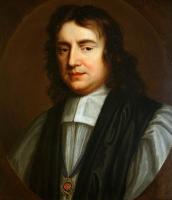
John Evelyn's Diary. 28th May 1682. At the Rolls' chapel preached the famous Dr. Burnet [aged 38] on 2 Peter 1:10, describing excellently well what was meant by election; viz, not the effect of any irreversible decree, but so called because they embraced the Gospel readily, by which they became elect, or precious to God. It would be very needless to make our calling and election sure, were they irreversible and what the rigid Presbyterians pretend. In the afternoon, to St. Lawrence's church, a new and cheerful pile.
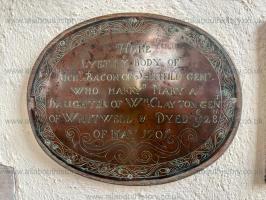
Memorial at the Church of St Lawrence, Whitwell [Map] to Richard Bacon of Sheffield who married Mary, daughter of William Clayton, died 28th May 1701.
On 28th May 1706 Christian Wilhelm Saxe Coburg Altenburg was born to Frederick Saxe Coburg Altenburg II Duke Saxe Gotha Altenburg [aged 29] and Magdalena Augusta Anhalt-Zerbst Duchess Saxe Gotha Altenburg at Gotha. He married 27th May 1743 Luise Reuss Schleiz.
On 28th May 1718 Wilhelmina Caroline Murray was born to John Murray 1st Duke Atholl [aged 58] and Mary Ross Duchess Atholl [aged 30]. She died aged one in 1720.
On 28th May 1745 Johnathan "The Elder" Richardson [aged 78] died in Bloomsbury.
On 28th May 1747 Elizabeth Boscawen Duchess Beaufort was born to Edward Boscawen [aged 35] and Frances Evelyn Evelyn [aged 27] in Falmouth, Cornwall. She married 2nd January 1766 her fifth cousin once removed Henry Somerset 5th Duke Beaufort, son of Charles Noel Somerset 4th Duke Beaufort and Elizabeth Berkeley Duchess Beaufort, and had issue.
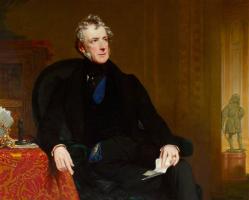
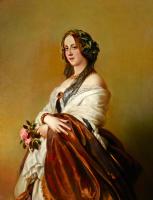
On 28th May 1823 George Sutherland Leveson-Gower 2nd Duke Sutherland [aged 36] and Harriet Elizabeth Georgiana Howard Duchess Sutherland [aged 17] were married. She the daughter of George Howard 6th Earl Carlisle [aged 49] and Georgiana Cavendish Countess Carlisle [aged 39]. He the son of George Granville Leveson-Gower 1st Duke Sutherland [aged 65] and Elizabeth Sutherland Duchess Sutherland 19th Countess Sutherland [aged 58]. They were first cousin once removed.
On 28th May 1836 George Gordon 5th Duke Gordon [aged 66] died without legitimate issue at Belgrave Square, Belgravia. Duke Gordon, Baron Mordaunt extinct. His fourth cousin once removed George [aged 74] succeeded 9th Marquess Huntly, 14th Earl Huntley.
Thomas Bateman 1845. On the afternoon of the same day, a barrow [Map] at New Inns was opened; it is situated upon a ridge of high ground immediately overlooking the secluded hamlet of Alsop-in-the-Dale [Map]. The centre of the tumulus being reached, the original interment was discovered lying upon the rocky floor, upon its left side, with the knees contracted, and the face towards the south, without being inclosed in any kind of cist or vault; close to the back of the head was a beautiful brass dagger of the usual form, but with smaller rivets than common, which the appearance of the surrounding mould denoted to have been buried in a wooden sheath; about the knees two small brass rivets were found entirely unconnected, and as on a strict scrutiny nothing else was discovered, it is most probable that they had riveted some article of perishable material, wood for instance which had so completely decayed as to leave no trace. In the course of this excavation were found part of another haman skeleton, some animal teeth, and two instruments of flint, which had all been previously disturbed.
Thomas Bateman 1845. The first tumulus opened this year in Staffordshire was a barrow [Note. Possibly Wetton aka Taylor's Low [Map] but it is less than half a mile from Wetton.] about a mile from Wetton, commonly known as Taylor's Lowe and it furnished the subject of the frontispiece of "Barrow-digging, by a Barrow-knight" which is a faithful delineation of the scene on the 28th of May, 1845. About two feet from the surface of the barrow was a cist, formed of thin, flat limestones, containing the skeleton of a young person, probably a female, the knees, as is frequently the case in the more ancient barrows, being contracted. About eighteen inches from the surface, on the north side of the tumulus, was another skeleton; deeper down a small octagonal cist, containing a simple deposit of burnt human bones, was erected over a human skeleton, which lay in a large square cist, cut in the rock, thus presenting the anomalous appearance of a cist within a cist. There was nothing found with any of these interments; a few flint instruments and a small piece of an urn only occurring promiscuously. The most remarkable circumstance attending this barrow was, that although each skeleton was quite undisturbed, yet all the heads which lay towards the interior of the mound had been destroyed, by the central part of the tumulus having been some years ago removed, in order form a limekiln.
On 28th May 1847 Henry Hoppner Meyer [aged 66] died.
On 28th May 1853 Frederick Sandys [aged 24] and Georgiana Creed [aged 28] were married at St Pancras Old Church [Map]. He the son of Anthony Sands [aged 47] and Mary Ann Brown.
The London Gazette 27318. 28th May 1901. To be Knight Commanders.
Horace Brand Townsend [aged 57], Lord Farquhar.
Frederick Treves, Esq., C.B.
On 28th May 1910 Stuart Piggott was born at Petersfield, Hampshire.
All About History Books on Amazon
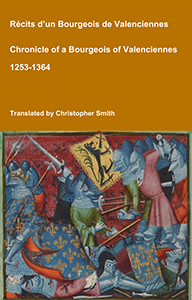
Chronicle of a Bourgeois of Valenciennes
Récits d’un bourgeois de Valenciennes aka The Chronicle of a Bourgeois of Valenciennes is a vivid 14th-century vernacular chronicle written by an anonymous urban chronicler from Valenciennes in the County of Hainaut. It survives in a manuscript that describes local and regional history from about 1253 to 1366, blending chronology, narrative episodes, and eyewitness-style accounts of political, military, and social events in medieval France, Flanders, and the Low Countries. The work begins with a chronological framework of events affecting Valenciennes and its region under rulers such as King Philip VI of France and the shifting allegiances of local nobility. It includes accounts of conflicts, sieges, diplomatic manoeuvres, and the impact of broader struggles like the Hundred Years’ War on urban life in Hainaut. Written from the perspective of a burgher (bourgeois) rather than a monastery or royal court, the chronicle offers a rare lay viewpoint on high politics and warfare, reflecting how merchants, townspeople, and civic institutions experienced the turbulence of the 13th and 14th centuries. Its narrative style combines straightforward reporting of events with moral and civic observations, making it a valuable source for readers interested in medieval urban society, regional politics, and the lived experience of war and governance in pre-modern Europe.
Available at Amazon in eBook and Paperback format.
On 28th May 1912 Alonso María Orléans Galliera was born to Alfonso Orléans Galliera Duke Galliera [aged 25] and Beatrice Windsor Duchess Galliera [aged 28] at Madrid [Map]. He a great grandson of Queen Victoria of the United Kingdom.
The London Gazette 29175. 28th May 1915. The undermentioned to be Second Lieutenants (on probation). Dated 29th May, 1915:
Charles Eliott Hamilton, 3rd Battalion, East Kent Regiment.
William Peirce Waddington, 3rd Battalion, Royal Lancaster Regiment.
Wilfred Justice Judge, 5th Battalion, Royal Fusiliers.
George Bertram Ashworth, 3rd Battalion, Suffolk Regiment.
Reginald Townley Edwards, 3rd Battalion, Leicestershire Regiment.
Vivian Hayton Maasdorp, 3rd Battalion. Royal Scots Fusiliers.
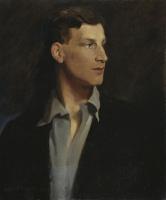
Siefried Lorraine Sassoon [aged 28], 3rd Battalion, Royal Welsh Fusiliers.
Arthur Charles Walsh, 4th Battalion, Royal Inniskilling Fusiliers.
John Christopher Wilson, 5th Battalion, Worcestershire Regiment.
Margetts Mitchell, 3rd Battalion, East Lancashire Regiment.
Archibald Valentine Maunder, 3rd Battalion, West Riding Regiment.
On 28th May 1919 Charles John Robert Manners 10th Duke Rutland was born to John Henry Montagu Manners 9th Duke Rutland [aged 32] and Kathleen Tennant Duchess Rutland [aged 24]. He married 1. 27th April 1946 Anne Bairstow Cumming Bell Duchess of Rutland 2. 15th May 1958 Frances Helen Sweeny Duchess of Rutland, daughter of Charles Francis Sweeny and Margaret Whigham Duchess of Argyll, and had issue.
Wessex from the Air Plates 39 and 40. 28th May 1928. Reference Nos. 15. and 17. County. Wilts. 54 SE. (122; D. 6). Parish. Amesbury. Latitude. 51° 10' 53" N. Longitude. 1° 48' 46" W. Height above Sea-level. About 300 ft. (91 metres). Geological Formation. Upper Chalk. Time and Date of Photograph. 10.9 a.m., 28th May. Height of Aeroplane. 2,500 ft. (762 metres). Speed of Shutter. 1/180th of a second.
On 28th May 1940 Frederick Charles I King Finland [aged 72] died.
On 28th May 1940 Captain Heneage Michael Charles Finch 9th Earl of Aylesford [aged 31] was killed in action. His uncle Charles [aged 53] succeeded 10th Earl Aylesford.
On 28th May 1948 Unity Valkyrie Mitford [aged 33] died of meningitis caused by the cerebral swelling around the bullet that had lodged in her brain after she had shot herself in December 1939.
On 28th May 1959 Robert Anthony Innes-Kerr was born to George Victor Robert John Innes-Kerr 9th Duke Roxburghe [aged 45] and Margaret Elizabeth Mcconnel Duchess Roxburghe [aged 40].
On 28th May 1972 King Edward VIII of the United Kingdom [aged 77] died. He was buried at Royal Burial Ground Frogmore Estate Home Park Windsor, Berkshire.
On 28th May 1187 Urraca Ivrea Queen Consort Portugal was born to Alfonso VIII King Castile [aged 31] and Eleanor Plantagenet Queen Consort Castile [aged 25]. She a granddaughter of King Henry "Curtmantle" II of England. She married 1206 her second cousin once removed Alfonso "Fat" II King Portugal, son of Sancho "Populator" I King Portugal and Dulce Barcelona Queen Consort Portugal, and had issue.
All About History Books on Amazon
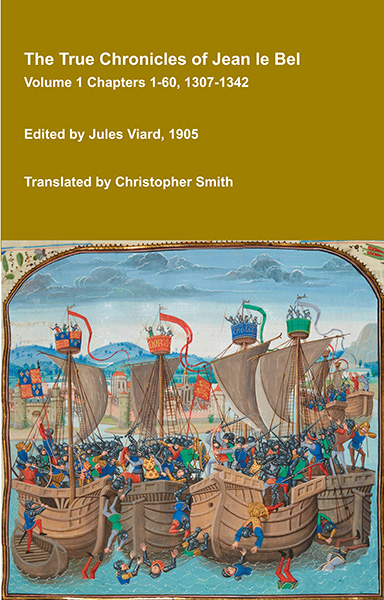
The True Chronicles of Jean le Bel Volume 1 Chapters 1-60 1307-1342
The True Chronicles of Jean le Bel offer one of the most vivid and immediate accounts of 14th-century Europe, written by a knight who lived through the events he describes, and experienced some of them first hand. Covering the early decades of the Hundred Years’ War, this remarkable chronicle follows the campaigns of Edward III of England, the politics of France and the Low Countries, and the shifting alliances that shaped medieval warfare. Unlike later historians, Jean le Bel writes with a strong sense of eyewitness authenticity, drawing on personal experience and the testimony of fellow soldiers. His narrative captures not only battles and sieges, but also the realities of military life, diplomacy, and the ideals of chivalry that governed noble society. A key source for Jean Froissart, Le Bel’s chronicle stands on its own as a compelling and insightful work, at once historical record and literary achievement. This translation builds on the 1905 edition published in French by Jules Viard, adding extensive translations from other sources Rymer's Fœdera, the Chronicles of Adam Murimuth, William Nangis, Walter of Guisborough, a Bourgeois of Valenciennes, Geoffrey le Baker of Swinbroke and Richard Lescot to enrich the original text and Viard's notes.
Available at Amazon in eBook and Paperback format.
On 28th May 1371 John "Fearless" Valois Duke Burgundy was born to Philip "Bold" Valois II Duke Burgundy [aged 29] and Margaret Dampierre Duchess Burgundy [aged 23]. He a great x 3 grandson of King Edward I of England. Coefficient of inbreeding 1.62%. He married his third cousin Margaret Wittelsbach Duchess Burgundy, daughter of Albert Wittelsbach I Duke Lower Bavaria and Margaret of Silesia Duchesa Lowwer Bavaria, and had issue.
On 28th May 1423 Katherine Percy was born to Henry Percy 2nd Earl of Northumberland [aged 30] and Eleanor Neville Countess Northumberland [aged 26]. She a great x 2 granddaughter of King Edward III of England. Coefficient of inbreeding 3.49%. She married before 1440 her half second cousin Edmund Grey 1st Earl Kent, son of John Grey and Constance Holland Countess Norfolk and Nottingham, and had issue.
On 28th May 1562 Johann Wilhelm de la Marck Duke Cleves was born to William de la Marck Duke of Jülich Cleves Berg [aged 45] and Maria Habsburg Spain Duchess Cleves [aged 31].
On 28th May 1660 King George I was born to Ernest Augustus Hanover Elector Brunswick-Lüneburg [aged 30] and Electress Sophia Palatinate Simmern [aged 29]. He a great grandson of King James I of England and Ireland and VI of Scotland. He married 21st November 1682 his first cousin Sophia Dorothea of Celle, daughter of George Wilhelm Hanover Duke Brunswick-Lüneburg and Eleonore Esmier D'Olbreuse Duchess Brunswick-Lüneburg, and had issue.
On 28th May 1679 Francis Seymour-Conway 1st Baron Conway was born to Edward Seymour 4th Baronet [aged 46] and Letitia Popham Baroness Seymour. He married 1. 17th February 1704 his fourth cousin once removed Mary Hyde, daughter of Lawrence Hyde 1st Earl Rochester and Henrietta Boyle Countess Rochester, and had issue 2. 1709 Jane Bowden and had issue 3. July 1716 Charlotte Shorter and had issue.
On 28th May 1689 Maximillian Hesse-Kassel was born to Charles I Landgrave Hesse-Kassel [aged 34] and Maria Amalia of Courland Landgravine Hesse-Kassel [aged 35]. Coefficient of inbreeding 7.10%.
On 28th May 1706 Christian Wilhelm Saxe Coburg Altenburg was born to Frederick Saxe Coburg Altenburg II Duke Saxe Gotha Altenburg [aged 29] and Magdalena Augusta Anhalt-Zerbst Duchess Saxe Gotha Altenburg at Gotha. He married 27th May 1743 Luise Reuss Schleiz.
On 28th May 1716 Robert Burdett 4th Baronet was born to Robert Burdett and Elizabeth Tracy [aged 36] posthumously. He married 1. 6th November 1739 Elizabeth Sedley Lady Burdett, daughter of Charles Sedley 1st Baronet, and had issue 2. 17th July 1753 his half sixth cousin Caroline Manners Lady Harpur and Burdett, daughter of John Manners 2nd Duke Rutland and Lucy Sherard Duchess Rutland.
On 28th May 1718 Wilhelmina Caroline Murray was born to John Murray 1st Duke Atholl [aged 58] and Mary Ross Duchess Atholl [aged 30]. She died aged one in 1720.
On 28th May 1731 James Stopford 2nd Earl of Courtown was born to James Stopford 1st Earl of Courtown [aged 31] and Elizabeth Smyth Countess of Courtown. He married 19th April 1762 Mary Powys Countess of Courtown.
On 28th May 1747 Elizabeth Boscawen Duchess Beaufort was born to Edward Boscawen [aged 35] and Frances Evelyn Evelyn [aged 27] in Falmouth, Cornwall. She married 2nd January 1766 her fifth cousin once removed Henry Somerset 5th Duke Beaufort, son of Charles Noel Somerset 4th Duke Beaufort and Elizabeth Berkeley Duchess Beaufort, and had issue.
On 28th May 1748 Frederick Howard 5th Earl Carlisle was born to Henry Howard 4th Earl Carlisle [aged 53] and Isabella Byron Countess Carlisle [aged 26]. He married 22nd March 1770 his fourth cousin once removed Margaret Caroline Leveson-Gower Countess Carlisle, daughter of Granville Leveson-Gower 1st Marquess Stafford and Louisa Egerton Countess Gower, and had issue.
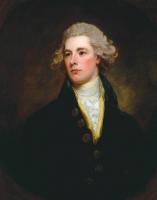
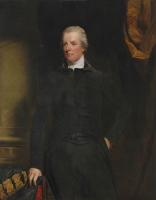
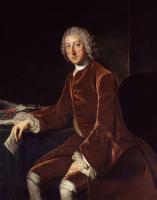
On 28th May 1759 William "The Younger" Pitt was born to William "The Elder" Pitt 1st Earl Chatham [aged 50] and Hester Granville Countess Chatham [aged 38].
On 28th May 1775 Thomas North Graves 2nd Baron Graves was born to Admiral Thomas Graves 1st Baron Graves [aged 49] and Elizabeth Williams. He married 1803 Mary Paget Baroness Graves, daughter of Henry Bayly-Paget 1st Earl Uxbridge and Jane Champagné Countess Uxbridge, and had issue.
All About History Books on Amazon
Jean de Waurin's Chronicle of England Volume 6 Books 3-6: The Wars of the Roses
Jean de Waurin was a French Chronicler, from the Artois region, who was born around 1400, and died around 1474. Waurin’s Chronicle of England, Volume 6, covering the period 1450 to 1471, from which we have selected and translated Chapters relating to the Wars of the Roses, provides a vivid, original, contemporary description of key events some of which he witnessed first-hand, some of which he was told by the key people involved with whom Waurin had a personal relationship.
Available at Amazon in eBook and Paperback format.
On 28th May 1776 Isabella Anne Beresford was born to George de la Poer Beresford 1st Marquess Waterford [aged 41] and Elizabeth Monck Marchioness Waterford [aged 34]. She married 1st April 1812 John William Head Brydges and had issue.
On 28th May 1802 Charlotte Sophia Eliot was born to William Eliot 2nd Earl St Germans [aged 35] and Georgiana Augusta Leveson-Gower [aged 33]. She married July 1825 Reverend George Martin and had issue.
On 28th May 1810 Harriet Emily Mary Milner was born to William Mordaunt Sturt Milner 4th Baronet [aged 30] and Harriet Elizabeth Cavendish-Bentinck [aged 23]. She married before 9th April 1830 George Savile Foljambe and had issue.
On 28th May 1828 Son Ponsonby was born to John Ponsonby 4th Earl Bessborough [aged 46] and Maria Fane [aged 41]. He died aged less than one years old.
On 28th May 1830 Gustavus Hamilton-Russell 8th Viscount Boyne was born to Gustavus Hamilton 7th Viscont Boyne [aged 33]. He married 2nd September 1858 Katherine Frances Scott, daughter of John Scott 2nd Earl Eldon and Louisa Duncombe Countess Eldon, and had issue.
On 28th May 1835 Susan Harriet Pitt-Rivers was born to George Pitt-Rivers 4th Baron Rivers [aged 24] and Susan Georgiana Leveson-Gower Baroness Rivers [aged 25].
On 28th May 1838 Lionel Tollemache was born to John Jervis Tollemache 1st Baron Tollemache [aged 32] and Georgiana Louisa Best [aged 29]. Coefficient of inbreeding 6.25%. He married 25th January 1870 Beatrix Lucia Egerton, daughter of Wilbraham Egerton 1st Baron Egerton Tatton and Charlotte Elizabeth Loftus Baroness Egerton Tatton.
On 28th May 1839 Mary Emily Fitzgerald Lady Molyneux was born.
On 28th May 1840 Frederick Dutton 5th Baron Sherborne was born to James Henry Legge Dutton 3rd Baron Sherborne [aged 35] and Elizabeth Howard [aged 37] at Bibury, Gloucestershire [Map]. Coefficient of inbreeding 6.25%.
On 28th May 1840 Louisa Mary Berkeley 15th Baroness Berkeley was born to Craven FitzHardinge Berkeley [aged 35]. She a great x 4 granddaughter of King Charles II of England Scotland and Ireland. She married 3rd April 1872 Major-General Gustavus Hamilton Lockwood Milman and had issue.
On 28th May 1863 Lieutenant-Colonel Henry Cavendish-Bentinck was born to Lieutenant-General Arthur Cavendish Bentinck [aged 44] and Augusta Mary Elizabeth Browne 1st Baroness Bolsover [aged 28]. He married 27th January 1892 his fourth cousin once removed Olivia Caroline Amelia Taylour.
All About History Books on Amazon
Chronicle of Walter of Guisborough
A canon regular of the Augustinian Guisborough Priory, Yorkshire, formerly known as The Chronicle of Walter of Hemingburgh, describes the period from 1066 to 1346. Before 1274 the Chronicle is based on other works. Thereafter, the Chronicle is original, and a remarkable source for the events of the time. This book provides a translation of the Chronicle from that date. The Latin source for our translation is the 1849 work edited by Hans Claude Hamilton. Hamilton, in his preface, says: 'In the present work we behold perhaps one of the finest samples of our early chronicles, both as regards the value of the events recorded, and the correctness with which they are detailed; Nor will the pleasing style of composition be lightly passed over by those capable of seeing reflected from it the tokens of a vigorous and cultivated mind, and a favourable specimen of the learning and taste of the age in which it was framed.'
Available at Amazon in eBook and Paperback format.
On 28th May 1866 Henry Alfred Doughty-Tichborne 12th Baronet was born to Alfred Joseph Doughty-Tichborne 11th Baronet and Theresa Mary Arundell. He married 8th September 1887 his half second cousin once removed Mary Gwendoline Petre and had issue.
On 28th May 1867 Rhona Ankaret Estrange Countess Carlisle was born to Colonel Paget Walter L'Estrange. She married 17th April 1894 Charles James Stanley Howard 10th Earl Carlisle, son of George Howard 9th Earl Carlisle and Rosalind Frances Stanley Countess Carlisle, and had issue.
On 28th May 1869 Gerald Oakley Cadogan 6th Earl Cadogan was born to George Cadogan 5th Earl Cadogan [aged 29] and Beatrix Jane Craven Countess Cadogan [aged 24].
On 28th May 1878 Reginald Guy Graham 9th Baronet was born to Reginald Henry Graham 8th Baronet [aged 43] and Annie Mary Shiffner Lady Graham.
On 28th May 1885 Guy Montagu George Finch-Hatton 9th Earl Nottingham 14th Earl Winchilsea was born to Henry Finch-Hatton 8th Earl Nottingham 13th Earl Winchilsea [aged 32].
On 28th May 1889 Violet Mary Elliot-Murray-Kynynmound Baroness Astor was born to Gilbert Elliot-Murray-Kynynmound 4th Earl Minto [aged 43] and Mary Caroline Grey Countess Minto [aged 31]. She married 1. 20th January 1909 Charles Petty-Fitzmaurice, son of Henry Petty-Fitzmaurice 5th Marquess Lansdowne and Maud Evelyn Hamilton Marchioness Lansdowne, and had issue 2. 28th August 1916 John Jacob Astor 1st Baron Astor, son of William Waldorf Astor 1st Viscount Astor and Mary Dahlgren Paul, and had issue.
On 28th May 1891 George Jessel 2nd Baronet was born to Charles James Jessel 1st Baronet [aged 31] and Edith Goldsmid Lady Jessel. He married before 29th December 1924 Muriel Gladys Chapline Lady Jessel and had issue.
On 28th May 1904 William Thomas Wentworth-Fitzwilliam 10th and 8th Earl Fitzwilliam was born to George Charles Wentworth-Fitzwilliam [aged 38] and Daisy Evelyn Lyster [aged 37].
On 28th May 1904 Christian Herbert 6th Earl of Powis was born to Colonel Edward William Herbert.
On 28th May 1908 John Lionel Reginald Blunt 10th Baronet was born to John Harvey Blunt 9th Baronet [aged 35].
On 28th May 1910 Stuart Piggott was born at Petersfield, Hampshire.
On 28th May 1912 Alonso María Orléans Galliera was born to Alfonso Orléans Galliera Duke Galliera [aged 25] and Beatrice Windsor Duchess Galliera [aged 28] at Madrid [Map]. He a great grandson of Queen Victoria of the United Kingdom.
All About History Books on Amazon
The Deeds of the Dukes of Normandy
The Gesta Normannorum Ducum [The Deeds of the Dukes of Normandy] is a landmark medieval chronicle tracing the rise and fall of the Norman dynasty from its early roots through the pivotal events surrounding the Norman Conquest of England. Originally penned in Latin by the monk William of Jumièges shortly before 1060 and later expanded at the behest of William the Conqueror, the work chronicles the deeds, politics, battles, and leadership of the Norman dukes, especially William’s own claim to the English throne. The narrative combines earlier historical sources with firsthand information and oral testimony to present an authoritative account of Normandy’s transformation from a Viking settlement into one of medieval Europe’s most powerful realms. William’s history emphasizes the legitimacy, military prowess, and governance of the Norman line, framing their expansion, including the conquest of England, as both divinely sanctioned and noble in purpose. Later chroniclers such as Orderic Vitalis and Robert of Torigni continued the history, extending the coverage into the 12th century, providing broader context on ducal rule and its impact. Today this classic work remains a foundational source for understanding Norman identity, medieval statesmanship, and the historical forces that reshaped England and Western Europe between 800AD and 1100AD.
Available at Amazon in eBook and Paperback format.
On 28th May 1919 Charles John Robert Manners 10th Duke Rutland was born to John Henry Montagu Manners 9th Duke Rutland [aged 32] and Kathleen Tennant Duchess Rutland [aged 24]. He married 1. 27th April 1946 Anne Bairstow Cumming Bell Duchess of Rutland 2. 15th May 1958 Frances Helen Sweeny Duchess of Rutland, daughter of Charles Francis Sweeny and Margaret Whigham Duchess of Argyll, and had issue.
On 28th May 1932 Charles John Buckworth-Herne-Soame 12th Baronet was born to Charles Burnett Buckworth-Herne-Soame 11th Baronet [aged 37].
On 28th May 1959 Robert Anthony Innes-Kerr was born to George Victor Robert John Innes-Kerr 9th Duke Roxburghe [aged 45] and Margaret Elizabeth Mcconnel Duchess Roxburghe [aged 40].
On 28th May 1963 Randle Baker Wilbraham 9th Baronet was born to Richard Baker Wilbraham 8th Baronet [aged 29].
On 28th May 1262 King Philip III of France [aged 17] and Isabella Barcelona Queen Consort France [aged 14] were married. She the daughter of James I King Aragon [aged 54] and Violant Árpád Queen Consort Aragon. He the son of King Louis IX of France [aged 48] and Margaret Provence Queen Consort France [aged 41]. They were second cousin once removed. He a great x 2 grandson of King Henry "Curtmantle" II of England.
On 28th May 1554 Gerald "Wizard Earl" Fitzgerald 11th Earl of Kildare [aged 29] and Mabel Browne Countess Kildare [aged 18] were married at the Chapel Royal, St James's Palace. She by marriage Countess Kildare. He the son of Gerald Fitzgerald 9th Earl of Kildare and Elizabeth Grey Countess Kildare. They were third cousins. He a great x 5 grandson of King Edward III of England. She a great x 5 granddaughter of King Edward III of England.
On 28th May 1604 Thomas Gower 1st Baronet [aged 20] and Anne Doyley Baroness Gower were married.
On 28th May 1763 George Grey 5th Earl Stamford 1st Earl Warrington [aged 25] and Henrietta Bentinck Countess Stamford and Warrington [aged 26] were married. She by marriage Countess Stamford. She the daughter of William Bentinck 2nd Duke Portland and Margaret Cavendish Harley 2nd Duchess Portland [aged 48]. He the son of Henry Grey 4th Earl Stamford [aged 47] and Mary Booth Countess Stamford [aged 59].
On 28th May 1767 John Fane 9th Earl of Westmoreland [aged 39] and Susan Gordon Countess of Westmoreland [aged 15] were married. The difference in their ages was 23 years. She the daughter of Cosmo George Gordon 3rd Duke Gordon and Catherine Gordon Duchess Gordon [aged 49]. He the son of Thomas Fane 8th Earl of Westmoreland [aged 66] and Elizabeth Swymmer Countess Westmoreland.
On 28th May 1783 Edward Pellew 1st Viscount Exmouth [aged 26] and Susan Frowde Viscountess Exmouth [aged 27] were married.
All About History Books on Amazon
Annals of the six Kings of England by Nicholas Trivet
Translation of the Annals of the Six Kings of England by that traces the rise and rule of the Angevin aka Plantagenet dynasty from the mid-12th to early 14th century. Written by the Dominican scholar Nicholas Trivet, the work offers a vivid account of English history from the reign of King Stephen through to the death of King Edward I, blending political narrative with moral reflection. Covering the reigns of six monarchs—from Stephen to Edward I—the chronicle explores royal authority, rebellion, war, and the shifting balance between crown, church, and nobility. Trivet provides detailed insight into defining moments such as baronial conflicts, Anglo-French rivalry, and the consolidation of royal power under Edward I, whose reign he describes with particular immediacy. The Annals combines careful year-by-year reporting with thoughtful interpretation, presenting history not merely as a sequence of events but as a moral and political lesson. Ideal for readers interested in medieval history, kingship, and the origins of the English state, this chronicle remains a valuable and accessible window into the turbulent world of the Plantagenet kings.
Available at Amazon in eBook and Paperback format.
On 28th May 1809 William Mordaunt Sturt Milner 4th Baronet [aged 29] and Harriet Elizabeth Cavendish-Bentinck [aged 22] were married.
On 28th May 1823 George Sutherland Leveson-Gower 2nd Duke Sutherland [aged 36] and Harriet Elizabeth Georgiana Howard Duchess Sutherland [aged 17] were married. She the daughter of George Howard 6th Earl Carlisle [aged 49] and Georgiana Cavendish Countess Carlisle [aged 39]. He the son of George Granville Leveson-Gower 1st Duke Sutherland [aged 65] and Elizabeth Sutherland Duchess Sutherland 19th Countess Sutherland [aged 58]. They were first cousin once removed.
On 28th May 1824 William Harris 2nd Baron Harris [aged 42] and Isabella Helana Handcock-Temple of Waterstown in Westmeath were married.
On 28th May 1832 Richard Boyle 4th Earl Shannon [aged 23] and Emily Henrietta Seymour-Conway Countess Shannon were married. He the son of Henry Boyle 3rd Earl Shannon [aged 60].
On 28th May 1853 Frederick Sandys [aged 24] and Georgiana Creed [aged 28] were married at St Pancras Old Church [Map]. He the son of Anthony Sands [aged 47] and Mary Ann Brown.
On 28th May 1892 Anthony Fane 13th Earl of Westmoreland [aged 32] and Sybil Mary St Clair-Erskine Countess of Westmorland [aged 20] were married. She by marriage Countess of Westmoreland. He the son of Francis William Henry Fane 12th Earl of Westmoreland and Adelaide Ida Curzon Howe Countess of Westmoreland [aged 57].
On 28th May 812 William Poitiers Duke Toulouse [aged 57] died.
On 28th May 1023 Archbishop Wulfstan died.
On 28th May 1327 Robert de Baldock died in Newgate Prison, London [Map]; see
Chronicle of Geoffrey le Baker,
Annales Paulini, 334
On 28th May 1357 Alfonso "Brave" IV King Portugal [aged 66] died. His son Peter [aged 37] succeeded I King Portugal.
On 28th May 1363 John Harrington 2nd Baron Harington [aged 35] died at Gleaston Castle [Map]. His son Robert [aged 7] succeeded 3rd Baron Harington. Given his young age Robert Harrington 3rd Baron Harington became a ward of King Edward III of England [aged 50] who granted his wardship to his daughter Isabella Countess Bedford and Soissons [aged 30] and her husband Enguerrand de Coucy 1st Earl Bedford 1st Count Soissons [aged 23].
On 28th May 1381 William Latimer 4th Baron Latimer of Corby [aged 51] died. He was buried at Guisborough Priory [Map]. His daughter Elizabeth [aged 24] succeeded 5th Baroness Latimer of Corby.
All About History Books on Amazon
Chronicle of Walter of Guisborough
A canon regular of the Augustinian Guisborough Priory, Yorkshire, formerly known as The Chronicle of Walter of Hemingburgh, describes the period from 1066 to 1346. Before 1274 the Chronicle is based on other works. Thereafter, the Chronicle is original, and a remarkable source for the events of the time. This book provides a translation of the Chronicle from that date. The Latin source for our translation is the 1849 work edited by Hans Claude Hamilton. Hamilton, in his preface, says: 'In the present work we behold perhaps one of the finest samples of our early chronicles, both as regards the value of the events recorded, and the correctness with which they are detailed; Nor will the pleasing style of composition be lightly passed over by those capable of seeing reflected from it the tokens of a vigorous and cultivated mind, and a favourable specimen of the learning and taste of the age in which it was framed.'
Available at Amazon in eBook and Paperback format.
On 28th May 1420 William Bourchier 1st Count of Eu [aged 46] died at Troyes, France [Map]. He was buried at Llanthony Secunda Priory, Gloucestershire [Map]. His son Henry [aged 16] succeeded 2nd Count Eu.
On 28th May 1427 Eric Brunswick Grubenhagen 1st Duke Brunswick Grubenhagen [aged 44] died.
On 28th May 1626 Thomas Howard 1st Earl Suffolk [aged 64] died at Charing Cross [Map]. He was buried at Waldon Priory and Abbey [Map]. His son Theophilus [aged 43] succeeded 2nd Earl Suffolk. Elizabeth Home Countess Suffolk [aged 27] by marriage Countess Suffolk.
On 28th May 1651 Henry Grey 10th Earl Kent [aged 56] died. Monument made in 1658 at the De Grey Mausoleum, St John the Baptist Church, Flitton [Map]. His son Anthony [aged 5] succeeded 11th Earl Kent.


On 28th May 1672 Philip Carteret [aged 31] and Winston Churchill were killed at Solebay, Southwold [Map].
Edward Montagu 1st Earl Sandwich [aged 46] was killed. His son Edward [aged 24] succeeded 2nd Earl Sandwich.
George Legge 1st Baron Dartmouth [aged 25] fought.
Charles Harbord [aged 32] was killed. The inscription on his. Monument in Westminster Abbey [Map] reads... Sr. Charles Harbord Knt. his Majesties Surveyor General, and First Lieutenant of the Royall James, under the most noble and illustrious captain Edward, Earle of Sandwich, Vice Admirall of England, which after a terrible fight maintained to admiration against a squadron of the Holland fleet for above six houres, neere the Suffolk coast, having put off two fireships, at last being utterly dissabled and few of her men remaining unhurt, was by a third unfortunately set on fire: but he (though he swam well) neglected to save himselfe as some did, and out of the perfect love to that worthy lord (whom for many yeares he had constantly accompanyed in all his honourable imployments, and in all the engagements of the former warr) dyed with him at the age of XXXIII, much bewailed of his father whom he never offended, and much beloved of all for his knowne piety, vertue, loyalty, fortitude and fidelity.
Captain John Cox was killed in action.
Admiral John Holmes [aged 32] fought as commander of Rupert.
The Gloucester took part.
On 28th May 1727 Henry Moore 4th Earl of Drogheda [aged 26] died. His brother Edward [aged 26] succeeded 5th Earl Drogheda, 7th Viscount Moore of Drogheda, 7th Baron Moore of Mellefont in Louth.
On 28th May 1740 Mary Fisher Countess Aylesford [aged 50] died.
On 28th May 1743 John Paulett 1st Earl Paulett [aged 75] died. His son John [aged 35] succeeded 2nd Earl Poulett, 5th Baron Poulett.
On 28th May 1743 Henry Northcote 5th Baronet [aged 32] died. His son Stafford [aged 7] succeeded 6th Baronet Northcote of Hayne in Devon.
On 28th May 1745 Johnathan "The Elder" Richardson [aged 78] died in Bloomsbury.
On 28th May 1753 Henry Hyde [aged 42] died at Paris [Map]. Baron Hyde of Hindon in Wiltshire 1660 extinct. Or the title possibly reverted to his father Henry Hyde 2nd Earl Rochester 4th Earl Clarendon [aged 80].
All About History Books on Amazon
Westminster Chronicle of King Richard II, 1381-1394
The Westminster Chronicle is one of the most vivid and important narrative sources for the reign of Richard II. Written by an anonymous chronicler closely connected with Westminster Abbey, it covers the years 1381 to 1394, from the Peasants’ Revolt to the political tensions, court ceremonies, diplomatic negotiations, royal progresses, and public crises of Richard’s later reign. Rich in detail the chronicle records major events such as the conflicts between the King and Lords Appellant, King and the City of London, negotiations with France and Scotland, the death and funeral of Queen Anne of Bohemia, the illness of Charles VI of France, and the changing fortunes of leading nobles including John of Gaunt, Thomas of Gloucester, Robert de Vere, and the Earl of Arundel. The Chronicle offers readers a remarkable window into late fourteenth-century England, combining political observation, courtly spectacle, urban drama, ecclesiastical affairs, and moral judgement. It is an essential source for anyone interested in medieval monarchy, London, Westminster, and the troubled reign of Richard II.
Available at Amazon in eBook and Paperback format.
On 28th May 1796 Henry Thomas Cary 8th Viscount Falkland [aged 30] died unmarried at the White Lion Inn. His brother Charles [aged 27] succeeded 9th Viscount Falkland.
On 28th May 1803 Charlotte Read Lady Rycroft [aged 32] died.
On 28th May 1814 William Eden 1st Baron Auckland [aged 69] died. His son George [aged 29] succeeded 2nd Baron Auckland of West Auckland.
On 28th May 1818 Augusta Georgina Irby Baroness Walsingham [aged 71] died.
On 28th May 1819 George Grey 5th Earl Stamford 1st Earl Warrington [aged 81] died at Enville Hall, Staffordshire. His son George [aged 53] succeeded 6th Earl Stamford, 2nd Earl Warrington, 7th Baron Grey of Groby, 2nd Baron Delamer. Henrietta Charteris Countess Stamford and Warrington by marriage Countess Stamford, Countess Warrington.
On 28th May 1825 Catherine Sophia Manners Lady Heathcote died.
On 28th May 1827 Louisa Bermingham Baroness Wallscourt [aged 62] died.
On 28th May 1835 Thomas Pakenham 2nd Earl Longford [aged 61] died. His son Edward [aged 18] succeeded 3rd Earl Longford, 4th Baron Longford, 2nd Baron Silchester of Silchester in Hampshire.
On 28th May 1836 George Gordon 5th Duke Gordon [aged 66] died without legitimate issue at Belgrave Square, Belgravia. Duke Gordon, Baron Mordaunt extinct. His fourth cousin once removed George [aged 74] succeeded 9th Marquess Huntly, 14th Earl Huntley.
On 28th May 1847 Henry Hoppner Meyer [aged 66] died.
All About History Books on Amazon
Chronicle of Abbot Ralph of Coggeshall
The Chronicle of Abbot Ralph of Coggeshall (Chronicon Anglicanum) is an indispensable medieval history that brings to life centuries of English and European affairs through the eyes of a learned Cistercian monk. Ralph of Coggeshall, abbot of the Abbey of Coggeshall in Essex in the early 13th century, continued and expanded his community’s chronicle, documenting events from the Norman Conquest of 1066 into the tumultuous reign of King Henry III. Blending eyewitness testimony, careful compilation, and the monastic commitment to record-keeping, this chronicle offers a rare narrative of political intrigue, royal power struggles, and social upheaval in England and beyond. Ralph’s work captures the reigns of pivotal figures such as Richard I and King John, providing invaluable insights into their characters, decisions, and the forces that shaped medieval rule. More than a simple annal, Chronicon Anglicanum conveys the texture of medieval life and governance, making it a rich source for scholars and readers fascinated by English history, monastic authorship, and the shaping of the medieval world.
Available at Amazon in eBook and Paperback format.
On 28th May 1874 Frances Vere Loraine Lady Blackett [aged 73] died.
On 28th May 1878 John Russell 1st Earl Russell [aged 85] died. His grandson Frank [aged 12] succeeded 2nd Earl Russell of Kingston Russell in Dorset.
On 28th May 1902 Walter John Pelham 4th Earl Chichester [aged 63] died at Stanmer House Stanmer Park Falmer Brighton. He was buried at Stanmer Church Stanmer Park Falmer Brighton. His brother Francis [aged 57] succeeded 5th Earl Chichester, 6th Baron Pelham of Stanmer in Sussex and 10th Baronet Pelham of Laughton. Alice Carr Glyn Countess Chichester by marriage Countess Chichester.
On 28th May 1913 John Lubbock 1st Baron Avebury [aged 79] died. His son John [aged 54] succeeded 2nd Baron Avebury of Avebury in Wiltshire, 5th Baronet Lubbock of Lammas in Norfolk.
On 28th May 1922 Digby Wentworth Bayard Willoughby 9th Baron Middleton [aged 77] died. His brother Godfrey [aged 75] succeeded 10th Baron Middleton, 11th Baronet Willoughby of Wollaton.
On 28th May 1940 Captain Heneage Michael Charles Finch 9th Earl of Aylesford [aged 31] was killed in action. His uncle Charles [aged 53] succeeded 10th Earl Aylesford.
On 28th May 1940 Frederick Charles I King Finland [aged 72] died.
On 28th May 1972 King Edward VIII of the United Kingdom [aged 77] died. He was buried at Royal Burial Ground Frogmore Estate Home Park Windsor, Berkshire.
On 28th May 1975 Patrick Plunket 7th Baron Plunket [aged 51] died. His brother Robin [aged 49] succeeded 8th Baron Plunket of Newtown in County Cork.