


Abbot John Whethamstede’s Chronicle of the Abbey of St Albans
Abbot John Whethamstede's Register aka Chronicle of his second term at the Abbey of St Albans, 1451-1461, is a remarkable text that describes his first-hand experience of the beginning of the Wars of the Roses including the First and Second Battles of St Albans, 1455 and 1461, respectively, their cause, and their consequences, not least on the Abbey itself. His text also includes Loveday, Blore Heath, Northampton, the Act of Accord, Wakefield, and Towton, and ends with the Coronation of King Edward IV. In addition to the events of the Wars of the Roses, Abbot John, or his scribes who wrote the Chronicle, include details in the life of the Abbey such as charters, letters, land exchanges, visits by legates, and disputes, which provide a rich insight into the day-to-day life of the Abbey, and the challenges faced by its Abbot.
Available at Amazon in eBook and Paperback format.
20 Jan is in January.
1236 Marriage of Henry III and Eleanor of Provence
1356 Edward Balliol surrenders his claim to be King Scotland
1382 Marriage of Richard II and Anne of Bohemia and her Coronation
Anglo-Saxon Chronicle. 640. This year died Eadbald, King of Kent, after a reign of twenty-five winters. He had two sons, Ermenred and Erkenbert; and Erkenbert reigned there after his father. He overturned all the idols in the kingdom, and first of English kings appointed a fast before Easter. His daughter was called Ercongota - holy damsel of an illustrious sire! whose mother was Sexburga, the daughter of Anna, king of the East-Angles. Ermenred also begat two sons [Note. Æthelberht Oiscingas and Æthelred Oiscingas], who were afterwards martyred by Thunnor.
On 20th January 640 King Eadbald of Kent died. His son Eorcenberht succeeded King of Kent. Seaxburh Wuffingas Queen Consort Kent by marriage Queen Consort Kent.
On 20th January 1236 Eleanor of Provence Queen Consort England (age 13) was crowned Queen Consort England at Westminster Abbey [Map].
Chronica Majora by Matthew Paris. 20th January 1236. There were assembled at the king's (age 28) nuptial festivities such a host of nobles of both sexes, such numbers of religious men, such crowds of the populace, and such a variety of actors, that London, with its capacious bosom, could scarcely contain them. The whole city was ornamented with flags and banners, chaplets and hangings, candles and lamps, and with wonderful devices and extraordinary representations, and all the roads were cleansed from mud and dirt, sticks, and everything offensive. The citizens, too, went out to meet the king and queen (age 13), dressed out in their ornaments, and vied with each other in trying the speed of their horses. On the same day, when they left the city for Westminster, to perform the duties of butler to the king (which office belonged to them by right of old, at the coronation), they proceeded thither dressed in silk garments, with mantles worked in gold, and with costly changes of raiment, mounted on valuable horses, glittering with new bits and saddles, and riding in troops arranged in order. They carried with them three hundred and sixty gold and silver cups, preceded by the king's trumpeters and with horns sounding, so that such a wonderful novelty struck all who beheld it with astonishment. The archbishop of Canterbury (age 61), by the right especially belonging to him, performed the duty of crowning, with the usual solemnities, the bishop of London assisting him as a dean, the other bishops taking their stations according to their rank. In the same way all the abbats, at the head of whom, as was his right, was the abbat of St. Alban's (for as the Protomartyr of England, St. Alban, was the chief of all the martyrs of England, so also was his abbat the chief of all the abbats in rank and dignity), as the authentic privileges of that church set forth. The nobles, too, performed the duties, which, by ancient right and custom, pertained to them at the coronations of kings. In like manner some of the inhabitants of certain cities discharged certain duties which belonged to them by right of their ancestors. The earl of Chester (age 29) carried the sword of St. Edward, which was called "Curtein", before the king, as a sign that he was earl of the palace, and had by right the power of restraining the king if he should commit an error. The earl was attended by the constable of Chester (age 44), and kept the people away with a wand when they pressed forward in a disorderly way. The grand marshal of England, the earl of Pembroke (age 39), carried a wand before the king and cleared the way before him both, in the church and in the banquet-hall, and arranged the banquet and the guests at table. The Wardens of the Cinque Ports carried the pall over the king, supported by four spears, but the claim to this duty was not altogether undisputed. The earl of Leicester (age 28) supplied the king with water in basins to wash before his meal; the Earl Warrenne performed the duty of king's Cupbearer, supplying the place of the earl of Arundel, because the latter was a youth and not as yet made a belted knight. Master Michael Belet was butler ex officio; the earl of Hereford (age 32) performed the duties of marshal of the king's household, and William Beauchamp (age 51) held the station of almoner. The justiciary of the forests arranged the drinking cups on the table at the king's right hand, although he met with some opposition, which however fell to the ground. The citizens of London passed the wine about in all directions, in costly cups, and those of Winchester superintended the cooking of the feast; the rest, according to the ancient statutes, filled their separate stations, or made their claims to do so. And in order that the nuptial festivities might not be clouded by any disputes, saving the right of any one, many things were put up with for the time which they left for decision at a more favourable opportunity. The office of chancellor of England, and all the offices connected with the king, are ordained and assized in the Exchequer. Therefore the chancellor, the chamberlain, the marshal, and the constable, by right of their office, took their seats there, as also did the barons, according to the date of their creation, in the city of London, whereby they each knew his own place. The ceremony was splendid, with the gay dresses of the clergy and knights who were present. The abbat of Westminster sprinkled the holy water, and the treasurer, acting the part of sub-dean, carried the Paten. Why should I describe all those persons who reverently ministered in the church to God as was their duty? Why describe the abundance of meats and dishes on the table & the quantity of venison, the variety of fish, the joyous sounds of the glee-men, and the gaiety of the waiters? Whatever the world could afford to create pleasure and magnificence was there brought together from every quarter.
 Become a Member via our Buy Me a Coffee page to read more.
Annals of Waverley. And in the octave of Saint Hilary [20th January 1236], with nearly all the magnates of all England having been summoned, namely clerics of various dignities and diverse orders, and lay people of both sexes, at Westminster she was crowned together with the lord king with such great solemnity that by no one who has seen or heard it could even half of it be worthily explained.
... et in octavis Sancti Hylarii, convocatis fere totius Angliæ magnatibus, clericis viz. diversarum dignitatum et variorum ordinum, et laicis utriusque sexus apud Westmonasterium, cum tanta solemnitate una cum domino rege coronata, quod a nemine qui viderit vel audierit, digne valeat vel dimidia pars explicari.
Chronica Majora by Matthew Paris. On the 19th of January the king went to Westminster, where an extra-ordinary solemnity took place on the following day [20th January 1396], which was Sunday, at which the king wore his crown and Eleanor was crowned queen. Thus was Henry the Third married at Canterbury, and the nuptials were celebrated in London, at Westminster, on the feast of St. Fabian and St. Sebastian.
On 20th January 1292 Queen Elizabeth of Bohemia was born to King Wenceslaus II of Bohemia and Poland (age 20) and Queen Judith of Bohemia and Poland (age 20). She married before 8th July 1313 King John I of Bohemia, son of Henry Luxemburg VII Holy Roman Emperor and Margaret Brabant Countess Luxemburg and Namur, and had issue.
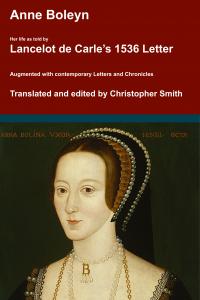
Anne Boleyn. Her Life as told by Lancelot de Carle's 1536 Letter.
In 1536, two weeks after the execution of Anne Boleyn, her brother George and four others, Lancelot du Carle, wrote an extraordinary letter that described Anne's life, and her trial and execution, to which he was a witness. This book presents a new translation of that letter, with additional material from other contemporary sources such as Letters, Hall's and Wriothesley's Chronicles, the pamphlets of Wynkyn the Worde, the Memorial of George Constantyne, the Portuguese Letter and the Baga de Secrets, all of which are provided in Appendices.
Available at Amazon in eBook and Paperback format.
Chronicle of Walter of Guisborough. Our king also, by his special letters, requested those same earls and other magnates who had remained in England that, for the sake of his own honour and that of the entire land of England, they should with all haste be ready to proceed into Scotland with the Earl of Warenne, whom he had appointed in his place, in order to both restrain and punish the audacity of the Scots. He set a date for them, namely, the octave of St. Hilary [20th January 1298] at York so that in the meantime they could prepare and assemble there, and then proceed against their enemies. The king also sent letters to the magnates of Scotland, stating that if they remained loyal and faithful to him, as they had promised at his departure to do in Parliament, they should come without any evasion to his Parliament at York, which was to be held by his earls on the morrow of St. Hilary; otherwise, they would henceforth be regarded as public enemies.
Rex etiam noster per literas suas speciales rogavit eosdem comites et cæteros magnates qui remanserant in Anglia, ut sicut suum et totius terræ Anglicanæ honorem diligerent, cum festinatione parati procederent in Scotiam cum comite de Warenna, quem suo loco præfecerat, ut Scotorum audaciam et reprimerent et castigarent, præfixitque eis terminum in octavis scilicet Sancti Hilarii apud Eborum, ut interim pararentur et convenirent ibidem, extunc in suos hostes processuri. Misit etiam rex literas suas ad magnates Scotiæ, ut si in fide et in fidelitate sua manerent, sicut in recessu suo se parliament remanere promiserant, ad parliamentum suum apud Eborum, quod per comites suos in crastino Sancti Hilarii celebrandum statuerat, absque omni cavillatione venirent, alioquin extunc velut hostes publici tenerentur.
Chronicle of Walter of Guisborough. When, in the Parliament of our lord the King held at Carlisle in the octave of Saint Hilary [20th January 1308], in the 35th year of the reign of King Edward, certain petitions had been put forward by the earls, barons, and other magnates, and by the whole community of the realm of England, concerning the state of the royal crown, as well as of the lands of the said King in Scotland, Wales, and Ireland, and by the said whole community, regarding the various new and intolerable grievances, oppressions, injuries, and extortions inflicted upon the said earls, barons, magnates, and community, by authority of our lord the Pope and by his command, and also by Master William Testa, clerk of our lord the Pope, and by the commissioners, ministers, or deputies acting in the said Master William's name, in many ways in the realm of England and the aforesaid lands, as is contained in the articles set forth below, which are as follows:
Concerning the unrestrained multitude of apostolic provisions, by which the ordinary collation (i.e., the local lawful appointment) to benefices is taken away, and as a result, worthy men, both noble and learned, are undeservedly excluded from ecclesiastical promotion; so that there will be a lack of counsel in the realm in matters touching the spiritual estate, nor will there be found suitable men able to be chosen for ecclesiastical prelacies; divine worship, hospitality, and almsgiving will cease, contrary to the original intention of the founders of the churches; laws will go undefended; church buildings will fall into ruin; and the devotion of the people will be withdrawn. Likewise, concerning the deaneries of the cathedral churches of the realm of England, many of which have now come into the hands of cardinals and other foreigners who do not reside in the said churches, and concerning the rest of the deaneries, it is to be feared that the same will soon happen, contrary to the order of the first churches and the most wholesome intention of their founders; from which it will result, because of their absence, that in the same cathedral churches (to whose governance the office of dean was wisely instituted for continual oversight) there will now arise manifold disorder, both in divine service, hospitality, almsgiving, and the defence of the church, and in the correction of the excesses of ministers; and to the lord king and to the realm, the counsel of many skilled men, who were accustomed to be chosen to deaneries, will be entirely withdrawn.
Likewise, concerning the religious houses founded by various magnates in pious devotion for the increase of divine worship, the exercise of hospitality, the giving of alms, and the making of continual prayers to God for the salvation of their founders and the redemption of all the faithful departed, the fruits and revenues of the first year, in the time of a vacancy of the prelacy, the lord Pope intends to apply to the use of various cardinals. Likewise, concerning the first fruits of vacant benefices reserved to the Apostolic See, which before this was unheard of, upon the collection of which the lord Pope, among the harshest and most harmful plunderings of the lord king and the realm, and indeed of the whole English Church, has lately, it is said, appointed collectors.
Cum in parliamento domini regis apud Carliolum in octavis Sancti Hilarii, anno domini regis Edwardi tricesimo quinto, propositæ fuissent quædam petitiones per comites, barones et alios magnates, et communitatem totius regni Angliæ, pro statu coronæ regiæ, necnon terrarum ipsius regis Scotia, Walliæ et Hiberniæ, et tota communitate prædicta, super variis, novis et intolerabilibus gravaminibus, oppressionibus, injuriis et extortionibus, præfatis comitibus baronibus et magnatibus et communitati, auctoritate domini papæ et mandato, ac etiam per magistrum Willelmum Testa domini papæ clericum, necnon ejusdem magistri Willelmi commissarios, ministros, seu ejus vices gerentes et ipsius nomine illatis multipliciter in regno Angliæ et terris prædictis, prout in articulis contentis inferius inseritur, qui tales sunt.
De effrenata provisionum multitudine apostolicarum, per quam ordinaria beneficiorum collatio tollitur, ac demum indigne nobiles et literati a promotione ecclesiastica excluduntur; et erit defectus consilii in regno quantum ad ea quæ ad spiritualisions of the tatem pertinent, nec invenientur idonei, qui in ecclesiasticas valeant eligi prælaturas; cultus divinus, hospitalitates et eleemosina cessabunt, contra intentionem primariam fundatorum ecclesiarum; jura peribunt indefensa; ædificia ecclesiastica corruent, et populi devotio subtrahetur.
Item de decanatibus ecclesiarum cathedralium regni Angliæ, quorum multi jam ad manus cardinalium et aliorum alienigenarum in ipsis ecclesiis minime residentium devenerunt, et de cæteris decanatibus ut fiat sic in proximo verisimiliter est timendum, contra primarum ecclesiarum ordinem et intentionem saluberrimam fundatorum; ex quo in ipsis ecclesiis cathedralibus, ad quarum regimen in custodiam continuam decani fuerunt salubriter instituti, jam propter ipsorum absentiam multiplex inordinatio proveniet, tam in divino obsequio, hospitalitate, eleemosina, et defensione ecclesiæ, quam in correctione excessuum ministrorum: et domino regi et regno multorum peritorum consilium, qui ad decanatus eligi consueverant, penitus subtrahetur.
Item de religiosis domibus, a variis magnatibus pia devotione fundatis ad divini cultus augmentum, hospitalitatis exercitium, eleemosinarum largitionem, et ad orationes continuas Deo fundandas pro ipsorum fundatorum salute, et omnium fidelium defunctorum redemptione, quarum fructus et proventus primi anni tempore vacationis prælatiæ dominus setting forth papa intendit diversorum cardinalium usibus applicare; item de primis fructibus beneficiorum vacantium sedi apostolicæ reservatis, quod antea fuerat inauditum, super quorum collectione, dominus papa inter prædationes durissimas et multum præjudiciales domino regi et regno, ac etiam toti ecclesiæ Anglicanæ, jam de novo, ut fertur, constituit collectores.
On 20th January 1356 King Edward I of Scotland (age 73) surrendered his claim to the Scottish throne to King Edward III of England (age 43) in the presence of William Latimer 4th Baron Latimer of Corby (age 25) in exchange for an English pension.
On 20th January 1382 King Richard II of England (age 15) and Anne of Bohemia Queen Consort England (age 15) were married at Westminster Abbey [Map] by Bishop Robert Braybrooke. She by marriage Queen Consort England. She the daughter of Charles IV King Bohemia Holy Roman Emperor Luxemburg and Elizabeth Pomerania Holy Roman Empress Luxemburg (age 35). He the son of Edward "Black Prince" and Joan "Fair Maid of Kent" Princess Wales (age 53). They were fourth cousins. He a grandson of King Edward III of England.
It was the first royal wedding that including a Royal Procession from the Tower of London [Map] to Westminster Abbey [Map].
Arranged by Michael de la Pole 1st Earl Suffolk (age 52) the marriage not popular since it brought no dowry and little prospect of increased trade since Bohemia not a primary English trade partner.


On 20th January 1433 John Holland 2nd Duke Exeter (age 37) and Beatrice Aviz Duchess Exeter (age 51) were married. She by marriage Duchess Exeter. She the illegitmate daughter of King John I of Portugal (age 81) and Ines Peres. He the son of John Holland 1st Duke Exeter and Elizabeth Lancaster Duchess Exeter. They were half fifth cousins. He a great grandson of King Edward III of England.
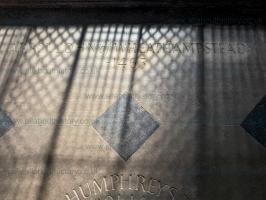
On 20th January 1465 Abbot John Whethampstede (age 46) died. He was buried under what is not the Welcome Centre at St Albans Cathedral. There is a memorial to him in St Alban's Shrine, St Albans Cathedral.
Abbot John Whethampstede: In or before 1419 he was born to Hugh Bostock. in Wheathampstead, Hertfordshire [Map]. In 1451 he was appointed Abbot of St Albans.
On 20th January 1465 Thomas Boyd 1st Earl Arran was engaged to Marion Kennedy (age 21) but no marriage took place.
Patent Rolls. 20th January 1465. Grant to Master Robert Stillyngton (age 45), king's clerk, keeper of the privy Westminster, seal, by mainprise of John Brewester of London, 'gentilman,' and Thomas Wode of Farnham, co. Essex, 'gentilman,' of the custody of all the temporalities of the Bishopric of Bath and Wells, in the king's hands by the death of Thomas, late bishop (deceased), so long as they remain in the king's hands, rendering as much as may be agreed upon between him and the treasurer before Midsummer and supporting all charges, and also all advowsons belonging to the king by reason of the said temporalities. By K.
On 20th January 1479 John II King Aragon (age 80) died. His son Ferdinand (age 26) succeeded II King Aragon.
On 20th January 1526 Isabella of Austria Queen Consort Denmark and Norway (age 24) died at Ghent [Map].
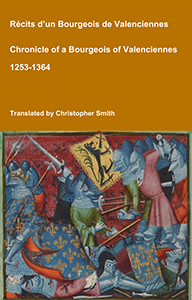
Chronicle of a Bourgeois of Valenciennes
Récits d’un bourgeois de Valenciennes aka The Chronicle of a Bourgeois of Valenciennes is a vivid 14th-century vernacular chronicle written by an anonymous urban chronicler from Valenciennes in the County of Hainaut. It survives in a manuscript that describes local and regional history from about 1253 to 1366, blending chronology, narrative episodes, and eyewitness-style accounts of political, military, and social events in medieval France, Flanders, and the Low Countries. The work begins with a chronological framework of events affecting Valenciennes and its region under rulers such as King Philip VI of France and the shifting allegiances of local nobility. It includes accounts of conflicts, sieges, diplomatic manoeuvres, and the impact of broader struggles like the Hundred Years’ War on urban life in Hainaut. Written from the perspective of a burgher (bourgeois) rather than a monastery or royal court, the chronicle offers a rare lay viewpoint on high politics and warfare, reflecting how merchants, townspeople, and civic institutions experienced the turbulence of the 13th and 14th centuries. Its narrative style combines straightforward reporting of events with moral and civic observations, making it a valuable source for readers interested in medieval urban society, regional politics, and the lived experience of war and governance in pre-modern Europe.
Available at Amazon in eBook and Paperback format.
On 20th January 1550 Ferdinand Wittelsbach was born to Albert V Wittelsbach V Duke Bavaria (age 21) and Anna Habsburg Spain Duchess Bavaria (age 21). Coefficient of inbreeding 1.58%.
On 20th January 1554 Sebastian King Portugal was born to John Manuel Aviz Prince Portugal (deceased) and Joanna of Austria Princess Portugal (age 18). He was named after Saint Sebastian on whose Feast Day he was born. At birth he was heir apparent to the throne of Portugal since his father had died two weeks before his birth. Soon after his birth his mother Joanna of Austria Princess Portugal left Portugal to become Regent of Spain for her father serving in the same capacity for her brother after her father's abdication. She never saw him. Coefficient of inbreeding 20.02%.


On 20th January 1555 the statutes for burning heretics, originally enacted in 1401 to repress Lollardism, De heretico comburendo, and repealed in 1547, was re-enacted by Queen Mary I of England and Ireland (age 38) to provide for the burning of Protestants.
The burning of Protestants wasn't new. During the reign of King Henry VIII sixty-three Protestants had been burned over a period of sixteen years. During the reign of Queen Mary, however, two-hundred and eighty four were burned in three and a half years.
Two days later Henry Machyn describes in his diary: "whent in-to Smythfeld to berne betwyn vij and viij in the mornyng v men and ij women
In a number of cases burnings were posthumous ie bodies were exhumed and burned."
Thereafter burning take place on a regular basis, weekly, at various places around the country, and continued for the whole of Queen Mary's reign, with the last being two days before Mary's death. Executions continued in Queen Elizabeth's reign albeit at a much reduced rate.


Henry Machyn's Diary. 20th January 1557. The xx day of January at Grenwyche parke the quen (age 40) grace('s) pensyonars dyd mustur in bryth [bright] [harness] and mony barbe horsses; and evere pensyonar had iij men in grene cottes gardyd with whytt; so thay rod a-bowt [the park,] iij in ranke apone grett horssys with spers in ther handes pentyd whyt and grene, and a-for rod trumpeters blohyng; and next a man of armes bayryng a standard of red and yelowe, in the standard a whytt hart, and on the thodur syd a blake eygyll with goldyd leges; and be-twyn ij and iij of the cloke thay cam downe and mustered a-for the Quen('s) grace a-for the parke gatt, for ther stod the Quen('s) grace on he, and my lord cardenall (age 56), and my lord admerall (age 47), and my lord Montyguw (age 28), and dyvers odur lordes and lades; and so a-for the pensyoners rod many gentyll-men on genetes and lyght horsses, butt spesyalle ther rod on gentyll-man, ys nam ys master (blank), apon the lest mulle thatt evere I say; and so thay rod to and fro a-for the Quyne; and ther cam a tumbeler, and playd mony prate fettes a-for the Quen and my lord cardenalle, that her grace dyd layke hartely; and so her grace dyd thanke them alle for ther peyne; and so after they partyd, for ther wher of the pensyonars 1. and mo, besyd ther men of armes; and ther wher of pepulle of men and vomen a-boyff x m. pepulle and mo.


On 20th January 1573 Alexander Oldenburg I Duke Schleswig Holstein Sonderburg was born to John "Younger" Oldenburg Duke Schleswig Holstein Sonderburg (age 27) and Elisabeth of Brunswick-Grubenhagen (age 22) at Sønderborg. He married 26th November 1604 his half fourth cousin Dorothea Schwarzburg Duchess Schleswig Holstein Sonderburg, daughter of John Günther Schwarzburg 1st Count of Schwarzburg Sondershausen and Anna of Oldenburg, and had issue.
On 20th January 1606 Sibylla Elisabeth of Württemberg (age 21) died from childbirth after the birth of a stillborn son.
On 20th January 1612 Rudolf II Holy Roman Emperor (age 59) died. His brother Matthias (age 54) succeeded I Holy Roman Emperor. Anna of Austria Holy Roman Empress (age 26) by marriage Holy Roman Empress.


Diary of Anne Clifford. 20th January 1617. Upon the 20th I and my Lord (age 27) went presently after dinner to the Court, he went up to the King's side about his business, I went to my Aunt Bedford in her lodging where I stay'd in Lady Ruthven's chamber till towards 8 o'clock about which time I was sent for up to the King into his Drawing Chamber when the door was lock'd and nobody suffered to stay here but my Lord and I, my Uncle Cumberland, my Coz. Clifford, my Lords Arundel, Pembroke, Montgomery, Sir John Digby. For lawyers there were my Lord Chief Justice Montague and Hobart Yelverton the King's Solicitor, Sir Randal Crewe that was to speak for my Lord and I. The King asked us all if we would submit to his judgment in this case. My Uncle Cumberland, my Coz. Clifford, and my Lord answered they would, but I would never agree to it without Westmoreland at which the King grew in a great chaff. My Lord of Pembroke and the King's Solicitor speaking much against me, at last when they saw there was no remedy, my Lord fearing the King would do me some public disgrace, desired Sir Fohn Digby would open the door, who went out with me and persuaded me much to yield to the King. My Lord Hay (age 37) came to me to whom I told in brief how this business stood. Presently after my Lord came from the King when it was resolved that if I would not come to an agreement there should be an agreement made without me. We went down, Sir Robert Douglas and Sir George Chaworth bringing us to the coach, by the way my Lord and I went in at Worcester House to see my Lord and Lady and so came home this day. I may say I was led miraculously by God's Providence, and next to that I trust all my good to the worth and nobleness of my Lord's disposition for neither I nor anybody else thought I should have passed over this day so well as I have done.


On 20th January 1628 Henry Cromwell was born to Oliver Cromwell (age 28) and Elizabeth Bourchier (age 30) at Huntingdon [Map]. He married 10th May 1653 Elizabeth Russell, daughter of Francis Russell 2nd Baronet and Catherine Wheatley.


Samuel Pepys' Diary. 20th January 1660. Thence to Mr. Sheply's and took him to my house and drank with him in order to his going to-morrow. So parted and I sat up late making up my accounts before he go. This day three citizens of London went to meet Monk (age 51) from the Common Council1!
Note 1. Jan. 20th. Then there went out of the City, by desire of the Lord Mayor and Court of Aldermen, Alderman Fowke and Alderman Vincett, alias Vincent, and Mr. Broomfield, to compliment General Monk, who lay at Harborough Town, in Leicestershire.

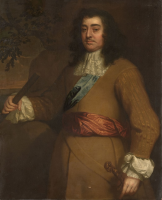
Samuel Pepys' Diary. 20th January 1660. Jan. 21st. Because the Speaker was sick, and Lord General Monk (age 51) so near London, and everybody thought that the City would suffer for their affronts to the soldiery, and because they had sent the sword-bearer to, the General without the Parliament's consent, and the three Aldermen were gone to give him the welcome to town, these four lines were in almost everybody's mouth:
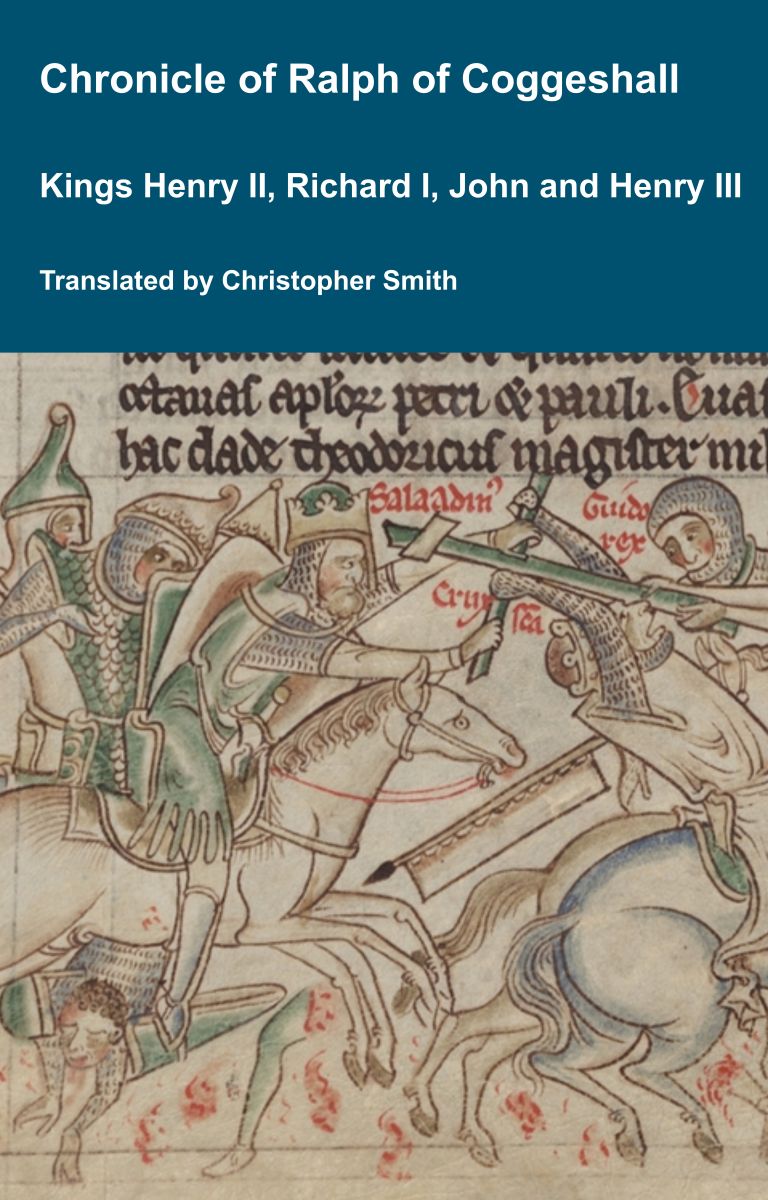
Chronicle of Abbot Ralph of Coggeshall
The Chronicle of Abbot Ralph of Coggeshall (Chronicon Anglicanum) is an indispensable medieval history that brings to life centuries of English and European affairs through the eyes of a learned Cistercian monk. Ralph of Coggeshall, abbot of the Abbey of Coggeshall in Essex in the early 13th century, continued and expanded his community’s chronicle, documenting events from the Norman Conquest of 1066 into the tumultuous reign of King Henry III. Blending eyewitness testimony, careful compilation, and the monastic commitment to record-keeping, this chronicle offers a rare narrative of political intrigue, royal power struggles, and social upheaval in England and beyond. Ralph’s work captures the reigns of pivotal figures such as Richard I and King John, providing invaluable insights into their characters, decisions, and the forces that shaped medieval rule. More than a simple annal, Chronicon Anglicanum conveys the texture of medieval life and governance, making it a rich source for scholars and readers fascinated by English history, monastic authorship, and the shaping of the medieval world.
Available at Amazon in eBook and Paperback format.
Samuel Pepys' Diary. 20th January 1660. Friday. In the morning I went to Mr Downing's (age 35) bedside and gave him an account what I had done as to his guests, land I went thence to my Lord Widdrington (age 60) who I met in the street, going to seal the patents for the judges to-day, and so could not come to dinner. I called upon Mr. Calthrop (age 36) about the money due to my Lord. Here I met with Mr. Woodfine and drank with him at Sun in Chancery Lane and so to Westminster Hall [Map], where at the lobby I spoke with the rest of my guests and so to my office. At noon went by water with Mr. Maylard and Hales to Swan in Fish Street at our Goal Feast, where we were very merry at our Jole of Ling, and from thence after a great and good dinner Mr. Falconberge would go drink a cup of ale at a place where I had like to have shot at a scholar that lay over the house of office. Thence calling on Mr. Stephens and Wootton (with whom I drank) about business of my Lord's (age 34) I went to the Coffee Club where there was nothing done but choosing of a Committee for orders. Thence to Westminster Hall [Map] where Mrs. Lane and the rest of the maids had their white scarfs, all having been at the burial of a young bookseller in the Hall1.
Note 1. These stationers and booksellers, whose shops disfigured Westminster Hall down to a late period, were a privileged class. In the statutes for appointing licensers and regulating the press, there is a clause exempting them from the pains and penalties of these obnoxious laws.


Samuel Pepys' Diary. 20th January 1664. By and by came by Mr. Coventry (age 36), and so we broke off; and he and I took a turn or two and so parted, and then my Lord Sandwich (age 38) came upon me, to speak with whom my business of coming again to-night to this ende of the town chiefly was, in order to the seeing in what manner he received me, in order to my inviting him to dinner to my house, but as well in the morning as now, though I did wait upon him home and there offered occasion of talk with him, yet he treated me, though with respect, yet as a stranger, without any of the intimacy or friendship which he used to do, and which I fear he will never, through his consciousness of his faults, ever do again. Which I must confess do trouble me above anything in the world almost, though I neither do need at present nor fear to need to be so troubled, nay, and more, though I do not think that he would deny me any friendship now if I did need it, but only that he has not the face to be free with me, but do look upon me as a remembrancer of his former vanity, and an espy upon his present practices, for I perceive that Pickering to-day is great with him again, and that he has done a great courtesy for Mr. Pierce, the chirurgeon, to a good value, though both these and none but these did I mention by name to my Lord in the business which has caused all this difference between my Lord and me. However, I am resolved to forbear my laying out my money upon a dinner till I see him in a better posture, and by grave and humble, though high deportment, to make him think I do not want him, and that will make him the readier to admit me to his friendship again, I believe the soonest of anything but downright impudence, and thrusting myself, as others do, upon him, which yet I cannot do, not [nor] will not endeavour.

Samuel Pepys' Diary. 20th January 1664. Home to dinner, and after dinner my wife and I by water, which we have not done together many a day, that is not since last summer, but the weather is now very warm, and left her at Axe Yard [Map], and I to White Hall, and meeting Mr. Pierce walked with him an hour in the Matted Gallery; among other things he tells me that my Baroness Castlemaine (age 23) is not at all set by the King (age 33), but that he do doat upon Mrs. Stewart (age 16) only; and that to the leaving of all business in the world, and to the open slighting of the Queene (age 54); that he values not who sees him or stands by him while he dallies with her openly; and then privately in her chamber below, where the very sentrys observe his going in and out; and that so commonly, that the Duke (age 30) or any of the nobles, when they would ask where the King is, they will ordinarily say, "Is the King above, or below?" meaning with Mrs. Stewart: that the King do not openly disown my Baroness Castlemaine, but that she comes to Court; but that my Lord FitzHarding (age 34) and the Hambletons1, and sometimes my Lord Sandwich (age 38), they say, have their snaps at her. But he says my Lord Sandwich will lead her from her lodgings in the darkest and obscurest manner, and leave her at the entrance into the Queene's lodgings, that he might be the least observed; that the Duke of Monmouth (age 14) the King do still doat on beyond measure, insomuch that the King only, the Duke of York, and Prince Rupert (age 44), and the Duke of Monmouth, do now wear deep mourning, that is, long cloaks, for the Duchesse of Savoy; so that he mourns as a Prince of the Blood, while the Duke of York do no more, and all the nobles of the land not so much; which gives great offence, and he says the Duke of York do consider. But that the Duke of York do give himself up to business, and is like to prove a noble Prince; and so indeed I do from my heart think he will. He says that it is believed, as well as hoped, that care is taken to lay up a hidden treasure of money by the King against a bad day, pray God it be so! but I should be more glad that the King himself would look after business, which it seems he do not in the least.
Note 1. The three brothers, George Hamilton, James Hamilton (age 34), and the Count Antoine Hamilton (age 18), author of the "Memoires de Grammont"..
Become a Member via our Buy Me a Coffee page to read more.
Samuel Pepys' Diary. 20th January 1664. Up and by coach to my Lord Sandwich's (age 38), and after long staying till his coming down (he not sending for me up, but it may be he did not know I was there), he came down, and I walked with him to the Tennis Court, and there left him, seeing the King (age 33) play.

Samuel Pepys' Diary. 20th January 1665. So took coach and to my Lady Sandwich's (age 40), and so to my bookseller's, and there took home Hooke's book of microscopy, a most excellent piece, and of which I am very proud.
On 20th January 1666 Anne of Austria Spain Queen Consort France (age 64) died.


Samuel Pepys' Diary. 20th January 1667. After dinner I with my brother away by water to White Hall, and there walked in the Parke, and a little to my Chancellor's (age 57), where the King (age 36) and Cabinet met, and there met Mr. Brisband, with whom good discourse, to White Hall towards night, and there he did lend me "The Third Advice to a Paynter", a bitter satyre upon the service of the Duke of Albemarle (age 58) the last year. I took it home with me, and will copy it, having the former, being also mightily pleased with it. So after reading it, I to Sir W. Pen (age 45) to discourse a little with him about the business of our prizes, and so home to supper and to bed.


Samuel Pepys' Diary. 20th January 1668. Thence and home, and then to the 'Change [Map] in the evening, and there Mr. Cade told me how my Lord Gerard (age 50) is likely to meet with trouble, the next sitting of Parliament, about [Carr (age 31)] being set in the pillory; and I am glad of it; and it is mighty acceptable to the world to hear, that, among other reductions, the King (age 37) do reduce his Guards, which do please mightily.
Anne Boleyn. Her Life as told by Lancelot de Carle's 1536 Letter.
In 1536, two weeks after the execution of Anne Boleyn, her brother George and four others, Lancelot du Carle, wrote an extraordinary letter that described Anne's life, and her trial and execution, to which he was a witness. This book presents a new translation of that letter, with additional material from other contemporary sources such as Letters, Hall's and Wriothesley's Chronicles, the pamphlets of Wynkyn the Worde, the Memorial of George Constantyne, the Portuguese Letter and the Baga de Secrets, all of which are provided in Appendices.
Available at Amazon in eBook and Paperback format.

Samuel Pepys' Diary. 20th January 1668. So to my Lord Crew's (age 70) to dinner, where we hear all the good news of our making a league now with Holland against the French power coming over them, or us which is the first good act that hath been done a great while, and done secretly, and with great seeming wisdom; and is certainly good for us at this time, while we are in no condition to resist the French, if they should come over hither; and then a little time of peace will give us time to lay up something, which these Commissioners of the Treasury are doing; and the world do begin to see that they will do the King's work for him, if he will let them. Here dined Mr. Case, the minister, who, Lord! do talk just as I remember he used to preach, and did tell a pretty story of a religious lady, Queen of Navarre1 and my Lord also told a good story of Mr. Newman, the Minister in New England, who wrote the Concordance, of his foretelling his death and preaching a funeral sermon, and did at last bid the angels do their office, and died. It seems there is great presumption that there will be a Toleration granted: so that the Presbyterians do hold up their heads; but they will hardly trust the King (age 37) or the Parliament what to yield them, though most of the sober party be for some kind of allowance to be given them.
Note 1. Marguerite de Valois, Queen of Navarre, sister of Francis I of France. The "pretty story" was doubtless from her "Heptameron", a work imitating in title and matter the "Decameron" of Boccaccio. She is said to be the heroine of some of the adventures. It is fair to add that she wrote also the "Miroir dune Ame Pecheresse", translated into English by Queen Elizabeth, the title of whose book was "A Godly Medytacyon of the Christian Soules", published by John Bale in 1548. B.
Samuel Pepys' Diary. 20th January 1669. Thence to my wife at Unthanke's, and with her and W. Hewer (age 27) to Hercules Pillars, calling to do two or three things by the way, end there dined, and thence to the Duke of York's (age 35) house, and saw "Twelfth Night", as it is now revived; but, I think, one of the weakest plays that ever I saw on the stage. This afternoon, before the play, I called with my wife at Dancre's (age 44), the great landscape-painter, by Mr. Povy's (age 55) advice; and have bespoke him to come to take measure of my dining-room panels, and there I met with the pretty daughter of the coalseller's, that lived in Cheapside, and now in Covent Garden [Map], who hath her picture drawn here, but very poorly; but she is a pretty woman, and now, I perceive, married, a very pretty black woman. So, the play done, we home, my wife letting fall some words of her observing my eyes to be mightily employed in the playhouse, meaning upon women, which did vex me; but, however, when we come home, we were good friends; and so to read, and to supper, and so to bed.


Samuel Pepys' Diary. 20th January 1669. Up; and my wife, and I, and W. Hewer (age 27) to White Hall, where she set us down; and there I spoke with my Lord Peterborough (age 47), to tell him of the day for his dining with me being altered by my Lord Sandwich (age 43) from Friday to Saturday next. And thence heard at the Council-board the City, by their single counsel Symson, and the company of Strangers Merchants, a debate the business of water-baylage; a tax demanded upon all goods, by the City, imported and exported: which these Merchants oppose, and demanding leave to try the justice of the City's demand by a Quo Warranto, which the City opposed, the Merchants did quite lay the City on their backs with great triumph, the City's cause being apparently too weak: but here I observed Mr. Gold, the merchant, to speak very well, and very sharply, against the City.
John Evelyn's Diary. 20th January 1671. The King (age 40) came to me in the Queen's (age 32) withdrawing-room from the circle of ladies, to talk with me as to what advance I had made in the Dutch History. I dined with the Treasurer (age 40), and afterward we went to the Secretary's (age 53) Office, where we conferred about divers particulars.


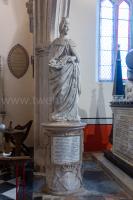
On 20th January 1681 Rachael Fane Countess Bath and Middlesex was buried at St Peter's Church, Tawstock [Map]. Inscription: "Rachel the Countess, worthy of Henry, scarcely was there another of her sex equal to her either in spirit or in virtue, in domestic affairs, civil matters, and sacred concerns, with an intellect more than manly, yet maternal, than which in her time scarcely anything greater was granted upon earth. A humble and devoted daughter of the English Church, and in unjust times the mother of expelled fathers and here almost their sole patron. The one thing to be lamented was that the noble name of Bourchier would have perished in her, had she not possessed virtue enough to render it immortal. And although childless, she was the parent of more than a thousand children, whom she most liberally educated, endowed, consecrated, and ennobled. She still lives, and will never die, so long as grateful hearts remain in these regions.".
Inscription Rachel Comitissa Henrico digna, vix altera e sexu vel animo, vel virtute aequipollens Rebus demisticis civilibus sacris, ingenio pluaquam virili, at materno (quo suo tempore vix maius dabatur in terris) Ecclesiae Anglicanae Filia humilis, et devota, et iniquis temporibus eiectorum Patrum mater et hie pene unica fautrix Unicum Lugendum quod in se perjisset nobile Bourchieri nomen, ni sat illa habuit virtutum vel illu immortale reddere Er liset improlis plus mille liberorum Parens, quos liberalissime educavit, doravit, sacravit, et nobilitavir Adhuc vivit et nunquam moritura dum his Regionibus
On 11th January 1695 Francis Scott 2nd Duke Buccleuch was born to James Scott (age 20) and Henrietta Hyde Countess Dalkeith (age 18). He was baptised on 20th January 1695 at St Margaret's Church, Westminster [Map]. He a great grandson of King Charles II of England Scotland and Ireland. He married (1) 5th April 1720 his second cousin Jane Douglas, daughter of James Douglas 2nd Duke Queensberry and Mary Boyle Duchess Queensbury, and had issue (2) 4th September 1744 Alice Powell Duchess Buccleuch.

On 20th January 1706 Anne Grey was born to Henry Grey 1st Duke Kent (age 35) and Jemima Crew Marchioness Kent (age 30). She married 9th January 1729 Charles Cavendish, son of William Cavendish 2nd Duke Devonshire and Rachel Russell Duchess Devonshire, and had issue.
On 20th January 1716 Charles III King Spain was born to Philippe V King Spain (age 32) and Elisabeth Farnese Queen Consort Spain (age 23). He married 1738 his fourth cousin Maria Amalia of Saxony Queen Consort Spain, daughter of Augustus III King Poland and Maria Josepha of Austria, and had issue.


William of Worcester's Chronicle of England
William of Worcester, born around 1415, and died around 1482 was secretary to John Fastolf, the renowned soldier of the Hundred Years War, during which time he collected documents, letters, and wrote a record of events. Following their return to England in 1440 William was witness to major events. Twice in his chronicle he uses the first person: 1. when writing about the murder of Thomas, 7th Baron Scales, in 1460, he writes '… and I saw him lying naked in the cemetery near the porch of the church of St. Mary Overie in Southwark …' and 2. describing King Edward IV's entry into London in 1461 he writes '… proclaimed that all the people themselves were to recognize and acknowledge Edward as king. I was present and heard this, and immediately went down with them into the city'. William’s Chronicle is rich in detail. It is the source of much information about the Wars of the Roses, including the term 'Diabolical Marriage' to describe the marriage of Queen Elizabeth Woodville’s brother John’s marriage to Katherine, Dowager Duchess of Norfolk, he aged twenty, she sixty-five or more, and the story about a paper crown being placed in mockery on the severed head of Richard, 3rd Duke of York.
Available at Amazon in eBook and Paperback format.

On 20th January 1722 Louis I King Spain (age 14) and Louise Élisabeth Bourbon Queen Consort Spain (age 12) were married. She the daughter of Philippe Bourbon II Duke Orléans (age 47) and Françoise Marie Bourbon Duchess Orléans (age 44). He the son of Philippe V King Spain (age 38) and Maria Luisa Savoy. They were half first cousin once removed. He a great x 2 grandson of King Charles I of England, Scotland and Ireland. She a great x 3 granddaughter of King James I of England and Ireland and VI of Scotland.
On 20th January 1735 Frederick Louis Saxe Coburg Altenburg was born to Duke Frederick III of Saxe Coburg Altenburg III (age 35) and Luise Dorothea Saxe Meiningen Duchess Saxe Gotha Altenburg (age 24) at Gotha.
Diary of Viscount Egmont afterwards Earl Egmont 1741. 20th January 1741. This affair prevented my attending the committee at the Georgia Office, which met to consider of the powers for the President entered to be appointed at Savannah. I learned Sir Robert Walpole (age 64) was not down at the House of Commons early enough to declare the King's consent to our petition for money, but that he came after the order of the day was called for, which was a sUght of the Trustees.


The Early Diaries of Frances Burney May 1775. 20th January 1741. The party consisted of the Baron Deiden, the Danish Ambassador and the Baronness his lady, who is a sweet woman, young, pretty, accomplished, and graceful. She is reckoned one of the best lady harpsichord players in Europe. Miss Phipps, whom I have mentioned before. Sir James Lake,56.1 who, as heretofore, was sensible, cold, and reserved. Lady Lake,56.2 who as heretofore was all politeness and sweetness. Miss Lake, sister of Sir James, who is a very obliging and sweet-tempered, oldish maid;56.3 and Sir Thomas Clarges, a young baronet, who was formerly so desperately enamoured of Miss Linley, now Mrs. Sheridan, that his friends made a point of his going abroad to recover himself: he is now just returned from Italy, and I hope cured. He still retains all the school-boy English mauvaise honte [bashfulness]; scarce speaks but to make an answer, and is as shy as if his last residence had been at Eaton instead of Paris.57.1 Mr. Harris (age 31), author of the three Treatises on Music, Poetry, and Happiness, of Philosophical Arrangements, Hermes, and several other tracts. He is at the same time learned and polite, intelligent and humble.57.2 Mrs. Harris, his wife, is in nothing extraordinary57.3. Miss Louisa Harris, his second daughter, is a modest, reserved, and sensible girl. She is a singing-scholar of Sacchini's, and has obtained some fame as a lady-singer58.1. Mrs. Ord58.2, a very musical lady and agreeable woman. Miss Ord, a fine girl, but very insipid. Mr. Earl, a very musical gentleman. Mrs. Anguish, a keen, sharp, clever woman. Miss Harrison, daughter of the unfortunate Commodore58.3, a haughty and uninteresting sort of girl. Mr. Merlin, the very ingenious mechanic. He is very diverting also in conversation. There is a singular simplicity in his manners. He speaks his opinion upon all subjects and abcat all persons with the most undisguised freedom. He does not, though a foreigner, want words; but he arranges and pronounces them very comically. He is humbly grateful for all civilities that are shown him; but is warmly and honestly resentful for the least slight58.4.
Note 56.1. Sir James Winter Lake (son of Sir Sitwell Lake, Governor of the Hudson's Bay Company), and himself a director of "The Million Bank," had "one of the most extensive and choice collections of English portraits in the kingdom."
Note 56.2. Henrietta Maria, daughter of the first Baron Mulgrave (age 18), afterwards married to Charles, eleventh Viscount Dillon [Note. Mistake for 12th Viscount Dillon], was the "amiable and zealous" friend who, gathering from her brother, Captain Phipps, that Dr. Burney had been elected a fellow of the Royal Society without a single black-ball, made it known to him by directing a letter to "Dr. Burney, F.R.S., Queen's Square," before the President, or the friend who had nominated him, had time to forward the news.
Note 56.3. In her letter to Mr. Crisp upon this concert, Fanny says playfully of Miss Lake, that she is a "very agreeable old maid, I respect and admire,-and wish to imitate her."
Note 57.1. Sir Thomas Clarges afterwards married a lady who was beloved by Dr. Burney as resembling his Susan (who was her dear friend) in person, voice, and musical taste and skill; Lady Clarges afterwards, unfortunately, resembled Susan in her delicacy of health and premature death.
Note 57.2. In the letter Mr. Harris is said to be "a charming old man,-well. bred even to humility, gentle in his manners, communicative and agreeable in his conversation.
Note 57.3. Here we raise the pen of protest. This was indeed a hasty judgement, made from the surface. It is heightened in the letter to Mr. Crisp, describing this same evening "Mrs. Harris - a so, so, sort of woman" What! was our witty Mrs. Harris to be made out to be like that gown in which she went to the birthday in 1774-"& decent, plain silk,-no colour-"? Read her, reader. Mortimer Collins made us read her. We quote from his article on "Mrs. Harris": "Mrs. Harris was a person who made her mark in the world .... She was a constant correspondent of her son," (the first Lord Malmesbury) "whether he was studying at Oxford or the Hague, or doing diplomacy at Madrid, or Berlin, or St. Petersburg; and her letters are charming for their vivacity, and for the graphic style in which they narrate the events of the day.... I wonder if any rising politician of the present day has a mother who can send him such delightful epistles-I greatly doubt it." Mortimer ends by saying that now "nobody can chronicle the gossip of the day with so playful a pen as Mrs. Harris." She was Elizabeth, daughter, and in the end heiress, of John Clarke, M.P., of SANFORD, in Somersetshire, a woman of fashion and esprit, but not wholly like the family whom she thus wittily describes: "They have a good house in Park Place, and are people of this world." Her letters to her son begin on his going to Oxford in June, 1763, and end in October, 1780, when he represented Great Britain at St. Petersburg. They are not to be found in the Diplomatic Correspondence of the first Lord Malmesbury, but in another collection, that of the Letters of his Family and Friends.
Note 58.1. Fanny says in the letter, "Miss Louisa Harris has a bad figure, and is not handsome.
Note 58.2. Mrs. Ord, Fanny's firm friend in after years, was daughter of an eminent surgeon surnamed Dillingham, or Dellingham; and was, then, a wealthy widow.
Note 58.3. Called "the unfortunate" because, after distinguished service in the East and West Indies, he was stricken with palsy from over-work of mind and body, and lived in a helpless state for twenty years.
Note 58.4. Merlin was a clever but absurd man, a mechanician, always trying new inventions. In her letter Fanny says, "he pronounces English very comically, for though he is never at a loss for a word, he almost always puts the emphasis on the wrong syllable."
Become a Member via our Buy Me a Coffee page to read more.

Diary of Viscount Egmont afterwards Earl Egmont 1741. 20th January 1741. The Committee present were: Mr. Ayers, Hen. Archer, Lord Shaftsbury (age 29), Mr. Smith, Mr. Vernon, who made some progress in the affair and adjourned the affair to Friday.

Diary of Viscount Egmont afterwards Earl Egmont 1741. 20th January 1741. Tuesday. This morning died my brother-in-law, Sir Philip Parker (age 59), at 3 o'clock, choked by one of those fits he has for 12 weeks past had at sundry times. He was last night as well or rather better than at any time before. I spent a great part of the day with Lady Parker and my nieces. At night, the will and codicil were opened in presence of Mrs. East, Lady Parker's mother, Mr. Gilbert East, Lady Parker's brother, my 2 nieces, Mrs. Gosset and myself, wherein Lady Parker and my niece Martha (age 25), the eldest, are left executors, and myself, Mr. Gilbert East and Mr. Kirk, the counsellor, who drew the will, are made trustees. The estate is divided between my nieces; the Wiltshire and what lies in some other places to my niece Martha: and the Suffolk estate to my niece Elizabeth (age 24). He left divers legacies and,among the others, 50Z. to my wife (age 51), 20 guineas to my son (age 29), 100?. to each of the Trustees, 101. to my cousin Fortrey and 500Z. to my niece Bering. He ordered to be buried at Arwarton, Suffolk. The will we judged very ill and confusedly drawn, but happily the persons concerned are only my Lady Parker and her two daughters. In case of my nieces' death without children, their estates go to the heirs general, which are my wife and niece Bering. It is surprising that he mentioned not the places in the Funds where his money lies, but only bequeathed his personal estate in general terms, and that he kept no book of receipts and disbursements whereby might be known where his ready money lies, which I have to reason to suppose is more than 30,000l, but Mr. Gosset believes it nearer 50,000?.

On 20th January 1750 Louise Oldenburg was born to Frederick V King of Denmark and Norway (age 26) and Louise Hanover Queen Consort Denmark and Norway (age 25) at Christiansborg Castle. She a granddaughter of King George II of Great Britain and Ireland. She married 30th August 1766 her first cousin Charles Hesse-Kassel, son of Frederick Hesse-Kassel and Mary Hanover, and had issue.
On 20th January 1754 Christian August Oldenburg I Duke Schleswig Holstein Sonderburg Augustenburg (age 57) died. His son Frederick (age 32) succeeded I Duke Schleswig Holstein Sonderburg Augustenburg.
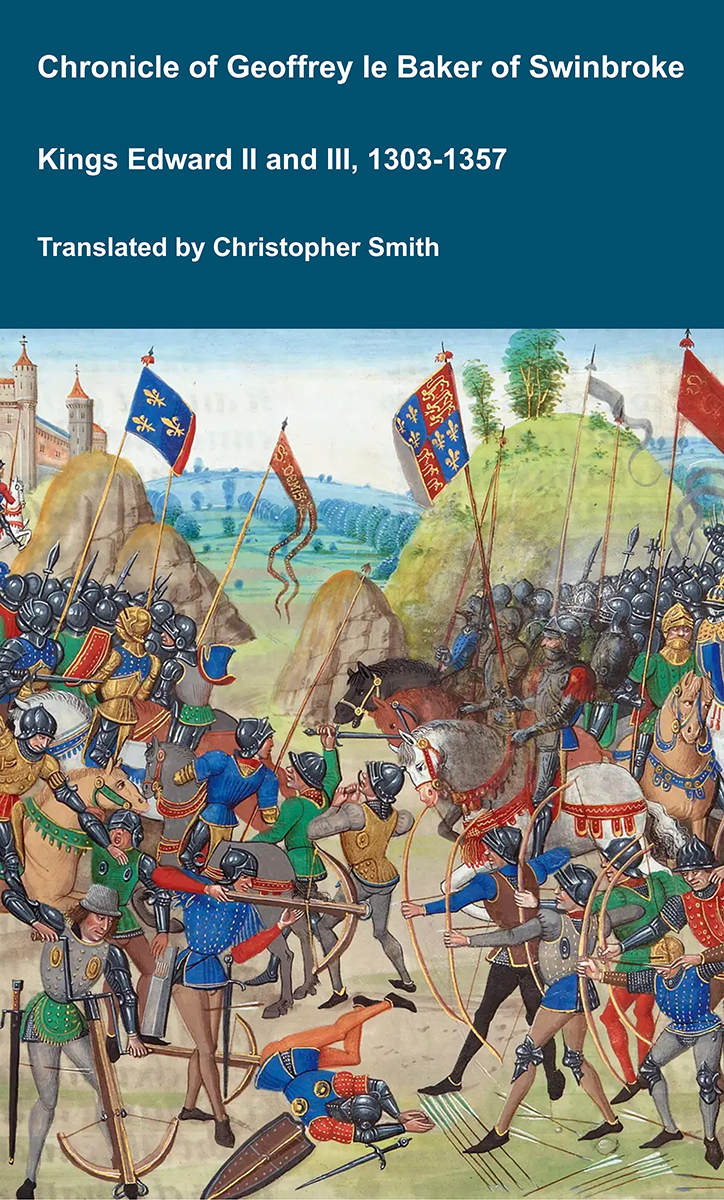
Chronicle of Geoffrey le Baker of Swinbroke
Baker was a secular clerk from Swinbroke, now Swinbrook, an Oxfordshire village two miles east of Burford. His Chronicle describes the events of the period 1303-1356: Gaveston, Bannockburn, Boroughbridge, the murder of King Edward II, the Scottish Wars, Sluys, Crécy, the Black Death, Winchelsea and Poitiers. To quote Herbert Bruce 'it possesses a vigorous and characteristic style, and its value for particular events between 1303 and 1356 has been recognised by its editor and by subsequent writers'. The book provides remarkable detail about the events it describes. Baker's text has been augmented with hundreds of notes, including extracts from other contemporary chronicles, such as the Annales Londonienses, Annales Paulini, Murimuth, Lanercost, Avesbury, Guisborough and Froissart to enrich the reader's understanding. The translation takes as its source the 'Chronicon Galfridi le Baker de Swynebroke' published in 1889, edited by Edward Maunde Thompson.
Available at Amazon in eBook and Paperback format.

On 20th January 1760 Caroline Cavendish Countess Bessborough (age 40) died. Monument in Derby Cathedral [Map] sculpted by John Michael Rysbrack (age 65).
Caroline Cavendish Countess Bessborough: In May 1719 she was born to William Cavendish 3rd Duke Devonshire and Catherine Hoskins Duchess Devonshire. On 5th July 1739 William Ponsonby 2nd Earl Bessborough and she were married. His younger brother John Ponsonby would marry her younger sister Elizabeth Cavendish four years later. She the daughter of William Cavendish 3rd Duke Devonshire and Catherine Hoskins Duchess Devonshire. He the son of Brabazon Ponsonby 1st Earl Bessborough and Sarah Margetson. In 1743 John Ponsonby and Elizabeth Cavendish were married. His elder brother William Ponsonby 2nd Earl Bessborough had married her elder sister Caroline Cavendish Countess Bessborough four years before. She the daughter of William Cavendish 3rd Duke Devonshire and Catherine Hoskins Duchess Devonshire. He the son of Brabazon Ponsonby 1st Earl Bessborough and Sarah Margetson. On 4th July 1758 Brabazon Ponsonby 1st Earl Bessborough died. His son William succeeded 2nd Earl Bessborough, 3rd Viscount Duncannon of Duncannon in Wexford, 3rd Baron Bessborough of Bessborough in Kilkenny. She by marriage Countess Bessborough.
On 20th January 1770 Charles Yorke (age 47) died. He was buried at St Andrew's Church, Wimpole [Map]. Grey marble obelisk on break-front pedestal of white marble with inscription tablet flanked by festoons and frieze carved with emblems of the Chancellor's office; at the base of the obelisk two putti unveil a portrait medallion and at the apex is an achievement of arms; signed 'P. SCHEEMAKER (age 79) FaT'.


On 20th January 1819 Charles IV King Spain (age 70) died. He had abdicated eleven years before in favour of his son Ferdinand VII King Spain (age 34).


On 20th January 1829 John Roddam Spencer-Stanhope was born to John Spencer-Stanhope (age 41) and Elizabeth Wilhelmina Coke (age 33) at Cannon Hall, South Yorkshire. He married 10th January 1859 Elizabeth King and had issue.
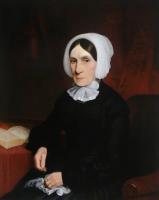
Greville Memoirs. 20th January 1832. In the evening went to Lady Harrowby's (age 59), where I found him and Lord Haddington. We stayed there till near two, after which Wharncliffe (age 55) and I walked up and down Berkeley Square. He was in much better spirits, having had a long conversation with these two Lords, both of whom he said were now resolved to sail along with him, and he contemplates a regular and declared separation from the Duke upon this question. In the morning he had seen Lyndhurst, who appeared very undecided, and (Wharncliffe was apprehensive) rather leaning towards the Duke, but I endeavoured to persuade him that Lyndhurst was quite sure to adopt upon consideration the line which appeared most conducive to his own interest and importance, that he had always a hankering after being well with Lord Grey and the Whigs, and I well remembered when the late Government was broken up he had expressed himself in very unmeasured terms about the Duke's blunders, and the impossibility of his ever again being Prime Minister; that with him consistency, character, and high feelings of honour and patriotism were secondary considerations; that he relied upon his great talents and his capacity to render himself necessary to an Administration; that it was not probable he would like to throw himself (even to please the Duke) into an opposition to the earnest desire which the great mass of the community felt to have the question settled; and that both for him and themselves much of the difficulty of separating themselves from the Duke might be avoided by the manner in which it was done. I entreated him to use towards the Duke every sort of frankness and candour, and to express regret at the necessity of taking a different line, together with an acknowledgment of the purity of the Duke's motives; and if this is done, and if other people are made to understand that they can separate from the Duke on this occasion without offending or quarrelling with him, or throwing off the allegiance to him as their political leader, many will be inclined to do so; besides, it is of vital importance, if they do get the Bill into Committee, to secure the concurrence of the Duke and his adherents in dealing with the details of it, which can only be effected by keeping him in good humour. On the whole the thing looks as well as such a thing can look.
On 20th January 1848 King Christian I of Norway and VIII of Denmark (age 61) died. His son Frederick (age 39) succeeded VII King of Denmark.
On 20th January 1857 John Henry Manners 5th Duke Rutland (age 79) died. His son Charles (age 41) succeeded 6th Duke Rutland, 6th Marquess Grandby, 14th Earl of Rutland, 6th Baron Manners of Haddon in Derbyshire.
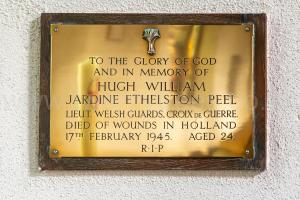
After 20th January 1857. Monument at St Mary the Virgin Church, Overton to Hugh William Jardine Ethelston Peel killed in action 1945.
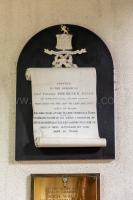
After 20th January 1857. Monument at St Mary the Virgin Church, Overton to Lieutenant-Colonel Ebenezer Jones and his wife Caroline Rainier.
The History of William Marshal was commissioned by his son shortly after William’s death in 1219 to celebrate the Marshal’s remarkable life; it is an authentic, contemporary voice. The manuscript was discovered in 1861 by French historian Paul Meyer. Meyer published the manuscript in its original Anglo-French in 1891 in two books. This book is a line by line translation of the first of Meyer’s books; lines 1-10152. Book 1 of the History begins in 1139 and ends in 1194. It describes the events of the Anarchy, the role of William’s father John, John’s marriages, William’s childhood, his role as a hostage at the siege of Newbury, his injury and imprisonment in Poitou where he met Eleanor of Aquitaine and his life as a knight errant. It continues with the accusation against him of an improper relationship with Margaret, wife of Henry the Young King, his exile, and return, the death of Henry the Young King, the rebellion of Richard, the future King Richard I, war with France, the death of King Henry II, and the capture of King Richard, and the rebellion of John, the future King John. It ends with the release of King Richard and the death of John Marshal.
Available at Amazon in eBook and Paperback format.
On 20th January 1865 Frances Vane Tempest Marchioness Londonderry (age 65) died at Seaham Hall, County Durham. Memorial at St Mary's Church, Long Newton [Map].
Frances Vane Tempest Marchioness Londonderry: On 17th January 1800 she was born to Henry Vane-Tempest 2nd Baronet at St James' Church, Piccadilly. On 3rd April 1819 Charles William Vane 3rd Marquess Londonderry and she were married at Bruton Street. The difference in their ages was 22 years. He the son of Robert Stewart 1st Marquess Londonderry and Frances Pratt Marchioness Londonderry. On 12th August 1822 Robert Stewart 2nd Marquess Londonderry committed suicide at Loring Hall, Kent. His half brother Charles succeeded 3rd Marquess Londonderry. She by marriage Marchioness Londonderry.


After 20th January 1870. Church of the Holy Trinity Arrow, Warwickshire [Map]. Monument to Admiral George Francis Seymour-Conway (deceased) sculpted by Prince Victor of Hohenlohe Langenburg Count Gleichen (age 36).
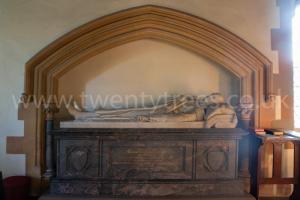
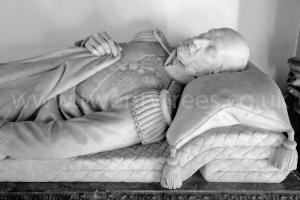
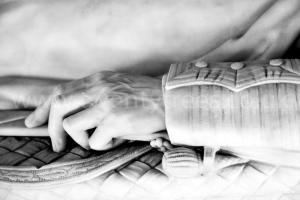
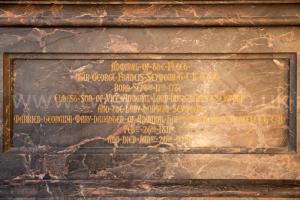

On 20th January 1872 Margaret Alice "Molly" Bridgeman Duchess Buccleuch Duchess Queensbury was born to George Cecil Orlando Bridgeman 4th Earl Bradford (age 27) and Ida Frances Annabella Lumley Countess Bradford (age 23). She married 30th January 1893 her third cousin once removed John Scott 7th Duke Buccleuch 9th Duke Queensberry, son of William Scott 6th Duke Buccleuch 8th Duke Queensberry and Louisa Jane Hamilton Duchess Buccleuch and Queensbury, and had issue.
On 20th January 1876 Moyra De Vere Beauclerk was born to William Amelius Aubrey Beauclerk 10th Duke St Albans (age 35) and Grace Bernal Duchess St Albans (age 28). She married 1895 her fifth cousin Richard Frederick Cavendish and had issue.
On 20th January 1882 John Linnell (age 89) died.
Between 20th January 1900 and 24th January 1900 General Buller (age 60) with 30,000 men under his command attempted to capture Scion Kop hill as a step towards relieving Ladysmith. On the night of 23 January in heavy mist the British launched an attack on what they thought was Spion Kop, but it turned out to be a smaller mound some 500 m from the main peak. The following day there was bloody fighting as the British tried to force their way to the top of the main peak. By nightfall both sides thought that the other had taken the hill, so they abandoned their positions and it was only once a Boer scout realised the situation that the Boers retook the hill and the British withdrew back across the Tugela.
John Spencer Cavendish (age 24) was present.
On 20th January 1917 John Murray aka Stewart-Murray 7th Duke of Atholl (age 76) died. His son John (age 45) succeeded 8th Duke Atholl, 9th Marquess Atholl, 10th Earl Atholl, 11th Earl Tullibardine, 7th Baron Percy, 13th Baron Strange Knockin, 4th Baron Glenlyon of Glenlyon in Perthshire.

On 20th January 1922 Elizabeth Diana Montagu-Douglas-Scott Duchess Northumberland was born to Walter Scott 8th Duke Buccleuch 10th Duke Queensberry (age 27) and Vreda Lascelles Duchess Buccleuch and Queensbury (age 21). She married 12th June 1946 her fourth cousin Hugh Algernon Percy 10th Duke Northumberland, son of Alan Ian Percy 8th Duke Northumberland and Helen Gordon-Lennox Duchess Northumberland, and had issue.
On 20th January 1936 King George V of the United Kingdom (age 70) died. His son Edward (age 41) succeeded VIII King of the United Kingdom. Duke York merged with the crown.

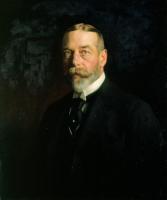


On 20th January 1954 James Graham 6th Duke Montrose (age 75) died. James Angus Graham 7th Duke Montrose (age 46) succeeded 7th Duke Montrose. Isabel Veronia Sellar Duchess Montrose by marriage Duchess Montrose.
Abbot John Whethamstede’s Chronicle of the Abbey of St Albans
Abbot John Whethamstede's Register aka Chronicle of his second term at the Abbey of St Albans, 1451-1461, is a remarkable text that describes his first-hand experience of the beginning of the Wars of the Roses including the First and Second Battles of St Albans, 1455 and 1461, respectively, their cause, and their consequences, not least on the Abbey itself. His text also includes Loveday, Blore Heath, Northampton, the Act of Accord, Wakefield, and Towton, and ends with the Coronation of King Edward IV. In addition to the events of the Wars of the Roses, Abbot John, or his scribes who wrote the Chronicle, include details in the life of the Abbey such as charters, letters, land exchanges, visits by legates, and disputes, which provide a rich insight into the day-to-day life of the Abbey, and the challenges faced by its Abbot.
Available at Amazon in eBook and Paperback format.
On 20th January 1288 Robert Lisle 1st Baron Lisle was born to Warin Lisle (age 25) and Alice Montfort Baroness Fitzwalter at Campton, Bedfordshire. He married 9th July 1301 his fourth cousin twice removed Margaret Beauchamp Baroness Lisle and had issue.
On 20th January 1292 Queen Elizabeth of Bohemia was born to King Wenceslaus II of Bohemia and Poland (age 20) and Queen Judith of Bohemia and Poland (age 20). She married before 8th July 1313 King John I of Bohemia, son of Henry Luxemburg VII Holy Roman Emperor and Margaret Brabant Countess Luxemburg and Namur, and had issue.
On 20th January 1488 John George Marquis of Montferrat was born to Boniface III Marquis of Montferrat (age 61) and Maria of Serbia Marchioness of Montferrat (age 22). He married 21st April 1533 Julia of Naples.
On 20th January 1538 Magdalen Dacre Viscountess Montague was born to William Dacre 3rd Baron Dacre Gilsland 7th Baron Greystoke (age 45) and Elizabeth Talbot Baroness Dacre of Gilsland (age 31) at Naworth Castle [Map]. Coefficient of inbreeding 1.57%. She married before 10th December 1553 her third cousin Anthony Browne 1st Viscount Montagu and had issue.
On 20th January 1550 Ferdinand Wittelsbach was born to Albert V Wittelsbach V Duke Bavaria (age 21) and Anna Habsburg Spain Duchess Bavaria (age 21). Coefficient of inbreeding 1.58%.
On 20th January 1554 Sebastian King Portugal was born to John Manuel Aviz Prince Portugal (deceased) and Joanna of Austria Princess Portugal (age 18). He was named after Saint Sebastian on whose Feast Day he was born. At birth he was heir apparent to the throne of Portugal since his father had died two weeks before his birth. Soon after his birth his mother Joanna of Austria Princess Portugal left Portugal to become Regent of Spain for her father serving in the same capacity for her brother after her father's abdication. She never saw him. Coefficient of inbreeding 20.02%.
On 20th January 1573 Alexander Oldenburg I Duke Schleswig Holstein Sonderburg was born to John "Younger" Oldenburg Duke Schleswig Holstein Sonderburg (age 27) and Elisabeth of Brunswick-Grubenhagen (age 22) at Sønderborg. He married 26th November 1604 his half fourth cousin Dorothea Schwarzburg Duchess Schleswig Holstein Sonderburg, daughter of John Günther Schwarzburg 1st Count of Schwarzburg Sondershausen and Anna of Oldenburg, and had issue.
On 20th January 1628 Henry Cromwell was born to Oliver Cromwell (age 28) and Elizabeth Bourchier (age 30) at Huntingdon [Map]. He married 10th May 1653 Elizabeth Russell, daughter of Francis Russell 2nd Baronet and Catherine Wheatley.
Chronicle of a Bourgeois of Valenciennes
Récits d’un bourgeois de Valenciennes aka The Chronicle of a Bourgeois of Valenciennes is a vivid 14th-century vernacular chronicle written by an anonymous urban chronicler from Valenciennes in the County of Hainaut. It survives in a manuscript that describes local and regional history from about 1253 to 1366, blending chronology, narrative episodes, and eyewitness-style accounts of political, military, and social events in medieval France, Flanders, and the Low Countries. The work begins with a chronological framework of events affecting Valenciennes and its region under rulers such as King Philip VI of France and the shifting allegiances of local nobility. It includes accounts of conflicts, sieges, diplomatic manoeuvres, and the impact of broader struggles like the Hundred Years’ War on urban life in Hainaut. Written from the perspective of a burgher (bourgeois) rather than a monastery or royal court, the chronicle offers a rare lay viewpoint on high politics and warfare, reflecting how merchants, townspeople, and civic institutions experienced the turbulence of the 13th and 14th centuries. Its narrative style combines straightforward reporting of events with moral and civic observations, making it a valuable source for readers interested in medieval urban society, regional politics, and the lived experience of war and governance in pre-modern Europe.
Available at Amazon in eBook and Paperback format.
On 20th January 1638 William Glynne 1st Baronet was born to John Glynne (age 36) and Frances Squib. He married before 1663 Penelope Anderson Lady Bicester aka Bisseter and had issue.
On 11th January 1695 Francis Scott 2nd Duke Buccleuch was born to James Scott (age 20) and Henrietta Hyde Countess Dalkeith (age 18). He was baptised on 20th January 1695 at St Margaret's Church, Westminster [Map]. He a great grandson of King Charles II of England Scotland and Ireland. He married (1) 5th April 1720 his second cousin Jane Douglas, daughter of James Douglas 2nd Duke Queensberry and Mary Boyle Duchess Queensbury, and had issue (2) 4th September 1744 Alice Powell Duchess Buccleuch.
On 20th January 1699 Thomas Hervey was born to John Hervey 1st Earl Bristol (age 33) and Elizabeth Felton Countess Bristol (age 22).


On 20th January 1706 Anne Grey was born to Henry Grey 1st Duke Kent (age 35) and Jemima Crew Marchioness Kent (age 30). She married 9th January 1729 Charles Cavendish, son of William Cavendish 2nd Duke Devonshire and Rachel Russell Duchess Devonshire, and had issue.
On 20th January 1707 Lionel Pilkington 5th Baronet was born to Lyon Pilkington 4th Baronet (age 23).
On 20th January 1710 Frances Feilding Countess Winchelsea and Nottingham was born to Basil Feilding 3rd Earl Desmond 4th Earl Denbigh (age 42) and Hester Firebrace Countess Desmond and Denbigh (age 34). She married before September 1734 Daniel Finch 8th Earl Winchilsea 3rd Earl Nottingham, son of Daniel Finch 2nd Earl Nottingham 7th Earl Winchilsea and Anne Hatton Countess Nottingham and Winchelsea.
On 20th January 1716 Charles III King Spain was born to Philippe V King Spain (age 32) and Elisabeth Farnese Queen Consort Spain (age 23). He married 1738 his fourth cousin Maria Amalia of Saxony Queen Consort Spain, daughter of Augustus III King Poland and Maria Josepha of Austria, and had issue.
On 20th January 1724 Elizabeth Leveson-Gower Countess Waldegrave was born to John Leveson-Gower 1st Earl Gower (age 29) and Evelyn Pierrepont Baroness Gower (age 33). She married 7th May 1751 her sixth cousin John Waldegrave 3rd Earl Waldegrave, son of James Waldegrave 1st Earl Waldegrave and Mary Webb, and had issue.
The History of William Marshal was commissioned by his son shortly after William’s death in 1219 to celebrate the Marshal’s remarkable life; it is an authentic, contemporary voice. The manuscript was discovered in 1861 by French historian Paul Meyer. Meyer published the manuscript in its original Anglo-French in 1891 in two books. This book is a line by line translation of the first of Meyer’s books; lines 1-10152. Book 1 of the History begins in 1139 and ends in 1194. It describes the events of the Anarchy, the role of William’s father John, John’s marriages, William’s childhood, his role as a hostage at the siege of Newbury, his injury and imprisonment in Poitou where he met Eleanor of Aquitaine and his life as a knight errant. It continues with the accusation against him of an improper relationship with Margaret, wife of Henry the Young King, his exile, and return, the death of Henry the Young King, the rebellion of Richard, the future King Richard I, war with France, the death of King Henry II, and the capture of King Richard, and the rebellion of John, the future King John. It ends with the release of King Richard and the death of John Marshal.
Available at Amazon in eBook and Paperback format.
On 20th January 1735 Frederick Louis Saxe Coburg Altenburg was born to Duke Frederick III of Saxe Coburg Altenburg III (age 35) and Luise Dorothea Saxe Meiningen Duchess Saxe Gotha Altenburg (age 24) at Gotha.
On 20th January 1743 John Papillion Twisden 7th Baronet was born to Roger Twisden 5th Baronet (age 37).
On 20th January 1748 Robert Seymour was born to Francis Seymour-Conway 1st Marquess Hertford (age 29) and Isabella Fitzroy Countess Hertford (age 21). He a great x 2 grandson of King Charles II of England Scotland and Ireland. He married 2nd May 1806 Anderlechtia Clarissa Chetwynd, daughter of William Chetwynd 4th Viscount Chetwynd and Susannah Cope.


On 20th January 1750 Louise Oldenburg was born to Frederick V King of Denmark and Norway (age 26) and Louise Hanover Queen Consort Denmark and Norway (age 25) at Christiansborg Castle. She a granddaughter of King George II of Great Britain and Ireland. She married 30th August 1766 her first cousin Charles Hesse-Kassel, son of Frederick Hesse-Kassel and Mary Hanover, and had issue.
On 20th January 1763 George Hilaro Barlow 1st Baronet was born. He married 16th April 1789 Elizabeth Smith and had issue.
On 20th January 1768 Francis Mathew 2nd Earl Landaff was born to Francis Mathew 1st Earl of Llandaff (age 29). He married 10th July 1797 Gertrude Cecilia La Touche.
On 20th January 1770 Admiral Henry Digby was born to William Digby (age 36) and Charlotte Cox (age 27). He married 17th April 1806 Jane Elizabeth Coke, daughter of Thomas Coke 1st Earl of Leicester and Jane Dutton, and had issue.
On 20th January 1773 Henry Wellesley 1st Baron Cowley was born to Garrett Wellesley 1st Earl Mornington (age 37) and Anne Hill Countess Mornington (age 30). He married (1) 20th September 1803 Charlotte Cadogan Marchioness Anglesey, daughter of Charles Sloane Cadogan 1st Earl Cadogan and Mary Churchill Countess Cadogan, and had issue (2) before 1821 his second cousin once removed Georgiana Charlotte Augusta Cecil Baroness Cowley, daughter of James Cecil 1st Marquess Salisbury and Mary Amelia Hill Marchioness Salisbury.
Chronicle of Walter of Guisborough
A canon regular of the Augustinian Guisborough Priory, Yorkshire, formerly known as The Chronicle of Walter of Hemingburgh, describes the period from 1066 to 1346. Before 1274 the Chronicle is based on other works. Thereafter, the Chronicle is original, and a remarkable source for the events of the time. This book provides a translation of the Chronicle from that date. The Latin source for our translation is the 1849 work edited by Hans Claude Hamilton. Hamilton, in his preface, says: 'In the present work we behold perhaps one of the finest samples of our early chronicles, both as regards the value of the events recorded, and the correctness with which they are detailed; Nor will the pleasing style of composition be lightly passed over by those capable of seeing reflected from it the tokens of a vigorous and cultivated mind, and a favourable specimen of the learning and taste of the age in which it was framed.'
Available at Amazon in eBook and Paperback format.

On 20th January 1774 John Horsley Beresford 2nd Baron Decies was born to Archbishop William Beresford 1st Baron Decies (age 30) and Elizabeth Fitzgibbon (age 38). He married 26th July 1810 Charlotte Philadelphia Horsley and had issue.
On 20th January 1774 Charles George Beauclerk was born to Topham Beauclerk (age 34) and Diana Spencer Viscountess St John and Bolingbroke (age 39). He a great x 2 grandson of King Charles II of England Scotland and Ireland. He married 29th April 1799 his half third cousin Emily Charlotte Ogilvie, daughter of William Ogilvie and Emilia Mary Lennox Duchess Leinster, and had issue.
On 20th January 1794 George John Milles 4th Baron Sondes of Lees Court was born to Lewis Watson 2nd Baron Sondes (age 39). He married before 2nd October 1824 Eleanor Knatchbull, daughter of Edward Knatchbull 8th Baronet, and had issue.
On 20th January 1805 Francis Thynne was born to Thomas Thynne 2nd Marquess of Bath (age 39) and Isabella Elizabeth Byng Marchioness Bath (age 31).
On 20th January 1828 Philip Sidney 2nd Baron De Lisle and Dudley was born to Philip Sidney 1st Baron De Lisle and Dudley (age 27) and Sophia Fitz-Clarence Baroness De Lisle and Dudley (age 31). He a grandson of King William IV of the United Kingdom. He married 23rd April 1850 Mary Foulis and had issue.
On 20th January 1829 John Roddam Spencer-Stanhope was born to John Spencer-Stanhope (age 41) and Elizabeth Wilhelmina Coke (age 33) at Cannon Hall, South Yorkshire. He married 10th January 1859 Elizabeth King and had issue.
On 20th January 1839 Seymour Egerton 4th Earl Wilton was born to Thomas Grosvenor 2nd Earl Wilton (age 39) and Mary Smith-Stanley Countess Wilton (age 38). He married 9th August 1862 Laura Caroline Russell Countess Wilton and had issue.
On 20th January 1844 Edith Georgiana Turnor Countess Cawdor was born to Christopher Turnor (age 34) and Caroline Finch-Hatton (age 27). She married 16th September 1868 her half fourth cousin twice removed Frederick Archibald Vaughan Campbell 3rd Earl Cawdor, son of John Frederick Vaughan Campbell 2nd Earl Cawdor and Sarah Mary Compton Cavendish Countess Cawdor, and had issue.
On 20th January 1851 William Lehman Ashmead-Bartlett Baron Burdett-Coutts was born to Ellis Bartlett of-Plymouth, Massachusetts and Sophia Ashmead. He married 12th February 1881 Angela Burdett-Coutts 1st Baroness Burdett-Coutts, daughter of Francis Burdett 5th Baronet and Sophia Coutts Lady Burdett.

On 20th January 1856 David Ogilvy 11th Earl of Airlie was born to David Ogilvy 10th Earl of Airlie (age 29) and Henrietta Blanche Stanley (age 25). He married 19th January 1886 Mabell Gore Countess Airlie, daughter of Arthur Saunders Gore 5th Earl Arran and Edith Jocelyn, and had issue.
Abbot John Whethamstede’s Chronicle of the Abbey of St Albans
Abbot John Whethamstede's Register aka Chronicle of his second term at the Abbey of St Albans, 1451-1461, is a remarkable text that describes his first-hand experience of the beginning of the Wars of the Roses including the First and Second Battles of St Albans, 1455 and 1461, respectively, their cause, and their consequences, not least on the Abbey itself. His text also includes Loveday, Blore Heath, Northampton, the Act of Accord, Wakefield, and Towton, and ends with the Coronation of King Edward IV. In addition to the events of the Wars of the Roses, Abbot John, or his scribes who wrote the Chronicle, include details in the life of the Abbey such as charters, letters, land exchanges, visits by legates, and disputes, which provide a rich insight into the day-to-day life of the Abbey, and the challenges faced by its Abbot.
Available at Amazon in eBook and Paperback format.
On 20th January 1861 Assheton Edward Harbord was born to Charles Harbord 5th Baron Suffield (age 31) and Cecilia Annetta Baring Baroness Suffield (age 27) at Harleston, Northamptonshire.
On 20th January 1872 Margaret Alice "Molly" Bridgeman Duchess Buccleuch Duchess Queensbury was born to George Cecil Orlando Bridgeman 4th Earl Bradford (age 27) and Ida Frances Annabella Lumley Countess Bradford (age 23). She married 30th January 1893 her third cousin once removed John Scott 7th Duke Buccleuch 9th Duke Queensberry, son of William Scott 6th Duke Buccleuch 8th Duke Queensberry and Louisa Jane Hamilton Duchess Buccleuch and Queensbury, and had issue.
On 20th January 1876 Moyra De Vere Beauclerk was born to William Amelius Aubrey Beauclerk 10th Duke St Albans (age 35) and Grace Bernal Duchess St Albans (age 28). She married 1895 her fifth cousin Richard Frederick Cavendish and had issue.
On 20th January 1879 George Gordon 2nd Marquess of Aberdeen and Temair was born to John Hamilton-Gordon 1st Marquess of Aberdeen and Temair (age 31) and Isabel Marjoribanks Marchioness of Aberdeen and Ternair (age 21) at 37 Grosvenor Square, Belgravia. He married (1) 6th August 1906 Mary Florence Clixby Marchioness of Aberdeen and Temair (2) 21st December 1940 Anna Orrok Forbes Marchioness Aberdeen and Temair.
On 20th January 1896 Mary Irene Curzon 2nd Baroness Ravensdale was born to George Nathaniel Curzon 1st Marquess Kedleston (age 37) and Mary Victoria Leiter Baroness Curzon Kedleston (age 26).


On 20th January 1897 Constance Howard was born to Charles James Stanley Howard 10th Earl Carlisle (age 29) and Rhona Ankaret Estrange Countess Carlisle (age 29).
On 20th January 1912 Cecilia Howard was born to George Howard 9th Earl Carlisle and Rosalind Frances Stanley Countess Carlisle (age 66).
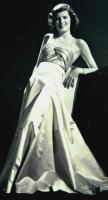
On 20th January 1920 Sarah Norton Viscountess Astor was born to Richard Henry Brinsley Norton 6th Baron Grantley (age 28). She married (1) 14th June 1945 William Waldorf Astor 3rd Viscount Astor, son of Waldorf Astor 2nd Viscount Astor and Nancy Witcher Langhorne Viscountess Astor, and had issue (2) 17th April 1953 Lieutenant-Colonel Thomas Michael Baring.
On 20th January 1922 Elizabeth Diana Montagu-Douglas-Scott Duchess Northumberland was born to Walter Scott 8th Duke Buccleuch 10th Duke Queensberry (age 27) and Vreda Lascelles Duchess Buccleuch and Queensbury (age 21). She married 12th June 1946 her fourth cousin Hugh Algernon Percy 10th Duke Northumberland, son of Alan Ian Percy 8th Duke Northumberland and Helen Gordon-Lennox Duchess Northumberland, and had issue.

On 20th January 1936 Frances Ruth Roche Countess Spencer was born to Maurice Roche 4th Baron Fermoy (age 50) and Ruth Sylvia Gill Baroness Fermoy (age 27). She married 1st June 1954 John Spencer 8th Earl Spencer, son of Albert Edward John Spencer 7th Earl Spencer and Cynthia Elinor Beatrix Hamilton Countess Spencer, and had issue.
Chronicle of a Bourgeois of Valenciennes
Récits d’un bourgeois de Valenciennes aka The Chronicle of a Bourgeois of Valenciennes is a vivid 14th-century vernacular chronicle written by an anonymous urban chronicler from Valenciennes in the County of Hainaut. It survives in a manuscript that describes local and regional history from about 1253 to 1366, blending chronology, narrative episodes, and eyewitness-style accounts of political, military, and social events in medieval France, Flanders, and the Low Countries. The work begins with a chronological framework of events affecting Valenciennes and its region under rulers such as King Philip VI of France and the shifting allegiances of local nobility. It includes accounts of conflicts, sieges, diplomatic manoeuvres, and the impact of broader struggles like the Hundred Years’ War on urban life in Hainaut. Written from the perspective of a burgher (bourgeois) rather than a monastery or royal court, the chronicle offers a rare lay viewpoint on high politics and warfare, reflecting how merchants, townspeople, and civic institutions experienced the turbulence of the 13th and 14th centuries. Its narrative style combines straightforward reporting of events with moral and civic observations, making it a valuable source for readers interested in medieval urban society, regional politics, and the lived experience of war and governance in pre-modern Europe.
Available at Amazon in eBook and Paperback format.
On 20th January 1214 Geoffrey Mandeville 2nd Earl Essex (age 23) and Isabella Fitzrobert 3rd Countess Gloucester and Essex (age 41) were married. She by marriage Countess Essex, Countess Gloucester. She the daughter of William Fitzrobert 2nd Earl Gloucester and Hawise Beaumont Countess Gloucester. He the son of Geoffrey Fitzpeter 1st Earl Essex and Beatrice Saye.
On 20th January 1382 King Richard II of England (age 15) and Anne of Bohemia Queen Consort England (age 15) were married at Westminster Abbey [Map] by Bishop Robert Braybrooke. She by marriage Queen Consort England. She the daughter of Charles IV King Bohemia Holy Roman Emperor Luxemburg and Elizabeth Pomerania Holy Roman Empress Luxemburg (age 35). He the son of Edward "Black Prince" and Joan "Fair Maid of Kent" Princess Wales (age 53). They were fourth cousins. He a grandson of King Edward III of England.
It was the first royal wedding that including a Royal Procession from the Tower of London [Map] to Westminster Abbey [Map].
Arranged by Michael de la Pole 1st Earl Suffolk (age 52) the marriage not popular since it brought no dowry and little prospect of increased trade since Bohemia not a primary English trade partner.
On 20th January 1433 John Holland 2nd Duke Exeter (age 37) and Beatrice Aviz Duchess Exeter (age 51) were married. She by marriage Duchess Exeter. She the illegitmate daughter of King John I of Portugal (age 81) and Ines Peres. He the son of John Holland 1st Duke Exeter and Elizabeth Lancaster Duchess Exeter. They were half fifth cousins. He a great grandson of King Edward III of England.
On 20th January 1647 John Pelham 3rd Baronet (age 24) and Lucy Sidney Baroness Pelham Laughton (age 20) were married. She the daughter of Robert Sidney 2nd Earl of Leicester (age 51) and Dorothy Percy Countess Leicester (age 49). They were fourth cousin once removed.
On 20th January 1690 Francis Howard 5th Baron Howard (age 46) and Susan Felton Baroness Howard were married. She by marriage Baroness Howard of Effingham.
On 20th January 1718 Henry Hare 3rd Baron Coleraine (age 24) and Anne Hanger were married. She the eldest daughter of John Hanger, Governor of the Bank of England. She brought a dowry of nearly £100,000. They lived together until October 1720, when Lady Coleraine left her husband; there were no children.
On 20th January 1722 Louis I King Spain (age 14) and Louise Élisabeth Bourbon Queen Consort Spain (age 12) were married. She the daughter of Philippe Bourbon II Duke Orléans (age 47) and Françoise Marie Bourbon Duchess Orléans (age 44). He the son of Philippe V King Spain (age 38) and Maria Luisa Savoy. They were half first cousin once removed. He a great x 2 grandson of King Charles I of England, Scotland and Ireland. She a great x 3 granddaughter of King James I of England and Ireland and VI of Scotland.
On 20th January 1762 Charles Wheler 7th Baronet (age 31) and Lucy Strange Lady Wheler were married.
On 20th January 1798 John Baker Holroyd 1st Earl Sheffield (age 62) and Anne North Countess Sheffield (age 37) were married. She by marriage Countess Sheffield of Dunamore in Meath. The difference in their ages was 24 years. She the daughter of Frederick North 2nd Earl Guildford and Anne Speke Countess Guilford.
Abbot John Whethamstede’s Chronicle of the Abbey of St Albans
Abbot John Whethamstede's Register aka Chronicle of his second term at the Abbey of St Albans, 1451-1461, is a remarkable text that describes his first-hand experience of the beginning of the Wars of the Roses including the First and Second Battles of St Albans, 1455 and 1461, respectively, their cause, and their consequences, not least on the Abbey itself. His text also includes Loveday, Blore Heath, Northampton, the Act of Accord, Wakefield, and Towton, and ends with the Coronation of King Edward IV. In addition to the events of the Wars of the Roses, Abbot John, or his scribes who wrote the Chronicle, include details in the life of the Abbey such as charters, letters, land exchanges, visits by legates, and disputes, which provide a rich insight into the day-to-day life of the Abbey, and the challenges faced by its Abbot.
Available at Amazon in eBook and Paperback format.
On 20th January 1817 John Beckett 2nd Baronet (age 41) and Anne Lowther Lady Beckett were married. She the daughter of William Lowther 1st Earl Lonsdale (age 59) and Augusta Fane Countess Lonsdale (age 55).
On 20th January 1870 Peniston Milbanke 9th Baronet (age 22) and Elizabeth Margaret Denman Lady Milbanke were married. She by marriage Lady Milbanke of Halnaby in Yorkshire.
On 20th January 1874 Alexander Bannerman 9th Baronet (age 50) and Katherine Ashburnham Lady Bannerman (age 32) were married. She by marriage Lady Bannerman of Elsick in Kincardineshire. She the daughter of Bertram Ashburnham 4th Earl Ashburnham (age 76) and Katherine Charlotte Baillie Countess Ashburnham (age 54).

On 20th January 1891 Jacob Pleydell-Bouverie (age 22) and Julian Eleanor Adelaide Balfour were married. He the son of William Pleydell-Bouverie 5th Earl Radnor (age 49) and Helen Matilda Chaplin Countess Radnor (age 44).
On 20th January 1898 Henry Cyril "Toppy" Paget 5th Marquess Anglesey (age 22) and Lilian Florence Chetwynd Marchioness of Anglesey (age 21) were married in a Catholic ceremony at The Church of the Holy and Undivided Trinity with Saint Jude, Sloane Street. She the daughter of George Chetwynd 4th Baronet (age 48) and Florence Cecilia Paget Marchioness Hastings (age 55). He the son of Henry Paget 4th Marquess Anglesey (age 62) and Blanche Mary Boyd. They were first cousins.


On 20th January 1909 Charles Petty-Fitzmaurice (age 34) and Violet Mary Elliot-Murray-Kynynmound Baroness Astor (age 19) were married. She the daughter of Gilbert Elliot-Murray-Kynynmound 4th Earl Minto (age 63) and Mary Caroline Grey Countess Minto (age 51). He the son of Henry Petty-Fitzmaurice 5th Marquess Lansdowne (age 64) and Maud Evelyn Hamilton Marchioness Lansdowne (age 59).
On 20th January 1937 William Lever 2nd Viscount Leverhulme (age 48) and Winifred Agnes Lloyd Viscountess Leverhulme (age 37) were married. She by marriage Viscountess Leverhulme of the Western Isles.
On 20th January 1966 Henry Herbert 17th Earl of Pembroke, 14th Earl of Montgomery (age 26) and Clare Pelly Countess of Pembroke and Montgomery were married. He the son of Sidney Herbert 16th Earl of Pembroke, 13th Earl of Montgomery (age 60) and Mary Dorothea Hope Countess Pembroke and Montgomery.
On 20th January 640 King Eadbald of Kent died. His son Eorcenberht succeeded King of Kent. Seaxburh Wuffingas Queen Consort Kent by marriage Queen Consort Kent.
William of Worcester's Chronicle of England
William of Worcester, born around 1415, and died around 1482 was secretary to John Fastolf, the renowned soldier of the Hundred Years War, during which time he collected documents, letters, and wrote a record of events. Following their return to England in 1440 William was witness to major events. Twice in his chronicle he uses the first person: 1. when writing about the murder of Thomas, 7th Baron Scales, in 1460, he writes '… and I saw him lying naked in the cemetery near the porch of the church of St. Mary Overie in Southwark …' and 2. describing King Edward IV's entry into London in 1461 he writes '… proclaimed that all the people themselves were to recognize and acknowledge Edward as king. I was present and heard this, and immediately went down with them into the city'. William’s Chronicle is rich in detail. It is the source of much information about the Wars of the Roses, including the term 'Diabolical Marriage' to describe the marriage of Queen Elizabeth Woodville’s brother John’s marriage to Katherine, Dowager Duchess of Norfolk, he aged twenty, she sixty-five or more, and the story about a paper crown being placed in mockery on the severed head of Richard, 3rd Duke of York.
Available at Amazon in eBook and Paperback format.
On 20th January 1095 Bishop Wulfstan (age 87) died.
On 20th January 1191 Theobald "Good" Blois V Count Blois (age 61) died. His son Louis (age 19) succeeded I Count Blois.
On 20th January 1325 John Hastings 2nd Baron Hastings 14th Baron Abergavenny (age 38) died. His son Laurence (age 5) succeeded 3rd Baron Hastings, 14th Baron Abergavenny Feudal Creation.
On 20th January 1336 John Bohun 5th Earl Hereford 4th Earl Essex (age 29) died. His brother Humphrey (age 27) succeeded 6th Earl Hereford, 5th Earl Essex.
On 20th January 1479 John II King Aragon (age 80) died. His son Ferdinand (age 26) succeeded II King Aragon.
On 20th January 1526 Isabella of Austria Queen Consort Denmark and Norway (age 24) died at Ghent [Map].
On 20th January 1611 George Home 1st Earl Dunbar (age 55) died at Whitehall Palace [Map]. He was buried at Dunbar Church, Dunbar.
On 20th January 1612 Rudolf II Holy Roman Emperor (age 59) died. His brother Matthias (age 54) succeeded I Holy Roman Emperor. Anna of Austria Holy Roman Empress (age 26) by marriage Holy Roman Empress.
On 20th January 1634 Robert Seton 2nd Earl Winton (age 49) died; see A History of the Seton Family.

On 20th January 1644 Henry Danvers 1st Earl Danby (age 70) died at Earl of Danby's House Cornbury Park, Oxfordshire. He was reburied at St James' the Great Church, Dauntsey. Earl Danby extinct.
The History of William Marshal was commissioned by his son shortly after William’s death in 1219 to celebrate the Marshal’s remarkable life; it is an authentic, contemporary voice. The manuscript was discovered in 1861 by French historian Paul Meyer. Meyer published the manuscript in its original Anglo-French in 1891 in two books. This book is a line by line translation of the first of Meyer’s books; lines 1-10152. Book 1 of the History begins in 1139 and ends in 1194. It describes the events of the Anarchy, the role of William’s father John, John’s marriages, William’s childhood, his role as a hostage at the siege of Newbury, his injury and imprisonment in Poitou where he met Eleanor of Aquitaine and his life as a knight errant. It continues with the accusation against him of an improper relationship with Margaret, wife of Henry the Young King, his exile, and return, the death of Henry the Young King, the rebellion of Richard, the future King Richard I, war with France, the death of King Henry II, and the capture of King Richard, and the rebellion of John, the future King John. It ends with the release of King Richard and the death of John Marshal.
Available at Amazon in eBook and Paperback format.
On 20th January 1666 Anne of Austria Spain Queen Consort France (age 64) died.
On 20th January 1667 Eleanor Wortley Countess Sussex Warwick Manchester died.

On 20th January 1680 Anne Harrison Lady Fanshawe (age 54) died.
On 20th January 1707 William Gore (age 63) died.

On 20th January 1721 Robert Darcy 3rd Earl Holderness (age 39) died. His son Robert (age 2) succeeded 4th Earl Holderness, 11th Baron Darcy of Knayth, 8th Baron Conyers, 5th Baron Darcy of Meinhill.

On 20th January 1722 Charles Cornwallis 4th Baron Cornwallis (age 47) died. His son Charles (age 21) succeeded 5th Baron Cornwallis.
On 23rd December 1734 Henry Newport 3rd Earl Bradford (age 51) died at St James's Palace [Map]. He was buried at Westminster Abbey [Map] on 20th January 1734. His brother Thomas (age 38) succeeded 4th Earl Bradford, 4th Viscount Newport of Bradford in Shropshire, 5th Baron Newport of High Ercall in Shropshire.
On 20th January 1736 Christopher Musgrave 5th Baronet (age 47) died. His son Philip (age 25) succeeded 6th Baronet Musgrave of Hartley Castle in Westmoreland.
On 20th January 1741 Philip Parker 3rd Baronet (age 59) died. Baronet Parker of Arwarton in Suffolk extinct.
Chronicle of a Bourgeois of Valenciennes
Récits d’un bourgeois de Valenciennes aka The Chronicle of a Bourgeois of Valenciennes is a vivid 14th-century vernacular chronicle written by an anonymous urban chronicler from Valenciennes in the County of Hainaut. It survives in a manuscript that describes local and regional history from about 1253 to 1366, blending chronology, narrative episodes, and eyewitness-style accounts of political, military, and social events in medieval France, Flanders, and the Low Countries. The work begins with a chronological framework of events affecting Valenciennes and its region under rulers such as King Philip VI of France and the shifting allegiances of local nobility. It includes accounts of conflicts, sieges, diplomatic manoeuvres, and the impact of broader struggles like the Hundred Years’ War on urban life in Hainaut. Written from the perspective of a burgher (bourgeois) rather than a monastery or royal court, the chronicle offers a rare lay viewpoint on high politics and warfare, reflecting how merchants, townspeople, and civic institutions experienced the turbulence of the 13th and 14th centuries. Its narrative style combines straightforward reporting of events with moral and civic observations, making it a valuable source for readers interested in medieval urban society, regional politics, and the lived experience of war and governance in pre-modern Europe.
Available at Amazon in eBook and Paperback format.
On 20th January 1749 Charles Tyrrell 8th and 7th Baronet (age 41) died. Baronet Tyrrell of Thornton in Buckinghamshire and Baronet Tyrrell of Thornton in Buckinghamshire extinct.

On 20th January 1751 John Hervey 1st Earl Bristol (age 85) died. His grandson George (age 30) succeeded 2nd Earl Bristol.
On 20th January 1752 Anne Boscawen Lady Evelyn (age 77) died. She was buried at St John's Church, Wotton on 24th January 1752.
On 20th January 1754 Christian August Oldenburg I Duke Schleswig Holstein Sonderburg Augustenburg (age 57) died. His son Frederick (age 32) succeeded I Duke Schleswig Holstein Sonderburg Augustenburg.
On 20th January 1760 Caroline Cavendish Countess Bessborough (age 40) died. Monument in Derby Cathedral [Map] sculpted by John Michael Rysbrack (age 65).
Caroline Cavendish Countess Bessborough: In May 1719 she was born to William Cavendish 3rd Duke Devonshire and Catherine Hoskins Duchess Devonshire. On 5th July 1739 William Ponsonby 2nd Earl Bessborough and she were married. His younger brother John Ponsonby would marry her younger sister Elizabeth Cavendish four years later. She the daughter of William Cavendish 3rd Duke Devonshire and Catherine Hoskins Duchess Devonshire. He the son of Brabazon Ponsonby 1st Earl Bessborough and Sarah Margetson. In 1743 John Ponsonby and Elizabeth Cavendish were married. His elder brother William Ponsonby 2nd Earl Bessborough had married her elder sister Caroline Cavendish Countess Bessborough four years before. She the daughter of William Cavendish 3rd Duke Devonshire and Catherine Hoskins Duchess Devonshire. He the son of Brabazon Ponsonby 1st Earl Bessborough and Sarah Margetson. On 4th July 1758 Brabazon Ponsonby 1st Earl Bessborough died. His son William succeeded 2nd Earl Bessborough, 3rd Viscount Duncannon of Duncannon in Wexford, 3rd Baron Bessborough of Bessborough in Kilkenny. She by marriage Countess Bessborough.
On 20th January 1768 Walter Wagstaffe Bagot 5th Baronet (age 65) died. His son William (age 39) succeeded 6th Baronet Bagot of Blithfield Hall.
On 20th January 1770 Charles Yorke (age 47) died. He was buried at St Andrew's Church, Wimpole [Map]. Grey marble obelisk on break-front pedestal of white marble with inscription tablet flanked by festoons and frieze carved with emblems of the Chancellor's office; at the base of the obelisk two putti unveil a portrait medallion and at the apex is an achievement of arms; signed 'P. SCHEEMAKER (age 79) FaT'.
On 20th January 1772 Charles Gregory Fairfax 9th Viscount Fairfax died. Viscount Fairfax of Emley in Tipperary extinct. He was buried at Church of the Holy Cross, Gilling East [Map].
Jean de Waurin's Chronicle of England Volume 6 Books 3-6: The Wars of the Roses
Jean de Waurin was a French Chronicler, from the Artois region, who was born around 1400, and died around 1474. Waurin’s Chronicle of England, Volume 6, covering the period 1450 to 1471, from which we have selected and translated Chapters relating to the Wars of the Roses, provides a vivid, original, contemporary description of key events some of which he witnessed first-hand, some of which he was told by the key people involved with whom Waurin had a personal relationship.
Available at Amazon in eBook and Paperback format.

On 20th January 1775 George Oxenden 5th Baronet (age 80) died. His son Henry (age 53) succeeded 6th Baronet Oxenden of Dene in Kent. Margaret Chudleigh Lady Oxenden (age 51) by marriage Lady Oxenden of Dene in Kent.

On 20th January 1785 Catherine Chetwynd (age 62) died. John Chetwynd-Talbot 1st Earl Talbot (age 35) inherited Ingestre Hall, Staffordshire.

On 6th January 1789 Noel Hill 1st Baron Berwick (age 43) died at Portman Square Marylebone. On 20th January 1789 he was buried at St Eata's Church, Atcham. His son Thomas (age 18) succeeded 2nd Baron Berwick of Attingham in Shropshire.
On 20th January 1796 William Burrell 2nd Baronet (age 63) died at Deepdene, Surrey. His son Charles (age 21) succeeded 3rd Baronet Burrell of Valentine House in Essex.

On 20th January 1813 Caroline Stuart Countess Portarlington (age 50) died.
On 20th January 1819 Charles IV King Spain (age 70) died. He had abdicated eleven years before in favour of his son Ferdinand VII King Spain (age 34).
On 20th January 1824 James Cornwallis 4th Earl Cornwallis (age 80) died. His son James (age 45) succeeded 5th Earl Cornwallis, 9th Baron Cornwallis, and inherited his estates of Boughton aka Bocton Place, Kent [Map] and Linton.
On 20th January 1824 Margaretta Burgh 1st Viscountess Ferrard (age 87) died. Her son Thomas (age 52) succeeded 2nd Viscount Ferrard, 2nd Baron Oriel.
On 20th January 1825 Eleanor Nightingale Lady Nightingale died.
On 20th January 1826 Henry Hawley 1st Baronet (age 80) died. His son Henry (age 49) succeeded 2nd Baronet Hawley of Leybourne Grange in Kent.
On 20th January 1826 Thomas Vavasour 7th Baronet (age 81) died unmarried. Baron Vavasour and Baronet Vavasour of Hazlewood in Yorkshire extinct.
Chronicle of Abbot Ralph of Coggeshall
The Chronicle of Abbot Ralph of Coggeshall (Chronicon Anglicanum) is an indispensable medieval history that brings to life centuries of English and European affairs through the eyes of a learned Cistercian monk. Ralph of Coggeshall, abbot of the Abbey of Coggeshall in Essex in the early 13th century, continued and expanded his community’s chronicle, documenting events from the Norman Conquest of 1066 into the tumultuous reign of King Henry III. Blending eyewitness testimony, careful compilation, and the monastic commitment to record-keeping, this chronicle offers a rare narrative of political intrigue, royal power struggles, and social upheaval in England and beyond. Ralph’s work captures the reigns of pivotal figures such as Richard I and King John, providing invaluable insights into their characters, decisions, and the forces that shaped medieval rule. More than a simple annal, Chronicon Anglicanum conveys the texture of medieval life and governance, making it a rich source for scholars and readers fascinated by English history, monastic authorship, and the shaping of the medieval world.
Available at Amazon in eBook and Paperback format.
On 20th January 1831 John Townshend 2nd Viscount Sydney (age 66) died. His son John (age 25) succeeded 3rd Viscount Sydney.
On 20th January 1837 Arthur Saunders Gore 3rd Earl Arran (age 75) died without issue. His nephew Philip (age 35) succeeded 4th Earl Arran, 3rd Viscount Sudley of Castle Gore in County Mayo, 3rd Baron Saunders of Deeps in County Wexford, 6th Baronet Gore of Newtown in County Mayo. Elizabeth Marianne Napier Countess Arran (age 17) by marriage Countess Arran.
On 20th January 1841 Georgiana Lennox Countess Bathurst (age 75) died.
On 20th January 1848 King Christian I of Norway and VIII of Denmark (age 61) died. His son Frederick (age 39) succeeded VII King of Denmark.
On 20th January 1857 John Henry Manners 5th Duke Rutland (age 79) died. His son Charles (age 41) succeeded 6th Duke Rutland, 6th Marquess Grandby, 14th Earl of Rutland, 6th Baron Manners of Haddon in Derbyshire.
On 20th January 1859 John Rushout 2nd Baron Northwick (age 88) died without issue. His nephew George (age 47) succeeded 3rd Baron Northwich of Northwick Park in Worcestershire, 7th Baronet Rushout of Northwick Park in Worcestershire.
On 20th January 1865 Frances Vane Tempest Marchioness Londonderry (age 65) died at Seaham Hall, County Durham. Memorial at St Mary's Church, Long Newton [Map].
Frances Vane Tempest Marchioness Londonderry: On 17th January 1800 she was born to Henry Vane-Tempest 2nd Baronet at St James' Church, Piccadilly. On 3rd April 1819 Charles William Vane 3rd Marquess Londonderry and she were married at Bruton Street. The difference in their ages was 22 years. He the son of Robert Stewart 1st Marquess Londonderry and Frances Pratt Marchioness Londonderry. On 12th August 1822 Robert Stewart 2nd Marquess Londonderry committed suicide at Loring Hall, Kent. His half brother Charles succeeded 3rd Marquess Londonderry. She by marriage Marchioness Londonderry.
On 20th January 1871 William Verner 1st Baronet (age 88) died.
Abbot John Whethamstede’s Chronicle of the Abbey of St Albans
Abbot John Whethamstede's Register aka Chronicle of his second term at the Abbey of St Albans, 1451-1461, is a remarkable text that describes his first-hand experience of the beginning of the Wars of the Roses including the First and Second Battles of St Albans, 1455 and 1461, respectively, their cause, and their consequences, not least on the Abbey itself. His text also includes Loveday, Blore Heath, Northampton, the Act of Accord, Wakefield, and Towton, and ends with the Coronation of King Edward IV. In addition to the events of the Wars of the Roses, Abbot John, or his scribes who wrote the Chronicle, include details in the life of the Abbey such as charters, letters, land exchanges, visits by legates, and disputes, which provide a rich insight into the day-to-day life of the Abbey, and the challenges faced by its Abbot.
Available at Amazon in eBook and Paperback format.
On 20th January 1874 Emma Blencowe Lady Robinson (age 71) died.
On 20th January 1877 Henry Hall Gage 4th Viscount Gage (age 85) died. His grandson Henry (age 22) succeeded 5th Viscount Gage of Castle Island in County Kerry, 5th Baron Gage of Castlebar in County Mayo, 4th Baron Gage of Highmeadow, 12th Baronet Gage of Firley in Sussex.
On 20th January 1881 William John Pepys 3rd Earl of Cottenham (age 55) died. His son Kenelm (age 6) succeeded 4th Earl of Cottenham, 4th Viscount Crowhurst of Crowhurst in Surrey, 4th Baron Cottenham of Cottenham in Cambridgshire, 6th Baronet Pepys of Wimpole Street, 7th Baronet Pepys of Brook Street.
On 20th January 1882 John Linnell (age 89) died.
On 20th January 1887 Augusta Elizabeth Denison Baroness Wrottesley (age 54) died.
On 20th January 1888 Robert Jacob Buxton 3rd Baronet (age 58) died. Baronet Buxton of Shadwell Lodge in Norfolk extinct.
On 20th January 1889 Edward Chichester 4th Marquess Donegal (age 89) died at St Leonards On Sea. He was buried at Kensal Green Cemetery [Map]. His son George (age 66) succeeded 5th Marquess Donegal, 5th Baron Fisherwick of Fisherwick in Staffordshire. Mary Cobb Marchioness Donegal by marriage Marchioness Donegal.
On 20th January 1894 Henry Dalrymple Des Voeux 5th Baronet (age 71) died. His brother Charles (age 66) succeeded 6th Baronet De Voeux of Indiaville in Queen's County.
Chronicle of a Bourgeois of Valenciennes
Récits d’un bourgeois de Valenciennes aka The Chronicle of a Bourgeois of Valenciennes is a vivid 14th-century vernacular chronicle written by an anonymous urban chronicler from Valenciennes in the County of Hainaut. It survives in a manuscript that describes local and regional history from about 1253 to 1366, blending chronology, narrative episodes, and eyewitness-style accounts of political, military, and social events in medieval France, Flanders, and the Low Countries. The work begins with a chronological framework of events affecting Valenciennes and its region under rulers such as King Philip VI of France and the shifting allegiances of local nobility. It includes accounts of conflicts, sieges, diplomatic manoeuvres, and the impact of broader struggles like the Hundred Years’ War on urban life in Hainaut. Written from the perspective of a burgher (bourgeois) rather than a monastery or royal court, the chronicle offers a rare lay viewpoint on high politics and warfare, reflecting how merchants, townspeople, and civic institutions experienced the turbulence of the 13th and 14th centuries. Its narrative style combines straightforward reporting of events with moral and civic observations, making it a valuable source for readers interested in medieval urban society, regional politics, and the lived experience of war and governance in pre-modern Europe.
Available at Amazon in eBook and Paperback format.
On 20th January 1908 Massey Lopes 3rd Baronet (age 89) died. His son Henry (age 48) succeeded 4th Baronet Lopes of Maristow-House in Devon.
On 20th January 1912 Charles James Stanley Howard 10th Earl Carlisle (age 44) died. His son George (age 17) succeeded 11th Earl Carlisle.
On 20th January 1915 Arthur Guiness 1st Baron Ardilaun (age 74) died at St Anne's, Raheny. He was buried at All Saints Church, Raheny. Baron Ardilaun of Ashford in County Galway extinct. His nephew Algernon (age 31) succeeded 3rd Baronet Guinness of Ashford in Country Galway.

On 20th January 1915 Samuel Hoare 1st Baronet (age 73) died. His son Samuel (age 34) succeeded 2nd Baronet Hoare of Sidestrand Hall.
On 20th January 1917 John Murray aka Stewart-Murray 7th Duke of Atholl (age 76) died. His son John (age 45) succeeded 8th Duke Atholl, 9th Marquess Atholl, 10th Earl Atholl, 11th Earl Tullibardine, 7th Baron Percy, 13th Baron Strange Knockin, 4th Baron Glenlyon of Glenlyon in Perthshire.
On 20th January 1927 Isabel Geraldine Stracey Countess Kimberley died.
On 20th January 1936 King George V of the United Kingdom (age 70) died. His son Edward (age 41) succeeded VIII King of the United Kingdom. Duke York merged with the crown.
On 20th January 1954 James Graham 6th Duke Montrose (age 75) died. James Angus Graham 7th Duke Montrose (age 46) succeeded 7th Duke Montrose. Isabel Veronia Sellar Duchess Montrose by marriage Duchess Montrose.
On 20th January 1963 Dudley Pigott aka Carleton 2nd Baron Dorchester (age 86) died. Baron Dorchester of Dorchester in Oxfordshire extinct.
William of Worcester's Chronicle of England
William of Worcester, born around 1415, and died around 1482 was secretary to John Fastolf, the renowned soldier of the Hundred Years War, during which time he collected documents, letters, and wrote a record of events. Following their return to England in 1440 William was witness to major events. Twice in his chronicle he uses the first person: 1. when writing about the murder of Thomas, 7th Baron Scales, in 1460, he writes '… and I saw him lying naked in the cemetery near the porch of the church of St. Mary Overie in Southwark …' and 2. describing King Edward IV's entry into London in 1461 he writes '… proclaimed that all the people themselves were to recognize and acknowledge Edward as king. I was present and heard this, and immediately went down with them into the city'. William’s Chronicle is rich in detail. It is the source of much information about the Wars of the Roses, including the term 'Diabolical Marriage' to describe the marriage of Queen Elizabeth Woodville’s brother John’s marriage to Katherine, Dowager Duchess of Norfolk, he aged twenty, she sixty-five or more, and the story about a paper crown being placed in mockery on the severed head of Richard, 3rd Duke of York.
Available at Amazon in eBook and Paperback format.
On 20th January 1984 Charles Greville 7th Earl of Warwick (age 72) died. He was buried at St Mary's Church, Warwick [Map]. His son David (age 50) succeeded 8th Earl Warwick, 8th Earl Brooke Warwick Castle, 15th Baron Brooke of Beauchamps Court in Warwickshire.
On 20th January 2024 Nathaniel Fiennes 15th or 21st Baron Saye and Sele died. His son Martin (age 62) succeeded 16th or 22nd Baron Saye and Sele.