William of Worcester's Chronicle of England
William of Worcester, born around 1415, and died around 1482 was secretary to John Fastolf, the renowned soldier of the Hundred Years War, during which time he collected documents, letters, and wrote a record of events. Following their return to England in 1440 William was witness to major events. Twice in his chronicle he uses the first person: 1. when writing about the murder of Thomas, 7th Baron Scales, in 1460, he writes '… and I saw him lying naked in the cemetery near the porch of the church of St. Mary Overie in Southwark …' and 2. describing King Edward IV's entry into London in 1461 he writes '… proclaimed that all the people themselves were to recognize and acknowledge Edward as king. I was present and heard this, and immediately went down with them into the city'. William’s Chronicle is rich in detail. It is the source of much information about the Wars of the Roses, including the term 'Diabolical Marriage' to describe the marriage of Queen Elizabeth Woodville’s brother John’s marriage to Katherine, Dowager Duchess of Norfolk, he aged twenty, she sixty-five or more, and the story about a paper crown being placed in mockery on the severed head of Richard, 3rd Duke of York.
Available at Amazon in eBook and Paperback format.
23 Apr is in April.
1016 Death of King Æthelred "Unready"
1016 Coronation of Edmund Ironside
1344 Creation of the Order of the Garter
1445 Marriage of Henry VI and Margaret of Anjou
1685 Coronation James II and Mary
Anglo-Saxon Chronicle. 725. This year died Wihtred [aged 55], King of Kent, on the ninth day before the calends of May, after a reign of thirty-two winters. His pedigree is above; and he was succeeded by Eadbert. Ina [aged 55] this year also fought with the South-Saxons, and slew Ealdbert, the etheling, whom he had before driven into exile.
On 23rd April 725 King Wihtred of Kent [aged 55] died. His son Eadbert succeeded King of Kent. He may have eigned with his brothers King Æthelbert II of Kent and King Alric of Kent.
On 23rd April 771 Childebert III King of the Franks [aged 92] died. His son Dagobert succeeded King of the Franks.
On 23rd April 871 King Æthelred of Wessex [aged 24] died possibly as a result of wounds received at the Battle of Merton which took place a month earlier.
On 23rd April 1014 the Battle of Clontarf was fought between an army led by Brian Boru [aged 73], High King of Ireland, against a Norse-Irish alliance comprising the forces of Sigtrygg Silkbeard, King of Dublin; Máel Mórda mac Murchada, King of Leinster; and a Viking army from abroad led by Sigurd of Orkney and Brodir of Mann. The Viking army was defeated but at the cost of Brian Boru who was killed, as well as his son Muchad and grandson Tairrdelbach.
On 23rd April 1016 King Æthelred II of England [aged 50] died. His son Edmund [aged 26] succeeded I King of England although the Witan meeting at Southampton chose King Cnut of England [aged 21].
Anglo-Saxon Chronicle. After this, King Knute [aged 21] appointed Eric earl over Northumbria, as Utred was; and then went southward another way, all by west, till the whole army came, before Easter, to the ships. Meantime Edmund Etheling [aged 26] went to London to his father [aged 50]: and after Easter went King Knute with all his ships toward London; but it happened that King Ethelred died ere the ships came. He ended his days on St. George's day [23rd April 1016]; having held his kingdom in much tribulation and difficulty as long as his life continued.
After 23rd April 1016 King Edmund "Ironside" I of England [aged 26] was crowned I King of England by Archbishop Ælfstan aka Lyfing. His reign lasted seven months.
On 23rd April 1124 King Alexander I of Scotland [aged 46] died. His brother David [aged 40] succeeded I King Scotland. Maud Queen Consort Scotland [aged 50] by marriage Queen Consort Scotland.
On 23rd April 1141 King Malcolm IV of Scotland was born to Henry Dunkeld 3rd Earl Huntingdon 1st Earl of Northumbria [aged 27] and Ada Warenne Countess Huntingdon and Northumbria [aged 21] at Jedburgh.
On 23rd April 1151 Adeliza of Louvain Queen Consort England [aged 48] died. She was buried at Reading Abbey, Berkshire [Map].
On 23rd April 1185 Alfonso "Fat" II King Portugal was born to Sancho "Populator" I King Portugal [aged 30] and Dulce Barcelona Queen Consort Portugal at Coimbra. He married 1206 his second cousin once removed Urraca Ivrea Queen Consort Portugal, daughter of Alfonso VIII King Castile and Eleanor Plantagenet Queen Consort Castile, and had issue.
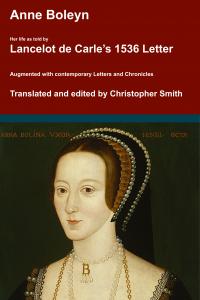
Anne Boleyn. Her Life as told by Lancelot de Carle's 1536 Letter.
In 1536, two weeks after the execution of Anne Boleyn, her brother George and four others, Lancelot du Carle, wrote an extraordinary letter that described Anne's life, and her trial and execution, to which he was a witness. This book presents a new translation of that letter, with additional material from other contemporary sources such as Letters, Hall's and Wriothesley's Chronicles, the pamphlets of Wynkyn the Worde, the Memorial of George Constantyne, the Portuguese Letter and the Baga de Secrets, all of which are provided in Appendices.
Available at Amazon in eBook and Paperback format.
 Annals of Six Kings of England by Nicholas Trivet [1258-1328]. In this year, on the feast of St George [23rd April 1189], the emperor Frederick set out on a pilgrimage to the Holy Land by land from Regensburg, intending to pass through Hungary and beyond the Danube, through Bulgaria. When he came into Thrace, since the emperor of the Greeks refused him further passage, he turned aside into Greece. After capturing Thessalonica and subduing the neighbouring province, he wintered there with his army. In this year Geoffrey of Ely died; and because he died intestate, all his goods were confiscated. Here end the deeds of Henry II, king of England.
Hoc anno in festo S. Georgii Fredericus imperator in Terram Sanctam iter peregrinationis per terram arripuit apud Reynesburgum, per Hungariam, et ultra Danubium, per Bulgariam transiturus. Veniens autem in Thraciam, cum denegasset ei imperator Græcorum ulteriorem transitum, divertens in Græciam, Thessalonica expugnata, et subacta adjacente provincia, ibidem cum exercitu hiemavit. Hoc anno Galfridus Eliensis obiit; cujus bona, quia intestatus decesserat, sunt omnia confiscata. Expliciunt gesta Henrici II. regis Anglorum.
Chronicle of Roger de Hoveden. 23rd April 1194. On the same day, the King restored to Geoffrey, Archbishop of York, the lands of Baugé and Lanques in Anjou, and confirmed this grant with his charter.
Eodem die reddidit rex Gaufrido Eboracensi archiepiscopo Baugi et Langis in Andegavia, et carta sua confirmavit.
Chronicle of Roger de Hoveden. 23rd April 1194. On the twenty-third day of April, the King of England remained at Waltham. On that day, Geoffrey, Archbishop of York, came to the king and had his cross carried before him. Because of this, Hubert Walter, Archbishop of Canterbury, strongly complained to the king. However, the king replied that this matter did not concern him, but rather belonged to the authority of the Pope.
Vicesima tertia die mensis Aprilis rex Angliæ fecit moram apud Walteham, et Gaufridus Eboracensis archiepiscopus venit illuc ad regem, et crucem suam ante se portare fecit. Unde Hubertus Walteri, Cantuariensis archiepiscopus, plurimum conquestus est regi: sed rex respondit, quod hoc non pertinebat ad eum, immo ad dominum papam.:
On 23rd April 1258 Elizabeth Wittelsbach was born to Henry Wittelsbach I Duke Lower Bavaria I Duke Bavaria [aged 22] and Elizabeth Duchess Bavaria [aged 22]. She a great x 3 granddaughter of King Henry "Curtmantle" II of England.
Annals of Dunstable. In the same year and at the same time the bishop of Rochester [Bishop John Bradfield], a monk, died [23rd April 1283]; and master Thomas of Inglethorpe, then dean of St Paul's, London, succeeded him in the bishopric.
Eisdem anno et tempore obiit episcopus Roffensis, monachus; et successit ei in episcopatu magister Thomas de Ingelthorp, tunc decanus Sancti Pauli Londoniæ.
On 23rd April 1287 Guy Montfort Count Nola [aged 43] was captured during the Battle of the Counts.
 Adam Murimuth Continuation. In the year of our Lord 1316, in the tenth year of the same King Edward and the first of Pope John XXII, the same pope entered Avignon on the second day of October. There he granted, in the form customary for the poor, three successive graces and many other special favours without number. He also provided for the church of Durham by appointing Lord Louis de Beaumont, who, although noble by birth, was nevertheless only moderately literate and lame in both feet, as are many Frenchmen; and if the pope had seen him, perhaps he would not have created him. Likewise, for the church of Worcester, vacant through the death of Walter de Maidstone, he provided Master Thomas de Cobham, whose election to the church of Canterbury Pope Clement had previously rejected, as has been mentioned above. Also, for the church of Hereford, vacant through the death of Master Richard de Swinfield, he provided Master Adam Orleton on the ninth day before the Kalends of May [23rd April] in the year of our Lord 1317.
Anno Domini millesimo CCCXVI, et ipsius regis Edwardi decimo, et papæ Johannis XXII primo, idem papa intravit Avinonam IJ die Octobris, ubi fecit in forma pauperum tres gratias successive et alias speciales gratias infinitas. Providit etiam ecclesiæ Dunelmensi de domino Lodowyco de Bello monte, qui, licet fuit nobilis genere, fuit tamen mediocriter lite: ratus et claudus utroque pede, sicut sunt multi Francigenæ; quem si papa vidisset, forsitan non creasset. Item ecclesiæ Wygorniensi, vacanti per mortem Walteri de Maydenestone/ providit de magistro Thoma de Cobham, cujus electionem ad ecclesiam Cantuariensem respuit, ut præmittitur, papa Clemens. Item ecclesiæ Herefordiensi, vacanti per mortem magistri Ricardi de Swynisfeld, providit de magistro Adamo de Orletone, IX kalendas Maii, anno Domini MCCCXVII.
 Chronicle of Walter of Guisborough. On the Sunday next before Lady Day [21st March 1333], Archibald Douglas entered the English border with three thousand men, burning the district of Gilsland for sixteen leagues in length and six in breadth, and returned to Scotland with a great booty and captives without resistance. Sir Anthony Lucy, a noble knight, and William of Lochmaben, with eight hundred men, one night entered Scotland for twenty miles, and on their return burned, slew, and seized a very great prey of livestock. William Douglas came against them with a great multitude, but was defeated and taken prisoner together with William Barde and a hundred others. Sir Humphrey de Bosco, Sir Humphrey de Gardino, and Sir William of Carlisle, with one hundred and sixty men-at-arms, perished by the sword. The King of England came with a large force to the siege of Berwick on the ninth day before the Kalends of May [23rd April 1333], Edward Balliol acting as a paid ally to lend aid; and on the fifteenth day before the Kalends of June [18th May 1333] the town of Berwick was fiercely assaulted both by sea and by land. During the strong attack, a sudden and terrible fire broke out within the town, whereupon the defenders, dismayed and confused, not knowing what to do, sought and obtained from the kings mercy, grace, and a truce until the morrow, making certain sworn promises to surrender the town and castle, promises which they afterwards did not keep.
Die Dominica proxima ante Annunciationem Dominicam, Archebaudus Douglas Angliæ marchiam cum tribus millibus intravit, pagum de Gilleslond per XVI leucas in longum et sex in latum combussit, cum præda magna et captivis in Scotiam sine resistentia remeavit. Anthonius de Lusci nobilis miles et Willelmus de Lacu-Mabonis cum DCCC hominibus nocte quadam per XX milliaria Scotiam ingressi sunt, et in redeundo combusserunt, occiderunt, et maximam animalium prædam ceperunt; quibus Willelmus Douglas cum magna multitudine occurrit, sed devictus est et captus una cum Willelmo Barde et centum aliis. Humfridus de Bosco, Humfridus de Gardino, milites, Willelmus de Carliolo cum CLX. valentibus, gladio perierunt. Rex Angliæ cum militia magna ad obsidionem Berwici venit nono kalendas Maii, Edwardus de Baliolo tanquam stipendiarius auxilium præbiturus, unde et quinto-decimo kalendas Junii tam per mare quam per terram villa Berwici fortiter fuit expugnata. Durante autem insultu valido supervenit subito horribile incendium intra villam, unde animo consternati qui inclusi sunt et conturbati et quid agerent ignorantes, gratiam regum, misericordiam, et treugas in crastinum, factis certis promissionibus de villa et castro reddendis, juramento firmatis, postea tamen non observatis, petierunt et obtinuerunt.
On 23rd April 1344 King Edward III of England [aged 31] created the Order of the Garter. The date nominal as there are different accounts; some sources say 1348.
2 Henry of Grosmont 1st Duke Lancaster.
3 Thomas Beauchamp 11th Earl Warwick.
4 Jean Grailly.
5 Ralph Stafford 1st Earl Stafford.
6 William Montagu 2nd Earl Salisbury.
7 Roger Mortimer 2nd Earl March.
9 Bartholomew "The Younger" Burghesh 2nd Baron Burghesh.
10 John Beauchamp 1st Baron Beauchamp Warwick.
11 John Mohun 2nd Baron Mohun of Dunster.
12 Hugh Courtenay.
13 Thomas Holland 1st Earl Kent.
15 Richard Fitzsimon.
16 Miles Stapleton.
17 Thomas Wale.
18 Hugh Wrottesley.
19 Neil Loring.
20 John Chandos.
21 James Audley.
22 Otho Holland.
23 Henry Eam.
24 Sanchet Abrichecourt.
On 23rd April 1344. The date somewhat unclear; it may have been before. King Edward III of England [aged 31] formed the Order of the Garter. The first reliable record occurs in autumn of 1348 when the King's wardrobe account shows Garter habits being issued. The Order may have been formed before then with some traditions such as the mantle, and the garter and motto, possibly being introduced later. The Garter refers to an event at Wark Castle, Northumberland [Map] at which King Edward III of England picked up the Countess of Salisbury's fallen garter and saying to the crowd "Honi soit qui mal y pense" ie Shame on him who thinks badly of it, or possibly, he brings shame on himself who thinks badly of it. The Countess of Salisbury could refer to his future daughter-in-law Joan "Fair Maid of Kent" Princess Wales [aged 15] or her former mother-in-law Catherine Grandison Countess of Salisbury [aged 40]. The event has also been described as taking place at Calais [Map].


In 23rd April 1349 King Edward III of England [aged 36] created new Garter Knights:
26th William Fitzwarin [aged 33]. The date may be earlier.
27th. Robert Ufford [aged 50].
28th William Bohun 1st Earl of Northampton [aged 39].
 Chronicle of Geoffrey le Baker of Swinbroke. In this year,1 on the feast day of Saint George [23rd April 1350], the king held a great banquet at Windsor Castle [Map], where he established a chantry of twelve priests, and founded a hospital, in which impoverished knights, whose means were insufficient, could, in the service of the Lord, receive suitable support from the perpetual alms of the founders of that college. Besides the king, other nobles contributed to the foundation of this hospital, namely: the king's eldest son, the Earl of Northampton [aged 40], the Earl of Warwick [aged 37], the Earl of Suffolk [aged 51], the Earl of Salisbury [aged 21], and other barons. Also included were simple knights, such as: Roger de Mortimer [aged 21], now Earl of March, Lord Walter de Mauny [aged 40], Lord William FitzWarin [aged 34], John de Lisle [aged 14], John de Mohun [aged 30], John de Beauchamp [aged 31], Walter de Pavely [aged 31], Thomas Wale [aged 47] and Hugh de Wrottesley [aged 16]. Men whose proven virtue ranked them among the wealthiest earls. Together with the king, all these men were clothed in robes of powdered russet, with garters of Indian colour, also wearing garters on their right legs, and mantles of blue, adorned with the shield of Saint George. In such attire, bareheaded, they devoutly attended a solemn Mass, sung by the bishops of Canterbury, Winchester, and Exeter. They then sat together at a common table, in honour of the holy martyr, to whom they dedicated this noble brotherhood, calling their company "The Knights of Saint George of the Garter."
Isto anno, in die sancti Georgii, rex celebravit grande convivium apud Wyndesore in castro, ubi instituit cantariam xij. sacerdotum, et fundavit zenodochium, in quo milites depauperati, quibus sua non sufficerent, possent in Domini servitute de perpetuis elemosinis fundatorum illius collegii sustentacionem competentem habere. Preter regem fuerunt alii compromittentes in fundacionem istius zenodochii, scilicet regis primogenitus, comes Norhamptonie, comes Warewici, comes Suthfolchie, comes Salisbiriensis, et alii barones; simplices quoque milites, scilicet Rogerus de Mortuo mari, nunc comes Marchie, dominus Walterus de Magne, dominus Willelmus filius Garini, Iohannes de Insula, Iohannes de Mohun, Iohannes de Bealchampe, Walterus de Pavely, Thomas Wale, et Hughe de Wrotesley, quos probitas experta ditissimis comitibus associavit. Una cum rege fuerunt omnes isti vestiti togis de russeto pulverizato cum garteriis Indie coloris, habentes eciam tales garterias in tibiis dextris, et mantella de blueto cum scutulis armorum sancti Georgii. Tali apparatu nudi capita audierunt devote missam celebrem per antistites Cantuariensem, Wintoniensem, et Exoniensem decantatam, et conformiter sederunt in mensa communi ob honourem sancti martiris, cui tam nobilem fraternitatem specialiter intitularunt, appellantes istorum comitivam sancti Georgii de la gartiere.
Note 1. Stow Annales 390: "This yeere, on Saint Georges day [23rd April 1350], the king held a great and solemne feast at his castle of Windsor, where he had augmented the chappel which Henry the first and other his progenitors, kings of England, had before erected, of eight chanons. He added to those eight chanons a deane and fifteene chanons more, and 24 poore and impotent knights, with other ministers and servants, as appeareth in his charter dated the two and twentieth of his reigne. Besides the king, there were other also that were contributors to the foundation of this colledge, as followeth: i. The sovereigne king Edward the third, 2. Edward, his eldest sonne, prince of Wales, 3. Henry, duke of Lancaster, 4. the earle of Warwicke, 5. Captaine de Bouch [aged 19], 6. Ralph, earle of Stafford [aged 48], 7. William Montacute, earle of Salisburie, 8. Roger, lorde Mortimer, earle of March, 9. sir John de Lisle [aged 31], 10. sir .
It will be seen that Stow here alters the names to tally with the list of the original knights or First Founders of the order of the Garter. Baker seems to be anticipating. William Bohun, 1st earl of Northampton, and Robert Ufford, 1st earl of Suffolk, and sir William Fitz-Warine became knights of the order at an early date; but Roger Mortimer, here styled 'now Earl of March,' did not have that title before 1352, and sir Walter Manny did not receive the garter till the end of 1359.
The date of the foundation of the order of the Garter has never been exactly determined. Froissart 203.
The Brute chronicle (Egerton MS. 650) has this description, although under a wrong year: "And in the XIX yere of his regne, anone aftre, in Jannuere, before Lenten, the same kyng Edward lete make fulle noble iustice and grete festes in the place of hys byrth, at Wyndsore, that ther were never none suche seyne before that tyme, ne I trowe sythene. At whech iustice, festis and ryalte weryn II kinges, II quenys, and the prince of Wales and the duke of Cornewale, ten erles, nine countesse, many barons, knyghttes, and worthy burgesse, the whech myght not lyghtly be nombrede; and also of dyverse londes as byyonde the see were many strangers. And at that tyme, whene the iustes had done, the kyng Edward made a grete souper, in the wheche he begone fyrst hys round table, and ordayned stedfastly the day of the forsayd table to be holde ther at Wyndessore in the Whytesonwyke evermore yerely."
Relying on the date given in the statutes of the order and on this passage in Baker, writers on the subject have adopted 1349 or 1350 as the year of foundation. But an entry in the household-book of the Black Prince affords a reason for dating the event a year earlier, payment having been made on the 18th November 1348, for twenty-four garters which were given by the prince "militibus de societate garterias" i.e. "garters [were given] to the knights of the society"; Beltz, Memorials of the Order of the Garter, pp. XXXII, 385. Proof however is not conclusive, as the ministers' accounts in the household-book were rendered between 1352 and 1365, and there is therefore room for error; moreover, the garters in question may have been prepared in anticipation. The date of 1349, which is given in the preamble to the earliest copies of the statutes, although it is true that those copies are not contemporary, is not to be lightly set aside. It is, indeed, most probable that the order was never solemnly instituted at an early period, but that it was gradually taking shape during the years following the foundation of the Round Table. Edward's patent, bearing date of 22nd August 1348, whereby he instituted a chapel at Windsor, with a fraternity of eight secular canons and a warden, fifteen other canons, and four-and-twenty poor knights, appears to be the first formal document which can be quoted as a foundation-deed of the order. After this there is no direct reference to it until 1350, when robes were issued for the King against the coming Feast of St. George, together with a Garter containing the King's motto, "Hony soyt qui mal y pense!" Nicolas, History of Orders of Knighthood, 1.24.
Annales of England by John Stow. This yeere, on Saint Georges day [23rd April 1350], the king held a great and solemne feast at his castle of Windsor, where he had augmented the chappel which Henry the first and other his progenitors, kings of England, had before erected, of eight chanons. He added to those eight chanons a deane and fifteene chanons more, and 24 poore and impotent knights, with other ministers and servants, as appeareth in his charter dated the two and twentieth of his reigne. Besides the king, there were other also that were contributors to the foundation of this colledge, as followeth: i. The sovereigne king Edward the third, 2. Edward, his eldest sonne, prince of Wales, 3. Henry, duke of Lancaster, 4. the earle of Warwicke [aged 37], 5. Captaine de Bouch [aged 19], 6. Ralph, earle of Stafford [aged 48], 7. William Montacute [aged 21], earle of Salisburie, 8. Roger, lorde Mortimer [aged 21], earle of March, 9. sir John de Lisle [aged 31], 10. sir Bartholomew Burwash [aged 22], 11. sir John Beauchampe [aged 34], 12. sir John Mahune [aged 30], 13. sir Hugh Courtney, 14. sir Thomas Holland [aged 36], 15. sir John Grey [aged 49], 16. sir Richard Fitz Simon, 17. sir Miles Stapleton [aged 30], 18. sir Thomas Walle [aged 47], 19. sir Hugh Wrothesley [aged 16], 20. sir Nele Loring [aged 30], 21. sir John Chandos [aged 30], 22. sir James de Audley [aged 32], 23. sir Othes Holland [aged 34], 24. sir Henry Eme, 25. sir Sechet Dabridgecourt [aged 20], 26. sir Wiliam Panell [aged 31]. All these, together with the king, were clothed in gownes of russet, poudered with garters blew, wearing the like garters also on their right legges, and mantels of blew with scutcheons of S. George. In this sort of apparell they, being bare-headed, heard masse, which was celebrated by Simon Islip, archbishop of Canterbury, and the bishops of Winchester and Excester, and afterwards they went to the feast, setting themselves orderly at the table, for the honor of the feast, which they named to be of S. George the martyr and the choosing of the knights of the Garter.
Chronicle of Geoffrey le Baker of Swinbroke. Also, around the feast of Saint George1 [23rd April 1351], matters in Gascony were going well. For the Marshal of France, with a large number of armed men, had ravaged the territory of the town of Saint-John-d'Angély, the defence of which had been entrusted to Edmund Rose of Norfolk. Thereupon, the locals, joined by the garrison of the said town, bravely confronted the enemy, and, after engaging in battle, and with many killed, they captured the said Marshal and many other French nobles, while more than 400 men of knightly rank were put to flight.
Item, circa festum sancti Georgii, res in Vasconia bene gerebatur, quippe marescallus regni Francie cum magna multitudine armatorum depopulavit patriam ville sancti Iohannis Ewangeliste, cuius custodie Edmundus Rose Nortfolchiensis preficiebatur; unde populares, coadunati cum garnestura predicte ville, hostibus viriliter obviarunt, et, inito congressu, multis quoque occisis, ceperunt predictum marescallum et multos alios nobiles Francorum, fugatis amplius quam CCCC viris status militaris.
Note 1. This action, which is here dated about the 23rd April, took place, according to Avesbury 413, on the 8th of the month. It was fought near Saintes, some distance south of Saint-Jean-d'Angély, which was being besieged by the French. It was the result of an attempt to relieve the city, which was too closely invested for the garrison to take any part in it. Although the English were victorious and made many prisoners, including Gui de Nesle, sire d'Offemont, marshal of France, they failed to raise the siege; and the place fell early in September.
On 23rd April 1366 King Edward III of England [aged 53] created new Garter Knights:
42nd Enguerrand de Coucy 1st Earl Bedford 1st Count Soissons [aged 26].
43rd Henry Percy 1st Earl of Northumberland [aged 24].


On 23rd April 1369 King Edward III of England [aged 56] created new Garter Knights
46th John Neville 3rd Baron Neville of Raby [aged 32].
47th Robert Dampierre [aged 46].
48th John Hastings 2nd Earl Pembroke [aged 21]. Some sources say 1370 but that would be inconsistent with the numbering?
49th Thomas Grandison 4th Baron Grandison [aged 30].
50th Guy de Bryan [aged 50]. Possibly on 31st December 1369?.
On 23rd April 1374 Bogislaw V Duke of Pomerania [aged 56] died. His son Wartislaw [aged 29] succeeded 6th Duke Pomerania.
On 23rd April 1376 King Edward III of England [aged 63] created a number of new Garter Knights..
54th John Montfort V Duke Brittany [aged 37].
55th Thomas Banastre [aged 42].
56th William Ufford 2nd Earl Suffolk [aged 37].
57th Hugh Stafford 2nd Earl Stafford [aged 40].
58th Thomas Holland 2nd Earl Kent [aged 26]. He the son of Joan "Fair Maid of Kent" Princess Wales [aged 47] whose second husband was Edward III's son Edward "Black Prince" [aged 45].
59th Thomas Percy 1st Earl of Worcester [aged 33] was appointed 59th. He the son of Mary Plantagenet Baroness Percy daughter of Henry Plantagenet 3rd Earl of Leicester 3rd Earl Lancaster who was the first cousin of Edward III's father King Edward II of England.
60th William Beauchamp 1st Baron Abergavenny [aged 33].
On 23rd April 1377 King Edward III of England [aged 64]1 created three new Garter Knights:
61st Richard of Gloucester [aged 10] (the future Richard III).
62nd Henry Bolingbroke [aged 10] (the future Henry IV).
63rd John Burley [aged 52].
Note 1. We should note that King Edward III at this time was gravely ill dying two months later. His son John of Gaunt 1st Duke Lancaster [aged 37] was effectively in power.


On 23rd April 1381 John Holland 1st Duke Exeter [aged 29] was appointed 68th Knight of the Garter by King Richard II of England [aged 14].
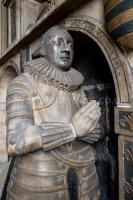
On 23rd April 1394 Hugh Calverley [aged 70] died. He was probably buried in St Boniface's Church, Bunbury [Map]. Monument Early Plate Bascinet Period. Finely carved Calf's Head on the breastplate representing Hugh Calverley's canting arms. Calf's Head Crest. Hip Belt. Basinet with decorated Orle.


On 23rd April 1422 Francesco Baux 1st Duke Andria [aged 92] died.
On 23rd April 1445 King Henry VI of England and II of France [aged 23] and Margaret of Anjou Queen Consort England [aged 15] were married at Titchfield Abbey, Hampshire [Map] probably by Bishop William Ayscough [aged 50], Bishop of Salisbury. She the daughter of René Valois Anjou I Duke Anjou [aged 36] and Isabella Metz Duchess Anjou I Duchess Lorraine [aged 45]. He the son of King Henry V of England and Catherine of Valois Queen Consort England. They were third cousins.
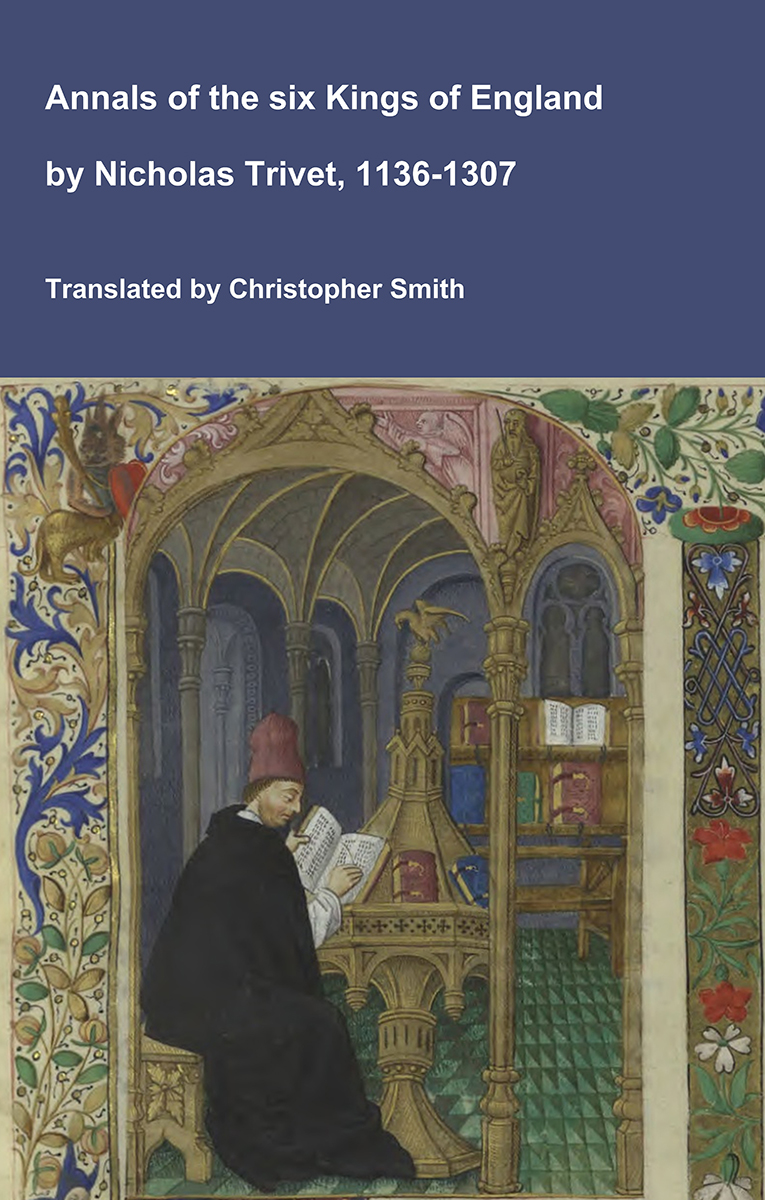
Annals of the six Kings of England by Nicholas Trivet
Translation of the Annals of the Six Kings of England by that traces the rise and rule of the Angevin aka Plantagenet dynasty from the mid-12th to early 14th century. Written by the Dominican scholar Nicholas Trivet, the work offers a vivid account of English history from the reign of King Stephen through to the death of King Edward I, blending political narrative with moral reflection. Covering the reigns of six monarchs—from Stephen to Edward I—the chronicle explores royal authority, rebellion, war, and the shifting balance between crown, church, and nobility. Trivet provides detailed insight into defining moments such as baronial conflicts, Anglo-French rivalry, and the consolidation of royal power under Edward I, whose reign he describes with particular immediacy. The Annals combines careful year-by-year reporting with thoughtful interpretation, presenting history not merely as a sequence of events but as a moral and political lesson. Ideal for readers interested in medieval history, kingship, and the origins of the English state, this chronicle remains a valuable and accessible window into the turbulent world of the Plantagenet kings.
Available at Amazon in eBook and Paperback format.
 Memoires Jacques du Clercq. On the 23rd of April in the year 1458, after Easter, at the request of the people of Ghent, who for a long time before had caused requests to be made, both by my lord Louis, eldest son of the King of France, Dauphin of Viennois, and by several other great lords, to Philip, Duke of Burgundy, their lord, that it might please him to come to his city of Ghent, the duke went there; but he did not bring with him the said Dauphin, nor Charles of Charolais his son, nor the lord of Croy, his principal governor. Of the duke's entry into the said city of Ghent, I will recount a little. It is true that as the duke approached the said city, when he was about a quarter of a league away, all the clergy of the city came out to meet him, canons, priests, and all other churchmen, in procession, clothed in rich copes, and there were six abbots. After the clergy came, in fine order, the great bailiff of Ghent, named Sir Robert de Gouy, knight, captain of fifty men-at-arms on horseback, men of justice, all in one livery, among whom were those of the magistracy. After them came the deans of the guilds, of whom there were seventy; each dean accompanied by up to ten of the most honourable men of his craft, and each dean and those of his company wore cloaks all of one color, each guild distinguished by different colors or fashions. After them came the noblemen of the city: knights, squires, and burghers, to the number of a hundred or more. And when all those of Ghent had come up near to the said duke their lord, the bailiff of Ghent approached the duke, saying these words: "My most honoured lord, behold here those of your city of Ghent, who beg and pray you", and then they all knelt, joining their hands, "that it may please you to forget their offenses and the ill will they have borne in times past, and to pardon them all; for they are all ready and prepared to serve you, to obey you, and to be your humble subjects, and to die, if need be, with you," saying many other words which I cannot recount, for I was not present.
Le xxiije jour d'apvril l'an mil iiije cinquante huict, après Pasques, a la requette de ceulx de Gand, qui par longtemps devant avoient fait prier et requerir, tant par monsieur Loys, aisné fils du roy de Franche, daulphin de Vienne, comme par plusieurs aultres grands sieurs, a Philippe, duc de Bourgogne, leur sieur, qu'il lui pleut venir en sa ville de Gand, mais le duc n'y mena pas ledit daulphin, Charles de Charollois son fils, ne le S de Croy, son principal gouverneur; de laquelle entrée du duc en ladite ville de Gand, je vous veulx ung petit compter; il fust vray que ainsy que le duc entra en ladite ville. Quant il fust a un quart de lieue près, vindrent allencontre de lui tout le clergié de ladite ville...., chanoines, prestres, et touts aultres gens d'eglise a procession, revestus de riches cappes, et y avoit six abbés; après les gens d'eglise vindrent en belle ordonnance le grand bailly de Gand, nommé messire Robert de Gouy, cheval lier, capitaine de cinquante hommes a cheval, gens de justice, touts d'une livrée, esquels estoient ceulx de la loy; après vindrent les doyens des mestiers, dont il y en avoit soixante dix; chacun doyen accompagnié jusques a dix hommes de leur mestier des plus honorables, et avoit chacun doyen et ceulx de sa compagnie chacun manteau tout d'une coulleur, et a chacun doyen de diverses coulleurs ou fachons; après vindrent les nobles hommes de la ville, chevalliers, escuyers et bourgeois qui estoient jusques au nombre de cent, ou plus; et quant touts les dessusdits de Gand feurent venus jusques auprès dudit duc leur seigneur, le bailly de Gand s'approcha du duc en disant telles parolles: "Mon très honoré seigneur, voyez cy ceulx de vostre ville de Gand qui vous requierent et prient et lors se meirent touts a genoulx, et joindans leurs mains qu'il vous plaise oublier leurs outrages et mauvaises vollontés qu'ils ont eus par cy devant, et eulx tout pardonner, car ils sont touts prests et appareillés de vous servir, obeir, et estre vos pauvres subjets, et mourir, se besoing est, avecq vous;" en disant plusieurs aultres parolles, lesquelles je ne sçaurois racompter, car je n'estois pas present.
On 23rd April 1464 Joan Valois Queen Consort France was born to King Louis XI of France [aged 40] and Queen Charlotte of Savoy [aged 22]. Coefficient of inbreeding 2.69%. She married 1476 her second cousin once removed Louis XII King France, son of Charles Valois Duke Orléans and Mary de la Marck Duchess Orléans.

On 23rd April 1483 King Edward V of England [aged 12] left Ludlow, Shropshire [Map] with his uncle Anthony Woodville 2nd Earl Rivers [aged 43].

After 23rd April 1485. St Andrew's Church, Blickling [Map]. Memorial brass to Isabella Boleyn [deceased]. The inscription reads "Hic jacet Isabella Cheyne, quondam Uxor Willi. Cheney Amigeri, de Insula de Shippey, in Comitatu Cancie que obijt XXIIJo die Mensis Aprilis, Anno Domini MCCCCLXXXV, cuius anime propicietur DeusAmen." i.e. "Here lies Isabella Cheyne, formerly the wife of Will. Cheney Knight, of the Island of Shippey, in the County of Canterbury, who died on the 23rd day of the month of April, in the year of the Lord 1485, may God bless her soul."
Isabella Boleyn: Henry Aucher and she were married. William Cheney and she were married. In 1434 she was born to Geoffrey Boleyn and Ann Hoo at Blickling, Norfolk. On 23rd April 1485 Isabella Boleyn died at Blickling, Norfolk.
On 23rd April 1502 Prince Arthur's [deceased] funeral was held at St Laurence's Church, Ludlow [Map] presided over by Bishop William Smyth [aged 42]. George Grey 2nd Earl Kent [aged 48], George Talbot 4th Earl of Shrewsbury [aged 34], Richard Grey 3rd Earl Kent [aged 21], John Grey 2nd Baron Grey of Powis [aged 17] and Richard Pole [aged 40] attended. Thomas Howard 2nd Duke of Norfolk [aged 59] was Chief Mourner. Edward Howard [aged 26] and Robert Radclyffe 1st Earl of Sussex [aged 19] carried The Canopy.
Richard Pole: In 1462 he was born to Geoffrey Pole and Edith St John at Isleworth. Around 1491 Richard Pole and Margaret York aka Pole Countess of Salisbury were married. She the daughter of George York 1st Duke of Clarence and Isabel Neville Duchess Clarence. On 15th January 1504 Richard Pole died.


On 23rd April 1509 Afonso Aviz was born to Manuel "Fortunate" I King Portugal [aged 39] and Maria Trastámara Queen Consort Portugal [aged 27]. He a great x 4 grandson of King Edward III of England. Coefficient of inbreeding 8.38%.
Chronicle of Edward Hall [1496-1548]. 23rd April 1522. THE King [aged 30] this yere kept the day of S. George with great solemnity, at his manor of Richemond [Map], where were elected to the Order of the Garter, Don Ferdinando [aged 19] brother to the Emperor [aged 22], and Archduke of Austria, and Sir Richard Wingfield [aged 53] knight by the Emperor's means, to the which the Emperor had given two hundred pound pension, out of the house of Burgundy, which Sir Edward Poynings before had of the Emperors gift.


In 1525, probably around St George's Day, 23rd April 1525, King Henry VIII of England and Ireland [aged 33] created four new Knights of the Garter:
285th. William Fitzalan 11th or 18th Earl of Arundel [aged 49].
286th. Thomas Manners 1st Earl of Rutland [aged 33].
287th. Henry Fitzroy 1st Duke Richmond and Somerset [aged 5].
288th. Ralph Neville 4th Earl of Westmoreland [aged 26].
In 1526, probably around St George's Day, 23rd April 1526, King Henry VIII of England and Ireland [aged 34] created four new Knights of the Garter:
289th. William Blount 4th Baron Mountjoy [aged 48].
290th. William Fitzwilliam 1st Earl of Southampton [aged 36].
291st. Henry Guildford [aged 37].
292nd. King Francis I of France [aged 31].


Archives of Venice. April 23 [1532]. Sanuto Diaries, v. lvi. p. 167. 761. Carlo Capello to the Signory.
Received the Signory's letters of the 8th January and 11th March, with the advices from Constantinople. Went to the Court, and by the King's order conferred with the Duke of Norfolk, to whom communicated the advices, and justified the Signory for having exacted a loan from the clergy, about which the Duke appeared to know nothing, but was not sorry to hear it, because at the last session of Parliament the annats payable at Rome were abolished.
At the moment of his arrival at the Court, one of the chief gentlemen in the service of said Duke of Norfolk, with 20 followers, assaulted and killed in the sanctuary of Westminster Sir (D'no) William Peninthum (sic) chief gentleman and kinsman of the Duke of Suffolk [aged 48]. In consequence of this, the whole Court was in an uproar, and had the Duke of Suffolk been there, it is supposed that a serious affray would have taken place. On hearing of what had happened, he (Suffolk) was on his way to remove the assailants by force from the sanctuary, when the King sent the Treasurer [Thomas Cromwell] to him, and made him return, and has adjusted the affair; and this turmoil displeased him. It is said to have been caused by a private quarrel, but I am assured it was owing to opprobrious language uttered against Madam Anne [aged 31] by his Majesty's sister, the Duchess of Suffolk [aged 36], Queen Dowager of France.
The affair of the divorce becomes daily more difficult. The Bishops of France and of this island replied lately that they could not assent to it without the Pope's consent, because, when created, they swear not to oppose the Pope's wishes; and the King's desire increases; whilst by letters from Rome it is heard that in all the debates the Queen may be styled King of this island, by reason of the love the people bear her, for her goodness and wisdom.
Yesterday, Monseigneur Falconetto arrived here in 15 days from the Emperor, to demand assistance against the Turk. He went this morning to the Court with another Imperial ambassador resident here.
London, 23rd April. Registered by Sanuto 31st May.
[Italian.]


On 23rd April 1532 Anna Maria Guelph Duchess Prussia was born to Eric "The Elder" Guelph I Duke Brunswick-Lüneburg [aged 62]. She married 1550 her fifth cousin Albert "The Elder" Hohenzollern I Duke Prussia, son of Frederick Hohenzollern I Margrave Brandenburg-Ansbach and Sophia Jagiellon Margravine of Brandenburg-Ansbach, and had issue.
Chronicle of Edward Hall [1496-1548]. After which divorce sued, many wise men said, that the king was not well counselled, to marry the lady Anne Boleyn [aged 32], before the divorce were adjudged, for by marrying before the first marriage was dissolved, they said, that the second marriage might be brought in question, and verily they said true, for so it was in the month of May, three year following, as you shall here after, when I come to the time. Of this divorce every man spoke, as his discretion and wisdom was, for wise men said that it was Godly and honourably done, for the discharge of the King's conscience, and profitable for the surety of the realm, and that God loved this marriage, considering that the new Queen, was so soon with child. Other said that the bishop of Rome, would curse all Englishmen and that the emperor and he, would invade the realm, and destroy the people, and especially the Spaniards boasted much, but thanks be to God, their doings were much less than their words: but after every man had talked enough, there was no more communing of the matter, but all was in peace.
Register of the Order of the Garter Volume 1. In the twenty eighth Year of the most noble King Henry the Eighth, and on the twenty third of April [23rd April 1536], a Day dedicated to their Patron St. George, a choice Number of Knights Companions came to Grenewych [Map] to keep that Festival there as usual with the Sovereign. There were two Dukes, six Earls, one Lord, one Knight, viz. the Dukes of Rychmond [aged 16] and Northfolk [aged 63], the Earls of Northumberland [aged 34], Westmerland [aged 38], Wyltschire [aged 59], Suffex, Rutland [aged 44] and Oxford [aged 65], Lord Sandys [aged 66], and Sir William Fytzwylliams [aged 46]; who after the due Celebration of the first Vespers of the Eve, with the Mattins of the following Day, and the solemn Sacrifice [of the Mass] did at the next Vespers, before they entered the Choir, turn off to the King's Chappel to hold there the usual Chapter. When the Sovereign demanding whether any Body present knew of any weighty Matter which might be then determined, and no Body offered any Thing of that kind, be then added, that at least two Things should be treated of, one of which happened every Year, viz. to determine the Time when the Feast of that Saint should be kept as Order required at Wyndesor, and the Persons to be assigned for it, and the other, to substitute a new One in Stead of the deceased Knight. Whereupon it was Enacted, That the Feaft should be kept at Wyndesor the twenty first of May following, and that the Earl of Northumberland should then Supply the Sovereign's Place, having for his Colleges the Earls of Rutland and Oxford, with Sir William Fytzwylliams. The Earl of Westmerland too was admonished to be one present, unless he could plead such urgent Affairs of Business as might justly excuse him. It was also ordered, That at the Time of the Vespers then coming on, the Register should take the Votes of the Knights present, for the Election of a news one; which, taking from them on one Side and the other, and back again, as the Variety of the Knights sitting required, he carefully performed, as this following Description will shew. For they named [see images below]
Nicholas Carew of Beddington in Surrey [aged 40] 10 votes.
George Boleyn Viscount Rochford [aged 33] 5 votes
This Set of Names being taken, the Register brought to the Sovereign, delivering it to him with all becoming Reverence, and he having perused it, put it in his Bosom. The next Day when they were to go to the mournful Sacrifice, which was to be offered for the Souls of the deceased Knights, they turned off to the same Chappel, where the Sovereign pulling out the said Paper declared that Persons were contained in it, who were indeed most exceeding worthy of their present Choice, but at that Time he thought good that Sir Nicholas Carew should be preserved in the Election, as well because the largest Number of Votes fell upon him, as because he was to be deemed highly fitting, by Reason of the Glory of his Family and Reputation, as of his many excellent and glorious Exploits. To which Declaration every of them them present assented with Applause. Being therefore called in by Garter, and introduced between two of the Noblemen then present, be fell down in a most humble Manner before the Sovereign, returning infinite Thanks to him, and the whole Presence, for that they had deigned to admit him, uwworthy as be thought himself, into the Honour of the most illustrious Order, and now that he was chose before others much worthier than himself, it was not at all to be ascribed to himself, to his Merits, or to any Actions of his, but was by him to be always acknowledged, as only owing to the King's excellent Goodness, and the good Will of the others who were present towards him; and when he had harangued further to the same Purpose, he was ordered by the Sovereign to be ensigned with such Badges as were proper at that Time and Place, being to complete every Thing else at Wyndesor.


Letters and Papers. 23 April [1536]. Anstis' Order of the Garter. ii. 398. 715. The Garter.
On St. George's Day, 23 April 28 Henry VIII., a chapter of the Order of the Garter was held at Greenwich, at which were present the King, the Dukes of Richmond [aged 16] and Norfolk [aged 63], the Earls of Northumberland [aged 34], Westmoreland [aged 38], Wiltshire [aged 59], Sussex, Rutland [aged 44], and Oxford [aged 65], lord Sandys, and Sir William Fitzwilliam [aged 46]. It was determined to hold the feast on May 21, the Earl of Northumberland taking the Sovereign's place, assisted by the Earls of Rutland, Westmoreland, and Oxford, and Sir William Fitzwilliam. Votes were taken for the election of a knight; and the next day, after mass for the dead, the King declared Sir Nicholas Carew [aged 40] elected. He was installed when the feast was kept, on May 21. On this occasion the Earl of Northumberland was seized with vertigo and weakness, so that it was feared he would not be able to take his part as deputy, but he recovered. The next day the hatchments of the deceased were offered up. Lat.

Chronicle of Edward Hall [1496-1548]. 23rd April 1537. This year at the feast of St George, was the Lord Cromwell [aged 52] made knight of the Gartier.
In 1541, probably around St George's Day, 23rd April 1541, King Henry VIII of England and Ireland [aged 49] created four new Knights of the Garter:
306th. Edward Seymour 1st Duke of Somerset [aged 41].
307th. Henry Howard Earl of Surrey [aged 25].
308th. John Gage [aged 61].
309th. Anthony Wingfield [aged 54].


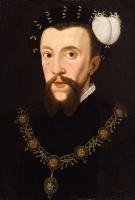
In 1543, probably around St George's Day, 23rd April 1543, King Henry VIII of England and Ireland [aged 51] created three new Knights of the Garter:
310th. John Dudley 1st Duke Northumberland [aged 39].
311th. William Paulet 1st Marquess Winchester [aged 60].
312th. William Parr 1st Marquess Northampton [aged 31].


Diary of Edward VI. 23rd April 1550. Mons. Trimouille and the vicedam of Chartres and mons. Henaudiere cam to the court, and saw the ordre of the garter1 and the knightes with the souverain receive the communion.
Note 1. "At a chaptre holden at Grenwiche on St. George's daye at eveninge, being the xxiijd day of Aprille, and likewise the next day by the soreraigne of the noble order of the Garter, then present with the Soveraigne the duke of Somerset, the marques of Dorsett [aged 33], the marques of Northampton [aged 38], th'erle of Bedford, th'erle of Wiltishere, the lord Pagett, sir Thomas Chenye, sir John Gage, sir Anthony Wingfelde, and sir Anthony Sentleger." See further in Anstis, Register of the Order of the Garter, ii. 445.
On 23rd April 1552 King Edward VI of England and Ireland [aged 14] created two new Garter Knights:
329th. Henry Neville 5th Earl of Westmoreland [aged 27]
330th. Andrew Dudley [aged 45].
Henry Machyn's Diary. 23rd April 1552. The xxiij day of Aprell, the wyche was sant Jorge day, the Kyng('s) grace, behyng at Westmynster at ys plase, dyd where ys robes of the garter, and the yong yerle of Warwyke beyryng of the kynges sword afor hym thrugh the halle unto the chapell; and ys grase dyd offer, and the resyduw .... evyngsong, and w ... Kynges grace dyd chuysse in the sted of the [earl [Note. Duke!] of Som]ersett the yerle of Westmorland [aged 27], and sir Andrew [Dudley,] [aged 45] captayne of Gynes, was chosen of the garter the ...
Note. Election of the earl of Westmerland of the garter. In the privy council 10 May 1552. A warrante to the Exchequer to paye unto sir Gilberte Dethicke [aged 42] knighte, alias Garter principall kinge at armes, beinge presently to be sente by the kinges majestie to the earle of Westemerlande with the order of the Garter, the some of twentye poundes.
"A comissyon for the said sir Gylberte Dethicke to take upe v. poste horses for himselfe, his servantes, and guide." (MS. Harl. 352, f. 228 b.)
The following entry may here also be added:
"22 Apr 1553. A warrante to sir John Williames to pay unto sir Gilberte Dethicke knight, alias Garter principall kinge at armes, the some of xxj. poundes for schucheones by him sett upp in an°. 4° et 5° of the kinges [and queenes] majesties raigne at Grenewich, at the feaste of the order of the Garter, accordinge to a bill therof included in the same letter." (f. 250.)
Henry Machyn's Diary. 23rd April 1554. The xxiij day of Aprell, was sant Gorge day, her grace [aged 38] whent unto the chapell and whent a prossessyon with all the kynghtes of the garter that was ther pressent [to St.] James in the Feld; ther wher creatyd the sam day knights of the garter, the prynsse of Spayne [aged 26] one, and the yerle of Sussex [aged 47].


Henry Machyn's Diary. 23rd April 1555. [The xxiijd day of April, being saint George's day, at Hampton Court [Map], the King [aged 27], with other lords and knights of the garter, went in their robes on procession, with three] crosses, and clarkes and prestes, and my lord chancellor, the cheyff menyster, metered [mitred ie wearing his mitre], and all thay in copes of cloth of tyssue and gold, syngyng Salva fasta dyes as thay whent a-bowt; the Quen('s) [aged 39] grace lokyd owt of a cassement, that hundereds dyd se her grace after she had taken her chambur; and arolds gohyng a-bowt the Kyng('s) grace.
On 23rd April 1557 Queen Mary I of England and Ireland [aged 41] appointed three new Garter Knights:
337th Thomas Radclyffe 3rd Earl of Sussex [aged 32].
338th William Grey 13th Baron Grey of Wilton [aged 48].
339th Robert Rochester [aged 63].
Chronicle of Geoffrey le Baker of Swinbroke
Baker was a secular clerk from Swinbroke, now Swinbrook, an Oxfordshire village two miles east of Burford. His Chronicle describes the events of the period 1303-1356: Gaveston, Bannockburn, Boroughbridge, the murder of King Edward II, the Scottish Wars, Sluys, Crécy, the Black Death, Winchelsea and Poitiers. To quote Herbert Bruce 'it possesses a vigorous and characteristic style, and its value for particular events between 1303 and 1356 has been recognised by its editor and by subsequent writers'. The book provides remarkable detail about the events it describes. Baker's text has been augmented with hundreds of notes, including extracts from other contemporary chronicles, such as the Annales Londonienses, Annales Paulini, Murimuth, Lanercost, Avesbury, Guisborough and Froissart to enrich the reader's understanding. The translation takes as its source the 'Chronicon Galfridi le Baker de Swynebroke' published in 1889, edited by Edward Maunde Thompson.
Available at Amazon in eBook and Paperback format.
Henry Machyn's Diary. 23rd April 1557. The xxiij day of Aprell was sant Gorge('s) day [the King's [aged 29]] grace whent a pressessyon in ys robes of the garter; lord Talbott [aged 29] bare the sword a-for the Kyng, and master (blank) bare the rod; and doctur (blank) bare the boke of the record; and the bysshope of Wynchaster [aged 47] ware ys myter, and song masse that day; and x knyghtes of the Garter be-syd the Kyng; and secretere Peter ware a robe of cremesun velvett with the Garter; and after the Kyng and odur lordes and knyghtes of the garter whent to evyngsong; and ther was the duke of Muskovea was in chapell at evyngsong, and after he whent and toke ys barge and whent to London, and after wher iij knyghtes of the garter chossen, furst my lord F(itz)uater [aged 32], my lord Gray of Wylton [aged 48], and ser Robart Rochaster [aged 63]; thes iij wher mad of the order.


Henry Machyn's Diary. 23rd April 1557. The xxiij day of Aprell was sant George('s) day [the King's [aged 29]] grace whent a pressessyon at Whyt-halle [through the hall] and rond abowt the court hard by the halle; and so [certain of] the knyghts of the garter as they whent in ther [robes] of the garter; the bysshope of Wynchaster [aged 47] dyd exsecute the masse with ys myter; the furst as they whe[nt the lord] Montyguw [aged 28], my lord admerall [aged 47], ser Antony Sely[ger, the] lord Cobham [aged 60], the lord Darce [aged 60], ser Thomas Chenne, [the lord] Pagett [aged 51], the lord of Penbroke [aged 56], the lord of Arundel [aged 45], [the] lord tressorer [aged 74], and secretore Peter in a robe of cremesun velvett with the garter brodered on ys shuder, and [one bare] a rod of blake, and a docthur bare a boke; and [then went all] the harodes, and then my lord Talbott [aged 29] bare the sword, then sergant(s) of armes, and the Kyng('s) grace [came next], and Quen('s) [aged 41] grace lokyng owt of a wyndow [beside] the cowrt on the garden syde.
On 23rd April 1559 Queen Elizabeth I of England and Ireland [aged 25] created Garter Knights:
340th Thomas Howard 4th Duke of Norfolk [aged 23].
341st Henry Manners 2nd Earl of Rutland [aged 32].
342nd Robert Dudley 1st Earl of Leicester [aged 26].
William Parr 1st Marquess Northampton [aged 47] was restored 312th. He had been degraded in 1553.
Henry Machyn's Diary. 23rd April 1559. [The xxiij day of April, being saint George's day, the Queen [aged 25] went about the hall, and all the knights of the] Garter that [went singing in proces]syon, and a-bowt the cowrt; the sam day at after [noon were] knyghtes electyd of the Garter the duke of Norfok [aged 23], the marques of Northamtun [aged 47] [Note. Restored since he had been degraded in 1553], the erle of Rutland [aged 32], and my lord Robard Dudley [aged 26], the master of the quen('s) horse.
Henry Machyn's Diary. 23rd April 1560. The xxiij day of Aprell, was sant Gorge day, the Quen('s) [aged 26] grace and the knyghtes of the Garter whent a prossessyon with all her chapell in copes of cloth of gold, a xxviij copes, and the Quen and all the knyghtes wore ther robes, rownd a-bowt the hall to the cowrt-y[ard,] and all the haroldes of armes in ther cottes of armes.
Note. P. 232. Procession of knights of the garter. This paragraph must not be passed without calling to remembrance a very curious print which exists representing queen Elizabeth accompanying the procession of the order of the garter, which was designed by Marcus Gerrard, and set forth by Thomas Dawes, Rouge-croix pursuivant, and of which there is a copy by Hollar in Ashmole's Order of the Garter, p. 515. It is, however, of a later date than the present Diary, namely the 20th year of the queen's reign, 1578.

Henry Machyn's Diary. 23rd April 1561. The xxiij day of Aprell was browth unto my lord of Penbroke [aged 60] my lord of Lughborow, ser Edward Hastynges [aged 40].
On 23rd April 1561 at a lavish ceremony Queen Elizabeth I of England and Ireland [aged 27] appointed two new Garter Knights..
344th George Talbot 6th Earl of Shrewsbury [aged 33].
345th Henry Carey 1st Baron Hunsdon [aged 35].
Henry Machyn's Diary. 23rd April 1561. [The xxiij of April, saint George's day, was kept] holy at the quen['s court, ] her halle in copes to the nombur of XXX, with [O God^ the father of Hewyn, have merce on .. • . and the owtter cowrt to the gatt, and rond abowt st [rewed with rushes;] and after cam master Garter [aged 51], and master Norres [aged 51], and master dene of the ch[apel, in copes] of cremesun saten, with a crosse of sant Gorge red, and [eleven knights] of the garter in ther robes, and after the Quen('s) [aged 27] grace in [her robes, and] all the garde in ther ryche cottes; and so bake to the [Chapel,] after serves done, bake thruge the hall to her graces chambur, and that done her grace and the lord(s) wh[ent to dinner,] and her grace wher goodly servyd; and after the lordes [sitting on one] syd, and servyd in gold and sylver 5 and after dener [there were] knyghtes of the Garter electyd ij, my lord of Shrewsbere [aged 33] [and my] lord of Hunsdon [aged 35]; and ther wher all the haroldes in ther cote armurs afor the quen('s) grace, master Clarenshux [aged 51], Lanckostur, Rychemond, Wyndsor, Yorke, Chastur, Blumantyl, Ruge-dragon.
Henry Machyn's Diary. 23rd April 1562. The xxiij day of Aprell was sant Gorge's day, a[nd at Whiteh]alle the Quen('s) [aged 28] grase whent from her chapell with xii. knyghtes of the Garter in robes with colars of gold with garters, [and] xx of here chapelle, in copes of cloth of gold, to the of[fering, s]yngyne the Englys presessyon from the chapell rond [about the] halle and bake agayne to the chapelle syngyng; and master [dean of] her chapell bare a boke and a robe, and master Norres [aged 64] [bare the] blake rod in a robe, and master Garter [aged 52], all iij in cremesun saten; [and] the byshope of Wynchester [aged 52] warre ys robe of red (blank); and ser William Peter, master Clarenshux [aged 52], Somersett, Yorke, Lanckaster, Rychemond, and Chaster, Ruge-dragon, and R[ouge-croix, Port-] colles, Blumantyll, Wyndsor.
On 23rd April 1593 Queen Elizabeth I of England and Ireland [aged 59] created three new Garter Knights..
380th Thomas Burgh 9th Baron Cobham 7th Baron Strabolgi 3rd Baron Burgh [aged 35].
381st Edmund Sheffield 1st Earl Mulgrave [aged 27].
382nd Francis Knollys [aged 81].

Diary of Anne Clifford. 23rd April 1617. The 23rd Lord Clanricarde came hither. After they were gone my Lord [aged 28] and I and Tom Glenham went to Mr Lune's house to see the fine flowers that is in the garden.
This night my Lord should have lain with me but he and I fell out about matters.
Diary of Anne Clifford. 23rd April 1619. Friday the 23rd I went to Black Friars to see my Lady Cavendish and my Lady Kinloss in that house where my Lady Somerset was brought to bed in her great troubles. Then I went to Denmark House and heard prayers there, and this night I watched all night by the Queen's corpse. There watched with me my Lord Carew's Lady, my Lady Elizabeth Grye, and various other ladies and gentlemen, beside there sat up my Brother Compton, my Coz. George, my Coz. Thatcher, Mrs Renolds, the beginning of the night there came thither my Lord [aged 30] and my Lady Warwick, Sir H. Rich, Charles Rich, my Lord Carew, and Sir Thomas Edmondes, but all these went away before 12 o'clock. I came not away till 5 o'clock in the morning.
After 23rd April 1623. Monument to George Manners [deceased] and Grace Pierrepont [aged 48] at All Saint's Church, Bakewell, Derbyshire [Map]. Stuart Kneeling monument representing them and their nine children, four boys (one died an infant) on the left, five girls on the right.
The armorials include:  Manners Augmented Arms Manners Augmented with a Crescent difference.


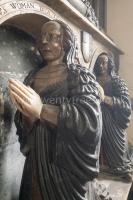


Their daughter Dorothy Manners [aged 13] married Thomas Lake [aged 28].

Their daughter Frances [aged 23] was married to Nicholas Saunderson 2nd Viscount Castleton.

Their daughter Eleanor [aged 23] was married to Lewis Watson 1st Baron Rockingham [aged 35].
Jean de Waurin's Chronicle of England Volume 6 Books 3-6: The Wars of the Roses
Jean de Waurin was a French Chronicler, from the Artois region, who was born around 1400, and died around 1474. Waurin’s Chronicle of England, Volume 6, covering the period 1450 to 1471, from which we have selected and translated Chapters relating to the Wars of the Roses, provides a vivid, original, contemporary description of key events some of which he witnessed first-hand, some of which he was told by the key people involved with whom Waurin had a personal relationship.
Available at Amazon in eBook and Paperback format.
Samuel Pepys' Diary. 23rd April 1661. Then the Duke [aged 27], and the King with a sceptre (carried by my Lord Sandwich [aged 35]) and sword and mond1 before him, and the crown too. The King in his robes, bare-headed, which was very fine. And after all had placed themselves, there was a sermon and the service; and then in the Quire at the high altar, the King passed through all the ceremonies of the Coronacon, which to my great grief I and most in the Abbey could not see.
Note 1. Mond or orb of gold, with a cross set with precious stones, carried by the Duke of Buckingham [aged 33].


Samuel Pepys' Diary. 23rd April 1661. And a Generall Pardon also was read by the Lord Chancellor [aged 52], and meddalls flung up and down by my Lord Cornwallis [aged 50], of silver, but I could not come by any. But so great a noise that I could make but little of the musique; and indeed, it was lost to every body. But I had so great a lust to.... that I went out a little while before the King had done all his ceremonies, and went round the Abbey to Westminster Hall [Map], all the way within rayles, and 10,000 people, with the ground covered with blue cloth; and scaffolds all the way. Into the Hall I got, where it was very fine with hangings and scaffolds one upon another full of brave ladies; and my wife in one little one, on the right hand. Here I staid walking up and down, and at last upon one of the side stalls I stood and saw the King come in with all the persons (but the soldiers) that were yesterday in the cavalcade; and a most pleasant sight it was to see them in their several robes. And the King came in with his crown on, and his sceptre in his hand, under a canopy borne up by six silver staves, carried by Barons of the Cinque Ports1, and little bells at every end. And after a long time, he got up to the farther end, and all set themselves down at their several tables; and that was also a brave sight: and the King's first course carried up by the Knights of the Bath.
Note 1. Pepys was himself one of the Barons of the Cinque Ports at the Coronation of James II.


Samuel Pepys' Diary. 23rd April 1661. About six at night they had dined, and I went up to my wife, and there met with a pretty lady (Mrs. Frankleyn, a Doctor's wife, a friend of Mr. Bowyer's), and kissed them both, and by and by took them down to Mr. Bowyer's. And strange it is to think, that these two days have held up fair till now that all is done, and the King gone out of the Hall; and then it fell a-raining and thundering and lightening as I have not seen it do for some years: which people did take great notice of; God's blessing of the work of these two days, which is a foolery to take too much notice of such things. I observed little disorder in all this, but only the King's footmen had got hold of the canopy, and would keep it from the Barons of the Cinque Ports1, which they endeavoured to force from them again, but could not do it till my Lord Duke of Albemarle [aged 52] caused it to be put into Sir R. Pye's' [aged 76] hand till tomorrow to be decided.
Note 1. Bishop Kennett gives a somewhat fuller account of this unseemly broil: "No sooner had the aforesaid Barons brought up the King to the foot of the stairs in Westminster Hall [Map], ascending to his throne, and turned on the left hand (towards their own table) out of the way, but the King's footmen most insolently and violently seized upon the canopy, which the Barons endeavouring to keep and defend, were by their number and strength dragged clown to the lower end of the Hall, nevertheless still keeping their hold; and had not Mr. Owen York Herald, being accidentally near the Hall door, and seeing the contest, caused the same to be shut, the footmen had certainly carried it away by force. But in the interim also (speedy notice hereof having been given the King) one of the Querries were sent from him, with command to imprison the footmen, and dismiss them out of his service, which put an end to the present disturbance. These footmen were also commanded to make their submission to the Court of Claims, which was accordingly done by them the 30th April following, and the canopy then delivered back to the said Barons". Whilst this disturbance happened, the upper end of the first table, which had been appointed for the Barons of the Cinque Ports, was taken up by the Bishops, judges, &c., probably nothing loth to take precedence of them; and the poor Barons, naturally unwilling to lose their dinner, were necessitated to eat it at the bottom of the second table, below the Masters of Chancery and others of the long robe.-B.

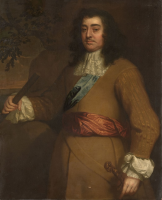
On 23rd April 1661 King Charles II of England Scotland and Ireland [aged 30] was crowned II King England Scotland and Ireland at Westminster Abbey [Map].
John Bennet 1st Baron Ossulston [aged 44], Francis Fane [aged 23] and Edward Hungerford [aged 28] was appointed Knight of the Bath.
Francis Godolphin [aged 55] was knighted.
Josceline Percy 11th Earl of Northumberland [aged 16] attended.
James Howard 3rd Earl Suffolk [aged 42] was appointed Earl Marshal.


Samuel Pepys' Diary. 23rd April 1661. But, above all, was these three Lords, Northumberland [aged 58], and Suffolk [aged 42], and the Duke of Ormond [aged 50], coming before the courses on horseback, and staying so all dinner-time, and at last to bring up [Dymock] the King's Champion, all in armour on horseback, with his spear and targett carried before him. And a Herald proclaims "That if any dare deny Charles Stewart to be lawful King of England, here was a Champion that would fight with him1;" and with these words, the Champion flings down his gauntlet, and all this he do three times in his going up towards the King's table. At last when he is come, the King drinks to him, and then sends him the cup which is of gold, and he drinks it off, and then rides back again with the cup in his hand.
Note 1. The terms of the Champion's challenge were as follows: "If any person of what degree soever, high or low, shall deny or gainsay our Soveraigne Lord King Charles the Second, King of England, Scotland, France and Ireland, defender of the faith, Sonne and next heire to our Soveraigne Lord Charles the First, the last King deceased, to be right heire to the Imperiall Crowne of this Realme of England, or that bee ought not to enjoy the same; here is his champion, who sayth that he lyeth and is a false Traytor, being ready in person to combate with him, and in this quarrell will venture his life against him, on what day soever hee shall be appointed".


John Evelyn's Diary. 23rd April 1661. Was the coronation of his Majesty [aged 30] Charles II in the Abbey-Church of Westminster [Map]; at all which ceremony I was present. the King and his Nobility went to the Tower [Map], I accompanying my Lord Viscount Mordaunt [aged 34] part of the way; this was on Sunday, the 22d; but indeed his Majesty went not till early this morning, and proceeded from thence to Westminster in this order:
Samuel Pepys' Diary. 23rd April 1661. But no sooner a-bed with Mr. Shepley but my head began to hum, and I to vomit, and if ever I was foxed it was now, which I cannot say yet, because I fell asleep and slept till morning. Only when I waked I found myself wet with my spewing. Thus did the day end with joy every where; and blessed be God, I have not heard of any mischance to any body through it all, but only to Serjt. G Lynne, whose horse fell upon him yesterday, and is like to kill him, which people do please themselves to see how just God is to punish the rogue at such a time as this; he being now one of the King's Serjeants, and rode in the cavalcade with Maynard [aged 57], to whom people wish the same fortune. There was also this night in King-street, [a woman] had her eye put out by a boy's flinging a firebrand into the coach. Now, after all this, I can say that, besides the pleasure of the sight of these glorious things, I may now shut my eyes against any other objects, nor for the future trouble myself to see things of state and show, as being sure never to see the like again in this world.
Samuel Pepys' Diary. 23rd April 1661. And many fine ceremonies there was of the Heralds leading up people before him, and bowing; and my Lord of Albemarle's [aged 52] going to the kitchin and eat a bit of the first dish that was to go to the King's table.
John Evelyn's Diary. 23rd April 1661. First went the Duke of York's Horse Guards. Messengers of the Chamber. 136 Esquires to the Knights of the Bath, each of whom had two, most richly habited. The Knight Harbinger. Sergeant Porter. Sewers of the Chamber. Quarter Waiters. Six Clerks of Chancery. Clerk of the Signet. Clerk of the Privy Seal. Clerks of the Council, of the Parliament, and of the Crown. Chaplains in ordinary having dignities, 10. King's Advocates and Remembrancer. Council at Law. Masters of the Chancery. Puisne Sergeants. King's Attorney and Solicitor. King's eldest Sergeant. Secretaries of the French and Latin tongue. Gentlemen Ushers. Daily Waiters, Sewers, Carvers, and Cupbearers in ordinary. Esquires of the body, 4. Masters of standing offices, being no Counsellors, viz, of the Tents, Revels, Ceremonies, Armory, Wardrobe, Ordnance, Requests. Chamberlain of the Exchequer. Barons of the Exchequer. Judges. Lord Chief-Baron. Lord Chief-Justice of the Common Pleas. Master of the Rolls. Lord Chief-Justice of England. Trumpets. Gentlemen of the Privy Chamber. Knights of the Bath, 68, in crimson robes, exceeding rich, and the noblest show of the whole cavalcade, his Majesty [aged 30] excepted. Knight Marshal. Treasurer of the Chamber. Master of the Jewels. Lords of the Privy Council. Comptroller of the Household. Treasurer of the Household. Trumpets. Sergeant Trumpet. Two Pursuivants at Arms. Barons. Two Pursuivants at Arms. Viscounts. Two Heralds. Earls. Lord Chamberlain of the Household [aged 59]. Two Heralds. Marquises. Dukes. Heralds Clarencieux and Norroy. Lord Chancellor [aged 52]. Lord High Steward of England. Two persons representing the Dukes of Normandy and Acquitaine, viz, Sir Richard Fanshawe and Sir Herbert Price, in fantastic habits of the time. Gentlemen Ushers. Garter. Lord Mayor of London. The Duke of York alone (the rest by twos). Lord High Constable of England. Lord Great Chamberlain of England. The sword borne by the Earl Marshal of England. the King, in royal robes and equipage. Afterward, followed equerries, footmen, gentlemen pensioners. Master of the Horse, leading a horse richly caparisoned. Vice-Chamberlain. Captain of the Pensioners. Captain of the Guard. The Guard. The Horse Guard. The troop of Volunteers, with many other officers and gentlemen.

John Evelyn's Diary. 23rd April 1661. The next day, being St. George's, he went by water to Westminster Abbey [Map]. When his Majesty [aged 30] was entered, the Dean and Prebendaries brought all the regalia, and delivered them to several noblemen to bear before the King, who met them at the west door of the church, singing an anthem, to the choir. Then, came the Peers, in their robes, and coronets in their hands, till his Majesty was placed on a throne elevated before the altar. Afterward, the Bishop of London (the Archbishop of Canterbury [aged 79] being sick) went to every side of the throne to present the King to the people, asking if they would have him for their King, and do him homage; at this, they shouted four times "God save King Charles II!" Then, an anthem was sung. His Majesty, attended by three Bishops, went up to the altar, and he offered a pall and a pound of gold. Afterward, he sat down in another chair during the sermon, which was preached by Dr. Morley [aged 63], Bishop of Worcester.
John Evelyn's Diary. 23rd April 1661. After sermon, the King [aged 30] took his oath before the altar to maintain the religion, Magna Charta, and laws of the land. The hymn Véni S. Sp. followed, and then the Litany by two Bishops. Then the Archbishop of Canterbury [aged 79], present, but much indisposed and weak, said "Lift up your hearts"; at which, the King rose up, and put off his robes and upper garments, and was in a waistcoat so opened in divers places, that the Archbishop might commodiously anoint him, first in the palms of his hands, when an anthem was sung, and a prayer read; then, his breast and between the shoulders, bending of both arms; and, lastly, on the crown of the head, with apposite hymns and prayers at each anointing; this done, the Dean closed and buttoned up the waistcoat. After which, was a coif put on, and the cobbium, sindon or dalmatic, and over this a super-tunic of cloth of gold, with buskins and sandals of the same, spurs, and the sword; a prayer being first said over it by the Archbishop on the altar, before it was girt on by the Lord Chamberlain [aged 59]. Then, the armill, mantle, etc. Then, the Archbishop placed the crown imperial on the altar, prayed over it, and set it on his Majesty's head, at which all the Peers put on their coronets. Anthems, and rare music, with lutes, viols, trumpets, organs, and voices, were then heard, and the Archbishop put a ring on his Majesty's finger. the King next offered his sword on the altar, which being redeemed, was drawn, and borne before him. Then, the Archbishop delivered him the sceptre, with the dove in one hand, and, in the other, the sceptre with the globe. the King kneeling, the Archbishop pronounced the blessing. His Majesty then ascending again his royal throne, while Te Deum was singing, all the Peers did their homage, by every one touching his crown. The Archbishop, and the rest of the Bishops, first kissing the King; who received the Holy Sacrament, and so disrobed, yet with the crown imperial on his head, and accompanied with all the nobility in the former order, he went on foot upon blue cloth, which was spread and reached from the west door of the Abbey [Map] to Westminster stairs, when he took water in a triumphal barge to Whitehall where was extraordinary feasting.
Samuel Pepys' Diary. 23rd April 1663. St. George's day and Coronacion, the King [aged 32] and Court being at Windsor, at the installing of the King of Denmark [aged 17]1 by proxy and the Duke of Monmouth [aged 14].
Note 1. Christian V King of Denmark and Norway didn't become King until 1670.


Samuel Pepys' Diary. 23rd April 1664. Home to dinner, where I and my wife much troubled about my money that is in my Lord Sandwich's [aged 38] hand, for fear of his going to sea and be killed; but I will get what of it out I can. All the afternoon, not being well, at my office, and there doing much business, my thoughts still running upon a warr and my money. At night home to supper and to bed.
Samuel Pepys' Diary. 23rd April 1665. Thence to the Chappell and heard the famous young Stillingfleete [aged 30], whom I knew at Cambridge, and is now newly admitted one of the King's chaplains; and was presented, they say, to my Lord Treasurer [aged 58] for St. Andrew's, Holborne [Map], where he is now minister, with these words: that they (the Bishops of Canterbury, London, and another) believed he is the ablest young man to preach the Gospel of any since the Apostles. He did make the most plain, honest, good, grave sermon, in the most unconcerned and easy yet substantial manner, that ever I heard in my life, upon the words of Samuell to the people, "Fear the Lord in truth with all your heart, and remember the great things that he hath done for you". It being proper to this day, the day of the King's Coronation.


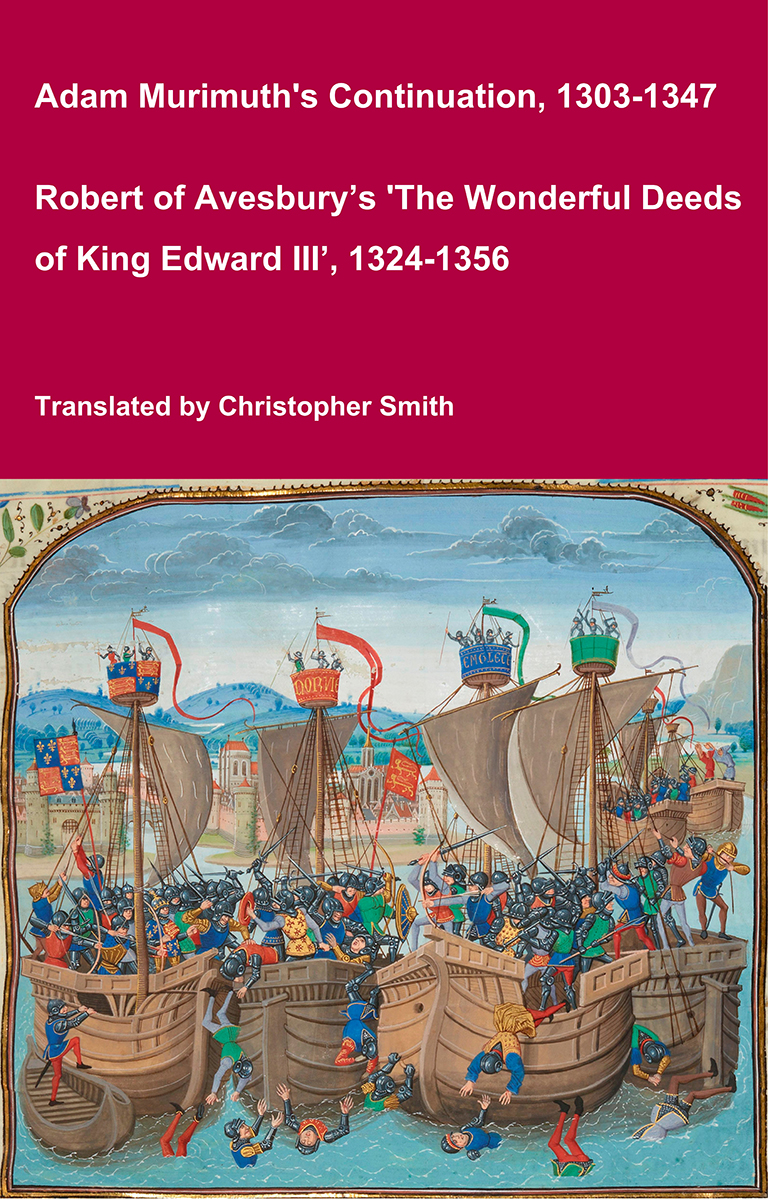
Adam Murimuth's Continuation and Robert of Avesbury’s 'The Wonderful Deeds of King Edward III'
This volume brings together two of the most important contemporary chronicles for the reign of Edward III and the opening phases of the Hundred Years’ War. Written in Latin by English clerical observers, these texts provide a vivid and authoritative window into the political, diplomatic, and military history of fourteenth-century England and its continental ambitions. Adam Murimuth Continuatio's Chronicarum continues an earlier chronicle into the mid-fourteenth century, offering concise but valuable notices on royal policy, foreign relations, and ecclesiastical affairs. Its annalistic structure makes it especially useful for establishing chronology and tracing the development of events year by year. Complementing it, Robert of Avesbury’s De gestis mirabilibus regis Edwardi tertii is a rich documentary chronicle preserving letters, treaties, and official records alongside narrative passages. It is an indispensable source for understanding Edward III’s claim to the French crown, the conduct of war, and the mechanisms of medieval diplomacy. Together, these works offer scholars, students, and enthusiasts a reliable and unembellished account of a transformative period in English and European history. Essential for anyone interested in medieval chronicles, the Hundred Years’ War, or the reign of Edward III.
Available at Amazon in eBook and Paperback format.
Samuel Pepys' Diary. 23rd April 1666. Dined at home and took Balty [aged 26] with me to Hales's [aged 66] to show him his sister's picture, and thence to Westminster, and there I to the Swan [Map] and drank, and so back again alone to Hales's and there met my wife and Mercer, Mrs. Pierce being sitting, and two or three idle people of her acquaintance more standing by. Her picture do come on well. So staid until she had done and then set her down at home, and my wife and I and the girle by coach to Islington [Map], and there eat and drank in the coach and so home, and there find a girle sent at my desire by Mrs. Michell of Westminster Hall [Map], to be my girle under the cooke-mayde, Susan. But I am a little dissatisfied that the girle, though young, is taller and bigger than Su, and will not, I fear, be under her command, which will trouble me, and the more because she is recommended by a friend that I would not have any unkindness with, but my wife do like very well of her.
Samuel Pepys' Diary. 23rd April 1666. Being mighty weary last night, lay long this morning, then up and to the office, where Sir W. Batten [aged 65], Lord Bruncker [aged 46] and I met, and toward noon took coach and to White Hall, where I had the opportunity to take leave of the Prince [aged 46], and again of the Duke of Albemarle [aged 57]; and saw them kiss the King's [aged 35] hands and the Duke's [aged 32]; and much content, indeed, there seems to be in all people at their going to sea, and [they] promise themselves much good from them. This morning the House of Parliament do meet, only to adjourne again till winter. The plague, I hear, encreases in the towne much, and exceedingly in the country everywhere.
On 23rd April 1668 Edward Hyde 1st Earl Clarendon [aged 59] was assaulted at Évreux, Haute Normandie.
On 23rd April 1670 Cassandra Willoughby Duchess Chandos was born to Francis Willoughby [aged 34] and Emma Barnard [aged 24]. She married 4th August 1713 her half first cousin James Brydges 1st Duke Chandos, son of James Brydges 8th Baron Chandos and Elizabeth Barnard Baroness Chandos.

On 23rd April 1674 Frances Devereux Duchess of Somerset [aged 74] died.
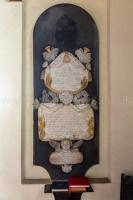
After 23rd April 1681. Monument at St Mary the Virgin Church, Overton to Edward Philips of Gwernhayled in Flintshire and his son William who died on 30 Aug 1683.
On 23rd April 1685 King James II of England Scotland and Ireland [aged 51] was crowned II King England Scotland and Ireland by Archbishop William Sancroft [aged 68]. Mary of Modena Queen Consort England Scotland and Ireland [aged 26] crowned Queen Consort England Scotland and Ireland.
Bishop Francis Turner [aged 47] preached the sermon.
John Ashburnham 1st Baron Ashburnham [aged 29] carried the canopy being one of the Barons of the Cinque Ports at Westminster Abbey [Map].
Henry Fitzroy 1st Duke Grafton [aged 21] was appointed Constable of England.
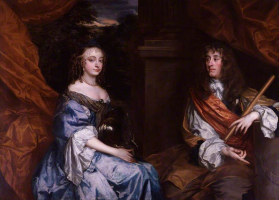


John Evelyn's Diary. 23rd April 1685. Was the Coronation of the King [aged 51] and Queene [aged 26]. The solemnity was magnificent, as is set forth in print. The Bp. of Ely [aged 47] preach'd; but, to the greate sorrow of the people, no Sacrament, as ought to have ben. However the King begins his reigne with greate expectations, and hopes of much reformation as to the late vices and prophanenesse both of Court and Country. Having ben present at the late King's Coronation, I was not ambitious of seeing this ceremonie.
On 23rd April 1702 Queen Anne of England Scotland and Ireland [aged 37] was crowned I Queen England Scotland and Ireland at Westminster Abbey [Map] by Archbishop Thomas Tenison [aged 65].


Minutes of the Society of Antiquaries. 23rd April 1718. It was unanimously order that a drawing of a horn presented to the Church of York [Map] by Ulphus Prince of Deira, in possession of Mr Samuel Gale be printed. (the first time).

On 23rd April 1718 Charles Fitzroy was born to Charles Fitzroy 2nd Duke Grafton [aged 34] and Henrietta Somerset Duchess Grafton [aged 27]. He a great grandson of King Charles II of England Scotland and Ireland.
On 23rd April 1740 John Ker 3rd Duke Roxburghe was born to Robert Ker 2nd Duke Roxburghe [aged 31] and Essex Mostyn Duchess Roxburghe. Coefficient of inbreeding 3.13%.
On 23rd April 1749 Ernest Frederick Saxe Coburg Saalfeld Duke Saxe Coburg Saalfeld [aged 25] and Sophia Antonia Brunswick-Wolfenbüttel Duchess Saxe Coburg Saalfeld [aged 25] were married. He the son of Francis Josias Saxe Coburg Saalfeld Duke Saxe Coburg Saalfeld [aged 51] and Duchess Anna Sophie Of Saxe-Coburg-Saalfeld [aged 48].
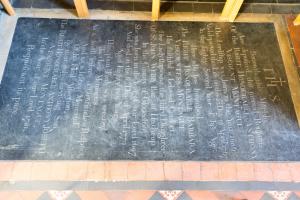
On 23rd April 1767 Anthony Browne 6th Viscount Montagu [aged 81] died. His son Anthony [aged 37] succeeded 7th Viscount Montagu. Frances Falconer Mackworth Viscountess Montague [aged 35] by marriage Viscountess Montagu.
Grave slab to Anthony Browne 6th Viscount Montagu and Barbara Webb Viscountess Montague [aged 70] in St Mary's Church, Easebourne, Sussex [Map].

On 23rd April 1775 Joseph Mallord William Turner was born to William Turner [aged 30] and Mary Marshall at Maiden Lane, Covent Garden. He was baptised on 14th May 1775 at the St Paul's Church, Covent Garden. His father was a barber and wig maker.
On 23rd April 1789 Bernard Howard 12th Duke of Norfolk [aged 23] and Elizabeth Belasyse Duchess Norfolk [aged 19] were married. She the daughter of Henry Belasyse 2nd Earl Fauconberg [aged 47] and Charlotte Lamb Countess Fauconberg [aged 46].
On 23rd April 1809 Karl Wilhelm Hesse Darmstadt was born to Louis Hesse Darmstadt II Grand Duke [aged 31] and Princess Wilhelmine Baden [aged 20]. Coefficient of inbreeding 7.03%. He married 1836 Elizabeth Prussia and had issue.
On 23rd April 1810 Thomas Wright was born at Tenbury Wells, Worcestershire [Map].
The Deeds of the Dukes of Normandy
The Gesta Normannorum Ducum [The Deeds of the Dukes of Normandy] is a landmark medieval chronicle tracing the rise and fall of the Norman dynasty from its early roots through the pivotal events surrounding the Norman Conquest of England. Originally penned in Latin by the monk William of Jumièges shortly before 1060 and later expanded at the behest of William the Conqueror, the work chronicles the deeds, politics, battles, and leadership of the Norman dukes, especially William’s own claim to the English throne. The narrative combines earlier historical sources with firsthand information and oral testimony to present an authoritative account of Normandy’s transformation from a Viking settlement into one of medieval Europe’s most powerful realms. William’s history emphasizes the legitimacy, military prowess, and governance of the Norman line, framing their expansion, including the conquest of England, as both divinely sanctioned and noble in purpose. Later chroniclers such as Orderic Vitalis and Robert of Torigni continued the history, extending the coverage into the 12th century, providing broader context on ducal rule and its impact. Today this classic work remains a foundational source for understanding Norman identity, medieval statesmanship, and the historical forces that reshaped England and Western Europe between 800AD and 1100AD.
Available at Amazon in eBook and Paperback format.
On 23rd April 1821 Henry Edridge [aged 53] died.
On 23rd April 1823 Joseph Nollekens [aged 85] died.
On 23rd April 1831 John Kelley Halswelle was born. He was baptised at St Dionis Backchurch, London, on 6th July 1831.
On 9th April 1838 the SS Great Western, the first steamship designed for the purpose of crossing the Atlantic, sailed from Avonmouth for New York. She arrived on 23rd April 1838. During the ship journey to Bristol a fire broke out in the engine room as a result of which fifty passengers cancelled their book. In the event on its first voyage only seven passengers sailed.
Thomas Bateman 1845. The first barrow [Map] opened this season was a small one situate near Hunter-mere, on Ashford Moor, which was (on the 23d of April, 1845) divided into four sections, in order to leave no part of it unexplored; it was formed with great exactness having a slight ditch or depression surrounding the base and although so perfect and uninjured in its appearance it was found upon examination to have been previously explored; owing to this circumstance the contents were uninteresting; near the surface was found a small iron arrow-head probably of much later date than the original interments, of which the remains in the shape of small pieces of bone were found promiscuously in the tumulus. In the same manner were found five instruments of flint of no particular interest, sundry chippings of the same, a piece of smoothly-rubbed sandstone, and rats' bones as usual; on the surface of the natural soil there was a small quantity of charcoal strewed about.

On 23rd April 1850 William Wordsworth [aged 80] died.
Ten Years' Digging. On the 23rd of April, a peculiarly shaped barrow [Map] [Crakendale Pasture Barrow [Map]] upon Crakendale Pasture, near Bakewell, was examined. Its singularity consisted in three prolongations radiating from the central mound, which was about four feet high. On digging in various places, scattered pieces of bone, both human and animal, were found; and in the centre, which had been previously disturbed, were remains of at least three adults and one child, as well as some pieces of calcined bone, bones of rats and other animals, fragments of an ornamental drinking-cup, and a small instrument neatly cut from the tine of a stages horn. The centre of the barrow was carefully surrounded by several courses of flat stones set edgeway on the natural surface, which, if the barrow had been untouched, would have led to an easy discovery of the central cist, round which they had no doubt been placed with great regularity.
On 23rd April 1872 Evelyn Gordon-Lennox was born to Charles Gordon-Lennox 7th Duke Richmond [aged 26] and Amy Mary Ricardo [aged 24]. She married 4th January 1896 John Richard Geers Cotterell 4th Baronet and had issue.
On 23rd April 1873 Charles Sackville-West 6th Earl De La Warr [aged 57] committed suicide by drowning himself in the River Cam. His brother Reginald [aged 56] succeeded 7th Earl De La Warr, 7th Viscount Cantalupe, 13th Baron De La Warr. Constance Mary Elizabeth Baillie-Cochrane Countess De La Warr [aged 27] by marriage Countess De La Warr.
On 23rd April 1879 James Innes-Kerr 6th Duke Roxburghe [aged 62] died. His son James [aged 39] succeeded 7th Duke Roxburghe.
On 23rd April 1888 Violet Catherine Manners was born to Henry John Brinsley Manners 8th Duke Rutland [aged 36] and Violet Lindsay Duchess Rutland [aged 32]. Some sources speculate that her father may have been Henry John Cockayne-Cust [aged 26]. She married (1) 1st February 1911 her half fifth cousin once removed Hugo Francis Charteris, son of Hugo Charteris 11th Earl of Wemyss and Mary Constance Wyndham Countess Wemyss, and had issue (2) 9th July 1921 Guy Benson.



Annals of the six Kings of England by Nicholas Trivet
Translation of the Annals of the Six Kings of England by that traces the rise and rule of the Angevin aka Plantagenet dynasty from the mid-12th to early 14th century. Written by the Dominican scholar Nicholas Trivet, the work offers a vivid account of English history from the reign of King Stephen through to the death of King Edward I, blending political narrative with moral reflection. Covering the reigns of six monarchs—from Stephen to Edward I—the chronicle explores royal authority, rebellion, war, and the shifting balance between crown, church, and nobility. Trivet provides detailed insight into defining moments such as baronial conflicts, Anglo-French rivalry, and the consolidation of royal power under Edward I, whose reign he describes with particular immediacy. The Annals combines careful year-by-year reporting with thoughtful interpretation, presenting history not merely as a sequence of events but as a moral and political lesson. Ideal for readers interested in medieval history, kingship, and the origins of the English state, this chronicle remains a valuable and accessible window into the turbulent world of the Plantagenet kings.
Available at Amazon in eBook and Paperback format.
On 23rd April 1914 Edward Robert Hughes [aged 62] died at his home 3 Romeland after an operation for appendicitis. He was buried at Hatfield Road Cemetery, St Albans. His funeral in St Albans Cathedral [Map] was the largest ever held there, attended by his many friends, fellow artists, and pupils from his life-drawing class in London.


On 23rd April 1915 René de Saint-Marceaux [aged 69] died.
The Zeebrugge Raid on 23rd April 1918 was an attempt by the Royal Navy to block the Belgian port of Bruges-Zeebrugge. The British intended to sink obsolete ships in the canal entrance, to prevent German vessels from leaving port. The block ships were sunk in the wrong position and the canal was only obstructed for a few days.
After 23rd April 1918. St Michael's Church, Coxwold, North Yorkshire [Map]. Grave of Private William Cornforth. Killed in Action, Zeebrugge, Belgium during the Zeebrugge Raid.
On 23rd April 1918 William Henry Alfred Fitzroy [aged 33] died in a air accident. The Casualty Card says he went into a low vertical spin before crashing on (apparently) a solo flight at RAF Yatesbury in Wiltshire. He is buried in Euston (St Genevieve) Churchyard, south of the church.
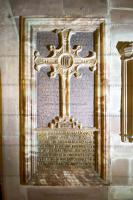
On 23rd April 1920 Reverend Stephen Edward Gladstone [aged 76] died. Memorial at the Church of St Deiniol, Hawarden, Flintshire.
Reverend Stephen Edward Gladstone: On 4th April 1844 he was born to William Ewart Gladstone and Catherine Glynne. In 1872 he was appointed Rector of the Church of St Deiniol, Hawarden, Flintshire which position he held until 1904. On 29th January 1885 Reverend Stephen Edward Gladstone and Annie Crosthwaite Wilson were married.
The Times. Despite leading the Remembrance Day parade through Rutland year after year and presiding over the ceremony, his [John Henry Montagu Manners 9th Duke Rutland [deceased]] supposed military service was a sham – but not one initially of his own making. His mother, Violet Manners, the 8th Duchess of Rutland, used her considerable persuasive powers and position to conspire with Lord Kitchener and Sir John French, the Commander in Chief of the Western Front, to keep her son from the fighting. Eventually, she rigged a series of medical examinations and dashed any hopes John had of battling in the trenches in Ypres with his regiment – the 4th Battalion Leicestershire (the Tigers).
The Times. John Gilliat, wrote to The Times
When one reads the obituary notice of the late Duke of Rutland [deceased], the bare facts of his career seem to fall so far short of giving the reader the true picture of the man as his intimate friends knew him. To those friends his passing has left a blank impossible to refill, and this applies equally to his staff at Belvoir and Haddon. Here was a man in every sense of the word belonging to a school that to the country's loss represented a type of the Grand Seigneur, living his life for his own people's welfare and enriching all those with whom he came in contact by his erudite knowledge not only of manuscripts and early English furniture, heraldry, early tiles, and historical records, but also by his intimate knowledge of birds and every kind of animal life within these islands... We who knew him on such terms loved him and he had the great art of making us at our best when in his company: his like we shall not see again, and the country is the poorer for his death, even though so few were privileged to know him as we did.
The Times. The distinction of the Duke of Rutland [deceased] as an authority on medieval art is rightly stressed in the obituary which appeared in The Times, and it should perhaps be further emphasized, that in one department of the study of English Medieval Art he was a pioneer whose performance, calling for immense labour and patience, has laid the foundations for all future research on the subject. I am referring to the inlaid floor-tiles of medieval England, which began to claim attention among antiquaries about the middle of the last century and ever since that time have formed the subject of various specialist publications: but no one has ever brought to the subject the whole-hearted enthusiasm of the late Duke, and the results which he achieved are on a truly magnificent scale. His collection of English medieval floortiles is without a rival in the world. It is beautifully set out in one of the rooms at Belvoir, and has been catalogued by him in a monumental typewritten work of two folio volumes, illustrated with coloured reproductions all his own work. It is greatly to be hoped that this catalogue may one day be published, for it goes far beyond anything that has so far been published on the subject.
On 23rd April 1981 Lady Gabriella Windsor was born to Prince Michael of Kent [aged 38] and Princess Marie von Reibnitz [aged 36] at St Mary's Hospital, London. She was baptised on 8th June 1981 at the Chapel Royal, St James's Palace. Her godparents were Constantine II King Hellenes [aged 40], Mariano Hugo, Prince of Windisch-Graetz; Marina Ogilvy [aged 14]; Princess Antonia, Marchioness of Douro [aged 25]; and Lady Elizabeth Shakerley [aged 39]. She a great granddaughter of King George V of the United Kingdom. She married 18th May 2019 Thomas Kingston.
On 23rd April 1141 King Malcolm IV of Scotland was born to Henry Dunkeld 3rd Earl Huntingdon 1st Earl of Northumbria [aged 27] and Ada Warenne Countess Huntingdon and Northumbria [aged 21] at Jedburgh.
Abbot John Whethamstede’s Chronicle of the Abbey of St Albans
Abbot John Whethamstede's Register aka Chronicle of his second term at the Abbey of St Albans, 1451-1461, is a remarkable text that describes his first-hand experience of the beginning of the Wars of the Roses including the First and Second Battles of St Albans, 1455 and 1461, respectively, their cause, and their consequences, not least on the Abbey itself. His text also includes Loveday, Blore Heath, Northampton, the Act of Accord, Wakefield, and Towton, and ends with the Coronation of King Edward IV. In addition to the events of the Wars of the Roses, Abbot John, or his scribes who wrote the Chronicle, include details in the life of the Abbey such as charters, letters, land exchanges, visits by legates, and disputes, which provide a rich insight into the day-to-day life of the Abbey, and the challenges faced by its Abbot.
Available at Amazon in eBook and Paperback format.
On 23rd April 1185 Alfonso "Fat" II King Portugal was born to Sancho "Populator" I King Portugal [aged 30] and Dulce Barcelona Queen Consort Portugal at Coimbra. He married 1206 his second cousin once removed Urraca Ivrea Queen Consort Portugal, daughter of Alfonso VIII King Castile and Eleanor Plantagenet Queen Consort Castile, and had issue.
On 23rd April 1258 Elizabeth Wittelsbach was born to Henry Wittelsbach I Duke Lower Bavaria I Duke Bavaria [aged 22] and Elizabeth Duchess Bavaria [aged 22]. She a great x 3 granddaughter of King Henry "Curtmantle" II of England.
On 23rd April 1393 Roger Mortimer was born to Roger Mortimer 4th Earl March 3rd Earl of Ulster [aged 19] and Eleanor Holland Countess March and Ulster [aged 22]. He a great x 2 grandson of King Edward III of England.
On 23rd April 1408 John de Vere 12th Earl of Oxford was born to Richard de Vere 11th Earl of Oxford [aged 22] and Alice Sergeaux Countess Oxford at Hedingham Castle [Map]. He married 1425 Elizabeth Howard Countess of Oxford and had issue.
On 23rd April 1464 Joan Valois Queen Consort France was born to King Louis XI of France [aged 40] and Queen Charlotte of Savoy [aged 22]. Coefficient of inbreeding 2.69%. She married 1476 her second cousin once removed Louis XII King France, son of Charles Valois Duke Orléans and Mary de la Marck Duchess Orléans.
On 23rd April 1509 Afonso Aviz was born to Manuel "Fortunate" I King Portugal [aged 39] and Maria Trastámara Queen Consort Portugal [aged 27]. He a great x 4 grandson of King Edward III of England. Coefficient of inbreeding 8.38%.
On 23rd April 1512 Henry Fitzalan 12th or 19th Earl of Arundel was born to William Fitzalan 11th or 18th Earl of Arundel [aged 36] and Anne Percy Countess Arundel [aged 26]. He married (1) before 1538 his second cousin once removed Katherine Grey, daughter of Thomas Grey 2nd Marquess Dorset and Margaret Wotton Marchioness Dorset, and had issue (2) after 1st May 1542 his fifth cousin Mary Arundell Countess Arundel.


On 23rd April 1532 Anna Maria Guelph Duchess Prussia was born to Eric "The Elder" Guelph I Duke Brunswick-Lüneburg [aged 62]. She married 1550 her fifth cousin Albert "The Elder" Hohenzollern I Duke Prussia, son of Frederick Hohenzollern I Margrave Brandenburg-Ansbach and Sophia Jagiellon Margravine of Brandenburg-Ansbach, and had issue.
On 23rd April 1559 George Shirley 1st Baronet was born to John Shirley [aged 26]. He married (1) after 21st February 1587 Frances Berkeley, daughter of Henry Berkeley 7th Baron Berkeley and Katherine Howard Baroness Berkeley, and had issue (2) after 1596 Dorothy Wroughton Lady Shirley.
On 23rd April 1619 Anne Bayning Viscountess Bayning was born to Paul Bayning 1st Viscount Bayning [aged 31] and Anne Glemham Viscountess Bayning. She married (1) 26th November 1635 Henry Murray of Berkhampstead and had issue (2) before 1678 John Baber.
On 23rd April 1620 Margaret Leslie Countess Buccleuch and Wemyss was born to John Leslie 6th Earl Rothes [aged 20] and Anne Erskine Countess of Rothes [aged 23]. She married (1) 13th June 1637 Alexander Leslie, son of Alexander Leslie 1st Earl Leven, and had issue (2) 25th July 1646 her half third cousin Francis Scott 2nd Earl Buccleuch, son of Walter Scott 1st Earl Buccleuch and Mary Hay Countess Buccleuch, and had issue (3) 13th January 1653 her fourth cousin once removed David Wemyss 2nd Earl of Wemyss, son of John Wemyss 1st Earl of Wemyss and Jane Gray Countess Wemyss, and had issue.
On 23rd April 1623 John Chichester 1st Baronet was born to Robert Chichester [aged 45] and Ursula Hill. He married (1) before 18th July 1655 Elizabeth Rayney, daughter of John Rayney 1st Baronet (2) 18th July 1655 Mary Colley and had issue.
William of Worcester's Chronicle of England
William of Worcester, born around 1415, and died around 1482 was secretary to John Fastolf, the renowned soldier of the Hundred Years War, during which time he collected documents, letters, and wrote a record of events. Following their return to England in 1440 William was witness to major events. Twice in his chronicle he uses the first person: 1. when writing about the murder of Thomas, 7th Baron Scales, in 1460, he writes '… and I saw him lying naked in the cemetery near the porch of the church of St. Mary Overie in Southwark …' and 2. describing King Edward IV's entry into London in 1461 he writes '… proclaimed that all the people themselves were to recognize and acknowledge Edward as king. I was present and heard this, and immediately went down with them into the city'. William’s Chronicle is rich in detail. It is the source of much information about the Wars of the Roses, including the term 'Diabolical Marriage' to describe the marriage of Queen Elizabeth Woodville’s brother John’s marriage to Katherine, Dowager Duchess of Norfolk, he aged twenty, she sixty-five or more, and the story about a paper crown being placed in mockery on the severed head of Richard, 3rd Duke of York.
Available at Amazon in eBook and Paperback format.

On 23rd April 1665 Francis Henry Lee was born to Francis Lee 4th Baronet [aged 26] and Elizabeth Pope Countess Lindsey.
On 23rd April 1670 Cassandra Willoughby Duchess Chandos was born to Francis Willoughby [aged 34] and Emma Barnard [aged 24]. She married 4th August 1713 her half first cousin James Brydges 1st Duke Chandos, son of James Brydges 8th Baron Chandos and Elizabeth Barnard Baroness Chandos.

On 23rd April 1675 Charles Spencer 3rd Earl of Sunderland was born to Robert Spencer 2nd Earl of Sunderland [aged 33] and Anne Digby Countess Sunderland [aged 29]. He married (1) February 1695 Arabella Cavendish, daughter of Henry Cavendish 2nd Duke Newcastle upon Tyne and Frances Pierrepont Duchess Newcastle upon Tyne, and had issue (2) before 2nd December 1700 Anne Churchill Countess Sunderland, daughter of John Churchill 1st Duke of Marlborough and Sarah Jennings Duchess of Marlborough, and had issue (3) before 1718 Judith Tichborne Countess Sunderland and had issue.
On 23rd April 1680 Richard Edgecumbe 1st Baron Edgcumbe was born to Richard Edgecumbe [aged 40] and Anne Montagu. He married before 3rd March 1720 Matilda Furnese, daughter of Henry Furnese 1st Baronet and Anne Brough, and had issue.
On 23rd April 1689 Ferrers Shirley was born to Robert Shirley 1st Earl Ferrers [aged 38] and Elizabeth Washington Baroness Ferrers Chartley.


On 23rd April 1697 George Anson 1st Baron Anson was born to William Anson [aged 41] at Shugborough Hall, Staffordshire [Map]. He married 1st April 1748 Elizabeth Yorke, daughter of Philip Yorke 1st Earl of Hardwicke and Margaret Cocks Countess Hardwicke.


On 23rd April 1718 Charles Fitzroy was born to Charles Fitzroy 2nd Duke Grafton [aged 34] and Henrietta Somerset Duchess Grafton [aged 27]. He a great grandson of King Charles II of England Scotland and Ireland.
On 23rd April 1729 Robert Hesketh 2nd Baronet was born to Thomas Hesketh [aged 30].
On 23rd April 1740 John Ker 3rd Duke Roxburghe was born to Robert Ker 2nd Duke Roxburghe [aged 31] and Essex Mostyn Duchess Roxburghe. Coefficient of inbreeding 3.13%.
On 23rd April 1751 Gilbert Elliot 1st Earl Minto was born to Gilbert Elliot 3rd Baronet [aged 28]. He married 1777 Anna-Maria Amyand Countess Minto, daughter of George Amyand 1st Baronet and Anna Maria Korteen Lady Amyand, and had issue.
Jean de Waurin's Chronicle of England Volume 6 Books 3-6: The Wars of the Roses
Jean de Waurin was a French Chronicler, from the Artois region, who was born around 1400, and died around 1474. Waurin’s Chronicle of England, Volume 6, covering the period 1450 to 1471, from which we have selected and translated Chapters relating to the Wars of the Roses, provides a vivid, original, contemporary description of key events some of which he witnessed first-hand, some of which he was told by the key people involved with whom Waurin had a personal relationship.
Available at Amazon in eBook and Paperback format.
On 23rd April 1767 Richard Bourke was born to Bishop Joseph Bourke 3rd Earl of Mayo [aged 31].
On 23rd April 1775 Joseph Mallord William Turner was born to William Turner [aged 30] and Mary Marshall at Maiden Lane, Covent Garden. He was baptised on 14th May 1775 at the St Paul's Church, Covent Garden. His father was a barber and wig maker.
On 23rd April 1784 Henry Onslow 2nd Baronet was born to Richard Onslow 1st Baronet [aged 42]; the seventh and youngest child.
On 23rd April 1798 Charles Buckworth-Herne-Soame was born to Buckworth Buckworth-Herne-Soame 6th Baronet [aged 36] and Susan Semperingham Lady Buckworth-Herne-Soame. He a great x 4 grandson of King Charles II of England Scotland and Ireland. He married Hannah Proctor and had issue.
On 23rd April 1803 Charlotte Cavendish was born to George Augustus Henry Cavendish 1st Earl Burlington [aged 49] and Elizabeth Compton Countess Burlington [aged 42]. She died aged less than one years old.
On 23rd April 1809 Karl Wilhelm Hesse Darmstadt was born to Louis Hesse Darmstadt II Grand Duke [aged 31] and Princess Wilhelmine Baden [aged 20]. Coefficient of inbreeding 7.03%. He married 1836 Elizabeth Prussia and had issue.
On 23rd April 1810 Thomas Wright was born at Tenbury Wells, Worcestershire [Map].
On 23rd April 1815 William Howard was born to Kenneth Alexander Howard 1st Earl of Effingham [aged 47] and Charlotte Primrose Countess Effingham [aged 39]. Coefficient of inbreeding 3.12%.
On 23rd April 1831 Edward Lenox Dutton 4th Baron Sherborne was born to James Henry Legge Dutton 3rd Baron Sherborne [aged 26] and Elizabeth Howard [aged 28]. Coefficient of inbreeding 6.25%. He married Emily Theresa Stern Baroness Sherborne.
On 23rd April 1831 John Kelley Halswelle was born. He was baptised at St Dionis Backchurch, London, on 6th July 1831.
Chronicle of Geoffrey le Baker of Swinbroke
Baker was a secular clerk from Swinbroke, now Swinbrook, an Oxfordshire village two miles east of Burford. His Chronicle describes the events of the period 1303-1356: Gaveston, Bannockburn, Boroughbridge, the murder of King Edward II, the Scottish Wars, Sluys, Crécy, the Black Death, Winchelsea and Poitiers. To quote Herbert Bruce 'it possesses a vigorous and characteristic style, and its value for particular events between 1303 and 1356 has been recognised by its editor and by subsequent writers'. The book provides remarkable detail about the events it describes. Baker's text has been augmented with hundreds of notes, including extracts from other contemporary chronicles, such as the Annales Londonienses, Annales Paulini, Murimuth, Lanercost, Avesbury, Guisborough and Froissart to enrich the reader's understanding. The translation takes as its source the 'Chronicon Galfridi le Baker de Swynebroke' published in 1889, edited by Edward Maunde Thompson.
Available at Amazon in eBook and Paperback format.
On 23rd April 1834 Edward Henry Legge was born to William Legge 4th Earl Dartmouth [aged 49] and Frances Barrington Countess Dartmouth. He a great x 4 grandson of King Charles II of England Scotland and Ireland. He married 15th January 1873 Cordelia Twysden Molesworth and had issue.
On 23rd April 1836 Charles Philip "Champagne Charlie" Yorke 5th Earl of Hardwicke was born to Charles Yorke 4th Earl of Hardwicke [aged 37] and Susan Liddell Countess Hardwicke [aged 26]. He married 1863 Sophia Georgiana Robertina Wellesley Countess Hardwicke, daughter of Henry Richard Charles Wellesley 1st Earl Cowley, and had issue.
On 23rd April 1843 Rear-Admiral Algernon Charles Littleton was born to Edward Richard Littleton 2nd Baron Hatherton [aged 27] and Margaret Percy Baroness Hatherton [aged 30]. He married in or before 1876 Margaret Needham, daughter of Francis Needham 2nd Earl Kilmorley, and had issue.
On 23rd April 1845 Bertrand Pleydell-Bouverie was born to Jacob Pleydell-Bouverie 4th Earl Radnor [aged 29] and Mary Augusta Frederica Grimston [aged 23].
On 23rd April 1846 Alban Gibbs 2nd Baron Aldenham was born to Henry Hucks Gibbs 1st Baron Aldenham [aged 26] and Louisa Anne Adams Baroness Aldenham [aged 27]. He married before 1875 Bridget Beresford-Hope and had issue.
On 23rd April 1851 William George Spencer Scott Compton 5th Marquess Northampton was born to William Compton 4th Marquess Northampton [aged 33] and Eliza Harriet Elliot Marchioness Northampton [aged 31] at Castle Ashby, Northamptonshire [Map]. He married 1884 Mary Florence Baring Marchioness Northampton, daughter of Bingham Baring 2nd Baron Ashburton and Louisa Caroline Stewart Baroness Ashburton, and had issue.
On 23rd April 1852 Christopher Furness 1st Baron Furness was born to John Furness of West Hartlepool and Averill Eastor Wilson. He married 16th May 1867 Jane Annette Suggitt Baroness Furness and had issue.
On 23rd April 1853 Reginald William Proctor-Beauchamp 5th Baronet was born to Thomas William Brograve Proctor-Beauchamp 4th Baronet [aged 37] and Catherine Esther Waldegrave Lady Beauchamp-Proctor [aged 26].
On 23rd April 1872 Evelyn Gordon-Lennox was born to Charles Gordon-Lennox 7th Duke Richmond [aged 26] and Amy Mary Ricardo [aged 24]. She married 4th January 1896 John Richard Geers Cotterell 4th Baronet and had issue.
On 23rd April 1885 Robert Disney Leith Alexander 16th Baron Cobham was born to Reginald Gervase Alexander [aged 38].
On 23rd April 1888 Violet Catherine Manners was born to Henry John Brinsley Manners 8th Duke Rutland [aged 36] and Violet Lindsay Duchess Rutland [aged 32]. Some sources speculate that her father may have been Henry John Cockayne-Cust [aged 26]. She married (1) 1st February 1911 her half fifth cousin once removed Hugo Francis Charteris, son of Hugo Charteris 11th Earl of Wemyss and Mary Constance Wyndham Countess Wemyss, and had issue (2) 9th July 1921 Guy Benson.
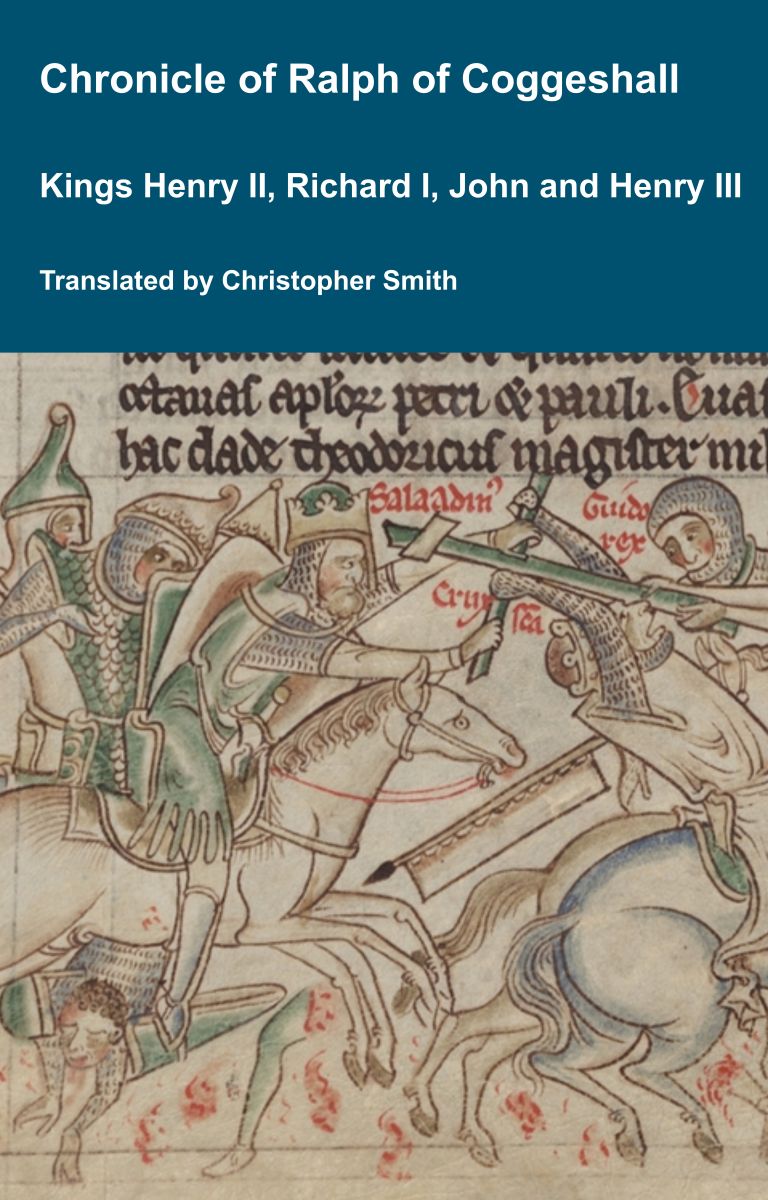
Chronicle of Abbot Ralph of Coggeshall
The Chronicle of Abbot Ralph of Coggeshall (Chronicon Anglicanum) is an indispensable medieval history that brings to life centuries of English and European affairs through the eyes of a learned Cistercian monk. Ralph of Coggeshall, abbot of the Abbey of Coggeshall in Essex in the early 13th century, continued and expanded his community’s chronicle, documenting events from the Norman Conquest of 1066 into the tumultuous reign of King Henry III. Blending eyewitness testimony, careful compilation, and the monastic commitment to record-keeping, this chronicle offers a rare narrative of political intrigue, royal power struggles, and social upheaval in England and beyond. Ralph’s work captures the reigns of pivotal figures such as Richard I and King John, providing invaluable insights into their characters, decisions, and the forces that shaped medieval rule. More than a simple annal, Chronicon Anglicanum conveys the texture of medieval life and governance, making it a rich source for scholars and readers fascinated by English history, monastic authorship, and the shaping of the medieval world.
Available at Amazon in eBook and Paperback format.
On 23rd April 1900 Ankaret Howard was born to Charles James Stanley Howard 10th Earl Carlisle [aged 33] and Rhona Ankaret Estrange Countess Carlisle [aged 32].
On 23rd April 1902 Ralph Alured Newman 5th Baronet was born to Robert Lydston Newman [aged 37]. He married 12th June 1946 Ann Rosemary Hope-Morley and had issue.
On 23rd April 1907 Barbara Felicity Smith 14th Baroness Dudley was born to Ferdinando Dudley William Lea Smith 12th Baron Dudley [aged 35] and Sybil Augusta Coventry. She married 22nd August 1929 Guy Raymond Hill Wallace and had issue.
On 23rd April 1909 Davidema Katharine Bulwer-Lytton Countess Erne was born to Victor Bulwer-Lytton 2nd Earl of Lytton [aged 32]. She married 1931 John Crichton 5th Earl Erne and had issue.
On 23rd April 1910 Charles Moore 11th Earl of Drogheda was born to Henry Moore 10th Earl of Drogheda [aged 26] and Kathleen Pelham Burn Countess Drogheda [aged 23].
On 23rd April 1934 Frederick John Charles Hervey-Bathurst 7th Baronet was born to Frederick Peter-Methuen Hervey-Bathurst 6th Baronet [aged 31]. He married 7th December 1957 Caroline Myrtle Starkey Lady Hervey-Bathurst, daughter of William Randle Starkey 2nd Baronet, and had issue.
On 23rd April 1955 Christopher Neville 6th Marquess Abergavenny was born to Rupert Charles Montacute Neville [aged 32] and Anne Camilla Eveline Wallop [aged 29]. He was educated at Harrow School. He married 1985 Venetia Maynard Marchioness Abergavenny and had issue.
On 23rd April 1955 Julian du Cros 4th Baronet was born to Claude du Cros 3rd Baronet [aged 32].
On 23rd April 1981 Lady Gabriella Windsor was born to Prince Michael of Kent [aged 38] and Princess Marie von Reibnitz [aged 36] at St Mary's Hospital, London. She was baptised on 8th June 1981 at the Chapel Royal, St James's Palace. Her godparents were Constantine II King Hellenes [aged 40], Mariano Hugo, Prince of Windisch-Graetz; Marina Ogilvy [aged 14]; Princess Antonia, Marchioness of Douro [aged 25]; and Lady Elizabeth Shakerley [aged 39]. She a great granddaughter of King George V of the United Kingdom. She married 18th May 2019 Thomas Kingston.
On 23rd April 1224 William "The Younger" Marshal 2nd Earl Pembroke [aged 34] and Eleanor Plantagenet Countess Pembroke and Leicester [aged 9] were married. She by marriage Countess Pembroke. The difference in their ages was 25 years. She the daughter of King John of England and Isabella of Angoulême Queen Consort England [aged 36]. He the son of William Marshal 1st Earl Pembroke and Isabel Clare Countess Pembroke. They were fifth cousins.
On 23rd April 1445 King Henry VI of England and II of France [aged 23] and Margaret of Anjou Queen Consort England [aged 15] were married at Titchfield Abbey, Hampshire [Map] probably by Bishop William Ayscough [aged 50], Bishop of Salisbury. She the daughter of René Valois Anjou I Duke Anjou [aged 36] and Isabella Metz Duchess Anjou I Duchess Lorraine [aged 45]. He the son of King Henry V of England and Catherine of Valois Queen Consort England. They were third cousins.
On 23rd April 1640 James Clavering 1st Baronet [aged 20] and Jane Madisson [aged 21] were married at the Cathedral Church St Nicholas, Newcastle upon Tyne [Map].
On 23rd April 1691 Thomas Parker 1st Earl Macclesfield [aged 24] and Janet Carrier Countess Macclesfield [aged 30] were married.
Adam Murimuth's Continuation and Robert of Avesbury’s 'The Wonderful Deeds of King Edward III'
This volume brings together two of the most important contemporary chronicles for the reign of Edward III and the opening phases of the Hundred Years’ War. Written in Latin by English clerical observers, these texts provide a vivid and authoritative window into the political, diplomatic, and military history of fourteenth-century England and its continental ambitions. Adam Murimuth Continuatio's Chronicarum continues an earlier chronicle into the mid-fourteenth century, offering concise but valuable notices on royal policy, foreign relations, and ecclesiastical affairs. Its annalistic structure makes it especially useful for establishing chronology and tracing the development of events year by year. Complementing it, Robert of Avesbury’s De gestis mirabilibus regis Edwardi tertii is a rich documentary chronicle preserving letters, treaties, and official records alongside narrative passages. It is an indispensable source for understanding Edward III’s claim to the French crown, the conduct of war, and the mechanisms of medieval diplomacy. Together, these works offer scholars, students, and enthusiasts a reliable and unembellished account of a transformative period in English and European history. Essential for anyone interested in medieval chronicles, the Hundred Years’ War, or the reign of Edward III.
Available at Amazon in eBook and Paperback format.

On 23rd April 1698 Thomas Coningsby 1st Earl Coningsby [aged 41] and Frances Jones [aged 25] were married. She the daughter of Richard Jones 1st Earl Ranelagh [aged 57] and Elizabeth Willoughby Countess Ranelagh. They were second cousins.
On 23rd April 1700 Hugh Boscawen 1st Viscount Falmouth [aged 20] and Charlotte Godfrey Viscountess Falmouth were married.
On 23rd April 1749 Ernest Frederick Saxe Coburg Saalfeld Duke Saxe Coburg Saalfeld [aged 25] and Sophia Antonia Brunswick-Wolfenbüttel Duchess Saxe Coburg Saalfeld [aged 25] were married. He the son of Francis Josias Saxe Coburg Saalfeld Duke Saxe Coburg Saalfeld [aged 51] and Duchess Anna Sophie Of Saxe-Coburg-Saalfeld [aged 48].
On 23rd April 1770 Brownlow Cecil 9th Earl Exeter [aged 44] and Anne Maria Cheatham Countess Exeter [aged 20] were married. She by marriage Countess Exeter. The difference in their ages was 24 years. He the son of Brownlow Cecil 8th Earl Exeter.
On 23rd April 1789 Bernard Howard 12th Duke of Norfolk [aged 23] and Elizabeth Belasyse Duchess Norfolk [aged 19] were married. She the daughter of Henry Belasyse 2nd Earl Fauconberg [aged 47] and Charlotte Lamb Countess Fauconberg [aged 46].
On 23rd April 1821 Heneage Finch 5th Earl Aylesford [aged 34] and Augusta Sophia Greville Countess Aylesford were married. She by marriage Countess Aylesford. She the daughter of George Greville 2nd Earl Warwick and Brooke and Henrietta Vernon Countess Warwick and Brooke [aged 60]. He the son of Heneage Finch 4th Earl Aylesford and Louisa Thynne Countess Aylesford [aged 61]. They were fourth cousin once removed.

On 23rd April 1824 Francis Nathaniel Conyngham 2nd Marquess Conyngham [aged 26] and Jane Paget Marchioness Conyngham [aged 25] were married. She the daughter of Henry William Paget 1st Marquess Anglesey [aged 55] and Caroline Elizabeth Villiers Duchess Argyll [aged 49]. He the son of Henry Conyngham 1st Marquess Conyngham [aged 57] and Elizabeth Denison Marchioness Conyngham [aged 55].
On 23rd April 1831 Leicester FitzGerald Charles Stanhope 5th Earl of Harrington [aged 46] and Elizabeth Green Countess Harrington [aged 22] were married at St James' Church, Piccadilly. The difference in their ages was 24 years. He the son of Charles Stanhope 3rd Earl of Harrington and Jane Fleming Countess Harrington.
On 23rd April 1840 William Charles Evans 8th Baron Carbery [aged 28] and Sophia Sherard Lady Whichcote [aged 44] were married. She the daughter of Philip Sherard 5th Earl Harborough.
On 23rd April 1850 Philip Sidney 2nd Baron De Lisle and Dudley [aged 22] and Mary Foulis [aged 23] were married.
On 23rd April 1867 Thomas Hugh Bell 2nd Baronet [aged 23] and Maria Shield were married.
William of Worcester's Chronicle of England
William of Worcester, born around 1415, and died around 1482 was secretary to John Fastolf, the renowned soldier of the Hundred Years War, during which time he collected documents, letters, and wrote a record of events. Following their return to England in 1440 William was witness to major events. Twice in his chronicle he uses the first person: 1. when writing about the murder of Thomas, 7th Baron Scales, in 1460, he writes '… and I saw him lying naked in the cemetery near the porch of the church of St. Mary Overie in Southwark …' and 2. describing King Edward IV's entry into London in 1461 he writes '… proclaimed that all the people themselves were to recognize and acknowledge Edward as king. I was present and heard this, and immediately went down with them into the city'. William’s Chronicle is rich in detail. It is the source of much information about the Wars of the Roses, including the term 'Diabolical Marriage' to describe the marriage of Queen Elizabeth Woodville’s brother John’s marriage to Katherine, Dowager Duchess of Norfolk, he aged twenty, she sixty-five or more, and the story about a paper crown being placed in mockery on the severed head of Richard, 3rd Duke of York.
Available at Amazon in eBook and Paperback format.
On 23rd April 1885 Edward Lycett Green 2nd Baronet [aged 24] and Ethel Mary Wilson Lady Green [aged 20] were married.
On 23rd April 1919 Charles Stanhope 10th Earl of Harrington [aged 31] and Margaret Trelawney Seaton were married. He the son of Dudley Stanhope 9th Earl of Harrington [aged 60].
On 23rd April 1960 Victor Hervey 6th Marquess of Bristol [aged 44] and Ann Juliet Dorothea Maud Wentworth-Fitzwilliam Marchioness Bristol [aged 25] were married. She by marriage Marchioness of Bristol. She the daughter of William Henry Lawrence Peter Wentworth-Fitzwilliam 8th and 6th Earl Fitzwilliam. He the son of Herbert Hervey 5th Marquess of Bristol [deceased] and Jean Cochrane. They were third cousin twice removed.
On 23rd April 725 King Wihtred of Kent [aged 55] died. His son Eadbert succeeded King of Kent. He may have eigned with his brothers King Æthelbert II of Kent and King Alric of Kent.
On 23rd April 771 Childebert III King of the Franks [aged 92] died. His son Dagobert succeeded King of the Franks.
On 23rd April 871 King Æthelred of Wessex [aged 24] died possibly as a result of wounds received at the Battle of Merton which took place a month earlier.
On 23rd April 1016 King Æthelred II of England [aged 50] died. His son Edmund [aged 26] succeeded I King of England although the Witan meeting at Southampton chose King Cnut of England [aged 21].
On 23rd April 1038 Liudolf Brunonids Margrave Frisia [aged 35] died.
On 23rd April 1124 King Alexander I of Scotland [aged 46] died. His brother David [aged 40] succeeded I King Scotland. Maud Queen Consort Scotland [aged 50] by marriage Queen Consort Scotland.
On 23rd April 1151 Adeliza of Louvain Queen Consort England [aged 48] died. She was buried at Reading Abbey, Berkshire [Map].
On 23rd April 1283 Bishop John Bradfield died.
On 23rd April 1307 Joan of Acre Countess Gloucester and Hertford [aged 35] died at Clare, Suffolk [Map].
Adam Murimuth's Continuation and Robert of Avesbury’s 'The Wonderful Deeds of King Edward III'
This volume brings together two of the most important contemporary chronicles for the reign of Edward III and the opening phases of the Hundred Years’ War. Written in Latin by English clerical observers, these texts provide a vivid and authoritative window into the political, diplomatic, and military history of fourteenth-century England and its continental ambitions. Adam Murimuth Continuatio's Chronicarum continues an earlier chronicle into the mid-fourteenth century, offering concise but valuable notices on royal policy, foreign relations, and ecclesiastical affairs. Its annalistic structure makes it especially useful for establishing chronology and tracing the development of events year by year. Complementing it, Robert of Avesbury’s De gestis mirabilibus regis Edwardi tertii is a rich documentary chronicle preserving letters, treaties, and official records alongside narrative passages. It is an indispensable source for understanding Edward III’s claim to the French crown, the conduct of war, and the mechanisms of medieval diplomacy. Together, these works offer scholars, students, and enthusiasts a reliable and unembellished account of a transformative period in English and European history. Essential for anyone interested in medieval chronicles, the Hundred Years’ War, or the reign of Edward III.
Available at Amazon in eBook and Paperback format.
On 23rd April 1323 John St John 2nd Baron St John Lagenham [aged 42] died at Basing, Hampshire. His son John [aged 15] succeeded 3rd Baron St John of Lagenham.
On 23rd April 1359 Joan Burgh Countess Kildare [aged 59] died.
On 23rd April 1374 Bogislaw V Duke of Pomerania [aged 56] died. His son Wartislaw [aged 29] succeeded 6th Duke Pomerania.
On 23rd April 1382 William Zouche 2nd Baron Zouche Harringworth [aged 60] died. He was buried at Biddlesden Abbey, Buckinghamshire [Map]. His son William [aged 30] succeeded 3rd Baron Zouche Harringworth.
On 23rd April 1422 Francesco Baux 1st Duke Andria [aged 92] died.
On 23rd April 1523 Henry "Shepherd Lord" Clifford 10th Baron Clifford [aged 69] died. His son Henry [aged 30] succeeded 11th Baron de Clifford, 11th Lord Skipton and High Sheriff of Westmoreland.
On 23rd April 1658 Thomas Delves 1st Baronet [aged 86] died. His son Henry [aged 60] succeeded 2nd Baronet Delves of Dodington in Cheshire.
On 23rd April 1665 Ralph Assheton 1st Baronet died. His son Ralph [aged 14] succeeded 2nd Baronet Assheton of Middleton in Lancashire.
On 23rd April 1674 Frances Devereux Duchess of Somerset [aged 74] died.
On 23rd April 1675 William Noel 2nd Baronet [aged 33] died. His son Thomas [aged 13] succeeded 3rd Baronet Noel.
On 23rd April 1678 Walter Aston 2nd Baronet [aged 69] died. His son Walter [aged 45] succeeded 3rd Baronet Aston of Tixall and 3rd Baronet Aston of Forfar.
On 23rd April 1682 Francis Hungate 2nd Baronet [aged 39] died. His son Philip [aged 21] succeeded 3rd Baronet Hungate of Saxton in Yorkshire.
On 23rd April 1686 Henrietta Marie Wentworth 6th Baroness Wentworth [aged 25] died. She was buried at St George of England Church, Toddington. Her aunt Anne [aged 62] succeeded 7th Baroness Wentworth, de jure 11th Baroness Despencer.
On 23rd April 1692 Edward Howard 2nd Earl Carlisle [aged 45] died. His son Charles [aged 23] succeeded 3rd Earl Carlisle. Anne Capell Countess Carlisle [aged 18] by marriage Countess Carlisle.


Adam Murimuth's Continuation and Robert of Avesbury’s 'The Wonderful Deeds of King Edward III'
This volume brings together two of the most important contemporary chronicles for the reign of Edward III and the opening phases of the Hundred Years’ War. Written in Latin by English clerical observers, these texts provide a vivid and authoritative window into the political, diplomatic, and military history of fourteenth-century England and its continental ambitions. Adam Murimuth Continuatio's Chronicarum continues an earlier chronicle into the mid-fourteenth century, offering concise but valuable notices on royal policy, foreign relations, and ecclesiastical affairs. Its annalistic structure makes it especially useful for establishing chronology and tracing the development of events year by year. Complementing it, Robert of Avesbury’s De gestis mirabilibus regis Edwardi tertii is a rich documentary chronicle preserving letters, treaties, and official records alongside narrative passages. It is an indispensable source for understanding Edward III’s claim to the French crown, the conduct of war, and the mechanisms of medieval diplomacy. Together, these works offer scholars, students, and enthusiasts a reliable and unembellished account of a transformative period in English and European history. Essential for anyone interested in medieval chronicles, the Hundred Years’ War, or the reign of Edward III.
Available at Amazon in eBook and Paperback format.
On 23rd April 1710 John Rogers 1st Baronet [aged 61] died. He was buried at Charles Church, Plymouth [Map]. His son John [aged 33] succeeded 2nd Baronet Rogers of Wisdome in Devon. Mary Henley Lady Rogers by marriage Lady Rogers of Wisdome in Devon.
On 23rd April 1713 Bridget Lucy Viscountess Molyneux [aged 58] died.
On 23rd April 1718 Edward Blackett 2nd Baronet [aged 68] died. He was buried in Ripon Cathedral [Map]. His son Edward [aged 35] succeeded 3rd Baronet Blackett of Newcastle in Northumberland.
On 23rd April 1744 William Gage 7th Baronet [aged 49] died unmarried. His first cousin Thomas [aged 43] succeeded 8th Baronet Gage of Firley in Sussex.
On 23rd April 1753 James Bulkeley 6th Viscount Bulkeley died. His son Thomas succeeded 7th Viscount Bulkeley of Cashel in Tipperary.
On 23rd April 1763 Arthur Haselrigge 7th Baronet [aged 55] died. His son Robert [aged 35] succeeded 8th Baronet Haselrigge of Noseley Hall in Leicestershire. Sarah Walter Lady Haselrigge [aged 27] by marriage Lady Haselrigge of Noseley Hall in Leicestershire.
On 23rd April 1767 Anthony Browne 6th Viscount Montagu [aged 81] died. His son Anthony [aged 37] succeeded 7th Viscount Montagu. Frances Falconer Mackworth Viscountess Montague [aged 35] by marriage Viscountess Montagu.
Grave slab to Anthony Browne 6th Viscount Montagu and Barbara Webb Viscountess Montague [aged 70] in St Mary's Church, Easebourne, Sussex [Map].
On 23rd April 1787 John Wrottesley 8th Baronet [aged 42] died. His son John [aged 15] succeeded 9th Baronet Wrottesley of Wrottesley in Staffordshire.
On 23rd April 1794 Maria Frances Hobart Countess Guilford [aged 32] died.
On 23rd April 1821 Henry Edridge [aged 53] died.
On 23rd April 1823 Joseph Nollekens [aged 85] died.
Henrici Quinti, Angliæ Regis, Gesta, is a first-hand account of the Agincourt Campaign, and subsequent events to his death in 1422. The author of the first part was a Chaplain in King Henry's retinue who was present from King Henry's departure at Southampton in 1415, at the siege of Harfleur, the battle of Agincourt, and the celebrations on King Henry's return to London. The second part, by another writer, relates the events that took place including the negotiations at Troye, Henry's marriage and his death in 1422.
Available at Amazon in eBook and Paperback format.
On 23rd April 1824 Louisa Wilmot Lady Cave [aged 53] died.
On 23rd April 1829 Elizabeth Farren Countess Derby [aged 70] died at Knowsley Hall, Lancashire.


On 23rd April 1832 Rowland Henry Philipps 8th Baronet [aged 44] died unmarried. His brother William [aged 37] succeeded 9th Baronet Philips of Picton Castle.

On 23rd April 1839 George Capell Coningsbury 5th Earl Essex [aged 81] died. His nephew Arthur [aged 36] succeeded 6th Earl Essex, 7th Baron Capell Hadham.
On 23rd April 1850 William Wordsworth [aged 80] died.
On 23rd April 1856 Elizabeth Caroline Mary Crichton Baroness Wharncliffe [aged 78] died. She was buried at the Church of St Leonard, Wortley [Map].
On 23rd April 1873 Charles Sackville-West 6th Earl De La Warr [aged 57] committed suicide by drowning himself in the River Cam. His brother Reginald [aged 56] succeeded 7th Earl De La Warr, 7th Viscount Cantalupe, 13th Baron De La Warr. Constance Mary Elizabeth Baillie-Cochrane Countess De La Warr [aged 27] by marriage Countess De La Warr.
On 23rd April 1879 James Innes-Kerr 6th Duke Roxburghe [aged 62] died. His son James [aged 39] succeeded 7th Duke Roxburghe.
On 23rd April 1885 Sarah Philadephia Cayley Baroness Worlsley [aged 83] died.
On 23rd April 1886 Henry Edwards 1st Baronet [aged 73] died. His son Henry [aged 45] succeeded 2nd Baronet Edwards of Pyenest in West Yorkshire.
Abbot John Whethamstede’s Chronicle of the Abbey of St Albans
Abbot John Whethamstede's Register aka Chronicle of his second term at the Abbey of St Albans, 1451-1461, is a remarkable text that describes his first-hand experience of the beginning of the Wars of the Roses including the First and Second Battles of St Albans, 1455 and 1461, respectively, their cause, and their consequences, not least on the Abbey itself. His text also includes Loveday, Blore Heath, Northampton, the Act of Accord, Wakefield, and Towton, and ends with the Coronation of King Edward IV. In addition to the events of the Wars of the Roses, Abbot John, or his scribes who wrote the Chronicle, include details in the life of the Abbey such as charters, letters, land exchanges, visits by legates, and disputes, which provide a rich insight into the day-to-day life of the Abbey, and the challenges faced by its Abbot.
Available at Amazon in eBook and Paperback format.

On 23rd April 1896 Eliza Horatia Seymour Viscountess Clifden [aged 62] died.
On 23rd April 1914 Edward Robert Hughes [aged 62] died at his home 3 Romeland after an operation for appendicitis. He was buried at Hatfield Road Cemetery, St Albans. His funeral in St Albans Cathedral [Map] was the largest ever held there, attended by his many friends, fellow artists, and pupils from his life-drawing class in London.
On 23rd April 1915 René de Saint-Marceaux [aged 69] died.
On 23rd April 1927 Edith Howard Lady Cunard died.
On 23rd April 1931 Joshua Thellusson Rowley 5th Baronet [aged 93] died. His son Charles [aged 39] succeeded 6th Baronet Rowley of Tendring Hall in Suffolk.
On 23rd April 1935 Dudley Marjoribanks 3rd Baron Tweedmouth [aged 61] died. Baron Tweedmouth of Edington in Berwickshire extinct since the heir presumptive Edward Marjoribanks had committed suicide three years previously.
On 23rd April 1958 Anthony Myles Cholmeley Dering 11th Baronet [aged 56] died. His third cousin Rupert [aged 42] succeeded 12th Baronet Dering of Surrenden Dering in Kent.
On 23rd April 1973 Diana Hawtrey Deane Baroness Strathcarron [aged 50] died.
On 23rd April 2010 George Townshend 7th Marquess Townshend [aged 93] died. His son Charles [aged 64] succeeded 8th Marquess Townshend, 11th Viscount Townsend, 11th Baron Townshend of Lynn Regis in Norfolk, 13th Baronet Townshend.
On 23rd April 2011 Geoffrey Russell 4th Baron Ampthill [aged 89] died. His son David [aged 63] succeeded 5th Baron Ampthill of Ampthill in Bedfordshire.